
Pietro Frua: The Quiet Master of Italian Style
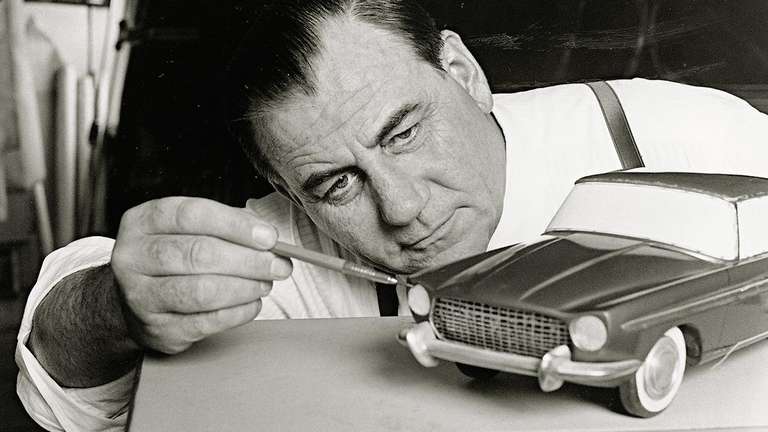
Pietro Frua never built an industrial empire, surrounded himself with a large publicity machine or turned his surname into a lifestyle brand. For most of his career, his operation remained comparatively small. Yet few independent designers worked for such a varied collection of manufacturers, and fewer still moved with the same ease from a Fiat-based special to a V8 luxury saloon, from a Swedish sports car prototype to a German production coupé.
His name appears on Maseratis, Glas models, ACs and Monteverdis, but also on individual cars commissioned from Alfa Romeo, BMW, Chevrolet, Ford, Jaguar, Lamborghini, Lancia, Lotus, Mercedes-Benz, Opel, Peugeot, Porsche, Renault, Rolls-Royce and Volkswagen. Depending on how prototypes, variations and production derivatives are counted, the catalogue contains more than 200 designs and may exceed 230 separate creations.
Numbers alone, however, do not explain Frua.
His importance lies in the way he worked. Frua belonged to the generation that still considered the designer, technical draughtsman and coachbuilder parts of the same profession. He did not simply deliver an attractive sketch and leave the difficult work to someone else. His small Turin organisation could develop the proportions, construct the body, resolve the fittings and present a complete, roadworthy automobile. He often drove his prototypes to the motor shows himself.
That approach made him one of the last representatives of the traditional Italian carrozziere: not merely a stylist, but the author of the complete object.
A boy from industrial Turin
Pietro Frua was born in Turin on 2 May 1913, the fourth and youngest son of Angela Borsello and Carlo Frua. His mother worked as a seamstress, while his father was employed at Fiat. Pietro therefore grew up in a city where fabric, metal, machinery and industrial production were already part of everyday life.
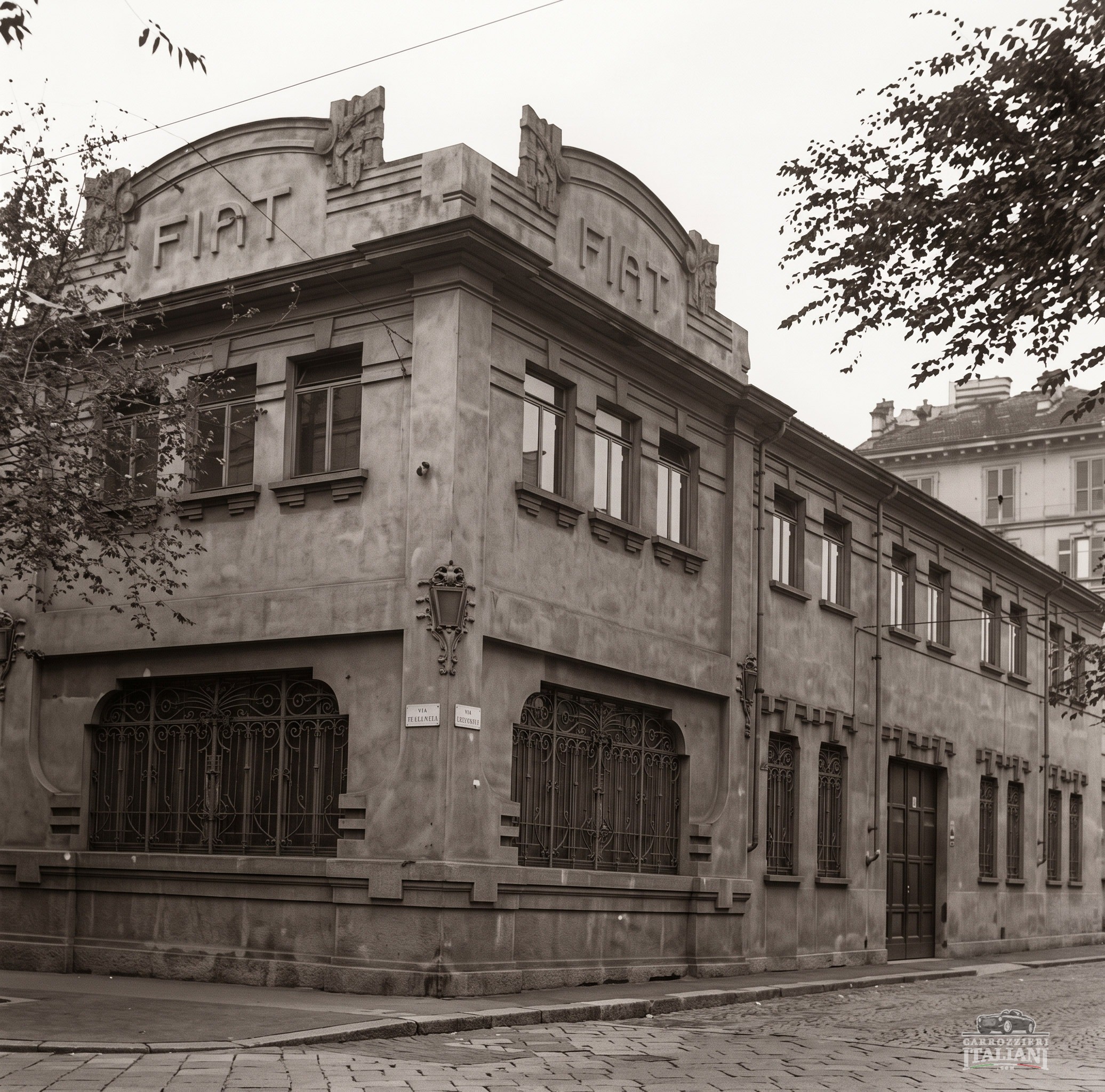
Turin was becoming Italy’s automotive capital. Fiat dominated the city, but around it grew an entire network of workshops, suppliers and independent coachbuilders. Cars were still built in a way that allowed the mechanical chassis and the body to have separate authors. For a talented draughtsman, this created possibilities that would become much rarer after the arrival of fully integrated mass production.
Between 1928 and 1930, Frua trained as a technical draughtsman at Fiat’s vocational school at the Lingotto works. At almost the same time, in December 1928, he entered Stabilimenti Farina, one of Turin’s largest and most respected coachbuilders.
🔗 Read more: Stabilimenti Farina: The Pre-War Benchmark of Italian Coachbuilding
He began as a junior draughtsman. By September 1935, when he was only 22, he had become head of the technical office for the body division. The title involved far more than what would now be called styling. Frua had to understand construction, proportion, panel forming, doors, glass, hinges and all the compromises required to turn a line on paper into a usable automobile.
Among the young men who entered Stabilimenti Farina during Frua’s time there was Giovanni Michelotti. The two later became central figures in Turin design, although the often-repeated idea that they were lifelong intimate friends appears to simplify a more complicated relationship. They knew one another well and respected each other’s abilities, but later testimony described them as good acquaintances rather than inseparable companions.
Frua’s career at Farina ended after a dispute with Attilio Farina. The documentary record places his departure in April 1939, although later recollections sometimes give 1937.
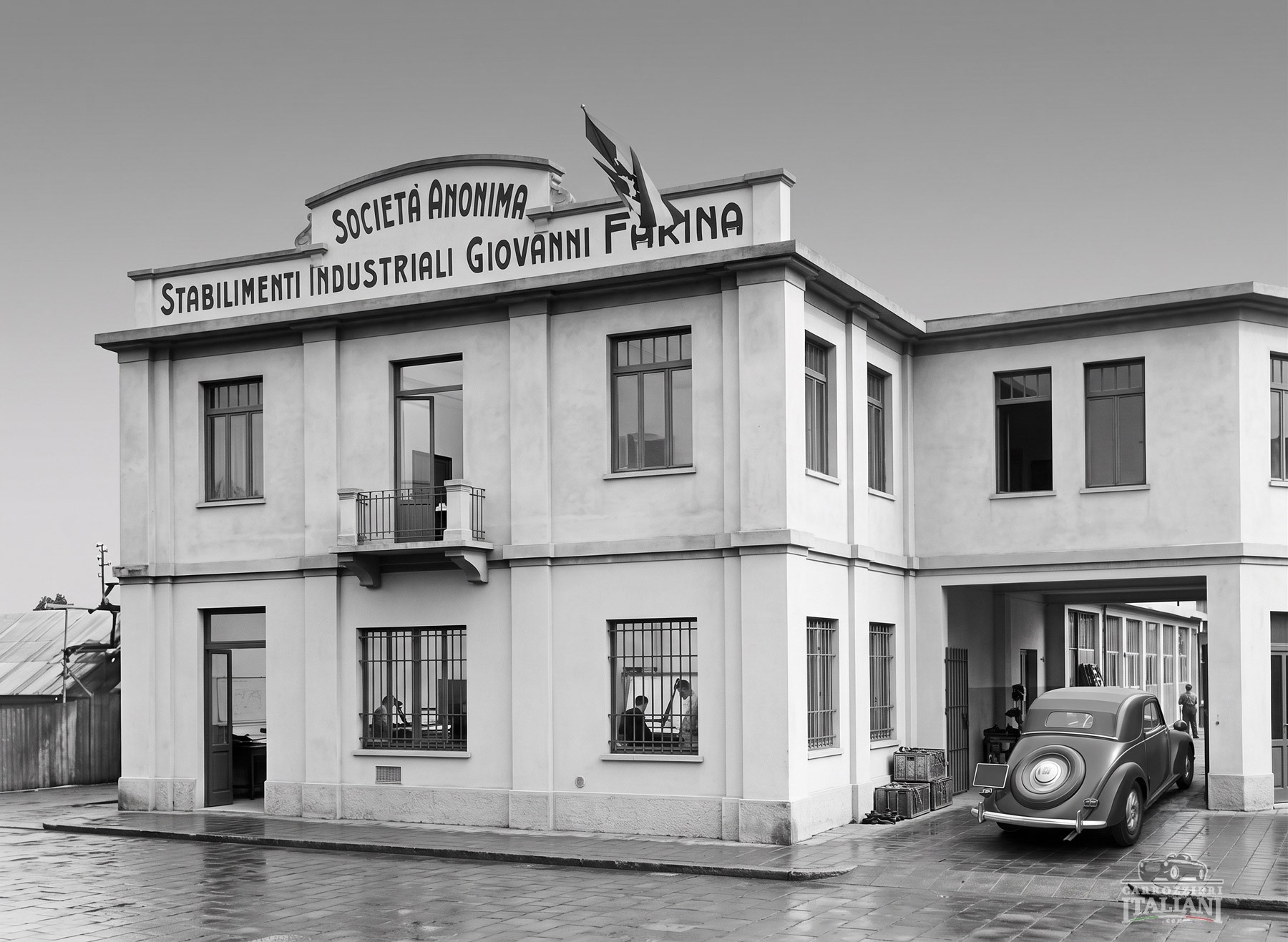
Edgardo Michelotti preserved a more colourful family version of the event. According to his account, Frua had parked his Fiat Topolino directly across the entrance to the factory and left it locked, preventing trucks from entering or leaving. The resulting argument ended with Frua’s dismissal and the young Michelotti being placed in charge of the technical office.
Whether every detail happened exactly that way is impossible to establish, but the anecdote fits the character frequently attributed to Frua: reserved in public, exacting in his work and not always inclined to compromise.
War, Viberti and a scooter before the Vespa
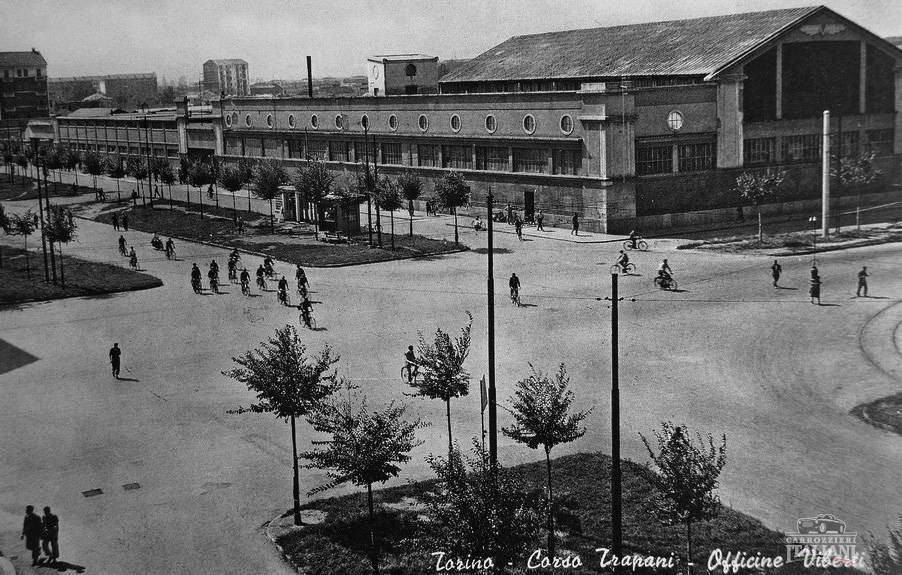
After leaving Stabilimenti Farina, Frua joined Officine Viberti at the beginning of 1940 as a design draughtsman. Viberti was better known for commercial and military bodies than for elegant automobiles, but the position kept him close to vehicle construction at a time when private coachbuilding was being overtaken by war production.
By about October 1941, Frua was working independently as a design consultant. With normal automotive commissions disappearing, he applied his skills elsewhere. He worked on electrical kitchens, terracotta heating ovens and other industrial products. He also developed ideas for a pressed-steel motor scooter with a low step-through frame.
This scooter has generated one of the more intriguing side stories in Frua’s career. A related machine was later produced by Vittorio Belmondo, and the Belmondo concept appears to have influenced Piaggio’s MP5, nicknamed Paperino, which preceded the production Vespa. It would be too simple to call Frua the sole inventor of the Vespa, but his early work belongs to the chain of experiments that established the modern Italian scooter.
More importantly, the war taught him how to survive without waiting for the motor industry to recover. While Turin was being bombed and established businesses were being damaged or destroyed, Frua prepared for the post-war market.
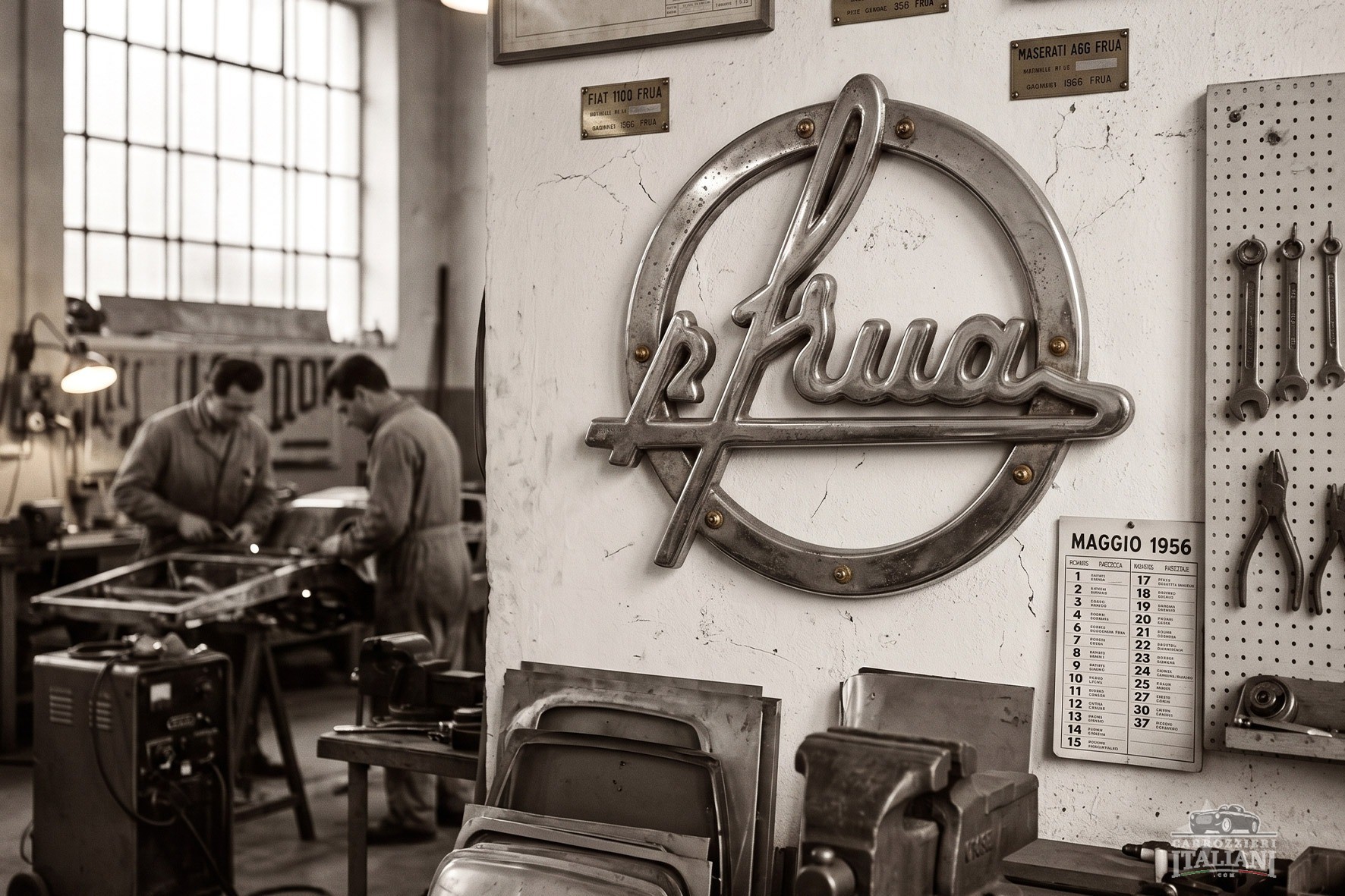
In 1944, he acquired premises in Via Giovanni da Verrazzano and established the Carrozzeria Pietro Frua. The workshop reportedly employed around 15 people. Among them was the young Sergio Coggiola, who would later found his own respected coachbuilding company.
It was a modest beginning, but the timing was right. Europe would soon need ordinary cars in enormous numbers, while a smaller group of wealthy clients still wanted automobiles that nobody else possessed. Frua was prepared for both the prototype and the one-off.
The Fiat that introduced Frua
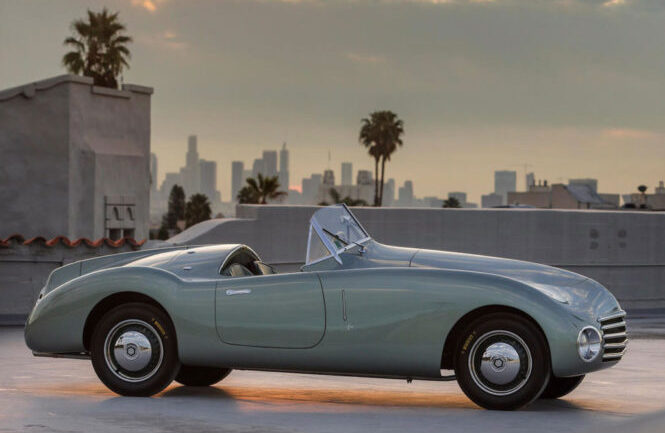
One of the first complete cars associated with the new company was a sporting spider built on Fiat 1100 C mechanicals in 1946. The little car was compact, cleanly proportioned and free of the visual heaviness that affected many immediate post-war specials.
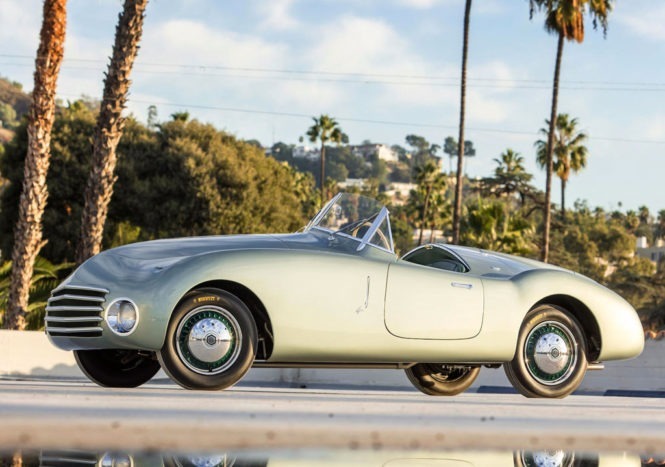
In 1947, it received second prize in its category at the Concorso d’Eleganza Villa d’Este. This was Frua’s first important public recognition and an encouraging result for a coachbuilder who had opened his business among the ruins of wartime Turin.
Frua participated in the first post-war Turin Motor Show in 1948. Among the cars associated with this early period was a Lancia Aprilia Giardiniera, which demonstrated that his interests were not limited to low sports cars. He could design a practical, spacious body while preserving elegance and visual order.
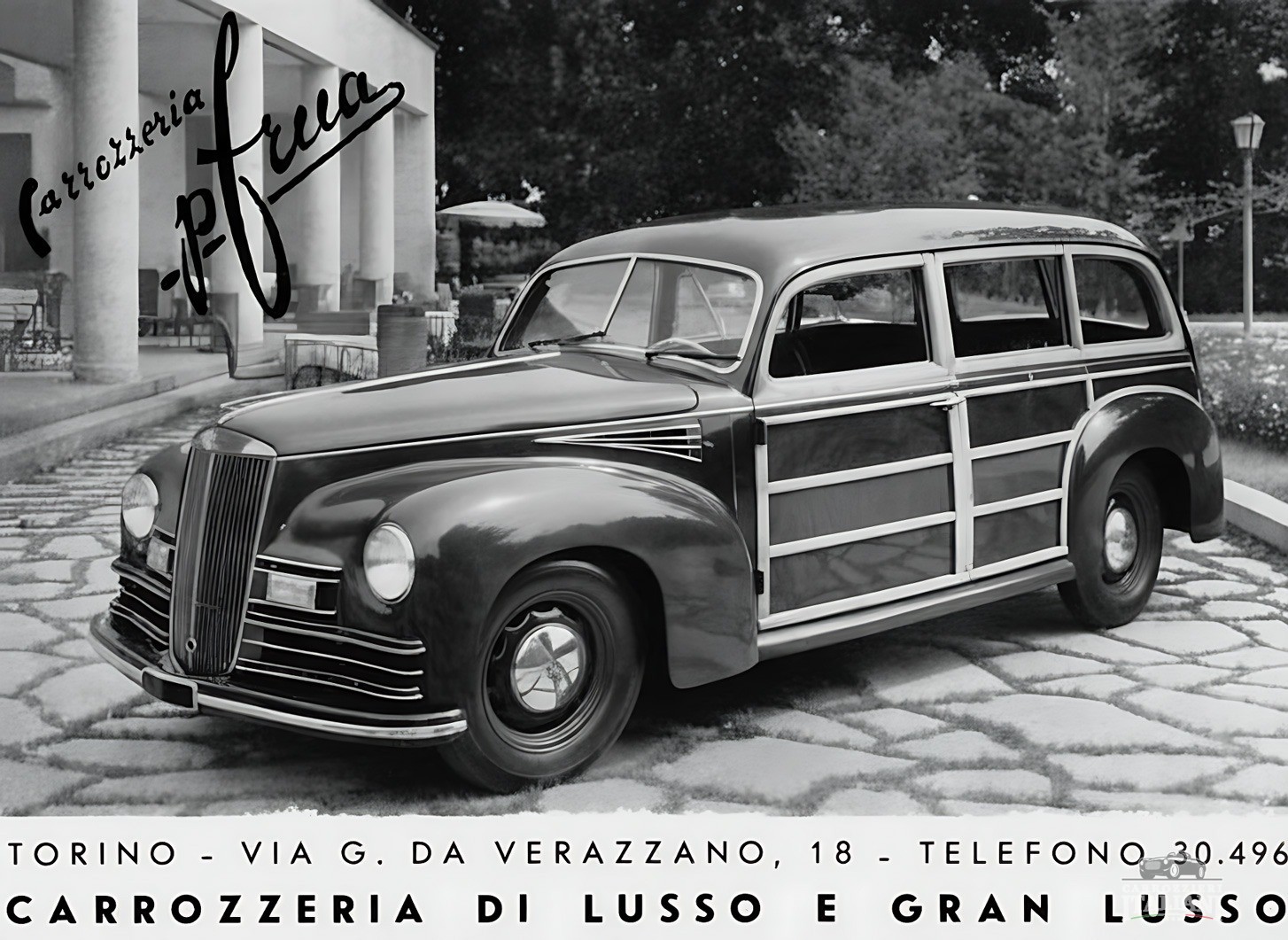
During the late 1940s and early 1950s, the Frua name began appearing on an increasingly wide range of chassis. Fiat provided an accessible foundation for many projects, but Frua also worked with Lancia, Peugeot, Renault, Panhard, Nardi, Ermini and other specialist manufacturers.
A particularly revealing creation was the small Nardi-Panhard known as the Nardyna. Its compact dimensions, light construction and concave grille showed Frua’s ability to give a modest mechanical package the presence of a much more expensive sports car. This was an ability he would use repeatedly: he could make a small car seem important without simply adding decoration.
The most significant early relationship, however, was with Maserati.
Frua and Maserati: the beginning of a long conversation
Maserati had emerged from the war with a need to expand beyond competition cars. It wanted refined road-going automobiles that retained the technical character of the marque but could appeal to wealthy private clients. Frua became one of the coachbuilders invited to give those cars a body and a personality.
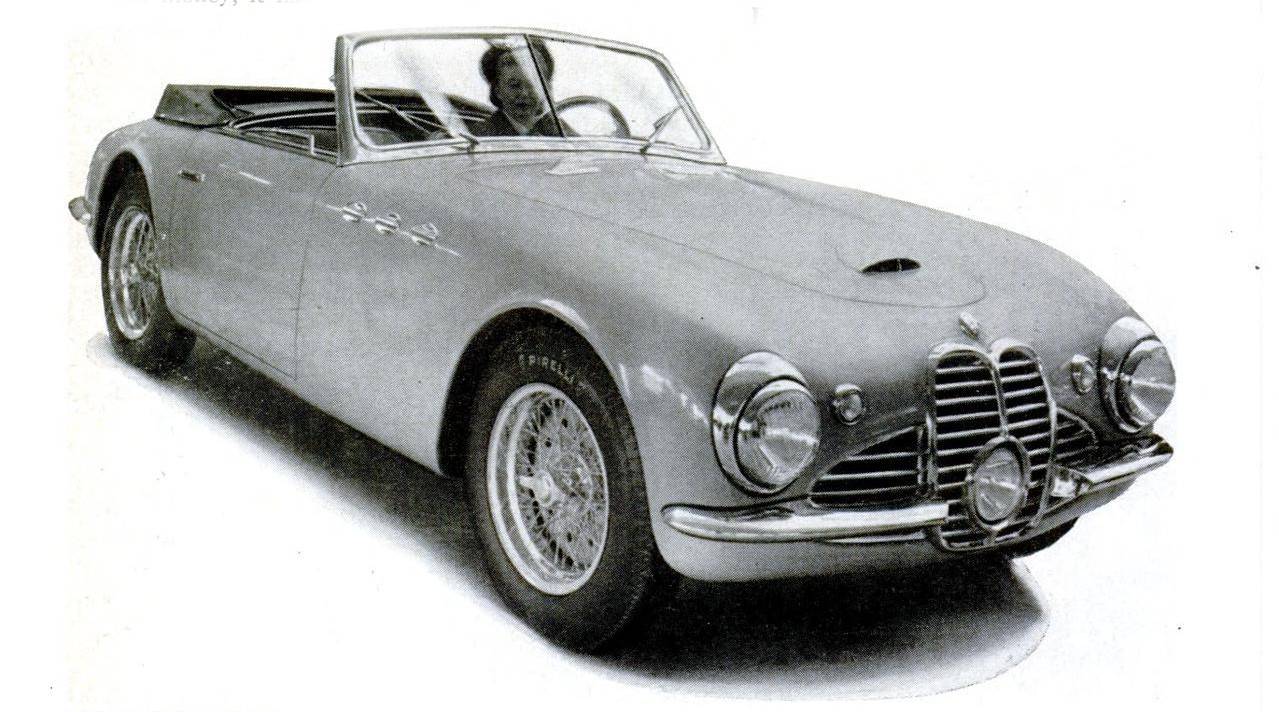
The Maserati A6 and A6G series gave him his first sustained opportunity to work on high-performance grand tourers. Between 1950 and 1957, the Frua workshop produced a succession of coupés and spiders, generally counted as 19 open cars and seven coupés across several evolutions.
They were not identical bodies repeated from one chassis to another. Frua revised the grille, wings, windscreen, tail and treatment of the passenger compartment as fashion and mechanical requirements changed. Some were restrained and almost classical; others experimented with panoramic glass, more pronounced fins or deeply recessed headlamps.
The A6G/54 cars are among the finest expressions of his 1950s work. Their bodies combine a long bonnet with a compact cabin, but without the exaggerated aggression that would later become common in expensive sports cars. Frua’s best designs did not need to advertise their performance. They looked fast because the volumes were correctly placed.
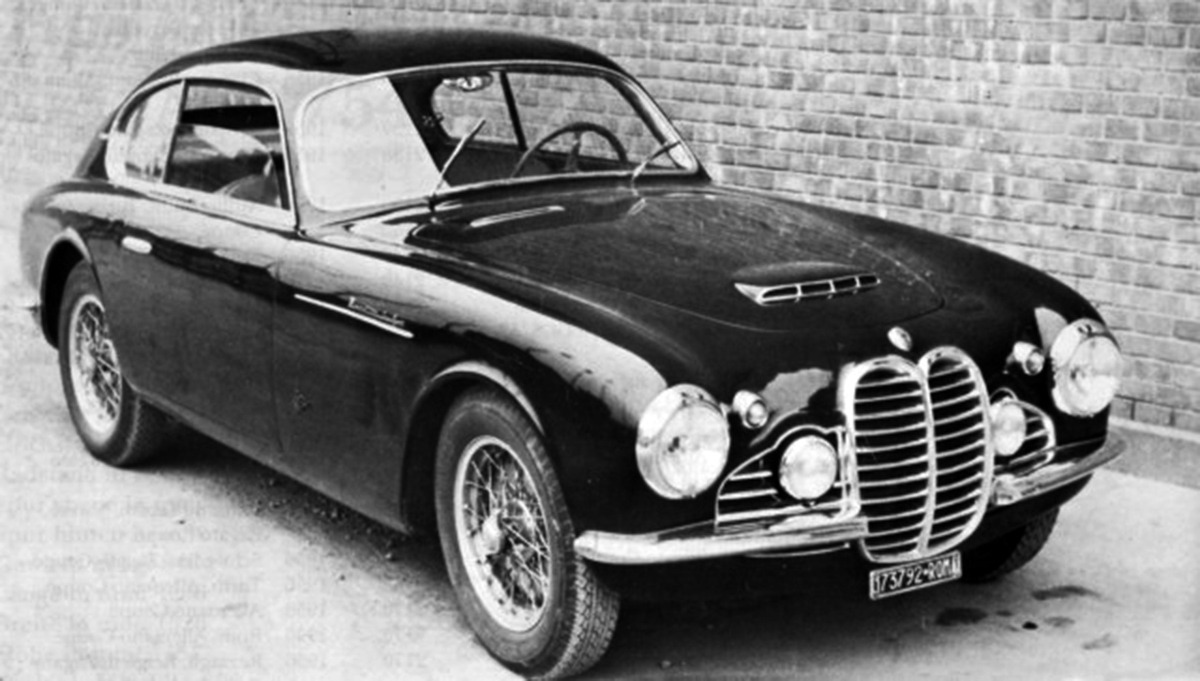
The Maserati connection also established a method that would define his career. Frua did not impose precisely the same body on every manufacturer. He developed themes, adapted them and allowed them to mature. A grille shape might reappear in a different scale; a roof treatment could move from a one-off to a production proposal; a solution first used on a spider might later become part of a large coupé.
This habit has sometimes been criticised as repetition. In reality, it was how the independent coachbuilding business worked. A small studio could not discard every successful idea after a single use. The skill lay in adapting it so that the next car remained convincing.
The Ghia chapter and the Renault dispute
By the middle of the 1950s, Frua’s company had grown into a serious specialist operation. Contemporary reports suggested an annual capacity of around 80 special bodies and approximately 200 modifications or conversions, including work connected with Maserati.
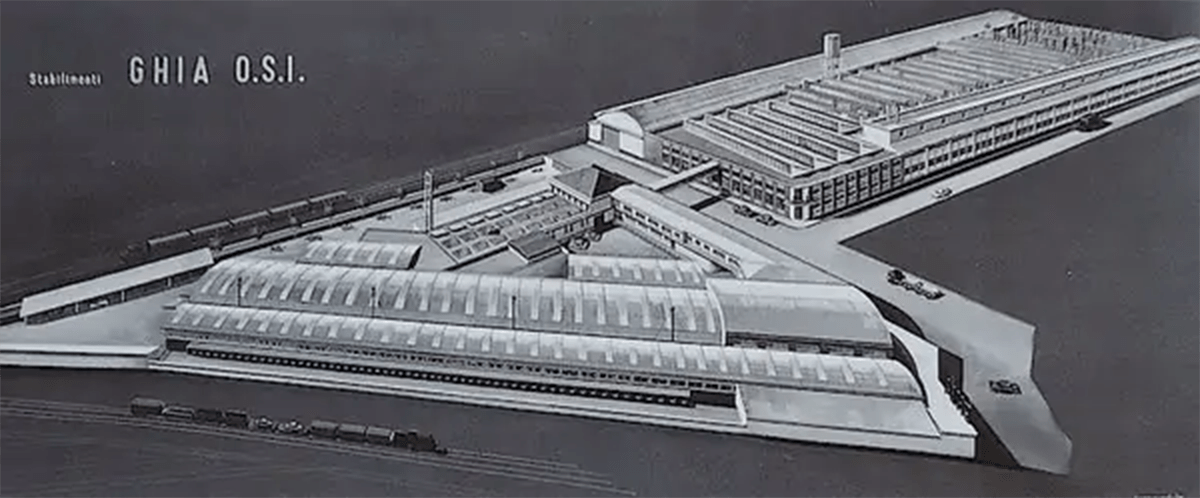
Expansion required money and facilities. In 1956, Frua entered into an arrangement with Carrozzeria Ghia, then directed by the ambitious Luigi Segre. Frua’s operation moved into larger premises intended for Ghia, and Frua was appointed to succeed Giovanni Savonuzzi as head of design.By the middle of the 1950s, Frua’s company had grown into a serious specialist operation. Contemporary reports suggested an annual capacity of around 80 special bodies and
🔗 Read more: The History of Carrozzeria Ghia – Part 1
The arrangement made commercial sense. Ghia gained access to Frua’s name, clients and production experience, while Frua gained the resources of a larger company. Yet it did not last.
The central point of conflict was the Renault Floride.
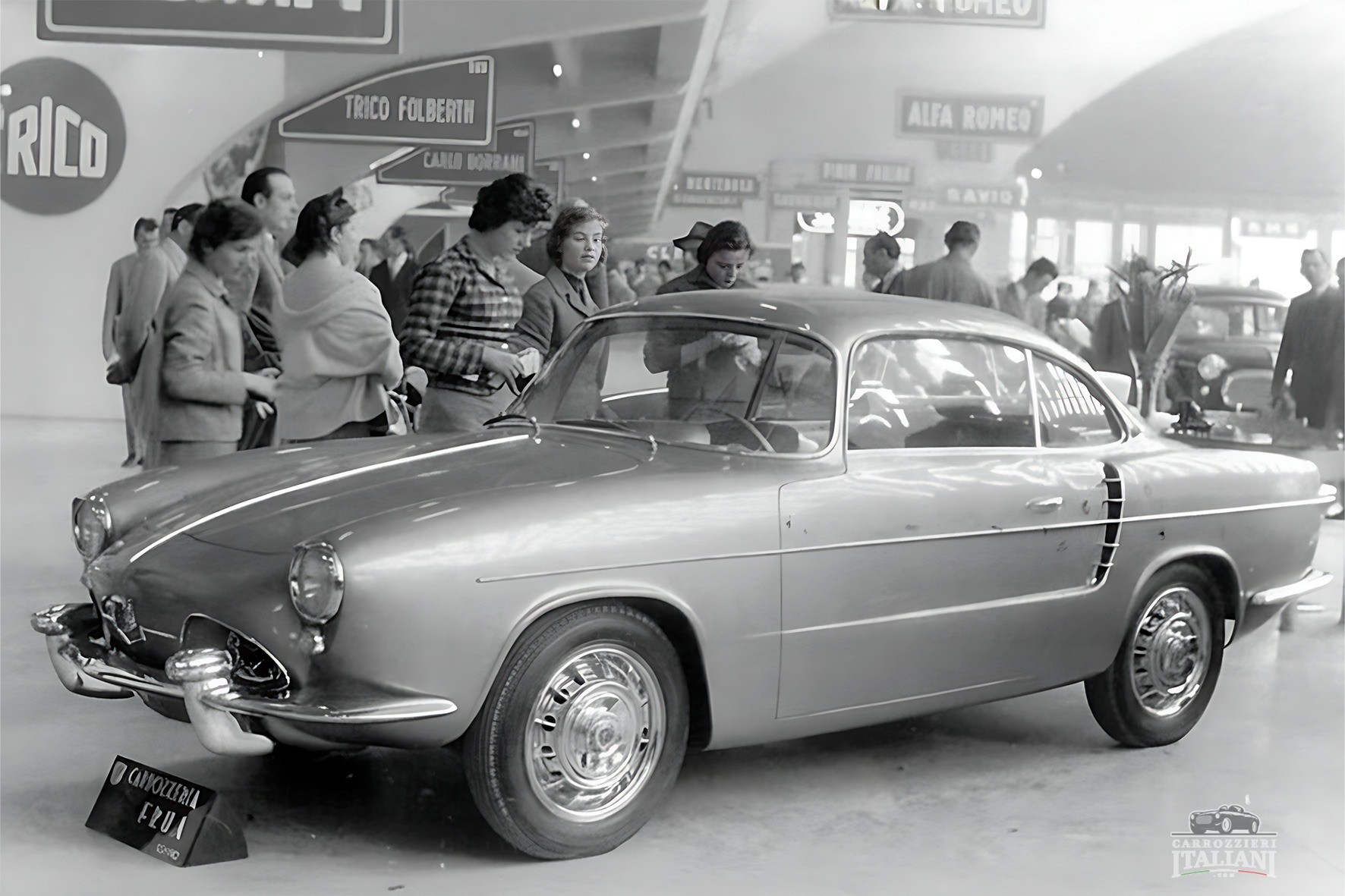
The car’s origins were complicated. Renault dealer and sports-car manufacturer Jean Rédélé had encouraged the development of an attractive coupé and convertible based on Dauphine mechanicals. Frua had already produced a Dauphine-based GT prototype, and the design that evolved into the Floride passed through the Ghia organisation during his association with it.
The production car became a major commercial success, eventually selling in numbers no hand-built Frua model could approach. But success made the question of authorship more important. Frua and Segre disagreed over who deserved credit for the design, and their relationship collapsed.
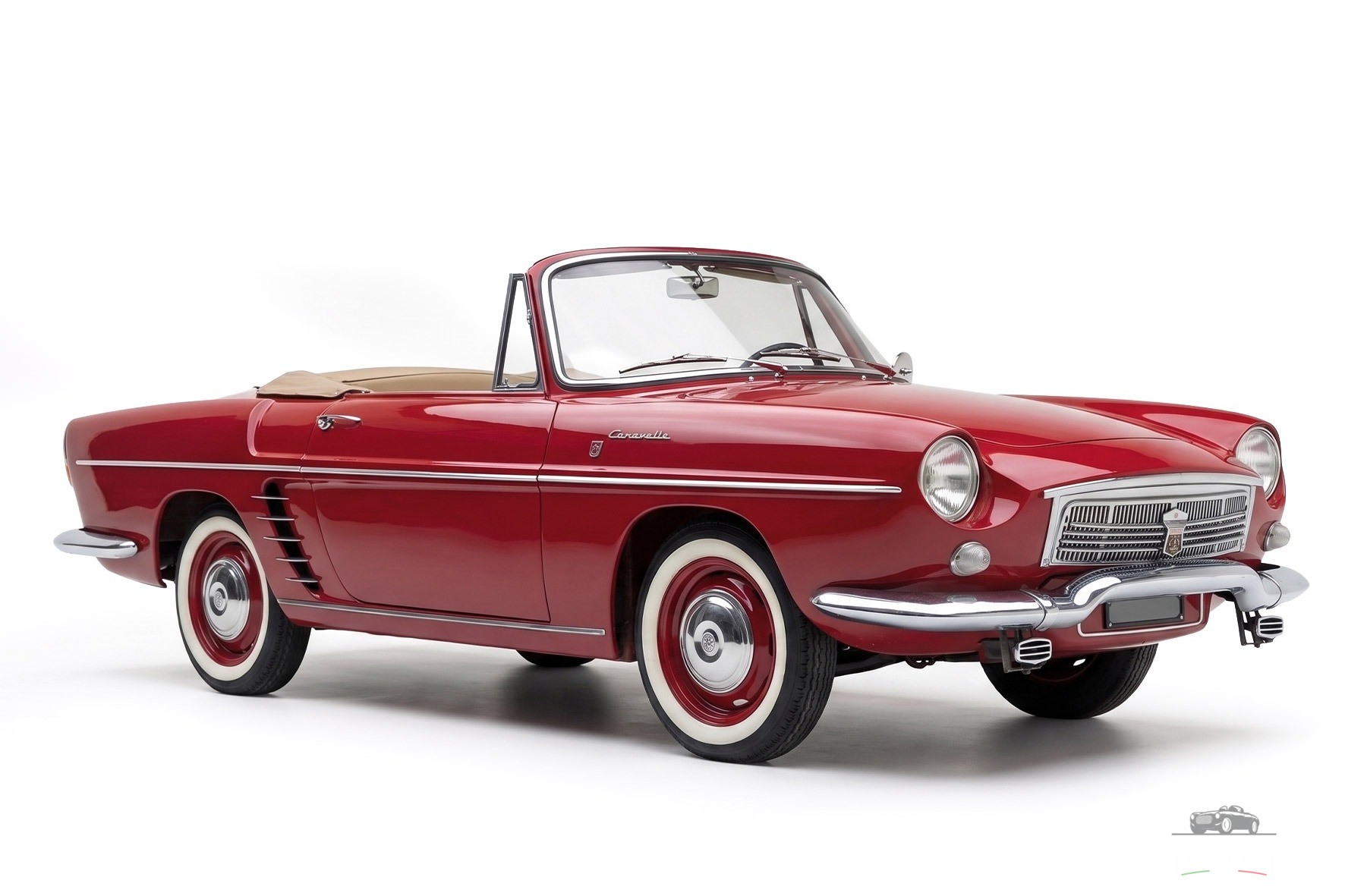
The Floride remains part of Frua’s history, but it also illustrates the difficulty of assigning a single name to a car created inside a collaborative studio. Ideas could pass through designers, model makers, managers, engineers and clients before reaching production. What was clear was that Frua considered his contribution substantial enough to leave Ghia over it.
By 1959, he had formally established the Studio Tecnico Pietro Frua and was independent again.
The P1800: a Swedish design in a Turin studio
Another frequently misunderstood project from this period was the Volvo P1800.
Volvo wanted a sports car capable of changing the conservative image of the Swedish manufacturer. The project was guided by Helmer Petterson, whose son Pelle had recently studied industrial design in the United States. Pelle Petterson prepared the design while working in Frua’s Turin environment, and the prototypes were built through Frua.
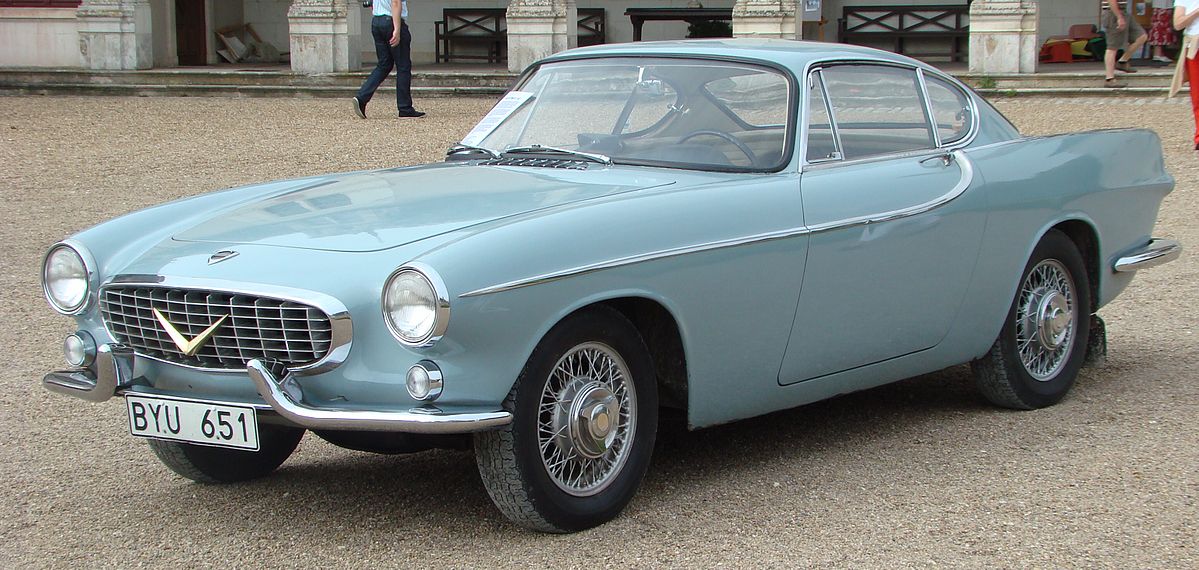
For years, the P1800 was casually described as a Frua design because it had emerged from his studio and carried an Italian aura. The principal authorship, however, belongs to Pelle Petterson. Frua’s role was still important: his workshop provided the setting, technical knowledge and prototype-building ability required to transform the young designer’s proposal into a real automobile.
The distinction does not diminish Frua. On the contrary, it shows that his studio had become a place where ideas could be developed, corrected and built, even when the original pencil belonged to somebody else.
During these years, Frua also worked with the independent Swiss Carrosserie Ghia-Aigle, Carrozzeria Viotti, Savio and the Geneva-based Italsuisse. These relationships produced an extraordinary assortment of cars, including specials on Alfa Romeo, Studebaker, Volkswagen, Opel and Maserati mechanicals.
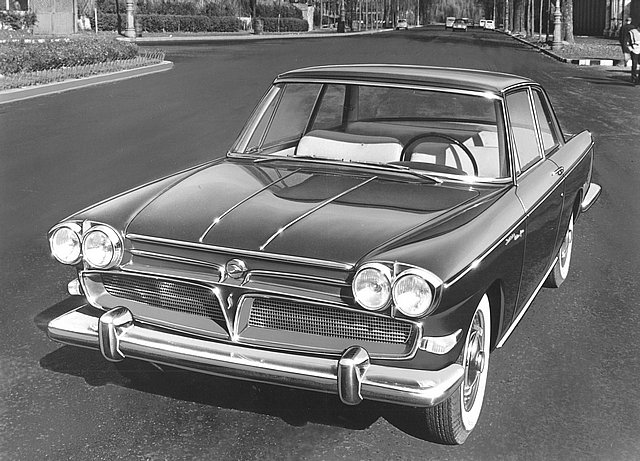
The VW-based Italsuisse Sun Valley of 1960, the Studebaker Lark coupé and the Italsuisse interpretation of the Maserati 3500 GT show Frua moving away from the softer forms of the 1950s. Waistlines became straighter, glass areas cleaner and decorative elements more controlled. The change prepared him for the decade in which his work would become most influential.
The great Maseratis of the 1960s
Frua reached the height of his career in the early 1960s.
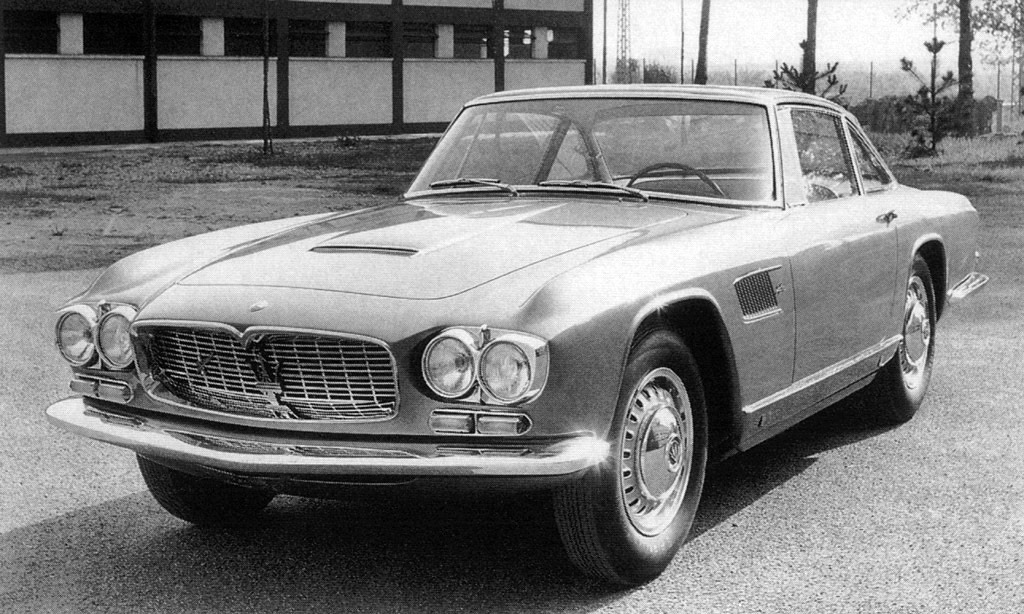
The Maserati 5000 GT gave him the opportunity to work at the absolute top of the market. These were expensive, individually specified automobiles built for royalty, industrialists and international clients. Frua’s version, associated with the Aga Khan, developed a formal face with rectangular headlamps and a broad, restrained grille.
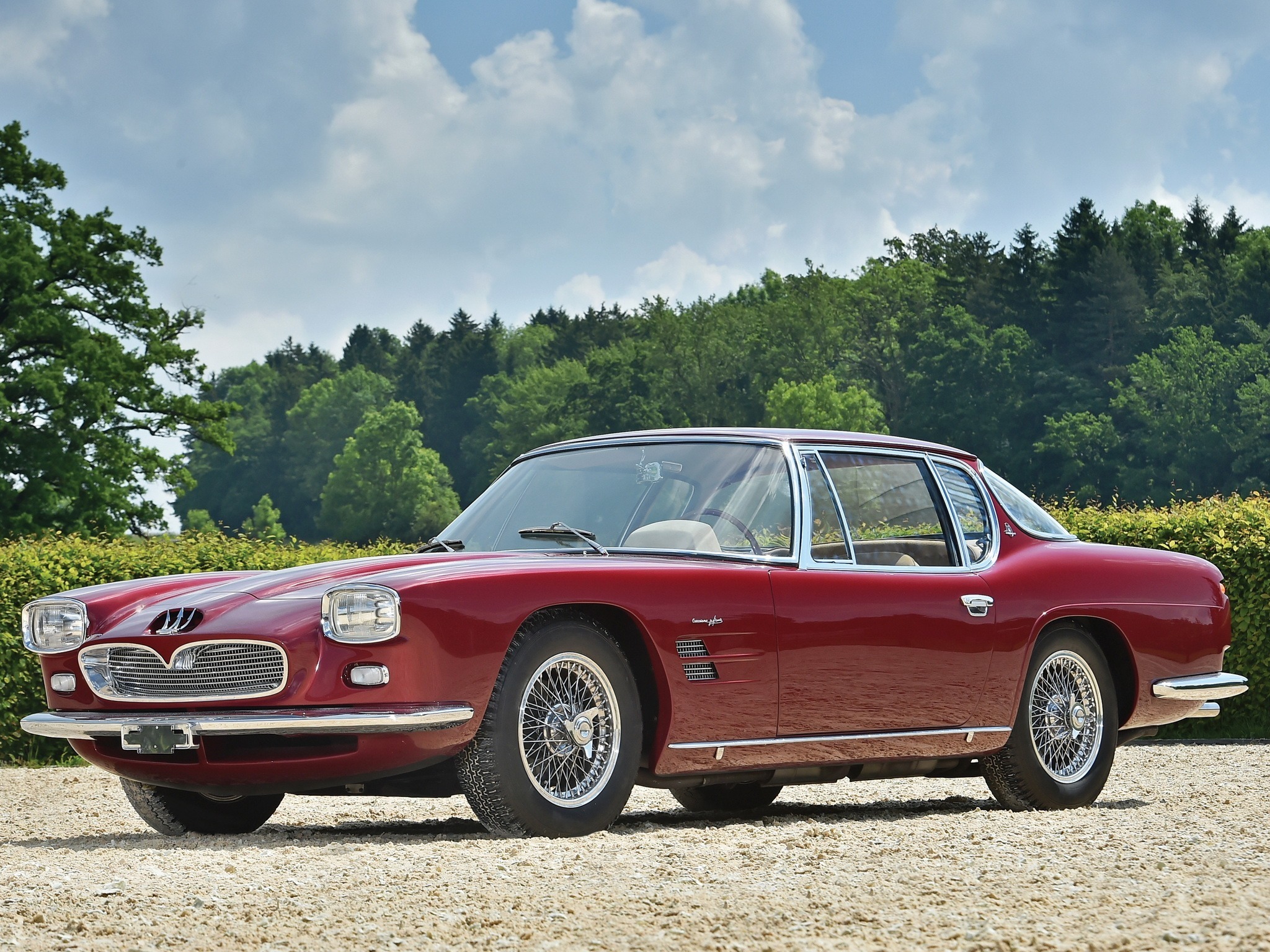
That theme soon appeared in two cars that would define both Frua and Maserati: the Mistral and the first Quattroporte.
The Mistral was introduced in 1963 as the successor to the 3500 GT. Its form was simpler and more modern than the Maseratis that came before it. The bonnet was long and low, the glasshouse compact, and the rear ended beneath a large glazed hatch. Frua gave the car enough delicacy to remain elegant, but enough structure to contain Maserati’s powerful six-cylinder mechanicals.
It was also the first Maserati production model named after a wind, beginning a tradition later continued by the Ghibli, Bora, Khamsin, Shamal and Levante.
The Quattroporte, shown in the same period, was even more significant. Maserati combined a V8 derived from its competition experience with a full four-door body, creating one of the fastest luxury saloons of its time. Frua avoided making it look like an enlarged sports car. The roof was upright enough to provide real accommodation, the doors were generously proportioned, and the body had the formality expected of an executive car.
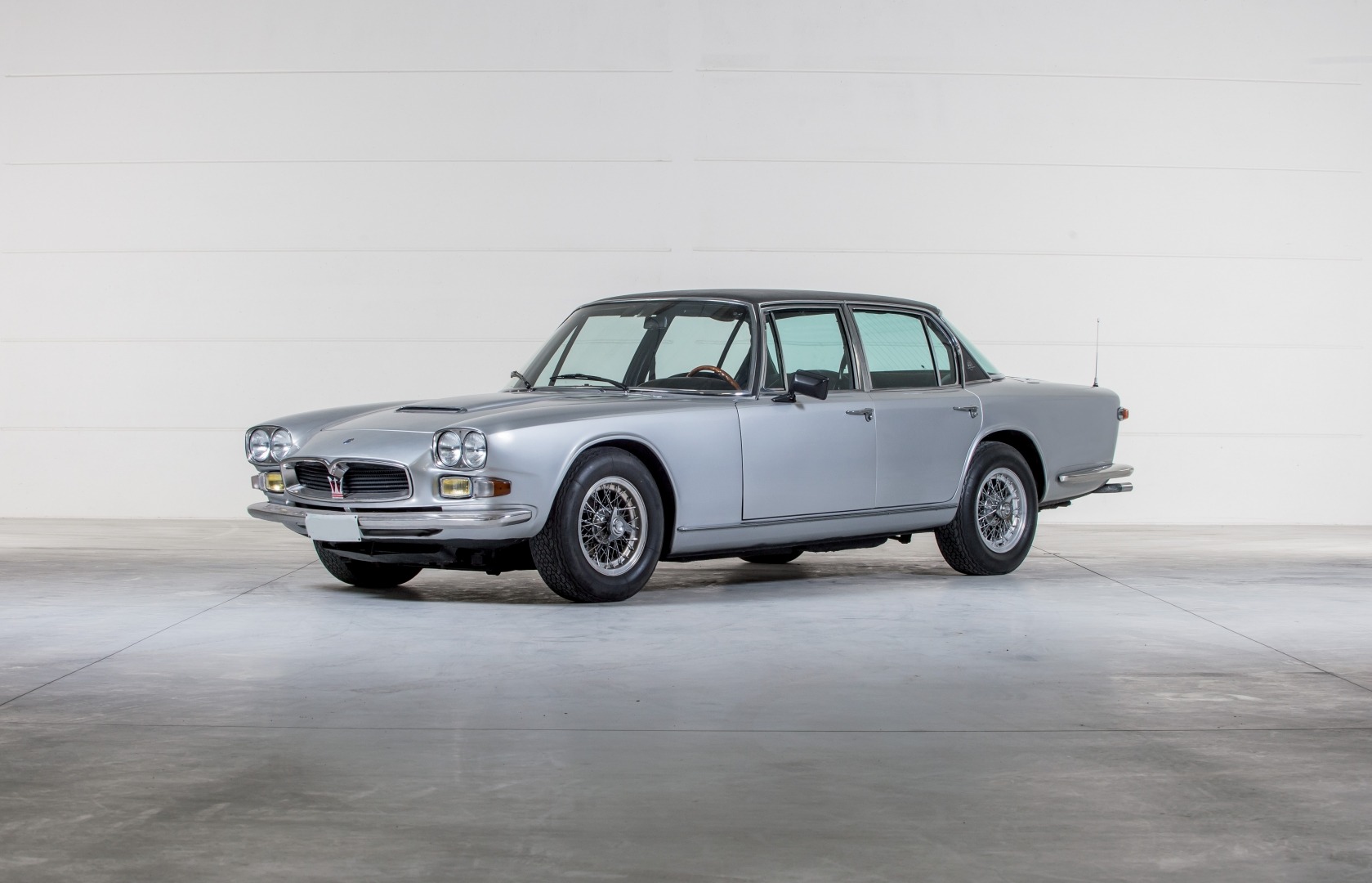
Yet the Quattroporte did not look heavy. Its thin pillars, clean shoulder line and carefully judged relationship between bonnet, cabin and luggage compartment gave it an ease few large saloons possessed.
The Mistral and Quattroporte were different cars, but they shared the same confidence. Neither relied on unnecessary sculpture. Frua trusted the basic architecture.
That confidence would soon attract a small manufacturer in Germany.
Glas and the “Glaserati”
Hans Glas GmbH was best known for the Goggomobil and other small, economical vehicles. By the early 1960s, however, the company wanted to move into larger and more prestigious market segments. Pietro Frua became the designer who gave that ambition a visible form.
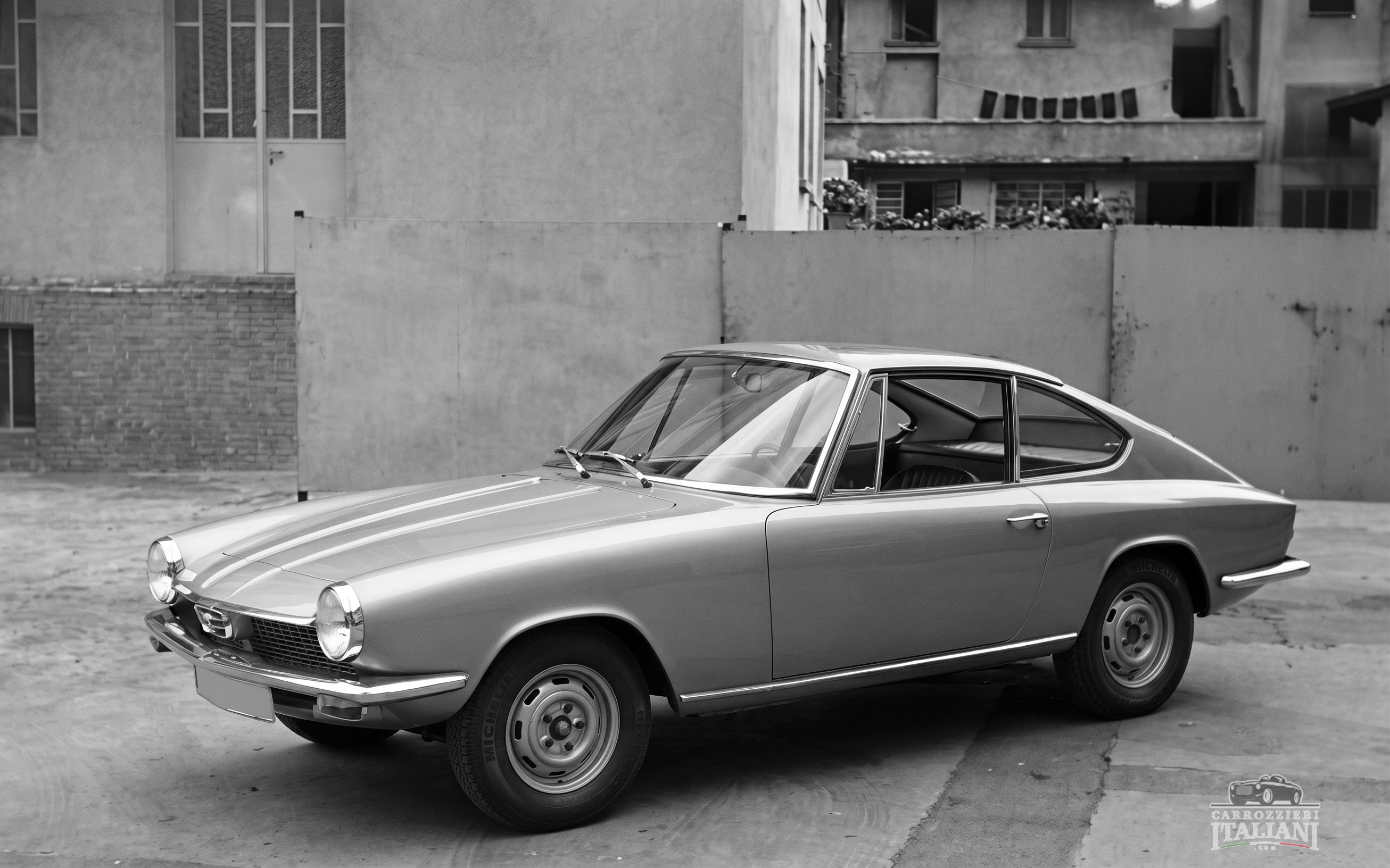
The Glas 1300 GT was presented at the Frankfurt Motor Show in 1963 and entered production the following year. It was a compact 2+2 coupé with a low nose, a light cabin and a fastback tail. Frua managed to give it an expensive appearance without disguising its modest dimensions.
The production arrangement demonstrated how international the coachbuilding business had become. The body shells were manufactured by Maggiora near Frua’s Moncalieri studio and then transported to Dingolfing, where Glas completed the cars. A cabriolet and a more powerful 1700 GT followed.
Frua also designed the Glas 1700 saloon and several experimental derivatives, including the open Isar Ranch. But the most ambitious member of the family was the Glas V8.
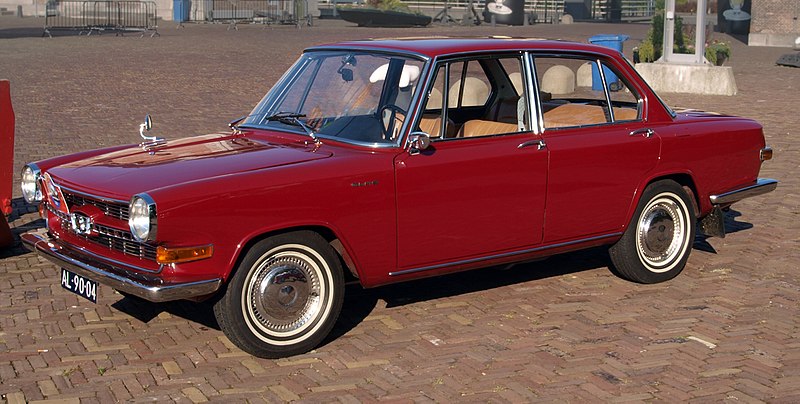
Introduced in prototype form in 1965, the large coupé borrowed visual themes from Frua’s Maserati work, especially around the grille and rectangular headlamps. The resemblance earned it the affectionate nickname “Glaserati”. This was not an insult. It meant that Germany’s smallest independent manufacturer had acquired some of the presence of an Italian grand tourer.
Glas lacked the financial strength to sustain its rapid expansion, and BMW acquired the company in 1966. The smaller GT survived for a time as the BMW 1600 GT, receiving BMW mechanicals, rear suspension, badges and the familiar kidney grille. More than 1,200 BMW-badged examples were produced after over 5,000 Glas coupés and several hundred cabriolets.
Frua hoped that the takeover would lead to a lasting relationship with BMW. Instead, Munich absorbed the factory and engineering resources but did not adopt him as a regular external designer.
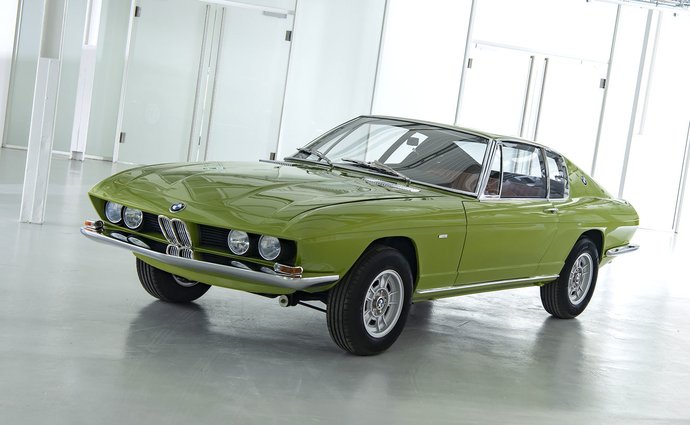
He continued to propose cars to BMW, including the 2800 GTS and several coupés based on the 2000 and 3.0-litre saloons. They were elegant, fully functioning automobiles, but none reached regular production. Today they form one of the most interesting alternative chapters in BMW design history: a possible route the company considered but chose not to follow.
AC, Monteverdi and the international grand tourer
Frua’s reputation was no longer limited to Italy or Germany. His work attracted manufacturers and entrepreneurs who wanted to combine European sophistication with large, powerful engines.
AC Cars approached him to create a grand tourer using a lengthened Cobra chassis. The first open prototype appeared in 1965, while the production AC 428 coupé followed soon afterwards.
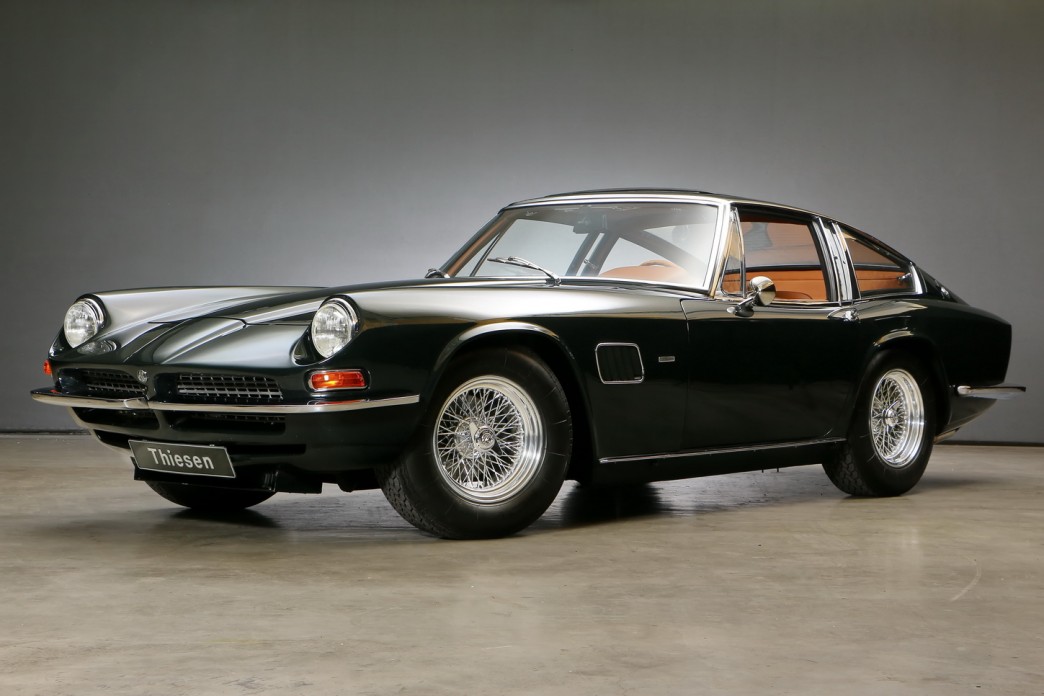
The AC combined British engineering, an American Ford V8 and an Italian body. Its proportions were classic Frua: long bonnet, compact passenger compartment, restrained flanks and a tail that avoided both excessive curves and abrupt brutality. The steel body made it heavier and more luxurious than the Cobra, but it remained extremely fast.
🔗 Read more: How a Swiss Dealer Challenged Ferrari: The Story of Monteverdi
Production was complicated. Chassis travelled from Britain to Italy for body construction and then returned for completion. Costs rose, and only around 80 coupés and convertibles were built before production ended in 1973. The limited quantity ensured rarity, but the AC 428 deserved more commercial success than it received.
A similar formula attracted Swiss businessman Peter Monteverdi. The Monteverdi High Speed 375 S, presented in 1967, placed a Frua body over a Swiss chassis powered by a large Chrysler V8. The result had the presence of an Italian exotic and the force of an American muscle car, but without looking like a crude combination of the two.
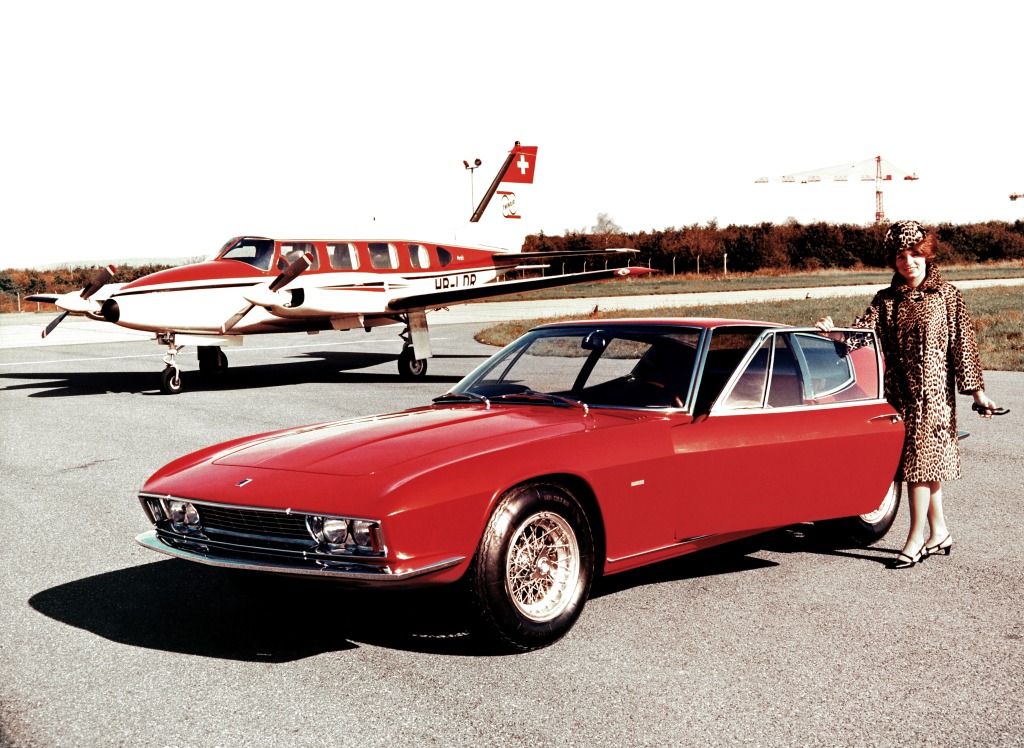
Frua subsequently developed the longer 375 L. The relationship with Monteverdi ended in disagreement, after which the Swiss company transferred body production to Fissore and adopted a different design. Frua, as was his habit, continued to develop elements of the earlier project. A related body eventually became the one-off AC 429.
The similarities among the Mistral, AC 428 and early Monteverdis are often used to suggest that Frua lacked variety. That reading misses the point. These cars were created for clients seeking much the same thing: a fast, expensive front-engined grand tourer with an international character. Frua refined the formula rather than pretending each commission existed in isolation.
A changing profession
By the end of the 1960s, the industry that had created Frua was beginning to disappear.
Manufacturers were establishing large internal design departments. Safety regulation, crash testing, tooling costs and integrated body construction made it harder for a small coachbuilder to take a production chassis and create an independent body around it. The market for expensive one-offs was also shrinking.
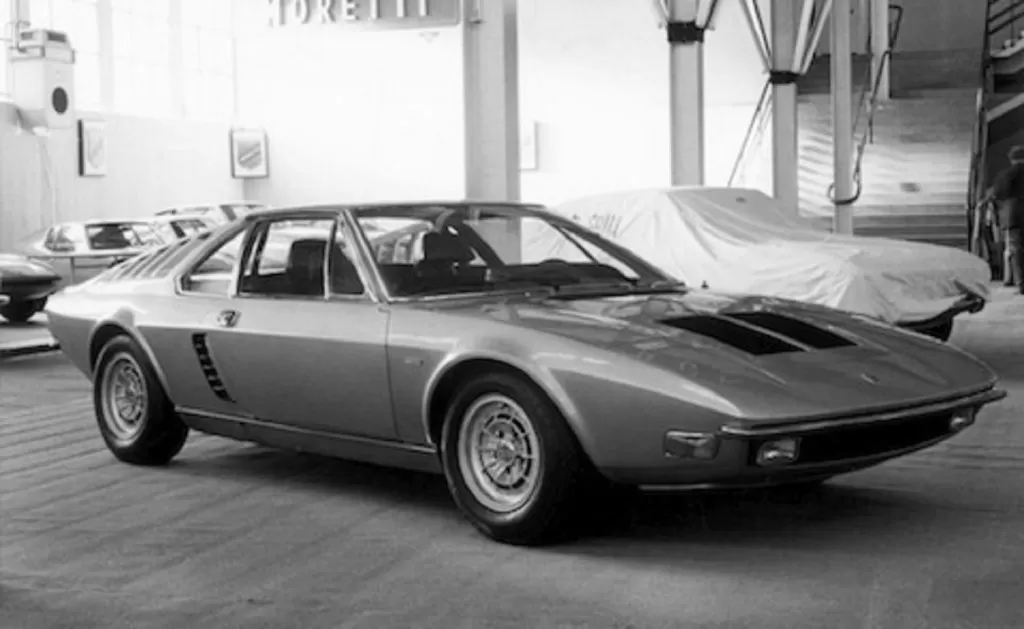
Frua continued to work, but an increasing number of his cars were proposals intended to win contracts rather than confirmed production programmes. He built coupés for BMW and Opel, transformed a Porsche 914/6 into the Hispano-Alemán, and created two sharply drawn Ford-based studies, the Escort Monte Carlo and Mexico GT.
These were not empty show cars. Frua still preferred complete, running prototypes, often developed with a degree of finish normally expected from a production automobile.
The Momo Mirage project demonstrated both the strength and the difficulty of this method. American businessman Peter Kalikow and mechanic Alfred Momo wanted a luxurious American-powered GT built in Italy. The original body proposal was prepared by Gene Garfinkle, while Frua developed the full-size buck, constructed the bodies and completed the prototypes on Stanguellini-built chassis.
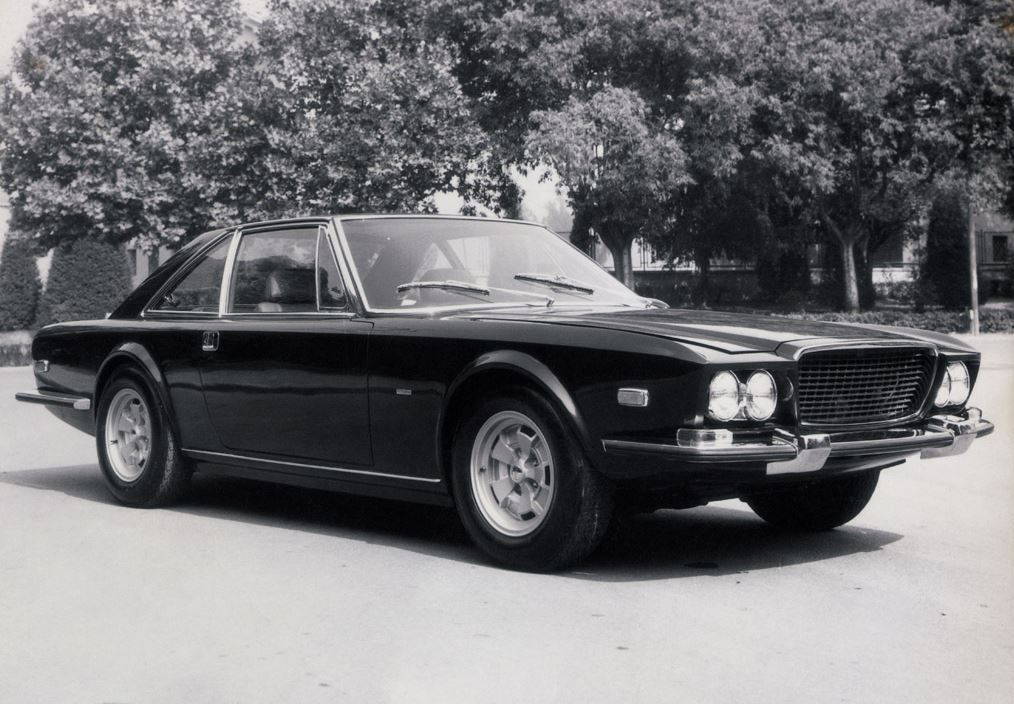
The cars were impressive, but costs escalated far beyond the original plan. The project was cancelled after only a handful of prototypes and unfinished chassis had been produced. It was another excellent automobile defeated not by a lack of style, but by the economics of small-series coachbuilding.
One of Frua’s last designs to reach production was the Maserati Kyalami, presented at Geneva in 1976. It was developed from the De Tomaso Longchamp architecture, but Frua revised the body to give it a more formal Maserati identity. The Kyalami did not have the purity of the Mistral, yet it returned Frua’s name to a production Maserati at a moment when his independent opportunities were becoming rare.
The Faena and the final proposals
Frua remained active into the late 1970s. His most memorable late work was the Lamborghini Faena, presented at the Turin Motor Show in 1978.
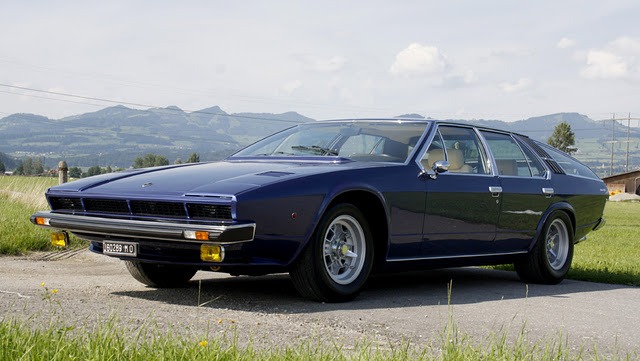
Built on an extended Espada platform, the Faena was a four-door Lamborghini created decades before the modern luxury performance saloon became a recognised category. The idea was bold: retain the Espada’s V12 character while adding a second pair of doors and genuine rear-seat access.
The result was nearly five metres long and visually substantial, particularly at the rear. It was not one of Frua’s lightest designs, but it proved that he was still prepared to challenge accepted categories. The Faena returned at the 1980 Geneva Motor Show on the official Lamborghini stand, yet no production order followed.
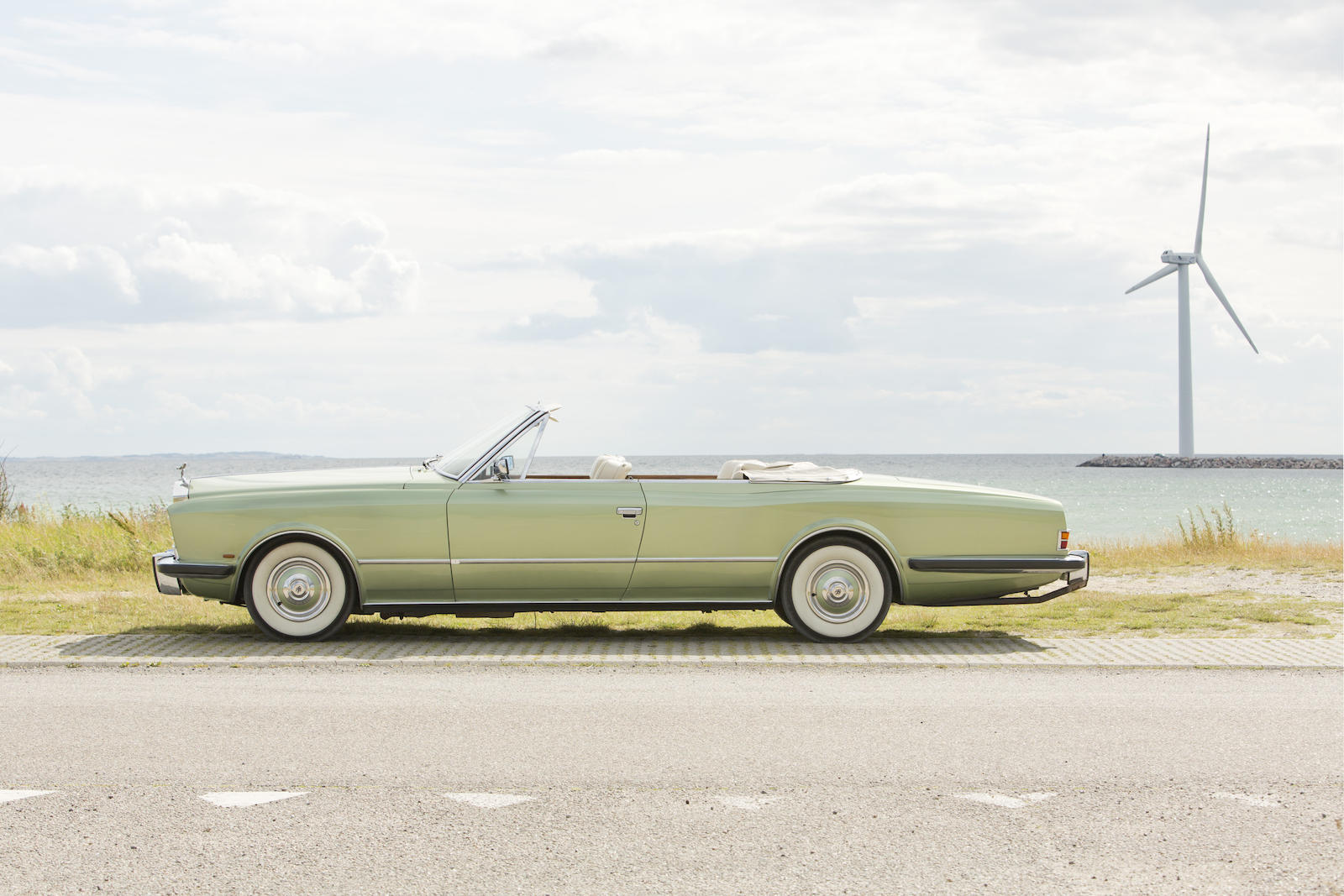
Frua also worked on proposals involving Rolls-Royce, including a state cabriolet on the Phantom VI chassis. By 1979, he was already concerned that his health might prevent him from completing the project.
The man who had once been able to take a project from drawing board to motor show in a matter of weeks was slowing down, but he never formally abandoned design.
Was there really a “Frua line”?
Writers began referring to a distinct “Frua line” during the 1960s. The expression suggested discipline, formal accuracy and a kind of restrained timelessness. It is tempting to define that line through the recessed headlamps of the Mistral, the rectangular face of the Quattroporte, the clean roofs of the Glas cars or the long bonnets of the AC and Monteverdi.
A closer examination makes the issue more complicated.
Frua worked for more than four decades, from the separate-wing forms of the 1930s to the angular luxury coupés of the 1970s. No single grille, window shape or body treatment remained unchanged throughout that period. He observed American design, his Turin colleagues, new lighting technology and the changing requirements of his clients. Like every successful designer, he absorbed influences and reworked them.
🔗 Read more: The History of the Maserati Quattroporte: Six Generations of Italian Luxury
He also reused his own ideas. The fastback theme of the Glas GT returned in the Ford Mexico GT. The formal front developed through the Maserati 5000 GT informed the Quattroporte and Glas V8. The rectangular rear frame appeared on cars as different as the Lotus Elan proposal, AC 428, Opel Admiral coupé and Maserati Quattroporte II study.
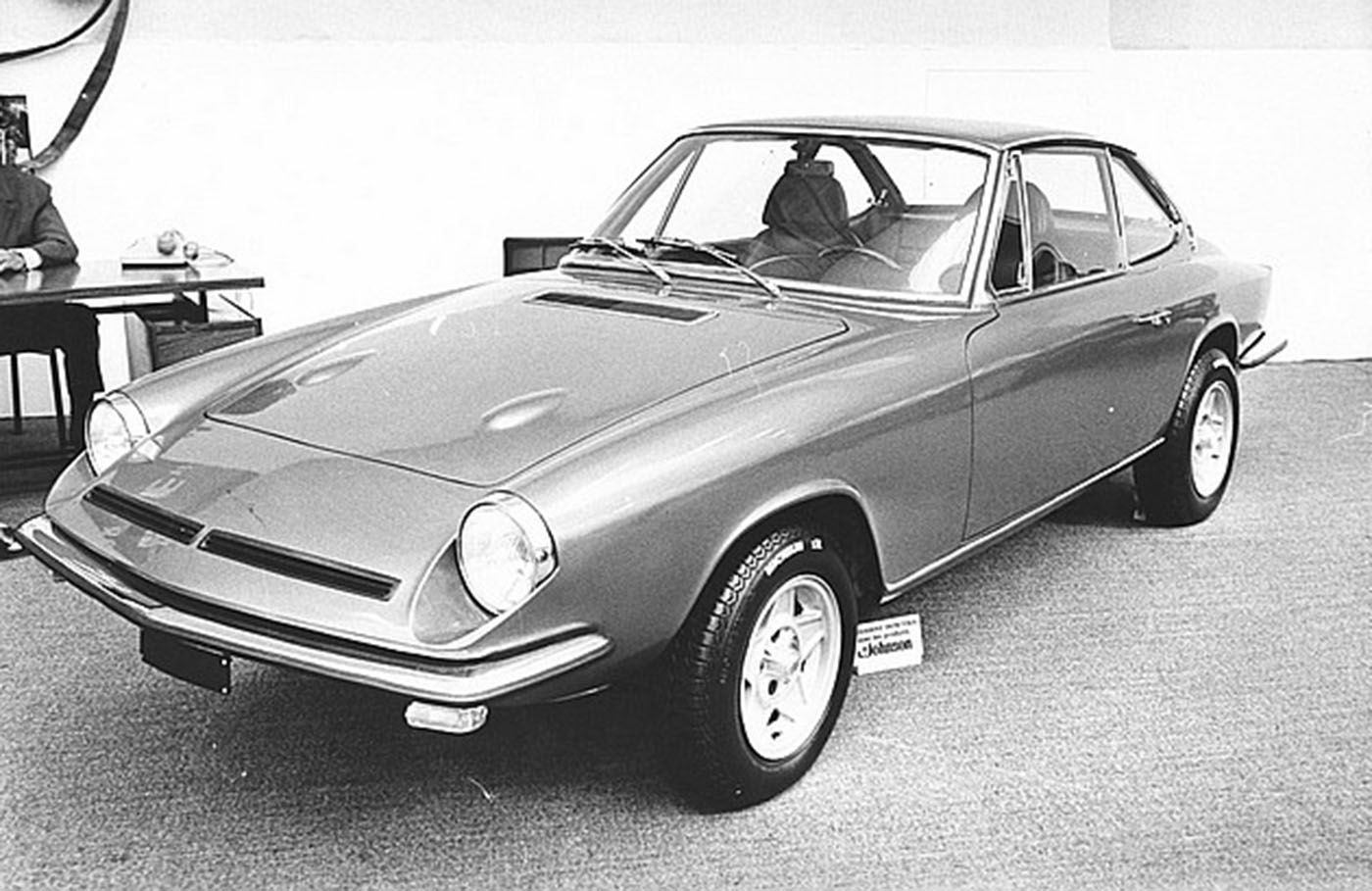
Perhaps Frua’s signature was not a fixed set of decorative features. It was his method: clean proportions, visual discipline and a preference for resolving a car rather than decorating it.
His cars rarely depended on one theatrical gesture. Even when they were dramatic, they remained understandable. Doors looked usable. Glass areas related to the cabin. Bonnet length reflected the mechanical package. Ornament was placed to support the form, not rescue it.
That was the real Frua line.
Prizes, contemporary recognition and a reputation that arrived slowly
Frua’s career was not defined by a shelf full of personal trophies. His most clearly documented early award was the second prize received by the Fiat 1100 C Spider at Villa d’Este in 1947.
Recognition came more often through the press and through the status of his clients.
In 1956, the British magazine Picture Post included Frua among the “Fashion Kings of the Car World”, placing Turin’s coachbuilders in the same cultural territory as the leading names of couture. In 1963, Der Spiegel mentioned him alongside Bertone, Ghia, Michelotti, Pininfarina, Vignale and Zagato. By 1968, German newspaper Die Zeit could describe the great Turin names as being as familiar in automotive circles as Dior, Cardin or Chanel were in fashion.
These comparisons were not casual. During the 1950s and 1960s, Turin determined much of what the international motor industry considered modern, and Frua was recognised as one of the men responsible.
Rosani wrote of the “Frua Line” in 1968. Obituaries published after Frua’s death described the precision and timelessness of his work, and one writer called him one of the last romantics among the Italian coachbuilders.
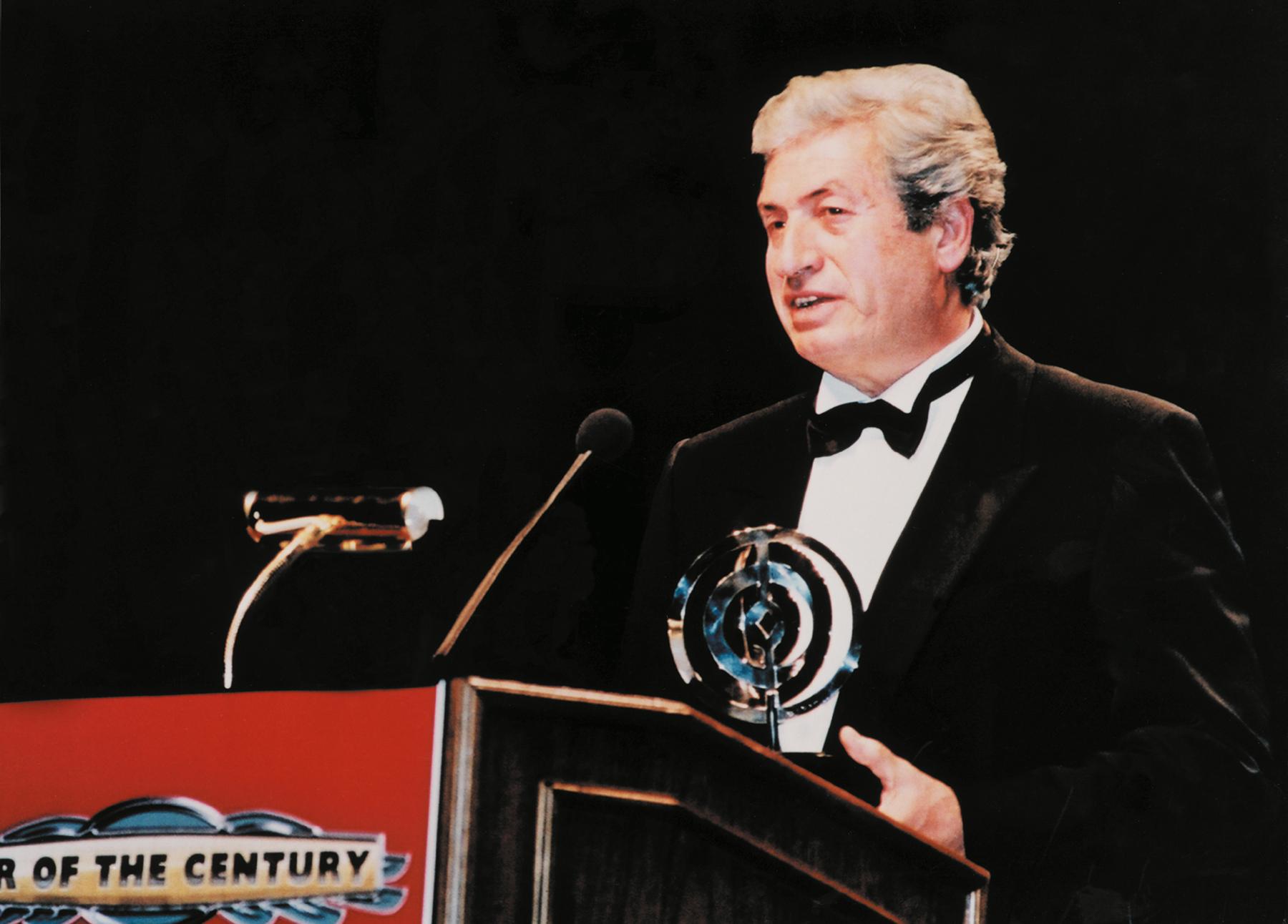
In 1999, 16 years after his death, Frua was included among the 25 initial candidates for the international Car Designer of the Century award. The nomination placed him beside figures such as Harley Earl, Virgil Exner, Flaminio Bertoni, Marcello Gandini, Giovanni Michelotti, Battista Pininfarina and the eventual winner, Giorgetto Giugiaro.
It was a significant posthumous acknowledgement, but Frua has still never enjoyed the broad public recognition given to several of his contemporaries.
His personality may partly explain why. He did not create a carefully managed public image, and his small studio often worked behind manufacturers or other coachbuilders whose names appeared more prominently in brochures. Disputes such as those surrounding the Renault Floride also show how easily the contribution of an independent designer could become blurred.
The cars, however, survived the confusion.
Gina and the final days
Teresa “Gina” Bussolino had been Frua’s assistant, companion and closest professional presence for decades. Photographs show them together in the studio as early as 1960, during the period when Frua was rebuilding his independent business after Ghia.
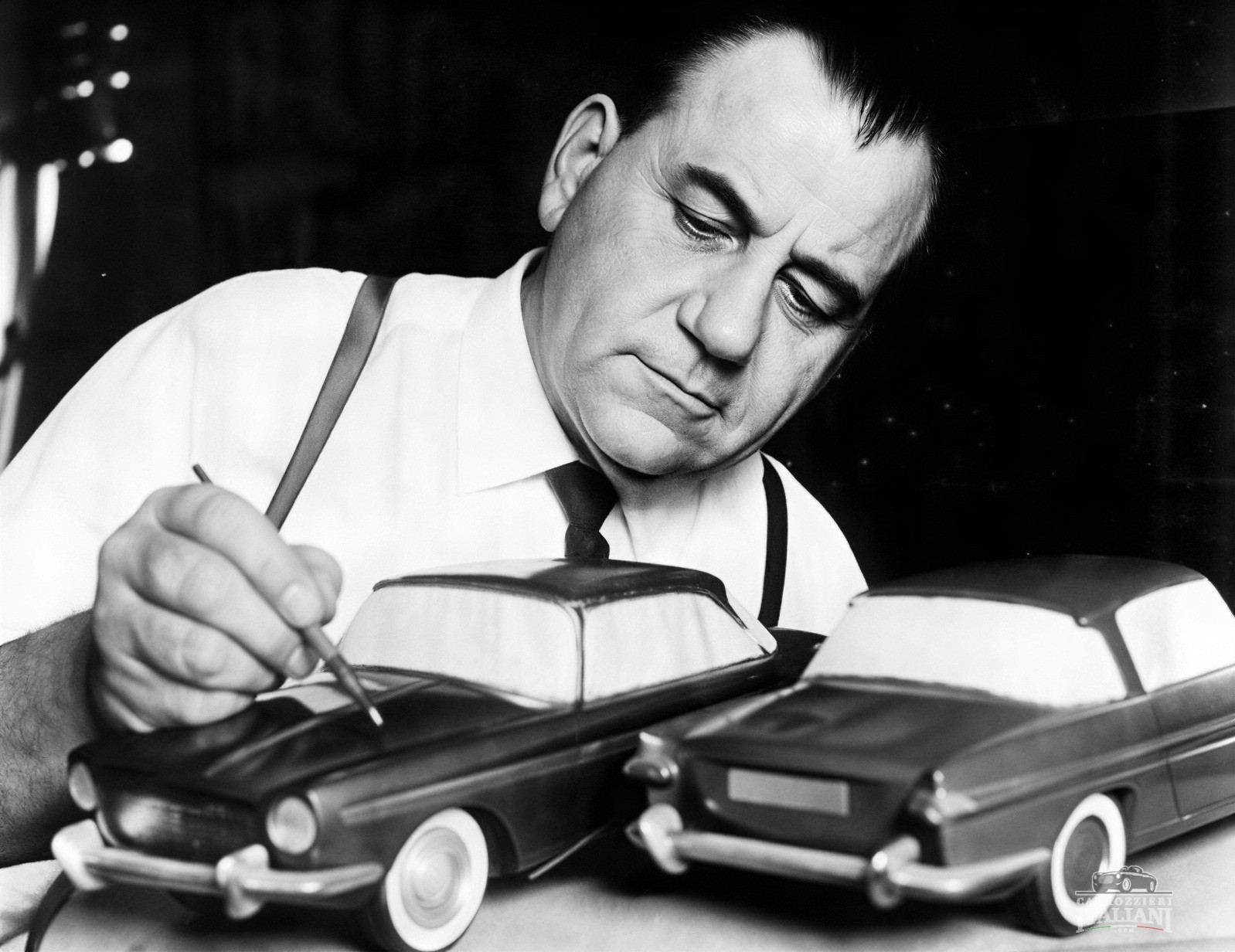
In February 1982, Frua underwent surgery for cancer. His health continued to decline. He named Gina as his universal heir and, on 23 June 1983, the couple married.
Pietro Frua died in Turin on 28 June, only five days after the wedding and less than two months after his 70th birthday.
He left no giant factory and no direct successor capable of continuing the company in its original form. What remained was a vast collection of drawings, photographs, documents and cars scattered across private collections, manufacturers and archives.
The archive and the return of the name
Interest in Frua’s work grew gradually after his death. Researchers began reconstructing the histories of individual chassis, prototypes and abandoned production proposals. The resulting catalogue revealed the true breadth of his career: not simply the Mistral, Quattroporte and Glas GT, but hundreds of designs ranging from tiny Fiats to formal Rolls-Royce projects.
His cars also returned to the concours field. Frua-bodied Maseratis, ACs, Glas models and one-off prototypes became increasingly valued, not only for their rarity but for the evidence they preserve of a vanished way of making automobiles.
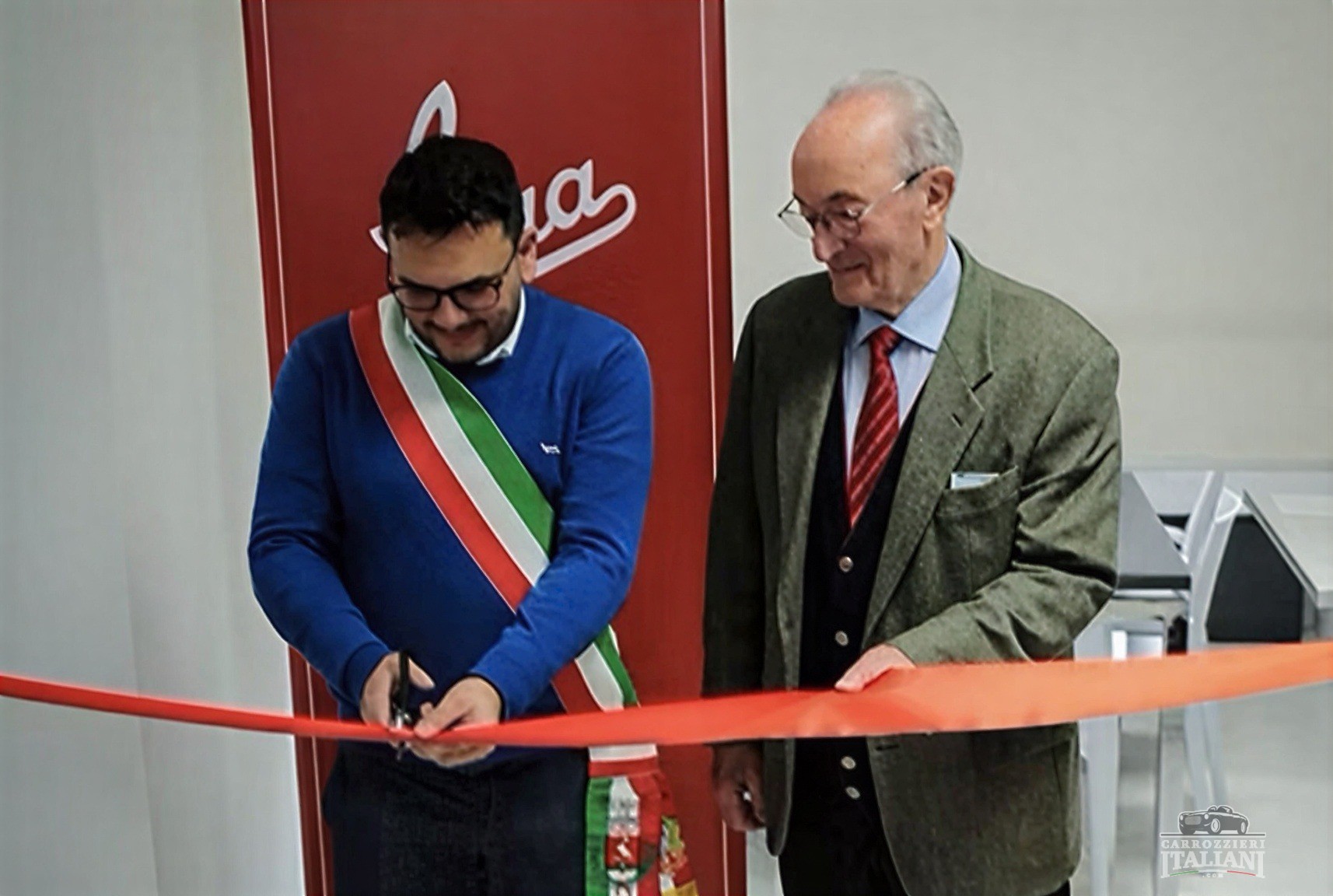
In 2025, a Swiss automotive heritage-licensing initiative announced the revival of the Frua name and the opening of an Archivio Pietro Frua in Turin. According to the announcement, the archive contains more than 600 original designs and is intended both to preserve Frua’s history and to provide inspiration for future automotive projects.
Whether the Frua name eventually appears on a new automobile matters less than the preservation of the original material. Drawings, technical documents and body records are essential for separating fact from repetition, especially in a career involving so many manufacturers, intermediaries and disputed attributions.
The last independent
Pietro Frua spent his life between the drawing board and the workshop floor.
He trained when a technical draughtsman had to understand how a body was physically assembled. He became independent when Turin was recovering from war, built his reputation on one-offs and small series, reached his peak as Italian design became an international export, and watched the profession change as manufacturers brought styling and prototype development inside their own companies.
He adapted without ever fully becoming part of that new system.
The Maserati Quattroporte proved that a four-door saloon could possess the presence of an Italian grand tourer. The Mistral gave Maserati one of its cleanest shapes. The Glas GT brought Turin elegance to an ambitious German manufacturer. The AC 428 and Monteverdi High Speed translated American V8 power into European form. Even projects that failed commercially, such as the Momo Mirage and Lamborghini Faena, showed that Frua remained interested in the complete automobile rather than the publicity value of a sketch.
He was not always the sole author. He worked within collaborations, inherited ideas, developed the work of others and saw some of his own contributions absorbed into larger companies. That complexity does not weaken his story. It makes it more accurate.
Frua’s real achievement was not the invention of a single, instantly recognisable shape. It was his ability to give many different manufacturers a convincing sense of elegance without making them all look exactly alike.
His name may be quieter than Bertone, Pininfarina or Giugiaro.
His work is not.

ABOUT THE AUTHOR
Andreas Scheidl
Italian classic car enthusiast with German roots. Renowned as a respected figure in the classic car community, he serves as a jury member at various international concours d'elegance, including the Classic Gala Schwetzingen and Mantova. As a content creator, Andreas passionately shares his profound knowledge and appreciation for vintage automobiles. His heart beats for cars designed by Giovanni Michelotti, showcasing his discerning taste and dedication to preserving the timeless elegance of automotive history.
More stories by Andreas Scheidl ↗CONTINUE READING
Posts You Might Like
Virgil Exner was the designer who taught Detroit to dream again
Virgil Exner transformed American car design with bold artistry, aerodynamic vision, and Italian collaboration that redefined Detroit’s style.
Read story
Marcello Gandini: The Man Who Designed the Future
From Lamborghini to Lancia, Marcello Gandini’s bold geometry and radical thinking defined modern car design and inspired generations of creators.
Read story
Aldo Brovarone: The Quiet Master of Elegance
Aldo Brovarone, the humble stylist behind Pininfarina’s greatest icons, from the Ferrari Dino to the Peugeot 504 and Lancia Gamma.
Read story
Tom Tjaarda: An American Designer in Turin
Tom Tjaarda shaped icons like the Fiat 124 Spider and De Tomaso Pantera. Discover the American who became Italy’s quiet design legend
Read story
THE CONVERSATION
Comments 0
Share a memory, a period photograph or a documented detail about this story.