
Marcello Gandini: The Man Who Designed the Future
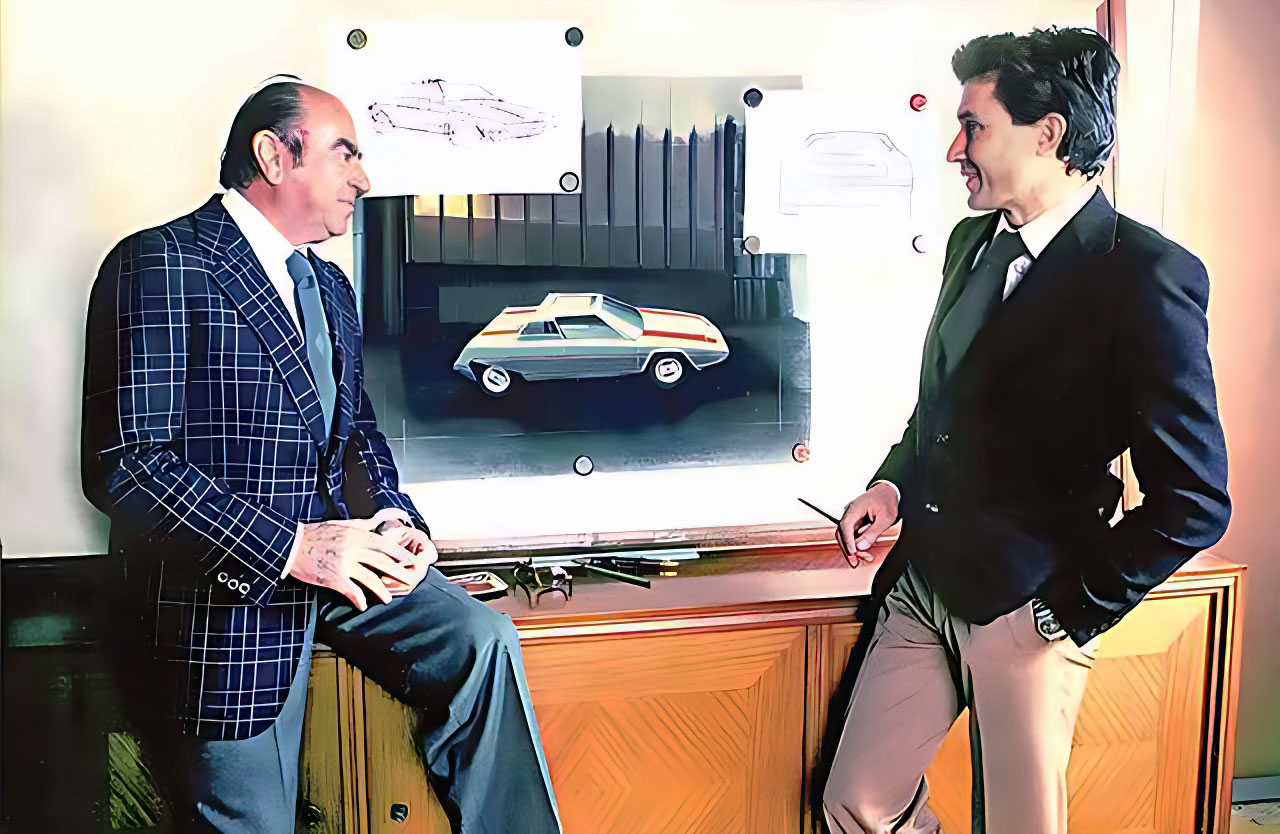
Marcello Gandini (1938–2024) was an Italian automobile designer whose radical vision reshaped the language of car design and defined the very idea of the modern supercar. Best known for sculpting icons such as the Lamborghini Miura and Countach, Gandini’s work spanned from futuristic prototypes to everyday city cars — each infused with a sense of structural clarity and daring imagination.
Over a career of more than five decades, he created around two hundred designs, leaving a lasting imprint on generations of stylists and engineers alike. Revered within the industry, Flavio Manzoni, Ferrari’s chief designer, once called him “probably the greatest car designer ever.”
Yet Gandini himself rejected the myth of the artist-genius: modest and methodical, he saw the automobile as “not a work of art – but something that, like art, can stir emotion.”
This essay traces his journey from his roots in Turin to his final years, exploring the mind of a designer who didn’t just style cars — he reimagined what a car could be.
Early Life and Passion for Automobiles
Marcello Gandini was born on August 26, 1938, in Turin, Italy — a city that was, and remains, the epicenter of Italian automotive design. He grew up in a family steeped in the arts: his father was a classically trained composer and conductor, and young Marcello was expected to follow the same path. He began piano lessons at four and, at eight, was sent to a strict Salesian boarding school, destined, his parents hoped, to become a concert pianist.
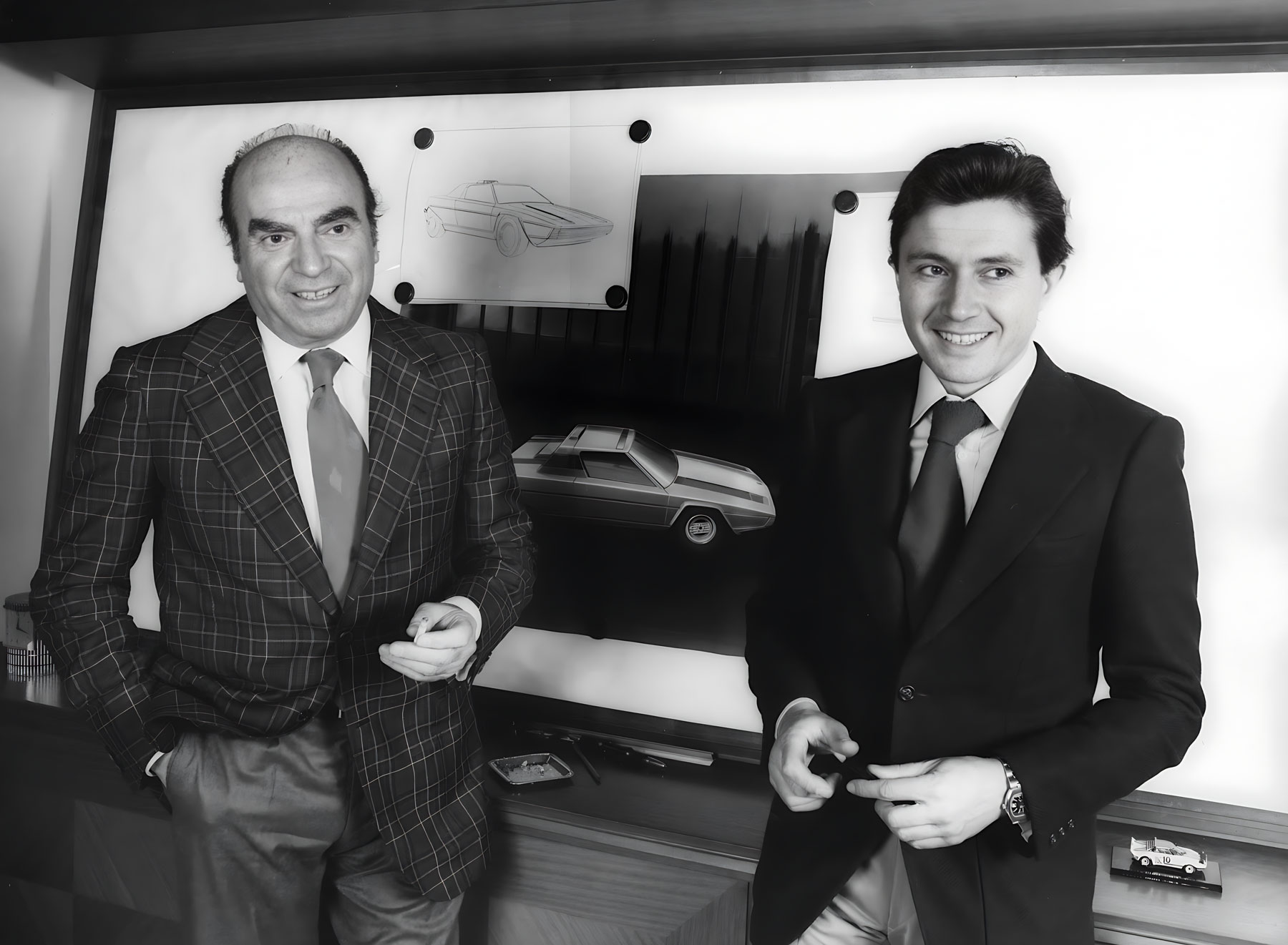
But Gandini’s true fascination lay not in harmony and rhythm, but in pistons and mechanics. In one formative act of rebellion, when his parents gave him money to buy a Latin textbook, he spent it instead on Dante Giacosa’s Motori Endotermici (Endothermic Engines), a technical manual on internal combustion design. That small defiance said everything: Gandini was already tuning his life to a different frequency.
Throughout his teens, he cultivated what he later called “an early and intense interest in cars and mechanical engineering.” He taught himself through experimentation, tinkering with anything he could take apart and rebuild. One early adventure involved modifying a friend’s OSCA 1500 sports car for hillclimb races — an unofficial project where he reshaped panels with chicken wire and hand tools. It was crude, clever, and utterly inventive, foreshadowing the resourceful approach that would define his career.
“I was born a designer of mechanical things,” Gandini once said, underscoring his belief that style could never exist apart from engineering. By the time he left high school at eighteen — to his parents’ dismay — he was fully committed to carving out a place in the world of car design.
In the early 1960s, Turin was humming with creative energy — a city where Pininfarina, Ghia, and Bertone turned metal and ambition into rolling sculpture. For a young Marcello Gandini, breaking into that world was no easy feat. He picked up odd jobs for local coachbuilders, learning the craft from the inside while trying to make his name in a fiercely competitive scene.
The turning point came in 1964, when the 25-year-old Gandini walked into Nuccio Bertone’s office and asked for a job. Bertone — already a legend for spotting young talent — had once hired Giorgetto Giugiaro, then the studio’s star designer. But with Giugiaro still on staff, there was no opening for Gandini. Even so, Bertone was struck by the young man’s confidence and technical sketches, sensing something unconventional in his approach.
🔗 Read more: Giorgetto Giugiaro: Car Designer of the Century
A year later, fortune intervened: Giugiaro left to found his own studio, and Bertone immediately called Gandini back. At just 27, he became chief designer at Carrozzeria Bertone — a stunning rise for a newcomer with no formal design training.
What followed was a 14-year partnership that would rewrite automotive design history. Bertone gave Gandini remarkable freedom to experiment, encouraging him to think beyond aesthetics and question the very architecture of the car. Within his first year, Gandini was assigned a project that would change everything: the design of a radical new sports car for a small but ambitious manufacturer called Lamborghini.
Shortly after joining Bertone, Gandini was tasked with styling Lamborghini’s new flagship — a radical, mid-engined sports car known as the Miura. Lamborghini’s young engineers, led by Gian Paolo Dallara and Paolo Stanzani, had already built a bare prototype chassis for the project, a bold experiment to mount a V12 engine transversely behind the seats. What they needed now was a body to match their engineering audacity.
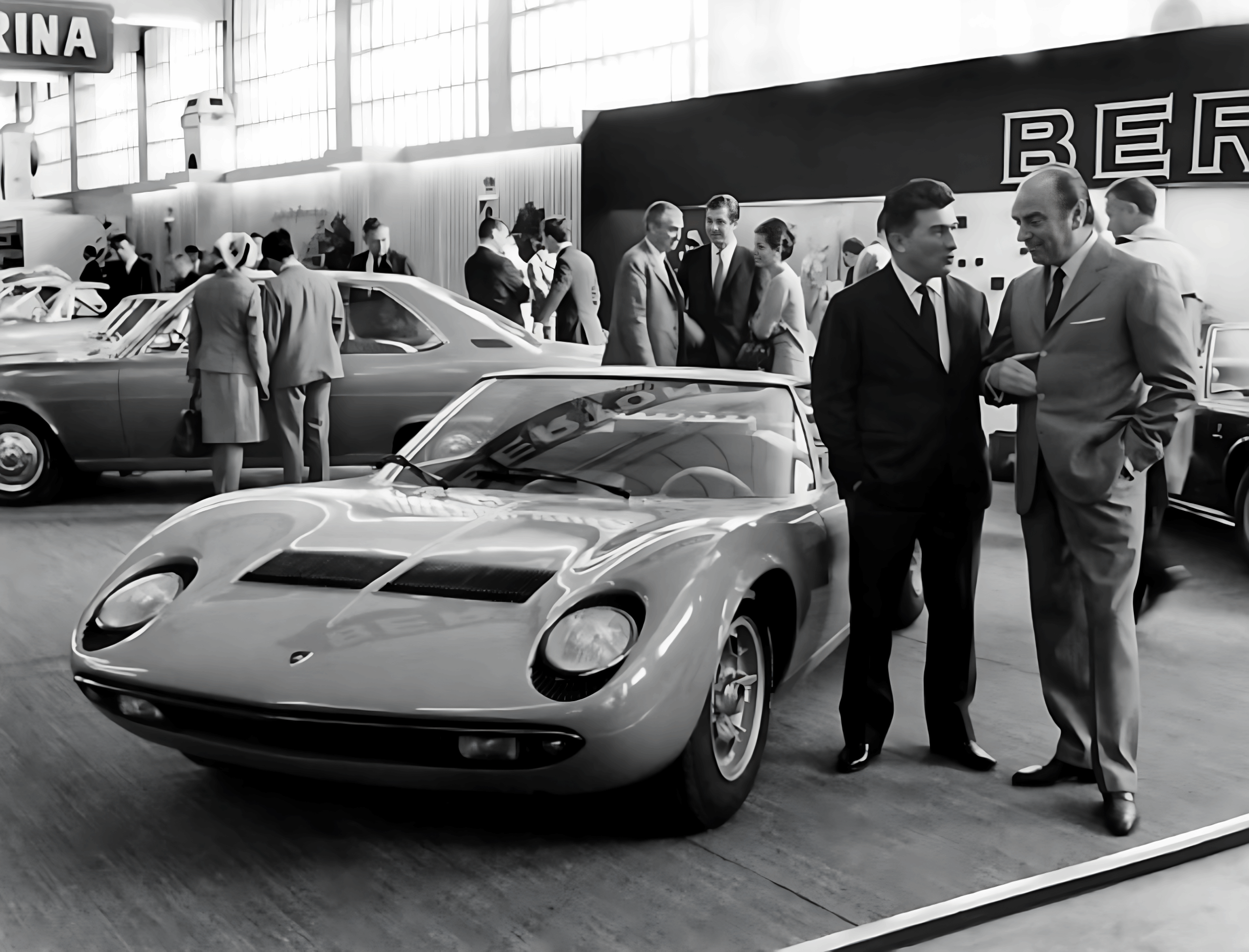
It’s often said that Gandini created the Miura from a blank sheet, but in truth, the concept’s first visual ideas had taken shape under Giorgetto Giugiaro, who was still at Bertone before his departure in 1965. In 2008, this early work resurfaced when a preparatory model of the “Giugiaro Lambo” — reconstructed by Fabrizio Giugiaro as a gift to his father — was unveiled in Italy. Based on Giorgetto’s 1964 preparatory drawings, the mock-up revealed the embryonic form of the Miura: the low beltline, the sweeping, slanted windscreen, and the tight, mid-engine stance. These sketches, created before Gandini’s arrival, outlined the foundation on which he would later build.
Around the same time, Carrozzeria Touring — another storied Milanese coachbuilder — also submitted its own proposal for Lamborghini’s V12 project, a design called the Tigre. Touring’s version was elegant but conservative, and Ferruccio Lamborghini ultimately rejected it in favor of Bertone’s more daring direction.
When Gandini finally took over the project in late 1965, he reimagined Giugiaro’s early proportions through his own lens — sharper, bolder, and more sculptural. Working almost around the clock, he transformed the chassis into a complete car in just a few months. When the Lamborghini Miura debuted at the 1966 Geneva Motor Show, it caused an immediate sensation. Its low, sinuous silhouette and dramatic mid-engine proportions were unlike anything on the road. The Miura didn’t just look fast; it looked alive.
Many still regard it as the world’s first true supercar, and some call it “the most beautiful car ever made.” For Gandini — barely in his late twenties — the acclaim was instant, if a little uncomfortable. He would later call the Miura a “flawed compromise,” admitting that as a newcomer he didn’t yet have the freedom to be fully radical. “The audacity was made acceptable by the sweetness, by the flow of the design,” he reflected. “Nobody rejected the Miura. There was immediate consensus — even more than it deserved.”
Yet that blend of elegance and aggression became its power. With its transversely mounted V12, voluptuous bodywork, and a height of just 105 cm, the Miura set a new archetype for high-performance cars: sensuous, mid-engined, and utterly theatrical. It proved that a supercar could be both mechanically daring and emotionally beautiful — and it put Marcello Gandini’s name on the map overnight.
Concept Cars and Cutting-Edge Ideas in the Late 1960s
Following the Miura, Gandini’s creativity exploded at Bertone. The late 1960s saw him embark on a string of bold concept cars and forward-looking production designs that redefined automotive form. Gone were the sensuous curves of earlier Italian coachwork; in their place emerged sharp angles, flat planes, and bold geometries. It was the dawn of the wedge era — and Gandini stood at its cutting edge.
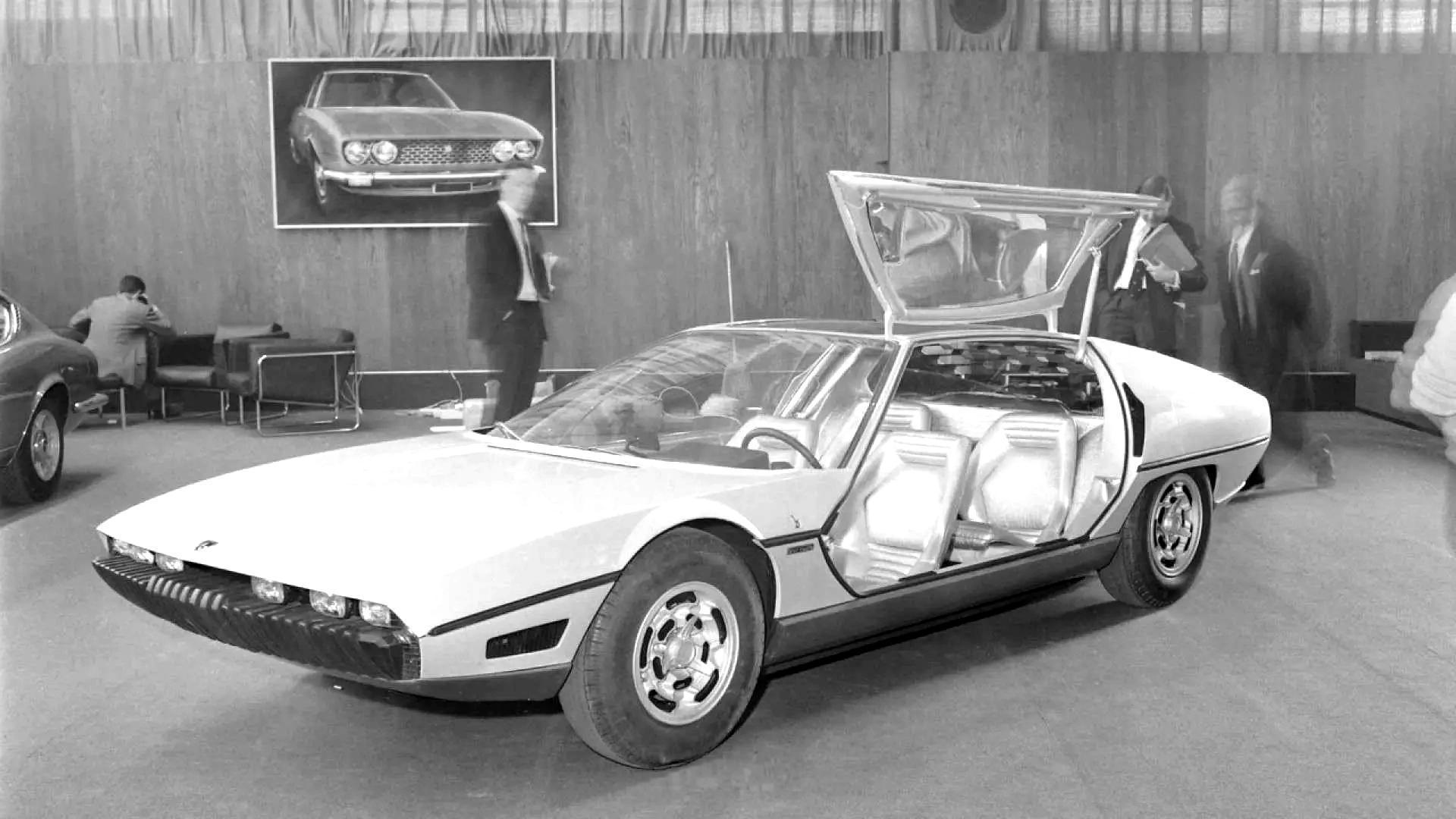
One of his first provocations was the Lamborghini Marzal of 1967, a shimmering silver show car with vast glass gull-wing doors and a recurring hexagonal motif. Inside, silver leather covered every surface, while a louvered rear window filtered light into the cabin like a crystal prism. Pure fantasy, the Marzal was never meant for production — but it revealed Gandini’s growing obsession with transparency, structure, and geometric order.
🔗 Read more: Sharper Than a Leisure Suit: The Wedge-Shaped Revolution of Italian Concept Cars
If the Marzal was a dream, the Alfa Romeo Carabo (1968) was a manifesto. Cloaked in iridescent green and barely a meter high, the Carabo looked as if it had landed from another planet. Its origami-like body introduced Gandini’s now-iconic scissor doors, swinging upward like insect wings — a detail that would later define the Lamborghini Countach. With its razor edges, flat snout, and impossibly low stance, the Carabo set the visual template for the next decade of supercar design and confirmed Gandini as the prophet of a new automotive language.
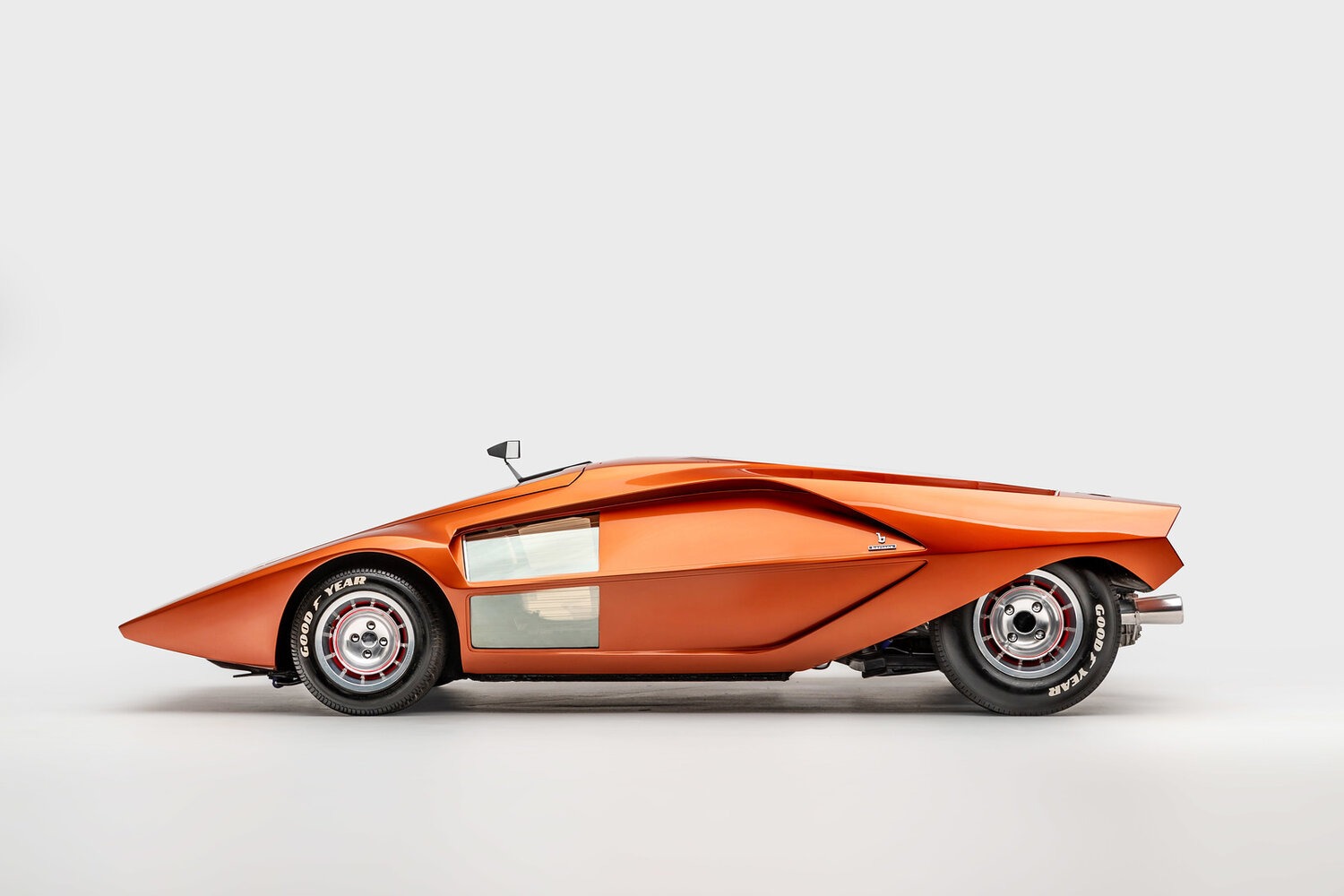
He pushed that language even further with the Lancia Stratos Zero (1970), a concept so extreme it seemed more spacecraft than car. Painted metallic orange and standing just 84 centimeters tall, it forced the driver to climb in feet-first through a flip-up windscreen. Built as a provocation to attract Lancia’s attention, it was initially ignored — until Nuccio Bertone, ever the showman, drove the working prototype straight into Lancia’s Turin headquarters courtyard. The stunt worked. Impressed and intrigued, Lancia’s leadership — encouraged by rally director Cesare Fiorio — commissioned Bertone to develop a new mid-engine rally car.
From that wild beginning emerged the Lancia Stratos HF, launched in 1973. Compact, aggressive, and wrapped in a wedge-shaped body with a wraparound windshield, the Stratos brought Gandini’s radical design philosophy into the real world of motorsport. It went on to dominate the World Rally Championship, winning three consecutive titles (1974–1976) — a rare instance of a concept-car idea evolving directly into a world-beating race car.

Not all of Gandini’s late-’60s work was so experimental. He also proved his mastery of production design. The Alfa Romeo Montreal, first shown as a concept at Expo 67 and later refined into a production model in 1970, blended elegance with muscle. He completed the Fiat Dino Coupé, finishing work begun by Giugiaro, and designed the Iso Rivolta Lele GT in 1969. His range extended even to small cars like the Autobianchi A112, introduced the same year — a compact city hatchback that carried his sense of proportion and purpose into the everyday.
Across all these projects, Gandini’s trademarks began to crystallize: bold architecture, inventive detail, and a deep concern for how a car’s mechanical layout shaped its form. “I was more interested in structure than decoration,” he later explained. That philosophy — the belief that engineering should drive design — would guide him through the 1970s, when his imagination reached its most radical expression.
The 1970s: Wedges, Supercars, and Rally Legends
If the late ’60s announced Gandini’s talent, the 1970s confirmed his genius. Over the next decade, his imagination ran at full throttle, producing everything from exotic supercars to pragmatic hatchbacks — all united by his unmistakable vision. This was the era when Gandini fully embraced the wedge as his design signature, creating cars that looked like rolling pieces of futurism.
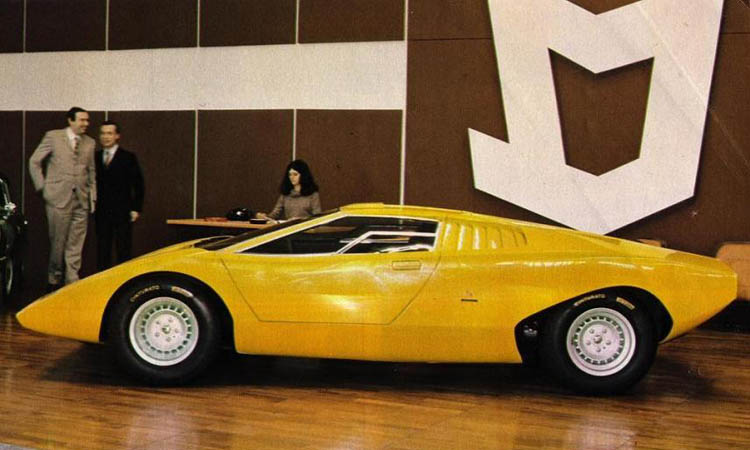
Foremost among them was the Lamborghini Countach. First revealed as a prototype in 1971 and entering production in 1974, it stunned the world with its razor-edged silhouette, scissor doors (borrowed from the Carabo), and sheer theatrical presence. If the Miura was a sculpture in motion, the Countach was a shockwave — low, wide, and aggressively angular, as if designed to slice through the air and convention alike. “Altogether more extreme, even outlandish, [the Countach] was closer to his ideal,” one obituary noted. Gandini himself called it “the dream,” acknowledging that it was ahead of its time and initially divisive: “Some people liked it straight away, but most… took a long time [to accept it].” Yet its influence was undeniable. Remaining in production for an extraordinary 17 years, the Countach became the archetype of the supercar — an icon so bold that even decades later, it still seemed to belong to the future.
The early 1970s also saw Gandini extend his reach beyond Lamborghini. He designed the Ferrari Dino 308 GT4 (1973), Ferrari’s first mid-engine V8 2+2 and a departure from the marque’s usual Pininfarina style. Its sharp lines and wedge stance were pure Gandini, marking the only time a production Ferrari carried the Bertone badge. Around the same period came the Maserati Khamsin (1972), a front-engine GT whose crisp creases and distinctive glazed rear panel combined Gandini’s futuristic aesthetic with Maserati’s grand-touring elegance.
🔗 Read more: The Ferrari Dino 308 GT4 : When Gandini Broke Maranello’s Rules
Meanwhile, Gandini continued to balance extremes — pairing headline-grabbing supercars with small, everyday vehicles. For Innocenti, he reimagined the Mini as the Mini 90/120 (1974), turning Britain’s beloved city car into a modern Italian hatchback with fresh Bertone styling. He also penned the Fiat X1/9 (1972), a compact mid-engine roadster that distilled the wedge philosophy into an affordable, accessible “mini-supercar.” Even the Fiat 132 sedan and the first-generation BMW 5 Series (E12) bore traces of his thinking; Gandini worked with BMW’s Paul Bracq as a consultant, helping refine the proportions of what would become a landmark executive saloon. It was remarkable range: in a single decade, he could sketch both a family sedan and a spaceship on wheels.
Among his most enduring achievements was the transformation of the radical Lancia Stratos Zero concept into the rally-dominating Lancia Stratos HF. The production Stratos (launched in 1973) translated the Zero’s extreme wedge language into a compact, functional rally machine, powered by a Ferrari V6. Short, wide, and agile, it looked like no other car on a rally stage. Driven by legends like Sandro Munari, the Stratos captured the World Rally Championship three years running (1974–1976), turning Gandini’s design audacity into real-world glory. The sight of a wedge-shaped Stratos sliding sideways through Alpine snow became an emblem of the era.
By the end of the 1970s, Marcello Gandini had established himself as one of the defining creative forces in automotive history. He had shaped Lamborghini’s identity with the Miura, Espada, Urraco, and Countach; given Lancia a rally champion; and left his mark on Ferrari, Maserati, Alfa Romeo, Fiat, and BMW. His designs rejected the soft curves of the past in favor of crisp geometry and architectural purpose — a style that seemed to channel the space age into sheet metal.
Concepts like the Lamborghini Bravo (1974) and Alfa Romeo Navajo (1976) further pushed his experimentation, exploring radical forms that would inspire designers for decades. Looking back, Gandini’s 1970s at Bertone stand as one of the most prolific creative runs in automotive history — a decade when he didn’t just predict the future of design, he drew it.
Leaving Bertone: The Freelance Years Begin
As the 1970s drew to a close, the automotive world was changing. The oil crisis had cooled some of the excesses of the early decade, and many manufacturers were building their own in-house design studios rather than commissioning independent coachbuilders. Ever attuned to the industry’s direction, Marcello Gandini decided it was time to move on. In July 1979, after fourteen extraordinary years at Bertone, he struck out on his own. He founded Studio Marcello Gandini — occasionally referred to in early reports as Clama — to work as an independent consultant. For the first time, Gandini could choose his own projects and clients, expanding far beyond the Bertone portfolio that had defined his fame.
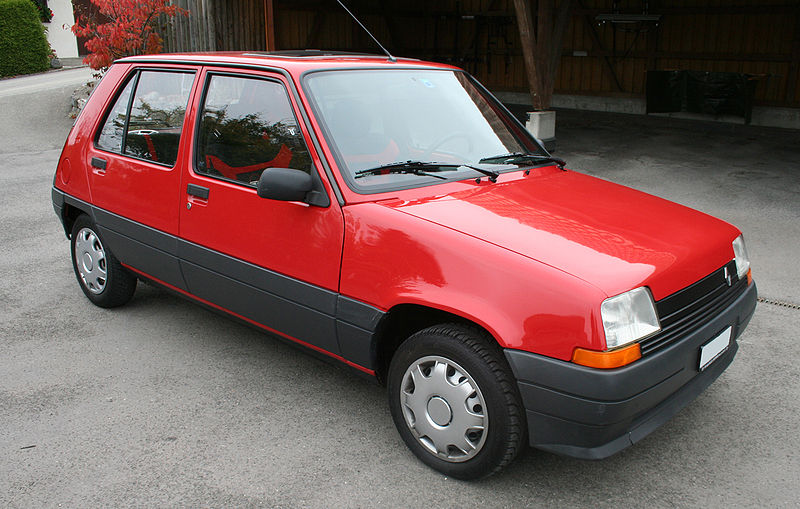
One of his earliest and most fruitful collaborations came with Renault. Throughout the early 1980s, Gandini worked almost exclusively with the French marque, infusing its lineup with Italian clarity and verve. His standout achievement was the second-generation Renault 5, launched in 1984 and affectionately known as the Supercinq. Gandini completely reimagined the beloved supermini, modernizing its surfaces while preserving its friendly personality. The result was an enormous success across Europe — proof that the man who had drawn the Countach could also design a people’s car.
He also tackled something at the opposite end of the automotive spectrum: the Renault Magnum long-haul truck (known internally as the AE). Unveiled in the early 1990s, it was a radical cab-over design with an unusually tall, open cabin that prioritized driver comfort and visibility. Gandini’s hand gave the utilitarian machine a surprising sense of presence, and the Magnum went on to win the International Truck of the Year award. Between the Supercinq and the Magnum, Gandini had shown that his design intuition transcended category — from compact city cars to trucks.
Even as he worked closely with Renault, Gandini’s studio remained in quiet demand worldwide. He advised Peugeot, Nissan, Toyota, and Mazda on advanced design studies throughout the 1980s, often behind the scenes and without public credit. His influence nonetheless surfaced in recognizable ways. He had earlier contributed to the Citroën BX (1982), whose angular body — initiated during his final Bertone years — bore all the hallmarks of his geometric style. His consultancy work also extended to Volkswagen’s first Polo (1974), derived from the Audi 50 styled at Bertone.
🔗 Read more: The Volvo Tundra vs Citroën BX
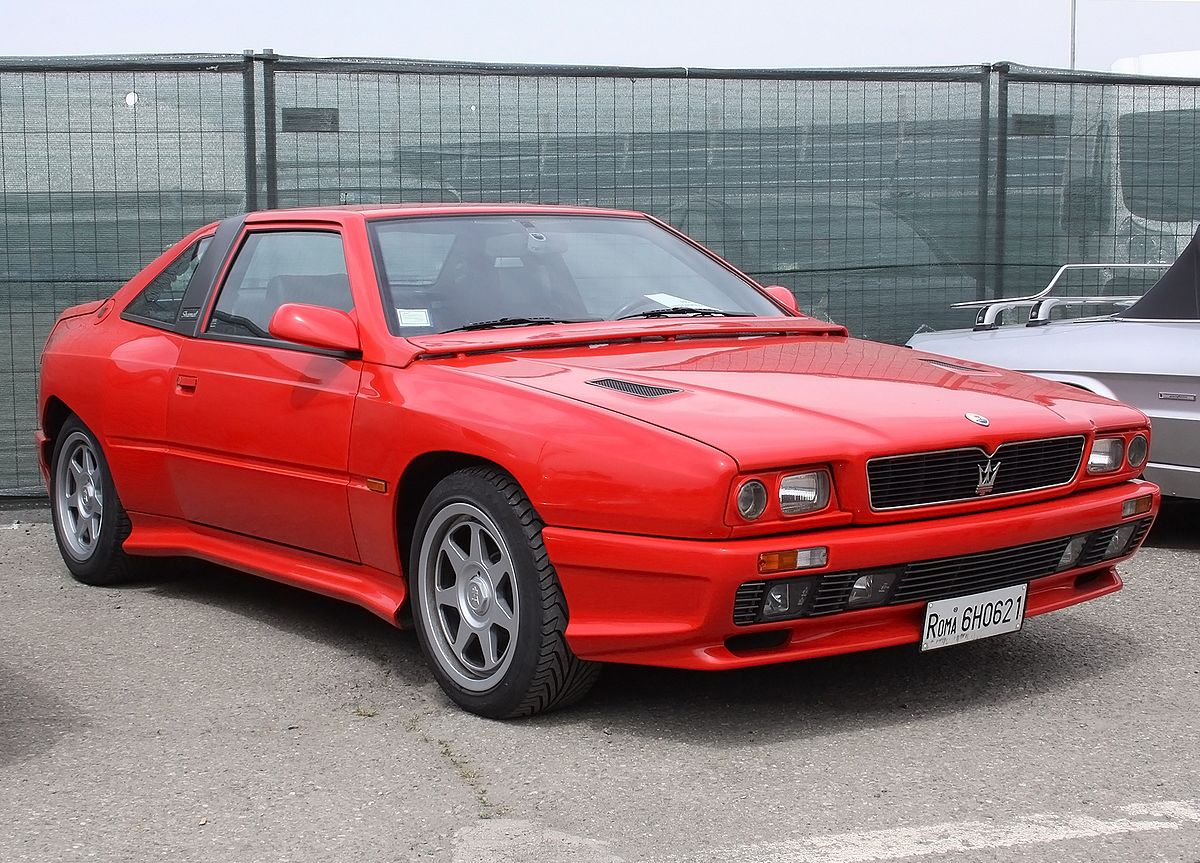
Back in Italy, Gandini took on a series of projects for Maserati, updating the Biturbo range and designing the muscular Maserati Shamal (1989), with its distinctive flared arches and integrated rear spoiler. The car’s compact proportions and taut surfacing reflected Gandini’s continued fascination with purposeful architecture.
By the close of the decade, Gandini had quietly reshaped vehicles across the automotive spectrum — family hatchbacks, long-haul trucks, luxury GTs, and rally-bred icons. If his Bertone years had made him a star, his freelance period revealed something deeper: a designer uninterested in celebrity, committed instead to solving problems through structure, logic, and imagination.
Supercar Renaissance and New Directions in the 1990s
Ironically, even after leaving Bertone, Marcello Gandini could never quite escape the orbit of Lamborghini — nor, perhaps, did he want to. In the late 1980s, under new ownership, Lamborghini invited him back to design the successor to the Countach. Codenamed Project 132, Gandini’s proposal was a dramatic, low-slung wedge that carried forward the raw spirit of his 1970s masterpieces. This car would become the Lamborghini Diablo, unveiled in 1990.
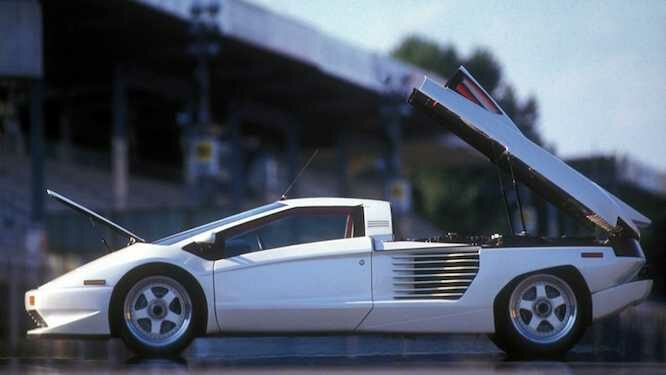
But just before the launch, Lamborghini was acquired by Chrysler, and the new American management balked at Gandini’s aggressive design. Executives feared that its sharp lines felt “too 1970s” and ordered a series of revisions to soften the body and modernize the details. Gandini, never one to compromise lightly, was dismayed to see his work diluted. Rather than abandon the concept, he found a creative outlet for the original design. Teaming up with former Lamborghini engineer Claudio Zampolli and music producer Giorgio Moroder, he adapted his unaltered Project 132 styling for a new supercar: the Cizeta-Moroder V16T.
🔗 Read more: The Cizeta V16T: A Dream Come True
Debuting in 1988 — even before the Diablo — the Cizeta was an outrageous machine powered by a transverse sixteen-cylinder engine. Its dramatic slats, deep side intakes, and low, pointed nose were pure Gandini, too wild for Chrysler but perfectly in tune with his uncompromising vision. As one writer later observed, “Distraught by Chrysler’s revisions to his design, Maestro Marcello found redemption in a new V16-powered car.” In a sense, Gandini had the last word: the Cizeta stood as his unfiltered dream of what the Diablo should have been.
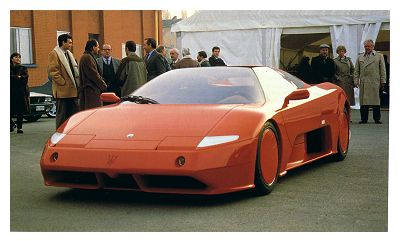
Gandini’s name also surfaced in connection with another attempt to resurrect a legend — Bugatti. In the late 1980s, an Italian consortium sought to revive the brand with a futuristic supercar, the EB110. Gandini was involved early in the project, contributing design proposals and shaping its initial direction. Although the production EB110, launched in 1991, was ultimately credited to Giampaolo Benedini, traces of Gandini’s crisp, folded surfaces remained visible in its final form. Around the same period, he returned to Maserati, creating the elegant yet taut Quattroporte IV (1994), which translated his wedge aesthetic into a refined luxury sedan. He also penned the wild Maserati Chubasco concept (1990), reworked the De Tomaso Pantera 90 Si, and styled the De Tomaso Biguà (later sold as the Qvale Mangusta) in 1996. Even in his fifties, Gandini’s pen was tireless — his work retained its bold geometry and mechanical logic, even as automotive fashion softened around him.
In his later years, Gandini broadened his design horizons. He applied his structural imagination to industrial design, architecture, and interiors, even planning factory layouts and creating furniture. One project saw him design the interior of a Turin nightclub, transforming it with automotive-inspired materials and lighting. His curiosity extended to motorcycles and aviation, notably in the Heli-Sport CH-7 — a compact two-seat helicopter that carried his unmistakable aerodynamic touch.
Despite such versatility, Gandini remained a deeply private figure. Unlike some of his contemporaries, he shunned publicity and rarely spoke about his past successes. Friends and colleagues recalled that he could grow impatient when interviews drifted toward nostalgia; he preferred to discuss whatever he was building next. As he once put it with characteristic modesty:
“When you’re young, the important thing is to work — because it’s important to eat. I got to eat every day by designing cars, so in that sense I had success. But with styling, the real goal is to create emotion. Without that, a car is useless.”
That pragmatism kept him grounded, even as his legacy expanded far beyond the wedge era. Whether designing a supercar, a truck, or a helicopter, Gandini never stopped chasing that elusive fusion of logic and emotion — the invisible point where engineering becomes art.
Legacy and Final Years
Marcello Gandini’s influence on car design is immeasurable. If there were a Mount Rushmore of automotive designers, his face would surely stand beside Giugiaro and Pininfarina. The wedge era of the 1970s was largely his creation, and traces of his landmark ideas — the Miura’s mid-engine layout, the Countach’s scissor doors, the Stratos’s rally-bred compactness — still echo in supercars today. Over his career, he designed everything from exotics to city cars, each infused with Italian brio and technical ingenuity.
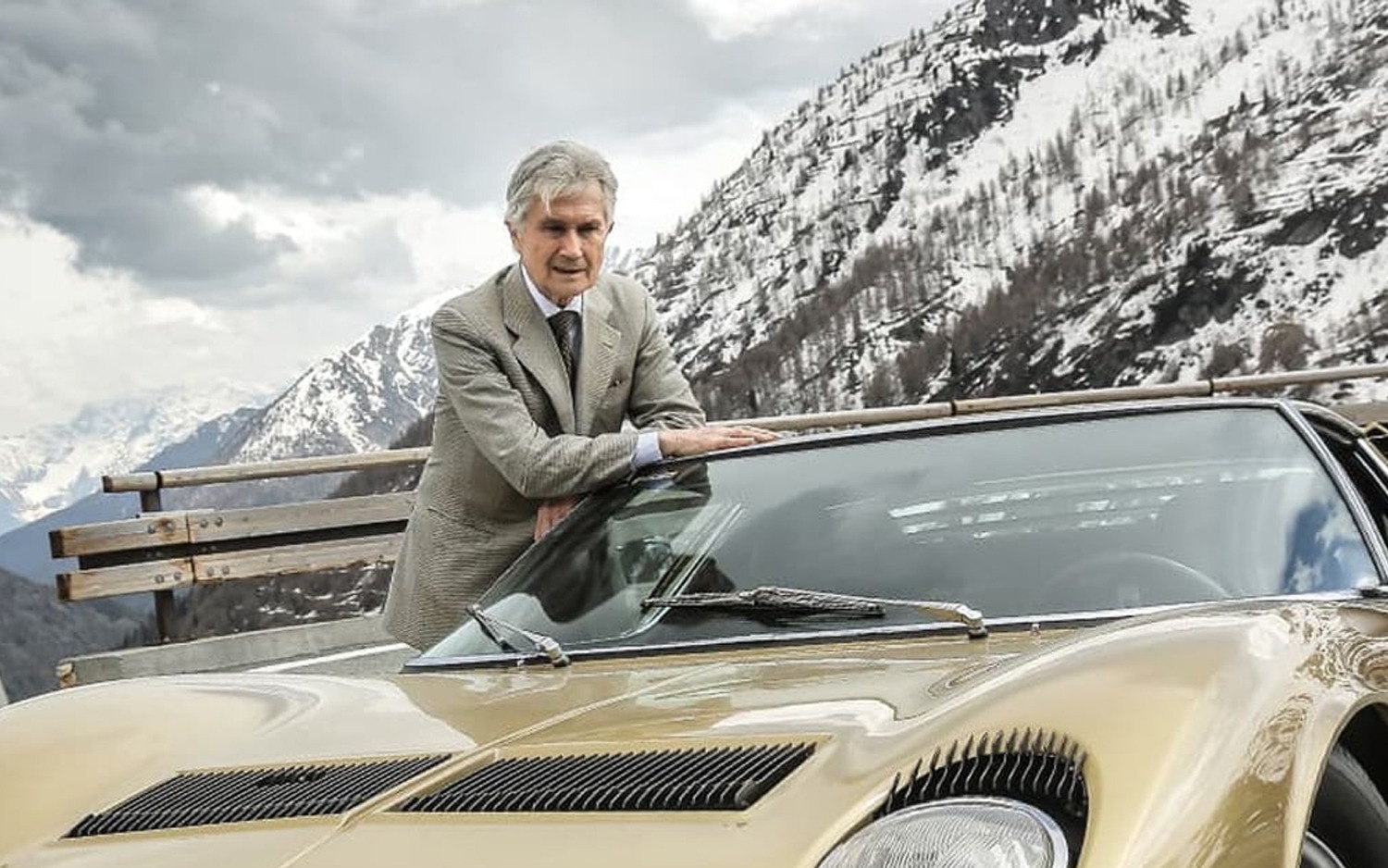
When Car Design News honored him with its first Lifetime Achievement Award in 2012, the editors wrote that “his stature within the industry could not be overstated.” Gandini accepted the award with characteristic modesty, joking: “I didn’t invent penicillin. These are just ideas that came to me.” To the end, he saw himself not as an artist in pursuit of glory but as an engineer-designer solving problems through imagination and logic.
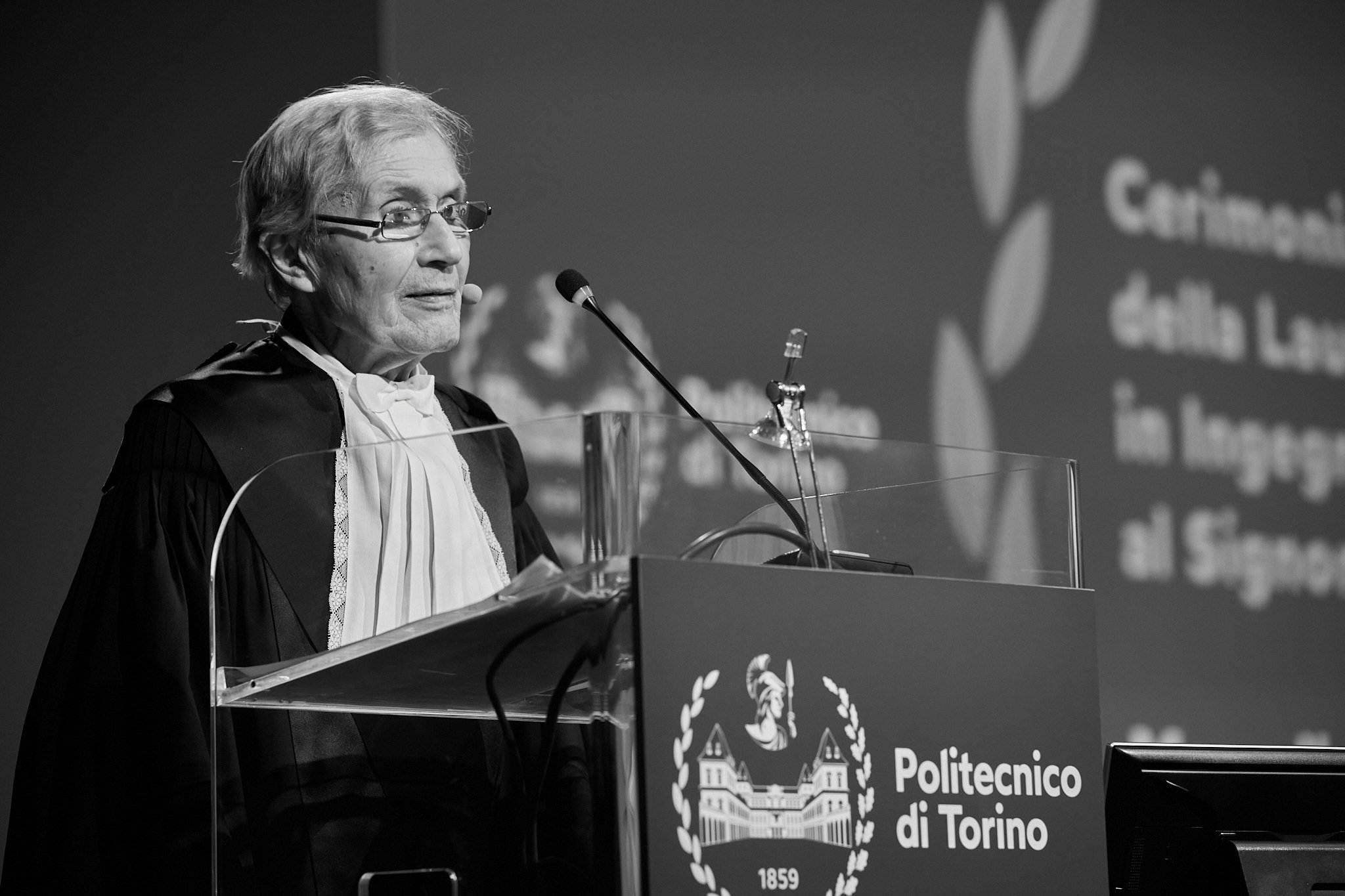
In January 2024, long after he had quietly retreated from the spotlight, Gandini received a final and deeply symbolic tribute: the Polytechnic University of Turin awarded him an honorary degree in Mechanical Engineering. For the boy who once spent his textbook money on a manual about internal-combustion engines, it was a poetic full-circle moment. During his acceptance lecture, he offered what felt like both a design credo and a love letter to the automobile:
“The automobile is a dream, a desire, that has lasted millennia. It is half a flying carpet and half a home. It is the magical object that gives us the freedom to go wherever we want in an instant, while offering protection… It is freedom. Individual freedom.”
To Gandini, a car represented “the romantic side of mechanics,” an extension of our human longing for speed, strength, and beauty. Coming from the man who gave shape to some of the most romantically mechanical machines ever built, those words carried profound weight.
On a personal level, Gandini’s story closed with reconciliation and grace. The father who had once disapproved of his automotive ambitions eventually came to understand his son’s gift — reportedly after a spirited ride in a Lamborghini Miura. “Only then did he understand that I knew how to make other notes sound — those of engines,” Gandini recalled. It was a fitting metaphor for a man who composed his symphonies not in music but in metal, each car a movement in a lifelong concerto of design.
Gandini lived quietly in the Piedmont region with his wife, in a restored abbey at the foot of Monte Musinè outside Turin. In later years, he maintained a low profile even as journalists and enthusiasts sought him out for retrospectives. He passed away on 13 March 2024, aged 85. News of his death reverberated throughout the automotive world — a world that still moves, quite literally, on the lines and logic he imagined. Tributes poured in for the maestro who had given tangible form to dreams on wheels.
🔗 Read more: Legendary Designer Marcello Gandini Passes Away at 85
From the lambent curves of the Miura to the knife-edged aggression of the Countach, from the rally grit of the Stratos to the everyday charm of the Renault Supercinq, Gandini’s range was astonishing. Few designers have shaped both extremes of the automotive spectrum so decisively. His credo — “You cannot separate design from mechanical substance” — remains a guiding principle for generations of stylists and engineers.
By uniting bold form with inventive function, Marcello Gandini changed the course of car design history. His story — from a boy sketching cars in Turin to an old master celebrated by his peers — is ultimately a testament to creativity, curiosity, and the enduring romance of the automobile.

ABOUT THE AUTHOR
Andreas Scheidl
Italian classic car enthusiast with German roots. Renowned as a respected figure in the classic car community, he serves as a jury member at various international concours d'elegance, including the Classic Gala Schwetzingen and Mantova. As a content creator, Andreas passionately shares his profound knowledge and appreciation for vintage automobiles. His heart beats for cars designed by Giovanni Michelotti, showcasing his discerning taste and dedication to preserving the timeless elegance of automotive history.
More stories by Andreas Scheidl ↗CONTINUE READING
Posts You Might Like
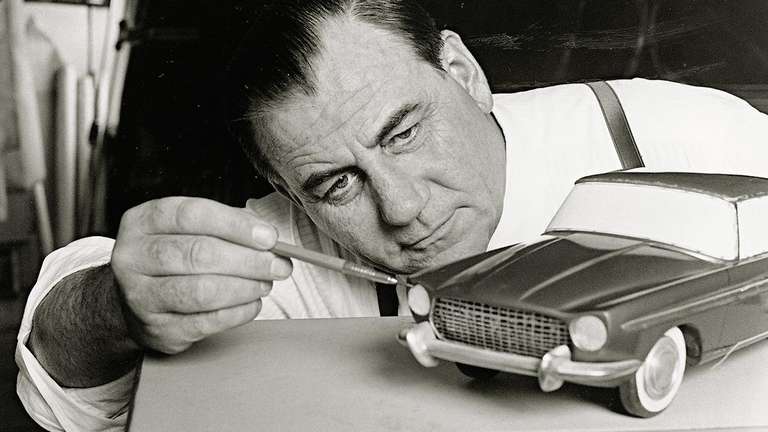
Pietro Frua: The Quiet Master of Italian Style
Pietro Frua, an influential Italian automotive designer born in 1913, left an indelible mark on the industry with his visionary work, shaping iconic cars and pioneering aesthetic excellence.
Read story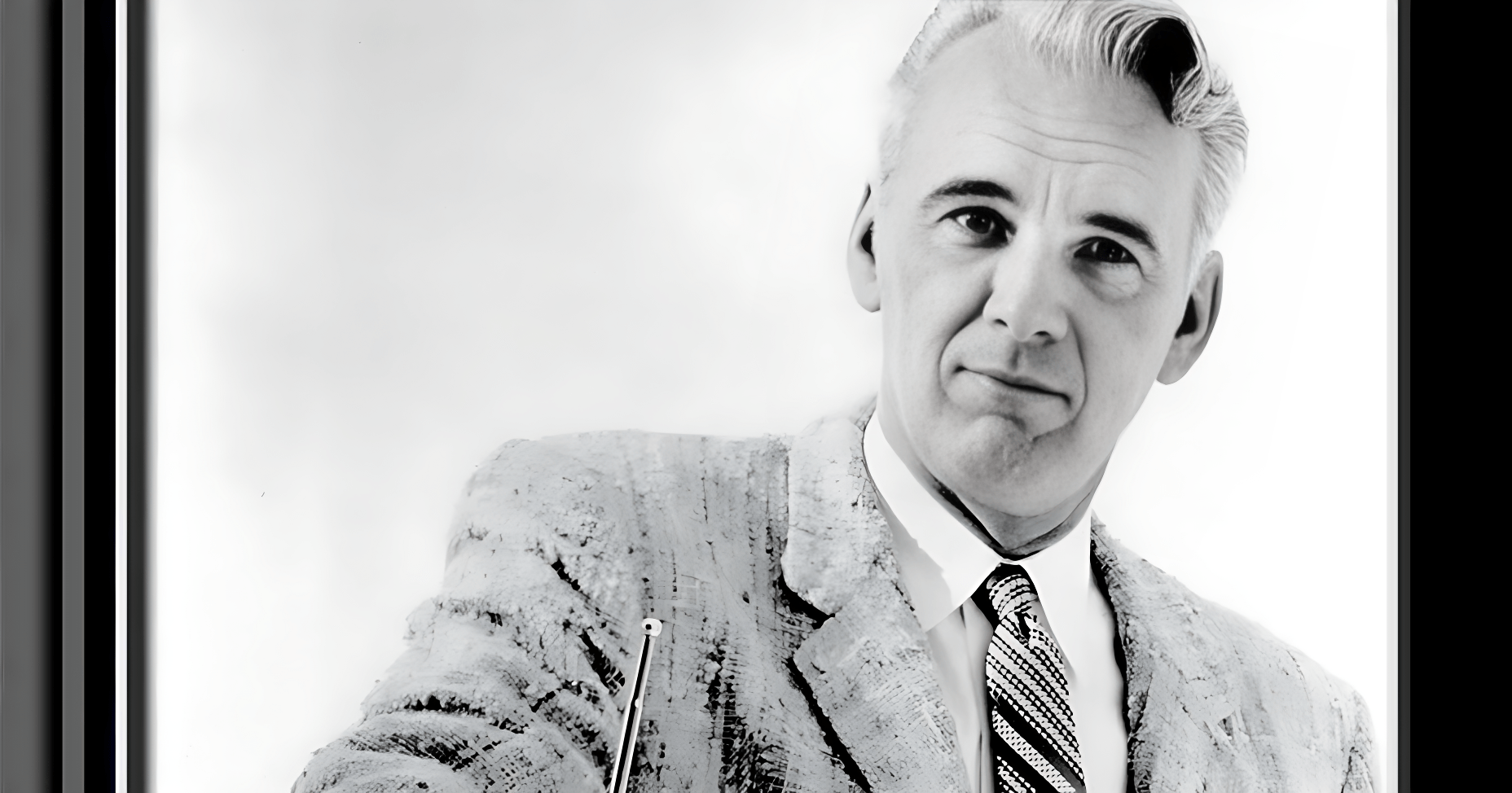
Virgil Exner was the designer who taught Detroit to dream again
Virgil Exner transformed American car design with bold artistry, aerodynamic vision, and Italian collaboration that redefined Detroit’s style.
Read story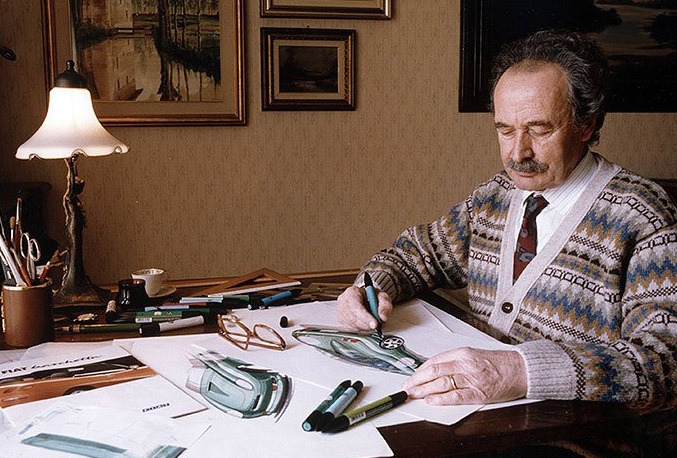
Aldo Brovarone: The Quiet Master of Elegance
Aldo Brovarone, the humble stylist behind Pininfarina’s greatest icons, from the Ferrari Dino to the Peugeot 504 and Lancia Gamma.
Read story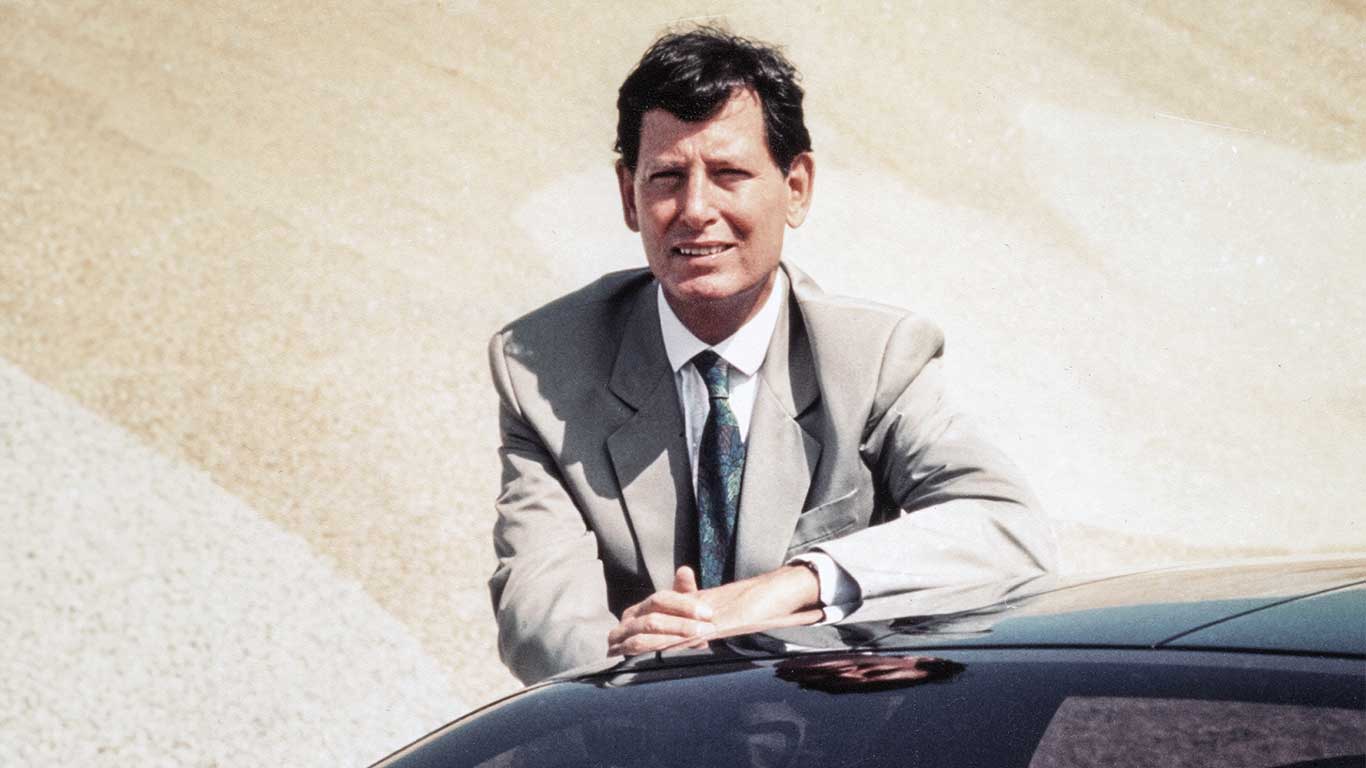
Tom Tjaarda: An American Designer in Turin
Tom Tjaarda shaped icons like the Fiat 124 Spider and De Tomaso Pantera. Discover the American who became Italy’s quiet design legend
Read story
THE CONVERSATION
Comments 0
Share a memory, a period photograph or a documented detail about this story.