
Zagato Milano: A History Shaped by Speed and Style
Few names in Italian coachbuilding describe a philosophy as clearly as Zagato. Founded in Milan in 1919 by Ugo Zagato—an engineer steeped in aeronautical construction rather than coachwork convention—the atelier did not merely style motorcars; it re-engineered the idea of how they should be built. Instead of timber frames and decorative mass, Zagato introduced aircraft logic: lightweight alloy skin over minimal structure, aerodynamic reasoning applied with uncommon discipline.
This approach changed more than aesthetics. It transformed competition results for Alfa Romeo in the 1920s and ’30s, influenced the emerging grammar of Italian Gran Turismo design after the war, and ultimately shaped the vocabulary of mid-century sports-car architecture itself. From early Alfa 6Cs to the postwar Panoramica and the great GT berlinettas of the 1950s, Zagato’s contribution remains measurable not by ornament, but by consistency: lighter, cleaner, faster—decade after decade.
Across more than a century, the Milanese workshop has collaborated with forty-plus marques, produced hundreds of fuoriserie bodies, and retained a family lineage rare in modern industry. The surfaces and materials have evolved—from riveted aluminium to carbon composite—but the intent has stayed remarkably constant. Few coachbuilders can claim such continuity; fewer still can demonstrate that the principles set down in their first decade continue to guide their work more than one hundred years later.
What follows is a study of that continuity: how a small Milan workshop, founded on aviation logic, progressed through competition triumphs, postwar rebirth, Gran Turismo innovation, angular experimentation, digital prototyping, limited-series manufacture and a contemporary renaissance defined not by nostalgia, but by disciplined reinterpretation. Throughout, the constant is unmistakable: Zagato treated the automobile as a piece of engineering before treating it as an object of style—and in doing so, quietly shifted both.
The early Years
Ugo Zagato was born in Gavello, near Rovigo, on June 25, 1890. Heo entered the automotive world in 1919 with the mindset of an engineer who had just come from aviation rather than the carriage trade. After his work at Officine Aeronautiche Pomilio, he opened a small Milan workshop with the unusual intention of building bodies for both cars and aircraft. It was less a commercial plan than a conviction: that aircraft methods—light structures, aluminium skin, and aerodynamic reasoning—belonged on the road.
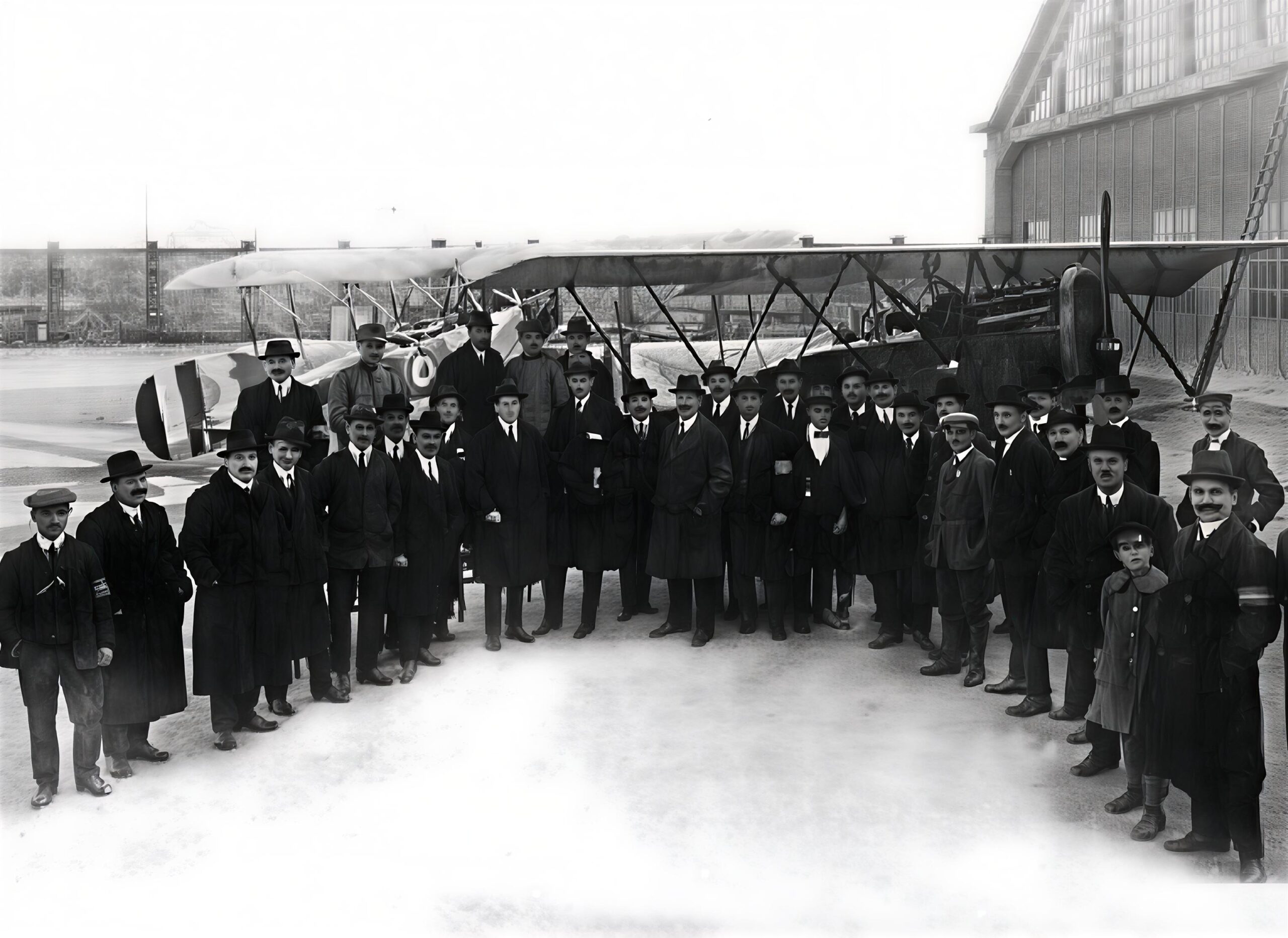
Most automobiles of the early 1920s still reflected pre-war construction, with substantial wood frameworks, heavy panelwork, and ornament that carried more heritage than purpose. Zagato approached the problem differently. He shaped aluminium over a light tubular frame, reduced decoration to what was strictly necessary, and treated mass as a technical challenge rather than an inevitability. In doing so, he introduced a new tone to Italian coachbuilding: one in which structure and aerodynamics guided appearance, not the reverse.
This philosophy was visible from one of the first Alfa Romeos he bodied. The RLSS Corsa Zagato of 1923, with its tight riveted skin and lean proportions, conveyed an approach derived from aeronautical practice rather than tradition. Given Zagato’s geographic proximity and early relationships, much of his initial activity naturally centered on Alfa Romeo chassis, which became his primary working material in those formative years. At a time when size was still equated with prestige, Zagato’s interpretation appeared markedly modern—compact, efficient, and clearly engineered.
The decisive moment arrived when Vittorio Jano entrusted the bodywork of the 6C 1500 to the young Milanese carrozziere. Zagato responded with a notably light competition body that immediately proved its worth: second overall in the 1927 Mille Miglia, followed by outright victory in 1928. Those results demonstrated that his views were not theoretical. Weight reduction and aerodynamic cleanliness yielded measurable performance on demanding roads.
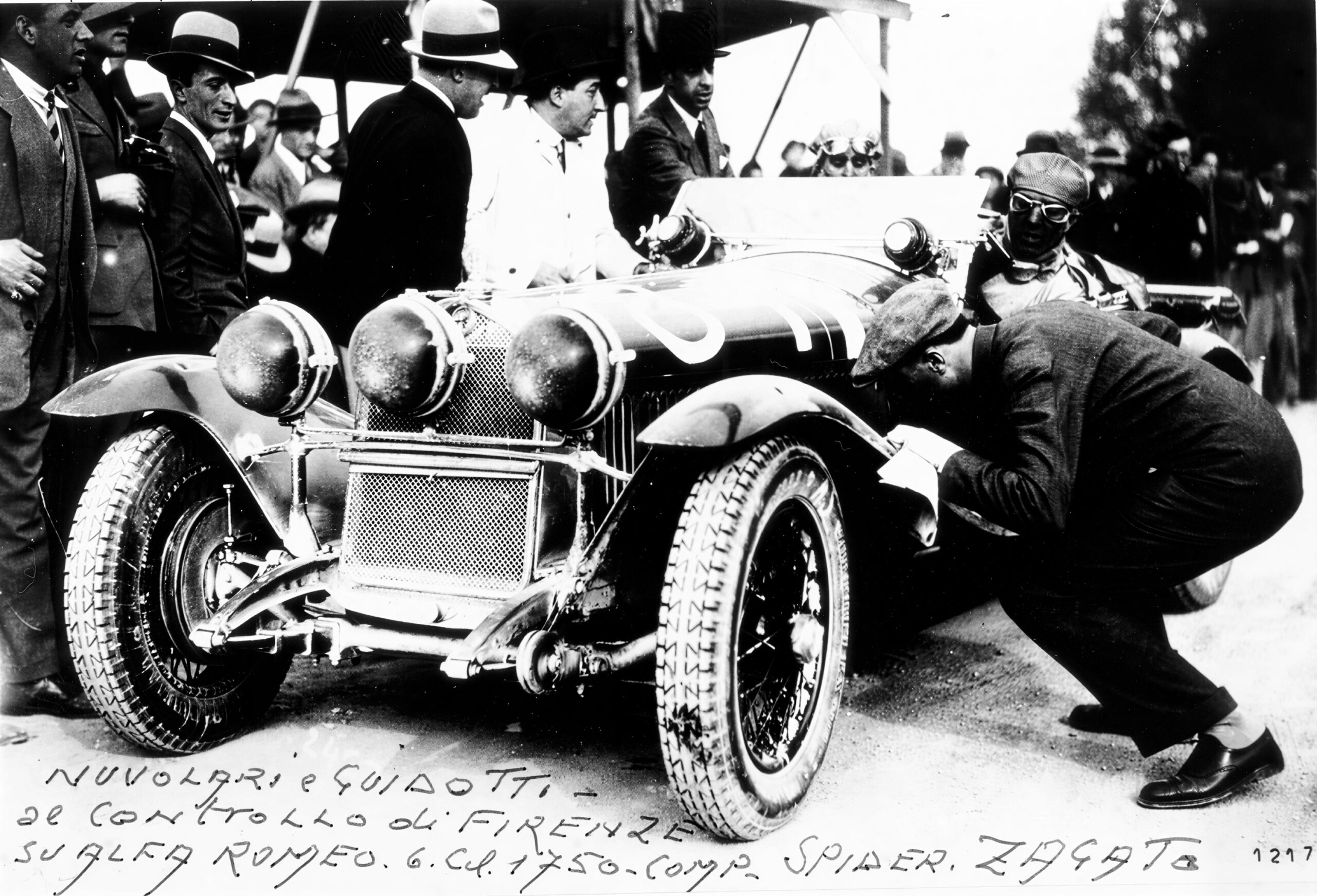
The pattern continued with the 6C 1750, whose Mille Miglia successes in 1929 and 1930 underlined the advantage of Zagato’s approach. On long, technical routes where every kilogram influenced handling and endurance, his aluminium bodies provided Alfa Romeo with a consistent competitive edge.
Such results attracted attention beyond Alfa Romeo. Fiat, Lancia and OM sought similar benefits; Maserati and Bugatti commissioned Milanese bodies as well. Even Rolls-Royce experimented with Zagato construction for a special lightweight commission. By the end of the 1920s, his workshop had become a recognised centre of technical coachbuilding, applying aeronautical reasoning to high-performance automobiles before wind tunnels formally entered automotive design practice.
🔗 Read more: The Italian Job: When Rolls-Royce Let Italy Do the Talking
In less than a decade, Ugo Zagato had introduced a new chapter in Italian coachwork—one defined by structural logic rather than decorative convention. His bodies helped transition the automobile from its carriage roots toward a more modern, aerodynamic conception. For clients of the period, a Zagato body was not simply a stylistic alternative but a technical choice, and in those formative years that choice reshaped the definition of the sports car.
From the opening years of the 1930s, Carrozzeria Zagato entered a period of technical and competitive maturity. The lightweight philosophy Ugo Zagato had drawn from aviation no longer appeared provocative; it became the preferred solution for Italy’s most ambitious manufacturers. Vittorio Jano’s chassis—whether the refined 6C and 8C Alfas or the competition machines prepared for Scuderia Ferrari—aligned naturally with Zagato’s uncompromising aluminium forms.
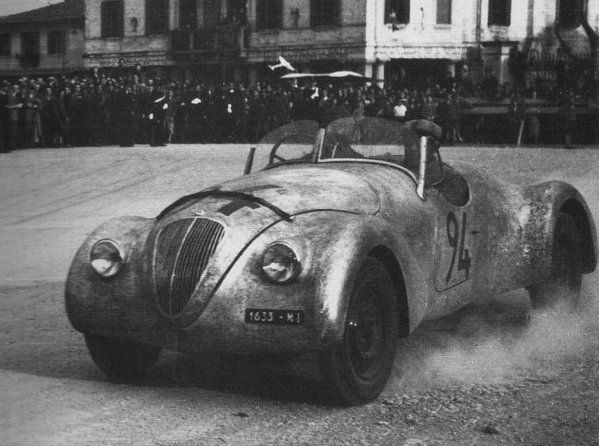
Through the decade, the Milan workshop approached coachbuilding with an almost research-driven logic. Windscreens reclined further, headlamps were blended into streamlined nacelles, and rear decks adopted convex surfaces to settle the departing airflow. Even wheel design reflected this engineering ethos, with perforated discs shedding unsprung mass and aiding brake cooling. The results were plain in competition. Zagato-bodied cars collected eight Mille Miglia victories, four Targa Florios, four successes at Spa, and four at Le Mans—achievements that placed the atelier at the heart of European endurance racing. By 1938, nearly a third of Mille Miglia entries carried Zagato coachwork.
Among the most remarkable of this era was the Maserati V4 Sport, a project whose technical ambition matched the visual clarity of its Zagato body. Conceived for Grand Prix use, the V4 introduced the first sixteen-cylinder engine in motor-racing history and made its debut at Monza in 1929 under Alfieri Maserati. Its average speed record would stand for twenty-five years. Only days later, Baconin Borzacchini pushed the car to 246 km/h at Cremona, setting a world mark. When its competition life drew to a close, a Roman enthusiast commissioned Zagato to transform the single-seater for road use. The resulting aluminium body—light, smooth, and finished in a subtle two-tone green—revealed rather than disguised the mechanical sophistication beneath. The converted V4 became a familiar sight in Rome’s high society and, in 1934, secured an important prize at the Pincio Concorso d’Eleganza.
The same period saw a further collaboration of consequence: the Alfa Romeo Tipo B, or P3, introduced in 1932 and among the earliest single-seat Grand Prix cars. Several examples received Zagato bodywork at the request of Scuderia Ferrari, whose insignia they carried. The coachwork—clean volumes, short overhangs, and the tapering tail that became a Zagato signature—expressed a strict functional approach. One surviving example, today in the Auriga Collection, was honoured at the 2025 Concorso d’Eleganza Villa d’Este, its restoration revealing the clarity of purpose that originally guided the design.
These productive years unfolded against mounting political tension. Material shortages and militarization increasingly challenged Italian industry, and the bombings of the Second World War struck Zagato particularly hard. In 1943 the Milan factory was destroyed, eliminating jigs, archives, and much of the atelier’s early physical history. Ugo Zagato took temporary refuge on Lake Maggiore, planning the firm’s return even as clients and suppliers dispersed. Reconstruction began at Saronno and, in 1950, continued in a modern facility at Terrazzano di Rho.
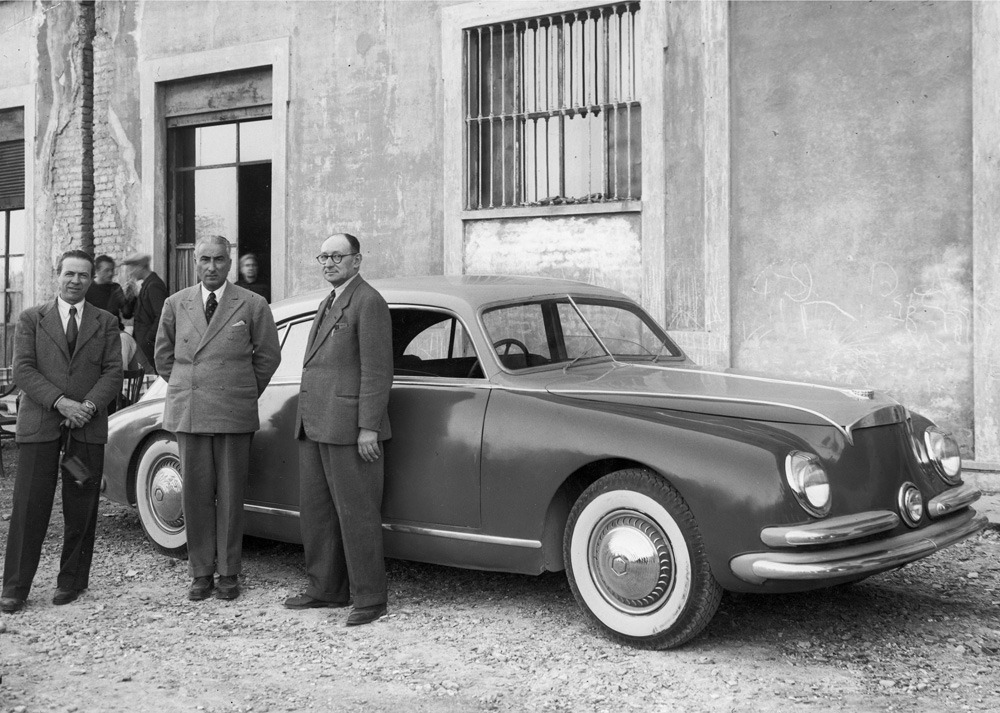
During these transitional years, Milan’s coachbuilders briefly converged around the Isotta Fraschini Monterosa project, a technically advanced rear-engined luxury car intended to revive the marque after the war and unveiled at the 1947 Mostra della Carrozzeria Italiana. With Zagato and Isotta Fraschini’s workshops situated only few meters apart, the earliest prototypes were assigned to Zagato — a reflection of proximity as much as confidence. Other Milan firms contributed later bodies, but Zagato’s early involvement placed the atelier at the centre of one of postwar Italy’s most ambitious engineering proposals.
🔗 Read more: The Rebirth of Isotta Fraschini: Inside the Monterosa 8C Project
A decisive figure returned at this moment: Luigi Fabio Rapi. Frequently misattributed in later accounts, Rapi ranked among Italy’s most gifted designers. After early work with Zagato, he moved to Isotta Fraschini and later to Fiat, where he directed the Carrozzerie Derivate e Speciali, shaping limited-series models and experimental bodywork. Equally significant were his illustrations and magazine work, which helped define Italy’s visual culture of automobile design during the mid-century. His renewed collaboration with Zagato added a necessary creative dimension as the firm rebuilt its identity.
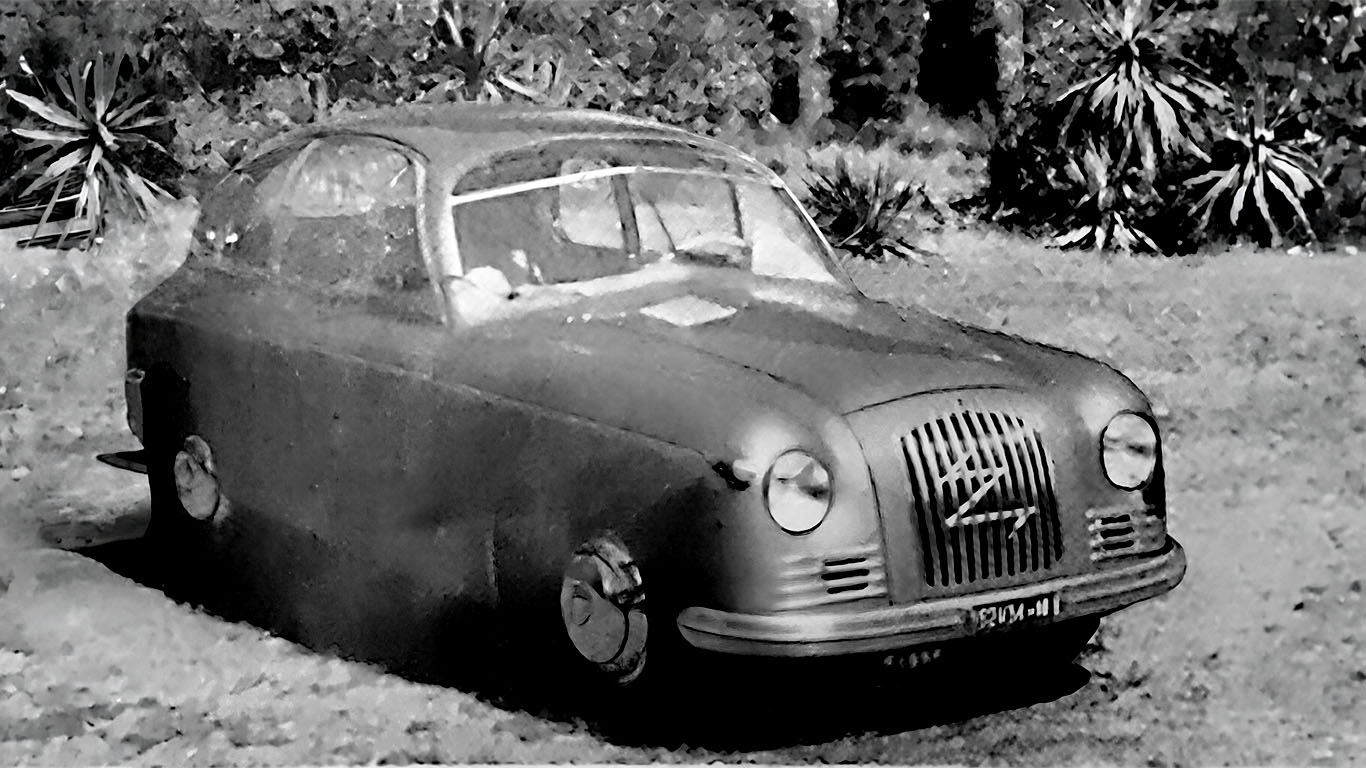
Together, Ugo Zagato and Rapi developed the Panoramica, a rethinking of the closed automobile. Using large sheets of Plexiglas—still exceptional in civilian use—they opened substantial glazed arcs through roof and pillars, producing a luminous cabin and reducing structural weight. Applied first to Fiat and Lancia chassis and later extended to Maserati and even to a Ferrari 166 Mille Miglia in 1949, the Panoramica departed entirely from prewar coupes with their narrow apertures and heavy frames. Crucially, it was not only a technical experiment. Panoramica-bodied cars achieved success at postwar concours, including class wins for the Fiat “Topolino” at the Rome and Venice shows in 1950, confirming that Zagato’s renewed design language could meet contemporary standards of elegance.
🔗 Read more: The Panoramica by Zagato
The Panoramica summarised the transition from prewar competition to postwar modernity: weight reduction and aerodynamic reasoning remained, but expressed with a welcoming clarity suited to a nation eager to return to civil life. In this combination of technical restraint and visual openness lay the starting point for the next chapter of Zagato’s history.
The 1950s: The Grand Touring Boom
The 1950s opened a decisive new chapter for Zagato. Ugo’s eldest son, Elio Zagato, had returned from the war with a clear mechanical sensibility and a formidable instinct for competition. Between 1947 and 1959 he collected 83 podiums in fewer than 160 starts, often at the wheel of cars bearing his family’s name. Those results were more than sporting anecdotes; they served as confirmation that the Milanese method—light alloy coachwork, aerodynamic restraint—remained a measurable advantage on road and circuit.
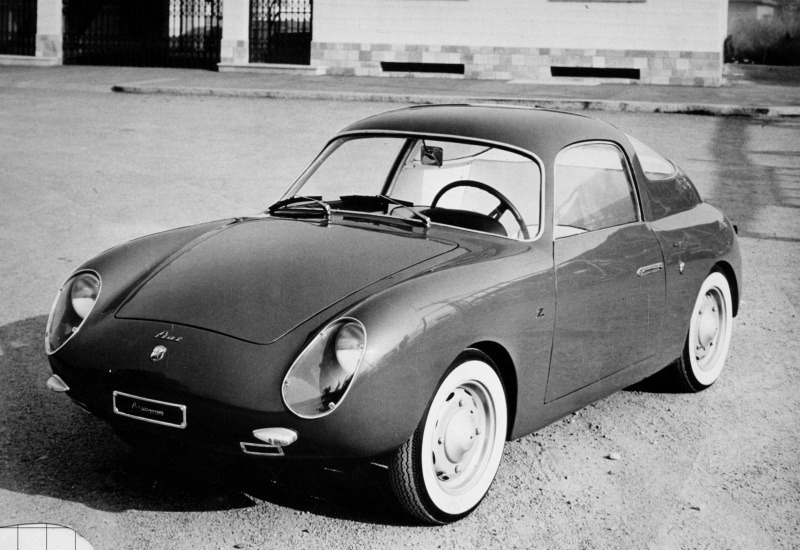
This was also the decade in which the modern Gran Turismo category took form. In 1949 Count Giovanni Lurani, Giovanni Canestrini and Elio himself codified GT regulations: road-usable coupes, built in modest series, capable of meaningful endurance performance. Zagato became one of the style’s prime interpreters. From Alfa Romeo and Abarth to Maserati, Fiat, Bristol, and Aston Martin, manufacturers commissioned light, purposeful berlinettas that carried the unmistakable roofline and “double-bubble” geometry that would soon become a Zagato signature.
🔗 Read more: The Double Bubble Roof by Zagato: A Bump in the Right Direction
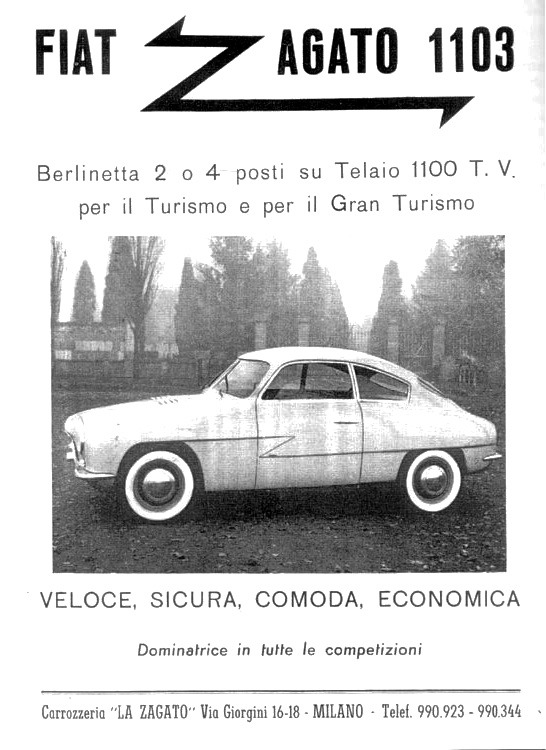
Alongside racing berlinettas, the firm also produced some of the era’s most admired fuoriserie, notably the Fiat 1100 TV Zagato, whose balance of compact dimensions and refined proportion made it one of the decade’s most sought-after Milanese specials. That same taste for individual commissions produced a remarkable range of bodies: Fiat 8V, Maserati competition coupes, and the elegantly engineered Lancia Flaminia Sports, each showing a slightly different interpretation of alloy minimalism.
Zagato’s presence was equally strong at concours. The Bandini 750 secured honours at Rimini in 1957, proof that the Milan atelier could apply its methods to racing architecture without compromising either elegance or aerodynamics. The following years saw further experiments in form, including the unusual Lancia Appia GTZ “Camello”, whose double-bubble cabin created a distinctive twin-hump silhouette that enthusiasts would later adopt as shorthand for the Zagato identity itself.
Competition success continued to shape the workshop’s reputation. At Avus in 1955, Elio guided a Fiat 8V Zagato to the International Gran Turismo Championship, cementing the model’s stature and confirming that the lightweight principles first tested on Mille Miglia Alfas still applied in the age of the closed GT. When, in 1960, Ugo received the Compasso d’Oro—Italy’s highest design distinction—for the Fiat-Abarth 1000 Zagato, the award formalised what racing results and concours juries had already recognised: that Zagato had not simply adapted to the postwar GT era, but shaped its very language.
The 1960s: Ercole Spada, Coda Tronca and the Age of the Small Series
By 1960, control of the Milan atelier had effectively passed to Ugo Zagato’s sons. Elio, already proven in competition, managed the firm, while Gianni, trained in both design and engineering, joined in a complementary role. Expansion soon followed. That year the company moved to a purpose-built facility at Terrazzano di Rho, an 11,000-square-metre complex conceived to accommodate both low-volume production and specialist racing programs. It was here that many of Zagato’s most recognisable postwar forms took shape.
An essential figure in this period was Ercole Spada, who served as chief stylist from 1960 to 1969. His approach united aerodynamic discipline with a new graphic sharpness. Under his direction emerged the Alfa Romeo Giulietta SZ, initially with the short, rounded coda tonda tail and, from 1962, a revised coda tronca profile informed by Wunibald Kamm’s aerodynamic studies. The truncated tail reduced drag and marginally increased terminal speed—an empirical improvement that confirmed Spada’s instinct. Production remained limited (sources vary between thirty and fifty), and those cars have since become some of the most sought-after postwar Alfa Romeos.
🔗 Read more: Zagato’s “Coda Tronca”: The Legacy of the Cut-Tail Design
Zagato’s alliance with Alfa Romeo deepened further with the 2600 Sprint Zagato and, crucially, the Giulia TZ and TZ2, lightweight competition machines built around tubular chassis and dressed in aluminium of exceptional clarity. Their compact surfaces, low frontal area and fastback profiles expressed the logic of racing in structural form; the TZ2, in particular, displayed a compact aggression that placed it among the most refined small GTs of the decade. At the opposite end of the spectrum, Zagato also created the Alfa Romeo GS “Quattroruote” Zagato, commissioned by the Italian magazine Quattroruote as a modern interpretation of the prewar 6C Spider. It was produced in modest numbers and illustrated the continuing dialogue between heritage and contemporary Milanese construction.
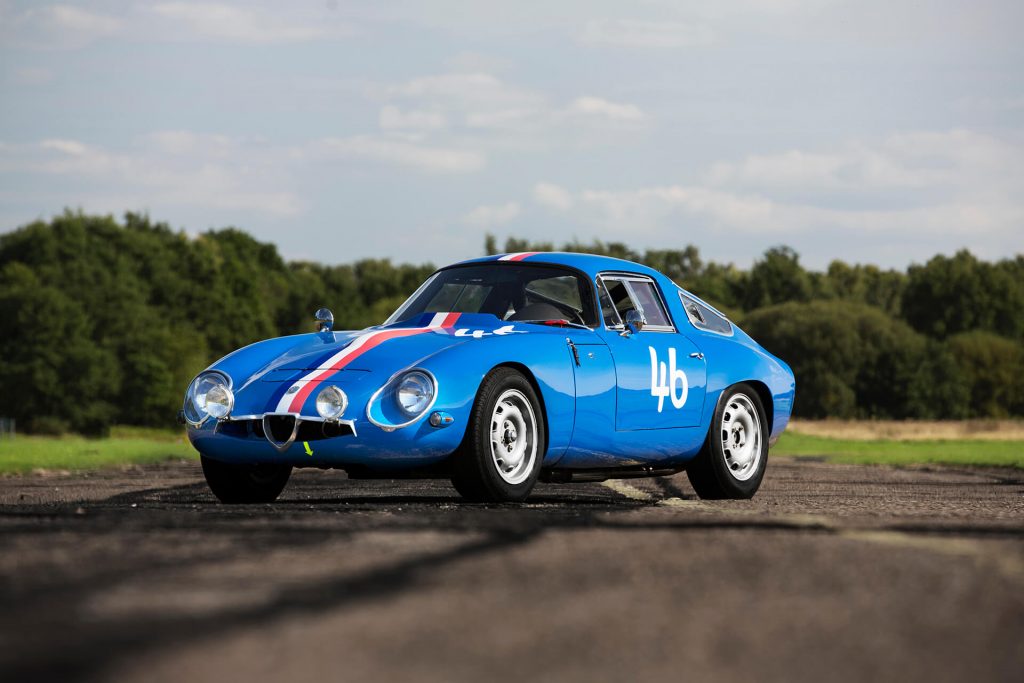
Spada extended his hand across the Italian industry. For Lancia, he executed a series of progressively sharper coupés: the Appia Sport, Flaminia Sport and Super Sport, and the later Flavia Sport. The Flaminia Sport II Series gained particular recognition, securing its class at the 1960 Concorso d’Eleganza in Rome—a result that confirmed Zagato’s design credibility beyond motor racing. The Lancia Fulvia Sport, bodied entirely in aluminium during early production before later steel-bodied series, brought the same purity to a broader audience and ultimately reached several thousand units, proving that Zagato’s language could sustain industrial scale without losing identity.
This decade also marked the most substantial collaboration between Zagato and Aston Martin. The DB4 GT Zagato of 1960, built in only nineteen examples, remains one of the high points of postwar British GT construction. More than a stylistic variation, it embodied a reductionist approach: lighter panels, tighter surfaces, and a frontal treatment that subtly channelled airflow. Its competitive promise was immediately evident in the hands of privateer teams. Later in the decade, a smaller-series DB6-based V8 Zagato appeared, confirming the continuity of Anglo-Milanese collaboration and introducing a more architectural vocabulary that anticipated 1970s GT forms.
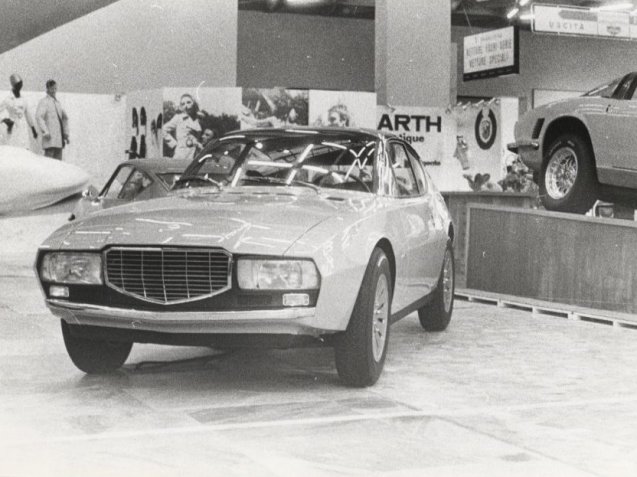
Zagato also accepted commissions from manufacturers expanding into grand touring territory. The Lamborghini 3500 GTZ, built in very limited numbers and completed in 1965, carried a distinctively Italian character: compact, taut surfaces over Bizzarrini-designed mechanicals. Its rarity and clear aluminium geometry placed it at the intersection of Milanese craft and the emerging supercar world.
By the end of the 1960s, the company had developed an unusual duality: high-volume aluminium and steel bodies such as the Fulvia Sport, produced in the thousands for everyday use, alongside highly limited fuoriserie and racing programmes, including the SZ, TZ, and Aston Martins. The “double-bubble” roof—initially created to provide helmet clearance in competition—reemerged as a recurring structural motif, but always as a rational device rather than a graphic signature.
When Ugo Zagato died in 1968, the firm had already entered its most internationally visible decade. Under Elio and Gianni, with Spada’s drafting table at the centre of the studio, Zagato had redefined Italian coachbuilding for the modern postwar landscape: disciplined in form, aerodynamic in theory, and capable of moving fluidly between motor sport and specialised production.
The 1970s: Angular Stilnovo and Special Commissions
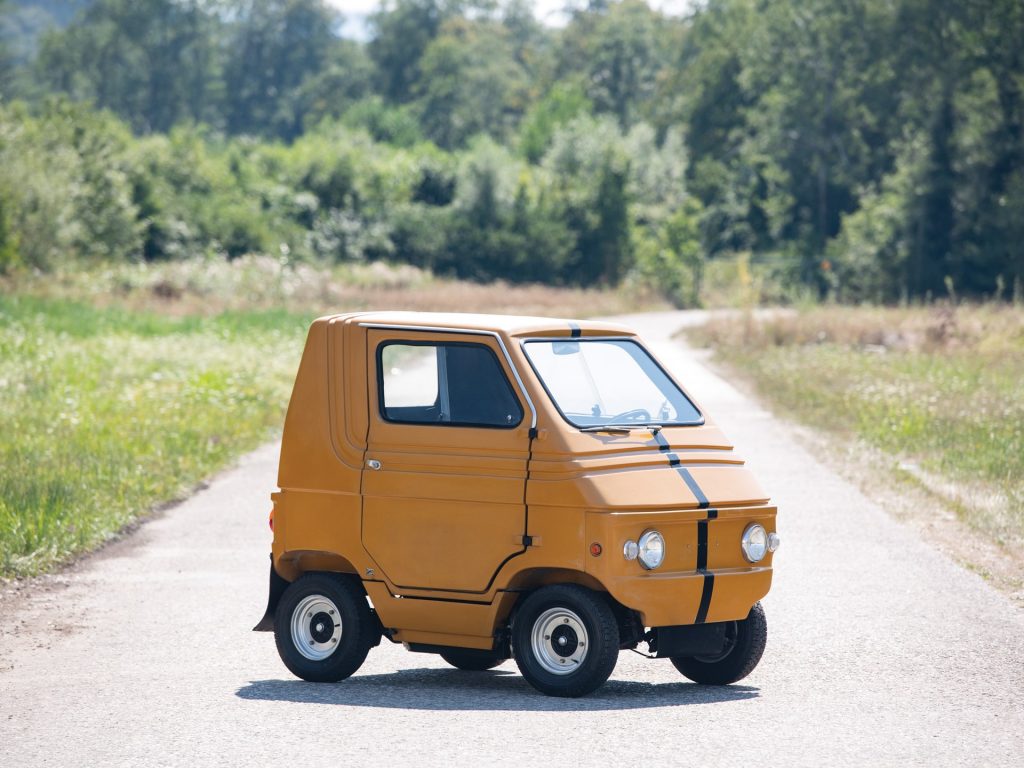
The 1970s placed Zagato in an unfamiliar landscape. Market instability, fuel concerns, and evolving taste pushed many Italian specialist firms toward experimentation, and in Milan the response was characteristically direct. The decade opened with an unexpected initiative: the Zagato Zele, a compact electric city car presented in 1972 and put briefly into series production. Constructed around a straightforward fiberglass architecture and aimed at economy-minded urban use, the Zele anticipated concerns that would only become mainstream decades later. Though commercial prospects proved limited, the decision to engineer an electric vehicle demonstrated a willingness to question the assumptions of the sports-car world at a moment when most manufacturers were retreating into conservatism.
Stylistically the atelier shifted decisively away from the organic surfaces of the 1960s toward a new angular vocabulary—what period commentary referred to as a Stilnovo approach. Forms became planar, edges more architectural, and volumes resolved with geometric clarity. A pivotal demonstration of this language was the Ferrari 3Z of 1971, commissioned by Luigi Chinetti of NART. Using a Ferrari 365 GTC/4 platform, Zagato reinterpreted the barchetta idiom with taut side volumes, a pronounced rear deck, and a marked departure from curvilinear proportion. Chinetti commissioned further work: in 1974 a Ferrari 330 GTC Zagato (a unique interpretation of the GTC / GTS theme) followed, illustrating that the Milanese shop could transpose its architectural lines onto Maranello chassis with the same conviction seen in earlier decades.
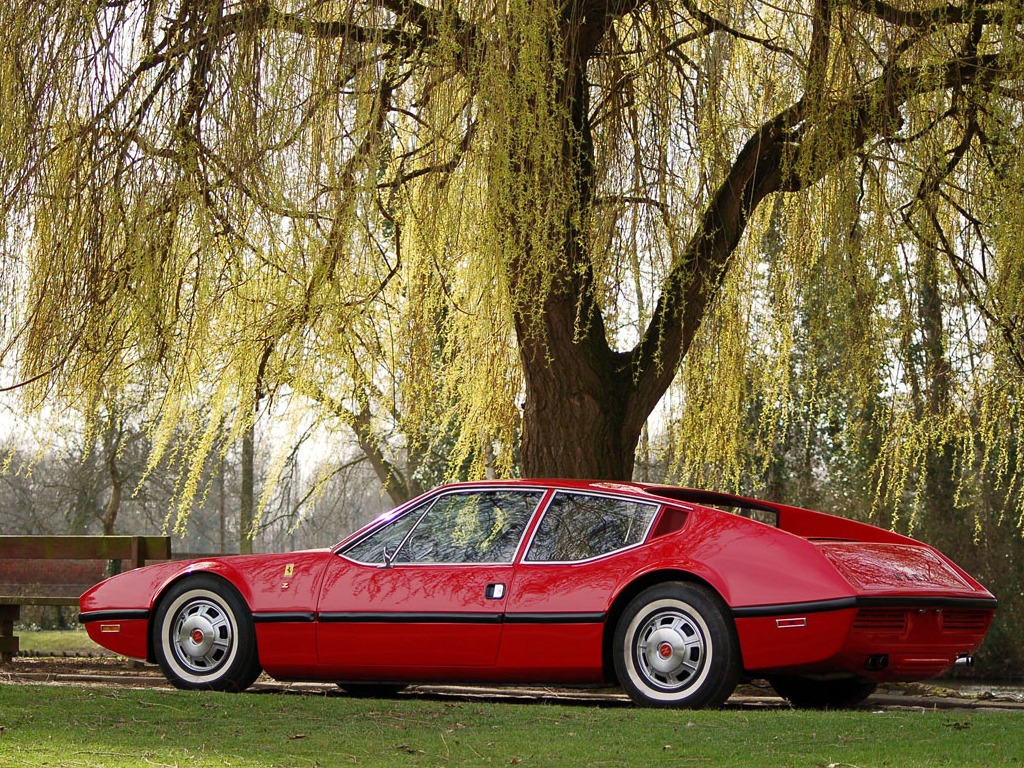
Special commissions proliferated. In 1970 a mid-engine Cadillac NART concept placed an Eldorado-derived V8 behind the cockpit—built by Zagato from General Motors drawings, and notable as an American-Italian collaboration that stood entirely apart from Ferrari practice. For Volvo, a pair of experiments—the Volvo GTZ studies (1970–72)—applied the same sharp vocabulary to Scandinavian mechanicals. Fiat received the Aster proposal, based on the 132, again primarily an exercise in design language rather than series development. And in 1972 Zagato bodied the striking Iso Rivolta Varedo, a mid-engined prototype that distilled Milan’s angular tendencies into a single, disciplined form—one of the clearest expressions of Stilnovo design of the decade.
Production activity also continued in interesting forms. The Lancia Beta Spider (1974–1984), though styled by Pininfarina, was assembled by Zagato and effectively represented a collaborative Italo-Italian approach to open GTs for export markets. For Lancia the arrangement served a practical industrial purpose; for Zagato it maintained a line of continuity with its long association with the marque. At the same time the firm produced the Bristol 412 Convertible, a low-volume Anglo-Italian grand tourer sharing some conceptual ground with the Beta Spider but resolved according to Bristol’s preferences for restrained luxury and long-legged capability.
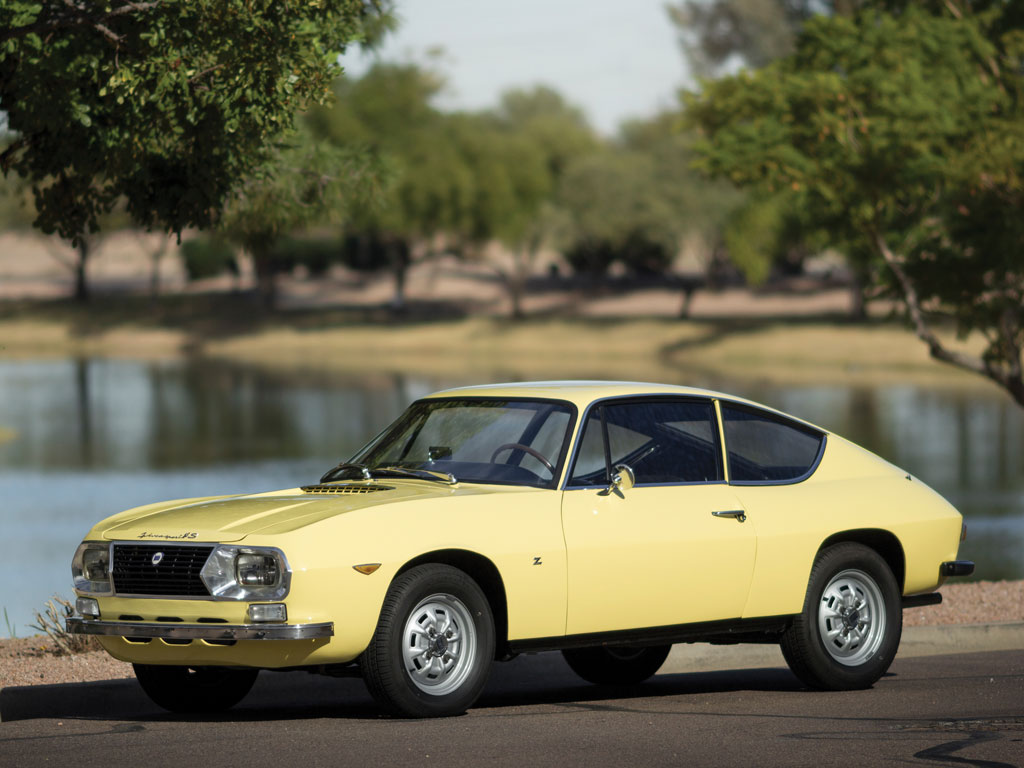
Across Italy, Alfa Romeo remained a constant interlocutor. The 1600 Junior Z of 1971 and the 2000 Junior Z of 1974 translated Milanese angularity into compact GT form—an echo of the 1960s Junior Z, yet distinctly shaped by early-Seventies geometry. These cars did not enter large-scale production, but they indicated how firmly Zagato remained connected to Alfa development even during years when the coachbuilder’s agenda was increasingly experimental.
A visitor to Terrazzano di Rho in the later 1970s would have encountered a workshop capable of building almost any type of vehicle: electric city cars, angular sports prototypes, limited-series grand tourers, and aerodynamic concept studies. Behind the diversity there persisted a structural logic—light materials, controlled surfaces, and the pursuit of functional clarity—even when experimentation appeared to move far from Zagato’s traditional territory. The angular decade did not produce a single defining model in the manner of earlier years, yet it disclosed the studio’s resilience and intellectual adaptability during a period when many historic carrozzerie struggled simply to survive.
The 1980s: CAD, Limited Editions, and Alpine Geometry
The 1980s altered the working landscape at Terrazzano di Rho. Computer-aided design entered the studio, accelerating development and enabling forms that previously required laborious re-drafting. Yet for Zagato the decade was not defined by digital process alone; rather, it became a period of short production runs and disciplined geometric experiments, often carried out for loyal manufacturers and specialist clients.
Among the earliest signals of the shift were a number of small, technically interesting proposals: the 1983 Alfa Romeo Alfetta SW, a unique station-wagon interpretation of the transaxle sedan; the 1984 Lancia Thema Plus Zagato, produced in two examples as a discreetly luxed variation of Lancia’s flagship; and the Alfa Romeo Z33 Tempo Libero of the same year, a compact design study that approached multi-purpose packaging long before such vehicles became a mainstream category.
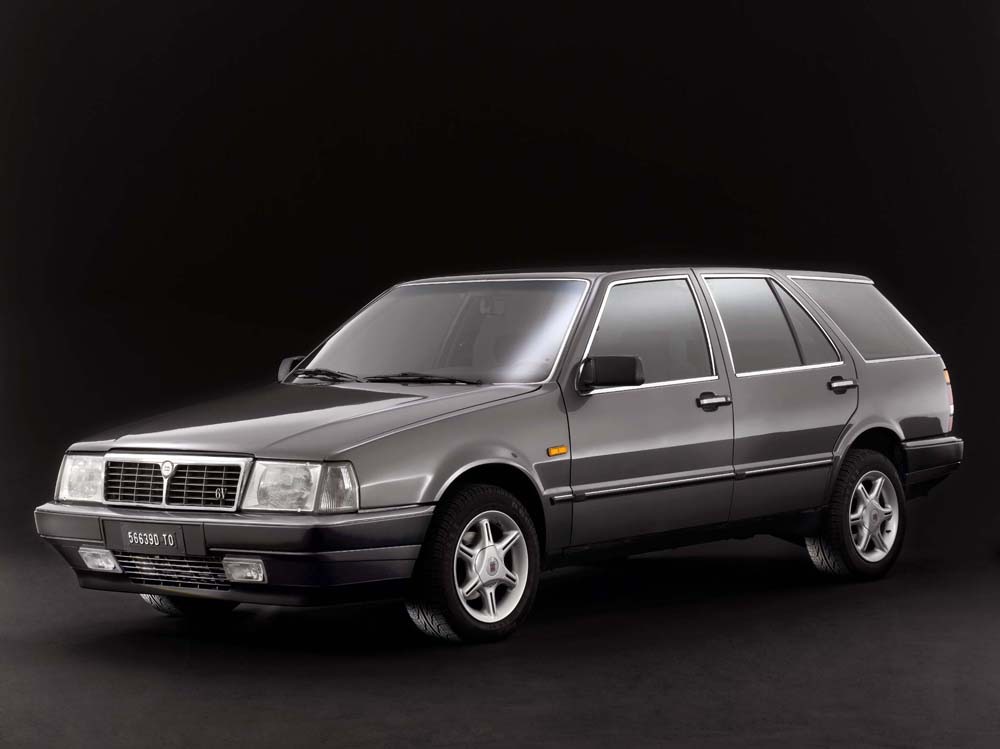
Limited industrial collaborations expanded the portfolio. The 1984 Maserati Biturbo Spyder, a Milan-assembled derivative of Maserati’s compact twin-turbo coupe, introduced Zagato to a broader clientele and became one of the firm’s most visible production efforts of the decade. In parallel, Zagato maintained its longer Anglo-Italian dialogue, working again with Aston Martin to develop the V8 Zagato series—distinctly angular interpretations of Newport Pagnell’s V8 chassis, built in tightly controlled numbers and intended to carry forward the DB4GT tradition into a late-twentieth-century context.
🔗 Read more: Lancia Thema Plus by Zagato: The One-Off That Refused to Be Forgotten
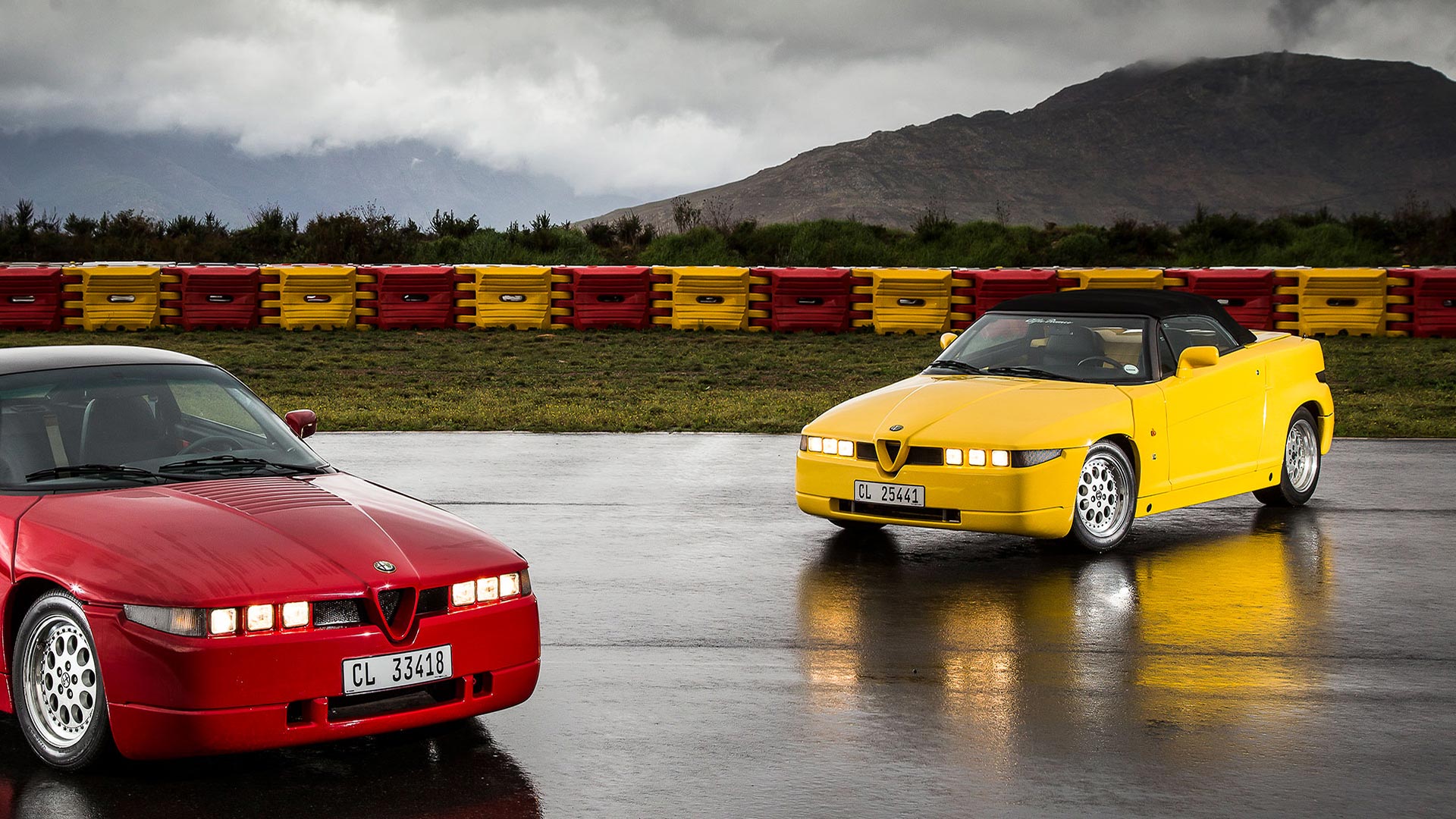
Alfa Romeo remained a constant presence. Numerous concept and prototype initiatives passed through Rho, including a 4×4 Alfetta project and design studies for the transaxle series. The decisive moment came late in the decade with the Alfa Romeo SZ (Sprint Zagato) project, initiated in 1989 and followed by the RZ roadster. Developed with extensive use of CAD and clothed in composite skins over a version of the 75/90 architecture, the SZ reintroduced a structural clarity that deliberately referenced the disciplina aerodinamica of Zagato’s 1950s competition berlinettas. Its form—compressed, angular, and intentionally architectural—signalled a new willingness to define Alfa’s sporting identity through rigorous geometries rather than retrospective curves.
The diversification of the workshop also extended beyond Italy and Britain. In 1989 the Japanese Autech Stelvio brought Zagato’s profile to a new market, combining a Nissan-derived platform with Milanese bodywork and illustrating that the firm’s composite and aluminium expertise could be adapted to entirely different industrial cultures.
By the close of the decade, the Rho facility balanced traditional hand-forming with composite moulding, and CAD had become a standard tool rather than a novelty. The resulting projects—one-offs, short runs, and concept proposals—did not abandon the founding logic of the atelier. Even under angular surfaces, the key values remained visible: light structures, geometric order, and the persistent desire to resolve automotive form through disciplined engineering rather than ornament.
The 1990s: Concepts, Virtual Design and a Broadening Horizon
Geopolitical change and a new economic geography defined the 1990s, and for Zagato the decade signaled a deliberate shift from traditional coachbuilding toward advanced concept development. Virtual modeling and digital surfacing began to replace many of the paper-based methods that had sustained the atelier for decades.
The transition was immediately visible in a series of Ferrari proposals. In 1991 the Ferrari 348 Elaborazione Zagato introduced a compact spyder interpretation of Maranello’s V8 berlinetta, while the Ferrari FZ93 Zagato (built in 1993 on Testarossa foundations) adopted a sharper, more architectural language with graphic volumes that anticipated certain elements later seen in Alfa Romeo production models. Neither entered series manufacture, yet both demonstrated the Milan studio’s command of contemporary supercar proportion and its facility with composite construction.
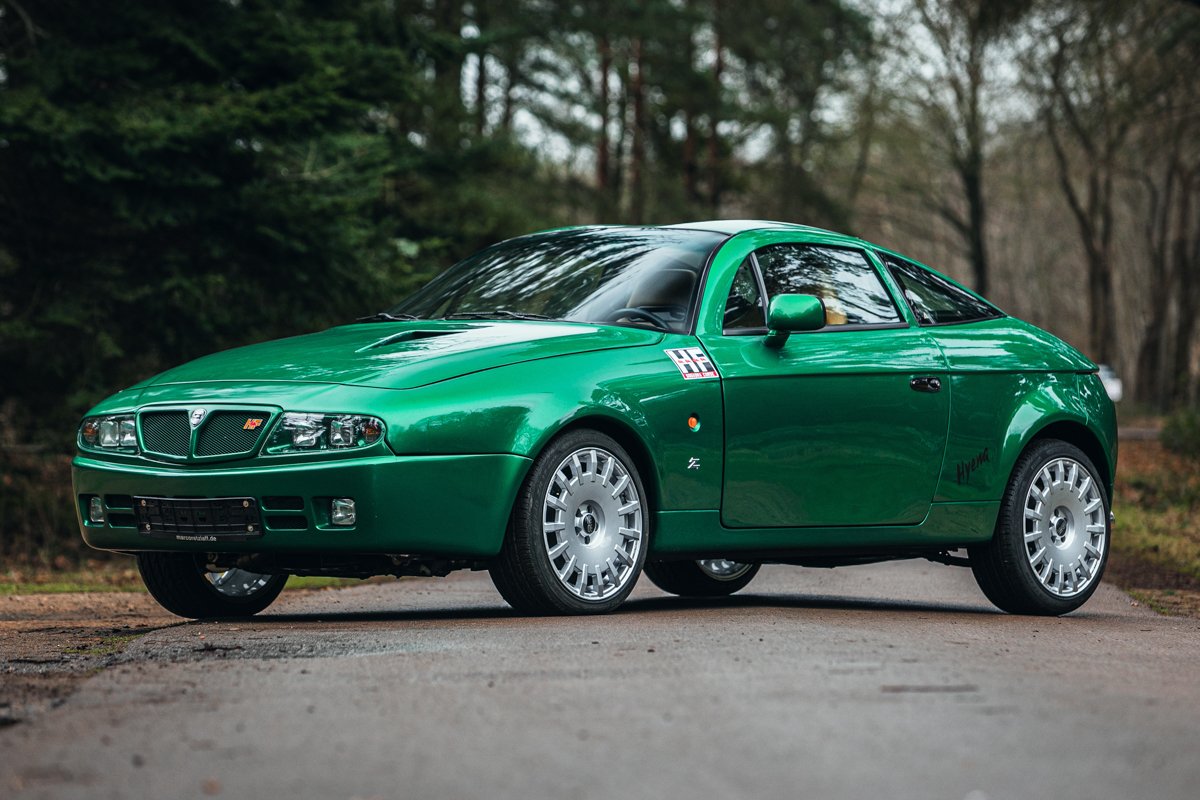
Alongside Ferrari, other marques continued to seek Milanese interpretation. The Lancia Hyena project of 1992–1993 was among the most unusual of the decade: a limited and privately financed conversion of the Lancia Delta HF Integrale into a taut two-door coupé with aluminium panels and a notably clean Kamm-influenced tail. Produced in very small numbers, it remains a rare instance of Zagato translating a Group A rally platform into roadgoing form without compromising its mechanical identity.
Zagato’s experimentation extended deeply into Fiat Group studies. The Cinquecento Z-Eco, part of a sequence of Cinquecento concepts, examined lightweight urban transport and efficient glazing. The Fiat Punto Sport Monomille Coupé proposed a compact GT with disciplined surfacing, while the Fiat Bravo Bis explored packaging and proportion within the Bravo architecture—again largely conceptual, but indicative of Fiat’s reliance on Zagato for research into alternative body types and low-consumption formats.
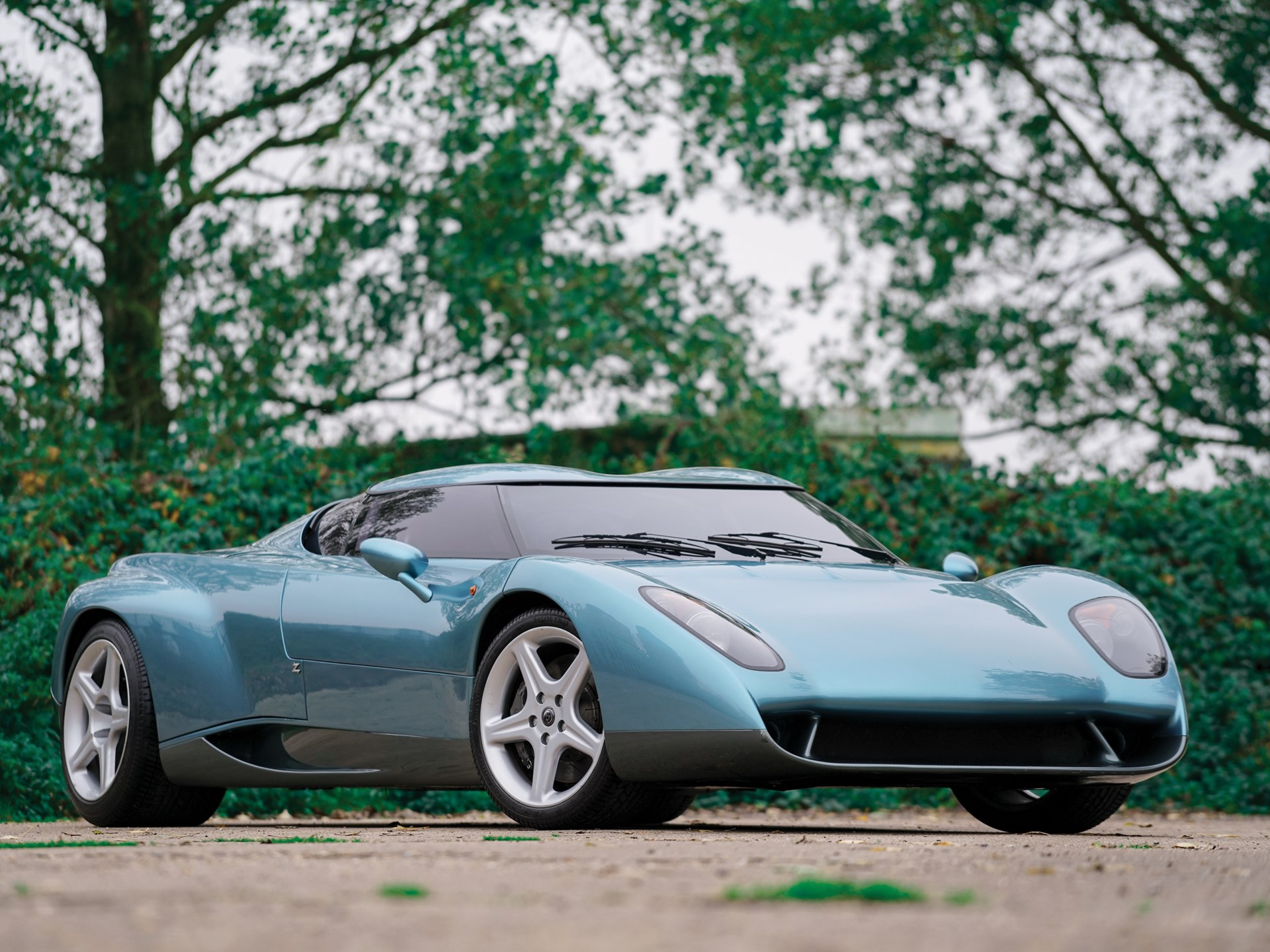
The most visible projects of the period, however, were the Lamborghini Canto (1995) and Lamborghini Raptor (1996), both mid-engined V12 proposals for Sant’Agata. Designed for CEO Mike Kimberley, the Canto served as a design laboratory, while the Raptor—developed with extensive CAD/CAM participation—was executed on a compressed timeline that became notable in industry circles. Its composite body, double-bubble roof, and removable canopy underlined Zagato’s ability to resolve dramatic show-car forms with structural coherence. The Raptor received the “Best Concept” distinction at the 1996 Geneva Motor Show, one of the decade’s most visible acknowledgements of the firm’s evolving technical competence.
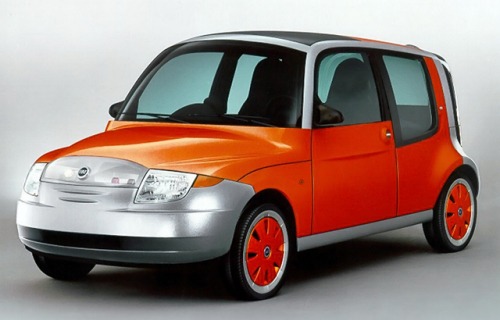
By the decade’s close, Zagato’s activities were increasingly multidisciplinary. The company organised a one-make racing series for the SZ/RZ in 1993, but also directed design work toward transportation and industrial sectors, including rolling-stock studies and eco-oriented prototypes. Among the most consequential was the Fiat Ecobasic, developed from 1998 and shown at Geneva in 2000. With its low consumption and rational packaging, the Ecobasic won the Best Research Concept award and demonstrated that the atelier—though far removed from the era of hand-formed aluminium coupés—remained capable of articulating forward-looking design at the highest level of contemporary industrial inquiry.
The 2000s: Custom Commissions and a Measured Return to Form
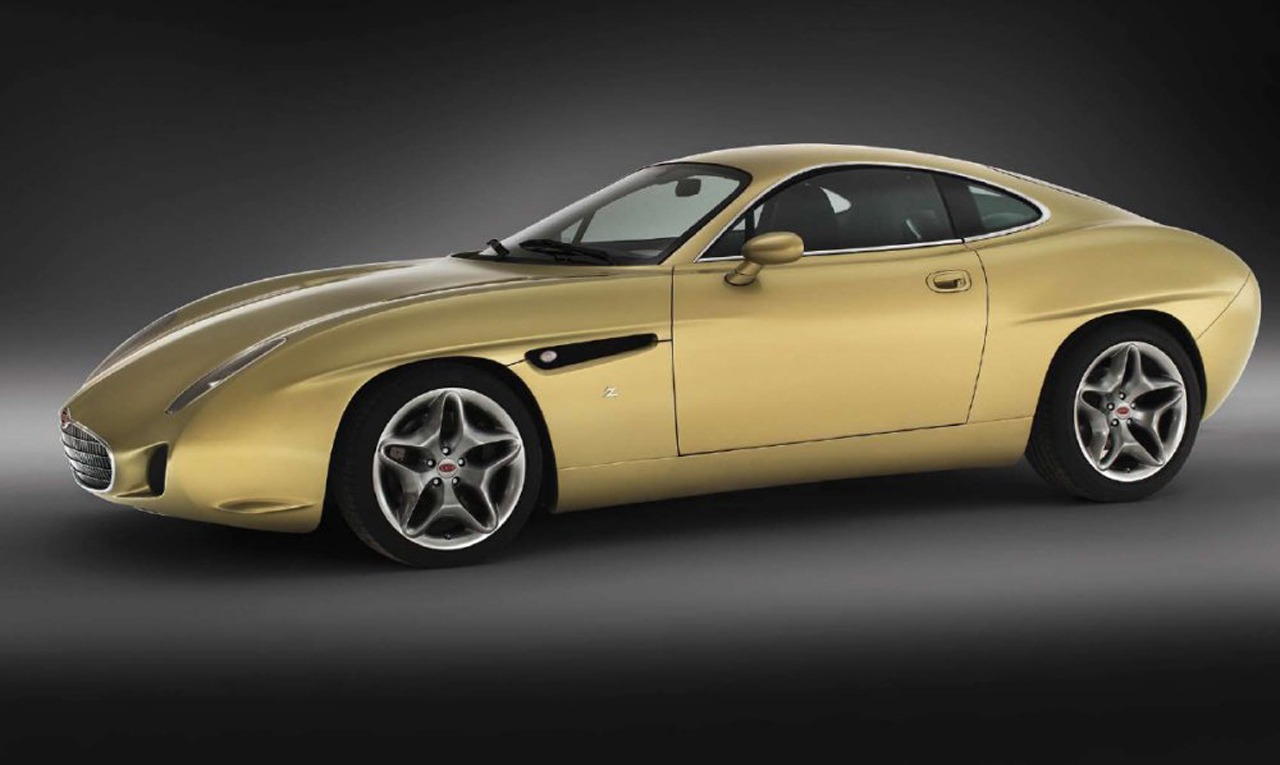
The turn of the millennium placed Zagato in a position familiar to its history: close to international manufacturers yet determined to maintain its independence. Early in the decade the Milan atelier renewed its dialogue with Aston Martin, launching the DB7 Zagato in 2001 and the corresponding roadster in limited series. Both models consciously revived the line of the DB4GT Zagato, blending a contemporary touring platform with hand-finished aluminium panels in quantities that remained purposefully modest. A companion DB AR1 followed in 2003, confirming that the Anglo-Milanese relationship—never fully dormant—had regained momentum.
Just as significant for the firm’s contemporary reputation was the renewed alliance with Alfa Romeo. In 2010, marking Alfa’s centenary, Zagato developed the TZ3 Corsa—a Dallara-based competition berlinetta—and later the TZ3 Stradale, working over a Viper chassis for a limited number of collectors. The Corsa earned the “Concept Cars & Prototypes” award at Villa d’Este, underlining how convincingly the atelier could reinterpret the mid-century TZ lineage for a new era.
During these years Zagato accepted commissions from emerging and specialist manufacturers. The Aston Martin V12 Zagato appeared in 2011 as a racing-oriented coupé. BMW collaborated on the Zagato Coupé in 2012, unveiled at Villa d’Este with the now-customary double-bubble roof. Lamborghini collector Albert Spiess requested a rebodied Gallardo for 2014, resulting in the Lamborghini 5-95 Zagato, built in extremely limited numbers to commemorate the dual anniversaries of Sant’Agata and Milan. Each of these cars was shaped in small series, yet each maintained the structural logic and formal discipline characteristic of the house.
🔗 Read more: 10 Rare BMWs with Italian Design You’ve Probably Never Heard Of
The internal organization evolved as well. Ugo’s sons gradually yielded the direction of the firm, with Andrea Zagato—representing the third generation—guiding the company through the 2000s and relocating the operations within Rho. Zagato explored industrial partnerships, including a short-lived arrangement with Autoline Industries in India and later the sale of certain manufacturing activities to Britain’s CPP, though design operations and creative direction remained in Milan.
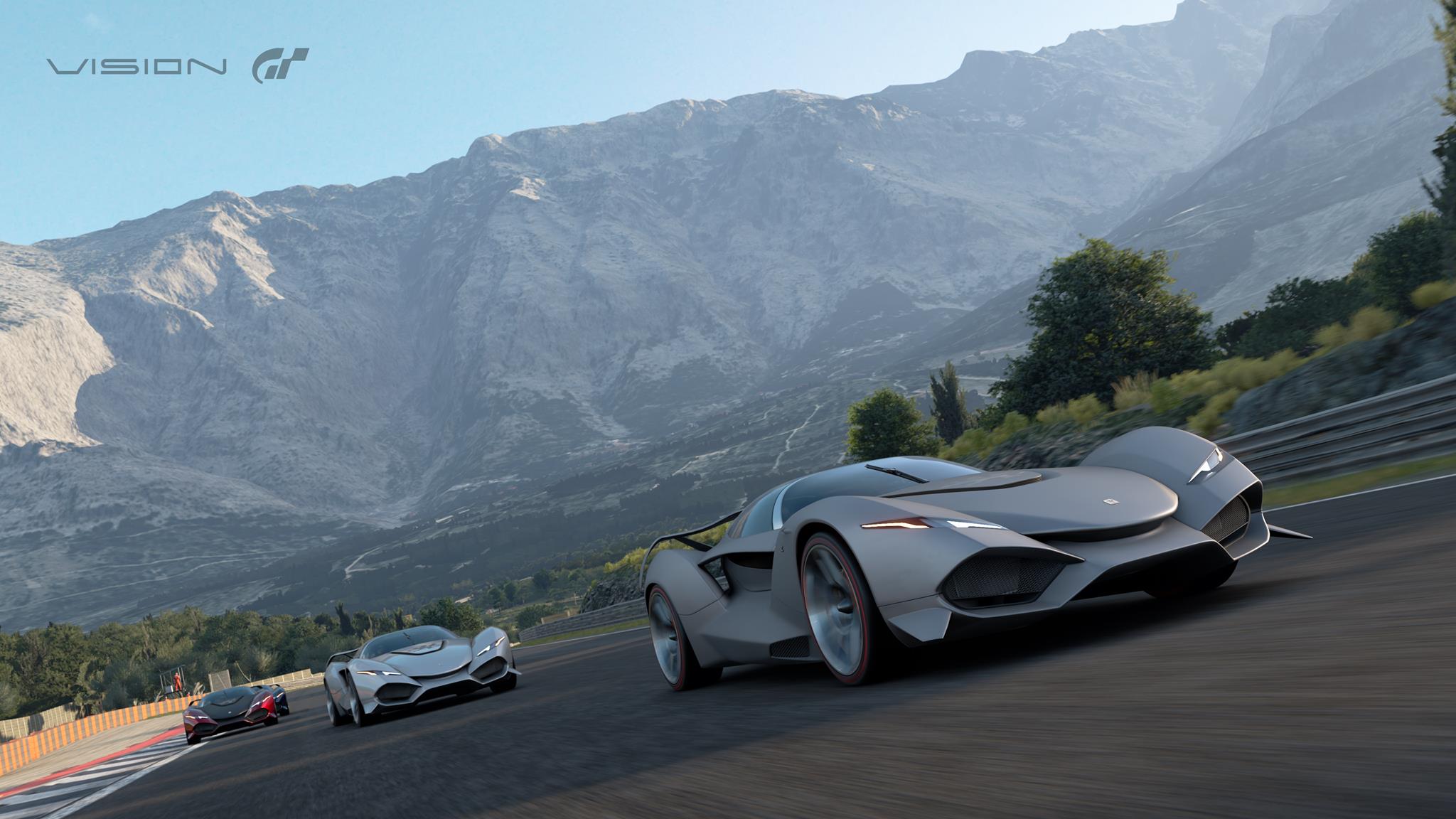
A decisive influence on the atelier’s modern vocabulary has been the presence of Norihiko Harada, whose design leadership shaped much of Zagato’s late-20th- and early-21st-century identity. Arriving in Italy after studies at ArtCenter College of Design and formative work at I.DE.A Institute under Ercole Spada, Harada joined Zagato in the 1990s and soon became a central voice in the design studio. His approach—restrained surfaces, aerodynamic clarity, and compositional rigor—proved ideally suited to the company’s bespoke commissions. Harada guided or influenced projects as diverse as the Zagato Raptor, the Spyker C12 Zagato, several Aston Martin centennial specials, and more recently the Iso Rivolta GTZ and the Mostro Barchetta. Under his watch the “double-bubble” motif was applied with renewed structural purpose rather than graphic effect, and the firm’s contemporary one-offs gained a coherence that linked them to the lineage of 1950s competition berlinettas.
By the mid-2010s Zagato had re-established itself as a boutique coachbuilder, working almost exclusively in limited numbers for collectors and manufacturers seeking design originality rather than volume. The materials may have shifted—from hand-formed aluminium to carbon-composite skins—but the essential logic endured: coachbuilding not as stylistic embellishment, but as a measured dialogue between engineering, proportion and surface.
Century of Zagato: From Riveted Aluminium to Carbon, and Still Inventing the Next Chapter
Tracing the line back to 1919, one finds remarkable continuity. Ugo Zagato’s intention—to apply aviation logic to automobiles—remains the workshop’s compass more than a century later. Lightweight construction, aerodynamic form, structural clarity: the three pillars of the Milan atelier from the Alfa Romeo RLSS to the latest carbon-bodied specials. Over that span, Zagato has collaborated with 44 marques and shaped more than 440 bespoke bodies, a figure unmatched by any other surviving Italian coachbuilder.
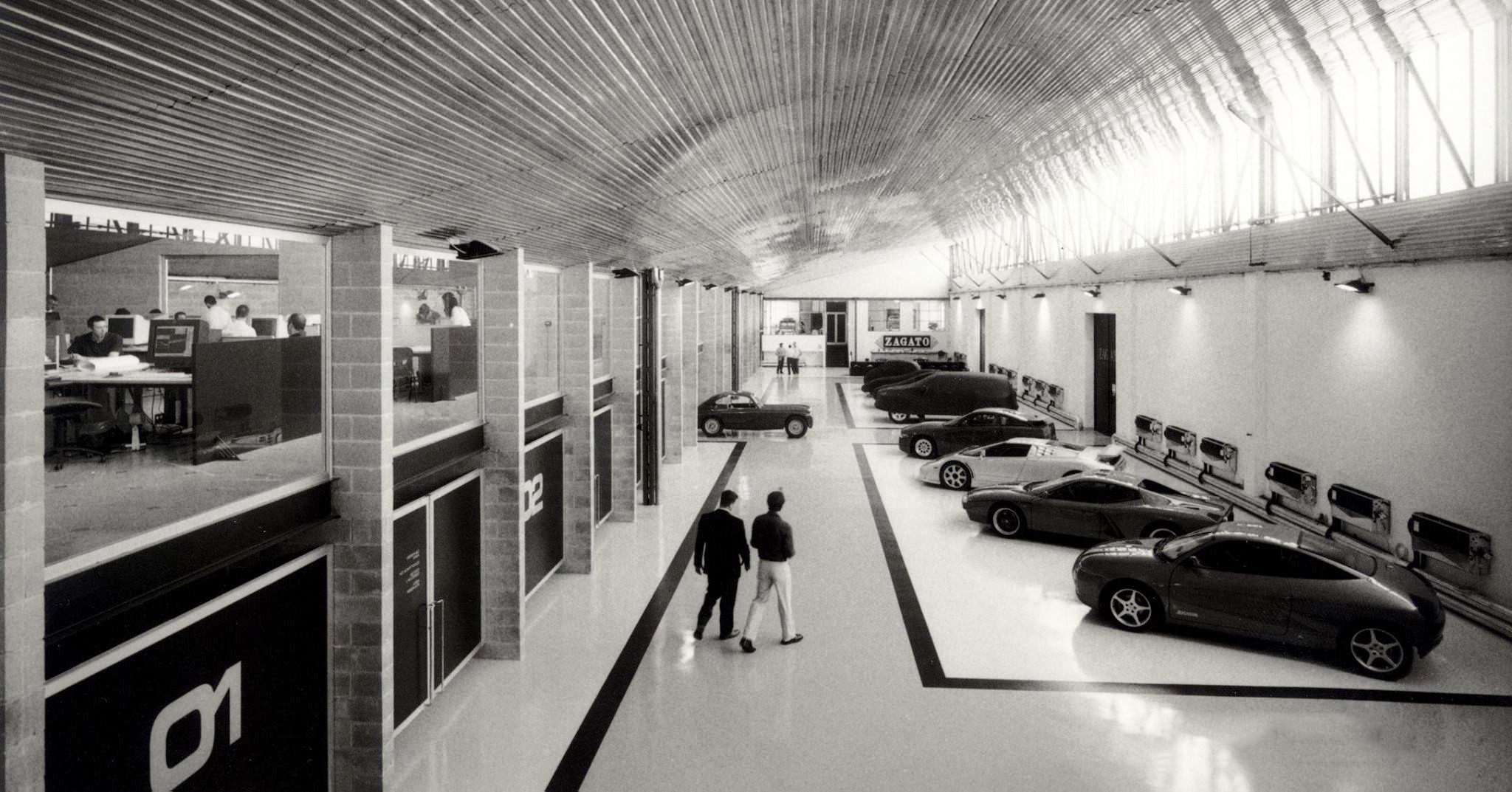
The familiar signatures endure. The double-bubble roof, conceived as a practical racing solution, continues to appear on the most recent Aston Martins and Alpines. The coda tronca, first realised on the Giulietta SZ, remains one of the most elegant aerodynamic reductions of the postwar period. Long before glasshouses became architectural features, the Panoramica established a modern dialogue between transparency, visibility and structure. And running underneath all of it, the unbroken pursuit of lightness—once aluminium over steel tubes, now aluminium and composites over carbon structures.
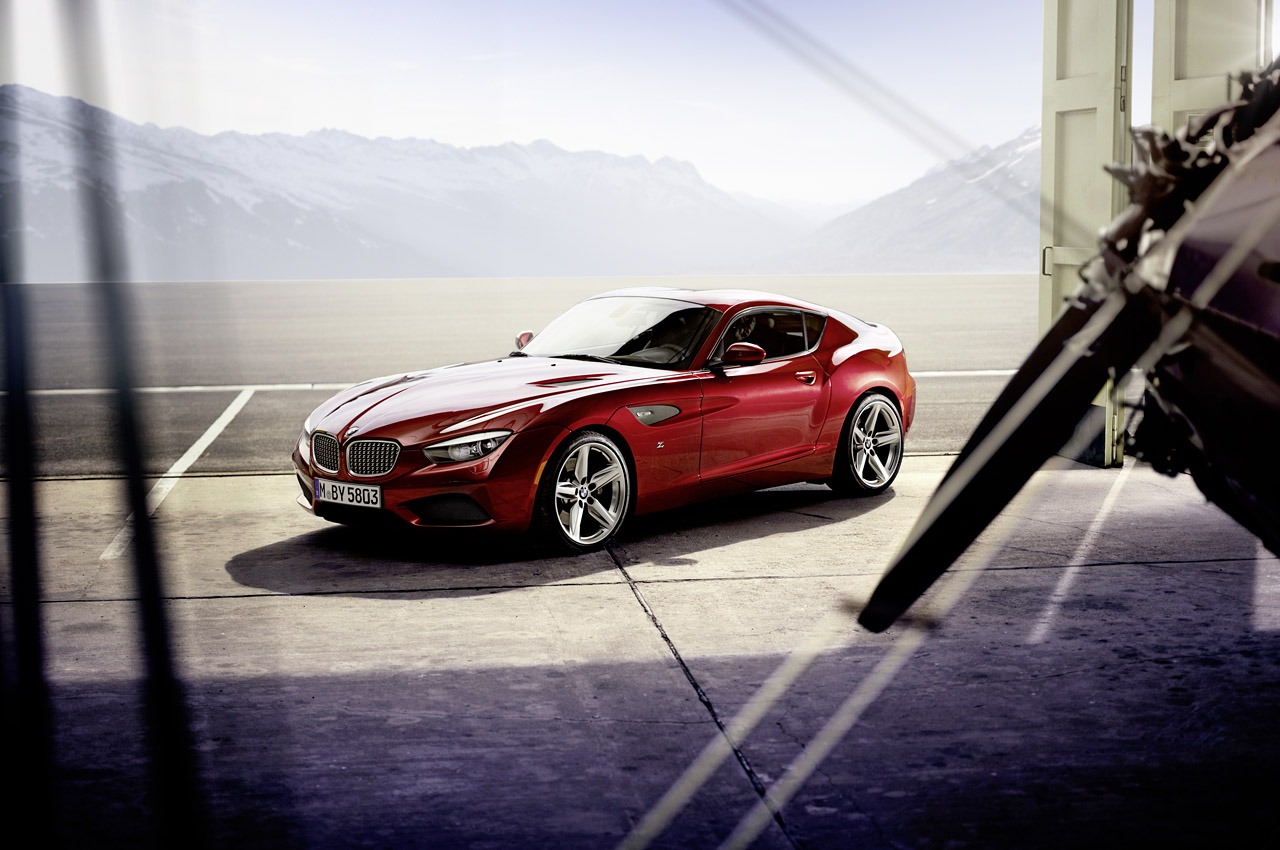
The modern era has not been a nostalgic museum of old ideas. Recent years have brought a surprising density of new work. The DB4 GT Continuation, Vanquish Zagato series, and DBS GT programmes reaffirmed the Aston Martin partnership, while the Iso Rivolta GTZ, Mostro Barchetta, and Ferrari 599 GTZ Nibbio demonstrated that Milan is still capable of shaping limited-series GTs with quiet authority. The Porsche Sanction Lost programme went further, reviving long-absent Zagato bodies through period construction married to modern precision. Their purpose is not reproduction, but restitution—long-lost Zagatos that now finally exist.
Parallel to this heritage work is a stream of modern commissions: the 5-95 Lamborghini, the Giulia SWB Zagato, and the Mostro Barchetta all speak to a clientele interested not in quantity, but in specificity. Norihiko Harada, whose tenure stretches back into the 1990s, has increasingly defined the contemporary design voice. His approach—philosophical, sculptural, reductive—has guided Zagato from the Lamborghini Raptor through to the Mostro and numerous Aston Martin editions.
The most recent seasons underline the point. At Villa d’Este in 2025, the Alfa Romeo 8C DoppiaCoda Zagato, the Bovensiepen Zagato GT, and the production debut of the AGTZ Twin Tail formed an unusually concentrated demonstration of Milanese vitality. The DoppiaCoda re-engaged the Alfa lineage with a carbon interpretation of classical 8C themes; the Bovensiepen project bridged Alpine German engineering with Milanese form; and the Twin Tail introduced modular coachwork—short- and long-tail in a single car—echoing the Alpine A220 yet conceived within modern aerodynamic parameters.
🔗 Read more: Why Zagato Holds the Crown as the Number One Coachbuilder Today
At the same moment, the Capricorn 01, new Aston Martin Heritage Twins, and continued Porsche Carrera GTL Sanction Lost builds confirm that Zagato is not merely surviving but expanding the definition of coachbuilding. Recent commissions—from the Aston Martin DBS GT Zagato to the Iso Rivolta GTZ and the Capricorn 01 Zagato—show a firm comfortable working with large OEMs, tiny ateliers and independent patrons.
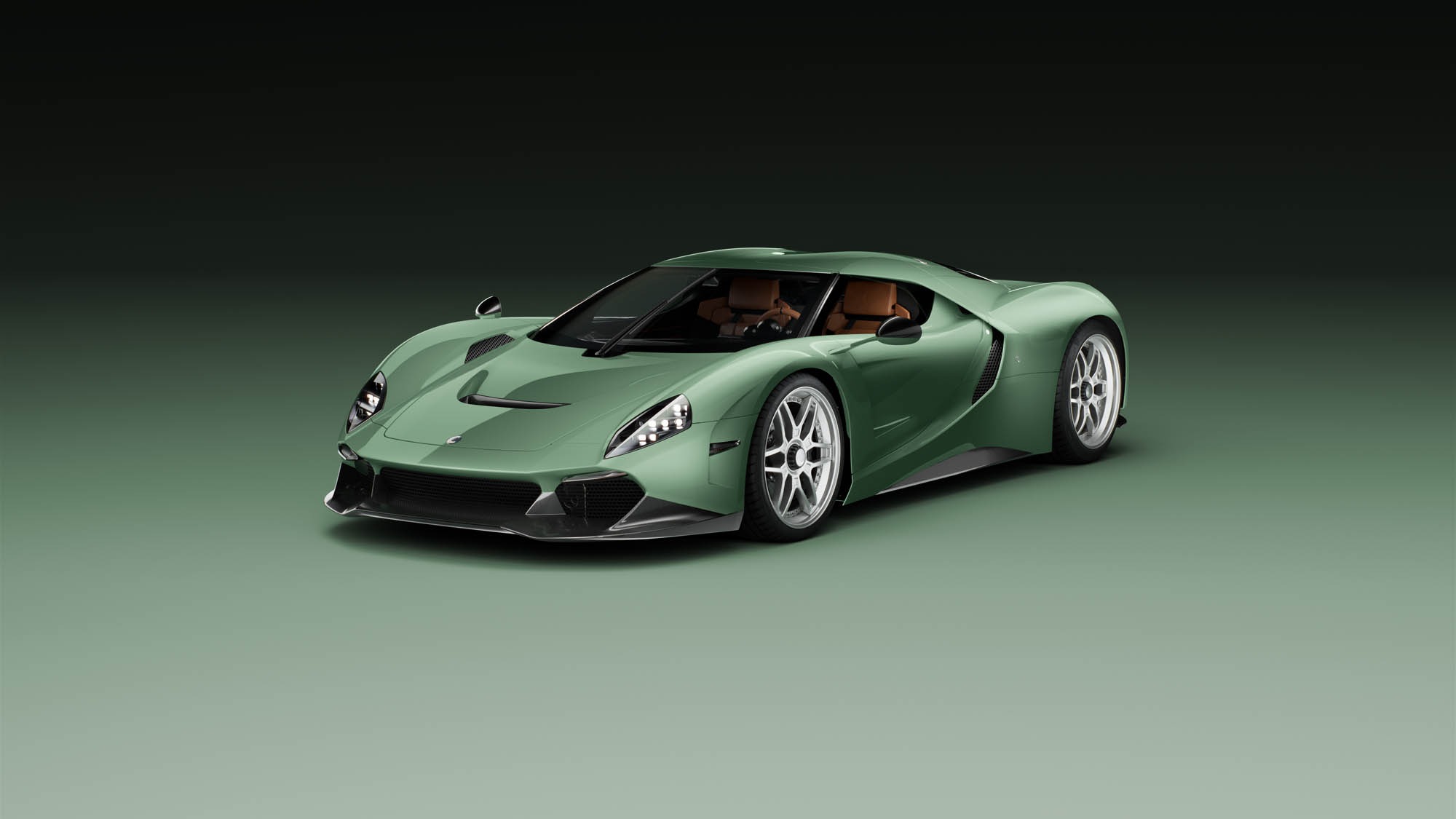
International enthusiasm has followed accordingly. The centenary events in Kyoto and Tokyo, the prominence of American collectors, the Bavarian collaboration with the Bovensiepen family and the perennial Villa d’Este presence illustrate something unusual: Zagato’s reputation rests as much on global cultural capital as on any single model line. Wherever serious collectors gather—California, Kyoto, Goodwood—Zagato remains currency.
Across 106 years, the house has stood—for lack of a better verb—as proof that coachbuilding may change technique, clientele, and geography, yet still remain faithful to a founding idea. From riveted aluminium to carbon weave, from Milan’s inter-war workshops to the lawns of Villa d’Este, Zagato has continued to do what it set out to do in 1919: build lighter, faster, and more purposeful shapes that treat the automobile as a living object of technical beauty.

ABOUT THE AUTHOR
Andreas Scheidl
Italian classic car enthusiast with German roots. Renowned as a respected figure in the classic car community, he serves as a jury member at various international concours d'elegance, including the Classic Gala Schwetzingen and Mantova. As a content creator, Andreas passionately shares his profound knowledge and appreciation for vintage automobiles. His heart beats for cars designed by Giovanni Michelotti, showcasing his discerning taste and dedication to preserving the timeless elegance of automotive history.
More stories by Andreas Scheidl ↗CONTINUE READING
Posts You Might Like
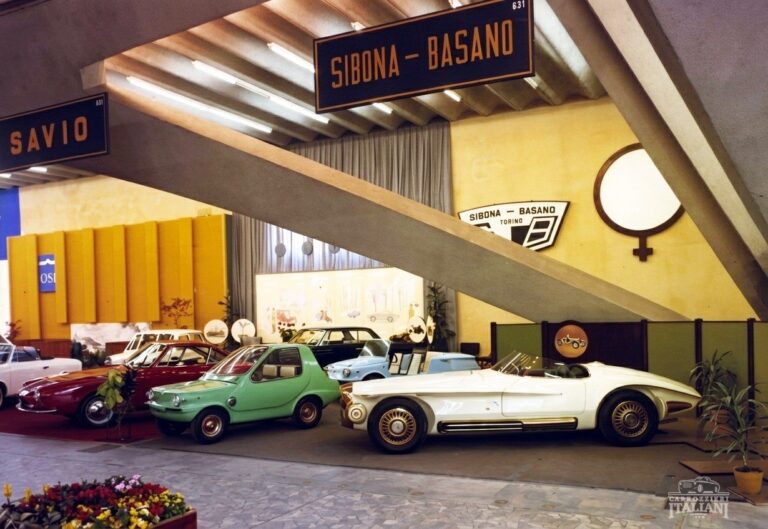
Sibona & Basano: The Turin Workshop Behind Abarth, Exner and Autonova
For a brief period in the 1960s, Sibona & Basano occupied a distinctive position in Turin's coachbuilding industry, constructing competition bodies, prototypes and experimental cars for Abarth, American designers and some of…
Read story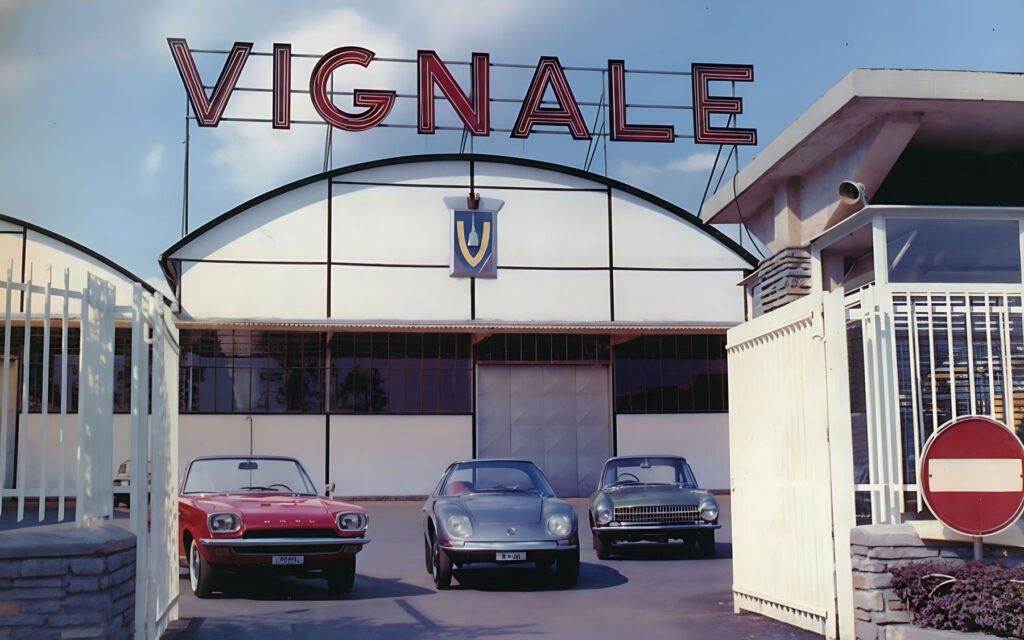
The Story of Carrozzeria Vignale
The story of Carrozzeria Vignale represents one of the many somewhat forgotten success stories born against the backdrop of an Italy that was torn apart by the Second World War and which,…
Read story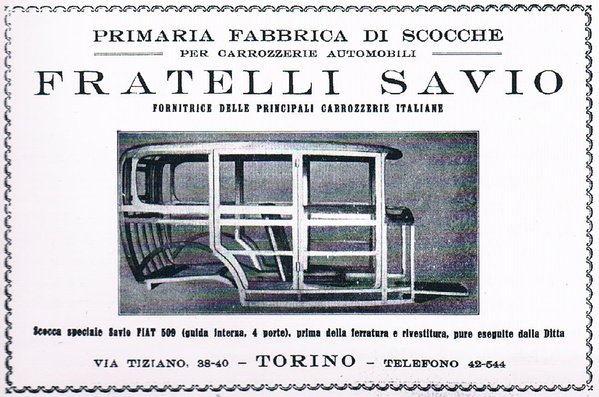
Carrozzeria Savio: The History
From early Fiat specials to the Jungla, Delta S4 and Italdesign Aztec, the story of Carrozzeria Savio is far richer than many remember.
Read story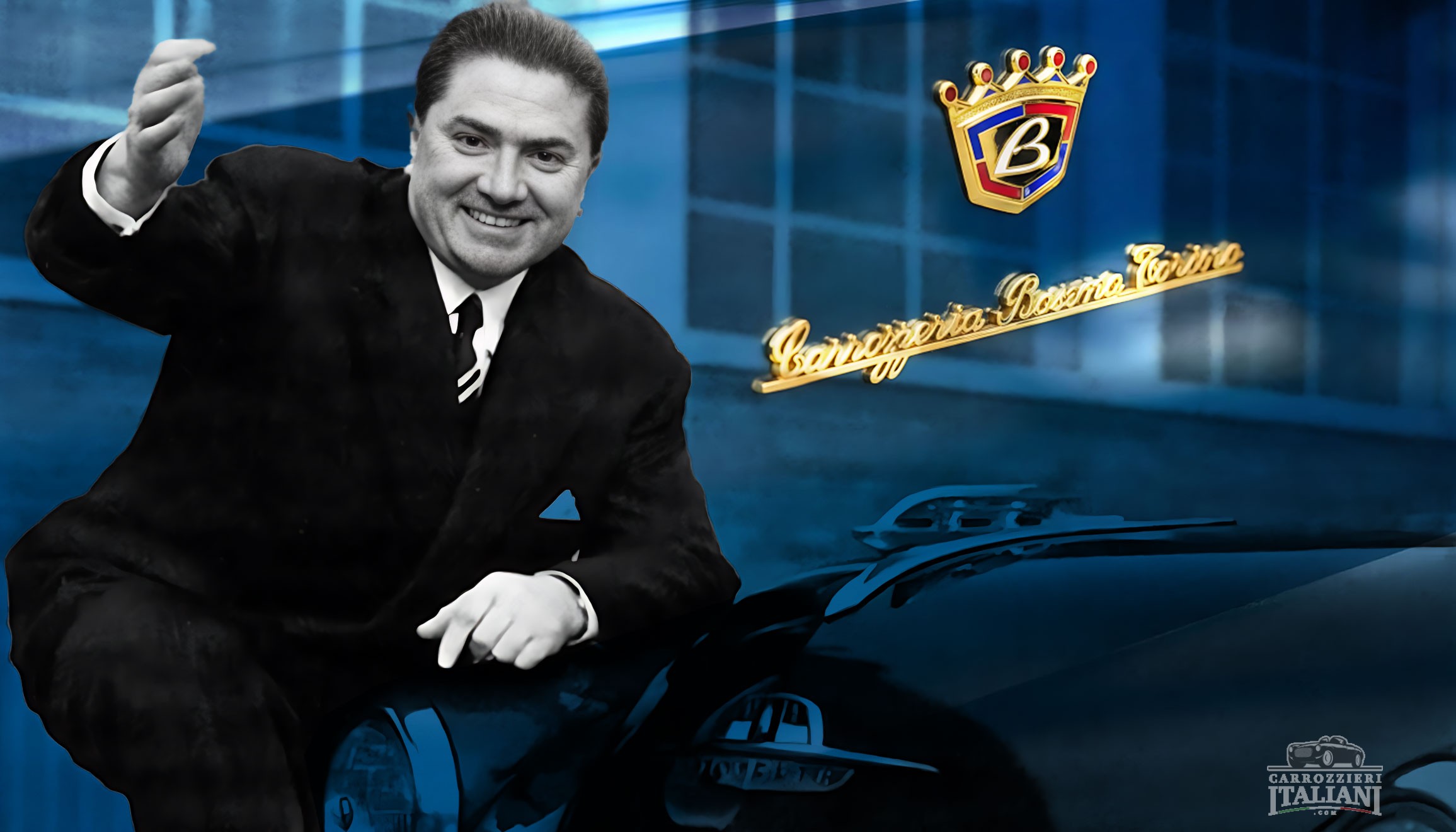
The History of Carrozzeria Boano
The untold story of Mario Boano and Carrozzeria Boano, from Ferrari 250 GTs to the Spiaggina, reshaping Italian automotive history.
Read story
THE CONVERSATION
Comments 0
Share a memory, a period photograph or a documented detail about this story.