
THE VEHICLE AT A GLANCE
Model dossier
- Production period
- 1984
- Body style
- Spider
- Type
- Limited
THE PEOPLE BEHIND THE CAR
Coachbuilding, design & conversions

PRICE & SALES RECORD
Vehicle value
- Original price
- Not documented
- Latest recorded sale
- Not documented
01 / THE STORY
History & context
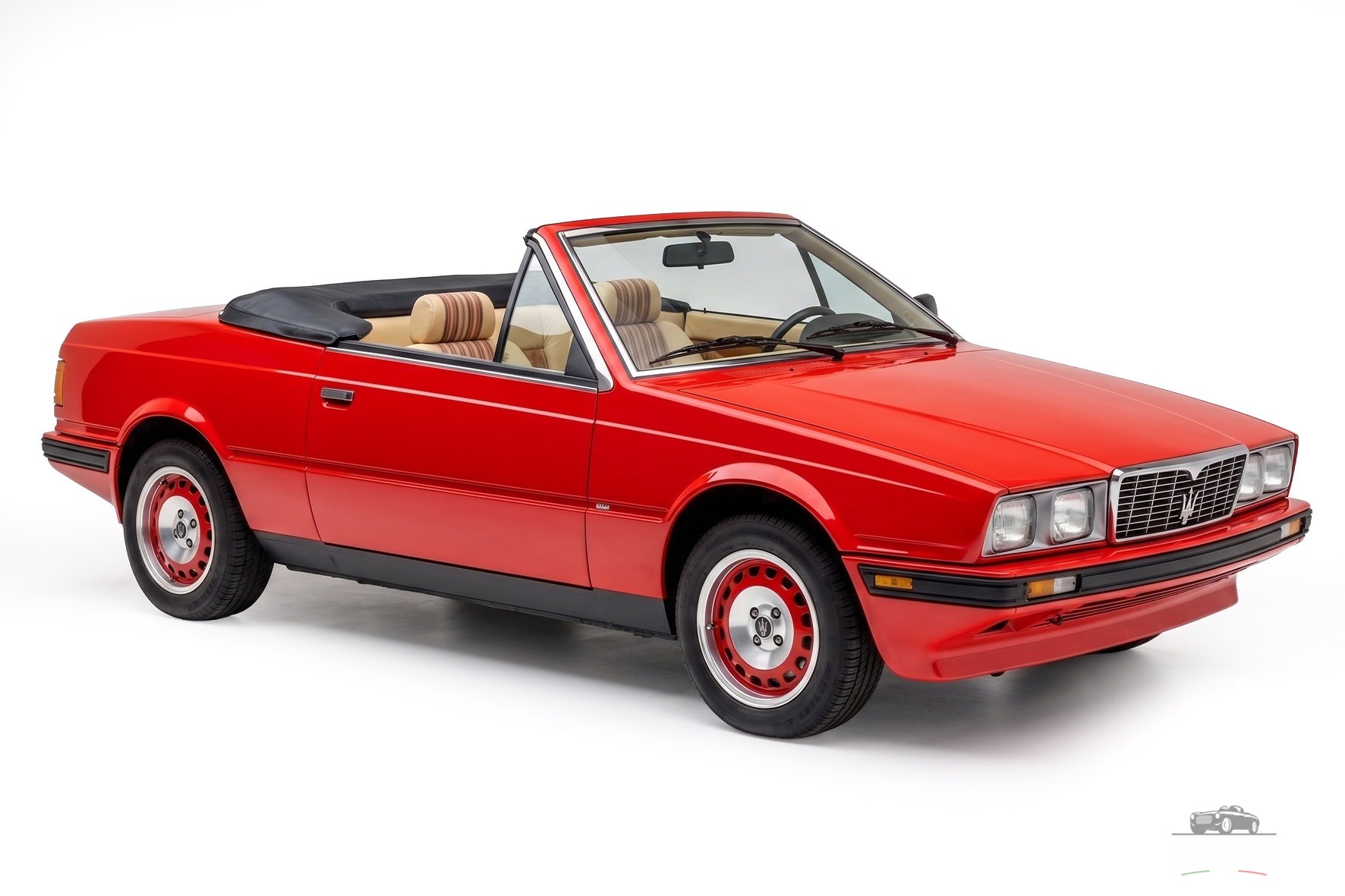
The Maserati Biturbo Spyder represents a perfect blend of Italian performance and design, born out of a remarkable collaboration between Maserati and Zagato in the 1980s. In 1984, after a long hiatus, Alejandro De Tomaso reignited the partnership with Zagato, inspired by the timeless elegance of the A6G/54 Spider. He entrusted Elio and Gianni Zagato with the responsibility of creating the design and production for the new Biturbo Spyder, a model that would take the already impressive Biturbo coupe and transform it into a striking, open-air experience. One of the standout features of the Biturbo Spyder was its more compact and agile design, thanks to an 11-centimeter shorter wheelbase compared to the hardtop version. This subtle modification not only enhanced the car’s handling but also required adjustments to the chassis to maintain the necessary structural integrity, ensuring that the Spyder was just as solid and dynamic as its coupe counterpart. Despite the changes in the body, the Spyder retained the same thrilling 2.0-liter, twin-turbocharged six-cylinder engine, offering the same exhilarating performance that had made the Biturbo line so sought after. Aesthetically, the Spyder set itself apart with a fabric roof that added a touch of elegance while being practical when retracted. The design of the rear was specifically tailored to accommodate the roof when lowered, creating a sleek, harmonious look that blended form and function effortlessly. In 1989, the Biturbo Spyder received an upgrade in the form of a more potent 2.8-liter engine, offering improved performance and responsiveness. During this time, Maserati also expanded its reach, pushing the model into the American market, where it was sold with a 2.5-liter engine and a catalytic converter to meet emissions standards. With nearly 7,000 units produced, the Maserati Biturbo Spyder found its place in automotive history as a beautifully crafted, high-performance convertible that captured the essence of 1980s luxury sports cars.
IN THE ARCHIVE
Coachbuilders & design studios
02 / TECHNICAL IDENTITY
Specifications & construction
Production & construction
- Production type
- Limited
- Construction system
- steel monocoque
- Production notes
- The legacy aggregate production_units=7000 is not supported by Maserati Classiche and has been cleared. Maserati publishes version-specific production totals; no family aggregate is promoted here.
Engine & performance
- Specification notes
- Official family-level shared values: Zagato bodywork, bodies assembled in Turin, steel monocoque and 2400 mm wheelbase for Spyder models. Engine, power, weight and production counts vary by version and market and remain uncollapsed at family level.
Dimensions & accommodation
- Wheelbase
- 2,400 mm
Design & manufacture
- Manufacturer · Documented
- Maserati
- Coachbuilder / Body Builder · Documented
- Zagato
- Designer · Documented
- Giuseppe Mittino
06 / EVENTS & AWARDS
Events & awards
Torino General · legacy_preserved
- Date
- 1984
- Chassis
- General
Preserved CI 1.0 relation. Evidence field: _yoast_wpseo_primary_events. No award inferred.
07 / THE VEHICLE IN DETAIL
Photo gallery 3 photographs
08 / FROM THE ARCHIVE
Archive
References held in the vehicle dossier. Their inclusion does not establish that every historical claim has been independently verified.
| Reference | Source type |
|---|---|
| Maserati Classiche — Biturbo Spyder www.maserati.com | Manufacturer official |
THE CONVERSATION
Comments 0
Share a memory, a period photograph or a documented detail about this car.