
This is how Zagato won the Compasso d’Oro Award
If Italian design awards had an Olympics, the trophy would be a golden compass – literally. The Compasso d’Oro (“Golden Compass”) is Italy’s most prestigious industrial design award, celebrating excellence in everything from furniture to fast cars. Established in 1954 by Milan’s la Rinascente department store from an idea by famed architect Gio Ponti, it is the world’s oldest and most authoritative design prize. The award was conceived to spotlight the quality of Italian design emerging in the postwar era, honoring products that marry form and function in innovative ways. Over the decades, more than 350 designs have earned this coveted accolade – iconic items that have defined Made in Italy style and ingenuity. In short, the Compasso d’Oro is the highest honor in Italian design, a sort of designer’s Holy Grail that signals a creation isn’t just stylish, but historically significant in the design world.
Winning a Compasso d’Oro is a big deal. We’re talking Nobel Prize of design big. The award’s influence is such that the Italian Ministry of Culture even declared the collection of winning designs a part of the national heritage. In the Italian design community – which includes legendary architects, car designers, fashion houses, and more – earning this golden compass means you’ve truly made your mark. It’s an acknowledgment that a design is not only aesthetically excellent but also innovative and impactful in daily life. Now, while many Compasso d’Oro winners are household items (like clever lamps or chic chairs), every so often a lightning bolt strikes the automotive world. One of those strikes was Zagato, the boutique Italian carrozzeria (coachbuilder), who managed to snag a Golden Compass for a little car that left a very big impression.
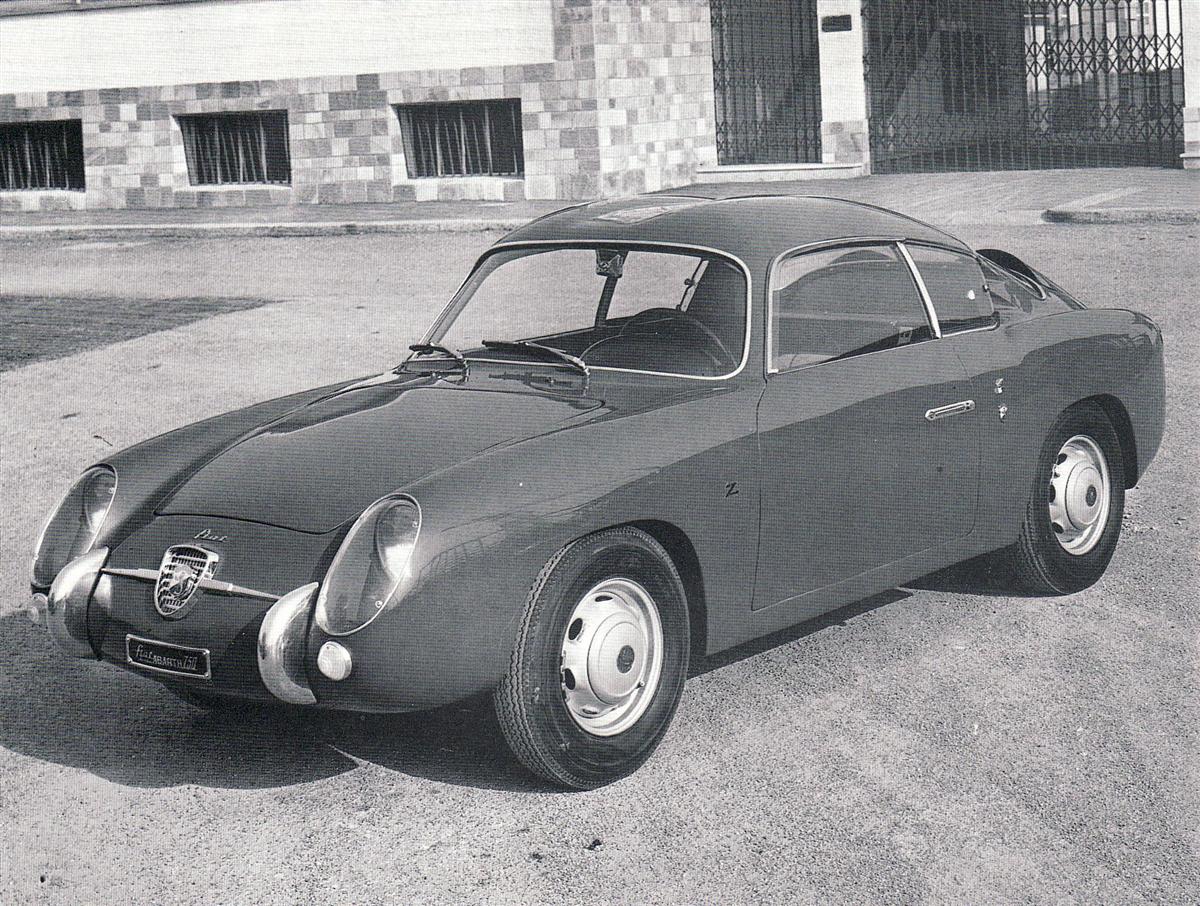
Meet the unlikely hero of our story: the Fiat-Abarth 1000 Zagato. It’s a mouthful of a name for a petite race car, but this feisty little coupe drove off with the Compasso d’Oro in 1960, putting Zagato into the design history books. To appreciate why this was award-worthy, we need to rewind a bit – back to the mid-1950s, when Carlo Abarth (founder of the Abarth tuning firm, whose logo is a scorpion) decided his cars needed an extra sting. In 1955, at the Geneva Motor Show, Abarth saw Zagato’s work on a modified Fiat 600 and had an epiphany: his racing Fiats were too slow and chunky to beat the competition, but a lightweight Zagato body could fix that. Thus began a partnership between Abarth (the “House of the Scorpion”) and Zagato that would yield a series of pint-sized GT cars capable of punching far above their weight.
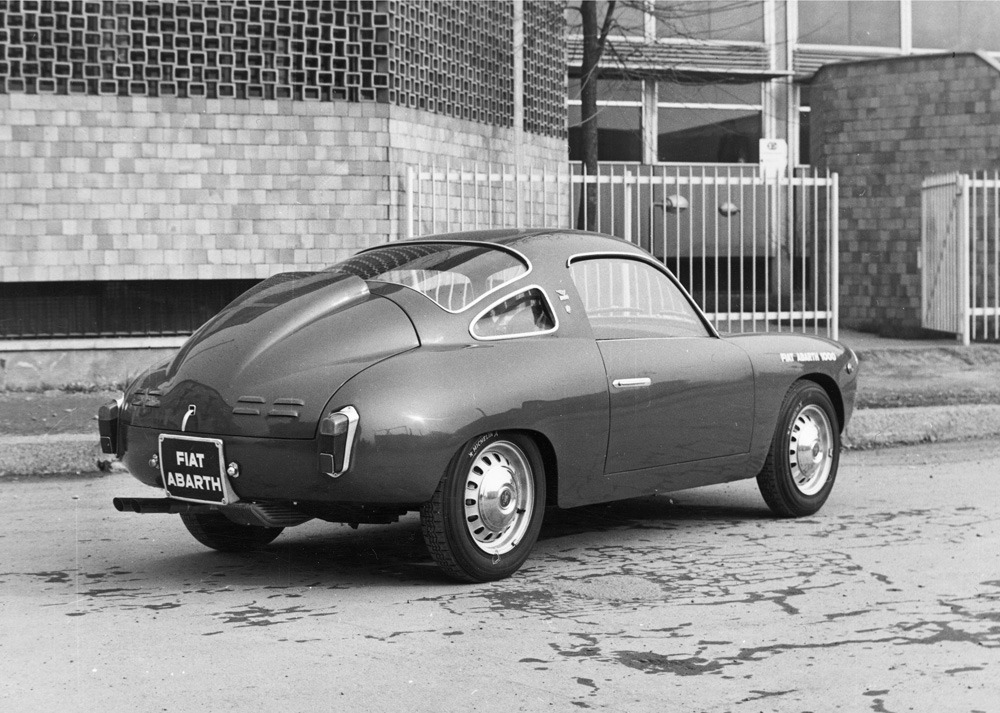
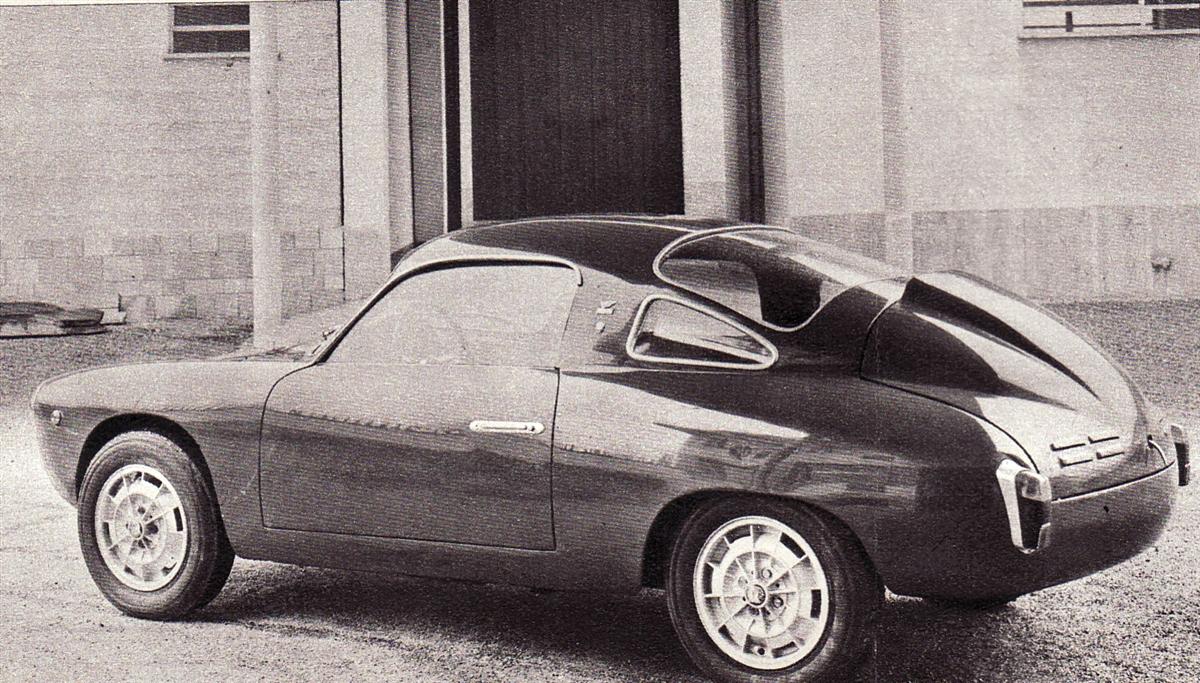
Fast forward a few years, and Abarth and Zagato had cooked up the 750 GT “Double Bubble” – a snazzy little coupe with an all-aluminum body and Zagato’s signature twin-hump roof. This “double-bubble” roof (two small domes in the roofline) wasn’t just a styling gimmick; it increased headroom for driver and passenger (useful when wearing helmets) and smoothed the airflow over the car. The rest of the car was pure function-driven beauty as well. It had a rounded, aerodynamic form with a Kamm tail, and wherever Zagato could shave weight, he did – courtesy of his aircraft-inspired approach to construction, the body panels were feather-light alloy. Under the rear engine cover sat a tuned Fiat engine, enlarged and massaged by Abarth. Initially a 747cc, it grew to 982cc in the ultimate version, gaining a dual overhead cam (bialbero) head for more power. In plain English: this tiny terrier of a car packed about 90 horsepower and could nip at the heels of far bigger machines, with a claimed top speed over 200 km/h (127 mph) – not too shabby for a glorified Fiat 600!
Of course, building a race car isn’t all smooth sailing, and the 750 Zagato had its quirks. Early on, the rear-mounted engine struggled with heat – apparently even scorpions can get hot under the collar. Zagato’s solution was both clever and a little cheeky-looking: they added a prominent air scoop (or gobba, Italian for “hump”) on the engine lid for extra cooling, and tucked an additional radiator up front to help the tiny machine keep its cool. One version even earned the nickname “double gobba” because of twin scoops to cure the overheating woes. These fixes, combined with continual tweaks like larger radiators and the addition of disc brakes (first on the front wheels, and later on all four corners by 1961), turned the little Abarth-Zagato into a formidable competitor. By the time the Abarth 1000 Bialbero Zagato debuted at the 1960 Turin Auto Show, it was the ultimate evolution of this collaboration – a proper tiny terror. It had the larger 1.0-liter twin-cam engine, refined aerodynamics, and those crucial cooling and braking improvements. In short, it was a purpose-built racing machine that just so happened to look like an Italian modern art sculpture on wheels.
So what made this car worthy of a Compasso d’Oro, beyond being fast? Simply put, its design was the perfect marriage of form and function – “necessary beauty,” as Zagato’s folks like to say. In 1960, Ugo Zagato (the founder) was awarded the Compasso d’Oro for the design of the Abarth 1000 Zagato, with the award jury praising the car’s excellent quality of design, daring solutions, and cleverness in every detail. Think about that: a racing car, built for track battles, winning a prestigious industrial design award. That’s like a boxing champion winning a ballet competition – it almost never happens! The jury was impressed by how every element of the little coupe served a purpose without sacrificing aesthetics. The twin roof domes, the engine bay hump, the minimalist, lightweight bodywork – nothing was superfluous. Every curve and vent was there to make the car faster, and in doing so, Zagato’s team gave it a distinctive, addictive beauty. One could even say this Abarth 1000 Zagato was “the most beautiful car because it was the one that wins,” echoing Enzo Ferrari’s famous adage – it won on the track and won the hearts of design critics.
To top off its Compasso d’Oro honor, the Zagato-bodied Abarth was also a terror in motorsports. These tiny cars racked up hundreds of victories in international races, often embarrassing larger rivals. In 1961 and 1962, Abarth 1000 Zagatos (and their kin) collected class wins from the Nürburgring to Le Mans, and even clinched a world championship in the under-1-liter Gran Turismo category. In the United States, the 750/1000 Zagato earned fame with the Franklin D. Roosevelt Jr. racing team, contributing to Abarth’s tally of over 700 wins worldwide. In other words, this “design award-winning” coupe wasn’t a trailer queen – it was a hardworking little racer with trophies in both speed and style. No wonder it’s considered such a landmark in automotive design.
Technical Highlights of the Abarth 1000 Zagato (1959–1960):
- Engine & Performance: Rear-mounted 982 cc Abarth bialbero (twin-cam) inline-four, ~90 hp output, propelling the pip-squeak coupe to ~205 km/h (127 mph) in testing. Not bad for a car based on the Fiat 600!
- Body & Construction: Ultra-lightweight aluminum body by Zagato. Notable for the “double-bubble” roof – twin domes to improve headroom and aerodynamics – and a large cooling scoop on the engine lid to accommodate the taller twin-cam engine and keep it from overheating. Form follows function, Italian style.
- Chassis & Suspension: Derived from the Fiat 600 underpinning, but with extensive modifications. Abarth upgraded everything for racing: stiffened suspension, reinforced chassis, and eventually disc brakes (front discs introduced circa 1960, four-wheel discs by 1961) to tame the speeds the tuned engine could reach. Tiny car, serious hardware.
- Design Innovations: Every detail was aimed at efficiency – minimal frontal area, faired-in headlights or covered lights on some versions, and a chopped tail (Kammback style) for low drag. Even the “cute” elements like the double-curved roof served an aerodynamic purpose. The result was a car that looked like nothing else on the road, yet achieved a drag-beating shape and balanced aesthetics with mechanics.
It’s safe to say the Abarth 1000 Zagato’s Compasso d’Oro victory in 1960 was the high-water mark of the Abarth-Zagato collaboration – and, ironically, also the end of it. Around this time, Zagato’s workshop was overloaded with work (turns out winning races and design awards makes you popular!), and they couldn’t keep up with Abarth’s demand for more bodies. Carlo Abarth, ever the pragmatist, decided to start building his race car bodies in-house after the 1000 Zagato. So the little golden Compass-winning coupe was a final crescendo for the partnership – going out on a high note with trophies in hand. Today, that car is remembered not just as a quirky footnote, but as a milestone where automotive engineering and design artistry met in perfect harmony.
Zagato’s Compasso d’Oro win with the Abarth 1000 wasn’t a fluke – it was a reflection of the company’s core design philosophy and legacy as a carrozzeria. Since its founding in 1919 by Ugo Zagato, this Milanese coachbuilder has championed an approach best summarized as “functional beauty”. Ugo Zagato had started in the aeronautics industry during World War I, building airplanes, and he carried that know-how straight into car design. In an era when many cars were heavy, ornate carriages on wheels, Zagato began crafting automobiles like aircraft: lightweight, streamlined, and purpose-driven. He pioneered using aluminum for car bodies, shaving weight to improve performance, and introduced aerodynamic tricks long before wind tunnels were a thing – things like curved windscreens and flush-mounted headlights for less drag were Zagato signatures by the 1930s. This form-follows-function mantra was radical at the time, but it produced cars that were both fast on the road and elegant in their simplicity. As Ugo Zagato himself insisted, the company always stayed true to a “functionalist and rationalist credo” focused on essential beauty – beauty that comes from fulfilling a function, nothing more and nothing less.
The little Abarth that won the Compasso d’Oro is a prime example of Zagato’s ethos. It wasn’t adorned with gratuitous chrome or fanciful fins; instead, it looked the way it did because that was the best way to make a tiny car go fast. In Zagato’s world, aesthetic appeal emerges naturally from engineering excellence. Even the Compasso d’Oro jury recognized this, essentially applauding the car for making every detail count. That victory solidified Zagato’s reputation beyond just petrolheads – it showed the broader design community that automotive engineering can be artful and inventive. It’s also a testament to how Zagato’s designs often blurred the line between race car and sculpture. As a fun aside, Enzo Ferrari’s famous quote – “the most beautiful car is the one that wins” – fits Zagato like a glove. Zagato built winners, and those winning cars turned out beautiful almost as a side effect of their performance-oriented design. In 1960, one of those winners happened to charm a panel of design judges as well as race officials.
Zagato’s Compasso d’Oro win in 1960 was a jewel in its crown, but it wasn’t the last time the Milanese atelier’s work intersected with this prestigious award. Decades later, Zagato demonstrated its versatile design prowess by venturing beyond sports cars – and guess what, they struck gold again. In 2001, Zagato designed the sleek “Eurotram” streetcar for the city of Milan, a project that won a Compasso d’Oro award in the transportation design category. Who would’ve thought? From a tiny 1960s race car to a modern tram, the common thread was Zagato’s commitment to smart, purposeful design. Whether it’s a GT car or public transit, Zagato seems to infuse that same DNA: lightweight construction, efficiency, and a dash of Italian flair. This continuity shows how deeply the philosophy of “necessità bellezza” – necessary beauty – is ingrained in the company. The Compasso d’Oro recognition, both in 1960 and in the 21st century, underscores Zagato’s role as not just a coachbuilder for exotic cars, but as a contributor to Italian design culture at large.
In the grand tapestry of automotive history, Zagato holds a special place. It’s a brand that has dressed up many of Italy’s (and even other nations’) greatest sports cars with its distinctive touches – the double-bubble roofs, the minimalist yet muscular lines – always with an eye toward performance. The Compasso d’Oro award for the Abarth 1000 Zagato was a moment when the automotive and design worlds aligned in mutual applause. It validated the idea that a car could be judged by the same standards as a piece of furniture or a stylish lamp and come out on top. For Zagato, a company that reinvents itself every decade but remains true to its core principles, that award fits like a tailored Italian suit. It’s proof that doing things the Zagato way – prioritizing function, innovation, and yes, a bit of daring – can create something truly timeless.
So the next time you see a sleek coupe with quirky double bumps on the roof, or a futuristic concept car with the Zagato “Z” badge, remember the little golden compass trophy that one of its ancestors won. It’s a reminder that great design knows no boundaries – be it on a sports car tearing up a racetrack or a tram gliding through Milan. Zagato’s legacy with the Compasso d’Oro is one of blending speed with style, racing with reason, and always chasing that ideal of essential beauty. And if we can add a friendly wink: when a carrozzeria can turn a tiny scorpion of a car into a Golden Compass-winning masterpiece, you know they’re doing something ri(gh)tto! (That’s “right” with an Italian accent, of course).
In the end, Zagato and the Compasso d’Oro were a match made in design heaven – a funny, friendly, and professional reminder that even in the high-octane world of automobiles, good design is truly golden.

ABOUT THE AUTHOR
Andreas Scheidl
Italian classic car enthusiast with German roots. Renowned as a respected figure in the classic car community, he serves as a jury member at various international concours d'elegance, including the Classic Gala Schwetzingen and Mantova. As a content creator, Andreas passionately shares his profound knowledge and appreciation for vintage automobiles. His heart beats for cars designed by Giovanni Michelotti, showcasing his discerning taste and dedication to preserving the timeless elegance of automotive history.
More stories by Andreas Scheidl ↗CONTINUE READING
Posts You Might Like
Fiat Panda Cabrio: The Italian Coachbuilders Who Opened Giugiaro’s Box
From Moretti’s Panda Rock to Italdesign’s experimental Strip, Maggiora’s four-wheel-drive convertible and Stola’s remarkable Destriero, the history of the open-top Panda reveals an unexpected chapter in Italian coachbuilding. When Giorgetto Giugiaro designed…
Read story
Gabriele d’Annunzio and the Cult of the Automobile
There was a time when the automobile had not yet become part of the landscape. It announced itself from afar through the beating of an engine, the smell of petrol and hot…
Read story
Fiat 1400: The Last Great Playground of the Carrozzieri
From Touring and Abarth to Farina, Ghia, Vignale, Boneschi, Bertone, Viotti and the smaller carrozzerie, the new Fiat quickly became one of the richest bases for Italian special bodies in the early…
Read story
How a Swiss Dealer Challenged Ferrari: The Story of Monteverdi
How Peter Monteverdi went from Swiss Ferrari dealer to creator of rare Frua and Fissore-bodied GTs, the Hai supercar and luxury off-roaders.
Read story
THE CONVERSATION
Comments 0
Share a memory, a period photograph or a documented detail about this story.