
The Italian Job: When Rolls-Royce Let Italy Do the Talking
Rolls-Royce has always claimed to build the best cars in the world—and for most of the 20th century, they didn’t even bother building the bodies. Literally. A Rolls was delivered as a bare chassis, engine and wheels… and the customer then picked who got to dress it.
And this is where things get wonderfully un-British. Because while plenty of proper English gentlemen chose proper English coachbuilders, a brave (and stylish) subset looked across the Channel to a place that knew a thing or two about creating sculpture that also moved under its own power: Italy.
Think of it as a trans-European love story. Stately British engineering meets Italian design house—Cue dramatic lighting, an espresso, and someone gesturing wildly with their hands. From the Art Deco optimism of 1920s Turin to modern one-offs unveiled under Pebble-Beach-perfect skies, Italian carrozzerie have occasionally wrapped Rolls-Royce machinery in sheetmetal that looked like it belonged on the cover of a mid-century architecture magazine.
These weren’t simply cars; they were personal statements measured not in horsepower, but in how loudly bystanders inhaled when one rolled past. Each one a rolling sculpture—the kind of thing you don’t just drive, but enter.
So buckle up. We’re heading down a winding road through time, where British restraint and Italian exuberance met halfway and created some of the most deliciously unexpected Rolls-Royces ever born.
Pre-War Pioneers: Farina, Zagato, Castagna – Italian Flair on Early Rolls
In the 1920s, the motorcar was still evolving from horseless carriage to status symbol, and Rolls-Royce’s reputation as “the best car in the world” was firmly established. Wealthy patrons bought Rolls-Royce chassis like blank canvases, ready to be transformed by coachbuilders of their choosing. Many played it safe with renowned British houses – but a daring few sought the avant-garde touch of Italian carrozzerie. One such visionary was Lieutenant-Colonel Sir Courtauld-Thomson, who in 1926 sent his 1923 Rolls-Royce Silver Ghost (chassis 10EM) to Turin.
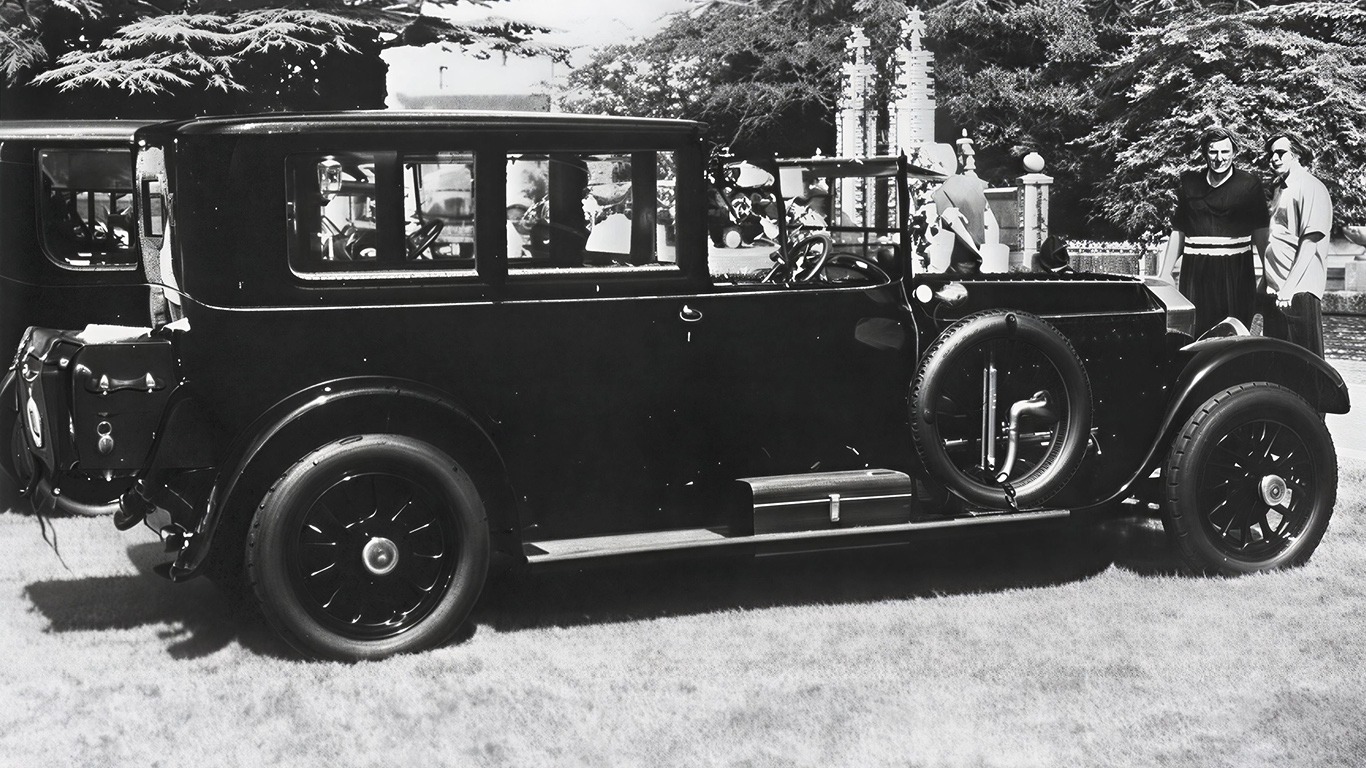
There, Stabilimenti Farina (run by the Farina family, including a young Battista “Pinin” Farina) replaced its formal Hooper-built body with a sleeker, more modern limousine coupé de ville design. The result was a study in restrained elegance: an upright chauffeured town car silhouette with clean lines, slim pillars, and that unmistakable Italian sense of proportion. Underneath, it remained every inch a Silver Ghost – 7.4-liter six-cylinder engine purring silently – but above the chassis, Farina’s coachwork added a dash of la dolce vita. This unique Anglo-Italian creation survives today, still turning heads on classic rallies (it even carried Dutch plates in recent years) as a rare example of Giovanni Farina’s work on a Rolls.
Farina’s early work on Rolls-Royce wasn’t limited to the mighty Silver Ghost. In 1923 the smaller new Twenty also received Turin attention, most notably in the form of a formal Limousine body by Stabilimenti Farina on chassis GDK44. Built using Weymann-type flexible construction—a fabric-covered ash frame prized in the 1920s for quietness and reduced weight—the car presented a tall, chauffeur-driven silhouette with clean, almost austere surfaces and the lighter stance typical of the system.
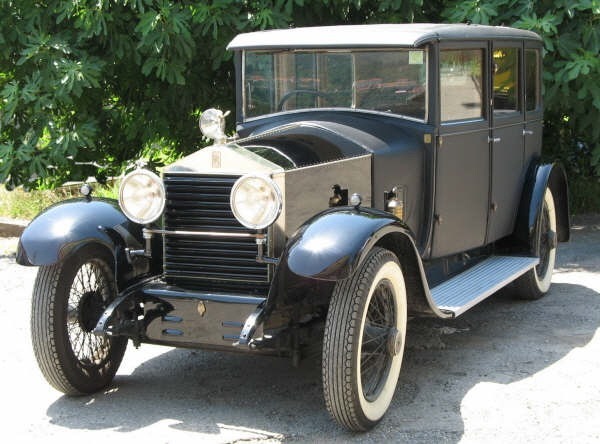
Beneath the skin, the Twenty’s smooth 3.1-litre six provided the hushed progress expected of the marque, but the Italian coachwork added a subtle continental flavour. Surviving period photographs and documentation confirm the individuality of GDK44, showing that even Rolls-Royce’s smaller model inspired Farina to apply its particular blend of restrained elegance and modern construction long before Italian style became a familiar part of the Rolls-Royce story.
🔗 Read more: The Weymann System: How It Revolutionized Automotive Comfort in the 1920s
Among the earliest Anglo-Italian collaborations sits Silver Ghost chassis 49MC, rebodied in Turin by Stabilimenti Farina in 1925. This one-off limousine marked an important moment when Italian coachbuilders began applying their own formal vocabulary to Britain’s most prestigious chassis. Farina gave the Ghost an imposing presence: a tall passenger compartment, vertical glasshouse, and a crisp beltline running the full length of the body. External hinges, rear quarter windows, fully valanced wings and dual side-mounted spares all reinforced its stately look. Compared with the lighter Weymann styles of only a few years earlier, the construction here moved decisively toward more rigid, panel-based techniques—an evolution visible across Farina’s mid-1920s work.
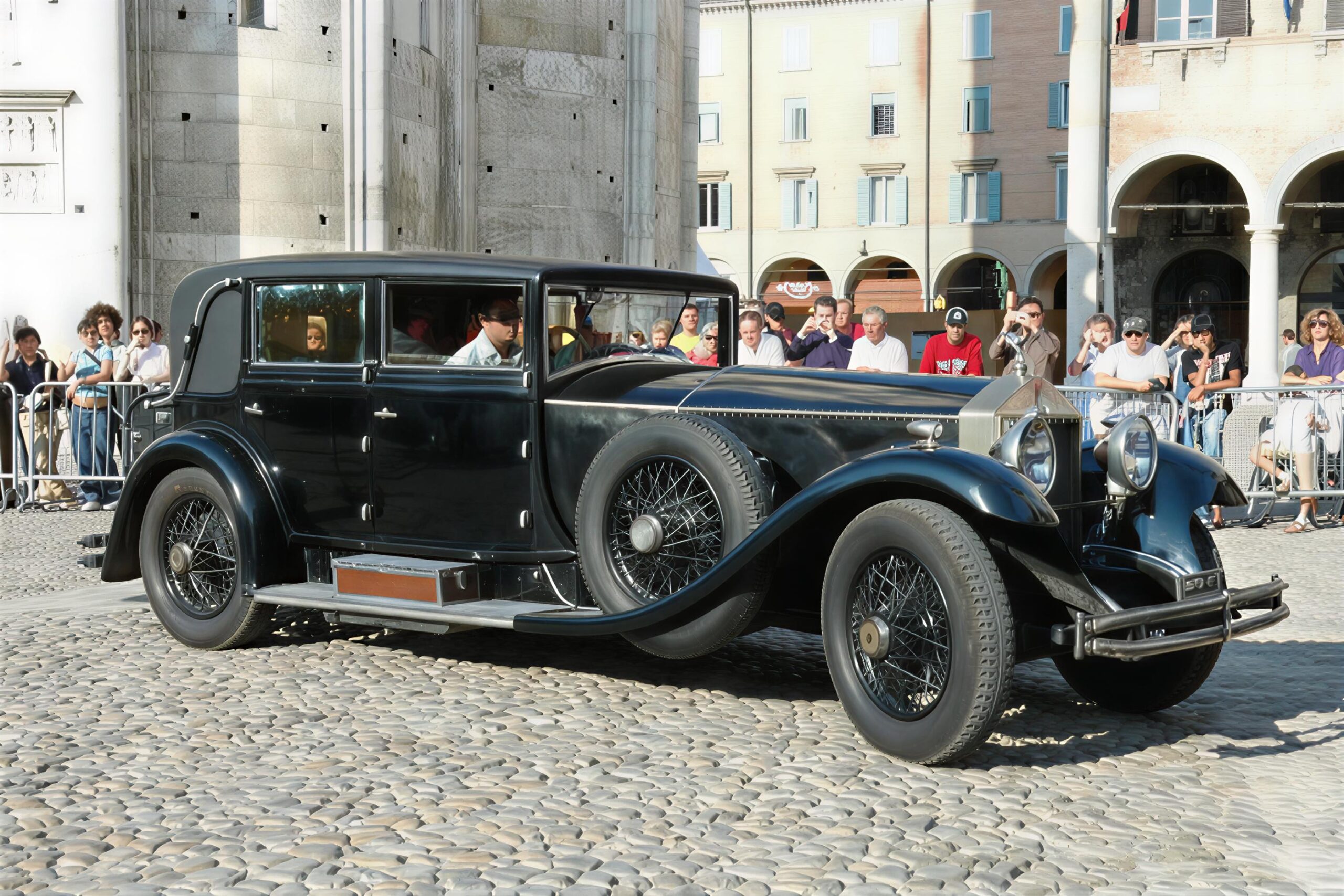
Mechanically the car remained pure Silver Ghost, with Rolls-Royce’s 7.4-litre six, four-speed gearbox, and servo-assisted four-wheel brakes, delivering the quiet power and long-distance refinement that made the model famous. Surviving photographs show 49MC in Italian collections later in life, its long wheelbase, high roofline and deep wings unmistakable.
Not all Italian-bodied Rolls of the era were so formal. Enter Ugo Zagato – an aircraft-industry alumnus who brought aerodynamic zeal to car design. In 1928, Zagato tried his hand at a Rolls-Royce Phantom I. Details of the Phantom I Zagato are shrouded in a bit of mystery (the records are scant, perhaps lost to time or hidden in a private collection), but the mere idea is tantalizing. The Phantom I’s immense 7.7-liter six and locomotive-grade chassis provided a platform for Zagato’s lightweight aluminum body approach.
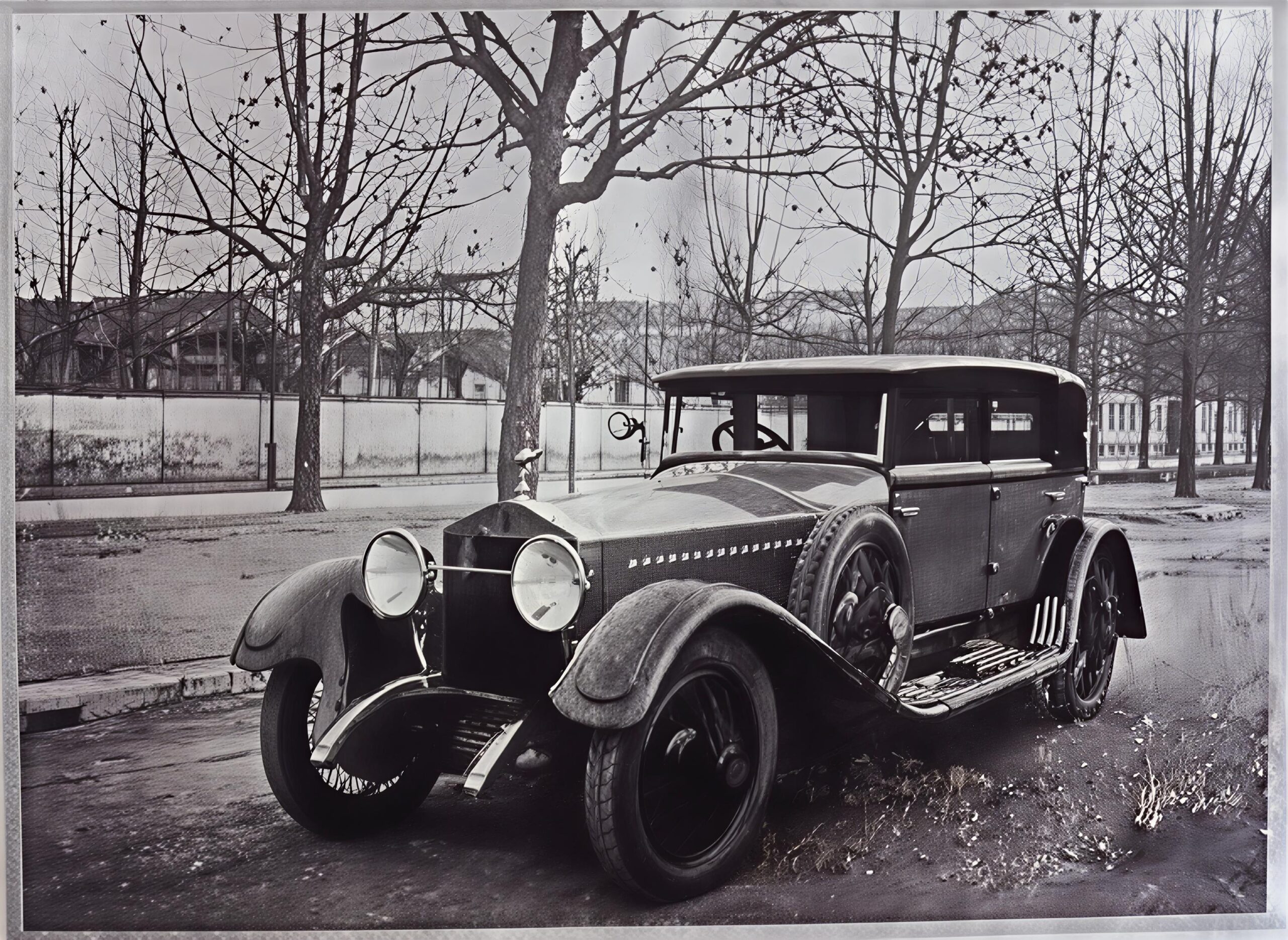
One can imagine the result: a Phantom turned gran turismo, maybe a sporty torpedo or saloon with a racy beltline and Zagato’s signature double-bubble roof touches. While we lack a full account of its design (one period blurb oddly mentions a “robust V12 engine” – likely an error since Phantom I was an inline-six), the existence of a Zagato-bodied Rolls in 1929 underscores how even the sportiest Italian coachbuilders were intrigued by Rolls-Royce. It’s a reminder that bespoke luxury in that era could take many forms – from stately Farina limousines to perhaps a Zagato special built for an adventurous owner craving something unique.
🔗 Read more: The story of Zagato Milano
Of all pre-war Italian Rolls, however, one of the most fascinating tales belongs to Carrozzeria Castagna of Milan. Castagna was famous for decadent bodies on Alfa Romeos and Isotta Fraschinis, but by the early 1930s they too intersected with Rolls-Royce. The result was a singular 1933 Phantom II Landaulet by Castagna (chassis 282AJS) with a transcontinental twist. This Phantom II’s journey began in America – ordered by Mrs. W. H. Luden, heiress to the Luden’s cough drop fortune in Pennsylvania. She already owned a lavish Castagna-bodied 1929 Isotta-Fraschini Tipo 8A, and when it came time for a new Rolls-Royce, she wasn’t about to give up her gorgeous Italian coachwork. Instead, Mrs. Luden had Rolls-Royce’s American arm Brewster lift the entire Castagna body off her Isotta and fit it onto the Phantom II chassis!
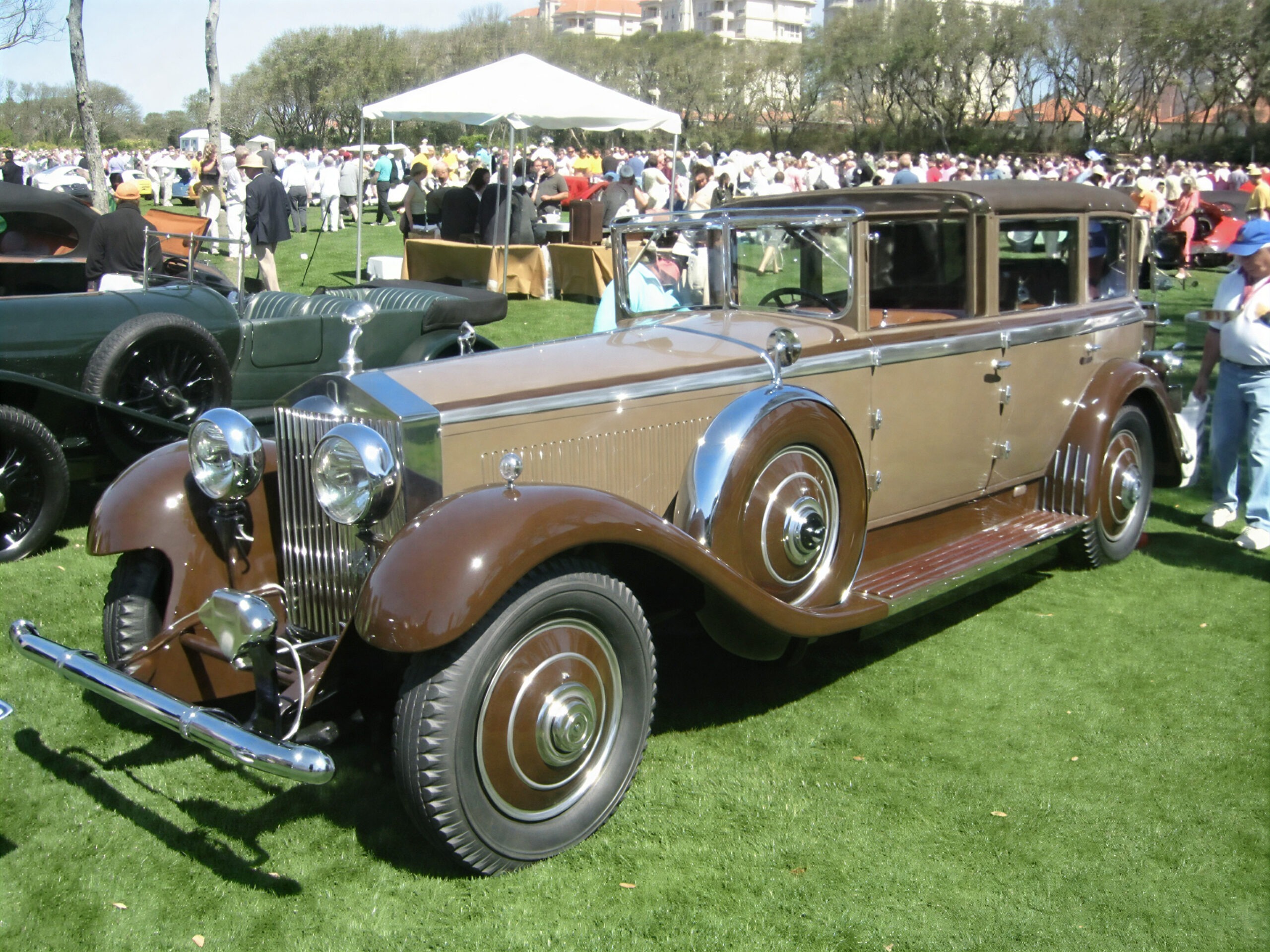
The audacity of it – transplanting the soul of an Italian car onto the heart of an English one – resulted in the only Castagna-bodied Rolls-Royce ever made. The silver-grey Phantom II emerged as a transformative hybrid: Castagna’s swoopy landaulet body (complete with open chauffeur’s compartment and rear quarter landau panels) now paired with Rolls-Royce’s silky 7.7-liter straight-six and refined chassis. It was the ultimate custom order, fulfilling a client’s wish to marry Italian design with Rolls-Royce engineering literally by unbolting one car and marrying it to another. After Mrs. Luden’s time, the car disappeared for decades, only to resurface in the 2000s – beautifully restored in Texas and winning awards at Pebble Beach and Amelia Island. Seeing it today, resplendent in maroon and black, one can appreciate both its beauty and the incredible story behind it: a transatlantic tale of recycling luxury, proving that for some Rolls-Royce owners, half measures just wouldn’t do.
If the early Silver Ghost commissions hinted at Farina’s promise, the most spectacular pre-war Italian Rolls may well be the 1934 Phantom II bodied by Pinin Farina, today remembered as the Fantasma di Montecarlo. Photographed in front of the Casino, the car was entered at the 1935 Monte-Carlo Concours d’Élégance by Marchese Demetrio Imperiali, where it swept the top honours and secured its ghostly nickname. Imperiali continued the tour, presenting the same Phantom at Cannes—and again at Turin’s Concorso del Valentino—with similar success, making it one of the most decorated Italian-bodied Rolls of the decade.
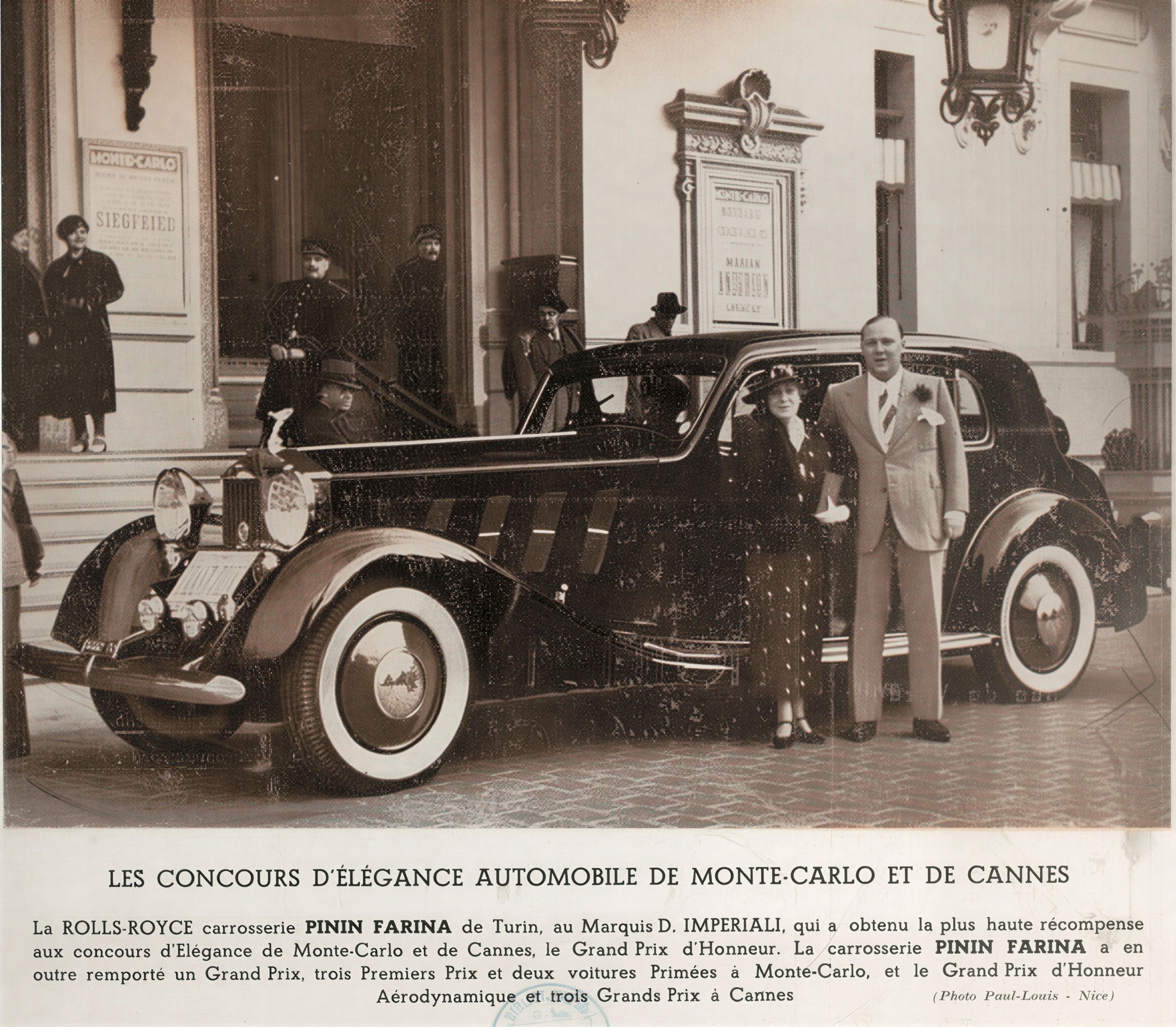
Built on a late Phantom II chassis with the 7.7-litre six and underslung rear suspension, Pinin Farina fashioned a majestic formal landaulette: long beltline, restrained ornament, and a dignified separation between open chauffeur’s position and enclosed rear compartment. Where British coachbuilders tended toward Edwardian formality, Pinin Farina injected a quieter sense of modernity—sleeker flanks, swept arches, and a touch of Riviera glamour. Period photographs and concours programmes confirm the car’s remarkable run through the mid-1930s, its black-and-chrome presence appearing repeatedly in the company of the era’s finest. In hindsight, the Fantasma di Montecarlo stands as the clearest pre-war statement that Italian design could not merely complement Rolls-Royce engineering—it could compete, win, and set the standard on Europe’s most prestigious lawns.
Post-War Fantasies: Fast Backs by Pininfarina, Flamboyand Ghia’s and a Toilet in a Vignale
The coachbuilt tradition largely survived World War II, but the landscape changed. Rolls-Royce introduced the Silver Dawn and Silver Wraith in the late 1940s/early 1950s, and for the first time offered some standard steel bodywork of its own. Even so, the richest clientele weren’t content with “standard” – they craved exclusivity and often had the means to commission it. Italy’s coachbuilders, now in their post-war heyday, were only too happy to oblige. The result? Some of the most flamboyant, intriguing one-off Rolls-Royces ever seen, each a snapshot of the cosmopolitan 1950s when movie stars, princes, and tycoons rubbed shoulders (and traded cars) like scenes from La Dolce Vita.
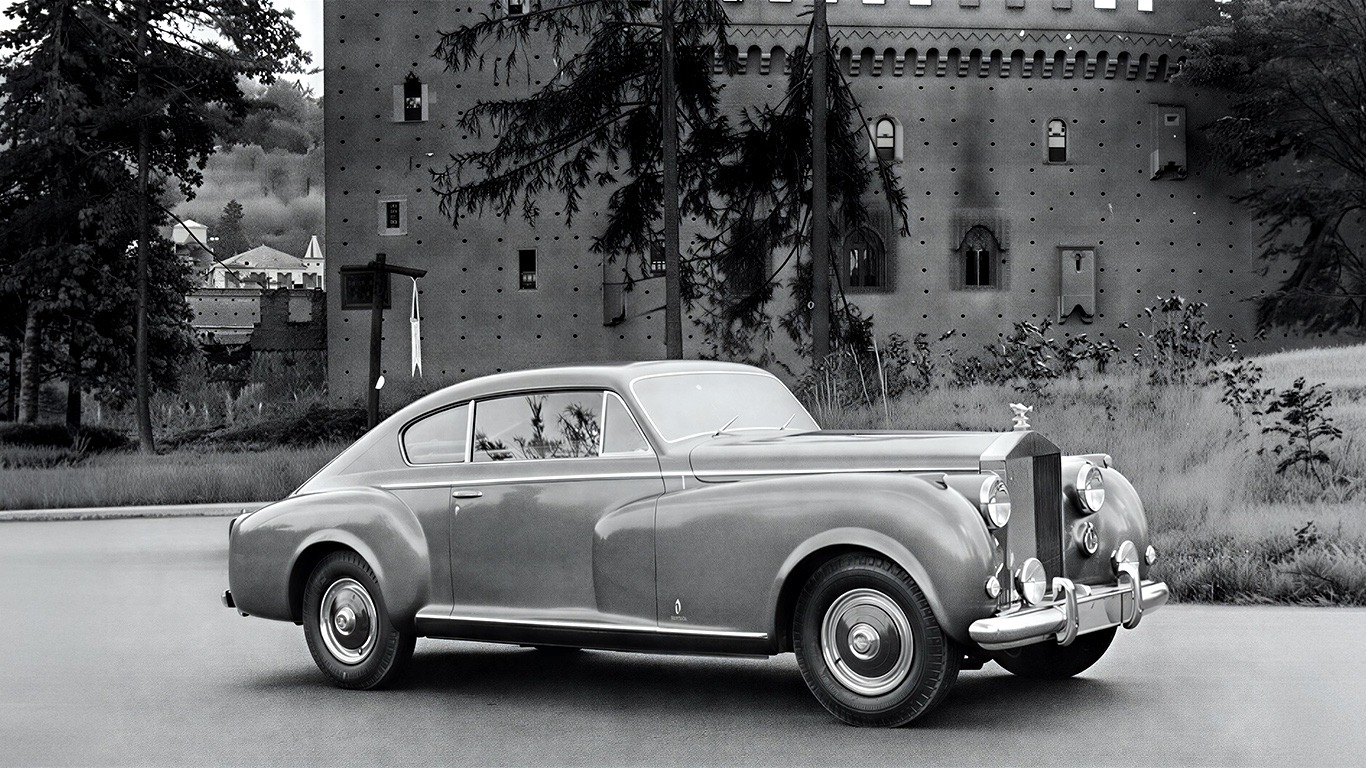
Consider the 1951 Rolls-Royce Silver Dawn Fastback Coupé by Pininfarina. In an era of lofty sedans, this was a low-slung two-door fastback that looked part Rolls saloon, part Italian GT. The car was ordered by Commendatore Luigi Bressani, a wealthy Milanese industrialist with a penchant for bespoke toys. Chassis SCA43 was shipped to Turin, where Battista “Pinin” Farina’s team transformed it into a show-stopper for the 1951 Turin Motor Show. The design featured a gracefully sloping roofline and tapered tail – far more continental in style than anything coming out of Crewe at the time.
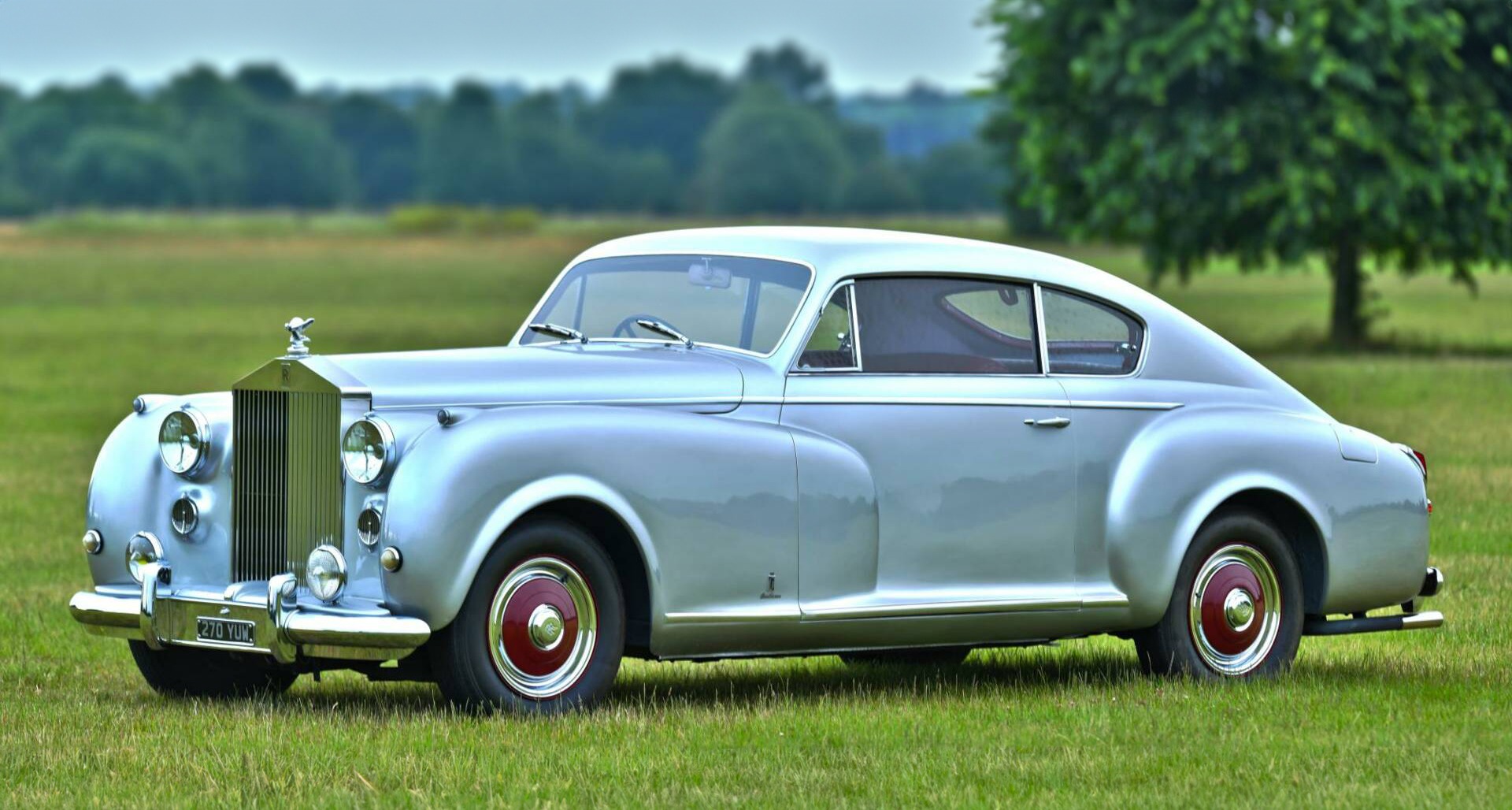
Inside, it was all sumptuous leather and wood, fitted to Bressani’s custom specifications (even the speedometer read in kilometers). Such extravagance cost a fortune: the final bill was around £10,000 in 1951 – roughly equivalent to a small fleet of regular cars back then. Unsurprisingly, Rolls-Royce balked at making a series of such cars; it remained a true one-off. Bressani enjoyed his jewel of a coupé, and it survived through the decades, at one point owned by a relative of his, until finding its way to a collector who treated it to a painstaking restoration.
🔗 Read more: Pininfarina Through the Ages: The Complete History
If Pininfarina’s Silver Dawn was all about refined elegance, Carrozzeria Ghia’s take on Rolls-Royce was pure 1950s flamboyance. Ghia, based in Turin, was known for audacious American-inspired designs under the direction of Luigi Segre. They bodied only two Rolls-Royces ever – and both are legends. One was a 1951 Rolls-Royce Silver Wraith limousine (chassis LWOF48) originally intended for King Farouk of Egypt. Farouk’s tastes were, shall we say, extravagant (he reportedly wanted his Rolls painted in striking hues). Ghia’s design for his Silver Wraith, unveiled at the 1952 Turin Motor Show, had free-standing headlamps and a bold, almost American look.
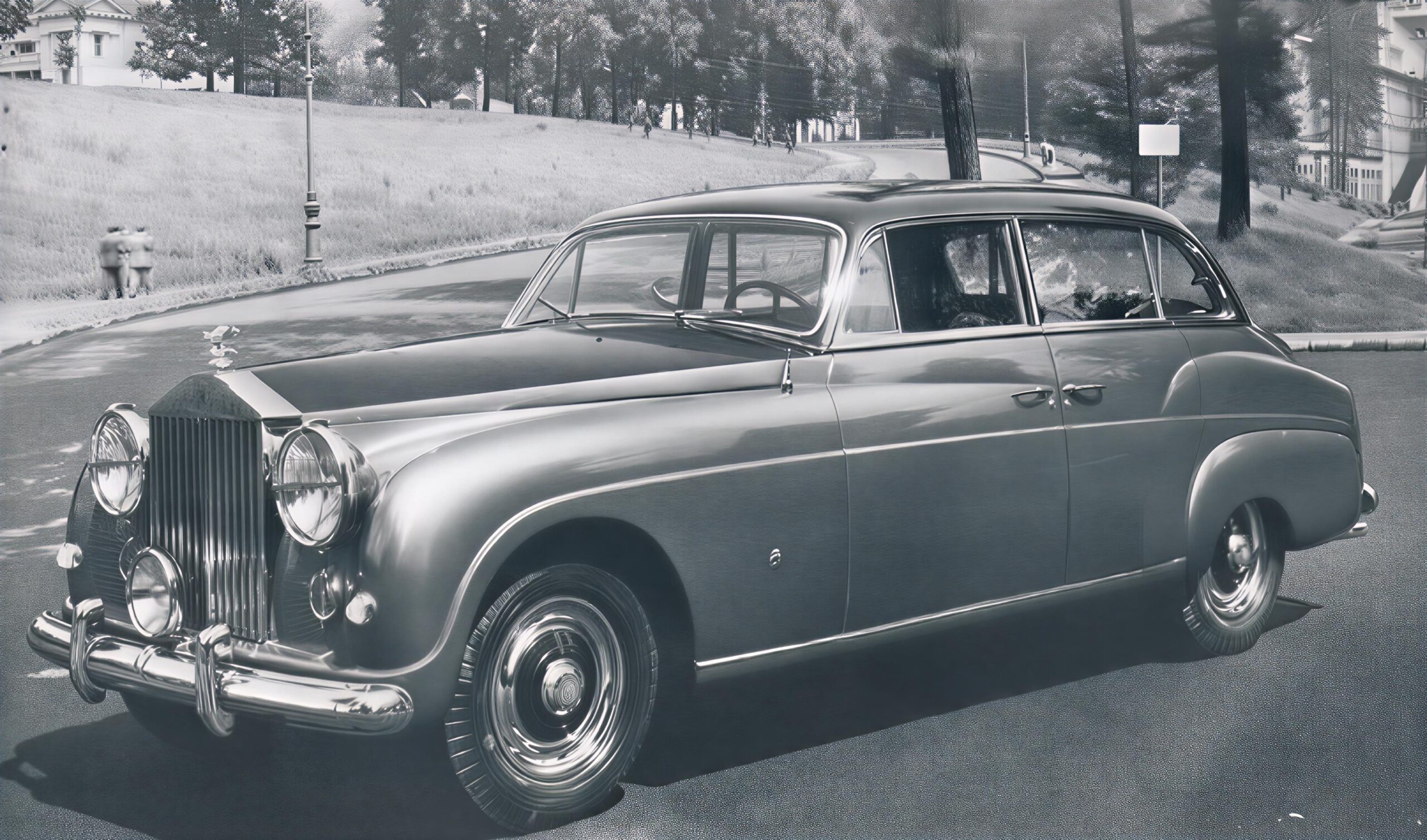
But fate intervened: Farouk was deposed in 1952 before the car could be delivered. The orphaned Rolls found an adoptive owner in none other than Roberto Rossellini, the Italian film director and a longtime Ghia client. One imagines Ingrid Bergman (Rossellini’s wife at the time) stepping out of that Ghia-bodied Rolls at a Via Veneto film premiere – the car’s swoopy lines and jet-age tailfins making as much of a statement as any movie star. With its two-tone paint and lavish chrome, the Silver Wraith Ghia was unapologetically flashy, and perhaps not conventionally beautiful – even period photos show a car that’s intriguing but a bit ungainly. Still, it embodied the optimistic exuberance of the 50s. Rossellini kept it for a time, adding to his collection of custom cars (which famously included Ferraris and more), ensuring that this singular Rolls lived a cinematic life.
Ghia’s other Rolls was a more compact 1952 Rolls-Royce Silver Dawn Saloon (chassis LSHD22), and its story is straight from a society gossip column. It was commissioned by Contessa Ida Matarazzo, an Italian aristocrat from a wealthy industrial family. She wanted a car like no other – and boy, did she get it. Ghia took the small Silver Dawn chassis and gave it a full makeover: the grille was lowered about 11 cm from its usual height (to lend a sleeker face), and the result was a chic, custom saloon unlike any standard Silver Dawn. Painted in an elegant hue, the Ghia Dawn made its debut at the Villa Borghese Concours d’Elegance in Rome, where it promptly won the Grand Prize in 1953.
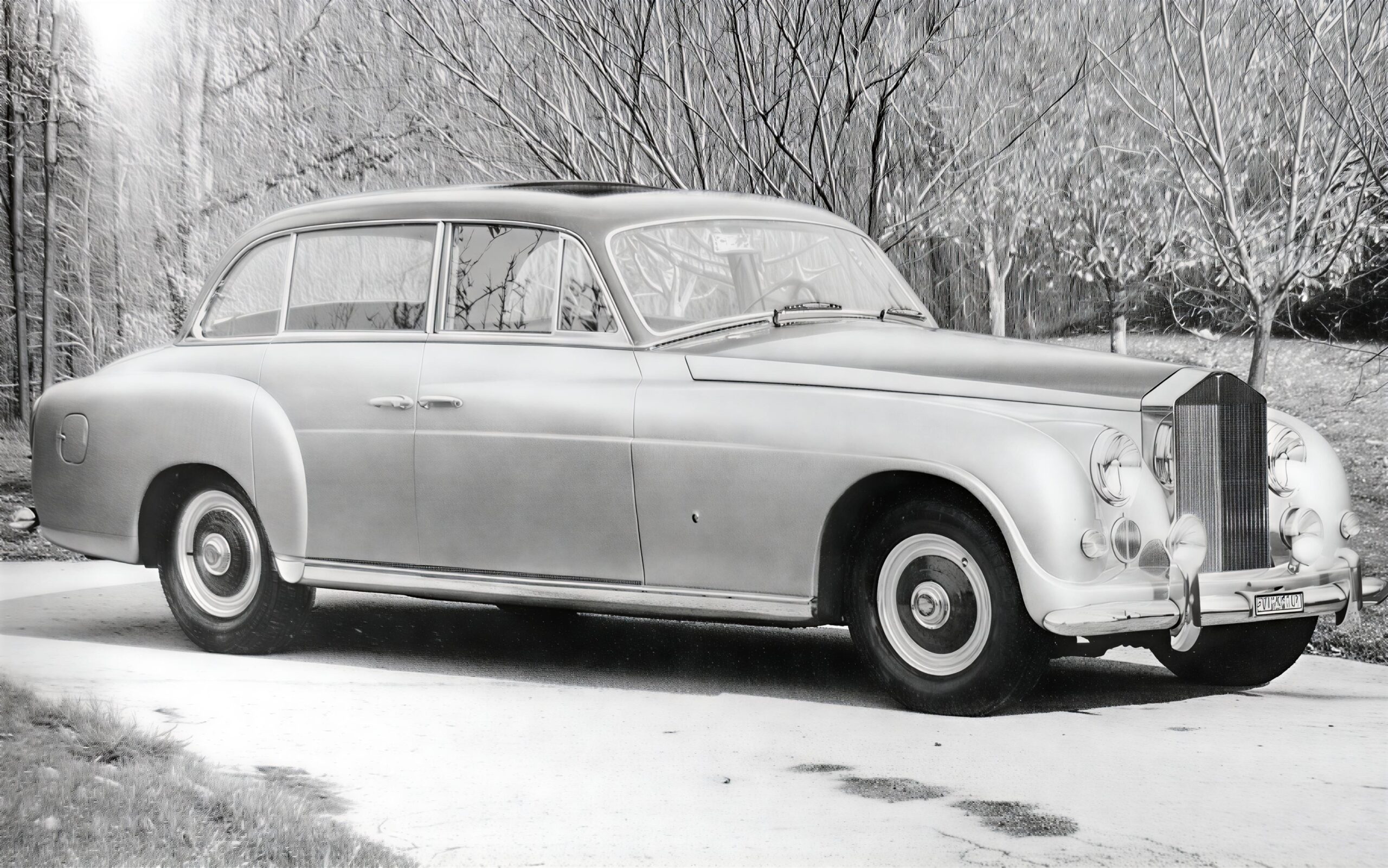
One can picture the scene: Rome’s high society swirling around this unique Rolls-Royce on a summer afternoon, admiring how Ghia managed to make a proper British Rolls look distinctly Italian. The car carried registration “ROMA-326953”, marking it as a true Roman noble. With flush headlamps and a streamlined profile, it was both dignified and slightly Continental – the sole Ghia-bodied Silver Dawn ever. The Countess’s bespoke Rolls remained a one-off masterpiece, later preserved in private collections. It stands as a testament to Ghia’s versatility: they could take a staid English saloon and give it a dose of Italian glamour without losing the Rolls-Royce gravitas.
Rounding out the 1950s trilogy of Italian coachbuilt Rolls was the work of Carrozzeria Vignale. If Ghia was flamboyant and Pininfarina was elegant, Vignale (led by designer Giovanni Michelotti by the mid-50s) combined a bit of both. In 1954 Vignale created a remarkable long-wheelbase Rolls-Royce Silver Wraith saloon (chassis LCLW14) for American businessman Joseph Maschuch. This car, displayed at the 1954 Turin Motor Show, was truly over-the-top in features – the kind that would make even a modern billionaire blush. It sported quad headlamps (unheard of on a Rolls then) and a distinctive reverse-raked rear window that could retract downward, a daring design flourish that had crowds gawking. And the excess didn’t stop at styling. Mr. Maschuch was a man who clearly liked his comforts: he ordered his custom Wraith with a built-in telephone in the rear compartment (very high-tech for 1954) and – wait for it – a gold-plated toilet that doubled as a champagne cooler hidden under the rear seat cushion.
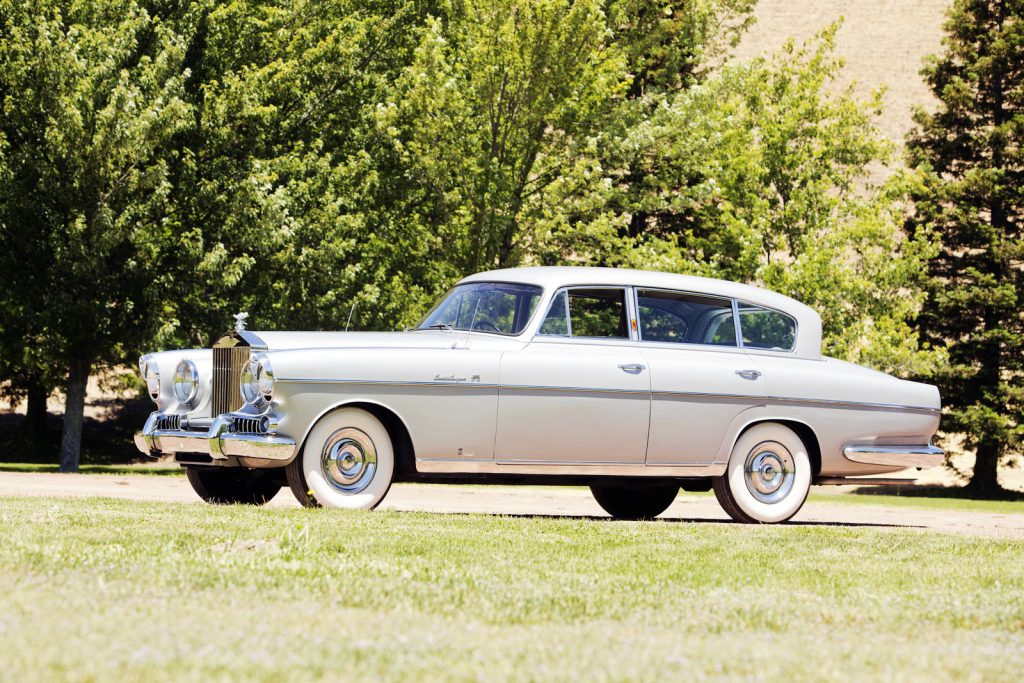
Yes, you read that right: this Rolls had a secret loo for celebratory bubbly on the go. The “Coupé Royale” (as Vignale dubbed this one-off) also featured a special kneeling Spirit of Ecstasy mascot to improve the driver’s sightlines, and even the engine bay was dolled up – the 4.9-liter straight-six’s block painted in a vivid green and its pipes chromed to jewelry-like perfection. Opulent, eccentric, and utterly unique, the Vignale Rolls-Royce epitomized bespoke luxury. Maschuch took delivery in 1955 and enjoyed his rolling palace for years. The car later passed through noted collectors (Richard and Linda Kughn of Michigan, among others) and still exists today as the only Vignale-bodied Rolls-Royce ever built. It is perhaps the ultimate conversation piece: a car with styling audacity matched only by the extravagance of its appointments – truly a tycoon’s fantasy on wheels.
🔗 Read more: The Rolls-Royce with a Royal Flush: How a Toilet Ended Up in a Vignale Masterpiece
Each of these post-war Italian-bodied Rolls-Royces was one of one – commissioned by individuals who weren’t satisfied until their Rolls reflected their personality. Whether it was Bressani’s fastback coupé (quietly influential on future designs), Matarazzo’s prize-winning saloon, Rossellini’s repurposed ex-King limo, or Maschuch’s rolling executive lounge (with a golden champagne throne to boot), these cars proved that the Italian art of coachbuilding could flourish even as unibody, factory-built cars loomed on the horizon. They were the last hurrah of a truly bespoke era – but the Italian romance with Rolls-Royce was far from over.
The 1970s & ’80s: New Directions – Pininfarina’s Production Coupé, Frua’s Phantom VI Saga, and More
By the 1970s, the practice of shipping a bare Rolls-Royce chassis to an outside coachbuilder had largely faded. Rolls-Royce had absorbed many coachbuilding firms (like Mulliner and Park Ward) and offered their own bespoke models. But even in this modern age, Italy still found a way in – both through official channels and daring one-off projects that kept the coachbuilt spirit alive.
In 1975, Rolls-Royce did something radical: it launched the Camargue, the first postwar Rolls designed outside the company. Who did they trust with this milestone? None other than Pininfarina. Styled by Paolo Martin of Pininfarina, the Camargue was a two-door luxury coupé and a clear break from Rolls tradition. Its lines were angular and avant-garde, with a wide grille and sleek proportions influenced by European GTs rather than Victorian carriages. At launch, it was the most expensive production car in the world, and also among the most controversial – some loved its clean modernity, others felt it strayed too far from the classic Rolls look.
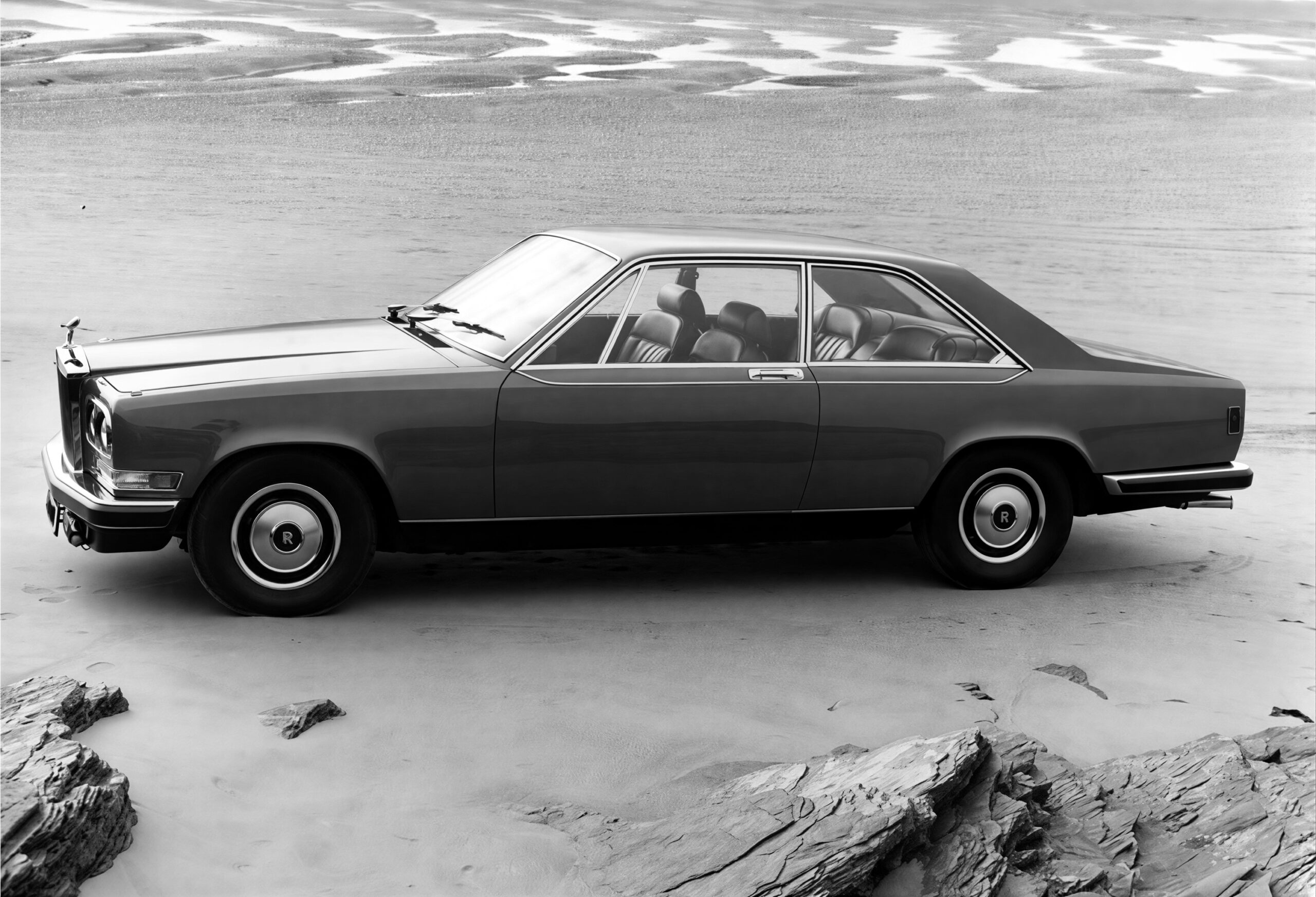
Top Gear’s Jeremy Clarkson later famously quipped that the Camargue looked like it “fell out of the ugly tree and hit every branch on the way down,” but to others it has a 1970s charm that’s aged into retro-cool. Love it or not, the Rolls-Royce Camargue symbolized a bold experiment: Rolls embracing Italian design on a production model. With only 531 made over 11 years, it remains rare. And interestingly, it cemented a long relationship – the Camargue was just a prelude, as Rolls-Royce would again tap Pininfarina decades later for special projects. Today, the Camargue’s sharp-edged style and rich Pininfarina pedigree have earned it a reappraisal as a pioneer of Rolls-Royce’s move toward more international designs.
Even as Rolls produced the Camargue, one-off coachbuilding wasn’t dead. A fascinating example came via Giovanni Michelotti – the former Vignale designer who opened his own studio in Turin. Michelotti was a master of sporty designs (for Triumph, Maserati and others), but in the late ’60s he took on a Rolls-Royce project for an extraordinary client: Pierre Scapula, a French interior designer and famed antique jewelry collector. Scapula was an aesthete of the highest order – he restored French châteaux for fun and lived part-time in the Ritz Hotel, Paris. Unsurprisingly, his automotive taste was equally eclectic. After trying an initial custom job on a long-wheelbase Silver Shadow that he deemed unsatisfactory, Scapula penned his own dream Rolls design – a sort of mobile art piece – and asked Michelotti (with whom he had struck up a friendship) to build it. The result was the 1968 Rolls-Royce Silver Shadow “Michelotti” Coupé (chassis SRX6295), finished around 1971. This one-off Silver Shadow was unlike any other: Michelotti turned the four-door Shadow into a two-door grande routière with a bespoke body.
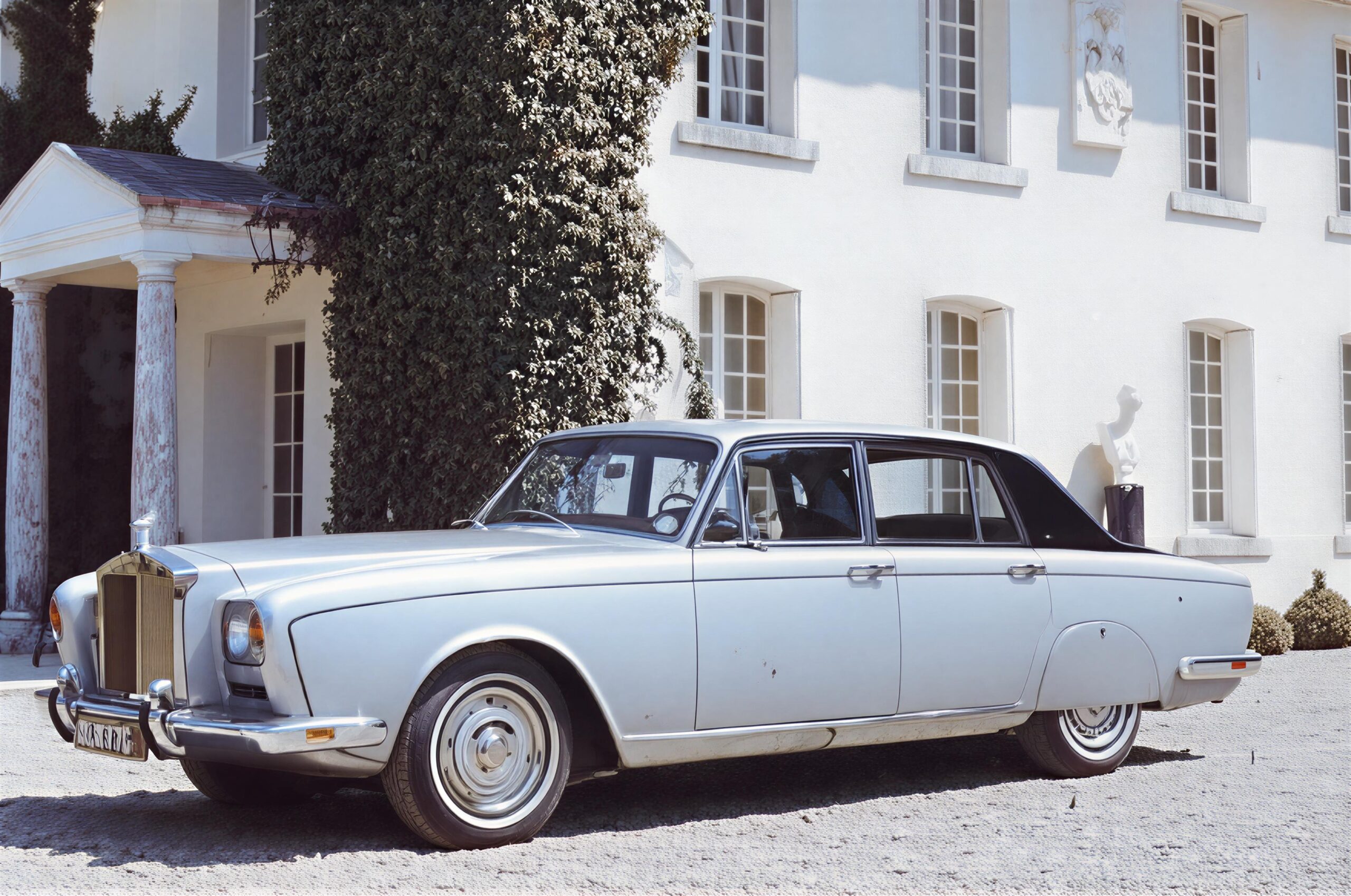
Photos show a distinct departure from stock – a lower roofline, prominent boot with a spare tire bulge, and a reimagined front end. It was at once unmistakably Rolls-Royce (the grille and general presence remained) and yet unmistakably Italian in flair. Michelotti even refrained from badging the car with his logo out of deference to Scapula’s own design input. In essence, this Rolls was co-designed by its owner, a true bespoke creation to satisfy one man’s refined (if somewhat eccentric) vision. The Silver Shadow Michelotti is a singular creation – an “authentic work of art” as auctioneers later described it – blending Rolls-Royce luxury with a final flourish of traditional Italian coachbuilding in an era when such projects were nearly extinct. It resurfaced in recent years in France, requiring some mechanical TLC after long storage, but enthusiasts recognize it as a shining example of 1970s coachbuilt chic. It’s also an end-of-an-era car: by the time it was built, most coachbuilders had shut their doors or focused on concept cars. Scapula and Michelotti’s collaboration feels like the last waltz of a fading dance – a Rolls-Royce art car from the Studio 54 age.
🔗 Read more: Giovanni Michelotti: Automotive Maestro
The true swan song of classic coachbuilding at Rolls-Royce, however, came with the enormous Phantom VI. The Phantom VI (built 1968–1991, mostly as official limousines) was the final model still using a separate chassis – a coachbuilder’s playground. Sensing an opportunity, Pietro Frua – a veteran Italian designer – took on the challenge to create not one but two custom Phantom VI convertibles.
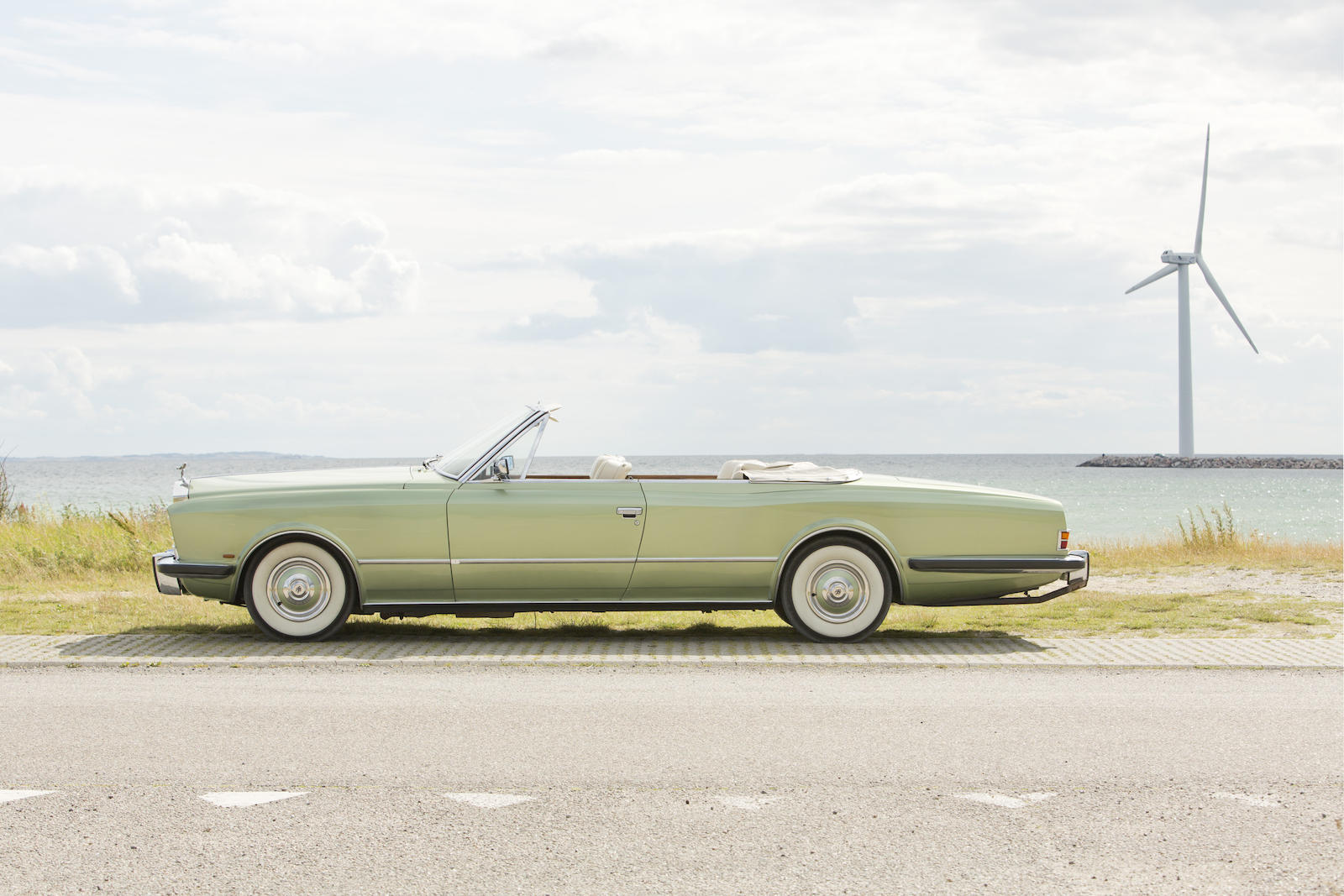
The story of these cars is a drama in multiple acts, complete with language barriers, transatlantic deals, and a finish that came decades late. Frua’s first attempt was a 2-door Drophead Coupé Phantom VI (chassis PRX4705) commissioned in 1971 by Consul Simon van Kempen, a Swiss diplomat with homes in Monaco. Frua, famous for Maserati and Ferrari designs, gave the Phantom a crisp, formal-yet-modern look in convertible form. He crafted a long two-door body, painted originally in deep green, with a power soft-top – essentially a private landaulet for high society. This car was finished by 1973 and delivered, later changing colors (red, then back to green) and eventually being sold at auction decades on. It remains the only two-door Phantom VI ever made, and its design was pure Frua – elegant with a bit of 1970s edge (some see hints of contemporary Maserati Quattroporte in the lines, not coincidentally also a Frua design).
Encouraged, Frua embarked on a second, even more ambitious project: a 4-door Phantom VI All-Weather Cabriolet (chassis PRH4643), essentially a fully open-top limousine. Commissioned by British real-estate magnate Robert “Bobby” Buchanan-Michaelson in the early ’70s, this project became a saga. Communication was tricky – legend says Frua spoke no English and Rolls-Royce’s team spoke no Italian, and neither thought to hire an interpreter. Despite that (or perhaps because of it!), the build crawled along. After four years, by 1977, Buchanan-Michaelson lost patience with the still-unfinished car and sold the whole project, lock-stock-and-barrel, to American collector James Leake. Leake was determined to see it through. He got Rolls-Royce to assist and even engaged Frua again for updated drawings. But fate intervened: Frua retired due to ill health and passed away in 1983. One might think that would be the end of this phantasmal Phantom VI, but Leake persisted for another decade.
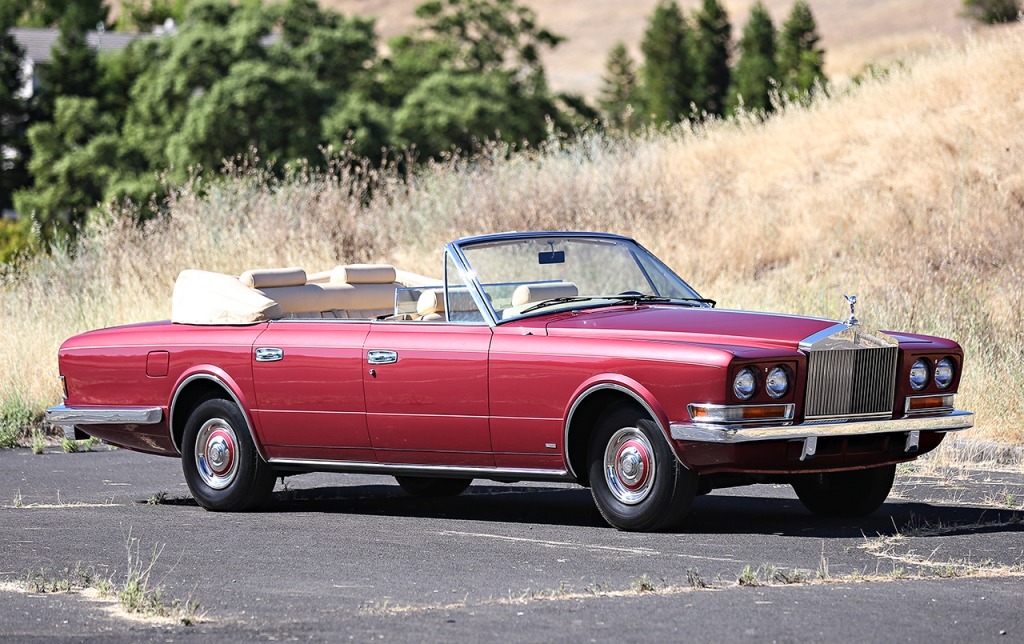
Finally, in 1993 – over twenty years after its inception – the Frua Phantom VI Cabriolet was completed. It debuted at the Geneva Motor Show that year, a modern classic at birth. The finished car is breathtaking: a fully open four-door Rolls-Royce, with power everything, acres of wood and leather, and styling that is both traditional (Frua honored the Rolls grille and formal profile) and subtly contemporary with its clean lines. Painted a deep midnight blue, it has the stature of a royal parade car and the exclusivity of a one-off supercar. Indeed, it turned out to be the last customer Phantom VI ever built, as Rolls had long since ended production by the time this coachbuilt wonder hit the road. The Frua Phantom VI stands as a monument to perseverance in coachbuilding – an epic bespoke endeavor** that survived language gaps, ownership changes, and the very retirement of its creator to reach fruition. Only two Phantom VIs were ever graced with such custom bodies, both by Frua, making them unicorns among an already rare breed.
🔗 Read more: Pietro Frua: Mastering the Art of Automotive Elegance
Around the same period, Pininfarina quietly revisited its own Rolls-Royce Camargue with something much more substantial than a proposal: a genuine cabriolet conversion carried out in the mid-1980s. Documentation is limited, but most credible accounts point to a single example executed directly by Pininfarina, very likely commissioned for the Royal Family of Brunei. The transformation retained Paolo Martin’s angular proportions while substituting the fixed roof for a neatly integrated soft-top.
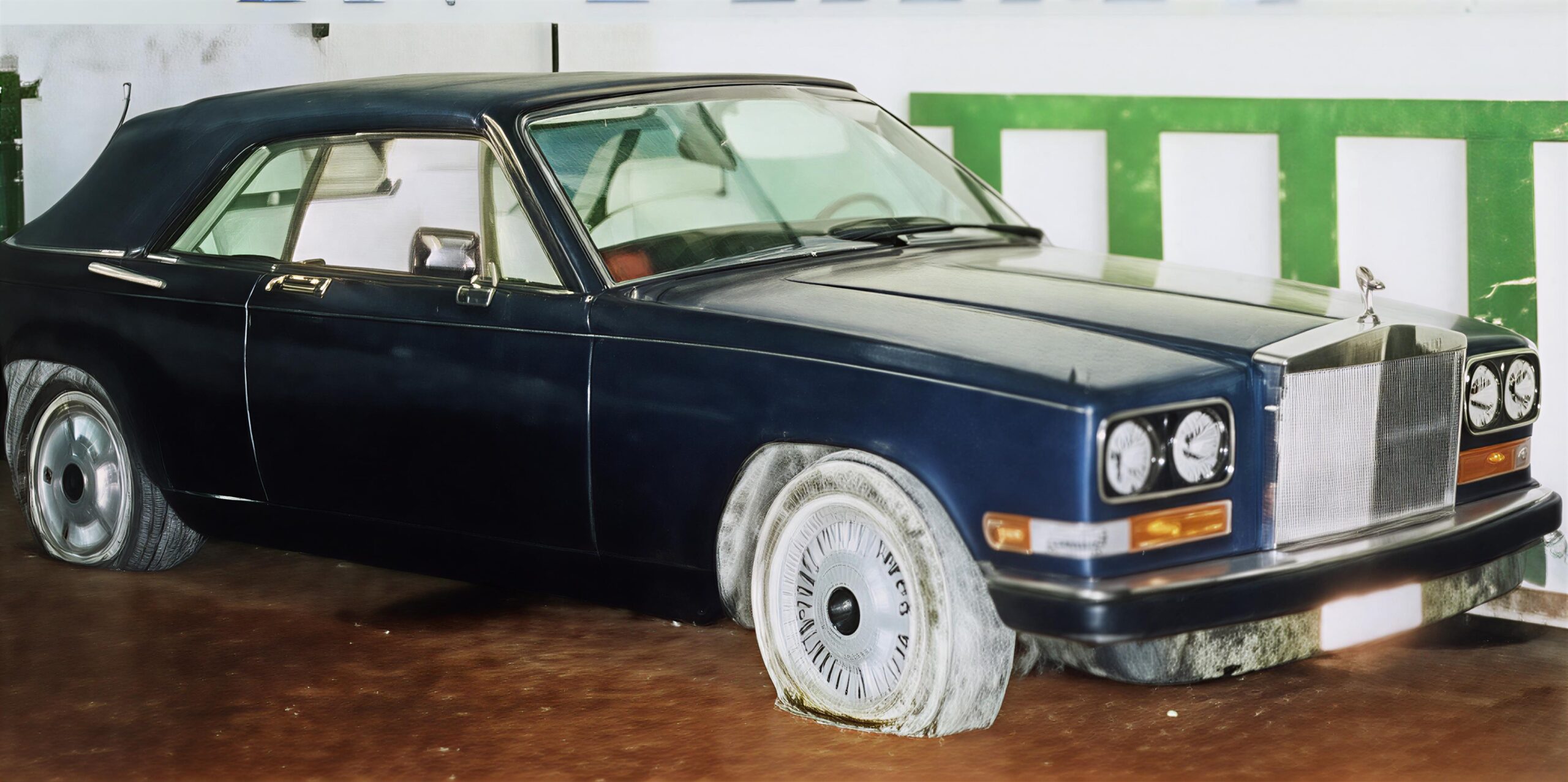
Because the car appears to have been built for a highly private client, photographs and technical details remain scarce, yet the handful of period images show a result so clean it feels almost factory-sanctioned. Rolls-Royce never offered an official open Camargue, meaning this Pininfarina cabriolet occupies a quiet corner of the marque’s history—an unofficial finale to the Camargue story that only a few insiders ever witnessed. Fittingly, the model that first brought Italian styling to Rolls-Royce seems to have taken its final bow through another Italian hand—this time not on paper, but in metal, for an owner who clearly wanted something no one else could have.
Modern Resurrection: 1990s to Today – The Bespoke Tradition Lives On
As the 20th century gave way to the 21st, one might assume the age of custom coachbuilt Rolls-Royces was over. Yet, the flame never died – it merely flickered, waiting for the right patrons (and deep pockets) to rekindle it. In recent decades, we’ve witnessed a renaissance of Italian coachbuilt Rollers, from ultra-secret royal commissions to public concept cars and contemporary limited editions. The tradition of commander à la carte – commissioning a Rolls-Royce like a tailor-made suit – is alive and well, proving that true luxury is never off-the-rack.
One of the most remarkable modern projects unfolded in the mid-1990s in the oil-rich nation of Brunei. The Sultan of Brunei’s royal family, famed for their unparalleled car collection, desired a fleet of ultra-exclusive limousines. They turned to Italy for inspiration, resulting in the clandestine creation of the Rolls-Royce Phantom Royale series. In 1995, Pininfarina Studi e Ricerche in Turin built four Phantom Royale limousines (chassis #011, #012, #013, #014) exclusively for Brunei’s royals. These were no ordinary Phantoms – in fact, Rolls-Royce had stopped making the classic Phantom VI, so the Royales were engineered using stretched Bentley Continental R underpinnings and the running gear of a Rolls-Royce Silver Spur III, all cloaked in completely bespoke bodywork. The design paid homage to the grandeur of Phantom VI but with a modern twist and clear Italian influences (think of it as a 1990s vision of what a state Rolls should be).
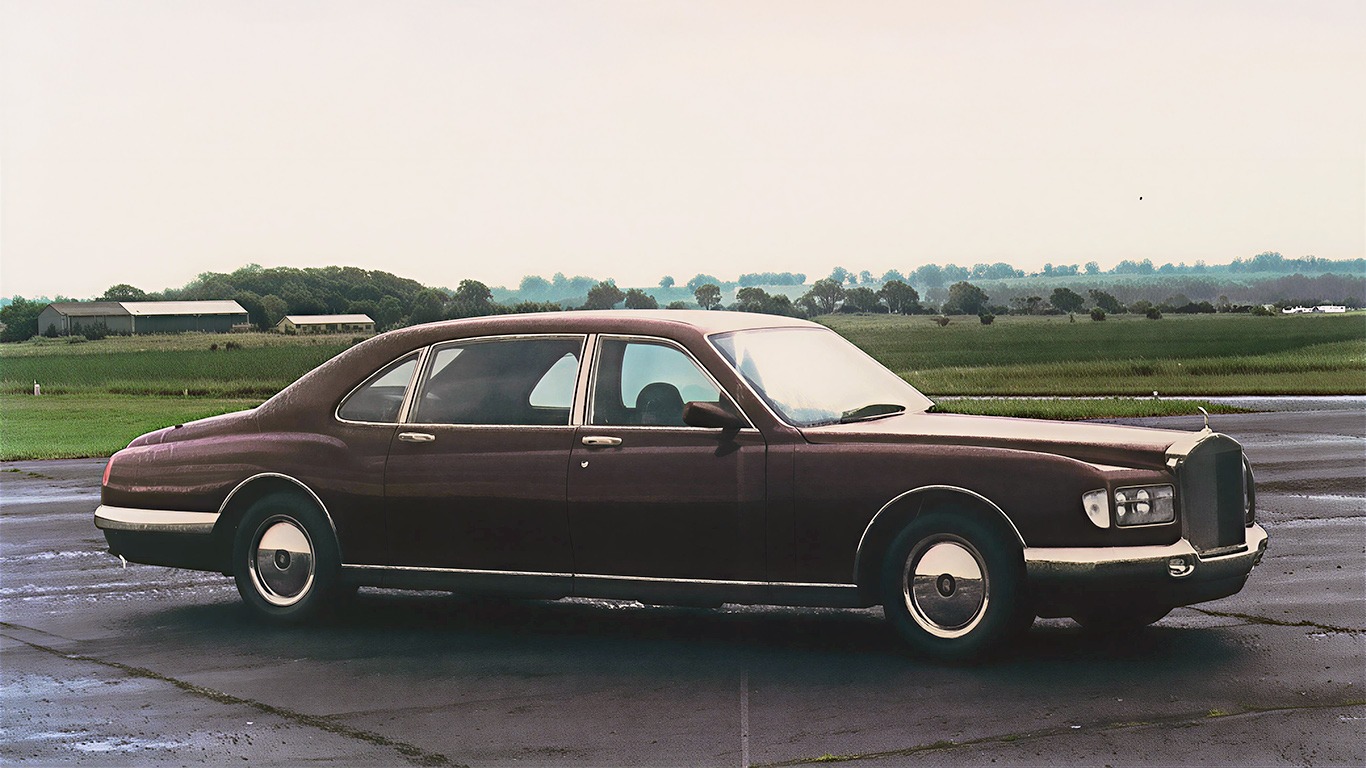
Each Royale was a seven-seat palace on wheels, powered by a turbocharged 6.75-liter V8 (borrowed from Bentley’s hottest models, uncatalyzed for maximum oomph). Pininfarina’s craftsmanship was top-tier, but even they could only build so many in the time frame. In 1997, two additional Phantom Royales were completed – this time by Bertone in Turin, effectively outsourcing within Italy to meet Brunei’s needs. In total, just six Phantom Royale limousines were made (four Pininfarina, two Bertone). All were finished in deep, dignified hues with lavish interiors hidden from prying eyes. To this day, details of their opulent cabins remain secret, and none have ever been publicly sold – they reside in the royal garages of Brunei, unicorns of the automotive world. The Phantom Royale project underscores a truth long-known: if your pockets are deep enough, Rolls-Royce and Italian coachbuilders will happily collaborate to build your automotive fantasies. It was a 1990s echo of the coachbuilt era, on a truly royal scale.
🔗 Read more: The Sultan of Brunei’s Special Car Collection
Not every modern Italian Rolls is cloaked in secrecy; some are flaunted on the world stage. In 2008, Pininfarina unveiled the stunning Rolls-Royce Hyperion at Pebble Beach. Based on a Phantom Drophead Coupé, the Hyperion was a one-off two-seat roadster commissioned by collector Roland Hall. Pininfarina’s designers (led by Jason Castriota) harked back to grand pre-war tourers: they removed the rear seats entirely, moved the windshield back, and crafted a flowing boattail rear deck in wood, with custom fitted luggage and even a storage slot for the client’s Girard-Perregaux watch on the dashboard.
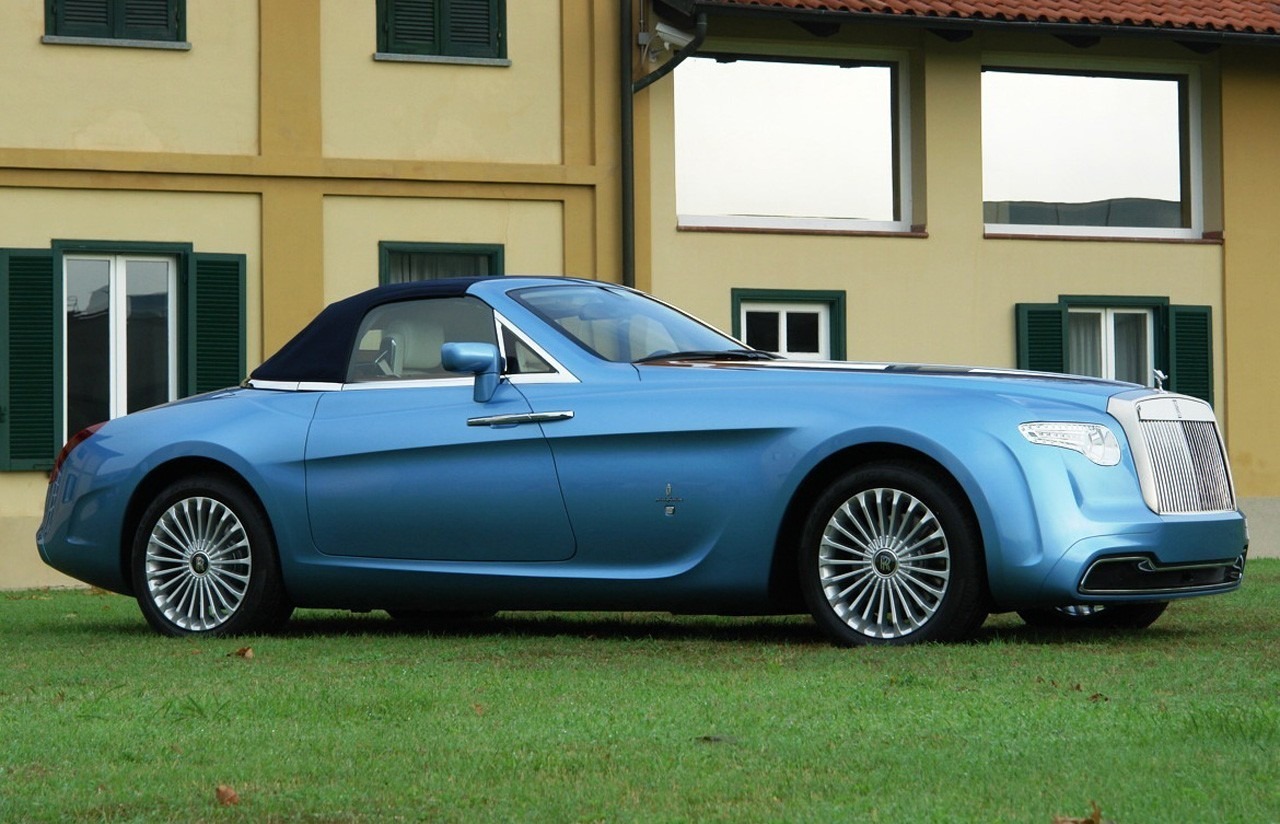
Its name, Hyperion (a Titan of Greek myth), evoked power and light – fitting for the majestic azure-blue machine with bi-xenon headlamps set into a boldly reimagined face. Underneath, it remained a Phantom DHC, with the 6.75-liter V12, but the body was entirely re-sculpted in carbon fiber. The Hyperion wowed the concours crowd in 2008, signaling that Pininfarina and Rolls-Royce could still create magic together in the modern age. After its debut, the Hyperion changed hands a few times (at one point listed for sale in Dubai, later turning up in Europe). It’s now considered a milestone in contemporary coachbuilding – a Pebble Beach Best that showed the world bespoke artistry wasn’t dead, just very, very exclusive.
Pininfarina’s Hyperion apparently caught the eye of other Rolls-Royce enthusiasts, because a few years later, another special Phantom Drophead Coupé was born in Turin. Commissioned by South African billionaire Douw Steyn around 2013, this creation took a different design direction. While Hyperion was all about svelte retro-roadster cues, the Steyn Phantom went for a blend of vintage and modern aesthetics that sparked lively debate. It featured a two-tone exterior with a 1930s-inspired color scheme (rich cream body with dark brown or black fenders) set off by large modern six-spoke alloy wheels and bold lateral “shark gill” vents behind the front wheels. From the front, it wore a slightly revised grille treatment and classic round headlamps, almost recalling a pre-war Phantom, yet the overall silhouette remained that of a modern Drophead.
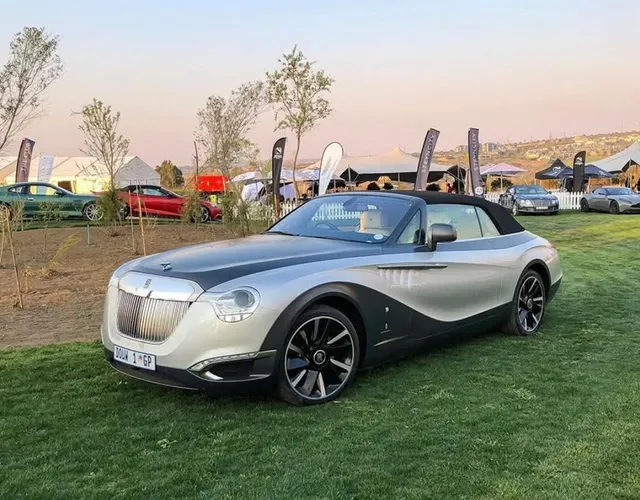
The rear was completely reworked – boat-tail hints and a unique tail-light configuration – which some critics loved and others…well, let’s say beauty is in the eye of the beholder. Pininfarina reportedly charged $2.3 million for this bespoke build, and Steyn was deeply involved in the process. When it was unveiled at the Concours South Africa, it certainly captivated onlookers – not least because one doesn’t expect to see a custom-bodied Rolls-Royce in the 2010s at all. With its mix of old and new cues, the Steyn Phantom shows how coachbuilding often walks a fine line between homage and innovation. It was also a sort of bookend to Pininfarina’s work on that Phantom Drophead platform – the company noted this was the second one-off they’d built on it, after the Hyperion. Together, these two Pininfarina Phantoms – one a voluptuous blue roadster for California, the other a retro-modern cabrio for South Africa – underscore that even in the new millennium, the dialogue between Rolls-Royce and Italian design houses continues in spectacular fashion.
Carrozzeria Castagna—among the oldest names in Italian coachbuilding—resurfaced in 2008 with what it claimed would be the Rolls-Royce Coupé Royale. On paper it was a dramatic 2-door reimagining of the Phantom VII, complete with a chopped roofline, carbon-rich bodywork, and even a reported power hike to around 600 horsepower. The name “Royale” certainly wasn’t shy about aiming high. But here’s where things get murky. Although Castagna issued press material and tantalising renderings, solid evidence of a fully built, public prototype is thin.
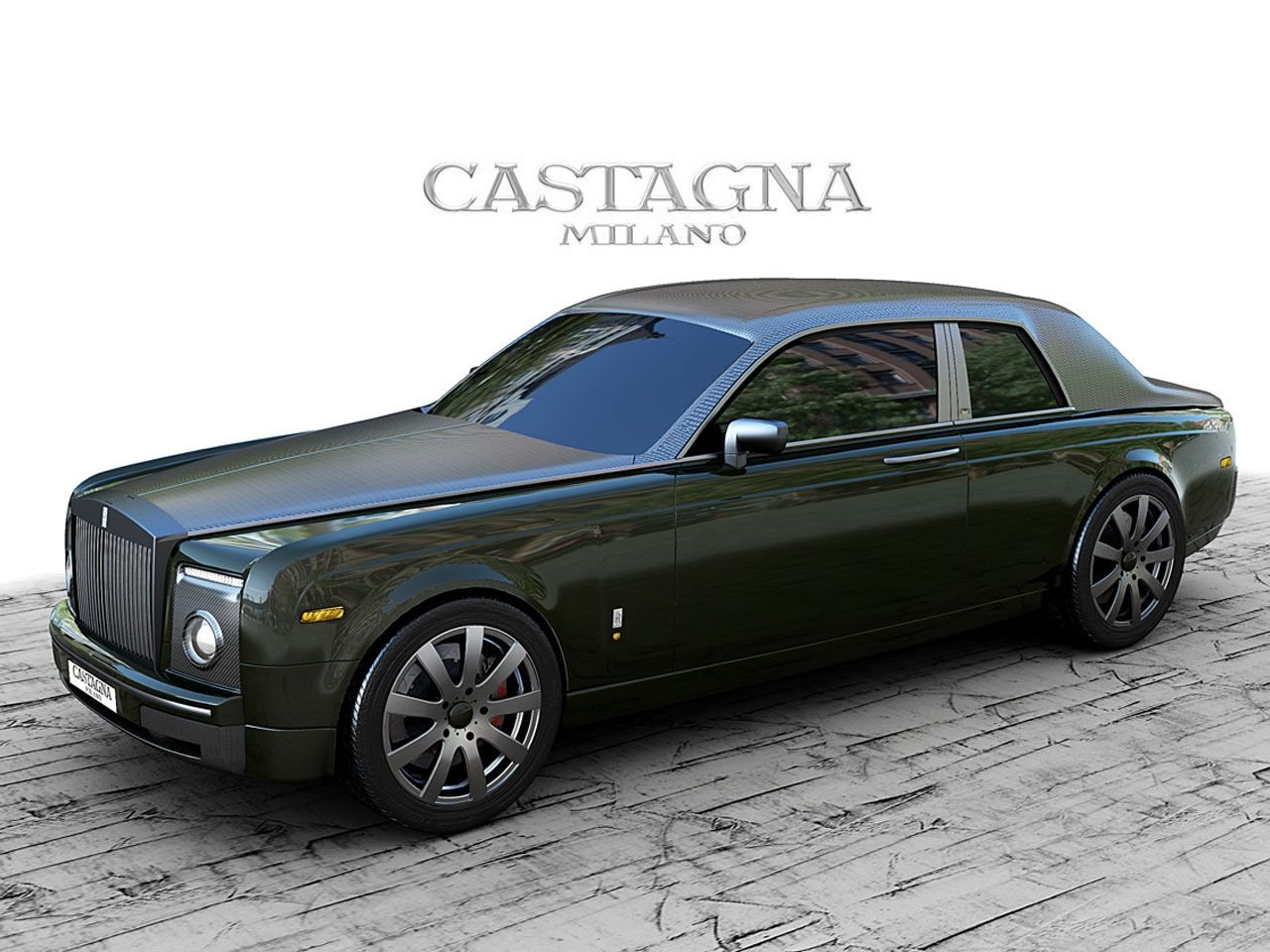
Period reports suggested a Geneva Motor Show appearance, yet confirmed photographs of an actual metal-bodied car are conspicuously absent. In retrospect, the whole project seems to have hovered somewhere between concept proposal and limited mock-up—more idea than execution. Still, the intent was unmistakable: even as Rolls-Royce prepared its own Phantom Coupé, Castagna wanted to remind enthusiasts that Italian coachbuilders could still stake a claim in ultra-luxury territory. Whether or not a real Coupé Royale ever turned a wheel, the ambition alone kept Italy’s coachbuilding legacy in the conversation—at least for a moment.
And now we land in the awkward almost-present, where the story should come full circle—if only reality would cooperate. Ares Design in Modena, the outfit once led by ex-Lotus boss Dany Bahar, spotted a gap in today’s Rolls-Royce catalogue: no Phantom coupé since 2016. Their answer was bold and headline-ready—the Ares Modena “Phantom Coupé,” unveiled as a 2023–24 project and pitched as a modern resurrection of the grand two-door Rolls. On paper, it was delicious. Start with a Phantom VIII, strip it to its bones, refashion it with two doors, a lower roofline, and an interior dripping with embossed leather and carbon fibre.
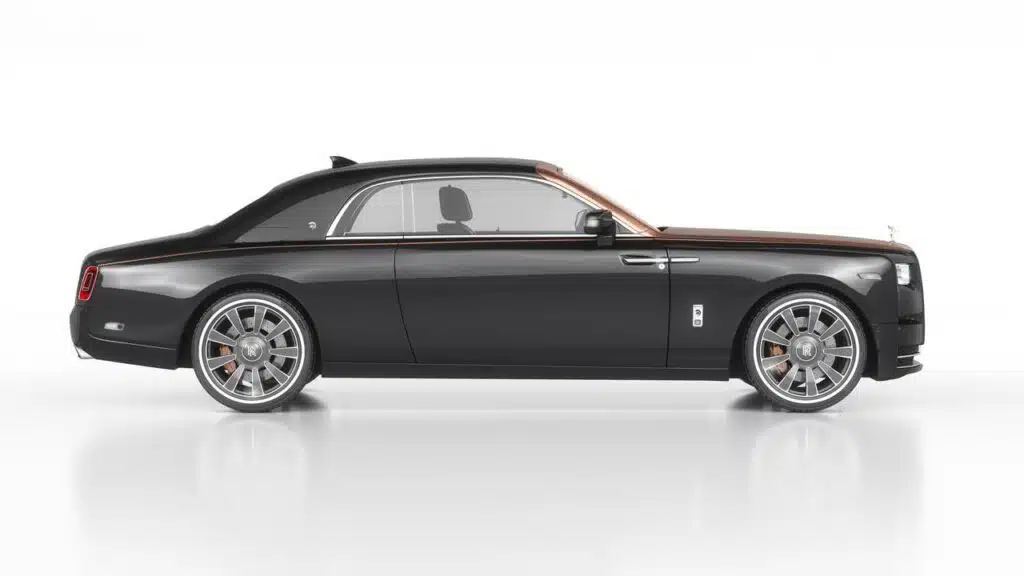
Add 24-inch wheels with rose-gold trim, sprinkle in coachbuilt exclusivity, and suddenly we’re in 1930 again—just with far more power and a lot more Instagram. But here’s the twist no one wanted: Ares has had well-documented financial and operational turbulence, and the once-loud announcement has quietly faded into more of a whisper. Despite prototypes shown online and renderings paraded at events, it’s entirely possible that not a single example ever left the workshop as a finished, customer-ready car. As months have rolled into years, the Ares Phantom Coupé feels less like a reborn tradition and more like a beautifully illustrated “what if.”
🔗 Read more: What Happened to ARES Modena? Inside the Crisis and Comeback
So, for now, the project remains exactly that—a concept suspended between ambition and reality. Perhaps one day a true example will surface, photographed under the Italian sun, engine purring, doors two instead of four. Until then, all we can do is wait…and hope that this particular Anglo-Modenese romance eventually makes it beyond the artist’s impression stage.
When Britain Waits for Italy (Again)
From the earliest Farina-bodied Ghosts to today’s still-unrealised Ares Modena idea, the Italian influence on Rolls-Royce has always been about daring to be different. It’s a dialogue between British engineering and Italian imagination, sometimes triumphant, sometimes only a sketch on paper—but always hinting at what might come next.
And the landscape is changing again. Just look at the recent Morgan + Pininfarina collaboration—proof that British marques still look to Italy when they want something with flair beyond the familiar. Yes, projects stall, companies wobble, and not every concept reaches the road, but the impulse clearly lives on.
So we wait. Because somewhere, another Anglo-Italian experiment is already being pencilled—coachbuilt, unmistakable, and carrying that same quiet promise: the story isn’t finished yet.

ABOUT THE AUTHOR
Andreas Scheidl
Italian classic car enthusiast with German roots. Renowned as a respected figure in the classic car community, he serves as a jury member at various international concours d'elegance, including the Classic Gala Schwetzingen and Mantova. As a content creator, Andreas passionately shares his profound knowledge and appreciation for vintage automobiles. His heart beats for cars designed by Giovanni Michelotti, showcasing his discerning taste and dedication to preserving the timeless elegance of automotive history.
More stories by Andreas Scheidl ↗CONTINUE READING
Posts You Might Like
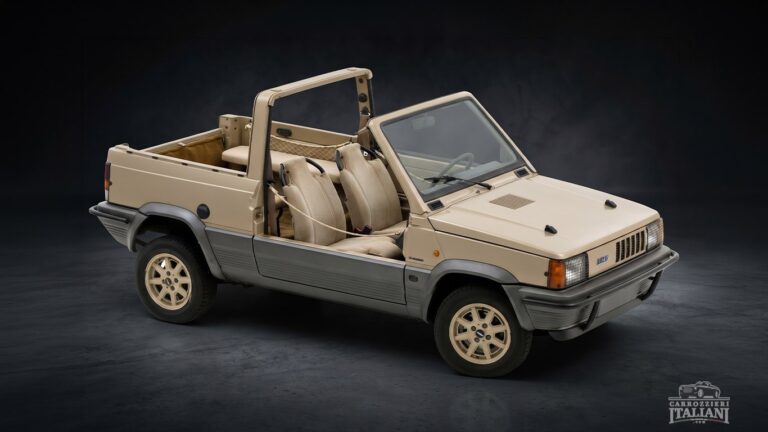
Fiat Panda Cabrio: The Italian Coachbuilders Who Opened Giugiaro’s Box
From Moretti’s Panda Rock to Italdesign’s experimental Strip, Maggiora’s four-wheel-drive convertible and Stola’s remarkable Destriero, the history of the open-top Panda reveals an unexpected chapter in Italian coachbuilding. When Giorgetto Giugiaro designed…
Read story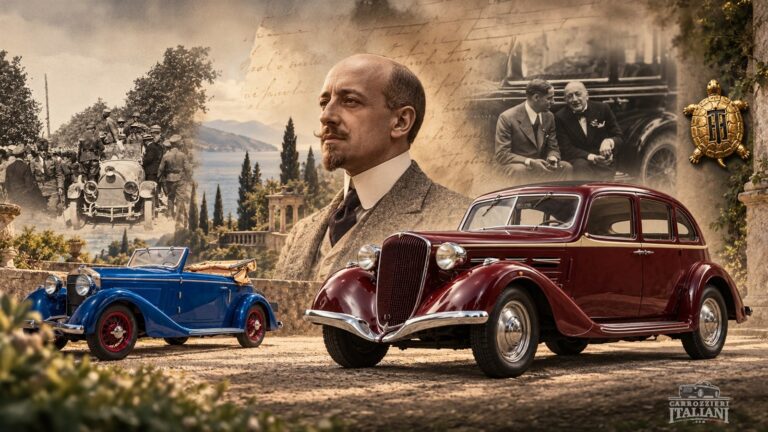
Gabriele d’Annunzio and the Cult of the Automobile
There was a time when the automobile had not yet become part of the landscape. It announced itself from afar through the beating of an engine, the smell of petrol and hot…
Read story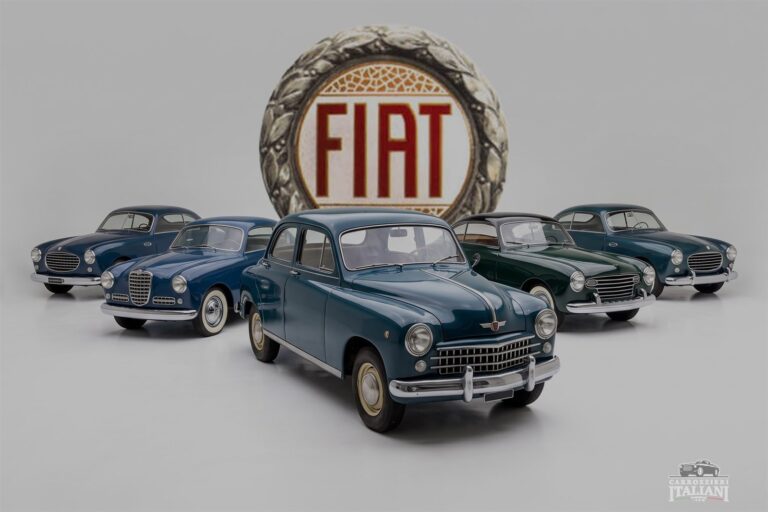
Fiat 1400: The Last Great Playground of the Carrozzieri
From Touring and Abarth to Farina, Ghia, Vignale, Boneschi, Bertone, Viotti and the smaller carrozzerie, the new Fiat quickly became one of the richest bases for Italian special bodies in the early…
Read story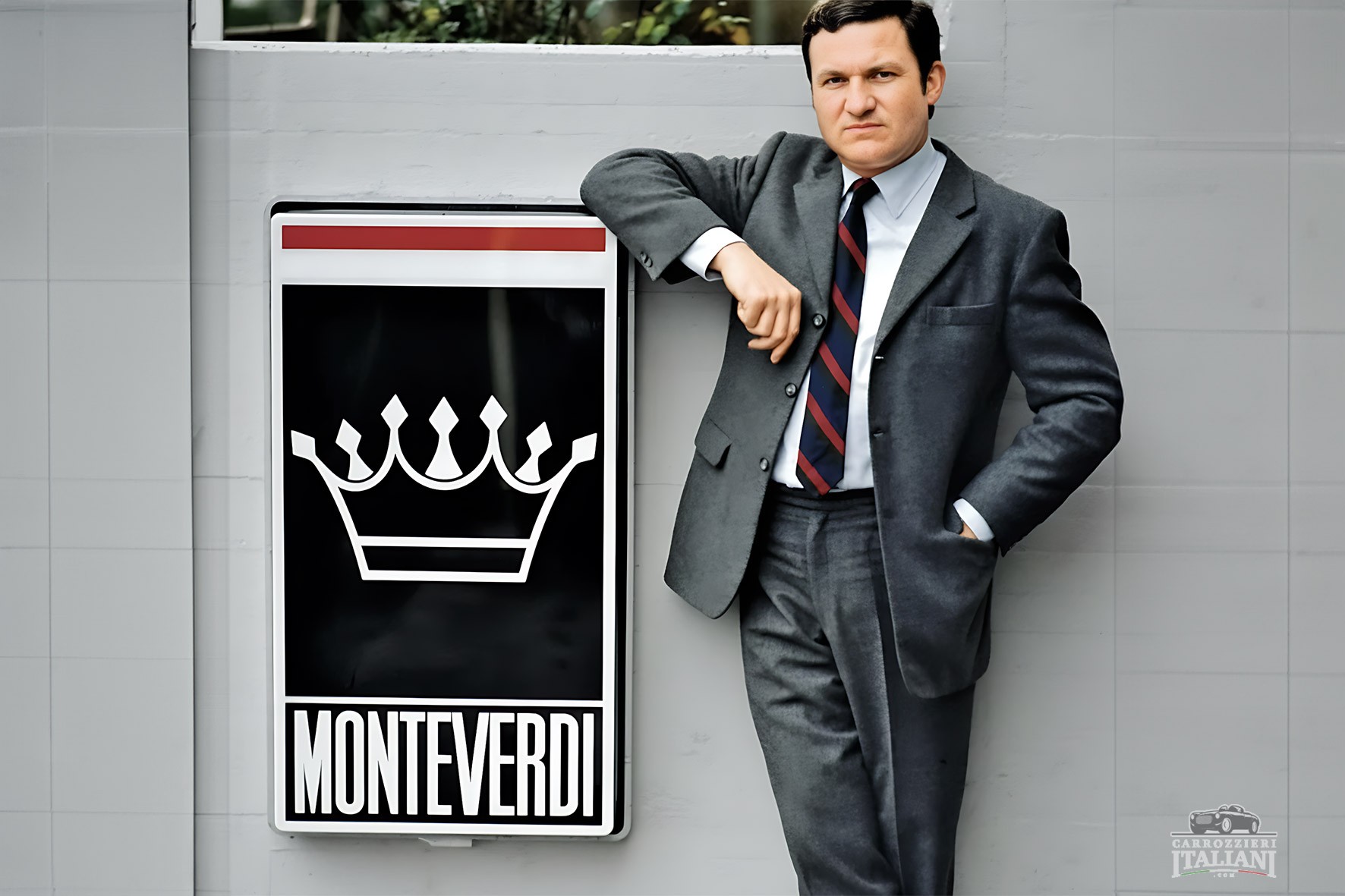
How a Swiss Dealer Challenged Ferrari: The Story of Monteverdi
How Peter Monteverdi went from Swiss Ferrari dealer to creator of rare Frua and Fissore-bodied GTs, the Hai supercar and luxury off-roaders.
Read story
THE CONVERSATION
Comments 0
Share a memory, a period photograph or a documented detail about this story.