
Alfa Romeo 6C 1750 Zagato: The Making of a Legend
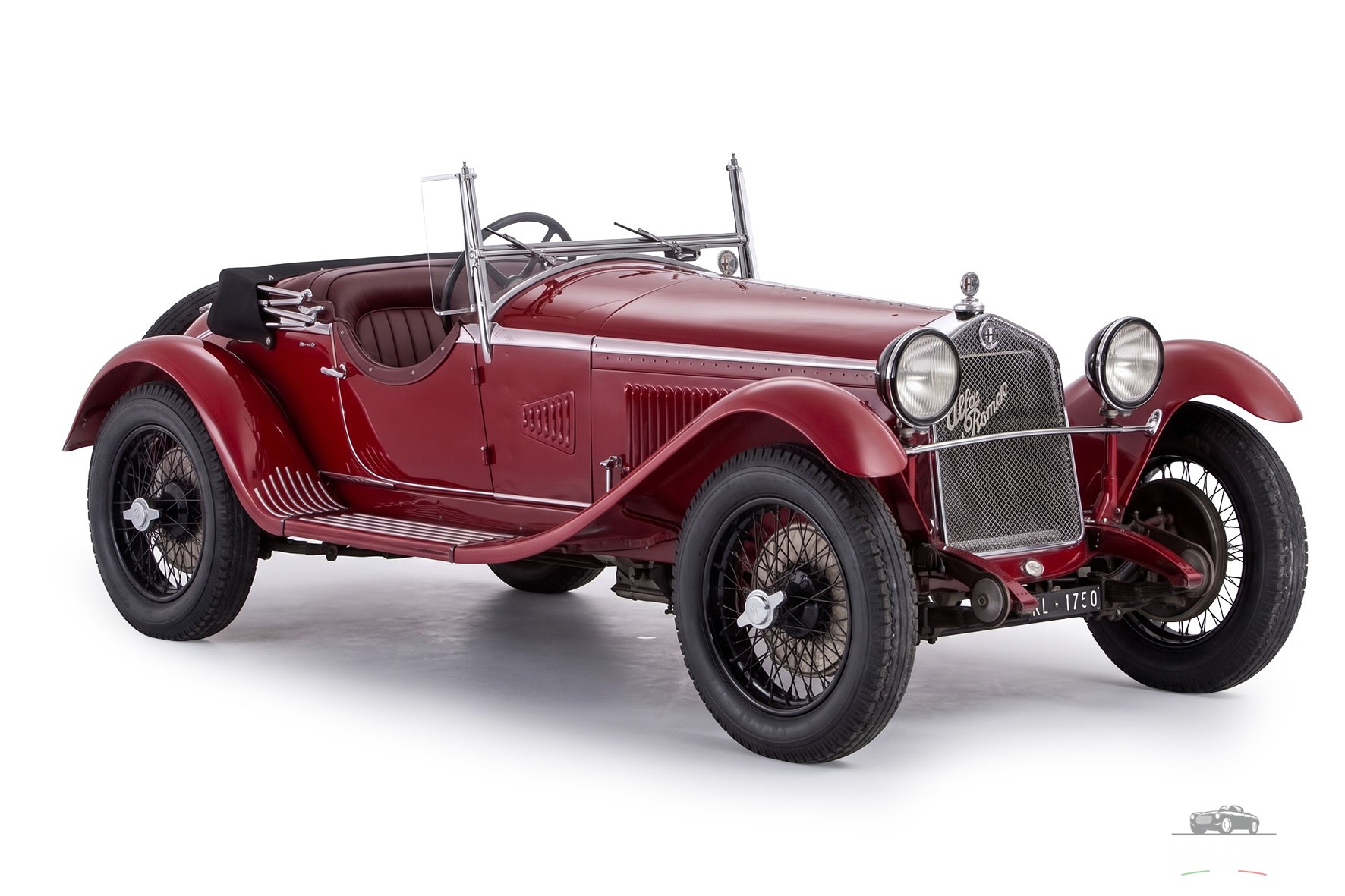
There are cars that become famous because they win races and others that survive because they are beautiful. The Alfa Romeo 6C 1750 managed both, becoming one of those rare automobiles whose sporting achievements, engineering and design are so closely connected that separating one from the others is almost impossible. At the end of the 1920s it represented a remarkably modern idea of the sports car: relatively modest displacement, sophisticated engineering, low weight and a body conceived not simply as an elegant covering for the mechanical components, but as an active part of the car’s performance.
In its most celebrated form, bodied by Zagato, the 6C 1750 became one of the defining Italian sports cars of the interwar period. Its story, however, began before the 1750 itself existed, with two men who approached the automobile from very different directions but were ultimately searching for much the same thing. Vittorio Jano pursued performance through engineering, while Ugo Zagato sought it through lightness, materials and the shape of the body. The 1750 would become one of the most successful expressions of their ideas.
From Aircraft to Automobiles
When Ugo Zagato established his own coachbuilding business in Milan in 1919, automobile construction still owed much to the horse-drawn carriage. Bodies were generally substantial structures built around wooden frameworks and covered with metal panels, and their design was often considered separately from the chassis beneath them. Zagato came from a very different world. His previous experience in the aeronautical industry had exposed him to construction methods in which unnecessary weight was an enemy and where materials and shapes were determined by their function.
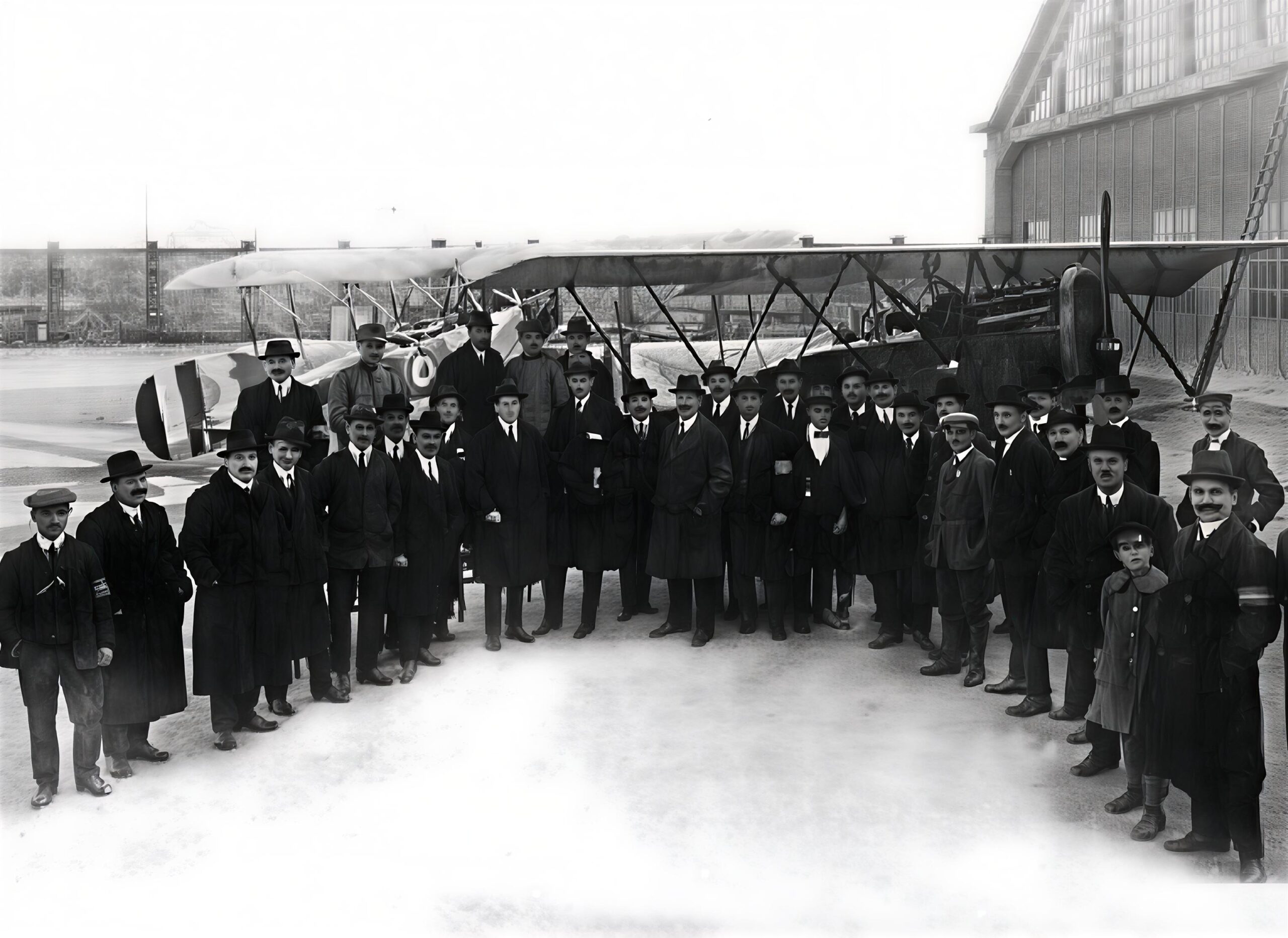
He began transferring those principles to automobiles, experimenting with lightweight structures and aluminium bodywork at a time when such thinking was far from commonplace. One of the earliest manifestations of this philosophy was the Fiat 501 Tipo Carlinga, whose very name revealed its inspiration: carlinga is the Italian word for an aircraft fuselage. The automobile, in Zagato’s hands, was beginning to borrow not only the techniques but also the vocabulary of aviation.
Zagato’s objective was not simply to make cars look different. Reducing mass improved acceleration, braking and handling without requiring a larger engine, while a smaller and cleaner body presented less resistance to the air. These ideas would gradually become fundamental to sporting automobile design, but in the early 1920s they represented a considerable departure from traditional coachbuilding practice.
🔗 Read more: Zagato Milano: A History Shaped by Speed and Style
At roughly the same time, Vittorio Jano was developing an equally unconventional approach to performance from the mechanical side. Having worked for Rapid and later Fiat, Jano joined Alfa Romeo in 1923 and quickly established his reputation with the P2 Grand Prix car.
The P2’s success, culminating in Alfa Romeo winning the inaugural World Manufacturers’ Championship in 1925, demonstrated Jano’s abilities, but his ambitions extended beyond pure Grand Prix machinery. He wanted to develop a lighter, more versatile automobile that could offer serious performance without relying on enormous displacement and that could be equally convincing on the road and in competition.
When Jano Met Zagato
The meeting of Jano and Zagato therefore brought together two complementary ways of thinking. Jano was developing compact, sophisticated mechanical packages, while Zagato had been working to eliminate unnecessary mass from the bodies fitted around them. The Alfa Romeo 6C 1500 provided the first important opportunity for those ideas to come together.
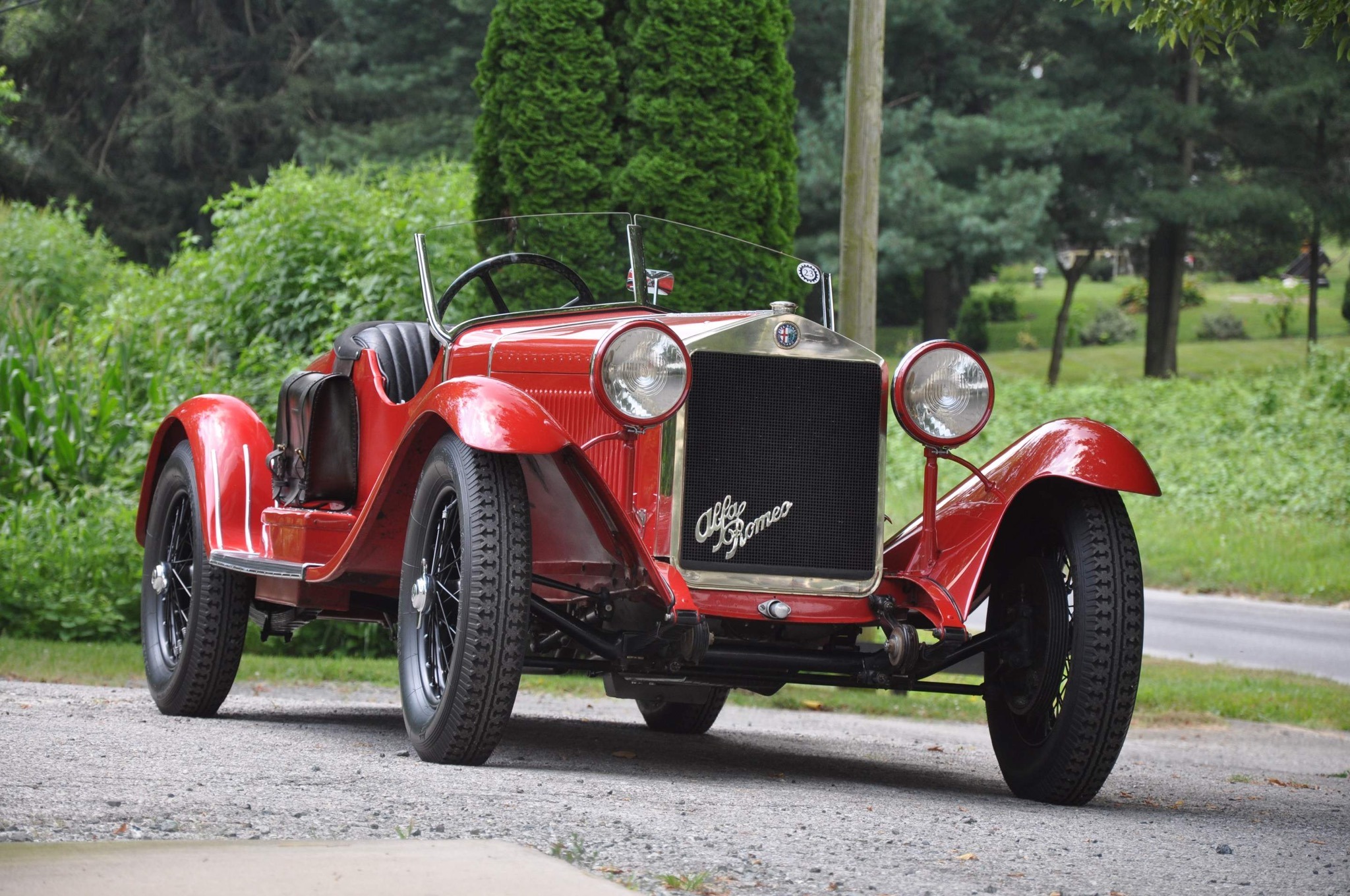
Introduced in the second half of the 1920s, the 6C 1500 established the basic formula that would define an entire family of Alfa Romeos. Its six-cylinder engine was relatively small compared with many contemporary high-performance cars, yet the combination of advanced engineering and limited weight gave the Alfa a performance that its displacement alone did not suggest. For Zagato, it was an ideal chassis on which to develop the principles he had been exploring since the beginning of the decade.
The relationship also brought Zagato physically closer to Alfa Romeo. His activities expanded and the coachbuilder established itself near the Alfa works in Milan, allowing the collaboration to become increasingly close. During this period the lightweight Alfa Romeo sports cars helped transform Zagato from an ambitious Milanese carrozzeria into a name increasingly associated with competition and technical innovation.
By the time the 6C 1750 arrived in 1929, the formula had already been tested. The new model did not represent a radical rejection of the 1500, but rather the maturation of its underlying concept.
The 1750 Formula
The name 6C 1750 was wonderfully straightforward: six cylinders and approximately 1,750 cubic centimetres. The engine displaced 1,752 cc and was produced in several configurations, allowing the same basic automobile to range from relatively civilised road cars to formidable competition machines. Depending on specification, the 1750 could be naturally aspirated or supercharged, while the most highly developed versions offered performance that was exceptional for an engine of such modest capacity.
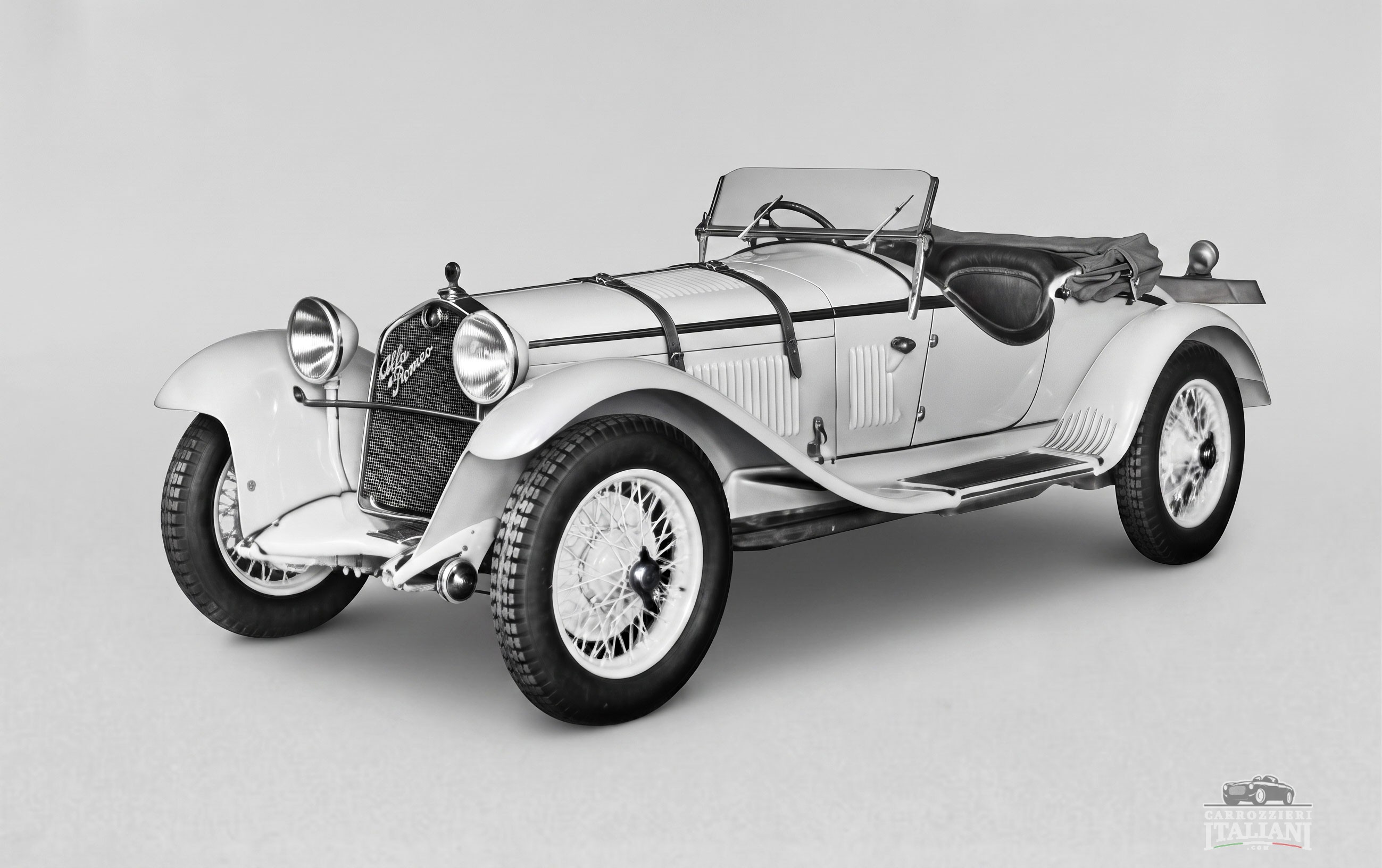
What made the car remarkable was not any single figure but the relationship between its components. Jano understood that performance could be achieved by combining an efficient engine with limited mass, good balance and a chassis that allowed the driver to exploit the available power. In its most extreme forms, the 1750 could produce more than 100 horsepower while weighing considerably less than a tonne, giving it the ability to compete successfully against cars with much larger engines.
Zagato’s bodywork complemented that philosophy. Aluminium construction helped reduce weight, while the compact proportions of the competition spiders kept unnecessary bulk to a minimum. The body was no longer merely a decorative shell attached to a chassis; it increasingly became part of the engineering solution.
🔗 Read more: The Story of Tazio Nuvolari, the Fearless Flying Mantuan
This distinction is important when looking at a 6C 1750 Zagato today. Its beauty is undeniable, but many of the details that now appear aesthetically desirable originated from practical considerations. The low body reduced frontal area, the inclined windscreen offered less resistance to the air, and components that had traditionally protruded into the airflow were progressively incorporated into the overall form. Zagato also experimented with wheel openings and ventilation to improve brake cooling, while luggage compartments and other functional elements became increasingly integrated into the shape of the body.
A Different Idea of Beauty
The relationship between form and function sometimes required compromises from the occupants, and one of the most entertaining stories associated with Zagato’s early competition bodies concerns the Alfa Romeo driver Bruno Presenti. A tall man, reportedly around 1.90 metres, Presenti found the low seating position and windscreen of Zagato’s cars less than accommodating and complained that the coachbuilder’s pursuit of a reduced frontal area forced him into an uncomfortable driving position.
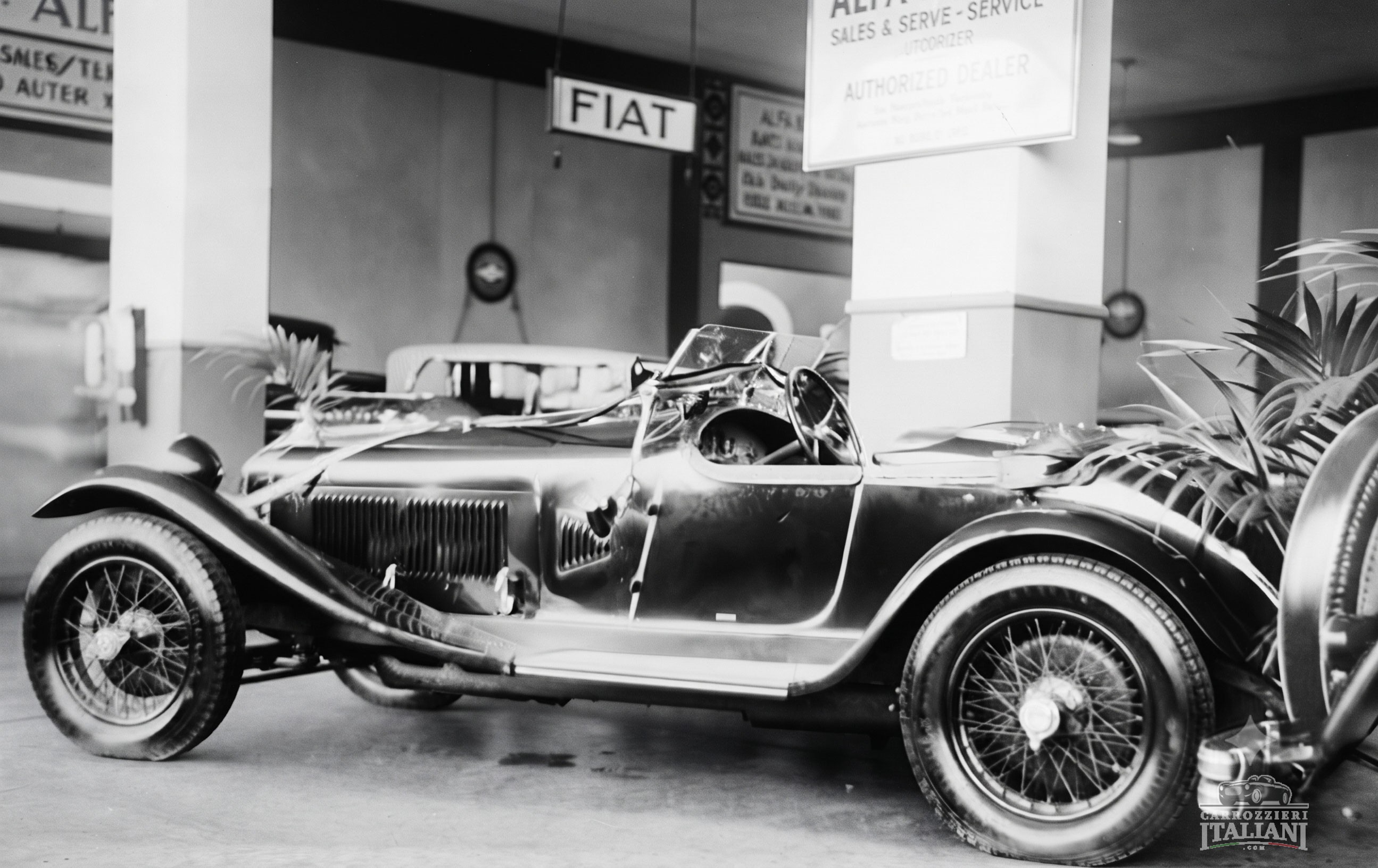
Zagato’s answer, preserved in Milanese dialect in accounts of the period, was essentially that if Presenti wanted to go fast, he would have to bend his back. Like many anecdotes repeated over almost a century, the precise wording should be treated with some caution, but the story captures the philosophy behind these automobiles remarkably well. Zagato was not prepared to make a racing body unnecessarily tall simply because convention suggested that a driver should sit upright behind a large windscreen.
This was a different understanding of automotive beauty from the one usually associated with traditional luxury coachbuilding. The elegance of the 1750 Zagato came largely from proportion, compactness and purpose. Its appearance was not independent of its function; it was a consequence of it.
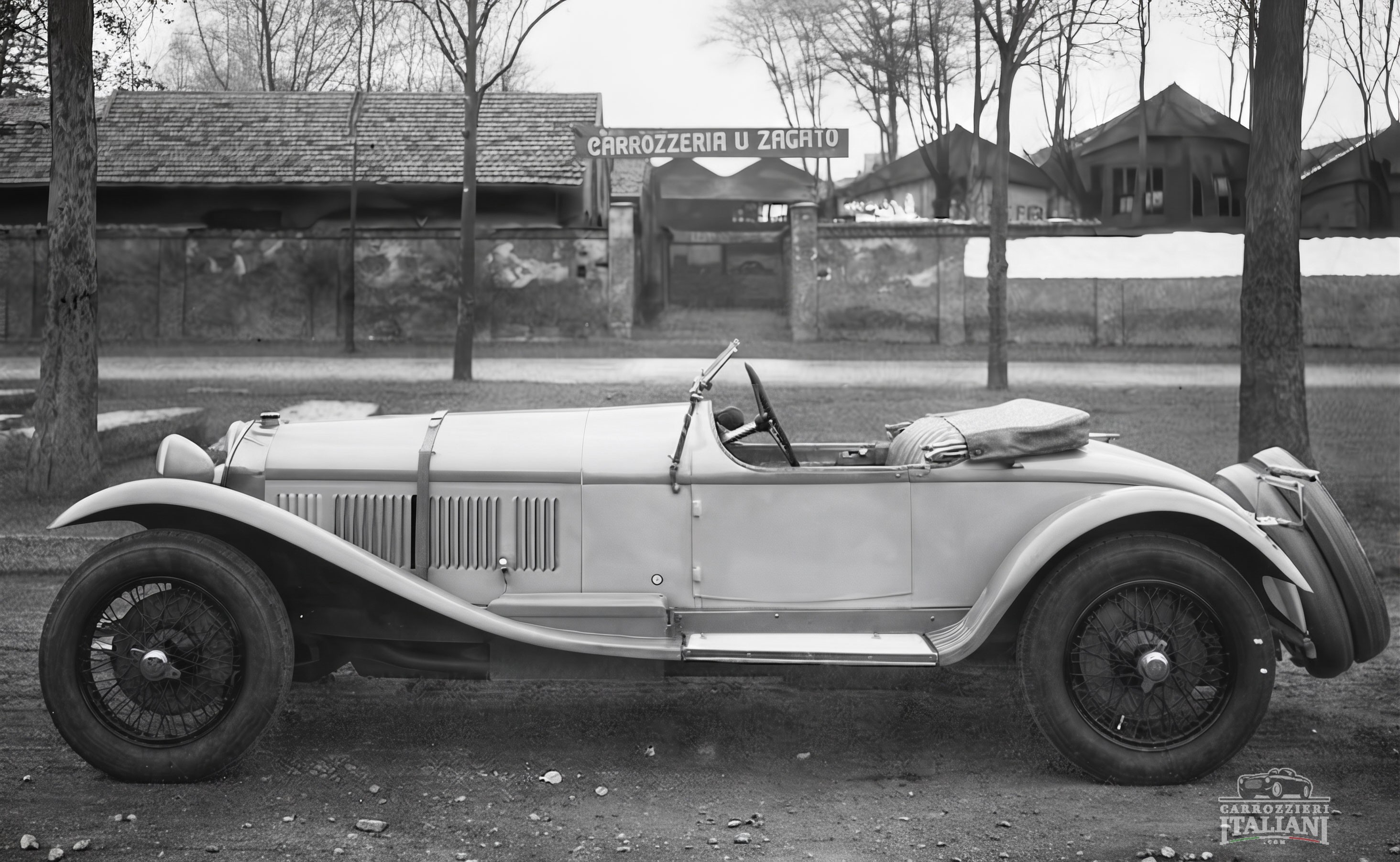
That did not prevent the 6C chassis from attracting other great coachbuilders. Touring, Castagna and several other houses produced their own interpretations, ranging from open sporting cars to luxurious grand tourers. This versatility was one of the great strengths of the 6C family, but Zagato’s interpretation became particularly closely associated with the sporting character of the 1750 because it embodied the same priorities as Jano’s engineering.
The Mille Miglia
If there was one event capable of demonstrating whether those ideas worked, it was the Mille Miglia. First held in 1927, the race from Brescia to Rome and back transformed approximately one thousand miles of Italian public roads into one of the most demanding competitions in the world. The route combined long straights with mountain passes, towns, poor surfaces and hours of night driving, placing extraordinary demands on cars and drivers alike.
A powerful car could be fast over a short distance, but the Mille Miglia required considerably more. Reliability, braking, handling, weight and the ability of the driver to maintain a high average speed for many hours were just as important as outright power. In many respects, it was an ideal environment for Jano’s philosophy.
Alfa Romeo had already demonstrated the potential of the 6C by winning the 1928 Mille Miglia with Giuseppe Campari and Giulio Ramponi in a 6C 1500 Super Sport. The following year Campari won again, this time with the new 6C 1750, confirming that the evolution of Jano’s design had retained the qualities of its predecessor while providing greater performance.
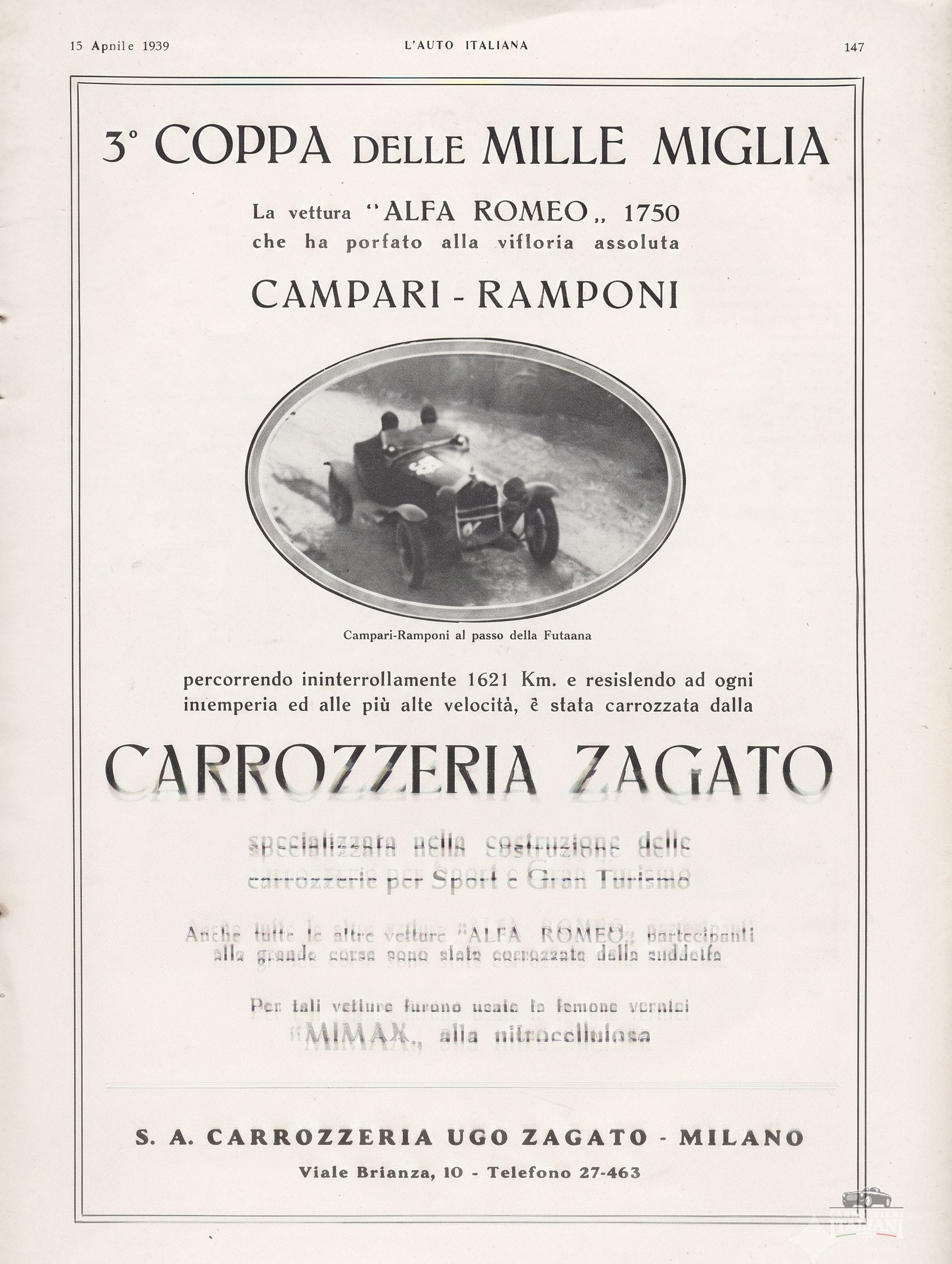
By 1930 the 1750 was no longer an emerging contender. It was one of the cars against which everything else would be measured, and the Mille Miglia of that year would provide the episode that transformed its success into legend.
Nuvolari, Varzi and the Night
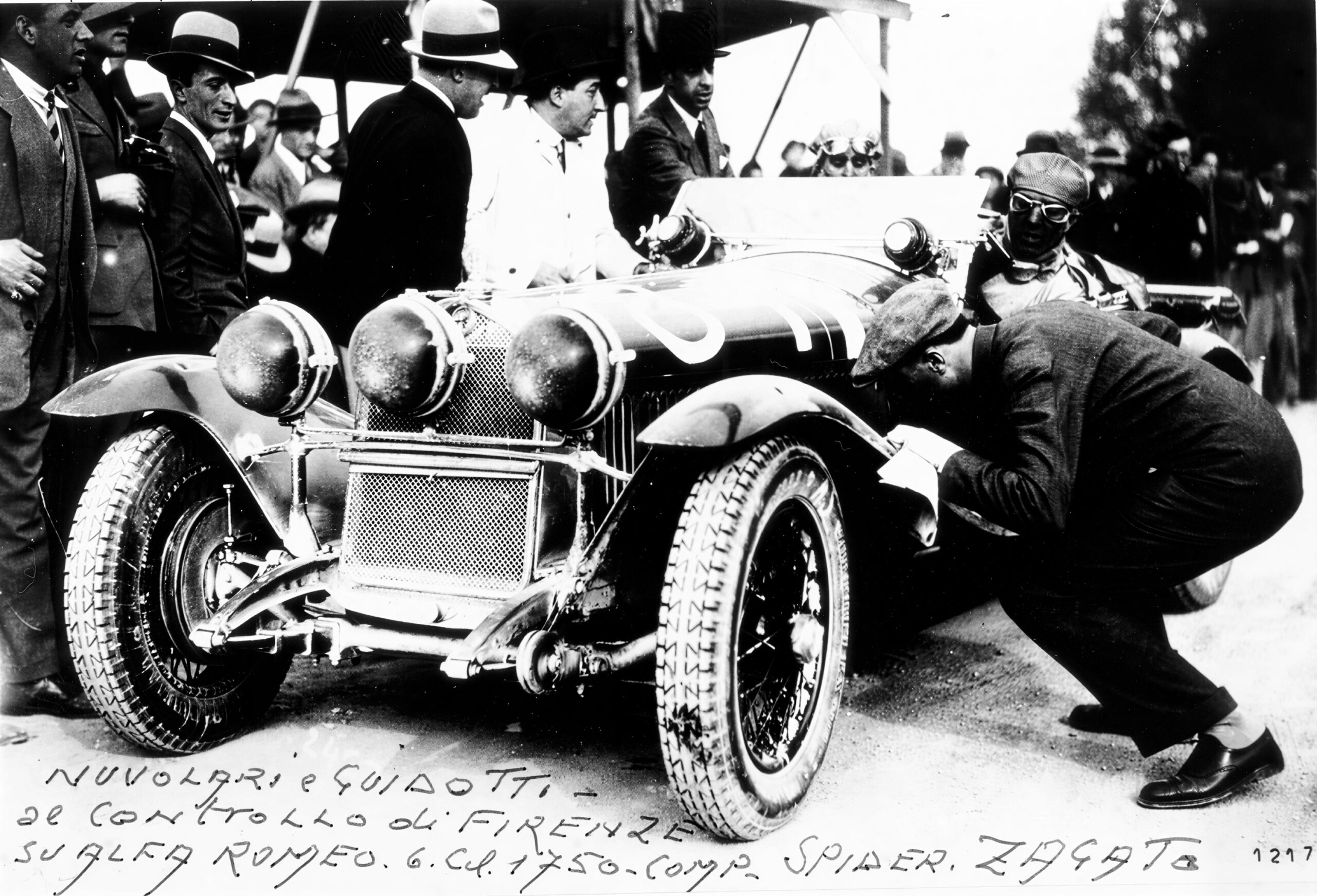
The rivalry between Tazio Nuvolari and Achille Varzi was already becoming one of the great stories of Italian motor racing. Both were extraordinarily talented, but their personalities and driving styles were different enough to make their encounters irresistible to the public. At the 1930 Mille Miglia they found themselves fighting for victory in Alfa Romeo 6C 1750s, with Nuvolari sharing his Zagato-bodied Gran Sport with Alfa Romeo test driver Gian Battista Guidotti.
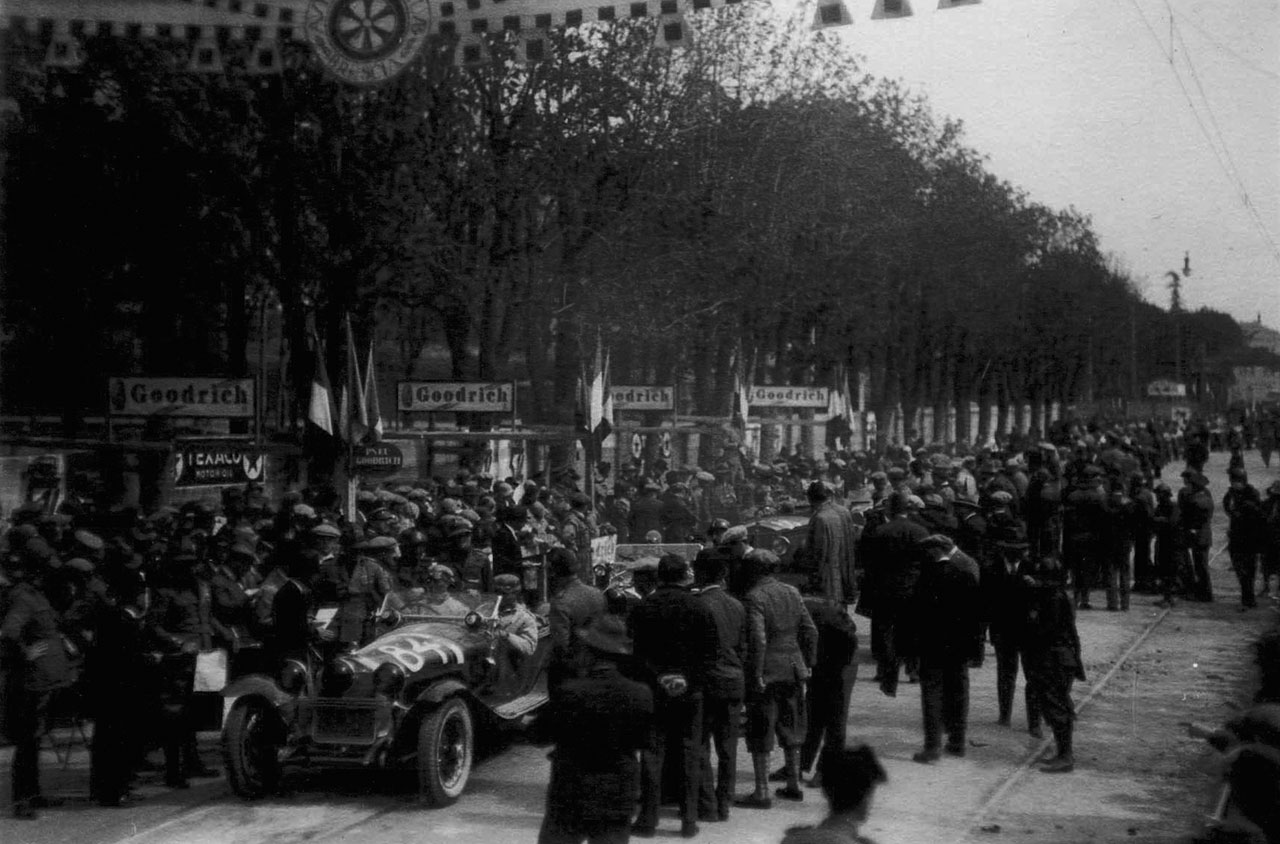
During the night Nuvolari and Guidotti began closing the distance to Varzi. What followed became one of the most frequently repeated stories in the history of the Mille Miglia. According to the account subsequently preserved by Alfa Romeo, as Nuvolari approached his rival the headlights of his 1750 were switched off, making the pursuing Alfa effectively disappear into the darkness behind Varzi.
The manoeuvre was not maintained for a few theatrical seconds. Near Verona, with the race approaching its final stages, Nuvolari and Guidotti were reportedly travelling through the darkness at speeds that could reach around 150 km/h. Varzi, unable to see the lights of the pursuing Alfa, could reasonably believe that his rival was no longer immediately behind him.
When Nuvolari eventually caught and passed him, the lights came back on. Over the decades the story has inevitably acquired the quality of folklore, as the best racing stories tend to do, but the final result requires no embellishment. Nuvolari and Guidotti won the 1930 Mille Miglia in their 6C 1750 Gran Sport Zagato and established a record that gave the car an enduring place in motorsport history.
Breaking the 100 km/h Barrier
The significance of their victory was not simply that another Alfa Romeo had won the Mille Miglia. Nuvolari and Guidotti completed the course at an average speed of more than 100 km/h, becoming the first crew in the history of the event to cross that symbolic barrier.
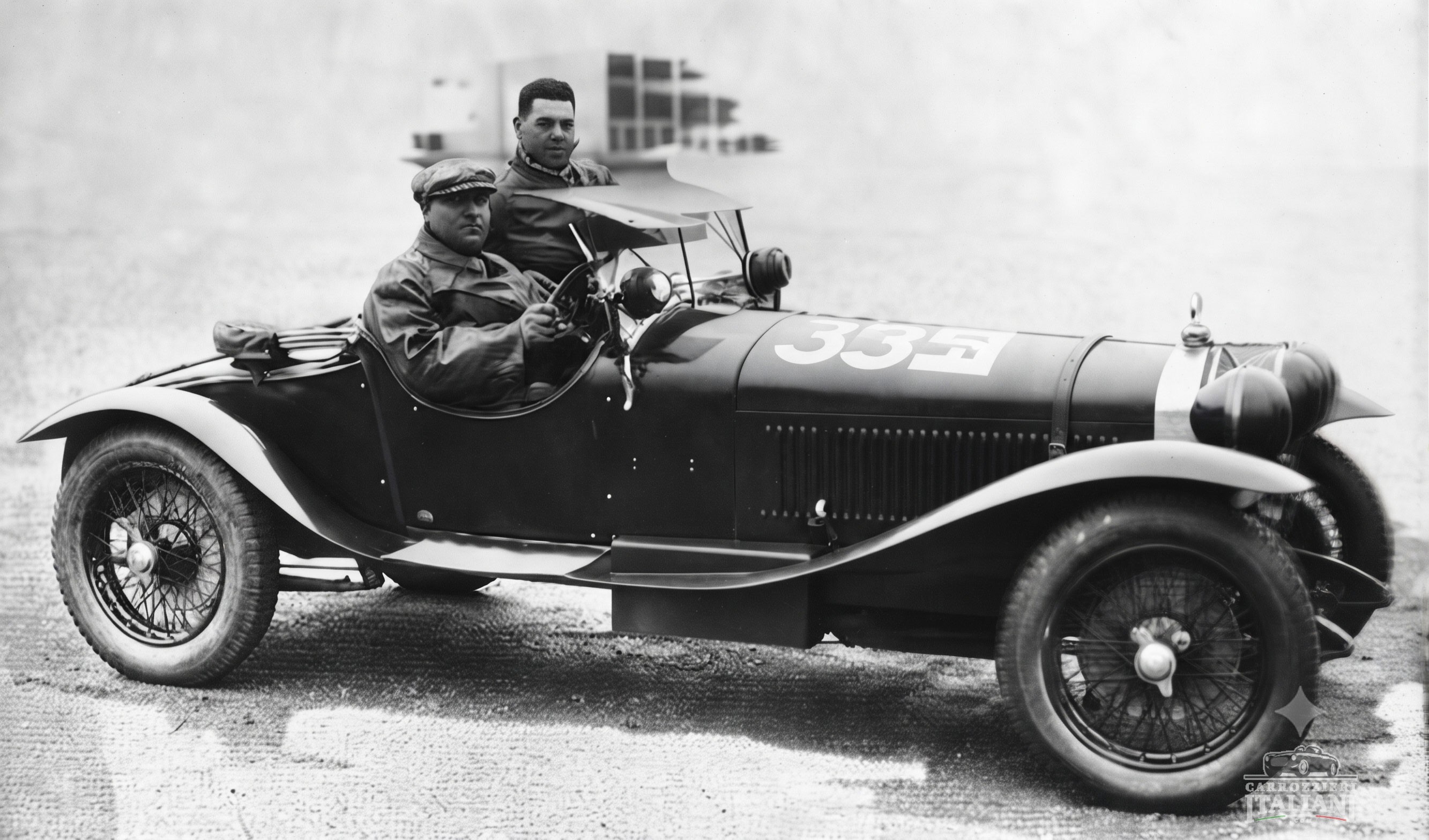
Seen through modern eyes, an average of just over 100 km/h might not immediately sound extraordinary, but the figure becomes remarkable when considered in context. This was not an average speed recorded on a closed racing circuit with predictable surfaces and controlled conditions. It was maintained across roughly one thousand miles of Italian roads in 1930, through towns, mountain sections and darkness, in a car with narrow tyres, mechanical brakes and none of the safety or navigational equipment that would later become normal.
The result was also far from an isolated success. Alfa Romeo occupied the first four positions in the 1930 Mille Miglia, demonstrating the extraordinary competitiveness of the 6C 1750. During the same season the model would also dominate other major European events, including the 24 Hours of Spa and the Tourist Trophy, reinforcing the impression that Jano had created one of the most complete sports cars of his generation.
For Zagato, these victories offered equally compelling proof of the value of lightweight coachbuilding. The 1750 showed that reducing mass and frontal area was not merely an intellectual exercise or a stylistic preference. The approach produced measurable results under some of the most demanding conditions imaginable.
More Than a Racing Alfa
The competition record inevitably dominates the story of the 6C 1750, yet concentrating exclusively on racing risks overlooking what made the model so unusual. The same fundamental chassis could support very different interpretations depending on its intended use and the coachbuilder responsible for it. A 1750 could be an uncompromising competition spider, an elegant open tourer or a sophisticated closed automobile, and the best examples combined performance with the level of finish expected from the great Italian carrozzerie.
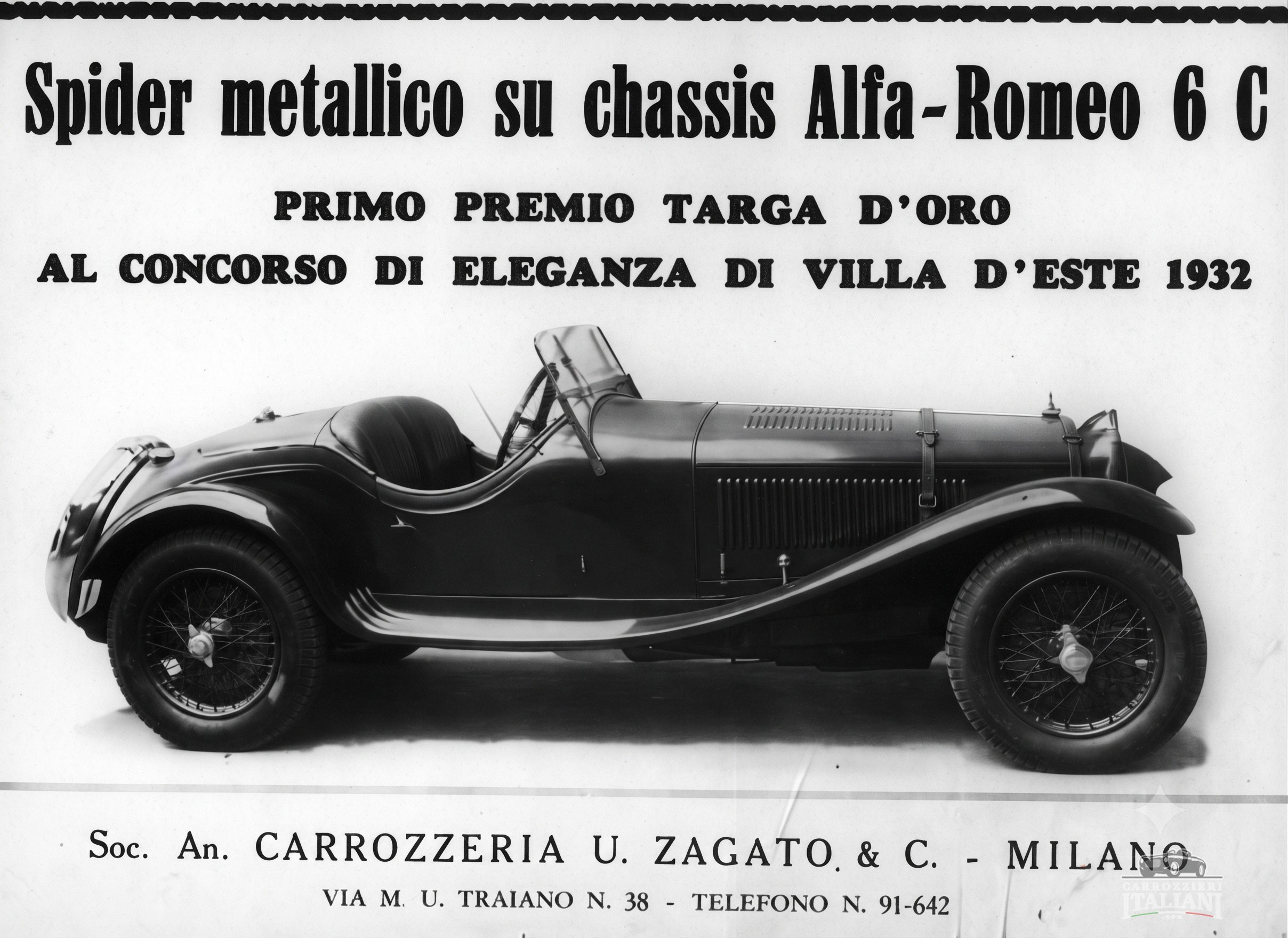
Zagato’s work demonstrated particularly well that lightness and aerodynamic efficiency did not have to come at the expense of elegance. The same principles that had helped make the Alfa successful in competition could produce a car worthy of recognition at the most prestigious concours. This became particularly evident at the 1932 Concorso d’Eleganza di Villa d’Este, where an Alfa Romeo 6C Spider bodied by Zagato received the Primo Premio Targa d’Oro in its category. The period advertisement celebrating the result is especially significant because Zagato chose to publicise the award itself, presenting the elegant Spider alongside the name of the Milanese carrozzeria.
The Villa d’Este award adds another dimension to the story of the 6C. Only two years after the Zagato-bodied 1750 had helped Nuvolari and Guidotti break the 100 km/h average-speed barrier at the Mille Miglia, the same fundamental combination of Alfa Romeo engineering and Zagato coachbuilding was being recognised for elegance. Competition and beauty were not opposing identities for the 6C; they were different expressions of the same philosophy, in which proportion, lightness and function determined the appearance of the finished automobile.
The Car That Made Zagato
By the beginning of the 1930s, Zagato had become a familiar name in Italian motor racing. Barely a decade had passed since Ugo Zagato had opened his first workshop, yet the Alfa Romeo 6C had transformed his Milanese carrozzeria from a small concern into one closely associated with some of the most successful sports cars of the period. The 1500 had laid the foundations, but it was the 1750 that brought the partnership to maturity.
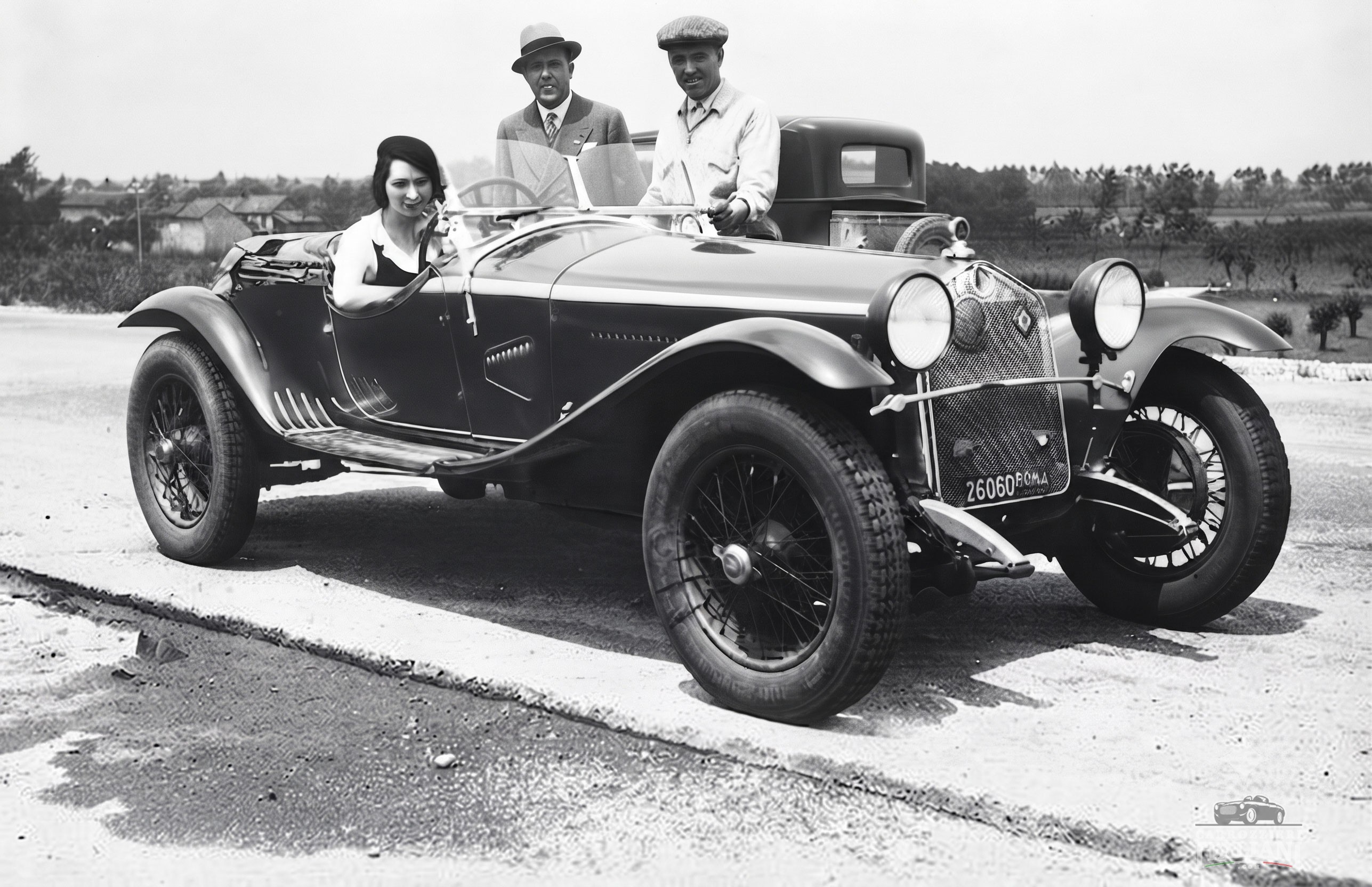
The growth was remarkable. Period accounts describe Zagato producing as many as two Alfa Romeo 6C bodies a day during the busiest years, while the company’s expansion eventually took it to Via Marco Ulpio Traiano, directly opposite Alfa Romeo. The location allowed Zagato to work in close contact with the manufacturer at precisely the time when the collaboration with Vittorio Jano was producing its most important results.
The 1750 soon became inseparable from Zagato’s reputation. Campari won the 1929 Mille Miglia with a 1750, while Nuvolari and Guidotti’s victory the following year, leading an Alfa Romeo sweep of the first four places, turned the car into an icon. Yet its appeal was not limited to racing: in 1932, an Alfa Romeo 6C Spider bodied by Zagato received the Primo Premio Targa d’Oro at the Concorso d’Eleganza di Villa d’Este, a result the coachbuilder proudly advertised at the time.
For Zagato, the 6C 1750 brought together ideas he had been developing since the Fiat 501 Tipo Carlinga: aluminium construction, reduced weight, compact dimensions and bodies increasingly shaped around speed. By the early 1930s, those ideas had proved themselves both on the road and at the concours.
From Racing Car to Legend
The 1930 Mille Miglia became the defining chapter in the history of the 6C 1750 Zagato, with Nuvolari and Varzi’s rivalry, the famous night-time pursuit and the first Mille Miglia completed at an average of more than 100 km/h. Yet the importance of the 1750 cannot be reduced to that single victory. It represented the culmination of ideas already explored with the 6C 1500, combining Jano’s relatively small but sophisticated six-cylinder engine with a light chassis and Zagato’s increasingly purposeful bodywork.
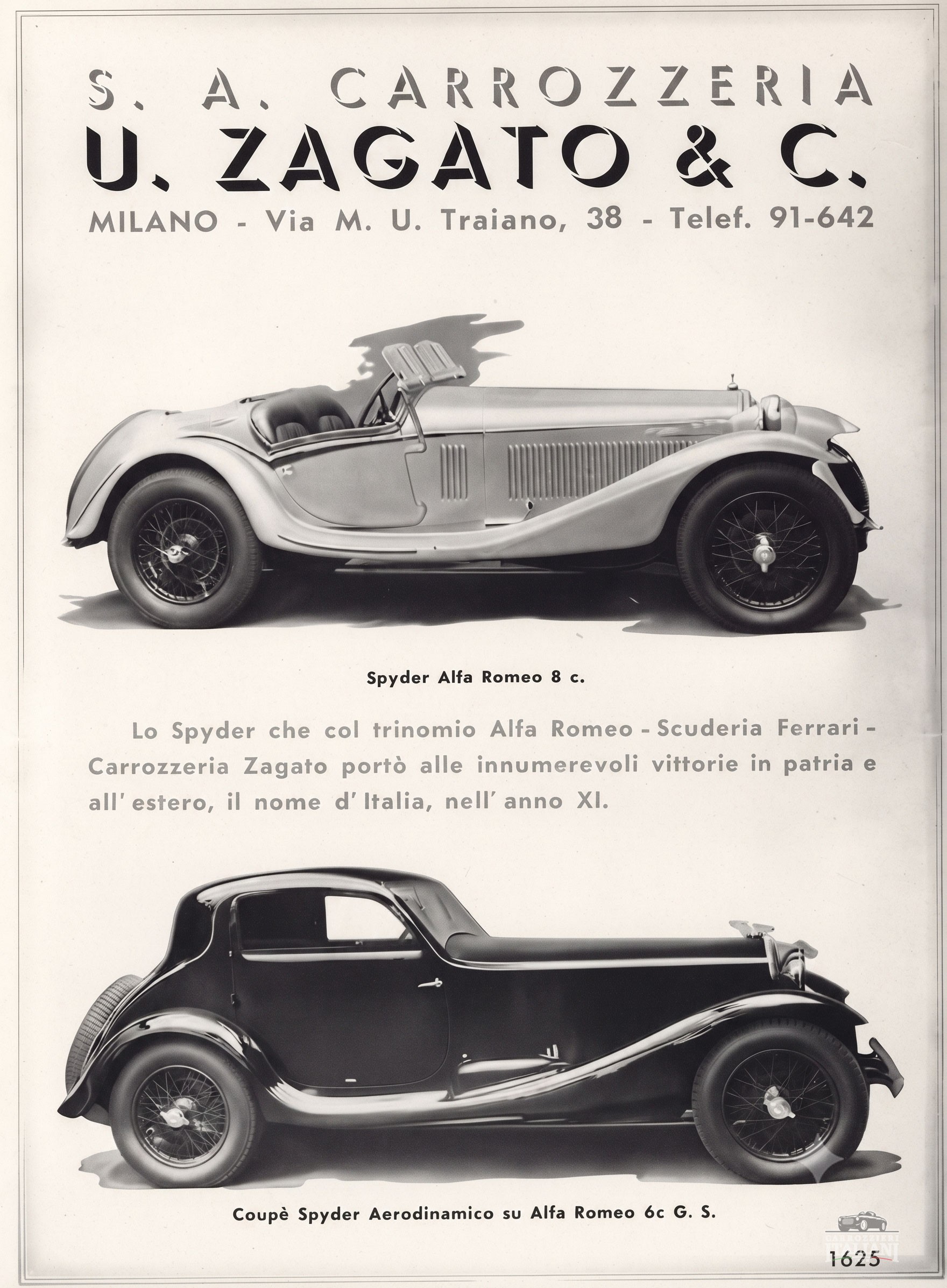
The results confirmed the formula. Campari’s 1929 Mille Miglia victory established the 1750 as a winner, Nuvolari and Guidotti made it legendary in 1930, and further successes at Spa and the Tourist Trophy demonstrated that its dominance was no accident. The Villa d’Este award two years later added another dimension, showing that a Zagato-bodied 6C could be recognised for elegance as convincingly as it had been for speed.
This is what gives the 1750 its particular place in the histories of both Alfa Romeo and Zagato. Its success depended on Jano’s engineering, Zagato’s lightweight bodywork, Alfa Romeo’s competition effort and drivers such as Campari, Nuvolari and Varzi. Together they created something more significant than a successful racing car: the 6C 1750 Zagato became one of those rare automobiles capable of defining both a marque and a coachbuilder at a decisive moment in their history.

ABOUT THE AUTHOR
Andreas Scheidl
Italian classic car enthusiast with German roots. Renowned as a respected figure in the classic car community, he serves as a jury member at various international concours d'elegance, including the Classic Gala Schwetzingen and Mantova. As a content creator, Andreas passionately shares his profound knowledge and appreciation for vintage automobiles. His heart beats for cars designed by Giovanni Michelotti, showcasing his discerning taste and dedication to preserving the timeless elegance of automotive history.
More stories by Andreas Scheidl ↗CONTINUE READING
Posts You Might Like
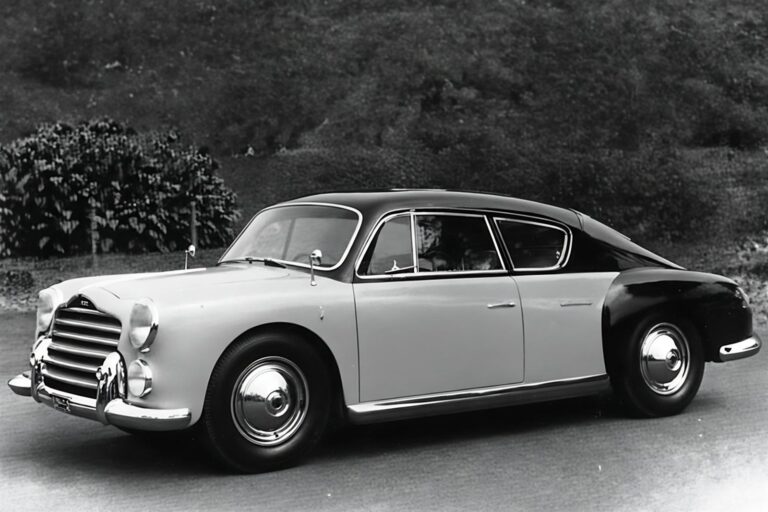
A Central Driving Position, a Rear-Mounted V8. Was This Really a Lancia?
In 1948, visitors to the Turin Motor Show could see an unusual Lancia on the stand of Carrozzeria Ghia. It was a large two-door coupé with a two-litre V8 mounted behind the…
Read story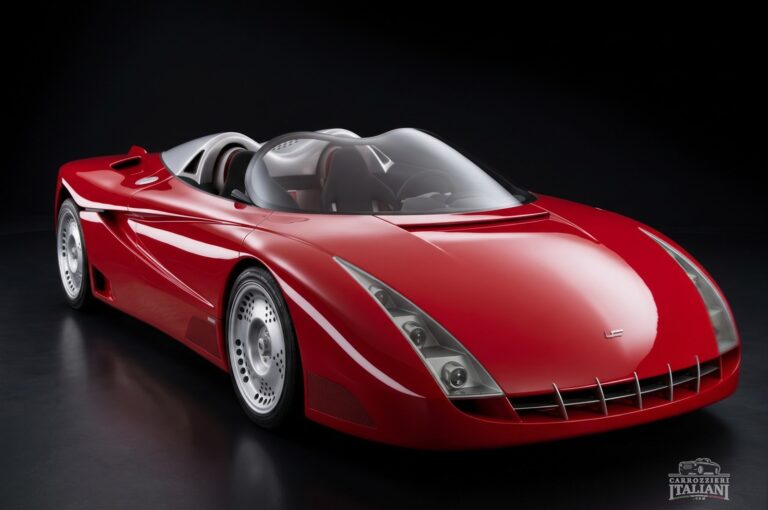
Fioravanti F100: The Ferrari He Was Allowed to Imagine
Enzo Ferrari’s centenary, Leonardo Fioravanti’s independent studio and a supercar that explored air brakes, steel wheels and a new way of driving—without ever wearing the Cavallino.
Read story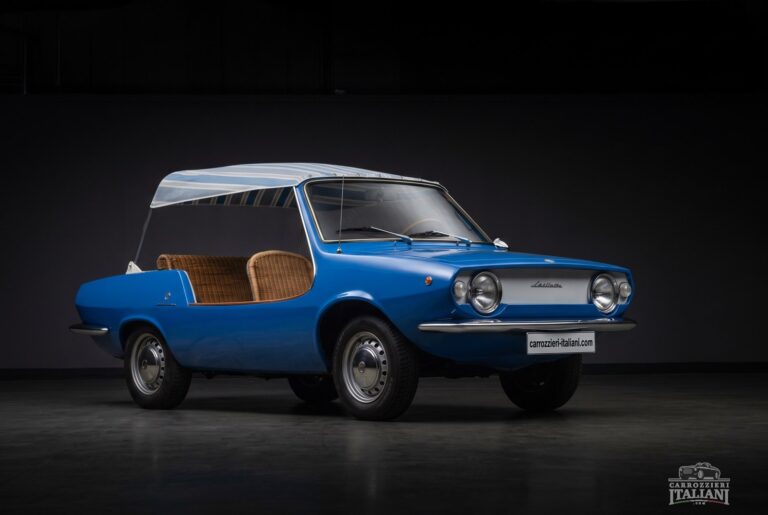
Michelotti Shellette: When the Fiat 850 Became a Yacht
The yacht designer, the Turin stylist and the tiny coachbuilt car that crossed between the quay, the royal holiday house and the auction room. Some automobiles were conceived for the open road,…
Read story
Maserati A6 1500: A New Road for the Trident
When the doors of the Geneva Motor Show opened in March 1947, Maserati was a name that required little introduction to anyone who followed motor racing. What it did not yet possess…
Read story
THE CONVERSATION
Comments 0
Share a memory, a period photograph or a documented detail about this story.