
Copycats & Coachbuilders: Italy’s Greatest Hits in Miniature
In the golden age of Italian coachbuilding, a great design didn’t just win awards — it triggered a ripple effect of admiration, emulation, and, let’s be honest, a few suspiciously familiar silhouettes. When a car like the Ferrari Dino or Lamborghini Miura rolled onto the show stand, it wasn’t long before similar shapes began appearing — smaller, humbler, and often powered by an engine with far fewer cylinders and much bigger dreams.
Call them homages, tributes, or “inspired reinterpretations,” but the truth is clear: a winning design was simply too good to be left to just one badge. Independent carrozzerie across Italy — often working with Fiat 500s, 850s, or other modest platforms — saw an opportunity to bottle some of that exotic glamour for the everyday enthusiast. Sometimes with permission. Sometimes… not so much.
This article dives into the curious, charming, and occasionally cheeky world of Italian design doppelgängers — those cars that looked like a million bucks but were built on a shoestring budget (and a Topolino chassis). From scaled-down supercars to pre-war body swaps, we explore how Italy’s best-loved shapes were reimagined by the country’s most creative (and sometimes opportunistic) coachbuilders. Because in design, imitation may not always be flattery — but it sure is fascinating.
Lancia Astura Spider Pininfarina vs. Touring Flying Star
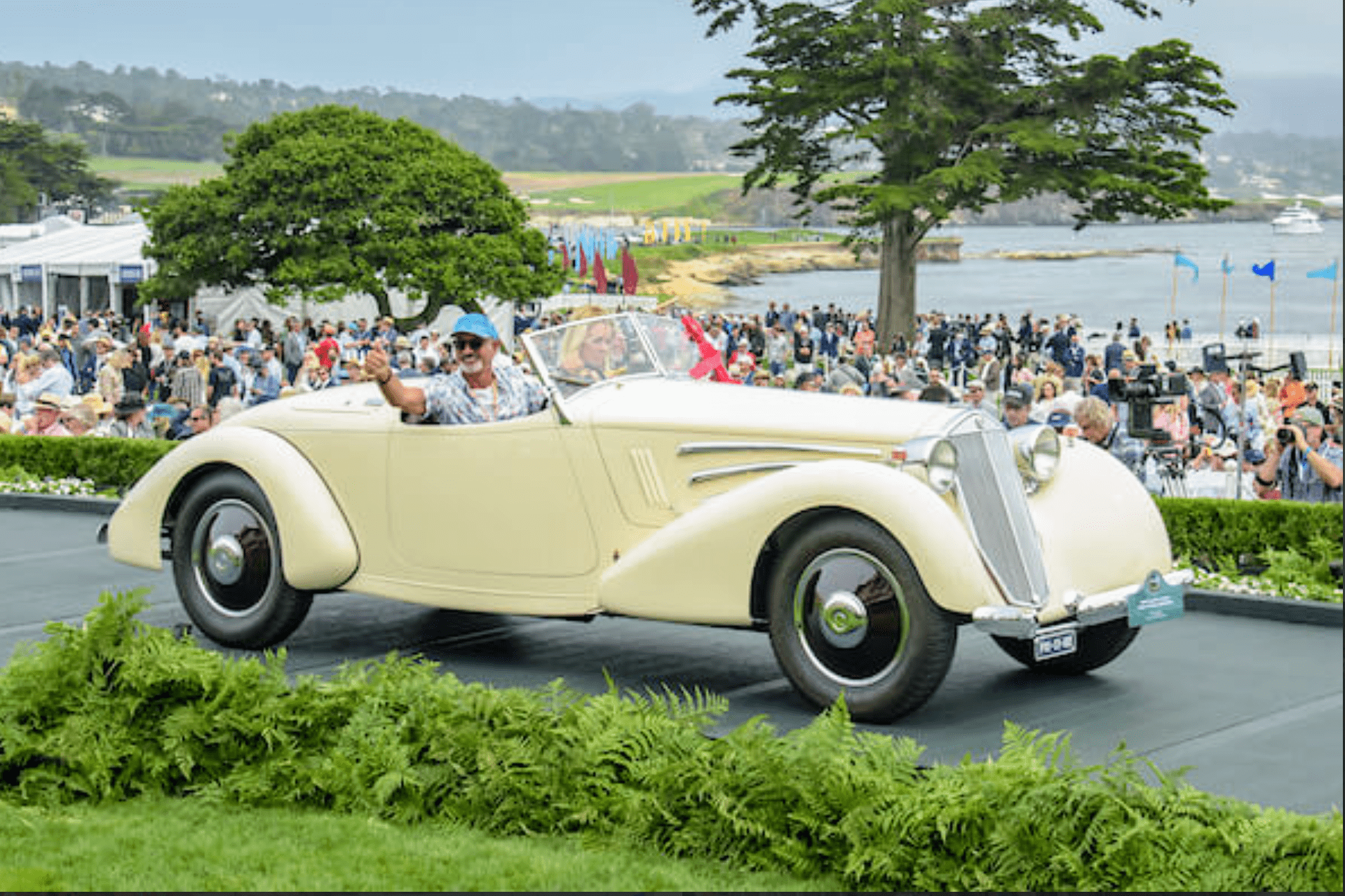
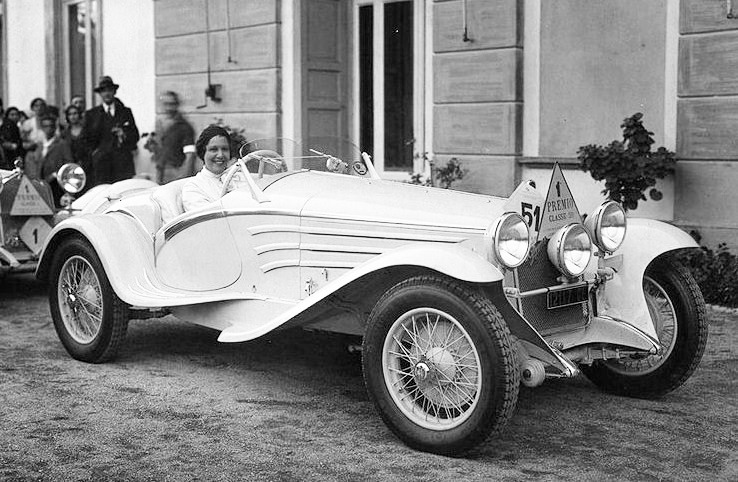
In the late 1930s, Pinin Farina built a striking Lancia Astura Spider that clearly echoed the famous, award winning, “Flying Star” design language created by Touring. The overall proportions and flowing lines were reminiscent of Touring’s work, but the most direct reference was the distinctive side decoration — a sweeping chrome motif meant to evoke the tail of a comet, the signature styling element of the Flying Star series.
🔗 Read more: Touring Superleggera Flying Star
This design cue, originally conceived by Touring to suggest motion and elegance, was reinterpreted by Pinin Farina almost verbatim. While it may have been intended as a homage, the result crosses into the realm of visual duplication, especially considering how unique and recognizable that styling detail was.
The Lancia Astura Spider by Pinin Farina is a rare piece in itself, but its “borrowed” comet-tail flourish raises intriguing questions about the fine line between inspiration, tribute, and direct imitation in the competitive world of pre-war Italian coachbuilding.
Fiat 500 C “Disco Volante” by Trevisan vs. Alfa Romeo C52 “Disco Volante” by Touring
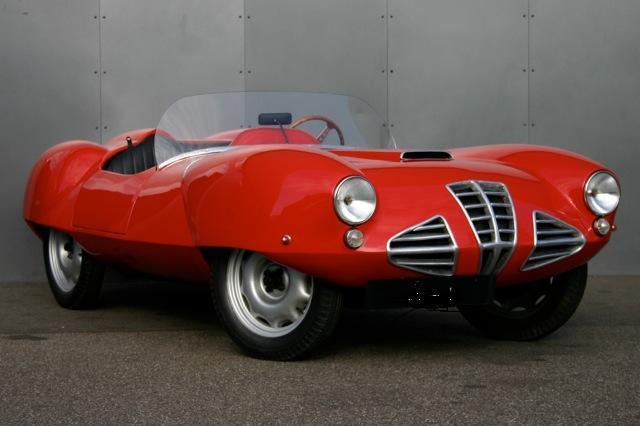
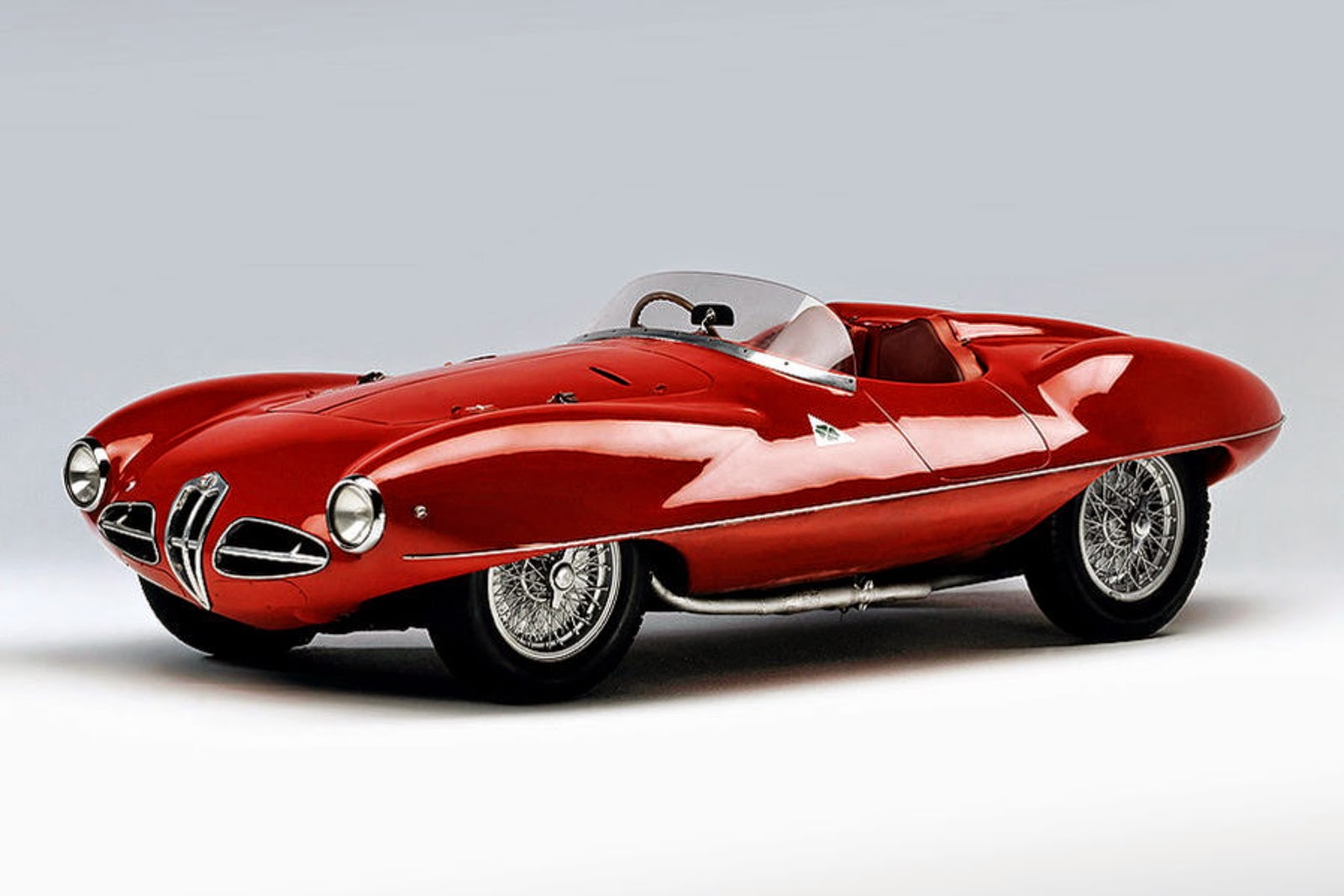
The Alfa Romeo C52 “Disco Volante,” introduced by Touring in 1952, quickly became a symbol of Italian aerodynamic daring and futuristic design. But in the shadows of this icon emerged a curious little lookalike — a barchetta built by the obscure Carrozzeria Trevisan in the early 1950s. Based on the humble Fiat 500 C Topolino platform, the Trevisan Disco Volante featured a hand-formed aluminum body, with fully enclosed wheels, a curved windscreen, faired-in headrests, and a distinctive recessed grille.
Despite its modest underpinnings — a 569cc inline-four pushing out just 16 horsepower — the Trevisan’s styling boldly echoed Touring’s masterpiece. Its low-slung, torpedo-like silhouette looked every bit the jet-age racer, even if it moved at more of a scooter’s pace.
While it’s believed that two or perhaps a few more were built for privateers racing in local events like the Mille Miglia, only one known example survives today. That makes this miniature Disco Volante not just a tribute — but a vanishingly rare one. A coachbuilt curiosity with big dreams and a tiny engine.
Fiat 1100 TV Canta vs. Studebaker Commander (1953)
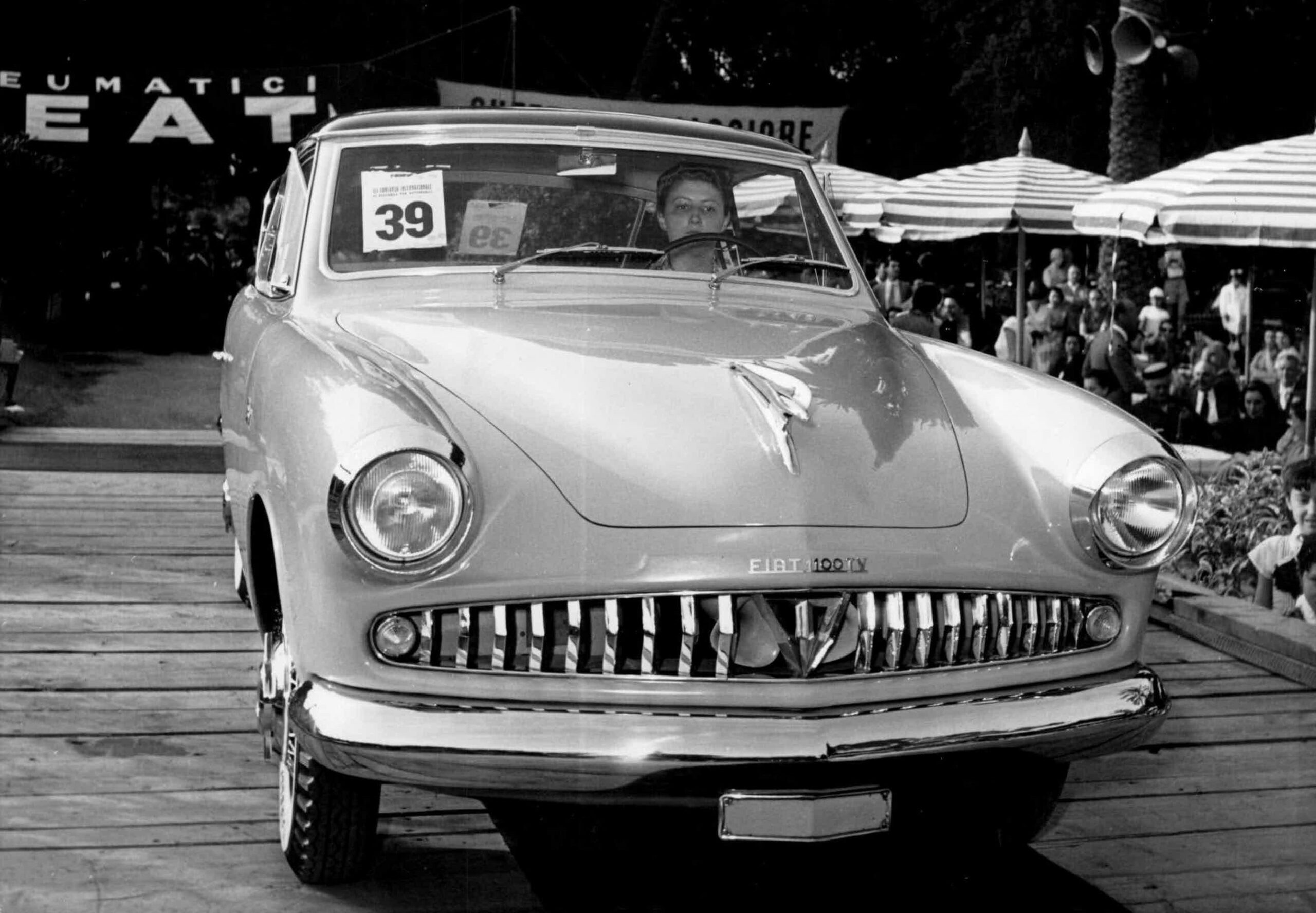
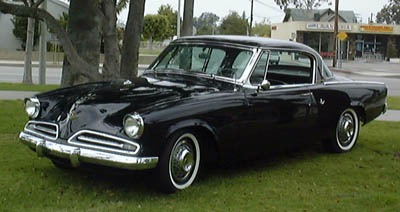
The Fiat 1100 TV Canta, often affectionately dubbed the “Studebaker Fiat” by enthusiasts, stands as a compelling example of Italian automotive design influenced by American styling in the postwar era. Built in 1954 by Carrozzeria Canta and styled by Giovanni Michelotti, the car was based on Fiat 1100 chassis and immediately drew comparisons to the Studebaker Commander and Champion models of the early 1950s.
From its toothy chrome grille and central “V” emblem to the domed hood and wraparound stance, the resemblance to Studebaker’s design language was undeniable. So much so, in fact, that it attracted the attention of Studebaker’s legal department, which raised concerns about possible design infringement.
To avoid legal complications, Canta swiftly reworked the design. By late 1954, a revised version of the 1100 TV was introduced, featuring a more distinct aesthetic that stepped away from the Studebaker-inspired cues. This allowed the small carrozzeria to continue producing the model without further issues — and to carve out its own stylistic identity.
🔗 Read more: The Italian Studebakers
Despite its brief flirtation with controversy, the 1100 TV Canta was admired for its boldness and the elegant way it blended American trends with Italian coachbuilding finesse. It reflected a delicate balancing act: capturing the glamour of the American look while remaining innovative and original enough to stand on its own.
Though very few examples were built, at least one car has survived and was recently restored, preserving this curious and charismatic chapter of automotive history.
Fiat 500 Spiaggina by Boano vs. Fiat 500 Elegance by Savio
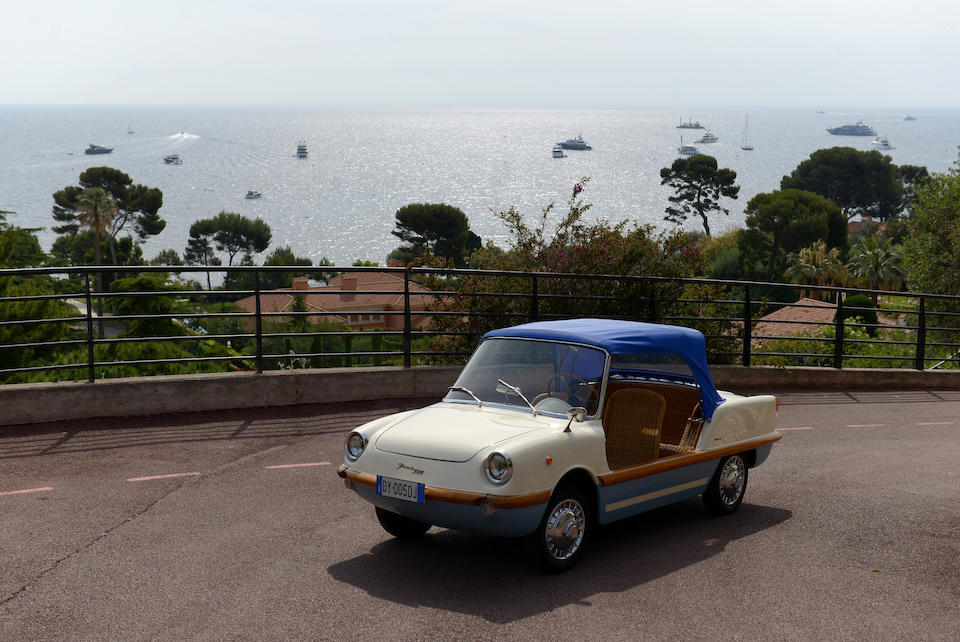
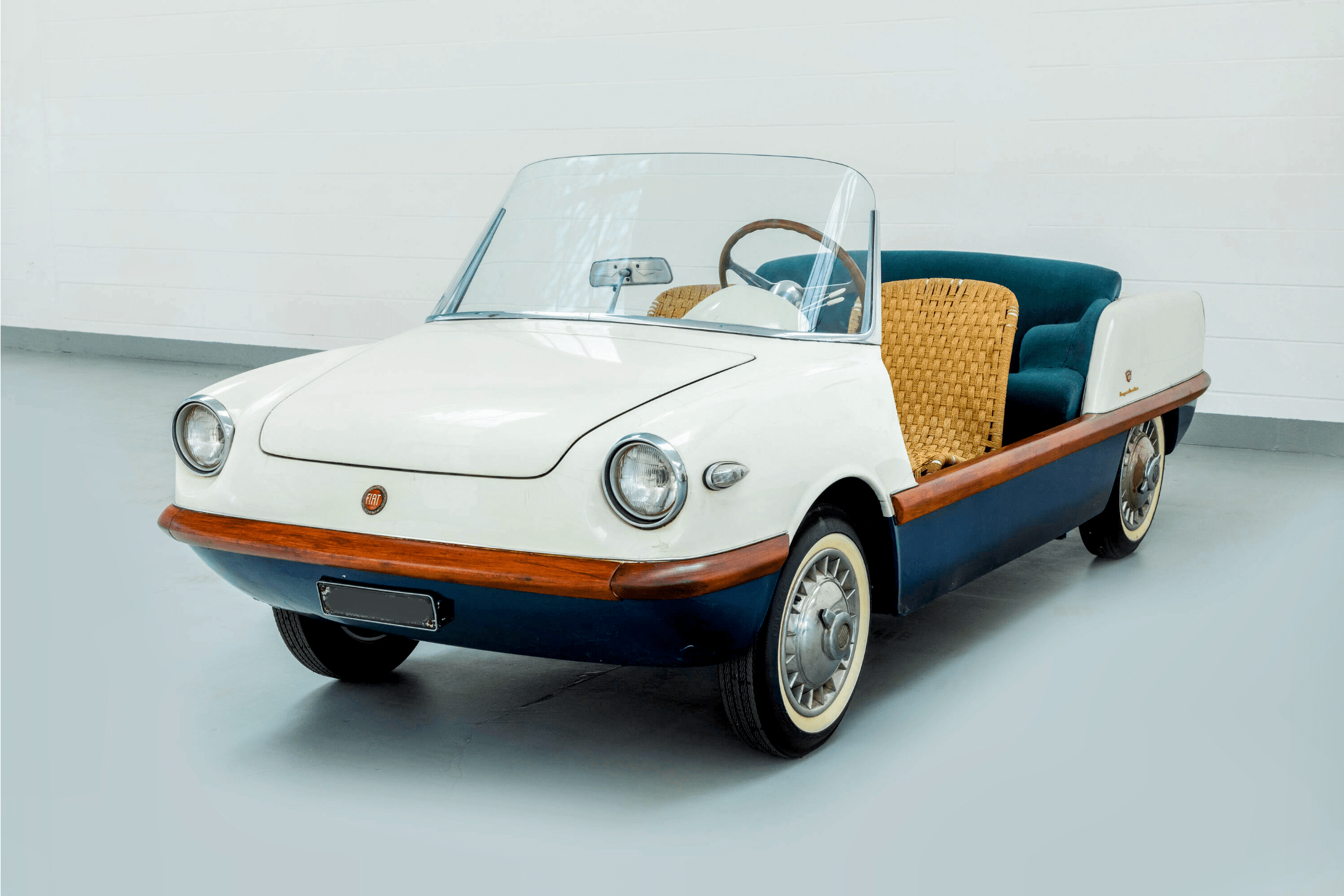
The Fiat 500 Spiaggina by Carrozzeria Boano is one of the most glamorous and exclusive coachbuilt variants of the postwar Fiat era — a custom beach car created in the mid-1950s at the request of none other than Gianni Agnelli. With its wicker seats, open-air design, nautical wood trim, and extended chassis, this luxurious runabout was designed for short seaside drives in the utmost style. Only two examples were built, one of which was famously owned by Aristotle Onassis and later destroyed. The remaining example survives as a prized collector’s piece.
What makes this case unique is that the design was not simply copied — it was officially passed on. After Boano’s departure to lead Fiat’s styling department, Carrozzeria Savio acquired the rights to the Spiaggina concept. In 1965, they launched the Fiat 500 Elegance, a refined continuation of Boano’s vision, showcased at the Turin Motor Show and featured on the cover of Auto Italiana magazine.
Though mechanically similar, the two cars are visually near-identical, with subtle refinements introduced by Savio. The 500 Elegance retained the wicker seat theme, marine-inspired detailing, and minimalist lines, blending playful aesthetics with urban practicality. Its elegant presence marked the apex of Italy’s short-lived Spiaggina trend — beach cars for the elite, not for mass production.
Eventually, Savio shifted focus to the more rugged and utilitarian Jungla, based on the Fiat 600 and later 850, marking the end of the Elegance. Yet the legacy of the original Boano Spiaggina lived on in its Savio successor — a case of authorized imitation, where the line between “copy” and “continuation” becomes as fluid as the Italian coastline it was meant to cruise.
Fiat 500 Coupé Moretti vs. Fiat 850 Coupé Vignale
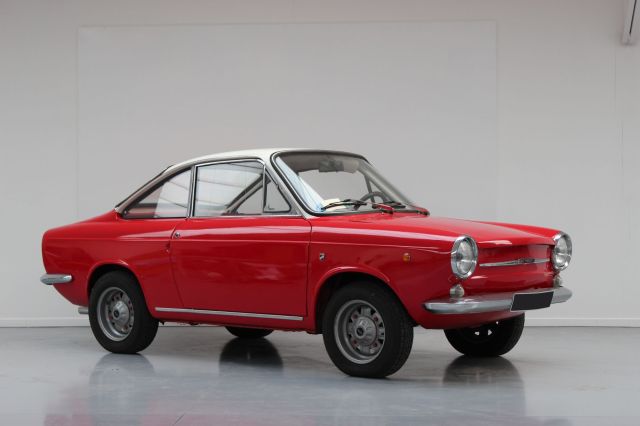
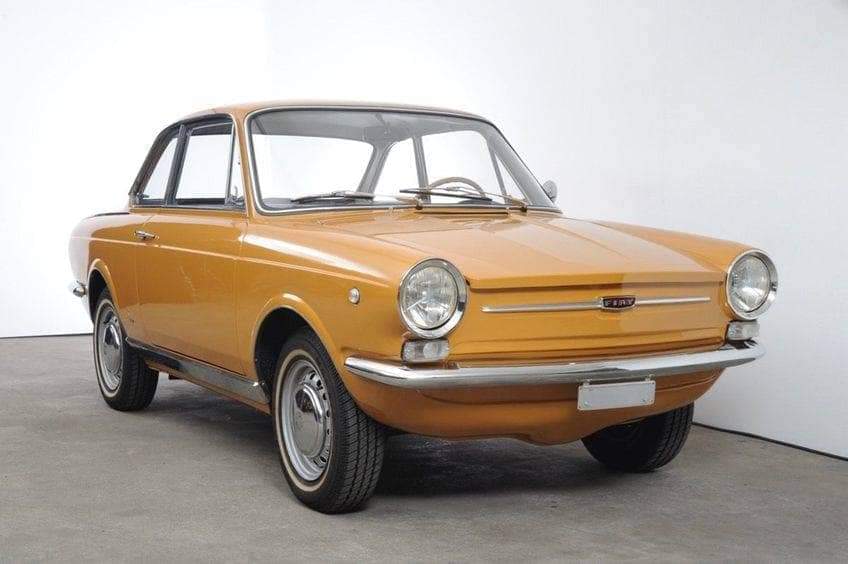
The early 1960s marked a peak in Italy’s boutique coachbuilding culture — and few examples illustrate this better than the elegant Fiat 500 Coupé Moretti and the refined Fiat 850 Coupé Vignale. Though rooted in humble platforms, both models emerged as design-driven reinterpretations of mass-market vehicles, shaped by talents closely tied to the legendary Giovanni Michelotti.
The Fiat 500 Coupé Moretti, introduced in 1960, was the work of Dany Brawand, a young designer who had previously apprenticed under Michelotti. This influence is clear in the car’s clean surfaces, tight proportions, and refined silhouette. The Moretti Coupé reimagined the iconic Fiat 500 not as a city car, but as a miniature GT — elegant, sporty, and hand-built in very limited numbers.
🔗 Read more: Fiat 850 Vignale: guida completa
The Fiat 850 Coupé Vignale, meanwhile, was designed by Virginio Vairo, Michelotti’s direct successor at Carrozzeria Vignale. Based on the Fiat 850 mechanicals, it offered a slightly larger, more luxurious 2+2 layout. As part of the “Vignalina” series, it stood out for its upscale interior, complete with faux-leather upholstery, electric windows, wood trim, and thoughtful touches like a central loose-object tray and cigarette holder.
Despite the difference in size and positioning, both cars share a stylistic DNA traceable to Michelotti: compact and balanced proportions, minimalist ornamentation, and an elegant visual flow. Each represents how Italian coachbuilders could turn everyday Fiats into something aspirational — and beautiful.
Produced in small numbers, both the Moretti and the Vignale coupés are now coveted by collectors, offering a rare glimpse into the refined world of Italian fuoriserie design.
Fiat 850 Grand Prix vs. Maserati Ghibli
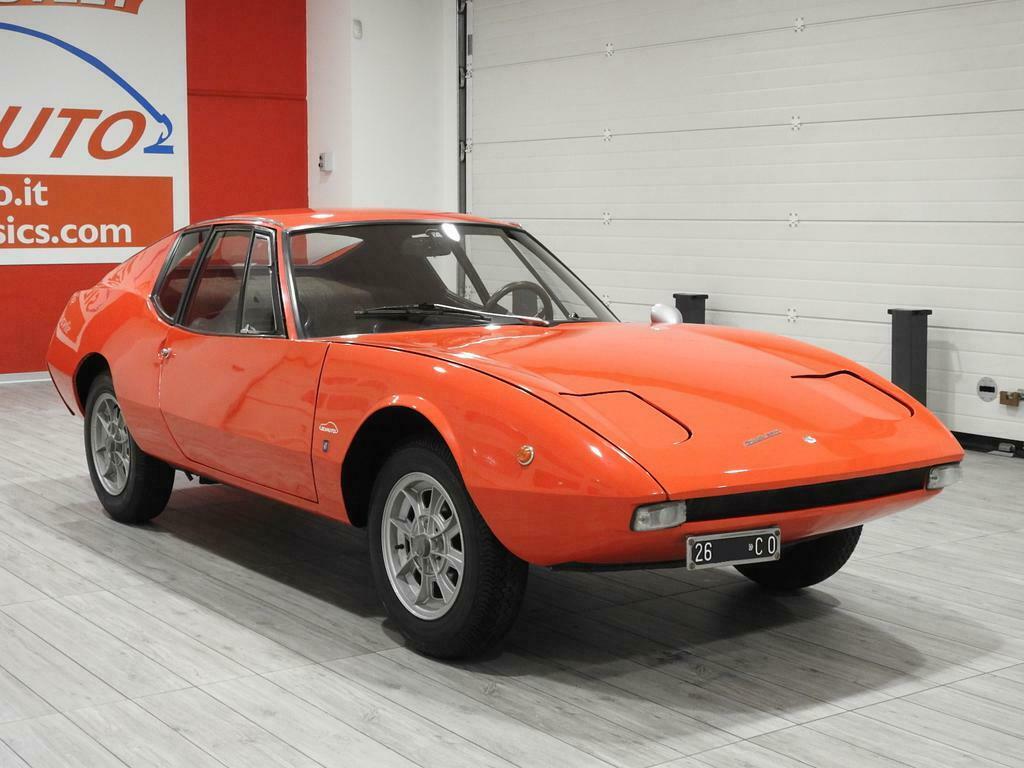
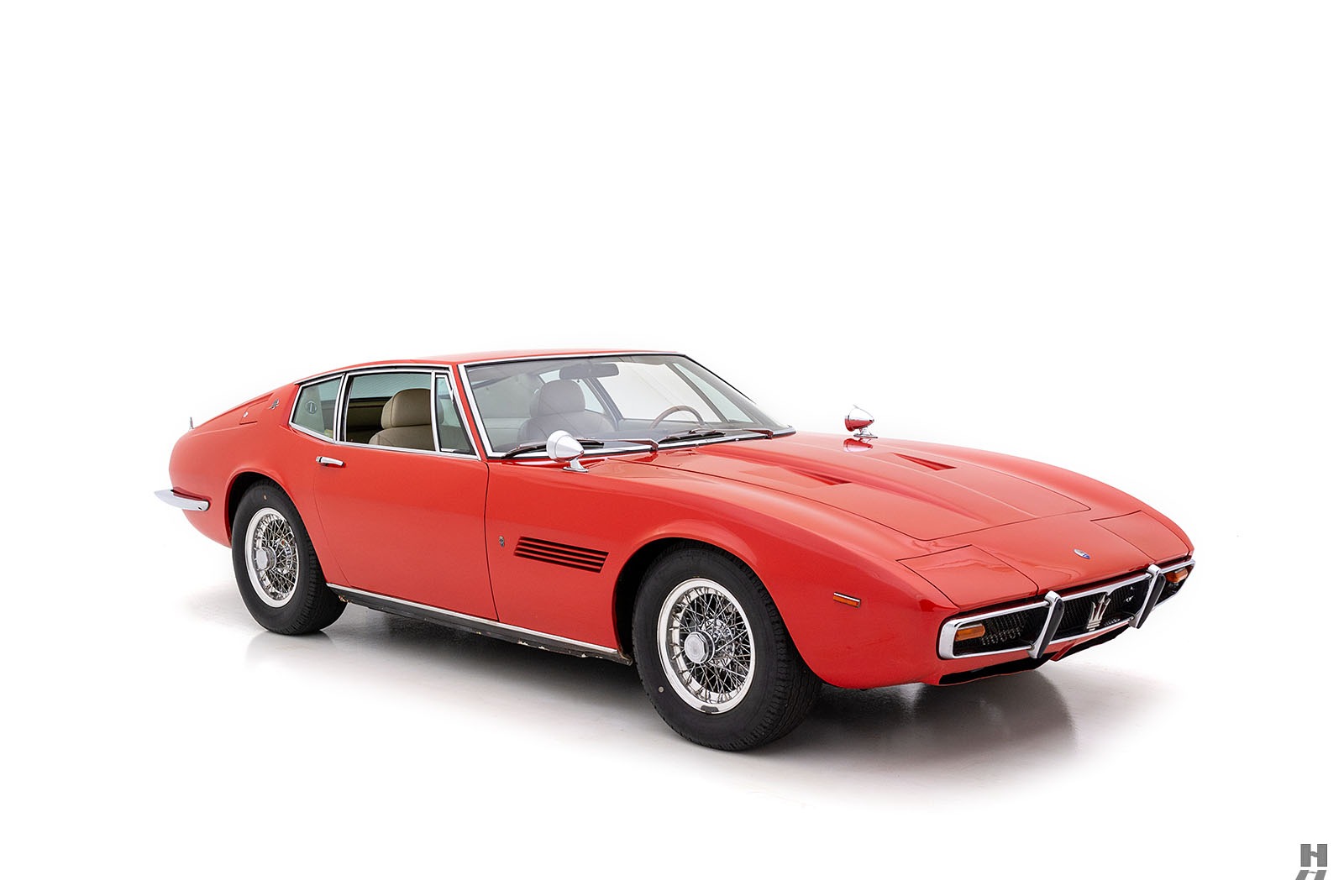
At first glance, the Fiat 850 Grand Prix by Francis Lombardi may appear like a scaled-down version of something much more exotic — and that’s no coincidence. Its low-slung proportions, sharp front end, and fastback profile bear more than a passing resemblance to the Maserati Ghibli, the iconic GT designed by Giorgetto Giugiaro for Ghia and introduced just a year earlier.
The Grand Prix, first shown at the 1968 Geneva Motor Show, was developed in-house by Giuseppe Rinaldi and built on the humble Fiat 850 platform. With a steel body (save for the rear panel), flip-up headlights, a dramatic wedge shape, and a minimalist grille, the design channeled the same bold elegance of the Ghibli — but executed in miniature. Even the interior layout and proportions mirrored the exotic GT coupe archetype.
While the Maserati Ghibli was a front-engined V8 grand tourer aimed at Ferrari and Lamborghini, the Francis Lombardi Grand Prix used a modest rear-mounted 843 cc engine producing just 37–47 horsepower. Still, thanks to its light weight and low drag, it offered impressive agility and a claimed top speed close to 100 mph (160 km/h).
The resemblance, however, wasn’t purely superficial. The Francis Lombardi was one of the most ambitious small-series cars of its time, even marketed under names like OTAS, Giannini, and Abarth Scorpione, and briefly considered for British distribution before plans were halted by the sudden death of a key investor.
In the end, the Fiat 850 Grand Prix stands as a striking example of how Italian design could compress the drama of a Maserati Ghibli into a smaller, more accessible package — proving that proportions and style often matter just as much as power.
Moretti 850 Sportiva vs. Fiat Dino Pininfarina
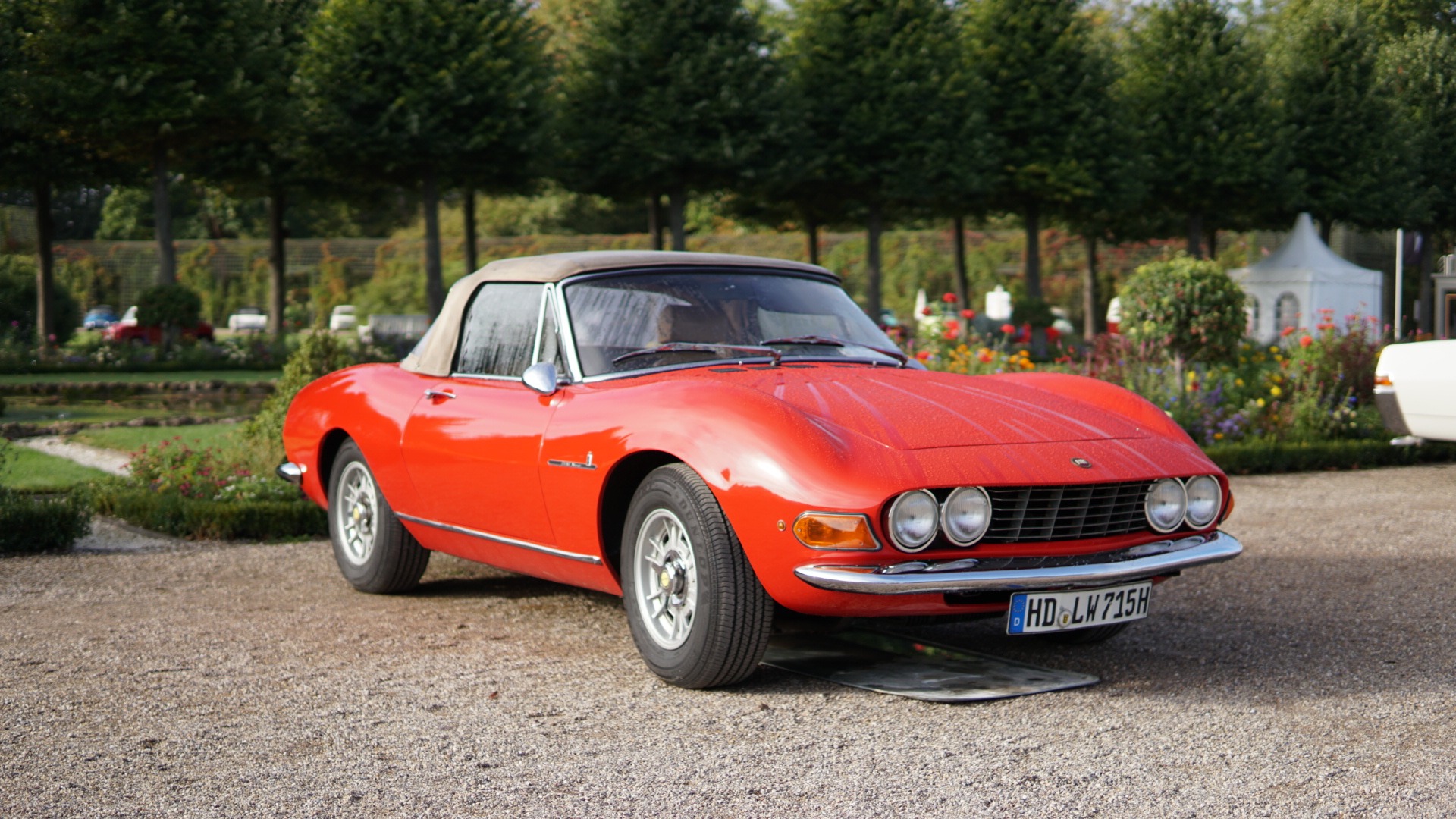
Few cars have left a visual legacy quite like the Fiat Dino Spider, designed by Pininfarina and unveiled at the 1966 Turin Motor Show. Born from a collaboration between Fiat and Ferrari to homologate the Dino V6 engine for racing, the Spider was a sleek, sculptural 2-seater with sensuous lines and elegant detailing. Its shape — long hood, curved fenders, and compact rear — would soon echo far beyond the Ferrari-powered elite.
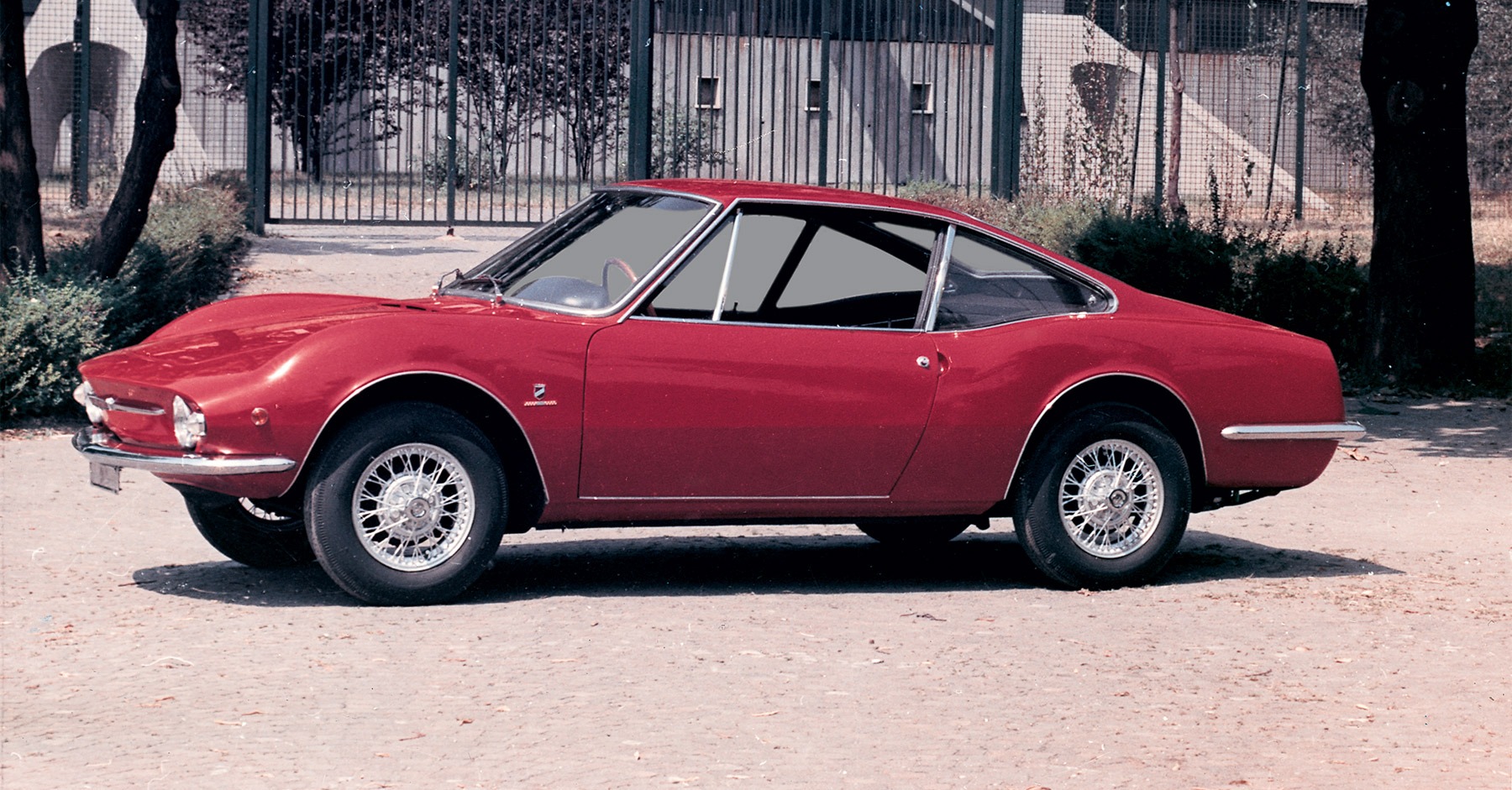
One of the most direct stylistic homages came from Moretti, with the 850 Sportiva, presented just a year later in 1967. Designed by Dany Brawand, a former apprentice of Giovanni Michelotti, the Moretti 850 Sportiva clearly channeled the Dino’s proportions and flair — especially its flared “Dino-style” fenders, rounded front profile, and fastback tail. Yet it was built on the Fiat 850 platform, with a rear-mounted 843 cc engine and modest performance, making it a Dino for the everyman.
Despite its limited power, the Moretti was rich in options: Borrani wire wheels, metallic paint, electric windows, and even a larger 982 cc engine or Giannini tuning kits. Its exclusivity, fine detailing, and compact dimensions made it a favorite among connoisseurs. Around 700 units were built in total (400 of the first series and 300 of the second), plus some rare berlinetta variants and a 2+2 “S4” model introduced in response to market demand.
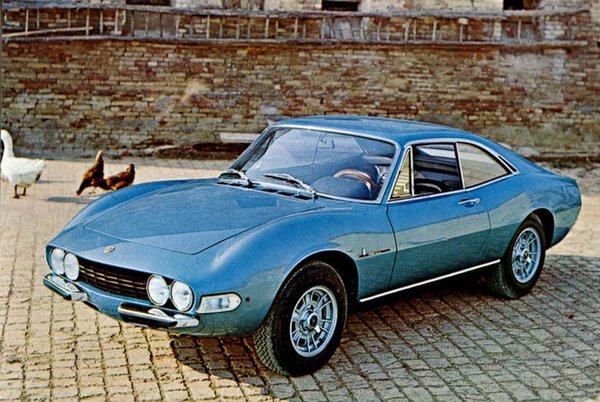
Interestingly, Pininfarina also created a Fiat Dino Coupé prototype, distinct from the production version by Bertone. Though never produced, this prototype bears a striking resemblance to both the Spider and to some of the later Dino-derived GT styling themes — further blurring the line between original and evolution.
In the end, the Fiat Dino Spider didn’t just inspire enthusiasts — it inspired other coachbuilders too. The Moretti 850 Sportiva may not have had Ferrari power, but its Dino-influenced styling and boutique quality made it a true baby Dino, in every sense except the badge.
Fiat 850 Coupé Caprera vs. Ferrari Dino 206 GT
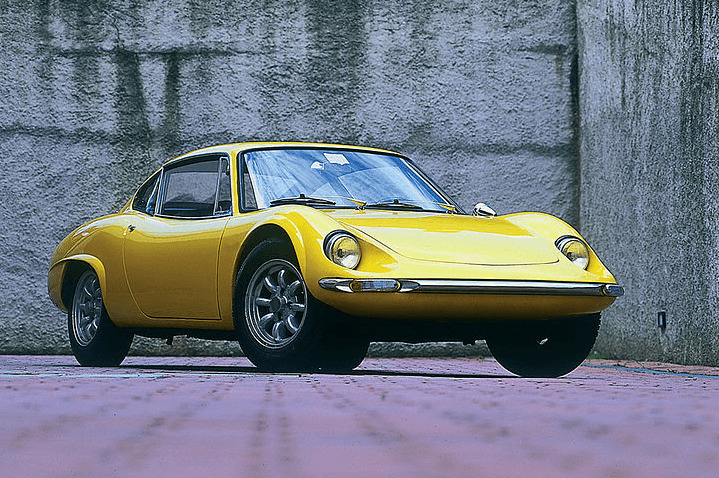
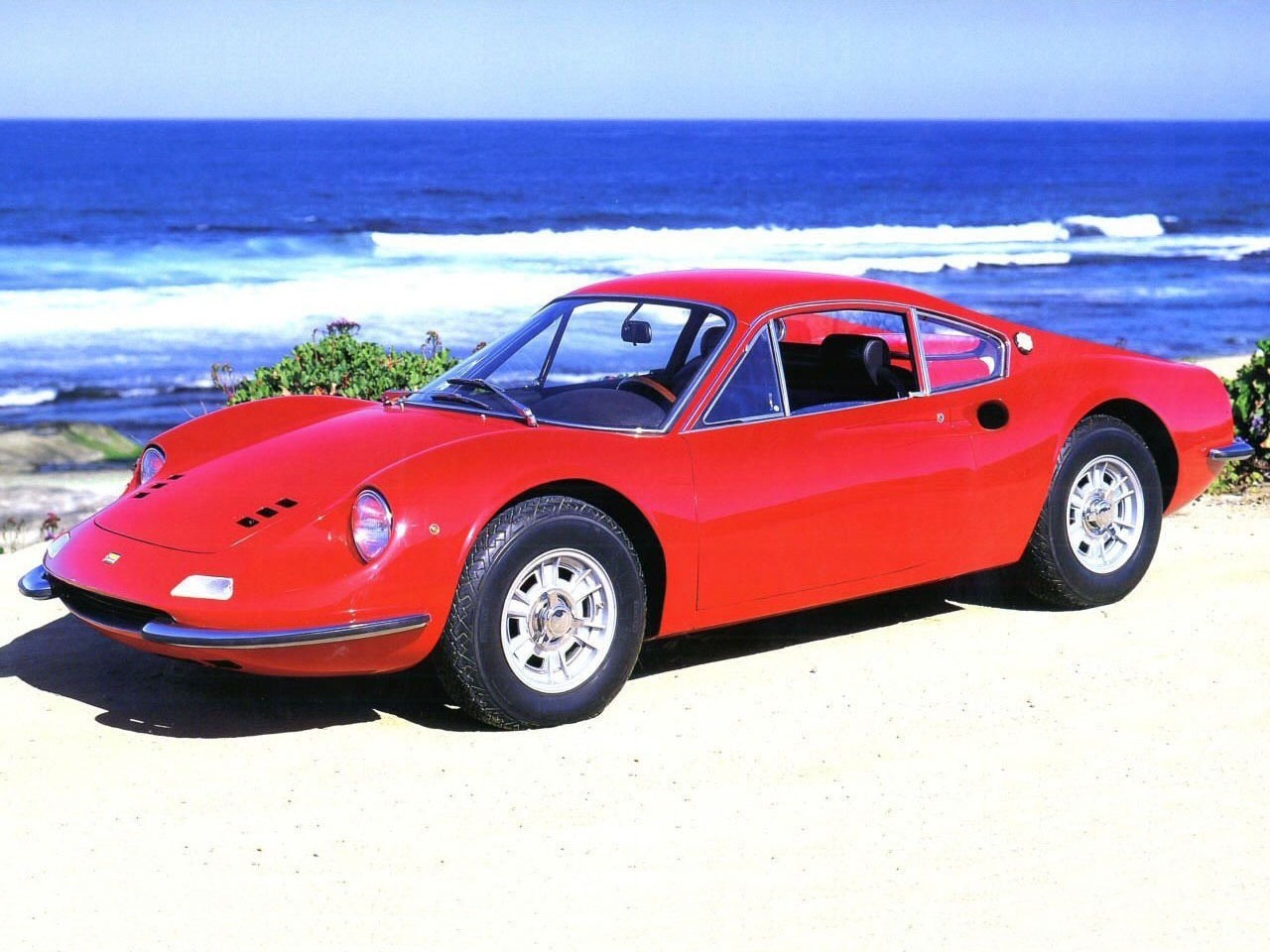
At first glance, the Fiat 850 Coupé Caprera could easily be mistaken for a scaled-down Ferrari Dino 206 GT — and indeed, that’s exactly what happened. Built in 1966 by the tiny Carrozzeria Caprera, this one-off coupe captured the essence of mid-engine Dino design long before it became iconic.
Its smooth, flowing lines, low nose, sculpted fenders, and compact fastback profile all echo the styling of the Dino — even though the Caprera is front-engined and based on the humble Fiat 850. The car debuted with a refined metallic green finish and was priced at 1,150,000 lire, placing it in the upper tier of Fiat-based coachbuilt cars.
Designed independently of Pininfarina or Ferrari, the Caprera’s resemblance to the Dino was likely coincidental — or, at most, an example of how certain Italian design themes converged in the mid-1960s. Ironically, its own identity was later lost during restoration: today, the car survives but wears Moretti badges and a yellow paint job, likely added by a previous owner who believed it to be a Moretti 850 Sportiva. While visually similar, the Caprera is a distinct creation, and the misidentification only underscores how easily design echoes can blur the boundaries between coachbuilders.
Meanwhile, the Ferrari Dino 206 GT, introduced in 1967, was a revolution in Maranello’s design language: lightweight aluminum body, mid-mounted V6 engine, and sinuous lines by Scaglietti — it redefined what a Ferrari could be. Though the Dino was not a direct influence on the Caprera (chronologically), the visual resemblance is remarkable — and speaks to a shared moment in Italian automotive styling.
The Caprera remains a fascinating oddity — a one-off coupe with such ambiguous styling that even its own owner wasn’t quite sure what it was. At some point in its life, the car was rebadged as a Moretti, likely because its design so closely mirrored the lines of the Moretti 850 Sportiva. It’s unclear whether this was done out of confusion, wishful thinking, or simply to give it a more recognizable pedigree — but the result is a perfect example of how certain designs could blur the boundaries between marques. Inspired (or perhaps coincidentally aligned) with the Dino aesthetic, the Caprera slipped into obscurity, mistaken for something it never was. And yet, that confusion only underscores its strange charm — a coachbuilt ghost that refuses to fit neatly into any one box.
De Tomaso 1600 Spider vs. Fiat X1/9
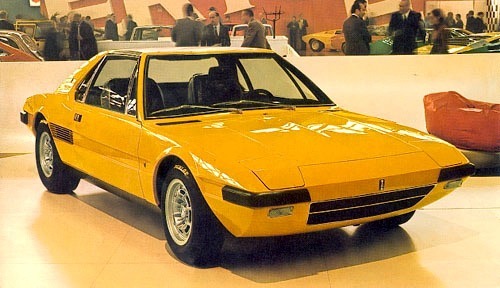
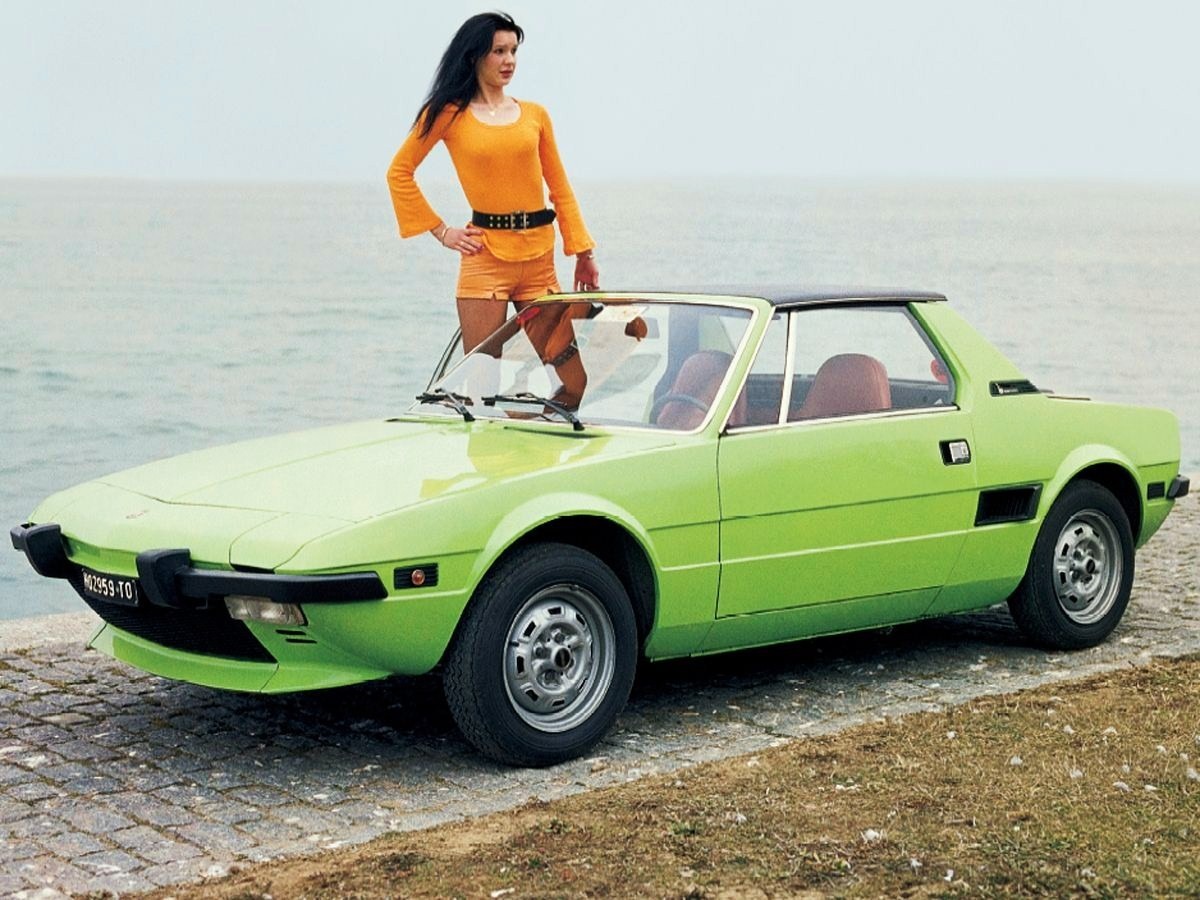
Few stories in automotive history blend design inspiration, controversy, and unintended consequence quite like that of the De Tomaso 1600 Spider and the Fiat X1/9.
Unveiled at the 1971 Turin Motor Show, the De Tomaso 1600 Spider was a low-slung, wedge-shaped mid-engined prototype penned by Tom Tjaarda for Carrozzeria Ghia. Instantly, it drew comparisons — and accusations. Its proportions, shape, and detailing were shockingly similar to the Fiat X1/9, then still a secret in-development project at Bertone.
As the story later emerged, Alejandro De Tomaso had allegedly come across Fiat’s X1/9 prototype at a shared supplier’s warehouse and ordered a quick replica. The resulting 1600 Spider was not intended for production — it was a provocation, a way to showcase De Tomaso’s design and manufacturing capabilities and, perhaps more pointedly, to stir the pot.
🔗 Read more: How De Tomaso Hijacked the Fiat X1/9 Before It Even Launched
The plan worked. The bold reveal of the De Tomaso 1600 Spider at Turin pushed Nuccio Bertone to accelerate the X1/9’s development, moving it from concept to production priority. Without the 1600 Spider’s public debut, the X1/9 might have remained delayed or sidelined. Instead, it was greenlit, finalized, and released the following year — to immediate acclaim.
Designed by Marcello Gandini at Bertone, the Fiat X1/9 debuted in 1972 as a mid-engined, targa-topped two-seater with a racing-inspired wedge silhouette. It featured innovative packaging, pop-up headlights, and excellent handling, thanks to its low center of gravity and midship layout. It became a cult classic, produced until 1988 in over 160,000 units.
While the De Tomaso 1600 Spider vanished into obscurity, its shadow lingered. Whether copy or catalyst, it played a key role in shaping the destiny of one of Fiat’s most iconic sports cars — and remains a case study in how inspiration and imitation can twist into unintended legacy.
Fiat 850 Dart by Vignale vs. Lamborghini Miura
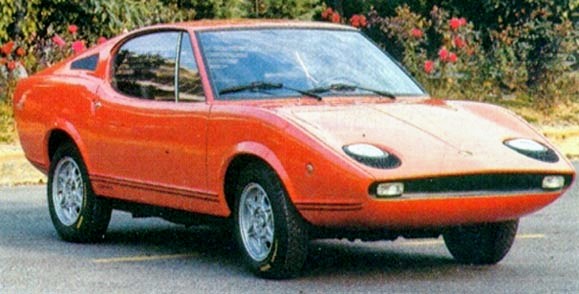
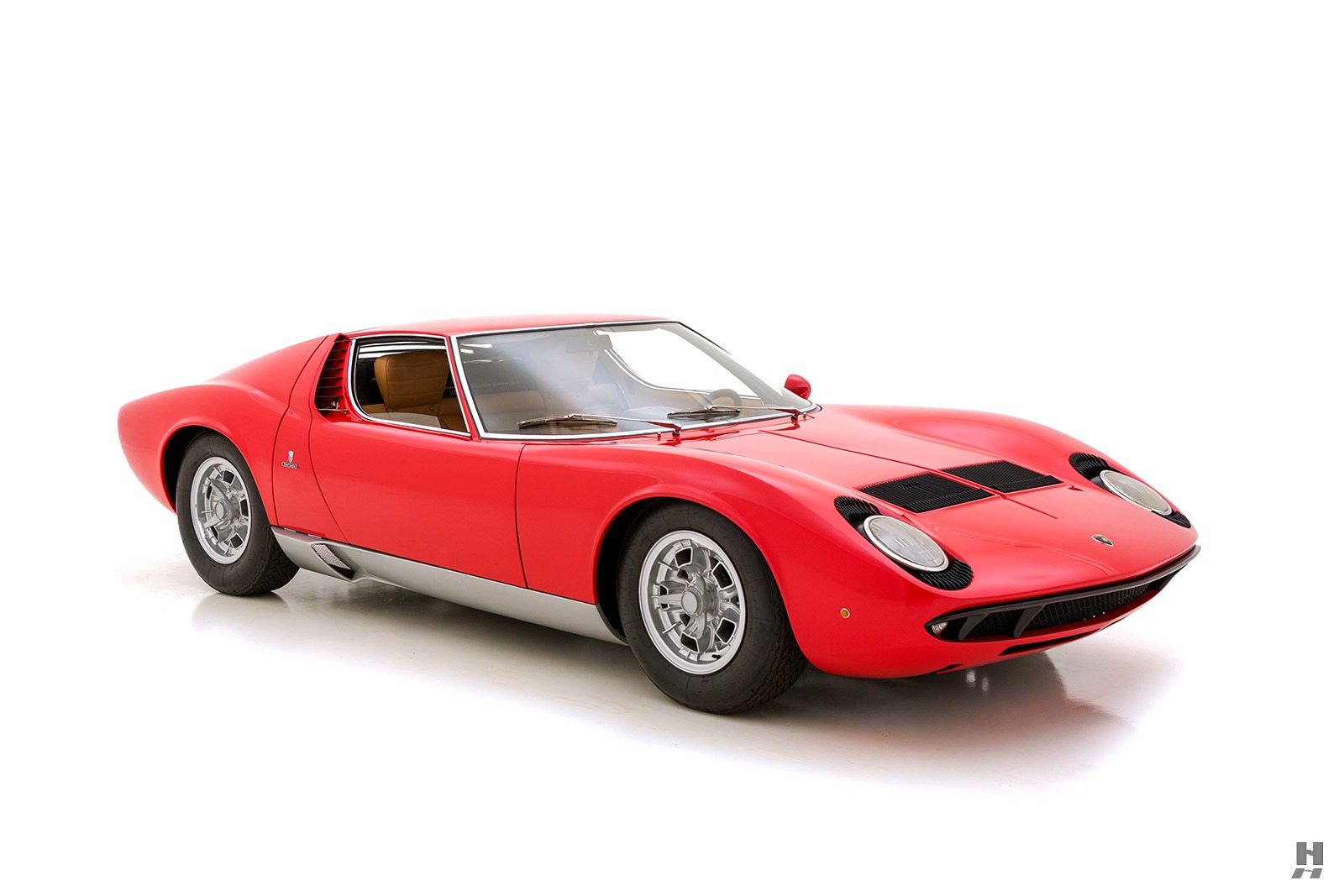
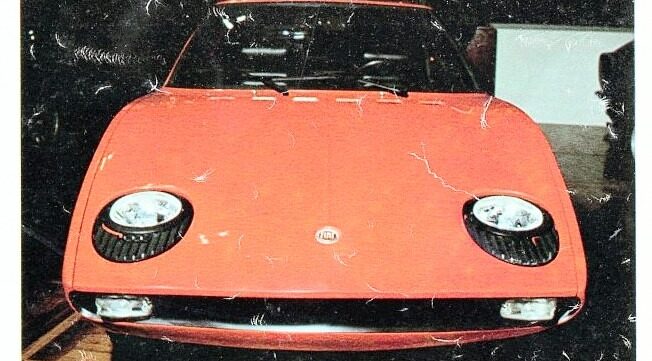
In 1969, Carrozzeria Vignale unveiled a curious and captivating creation at the Turin Motor Show: the Fiat 850 Dart, a compact sports coupé that bore an unmistakable resemblance to the Lamborghini Miura. Designed by Virginio Vairo, the Dart seemed like a conscious homage — or perhaps a strategic emulation — of the Miura’s groundbreaking silhouette.
Built on the humble Fiat 850 platform, the Dart featured a sharply tapered nose, recessed headlights, a curved fastback roofline, and dramatic rear haunches. These proportions, lines, and even the stance mirrored many of the Miura’s signature design elements. It was, in essence, a “Miura for the masses”, scaled down in both size and ambition.
The Lamborghini Miura, introduced just a few years earlier in 1966 and styled by Marcello Gandini at Bertone, had revolutionized the concept of the modern supercar with its mid-mounted transverse V12 engine and dramatic styling. Its debut had stunned the automotive world — and sparked widespread imitation across Europe.
The Fiat 850 Dart, however, remained a one-off. Despite its bold looks, it never went into production. It was a showpiece, an experimental exercise in capturing exotic flair with everyday mechanicals. Its commercial fate was sealed quickly — perhaps due to its Miura-like appearance being too derivative, or simply because its performance couldn’t match its visual promise.
Still, the Dart holds a unique place in Italian coachbuilding history. It’s a perfect example of how a radical design like the Miura’s could ripple across the industry, influencing not just competitors but even small-scale coachbuilders trying to bottle some of that magic — even on a Fiat 850 chassis.
Ford Escort Monte Carlo GT Frua – Ferrari 330 GTC
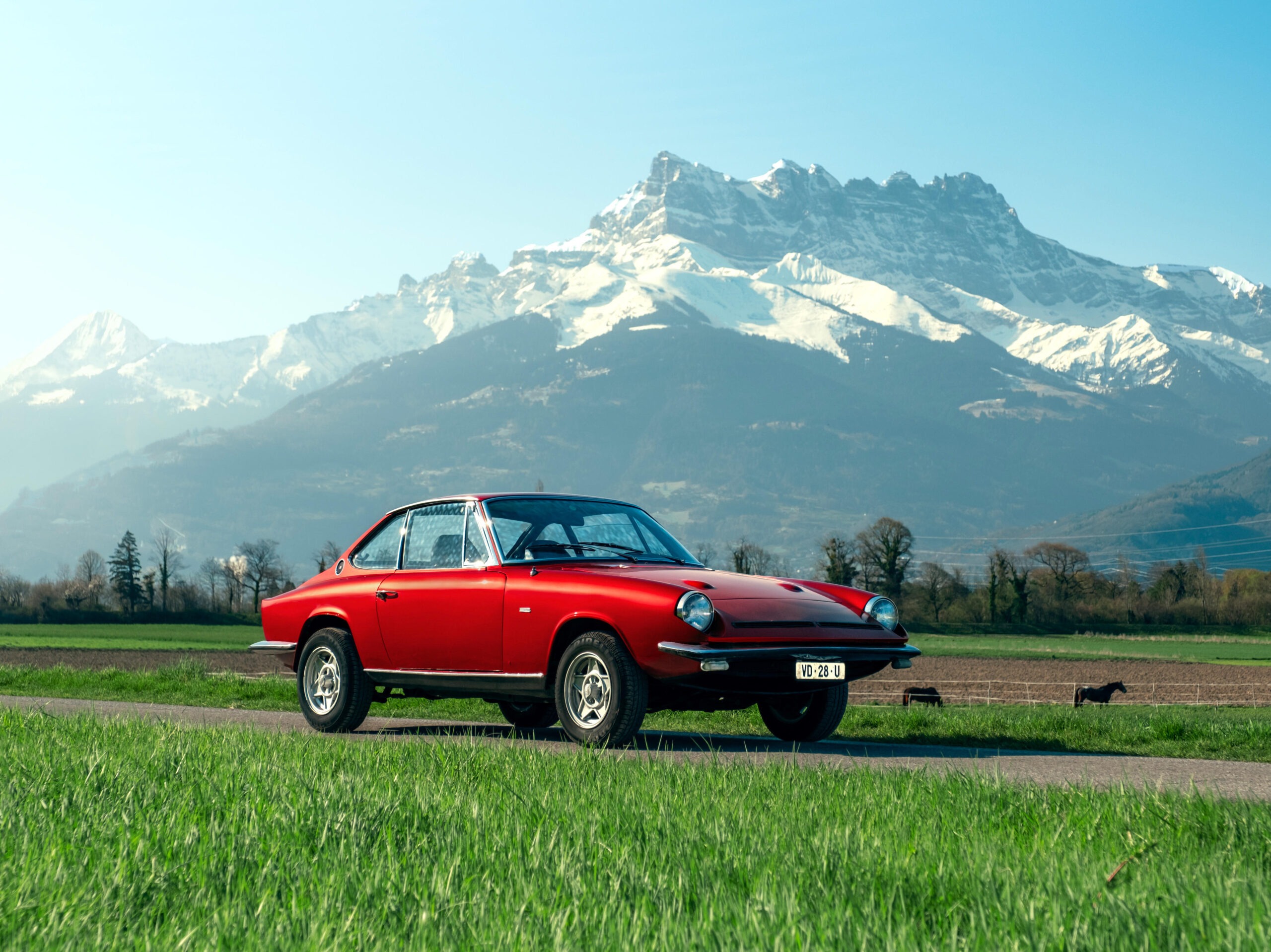
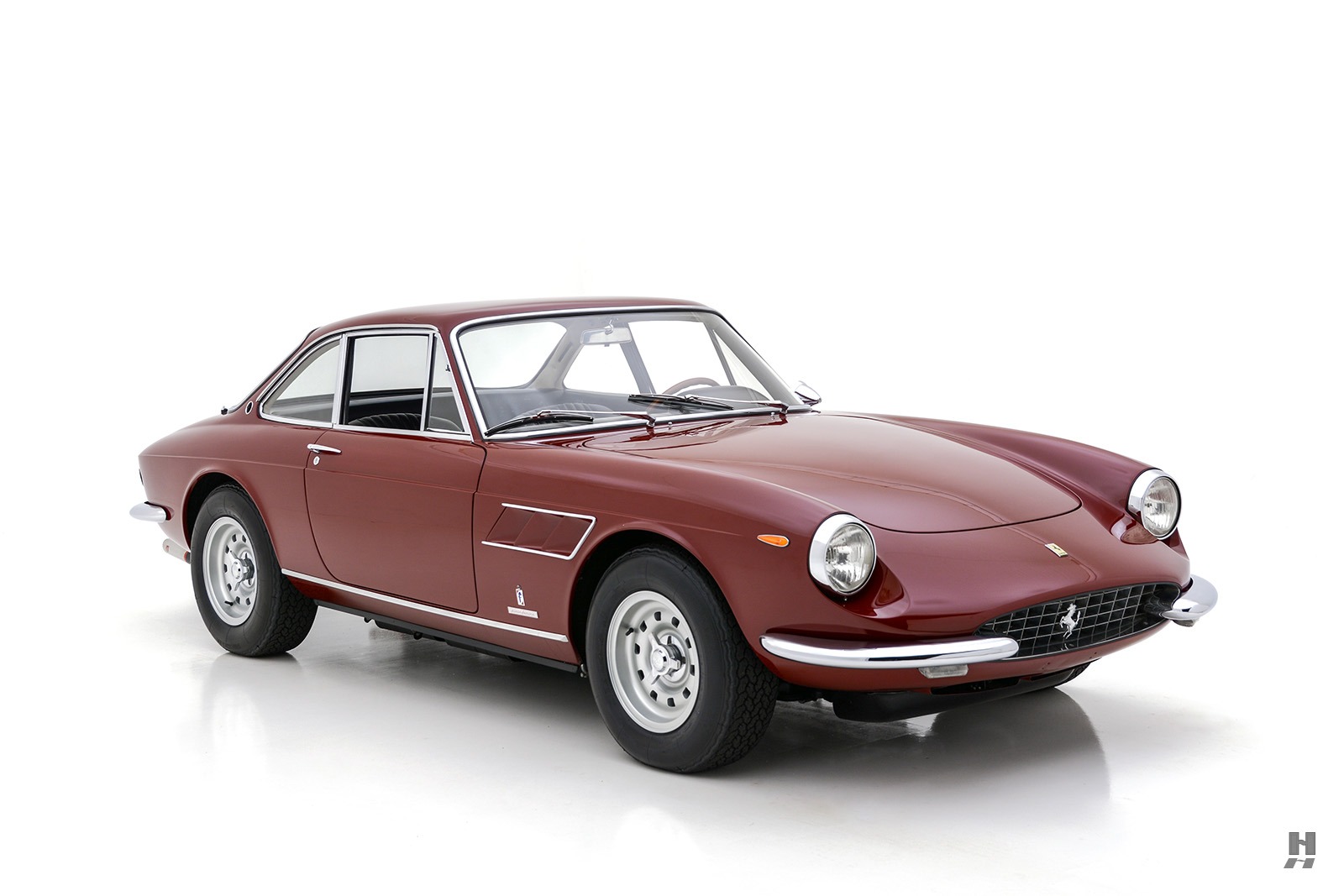
In 1971, Pietro Frua unveiled the Monte Carlo GT at the Paris Motor Show—a sleek, hand-built coupe based on the humble Ford Escort 1300 MkI platform. At a glance, its silhouette evokes unmistakable echoes of the Ferrari 330 GTC: the long, flowing bonnet, the minimal overhangs, the slender roofline, and the restrained yet purposeful stance. More than a copy, it’s a sophisticated tribute—a scaled-down reinterpretation of the grand tourer aesthetic perfected by Pininfarina.
While the Ferrari 330 GTC was a true V12-powered thoroughbred designed for high-speed comfort, Frua’s Monte Carlo GT was an exercise in pure style over performance. Underneath its elegant surface lay a modest 1.3-litre Kent engine producing just 70 horsepower—yet the visual illusion remained powerful. The design, clean and uncluttered, was more aligned with Frua’s work for Maserati and Glas than with the mass-market Escort.
Only one example of the Monte Carlo GT was ever built, making it a true coachbuilt curiosity. Its proportions, detailing, and poise offer a glimpse into what a more affordable grand tourer could have been—if only Ford had dared to dream as Frua did.
Bitter SC Coupé vs Ferrari 400
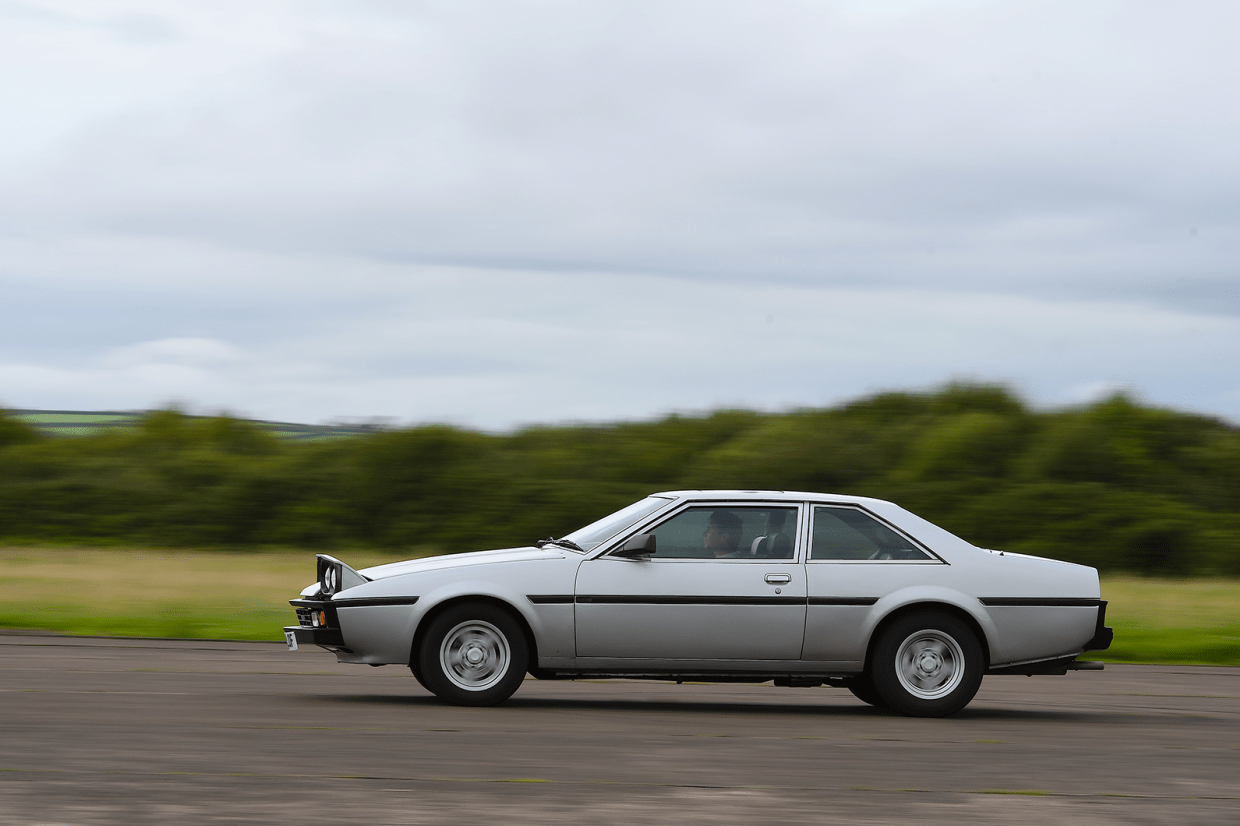
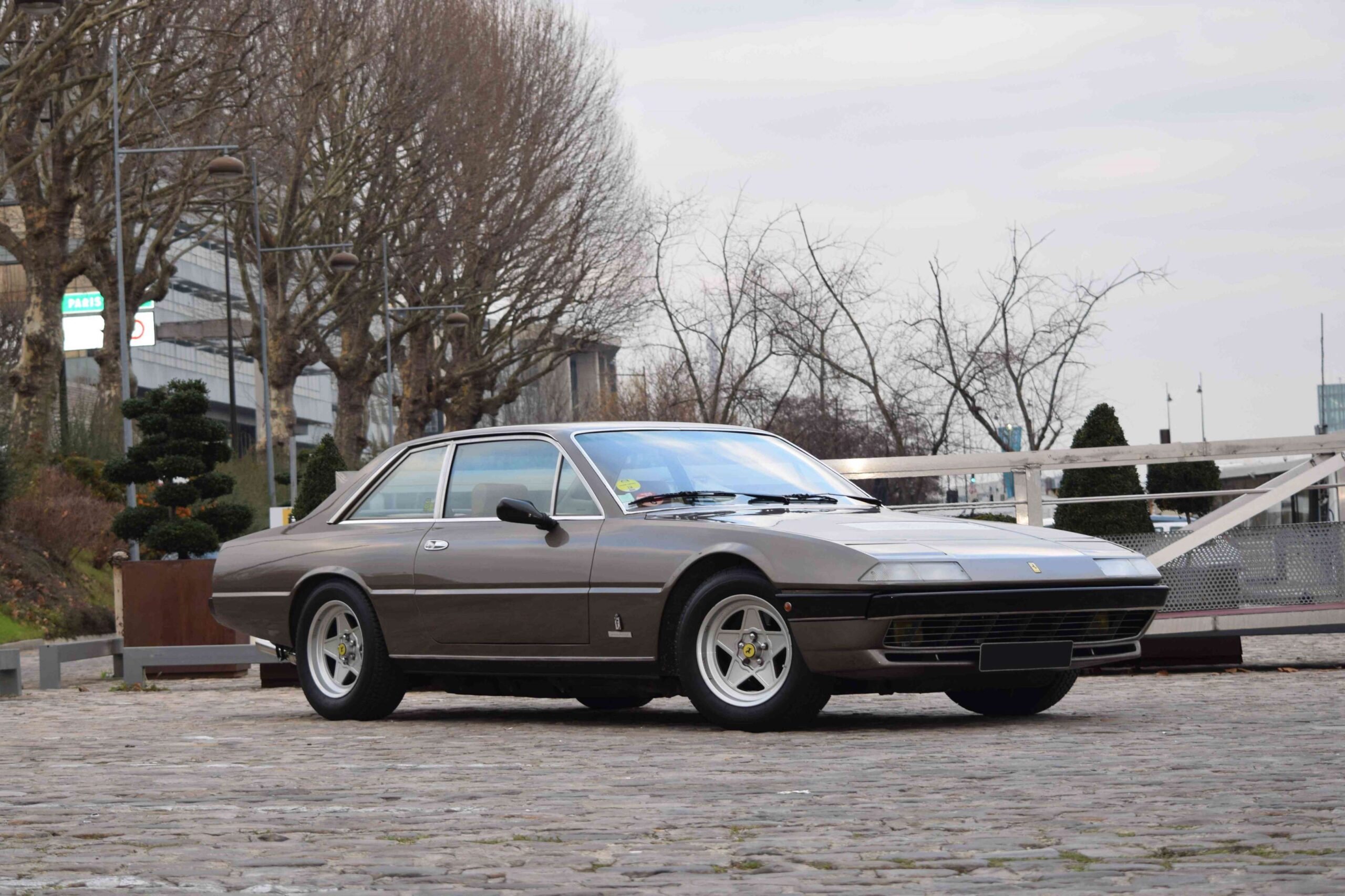
At first glance, the Bitter SC Coupé and the Ferrari 400 seem to share more than just proportions—they both embody the concept of a refined grand tourer, with understated lines and the demeanor of a gentleman traveler rather than a track-hardened racer. Yet behind this similarity lie two fundamentally different visions of European automotive luxury.
The Bitter SC, unveiled in 1980 at the Monaco Grand Prix where it served as a safety car, was Erich Bitter’s second production model after the CD. Based on an Opel chassis and heavily inspired by Italian design trends of the time, the SC wears a body that echoes the elegant restraint of the Ferrari 400—complete with pop-up headlights and a long, sleek profile. While the engineering roots were German and mainstream, the visual language spoke fluent Italian, thanks in part to detailing work by Giovanni Michelotti in Turin. The result was a car that masked its humble Opel origins under the skin, achieving a visual prestige that rivaled far more expensive exotics.
The Ferrari 400, on the other hand, represents Maranello’s take on the concept of a gentleman’s express. Designed by Pininfarina and introduced in 1976, the 400 broke with tradition by offering the first Ferrari with an automatic transmission as standard. Despite its conservative three-box silhouette, it hid a 4.8-liter Colombo V12 under the hood, delivering up to 340 horsepower in its carbureted version. This blend of stately design and raw Ferrari performance made it a favorite among Italy’s industrial elite, including Gianni Agnelli himself.
Where the Bitter SC was a masterful exercise in design synthesis—blending German reliability with Italian form—the Ferrari 400 was a purebred thoroughbred, refined yet undeniably potent. One was the elegant imposter, the other the authentic aristocrat. But both, in their own ways, offered a compelling answer to the question: what should a grand tourer look and feel like in the late 20th century?
Imitation, homage, or happy coincidence — sometimes it’s hard to tell. These coachbuilt curiosities show how a single successful design could ripple through the industry, inspiring everything from tiny replicas to unexpected mashups on budget platforms.
Got a favorite? Think one of these pulled off the look better than the original? Let us know in the comments — we’re all ears for your hot takes and hidden gems.

ABOUT THE AUTHOR
Andreas Scheidl
Italian classic car enthusiast with German roots. Renowned as a respected figure in the classic car community, he serves as a jury member at various international concours d'elegance, including the Classic Gala Schwetzingen and Mantova. As a content creator, Andreas passionately shares his profound knowledge and appreciation for vintage automobiles. His heart beats for cars designed by Giovanni Michelotti, showcasing his discerning taste and dedication to preserving the timeless elegance of automotive history.
More stories by Andreas Scheidl ↗CONTINUE READING
Posts You Might Like
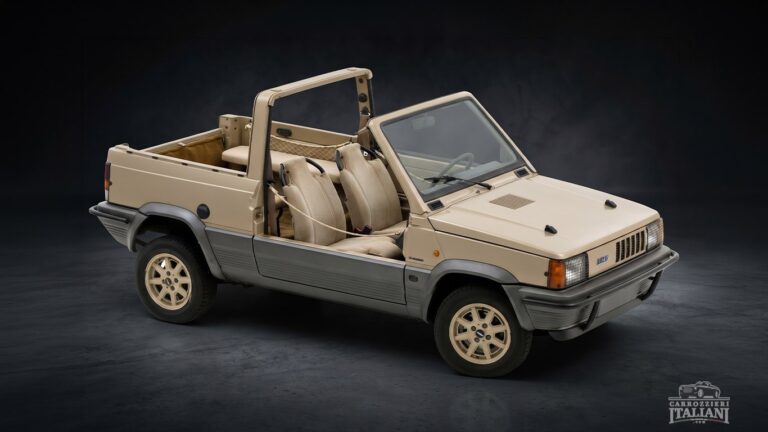
Fiat Panda Cabrio: The Italian Coachbuilders Who Opened Giugiaro’s Box
From Moretti’s Panda Rock to Italdesign’s experimental Strip, Maggiora’s four-wheel-drive convertible and Stola’s remarkable Destriero, the history of the open-top Panda reveals an unexpected chapter in Italian coachbuilding. When Giorgetto Giugiaro designed…
Read story
Gabriele d’Annunzio and the Cult of the Automobile
There was a time when the automobile had not yet become part of the landscape. It announced itself from afar through the beating of an engine, the smell of petrol and hot…
Read story
Fiat 1400: The Last Great Playground of the Carrozzieri
From Touring and Abarth to Farina, Ghia, Vignale, Boneschi, Bertone, Viotti and the smaller carrozzerie, the new Fiat quickly became one of the richest bases for Italian special bodies in the early…
Read story
How a Swiss Dealer Challenged Ferrari: The Story of Monteverdi
How Peter Monteverdi went from Swiss Ferrari dealer to creator of rare Frua and Fissore-bodied GTs, the Hai supercar and luxury off-roaders.
Read story
THE CONVERSATION
Comments 0
Share a memory, a period photograph or a documented detail about this story.