
The Flying Star: Touring Superleggera’s Celestial Design Revolution
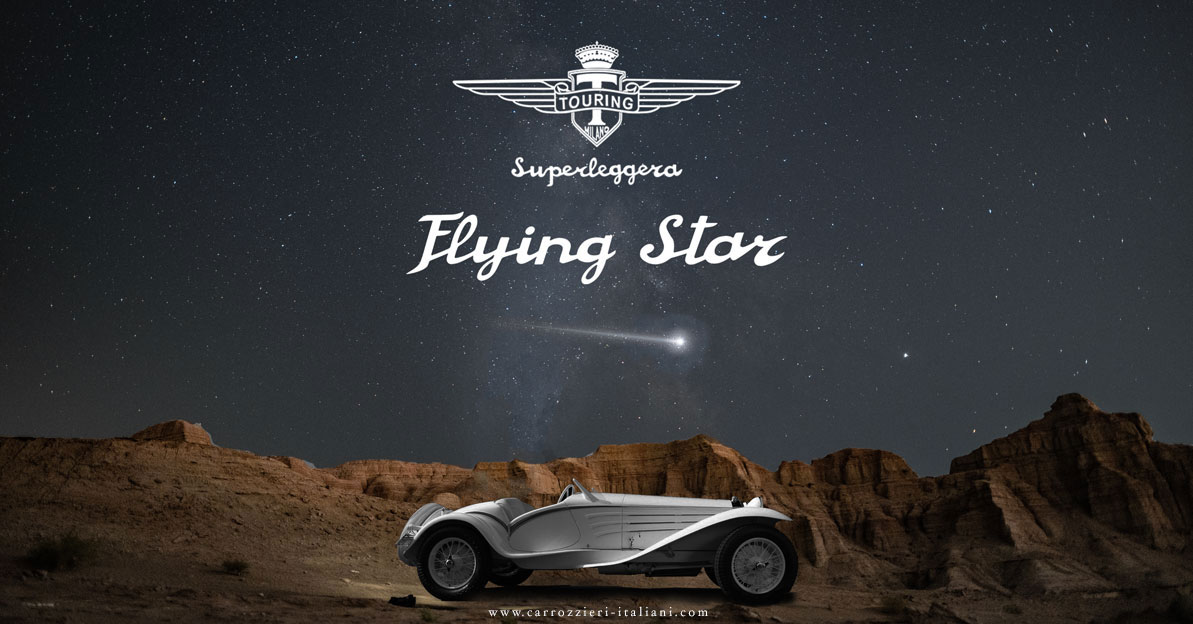
Before concept cars were a thing, before the term even existed, there was the Flying Star — a rolling sculpture that didn’t just turn heads, it set the stage for the future of automotive design.
In 1931, amid the elegance of European concours d’elegance and the last great days of bespoke coachbuilding, Milan’s Carrozzeria Touring unveiled a creation that felt less like a car and more like an Art Deco comet. It debuted at the Milan Motor Show — long before auto shows became pageants of screens and slogans — and left a deep impression on all who saw it.
Conceived by Touring’s founder Felice Bianchi Anderloni and designer Giuseppe Seregni, the Flying Star was crafted atop the mighty Isotta Fraschini chassis, a mechanical throne fit for royalty. But it wasn’t just a flashy body atop a grand platform. This was Touring imagining what came next. The Flying Star wasn’t merely coachbuilt — it was visionary.
Nicknamed for its celestial silhouette, the Flying Star would go on to become not just one car, but a series of exclusive dream machines, each built on a different luxury chassis, unified by their flowing lines, sweeping curves, and a sense of movement even when standing still.
This is the story of those stars — from the very first that lit up Milan in ’31, to the refined reimaginings that followed. A journey through design, legacy, and the quiet power of beauty in motion.
Origins of the Flying Star Style
By 1930, Carrozzeria Touring had already earned its reputation as one of Italy’s most innovative coachbuilders — masters of elegance, proportion, and lightweight construction. But as the Great Depression tightened its grip, even the most glamorous ateliers needed something extraordinary to keep wealthy clients dreaming. Touring’s answer was not merely another bespoke body, but a statement of intent.
That statement became the Flying Star.
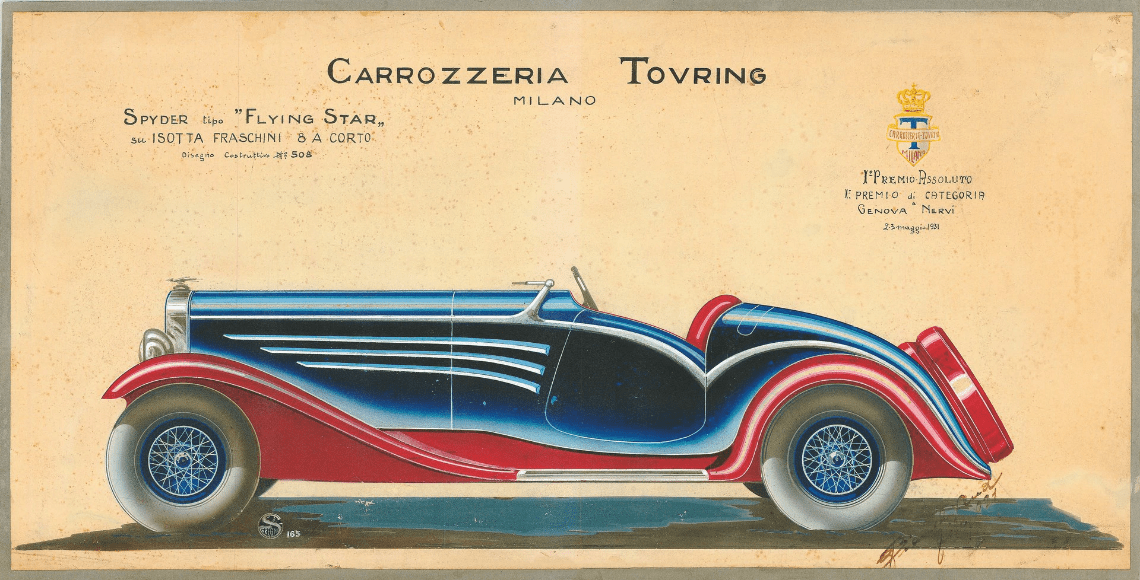
Felice Bianchi Anderloni and designer Giuseppe Seregni envisioned a showpiece that would claim the spotlight at Europe’s concours and reaffirm Italy’s creative supremacy. Its name — inspired by the car’s sweeping, comet-like form — captured the spirit instantly. Painted entirely in brilliant white, from the body to the wire wheels and even the steering wheel, the Flying Star glowed like nothing else on the show floor. In an era dominated by deep blacks and sober maroons, this monochrome apparition looked almost celestial.
The design pivoted around a dramatic chrome spear beginning at the radiator and slicing down the flanks in a bold “V” before arcing upward over the rear wheels. It visually stretched the car, giving it a sense of streamlining long before wind tunnels became standard. Three sculpted vents along the hood echoed the trailing flare of a meteor, accentuating the body’s downward sweep. And the windscreen — a single-piece, low-slung, raked panel — was pure avant-garde, more speedboat than roadster.
With its long hood, clean tail, and rear “mother-in-law” rumble seat, the Flying Star radiated motion even at rest, as if it might drift off the show stand and glide across the night sky.
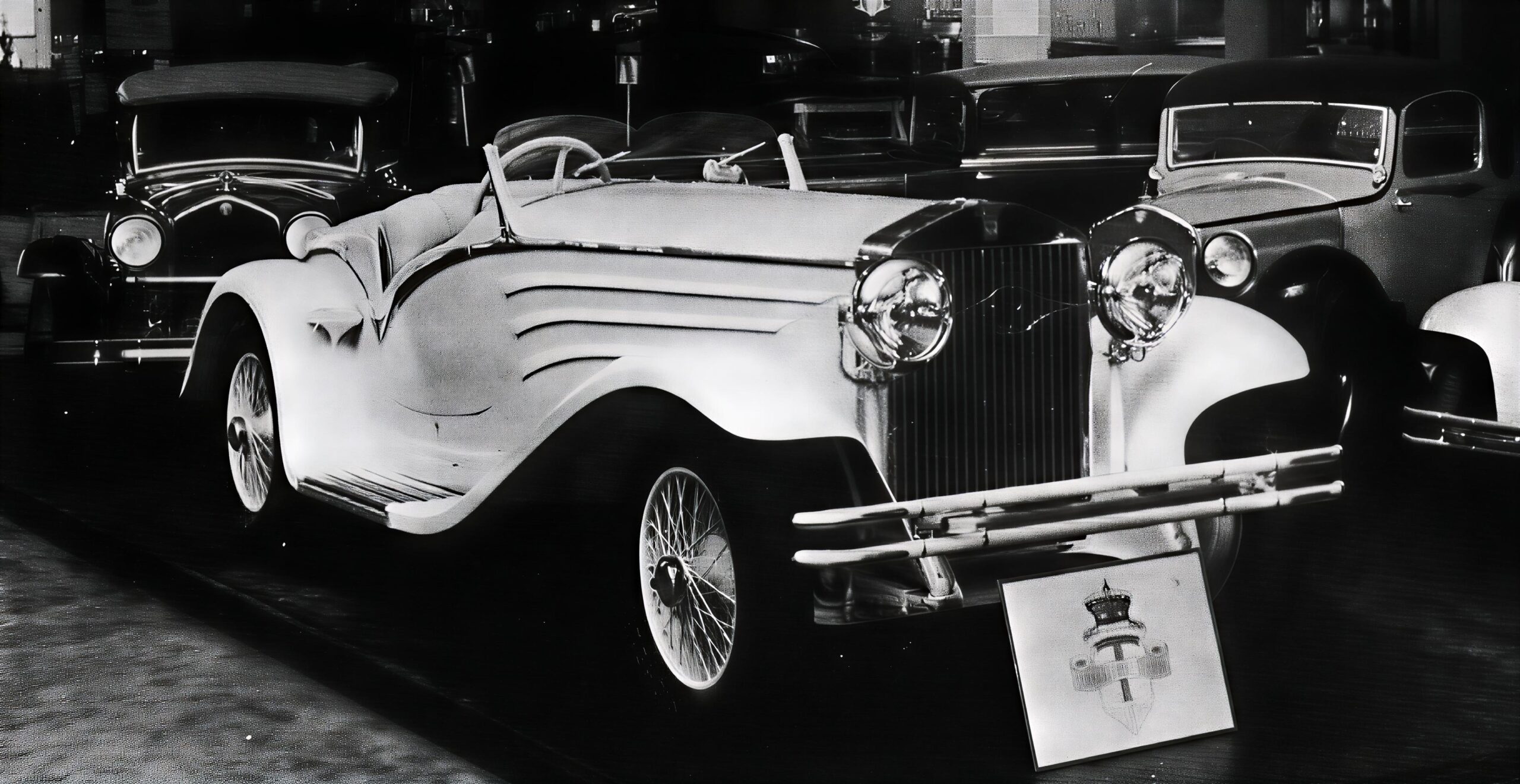
Its debut at the 1931 Milan Motor Show was nothing short of a sensation. Touring didn’t present a production-ready car; they unveiled an idea — proof that technical finesse and artistic boldness could coexist even in austere times. The car then swept the concours circuit with ease. It won First Prize at the 1931 Concorso d’Eleganza di Genova-Nervi, and later that year, at Villa d’Este, it claimed the prestigious Targa d’Oro, shimmering on the shores of Lake Como like it had descended directly from the heavens.
The Flying Star’s influence rippled across Europe almost immediately. Coachbuilders rushed to reinterpret its sweeping chrome arcs and lighter color palettes. Alfa Romeo, long linked with Touring, soon adopted similar curves and lowered windscreens on its own sporting models. And for Touring, the concept became the seed of a full lineage — a series of unique Flying Star designs built on prestigious chassis, each one a new interpretation of that original white comet.
What began as one extraordinary showpiece had evolved into a design language — and a legend.
Isotta Fraschini 8B Flying Star (1931)
The legend begins with the 1931 Isotta Fraschini Tipo 8B Flying Star — the very car unveiled in Milan and later crowned at Villa d’Este. Built on Isotta’s regal Tipo 8 chassis, often likened to Italy’s answer to Rolls-Royce, it was a fitting foundation for Touring’s most ambitious creation. Commissioned for Signorina Alma Matteucci, a young Milanese socialite married into aristocracy, the Flying Star was crafted expressly to command attention on Europe’s concours lawns. Its straight-eight, 7.3-liter engine provided the grandeur, but the coachwork is what left onlookers breathless.
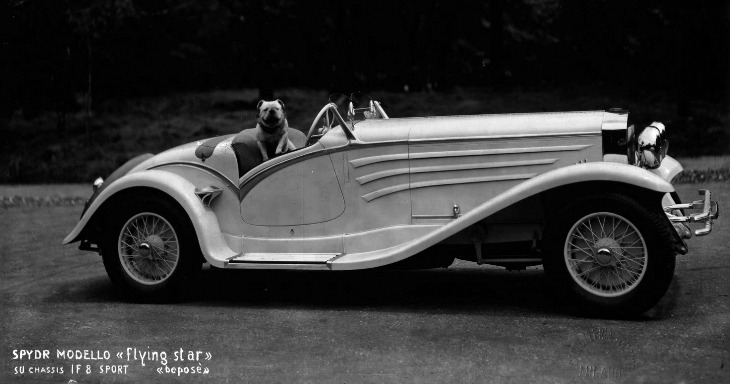
Up close, spectators would have noticed how meticulously Touring sculpted every detail. The trio of polished vents on the long hood formed a signature motif — functional, yes, but also a stylized flourish suggesting the trailing arcs of a comet. The sweeping chrome spear along the side gave the car its dramatic “V” profile, tapering gracefully toward the rear. There, the body curled into a refined tail treatment: pontoon fenders flowing over twin rear-mounted spare wheels, each tucked neatly beneath a sculptural lip. Without the tall running boards typical of the era, the Isotta sat low and sleek, looking almost aerodynamic beside its more upright contemporaries.
But what truly set the Flying Star apart was its all-white livery. Not just the body, but the chassis, wheels, and even the steering wheel were finished in creamy ivory. In 1931, when luxury cars wore dark, conservative colors, this monochrome palette was radical. The interior continued the theme with white leather and a nickel-plated dashboard that gleamed under the Italian sun. When Alma Matteucci posed beside her gleaming creation at Villa d’Este, the ensemble was irresistible. Judges awarded the Isotta Flying Star the Targa d’Oro — a decisive Best of Show and one of the earliest triumphs of a pure show car at the event.
What happened to the original car after its triumphant season remains hazy. Like many bespoke creations of its time, it likely faded into private ownership. Rumors — almost certainly apocryphal — suggest that Benito Mussolini was seen driving it with his mistress, a story that survives mostly because it suits the car’s mythic aura. What is certain is that the original Flying Star did not survive the upheavals of World War II. By the mid-century, it had vanished.
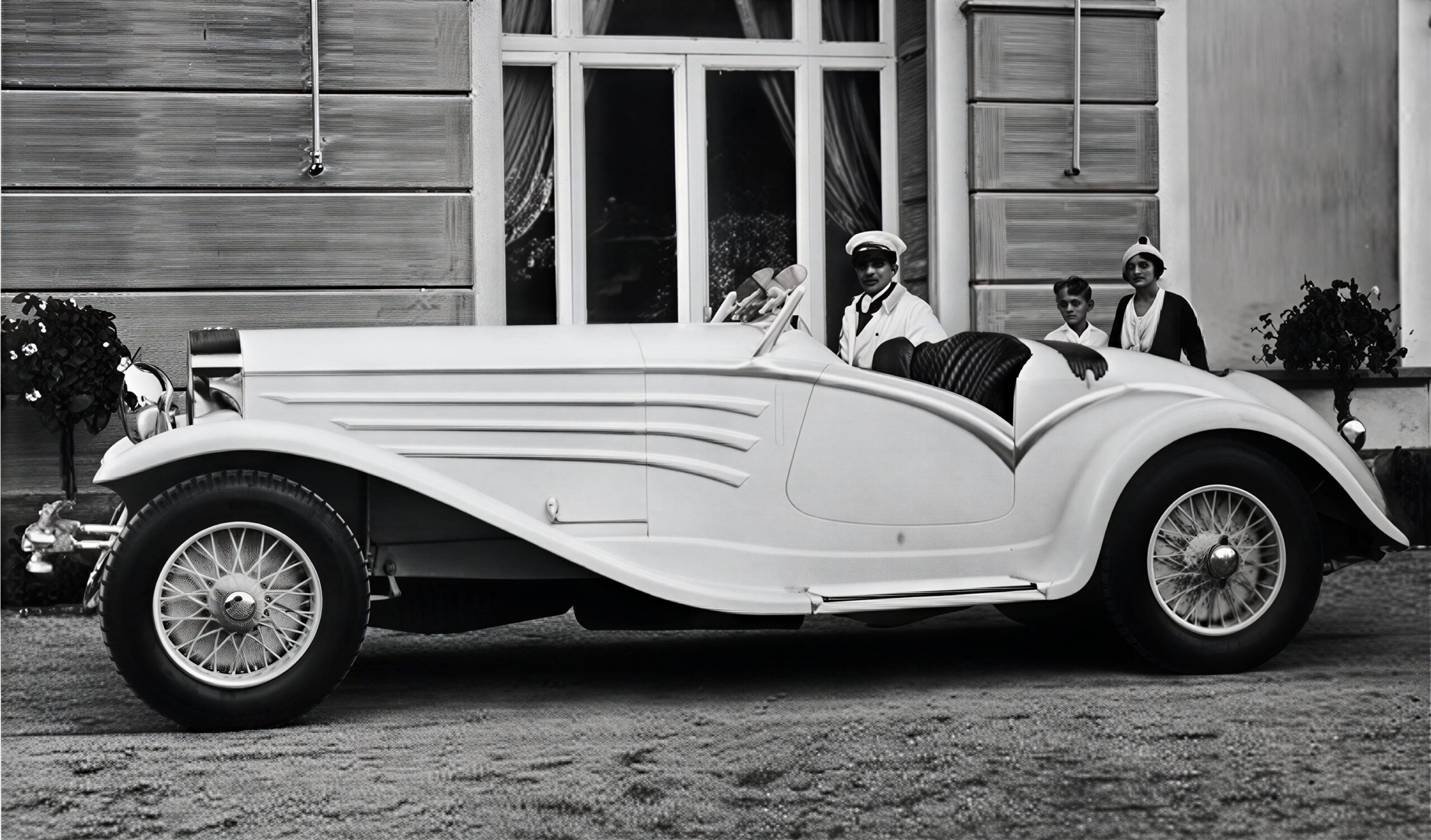
Yet the design’s allure was too powerful to leave behind. In the early 2000s, a painstaking line-for-line reconstruction was created in Australia on a correct Isotta Fraschini 8A chassis. Painted in the same pearl white, the recreation went on to win numerous concours awards — proof that Touring’s 1931 masterpiece still holds the power to captivate.
The original may be lost, but the Flying Star’s spirit endures: in period photographs, in archival drawings, and in that faithful modern recreation which allows us to witness, once again, the comet-like beauty of Touring’s most poetic creation.
Alfa Romeo 6C 1750 GS Flying Star (1931)
Riding the momentum of the Isotta’s triumph, Carrozzeria Touring quickly adapted the Flying Star formula to a very different kind of machine: the lithe, razor-sharp Alfa Romeo 6C 1750 Gran Sport. Where the Isotta was grand opera, the Alfa was chamber music — compact, athletic, and no less breathtaking.
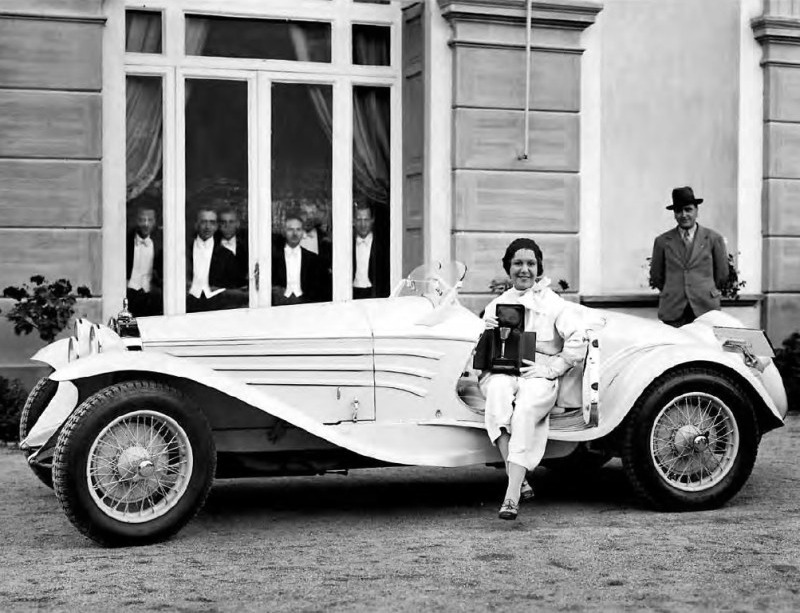
Commissioned by Josette Pozzo, a glamorous Milanese model and heiress with a well-established eye for Touring’s finest work, the new Flying Star made its debut at the 1931 Concorso d’Eleganza Villa d’Este. Pozzo herself unveiled the car in September, dressed as impeccably as the gleaming white Alfa beside her. It was a pairing judges could hardly ignore. The result was inevitable: the 6C Flying Star captured the Coppa d’Oro, making it the second Flying Star within a year to take Villa d’Este’s highest honor.
Design-wise, Touring distilled the Flying Star language into a more sporting silhouette. The single-piece, sharply raked windscreen was pure competition influence — a nod to the 6C Mille Miglia racers — giving the Spider a purposeful, aerodynamic stance. The signature chrome spear and “V” motif reappeared, flowing down the Alfa’s shorter flanks with even greater visual tension.
🔗 Read more: The History of Carrozzeria Touring: From Superleggera Origins to Modern Revival
But the Alfa introduced a bold innovation: the intertwined fenders, or intrecciati. Instead of traditional running boards, the front and rear wings overlapped in a sculptural, criss-cross pattern at the doors. This lowered the car’s profile, created a sense of motion in the static form, and became a hallmark of later Flying Stars. The layered curves looked almost celestial — the visual echo of orbiting paths or a star’s trailing wake.
Like its big Isotta sibling, the Alfa was bathed in ivory white, from body to wheels to interior. The result was a jewel-like racer dressed for an evening gala: light, elegant, and impossibly modern for 1931. Beneath its beauty, the supercharged 1750 Gran Sport engine remained fully capable — a proven winner on Italy’s toughest roads. It simply happened that this particular chassis was destined for concours lawns rather than race stages.
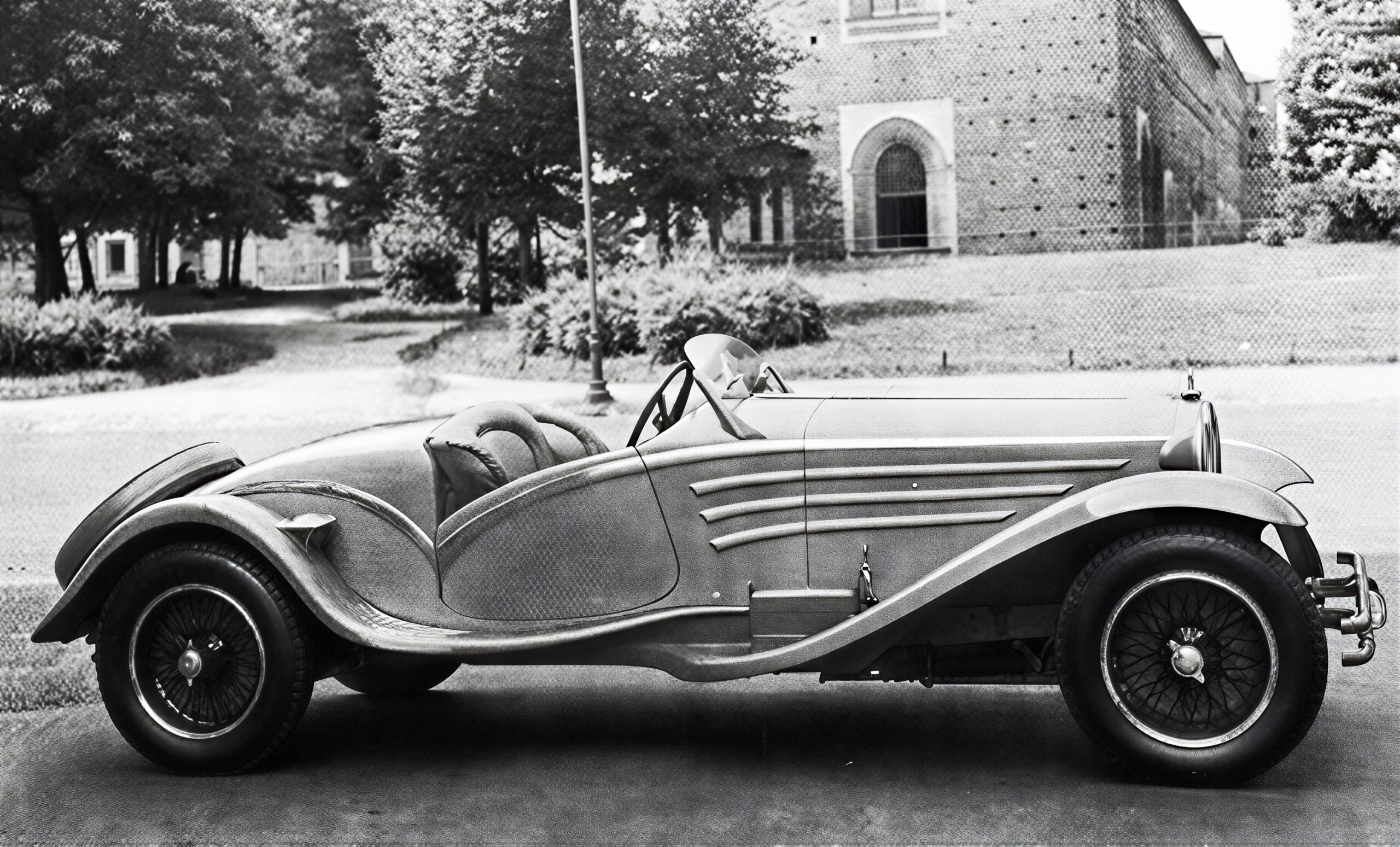
Remarkably, the 6C 1750 Flying Star survives. After passing quietly through decades of private ownership, it reemerged on the concours circuit in the 21st century — notably winning Best of Show at the 2014 Hampton Court Palace Concours of Elegance. More than eighty years after its debut, it proved the Flying Star’s appeal had not dimmed in the slightest. Restored to its original Villa d’Este specification, with Pozzo’s monogram still gracing the door, the car feels like a portal into the elegance of 1930s motoring.
Touring also created a second Alfa-based Flying Star shortly afterward, built on the longer 6C 1750 Gran Turismo Compressore (GTC) chassis for politician Francesco Giunta. Finished in the same creamy white and featuring the familiar comet-like trim, this longer-wheelbase version offered a touch more cabin space and emphasized Touring’s ability to adapt the motif to new proportions. Its later history, sadly, is fragmentary — like so many bespoke cars of its era, it likely did not survive the war.
Together, the two Alfa Romeo Flying Stars — one short, one long — demonstrated just how flexibly Touring could translate its vision. They proved the Flying Star was not merely a one-off flourish, but a fully realized design language, capable of turning any fine chassis into a shooting star on wheels.
Fiat 522 C Flying Star (1932)
Touring’s Flying Star wasn’t meant to live only on aristocratic chassis. After captivating Europe with the Isotta and Alfa versions, the coachbuilder turned its attention to a more approachable platform: the Fiat 522 C. Fiat’s six-cylinder 522 was an honest upper-middle-class car — respectable but hardly glamorous. Yet in Touring’s hands, even this modest Fiat became a miniature star.
The Fiat 522 C Flying Star debuted in 1932 at a Milanese concours held in Piazza Santorre di Santarosa, just a short stroll from Touring’s own workshop. It felt almost like a neighborhood flourish — Touring stepping outside to show the locals how even a humble Fiat could be transformed into something enchanting.
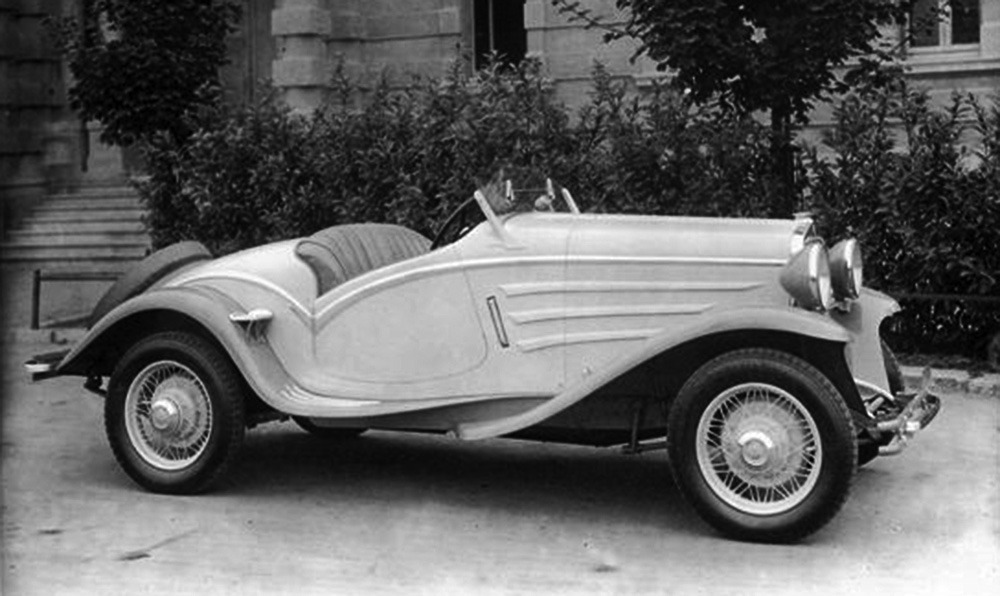
Despite its more accessible origins, the Fiat embraced all the familiar Flying Star cues: a two-seat open roadster layout, a pale ivory finish, and the flowing lines that defined the series. Its upright, traditional radiator grille should have made the car look conservative, but Touring turned that verticality into an advantage. The higher bonnet line allowed the long chrome spear to stretch along the flank with renewed drama, echoing the grandeur of the Isotta version. The characteristic “V” shape at the doors remained intact, giving the Fiat a visual length it didn’t physically possess.
Most striking were the interwoven fenders introduced on the Alfa — the overlapping front and rear wing sections that eliminated the running board and modernized the profile. On the 522, this feature looked especially daring. What had been a sensible family Fiat suddenly took on an avant-garde nautical grace, surprising passersby who expected far tamer sheet metal from Turin’s mass-market giant.
Curiously, the Fiat Flying Star also reconnected with the spirit of the original Isotta. Period observers remarked that its more classical front proportions brought back some of that stately composure, even as the new fender treatment added a contemporary twist. The hood carried the recognizable curved louver pattern, a visual flourish borrowed from Josette Pozzo’s Alfa — not strictly needed for cooling the smaller Fiat engine, but perfect for maintaining the Flying Star’s stylistic continuity.
Dressed entirely in ivory white — likely with a matching cabin — the Fiat 522 C Flying Star must have glowed against Milan’s cobblestones. It wasn’t chasing international awards, but it didn’t need to. It proved something crucial: Touring’s artistry wasn’t limited to the wealthy few. Even a Fiat could become a piece of automotive couture when shaped by the right hands.
The car’s later life, however, is lost to history. No known example survives, and like many one-off Fiats, it likely succumbed to wartime metal drives or simple neglect. Still, its photographs and period articles endure, preserving the moment when Touring showed that great design needn’t be the exclusive domain of grandees and magnates.
The 522 Flying Star remains an elegant reminder of Touring’s philosophy: beauty can belong to anyone, if given the chance.
Alfa Romeo 8C 2300 “Flying Star” Spider (1932–1934)
By 1932, Touring’s Flying Star aesthetic had evolved into a recognizable design language — and it soon found its way onto one of the most formidable sports car chassis ever built: the Alfa Romeo 8C 2300. The 8C was no boulevardier. It was an eight-cylinder, dual-supercharged weapon that dominated European motorsport from the Mille Miglia to Le Mans. Touring bodied many 8C 2300s for both road and track, and while none were officially labeled “Flying Star,” at least one Spider carried enough of the signature cues that historians now regard it as part of the family.
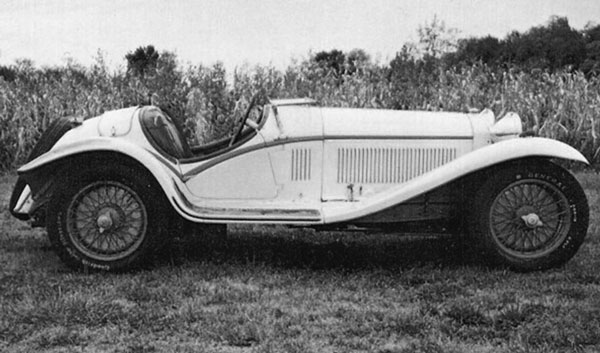
This particular 8C 2300 “Flying Star” Spider wore a bespoke Touring body with the hallmark curved chrome side molding and a dramatically raked, low windscreen — unmistakable Flying Star signatures. Because the 8C was a competition machine first and foremost, its trim was more restrained, but the essence was undeniable. Period photographs from 1934 show a short-wheelbase corto Spider with a sweeping side line and an aggressively angled screen, looking every bit a streamlined sibling to the early Flying Star road cars.
Italian historians point out that several 1932 racing Spiders by Touring displayed these same cues: the flowing chrome accent along the flanks, the adjustable low windscreen for aerodynamic gain, and the smoothed “clamshell” spare-wheel cover at the rear. Even in pure competition trim, the Flying Star’s DNA quietly threaded its way through Alfa’s most victorious machines.
And victorious they were. Touring-bodied 8C 2300s collected an extraordinary string of wins:
• multiple Mille Miglia victories
• four consecutive wins at the 24 Hours of Le Mans (1931–1934)
• triumphs at the Targa Florio
• and the 1932 Monaco Grand Prix
Behind the wheel were legends: Tazio Nuvolari, Borzacchini, Chinetti, Sommer — giants who pushed the 8C to its limits. Touring’s lightweight bodies and subtle aerodynamic shaping played a meaningful role in these successes. One could argue that the Flying Star ethos — beauty fused with purpose — reached its purest form in the 8C: a car as successful in competition as it was elegant in silhouette.
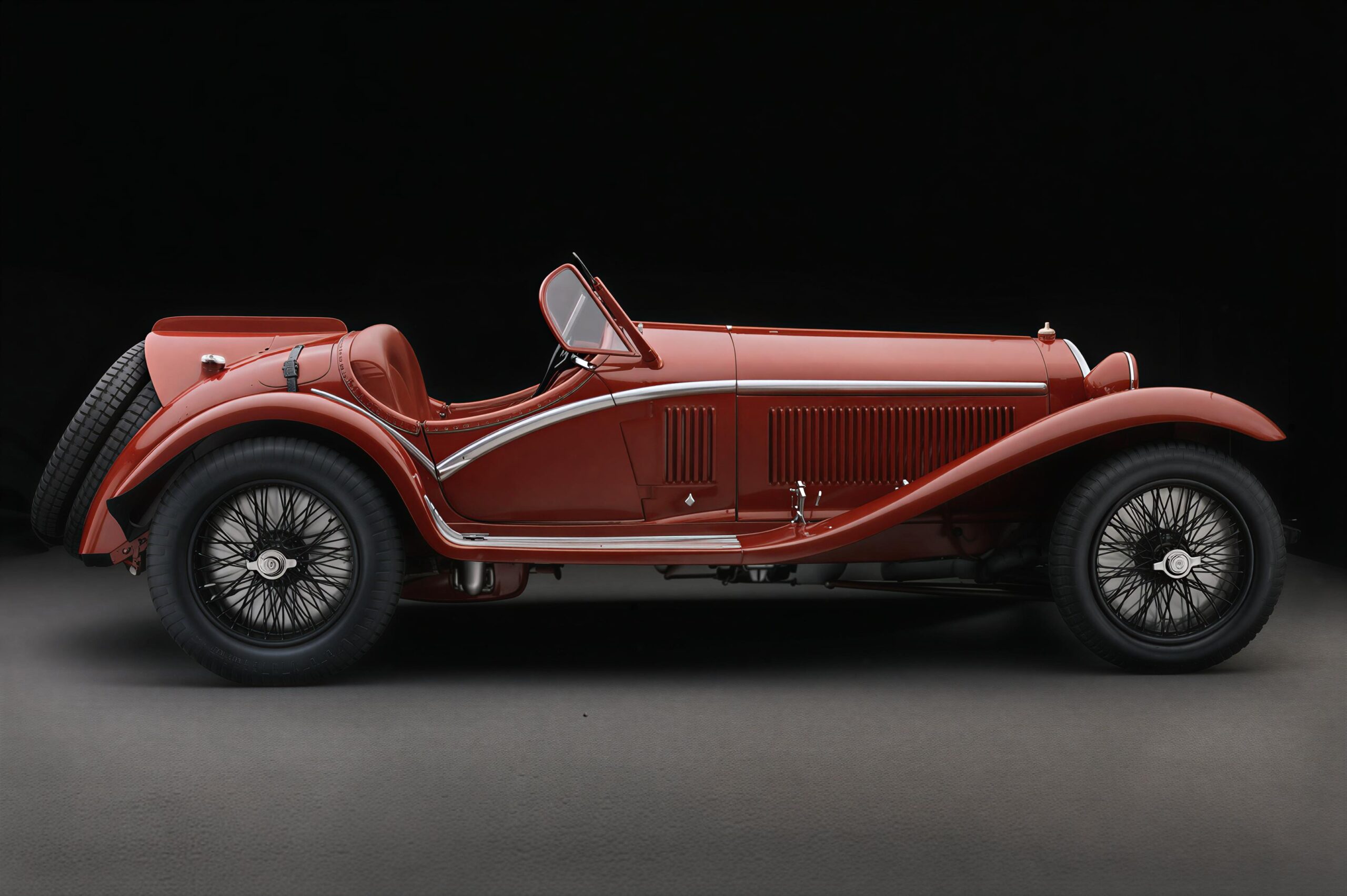
Touring also bodied several road-going 8C 2300s, and these often continued the Flying Star lineage more explicitly. A corto Coupé-Spider by Touring took both the Coppa d’Oro and the Gran Premio d’Eleganza at the 1932 Villa d’Este Concours, proving that even in the shadow of racing glory, style remained paramount. These road Spiders, some dual-cowl and exceptionally refined, were capable of nearly 100 mph — astonishing performance for a fully equipped grand tourer of the day.
Touring would later explore larger engines on the platform — the 2.6-liter and eventually the 2.9-liter 8C 2900 — but those belong to another chapter. What matters here is that the Flying Star idea proved adaptable: from showpieces to competition thoroughbreds.
Unlike the one-off Isotta or Fiat Flying Stars, numerous Touring-bodied 8C 2300s survive. While no single chassis can be pointed to as “the” Flying Star 8C, its influence lives on in the restored racing Spiders that still thunder across historic grids. Whenever you spot an early 8C by Touring with that graceful curved chrome trace along its flank, you’re seeing a shimmering piece of the Flying Star’s legacy.
In the 8C 2300, Touring showed that its philosophy could thrive under pressure — that artistry and speed need not be opposites. Few cars in history have balanced those virtues as effortlessly.
Lancia Astura Coupé Flying Star (1938)
By the late 1930s, the golden age of bespoke coachbuilding was fading, overshadowed by the march toward standardized bodies and the darkening political horizon. Yet Touring had one last Flying Star left in its constellation — and it would be the most daring interpretation of the theme. In 1938, on the eve of war, the Milanese coachbuilder created a one-off Lancia Astura Flying Star Coupé, a closed-bodied grand tourer intended for that year’s Concorso d’Eleganza Villa d’Este.
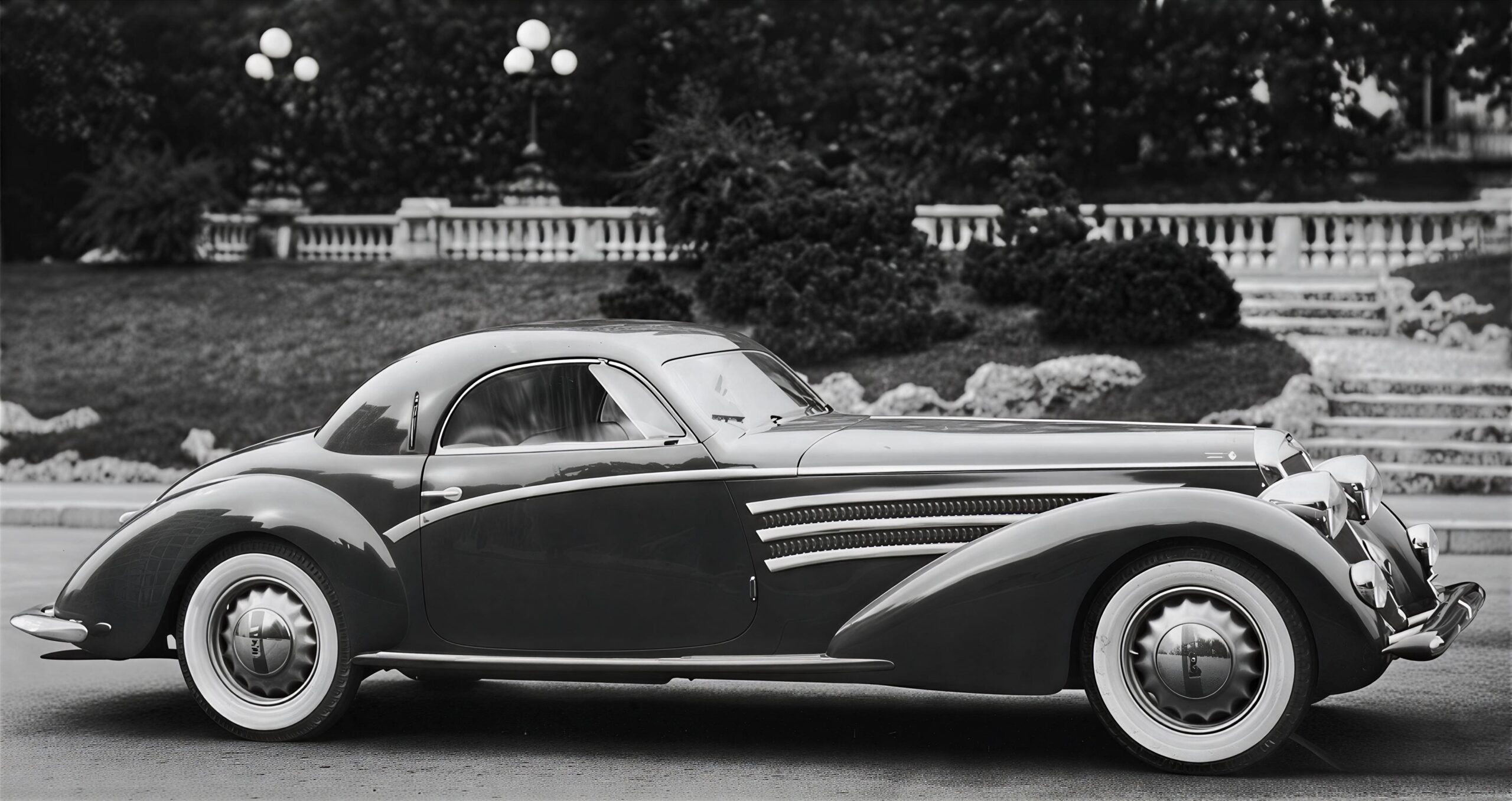
It was a bold departure. All previous Flying Stars had been open spiders; this would be a formal two-door coupé, stretched across Lancia’s elegant Astura 4th Series chassis — a V8-powered, aristocratic machine favored by Italy’s elite. Touring had often clothed the Astura in dignified saloons for statesmen; now they set out to blend sporting spirit with formal grandeur on a long-wheelbase platform.
That long wheelbase allowed an unusual interior layout: despite being a two-door, the Astura Flying Star Coupé seated up to six, with two front seats, a spacious rear compartment, and a pair of jump seats. It was both extravagant and practical — part performance dream, part limousine.
Visually, the coupé carried forward the Flying Star identity with remarkable grace. The full-length polished chrome spear ran arrow-straight from the prow, swept into the trademark “V” at the doors, then tapered toward the rear. The hood bore the familiar curved ventilation slats, three per side, echoing the comet-like flourish first seen on the earlier Flying Stars.
But the coupé introduced a new signature: a series of elegant curved slats on the C-pillars, sculpted into the rear quarter panels. Touring’s archives describe them as a deliberate evocation of a comet’s tail — the Flying Star motif woven directly into the roofline. On a closed car, this was a masterstroke, turning what might have been a heavy pillar into a dynamic, breathing surface.
In profile, the Astura Flying Star was astonishingly long and low for its time. The cabin sat rearward, exaggerating the hood’s length and giving the car a sleek, almost modern fastback presence. Subtle chrome edging, knock-off wire wheels, and light-colored paint (likely the Flying Star’s customary off-white) completed the effect. It looked like a grand touring coupé drawn with a sports car’s hand.
But its moment never came. The 1938 Villa d’Este Concours was canceled as Europe drifted toward war, denying the coupé the spotlight it so clearly deserved. Without an event to anchor its fame, the car slipped quietly into obscurity — stored, sold, or simply forgotten.
Today, the Astura Flying Star Coupé is a mystery. Only a few period photographs and fragments from Touring’s archives confirm its existence. No definitive chassis number has surfaced, and its fate after 1938 remains unknown. Occasionally, rumors stir — a long-lost Astura chassis with unusual coupé panels discovered in Italy, or whispers of a forgotten body in a private collection — but nothing has been authenticated.
And so, like its name suggests, the last Flying Star became a shooting star in the truest sense: a brief, brilliant streak across Touring’s pre-war legacy, then gone. If the Isotta captured the birth of the Flying Star idea, and the Alfa perfected it, the Lancia Astura Coupé embodied its final, most poetic flourish — the last glow before darkness fell over Europe.
Post-War Revival: Lamborghini 400 GT Flying Star II (1966)
The Flying Star story flickered back to life decades after its prewar triumphs, in a world utterly changed — and just as Carrozzeria Touring was nearing its final bow. Though Touring had crafted masterpieces in the years after World War II — from Ferrari barchettas to the sublime Alfa 8C 2900 — by 1966 the coachbuilder was struggling. Monocoque construction was rendering traditional coachwork obsolete. And so, with one last surge of creativity, Touring revived its most poetic name.
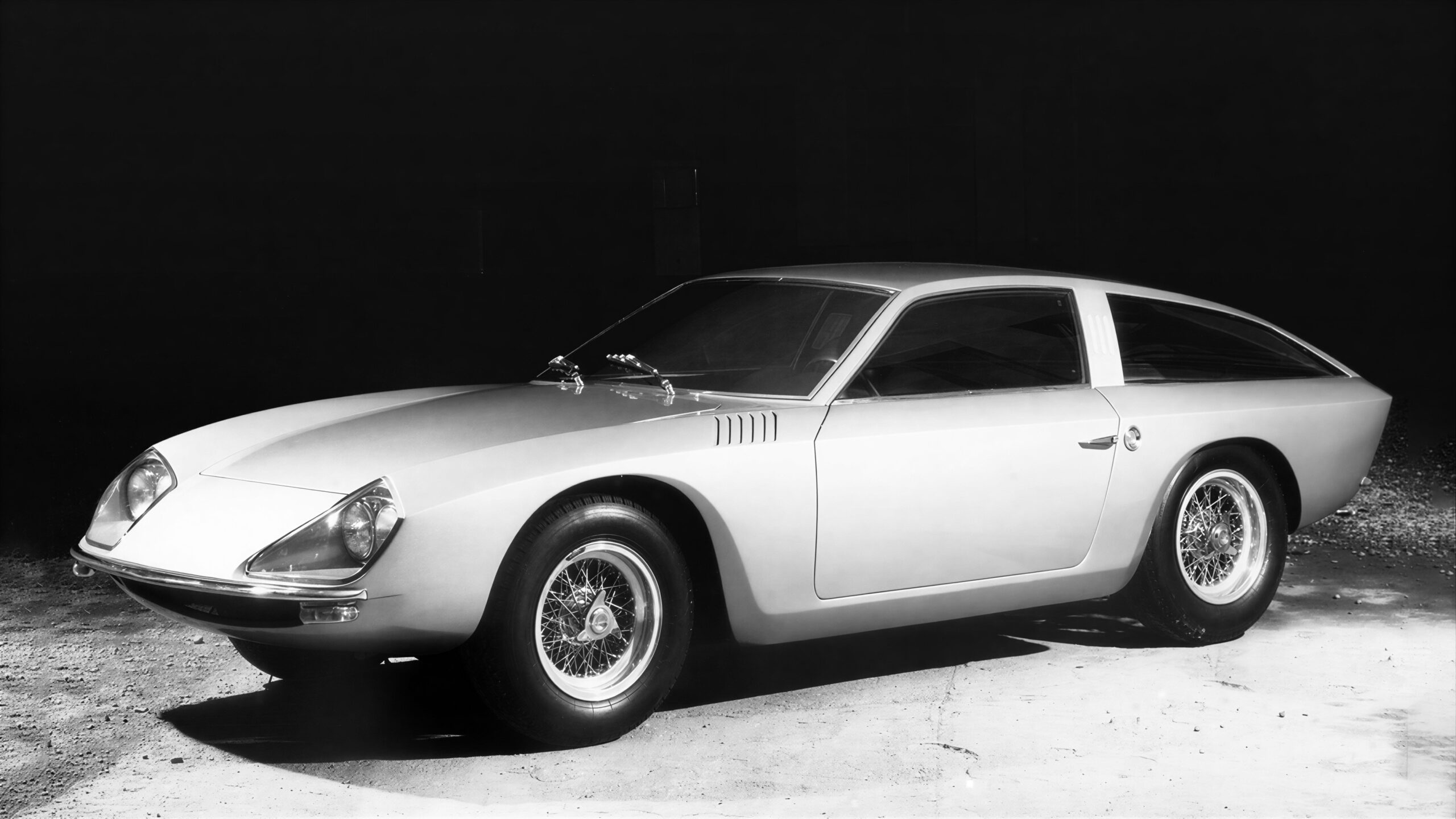
The result was the Lamborghini 400 GT Flying Star II, unveiled at the 1966 Turin Auto Show — a one-off, ultra-modern reinterpretation of the Flying Star theme, and the final car built under the original Touring banner.
Based on a shortened Lamborghini 400 GT chassis, the Flying Star II was a bold attempt to reinvent the shooting brake concept for the jet age: a two-door, two-seat “sport wagon” with a roofline honed to a razor’s edge. Designed under Carlo Felice Bianchi Anderloni, son of Touring’s founder, it wore an aluminum body built using the firm’s hallmark Superleggera construction. Beneath the bonnet lay Lamborghini’s 4.0-liter V12, producing 320 horsepower and paired with a five-speed gearbox and fully independent suspension — credentials worthy of any top-tier Italian GT.
🔗 Read more: From Classic to Modern: 15 Shooting Brakes That Deserve Your Attention
But it was the design that made the Flying Star II a true spiritual successor. Gone were the flowing Art Deco curves of the 1930s; in their place were sharp creases, planar surfaces, and a stance that looked ready for a magazine cover. And yet, subtle echoes of the original Flying Stars remained:
• a character line sweeping along the body and rising over the rear wheels,
• a crisp, jewel-like front end with twin lamps under plexiglass,
• and, most dramatically, a sloping tail with a vast glass rear section, its transparency evoking the trail of a shooting star rendered in metal and light.
Inside, the car was an intimate luxury capsule for two, complete with tailored luggage space. Touring even advertised it as “the ultimate machine for two people to travel fast in style and with luggage” — a delightful blend of romance and practicality.
Tragically, the Flying Star II was also a farewell. Soon after its debut, Carrozzeria Touring filed for bankruptcy, ending an era. That makes the Lamborghini Flying Star II especially poignant: the last car to wear the original Touring Superleggera badge for forty years.
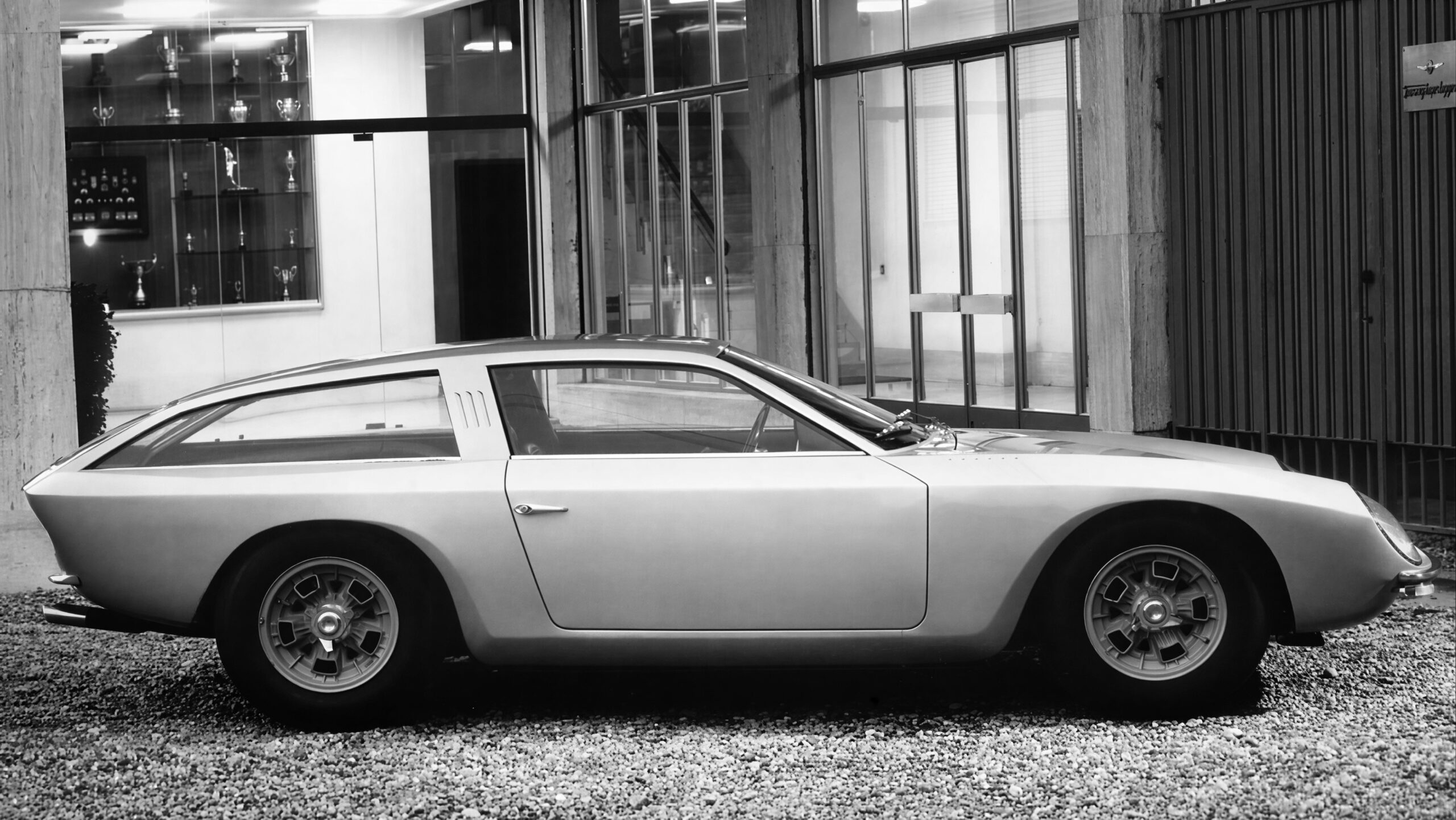
Fortunately, the prototype survived. After passing through private hands, it was restored and reemerged at concours events in the 2000s, just as Touring’s name itself was revived. Though never destined for production, the Flying Star II exerted a quiet influence — not least on Lamborghini, whose later Espada and various modern shooting brake concepts seem to carry a whispered nod to this singular creation.
Today, the Lamborghini 400 GT Flying Star II is celebrated as a daring bridge between eras. Compare it to the 1931 Isotta Flying Star and they share no obvious lines — yet both radiate the same unmistakable aura of Italian coachbuilt glamour. Touring’s choice to revive the name was a statement: the Flying Star spirit, defined by innovation, beauty, and a touch of spectacle, could shine in any decade.
Bentley Continental Flying Star (2010)
After decades of silence, the Touring name returned in 2006 under new stewardship, sparking a renaissance of true Italian coachbuilding. And to announce its comeback on the world stage, the revived Touring Superleggera reached back into its own mythology and dusted off one of its most evocative names: Flying Star. The result was the Bentley Continental Flying Star, unveiled at the 2010 Geneva Motor Show—a modern shooting brake infused with British muscle and Milanese elegance.
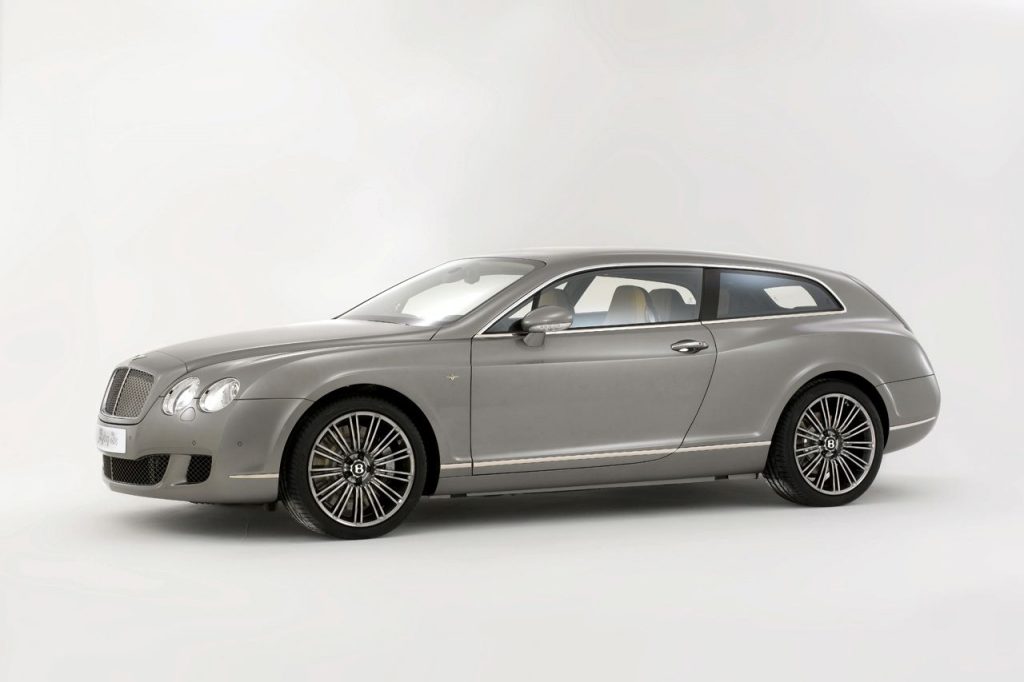
Based on the Bentley Continental GTC, the Flying Star reimagined the convertible grand tourer as a two-door shooting brake of uncommon presence. Touring’s craftsmen re-engineered the entire rear structure, extending the roofline, reshaping the tail, and creating a long-roof silhouette that was both practical and unmistakably glamorous. Though thoroughly contemporary, the car’s name openly—and proudly—linked it to the lineage that began in 1931.
🔗 Read more: The Superleggera System by Carrozzeria Touring
Bentley supported the project, and Touring produced just 19 examples, each built to order. Like the bespoke commissions of the prewar era, no two cars were identical. Clients collaborated with designers on colors, trims, and materials—reviving the intimate, couture-like relationship between coachbuilder and patron that once defined luxury motoring.
While the comet-like chrome spear of the 1930s Flying Stars isn’t literally recreated here, the flow of the shoulder line into the rear glass hints at a modern interpretation of that shooting star motif. Under the hood, buyers could choose the Bentley W12 or later V8, ensuring that the Flying Star was not merely beautiful but explosively fast. Touring pitched the car as “roomy enough to join a shooting party or a golf tournament with elegance and style”—a charmingly British image delivered with unmistakable Italian flair.
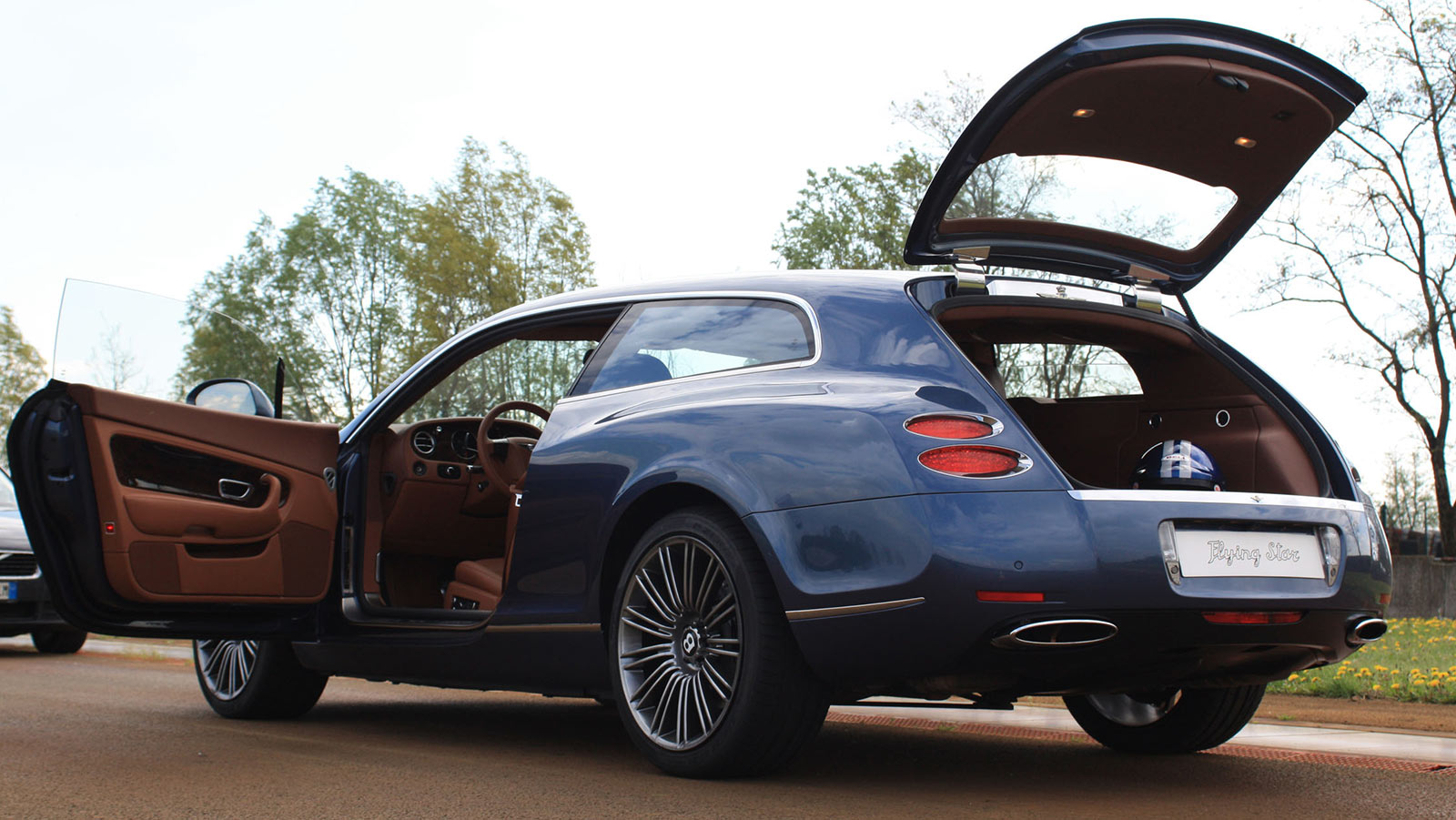
Hand-shaped aluminum panels, carbon-fiber reinforcement, and exquisitely trimmed interiors made each Flying Star a showcase of modern craftsmanship rooted in traditional technique. It carried the spirit of its ancestors not through retro styling, but through its philosophy: take a great chassis, rethink it boldly, and produce something entirely unique.
The Continental Flying Star earned admiration at Geneva and quickly became a sought-after collectible thanks to its rarity and unmistakable glamour. More importantly, it reestablished Touring Superleggera as a contemporary force in bespoke automotive design, setting the stage for future one-offs and limited series from the legendary Milanese atelier.
In an elegant symmetry, the Bentley Flying Star closed an eighty-year loop: from the Isotta Fraschini Flying Star of 1931 to a modern Bentley in 2010, the idea remained the same—transform excellence into something extraordinary through the art of design.
Influence and Echoes of the Flying Star
The Flying Star’s debut in the early 1930s sent a ripple through the Italian coachbuilding world. Touring’s dazzling white creations — bold, modern, and unmistakably theatrical — captured so much attention at Europe’s concours that other carrozzerie soon offered their own interpretations of the emerging aesthetic. Admiration, rivalry, and the wish to stay current all played a part, and a few remarkable “Flying Star–inspired” designs appeared in the mid-decade.
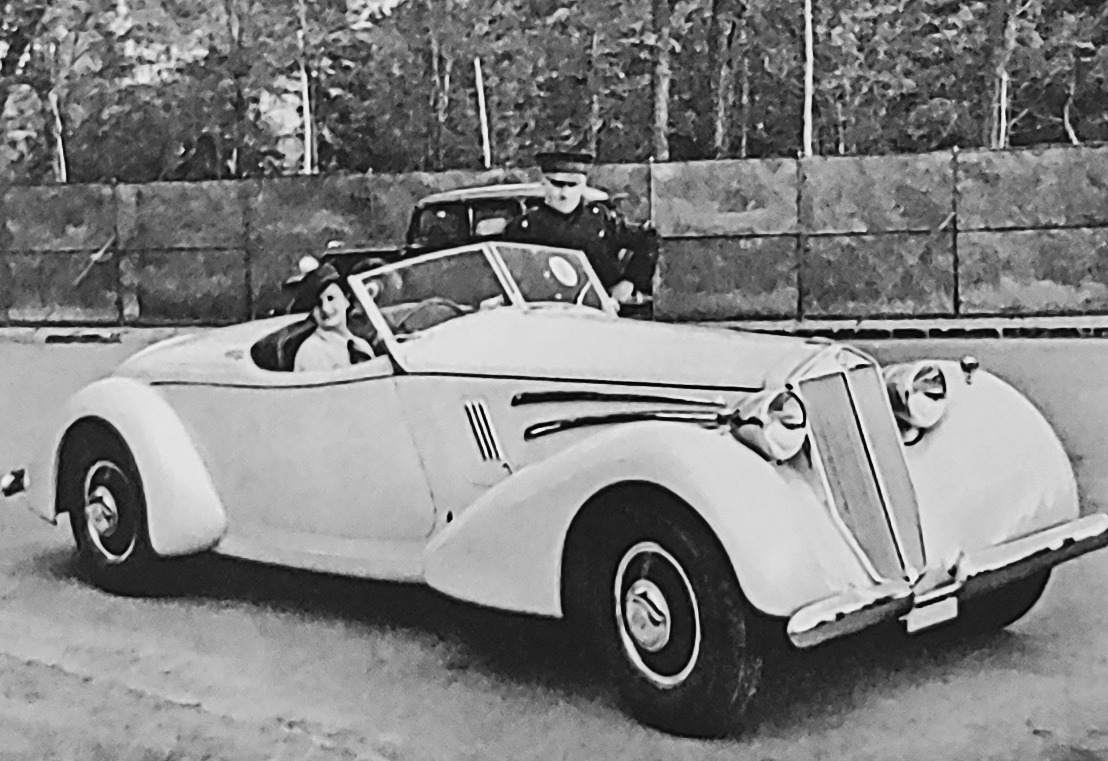
One notable example came from Pinin Farina. At the 1935 Concorso d’Eleganza in Turin, the firm presented a striking Lancia Astura roadster finished in white with a sweeping chrome flourish along the side — a stylistic echo of Touring’s comet-like motif. It wasn’t a copy, but a parallel expression of the same design language that Touring had popularized. The car demonstrated how influential the Flying Star had become: even Italy’s premier ateliers were exploring brighter colors, flowing lines, and bolder trim to match the spirit of the moment. Pinin Farina’s roadster was a one-off showpiece, and it helped cement the mid-’30s shift toward more expressive, glamorous show-car design.
🔗 Read more: Carrozzeria Boneschi: The History
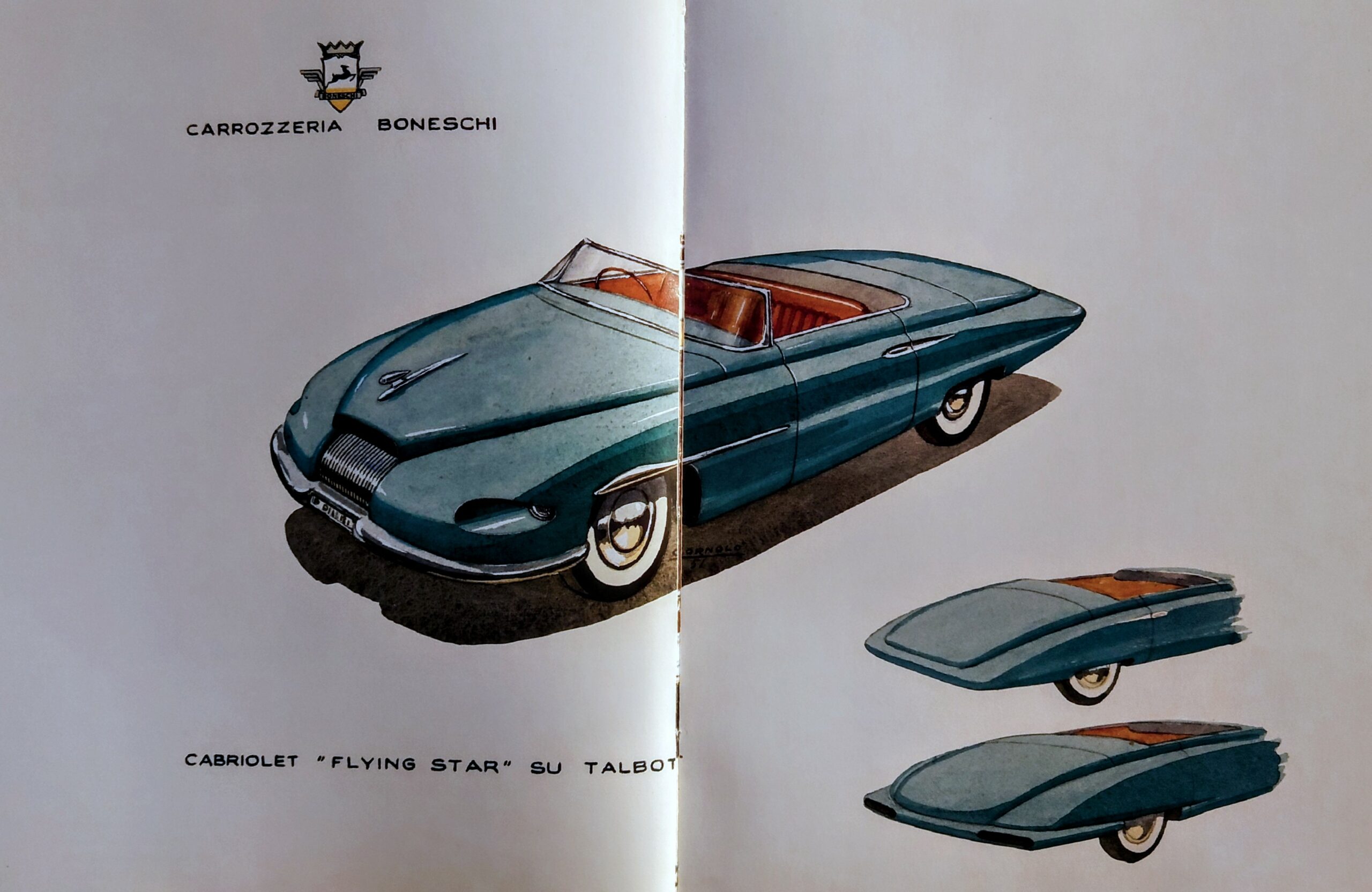
The Flying Star name reappeared again in 1951, when Carrozzeria Boneschi proposed a modern cabriolet design for a Talbot chassis called simply “Flying Star.” Though bearing no visual resemblance to the 1930s originals, the concept’s use of the name revealed how enduring Touring’s creation had become. The Boneschi proposal remained at sketch or model stage, but its very branding spoke to the legacy the Flying Star had already attained.
Beyond these contemporary echoes, the Flying Star left a broader, lasting mark on automotive culture. Touring demonstrated that a coachbuilder could craft a one-off show car purely as a statement, using drama and innovation to elevate its brand. This idea — a concept car as a beacon of design direction — would flourish decades later with GM’s Motorama dream cars and the Italian concept boom of the 1950s and ’60s.
Stylistically, the Flying Star encouraged designers to explore continuous beltlines, lighter color palettes, and the fusion of sportiness with elegance. Its influence resurfaced again in the 21st century, when Touring revived the name for the Bentley Continental Flying Star, proving that the allure of a long-roof grand tourer with coachbuilt flair still resonates.
From 1931 to today, the Flying Star represents more than a family of cars; it stands as a symbol of a golden age when automobiles were both engineering achievements and works of art. Each Flying Star told a story — of daring design, discerning patrons, and an Italy determined to celebrate beauty even in turbulent times.
Like the celestial phenomenon that inspired its name, the Flying Star shone brightly, briefly, and brilliantly. Its memory continues to illuminate the imagination of those who follow its trail.

ABOUT THE AUTHOR
Andreas Scheidl
Italian classic car enthusiast with German roots. Renowned as a respected figure in the classic car community, he serves as a jury member at various international concours d'elegance, including the Classic Gala Schwetzingen and Mantova. As a content creator, Andreas passionately shares his profound knowledge and appreciation for vintage automobiles. His heart beats for cars designed by Giovanni Michelotti, showcasing his discerning taste and dedication to preserving the timeless elegance of automotive history.
More stories by Andreas Scheidl ↗CONTINUE READING
Posts You Might Like
Reinterpreting the Past: When Coachbuilders revisited it’s Icons
When iconic coachbuilt cars are rebade through time, intent matters more than nostalgia. From experimental originals to modern reinterpretations, this article examines how legends are reimagined—and why some ideas refuse to stay…
Read story
Neither Coupé nor Spider: Italy and the Targa Roof
A deep dive into Italy’s decades-long exploration of the targa roof—from early post-war experiments to Ferrari and Lamborghini icons—revealing how Italian designers created a third way between coupé and spider.
Read story
Italian Vision of the MPV: The Monovolume Concept
Long before MPVs filled suburban driveways, Italian designers were shaping the monovolume with prototypes that ranged from pragmatic to outright outrageous. Their work rewrote how space, style, and function could fit under…
Read story
Italian Coachbuilt City Car Concepts: From Microcars to Urban EVs
How did Italy’s famed coachbuilders go from designing Ferraris to dreaming up tiny electric runabouts? From the quirky Tsé-Tsé to Pininfarina’s visionary Nido, discover how city cars became a proving ground for…
Read story
THE CONVERSATION
Comments 0
Share a memory, a period photograph or a documented detail about this story.