
The Fiat 850 That Thought It Was a Supercar: The Grand Prix
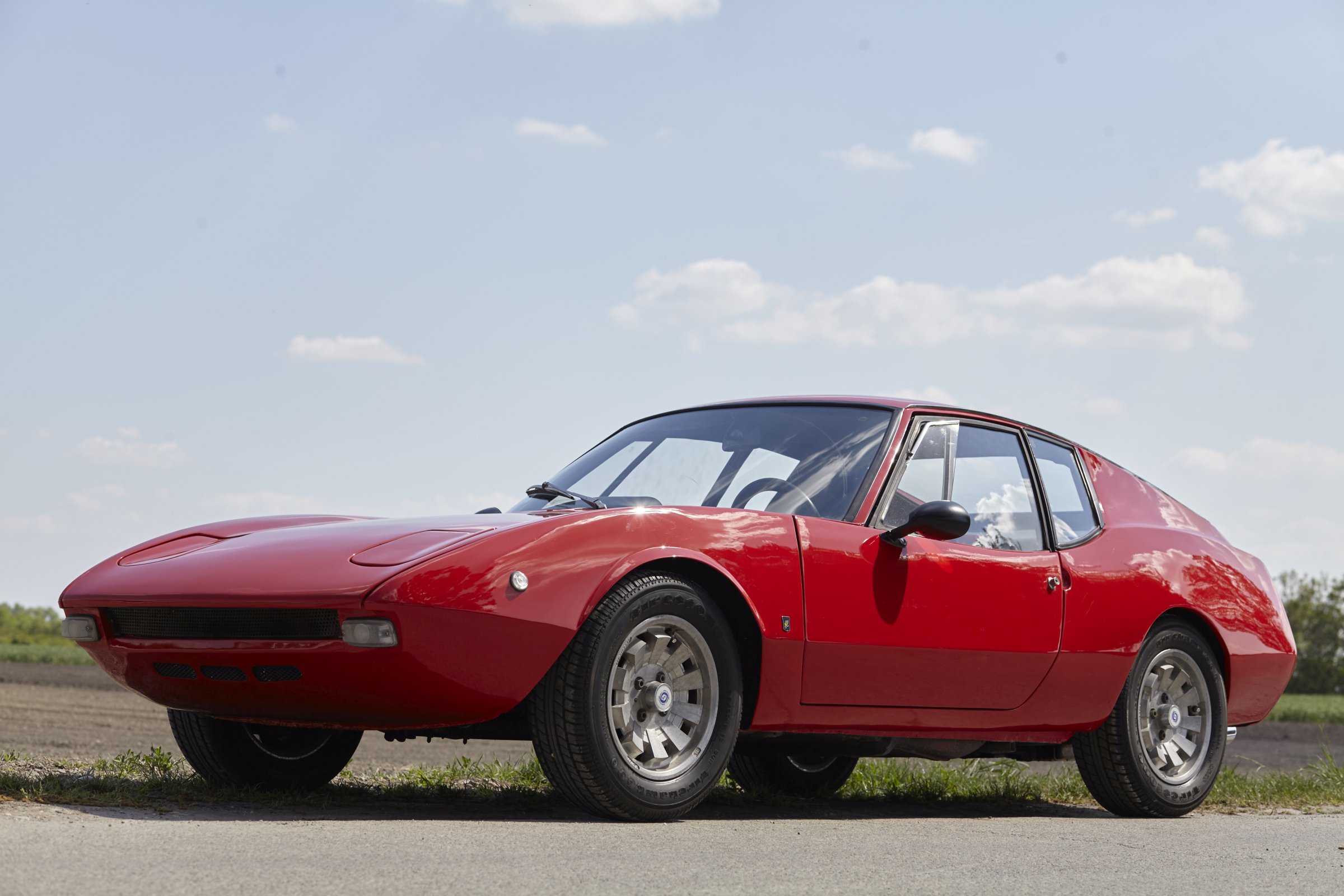
Long before it stole attention at Geneva, the Francis Lombardi Fiat 850 Grand Prix began as an unlikely idea: take the simplicity of a Fiat 850 and give it the silhouette of a true Italian exotic. Shaped by a war-hero-turned-coachbuilder, inspired by a daring Fiat design study, and refined in a small workshop in Vercelli, the Grand Prix became one of Italy’s most charming mini-GTs. Its story starts with the man behind the dream.
The Vision of an Italian Maverick
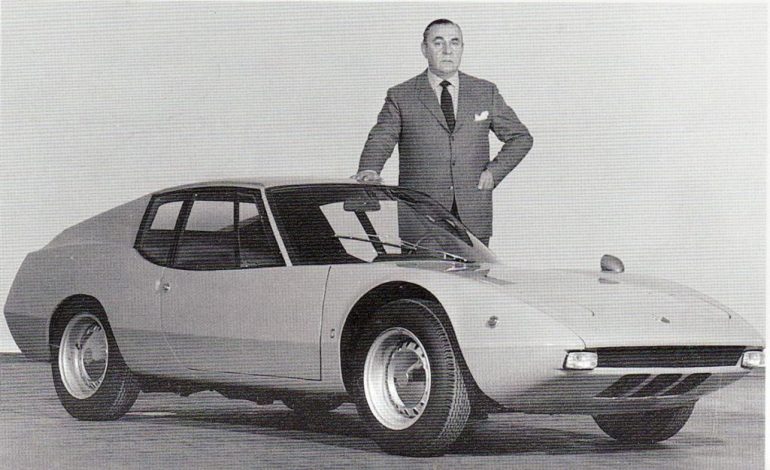
In the late 1960s, Italy’s automotive scene was ablaze with creativity. It was an era when even humble economy cars could birth exotic offshoots under the skilled hands of coachbuilders. Into this world stepped Carlo “Francis” Lombardi, a WWI flying ace-turned-carrossiere, determined to craft something extraordinary. Having made a name building luxurious coachbuilt specials (including elongated Fiat sedans and even the first “Popemobile” limousine for Pope Paul VI), Lombardi set his sights on creating a small sports car with big style. His dream: to bring the flair of an Italian gran turismo to the masses – in miniature form.
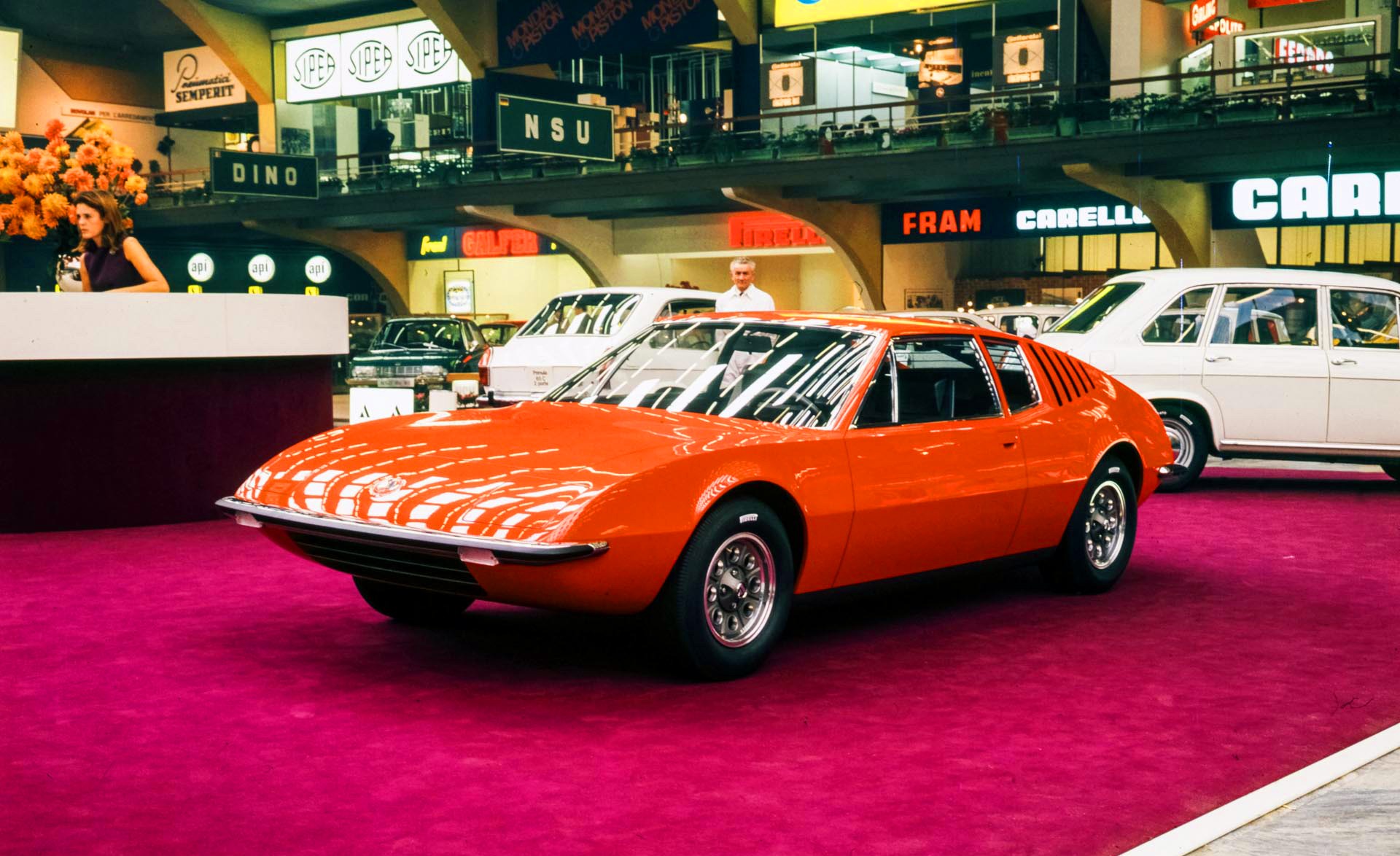
Lombardi’s vision found form in 1968 through an innovative design study. At Fiat’s design center, rising star Pio Manzù penned a sleek coupé concept based on Autobianchi mechanics. Low-slung and aerodynamic, this prototype featured a sharply tapered nose and a chopped-off Kamm tail, applying cutting-edge aerodynamic principles to a tiny footprint. It was a styling exercise only – a fiberglass mockup with no engine – but it captivated those who saw it. Lombardi, ever the opportunist, recognized its potential. Enlisting his in-house designer Giuseppe Rinaldi, he adapted Manzù’s bold styling to fit humble Fiat 850 underpinnings. The result would be called the Francis Lombardi Grand Prix – a name promising racing excitement, even if the car’s mission was more about style than speed.
🔗 Read more: The History of Carrozzeria Francis Lombardi
By early 1968, Lombardi’s small workshop in Vercelli was buzzing. The team took Fiat’s rear-engined 850 sedan chassis and transformed it into a miniature exotic car. The design retained Manzù’s dramatic lines: a very low nose, pop-up headlights, and a truncated tail following the Kammback formula for reduced drag. In a touch of Italian glamour, the headlights would wink open electrically – a rare feature on such a small car. The body, crafted largely in steel with some fiberglass sections, sat astonishingly low and wide for its size, giving the little coupé an aggressive, ground-hugging stance. To onlookers, it looked like a shrunken supercar – a “baby Ghibli” evoking the famed Maserati Ghibli’s profile, as even Lombardi’s brochure admitted. The stage was set for its debut. All Lombardi needed now was an audience – and the perfect venue arrived in the form of the Geneva Motor Show.
The “Baby Ghibli” Unveiled
Geneva, March 1968. The annual Geneva Motor Show was in full swing, packed with glittering premieres from major manufacturers. Yet among the Ferraris and Lamborghinis, a diminutive yellow coupé managed to steal a surprising amount of attention. Francis Lombardi’s creation, officially named the Fiat 850 Grand Prix, made its public debut. Under the bright lights of Geneva’s Palexpo, the little car’s wedge-shaped nose and flip-up headlights drew curious crowds. Many rubbed their eyes – was this really based on the tiny Fiat 850? It appeared more like an Italian concept car that had strayed from Bertone’s or Pininfarina’s stand. The press quickly nicknamed it “il piccolo Ghibli” – the baby Ghibli – for its resemblance to Maserati’s svelte grand tourer.
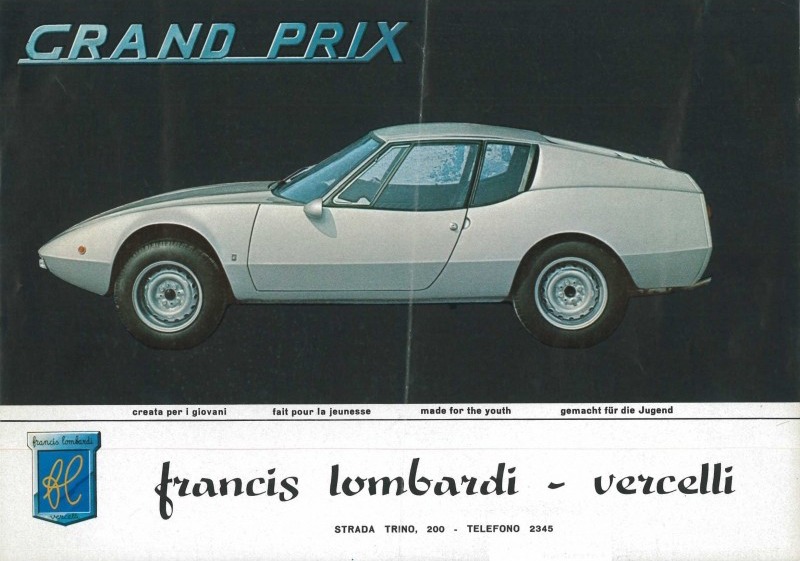
The historical moment was poignant. 1968 was a tumultuous year globally, but here in Geneva, an optimistic spirit pervaded the automotive world. The Grand Prix encapsulated that spirit: it was bold and unconventional, an underdog story on wheels. Italy had a rich tradition of “etceterini” – small-displacement sports cars with outsized charisma – and the Lombardi Grand Prix fit right in. Its rear-mounted 843cc engine, borrowed from the Fiat 850, produced a modest 37 hp, but thanks to featherweight construction (around 630 kg) and slippery shape, Lombardi boasted a top speed near 160 km/h (99 mph). That was a remarkable claim for such a tiny powerplant, and while real-world tests later pegged the top end closer to 154 km/h, it was still impressive. More importantly, performance was beside the point – this car oozed style and made every bit of speed feel exhilarating due to its size.
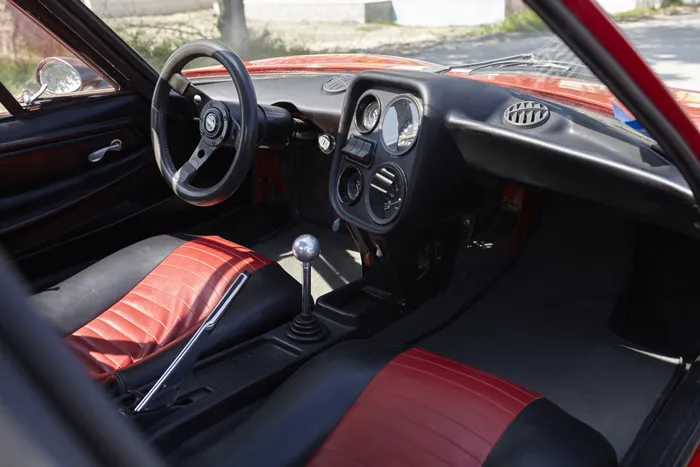
Observers marveled at the details. The pop-up headlamps – uncommon on small cars – gave the nose an exotic flair, retracting flush when not in use. A single wiper swept the windshield, emphasizing the minimalist, aerodynamic ethos. In the tail, a large rear hatch featured a dramatic cut-off Kamm tail design, housing Fiat 850 Coupé round taillights that were the only clue to the car’s humble origins. The interior was snug and sporty: two bucket seats, a simple dash with a single cluster, and virtually no space for luggage save a cubby behind the seats. All of this was clothed in a curvaceous steel body – except for the rear engine cover, which was fiberglass in the prototype to save weight. Show-goers were charmed. Here was a truly accessible sports car concept: Italian style distilled into something a young enthusiast might actually afford. Orders and inquiries began to flow in. The Francis Lombardi Grand Prix had made a splashy debut, punching above its weight in Geneva and proving that even a small independent carrozzeria could create a show-stopping head-turner.
From Prototype to Production
Translating the Geneva show car into a road-legal production model was the next challenge. Lombardi wasted no time. By late 1968, the Grand Prix was in limited production at the Vercelli workshop. It retained the Fiat 850 underpinnings, meaning a rear-engine, rear-wheel-drive layout with four-wheel independent suspension derived from the 850 Coupé/Spider. To ensure the car’s dramatic shape was feasible for customers, Lombardi kept much of the show car’s design intact, with a steel unibody for strength and some lightweight panels to trim mass. Early production models (retrospectively known as Series I) used a stock Fiat 850 engine lid – a plain metal engine cover – and an unusual window setup: the door glass was split into three pieces, with a small sliding pane for ventilation. These quirks would later be refined, but initially Lombardi was focused on getting the car out to eager buyers.
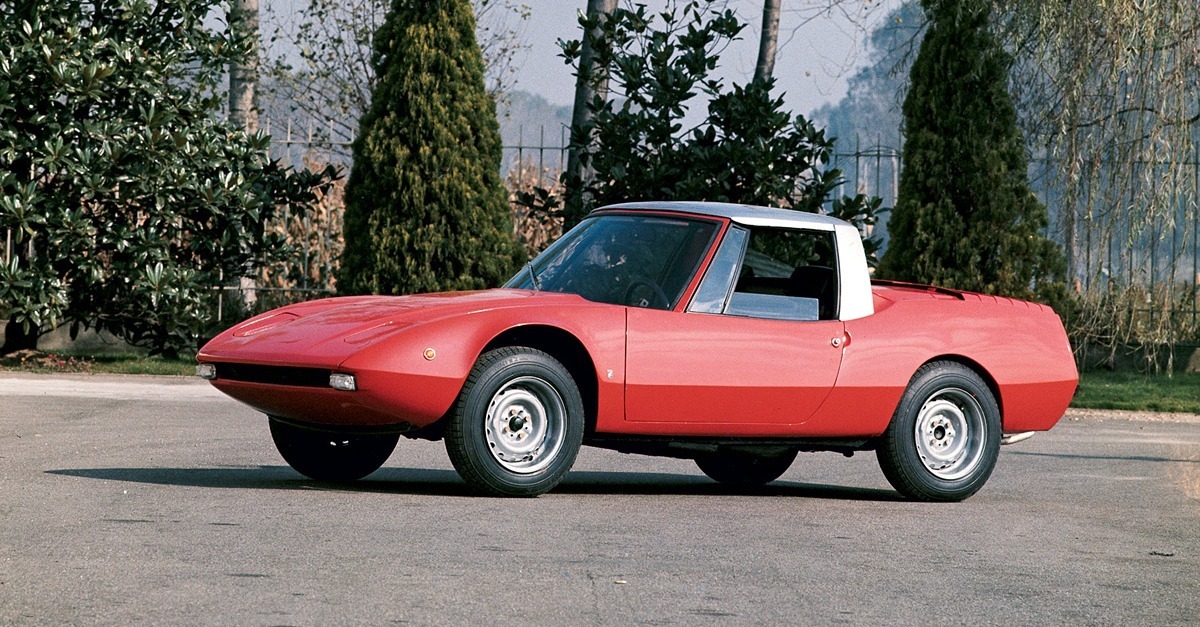
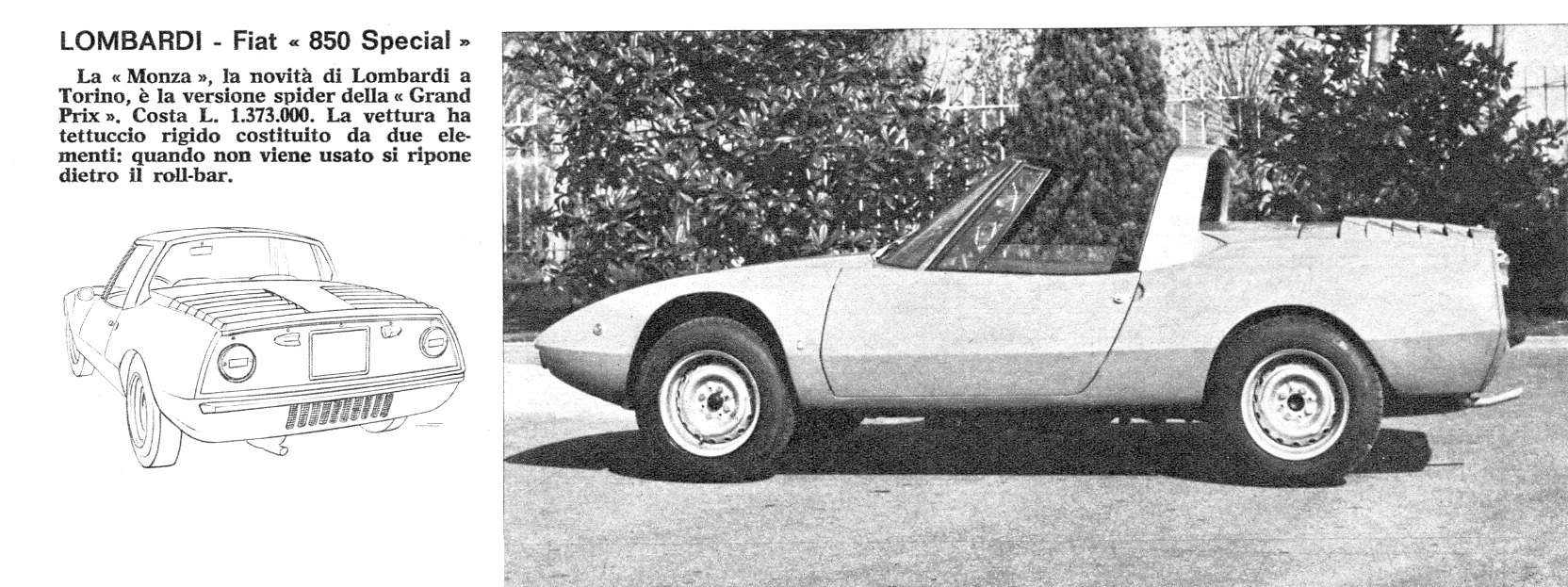
The Grand Prix quickly attracted attention from Italy’s motoring press and tuning community. In 1969, at the Turin Motor Show, Lombardi showcased an exciting evolution: a topless targa version dubbed the “850 Spider Monza.” This variant featured a lift-off roof panel and a bold roll bar hoop behind the seats, essentially turning the coupé into a tiny open-roof sports car. The Monza, painted a fiery red, embodied the la dolce vita spirit – imagining owners zipping around sun-drenched coastal roads. It was well received at Turin, but ultimately remained ultra-rare: at least two Monza targa examples were built, though it’s unclear if any were actually sold to the public. The closed coupé remained the mainstay of production.
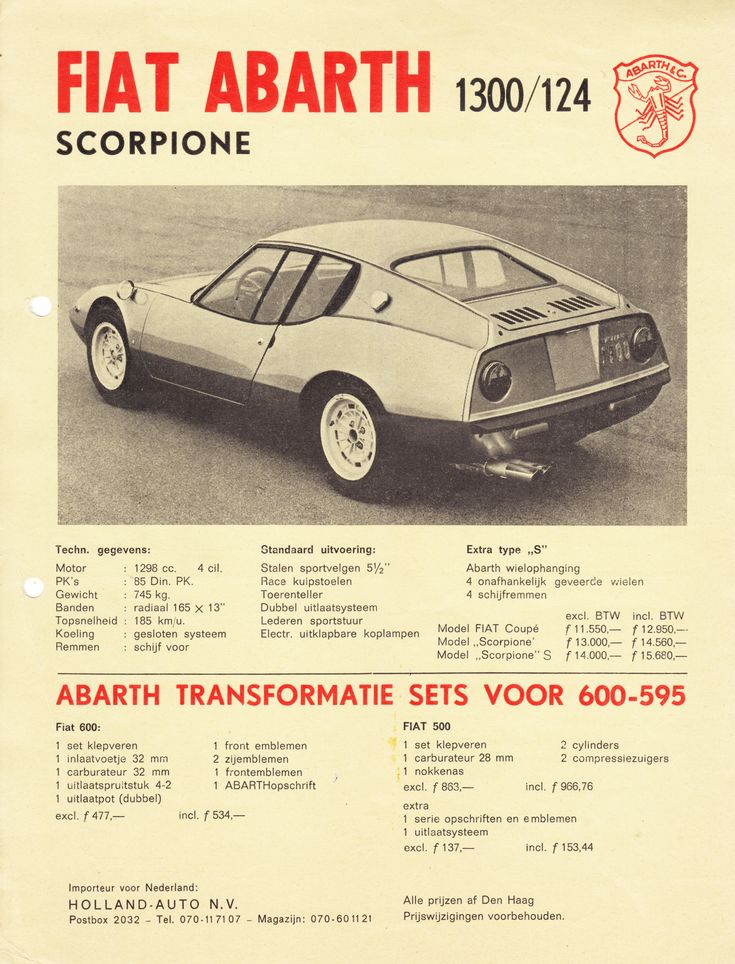
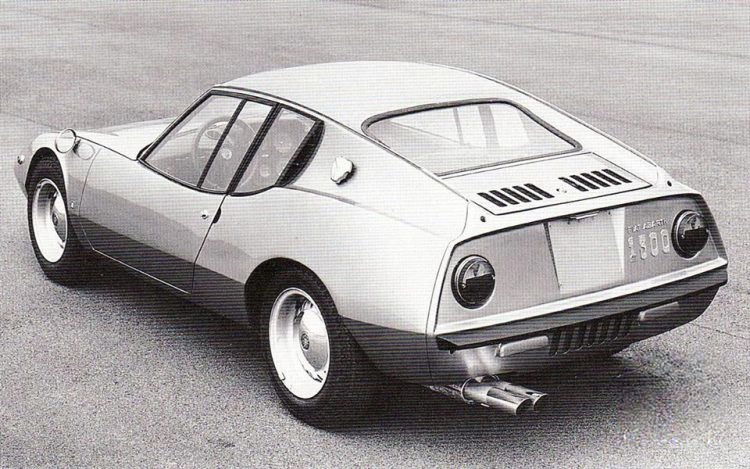
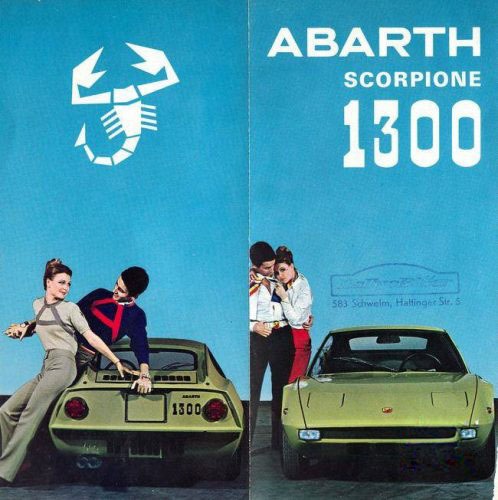
By 1969, the Grand Prix was being marketed through various channels. Francis Lombardi wasn’t working alone – he struck partnerships to broaden the car’s reach. In Italy, famed tuning house Giannini Automobili began offering a hot-up version. Internationally, a new venture called OTAS (Officina Trasformazioni Automobili Sportive) was formed in collaboration with Giannini to export the car abroad. Under these brands, the Grand Prix took on new identities: OTAS 820 for markets like France and the USA (named for its 820cc engine), and Giannini 1000 Gran Prix within Italy (with a tuned 982cc engine). Even Carlo Abarth, the Scorpion badge legend, took notice. Abarth arranged to acquire rolling chassis from Lombardi and install his own souped-up engines. The car appeared on Abarth’s stand at the 1968 Paris Motor Show badged as the Abarth Grand Prix 850, and later Abarth created his ultimate version: the Abarth 1300 Scorpione unveiled in 1970. With 1280cc and 75 hp on tap, the Scorpione delivered genuine performance – over 175 km/h in tests – making it a fearsome little machine. It would also turn out to be Abarth’s final independently-developed car, adding a poignant footnote to the Grand Prix’s legacy.
Meanwhile, the core Fiat-powered Lombardi Grand Prix received a mechanical update of its own. When Fiat introduced the more powerful 850 Special engine (47 hp) in 1968, Lombardi began fitting this higher-output 843cc unit to later production cars. Thus, Series II Grand Prix cars came with a bit more pep and also a few styling tweaks: a new louvered rear engine cover in black metal for better cooling, and redesigned door windows that featured a front vent wing and a single pane (though it still could only roll down halfway). These refinements improved usability and gave the little coupé a sportier, more finished look. The ride and handling, always a strong suit due to the car’s low center of gravity, were further fine-tuned. Drivers reported that the Grand Prix, sitting just 41 inches tall, felt go-kart sharp – if a bit light at the front at high speeds, thanks to aerodynamic lift from those pop-up lights in the raised position. Lombardi even added ballast to the nose on later cars to stabilize high-speed runs.
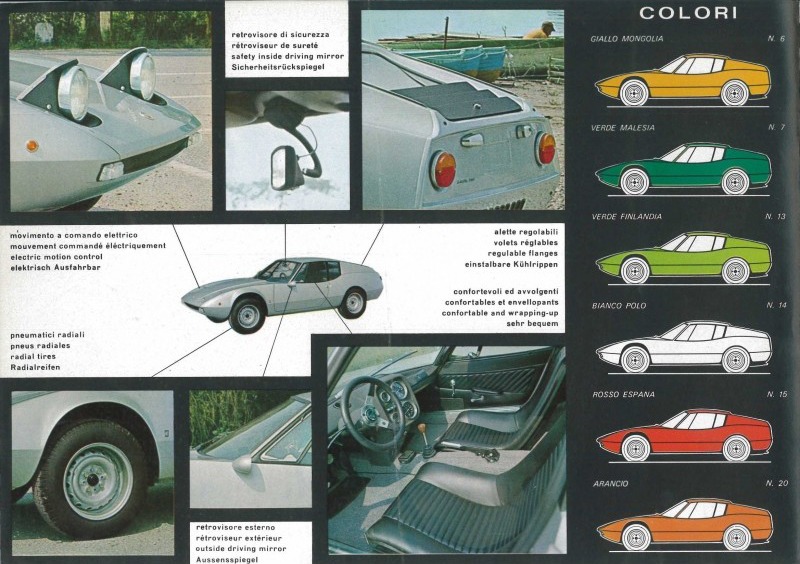
In total, production continued from 1968 to 1972, churning out roughly 500 examples of the Lombardi Grand Prix in all its guises. This included the Fiat-powered originals and the various OTAS/Giannini/Abarth derivatives. For a boutique coachbuilt car, it was a respectable number, reflecting solid enthusiasm from enthusiasts in Italy and abroad. Each car was essentially hand-finished, and buyers could select vibrant 1960s colors like Giallo Mango (Yellow) or bright reds and blues to complement the shape. By the end of the run, safety and emissions regulations were tightening (especially in the U.S.), and the era of the tiny coachbuilt GT was waning. But for a few golden years, the Grand Prix lived up to its name, giving drivers a taste of grand prix style on a pint-sized scale.
Glamour and Challenges
The Francis Lombardi Grand Prix not only turned heads at motor shows – it also made appearances at high-profile style events. In 1970, the sleek coupé even graced a Concours d’Elegance in Rome, rubbing shoulders with Italy’s finest automotive creations. On the elegant grounds of the Villa Borghese (the traditional setting for Rome’s concours), the little Lombardi stood out for its futuristic design. Judges and onlookers, accustomed to big V12 Ferraris and coachbuilt one-offs, couldn’t help but smile at this mini-supercar with the cheeky Fiat 850 engine. While it wasn’t an official class winner that day, the Grand Prix earned plenty of admiration simply for daring to bring exotic styling to the people. Its presence at such a prestigious event was a trophy unto itself – a validation of Giuseppe Rinaldi’s design as not just quirky, but genuinely beautiful in its own right.
Yet, even as the Grand Prix basked in praise for its style, commercial challenges loomed. Francis Lombardi’s operation was small, and selling an unusual car in a market dominated by practical sedans and established sports cars was an uphill battle. Nowhere was this more evident than in the ambitious plans of one Frixos Demetriou, a Cypriot millionaire and casino owner turned would-be auto magnate. Demetriou, owner of London’s Olympic Casino, had fallen in love with Italian boutique cars and in the late ’60s hatched a scheme to import them to Britain. The Lombardi Grand Prix was one of his prime selections.
With flamboyance befitting a casino king, Demetriou ordered dozens of Italian specials in one go – from Vignale convertibles to Lombardi coupés – paying for many up front in cash. He secured a swanky showroom in London’s Bayswater and proudly displayed the Grand Prix alongside other coachbuilt rarities. In 1969, a Lombardi Grand Prix could be had in the UK for around £1,225, a hefty price given that a brand new MGB cost far less. Demetriou was convinced that exclusivity and style would win over Britain’s jet set. And indeed, a few celebrities and socialites took the bait – notable figures (reportedly even nightclub impresario Peter Stringfellow) were counted among the buyers of Demetriou’s imported Italian toys. For a brief moment, the Grand Prix enjoyed a flash of glamour on London’s streets, a quirky alternative to the usual Lotus or Triumph.
However, reality soon caught up. The little Lombardi’s exotic price and unproven reputation limited its appeal. Build quality issues cropped up (some cars suffered from water leaks and fragile trim), and parts/service were an uncertainty. Demetriou’s bold venture overextended itself. By 1970, sales had slowed to a trickle – by one account, only about 17 Grand Prix cars were ever sold in the UK. Unsold stock gathered dust in that overstuffed showroom as the British sports car faithful stuck to their homegrown roadsters. In a twist of fate, the UK’s feared casino law changes never materialized, so Demetriou decided to return to his lucrative gambling business and liquidate the car operation. He shipped many leftover cars to Cyprus, hoping they might find buyers there or simply to avoid mounting customs costs. Thus ended the Grand Prix’s British escapade – a case of too much, too soon.
Demetriou’s story concluded tragically: back in Cyprus, while sitting in one of his cherished Italian cars (a Vignale Samantha), he was killed in a freak accident when a runaway British Army tank crushed the vehicle. It was an almost unbelievable ending that became part of the Grand Prix lore. Enthusiasts still recount how “the man who tried to bring the Lombardi Grand Prix to the world” met an untimely demise.
🔗 Read more: 10 Affordable Classic Cars Under 20,000€
Elsewhere, the Grand Prix faced challenges of a different sort. In the United States, the OTAS 820 version initially generated buzz among sports car fans – after all, where else could you get a mid-engine Italian exotic look for under $3000? But strict new emissions regulations in 1971 curtailed its momentum. The OTAS 820’s 817cc engine had been specifically down-sized to squeak under the 50 cubic-inch threshold and avoid emissions controls. Even so, the EPA cracked down, and the OTAS Grand Prix earned the unhappy distinction of being one of the first cars ever barred from U.S. sale by the EPA. Importer John Rich in California managed to bring in perhaps 65 cars (some sources say up to 100) before the federal door slammed shut. A handful more trickled in via Canada or as the Giannini-tuned 1000cc versions, but by 1972 the American adventure was over. The car was simply too boutique to survive the era of tightening safety and emissions standards.
Despite these trials, the Grand Prix earned a small but devoted following. Owners loved the car’s uniqueness – parking next to mundane sedans, the little Lombardi looked like a UFO. It demanded attention at every fuel stop or café parking lot. And on a twisty road, it delivered joyous, nimble handling reminiscent of a Lotus, as one enthusiastic owner noted, “it has to handle like a Lotus Europa”. In Italy, weekend racers and hillclimb drivers even tinkered with the cars, sometimes swapping in larger engines (as Abarth had done) to create giant-slayers in miniature. The Grand Prix had glamour in spades; it just struggled against the economic and regulatory currents of its time.
Variations on a Theme
One measure of the Fiat 850 Grand Prix’s impact is how many others wanted to put their stamp on it. The basic design spawned multiple variants and names – each with its own tale. In its home country, the partnership with Giannini produced the Giannini 850 Grand Prix (later dubbed Giannini 1000 when fitted with their 982cc “Tigre” engine). These were sold through Giannini’s network and often came with upgraded performance, transforming the car into a little street racer. The Giannini-tuned versions could produce around 60–65 hp, a healthy boost that made the featherweight coupé truly lively.
Meanwhile, OTAS handled exports under the model name OTAS 820. The number referenced the engine: for the U.S. and some European markets, the Fiat four-cylinder was sleeved down to 817 cc to meet regulations. Though slightly less powerful, these export models were otherwise similar to the home-market car. American buyers who got their hands on an OTAS 820 enjoyed its head-turning style – but had to educate curious passersby that no, “OTAS” wasn’t some new Japanese brand, but a rare Italian import. Ultimately, only a few dozen OTAS Grand Prix made it stateside before regulations halted further imports. Today, they are prized oddities among collectors – the cars that snuck in under the wire of 1970s emissions laws.
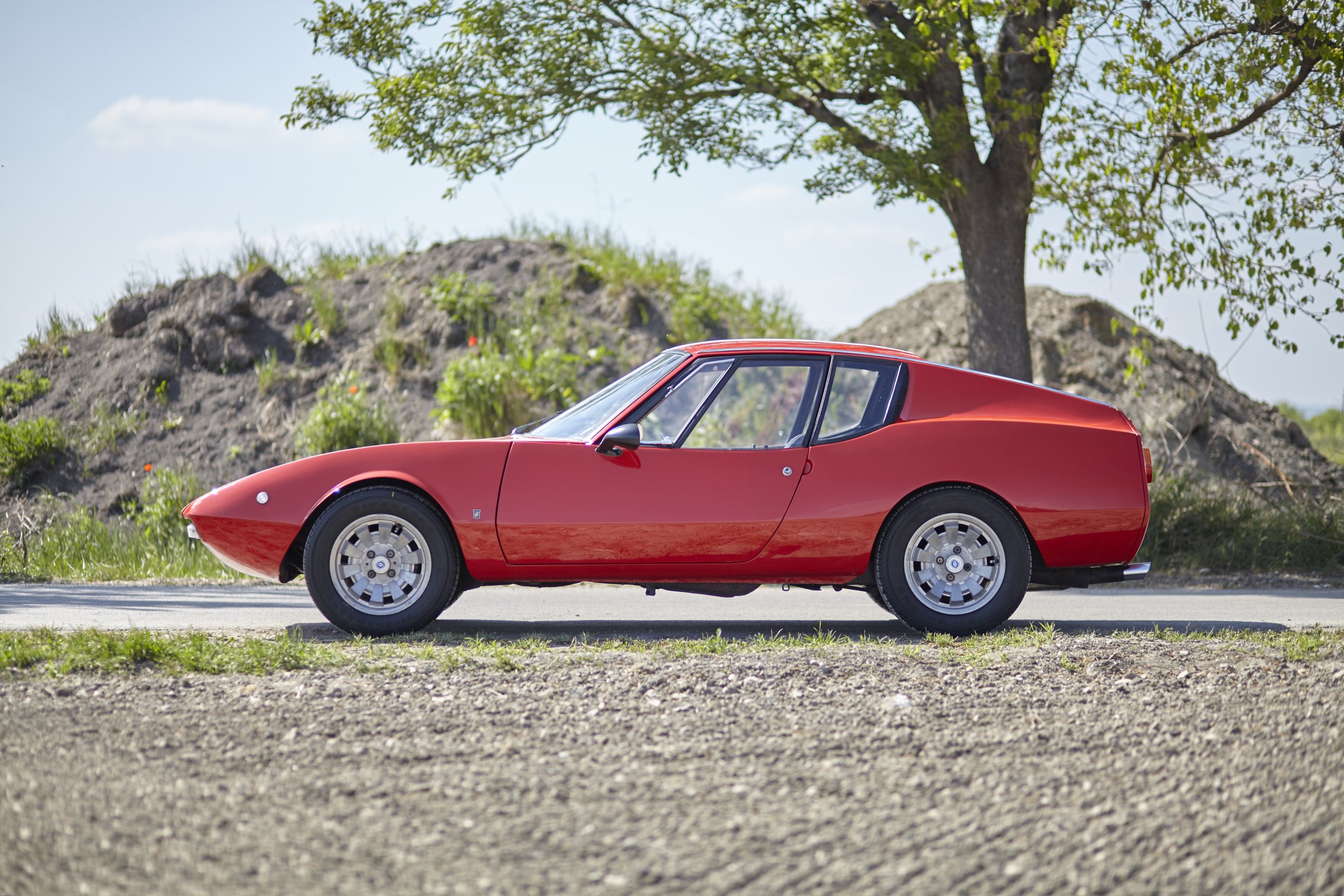
Then there was Abarth, whose involvement added both prestige and performance. Carlo Abarth had a knack for spotting a good thing and making it better (and faster). He took Lombardi’s creation and, starting in late 1968, marketed the Abarth Grand Prix 850, essentially a Grand Prix with a hot-rodded 903cc engine from the Fiat 850 Sport tuned to about 52 hp. Abarth also relocated the radiator up front for improved cooling, a wise move given the tendency of rear-engined cars to run hot. A couple of years later, Abarth went even further by introducing the Abarth 1300 Scorpione in 1970 – an evolution of the Lombardi body mated to a 1280cc engine from the Fiat 124 sedan. With 75 hp and a thoroughly reworked suspension (including coil-overs, front and rear sway bars, and disc brakes all around), the Scorpione was a little terror on the track. It could top 175 km/h (109 mph) in testing, earning its Scorpion badge by stinging far bigger sports cars with its performance. Abarth even built a handful of Scorpione SS versions with 100 hp and further suspension upgrades – these were essentially race cars in Lombardi clothing.
The fact that Abarth, Giannini, and others invested in these versions speaks to the soundness of the original design. Lombardi’s Grand Prix provided a lightweight, balanced platform that tuners could exploit. Each variant broadened the car’s appeal: Giannini for those who wanted an Italian barchetta with extra bite, OTAS for the style-conscious outsider, and Abarth for the serious enthusiast craving track-worthy speed. Collectively, a few additional hundred units were made under these various badges. They are all siblings of the same family, distinguished by engine swaps and minor trim differences but fundamentally the same Giuseppe Rinaldi-penned shape. To an observer in period, it might have been confusing – a single car sold under four or five different names – but to the cognoscenti, this only added to the allure. It was like a single melody arranged in different keys by different composers, each interpretation enriching the legend of the Grand Prix.
Legacy and Lasting Allure
As the 1970s progressed, the era of the coachbuilt mini-GT drew to a close. Francis Lombardi, facing the onslaught of mass-produced sports cars and new regulations, ceased production of the Grand Prix in 1972. In just a few short years, his little “baby Ghibli” had left an outsized mark. Approximately 500 cars were made in total, across all versions. For decades after, the Fiat 850 Grand Prix remained a cult classic – not widely known, but fiercely loved by those who did know it. Enthusiast clubs and registries sprung up, especially in Italy where many of the cars stayed. Cristian Ferrari, an Italian enthusiast (and no relation to those Ferraris!), became the model’s unofficial historian. He even compiled a registry documenting about 140 surviving Grand Prixs in Italy alone, gathering photos and histories of each car. In a heartwarming turn, Cristian befriended designer Giuseppe Rinaldi in the 2010s, and Rinaldi, delighted that his work was still appreciated, gifted him original design sketches and photographs from the Grand Prix’s development. It was a touching passing of the torch – the car’s creator entrusting its legacy to the next generation.
Owning a Lombardi Grand Prix today is like having a piece of rolling art. Famous collectors have taken notice. The car’s rarity and story attract the likes of world-renowned classic car connoisseurs. While not as high-profile as a Ferrari or Lamborghini, a Grand Prix in top condition is welcome at prestigious classic events. In fact, in 2024 a beautifully restored Francis Lombardi Grand Prix in vivid yellow stole the show at the Classic Gala, an international concours for exceptional automobiles. Parked on the manicured lawn among multimillion-dollar vintage cars, this petite Italian proudly showcased its design brilliance – and went home with as many admirers as some cars ten times its size. Over half a century after its birth, the Grand Prix still turns heads and wins hearts.
The legacy of the Fiat 850 Grand Prix extends beyond the cars themselves. It’s a story of passion and imagination, of a time when a small Italian workshop could dream big. Francis Lombardi took the unassuming Fiat 850 and, with Giuseppe Rinaldi’s pen and a dash of Pio Manzù’s inspiration, created something timeless. The Grand Prix proved that performance isn’t only about horsepower – sometimes style, character, and clever engineering can create magic even in a diminutive package. It also stands as a reminder of the ingenuity of Italian coachbuilders: how they could take a basic canvas and paint a masterpiece on it, accessible to those who aspired to Ferrari looks on a Fiat budget.
How many survive? Rough estimates suggest a few hundred of the original ~500 are still around worldwide. Many reside in Italy, tucked away in garages or actively enjoyed on sunny weekends. Others made their way across Europe, and a handful remain in North America – survivors of the OTAS experiment. Each survivor has its own tale: some were pampered by devoted owners, others passed through eccentric collections. Their values have risen as people recognize the Grand Prix’s significance; no longer just odd curios, they are appreciated as collectible automotive art.
In the end, the Fiat 850 Grand Prix by Francis Lombardi is a small car with a big story. Born from the vision of a war-hero-turned-designer and unveiled in a golden age of automotive design, it encapsulates the excitement of 1960s Italy in a delightfully pint-sized package. Its accomplishments weren’t measured in racing trophies or sales records, but in the smiles and stares it continues to generate. From winning nods at concours d’elegance to inspiring enthusiast gatherings, the Grand Prix lives on as a testament to the idea that car passion isn’t about size or cylinders – it’s about soul. And this little car has plenty of that.
In a romanced sense, one might imagine the Grand Prix as a spirited Italian youth of the late ’60s: daring, stylish, a bit rebellious, and full of hope. Decades later, that spirit remains intact each time an owner turns the key, the tiny engine fires up with a growl, and the baby Ghibli sets off, once again ready to conquer the roads – and hearts – with unbridled charm.

ABOUT THE AUTHOR
Andreas Scheidl
Italian classic car enthusiast with German roots. Renowned as a respected figure in the classic car community, he serves as a jury member at various international concours d'elegance, including the Classic Gala Schwetzingen and Mantova. As a content creator, Andreas passionately shares his profound knowledge and appreciation for vintage automobiles. His heart beats for cars designed by Giovanni Michelotti, showcasing his discerning taste and dedication to preserving the timeless elegance of automotive history.
More stories by Andreas Scheidl ↗CONTINUE READING
Posts You Might Like
A Central Driving Position, a Rear-Mounted V8. Was This Really a Lancia?
In 1948, visitors to the Turin Motor Show could see an unusual Lancia on the stand of Carrozzeria Ghia. It was a large two-door coupé with a two-litre V8 mounted behind the…
Read story
Fioravanti F100: The Ferrari He Was Allowed to Imagine
Enzo Ferrari’s centenary, Leonardo Fioravanti’s independent studio and a supercar that explored air brakes, steel wheels and a new way of driving—without ever wearing the Cavallino.
Read story
Michelotti Shellette: When the Fiat 850 Became a Yacht
The yacht designer, the Turin stylist and the tiny coachbuilt car that crossed between the quay, the royal holiday house and the auction room. Some automobiles were conceived for the open road,…
Read story
Maserati A6 1500: A New Road for the Trident
When the doors of the Geneva Motor Show opened in March 1947, Maserati was a name that required little introduction to anyone who followed motor racing. What it did not yet possess…
Read story
THE CONVERSATION
Comments 0
Share a memory, a period photograph or a documented detail about this story.