
Fiat 1400: The Last Great Playground of the Carrozzieri
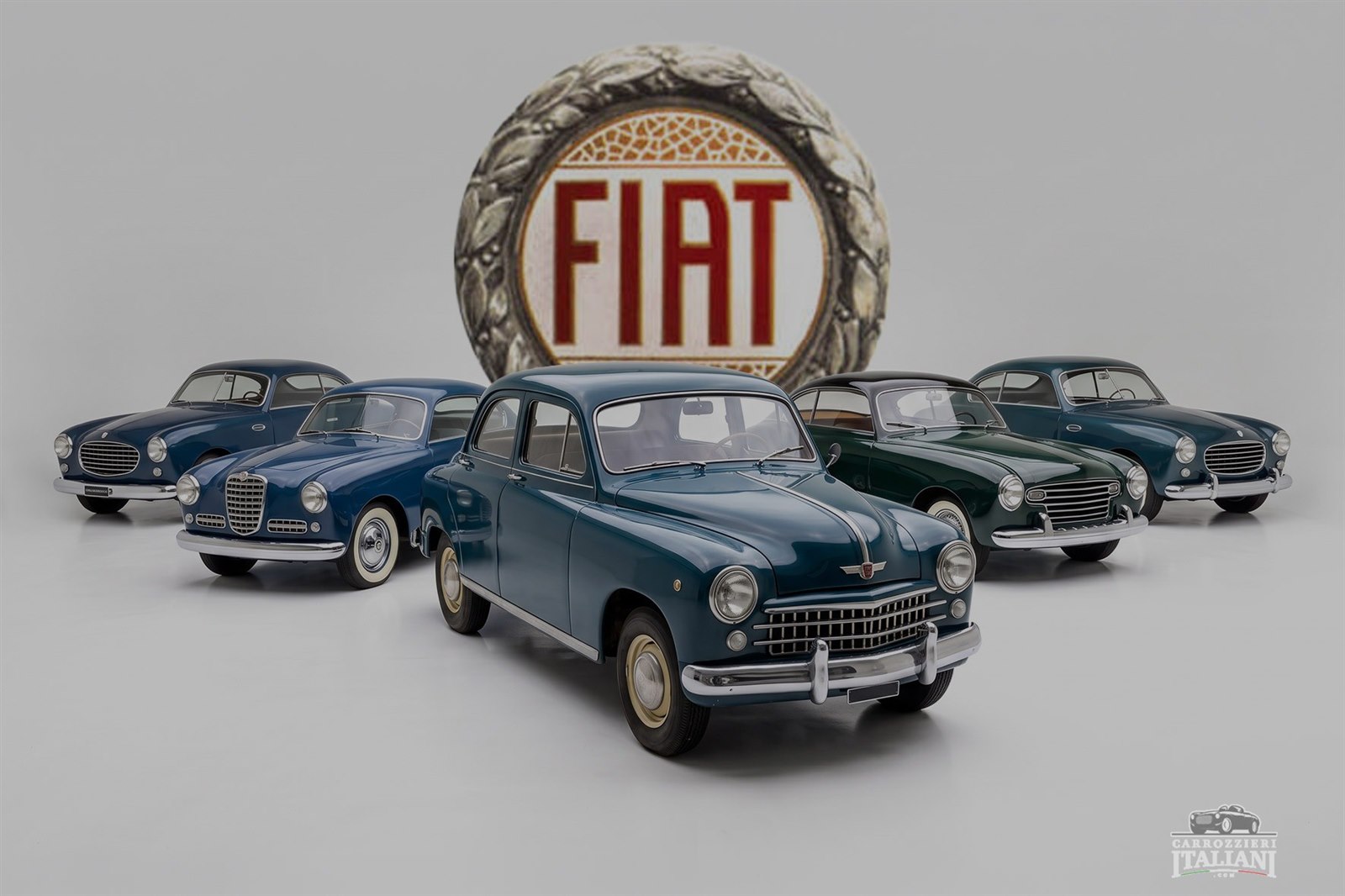
From Touring and Abarth to Farina, Ghia, Vignale, Boneschi, Bertone, Viotti and the smaller carrozzerie, the new Fiat quickly became one of the richest bases for Italian special bodies in the early 1950s.
A new Fiat for a changing industry
When the Fiat 1400 was presented at the Geneva Motor Show in 1950, it marked a decisive break with the cars that had carried Fiat through the immediate post-war years. Developed under Dante Giacosa as the Tipo 101, the new model was conceived as a modern medium-sized saloon for a company that wanted to sell well beyond Italy. Its 1,395 cc four-cylinder engine and rear-wheel-drive layout were conventional enough, but the body was not: the 1400 was Fiat’s first series-production passenger car with a self-supporting structure. It also introduced a curved windscreen and a more integrated approach to heating, ventilation and interior comfort. The important point was not outright performance but refinement, industrial efficiency and the ability to produce a modern family car in large numbers.
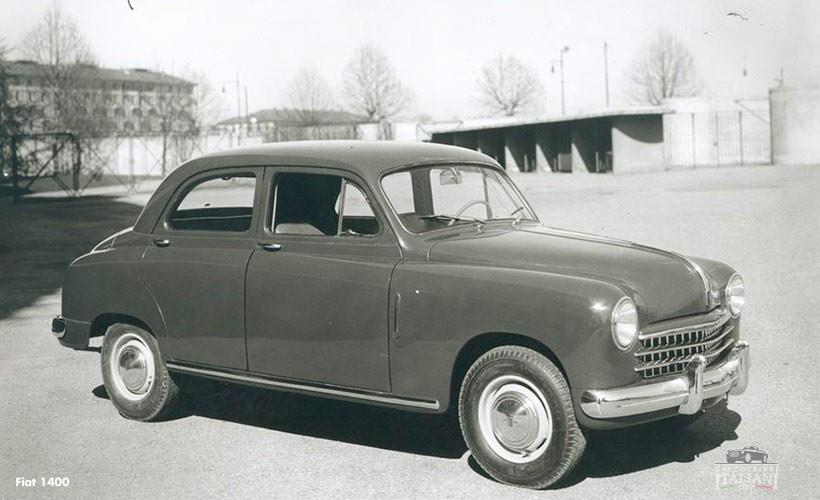
For the Italian coachbuilders, the 1400 arrived at an awkward but fascinating moment. Their traditional business had grown around the separate chassis, which allowed a manufacturer to supply the mechanical base while a carrozzeria created the body almost independently. The Fiat’s construction made that relationship more complicated. Removing the roof, changing the pillars or replacing large sections of the shell now affected the structure of the car itself, so an open body required reinforcement and a radically different coupé could demand extensive reconstruction. Yet the new Fiat was too important to ignore. Its mechanical parts were familiar, servicing was straightforward, and its modern engineering made it an attractive basis for customers who wanted something individual without the complications of an exotic chassis.
The response was immediate. Within a few years the 1400 appeared as lightweight berlinettas, formal saloons, concours cabriolets, Giardinette, commercial derivatives and competition cars. The well-known names were all there, but so were smaller firms that are often left out of broader histories. The variety is one of the best illustrations of how active the Italian body industry still was at the beginning of the 1950s, even as the technical foundations of that industry were changing beneath it.
Touring, Abarth and the sporting 1400
Carrozzeria Touring took the 1400 in one of the most ambitious directions. Its Berlinetta Speciale replaced the proportions of the standard four-door saloon with a much lower, more compact fastback body. Federico Formenti is associated with the styling, while Touring was responsible for the body engineering and construction. The project appeared at Turin in 1950 and, in at least one case, combined Touring coachwork with mechanical work by Abarth. The distinction is important because the two firms were doing different jobs: Touring built the body, while Abarth developed the performance side of the car.
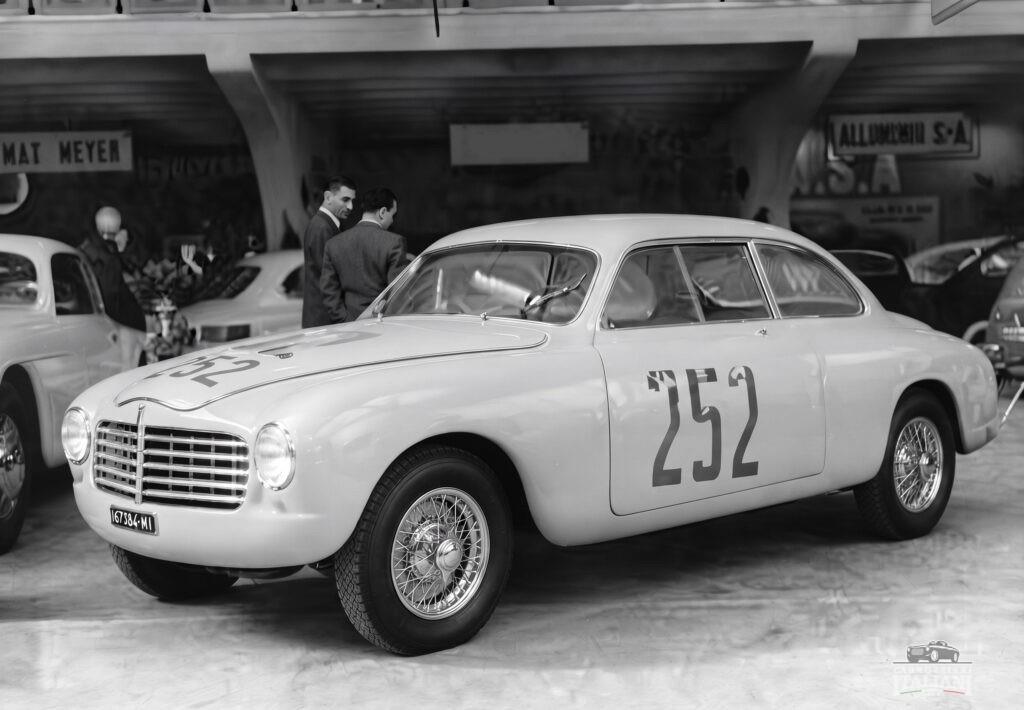
One exact car can now be identified as chassis 101*004330*, fitted with engine 101.000*005393* and Touring body number 3488. The surviving documentation separates the Touring body from Abarth’s mechanical and intake tuning, clarifying a history that has sometimes been reduced to the convenient label “Fiat 1400 Abarth.” The combination made sense. A lighter and more aerodynamic body reduced the burden on the modest 1.4-litre engine, while Abarth’s work gave the mechanical package more urgency. At least one sister car competed in the 1951 Mille Miglia and Giro di Sicilia, giving the Touring 1400 a competition history that went well beyond the exhibition stand.
The 1400 also raced in much more conventional form. Chassis 015781, a standard-bodied 1950 car delivered through S.V.A. in Rome and sold in January 1951 to Dr Ottorino Monaco, vice-president of ACI Roma, was prepared by Gino De Sanctis with an Abarth kit including a twin-Weber manifold, exhaust components and other mechanical modifications. Entered in the Turismo Internazionale 1500 cc category, the car went on to compete in three Mille Miglias beginning in 1951 and became Italian class champion in 1952. It later belonged to Eraldo Sculati, who would serve as Ferrari sporting director. The contrast between this car and the Touring berlinettas is revealing: the same Fiat could become either a special-bodied GT or a competition saloon without changing its basic mechanical identity.
Boneschi: from concours cabriolet to Gazzella and Primula
Boneschi developed several distinct interpretations of the 1400 rather than a single special body. The best known is the Fiat 1400 Super Cabriolet, an elegant four-seat open car shown during the 1950 season. Its proportions, grille, rear deck and detailing were substantially different from those of the production saloon, and the car appeared at important concours events, including the Lido di Venezia. A Boneschi 1400 convertible is also known from period film material, a useful reminder that these cars did not disappear immediately after their motor-show careers.
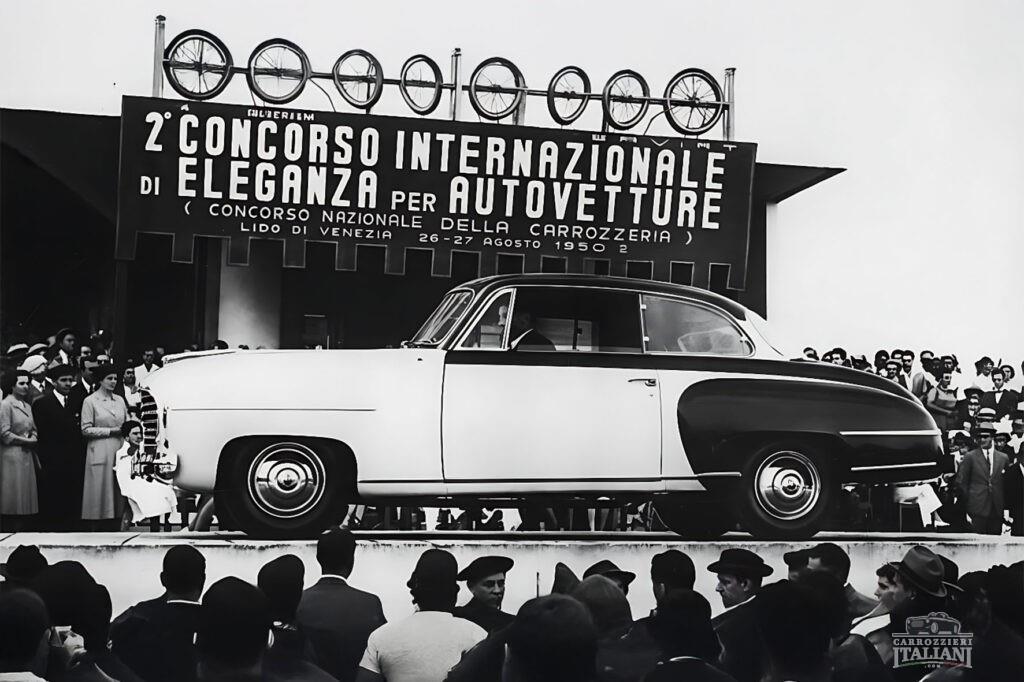
Boneschi also produced the 1400 Gazzella in 1950, a coupé that should be kept distinct from both the open car and the later 1400 Primula. The Gazzella identity is supported by specialist material and belongs to the first wave of special-bodied 1400s created almost as soon as the Fiat entered production. A separate Boneschi Berlina is also documented from the same period, underlining how quickly the company explored more than one direction around the new platform.
In 1951 came the Fiat 1400 Primula, another coupé and a model whose name has occasionally been corrupted in later cataloguing. Contemporary and specialist evidence identifies it as Primula, not “Primato.” By 1952 Boneschi had also produced a 1400 Giardinetta, extending the company’s work from concours and coupé bodies into the practical estate-car field. Seen together, these cars show that Boneschi did not treat the Fiat 1400 as a one-off opportunity; it became a recurring base for several very different bodies.
Stabilimenti Farina and the difficult final years
Few firms produced as many different interpretations of the 1400 as Stabilimenti Farina. One of the earliest was a Cabriolet shown at Turin in 1950 and associated with Franco Martinengo, followed by projects including the Gentleman and the cars known as Brasil. This was the final period of one of Turin’s most important pre-war and immediate post-war coachbuilders, and the 1400 became one of the bases on which the company continued to experiment with aluminium construction, unusual seating layouts and new formal solutions.
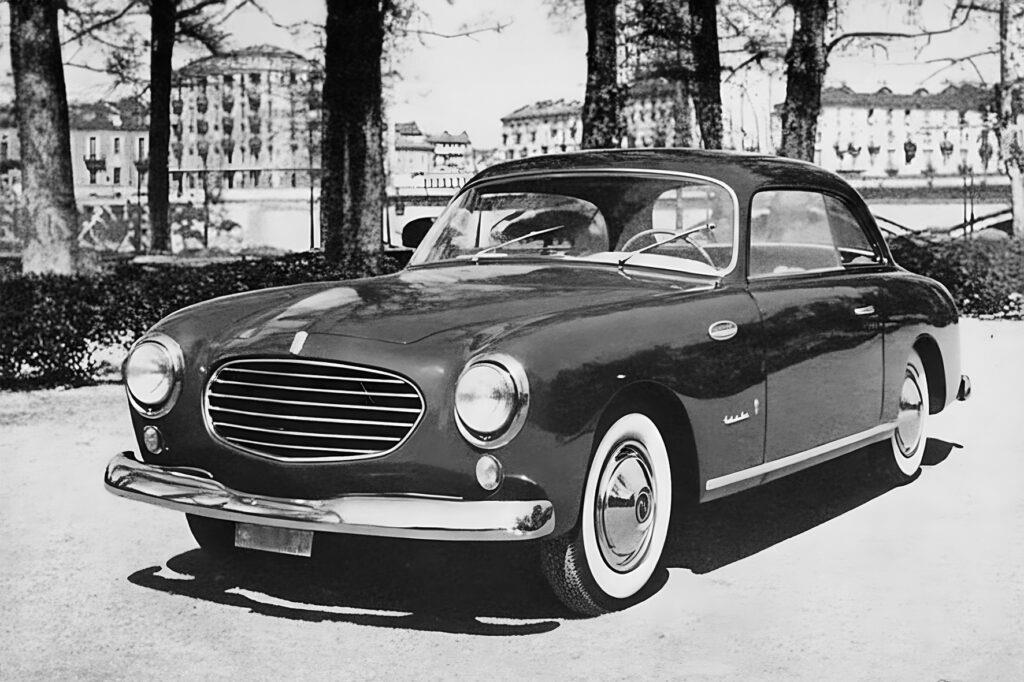
The Gentleman was particularly unusual, with an aluminium body and a three-seat arrangement. Only a very small number were made, and the surviving material suggests a project that sat somewhere between a sporting fastback and a refined show car. The designer attribution requires caution. Martinengo held a significant role within Stabilimenti Farina, while Giovanni Michelotti had also developed in the Farina environment before becoming increasingly independent. Later accounts have sometimes attached both names too freely to the same projects. Where an individual designer is documented, the credit can be stated; where the evidence is weaker, the Farina authorship should stand on its own.
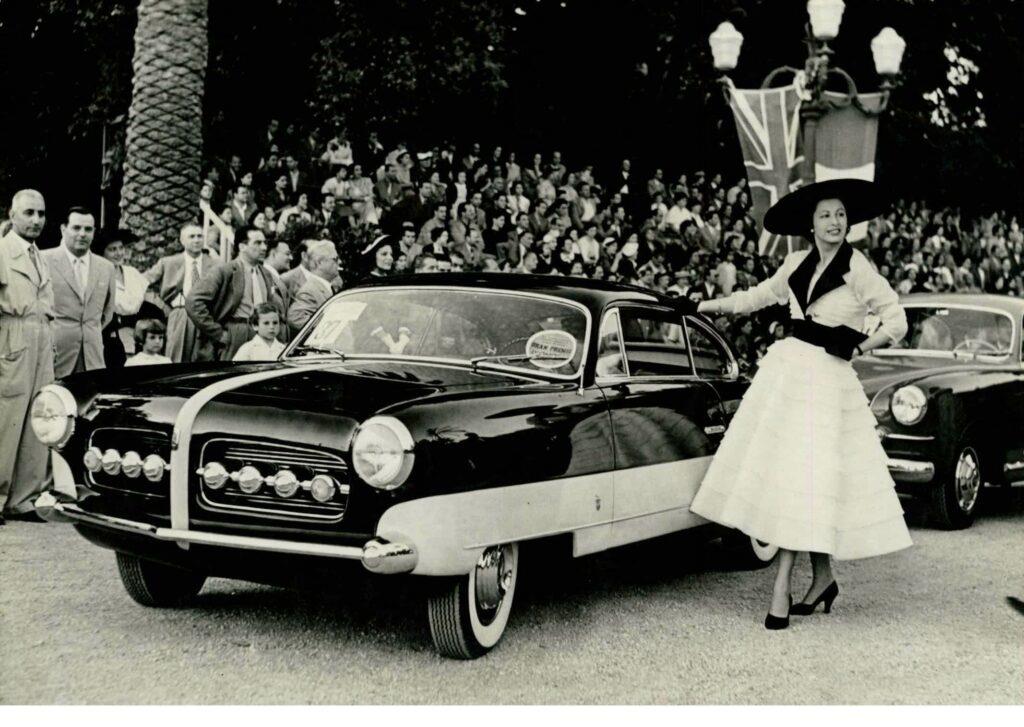
The Fiat 1400 Brasil Coupé and the Brasil Cabriolet belong to this same period but should be treated as separate variants. The cars appeared in early-1950s motor-show material, with Turin and Brussels among the documented venues. Their production quantities remain uncertain, as is often the case with small coachbuilt series. Period photographs and show reports establish the cars themselves more securely than later numerical estimates, and there is no need to add a speculative explanation for the Brasil name where contemporary evidence does not provide one.
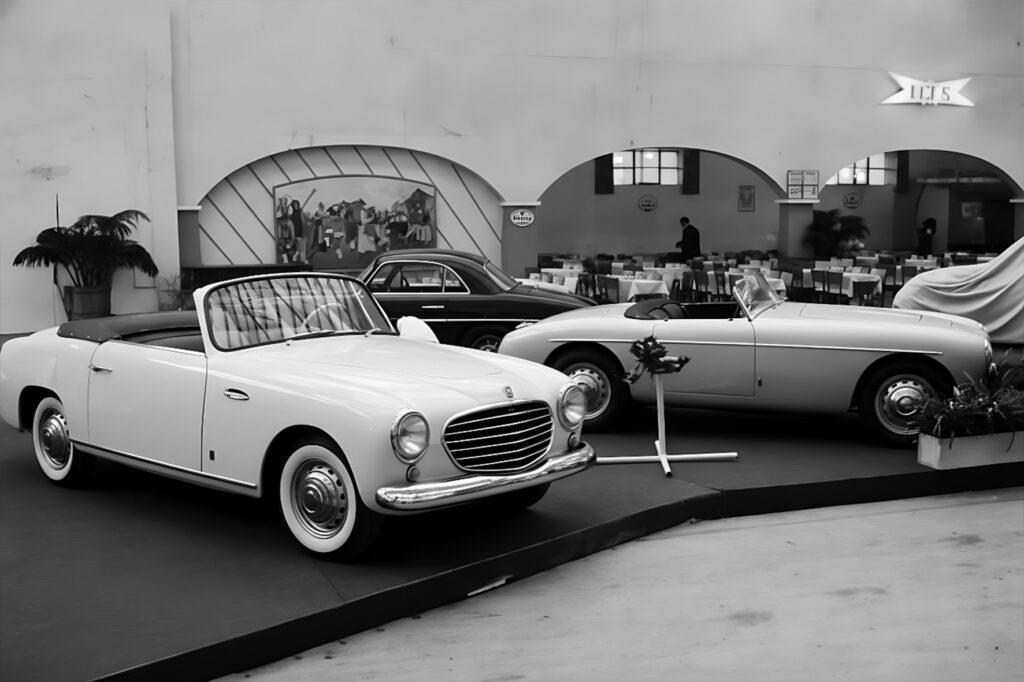
The Farina 1400s also illustrate a recurring problem in the history of coachbuilt cars: photographs taken a year apart can show bodies that are closely related but not identical, while later captions may collapse several projects into a single name. The distinction between Gentleman, Brasil Coupé, Brasil Cabriolet and the earlier Cabriolet is therefore more useful than a simplified total. Stabilimenti Farina closed in 1953, making these cars part of the company’s final chapter.
Ghia: Supergioiello, Cabriolets and a wider programme
Ghia’s involvement with the 1400 was broader than a single cabriolet. The first-series Fiat 1400 Supergioiello appeared in 1950 and was associated with Giovanni Michelotti. It was a compact coupé, in some descriptions arranged as a three-seater, and was shown at Turin as well as other Italian and international events. A restyled second-series Supergioiello followed in 1951, demonstrating that the idea developed over more than one season rather than remaining a single exhibition car.
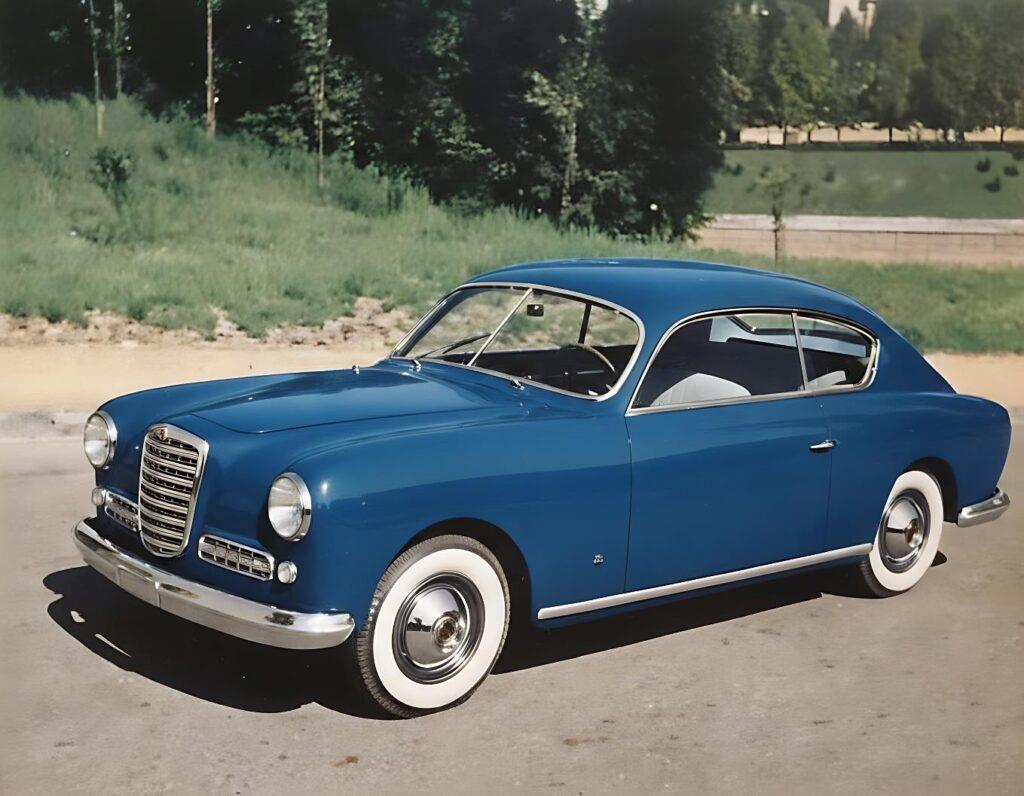
Ghia also offered a 1400 Cabriolet shown in 1951 at Turin and Geneva, while a four-door Supergioiello-related Berlina appeared in the same period. Another Berlina is documented in 1953, and by 1954 the company was showing a Giardinetta/Commerciale in its Serie Speciali programme. The 1400 therefore served Ghia as a basis for coupés, open cars, saloons and practical derivatives, not simply as a platform for one luxury conversion.
The unusual Fiat 1400 B Junior adds another branch to the story. Gian Paolo Boano is securely associated with the design, while the exact production date and total remain less clear. The car appeared in concours and motor-show contexts around 1952, including Rome and Paris. Taken together, Ghia’s 1400s reflect the company’s rapid transition during the Boano years, before Luigi Segre’s later international expansion of the marque.
Vignale and Michelotti: Orchidea and beyond
Alfredo Vignale had established his own company only a few years before the 1400 appeared, after gaining experience at Stabilimenti Farina. Giovanni Michelotti, meanwhile, was becoming one of Turin’s most active independent designers. Their collaboration produced one of the richest groups of Fiat 1400 specials, and it extended well beyond a single named model.
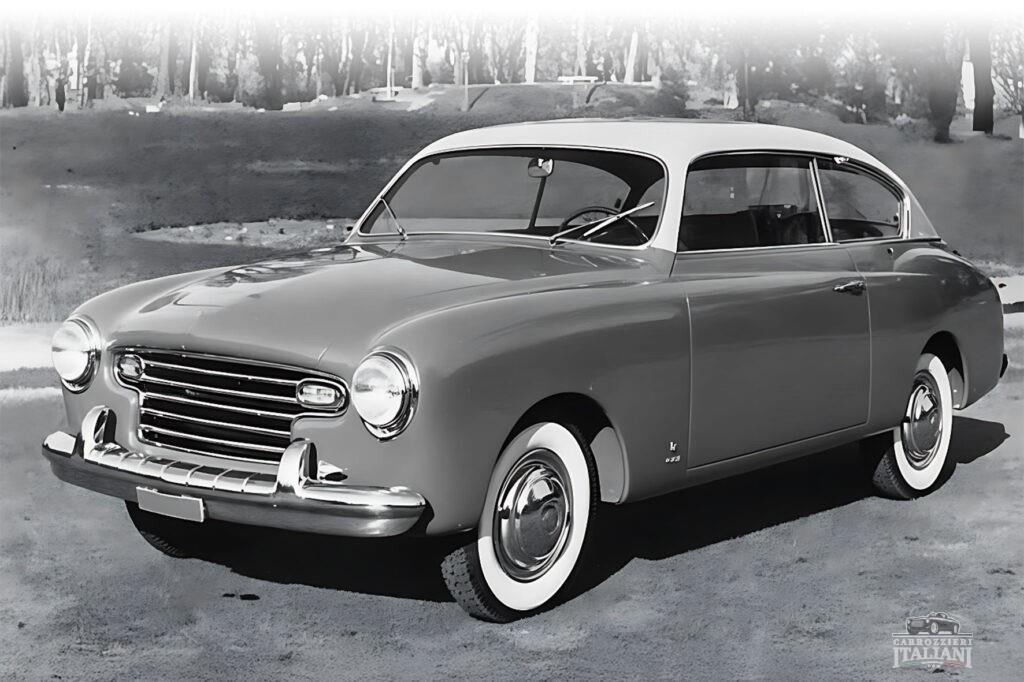
The Orchidea family appeared in 1950 in coupé, cabriolet and four-door Berlina forms. The coupé can be tied to chassis 007312 and was shown at Geneva, the Lido di Venezia concours and Turin; it won its class at the Lido in 1950. The open and four-door versions followed the same general idea but should not be treated as the same physical car. The Orchidea was one of the clearest examples of how far Vignale and Michelotti could move away from the standard Fiat while retaining its mechanical base.
Vignale’s work on the 1400 continued with further projects. The Primula was a separate coupé family, distinct from the Orchidea, while a formal Ministeriale saloon appeared in 1951. A red-cardinal coupé shown at Turin that year was also a separate project rather than another Orchidea. Perhaps the most travelled Vignale 1400 was a unique cabriolet associated with Dorothea Herrsher, built around 1951 and shown in 1952. Its later history included American appearances at Oakland, the Petersen Motorama and, after restoration, major concours events such as Pebble Beach and Amelia Island. These cars show the Vignale-Michelotti partnership working across several different ideas on the same Fiat base rather than repeating a single successful body.
Bertone, Viotti, Fissore and the other Turin answers
The range of Fiat 1400 specials becomes even broader once the less frequently discussed programmes are included. Bertone produced several bodies on the 1400, including the St-Léger Cabriolet and Coupé, Gran Lusso variants and the Western Arrow Cabriolet. One surviving St-Léger Cabriolet is identified as chassis 015091 with engine 016287, and Giovanni Michelotti is associated with the design. The St-Léger Cabriolet belongs to the same dense Turin design world as the Vignale and Farina cars, but with Bertone’s own construction and commercial identity.
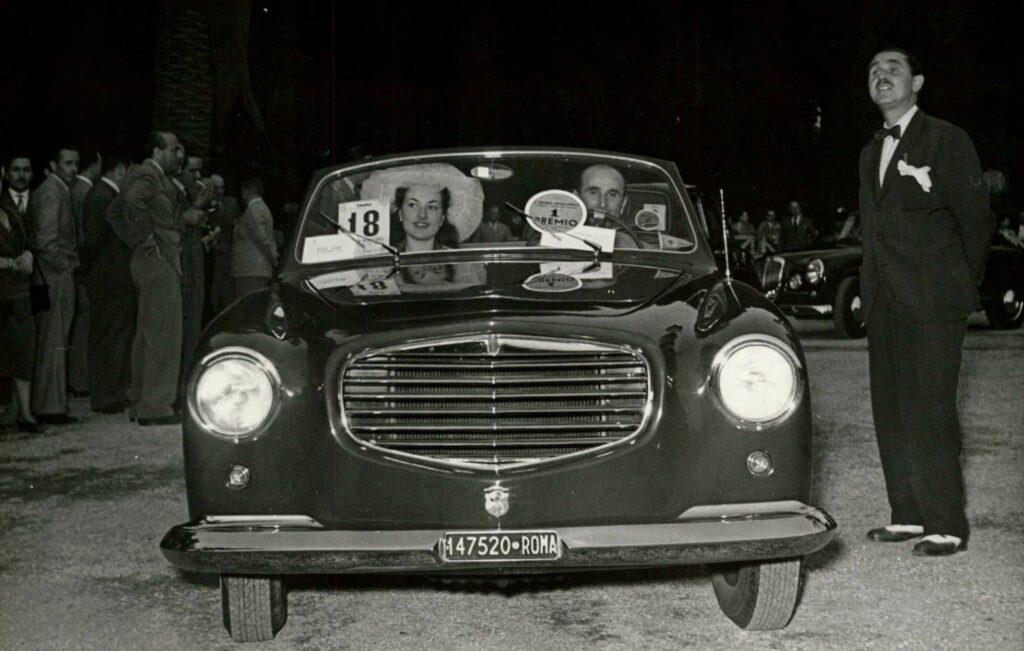
Viotti was equally active. A 1400 Cabriolet is documented from 1950, followed by a family of Giardinette between 1950 and 1952. A two-door Berlina was shown at Geneva in 1951, and a separate 1400 Coupé appeared at Geneva in 1952, with Michelotti attribution considered credible but not equally secure for every variant. Viotti’s programme is significant because it crossed the same boundaries as Ghia’s: open cars, passenger coupés and practical estate bodies all emerged from the same production Fiat.
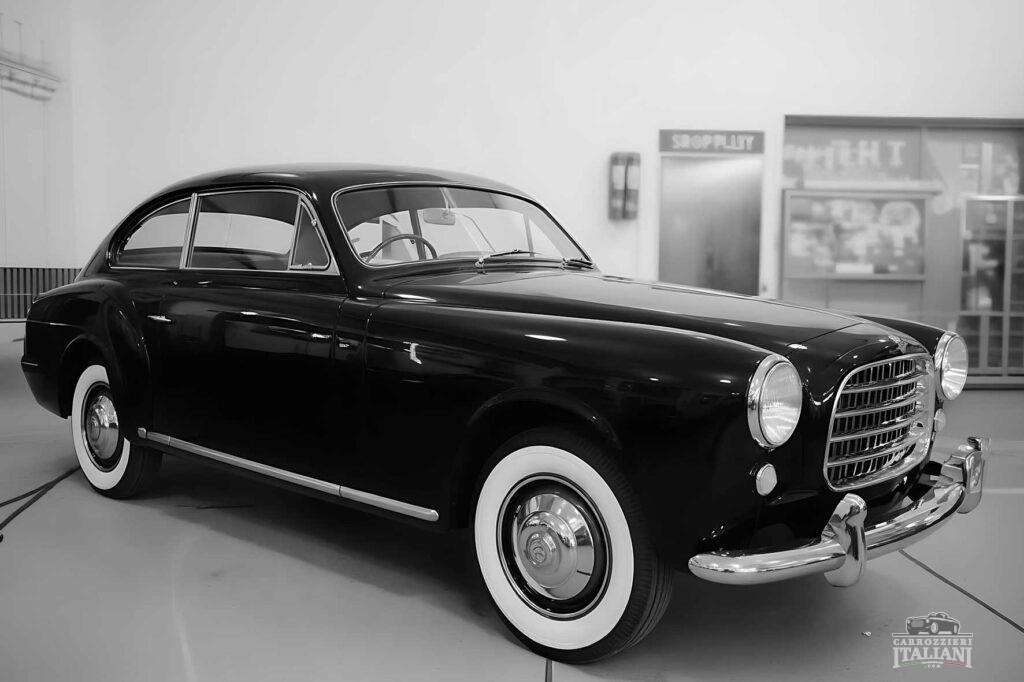
Fissore contributed an all-metal Fiat 1400 Giardinetta in 1950, while Carrozzeria Monterosa developed its own early Giardinetta programme. Stabilimento Monviso went in another direction with the Rondine family, offered in coupé and cabriolet forms and associated with Michelotti. One surviving Rondine Coupé, chassis 101.048757 with engine 101.000.014383, dates from 1952 and later appeared on the modern collector market. These cars complicate any attempt to reduce the 1400 story to only the largest coachbuilders; the model was being reworked across a much wider network.
Riva, Coriasco, Accossato and Francis Lombardi
Carrozzeria Riva of Merate built the Fiat 1400 Monza, a four-seat coupé shown at Turin in 1951 and later associated with the Concorso d’Eleganza at the Lido di Venezia. Period and later material also use the name Serenissima in connection with the project, so the exact nomenclature deserves care. The car’s distinctive cross-star grille made it immediately recognisable and gave a smaller coachbuilder a strong visual identity alongside the major Turin firms.
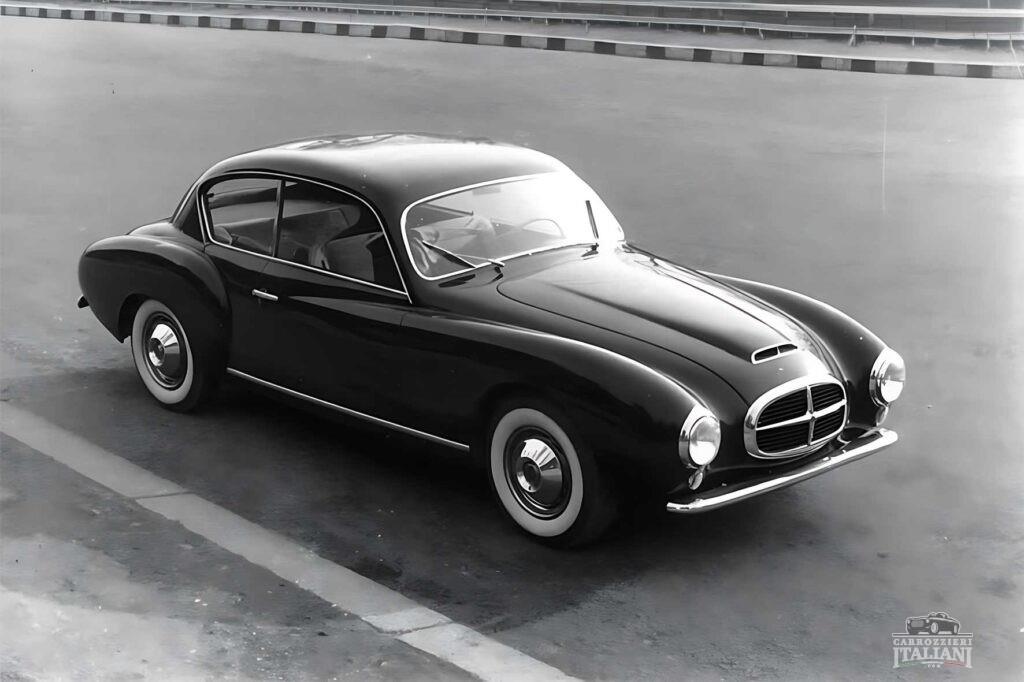
Coriasco produced the Fiat 1400 Giardinetta Metallica in 1951, with Giovanni Michelotti associated with the design. Its importance lies in a different part of the coachbuilding business. Estate cars, ambulances, hearses and commercial conversions had long provided steady work for specialist bodybuilders, and the 1400’s self-supporting shell forced those firms to rethink the way rear structures and roof sections were altered. A Giardinetta was therefore just as technically revealing as a concours cabriolet, even if it attracted far less attention.
Accossato also created a two-door 1400 in 1951, represented today by the Fiat 1400 Accossato. The body is better described as a two-door Berlina, although “Coupé” has long been used as an alias. A related 1400 appeared in concours history at the Pincio in Rome in May 1951, while later references also connect an Accossato 1400 with Monte Carlo; the exact relationship between those event records and individual cars remains less secure than the model identity itself.
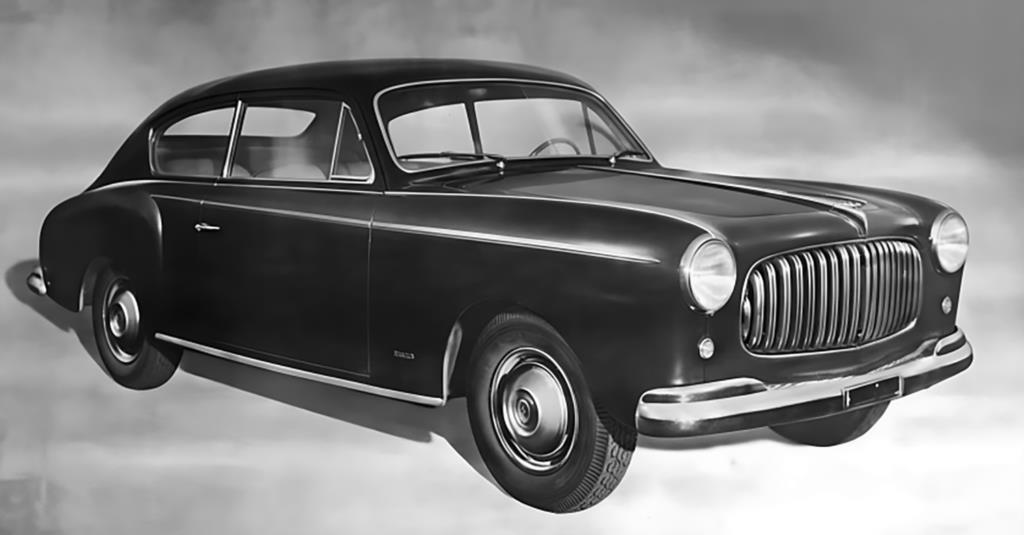
Francis Lombardi’s programme was larger still. A six-seat long-wheelbase 1400 was shown at Turin in 1950, with Giuseppe Rinaldi associated with the styling, while a completely restyled 1400 Special followed in 1951. The latter used curved side glass and should not simply inherit the designer attribution of the earlier car. Lombardi also built a Giardinetta Metallica and later developed the long-wheelbase President line, including the eight-seat 1400 A President shown at Turin in 1954. The Fiat platform was being stretched literally as well as stylistically.
A Fiat that reached almost every part of the carrozzeria world
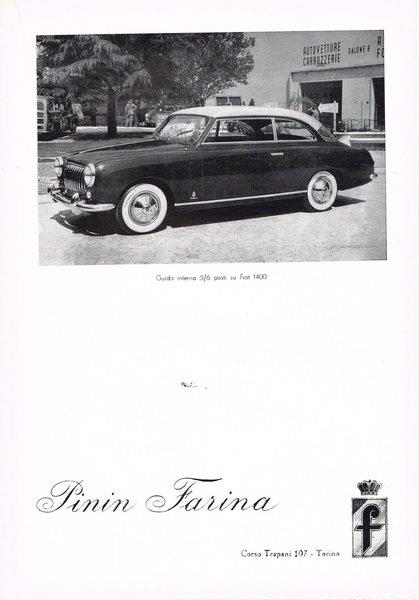
The list continues beyond the better-known cars. Canta produced a 1400 coupé in 1951, Bertone explored several open and closed bodies, Scioneri built a Promiscua, Savio created formal and landaulet interpretations, and Pinin Farina developed its own programme around the model. Balbo, Castagna and other coachbuilders also used the 1400 as a basis. Not every project is documented with the same precision, and some survive only through period photographs, show catalogues or a handful of later references, but together they make one point very clear: the 1400 was not an isolated experiment for the Italian body industry.
This abundance also explains why the history can become confused. Similar bodies were sometimes built by different firms within the same year, model names were reused or altered, and later catalogues occasionally combined distinct cars because they shared the same Fiat base. A motor-show photograph may prove that a car existed without proving a production total; a designer’s employment history may make an attribution plausible without making it certain; and an award reported decades later may not use the same terminology as the period concours record. The most reliable way to read the 1400 story is therefore car by car and project by project, preserving the differences rather than forcing everything into a tidy family tree.
When Fiat itself entered the same territory
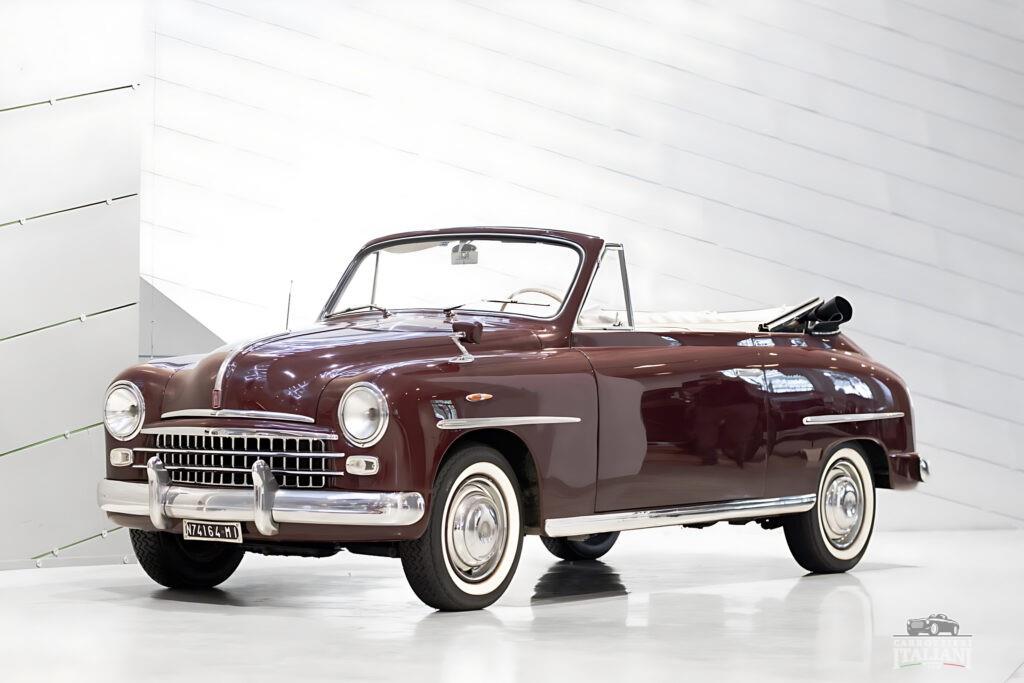
The independent coachbuilders also faced a new kind of competition from Fiat itself. The factory offered a 1400 Cabriolet, reducing one of the traditional advantages of the specialist carrozzeria. An outside firm could no longer justify a higher price simply because it offered an open version of a saloon that Fiat sold only with a roof. A coachbuilt car now needed a stronger design identity, more luxurious finish, a sporting character, greater practicality or simply the exclusivity of very small production.
That pressure helps explain why the special-bodied 1400s are so varied. Touring pursued lightness and competition, Boneschi moved between concours elegance and coupés, Farina experimented with several luxury bodies, Ghia created a complete family of Supergioiello-related cars and practical derivatives, while Vignale and Michelotti produced multiple unrelated designs on the same mechanical base. The smaller firms did the same in their own way, whether Riva with the Monza, Coriasco with the Giardinetta Metallica or Accossato with its two-door Berlina.
A brief window before the rules changed
The success of the Fiat 1400 as a basis for special bodies did not mean the old coachbuilding system had found a permanent solution to the arrival of self-supporting construction. During the 1950s, manufacturers broadened their own ranges, tooling became more expensive and the economics increasingly favoured either conversions that retained much of the factory shell or genuine production contracts in which hundreds or thousands of bodies justified the investment. Pinin Farina and Bertone increasingly became industrial partners as well as design houses, Touring continued to use Superleggera where the method suited the project, and other firms moved toward prototypes, utility vehicles or specialist conversions. Stabilimenti Farina closed in 1953, one of the clearest signs that the landscape was already changing.
The 1400 arrived just before that overlap between mass production and traditional coachbuilding became much narrower. Fiat could build a thoroughly modern saloon in large numbers, while dozens of outside firms still possessed the craftsmen, customers and commercial freedom to cut into a new car and create something of their own. That is why the model generated such an extraordinary range of bodies in such a short period. For a few years the same basic Fiat could be a Touring berlinetta, a Boneschi concours car, a Farina three-seater, a Ghia Supergioiello, a Vignale Orchidea, a Riva coupé, a Coriasco Giardinetta or a racing saloon prepared with Abarth equipment.
Seen together, these cars make the Fiat 1400 far more interesting than its reputation as an important post-war family saloon might suggest. It was one of the first Fiats of the new industrial era, but it still arrived early enough for the old carrozzeria system to engage with it on a remarkable scale. The result was not one definitive special-bodied 1400, but dozens of different answers to the same new Fiat, created at the precise moment when Italian coachbuilding was learning how much freedom remained.

ABOUT THE AUTHOR
Andreas Scheidl
Italian classic car enthusiast with German roots. Renowned as a respected figure in the classic car community, he serves as a jury member at various international concours d'elegance, including the Classic Gala Schwetzingen and Mantova. As a content creator, Andreas passionately shares his profound knowledge and appreciation for vintage automobiles. His heart beats for cars designed by Giovanni Michelotti, showcasing his discerning taste and dedication to preserving the timeless elegance of automotive history.
More stories by Andreas Scheidl ↗CONTINUE READING
Posts You Might Like
Fiat Panda Cabrio: The Italian Coachbuilders Who Opened Giugiaro’s Box
From Moretti’s Panda Rock to Italdesign’s experimental Strip, Maggiora’s four-wheel-drive convertible and Stola’s remarkable Destriero, the history of the open-top Panda reveals an unexpected chapter in Italian coachbuilding. When Giorgetto Giugiaro designed…
Read story
Gabriele d’Annunzio and the Cult of the Automobile
There was a time when the automobile had not yet become part of the landscape. It announced itself from afar through the beating of an engine, the smell of petrol and hot…
Read story
How a Swiss Dealer Challenged Ferrari: The Story of Monteverdi
How Peter Monteverdi went from Swiss Ferrari dealer to creator of rare Frua and Fissore-bodied GTs, the Hai supercar and luxury off-roaders.
Read story
Virgilio Conrero: The Magician Who Whispered to Engines
Who was Virgilio Conrero? The self-taught Italian magician who whispered to engines and built one of motorsport’s greatest tuning legacies.
Read story
THE CONVERSATION
Comments 0
Share a memory, a period photograph or a documented detail about this story.