
The History of Carrozzeria Francis Lombardi
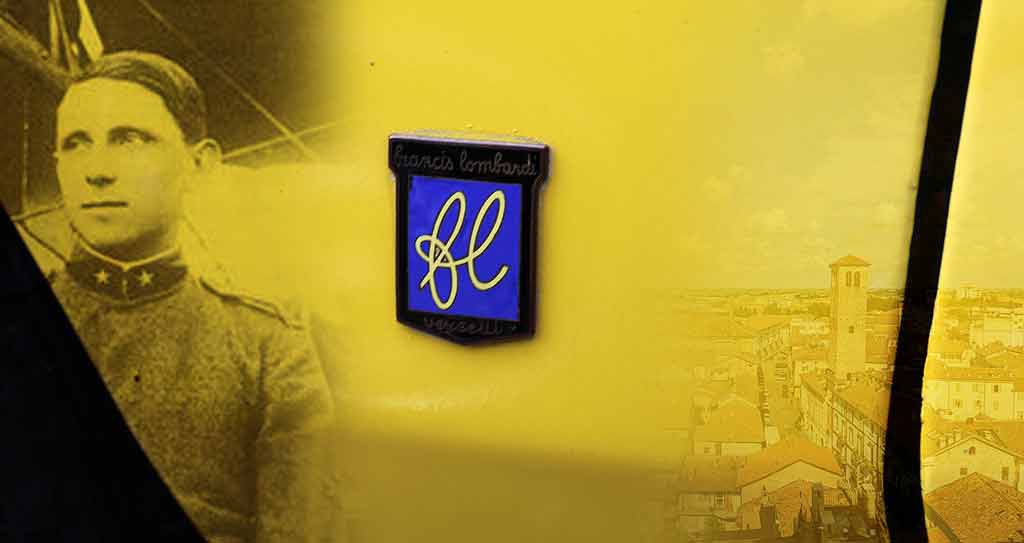
Founded in 1947 in the city of Vercelli by Carlo Francesco Lombardi—better known as “Francis” Lombardi—the company bore the name and spirit of a man whose journey began not on the road, but in the skies. A decorated World War I fighter pilot and later an aviation entrepreneur, Lombardi brought to his coachbuilding endeavors a pilot’s precision, a designer’s vision, and a deep appreciation for both structure and elegance. That aeronautical background would come to define his approach to automobile design, infusing his creations with a rare blend of engineering ingenuity and functional beauty. Over the next quarter-century, Carrozzeria Francis Lombardi produced an eclectic range of vehicles: from charming wood-trimmed station wagons and dignified custom sedans to playful convertibles, compact luxury editions, and even a featherweight mid-engine sports car. Throughout, the company maintained a friendly, imaginative flair that set its creations apart. In this chronologically told history, we follow Francis Lombardi’s trajectory from his firm’s ambitious beginnings through its golden era of fuoriserie specials—particularly the famed Lucciola series—to its final creative bursts in the early 1970s. Along the way, we’ll explore how Lombardi’s designs caught the eyes of popes and princes, earned prizes at concours d’elegance, and carved out a singular place in the story of Italian coachbuilding.
Postwar Foundations and Early Creations (1947–1955)
Francis Lombardi founded his carrozzeria in the aftermath of World War II, a time when Italy was rebuilding and resourcefulness was key. Initially, the firm dabbled in aeronautical design (perhaps inspired by Lombardi’s flying career), but by 1950 it had pivoted entirely to automobiles. The early years saw Lombardi applying aircraft-style craftsmanship to road cars, often using lightweight materials and clean, purposeful lines. One of the first projects was a series of family station wagons with wood-paneled bodywork – vehicles known in Italian as giardiniera.
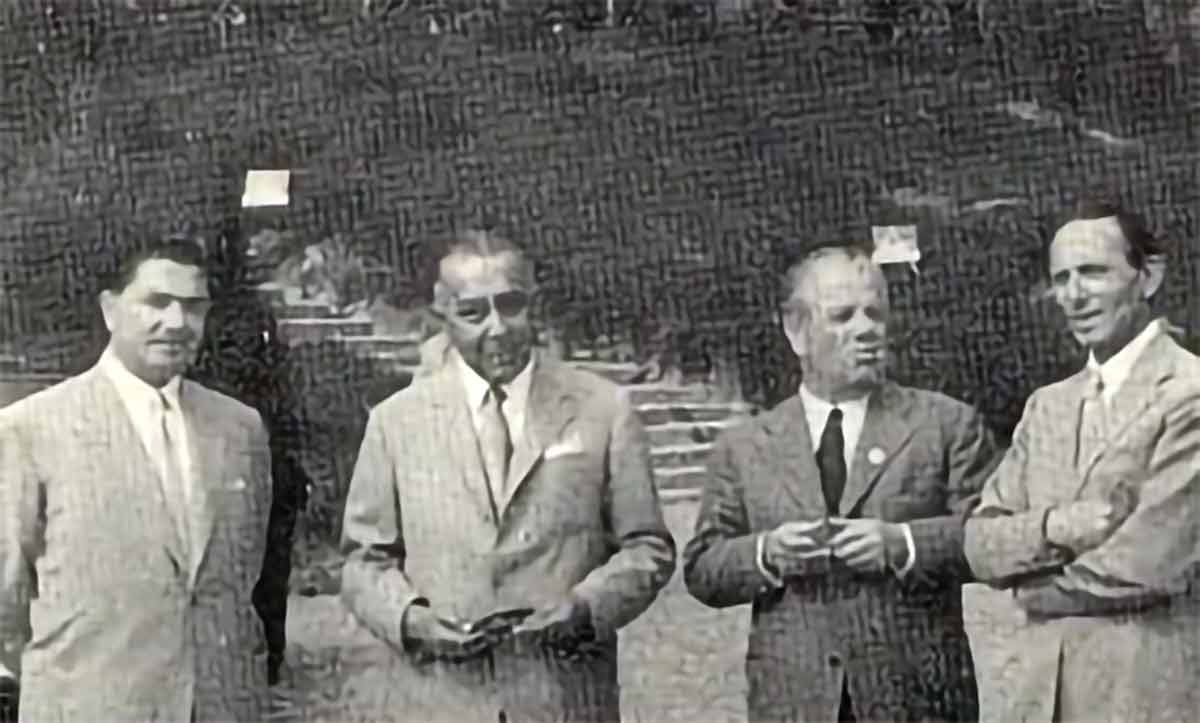
Using the chassis of modest cars like the Fiat 1100 and the Lancia Aprilia, Carrozzeria Lombardi crafted these “woody” wagons to provide much-needed utility in the postwar era. They featured timber-framed rear bodies attached to steel front cabs, blending car and carpentry in a manner reminiscent of American suburban wagons of the time. These practical yet stylish estates were well-received; in fact, a Lombardi-built Fiat 1100 wood-bodied wagon, nicknamed the “Saloncino” (little saloon), earned first prize in its class at the 1949 Concorso d’Eleganza del Pincio in Rome. This victory at a prestigious concours d’elegance — essentially a beauty pageant for cars — put the young coachbuilder on the map and affirmed Lombardi’s talent for inventive design.
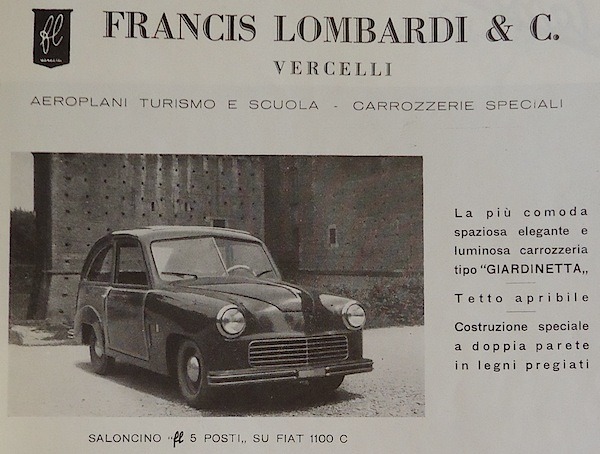
Encouraged by early accolades, Lombardi expanded his repertoire. In the early 1950s he built a handful of sporty coupés and convertibles on Fiat sedans such as the 1100E and the newly introduced 1400. These limited-production specials were typically more restrained in style than the flamboyant show cars of bigger Italian carrozzerie, but they displayed a solid understanding of proportions and detail. For example, at the 1950 Turin Motor Show, Francis Lombardi unveiled a six-seater Fiat 1400 sedan with an elongated wheelbase. Though externally subtle, its increased length and seating capacity signaled Lombardi’s willingness to modify factory cars substantially to meet new needs. Around the same time, he also showed a graceful Fiat 1100 cabriolet, demonstrating that his workshop could handle elegant open-top tourers as well as utilitarian wagons. These early efforts, often engineered in partnership with established freelance designers (Lombardi collaborated with talents like Giuseppe Rinaldi and Giovanni Michelotti), were praised for their tidy craftsmanship and practical focus.
By the mid-1950s, Francis Lombardi had developed a reputation as a coachbuilder who could add a touch of luxury or extra practicality to everyday Italian cars. Government ministries and private companies took note. Lombardi’s firm received commissions to create stretched limousines from standard Fiat sedans such as the 1400, 1800, and later the 2100/2300. In an era when Italy’s officialdom often relied on foreign luxury cars or expensive coachbuilt Lancias, Lombardi offered a homegrown alternative: reasonably priced Fiat-based limos with plush seating for six or more. He would cut the cars in half and insert lengthened sections to extend the wheelbase, then finish the interiors in fine wool cloth or leather and add touches like privacy partitions. These cars were intended for ministerial use and representation, ferrying Italy’s postwar ministers and VIPs in comfort. Despite their workmanlike origins, they exuded an understated elegance. One notable creation was a Fiat 2300 limousine built in 1963 with a tall glass roof section for Vatican use – a car that would soon earn fame as the first true “Popemobile.” But even before that crowning achievement, Lombardi’s ability to creatively repurpose Italy’s humble sedans had made him a respected name in coachbuilding circles.
The Rise of the “Fuoriserie”: Lucciola and Early Innovations (1956–1960)
As Italy entered the economic boom of the late 1950s, car ownership surged and Fiat’s tiny models like the 500 and 600 put the nation on wheels. This boom created an unexpected niche: some buyers, having waited long for their economy car, were willing to spend extra to make it special. The Italian term “fuoriserie” refers to custom-built or limited-series cars, literally “outside the standard series.” Francis Lombardi enthusiastically embraced the fuoriserie concept, especially for small cars, where few other coachbuilders were focusing. His idea was clever – take a popular inexpensive car, and transform it into something unique, more practical, or more luxurious, thereby giving the owner a bit of exclusivity and pride. Lombardi’s innovations in this era combined functional improvements with stylish flourishes, and they culminated in a series he fondly called Lucciola, or “firefly.”
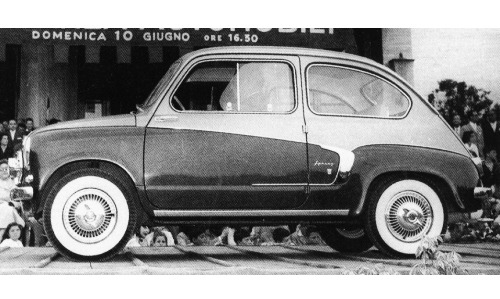
In 1956, Francis Lombardi’s team created an eye-catching show car called the Fiat 600 Spring, signaling the new direction. Unveiled at the Concorso d’Eleganza at the Lido di Venezia, the 600 Spring was a jaunty semi-convertible version of the little Fiat 600. It featured a cut-down roof with a large rollback sunroof (and an optional full open-top), two-tone paint and extensive chrome ornamentation. The tiny car was decked out with luxuries like a special grille with integrated fog lamp, chrome wheel covers, and even “suicide doors” (rear-hinged doors) for easier access to the back seat. Painted in cheerful pastels or vibrant combinations, the Spring turned the utilitarian 600 into a fashion accessory. While it was built in very limited numbers, the 600 Spring generated considerable buzz. Showgoers in Venice loved its playful elegance, and it demonstrated Lombardi’s belief that even a people’s car could be made to feel bespoke. This project laid the groundwork for Lombardi’s most celebrated endeavor: the Lucciola series.
This naming strategy wasn’t just poetic; it was intentional. By assigning a coherent theme to their custom series, coachbuilders made it easier for the public to identify their signature work at a glance—or even just by name. Bertone, for instance, often used the word “Smart” across its custom-bodied Fiats to emphasize modernity and style. Vignale favored elegant French names, a choice partly influenced by designer Giovanni Michelotti, who spoke French and not English. In the case of Francis Lombardi, the unifying theme was insects: Maggiolina (ladybug), Lucciola (firefly), and Libellula (dragonfly). These names conjured lightness, agility, and natural charm—apt metaphors for Lombardi’s imaginative reworkings of Italy’s beloved city cars. Each one represented a handcrafted variation on the familiar, fluttering gracefully above the plainness of mass production. It was the same spirit that defined Italy’s postwar customization culture, and Lombardi remained at the forefront with creations that were not only clever and beautiful, but unmistakably his.
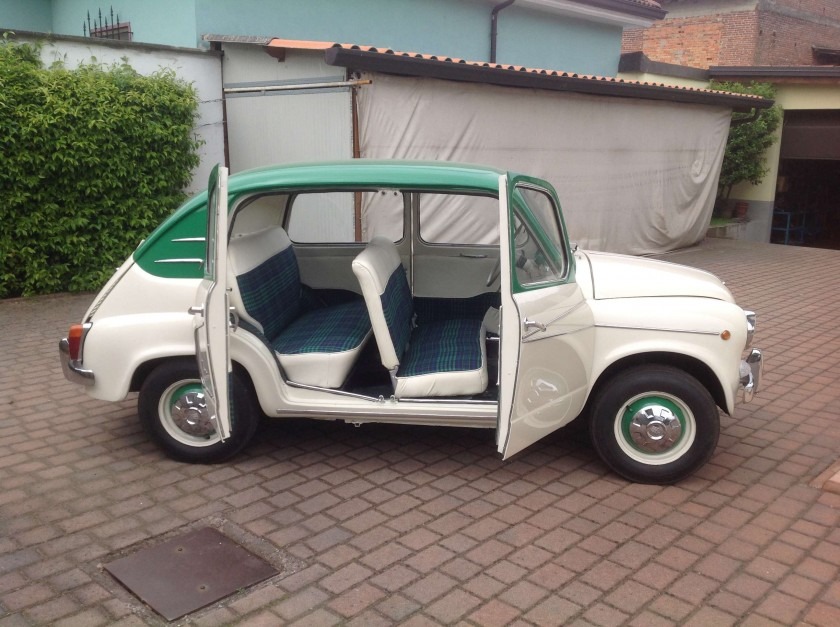
In early 1957, Carrozzeria Lombardi introduced the first Fiat 600 Lucciola, a truly novel reimagining of the Fiat 600 sedan. At a glance, the Lucciola looked similar to a standard 600, but a closer inspection revealed a remarkable modification: four doors on a car originally designed with only two. By adding a second pair of doors and eliminating the central roof pillar, Lombardi turned Fiat’s minuscule city car into a pint-sized family sedan. The front doors remained forward-hinged while the new rear doors were hinged at the back (hence the nickname “suicide doors”), opening wide in opposite directions and providing surprisingly good access to the rear seats. The absence of a B-pillar gave an airy, unobstructed opening, though it required careful engineering to maintain body rigidity – something Lombardi achieved by reinforcing the roof and door frames, drawing on his structural know-how. Inside, the 600 Lucciola was trimmed a bit more lavishly than a stock Fiat; Lombardi added touches like special hubcaps, better upholstery, and sometimes a unique floor-mounted shifter (as opposed to Fiat’s steering column shifter) for a sportier feel.
Francis Lombardi proudly referred to the Lucciola as one of his “fuoriserie” creations – a custom offering for discerning clients – and indeed it was marketed towards an upscale urban clientele. The little four-door “firefly” captured the public’s imagination. In magazines and at auto shows, the Fiat 600 Lucciola was praised as an ingenious solution for families who wanted a small car without sacrificing convenience. Critics noted how skillfully Lombardi had preserved the 600’s original charm and maneuverability while adding genuine practicality. The design even carried a nostalgic hint of prewar Fiats (which often had rear-hinged doors and pillarless openings), giving the Lucciola a vintage touch within its modern, compact package. Buyers were intrigued, including some very high-profile owners: Prince Rainier III of Monaco famously purchased a Fiat 600 Lucciola, attracted by its exclusive aura and urban chicness. For all its acclaim, the Lucciola was a luxury item – it cost roughly one and a half times the price of a standard Fiat 600. This steep premium, reflecting the hand-crafted modifications, meant production remained small. Only a few dozen were built in the late 1950s, and today just a handful of 600 Lucciolas are known to survive, making them prized collectibles. Yet their impact was significant. The Lucciola proved that Francis Lombardi could inject haute couture into a humble city car, and it established a template he would reuse with later Fiat models.
Building on the 600 Lucciola’s success, Lombardi extended the “Lucciola” concept to new models in the 1960s. Fiat’s lineup evolved with larger, slightly more powerful cars, and Lombardi was ready to work his magic on them as well. In the early 1960s he developed a four-door conversion of the Fiat 850 sedan. The Fiat 850 Lucciola followed the same formula: four doors without a center pillar, compact dimensions, and upgraded trim. Debuting around 1964 (not long after the stock 850’s release), the 850 Lucciola brought Lombardi’s family-friendly vision to the next segment up. It retained many of the innovations of the 600 version – the rear-hinged doors with fully roll-down windows framed in chrome, and a roof reinforced with dual external ribs for stiffness. Lombardi paid attention to details that would set the car apart: for instance, he gave the 850 Lucciola a squarer roofline than the base model, which improved rear headroom and visibility, and he provided a wider engine access hatch at the back to make maintenance easier on the tight rear-engine layout. Advertising for the Lucciola emphasized its liveliness, handling, and economy – Lombardi wanted to show that adding two extra doors did not compromise the little car’s driving character. If anything, he positioned the Lucciola as the ultimate 850 for the practical motorist: you got Fiat’s proven mechanics and nationwide service support, plus the exclusivity of a custom design. A contemporary brochure extolled six key features of Lombardi’s 850, from its special locks and safety enhancements to the quiet, insulated cabin. All told, it was a remarkably thorough re-engineering of a mass-market car, accomplished by a relatively small workshop.
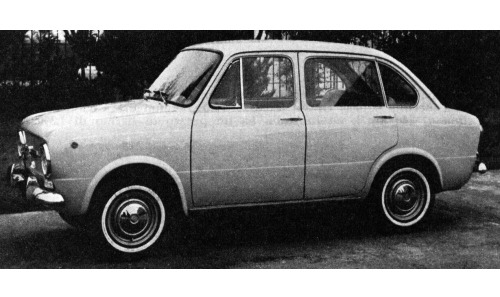
The Fiat 850 Lucciola garnered interest beyond Italy’s borders. In Spain, where Fiat-licensed cars were produced under the SEAT brand, there was demand for a domestically built four-door mini-sedan. SEAT reached a licensing arrangement to use Lombardi’s design as the basis for its own SEAT 850 cuatro puertas in the late 1960s. An initial series of a few hundred Spanish 850 “short” sedans was directly derived from Lombardi’s blueprint – effectively, Spanish-built Lucciolas, complete with the compact 4-door body. This was a rare instance of an Italian coachbuilt design being put into series production abroad. While that first SEAT series had some build-quality issues (and very few have survived), it demonstrated the soundness of Lombardi’s concept. SEAT soon commissioned a more extensive four-door redesign with a longer wheelbase for larger production, showing how Lombardi’s pioneering work had pointed the way. Back in Italy, the 850 Lucciola remained an exclusive oddity – produced in limited numbers for those “in the know” – but it cemented Francis Lombardi’s status as the go-to coachbuilder for creative small-car solutions.
“Lucciola” to “Lucciola”: The Firefly Evolves and Other Fuoriserie Highlights
Francis Lombardi’s flair for fuoriserie specials wasn’t limited to four-door transformations. During the late 1950s and early 1960s, his workshop explored other ways to elevate Fiat’s tiny cars for a style-conscious market. One avenue was the creation of miniature convertibles and roadsters that offered a dose of la dolce vita on a budget. The Fiat 600 Spring we mentioned was one early example. Another was the Fiat 600 “Maggiolina”, introduced in 1958. The Maggiolina (Italian for “May-bug” or ladybug) was essentially a cabriolet conversion of the standard Fiat 600, giving it a fully open roof and a slightly revised body. Painted in light pastel colors and often seen with a canvas top boot neatly folded at the rear, the 600 Maggiolina was irresistibly cute. It provided an affordable alternative to more expensive coachbuilt spiders and gave Italians a way to enjoy open-air motoring in the most congested of city streets. A few years later, Lombardi applied the same idea to the smaller Fiat 500. In the mid-1960s he offered a Fiat 500 Maggiolina, a tiny two-seat convertible based on the Nuova 500. With a price of around 640,000 lire (significantly more than a stock 500, but still far less than any luxury convertible), the 500 Maggiolina was marketed to trend-setting youths and city dwellers who fancied a fun ride. These miniature cabriolets were never intended for high production – only handfuls were built, and they often served as showcases at auto shows or accessories for wealthy patrons – but they amplified Francis Lombardi’s image as a creative coachbuilder who could inject glamour into the simplest vehicles.
Meanwhile, the Lucciola lineage had one more act. In 1971, toward the end of the company’s life, Lombardi unveiled the Fiat 127 Lucciola. Fiat’s new 127 model was a modern front-wheel-drive hatchback, sold only as a two-door at first. Lombardi saw yet another opportunity to fill a niche: he created a four-door version of the 127, extending its usability much as he had done with the 600 and 850. The 127 Lucciola made its debut at the 1971 Turin Auto Show, where visitors saw a small hatchback with two extra doors seamlessly integrated. Because the 127’s design had a thick roof rail above the doors, Lombardi retained a B-pillar this time (unlike the pillarless older Lucciolas), but he still ensured that the rear doors opened wide to ease passenger entry.
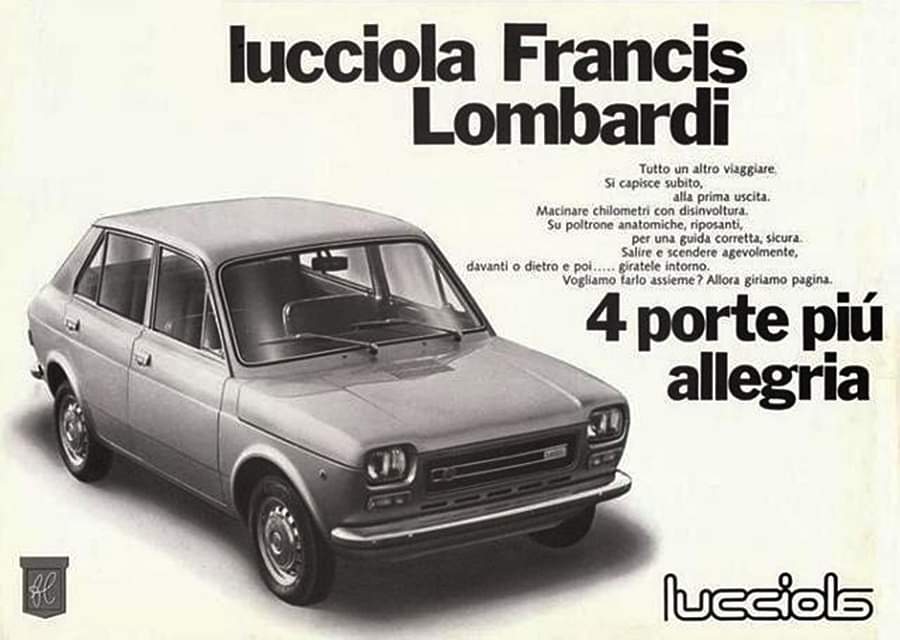
In profile, the 127 Lucciola looked entirely natural – designed with the contribution of Giovanni Michelotti. The conversion was executed so well that one could imagine Fiat themselves might have considered it. As it happened, Fiat did eventually introduce four and five-door superminis, but not until many years later; in 1971, Lombardi’s 127 Lucciola stood alone. It was produced only in a very small series, making it extremely rare today, but it represents a fitting bookend to the Lucciola story – the final “firefly” from the mind of Francis Lombardi, capping a family of special cars that had spanned three generations of Fiats. Together, the 600, 850, and 127 Lucciolas form a thread in Italian automotive history that highlights the ingenuity of coachbuilders in adapting to the era of mass-produced cars. They were the bespoke mini-saloons that nobody else built, and they underscore Lombardi’s legacy of humanizing and individualizing the automobile.
Not all of Lombardi’s efforts in the 1960s were focused on making cars more practical – he also tried making them more luxurious in feel. Perhaps the best example of this was the Fiat 500 “My Car”, which would become the company’s greatest commercial success. By the late 1960s, the boom in Italy’s economy meant there was a segment of buyers who loved the Fiat 500 for its thrift and maneuverability but wished it had a bit more style and comfort. In response, Francis Lombardi created the 500 My Car in 1968. This was not a coachbuilt car from the ground up, but rather a clever re-trim and enhancement of the production 500 – done so comprehensively that it warranted a new name. Lombardi essentially received brand-new Fiat 500s directly from the factory minus some trim, and then his workshop outfitted them with a host of upgrades. The My Car featured a distinctive higher roof with two transverse stiffening ribs and even a tiny integrated spoiler lip at the back – giving the diminutive vehicle a surprising hint of sportiness while also improving headroom for occupants. The interior was transformed: a new molded dashboard with a proper instrument binnacle (instead of Fiat’s Spartan layout), upholstered door panels, and additions like a wooden Nardi steering wheel and wooden gear knob lent a touch of class. The seats often had better padding and two-tone leatherette finishes. Small but thoughtful touches – such as pop-out rear quarter windows for ventilation, bright metal sill plates, and unique rounded chrome grilles on the front – completed the package. In essence, the My Car was a luxury edition of the Fiat 500, aimed at those who desired an upscale city car.
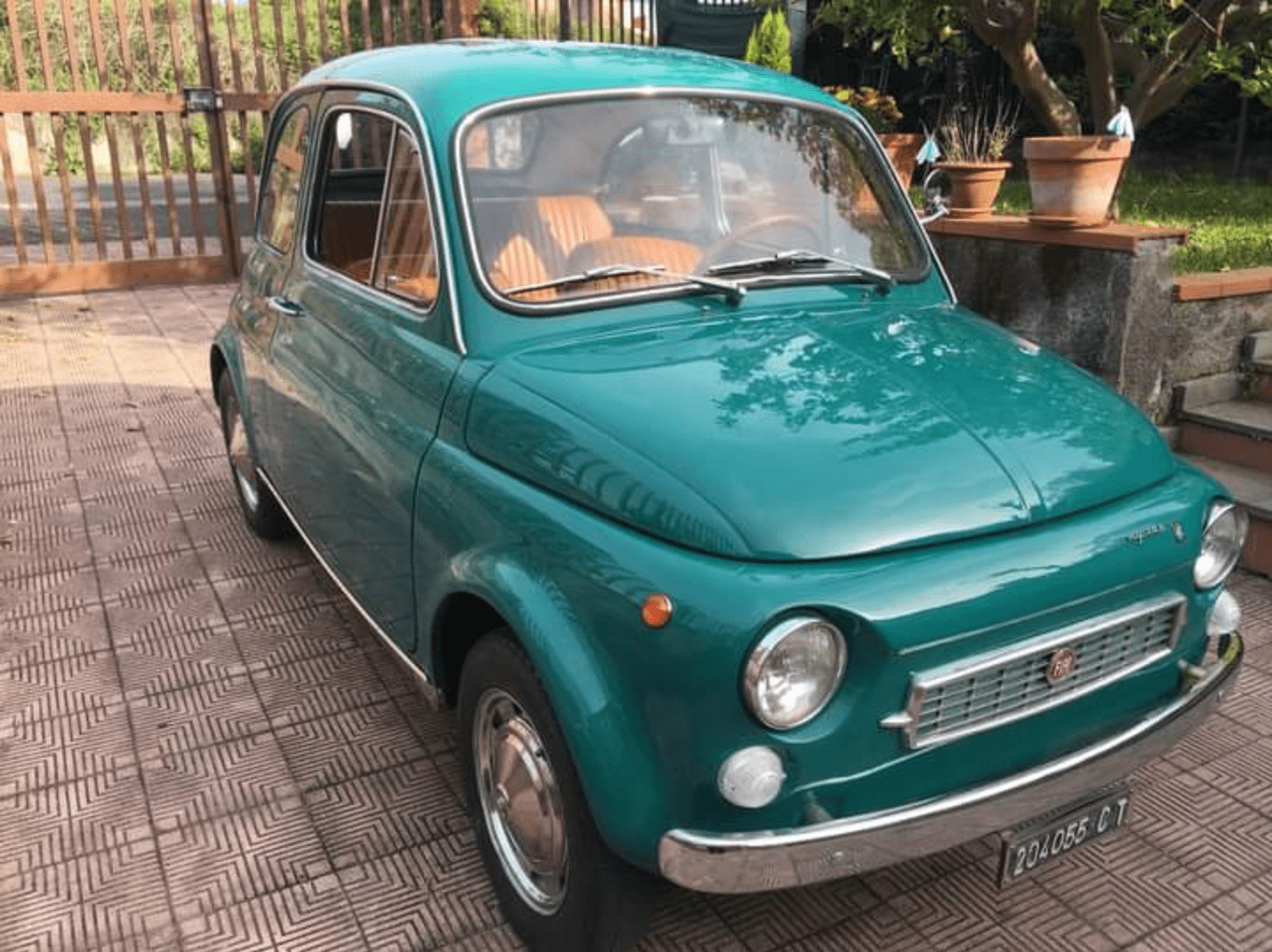
What made the 500 My Car truly remarkable was its sales success. Despite costing significantly more than the standard model, it struck a chord in the market. Buyers were enticed by the idea of having a tiny car that was also a fashion statement and a status symbol of sorts. Moreover, Lombardi had a practical advantage: due to his arrangement with Fiat, he could deliver My Cars faster to customers than Fiat dealers could deliver a new 500, at a time when waiting lists for popular models were long. The My Car turned into a hit, with a production run of a few thousand units between 1968 and 1971 – an astonishing figure for a coachbuilt variant. At the peak, Lombardi’s facility was reportedly turning out as many as 6,000 My Cars per year, a volume unheard-of in the coachbuilding world, effectively making Lombardi a small-scale manufacturer. The little luxury 500s were seen zipping around Italian cities, sporting metallic paint and personalized touches, proudly bearing Francis Lombardi badges. They even could be ordered with tuned engines from Giannini for extra pep, underscoring how customizable the concept was. The My Car’s success kept the coachbuilder financially healthy at a time when many traditional carrozzerie were struggling or closing. It stands as a testament to Lombardi’s understanding of the evolving car market: he recognized that as cars became mass-produced commodities, a segment of buyers would pay for distinctiveness and better amenities, even in the lowest vehicle classes. In doing so, he essentially anticipated the modern notion of “boutique” editions of economy cars.
Ambitions on the Fast Lane: Sports Cars and Prestige Projects (1963–1972)
Even as Francis Lombardi earned his fame through small, practical cars, he never lost his fascination with speed and aerodynamics, surely a carryover from his flying days. Throughout the 1960s, the company occasionally ventured into the realm of sports cars and prototypes, often unveiling them at the Turin Auto Salon. These projects were sometimes one-off show cars and sometimes low-volume production models, but they all carried a bit of racing spirit and design daring.
A significant milestone came in 1963 with the creation of what is often hailed as the first true Popemobile. Commissioned by the Vatican, Lombardi built a special Papal limousine for Pope Paul VI, based on the large Fiat 2300 sedan. At first glance, this Vatican car looked like a formal state limousine – black, long, and stately. But its party trick was at the back: Lombardi constructed a raised rear compartment with a transparent glass dome-like roof, allowing the Pontiff to stand upright and be visible to crowds when he toured. Prior papal cars had usually been open-topped or improvised conversions; this was the first time a car had been specifically designed for the purpose of papal audience, complete with a removable roof section and grab handles for the Pope.
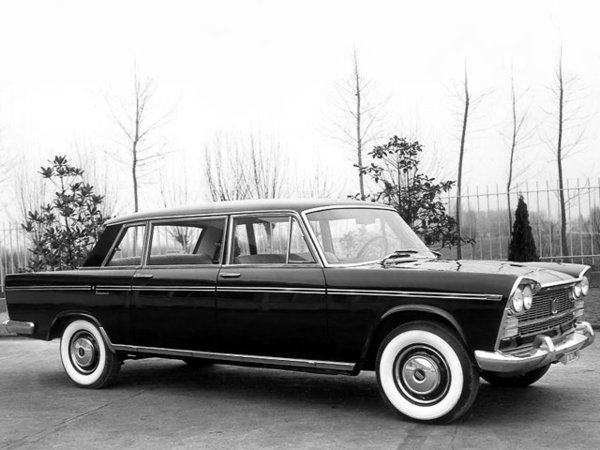
Dubbed the “2300 Papal Landaulet,” it was delivered in time for Pope Paul VI’s travels in the mid-’60s and was used on several occasions. For Francis Lombardi, a devout Catholic, this project was a point of immense pride. It showcased the coachbuilder’s capability at the highest level of custom fabrication – meeting rigorous specifications for comfort, visibility, and safety for a head of state – and it wrote the Lombardi name into history books far beyond the automotive press. The Popemobile’s success would later inspire many similar vehicles by other makers, but Lombardi’s innovative design was the one that set the template. It also underscored the coachbuilder’s versatility: in the same year he could build a tiny Fiat 850 Lucciola for a small family and a grandiose Fiat 2300 for the Pope.
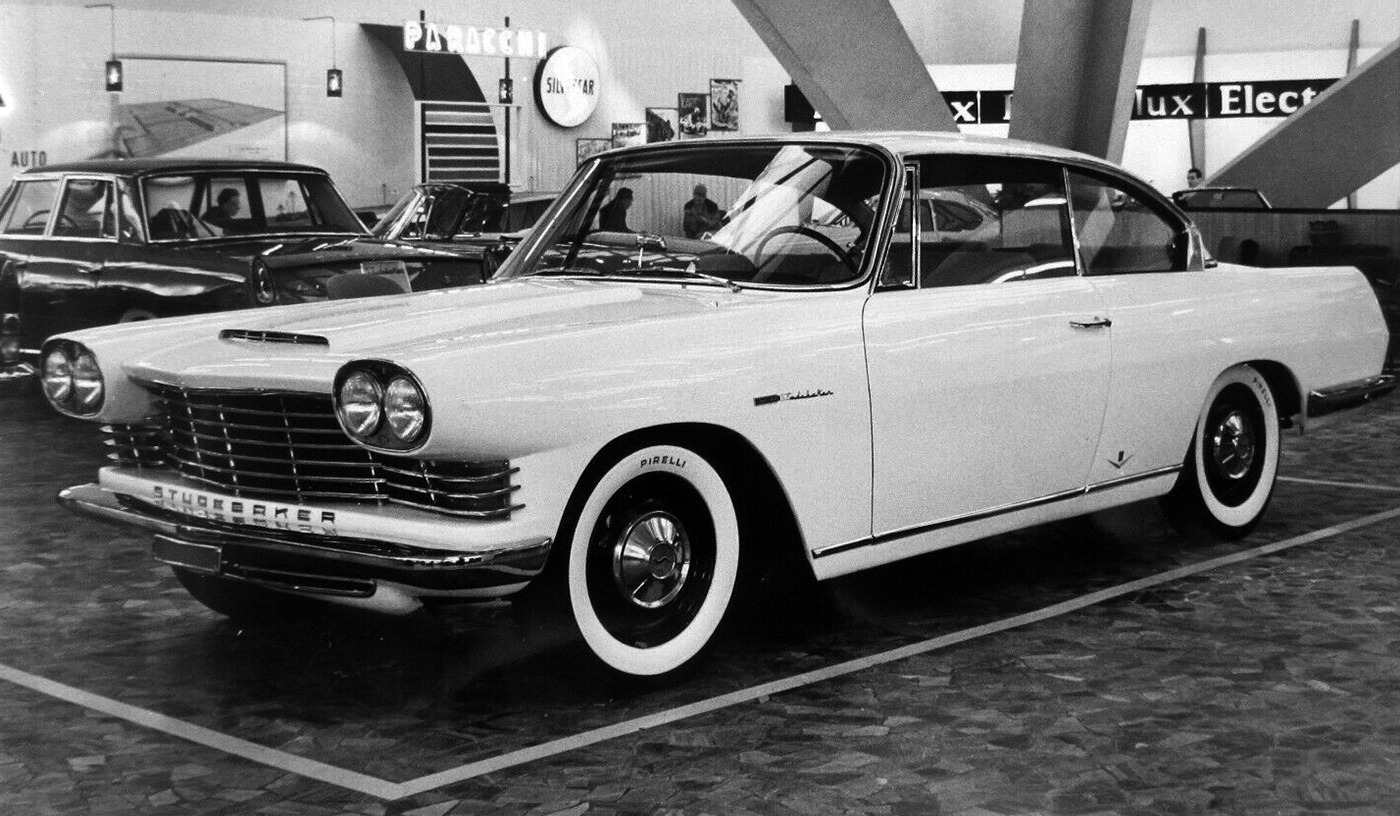
Around that period, Lombardi took on another intriguing project. In 1960, American carmaker Studebaker was looking for ways to freshen its lineup, and an Italian entrepreneur floated the idea of Italian-designed Studebakers for limited production. Lombardi developed prototypes of a Studebaker Lark in both coupe and sedan form, Italianized with sleek bodywork. The project, ambitiously aiming for 1,000 units, ultimately did not come to fruition (Studebaker’s fortunes waned), but the fact that Francis Lombardi was involved shows his standing in the coachbuilding community. He was trusted to engineer and potentially produce a transatlantic hybrid car – a sign that his workshop had grown in capability.
The most famous Lombardi foray into sports cars came with the introduction of the Lombardi Grand Prix at the end of the 1960s. First shown around 1967 and entering production by 1968, the Grand Prix was unlike anything Lombardi had done before: a low-slung, two-seat coupé with a mid-mounted engine. In an era when even Ferruccio Lamborghini was only just launching his mid-engine supercar, here was Francis Lombardi, the small coachbuilder from Vercelli, crafting a “mini-exotic.” The Lombardi Grand Prix was built on the mechanical base of the Fiat 850, but it was thoroughly transformed. The chassis was adapted to carry the engine behind the seats, and the styling was all-new: a sharp-nosed front with pop-up headlights, a smooth fastback silhouette, and an almost tail-less rear deck courtesy of the rear-mounted radiator and engine. Despite its tiny size (smaller than a contemporary Porsche or Alfa coupé), the Grand Prix had presence; one magazine dubbed it a “junior Ferrari” in looks if not in speed. Lombardi engineered the car to accept various levels of tuning. In stock form it used Fiat’s 843 cc four-cylinder with modest power, but thanks to a lightweight body it could still approach 160 km/h (100 mph) – quite brisk for its class.
In the early 1970s, as the coachbuilding industry began to contract, Francis Lombardi attempted a few more projects. At the 1971 Turin show, alongside the Fiat 127 Lucciola, he displayed the Fiat 128 “Star”, a one-off concept of a four-door Fiat 128 sedan with very angular, modern lines. The 128 Star (and a follow-on iteration called the 128 “Smart”) were exploratory designs to showcase how Lombardi might reshape the styling of Fiat’s front-drive family car. These did not progress to production, but they indicated Lombardi’s interest in keeping up with contemporary design trends, moving toward squarer, crisper aesthetics of the 1970s.
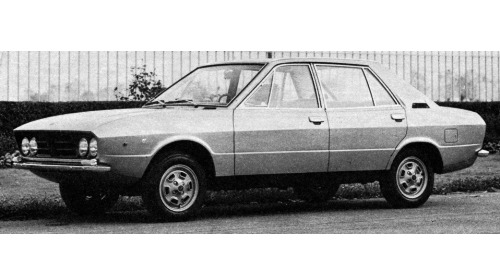
Then in 1972, Lombardi rolled out a grander ambition: the Lombardi FL1 prototype. The FL1 was a sleek two-seater coupé built on the chassis of a Lancia 2000 Berlina, a much larger platform than anything Lombardi had used before. The prototype had a low shark-like nose, a sloping roofline, and pop-up headlights – it looked every inch a 1970s GT car. Underneath, it packed Lancia’s 2.0-liter flat-four engine, and Lombardi claimed the car could hit 200 km/h (125 mph); he even tantalizingly noted that the chassis could accept a more potent V6 for 225 km/h performance. The plan was to put the FL1 into limited production (on the order of 150–200 cars a year) to crown the Francis Lombardi lineup. Unfortunately, by this time the economic climate was turning and Lombardi’s small enterprise was under strain. The early 1970s brought global financial difficulties and stricter safety regulations that made life hard for coachbuilders. The FL1 remained a one-off prototype, a what-could-have-been that never saw a showroom. And in 1973, after 26 years of creativity, Carrozzeria Francis Lombardi closed its doors for good. Carlo “Francis” Lombardi, then in his seventies, retired from the automotive stage and would pass away ten years later in 1983.
Innovation in Miniature
Though it ceased operations, Carrozzeria Francis Lombardi left behind a rich legacy. This was the coachbuilder that bridged eras – connecting the grand tradition of Italian custom bodywork with the age of the city car. In a time when many carrozzerie either became styling houses for large manufacturers or faded away, Lombardi carved a niche by staying small and agile. His firm’s creations were never mass-market blockbusters, but they filled gaps in the market with charm and intelligence. Lombardi demonstrated that even the simplest car could be reimagined as something unique: a Fiat 600 could become a tiny limo, a Fiat 500 could become a chic luxury runabout, a Fiat 850 could morph into a pint-sized supercar. This willingness to think outside the box (or outside the assembly line) is what endeared his work to enthusiasts and earned respect from industry peers.
Throughout its history, the company garnered a number of awards and recognition that testified to its design excellence. From the early class win at the 1949 Rome concours d’elegance to later appearances at auto shows in Geneva, Turin, and beyond, Lombardi’s cars frequently stood out. They won admiration not for opulent extravagance but for clever design that served a purpose. Whether it was exhibition judges appreciating the ingenious packaging of the Lucciola or journalists praising the polished details of the My Car, Francis Lombardi’s designs were seen as honest, functional, and endearing. They also occasionally brought home trophies – for instance, a Lombardi-bodied Fiat won a class at the 1959 Cortina d’Ampezzo elegance contest, and others earned honorable mentions at various Italian car shows (even if such accolades weren’t heavily publicized). Moreover, the ultimate “award” might well have been seeing his Popemobile in use at a papal ceremony, or a glamorous client like a European prince choosing his custom mini-car over more conventional luxury options.
Lombardi’s work is also significant in the broader context of Italian design evolution. He was part of a postwar wave of innovators who democratized certain features – like four-door layouts and personalized interiors – which would later become common in the industry. In some sense, Lombardi anticipated the modern trend of manufacturers offering multiple variants and custom personalization on small cars. Today, when one sees a limited edition of a Fiat 500 or a special trim on a city car, it echoes what Lombardi was doing half a century ago by hand: giving customers variety and a sense of individuality. Additionally, Lombardi’s story highlights the synergy between Italy’s aviation and automotive worlds. Like a handful of other Italian aeronautical engineers-turned-car designers, he applied aerodynamic thinking and lightweight construction concepts to cars, albeit on a modest scale. The ribbed roofs of his cars, the wraparound visibility, the efficient use of small engines – these reflected an ethos of making the most from little, a very Italian trait in design.
Today, the vehicles built by Francis Lombardi are cherished collector’s items. They survive in small numbers, often lovingly restored by enthusiasts who appreciate their rarity and significance. A Francis Lombardi Fiat 500 My Car, with its cute spoilered roof and wood-trimmed cabin, is a star at any classic microcar show. A Fiat 600 or 850 Lucciola draws crowds at concours events, as people marvel at how such a tiny car could have four doors and such elegance. And the Lombardi Grand Prix and its Abarth and OTAS cousins have become legends in their own right – the little “Ferraris” that could, celebrated in vintage racing circles and classic sports car magazines. Carrozzeria Francis Lombardi may not be as widely known as Pininfarina or Bertone, but among connoisseurs of Italian automotive history, it holds a special place. It’s remembered for the personal touch it gave to mass-produced automobiles, the kind of artisanal creativity that embodies the best of Italian coachbuilding. In a friendly, unpretentious way, Francis Lombardi and his team proved that innovation isn’t about size or budget – it’s about ideas. From the fireflies on the roads of Turin to the Popemobile in St. Peter’s Square, those ideas continue to shine, affirming Francis Lombardi’s legacy as a truly original coachbuilder in the grand Italian tradition.

ABOUT THE AUTHOR
Andreas Scheidl
Italian classic car enthusiast with German roots. Renowned as a respected figure in the classic car community, he serves as a jury member at various international concours d'elegance, including the Classic Gala Schwetzingen and Mantova. As a content creator, Andreas passionately shares his profound knowledge and appreciation for vintage automobiles. His heart beats for cars designed by Giovanni Michelotti, showcasing his discerning taste and dedication to preserving the timeless elegance of automotive history.
More stories by Andreas Scheidl ↗CONTINUE READING
Posts You Might Like
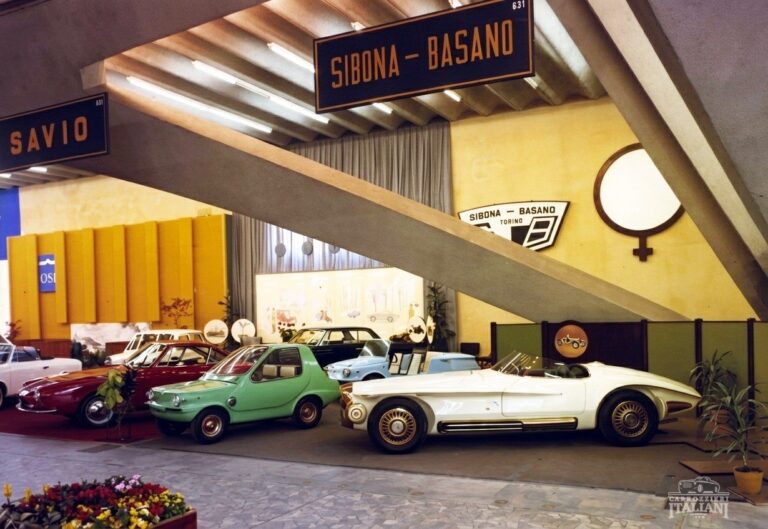
Sibona & Basano: The Turin Workshop Behind Abarth, Exner and Autonova
For a brief period in the 1960s, Sibona & Basano occupied a distinctive position in Turin's coachbuilding industry, constructing competition bodies, prototypes and experimental cars for Abarth, American designers and some of…
Read story
The Story of Carrozzeria Vignale
The story of Carrozzeria Vignale represents one of the many somewhat forgotten success stories born against the backdrop of an Italy that was torn apart by the Second World War and which,…
Read story
Carrozzeria Savio: The History
From early Fiat specials to the Jungla, Delta S4 and Italdesign Aztec, the story of Carrozzeria Savio is far richer than many remember.
Read story
The History of Carrozzeria Boano
The untold story of Mario Boano and Carrozzeria Boano, from Ferrari 250 GTs to the Spiaggina, reshaping Italian automotive history.
Read story
THE CONVERSATION
Comments 0
Share a memory, a period photograph or a documented detail about this story.