
Who Designed It? The Most Confusing Italian Car Design Attributions Explained
There is a very specific kind of argument that only car enthusiasts can produce, and it usually begins with a sentence that sounds completely harmless, such as “the Ferrari F40 was designed by Pininfarina,” or “the BMW Turbo was by Michelotti,” or “the Fiat Coupé was a Pininfarina car.” Nobody throws a chair immediately, because we are civilised people, at least in theory, but within about three minutes someone has mentioned Pietro Camardella, Paul Bracq, Marcello Gandini, Giampaolo Benedini, Federico Formenti, Chris Bangle, Virgil Exner and possibly a clay model that no longer exists. At that point, the original sentence has collapsed, the coffee has gone cold, and everyone is suddenly discussing whether “designed by” means drawn, supervised, built, bodied, engineered, finalised, badged, or simply photographed in front of the correct building.
The problem is that automotive design history, especially in Italy, rarely behaves like a clean museum label. It is not always one car, one designer, one studio and one neat answer. More often, it is a whole chain of responsibility, with a manufacturer providing the brief, a design chief giving direction, a young stylist creating the decisive sketch, a coachbuilder turning it into metal, a prototype workshop making it real, an engineer ruining everyone’s perfect line because the radiator needs air, and a marketing department later compressing the entire saga into one famous name on a brochure.
That is why so many design attributions sound correct until someone asks the second question. Yes, many Ferraris were Pininfarina designs, but that does not mean Battista Pinin Farina, Sergio Pininfarina or a single family figure personally drew every curve. Yes, a car can be called a Bertone, but that does not mean Nuccio Bertone was necessarily the man with the pencil. Yes, a Zagato badge matters, but sometimes Zagato built or transformed a car that had been styled elsewhere. Yes, Vignale, Ghia, Boano, Touring and Michelotti all belong deeply to the history of Italian design, but their roles changed from project to project, and the same name could mean designer, builder, consultant, industrial partner or simply the place where the thing finally became physical.
In other words, the real question is not always “who designed it?” The better question is: who drew it, who directed it, who built it, who modified it, and who received the credit when the car entered history?
That is where the fun begins.
The Name on the Badge Is Not Always the Hand on the Drawing
Italian coachbuilding has always had a talent for making company names sound like Renaissance signatures. Pininfarina, Bertone, Zagato, Touring, Vignale, Ghia, Boano and Scaglietti are not merely names, they are brands, myths, badges and entire emotional climates. Say “Pininfarina Ferrari” and people immediately imagine elegance, proportion and that particular ability to make a front-engined GT look as if it has just exhaled. Say “Bertone Lamborghini” and the brain automatically jumps to wedges, scissor doors and the sort of styling that appears to have been designed with a ruler, a hangover and complete contempt for normal parking spaces.
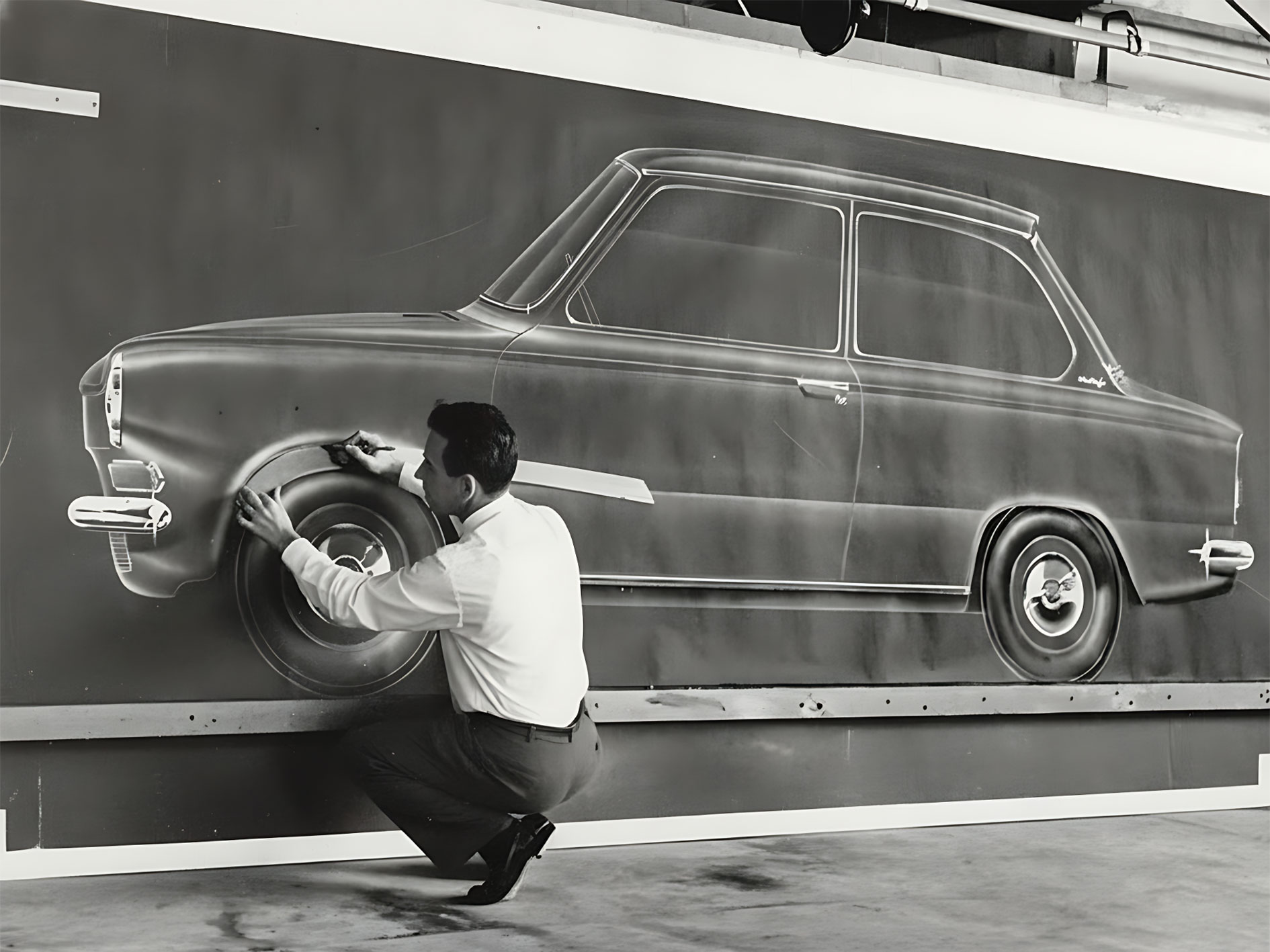
But the danger of these famous names is that they can swallow the people behind them. A car may be remembered as a Pininfarina, but the decisive exterior theme may have come from a specific designer inside the studio. A car may be called a Vignale because Vignale built the body, even though Giovanni Michelotti drew it. A car may be described as a Ghia because it was built in Turin, even though Virgil Exner’s Chrysler design department had shaped much of the idea. A car may be associated with Michelotti because his workshop built the prototype, even though the design was by Paul Bracq.
That is not dishonesty, at least not usually. It is historical compression. The full truth is often too long for a caption, too complex for an auction headline and too inconvenient for a social media post. So history becomes shorter, and once it becomes shorter, it becomes repeated, and once it is repeated often enough, it begins to feel like fact.
The trouble is that cars are not logos. They are systems. They are born from decisions, drawings, arguments, revisions, deadlines, budgets, egos, wind tunnels, chassis dimensions, production limitations and occasional moments of genius. A badge can tell you where a car belongs, but it does not always tell you who actually shaped it.
Pininfarina: A Signature, a Studio, a System
Pininfarina is probably the most important example of this problem, because its relationship with Ferrari became so powerful that “Pininfarina” almost turned into a universal answer. For many enthusiasts, if a Ferrari wears the Pininfarina name, that is enough: it is a Pininfarina design, next question, please.
In broad terms, that is fair. Pininfarina was Ferrari’s great visual interpreter, the house that helped translate Maranello’s mechanical theatre into shapes the world could desire. But Pininfarina was also a studio, and studios are made of people: designers, design directors, modellers, engineers and managers whose individual roles can disappear behind the elegance of the corporate signature.
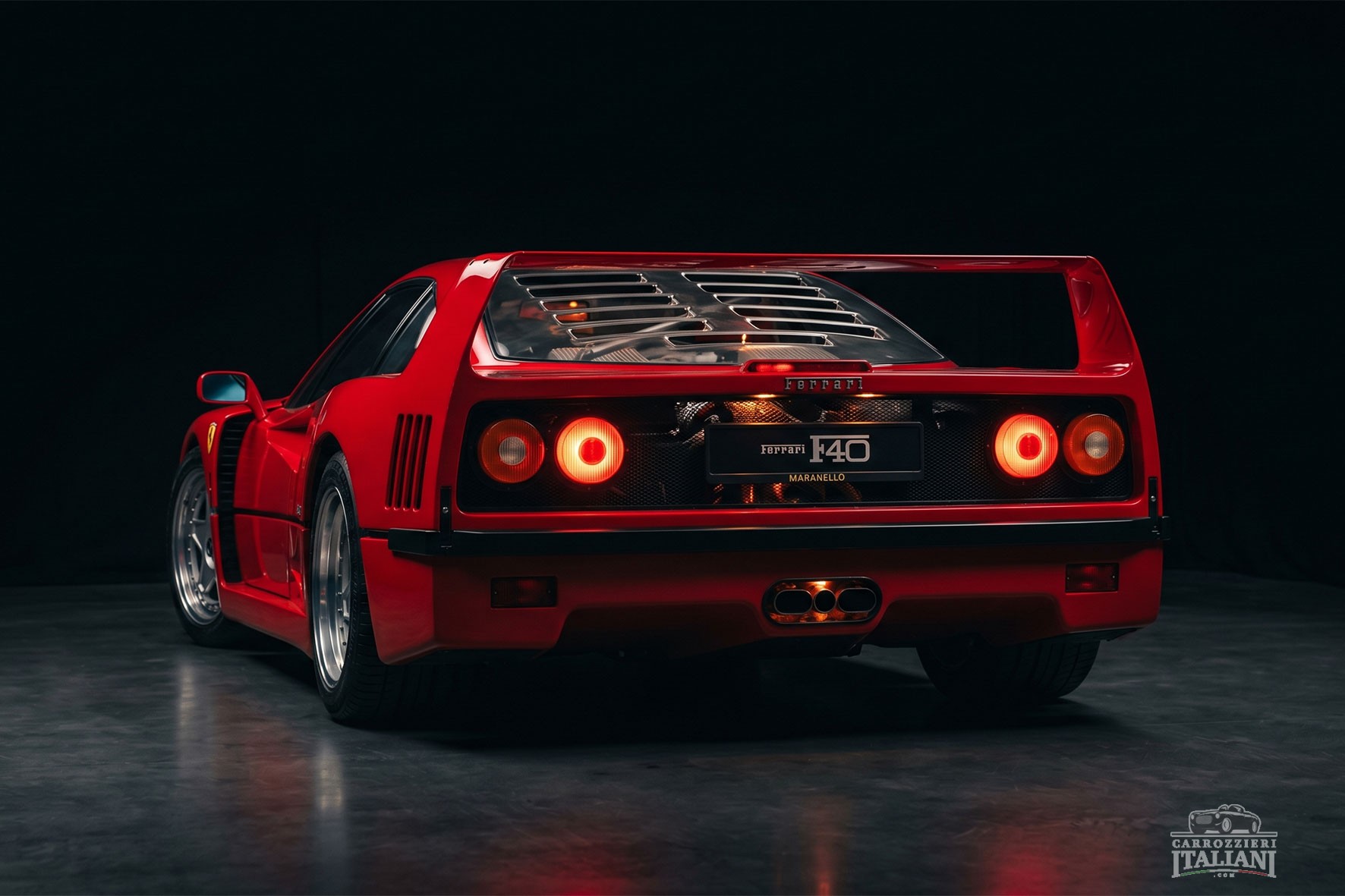
The Ferrari F40 is a perfect example. It is commonly described as a Pininfarina design, and that is correct, but incomplete. The car’s first design identity is closely linked to Pietro Camardella, whose hand gave the F40 much of its raw, functional and almost brutal character. Yet the F40 was not a sketch simply carried unchanged into production. It was developed very quickly, under Ferrari’s technical pressure, with the legacy of the 288 GTO Evoluzione, aerodynamic work and the need to create a car worthy of Ferrari’s 40th anniversary all shaping the final result.
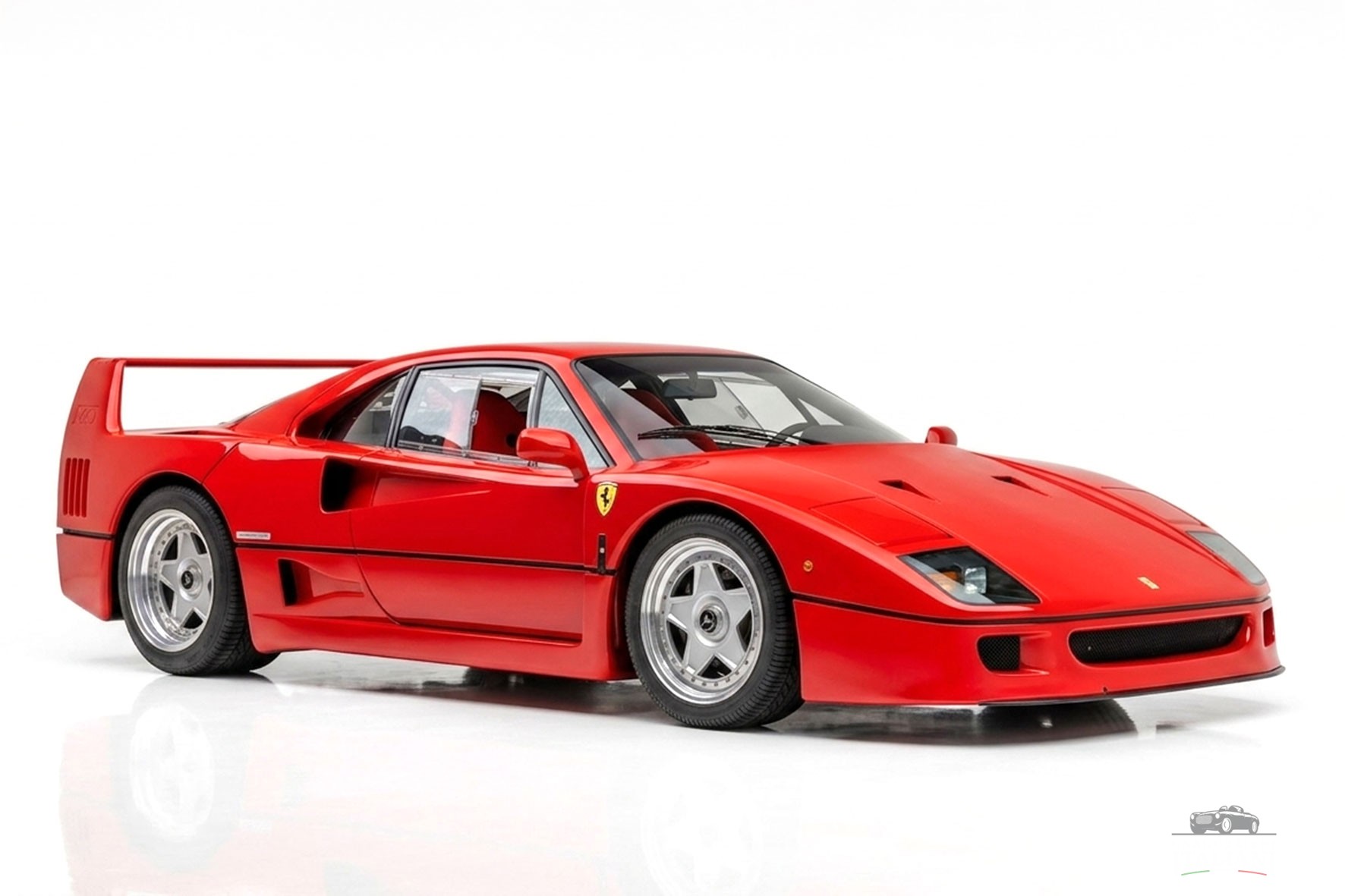
Inside that process, Aldo Brovarone also played a key role. The F40’s famous rear wing, one of the features that defines the car as much as its ducts and red paint, is generally linked to Brovarone’s intervention during the development of the body. So, saying “Pininfarina designed the F40” is correct, and saying “Camardella shaped the F40” is also correct, but the most honest answer is that the car began from Camardella’s design language and became the F40 we know through a wider Ferrari-Pininfarina development process.
The F50 is even more delicate, because the distance between the early idea and the production car appears to have been greater. Its background includes the Ferrari Mythos, Camardella’s Ferrari work, Lorenzo Ramaciotti’s design direction and the wider Pininfarina studio of the early 1990s. In embryonic form, the F50 clearly belongs to Camardella’s design world, but the production car was not simply the pure expression of his original proposal.
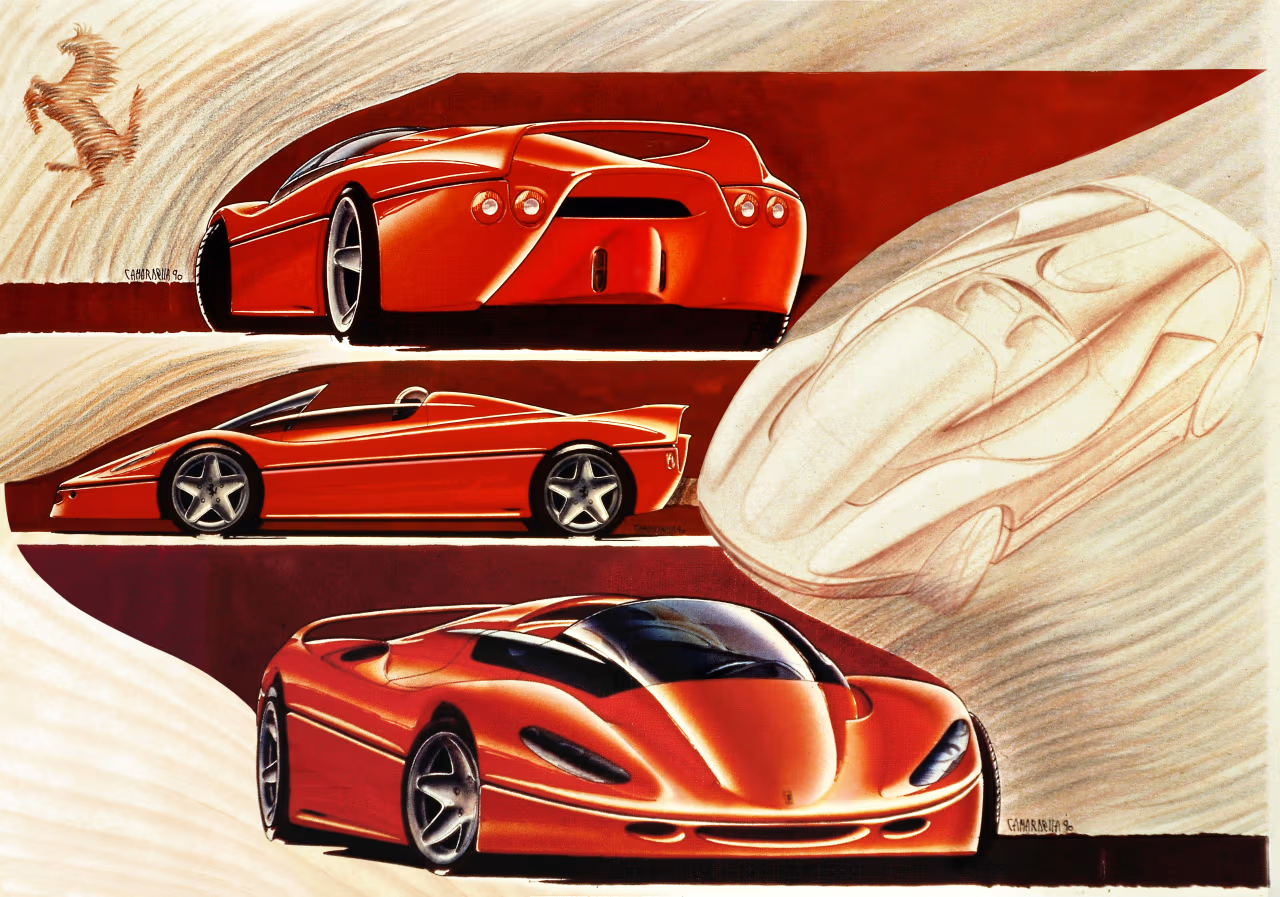
During development, the F50 was heavily reworked. It had to carry a Formula 1-derived V12, a carbon structure, a removable roof and strict aerodynamic requirements, while also facing the impossible task of following the F40. By the time the production model was finalised, Camardella was either leaving Pininfarina or no longer fully involved in the final stages, and the car was revised several times within the studio and engineering process. As a result, part of the purity of his original idea was inevitably modified, diluted or redirected.
That is why the F50 should not be treated as a simple one-name attribution. Calling it a Pininfarina design is correct in the corporate sense, and linking it to Camardella is justified because of its early design DNA, but the final car was a heavily developed Ferrari-Pininfarina project, shaped by Ramaciotti’s direction, later studio revisions and Ferrari’s technical demands.
Mario Boano and the Workshop Behind the Name
Mario Boano is another name that deserves care, because his importance is sometimes flattened into a simple design credit. Boano was a major figure in Italian coachbuilding, but he was not always “the designer” in the modern, individualistic sense that people often imagine today. He was a coachbuilder, organiser, entrepreneur and industrial figure, someone who moved through the worlds of Ghia, his own Carrozzeria Boano and later Fiat, where he became connected with the development of the Centro Stile.
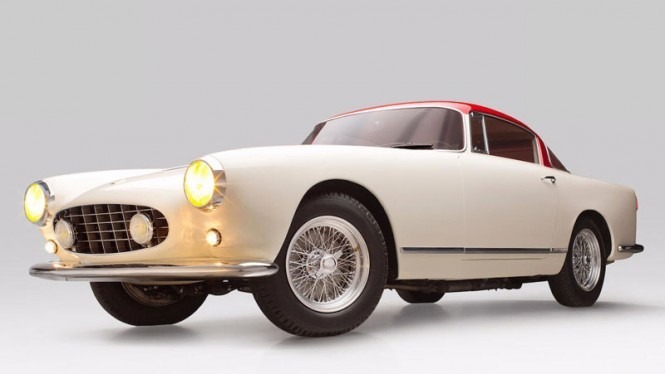
The Ferrari 250 GT Boano is a useful example of how easily things become blurred. These cars are often remembered through the Boano name because Carrozzeria Boano built a series of bodies during the period when Pinin Farina was not yet able to manage the increased production capacity required by Ferrari. Yet the design lineage belongs to Pinin Farina, while Boano’s role was connected to building and production. When Mario Boano moved to Fiat, Ezio Ellena continued the work, creating another layer of terminology for collectors to enjoy while pretending they are not terrified by roof height differences.
This is not about diminishing Boano. Quite the opposite. His importance becomes clearer when he is understood correctly. He was not merely a name to attach to a shape, but part of the industrial machinery that allowed Italian coachbuilding to move from isolated handmade bodies toward more repeatable production. In some cases, the man who made the car possible was just as important as the man who drew the first line.
Bertone: Nuccio’s Kingdom, Giugiaro’s Pencil and Gandini’s Revolution
Bertone creates another wonderful attribution trap, because the name is so strong that it can easily absorb everyone around it. Nuccio Bertone was one of the great figures of twentieth-century car design, but his genius was not that he personally drew every famous Bertone car. His genius was that he understood talent, drama and opportunity. He knew how to place the right designer in the right situation, how to persuade manufacturers to take risks, and how to turn a design studio into a theatre of controlled shock.
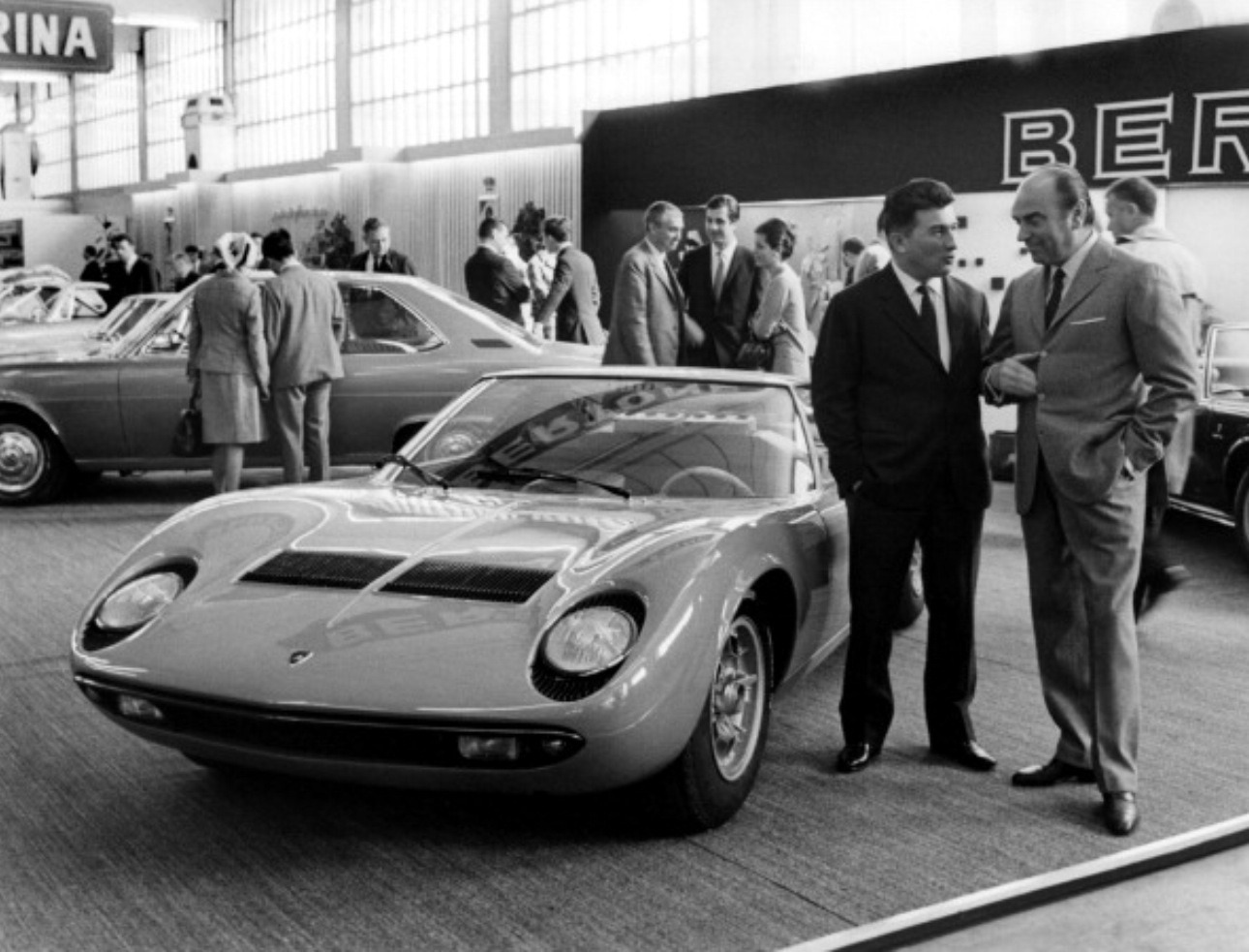
That theatre employed some extraordinary actors. Giorgetto Giugiaro produced major work at Bertone before moving on to Ghia and later founding Italdesign. Marcello Gandini arrived after him and proceeded to bend the future into shapes that looked illegal in several dimensions. When people say “Bertone designed the Lamborghini Miura,” the statement is acceptable in studio terms, but the designer was Gandini. When they say “Bertone designed the Countach,” the studio attribution is right, but the wedge, the scissor doors and the intergalactic doorstop attitude are Gandini. When they say “Bertone designed the Alfa Romeo Giulia Sprint GT,” they are again using the house name, while the line belongs to Giugiaro’s early brilliance.
Nuccio’s role was not weakened by this distinction. In fact, it becomes even more impressive. He did not need to be the man drawing every line, because he built the environment where those lines could happen. Bertone under Nuccio was not simply a badge, it was a pressure chamber for ideas, and the best cars that came out of it still feel dangerous today because they were not designed to reassure anyone.
Touring, Vignale and the Jensen Interceptor
The Jensen Interceptor is one of the best examples of a car whose nationality and authorship are almost comically layered. It was British, but also Italian. It had a Chrysler V8, but it was not American. It was built by Jensen, but its early bodies involved Vignale. It was designed by Touring, but the specific hand behind the chosen line was Federico Formenti. It is exactly the sort of car that makes simple attribution look like a badly written police report.
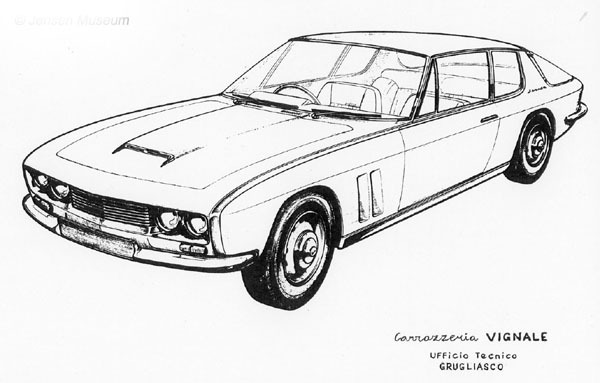
Jensen wanted a replacement for the C-V8 and looked to Italy for help, because in the 1960s that was a perfectly sensible thing to do if one wanted a grand tourer to stop looking like a small-volume British special and start looking like something a film producer might drive through Monaco. Touring’s proposal was selected, with Formenti responsible for the design, but Touring was in difficulty and could not take the project into the required production phase. Vignale then became involved in building and developing the early steel bodies before Jensen eventually brought production back to Britain.
So what is the Interceptor? A Jensen, obviously. A Touring design, yes. A Federico Formenti design, more precisely. A Vignale-built body in the early phase, also yes. This is the sort of layered truth that makes the car more interesting, not less. It means the Interceptor is not just a British GT with Italian styling, but a rolling document of how European specialist car production really worked in the 1960s.
BMW Turbo: Designed by Paul Bracq, Built by Michelotti
The BMW Turbo is another excellent case, and it reverses the usual confusion. Here, the Italian name can make people assume the design came from Italy, because the prototype was built by Michelotti in Turin and Michelotti was not exactly an anonymous shed with a kettle in the corner. Giovanni Michelotti had designed an enormous number of important cars, and his name carries such weight that “BMW Turbo by Michelotti” sounds like a complete answer.
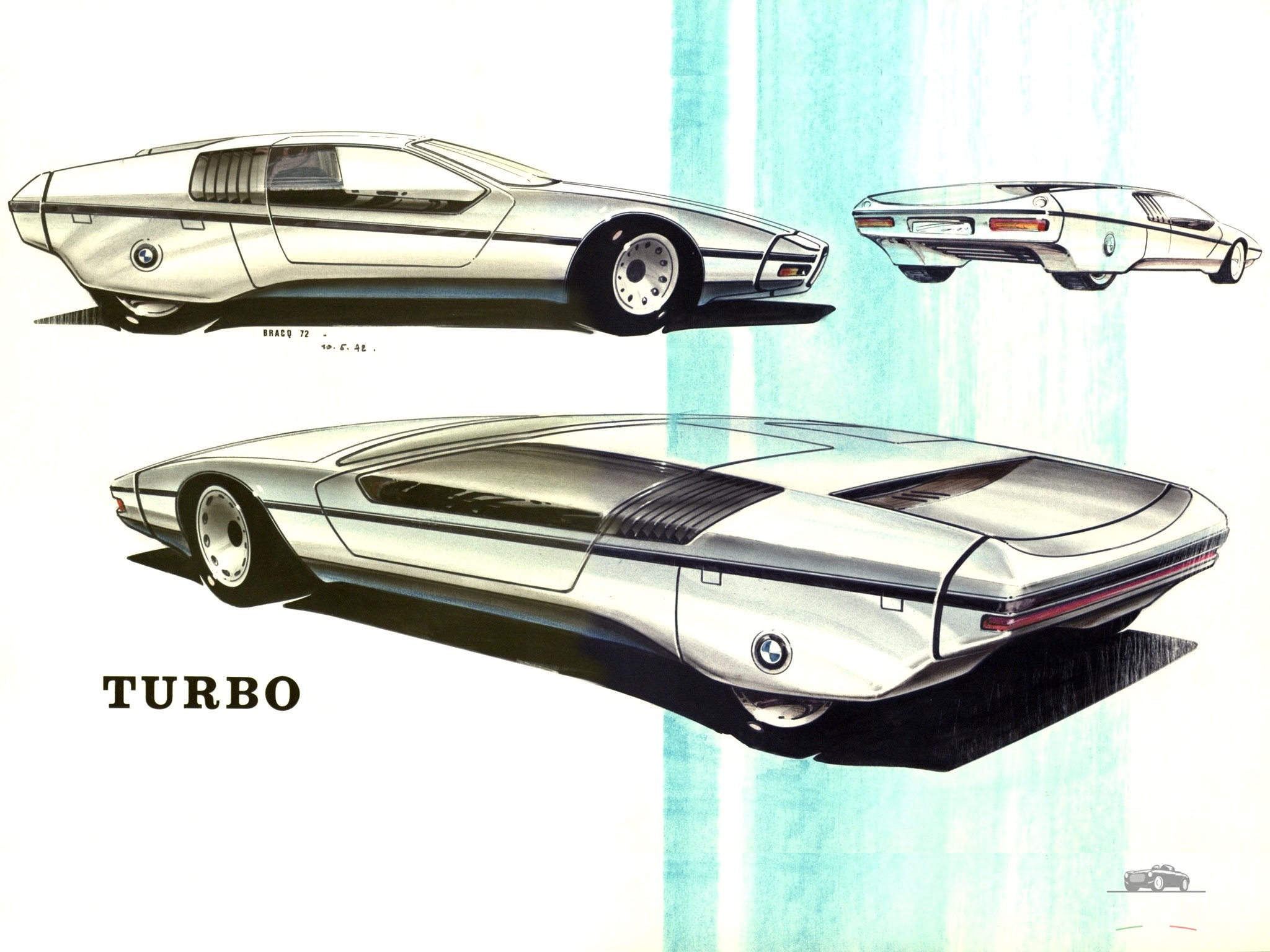
But the BMW Turbo, also known as the E25, was designed by Paul Bracq, who was then BMW’s design director. It was created in the atmosphere of the 1972 Munich Olympics, and it had all the optimistic madness one expects from a proper concept car of the period: gullwing doors, a mid-mounted turbocharged engine, wedge proportions, experimental safety ideas and a futuristic cockpit that looked as though it expected the driver to wear a silver jumpsuit without irony.
Michelotti’s role was to build the prototype in Turin around a modified BMW 2002 structure, which is historically important but not the same as designing the car. The accurate attribution is therefore: designed by Paul Bracq for BMW, built by Michelotti in Turin. That distinction matters because it shows how a coachbuilder or prototype specialist could be essential to a car’s physical existence without being the author of its styling. The Turbo is German in purpose, French in authorship, Italian in realisation and gloriously 1970s in every other possible way.
Ghia and Exner: Detroit Dreams in Turin Suits
Ghia brings another variation of the same problem, especially in relation to Chrysler. Many of the famous Chrysler-Ghia show cars are casually treated as Ghia creations, because they were built by Ghia and because the Turin coachbuilder gave them the polish, glamour and physical presence that made them unforgettable. Yet many of these cars came from the vision of Virgil Exner and Chrysler’s advanced styling culture.
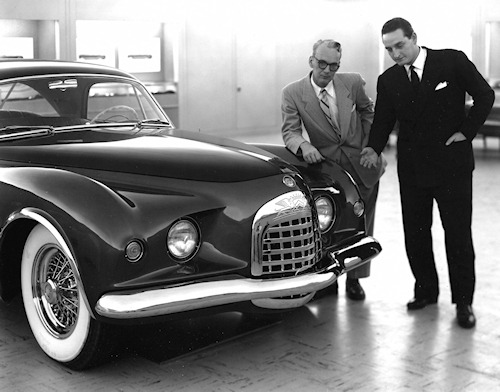
Exner understood something very clever. He knew that Italian coachbuilders could build dream cars faster and often more economically than the huge American corporate system, and he also understood that Ghia could give Chrysler’s ideas an elegance and exoticism that Detroit alone might have struggled to produce. The result was one of the great transatlantic partnerships of the period, with cars that looked like American optimism wearing an Italian suit tailored after three espressos.
The Chrysler d’Elegance, the Chrysler Special, the Ghia-built show cars and the broader Exner-Ghia relationship should therefore not be reduced to a simple “Ghia designed it” formula. Ghia built and interpreted, Chrysler commissioned and directed, and Exner’s design thinking was central to many of the themes. The badge tells part of the truth, but the authorial map is wider.
Zagato, Spada and the Modern Aston Martin Problem
Zagato is another name that invites simplification, partly because the design language is so recognisable and partly because the Z badge has a gravitational field of its own. A Zagato-bodied car seems to arrive already equipped with a story about lightness, racing, double-bubble roofs and a refusal to be conventionally pretty. But as always, the name of the house can obscure the person behind the line.
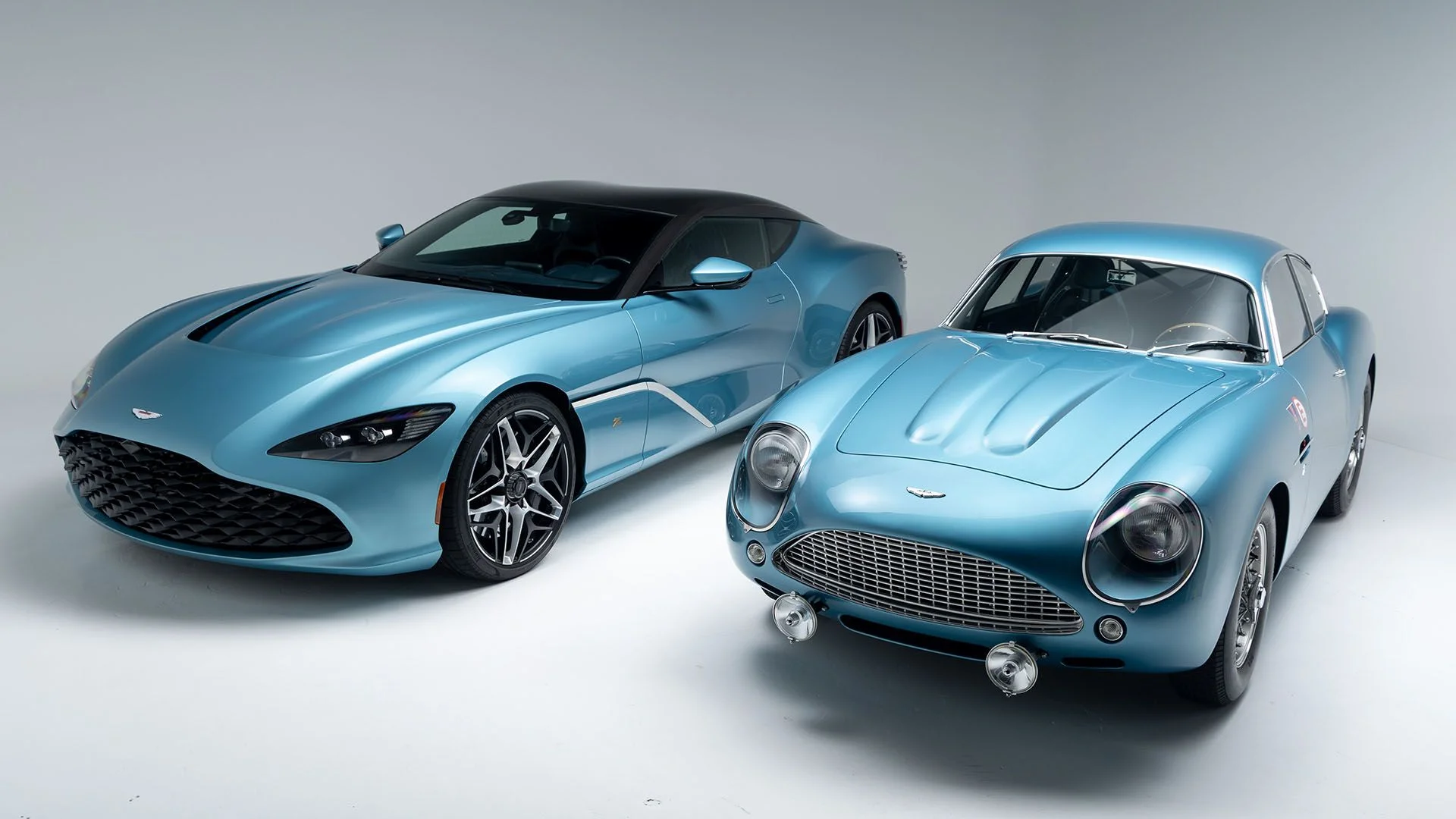
Ercole Spada is essential here. His work at Zagato produced some of the most important cars associated with the Milanese carrozzeria, including the Aston Martin DB4 GT Zagato, Alfa Romeo Giulietta SZ Coda Tronca, Giulia TZ, Alfa Romeo 2600 SZ, Lancia Flavia Sport, Lancia Fulvia Sport and Flaminia Supersport. To call these simply “Zagato designs” is not false, but it leaves out one of the great individual stylists of the period.
The modern Aston Martin Zagato cars create a different problem. In the 1960s, a DB4 GT transformed by Zagato could be understood in a traditional coachbuilding sense, with an external Italian carrozzeria reshaping a British sports car into something lighter, rarer and more dramatic. In the modern era, cars such as the Vanquish Zagato are better understood as collaborations between Aston Martin’s own design centre and Zagato, rather than pure Zagato designs in the old sense. Aston Martin’s design team, led by Marek Reichman, worked in close collaboration with Andrea Zagato and his Milan team, while the cars were developed and engineered within Aston Martin’s own industrial structure.
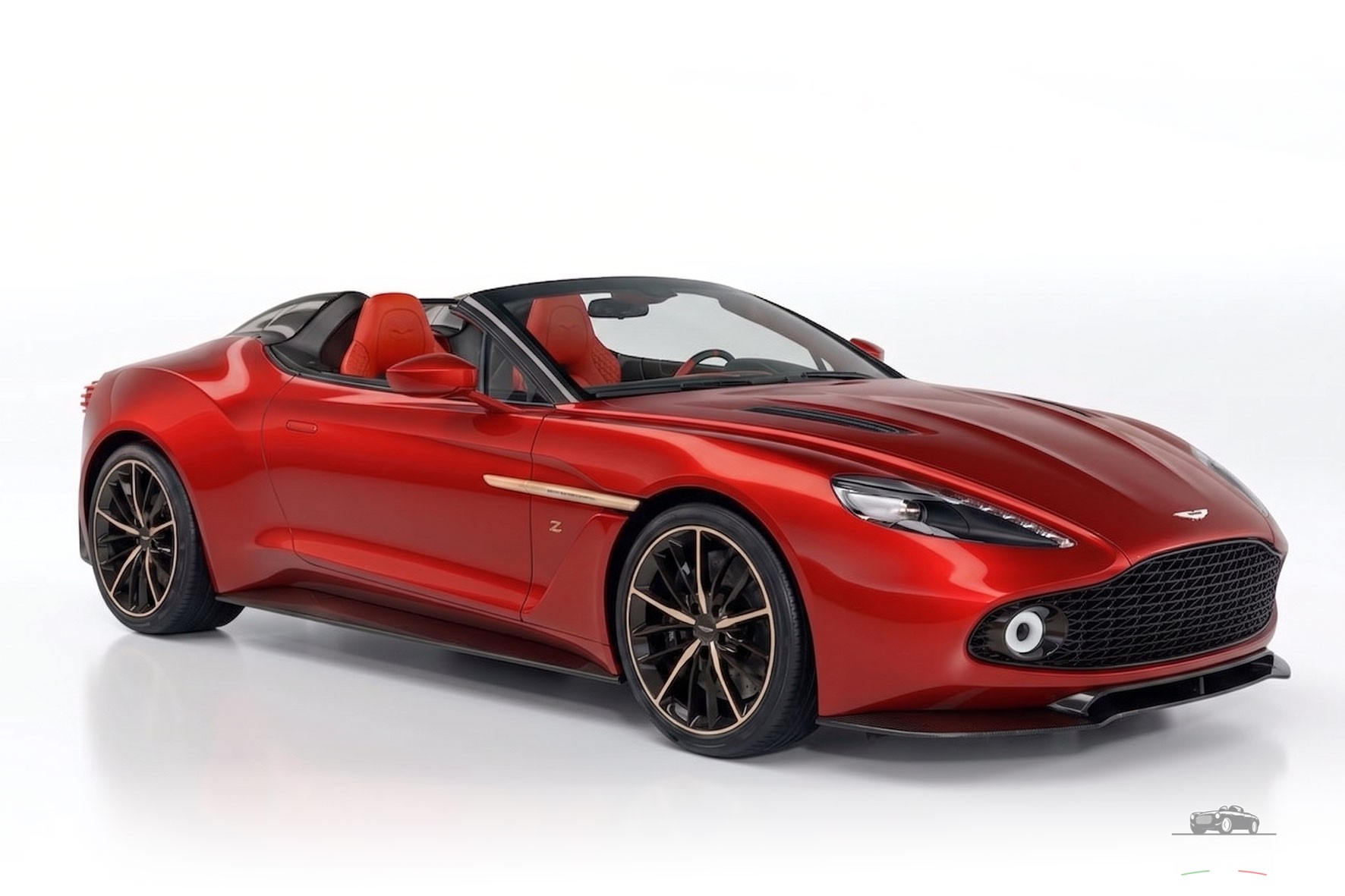
That does not make them fake Zagatos. It simply means they belong to a different era of coachbuilding, where the Italian name operates as heritage, collaboration and limited-series identity rather than as the sole origin of the body design. The double-bubble roof may still be there, but the process behind it has changed.
Lancia Beta Spider: Pininfarina Drew It, Zagato Built It
The Lancia Beta Spider is a perfect little attribution grenade because it is often associated with Zagato, especially in markets where the Zagato name was used more prominently, yet the styling was by Pininfarina. Zagato’s role was in the construction and conversion of the body, taking the Beta Coupé base and transforming it into the Spider with its removable roof panel and folding rear section.
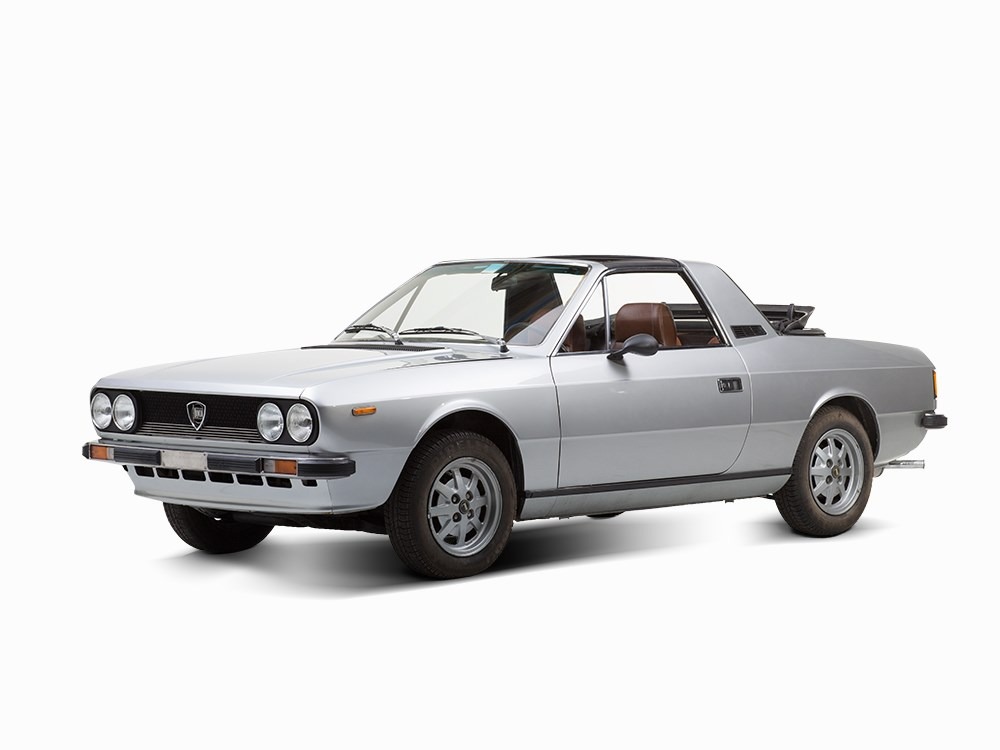
This is exactly the sort of case where the word “by” becomes dangerous. “Lancia Beta Spider by Zagato” can be acceptable if one is talking about the build or conversion, but not if one is talking about the original design. The more accurate version is simple enough: designed by Pininfarina, built by Zagato. It is not as romantic as leaving the Z badge to do all the work, but it is much more useful.
The Aurelia B20: A Brief Mention, Because It Deserves Its Own Story
The Lancia Aurelia B20 deserves a dedicated article, because its attribution story is too complex to be squeezed into a paragraph without losing half the drama. It is commonly associated with Pinin Farina because of its production history and the huge role Pinin Farina played in building and refining the model, yet the early story also involves names such as Ghia, Boano and Viotti, while comparisons with the Fiat 1400 Supergioiello, designed by Michelotti and built in different forms by various coachbuilders, show how fluid the early Italian Gran Turismo language really was.
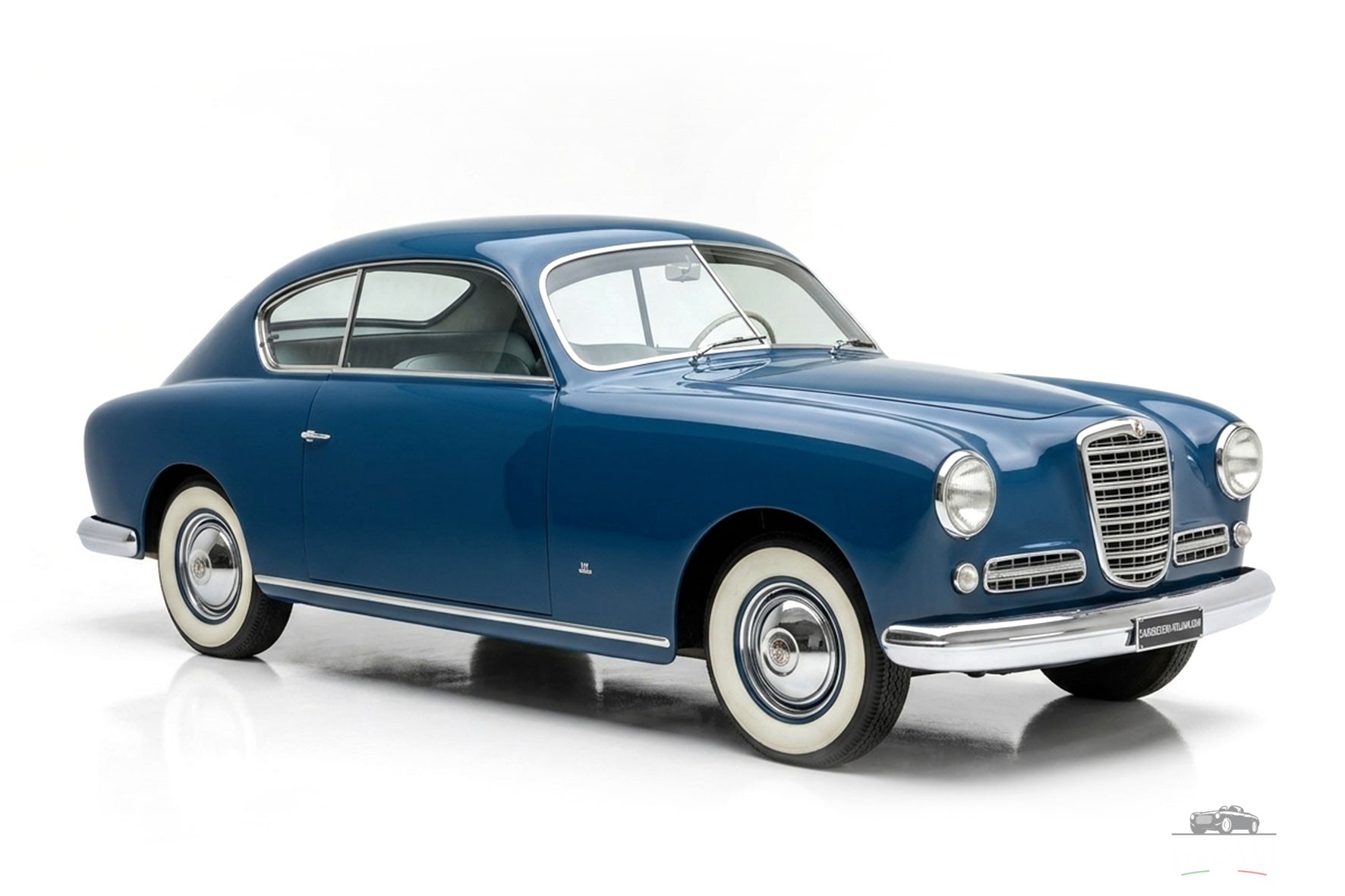
In other words, the B20 is not a footnote. It is a case study. It is also a perfect internal link, because anyone interested in design attribution will eventually end up there and discover that one of the most important Gran Turismos in history has a birth story far more complicated than the usual one-line caption suggests.
Bugatti EB110: Gandini, Benedini and the Design Argument in Carbon Fibre
The Bugatti EB110 is perhaps the most famous modern example of attribution confusion. Ask casually and many will say it was designed by Marcello Gandini, which is understandable because Gandini created the original styling direction and early prototypes carried his unmistakable language. They were angular, uncompromising and dramatic in the way only Gandini could be, with the sort of visual tension that makes a supercar look as if it has been folded out of a secret military envelope.
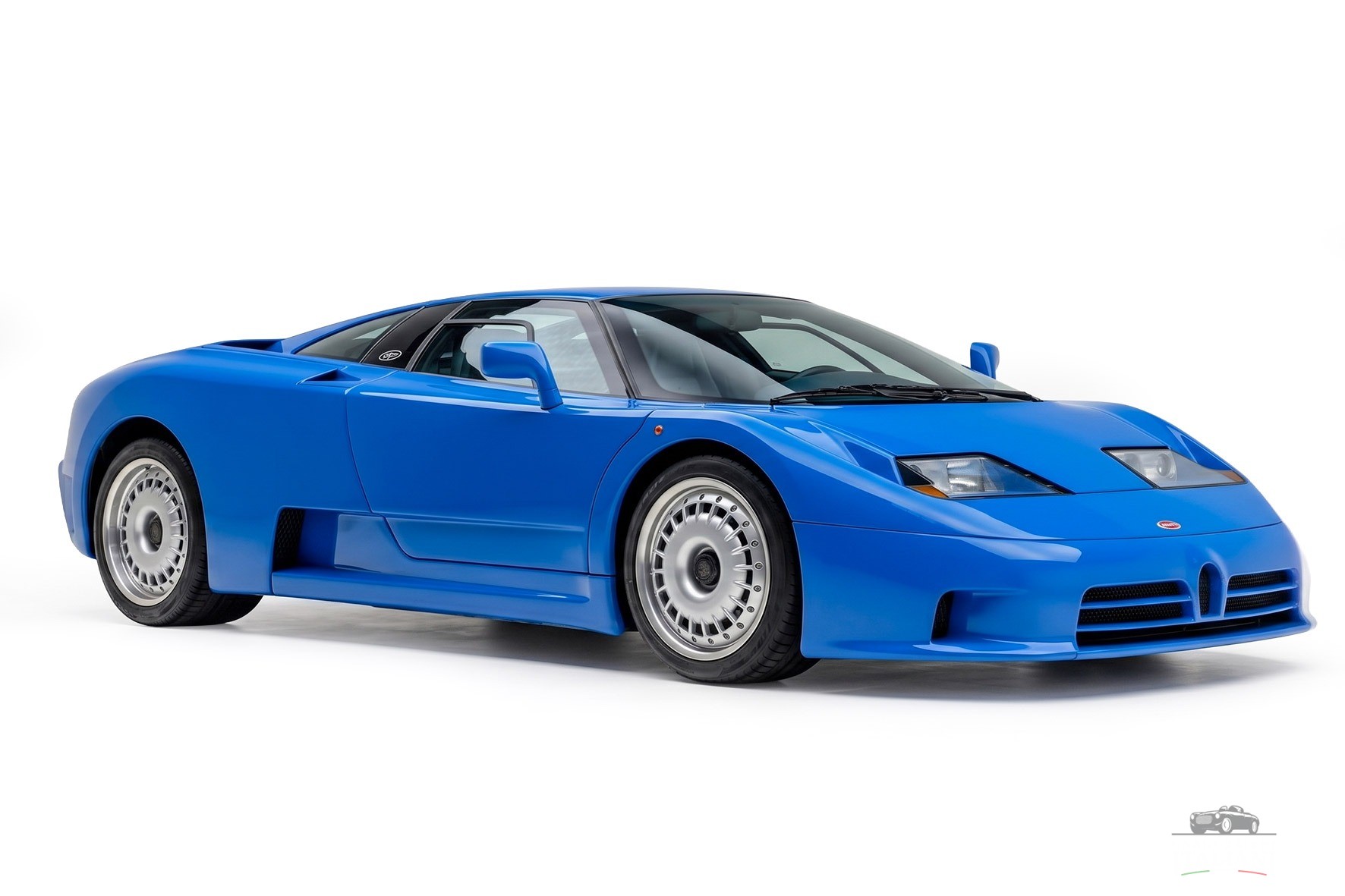
But the production EB110 was not simply the original Gandini proposal. Romano Artioli was not fully satisfied with the direction, and after revisions and disagreements the final production car was modified and softened by Giampaolo Benedini, the architect who also designed the famous Bugatti factory at Campogalliano. Benedini’s role included changes to the production exterior and responsibility for the interior, while the technical side involved other major figures and its own complicated development story.
So what is the correct answer? The EB110 began as a Gandini design, but the production car was revised and finalised by Benedini under Bugatti Automobili. Calling it simply “a Gandini design” gives too much weight to the origin and not enough to the car people actually bought. Calling it simply “a Benedini design” erases the original Gandini structure and the drama that shaped the project. The EB110 is not a clean signature. It is a design argument preserved in carbon fibre.
Fiat Coupé: The Pininfarina Badge and the Bangle Surprise
The Fiat Coupé may be the most entertaining modern example because the confusion is hiding in plain sight. Pininfarina was deeply involved in the car, manufactured it and designed the interior, which helped make the association completely natural. Yet the exterior, the part everyone remembers, was designed at Fiat’s Centro Stile under Ermanno Cressoni, with Chris Bangle responsible for the winning theme.
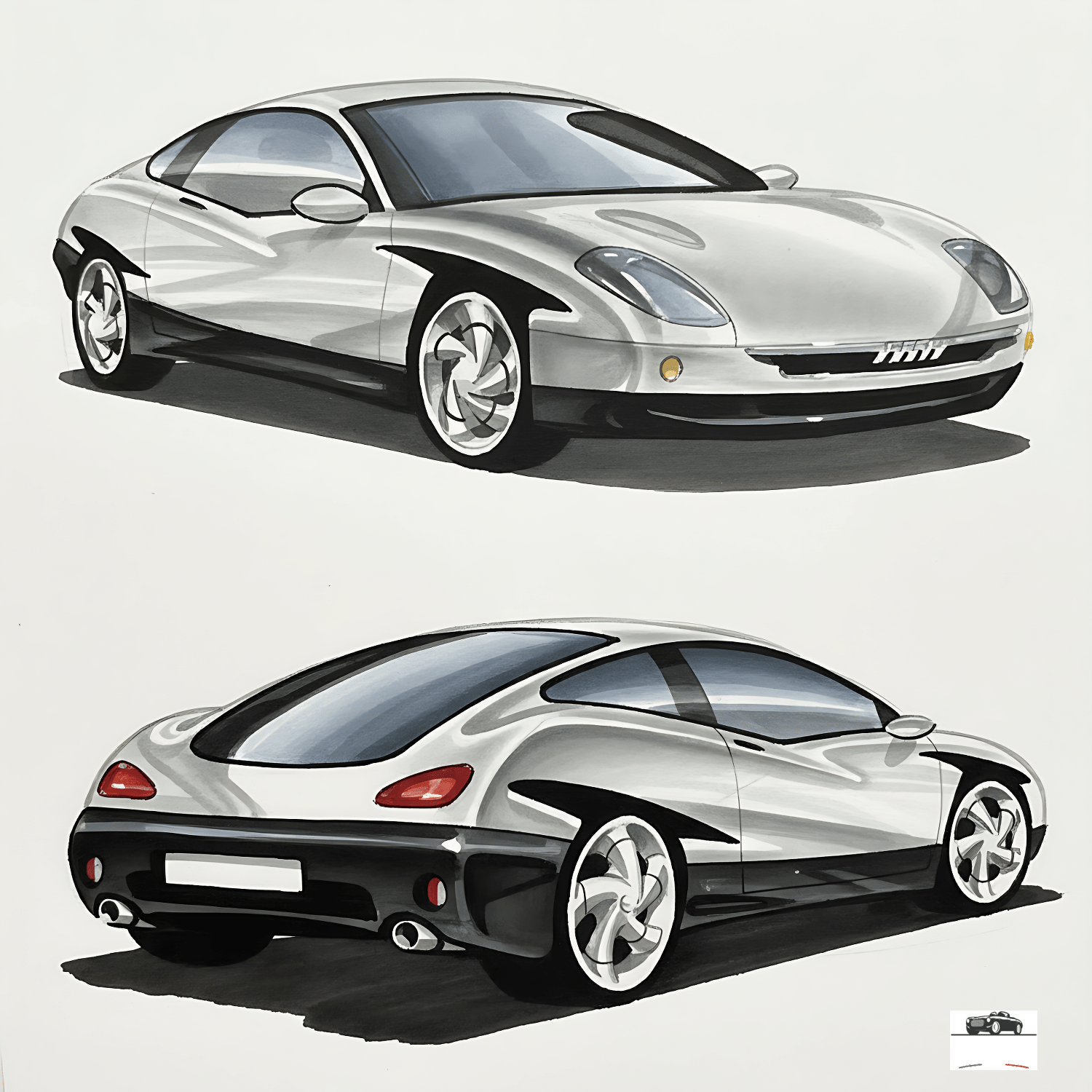
This is important because the Fiat Coupé was not just another pleasant Italian two-door. It was strange, brave and slightly deranged in the best possible way. The slashed wheelarches, the aggressive nose, the bonnet that flowed into the wings and the almost comic-book confidence of the surfaces made it look like no other Fiat of the period. It was based on ordinary industrial bones, but visually it behaved as if someone had given a mass-market platform a leather jacket and told it to stop apologising.
Many people still connect it instinctively with Pininfarina, and one can understand why, but the exterior authorship belongs to Bangle and Fiat’s in-house design team. Once again, the badge and the production story are not the same as the styling authorship. The Fiat Coupé is not less interesting because of that. It is more interesting, because it shows Fiat’s Centro Stile beating Pininfarina in a direct design contest and producing one of the most original affordable coupés of the 1990s.
So, Who Designed It?
The answer, annoyingly but beautifully, is that it depends on what we mean by “designed.” If we mean the first theme, that may be one person. If we mean the studio responsible, that may be another name. If we mean the company that built the body, that may be a coachbuilder. If we mean the final production version, that may involve a different designer again. And if we mean the name people remember, that may simply be the badge on the side.
This is why design attribution should be handled with more care, especially in the world of Italian coachbuilding, where the same car can involve a manufacturer, a carrozzeria, an outside stylist, a prototype specialist, a production partner and a design director. The correct attribution does not weaken the famous names. Pininfarina, Bertone, Zagato, Ghia, Touring, Vignale, Boano, Michelotti and Scaglietti do not become smaller when we name the people behind the work. They become larger, because we finally see them as living systems rather than decorative labels.
A car is rarely designed by a logo. It is designed by people, inside a structure, under pressure, for a client, with help from craftsmen and engineers, and sometimes with the final body built somewhere entirely different from where the first line was drawn. That is not a problem with automotive history. That is the reason automotive history is worth reading.
The old one-name answer is easy. The real story is better.

ABOUT THE AUTHOR
Andreas Scheidl
Italian classic car enthusiast with German roots. Renowned as a respected figure in the classic car community, he serves as a jury member at various international concours d'elegance, including the Classic Gala Schwetzingen and Mantova. As a content creator, Andreas passionately shares his profound knowledge and appreciation for vintage automobiles. His heart beats for cars designed by Giovanni Michelotti, showcasing his discerning taste and dedication to preserving the timeless elegance of automotive history.
More stories by Andreas Scheidl ↗CONTINUE READING
Posts You Might Like

Castagna Milano’s Alfa Romeo Giulia coupé-cabriolet: a new Antisalon for Italian coachbuilding
Eighty years after Battista Farina's famous protest at the Paris Motor Show, Gioacchino Acampora presents a radical two-seat Alfa Romeo Giulia as a manifesto for the survival of independent coachbuilding. In October…
Read story
Nardi Silver Ray: What Giovanni Michelotti Wrote in 1961
A September 1961 letter from Giovanni Michelotti, written on his corso Francia studio stationery, gives a contemporary account of the Nardi Silver Ray and sheds new light on its chassis, body construction…
Read story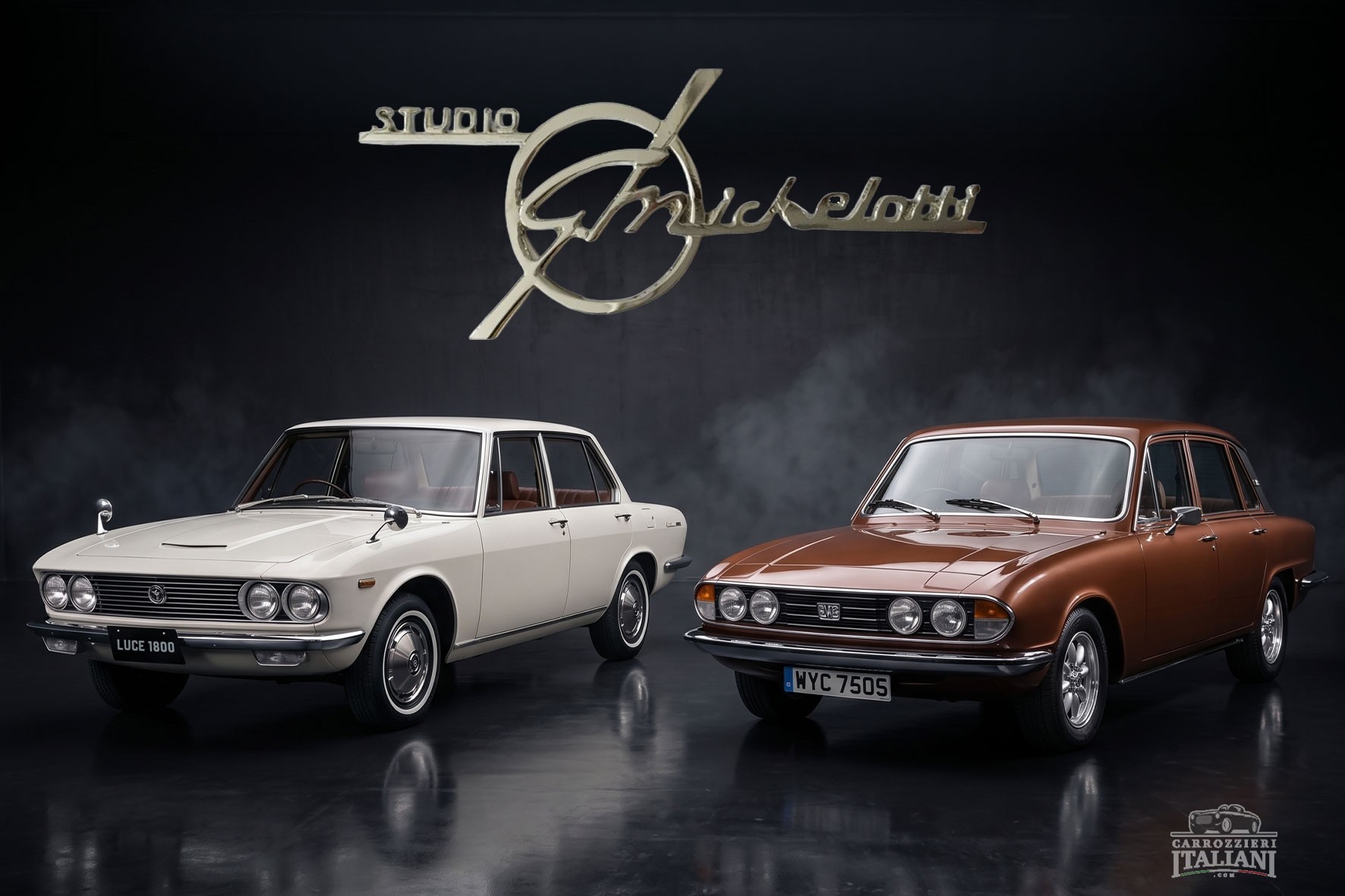
Mazda Luce: Edgardo Michelotti Challenges the Official Bertone Story
After our article on the Mazda Luce, Edgardo Michelotti revealed an unpublished claim: the Bertone design may have originated from a Michelotti Triumph project.
Read story
What Happened to ARES Modena? Inside the Crisis and Comeback
What happened to ARES Modena? The luxury carmaker behind the Panther ProgettoUno faces financial turmoil, frozen orders, and a possible relaunch under new ownership.
Read story
THE CONVERSATION
Comments 0
Share a memory, a period photograph or a documented detail about this story.