
The Partnership between Zagato & Aston Martin
Aston Martin and Zagato. Say the names together and you can almost hear metal being hand-rolled in Milan and a straight-six clearing its throat somewhere in Warwickshire. Few pairings in the car world feel this inevitable: British muscle wrapped in Italian attitude, elegance sharpened by racing intent. Whenever these two decide to work together, something memorable happens — sometimes beautiful, sometimes controversial, but always unmistakably special.
Their story isn’t a neat timeline so much as a series of lightning strikes: a 1960s duel with Ferrari, a dramatic 1980s comeback drenched in wedge-era bravado, millennial revivals that revived the double-bubble roof, and a 21st-century flourish of carbon-bodied collector pieces that sold out before most people even knew they existed.
From dimly lit corners of the 1960 London Motor Show to manicured Pebble Beach lawns, from secretive late-night experiments in Terrazzano di Rho to Aston’s test tracks, this Anglo-Italian partnership has spent six decades raising heart rates and auction values in equal measure. This is the full story of how two very different marques kept finding each other — and why every time they did, the automotive world paid attention.
The Beginning: 1960 – DB4 GT Zagato and a Racing Rivalry
Our story opens in October 1960 at the London Motor Show. Under the bright lights, Aston Martin unveils something sensational: a DB4 GT, but sleeker, lighter, and wearing an Italian suit. This was the Aston Martin DB4 GT Zagato, the very first collaboration between Aston and Zagato. British team owner John Wyer and Aston’s owner David Brown had a clear objective – to beat Ferrari on the track. The DB4 GT had been Aston’s weapon against the Ferrari 250 GT in Grand Touring races, but it needed an edge. So Aston Martin turned to Zagato for that competitive advantage.
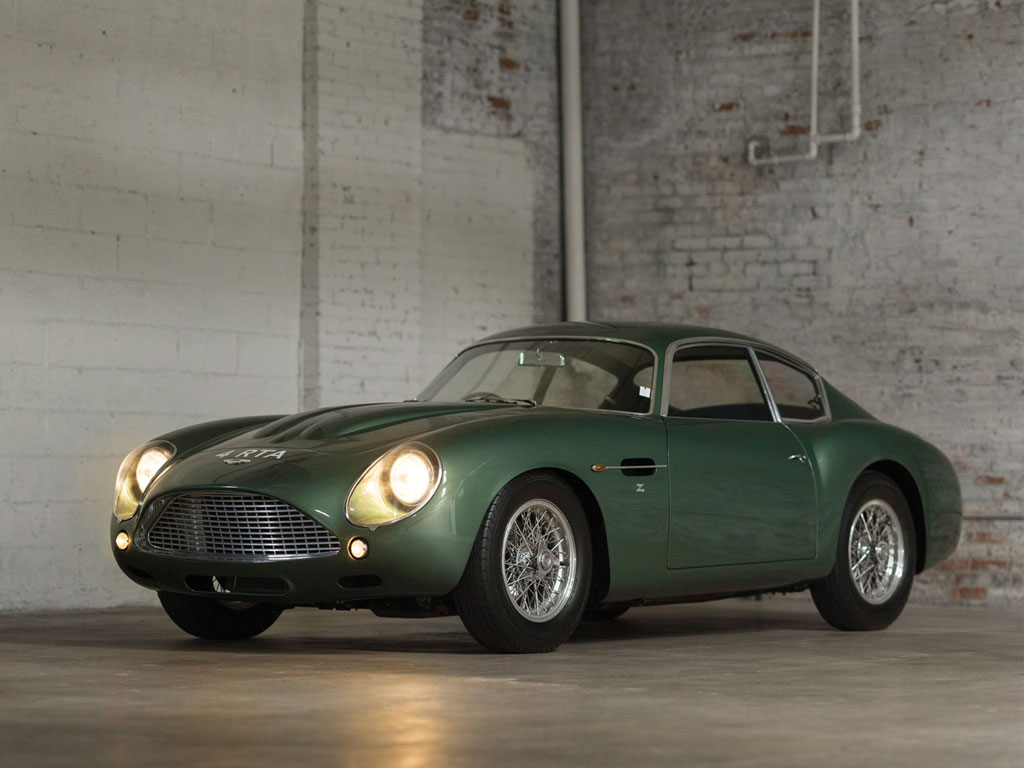
Zagato’s 23-year-old prodigy designer Ercole Spada had just joined the firm, and the DB4 GT Zagato became his first masterpiece. In less than a week (as lore has it), Spada transformed the already impressive DB4 GT into something truly exotic. He shaved weight by replacing many steel panels with lightweight aluminum, stripping non-essentials like bumpers, and even using Perspex windows – over 45 kg (100 lbs) were shed. Under the bonnet lurked an uprated 3.7-liter straight-six with twin-plug ignition and triple Weber carbs, pushing about 314 hp – serious numbers for the era. The result was a car that could sprint 0–60 mph in just over 6 seconds and top out around 153 mph, matching or beating Ferrari’s finest on paper.
🔗 Read more: The Aston Martin DB4 GT
But the Zagato’s real distinction was its design. The bodywork – hand-formed in Milan – was achingly gorgeous: lower and more curvaceous than the standard Aston DB4, with a delicately curved front grille, streamlined fenders, and a pert Kamm tail. Each contour was crafted with purpose. Even without the famous double bubbles (those would come on later Zagatos), the DB4 GT Zagato’s roofline was slightly lowered and smoothed for better airflow, especially on four special lightweight “DP209” race versions that had a lower roof and wider haunches. Every inch of the car exuded Italianate elegance fused with British class – truly una bella macchina.
Aston Martin originally planned to build 25 of these Anglo-Italian beauties, but sales proved elusive in the early 1960s. In the end, only 19 examples were produced from 1960 to 1963. The world perhaps wasn’t quite ready for such an expensive and specialized GT; however, those 19 cars would later become blue-chip collectibles. Today, an original DB4GT Zagato is among the most coveted cars on the planet, with auction prices soaring well into eight figures (one famously selling for over £10 million). A “normal” DB4 might be a £400k classic, but a Zagato-bodied one is automotive royalty.
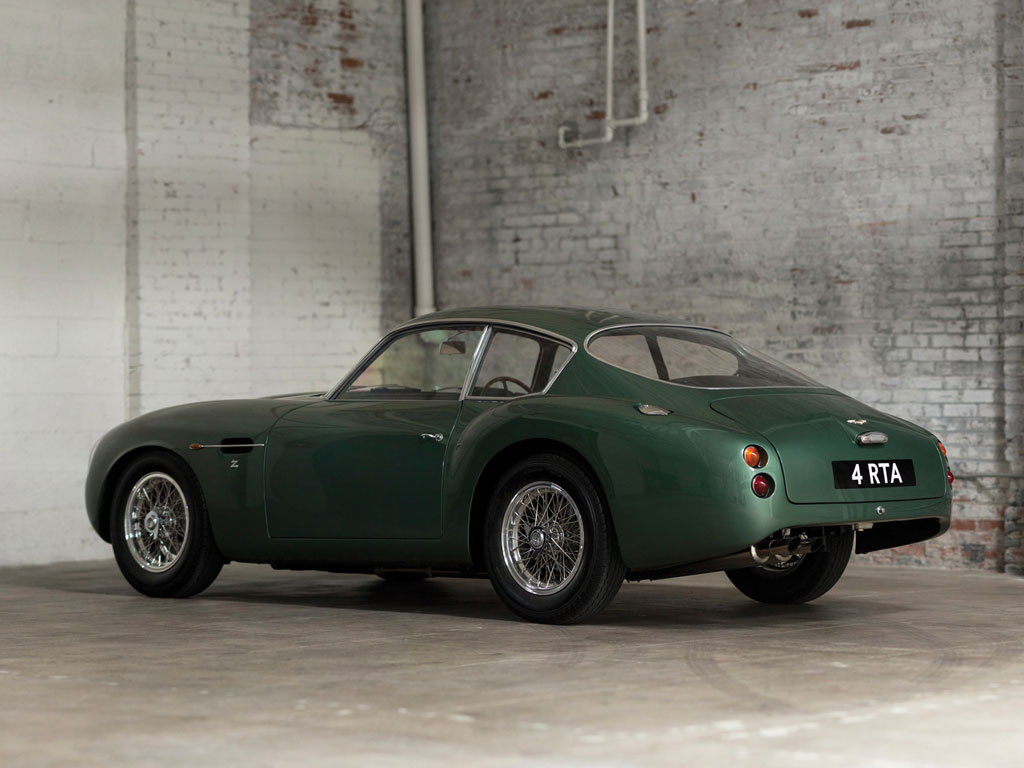
On the track, the DB4 GT Zagato had flashes of brilliance if not outright dominance. Racing greats like Stirling Moss took the wheel – Moss drove one at Goodwood in 1961, finishing 3rd behind a standard DB4 GT and a Ferrari 250 GT. Two lightened Zagatos ran at Le Mans in ’61 (registrations 1 VEV and 2 VEV became legendary) but, despite valiant efforts, they couldn’t repeat Aston’s Le Mans victory of 1959. Still, the Zagato did clinch a victory in a support race for the British Grand Prix in 1961, proving its mettle.
Each of those 19 cars has a tale. Some were raced hard, one was badly crashed and rebuilt, others led gentler lives in collectors’ garages. Notably, decades later, the enduring allure of the DB4 GT Zagato led to continuations and replicas: in the late 1980s, Aston Martin and Zagato worked together again to build a handful of “Sanction II” DB4 GT Zagatos on leftover chassis, and in 2000 two more “Sanction III” cars were created from spare bodies. This only underscored how special the original collaboration was – enthusiasts literally couldn’t get enough. The DB4 GT Zagato was the spark of a legend, a “lighter, more aerodynamic, and more powerful version of the DB4” that began the “automotive love story” of Aston and Zagato.
A 23-Year Hiatus Ends: 1980s Revival with the V8 Vantage Zagato
After the DB4GT Zagato, Aston Martin and Zagato went their separate ways for over two decades. The 1960s gave way to a turbulent 1970s for Aston Martin (the company changed hands and nearly went bankrupt), while Zagato pursued projects with other marques. But by the mid-1980s, both firms were ready for a grand reunion. It was the era of excess: Wall Street boomed, supercar prices skyrocketed, and the world’s elite clamored for limited-edition exotics. Ferrari had its 288 GTO, Porsche its 959. Aston Martin – newly revitalized under chairman Victor Gauntlett – wanted in on the action. What better way than to revive the Zagato magic?
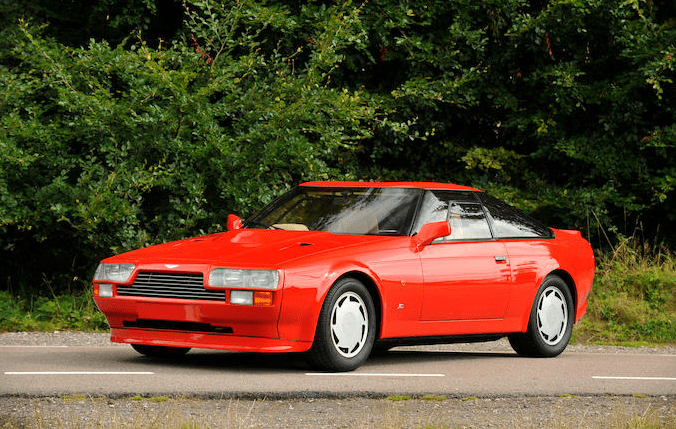
At the 1986 Geneva Motor Show, Aston and Zagato unveiled the dramatic Aston Martin V8 Vantage Zagato coupe. The response was electric: even though only a rendering of the car was shown initially (the actual prototype wasn’t ready), eager buyers rushed to place orders. Here was a thoroughly modern take on the classic 1960 Zagato idea – a lighter, shorter, more focused version of Aston’s V8 Vantage, clad in bespoke Italian bodywork. Underneath, it had the beating heart of Aston’s 5.3-liter V8 tuned to around 430 bhp with Weber carburetors, enough to push the car to an advertised 300 km/h (186 mph). But it was the styling that really grabbed attention and polarized opinion.
Penned by Zagato’s designer Giuseppe Mittino, the V8 Zagato’s look departed sharply from Aston’s traditional elegance. It was taut, chiseled, almost brutalist in its geometry. Zagato themselves described it as an “angular modern interpretation” of the 1960s DB4GT Zagato shape. The hood was lower and flatter, the tail shortened (the car was a two-seater, unlike the 2+2 Vantage). Most controversial was the front: a squared-off grille and a pair of almost rectangular headlamps that gave the car a distinctive squint. This was no genteel English GT – it was a raw 1980s supercar with a bit of Lancia-esque wedge thrown in. Some loved the aggressive stance; others lamented that it “didn’t quite look like an Aston Martin”. Nonetheless, exclusivity sells: Aston planned to make just 50 coupes, but eventually 52 were built (including prototypes) as demand initially exceeded supply.
🔗 Read more: Zagato Milano: A History Shaped by Speed and Style
By 1987, Aston Martin and Zagato doubled down with a convertible: the V8 Zagato Volante. This soft-top variant, first shown at Geneva 1987, featured a slightly softened design – notably a bulging hood scoop and a different grille – perhaps to suit its grand-touring character. Production of the Volante was even more scarce; only 37 Volante units were made from 1987–90. The decision to offer a Zagato convertible was not without drama: the original 52 coupe buyers had bought at the height of a supercar speculation frenzy, expecting their cars to remain ultra-rare. Some were upset when Aston approved additional Zagato-bodied cars (the Volantes), fearing it would dilute the value of their coupes. Indeed, the late ’80s saw wild price swings – at one point a V8 Zagato coupe reportedly changed hands for around £450,000, an astronomical sum given its ~£87,000 list price, before the 1990 market crash brought values back to earth.

Yet beyond the speculation, the V8 Zagatos delivered on performance and mystique. These were the fastest Astons of their day – Road & Track clocked 0–60 in about 5 seconds, blistering for a 1980s GT, and the lighter Zagato could outrun the standard Vantage. Each car was hand-finished, with luxurious interiors hiding behind the edgy exterior. Buyers included famous personalities; even Rowan Atkinson (Mr. Bean himself, and a noted car enthusiast) bought a coupe and later converted it for racing, humorously proving that even comedians take Zagatos seriously. He campaigned it in Aston Owners Club events until a crash in 2001; the car was rebuilt and lives on – a testament to the racing spirit imbued in these machines.
Where are the V8 Zagatos now? Firmly in the hands of collectors. With 89 total built (52 coupes + 37 Volantes), they’re rarer than contemporary Ferraris and have become 1980s icons. Many show up at concours events or in specialized auctions, often selling for hundreds of thousands today. Their once-criticized styling has aged into a sort of retro-modern coolness – a reminder of a time when status was everything and money talked, and when Aston Martin and Zagato boldly reaffirmed their partnership for a new generation.
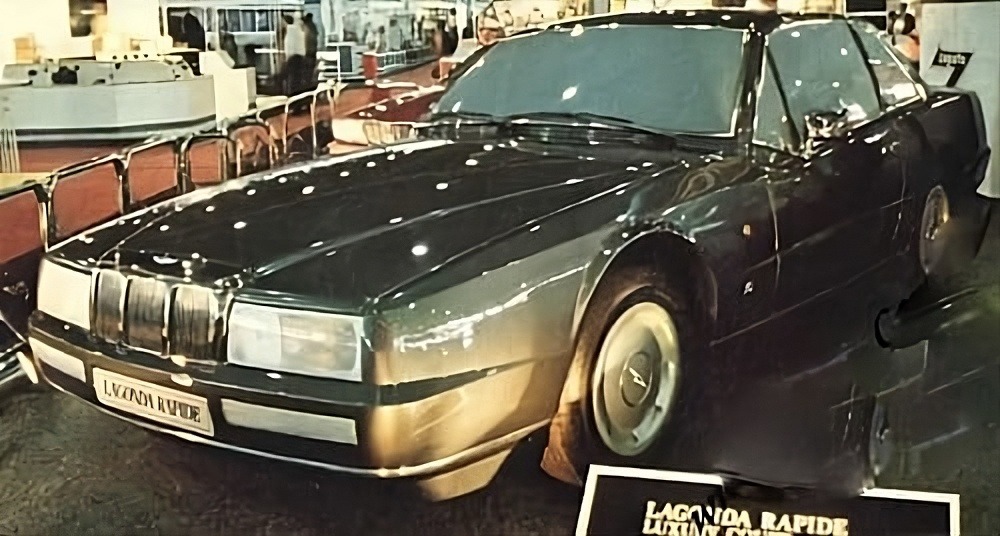
Before the 1980s chapter closed, Zagato tried one more intriguing concept with Aston Martin. In 1988, at the Geneva Motor Show, Zagato showcased the Aston Martin Lagonda Zagato. This was a 2-door luxury GT based on Aston’s Lagonda sedan chassis – an angular design study for a high-performance four-seater. It featured a unique downward kink in the window line and a wide, flat grille. Interestingly, the prototype was a rolling shell only, with no engine, crafted from steel tubing, foam and filler as a pure styling exercise. The design had an awkward “broken back” kink that drew mixed reviews, and any plans for production quietly evaporated. Only one was made, and it survives today in a private collection as a quirky footnote to the Aston-Zagato story. While not a commercial success, the 1988 Lagonda concept showed Zagato’s willingness to explore new directions, even if some detours led to dead ends.
Revival in the New Millennium: DB7 Zagato and the First Roadster
Having rekindled their collaboration in the ’80s, Aston Martin and Zagato took another break during the 1990s. Aston had its hands full updating models and coming under Ford ownership, while Zagato weathered industry changes. By the early 2000s, however, both were ready to collaborate once more – this time, to celebrate Aston Martin’s resurgence with the popular DB7 model. Thus arrived the Aston Martin DB7 Zagato in 2002, a car that married Aston’s modern engineering with Zagato’s classic design touches for the 21st century.
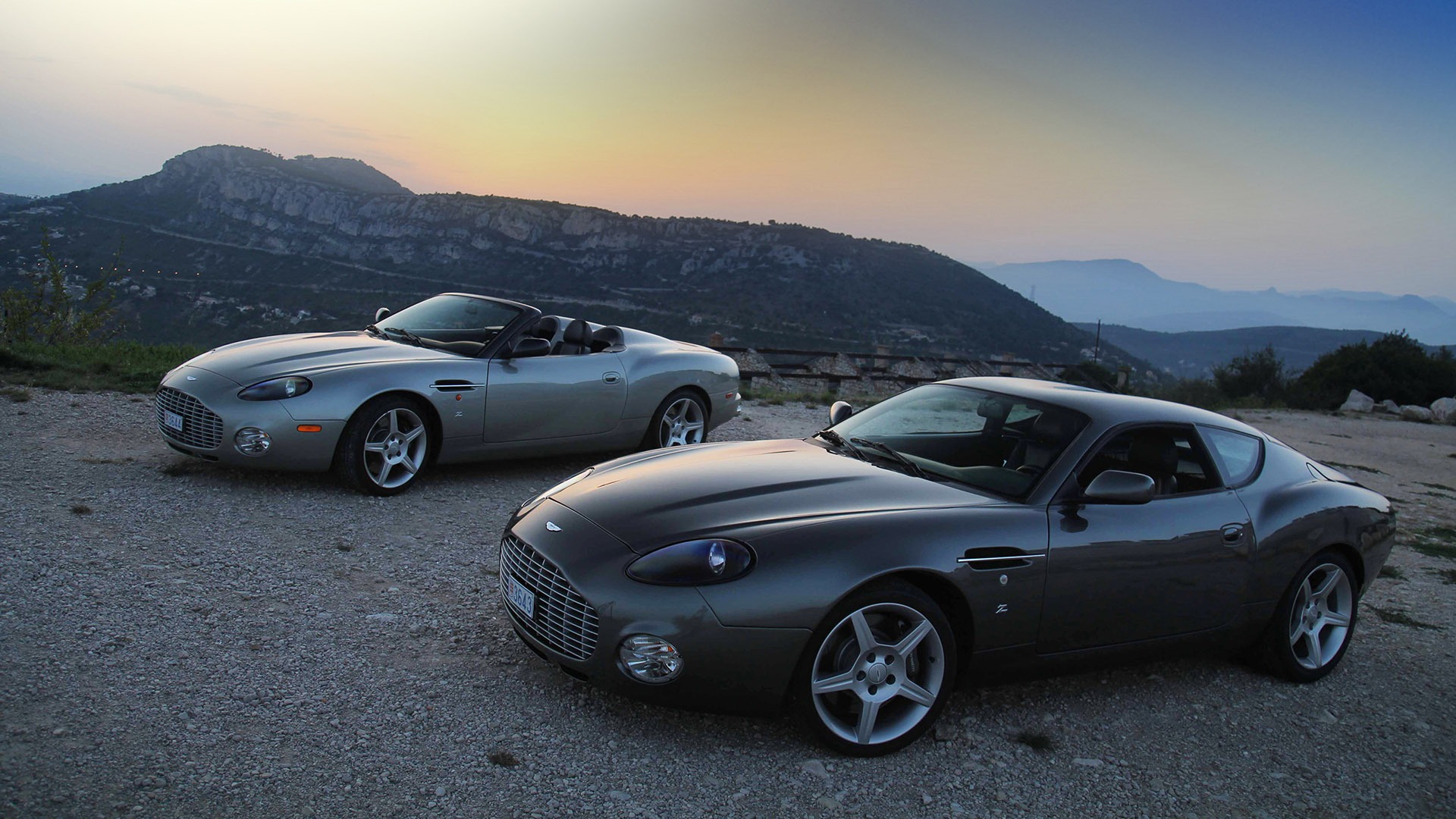
The DB7, designed by Ian Callum, was a savior for Aston in the 1990s, and by 2002 it was reaching the end of its life. What better send-off than a limited-edition Zagato variant? Unveiled in late 2002, the DB7 Zagato Coupé was instantly recognizable by the trademark Zagato cues it added to the base car. The most obvious was the return of the double-bubble roof – two subtle domes pressed into the aluminum roof panel, flowing elegantly into the rear window. This not only paid homage to Zagato’s historic racing designs of the 1950s (where twin roof bulges gave headroom and aerodynamic gains), but it also made the DB7 Zagato look like a tailored suit compared to the standard GT. In addition, Zagato widened and bulged the rear fenders, giving the car muscular haunches, and fitted a unique rear end with a drooping trunk lid and single round taillights (a modern nod to the round lights on the 1960s DB4 GTZ). Up front, a larger gaping grille and new vented hood hinted at performance, while inside, bespoke touches like special leather stitching abounded.
🔗 Read more: The Double Bubble Roof by Zagato: A Bump in the Right Direction
Mechanically, the DB7 Zagato was similar to the DB7 Vantage – a 6.0-liter V12 up front, but now tuned to about 440 bhp and mated to a 6-speed manual for an involving drive. Only 99 coupes were produced, strictly for Europe and Asia (it was not sold in the U.S. due to homologation issues). As expected, all were spoken for by eager buyers who appreciated its blend of British power and Italian style. The DB7 Zagato not only rekindled the partnership but also proved that the design language of Aston Martin could be reinterpreted for a new era – it was “the first 21st-century model from Gaydon to wear the Milanese firm’s Z on the fenders”. Today, these 99 coupes rarely trade hands, but when they do, they command a premium above standard DB7s, their value buoyed by that magic Zagato touch.
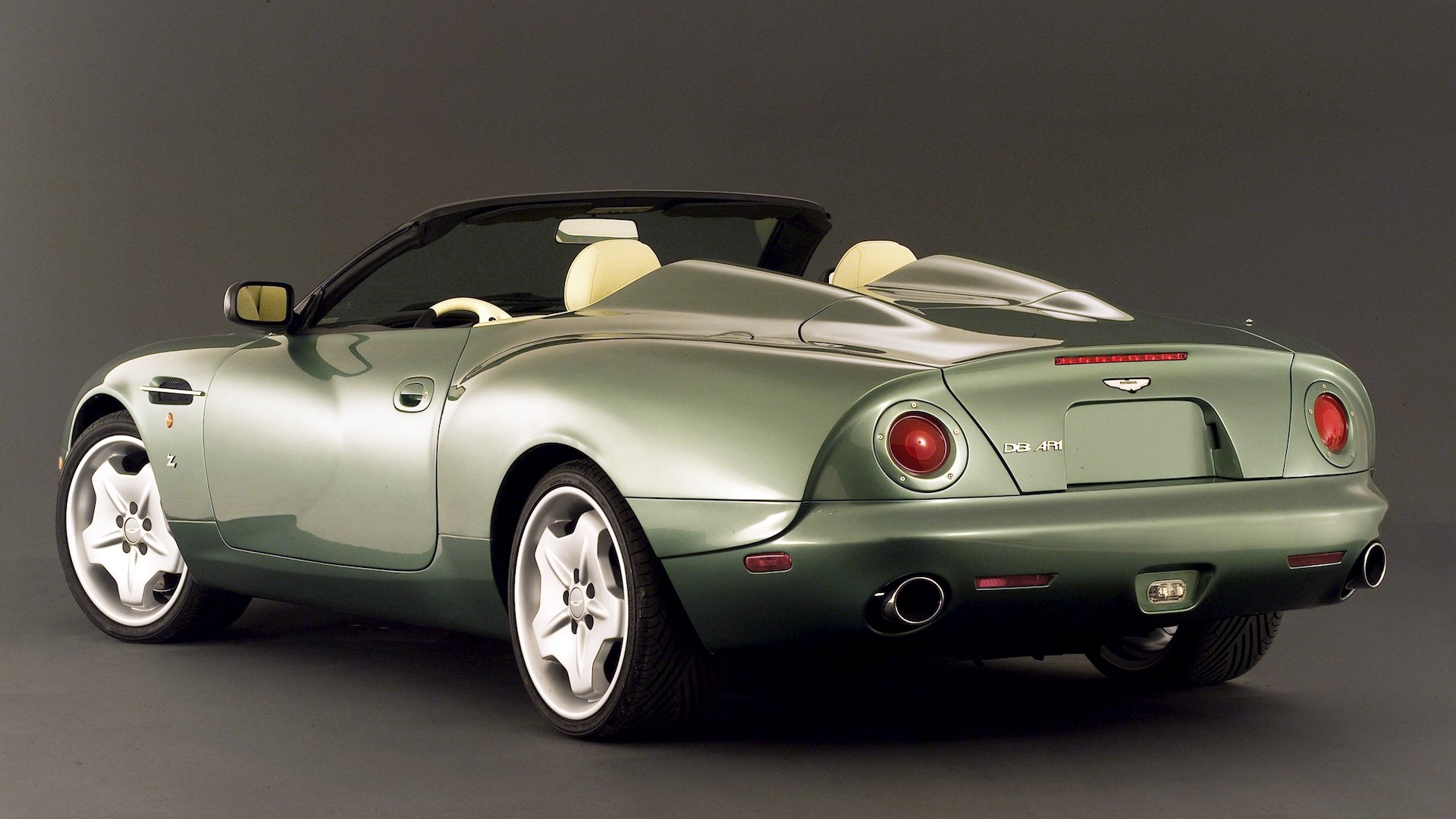
The success of the DB7 Zagato left many American enthusiasts craving one – after all, none of the 99 coupes were available in the U.S. To satisfy this demand, Aston and Zagato quickly cooked up a follow-on act: the DB AR1, short for American Roadster 1. Debuted at the Los Angeles Auto Show in January 2003, the DB AR1 was a spectacular open-top variant of the DB7 Zagato, built specifically for the North American market. It wasn’t just a DB7 Zagato with the roof lopped off; it had a character all its own. The AR1 was a true roadster – no convertible top at all (just a temporary rain cover for emergencies). This allowed a beautifully smooth rear deck with twin speedster humps behind the seats, elegantly echoing the double-bubble shape of the coupe’s roof in the negative. The windshield was raked and slightly shortened, giving a lower profile. Zagato reworked the chassis too: the AR1’s wheelbase was slightly longer than the coupe’s, improving cabin space and stability.
Performance was as scintillating as the coupe – the same burly V12 with 435 bhp (in fact, the AR1 borrowed some engine and brake upgrades from the then-new Aston Martin Vanquish). More importantly, the AR1 was exclusive: Aston announced 99 units for the U.S., matching the coupe’s count. In a masterstroke of marketing, they brought a prototype AR1 on a tour of the United States right after the auto show, drumming up interest. The result? All 99 sold out within just a three-week period. American collectors leapt at the chance to own a Zagato-bodied Aston, and chassis numbers 800001 through 800099 were quickly allocated (with one extra, 800100, kept by the factory). Production spanned 2003–2004, with a handful of cars also quietly sold in Europe to special clients (and even one single right-hand-drive example built for the UK – an extreme rarity).
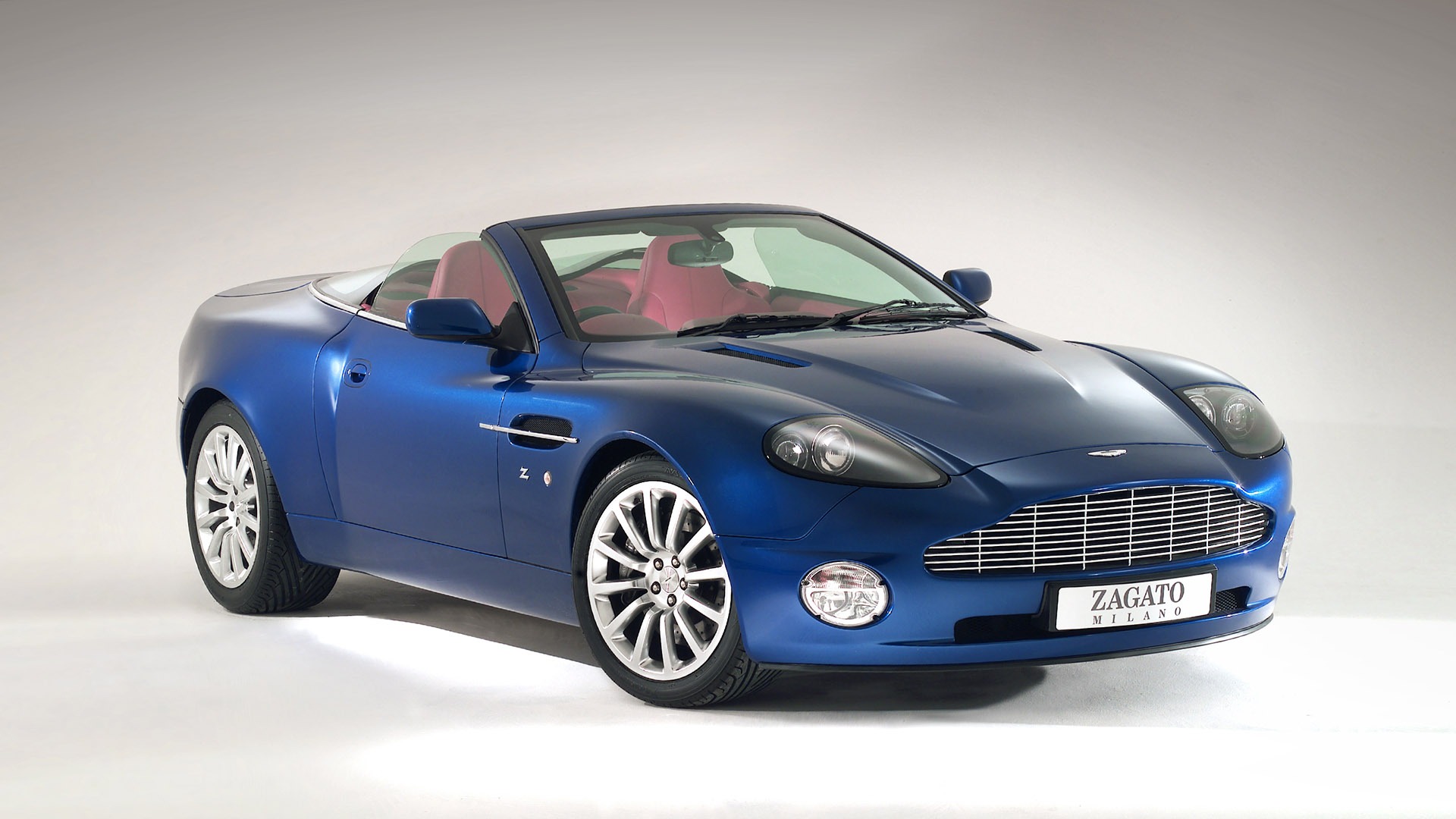
One more fascinating one-off deserves mention in this early-2000s period. In 2004, Zagato presented a concept car that many wished Aston Martin had put into production: the Vanquish Roadster Zagato. Based on Aston’s flagship V12 Vanquish, this concept was shown at the Geneva Motor Show 2004 as a sleek, two-seat convertible with custom Zagato bodywork. Uniquely, the front half of the car remained largely the same as a stock Vanquish (so it retained the Aston grille and headlights), but from the A-pillar back it was bespoke: a manually folding canvas soft-top (unlike the roofless AR1, this one had an actual roof), a reshaped tail with round taillights akin to the DB7 Zagato’s, and a snug tonneau cover when the roof was down. The idea was to offer a limited run of Vanquish Zagato roadsters to wealthy clients, and interest was high. However, the project ran into regulatory hurdles – specifically, issues with roll-over protection and structural rigidity meant it couldn’t easily be made road-legal. Sadly, Aston Martin canceled the plan, making the Geneva show car a sole example. That single bright red (in most photographs) Vanquish Zagato Roadster still exists, a tantalizing glimpse of “what could have been.” It is occasionally displayed at events or Aston Martin gatherings, reminding fans that not every beautiful Zagato sketch reaches customers. As one journalist quipped, the Vanquish Roadster Zagato is “one of the most low-key Zagato-bodied Astons ever made” – so low-key it never went beyond concept. All the same, it underscores the creative energy of the Aston–Zagato alliance in those years, willing to experiment at the fringes of possibility.
Celebrating Heritage: V12 Zagato and the 100th Anniversary Trilogy (2011–2014)
After the flurry of early-2000s projects, Aston Martin and Zagato took a brief respite. Then, in 2011, their partnership roared back to life in spectacular fashion – this time to celebrate a milestone. The year 2011 marked 50 years since the original DB4 GT Zagato’s debut (1961 was when those cars hit the track and customers). To honor this golden jubilee, Aston Martin and Zagato crafted an all-new ode to their shared history: the Aston Martin V12 Zagato.
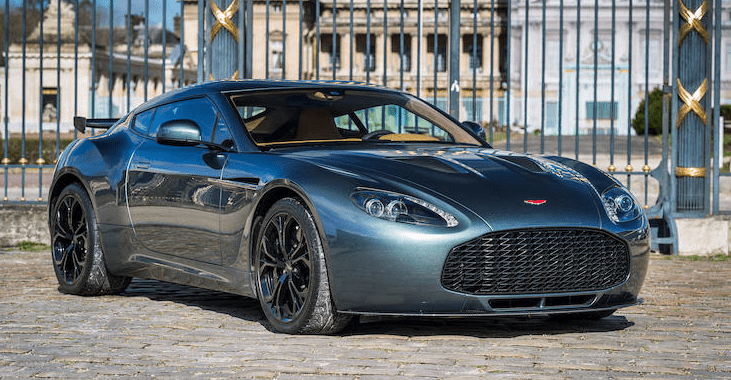
First shown as a concept at the prestigious Concorso d’Eleganza Villa d’Este in Italy in May 2011, the V12 Zagato stunned onlookers and even won the event’s design award in its class (proving that the Zagato magic could still wow judges, just as the DB4GTZ had in its day). The car was based on the racy Aston Martin V12 Vantage, combining a 6.0-liter 510 hp V12 with a short-wheelbase two-seat chassis – but clothed in a completely unique Zagato body. Its design brilliantly blended past and present. The front grille and long hood screamed modern Aston aggression, but the double-bubble roof and truncated tail, along with round “horse collar” taillights, were clear nods to Zagato’s heritage. Every exterior panel was either hand-formed aluminum or carbon fiber, showcasing artisanal coachbuilding in a contemporary way.
Crucially, the V12 Zagato was not just a show pony. Aston Martin promptly entered two prototype V12 Zagatos in the grueling 2011 Nürburgring 24 Hours endurance race, proving the car’s mettle. They finished an impressive 5th and 6th in their class, a respectable result that linked back to the racing ethos of the 1960s original. This competition success and public acclaim convinced Aston Martin to green-light a limited production run for customers. Initially, 150 units were planned, but ultimately fewer were built – sources suggest around 60 to 65 cars were completed, making the V12 Zagato even more exclusive than intended. (Aston never officially confirmed the final number, but it’s widely believed to be much lower than 150, possibly due to the high price and a soft economy at the time.)
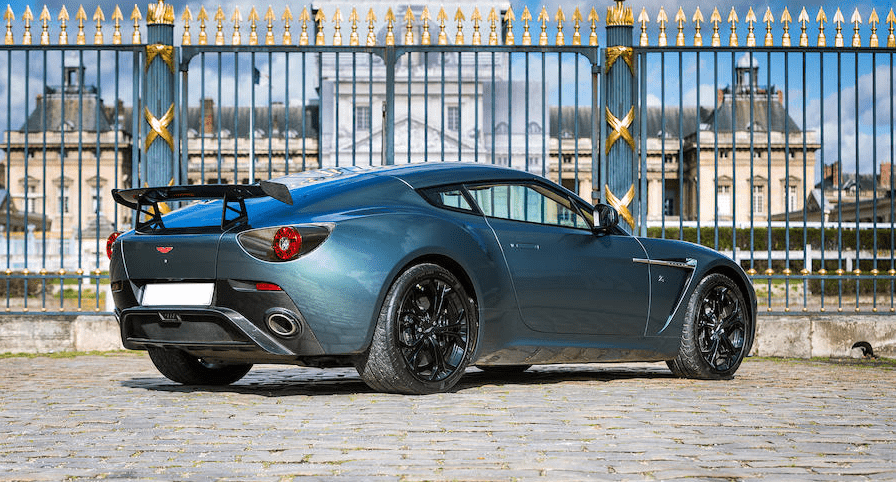
Each V12 Zagato customer essentially received a street-legal version of the Villa d’Este show car, built to order in 2012 (with some trickling into early 2013). These cars were offered in wild colors and bespoke trims – a few came in striking reds or greens mirroring the show/race cars. Performance was scintillating: 0–60 mph around 4 seconds, top speed over 190 mph, and a snarl from the V12 exhaust that was pure theater. Beyond the numbers, though, the V12 Zagato was a rolling piece of art, intended as a “tribute to the 50th anniversary of the DB4GT Zagato”. It even won design awards, just like its ancestor. A “hand-crafted aluminum and carbon skin”, the car incorporated elements seen on previous Aston Zagatos, from the roof bubbles to the short rear overhangs and pronounced fender curves. The interior remained largely Vantage-based but could be tailored with unique Zagato touches. Only the most devoted (and deep-pocketed) Aston aficionados got their hands on one. Today, those fortunate owners rarely part with them, making the V12 Zagato a modern classic with its own cult following. It stands as proof that even half a century later, the Aston–Zagato chemistry was as potent as ever.
As Aston Martin itself approached its 100th anniversary in 2013 (the company was founded in 1913), Zagato was once again called upon to help celebrate. The result was not one but three special one-offs, collectively known as the Centennial Trilogy. These were commissioned by Aston Martin and Zagato for a trio of wealthy collectors from different continents, embodying the global appeal of the brand. Each of the three cars was based on a contemporary Aston model and reimagined by Zagato with unique coachbuilt bodies, all echoing a retro vibe inspired by Aston Martins of the 1970s–80s.
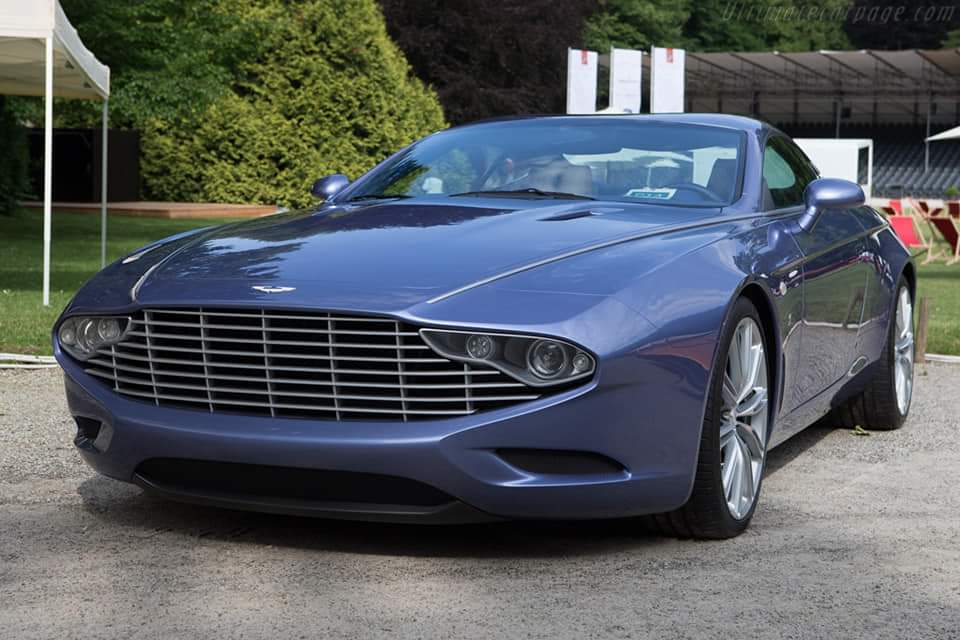
The first two were revealed in mid-2013: the DBS Coupé Zagato Centennial and the DB9 Spyder Zagato Centennial. The DBS Coupé (built on the then-just-discontinued DBS) was a sleek hardtop delivered to a young Japanese entrepreneur, while the DB9 Spyder (built on a DB9 Volante chassis) was a gorgeous roadster made for American Aston collector Peter Read. They were unveiled together at Aston Martin’s big centenary celebration in Kensington Gardens, London, in July 2013. The crowd marveled as these two coachbuilt gems – one silver-gray coupé and one bright red roadster – paid homage to Aston’s past. Their design, led by Zagato’s chief designer Norihiko Harada, deliberately incorporated cues from the past: a “snub nose” reminiscent of the 1980s V8 Vantage/Volante, a broad rear with squared-off tail reminiscent of the classic V8 models, and a generally more angular, straight-edged theme than the curvaceous V12 Zagato. It was a love letter to the era of the original Vantage and Virage. As Zagato described, the Centennial pair’s styling “was intended to recall iconic Astons of the 1970s and 1980s, such as the DBS V8, V8 Vantage, and V8 Virage”. Indeed, from the front 3/4 view, one could see hints of a long-lost Aston prototype, yet the execution was thoroughly modern underneath.
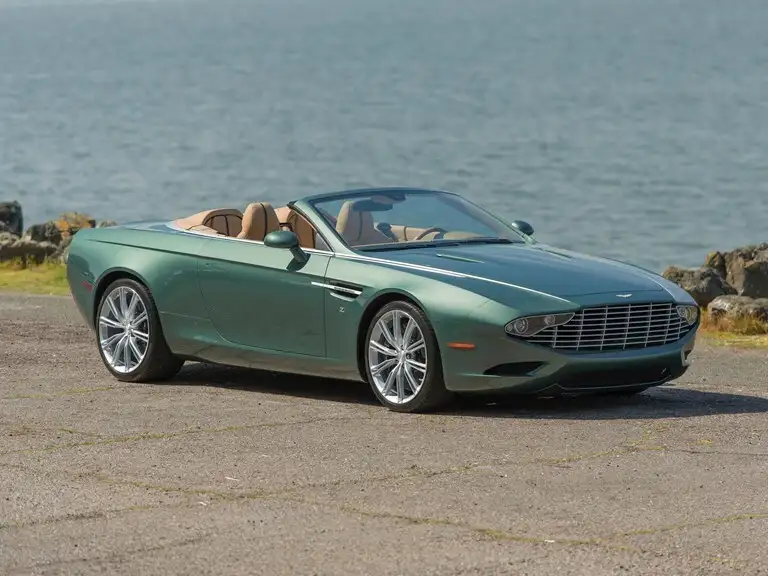
Following their London debut, both the DBS Zagato and DB9 Spyder were flown to California and displayed on the concept lawn at the Pebble Beach Concours d’Elegance in August 2013. They generated huge buzz among the enthusiast crowd. These cars weren’t for sale, of course – they were bespoke gifts to Aston’s 100th birthday – but one of them (the DB9 Spyder) did eventually surface on the market. Peter Read kept the Spyder only a couple of years before offering it at RM Sotheby’s Monterey auction in 2015, where it fetched $693,000. The auction catalog described how it was built: a brand-new DB9 Volante was shipped to Zagato in Italy, given a full custom body over the course of a year, and unveiled alongside the DBS Coupe in 2013. It also noted that, despite being a one-off, it retained full Aston Martin factory warranty and was as usable as any other DB9 – a true melding of fancy design with everyday drivability. The Spyder now resides with a new owner, but likely still in the U.S., occasionally shown at exclusive events. The DBS Coupe, meanwhile, remains with its original Japanese owner and is seldom seen, adding to its mystique.
🔗 Read more: From Classic to Modern: 15 Shooting Brakes That Deserve Your Attention
The third car in the Centennial Trilogy came a year later. In September 2014, at the Chantilly Arts & Elegance Concours in France, Zagato unveiled the Aston Martin Virage Shooting Brake Zagato. This was perhaps the most extraordinary of the trio – a two-door shooting brake (sport wagon) body crafted on an Aston Martin Virage chassis (the Virage was a short-lived 2011–12 model, itself based on the DB9). Commissioned by a European client, it was Zagato’s gift for those who love a bit of practicality with their style. Painted in a deep metallic hue, the Virage Shooting Brake featured the same general design language as the 2013 pair: a low snub-nose front, long flat roof (with subtle twin domes over the cargo area, cheekily extending the double-bubble concept), and a neatly integrated rear with wraparound taillights. The car was fully engineered to be roadworthy and drove under its own power at Chantilly. Mechanically it kept the Virage’s 490 hp V12 and Touchtronic automatic gearbox, so it was as much a sleeper as a showpiece.
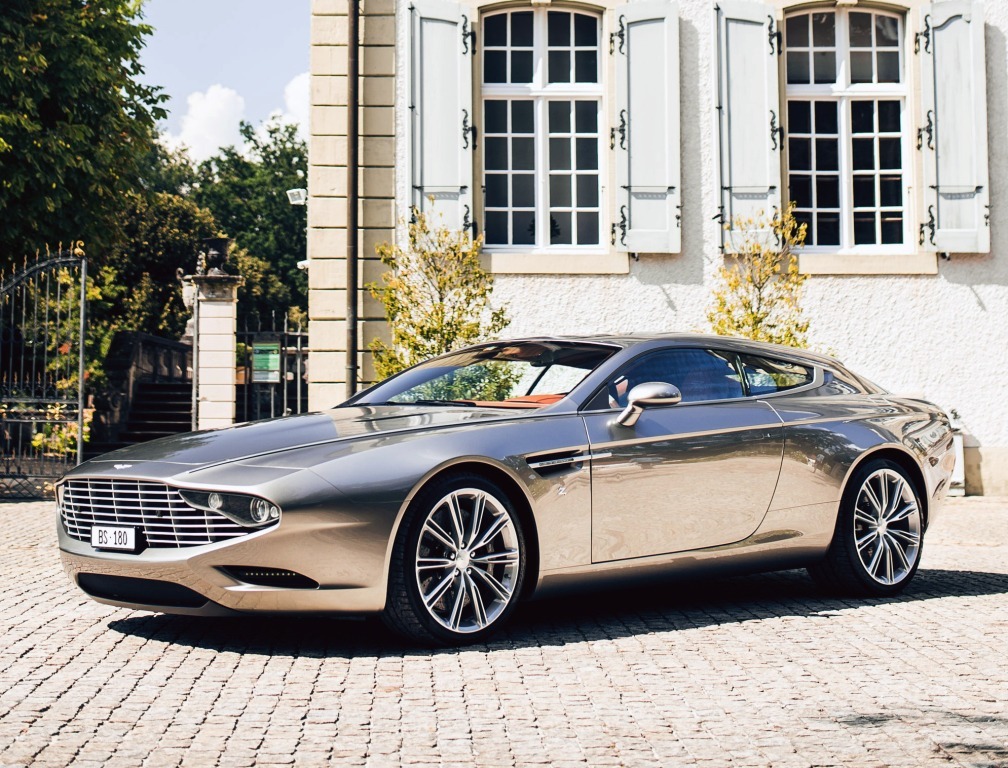
The Virage Shooting Brake completed the “Centennial Trilogy” – three different body styles (coupé, roadster, shooting brake) on three different Aston platforms (DBS, DB9 Volante, Virage) for three continents (Asia, America, Europe). It was a remarkable way to celebrate 100 years of Aston Martin and 95 years of Zagato (since Zagato was founded in 1919, they were nearing their own centenary). These one-offs also highlighted how the partnership could still produce surprises – not just revisiting old formulas, but inventing new combinations like a bespoke shooting brake. As a set, they are unique and likely to remain jealously guarded by their owners. The Virage SB’s owner, for instance, has kept a low profile, and the car has only been shown sparingly (Chantilly in 2014, and possibly Villa d’Este in 2015). While some may argue these centennial Zagatos lacked the excitement of the track-bred V12 Zagato, they undeniably showcased Zagato’s “tailor-made Italian suits for Britain’s finest” in bespoke fashion. Each one-off is a rolling work of art, and together they symbolize the deep respect Zagato has for Aston Martin’s heritage.
Having celebrated the past, Aston Martin and Zagato turned to the future once more. In 2016, at the prestigious Villa d’Este Concorso (a favorite stage for Zagato debuts), they pulled the wraps off the Vanquish Zagato Concept – a stunning carbon-fiber-bodied take on Aston’s Vanquish S super GT. The reaction was rapturous; here was a car that combined Aston Martin’s then-flagship platform with Zagato’s unmistakable design DNA, and it hit all the right notes. The concept’s deep red bodywork showed off features like the wraparound glasshouse, bold Aston grille under a Zagato “double bubble” roof, and new round taillights with a “bladed” LED pattern inspired by the Aston Vulcan hypercar. It was both forward-looking and steeped in tradition – as Zagato’s often are.
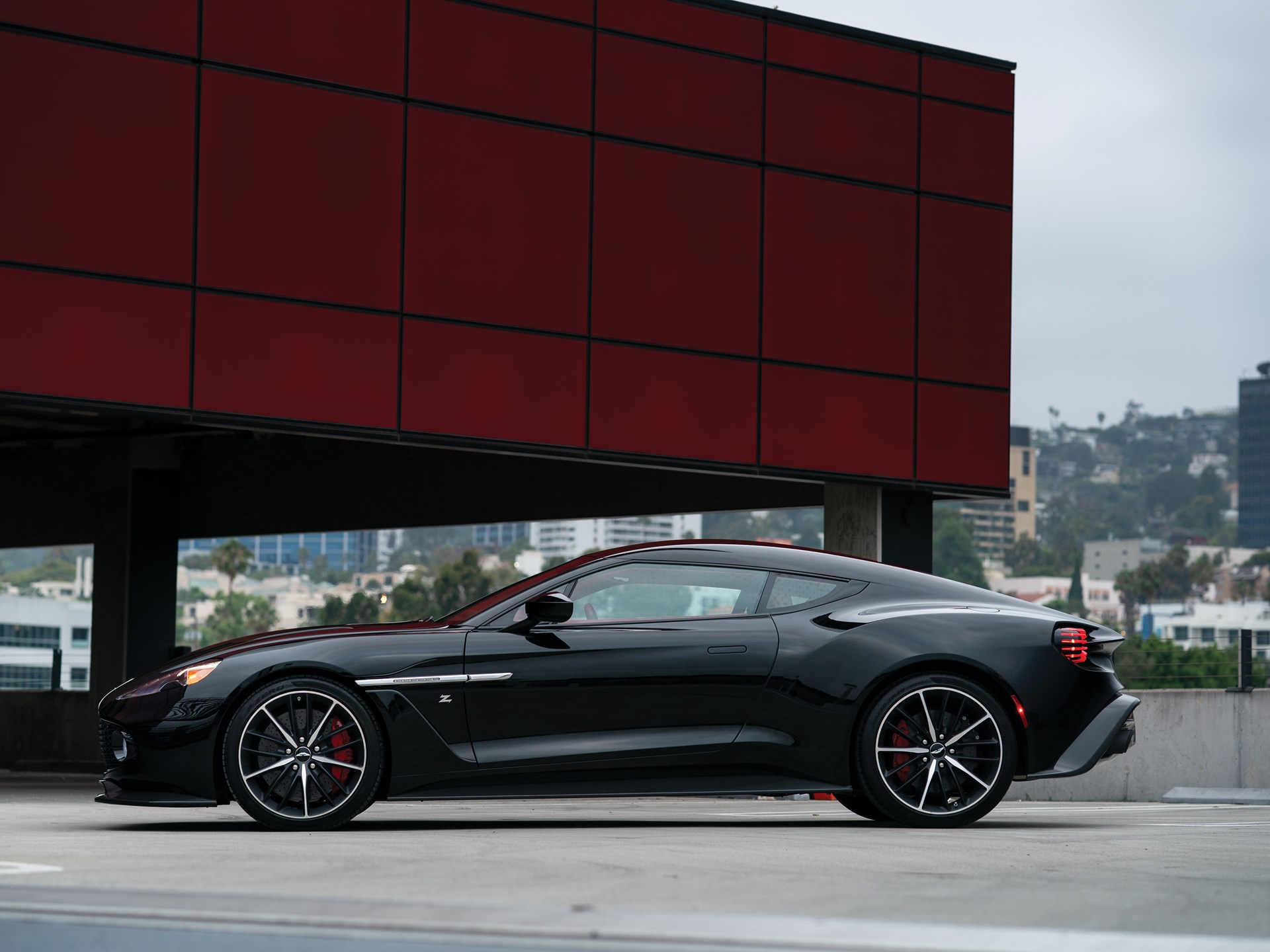
Demand from customers was immediate, and Aston Martin quickly confirmed a limited production run. But this time they went even further: it wouldn’t be just one model, but a whole family of Vanquish Zagatos. Over 2016–2017, Aston announced four variants: Coupé, Volante (convertible), Speedster, and Shooting Brake. Never before had an Aston Martin model spawned so many Zagato-bodied siblings. It was an onslaught of Italian-bred Aston goodness, much to collectors’ delight.
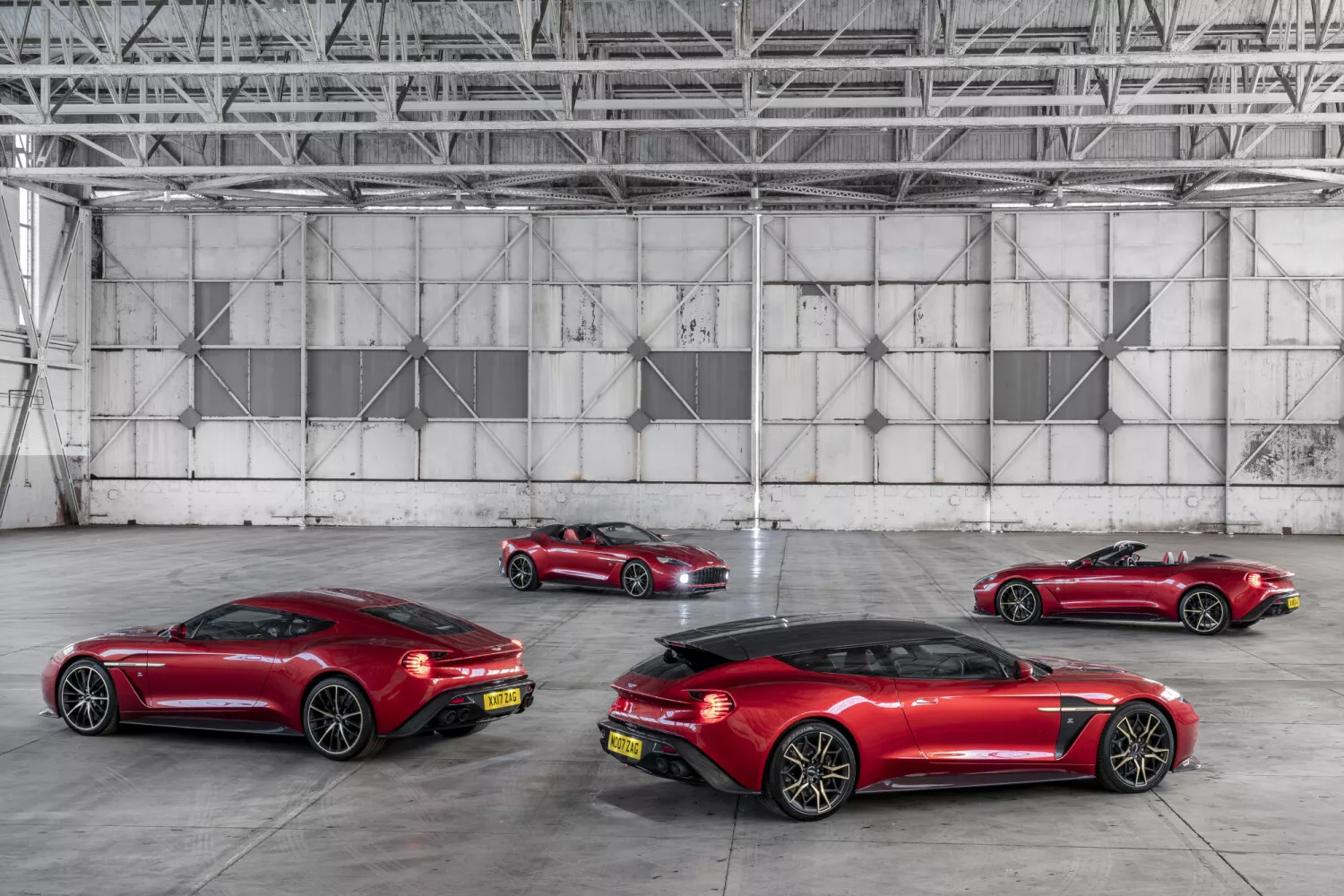
The Vanquish Zagato Coupé came first, with production of 99 units in 2017. It closely resembled the Villa d’Este concept, featuring that striking double-bubble roof (rendered in naked carbon fiber in some specs), the dramatic side strakes, and a crisply tailored tail. Underneath, it was mechanically a Vanquish S, meaning a 600 hp 5.9-liter V12 and an 8-speed automatic – capable of 0–60 in 3.5 seconds. Each of the 99 coupes was bespoke, with owners choosing unique color and trim combinations, often via Aston’s “Q” customization. All 99 were sold out long before the first delivery, with a price tag around £500,000 each, and they began reaching customers in late 2016.
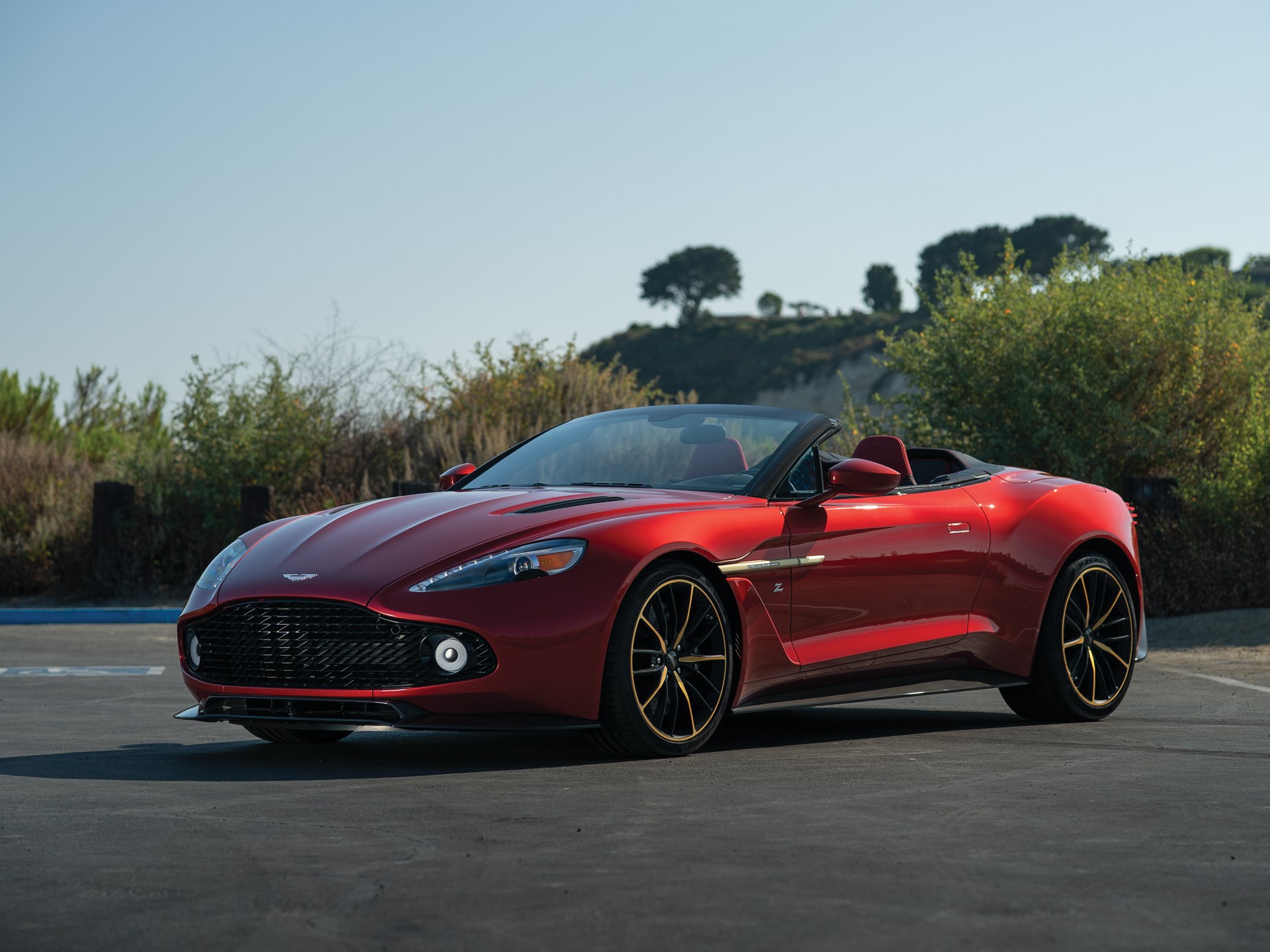
Next came the Vanquish Zagato Volante, also limited to 99 cars and built through 2017–2018. It offered open-top motoring with a power-folding soft top and added glamour. Zagato managed to retain the coupe’s sensuous lines even with the roof stowed – the rear deck was re-contoured and included dual fairings that flowed rearward from the seatbacks. Mechanically identical to the coupe, the Volante sacrificed none of the performance; it merely added sunshine. These too were all pre-sold; like the coupe, none were officially offered in a “regular” dealer showroom. You had to have a slot reserved, often by being a loyal Aston collector.
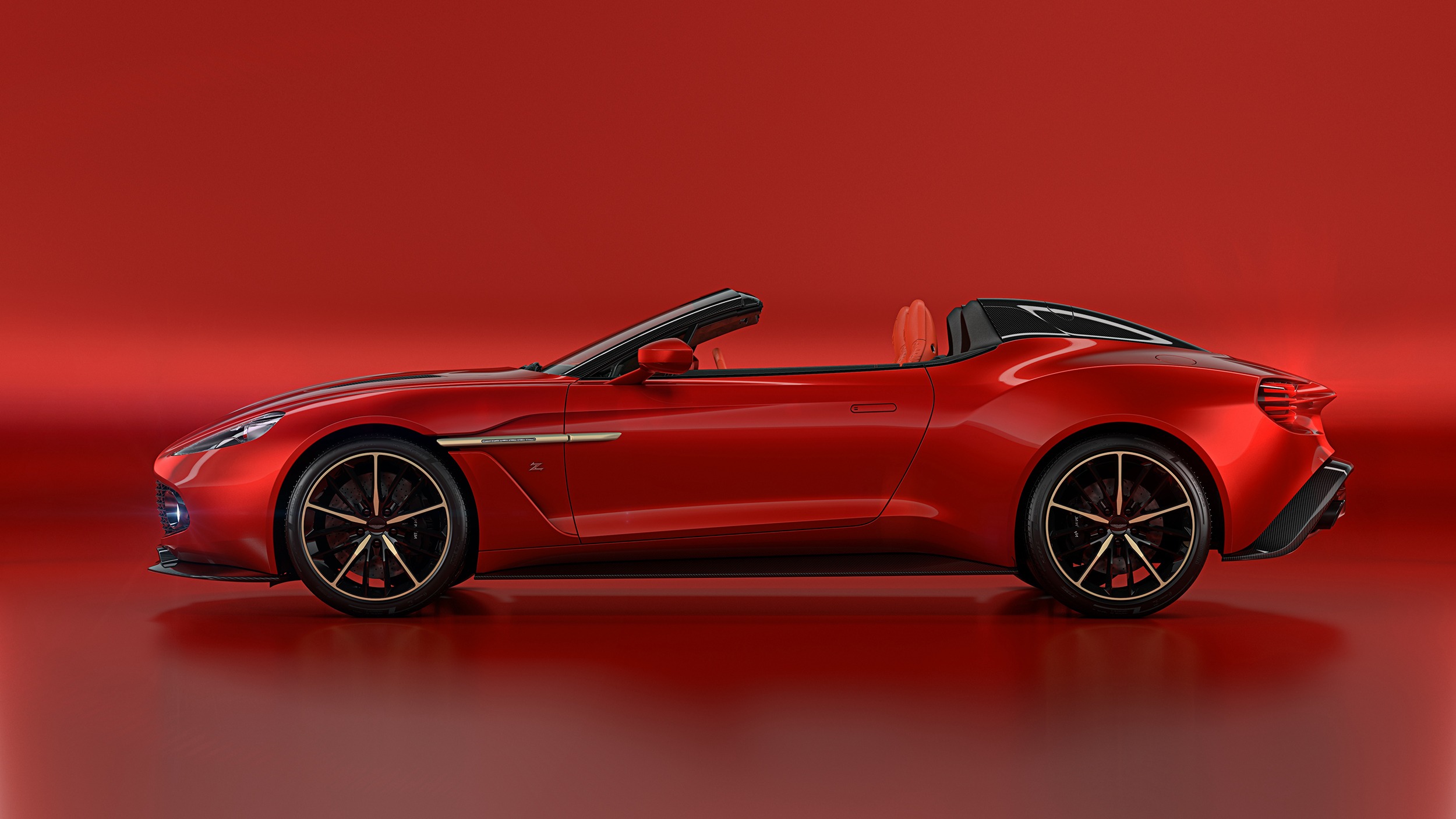
Then there was the wild one: the Vanquish Zagato Speedster. Limited to just 28 units, the Speedster was the most radical and rare of the quartet. It was essentially a roofless version, with a cut-down windshield and twin aerodynamic cowls behind the seats – those cowls evoking Zagato’s double-bubble in a new way, described by Aston as “speed humps that rise up… a reference to Zagato’s signature double-bubble roof”. The Speedster’s design took the Volante and dialed up the drama: the shorter screen and those flowing rear buttresses made it look like a barchetta built for a sci-fi Italian road race. Aston initially wasn’t sure if they could build it (open cars require extra engineering), but they did – and all 28 were spoken for by the time it was announced, despite a price rumored around £1 million each. These 28 lucky owners got their cars in 2018, and the Speedster instantly became one of the most collectible Astons of modern times.
Finally, completing the set, the Vanquish Zagato Shooting Brake arrived. This was no utilitarian wagon, but a two-seater GT with a stylish extended roofline and a tapering, glass-covered tail. Also capped at 99 units, the Shooting Brake was perhaps Zagato’s most intriguing creation of the bunch – it combined luxury, performance, and a bit of extra practicality (with a custom-fitted luggage set in the rear, of course). Its roof even incorporated the double-bubble as two glass panels, letting light into the cargo area. The idea of a shooting brake Aston was not new (remember the Virage SB one-off of 2014), but this was a production series – albeit extremely limited. Each Shooting Brake was tailored to its owner’s tastes; some photos show them in bright white, others in deep emerald green, all striking. By early 2019, the last of the 99 shooting brakes rolled out.
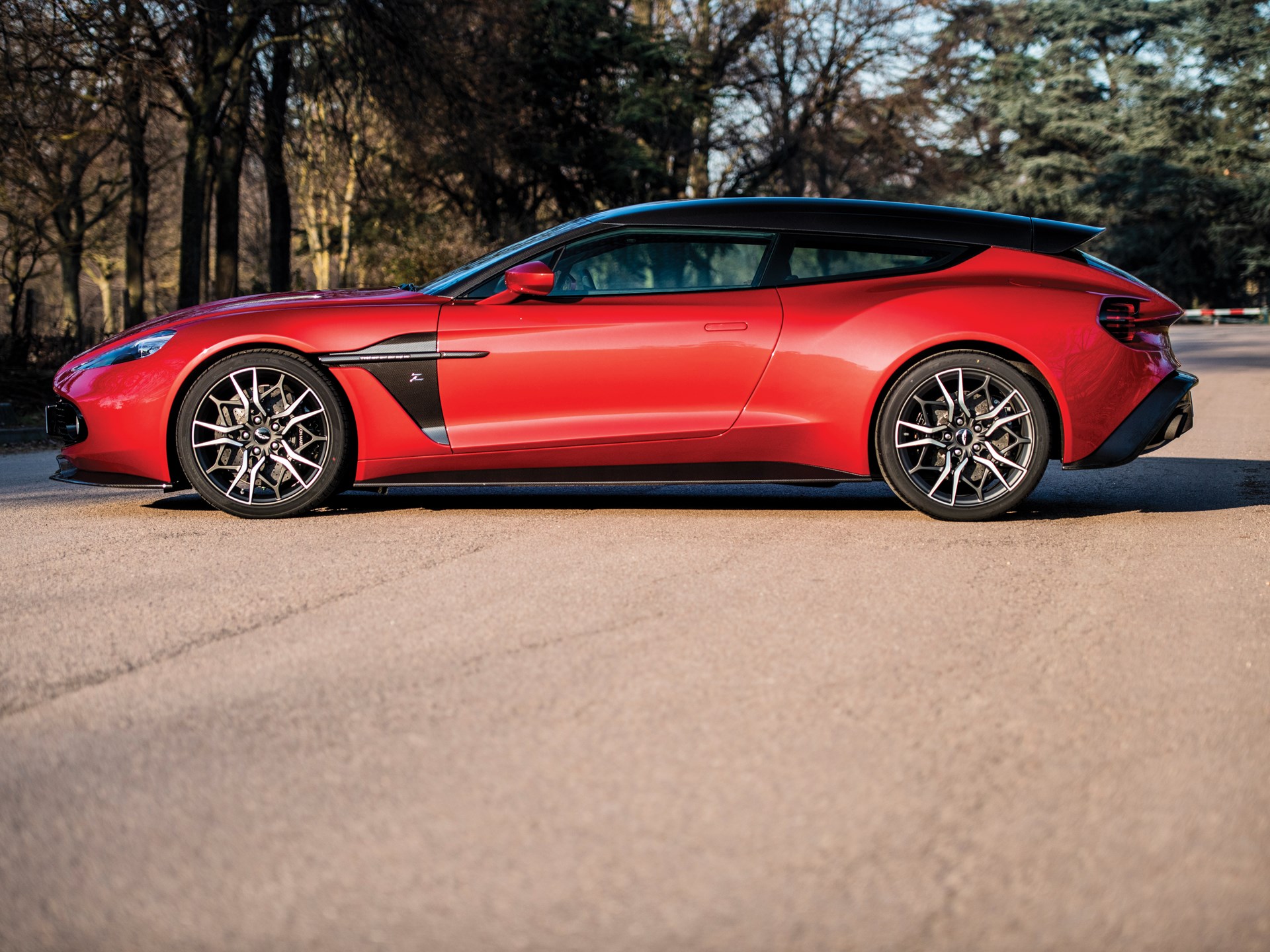
In total, the Vanquish Zagato family amounted to 325 cars (99 + 99 + 99 + 28)– an unprecedented Zagato output. They represent the high-water mark of Aston and Zagato’s collaboration in terms of variety and volume. Critically, they also cemented certain design elements as part of the Aston Martin lore: the round tail lights with LED blades, the expansive use of carbon fiber detailing, and the reappearance of Zagato’s roof bubbles and other trademark cues on a modern Aston. Each model was celebrated in press and enthusiast circles; in fact, many Vanquish Zagato owners ended up with more than one variant, creating mini-collections of their own. These cars, though brand-new, are already trading above their original prices on the secondary market, a testament to their desirability.
From a design standpoint, the Vanquish Zagatos were praised for being “achingly beautiful” yet adding “further exclusivity” on top of the already exotic Vanquish. The collaboration was firing on all cylinders, with Aston’s then-CEO Andy Palmer stating that working with Zagato on these models was a privilege and pleasure. As Zagato’s CEO Andrea Zagato might put it, these were like finely tailored suits – distinctive, perfectly fitted to the Aston Martin form, and undeniably chic.
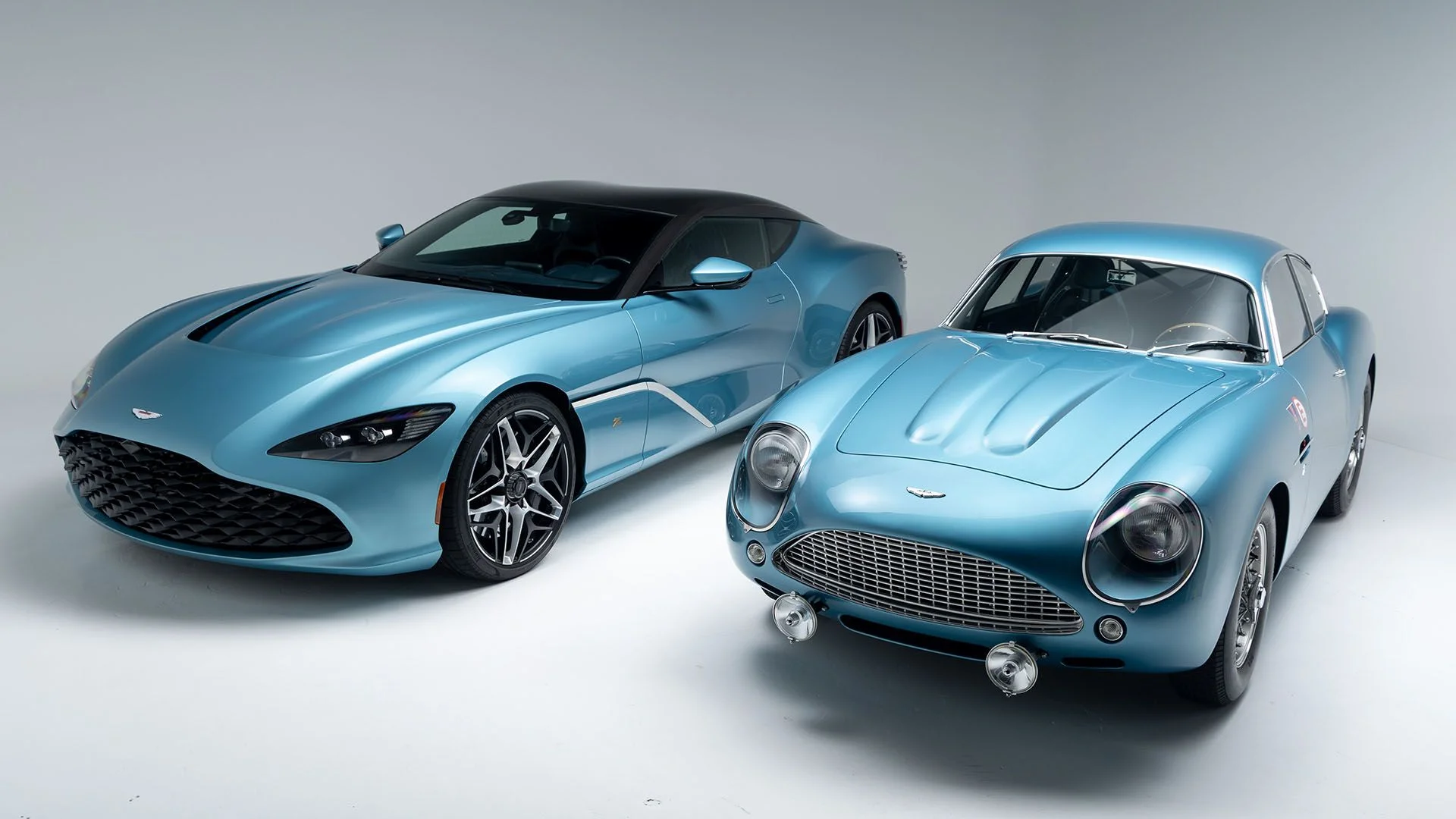
By the late 2010s, both Aston Martin and Zagato had reasons to celebrate again. Aston Martin reached 105 years in 2018 and was looking ahead to new models, while Zagato reached its 100th anniversary in 2019 – an extraordinary milestone for a coachbuilder. To mark Zagato’s centenary (1919–2019) and the enduring partnership, the two companies launched their most ambitious joint venture yet: the DBZ Centenary Collection. This wasn’t a single car, but rather a paired set of cars, one old and one new, sold together for a cool £6 million.
The first half of the pair was a resurrection of the one that started it all: the DB4 GT Zagato Continuation. Aston Martin’s specialist Heritage Division (Aston Martin Works) painstakingly built 19 brand-new DB4 GT Zagato cars in 2019, each an exacting track-only recreation of the 1960 original, right down to the roaring straight-six under the hood. Each required ~4,500 hours of artisan labor to handbuild, using traditional techniques and some modern upgrades for safety. These continuation cars stayed true to the original’s spirit – aluminum body panels over a tubular frame, spartan racing interior – and were finished in a special “1960s-style” racing livery. By late 2019, the first were delivered to owners, making for an early Christmas present for 19 very fortunate collectors (indeed “Christmas came early for 19 astute collectors”, quipped Aston Martin Works’ president). Aston’s CEO at the time, Andy Palmer, lauded the project, saying “it has been our privilege and pleasure to work with Zagato in the creation of these remarkable sports cars”. The continuation DB4 GT Zagato extended “the Zagato bloodline in its centenary year” and proudly acknowledged the “50-plus year association” between Aston and the Italian design house.
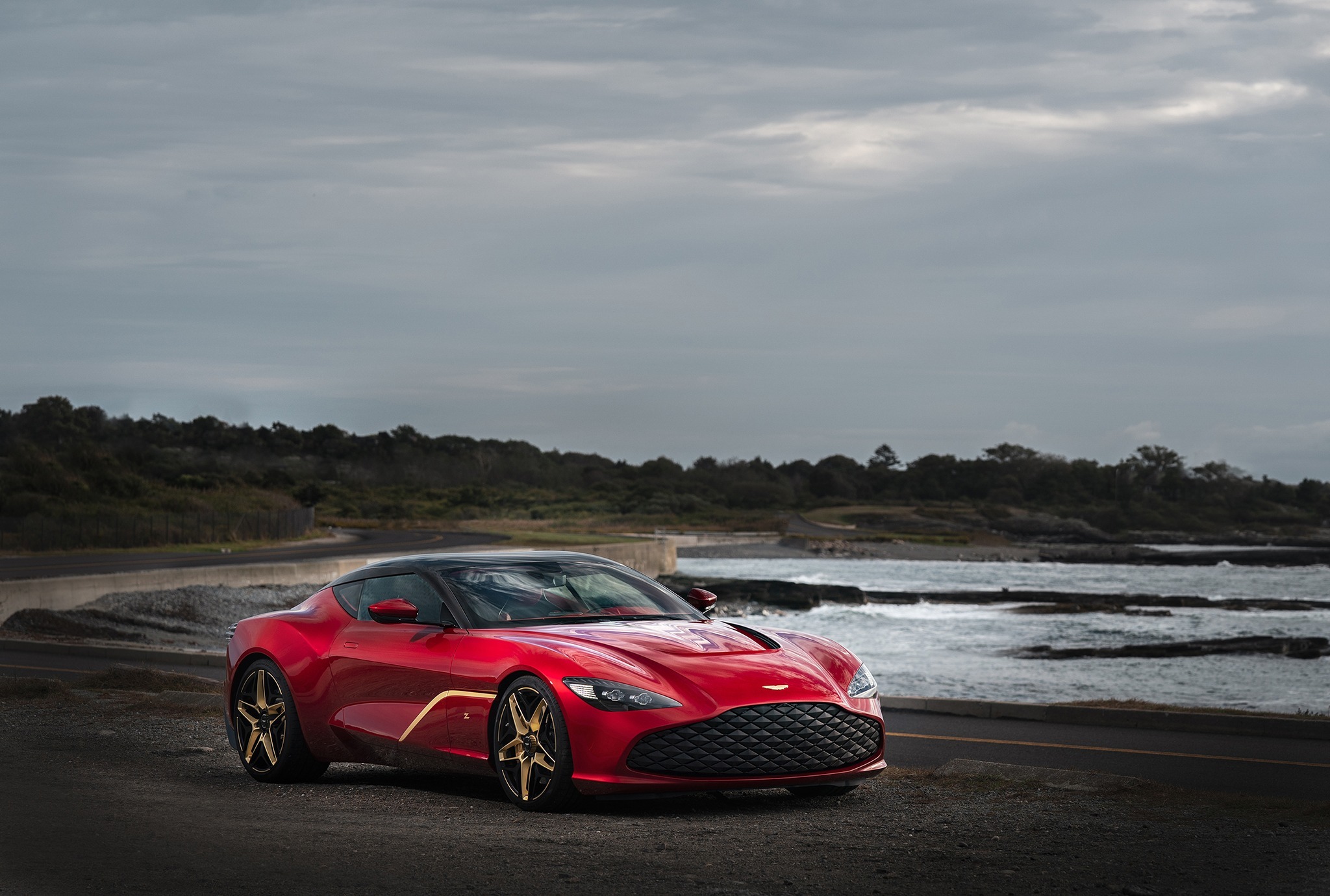
The second half of the pair was something entirely modern: the DBS GT Zagato. Based on Aston’s contemporary DBS Superleggera, this was a new limited-edition supercar for 2020, built in only 19 copies to mirror the 19 DB4Gs. Each DBS GT Zagato featured a bespoke carbon-fiber body designed by Zagato – a futuristic interpretation of the Aston Martin form, replete with exotic details. Notably, it had a dramatic one-piece grille composed of interlocking carbon segments that move when the car starts (opening like scales to let the engine breathe), and a full-length carbon and glass roof with no rear window – a daring design enabled by a camera rear-view system. Of course, it also sports the iconic Zagato “double-bubble” roof as part of that canopy. With a twin-turbo V12 tuned to around 760 bhp, the DBS GT Zagato is one of the most powerful Astons ever. These 19 cars, delivered in late 2020, represent Zagato’s forward-looking vision at its zenith, while also tying back to heritage: each one was only available as part of the DBZ twin set. You couldn’t buy the modern car without the continuation classic, reinforcing the theme of past and present inseparably linked.
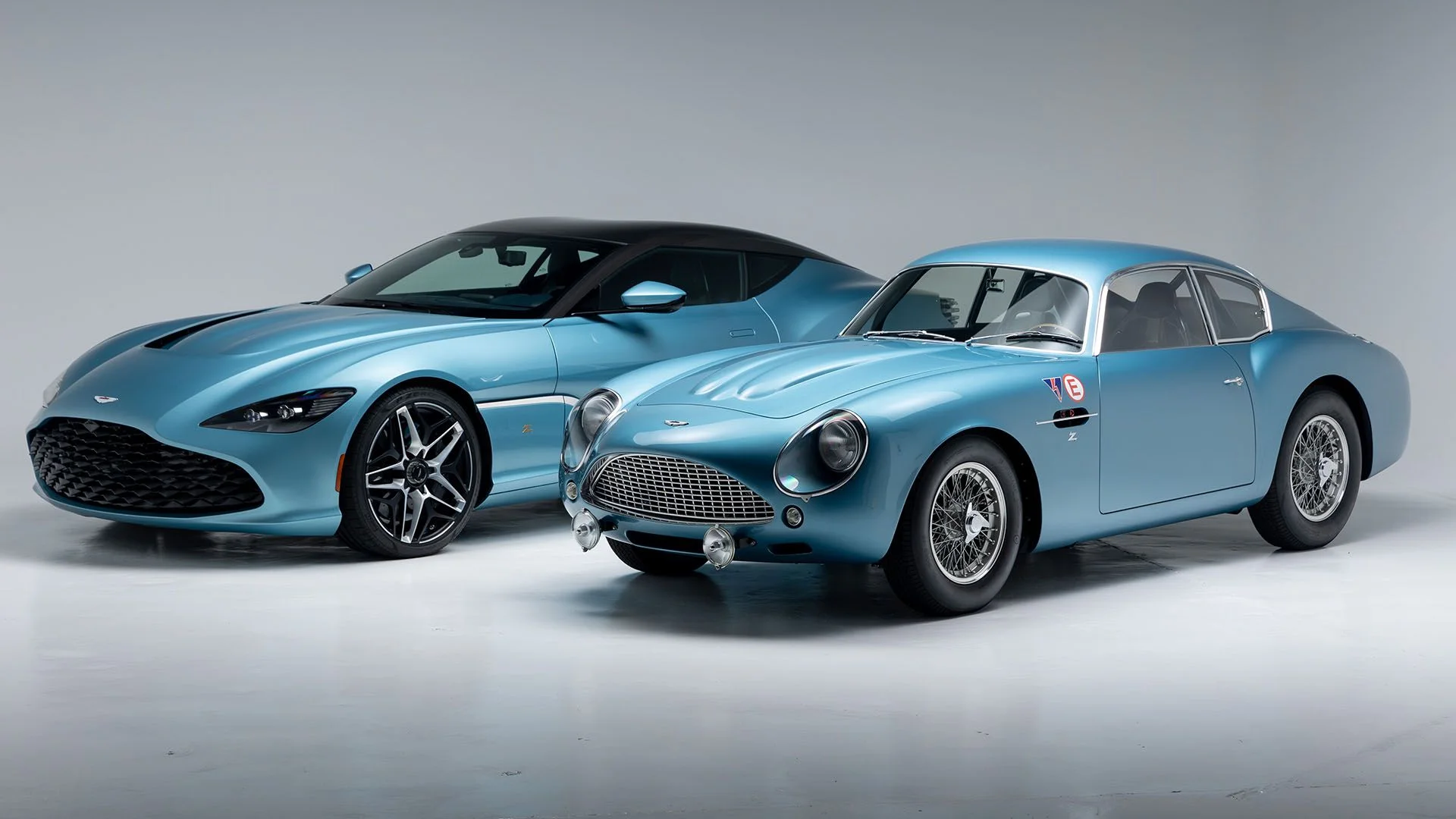
Together, the DB4 GT Zagato Continuation and DBS GT Zagato exemplify the full circle of the partnership. The former literally extends the life of the 1960 model into the 21st century, and the latter shows how Zagato can still radically transform an Aston Martin today. At the DBZ Collection’s announcement, Aston noted it as “the most valuable new car yet offered” (at £6m) and a fitting celebration of Zagato’s 100 years. The DBS GT Zagato also marked, at that time, the “last time we saw Aston Martin and Zagato collaborate” as of 2019 – a capstone, at least for now, on an incredible lineage. All 19 pairs were pre-sold to selected customers, and deliveries of the DBS GT Zagato were scheduled for Q4 2020. It is believed all were delivered by early 2021, often to collectors who already owned multiple Aston Zagatos. Seeing a DB4GT Zagato (new continuation) and a DBS GT Zagato side by side in someone’s garage must be a surreal sight – one a legend reborn from 60 years ago, the other a spaceship from today.
🔗 Read more: 18 Modern Coachbuilt Cars Every Collector Must Own
While Aston Martin itself hasn’t announced a new Zagato collaboration since, the Zagato story took another interesting turn in 2020 through an external initiative. Swiss firm R-Reforged (part of AF Racing, an Aston Martin-affiliated company) partnered with Zagato to create the V12 Vantage Zagato Heritage TWINS. Unveiled in late 2020, these twins were a pair of cars offered together – one a coupé and one a speedster – based on the 2011 V12 Zagato design but updated and re-engineered for a limited run of 19 pairs. Essentially, Zagato used Aston Martin V12 Vantage donor cars, and R-Reforged built new bodies (with Zagato’s blessing) to craft modern interpretations of the V12 Zagato, including an all-new open-top Speedster that didn’t exist before. Andrea Zagato himself endorsed the project as part of Zagato’s centenary celebrations, noting that after nearly 60 years of trust with Aston Martin, they could undertake such a venture with a coachbuilder outside the factory. The Heritage Twins boast upgraded engines (about 600 hp, +80 over the original), all-carbon fiber bodywork, and numerous bespoke details. Sold for roughly £1.75 million per pair, they cater to the most dedicated Zagato enthusiasts. Each pair, stylized as “1919” to honor Zagato’s founding year, represents “the perfect garage – coupé and roadster” as Andrea Zagato described. And indeed, he insisted they are meant to be driven, not just shown: “they are inherently drivable cars… drive to work all week and then turn up to the track at the weekend”.
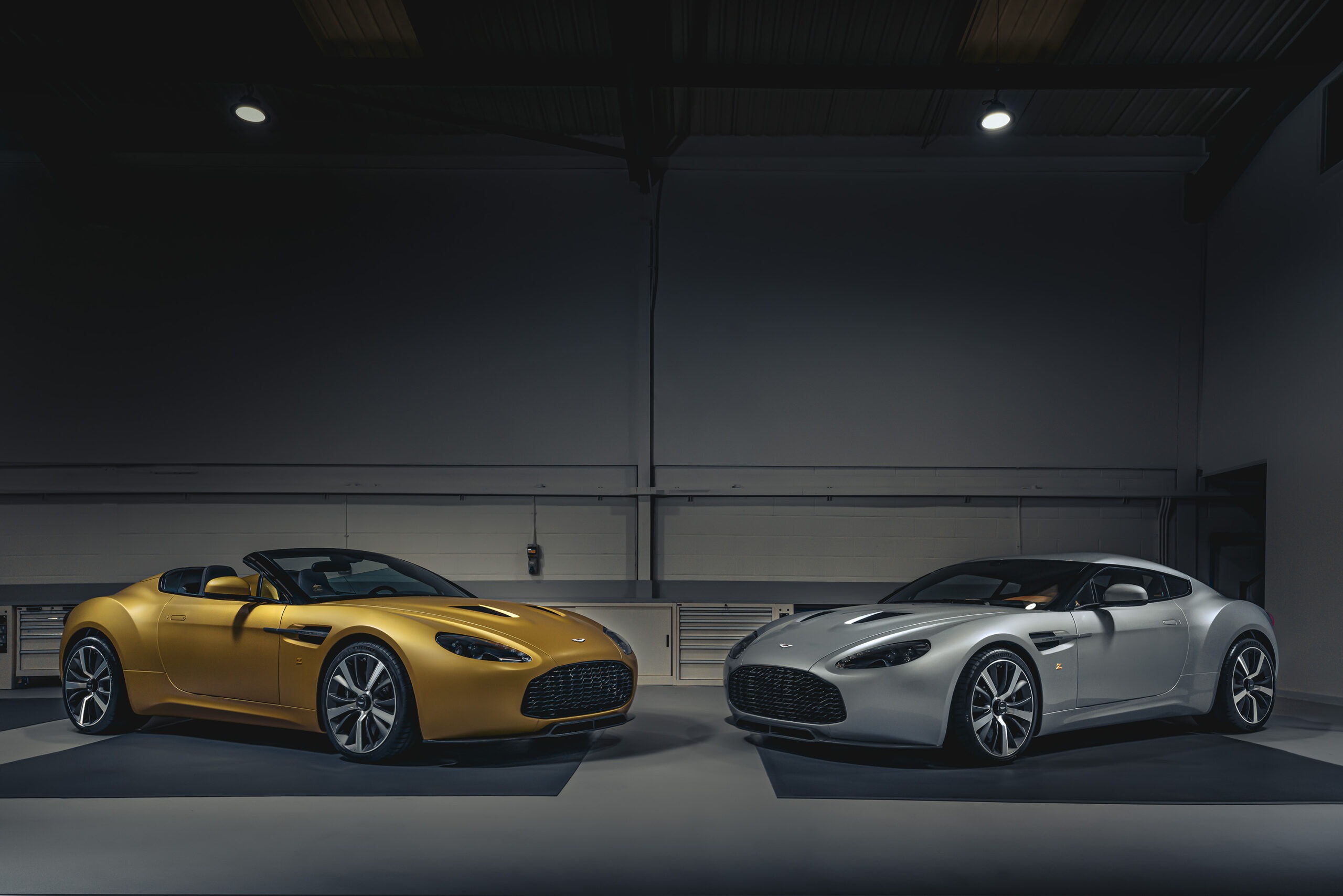
The Heritage Twins by R-Reforged highlight an important point: the Aston–Zagato partnership has become so iconic that even continuations of continuations are happening. Zagato’s own centenary was a chance to reimagine one of their greatest hits (the 2011 V12 Zagato) for a new audience, showing the enduring appeal of the collaboration’s fruits. These cars, hand-built in England but designed in Milan, underscore the global and timeless nature of the partnership. It’s not just about nostalgia; it’s about carrying a legacy forward.
An Everlasting Alliance of Art and Speed
Across six decades, Aston Martin and Zagato have returned to each other with remarkable consistency, each encounter producing machines that blend British performance with Italian craft in a way no other partnership quite matches. From the DB4GT Zagato’s duel with Ferrari to the carbon-shaped theatrics of the DBS GT and the Heritage Twins, every chapter has reaffirmed the same truths: Zagato’s functional beauty, Aston’s engineering soul, and a shared appetite for building cars that exist far beyond the ordinary.
The double-bubble roof, the tiny production numbers, the insistence on purpose over ornament — these are the threads that tie the story together. And while the latest official collaboration arrived in 2019, the door is far from closed. As long as there are collectors who value rarity, design, and authenticity, there will be space for another Anglo-Italian creation.
The partnership endures because it is more than history; it is a conversation between two philosophies that continue to elevate one another. Until the next chapter arrives, the cars already born from this alliance stand as rolling proof that the automobile can still be art — and that the best collaborations never really end.

ABOUT THE AUTHOR
Andreas Scheidl
Italian classic car enthusiast with German roots. Renowned as a respected figure in the classic car community, he serves as a jury member at various international concours d'elegance, including the Classic Gala Schwetzingen and Mantova. As a content creator, Andreas passionately shares his profound knowledge and appreciation for vintage automobiles. His heart beats for cars designed by Giovanni Michelotti, showcasing his discerning taste and dedication to preserving the timeless elegance of automotive history.
More stories by Andreas Scheidl ↗CONTINUE READING
Posts You Might Like
Fiat Panda Cabrio: The Italian Coachbuilders Who Opened Giugiaro’s Box
From Moretti’s Panda Rock to Italdesign’s experimental Strip, Maggiora’s four-wheel-drive convertible and Stola’s remarkable Destriero, the history of the open-top Panda reveals an unexpected chapter in Italian coachbuilding. When Giorgetto Giugiaro designed…
Read story
Gabriele d’Annunzio and the Cult of the Automobile
There was a time when the automobile had not yet become part of the landscape. It announced itself from afar through the beating of an engine, the smell of petrol and hot…
Read story
Fiat 1400: The Last Great Playground of the Carrozzieri
From Touring and Abarth to Farina, Ghia, Vignale, Boneschi, Bertone, Viotti and the smaller carrozzerie, the new Fiat quickly became one of the richest bases for Italian special bodies in the early…
Read story
How a Swiss Dealer Challenged Ferrari: The Story of Monteverdi
How Peter Monteverdi went from Swiss Ferrari dealer to creator of rare Frua and Fissore-bodied GTs, the Hai supercar and luxury off-roaders.
Read story
THE CONVERSATION
Comments 0
Share a memory, a period photograph or a documented detail about this story.