
Castagna Milano’s Alfa Romeo Giulia coupé-cabriolet: a new Antisalon for Italian coachbuilding

Eighty years after Battista Farina’s famous protest at the Paris Motor Show, Gioacchino Acampora presents a radical two-seat Alfa Romeo Giulia as a manifesto for the survival of independent coachbuilding.
In October 1946, Battista “Pinin” Farina and his son Sergio drove two automobiles from Turin to Paris, knowing they would not be allowed to exhibit them at the Motor Show. Italy had been excluded from the first post-war edition, but the two men refused to accept that Italian coachbuilding should remain invisible. They parked an Alfa Romeo 6C 2500 and a Lancia Aprilia Cabriolet outside the Grand Palais, where visitors could admire them on their way into the exhibition.
The French press called it the Antisalon. It was a remarkably effective demonstration of the importance of independent Italian coachbuilders, and the following year Pinin Farina was welcomed back into the exhibition.
Eighty years later, Carrozzeria Castagna Milano has chosen the occasion of the 2026 Paris Motor Show to raise a different, but closely related question: what future remains for the independent coachbuilder?
Its answer takes the form of an ambitious Alfa Romeo Giulia coupé-cabriolet, a two-seat grand tourer proposed as a one-off commission. Conceived under the direction of architect and Castagna president Gioacchino Acampora, the project is not simply an exercise in automotive styling. It is intended to demonstrate why the traditional carrozziere still has a place in an industry increasingly dominated by manufacturers’ own design and personalisation departments.
A profession struggling to survive
For much of the twentieth century, independent coachbuilders played an essential role in the development of Italian automotive design. Manufacturers supplied mechanical platforms, while companies such as Pinin Farina, Touring, Vignale, Bertone and many others developed individual interpretations, sometimes for private clients and sometimes as proposals for future production models.
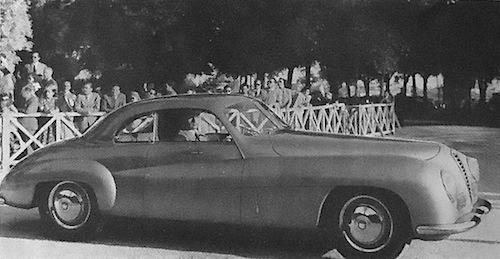
Alfa Romeo was particularly important to this tradition. The 6C 2500 and, later, the 1900 provided the foundations for an extraordinary variety of bodies, allowing independent ateliers to experiment with proportions, construction techniques and new stylistic languages.
That relationship has changed considerably.
Today, almost every major luxury and performance manufacturer operates its own personalisation programme. Special editions, individually specified interiors and even unique commissions are increasingly handled within the manufacturers’ own organisations, while their design centres exercise strict control over brand identity.
For Acampora, this development threatens something more significant than the commercial opportunities of small workshops. It risks marginalising an independent creative discipline that historically contributed to the evolution of the automobile itself.
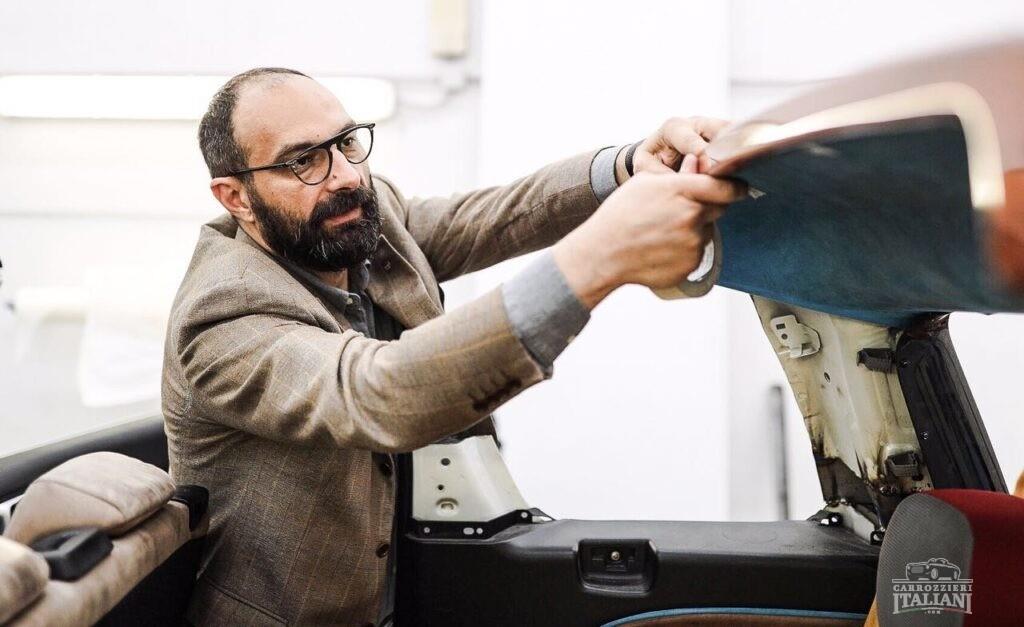
There are also considerable practical difficulties. Modern homologation requirements, complex technical procedures and the associated bureaucracy can make the construction and registration of a single automobile disproportionately demanding. Approval processes can, in practice, extend towards a year, a substantial commitment for an atelier building only one vehicle rather than an entire production series.
The combination of regulatory costs, lengthy procedures and manufacturers’ growing control over bespoke projects raises a difficult question: can independent coachbuilding remain economically viable without losing the freedom that defines it?
Coachbuilders and design centres: two different professions
Acampora makes an important distinction between the work of a traditional coachbuilder and that of a manufacturer’s design centre.
Although both are concerned with automotive design, their objectives are fundamentally different.
A manufacturer’s design centre develops automobiles intended for future markets. Its designers operate within a complex industrial structure, responding to production requirements, engineering constraints, commercial strategies and the expectations of particular customer groups. The process can take years before the resulting vehicle reaches production.

The independent coachbuilder works according to another principle. Rather than studying the requirements of thousands of potential buyers, the atelier responds to the wishes of an individual patron. The starting point is often an existing automobile whose mechanical qualities satisfy the client, but whose bodywork or configuration does not correspond to what that client truly desires.
As Acampora explains:
“The coachbuilder realises today’s dreams; design centres study tomorrow’s desires.”
In his view, a one-off automobile is therefore not simply a production model with unusual colours, materials or decorative details. It is the result of a creative relationship between the client, the designer and the craftsmen responsible for transforming an idea into a functioning automobile.
This is why Acampora questions whether manufacturers’ design centres, however sophisticated, can genuinely replace the independent carrozziere. Their purpose is to develop products for industrial manufacture, not necessarily to interpret the highly personal vision of a single collector.
The distinction is not one of technical competence, but of method, independence and purpose. The traditional coachbuilder can explore solutions that would make little commercial sense within a manufacturer’s production programme, yet may be entirely appropriate for an individual commission.
An Alfa Romeo that the manufacturer does not offer
The new Giulia coupé-cabriolet is Castagna’s practical demonstration of that argument.
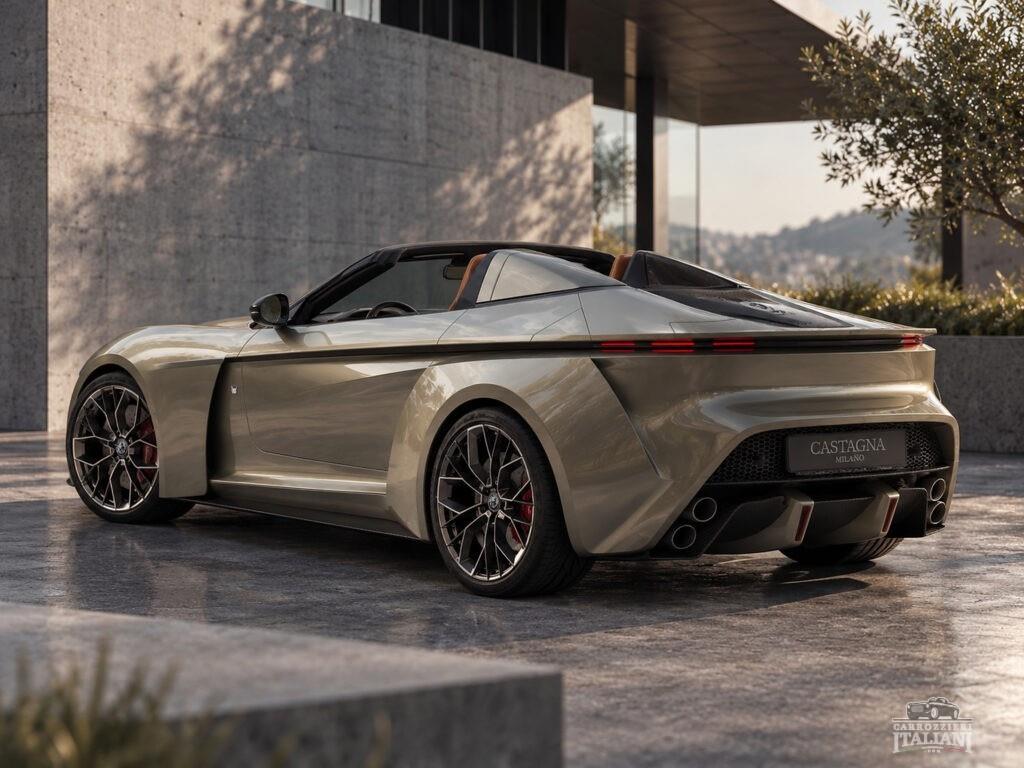
The Milanese atelier proposes an automobile absent from Alfa Romeo’s current range: an elegant, powerful two-seat grand tourer with the ability to transform from an enclosed coupé into an open car.
Rather than developing an entirely new mechanical platform, Castagna starts with the contemporary Alfa Romeo Giulia Quadrifoglio, retaining the character of its 2.9-litre twin-turbocharged V6 while radically reconsidering the relationship between the mechanical components, passenger compartment and bodywork.

The most significant intervention involves moving the front seats, steering wheel and dashboard approximately 330 mm rearwards. This allows the passenger compartment to occupy a position much closer to the rear axle, creating a considerably longer bonnet and restoring the classical proportions associated with Italian grand tourers of the 1950s and 1960s.
At 4,700 mm long, 1,936 mm wide and 1,370 mm high, the proposed automobile accommodates just two occupants. Despite the unusual configuration, Castagna quotes an exceptionally generous luggage capacity of 623 litres.
Its retractable fabric roof is designed to disappear completely beneath the rear bodywork. When closed, the car presents the silhouette of a compact grand touring coupé; with the roof lowered, the clean rear deck and twin headrest fairings give it the character of a barchetta.
Castagna’s ambition is to create two equally convincing configurations, rather than a conventional saloon converted into a cabriolet.
Carbon fibre, traditional craftsmanship and new technologies
The engineering proposal is as ambitious as the styling.
Castagna envisages a body constructed primarily from exposed carbon fibre, combined with selected flexible 3D-printed carbon components. The removal of the original rear doors, roof and other unnecessary elements, together with the use of lightweight materials, contributes to a quoted target weight of 1,420 kg.
The front end reinterprets Alfa Romeo’s traditional trilobo through a sculpted three-section bonnet. Inspired by historic competition cars, only its central section opens to reveal the engine, while the lowered front edges, positioned 40 mm beneath those of the original Giulia, create a more aggressive expression.

Four horizontal daytime running lights, wider tracks inspired by the Giulia GTAm, front splitters, a rear extractor and a prominent aerodynamic spoiler complete the exterior treatment.
Another important feature is Castagna’s patented Vistotal glazing system, which uses a bonded windscreen and slimmer pillars to improve visibility and achieve greater visual continuity between the glass surfaces.
Inside, the proposed materials include two different types of leather and illuminated fossil-wood inserts. Exposed carbon fibre and a distinctive micaceous myrtle-green finish provide the exterior with a combination of contemporary technology and traditional Italian craftsmanship.
These details are central to the project’s message. For Castagna, digital modelling, advanced composite materials and additive manufacturing do not represent a rejection of the traditional atelier. They are new instruments through which the coachbuilder can continue to practise an established profession.
MERAKI: a new philosophy for the Milanese atelier
The Giulia also introduces MERAKI, Castagna’s new design philosophy.
Derived from the Greek word describing the act of putting one’s soul, passion and creativity into a piece of work, MERAKI brings together six principles: three-dimensional design, empathy for proportion, renewal through simplicity, digital craftsmanship, kalokagathia — the harmony of beauty and balance — and innovation.
For Acampora, the combination of modern manufacturing technology and traditional aesthetic judgement is fundamental to the survival of independent coachbuilding.
Digital processes may enable increasingly sophisticated forms and components, but technology alone does not guarantee the quality of the finished automobile. The eye of the designer, the relationship between proportions and the ability to recognise unnecessary complexity remain essential.
As Acampora observes, “To start winning again, what is needed above all is a sense of taste.”
A new Antisalon, eighty years later
The parallel with Battista Farina’s 1946 Antisalon is deliberate, although the circumstances are very different.
Farina challenged the exclusion of Italian coachbuilders from an international exhibition. Acampora is questioning their progressive exclusion from a creative field in which they once played a leading role.

In both cases, the automobile itself becomes the argument.
The proposed Giulia coupé-cabriolet recalls a period when Alfa Romeo mechanical platforms served as the starting point for individual interpretations by Italy’s leading coachbuilders. It also illustrates the potential of an atelier capable of developing a car that its original manufacturer has chosen not to produce.
Whether this particular proposal will reach completion remains uncertain. Castagna describes the project as technically feasible and suitable for homologation, but it has not announced a completed vehicle or a confirmed client. Its construction will depend on finding an enthusiast willing to commission it.
That uncertainty is itself part of the nature of traditional coachbuilding. The patron is not merely choosing the specification of an existing product, but participating in the creation of an automobile that would otherwise never exist.
For Castagna Milano, the Giulia is therefore both a proposed grand tourer and a statement about the future of the profession. Eighty years after Battista Farina demonstrated the value of independent Italian creativity outside the Grand Palais, Acampora is asking whether the modern automotive industry is still willing to make room for it.

ABOUT THE AUTHOR
Andreas Scheidl
Italian classic car enthusiast with German roots. Renowned as a respected figure in the classic car community, he serves as a jury member at various international concours d'elegance, including the Classic Gala Schwetzingen and Mantova. As a content creator, Andreas passionately shares his profound knowledge and appreciation for vintage automobiles. His heart beats for cars designed by Giovanni Michelotti, showcasing his discerning taste and dedication to preserving the timeless elegance of automotive history.
More stories by Andreas Scheidl ↗CONTINUE READING
Posts You Might Like
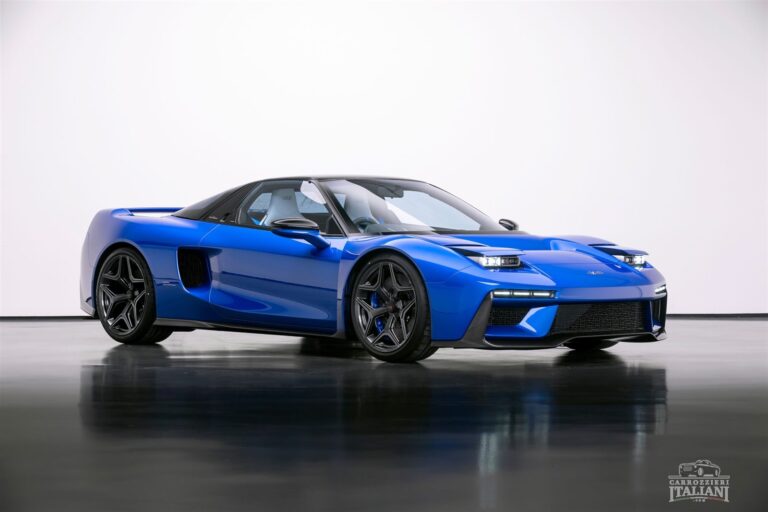
JAS Tensei Designed by Pininfarina: The Honda NSX Reborn
Unveiled on 8 October 2026, the JAS Tensei brings together the motorsport expertise of JAS Motorsport and the design heritage of Pininfarina, transforming the original Honda NSX into an exclusive, carbon-fibre-bodied supercar.…
Read story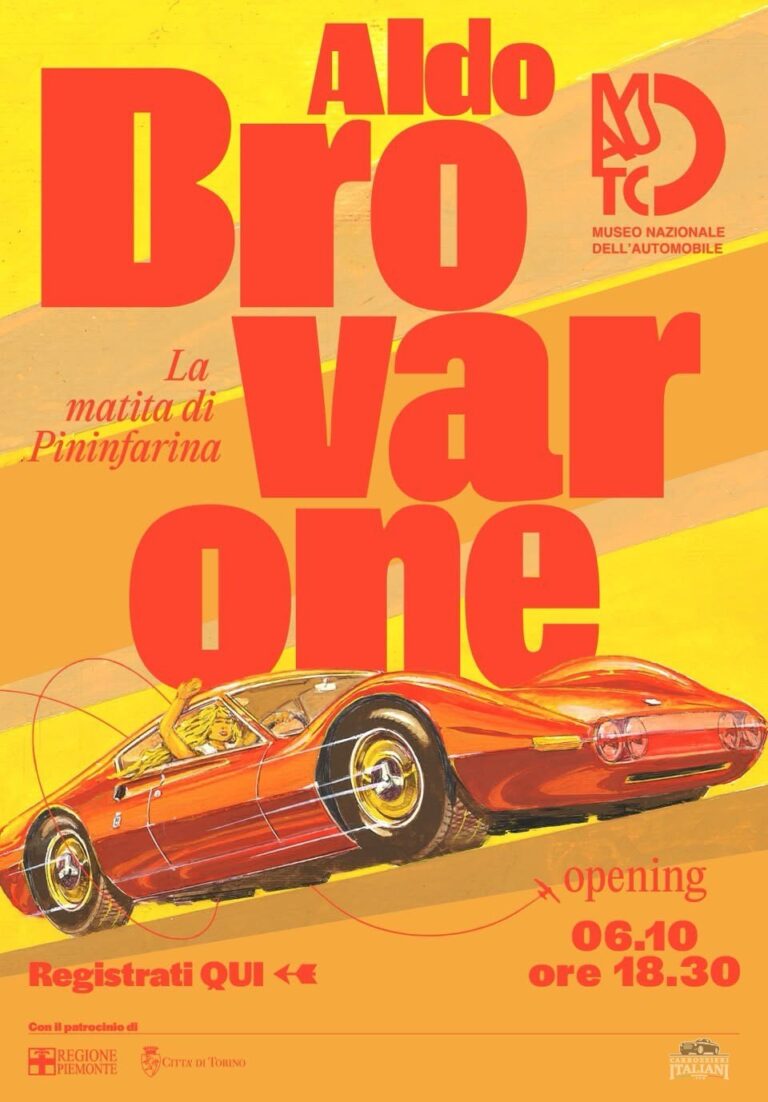
MAUTO to Celebrate Aldo Brovarone with New Exhibition in Turin
The Museo Nazionale dell’Automobile in Turin will open a new exhibition dedicated to Aldo Brovarone, one of the most distinctive figures in post-war Italian automotive design.
Read story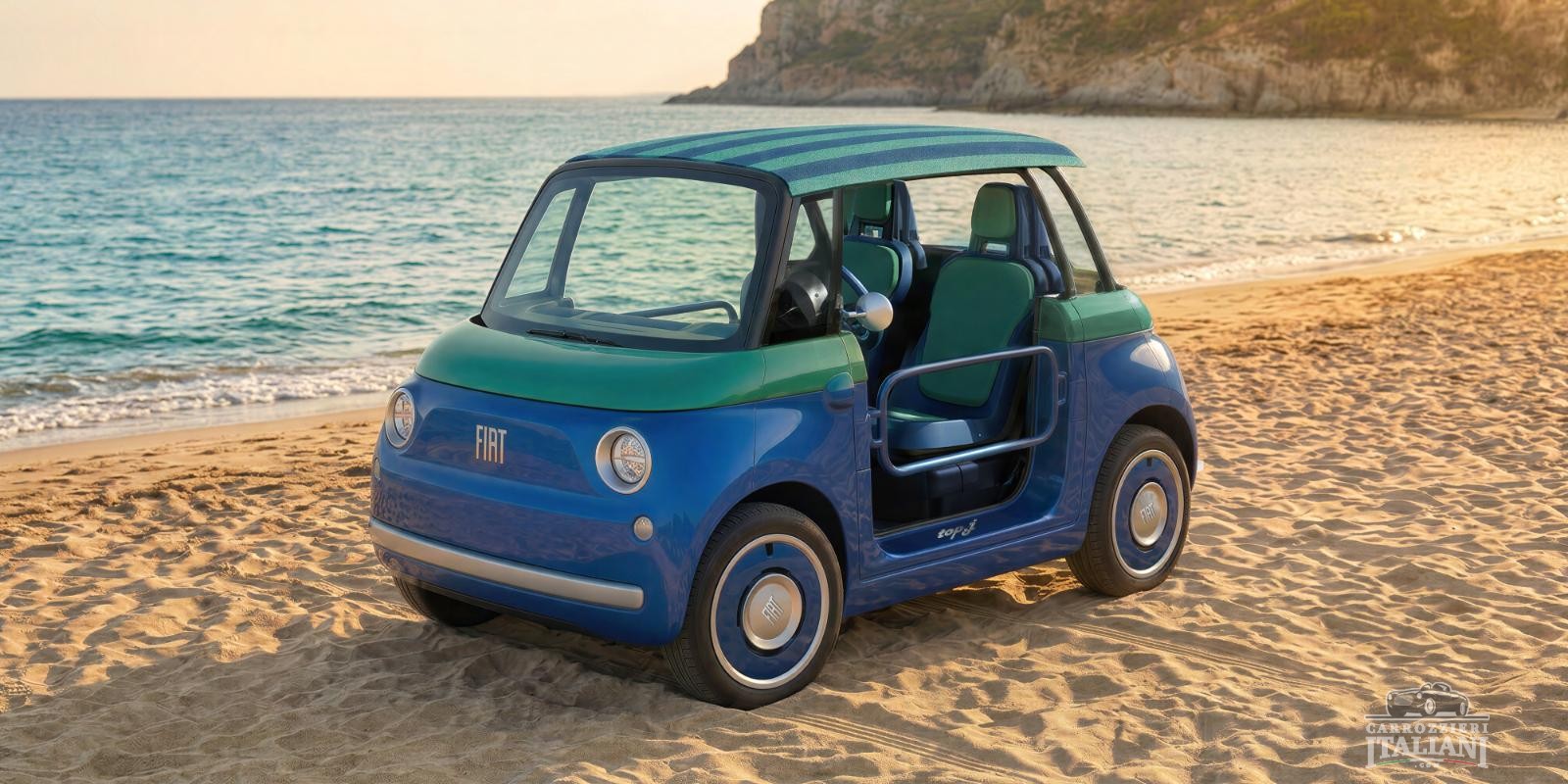
Giugiaro and Lapo Elkann Reinvent the Fiat Topolino
Giugiaro and Lapo Elkann Reinvent the Fiat Topolino with Two GFG Style One-Offs GFG Style has unveiled two radically different interpretations of the Fiat Topolino at Salone Auto Torino 2026, marking the…
Read story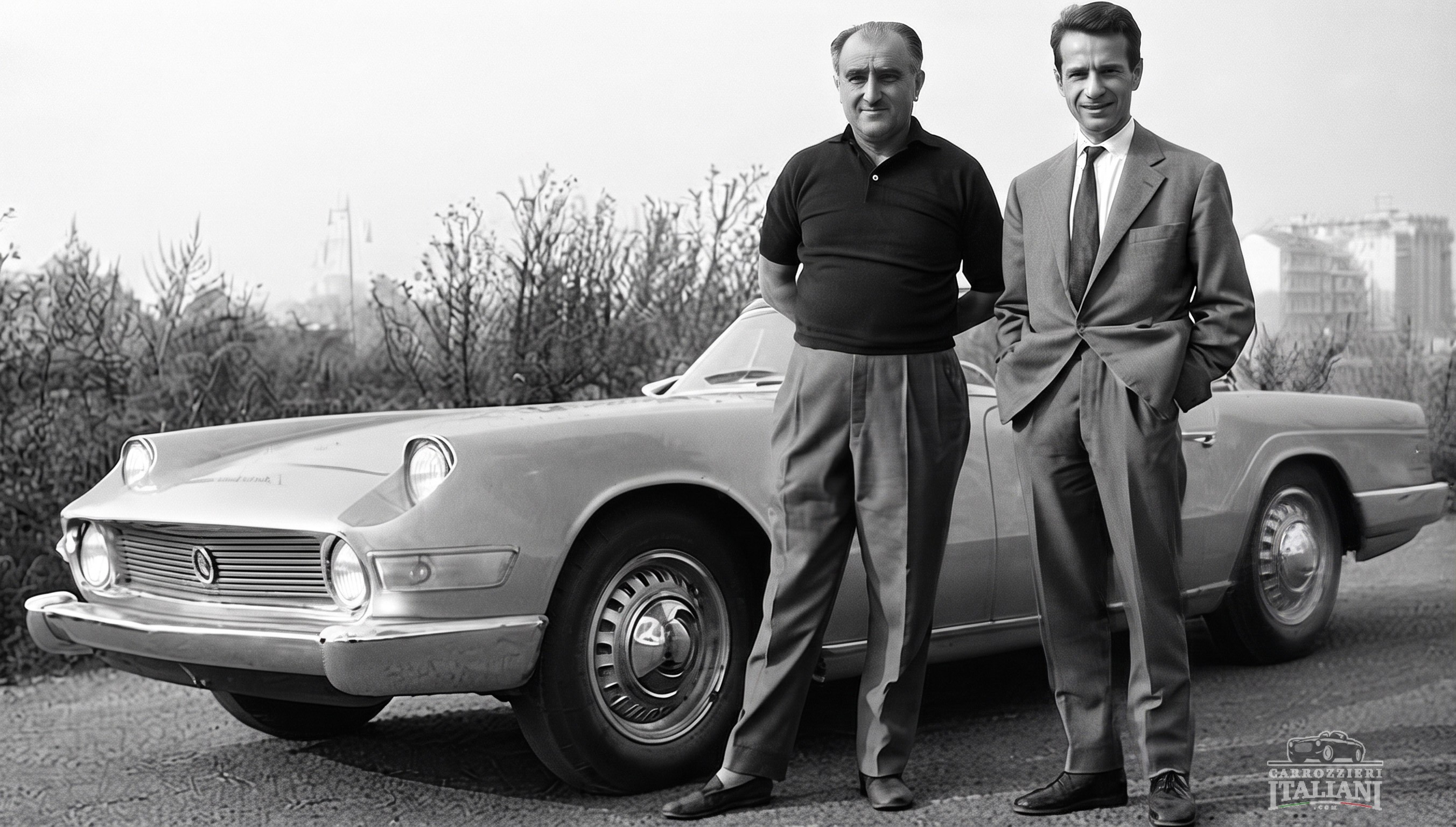
Nardi Silver Ray: What Giovanni Michelotti Wrote in 1961
A September 1961 letter from Giovanni Michelotti, written on his corso Francia studio stationery, gives a contemporary account of the Nardi Silver Ray and sheds new light on its chassis, body construction…
Read story
THE CONVERSATION
Comments 0
Share a memory, a period photograph or a documented detail about this story.