
Nardi Silver Ray: What Giovanni Michelotti Wrote in 1961
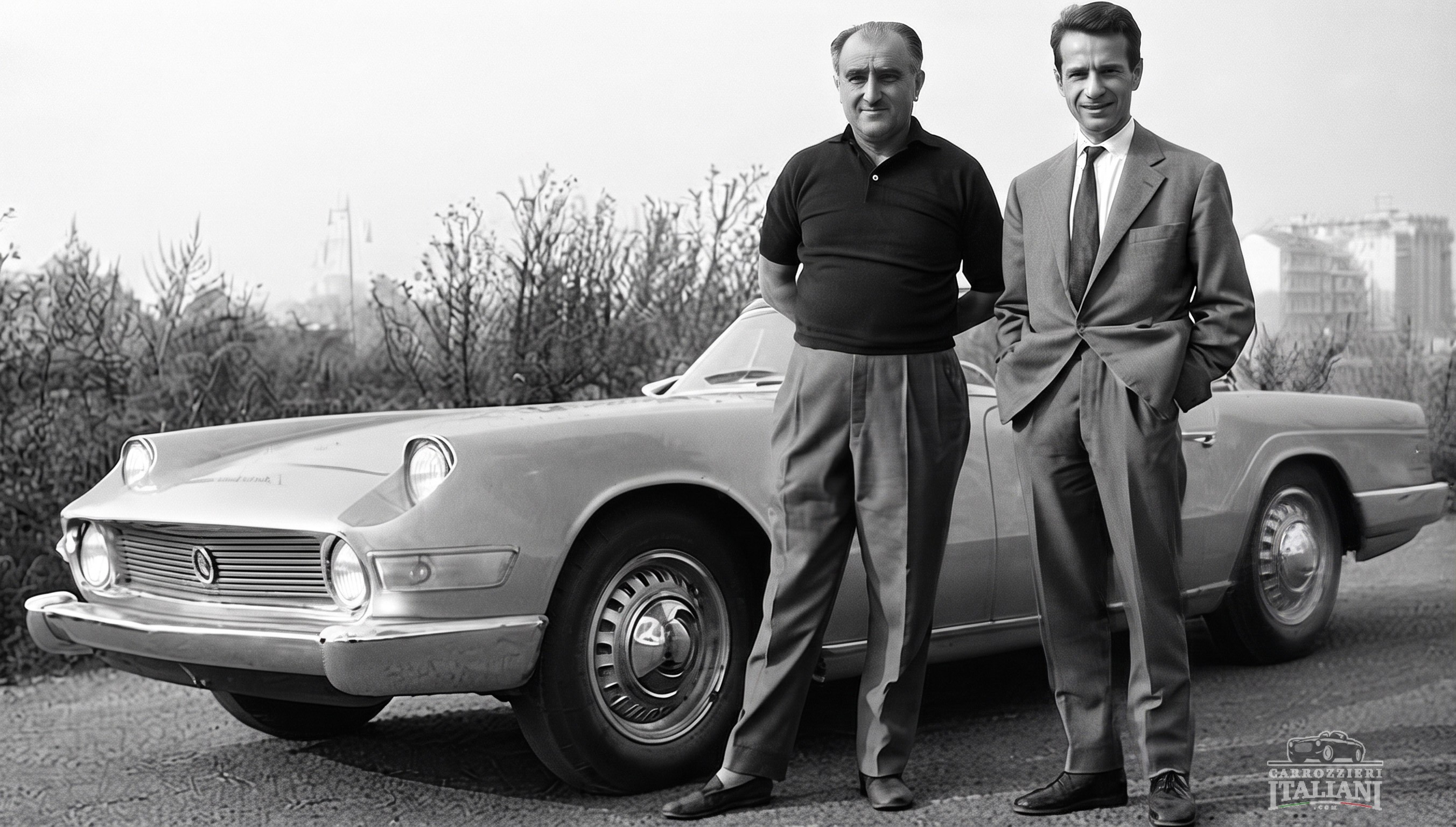
On 18 September 1961 Giovanni Michelotti wrote a short letter on Studio Michelotti paper headed corso Francia 35, Turin. That was his apartment and drawing studio, not the workshop where bodies were fabricated. The subject was a car he called simply the NARDI-PLYMOUTH. It had just been finished. Michelotti enclosed photographs and listed its main specifications: 320 CV, 240 km/h, 1,500 kg, front disc brakes and rear drums. Then came the line that makes the document especially valuable today. The chassis, he wrote, was ‘interamente costruito da Nardi’ – entirely built by Nardi.
That sentence does not fit neatly with the story usually attached to the Silver Ray. For years the car has been described as the continuation of Felice Bonetto’s Alfa Romeo Tipo 412, chassis 412151, fitted with an American V8 and a new Michelotti body. Our own earlier material repeated that connection too confidently. The 1961 letter does not make the Alfa disappear, but it does force a more careful reading of what was reused, what was newly made and, ultimately, what the surviving car should be called.
Corso Francia on the letterhead
The copy came from Edgardo Michelotti, who authorised Carrozzieri Italiani to publish it. According to Edgardo, his father had sent the original to the motoring journalist and historian Piero Casucci; the photocopy later came back to the Michelotti family from Casucci himself.
The sheet carries the address corso Francia 35, Torino. That was Michelotti’s apartment and design studio. It explains the letterhead and where he drew and handled correspondence, but it should not be confused with a coachbuilding workshop. By this period Michelotti’s fabrication activity was carried out separately, at his own workshop in Via Levanna 2, Turin. The fact that he was still writing on corso Francia stationery in September 1961 is therefore not evidence that the Silver Ray was built there.
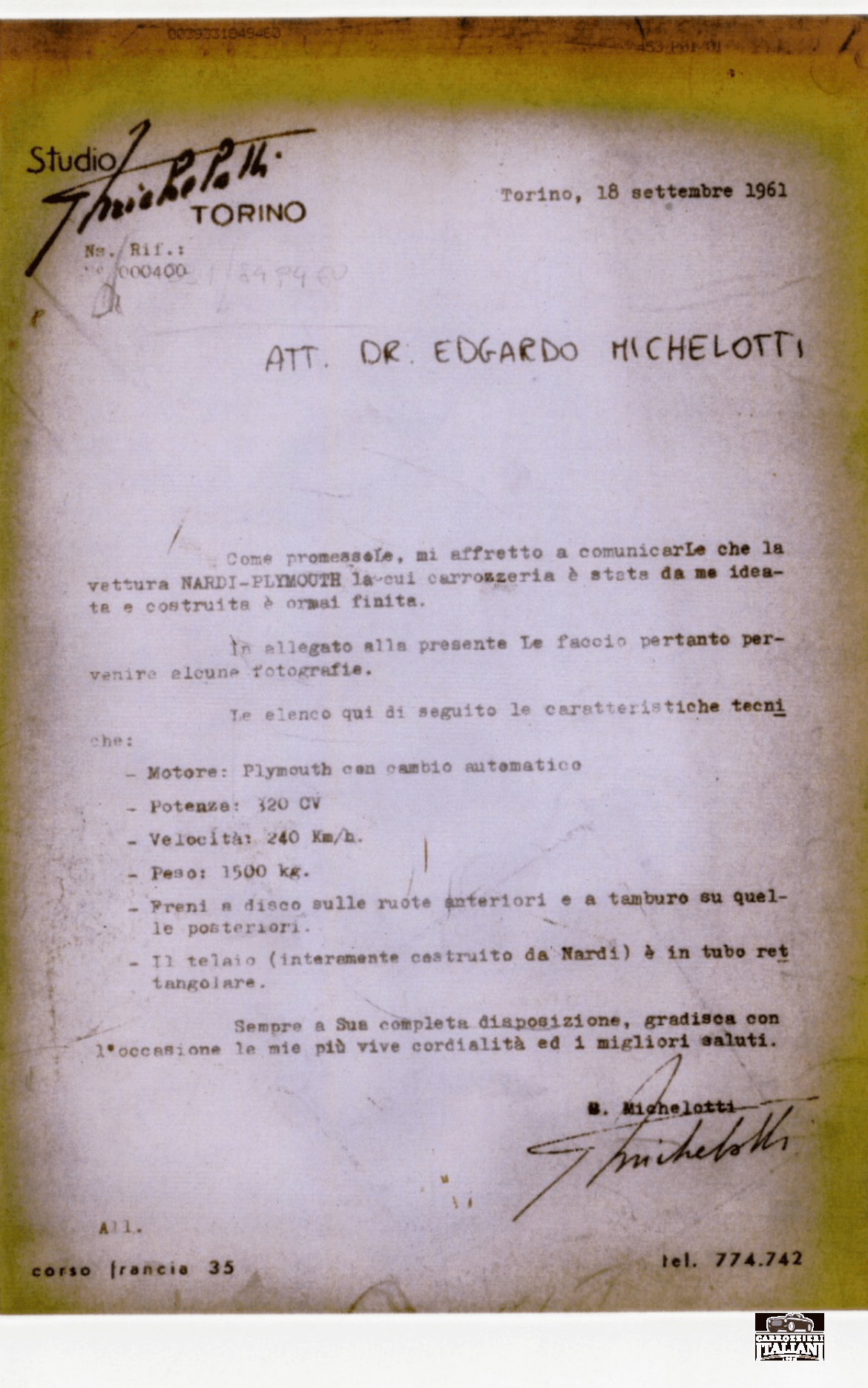
Giovanni Michelotti, 18 September 1961. The Studio Michelotti letterhead gives corso Francia 35, Turin, the address of Michelotti’s apartment and drawing studio. Courtesy of Edgardo Michelotti; published with permission.
Michelotti had been independent since 1949, but for much of the 1950s his work was still turned into metal by established coachbuilders. Vignale was the most important of these relationships, and it is no coincidence that the two earlier Nardi Raggio Azzurro cars were Michelotti designs built by Vignale.
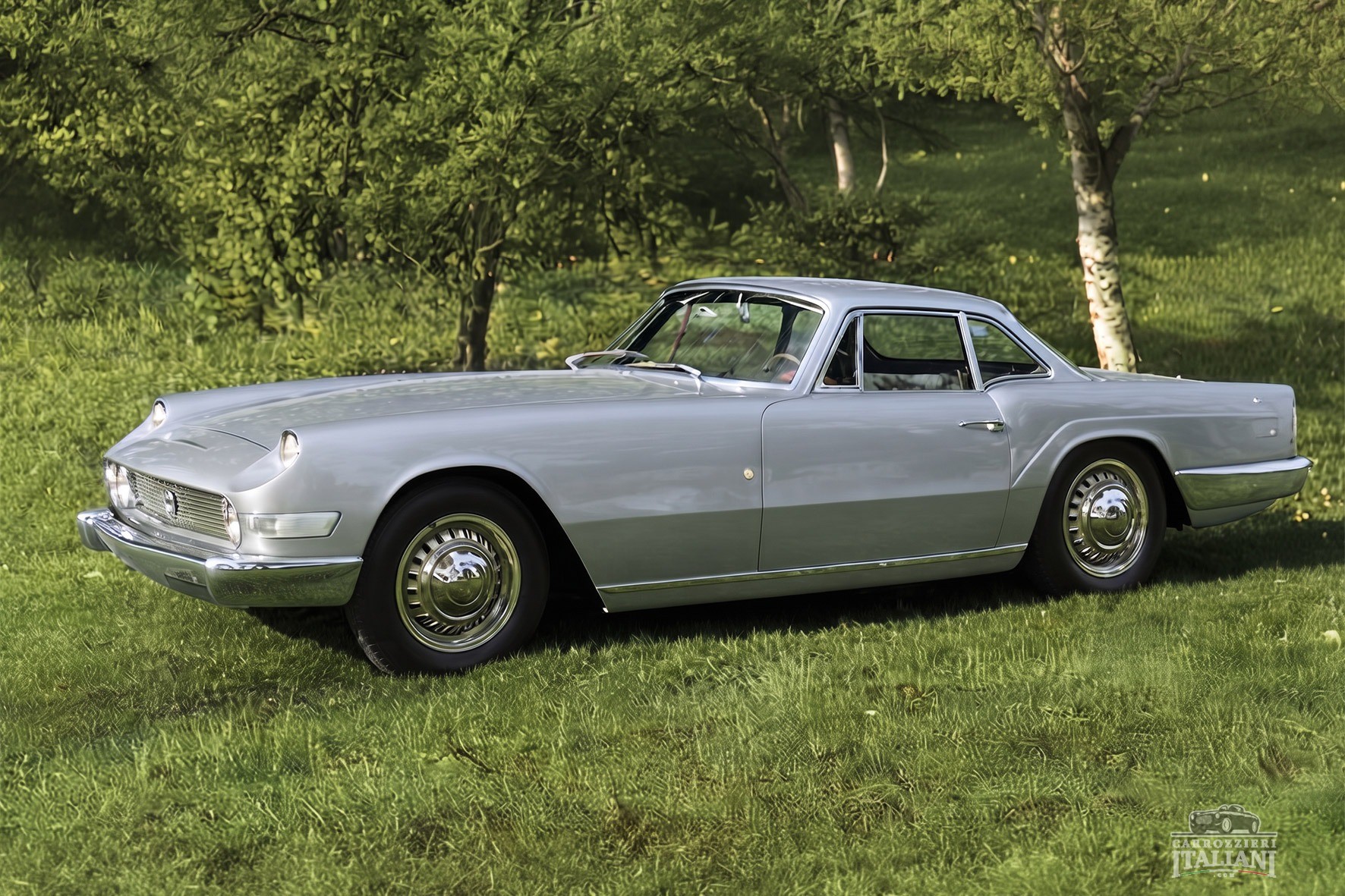
By the end of the 1950s Michelotti had also created a separate workshop in Via Levanna 2, Turin, staffed with the craftsmen needed to turn drawings into metal. This is the important change in his career: corso Francia remained the place associated with the studio and drawing work, while the workshop gave him the means to build prototypes and complete one-offs within his own operation rather than relying entirely on outside coachbuilders.
That makes another phrase in the letter much easier to understand. Michelotti says that the Silver Ray body was ‘ideata e costruita’ by him: conceived and built by him. He was writing from the corso Francia address, but the construction work belonged to the separate workshop activity. The letter does not name the workshop, yet the existence of Michelotti’s own fabrication facility explains how he could legitimately claim both the design and the construction of the body in 1961.
1960 or 1961?
The Silver Ray is usually dated 1960. That still makes sense as the year of the project and probably of much of its construction, but the completed car can now be tied to a precise date. On 18 September 1961 Michelotti wrote that it was ‘ormai finita’ – now finished. The safest catalogue description is therefore: project circa 1960, documented completion September 1961.
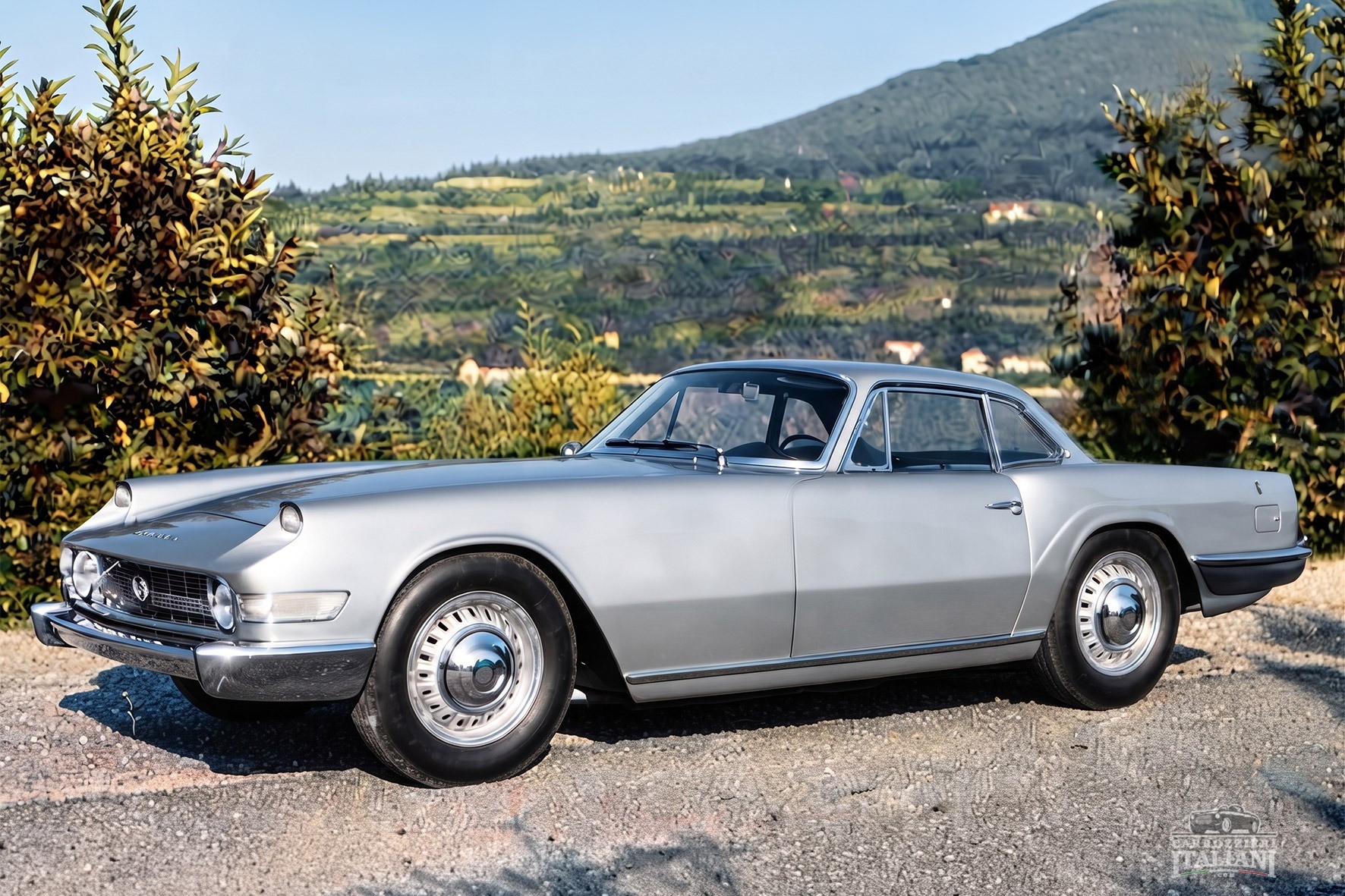
The same page gives a useful period specification. Michelotti lists a Plymouth engine with automatic transmission, 320 CV, a claimed top speed of 240 km/h and a weight of 1,500 kg. The brakes are described as discs at the front and drums at the rear. This last detail is worth correcting in particular, because four-wheel discs have often appeared in later descriptions of the car.
The engine displacement is less certain. Over the years the Silver Ray has been described with 350, 361, 383 and even 413 cubic-inch V8s. Michelotti’s letter settles none of that: it says only ‘Motore: Plymouth’. Until the surviving engine can be identified by casting or stamping numbers, there is little reason to choose one of the later figures and present it as fact. ‘Plymouth V8, automatic transmission, 320 CV’ is what the contemporary document actually gives us.
The Alfa Romeo 412 question
The most difficult part of the Silver Ray story remains chassis 412151. The Alfa Romeo Tipo 412 associated with Felice Bonetto had a real competition history and later received Vignale coachwork. It then disappeared as a complete car. The V12 engine survived separately with the Nardi family for decades, while photographs place the Alfa at Nardi around the period in which the Silver Ray was being developed.
Dino Brunori found another clue while researching Enrico Nardi: a drawing-register entry for the Silver Ray referring to an ‘AR modified frame’. A 1992 Nardi calendar also described the Alfa frame as having been completely transformed. Neither source sounds like the survival of an untouched 412 chassis, but neither allows the Alfa connection to be dismissed.
There is also the recollection of Italo Garessio, who worked at Nardi from 1959. Interviewed much later, he remembered cutting and reworking parts of the Alfa structure and combining them with newly fabricated sections. Taken literally, his account describes a composite construction rather than a straightforward rebodiment.
This is where Michelotti’s phrase ‘interamente costruito da Nardi’ becomes easier to understand. A workshop could regard the finished frame as a new Nardi construction even if pieces of an older chassis had been cut up and incorporated into it. That is very different from saying that the Silver Ray simply is Alfa Romeo 412151 with another body.
What Tom McCrea found
A physical inspection in 2011 added another layer. Tom McCrea examined the surviving Silver Ray and later shared his photographs and notes directly with Carrozzieri Italiani. After opening the bodywork around the frame rails, he found a major welded junction. The forward section could be identified from its components and brake hardware as Dodge/Plymouth material from the early 1950s. It had been joined to an older structure whose origin he could not prove.
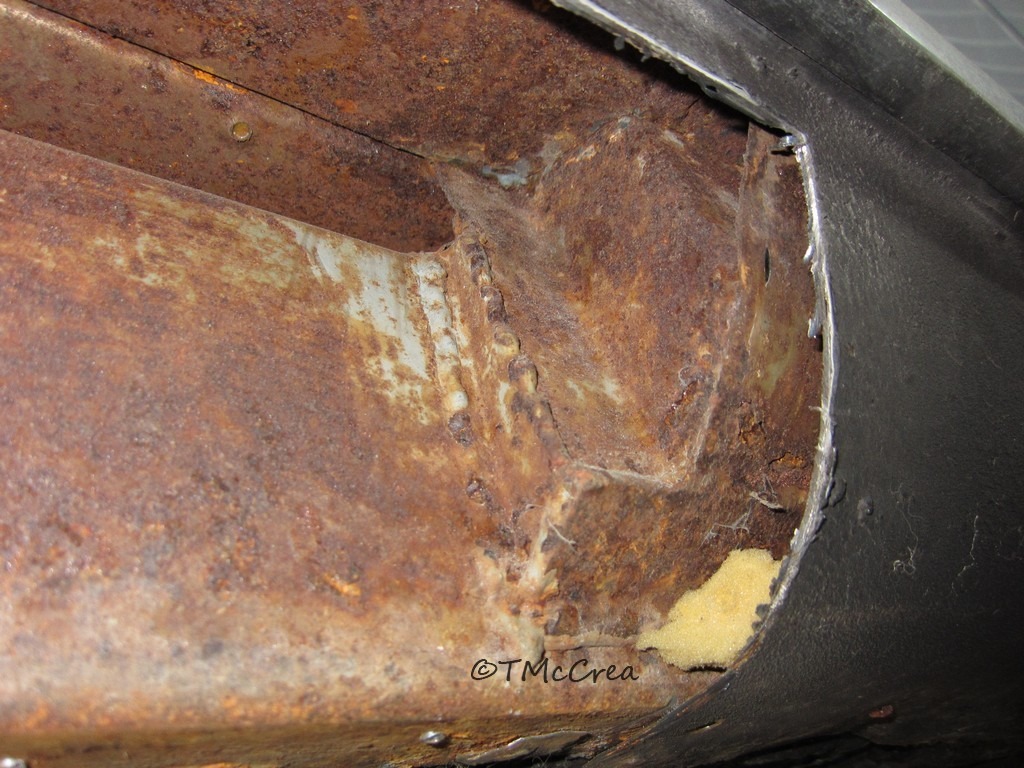
McCrea therefore confirmed that the chassis is composite. He did not confirm that the unidentified part was Alfa Romeo 412151. That distinction is important for the register. There is good reason to keep 412151 in the Silver Ray’s history as a possible donor, but not enough to use it as the car’s confirmed chassis number.
William Simpson and the Silver Ray
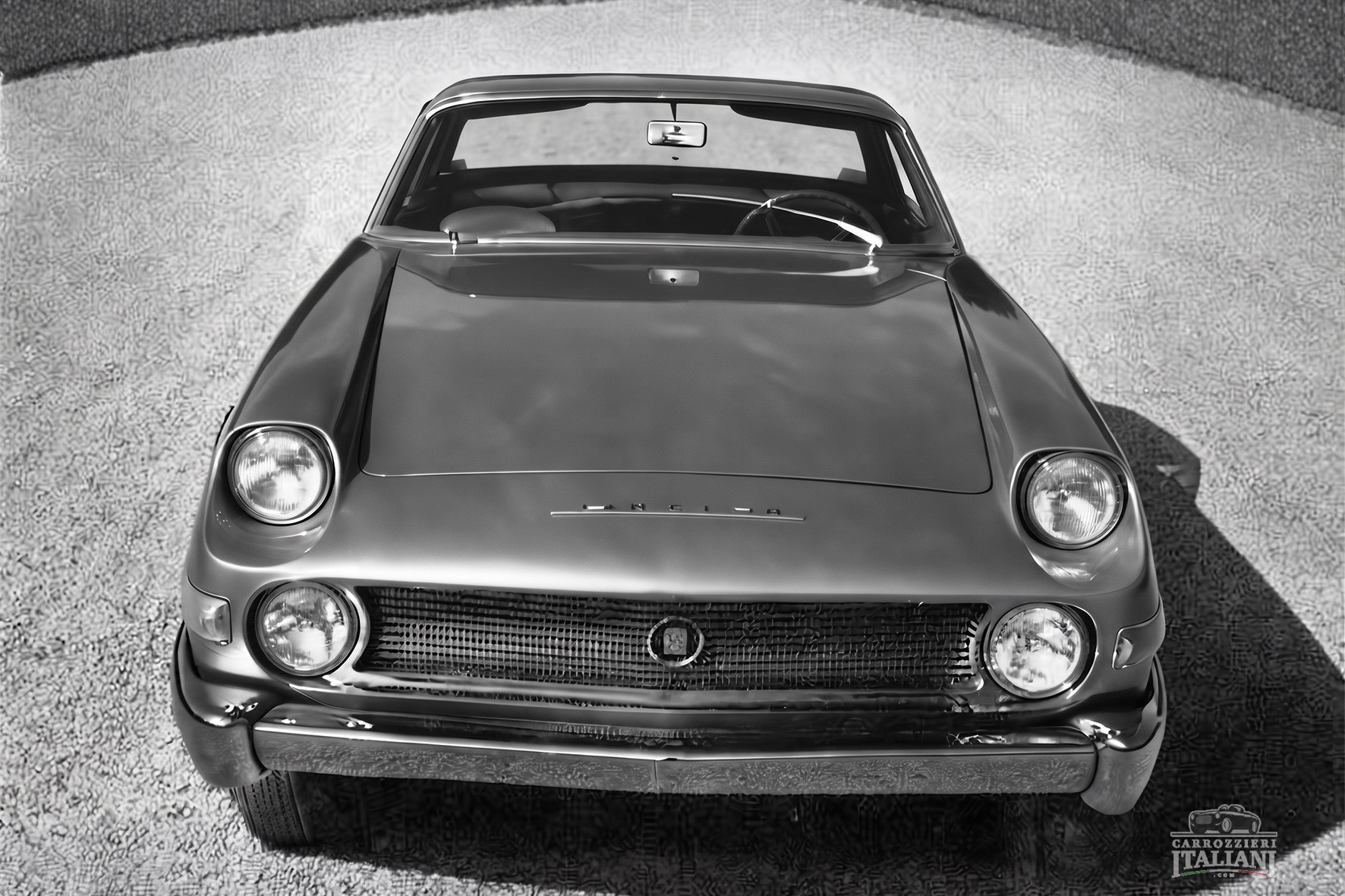
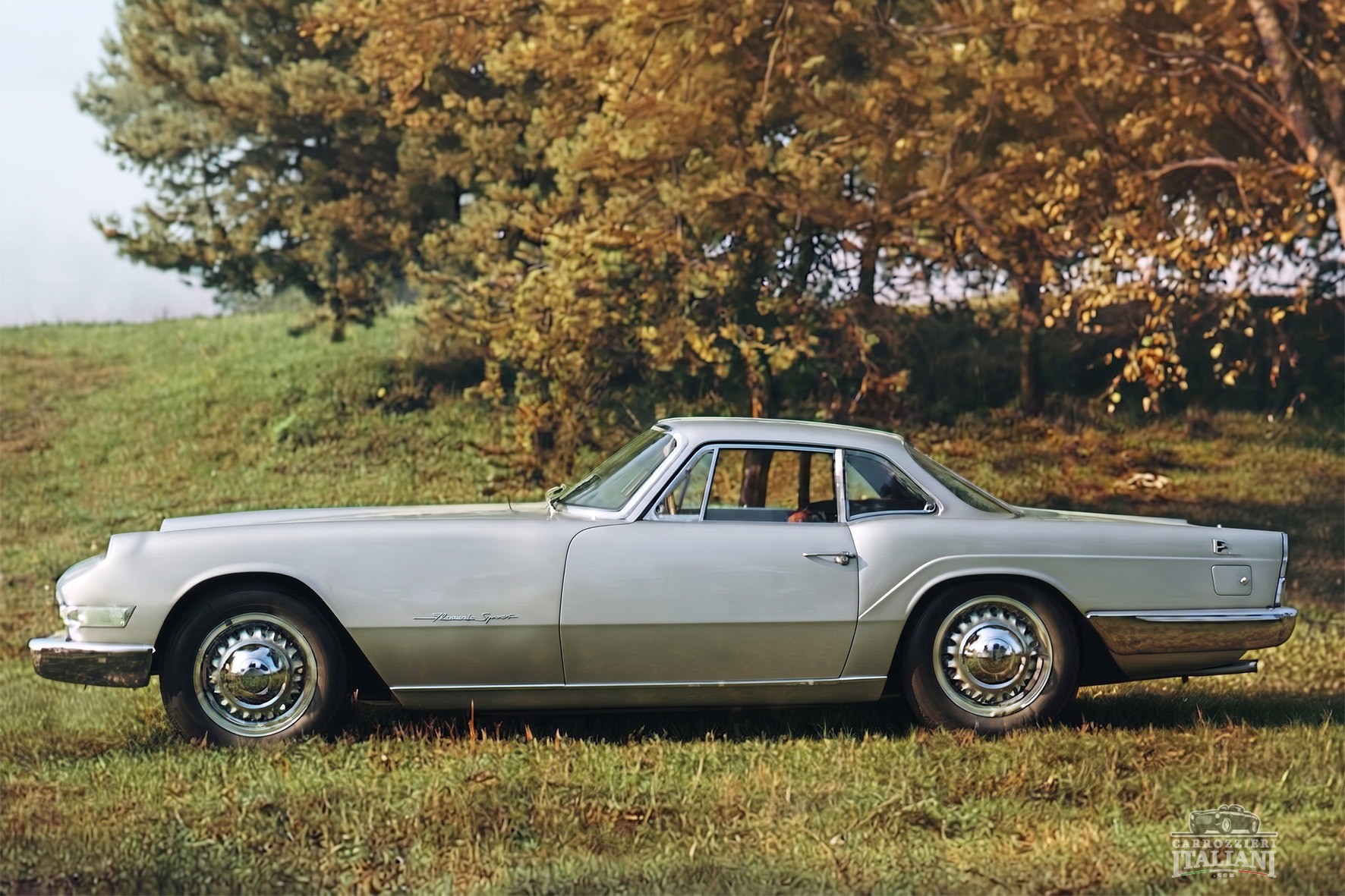
The car was commissioned for William S. Simpson of Florida, already connected with Nardi through the earlier Raggio Azzurro project. Those cars had combined Nardi engineering, Michelotti styling and Vignale coachwork around Lancia mechanical components. The Nardi-Plymouth took the same transatlantic idea much further: Italian form, a large American V8 and automatic transmission, all wrapped in a low two-seat GT that looked unlike anything else Nardi had produced.
It was not, however, the first Italian sports car to use an American V8, another claim that has crept into the Silver Ray story. Nardi had already shown the Chrysler-powered Corsair II, with Boano coachwork, at Turin in 1955. The Silver Ray needs no such ‘first’ to be interesting. Its importance lies elsewhere: in the Nardi-Michelotti collaboration, in the way American mechanical components were absorbed into an Italian one-off, and in the uncertainty still surrounding its structure.
After America
The later history can be followed in broad outline. The Silver Ray remained in the United States after delivery to Simpson and was sold in 1967 to David Hersh. After Hersh’s death it appeared with J.B. Moak at a Sacramento concours in 1986, later passed to Monroe Strawn and eventually returned to Europe, entering the British collection of Julian Majzub.
In 2024 the car appeared again in images filmed inside a large British historic-car storage building. The footage is useful as a sighting, but not as evidence of a sale, abandonment or change of ownership. The Silver Ray was visible there; anything beyond that needs a separate source.
How I would catalogue it today
The new letter does not close the Silver Ray case. It does something more useful: it gives us a contemporary description against which the later stories can be tested.
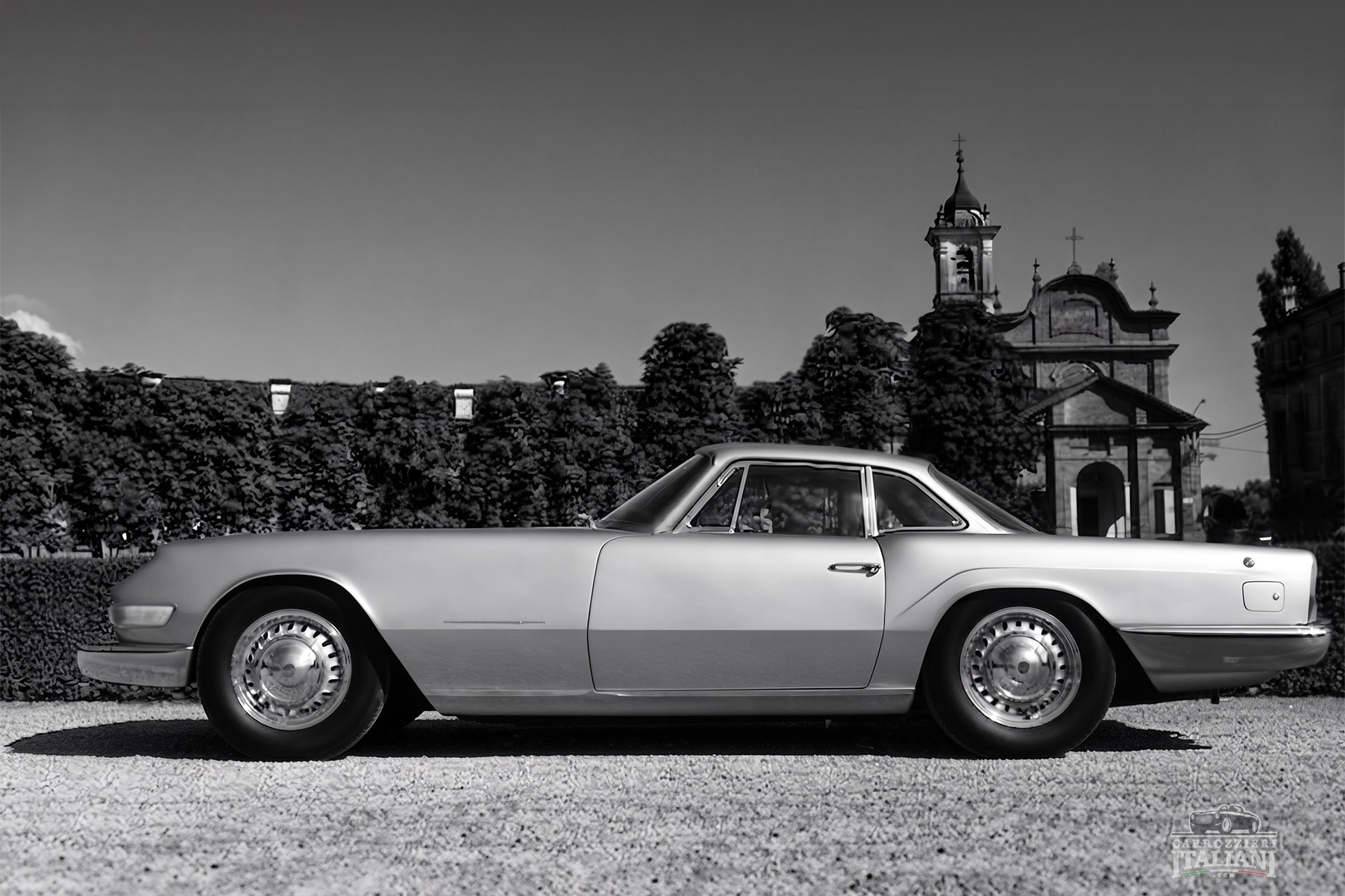
For the body, I would credit Giovanni Michelotti with both design and construction, following his own wording in the 1961 letter. Corso Francia 35 should be identified only as the apartment and design-studio address appearing on the stationery. The physical coachbuilding work belongs to Michelotti’s separate workshop activity in Via Levanna 2, Turin, not to the corso Francia address.
For the chassis, I would describe it as a Nardi-built composite structure. Alfa Romeo 412 #412151 belongs in the provenance as a probable source of some material, supported by Nardi records and Garessio’s recollection, but not as a chassis identity that has been conclusively demonstrated on the surviving car. McCrea’s inspection also shows identifiable Dodge/Plymouth structure in the front section.
And for the specifications, I would stay with Michelotti’s own figures unless stronger primary evidence appears: Plymouth engine, automatic transmission, 320 CV, 240 km/h, 1,500 kg, front discs and rear drums. It is a less tidy story than the one we had before, but it is also a much more credible one.

ABOUT THE AUTHOR
Andreas Scheidl
Italian classic car enthusiast with German roots. Renowned as a respected figure in the classic car community, he serves as a jury member at various international concours d'elegance, including the Classic Gala Schwetzingen and Mantova. As a content creator, Andreas passionately shares his profound knowledge and appreciation for vintage automobiles. His heart beats for cars designed by Giovanni Michelotti, showcasing his discerning taste and dedication to preserving the timeless elegance of automotive history.
More stories by Andreas Scheidl ↗CONTINUE READING
Posts You Might Like

Castagna Milano’s Alfa Romeo Giulia coupé-cabriolet: a new Antisalon for Italian coachbuilding
Eighty years after Battista Farina's famous protest at the Paris Motor Show, Gioacchino Acampora presents a radical two-seat Alfa Romeo Giulia as a manifesto for the survival of independent coachbuilding. In October…
Read story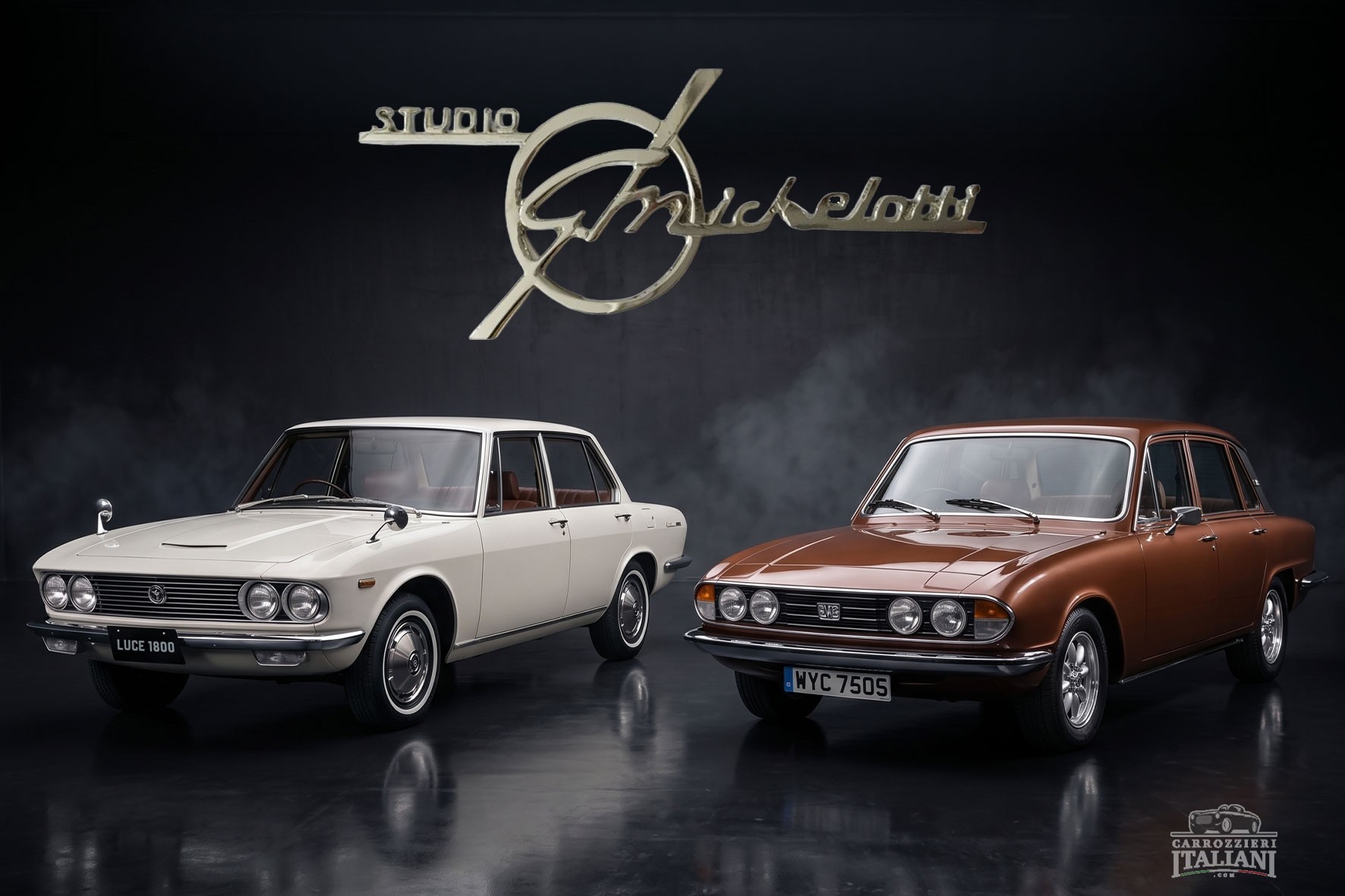
Mazda Luce: Edgardo Michelotti Challenges the Official Bertone Story
After our article on the Mazda Luce, Edgardo Michelotti revealed an unpublished claim: the Bertone design may have originated from a Michelotti Triumph project.
Read story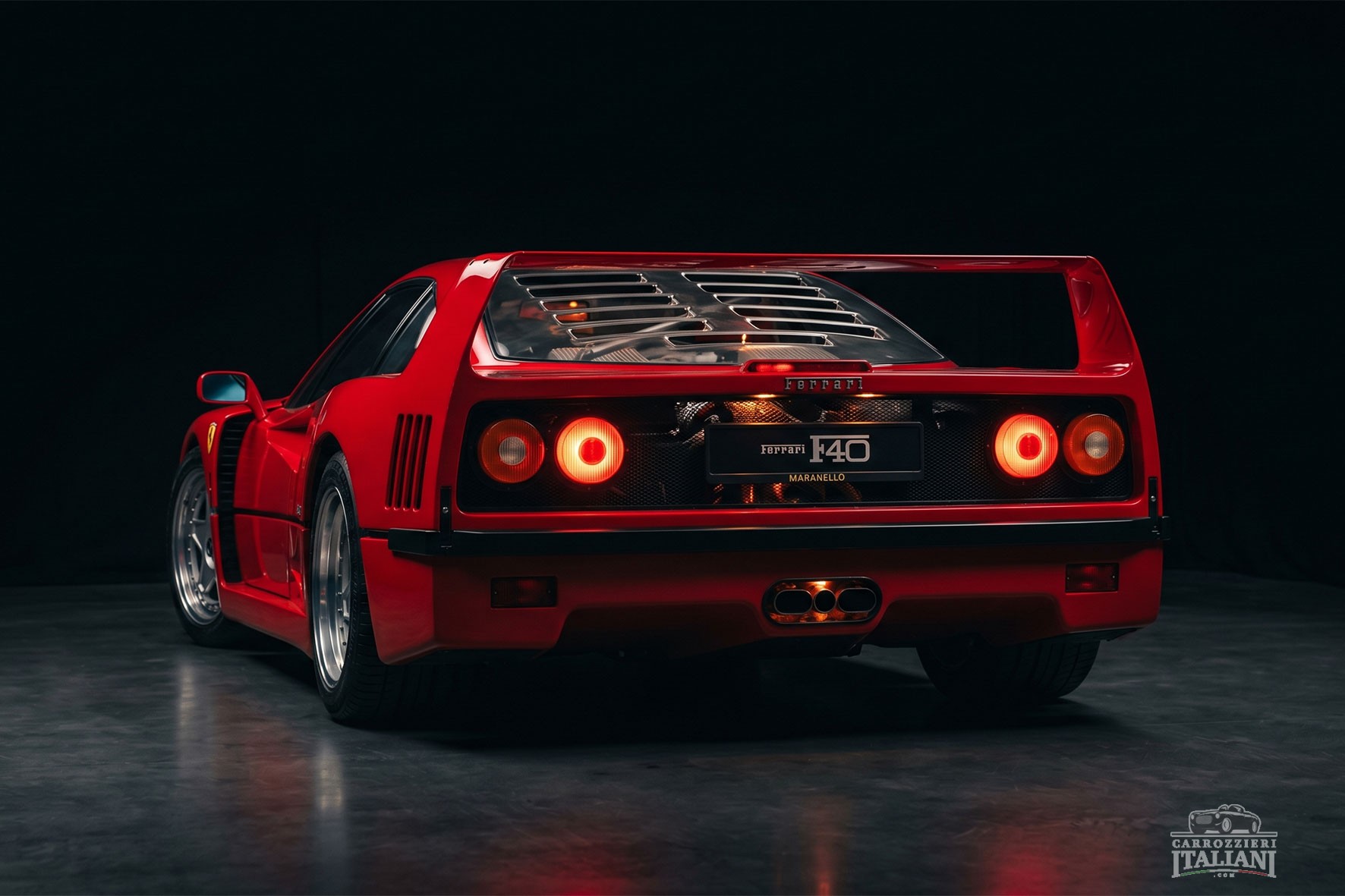
Who Designed It? The Most Confusing Italian Car Design Attributions Explained
Who really designed the F40, EB110, Fiat Coupé or BMW Turbo? A look at the confusing world of Italian car design credits, from Pininfarina to Zagato.
Read story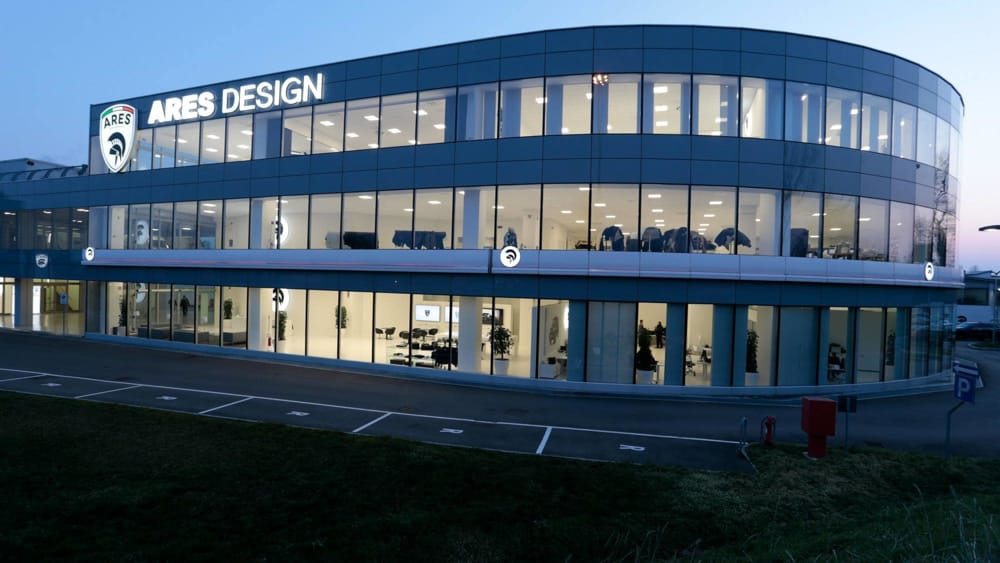
What Happened to ARES Modena? Inside the Crisis and Comeback
What happened to ARES Modena? The luxury carmaker behind the Panther ProgettoUno faces financial turmoil, frozen orders, and a possible relaunch under new ownership.
Read story
THE CONVERSATION
Comments 0
Share a memory, a period photograph or a documented detail about this story.