
The BMW Turbo: Munich’s First Supercar Dream before the M1
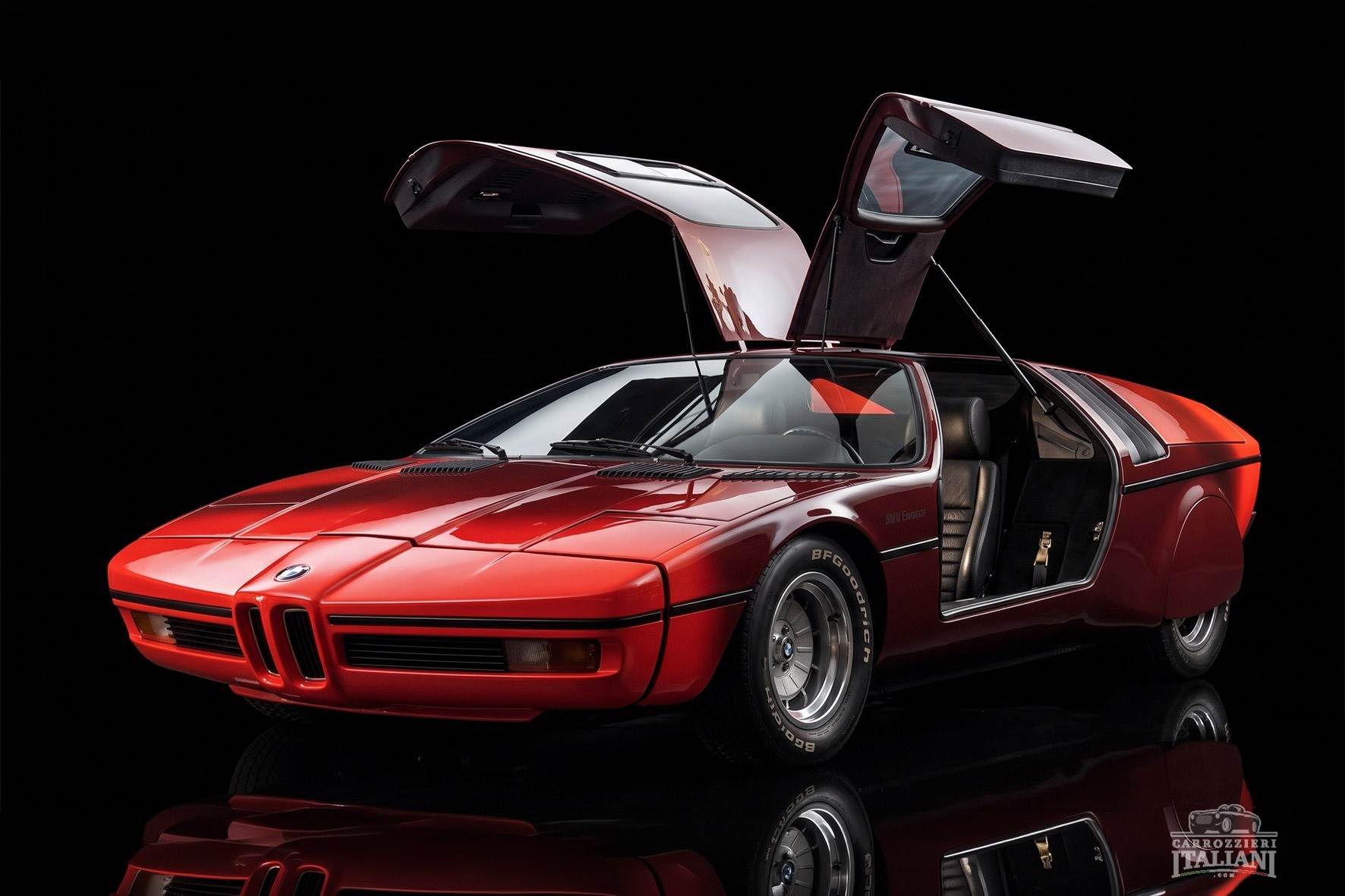
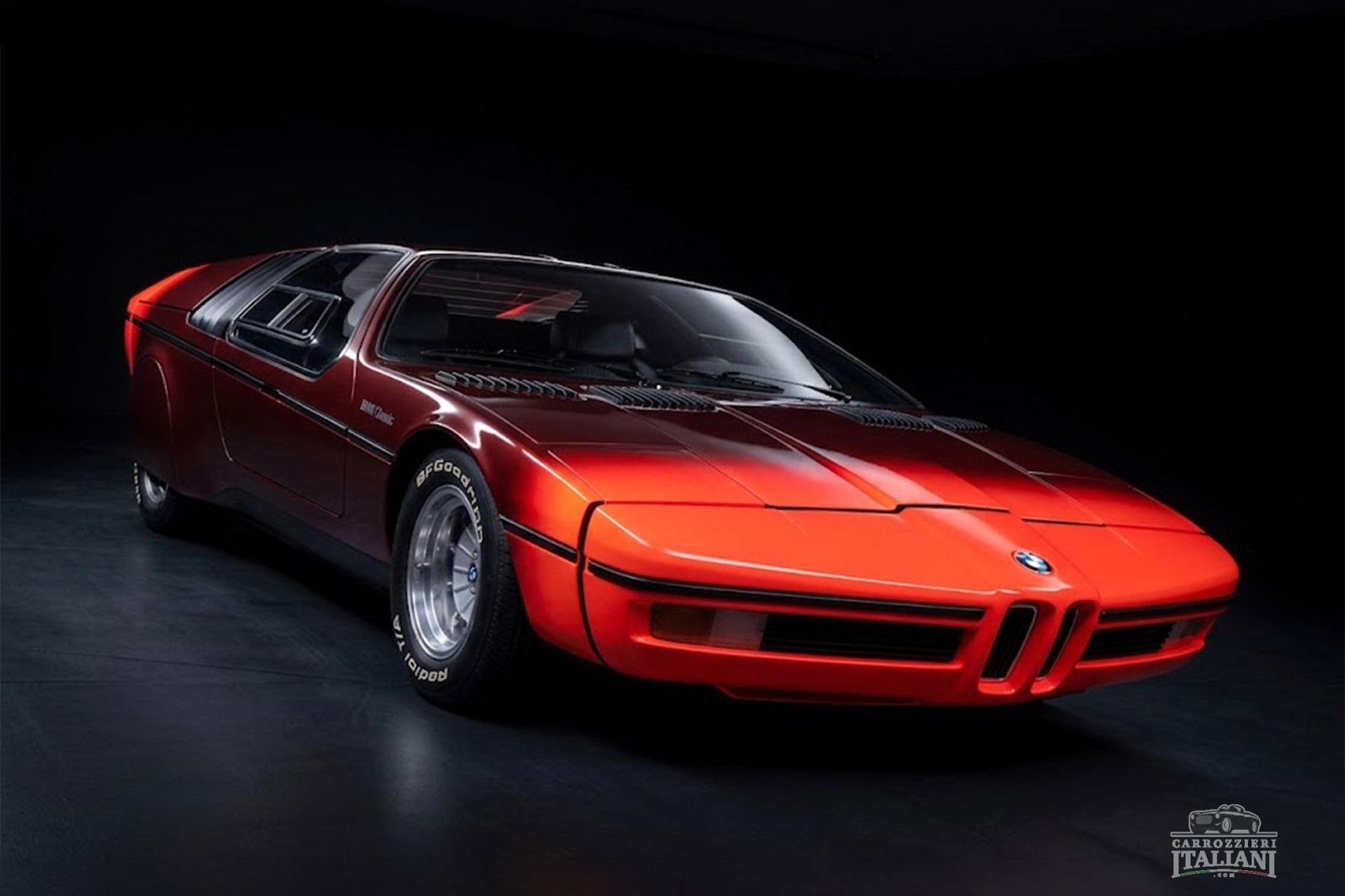
In 1972, BMW did something unusually dramatic. Instead of presenting another clever saloon or elegant coupé, it built a low, orange, gullwing-doored wedge that looked as if it had escaped from a science-fiction film and parked itself in front of the company’s new headquarters in Munich
This was the BMW Turbo, internally known as the E25, and it was far more than a show car. It was a safety laboratory, a turbocharged technology carrier, a design manifesto for the Olympic year and one of the final great chapters in the long relationship between BMW and Giovanni Michelotti’s Turin workshop.
🔗 Read more: Giovanni Michelotti and BMW: The Italian Designer Who Saved a Bavarian Brand
The shape came from Paul Bracq’s vision at BMW, while Michelotti built the prototypes in Turin, but the importance of the Turbo goes well beyond authorship. It was innovative in its structure, its safety concept, its aerodynamics, its cockpit layout, its turbocharged engine and even its paint, which was not chosen only to look spectacular, although it certainly did that very well.
The BMW Turbo asked a question that still feels modern: could a sports car be fast, beautiful, safe, visible and technically advanced without becoming heavy or ugly? BMW’s answer was bright orange and had gullwing doors.
Munich 1972: BMW Looks at the Future
The timing was perfect. Munich was preparing for the 1972 Olympic Games, BMW had completed its new four-cylinder headquarters, and the company was entering a new phase of confidence. The Neue Klasse had helped rebuild the brand, the 02 Series had made it younger and more desirable, and BMW Motorsport GmbH was being founded in the same year. BMW no longer wanted to be seen only as a maker of excellent sporting saloons. It wanted to show that it could imagine something far more radical.
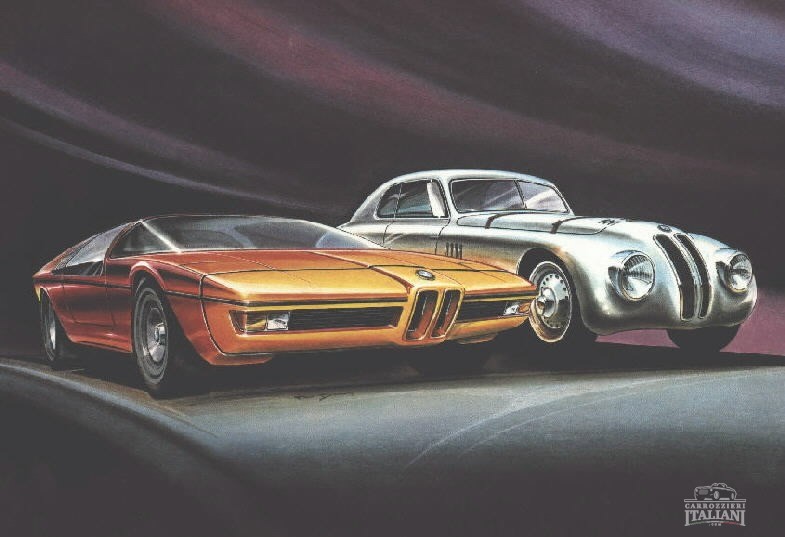
The Turbo was created for that purpose. It was not intended as a normal production car and it was not merely a styling exercise. Many manufacturers in the late 1960s and early 1970s were experimenting with safety vehicles, often producing heavy, awkward prototypes that looked more responsible than exciting. BMW wanted to prove that safety did not have to be dull.
That is what makes the Turbo so clever. From a distance, it looked like a supercar. Up close, it was a research vehicle. It had the stance of a racing machine and the brain of a safety laboratory.
The Body: Low, Sharp and Impossible to Ignore
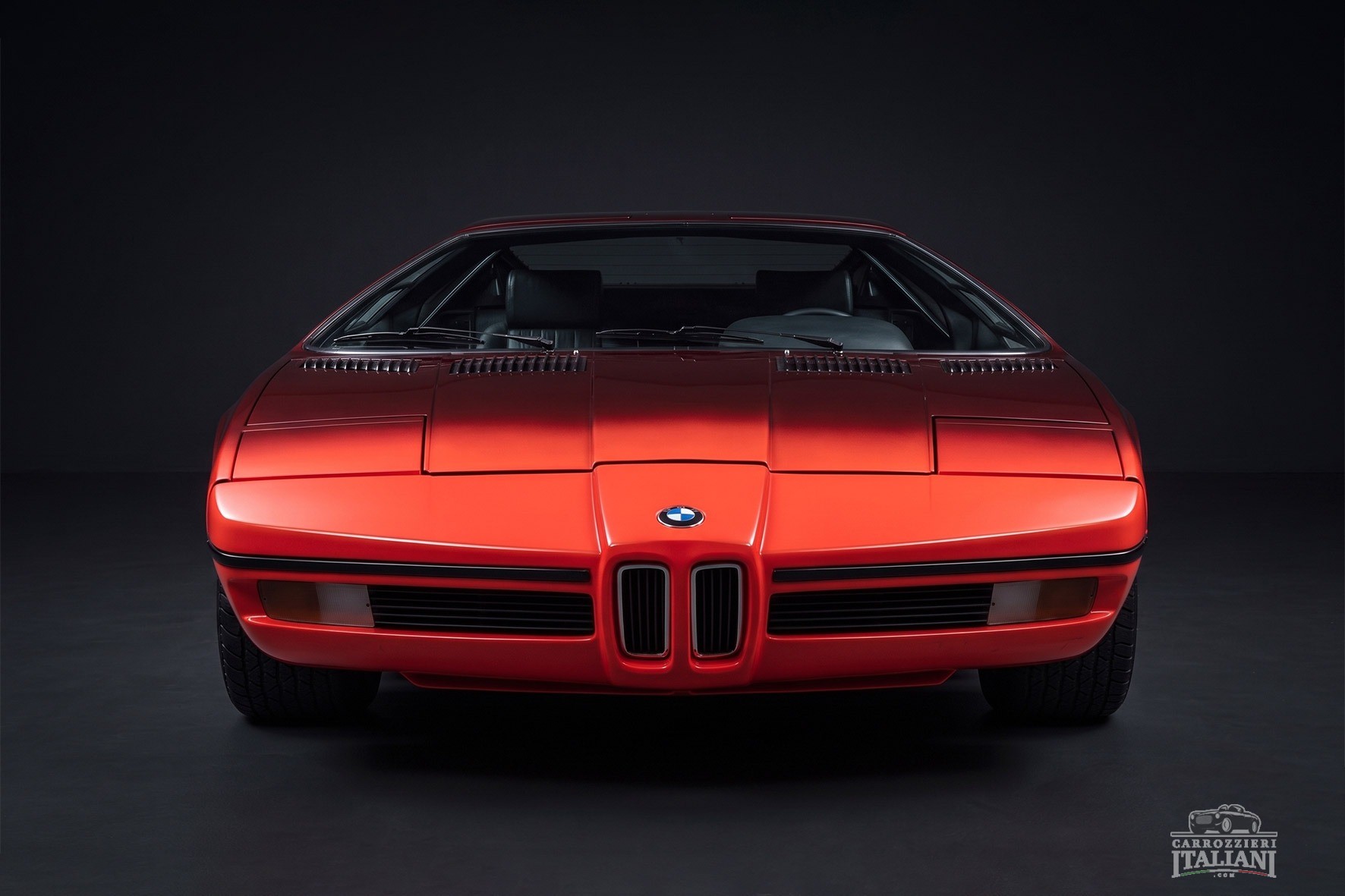
The BMW Turbo sat just 1,100 mm tall, which immediately placed it in the same visual world as the most advanced Italian prototypes of the period. The wedge profile, pop-up headlights, wide glasshouse and gullwing doors gave it the drama expected from a 1970s concept car, but the proportions were not random fantasy. They were shaped around aerodynamics, visibility, packaging and safety.
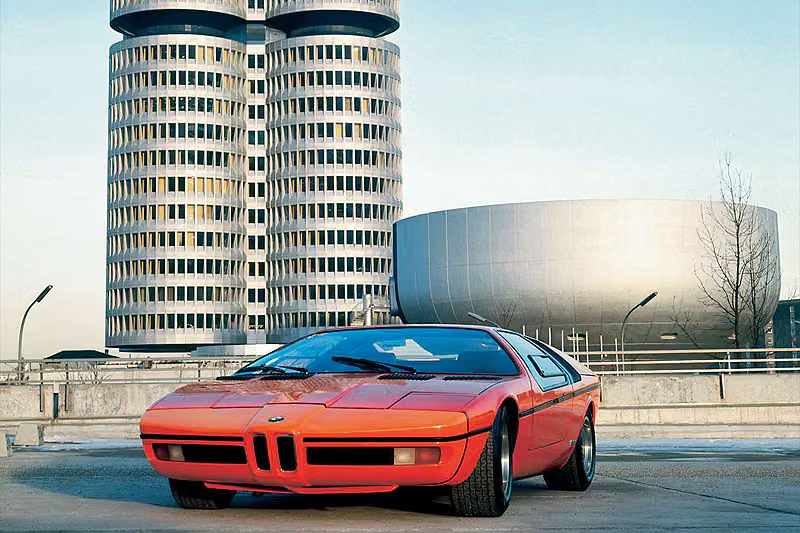
The front end was especially important. The nose tapered downward, the BMW kidney grilles leaned back, and the whole face suggested a new interpretation of the brand’s identity. It was not simply a traditional BMW nose stretched over a concept car. It looked faster, sharper and more technical, anticipating the kind of shark-nose language that would later become familiar on BMW’s sportier models.
The rear wheels were partially covered to improve airflow, while the body was shaped to reduce drag and give the car a strong sense of forward movement even when standing still. The gullwing doors added theatre, but they were not just decorative. Their structure formed part of the broader safety concept, while the large glazed surfaces improved visibility from the cockpit.
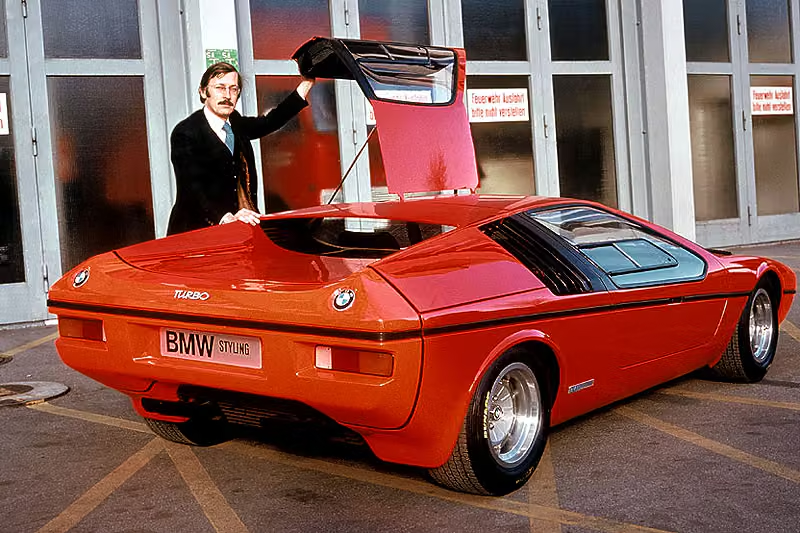
Only two prototypes were built, with some detail differences between them. The first was completed quickly for the initial presentation, while the second was more refined and used for later appearances. Both carried the same essential message: BMW was no longer only looking at the road ahead, it was trying to design it.
The Paint Was Also a Safety Feature
The orange-red paint is one of the most memorable parts of the BMW Turbo, but it was not chosen only for visual drama. BMW considered visibility an important part of the safety concept, and the Turbo’s bright colour made the car easier to see in traffic and poor weather.
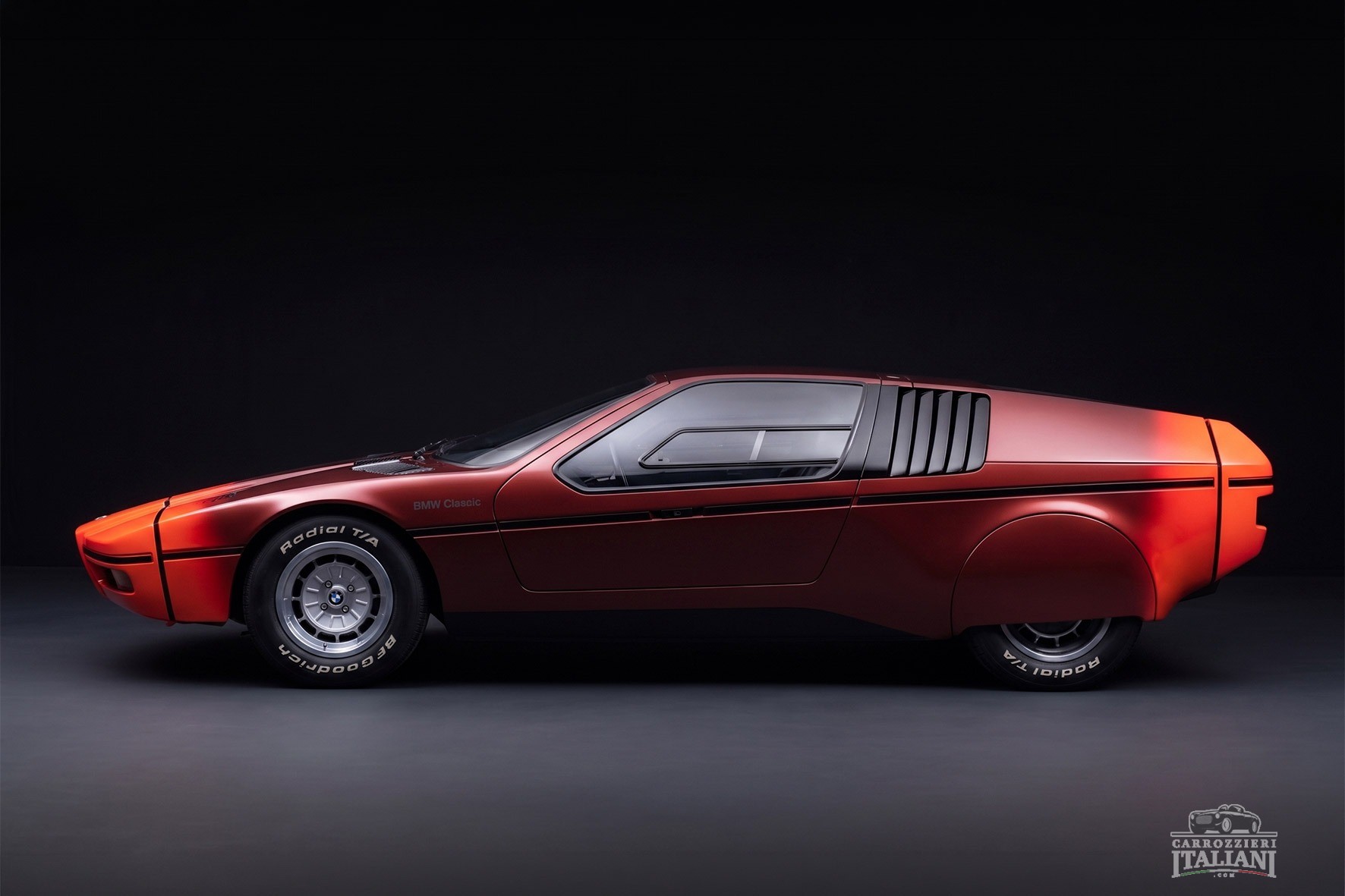
That idea was clever because it turned safety into something emotional. Instead of making a safe car look cautious and heavy, BMW made it impossible to ignore. The colour amplified the wedge profile, exaggerated the low body and gave the Turbo an almost radioactive presence. It was a warning triangle with 280 horsepower, which is a very good way to make a safety lesson interesting.
A Mid-Engined BMW Before the M1
Under the body, the Turbo was just as unusual. The basic structure was derived from a modified BMW 2002 unitary steel floorpan, shortened and adapted to place the engine behind the occupants. This alone made the project exceptional, because BMW had not yet produced a mid-engined sports car and was still mainly associated with front-engined saloons and coupés.
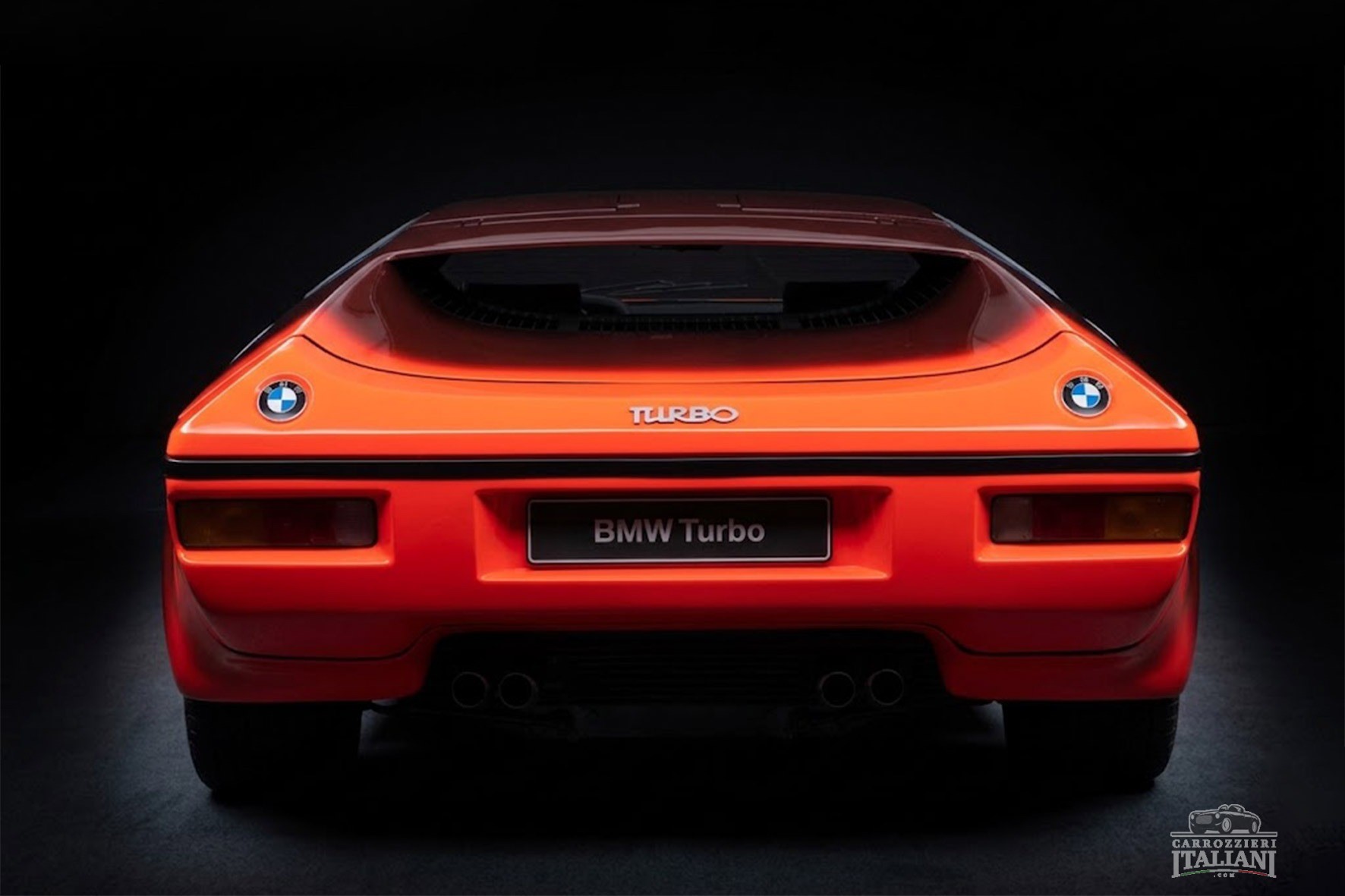
The engine was a turbocharged version of BMW’s two-litre four-cylinder unit, mounted transversely behind the passenger compartment. Depending on boost pressure, BMW quoted output between 200 and 280 hp, with the best-known figure being 280 hp at 7,100 rpm. Performance was serious for the period: 0 to 100 km/h in around 6.6 seconds and a top speed of about 250 km/h.
🔗 Read more: The BMW M1: The Origin
Turbocharging was still an exotic word in road-car culture, closer to aerospace than to everyday motoring. BMW would soon bring the idea into production with the 2002 Turbo, but the E25 allowed the company to explore forced induction in a far more spectacular setting. The Turbo therefore did not just anticipate the M1 visually; it captured BMW at the moment when turbocharging was becoming part of its performance identity.
Safety Without the Punishment
The most advanced part of the BMW Turbo was its safety concept. BMW wanted to show that a sports car could be safe without looking like a padded box, and many of the E25’s solutions were remarkably advanced for 1972.
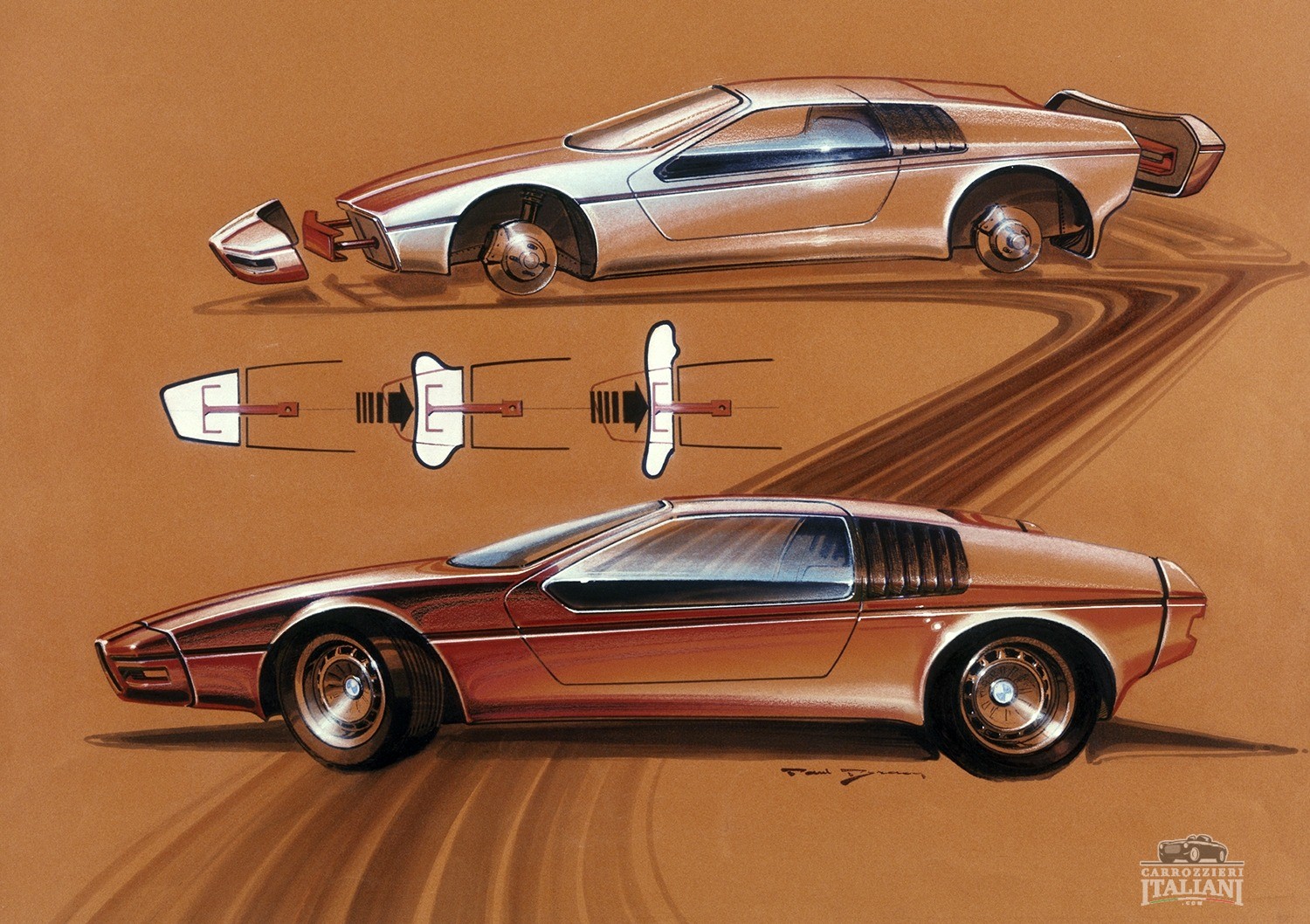
The front and rear sections were designed as impact-absorbing structures with hydraulic shock absorbers. The bumpers were integrated into the body, while foam-filled sections helped absorb energy in a collision. The car also featured a collapsible safety steering column, side impact protection and roof structures connected to the gullwing door arrangement.
Even more impressive were the electronic and driver-assistance ideas. The Turbo featured an early anti-lock braking system, a lateral accelerometer, a radar-based distance warning system and safety belts that had to be fastened before the car would start. It also included onboard diagnostic functions for items such as oil level, brake wear and brake circuit pressure
Seen today, some of these ideas sound surprisingly modern. ABS, collision warning, diagnostics, crash structures and ergonomic safety would later become normal parts of the automotive world, but in 1972 they were highly advanced, especially on a car that looked like a supercar rather than a laboratory prototype.
The Cockpit That Pointed Toward Modern BMW
The interior was another important part of the experiment. BMW used the Turbo to explore a driver-oriented cockpit, with the centre console angled toward the person behind the wheel. The idea was simple: once the driver was belted in, all major controls should be reachable without leaning forward.
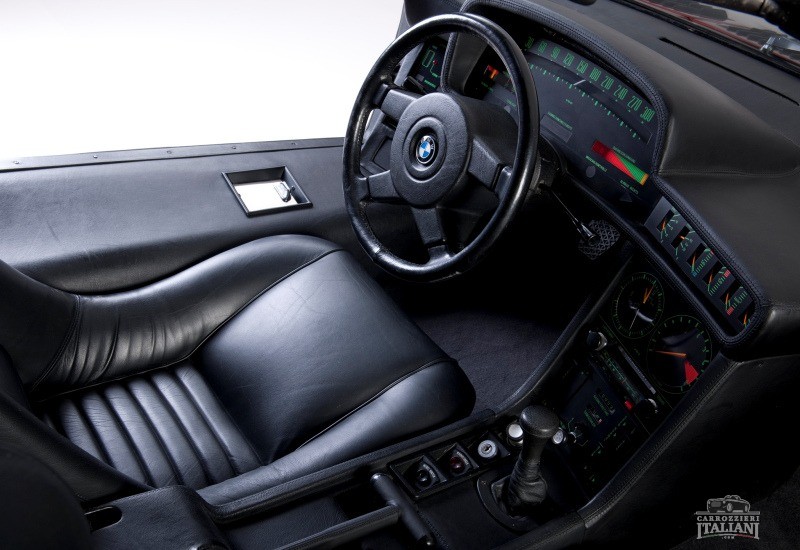
This would later become one of BMW’s most recognisable interior traits. In the Turbo, however, it looked futuristic, especially combined with the low seating position, large glass areas, technical instrumentation and strong sense of being placed inside a small control cell rather than a traditional cabin.
The Turbo was therefore not only asking what a BMW supercar might look like. It was also asking how a BMW driver should sit, see, reach and interact with the machine.
Michelotti’s Investment
The two BMW Turbo prototypes were built by Michelotti in Turin, and this gives the car a special place in the history of Italian coachbuilding. By the early 1970s, the old world of independent carrozzerie was already under pressure. Manufacturers were developing stronger in-house design centres, safety regulations were becoming more complex, and small-series body construction was becoming increasingly difficult.
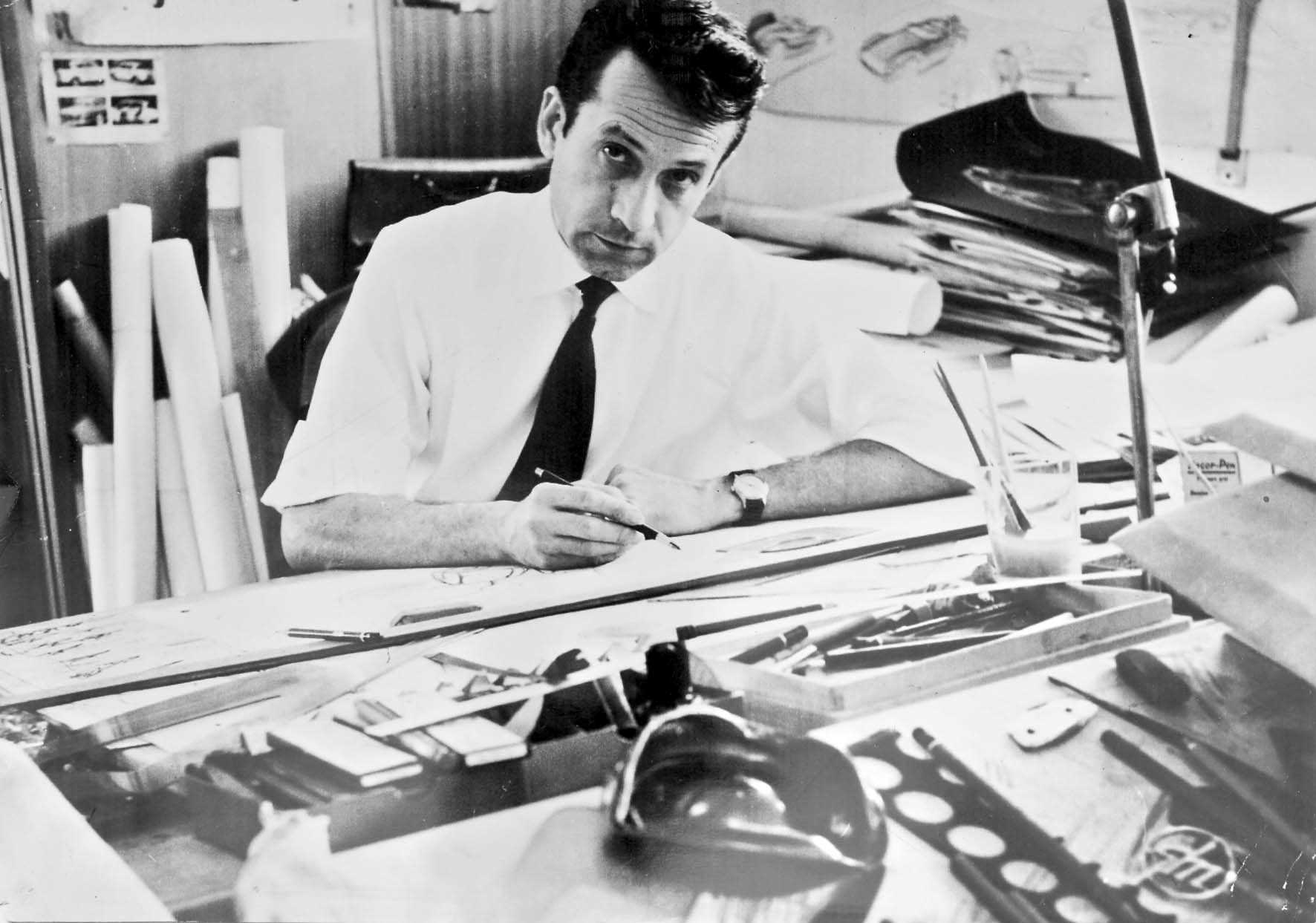
For Giovanni Michelotti, the BMW Turbo represented more than another prototype. It suggested the possibility of a larger industrial collaboration with BMW around a future mid-engined sports-car programme. According to the story preserved around the Michelotti archive, he invested in larger facilities to prepare for a possible production opportunity, hoping to move beyond prototype construction and into a more substantial manufacturing role.
The timing, however, was cruel. The 1973 oil crisis changed the entire mood of the industry. Exotic sports-car projects became risky, manufacturers became more cautious, and BMW’s plans around the Turbo were effectively stopped. The concept had succeeded as an image and research project, but the broader opportunity that Michelotti had prepared for did not materialise.
It would be too simple to say that the Turbo alone caused the decline of Carrozzeria Michelotti, because the entire coachbuilding world was changing. But the failed BMW opportunity became one of the blows that weakened the company’s industrial future. Michelotti had invested in capacity, the programme stopped, and the economic climate became hostile at exactly the wrong moment.
From the Turbo to the M1
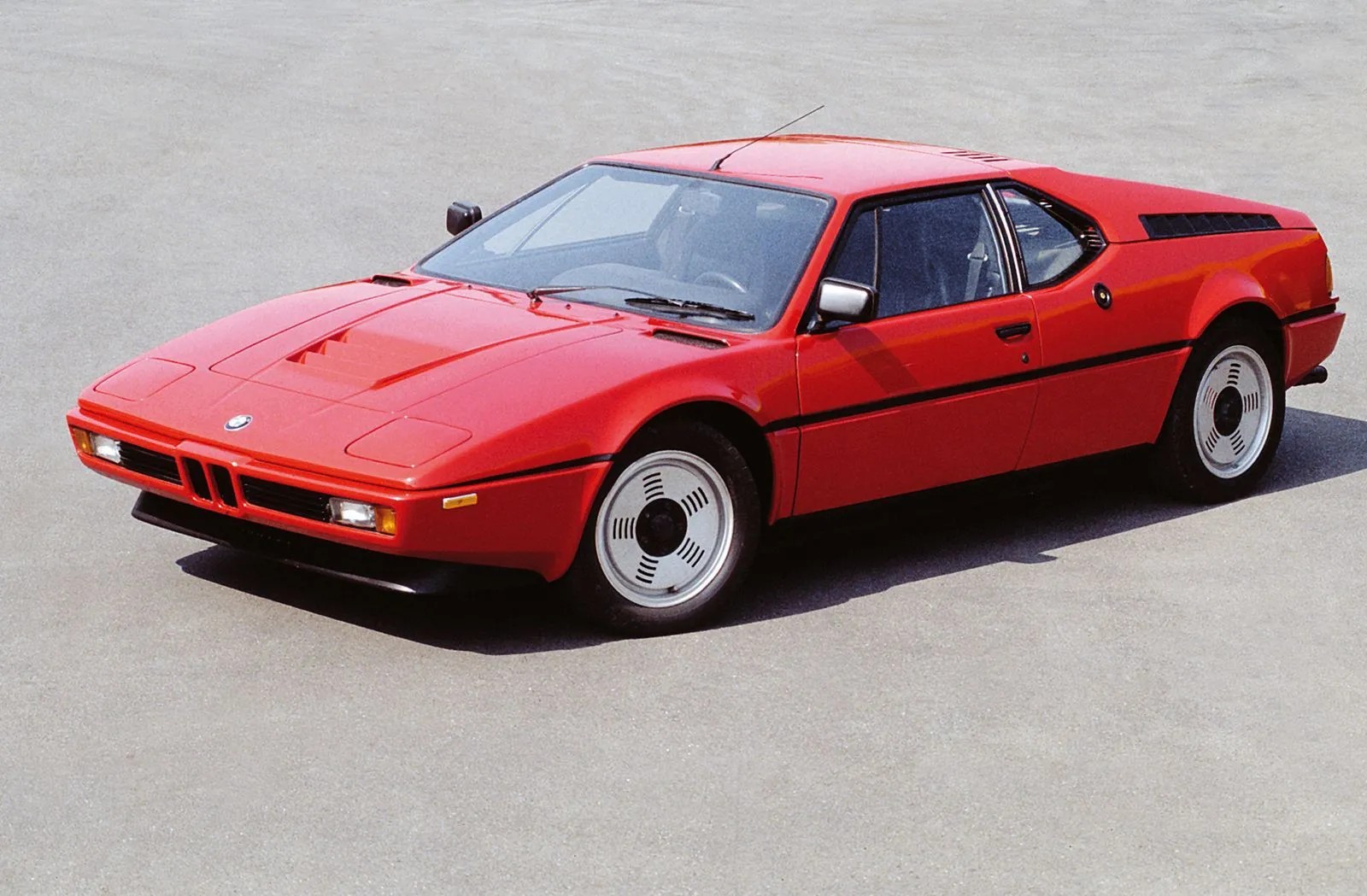
The BMW Turbo did not enter production, but BMW did not forget it. Its low wedge profile, mid-engined layout, pop-up headlights and technical attitude fed directly into the visual and conceptual world of the BMW M1.
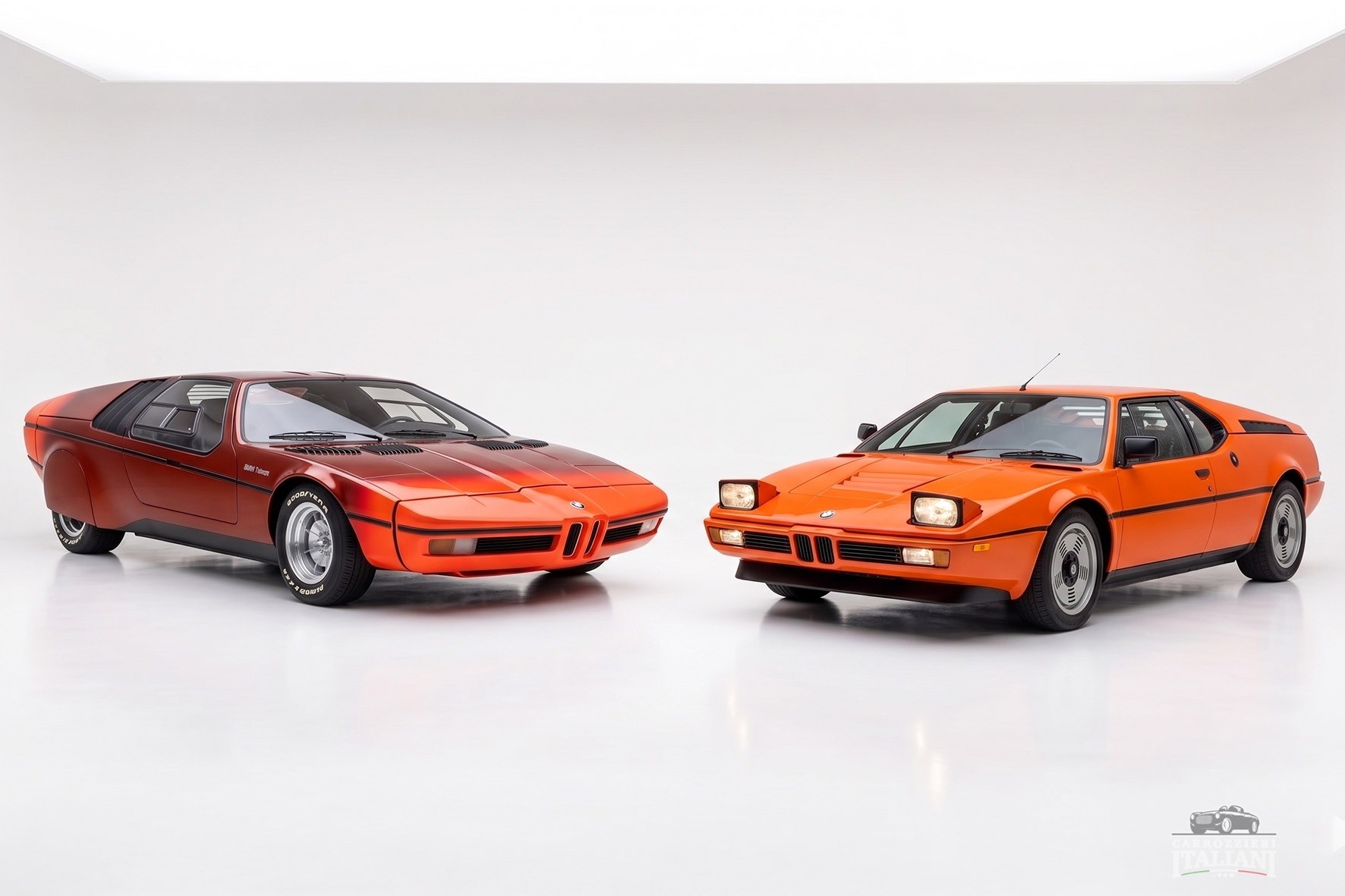
When BMW later moved toward a true mid-engined sports car for racing homologation, the project became complicated. Lamborghini was initially involved in the development and production plan, but financial difficulties in Sant’Agata forced BMW to reorganise everything. Giorgetto Giugiaro and Italdesign then became central to the M1 story, creating a cleaner, more production-ready shape that clearly carried the DNA of the Turbo without repeating its show-car excess.
🔗 Read more: Giorgetto Giugiaro: Car Designer of the Century
The connection with Turin is especially fascinating. According to the historical reconstruction linked to the Michelotti-BMW chapter, the facilities Michelotti had prepared for the BMW programme were later acquired by Italdesign, which would go on to play a crucial role in the production of the M1. Italdesign itself described the M1 as an exception in its history: a car produced in 450 examples at its Moncalieri facility
There is a strange poetry in that sequence. Michelotti built the futuristic BMW that did not become a production programme. The oil crisis helped stop the dream. A few years later, the mid-engined BMW idea returned through Italdesign and Giugiaro, in some of the same industrial geography that Michelotti had tried to prepare for the future.
The Turbo did not become the M1, but without the Turbo, the M1 would have looked and felt very different.
The Concept That Refused to Disappear
Only two BMW Turbo prototypes were built, but the car’s influence lasted far longer than many production models. BMW repeatedly connected the Turbo to the M1, and later concepts such as the M1 Hommage continued to look back to that original orange wedge. Its ideas also echoed through BMW interiors, especially the driver-oriented cockpit, and through the brand’s later fascination with low sports-car proportions, technical concept cars and the shark-nose identity.
The Turbo still feels fresh because much of its future eventually arrived. Turbocharging became normal. ABS became essential. Driver-oriented cockpits became BMW tradition. Distance warning became mainstream. Crash structures became standard engineering. The M1 carried the silhouette forward. The 2002 Turbo brought part of the engine idea into production.
The Turbo was not a dead end. It was an idea bank.
A Beautiful Warning Light from the 1970s
The BMW Turbo is often remembered because it looked spectacular, and understandably so. It was low, orange, sharp, strange and theatrical. But its real importance lies deeper. It was a car built to make safety attractive, turbocharging glamorous and BMW futuristic, while also showing how Italian prototype craftsmanship could help a German manufacturer step into the supercar imagination.
It succeeded as a concept, but failed as a production opportunity. It gave BMW a new image, but it did not give Michelotti the industrial future he had prepared for. It helped create the path toward the M1, but the M1 would later arrive through Giugiaro and Italdesign.
That is why the BMW Turbo deserves to be remembered not just as the ancestor of the M1, and not simply as a spectacular orange wedge from the Olympic year. It was a turning point between two eras: the old Italian coachbuilding world of prototypes and craftsmanship, and the newer industrial world of integrated design, engineering and limited-series production.
Before the M1 became BMW’s first true supercar, before Giugiaro gave it its clean racing shape and before the Procar series turned it into a legend, there was the Turbo: a Paul Bracq vision built by Michelotti in Turin, painted like a flare, packed with technology and stopped by history just before it could become something even bigger.

ABOUT THE AUTHOR
Andreas Scheidl
Italian classic car enthusiast with German roots. Renowned as a respected figure in the classic car community, he serves as a jury member at various international concours d'elegance, including the Classic Gala Schwetzingen and Mantova. As a content creator, Andreas passionately shares his profound knowledge and appreciation for vintage automobiles. His heart beats for cars designed by Giovanni Michelotti, showcasing his discerning taste and dedication to preserving the timeless elegance of automotive history.
More stories by Andreas Scheidl ↗CONTINUE READING
Posts You Might Like

A Central Driving Position, a Rear-Mounted V8. Was This Really a Lancia?
In 1948, visitors to the Turin Motor Show could see an unusual Lancia on the stand of Carrozzeria Ghia. It was a large two-door coupé with a two-litre V8 mounted behind the…
Read story
Fioravanti F100: The Ferrari He Was Allowed to Imagine
Enzo Ferrari’s centenary, Leonardo Fioravanti’s independent studio and a supercar that explored air brakes, steel wheels and a new way of driving—without ever wearing the Cavallino.
Read story
Michelotti Shellette: When the Fiat 850 Became a Yacht
The yacht designer, the Turin stylist and the tiny coachbuilt car that crossed between the quay, the royal holiday house and the auction room. Some automobiles were conceived for the open road,…
Read story
Maserati A6 1500: A New Road for the Trident
When the doors of the Geneva Motor Show opened in March 1947, Maserati was a name that required little introduction to anyone who followed motor racing. What it did not yet possess…
Read story
THE CONVERSATION
Comments 0
Share a memory, a period photograph or a documented detail about this story.