
Ferrari F50: The Untold Story of Pietro Camardella’s “Last (but not least) Ferrari”
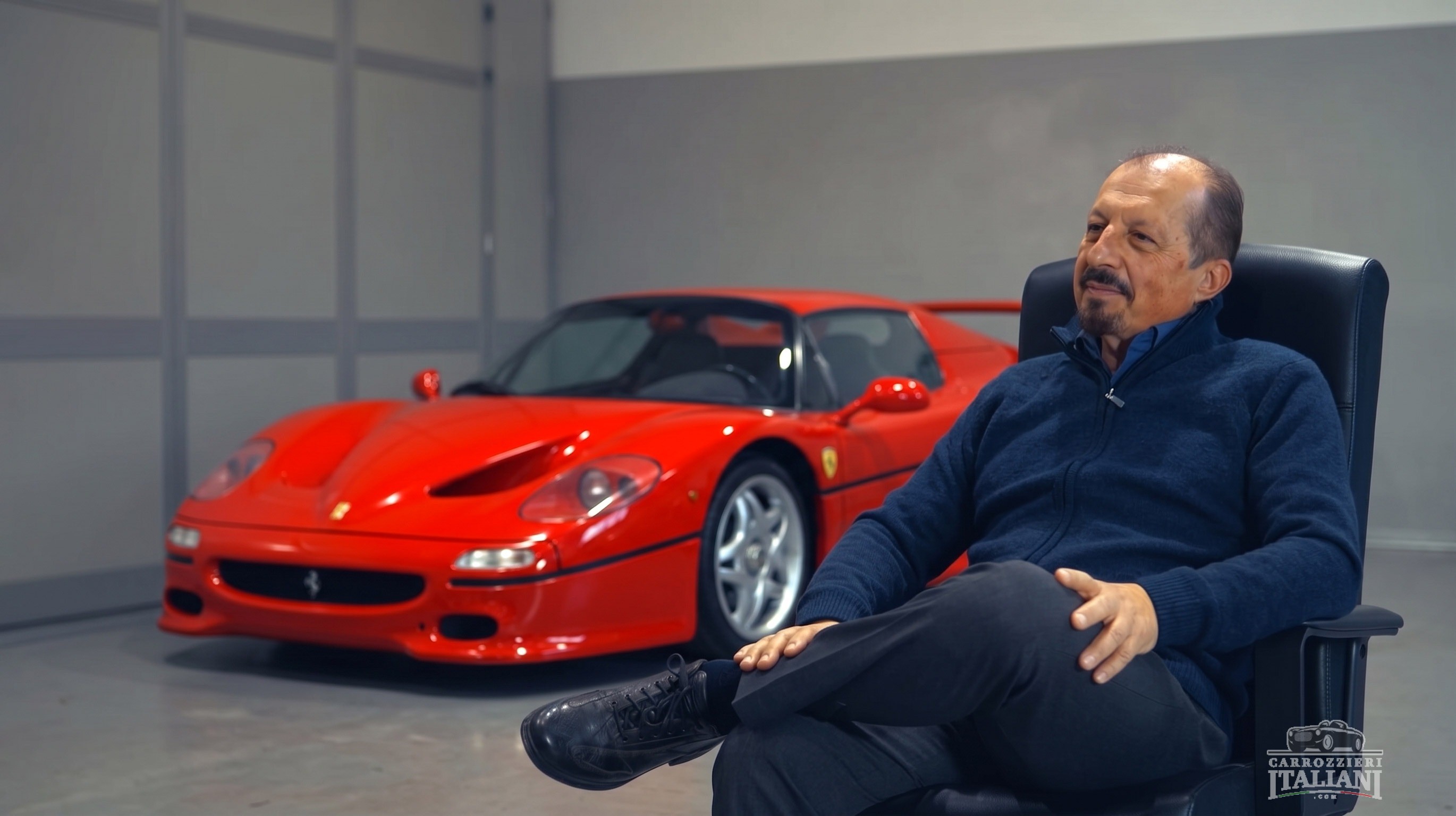
The Ferrari F50 was born with one of the most ambitious briefs ever given to Pininfarina: to bring Formula One to the road.
Not in the usual commercial sense, and not simply as a supercar inspired by racing, but as a car whose very architecture would be rooted in Ferrari’s most advanced competition engineering. It would feature a V12 derived from Formula One experience, a central carbon-fibre composite cell, a load-bearing engine and gearbox assembly, and aerodynamics developed in the Scuderia Ferrari Formula One wind tunnel. It would also celebrate the marque’s fiftieth anniversary, succeeding the F40 not with even greater brutality, but with a different kind of purity.
For Pietro Camardella, who had already worked on the F40, the 512 TR, the Mythos and the 456 GT, the F50 would become something even more personal. “The F50 was the last Ferrari I created at Pininfarina,” he recalls. That sentence alone gives the car a different weight. It was not just another project in the long Ferrari-Pininfarina relationship. It was the closing chapter of a sequence, and perhaps the most technically advanced brief he had ever received.
Yet the story of the F50 is not simply one of celebration. It is also the story of a design that was heavily altered during development, of a project that began with extraordinary promise but, in Camardella’s view, never fully lived up to it. With the clarity of someone who was there from the beginning, he describes it as “a missed opportunity.”
That phrase may surprise anyone who looks at the F50 today only through the lens of rarity and market value. The 349 cars were sold before production began. The mechanical package remains one of the purest Ferrari ever created. Its naturally aspirated V12, manual gearbox and open cockpit have turned it into one of the great analogue Ferraris. But design history is rarely written only by numbers, specifications or auction results. Sometimes the most interesting story lies between the first line on paper and the finished car.
In the case of the F50, that distance was unusually large.
After the F40
The F50 had to follow the F40, and that alone made the project almost impossible.
The F40 was not simply the previous Ferrari supercar. It was Enzo Ferrari’s last personal statement, a raw and uncompromising machine launched for the company’s fortieth anniversary. Its message was direct: lightness, turbocharged violence, visible function, minimal comfort and no apology. It became a myth almost immediately.
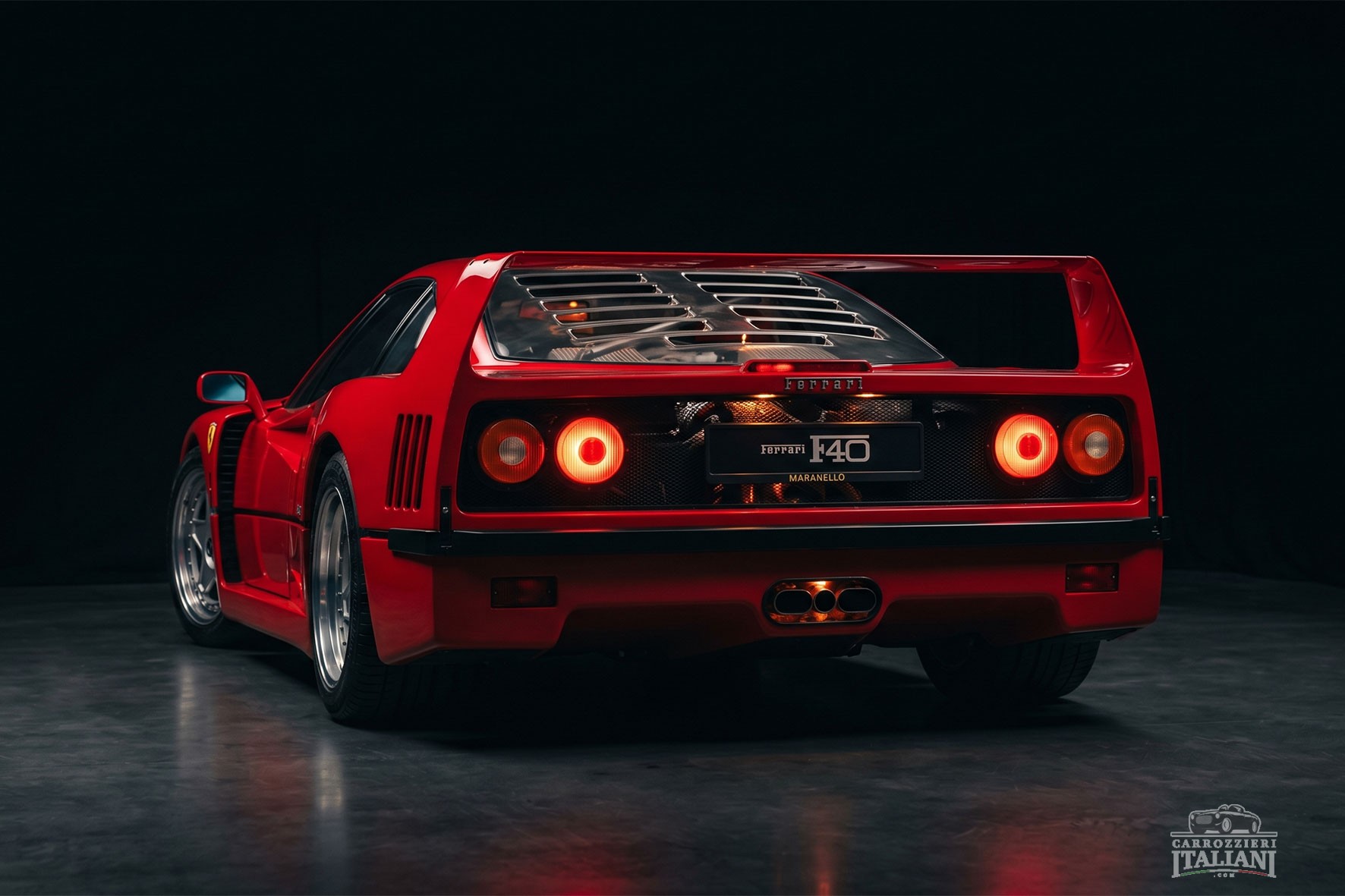
The successor could not merely repeat that formula. Ferrari needed something different. The next anniversary car would have to stand on its own, and the idea associated with Piero Ferrari was radical: a Formula One car for the road.
The brief that reached Pininfarina was concise but demanding. According to Camardella, Ferrari wanted three things from the outset. Since the F40 had been a closed car, the F50 had to be open. The new car must absolutely not recall the Mythos, from which Ferrari had distanced itself after the show car had attracted enormous public and media attention in 1989. Finally, it was not to have a side air intake.
🔗 Read more: Designing the Ferrari 456: Pietro Camardella’s masterpiece
That last point is particularly interesting because it shows how delicate the relationship between Ferrari and Pininfarina had become around the Mythos. The Mythos had been spectacular, perhaps too spectacular. It had suggested a future Ferrari language that did not necessarily correspond to what Maranello wanted to control or communicate. The F50 brief, therefore, carried a paradox: it asked for an open Ferrari with a removable roof, a theme that inevitably echoed the Mythos in spirit, while explicitly warning the designers not to be inspired by it.
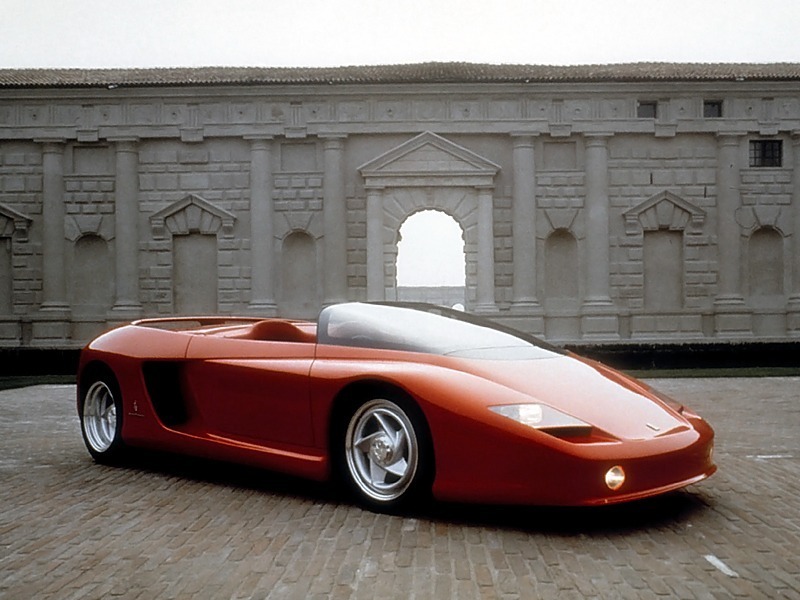
Camardella immediately understood this tension. “Something from the Mythos had clearly influenced the brief.” Indeed, in an almost Freudian slip, the title block on the package drawings referred to the new project as a “barchetta.” Yet, he explains, “we were explicitly told not to take inspiration from it, including the use of side air intakes.”
The F50 therefore began as both a continuation and a denial. It followed the F40 in the Ferrari anniversary lineage, but it could not be another F40. It required an open configuration, but could not appear to be a development of the Mythos. It had to express Formula One technology, but still function as a road car. And it had to do all this within a package largely defined before the designer could intervene.
The Technical Premise
On paper, the F50 was epochal.
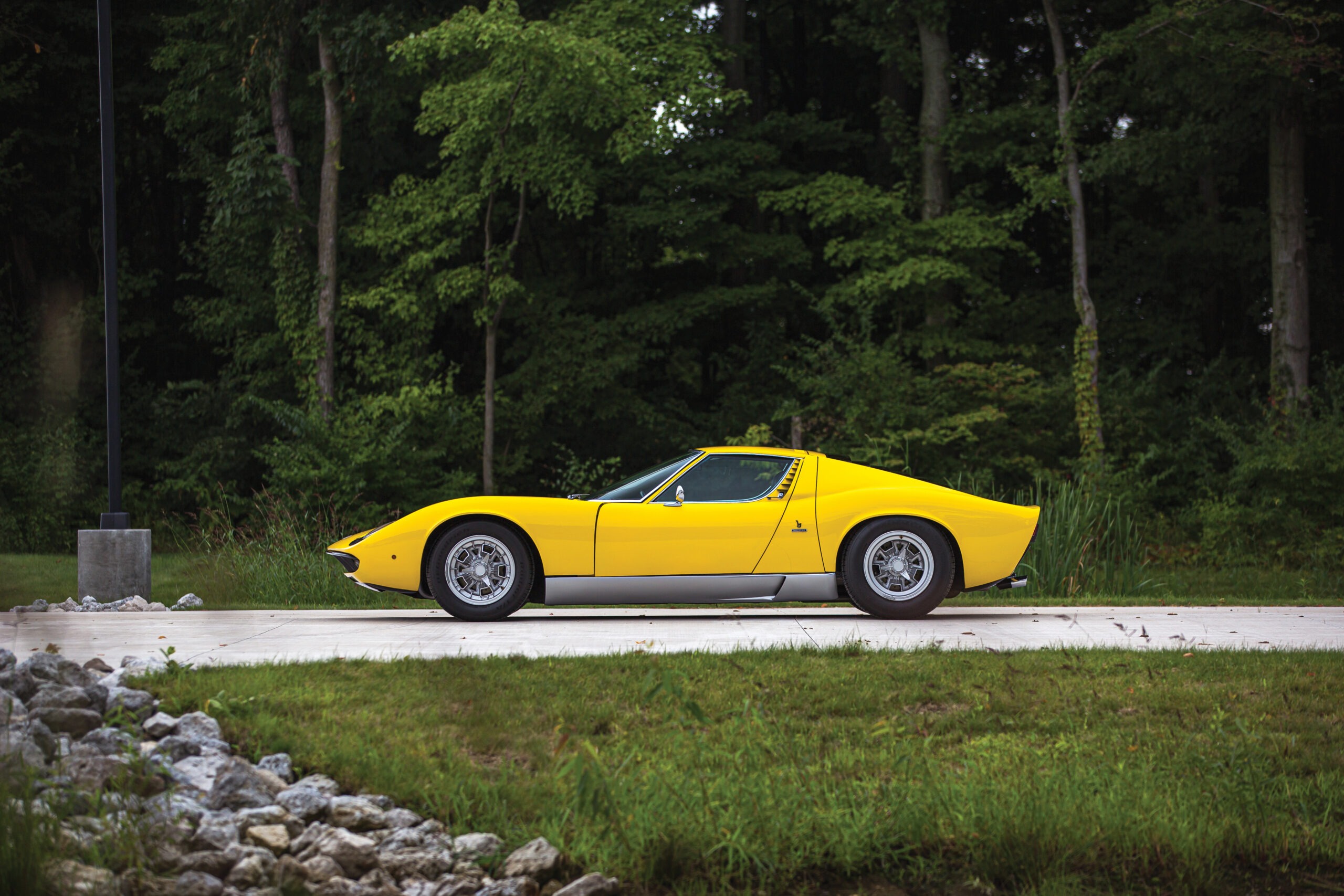
Camardella recognised that the technical layout had the potential to influence the future of grand touring cars, possibly creating a turning point comparable to the Lamborghini Miura. The comparison was not made lightly. The Miura had transformed the idea of the high-performance road car by combining a radical mechanical architecture with an equally revolutionary body. In its own time, the F50 had similar ingredients: a new structure, a Formula One-derived engine, and a body intended to draw inspiration from a competition car.
It would be the first Ferrari road car to adopt what Camardella describes as a truly Formula One engine: a narrow-angle V12 derived from the unit associated with the Ferrari 640 F1 driven by Nigel Mansell during the 1989 season. It would also be the first Ferrari road car with a central cell in carbon composite materials, tied structurally to the engine and gearbox assembly, which acted as a load-bearing component. The front suspension group was connected through an auxiliary frame, again following Formula One practice.
The F50 was also the first Ferrari road car designed with CAD, and the first Ferrari road car whose aerodynamics were developed in the new Formula One wind tunnel, using a 1:3 scale model. That wind tunnel, built in 1986 for Ferrari’s F1 work, had a moving belt, something Pininfarina’s own wind tunnel did not have. For this reason, Pininfarina was asked to create a 1:3 model specifically for Ferrari’s aerodynamic development.
From a designer’s point of view, the package had extraordinary promise. Camardella described it as “centripetal”: the major masses were concentrated low and within the fundamental mechanical volume. Vertically, almost nothing rose above the line of the wheels and the engine. In principle, that gave the designer an ideal base from which to build a low, dramatic and functional shape.
But there were problems too. The wheelbase was long, and the overhangs were unusually pronounced for the period. Camardella hoped they could be reduced during development, but the technical architecture had already been fixed. “If they had accepted my suggestion to shorten the overall length in relation to the car’s imposing width,” he says, “it would have had sportier proportions and looked less massive than the final 4.60 by 2.00 metres.”
This was one of the key frustrations of the project. Pininfarina, despite its history with Ferrari, was still working as an external consultant. The package arrived already frozen. There was little interaction in the earliest architectural phase, and in Camardella’s view this limited the final result. “The F50 was a typically coachbuilt project,” he says, using the term in its traditional sense. “There was no involvement in the architectural layout. It was a pure covering of a given mechanical package.”
That did not mean the package was poor. Quite the opposite. In the appendix to his recollections, Camardella even says the mechanics were “perfect”, apart from his desire to shorten the front overhang. But the designer’s room for manoeuvre was limited. The shape had to come from the given structure.
March 20, 1990
The internal styling competition for the F50 began at Pininfarina on March 20, 1990.
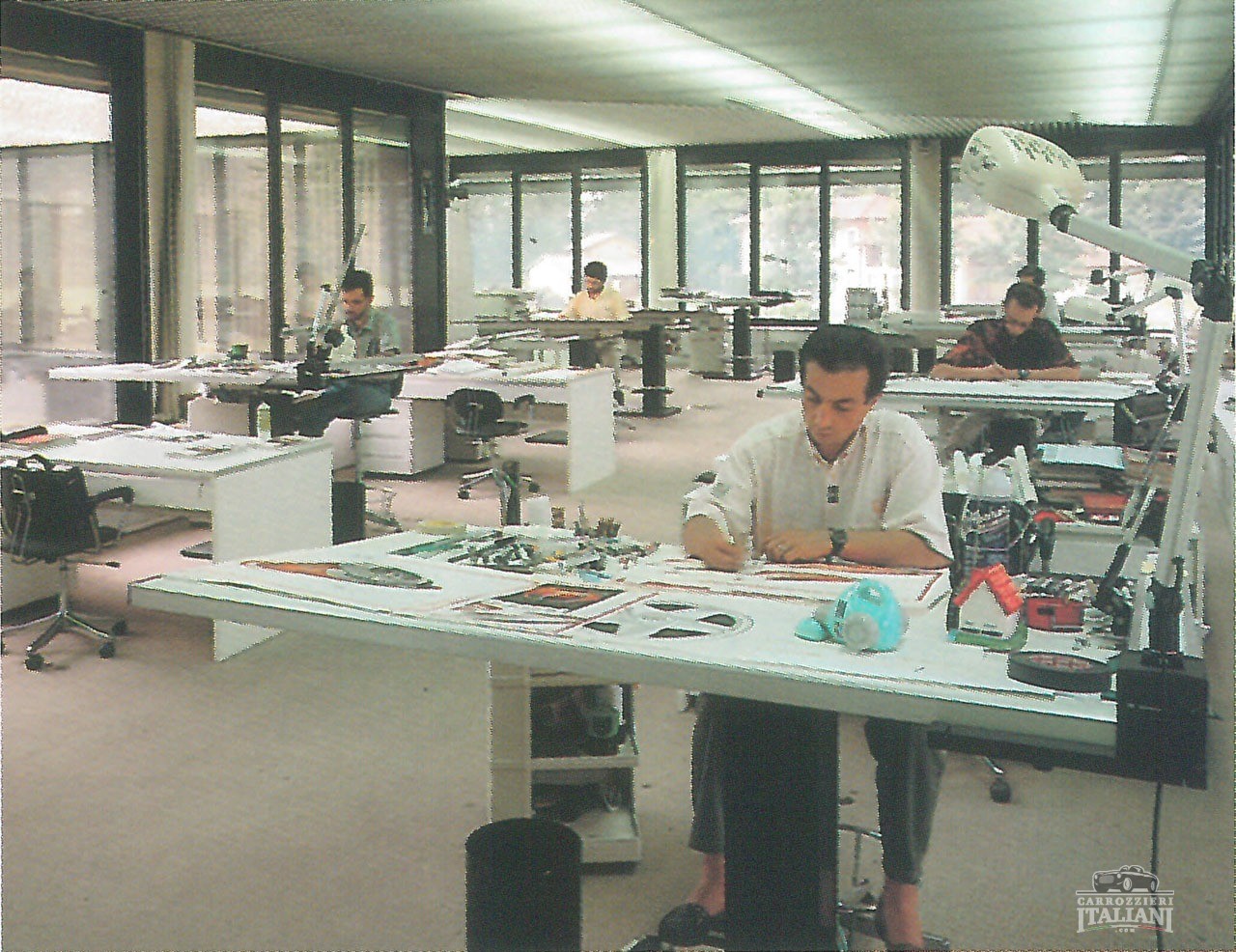
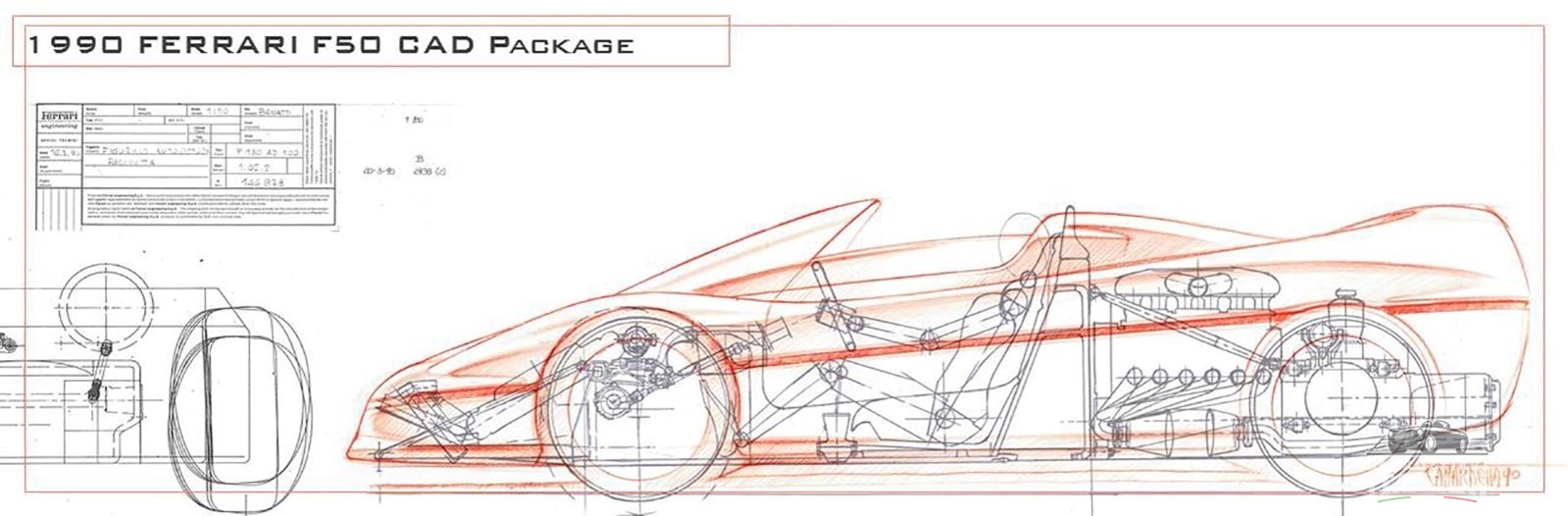
Camardella remembers the day not only because of the project, but because of the method. For the first time, he saw CAD technical drawings printed on perforated paper. They showed the chassis and package in a way that offered more information than the traditional side view alone. The drawings arrived with four views, giving the designers a clearer basis for conceiving the three-dimensional form.
He began by drawing directly over photocopies of those plots.
“I approached it with enthusiasm,” he recalls. “When I saw the CAD drawings printed on perforated paper for the first time, I traced the first lines directly over the photocopy.”
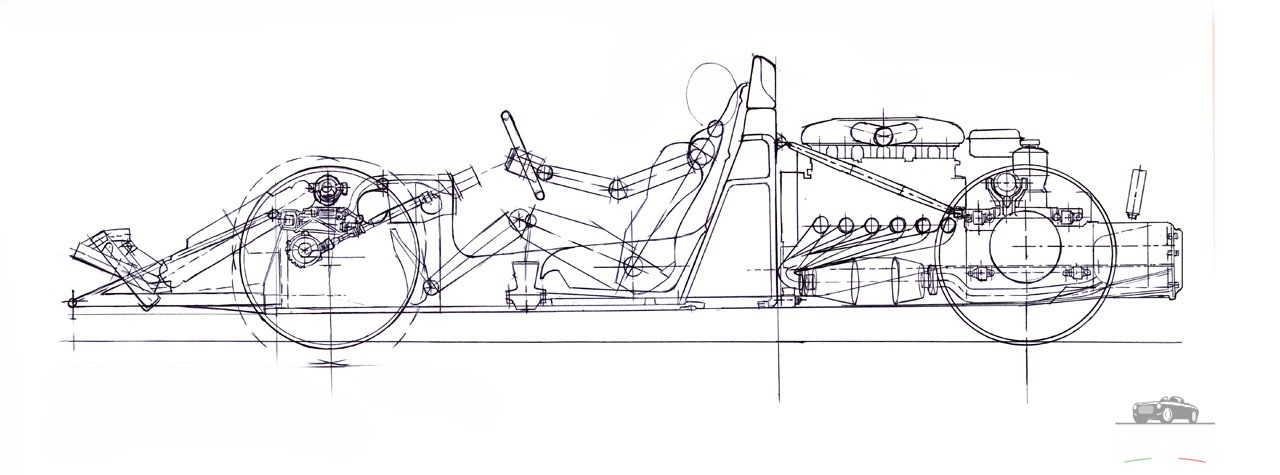
It was a remarkable moment of transition. The data came from the new digital world, but the design still began with the hand, the eye and the pencil. Camardella reset the experiences that had led to the Mythos and deliberately gave up the temptation to pursue formal innovation for its own sake. Instead, he applied what he calls the rules of good design to the mechanical constraints: form and function.
The air intakes and outlets dictated the sculptural modelling. The cooling needs of the engine, the radiator exits and the aerodynamic management of the body became the true generators of the design.
The aesthetic spark came from the Ferrari F641, the Formula One car introduced for the 1990 season. To Camardella, the F641 offered the right reference because it combined pure competition purpose with an elegance rare even among racing cars. He notes that it later became the only competition car, and one of only nine automobiles, to enter the historical collection of the Museum of Modern Art in New York.
For the F50, he did not want to paste Formula One details onto a road car. He wanted the F1 form to emerge from within the body.
The F641 Inside the F50
Camardella’s main idea was to organise the F50 around a central body that, in plan view, recalled the silhouette of the F641.
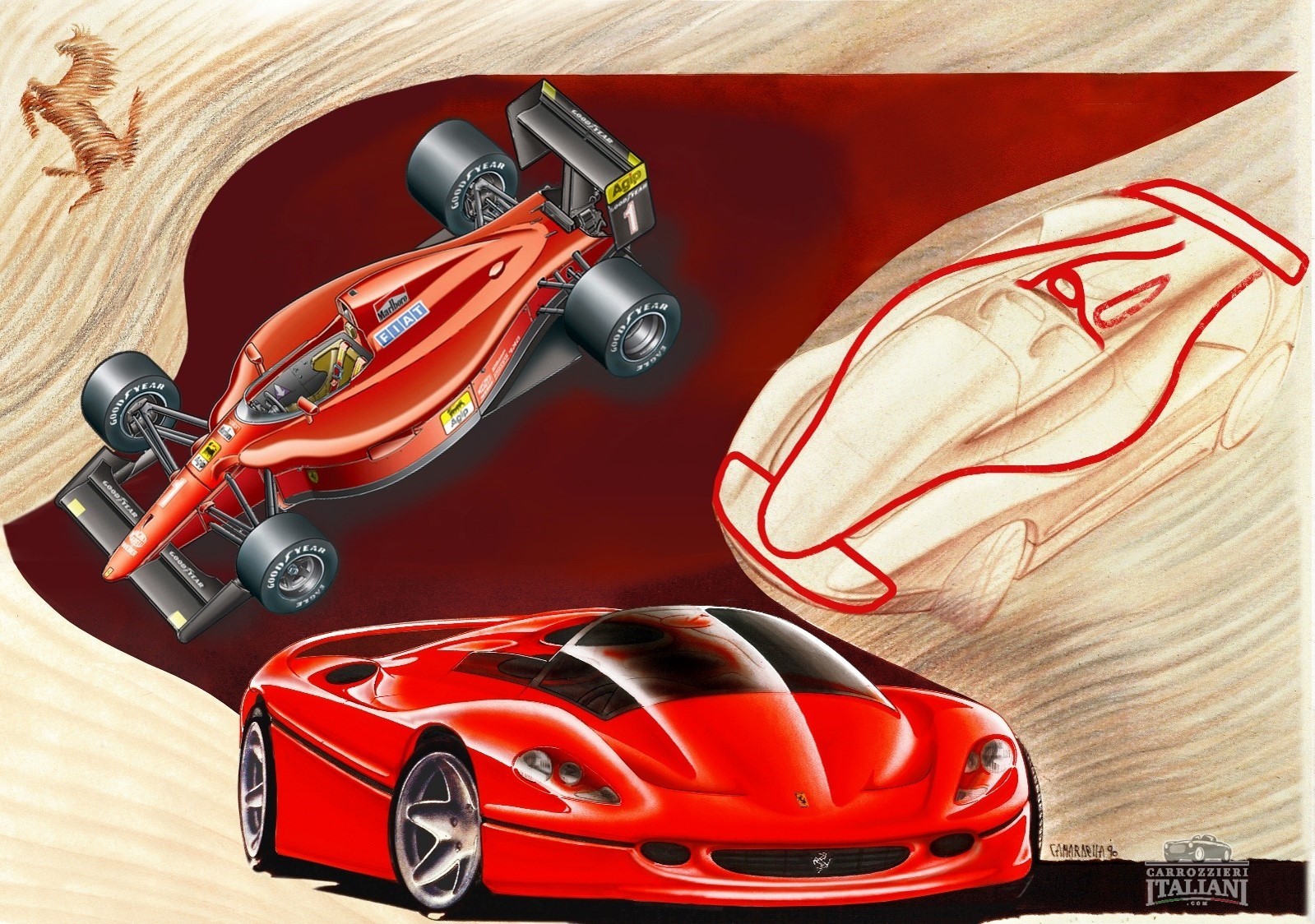
This central form appeared across the horizontal plane of the car. At the front, it was shaped by deep outlets for air coming from the radiator. At the rear, equally deep openings cooled the engine compartment. Around this central body sat the fenders, visually connected at the front and rear by wing-like elements that symbolised the wings of the Formula One car.
It was not a literal copy of the F641. It was an architectural translation.
🔗 Read more: Pininfarina Through the Ages: The Complete History
The F50’s body was to contain the idea of a Formula One car inside a wider road-car envelope. The central mass, the air channels, the wing references and the open cockpit were all part of that reading. The car would not be “inspired by racing” in a superficial way. It would show, through its volumes, how the racing structure had been absorbed into a road-going Ferrari.
At the front, Camardella revisited the “triptych” introduced on the F40. In one proposal, he treated it as an evolution of the F40 theme. In another, he gave it a new interpretation by placing the front graphic within a single elliptical figure. This also allowed him to bring back the idea of visible covered headlights, a solution he had explored in previous projects and which finally came to completion with the F50.
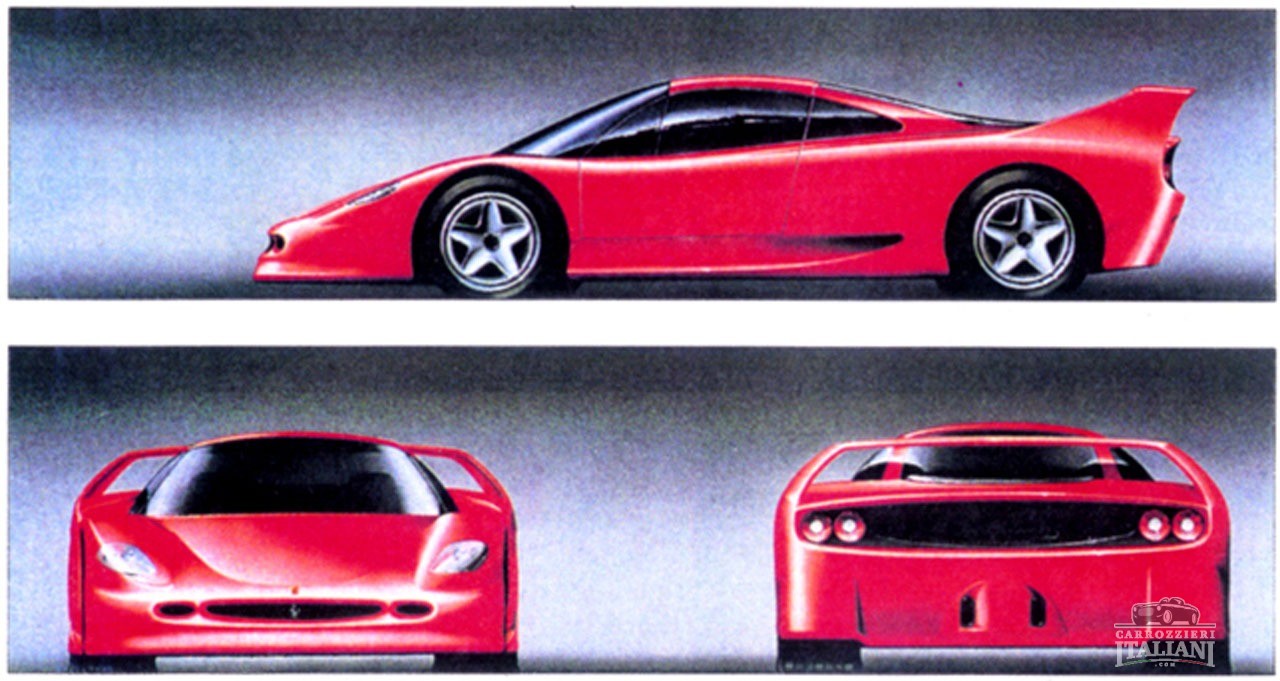
The rear was defined by a deep division of the central body. It was completed through several solutions for paired round taillights, keeping a classic Ferrari reference while integrating it into a new type of volume. In the sportier rear treatments, the gearbox remained visible, making the mechanical core of the car part of its visual identity.
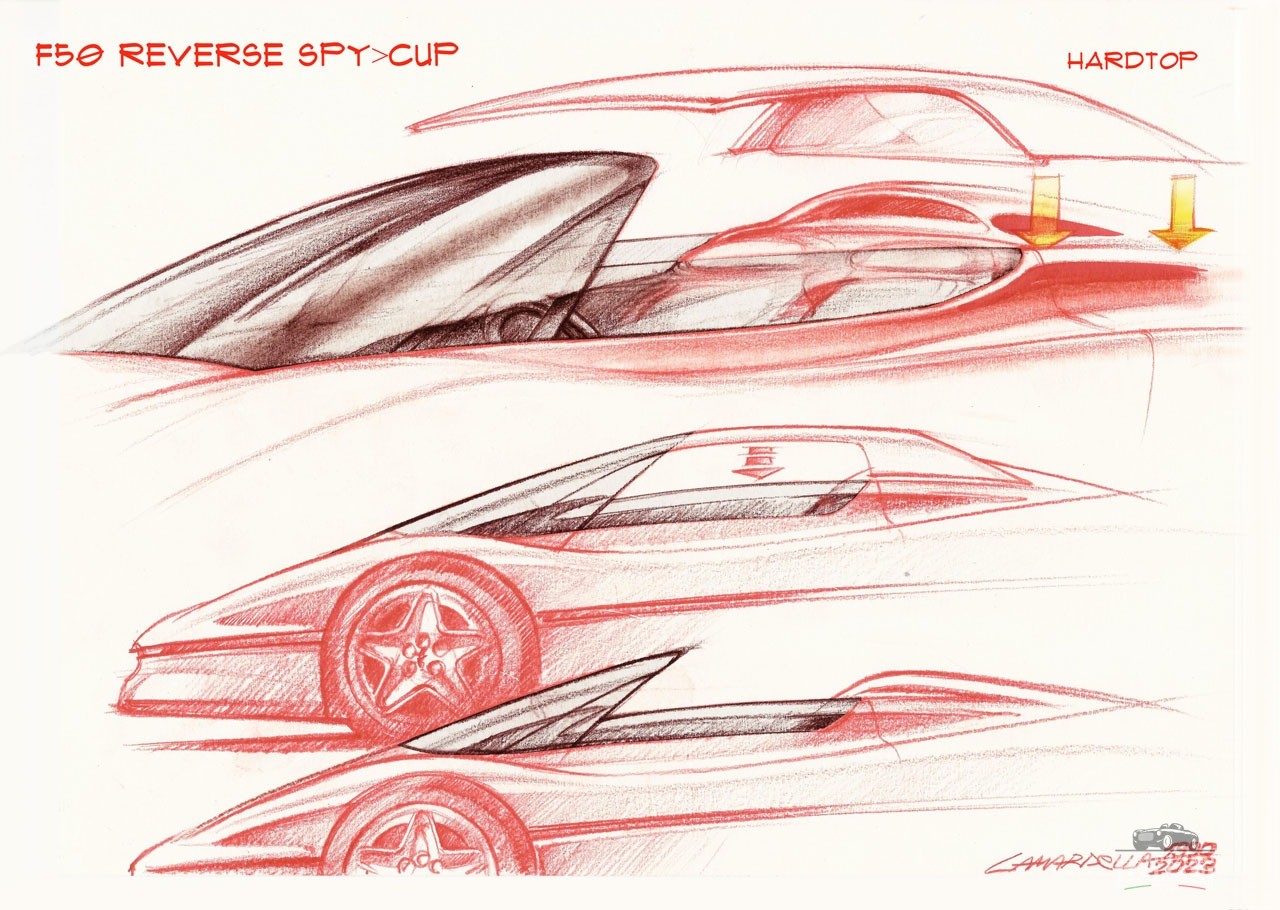
The hardtop was another central element. Because Ferrari had asked from the beginning for an open car with a removable rigid roof, Camardella studied a technical solution that would make the transformation into the closed configuration simple and coherent. The car had to work as both spider and coupé, without one version appearing like an afterthought.
This mattered greatly to him. The F50 was not conceived as a closed car cut open, nor as a spider with a roof placed on top. The roof mechanism and the body form had to belong to the same idea.
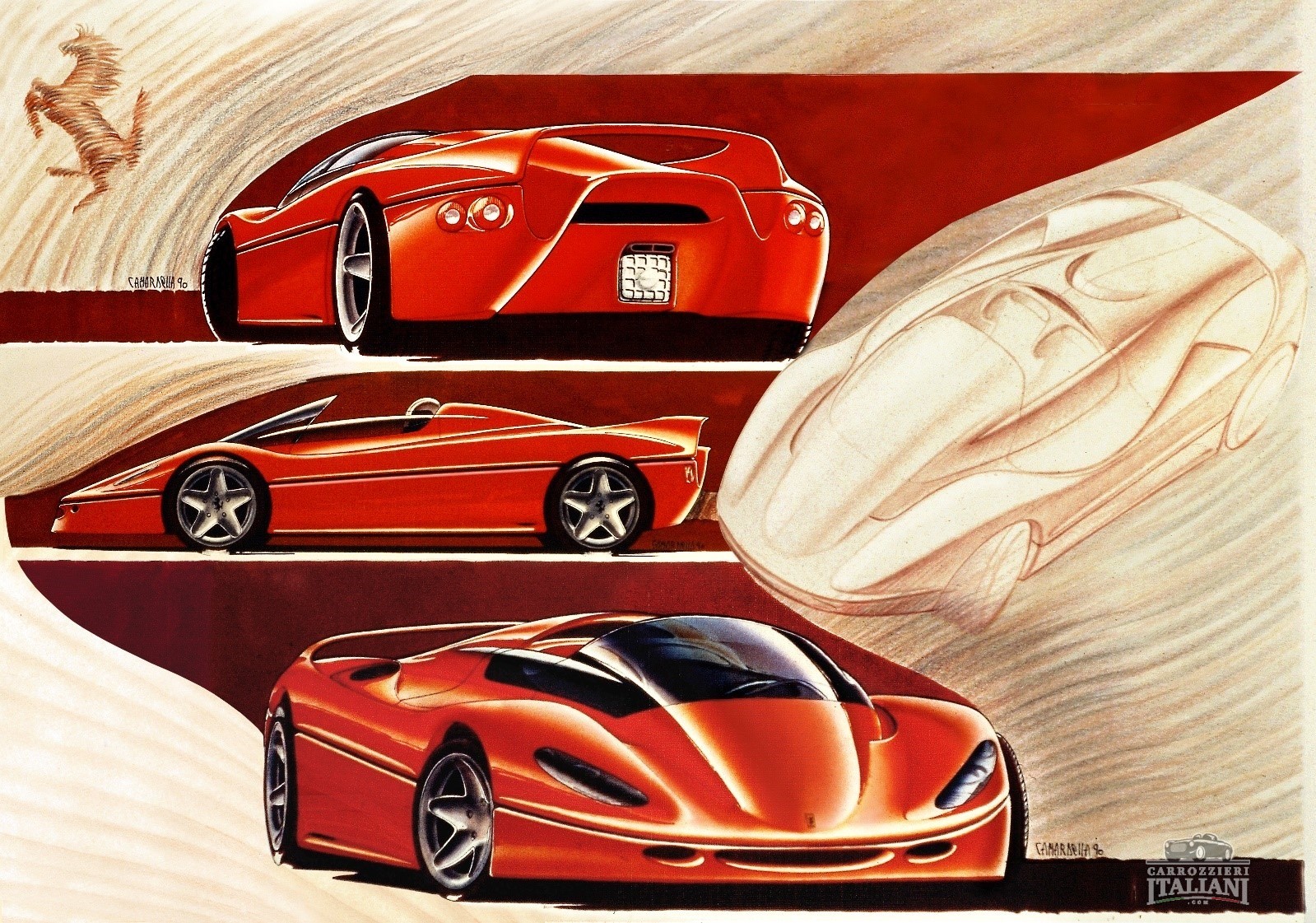
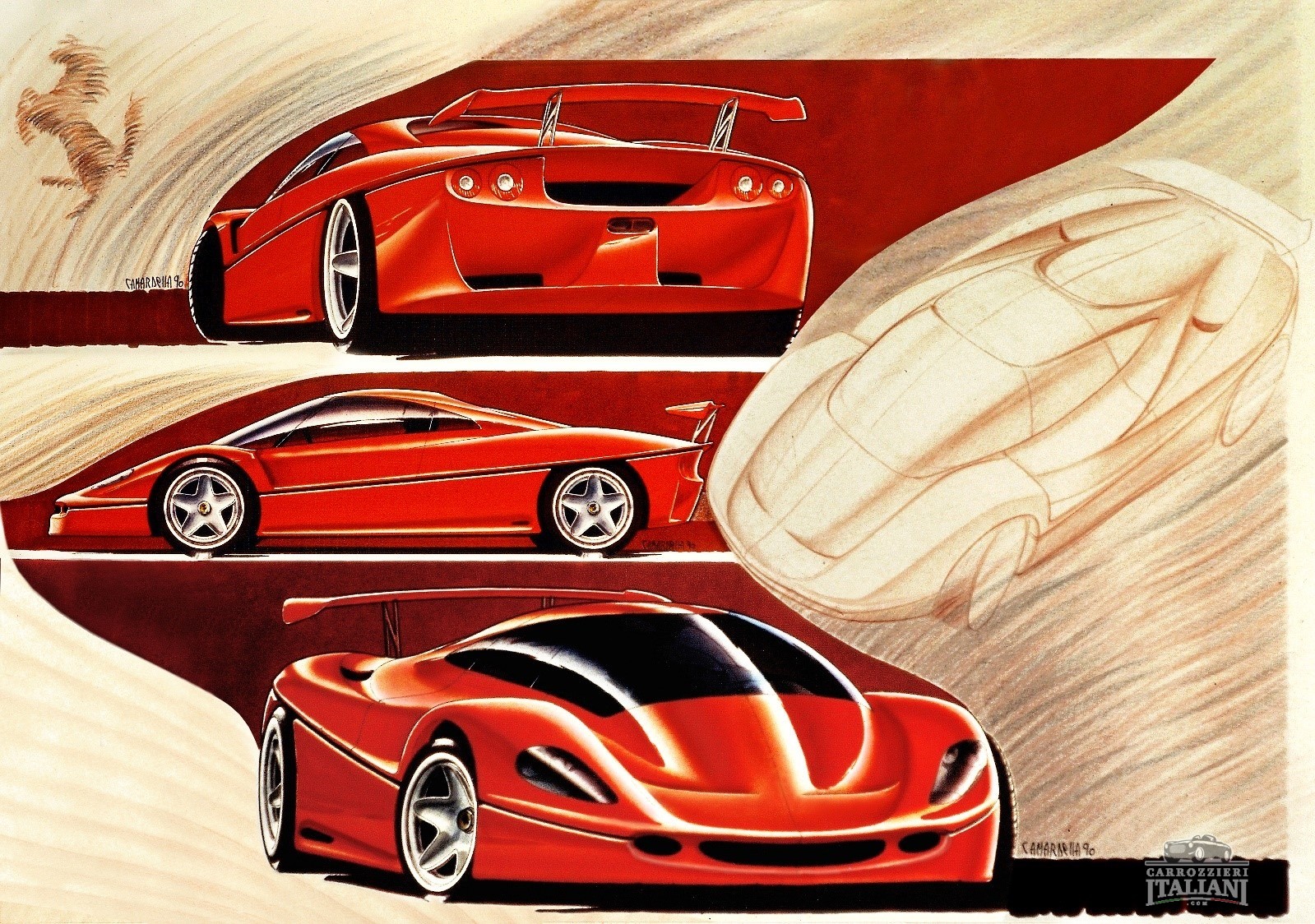
Proposals A, A1, B and C1
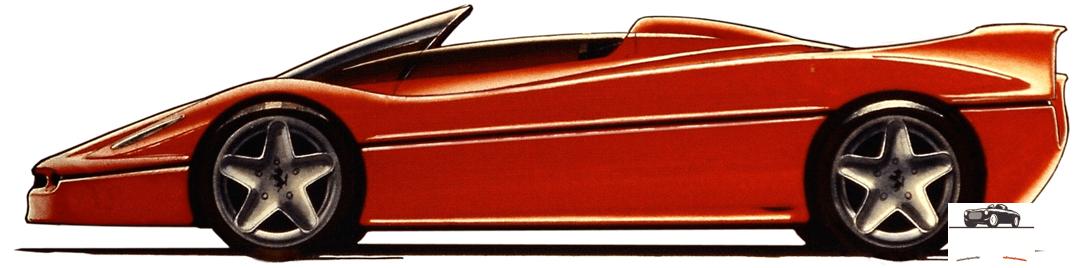
Proposal A was the one Ferrari chose. It featured an integrated rear wing and represented the most balanced version of Camardella’s concept. Its front end brought together the elliptical interpretation of the nose, the faired visible headlights, the low intake openings and the central Formula One-inspired body. The side view carried the long, low wedge, with the cockpit set into the centre of the volume and the rear wing integrated into the tail.
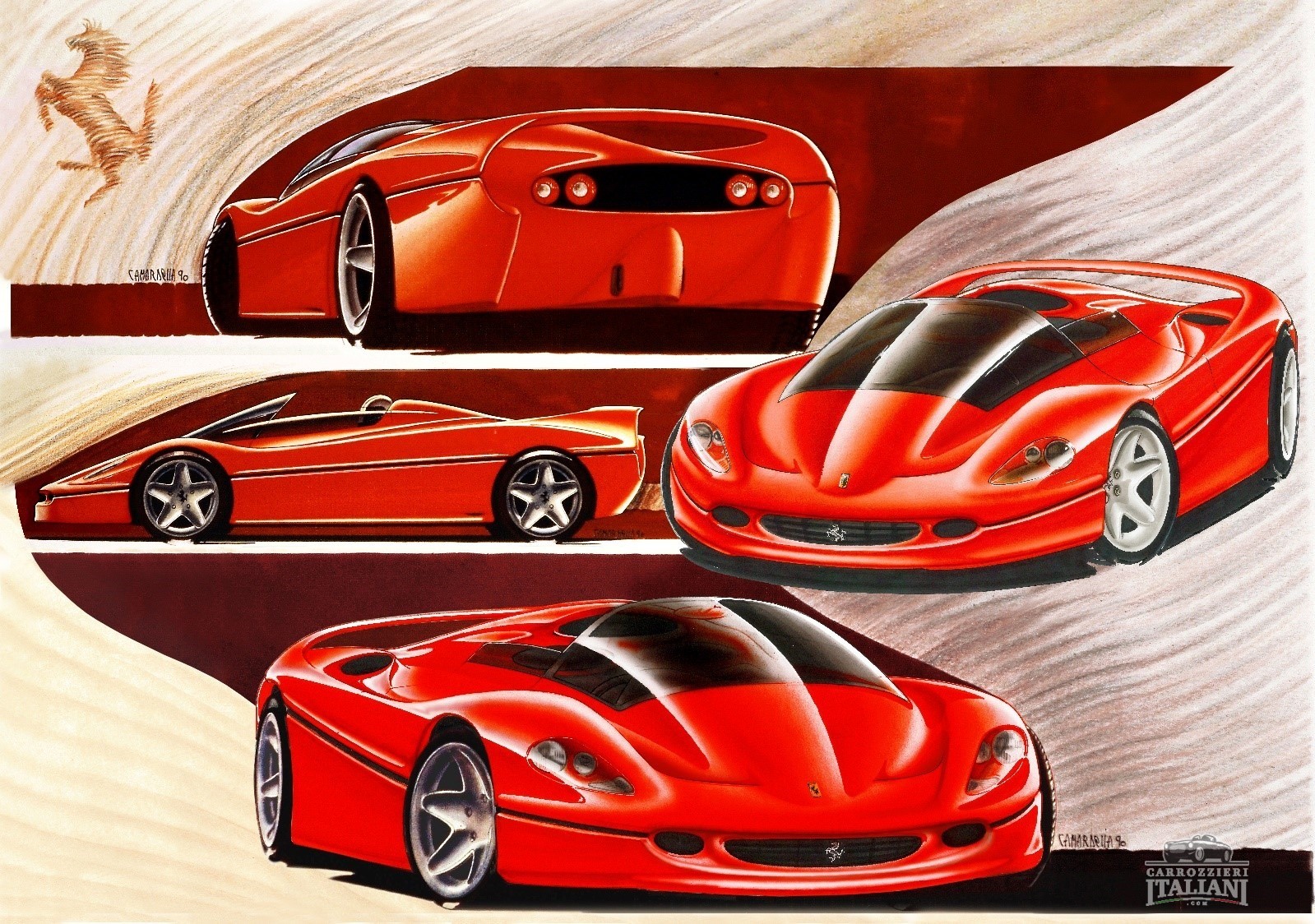
Proposal A1 was the closed version of A. It developed the same basic idea with a roof, a plan-view detail and a rear variant in which the gearbox remained visible. This version is important because it shows how Camardella was already thinking of the F50 as a dual-character car, able to move between open and closed configurations without losing its formal logic.
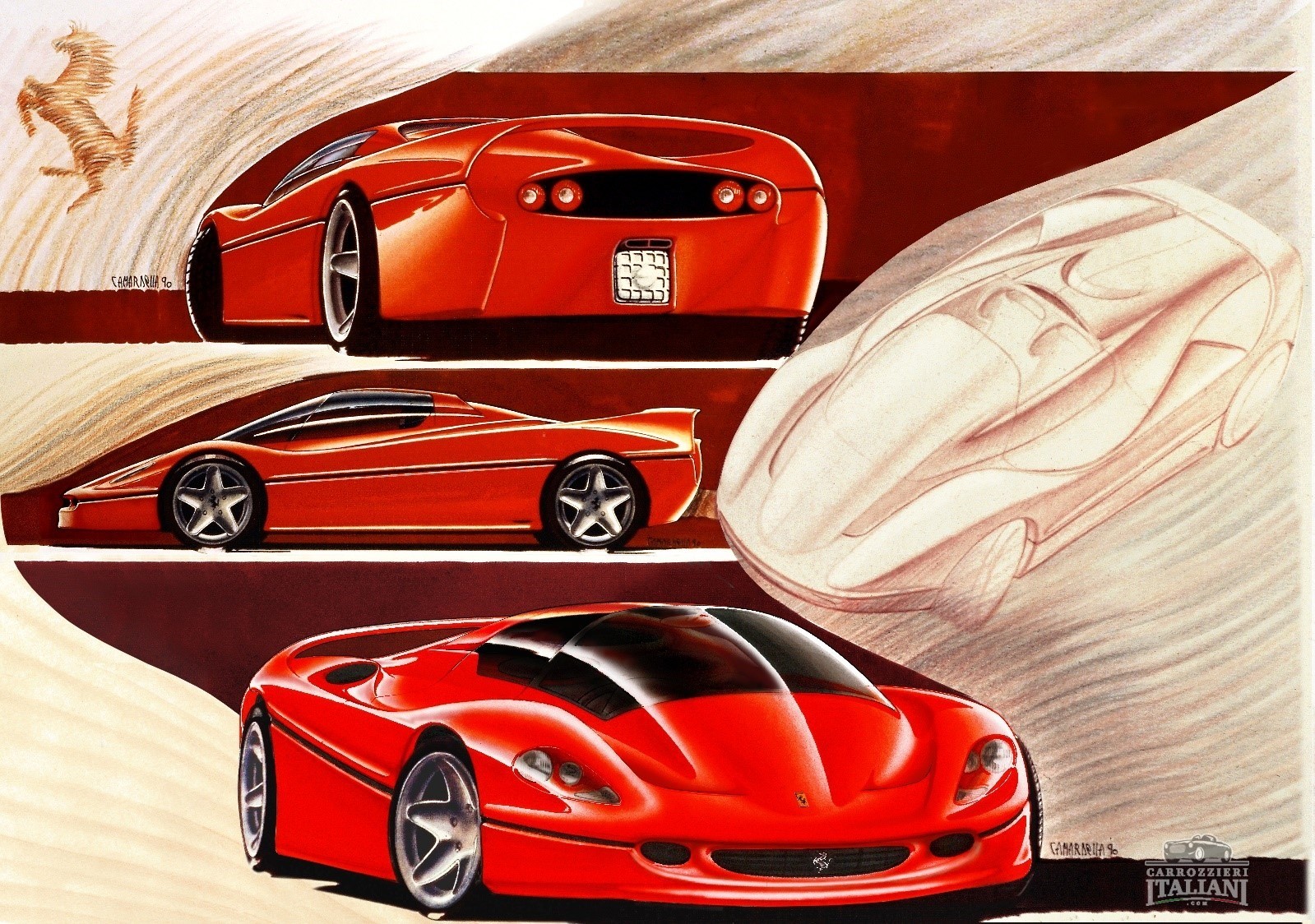
Proposal B was more directly connected to the F40 at the front. Camardella described it as an evolution of the F40’s front graphic, paired with a more extreme rear design. In this proposal, the central body inspired by the F641 was especially evident at the tail, descending from the large intake behind the passengers. In the more sporting solution, the gearbox was left exposed.
Then came C1.
C1 began partly as a response to a request from a Pininfarina executive who wanted to see a suspended rear wing, believing it would be closer to Formula One. Camardella did not simply satisfy the request. He used it as an opportunity to test an alternative idea.
Starting from the division of the body, he extended the line toward the upper rear end and used it to separate the tail clearly from the horizontal plane. His intention was to make the entire tail a single removable construction element, which would make it easier to access and remove the load-bearing engine. The detail design also recalled classic Ferrari competition cars.
This was not a cosmetic exercise. It was a construction idea tied directly to the F50’s mechanical layout.
Camardella considered this C1 tail interchangeable with the other proposals using the integrated wing. He also later observed that the diagonal division, the separation of the fenders and the overall logic of the proposal would reappear more than twenty years later on LaFerrari.
The final Ferrari selection favoured the integrated-wing solution of Proposal A. But the story did not end there.
The Beginning of the Compromise
According to Camardella, Ferrari then asked something unusual.
For the first time in his experience, they requested that the selected design be combined with elements from a colleague’s proposal, specifically the rear window and the side air intakes. To him, this anticipated a tendency now common in car design: assembling a “potpourri” of unrelated elements instead of developing one coherent design to its natural conclusion.
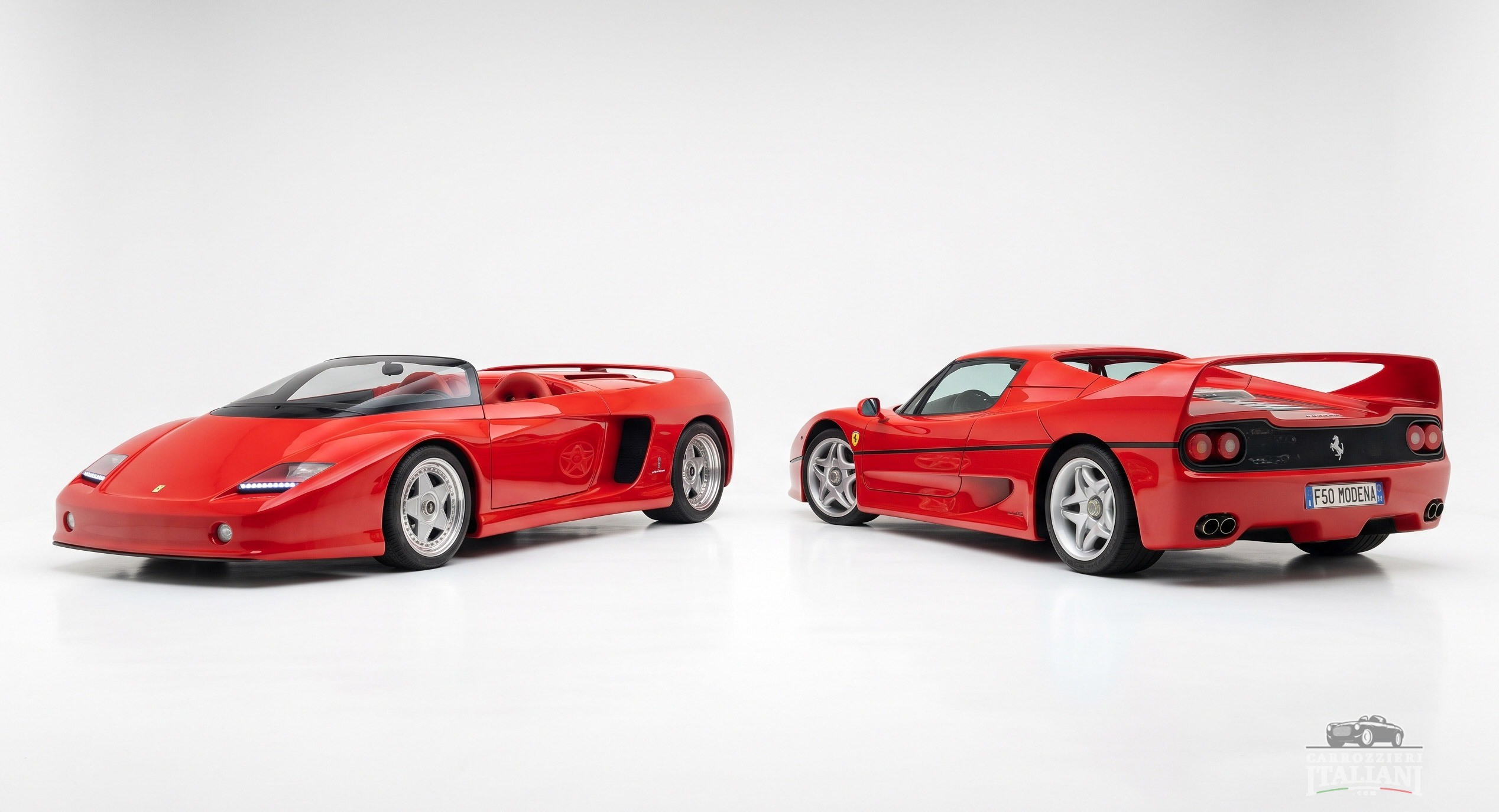
The contradiction was even sharper because the original brief had explicitly discouraged side air intakes, particularly because of the Mythos association. Yet during the development process, side intake elements were introduced from another proposal.
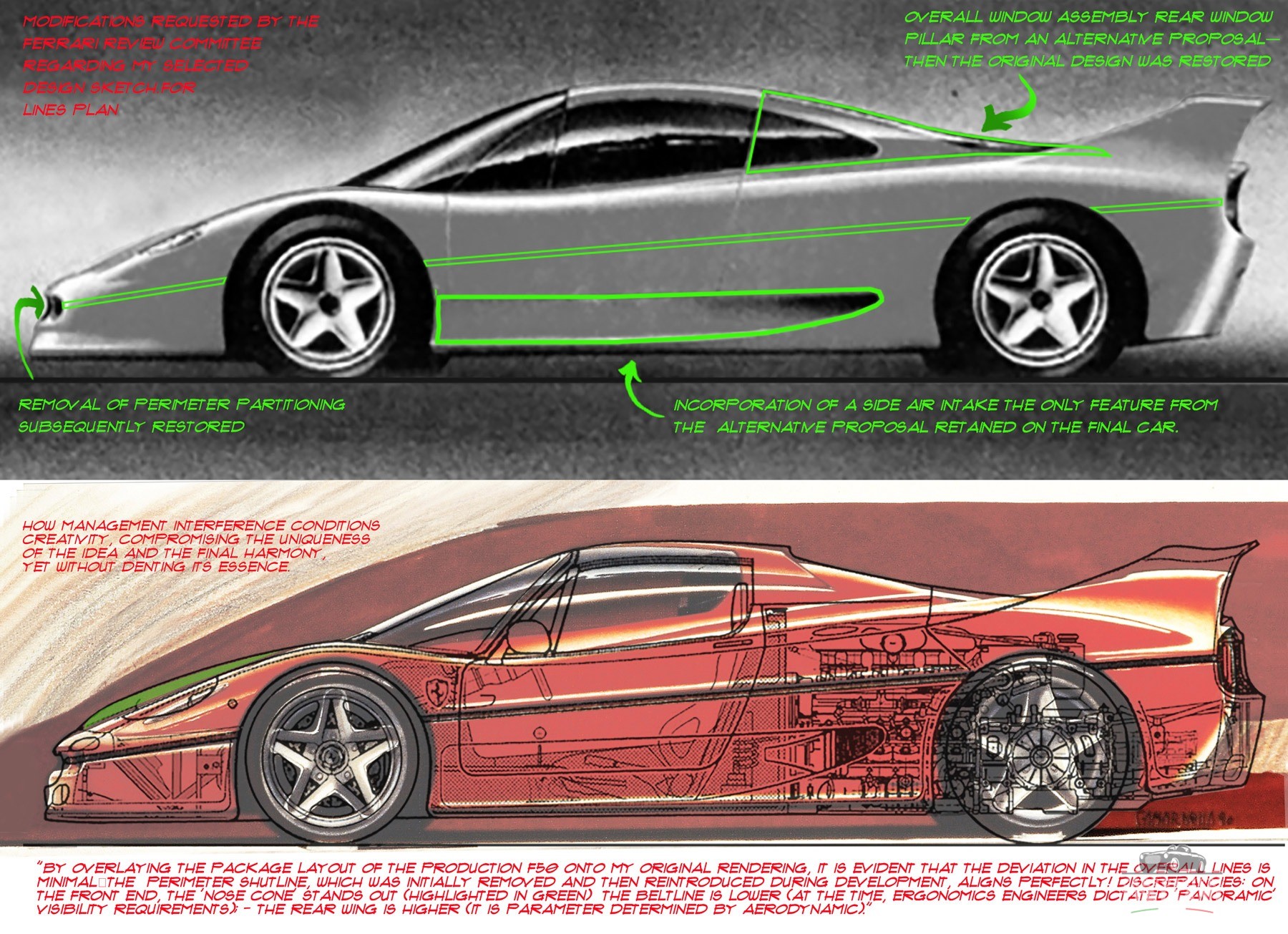
For the 3D development, Ferrari chose the closed solution and selected the roof from C1. They also requested the removal of the traditional mid-side cut, which was later reintroduced. Camardella’s hardtop idea was also taken up, but modified. Eventually, some of the foreign elements initially inserted were removed, in what he describes as “a natural rejection” of the original idea’s incompatible additions.
But by then, the initial form had already begun to change.
The timing made things worse. Camardella left Pininfarina in July 1990, only four months into the development. His departure coincided almost exactly with the start of the 1:3 model phase, the first time Ferrari had requested such a model from Pininfarina for testing in its own Formula One wind tunnel.
“When the natural father is missing,” Camardella says, “whoever takes over generally inherits a problem. It takes time away from his own work, and in terms of result, if it goes well the credit goes to whoever drew the first lines; if it goes badly, the blame is his.”
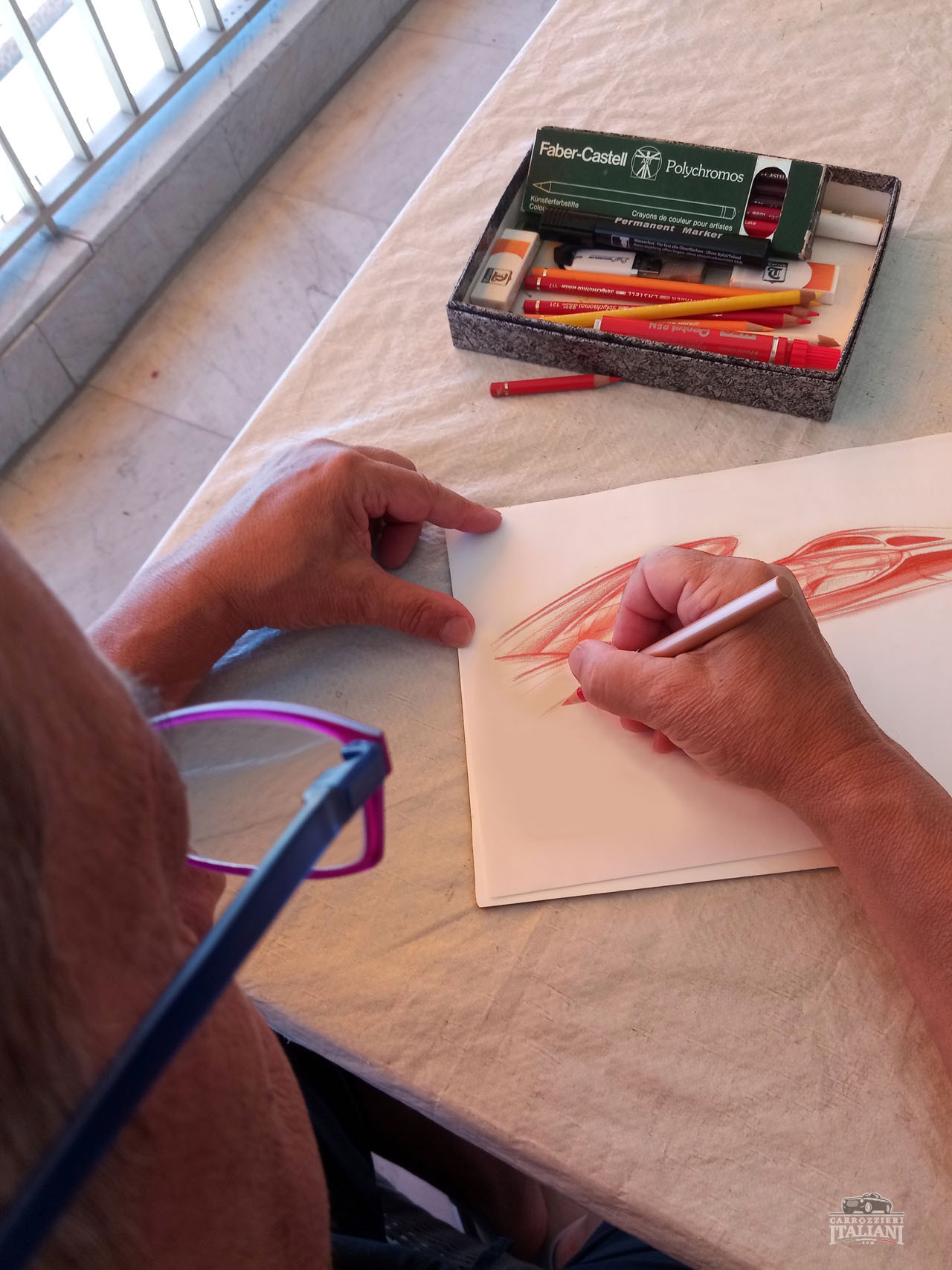
That sentence captures the delicate nature of automotive design development. A car is never finished at the sketch stage. The first idea has to be defended through model work, surface refinement, engineering adjustment and endless decision-making. When the original designer leaves at the beginning of that process, the concept can survive only if the team protects its internal logic.
Camardella believes that did not happen.
The First Ferrari Road Car in CAD
The F50 also marked Ferrari’s first road-car use of CAD in the body design process.
Yet the process was not fully digital in the modern sense. Pininfarina did not yet have all the specific knowledge and equipment required to create the form plan directly in virtual form. Camardella was therefore asked to create a traditional form plan on paper, using the classic tools of the trade: drafting machine, templates, curves and flexible battens.
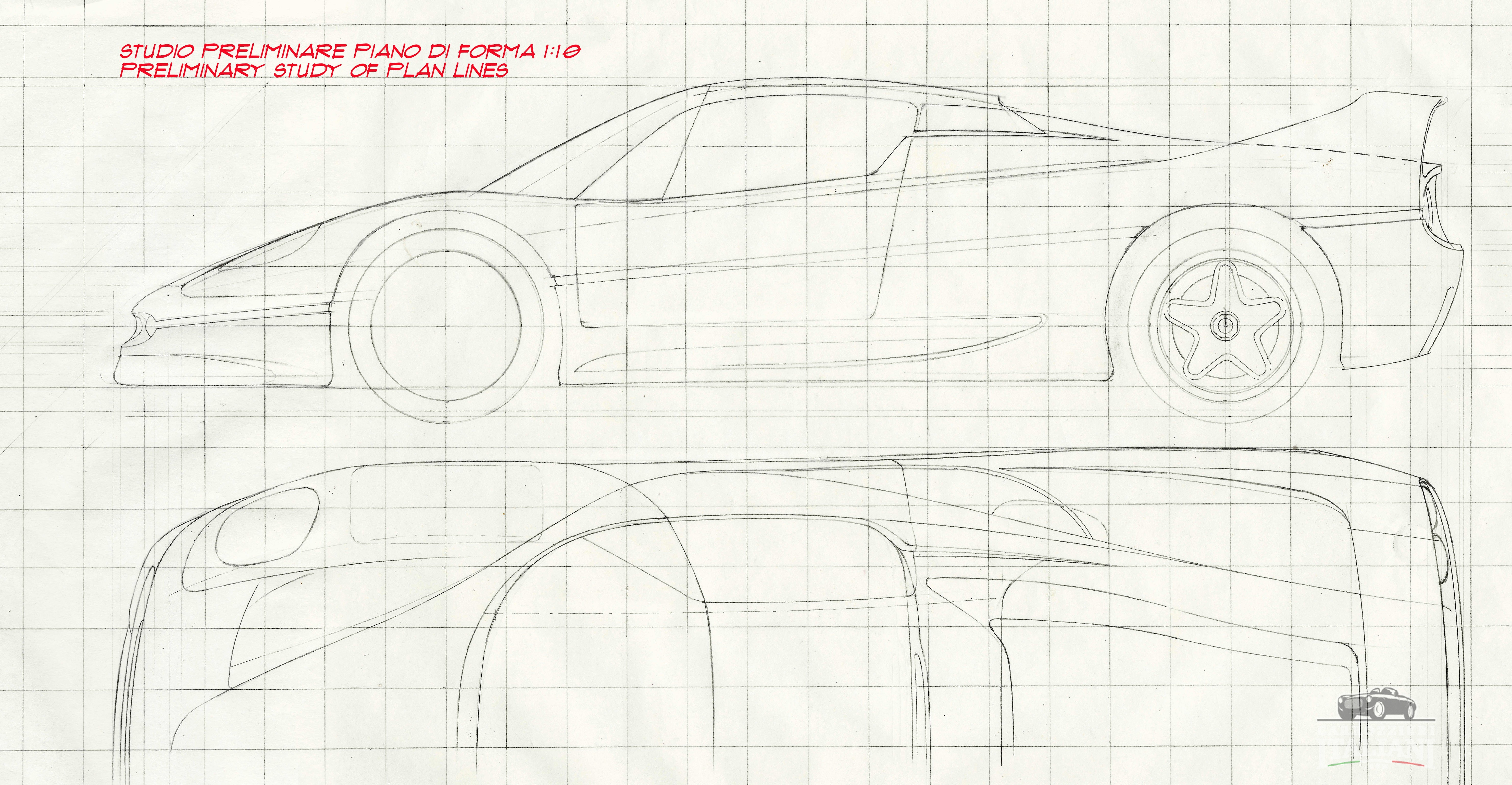
He first prepared a 1:10 form plan, then developed it at 1:5 scale. From that 1:5 plan, digital points were extracted with a first-generation digitiser. In other words, the car’s first “mathematics” came from an analogue drawing translated point by point into digital data.
For Camardella, this was one of the most important moments of the whole F50 experience.
“The most important moment for me was the adoption, for the first time, of virtual processes in the design of the body,” he recalls. “I had to manage it in analogue form, creating a detailed 1:5 form plan with traditional tools. Then the drawing was transferred into digital point by point with a first-generation digitiser.”
The first 3D visualisations of his geometry convinced him immediately. Compared with the time required to build and correct a physical model, the digital process allowed errors to be identified earlier and corrected more quickly. “Already in that first experience,” he says, “I understood the scale of the revolution that was about to change vehicle design.”
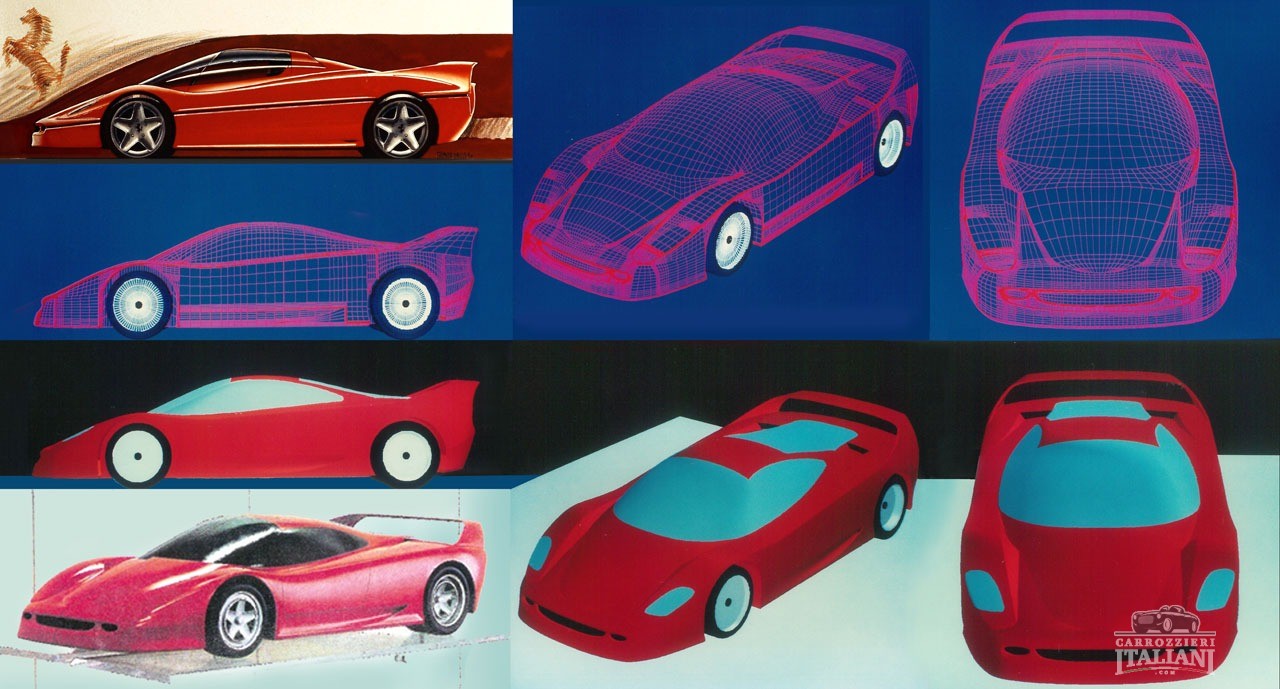
Based on this first digital surface model, the 1:3 scale model was milled. At that stage, Camardella remembers it as still fairly faithful to the initial design, apart from the absence of the side separation and a simplified roof. Those elements were later restored, closer to the original drawing.
The F50 therefore occupies a very particular place in Ferrari design history. It was born from hand sketches over CAD plots, developed through traditional form plans, digitised with early equipment, milled as a scale model, and tested using Ferrari’s Formula One aerodynamic tools. It stands exactly at the point where the old world of Italian design craft met the new world of digital vehicle development.
In the Ferrari Wind Tunnel
The aerodynamic development of the F50 was just as significant.
Ferrari’s new wind tunnel had been created in 1986 for Formula One testing and allowed work on 1:3 scale models with a moving belt. This was crucial because the moving belt simulated the road passing beneath the car, giving a more accurate picture of aerodynamic behaviour than a fixed-floor tunnel.
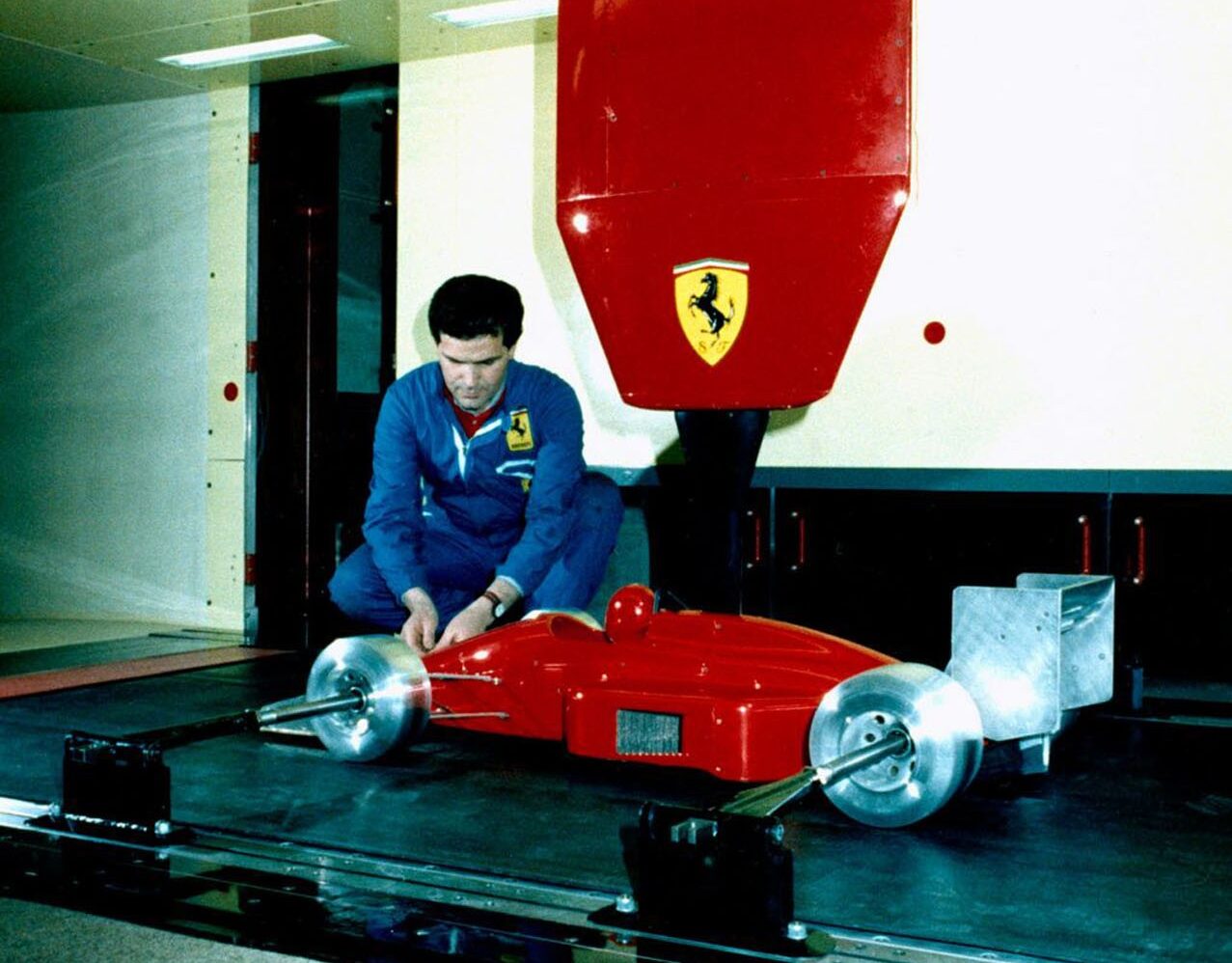
Pininfarina’s wind tunnel did not have this feature. As a result, Ferrari asked Pininfarina to build a 1:3 scale model for testing at Maranello.
Camardella did not work closely with the aerodynamicists on the F50 in the way that might have happened when cars were tested at Pininfarina. In those cases, a colleague would interact directly with the designer during the tunnel process. With the F50, the optimisation took place in Ferrari’s Formula One facility, after the initial styling form had been defined.
🔗 Read more: How a Swiss Dealer Challenged Ferrari: The Story of Monteverdi
This is an important point. The aerodynamic research did not provide a pre-existing exterior shape for Camardella to dress. He is clear about this. The aerodynamic work came later, starting from an initial style form, and if major changes were needed, the relevant areas would be redesigned.
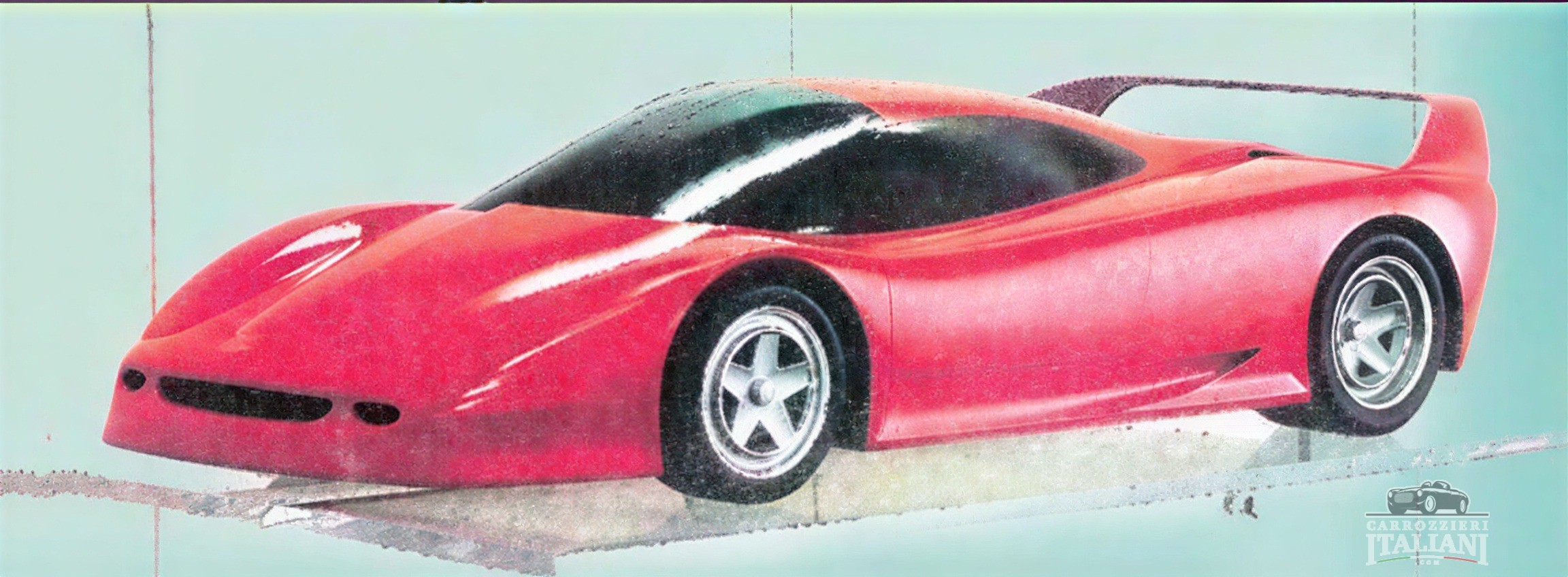
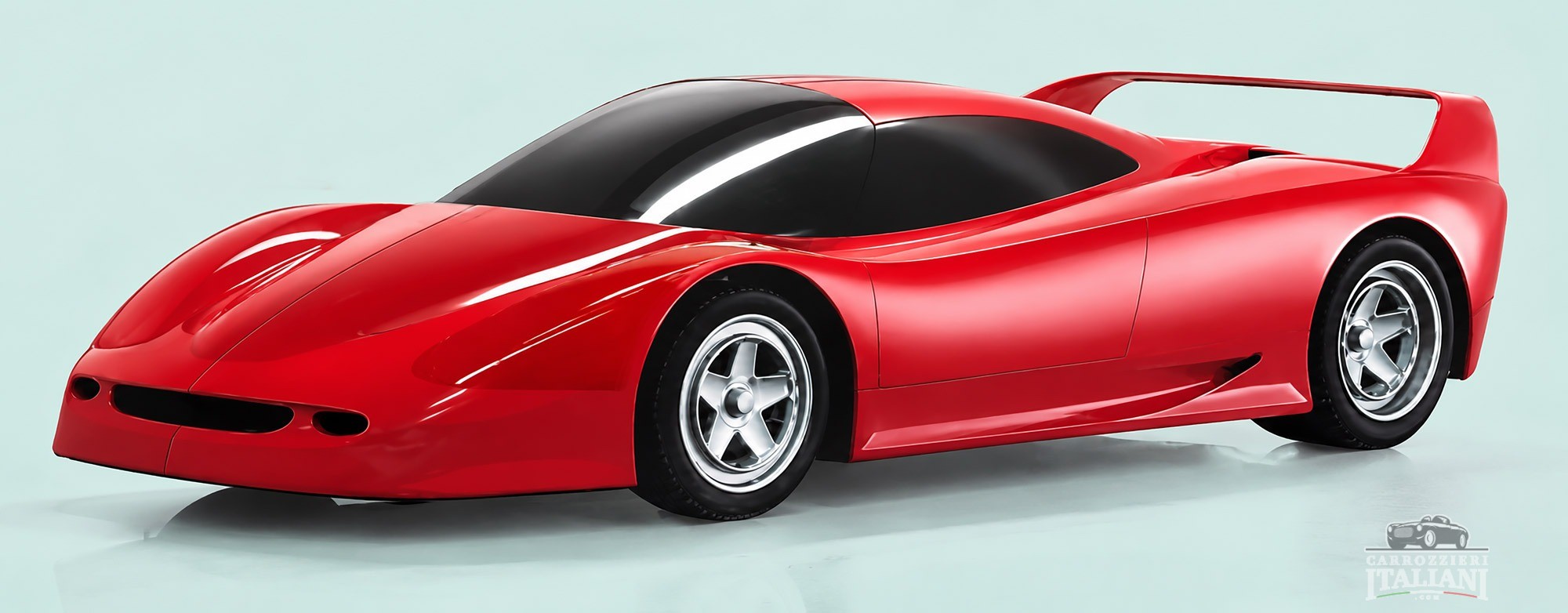
This method further reinforces the idea of the F50 as a transitional project. The shape began as a design proposal, but then entered a technical development environment far more advanced than the one typically used for road-going gran turismo of the period.
Carbon Fibre and the Compact Chassis
One might assume that the use of carbon fibre for the central tub and body panels gave the designer unusual freedom. Camardella’s answer is more nuanced.
He did not see carbon fibre itself as the main design opportunity. The real advantage was the compactness of the chassis. With the exception of the engine intake system, nearly all the main volumes sat below the upper line of the wheels. For a designer, this was almost ideal. It allowed the body to be shaped around a very low mechanical core.
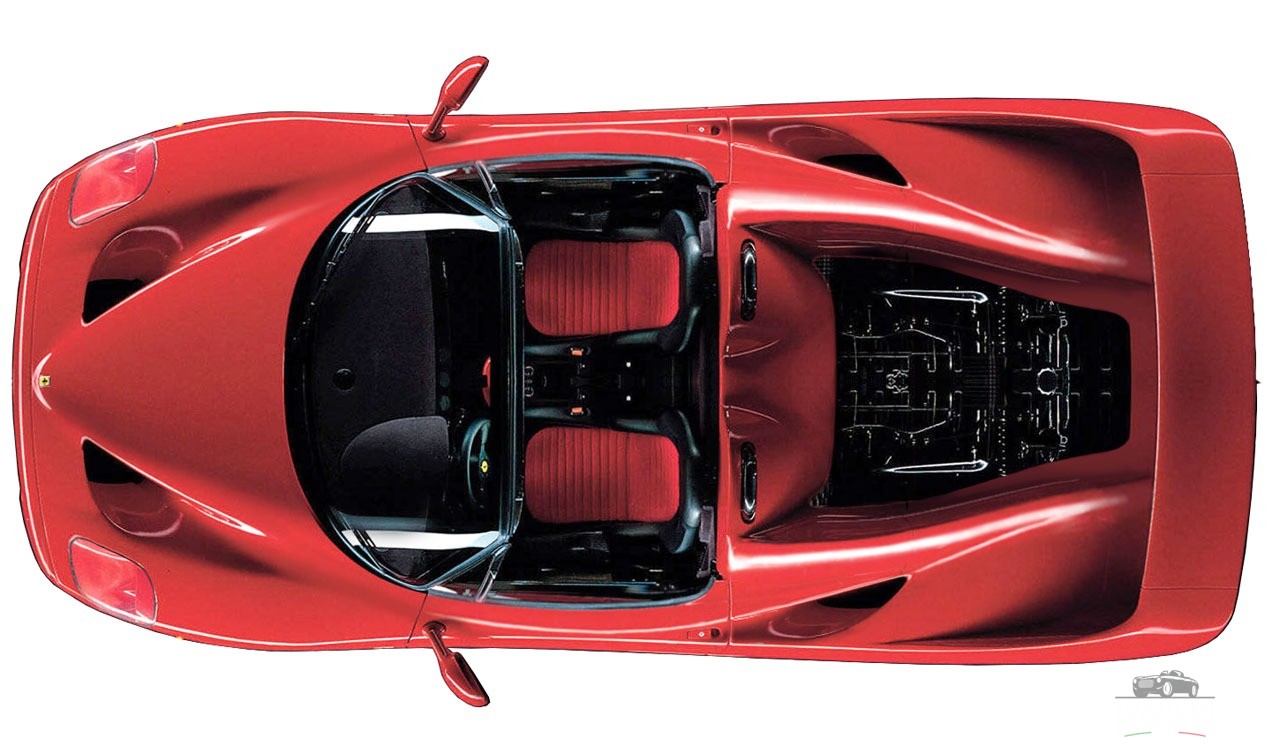
This compactness gave the F50 its potential. It allowed the Formula One-inspired central form to emerge. It allowed the fenders to frame the body rather than dominate it. It allowed the car to be visually low, wide and purposeful.
But again, the overhangs and fixed package limited the final proportions. Camardella would have preferred a shorter front overhang in particular. He mentions the Testarossa as a rare example of a Ferrari project in which a major technical layout change occurred at the idea stage, when Leonardo Fioravanti suggested moving the radiators. On the F50, such freedom was not available.
The package was fixed, and the designer had to interpret it.
The Interior Question
In many cars, the interior layout plays a major role in shaping the exterior. In the F50, according to Camardella, that was less true.
“In this type of car,” he explains, “the only interior constraint is given by the two seats and the basic habitability dimensions. If there is space left over, a function is assigned to it.”
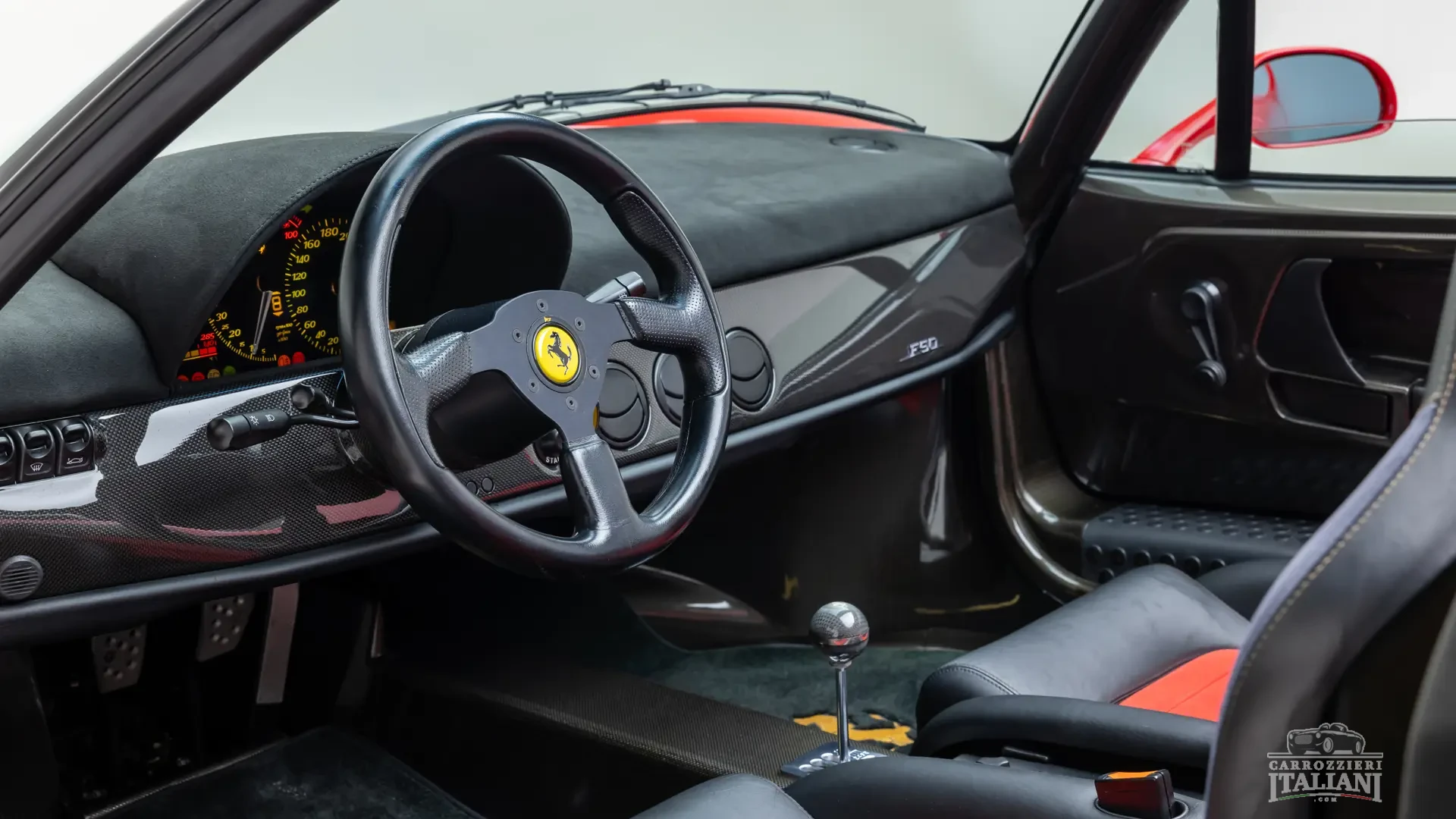
That may sound blunt, but it reflects the nature of such a car. The F50 was not a sedan, nor a luxury GT whose exterior had to negotiate with luggage capacity, rear passengers or daily usability. It was a two-seat Ferrari built around its engine, structure, aerodynamics and cockpit. The interior was important, but it did not generate the exterior form in the same way the mechanical architecture did.
The real shaping forces were the package, the air, the cooling and the need to express the Formula One idea.
Seeing the Final Car
After leaving Pininfarina in 1990, Camardella was no longer present for the long development that followed.
In 1993 he joined Lancia as head of exterior design, with interim responsibility for interiors. Enrico Fumia, who had also left Pininfarina and had become design director at Lancia, reportedly told him about the difficulties surrounding the F50’s continuing development. But hearing about it was one thing. Seeing the finished car was another.
“When I saw the car in 1995,” Camardella says, “reality exceeded imagination.”
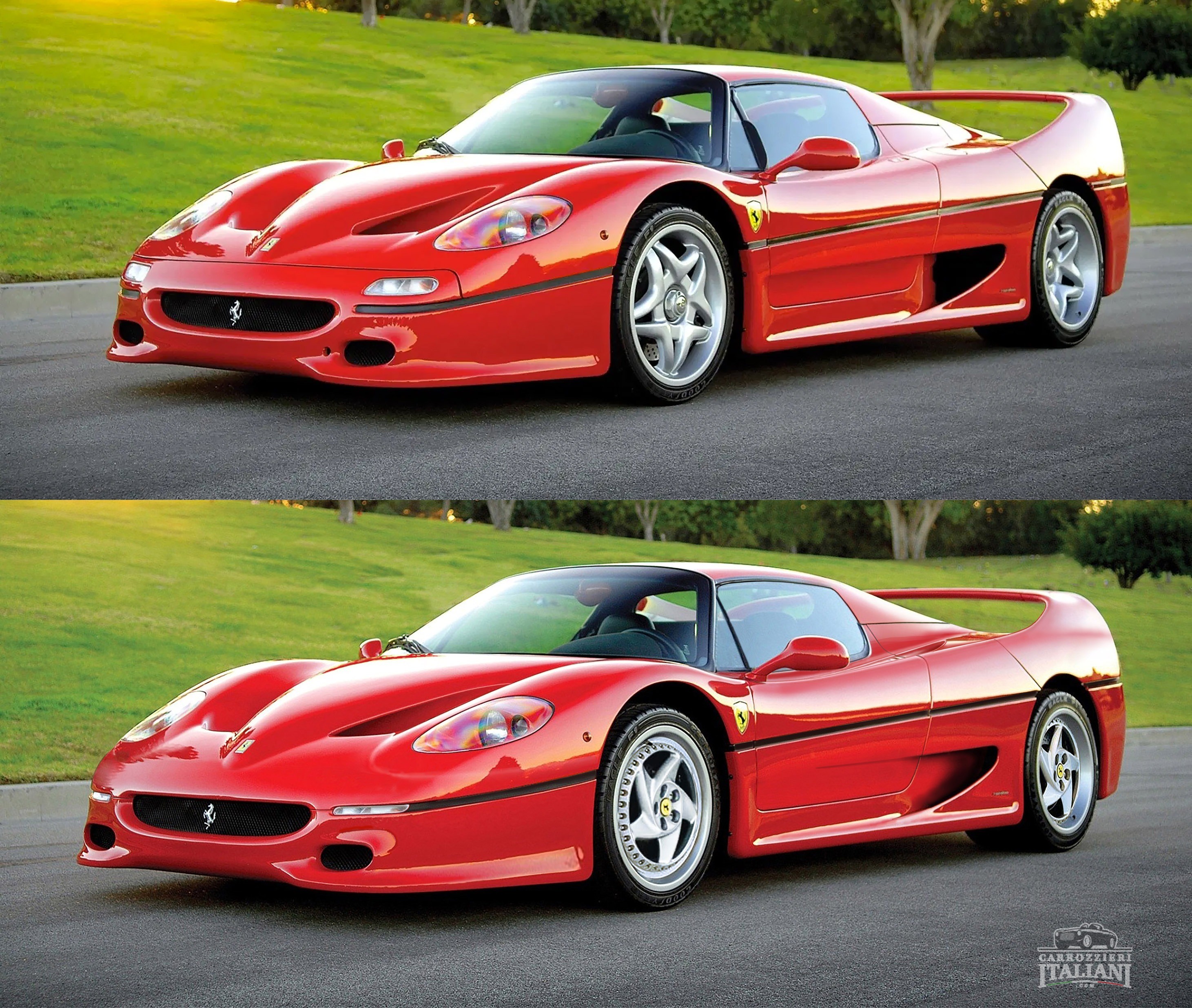
The continuous rethinking, the repeated removal and reintroduction of elements, the shifting of lines and surfaces had produced, in his view, a car similar to what had been intended, but not the same. The fundamental themes were still present, but altered. The lines had moved. The forms no longer aligned as planned. The volumes had lost part of their original harmony.
He describes the final result as “overall disharmonious and at times awkward.”
This is perhaps the hardest part of the story, because the F50 we know is still a spectacular car. It is low, dramatic, rare and technically fascinating. But Camardella’s criticism is not the reaction of an outsider judging a finished object. It is the reaction of the designer who remembers the first structure of the idea and sees where it changed.
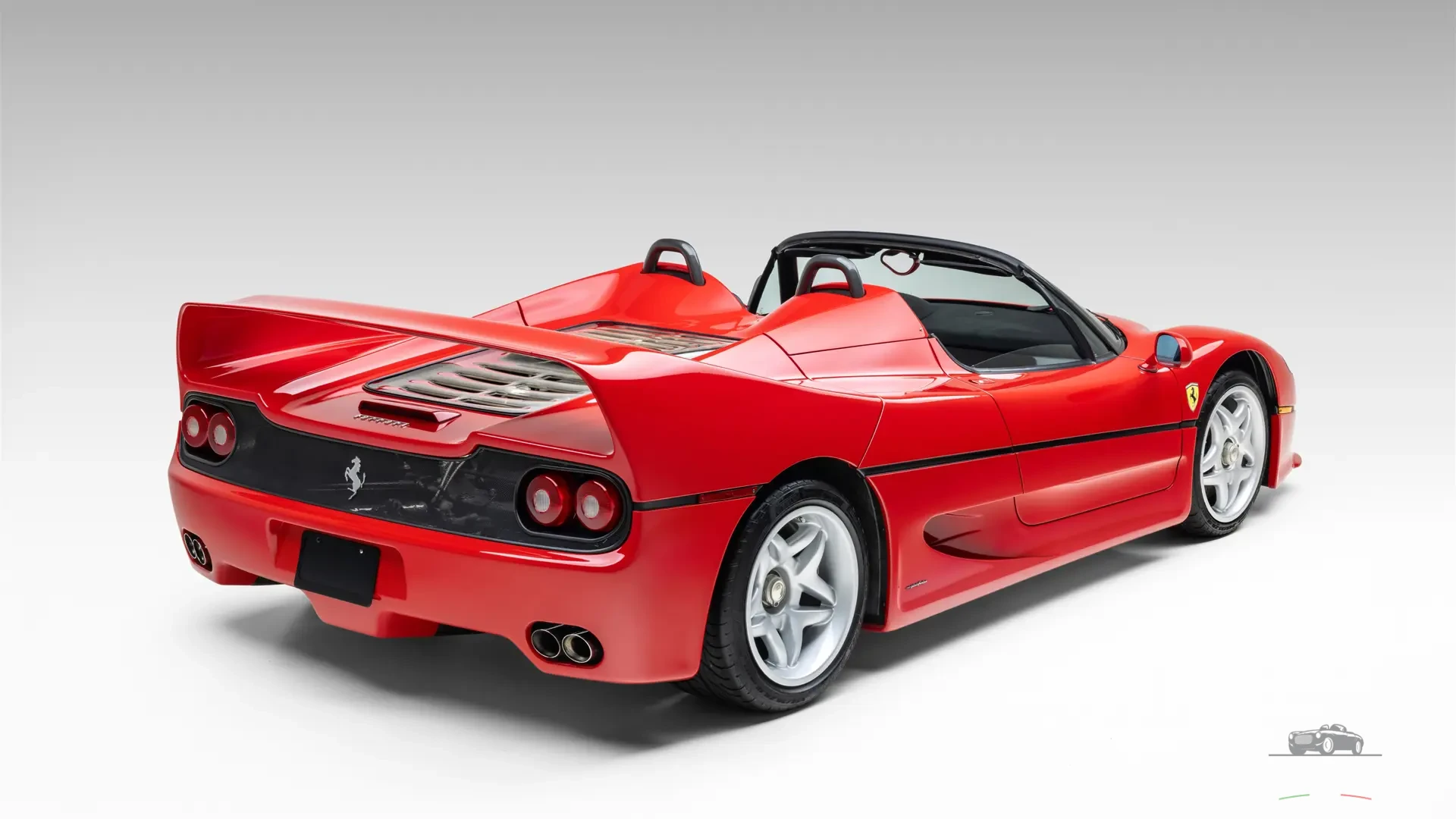
He does not speak in terms of one favourite detail or one failed detail. For him, the car must be judged as a whole. “I cannot think in terms of a single detail,” he says. “For me everything contributes and belongs to the whole.”
That is why the final F50 disappointed him. In his eyes, every part had been affected by the loss of coherence.
“A Missed Opportunity”
When asked what phrase he would attach to the F50 project, Camardella answers without hesitation: “Missed opportunity.”
He explains the reason carefully. Although he had defined the general lines in detail through the form plan, the initial form was distorted during development, partly because he left the company only four months into the process. The uncertainty of development led to constant changes and second thoughts. Even the simple act of reintroducing elements that had previously been removed shifted something at every stage: a line, a connection, an alignment.
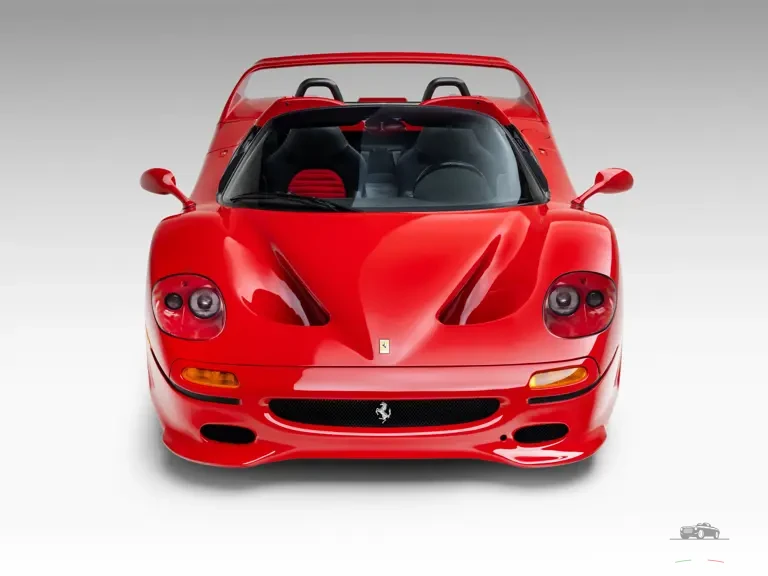
The result, he says, was a car that still presented the fundamental characteristics but mistranslated them. The final car, in his view, became aesthetically unresolved, to the point of being embarrassed when compared with some more harmonious and graceful competition cars.
His broader point is even more important. Camardella believes that the F50’s incomplete aesthetic resolution prevented it from establishing itself in the collective imagination on the same level as the F40.
“Technical solutions, however high-performing, are not enough by themselves,” he argues. “Without an adequate aesthetic interpretation, they do not become a product with the emotional charge needed to make an icon.”
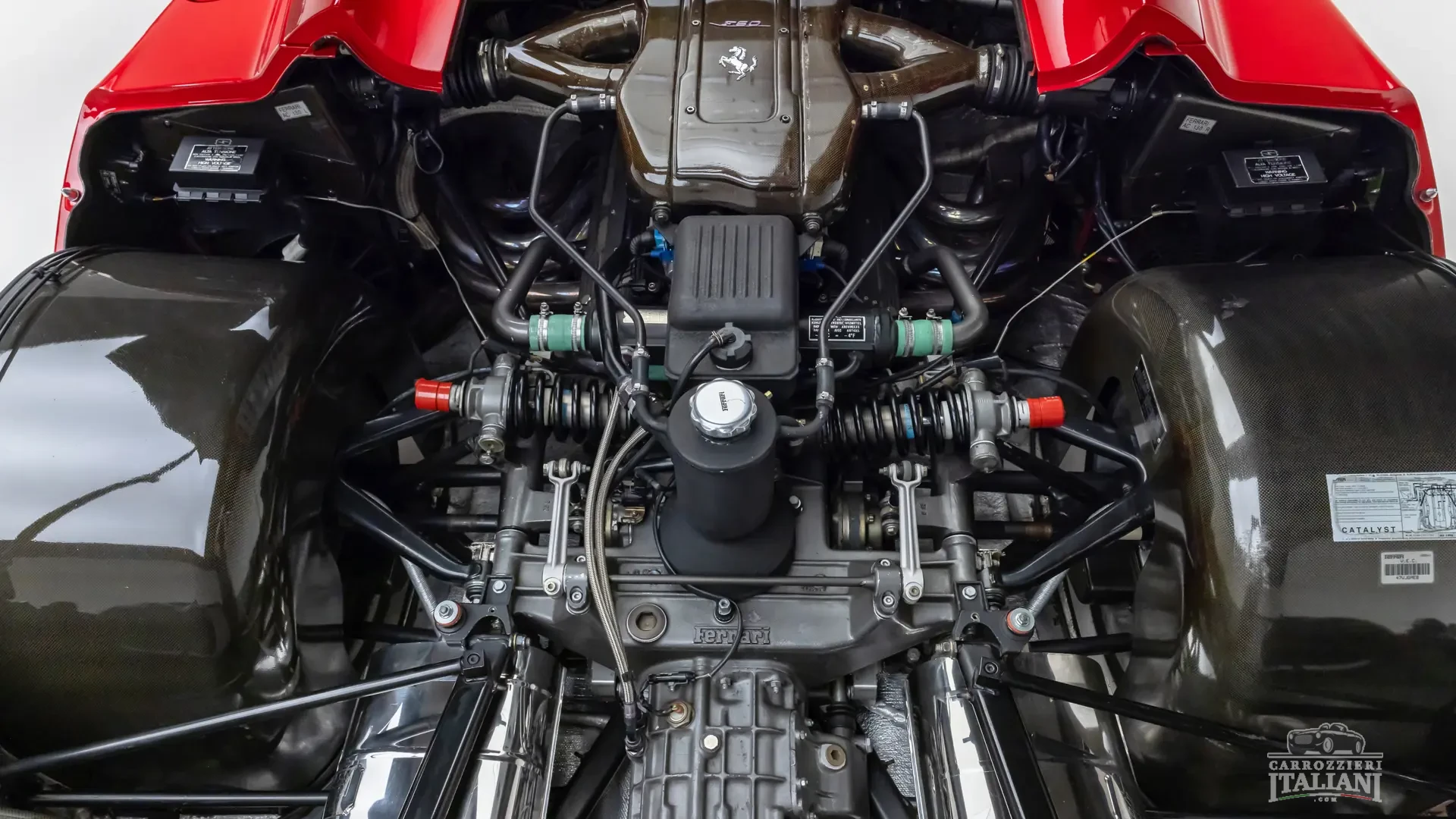
This is a severe judgment, but it also explains why the F50 remains such a fascinating Ferrari. Mechanically, it was purer than almost anything Ferrari had built for the road. A naturally aspirated V12, a manual gearbox, a carbon tub, Formula One-derived thinking and no turbocharging created a machine of rare integrity. Yet visually it divided enthusiasts from the beginning.
Some consider it one of the greatest Ferraris, even superior to the F40 for its mechanical purity and open experience. Others have long criticised its design, in some cases calling it one of the least beautiful Ferraris. Camardella notes this split with a touch of irony: perhaps the harshest critics never contested his authorship of it.
Then he adds the classic line: “Posterity will judge.”
The Authorship Problem
The F50 story also contains a more uncomfortable chapter: authorship.
Camardella says that at one point his signatures were removed from drawings. For a designer, this is not a minor issue. Even when a car is created within a company structure, the intellectual authorship of the design remains part of the individual’s work and identity.
He recalls that Enrico Fumia had experienced a similar situation and pursued it legally, obtaining a public correction and apology. Fumia advised him to do the same. Camardella chose not to.
“What could I, little David, do against the corporate Goliath?” he reflects. “And for what purpose? There were never any royalties to collect for the fruit of our intellect. As for glory…”
He concludes with an Italian expression: “Time is a gentleman.”
In the context of the F50, this phrase carries weight. The drawings, the form plans, the early digital models and the recollections now make it possible to reconstruct the design’s genesis more accurately. The question of authorship is not only about pride. It is about preserving the true history of how important cars were created.
Camardella also notes that the coloured form plan was prepared by illustrator Grazia Tribio, who had joined the design centre by management decision. He wondered whether this may have been intended to depersonalise the authorship. Fortunately, when the press office selected material for the traditional design story in Auto & Design, the choice was based on visual impact, and his drawings received significant space.
That visibility matters today. Without the drawings, the F50’s design story would be much harder to understand.
How Long It Took
The F50’s creative and development process was unusually long.
Camardella does not remember the exact time from first sketch to final presentation drawing, but he describes the normal rhythm of the period: one or two weeks for sketches, one week for final presentation drawings, and two or three weeks for the form plan. To reach a style freeze generally took between six months and one year, depending on the project.
For the F50, it took longer. The continuing second thoughts from the client extended the process considerably. From the first body lines to the production car, the total development took around five years. Camardella considered that enormous for the period.
This long gestation helps explain why the production car moved so far from the initial idea. A design can survive a few changes if its central logic remains protected. But over five years, with repeated decisions, reversals and refinements, the original balance can be diluted.
The final form of the F50 still follows the overall direction established by Camardella, but the relationship between its individual elements changed. For him, that was enough to compromise the final result, because the harmony of the original volumes was lost, even within the context of an extreme sports car
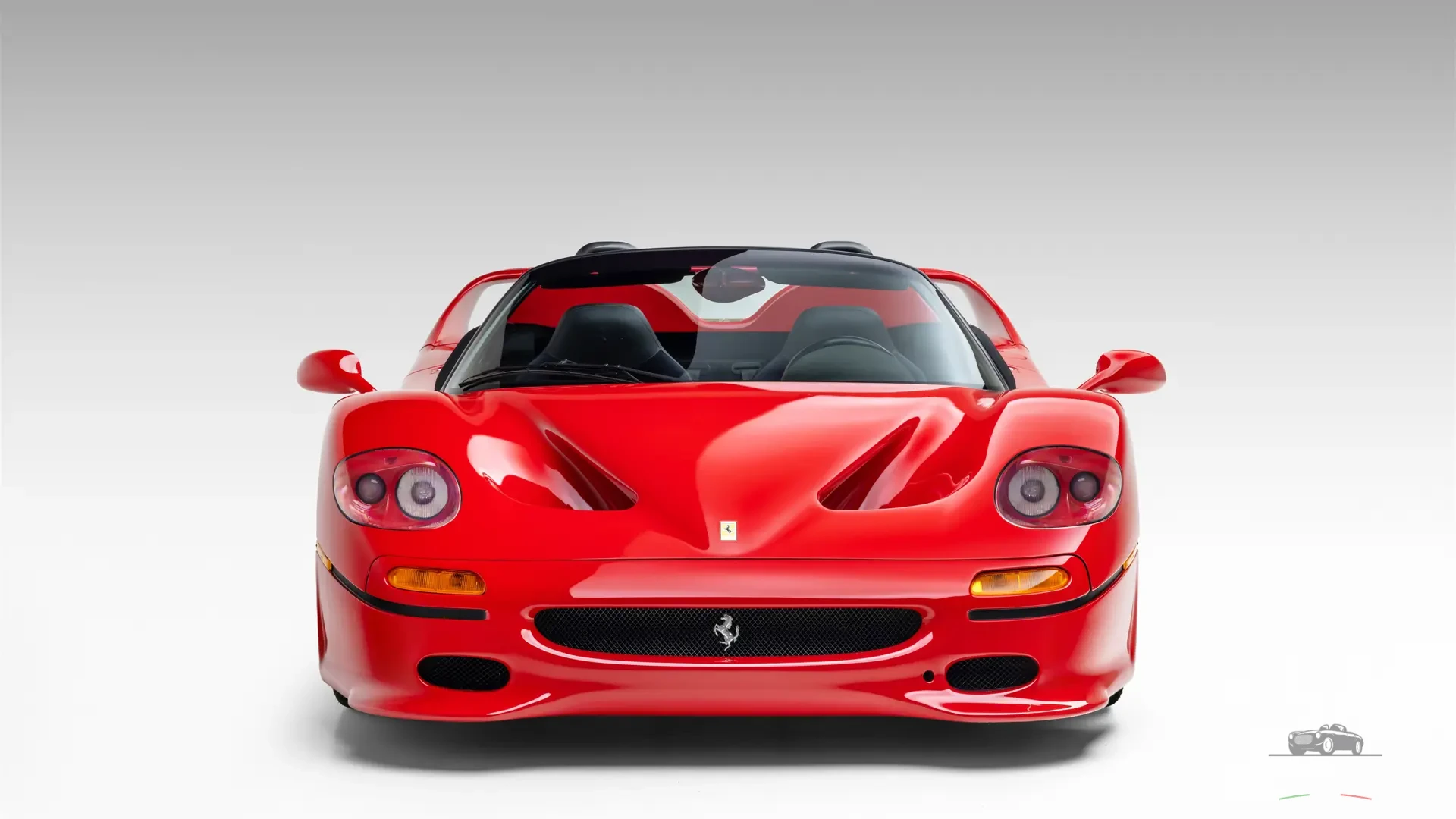
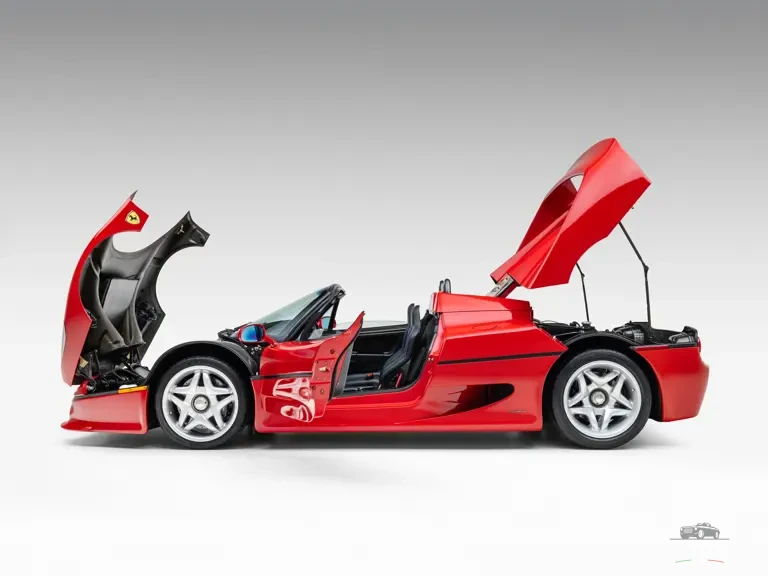
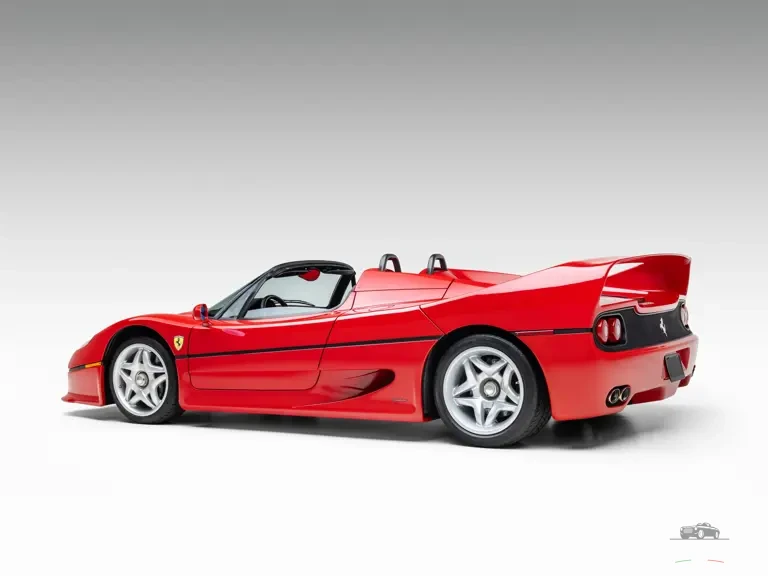
When the side profile of the production car is superimposed on the original rendering, the two correspond almost perfectly, even in the perimeter cut that was first removed and later reinstated. The main exception is the awkward swelling of the front bonnet, which makes it look more like a folded trunk than the nose of a Formula One car. The F1-inspired central body became less distinct, leaving only the pointed nose clearly visible, while the broad front fenders were blended too heavily into the horizontal front surface. The open-and-closed duality was resolved with an oddly right-angled cut, and the sculpting along the flanks was almost completely flattened.
Nevertheless, the F50 remains a car conceived by Camardella. This is consistent with a widely shared view among designers and has recently been reaffirmed by his senior colleague Diego Ottina: “Authorship belongs to the designer of the selected rendering who then completed the 1:5 scale form plan.” In Ottina’s view, later alterations made by others are interventions, not a basis for claiming authorship: “Two details do not determine paternity. When there is a blank sheet, everyone is silent; once there is a drawing, everyone suddenly has ideas.” Camardella adds, with some irony: perhaps some had far too many.
The Car Ferrari Sold Before It Built
Commercially, the F50 achieved what Ferrari needed.
The planned production of 349 examples was sold in a very short time, even before production. Camardella considers it a success in relation to the projected numbers, without entering into the familiar debate about whether the limited run underestimated demand. The restriction of supply helped create the intense desirability that surrounds the car, though he also notes that it triggered a phenomenon of thefts on commission, with legal aftermaths that continued for years.
The F50 was therefore successful as a limited Ferrari object. It was rare, technically important and immediately spoken for by collectors. But commercial success and cultural impact are not the same thing.
The F40 became an icon almost overnight. The F50 followed a more complicated path. It was admired, criticised, misunderstood, rediscovered and gradually reassessed by a new generation of enthusiasts. Today, its reputation is stronger than it was for many years, partly because the modern automotive world has made its analogue purity seem even more precious. Perhaps tellingly, it is also the only one whose authorship has never been claimed by anyone else.
But the design debate has never disappeared. That, for Camardella, is the sign of the missed opportunity. The car had the ingredients to stand beside the F40 in the collective imagination. It had the racing engine, the carbon structure, the open cockpit, the manual gearbox and the anniversary narrative. What it lacked, in his eyes, was the final aesthetic precision that could have made all those elements unforgettable at first sight.
A Ferrari Between Eras
The F50 sits between worlds.
It belongs to the analogue Ferrari tradition, yet it introduced digital design processes. It was created by Pininfarina using hand drawings and form plans, yet it was translated into early CAD mathematics and milled as a scale model. It carried Formula One engineering ideas, yet it still had the emotional ambiguity of a coachbuilt Ferrari shaped by human judgment.
It was not as raw as the F40, not as digitally mature as the Enzo, not as formally extreme as LaFerrari. It stands between them, and that may explain why it has always been harder to categorise.
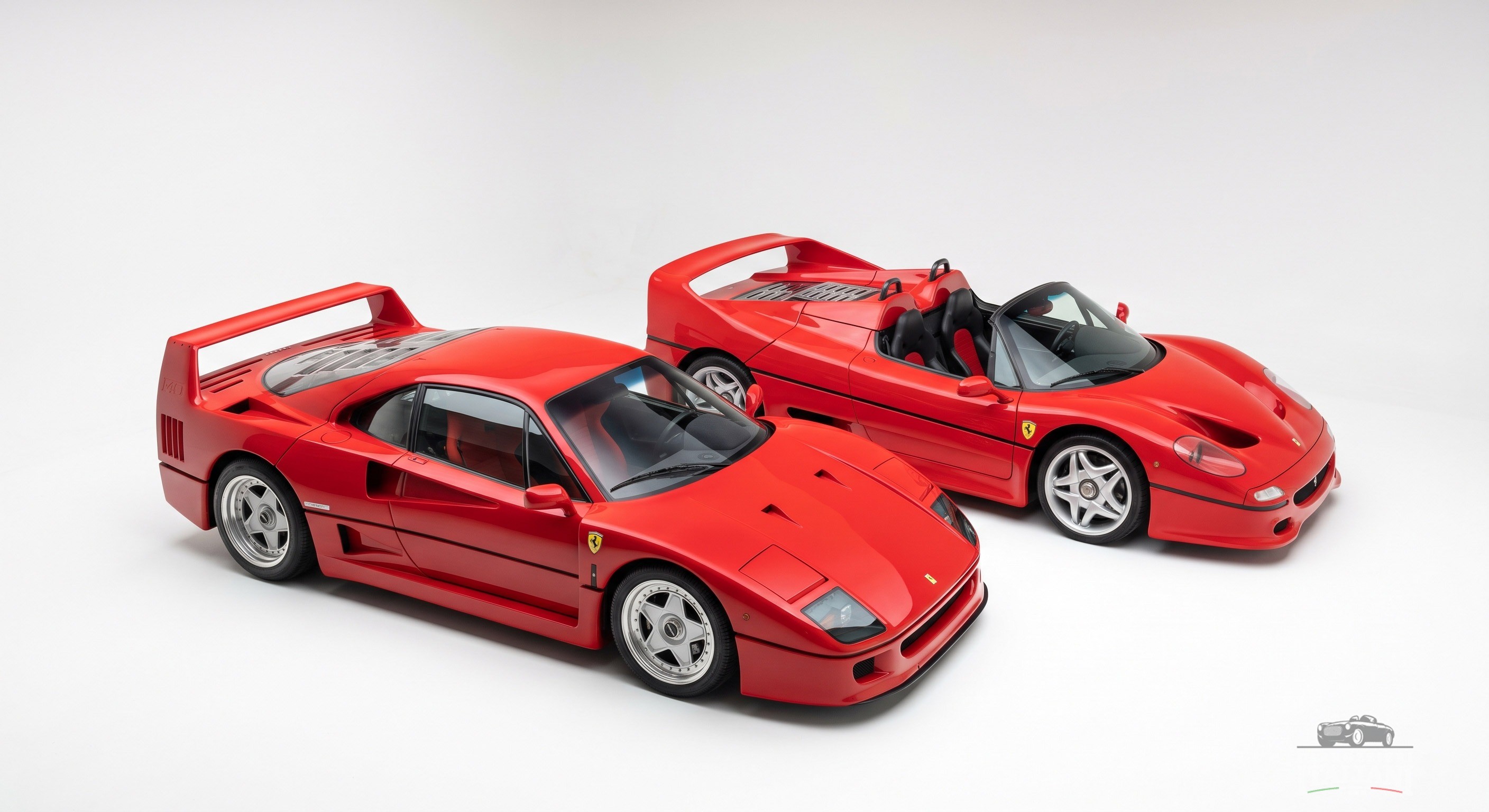
Camardella believes the F50 established an aesthetic precedent. The idea of incorporating a Formula One form into the front and general body architecture was later developed by Ferrari itself, especially with the Enzo and LaFerrari. More broadly, the concept of making the race car visibly emerge within the road car was taken up, with varying success, by many manufacturers.
In this sense, even the F50’s unresolved nature did not prevent it from influencing what came after. Once a formal invention appears, Camardella says, it becomes “heritage of humanity.” Designers see it, absorb it, transform it and use it again.
That may be one of the F50’s most important legacies. Its own final form may have divided opinion, but some of its founding ideas helped define the later hypercar language.
The Designer Who Never Drove It
There is one final irony in the story.
Camardella never drove the F50. In fact, he never drove the F40, the F50 or the Mythos. At Pininfarina, Ferrari designers were not allowed to drive the cars they were shaping. At most, they might be given a short, slow ride in a segment-D car around the internal track surrounding the Cambiano building.
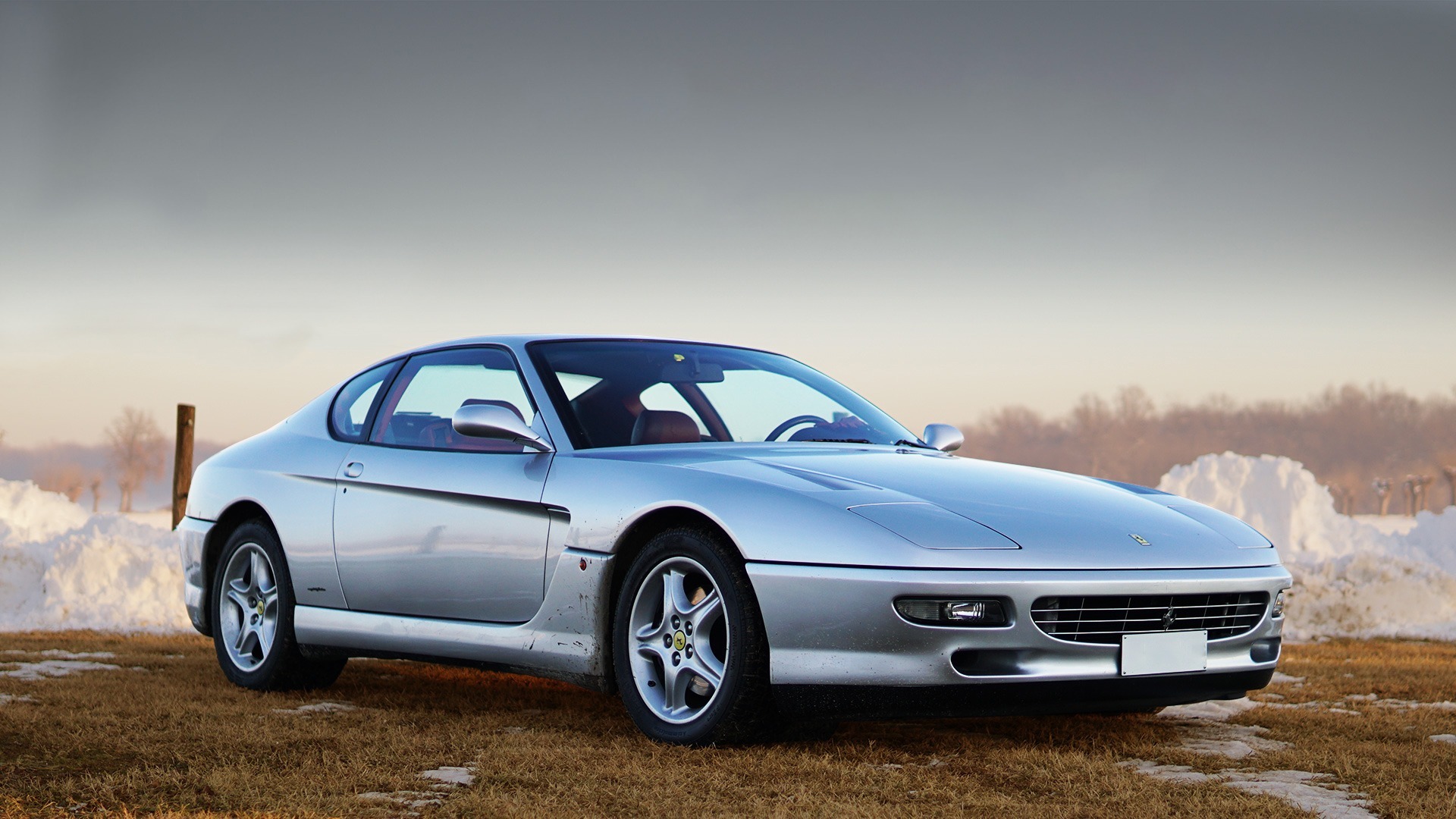
Only later, thanks to friends, did he drive cars such as the 456 GT and the 512 TR.
For a designer, this distance between creation and experience is striking. He could draw the body, interpret the technical package, imagine the air moving through the surfaces, and help define one of Ferrari’s most advanced road cars. But he could not experience the machine as a driver.
Perhaps that also belongs to the nature of the F50 story. It was a car full of proximity and distance: close to Formula One, yet still a road car; born from Pininfarina, yet developed beyond Camardella’s direct control; designed by hand, yet transferred into digital space; sold as a Ferrari icon, yet debated more fiercely than its predecessor.
The Other F50
The F50 we know is one of the most fascinating Ferraris ever made. It may also be one of the most misunderstood.
To see it only as the successor to the F40 is to miss the point. The F50 was not trying to be another F40. It was trying to translate Formula One into a road-going Ferrari at a moment when both engineering and design were changing rapidly. It was an anniversary car, a technical experiment, a design transition and a symbolic bridge between the old Pininfarina world and the new digital Ferrari era.
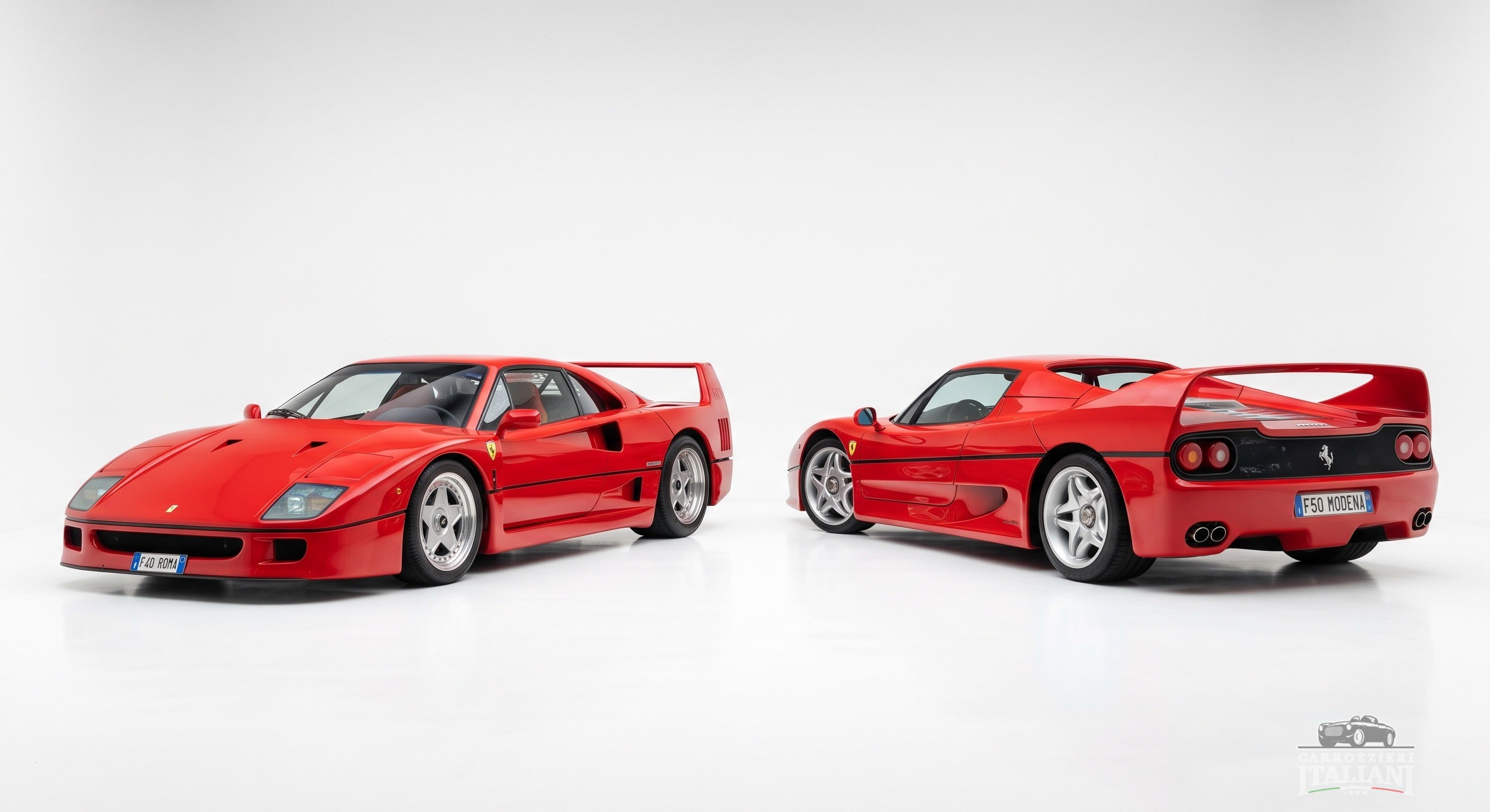
Through Pietro Camardella’s recollections, however, another F50 appears.
This other F50 is sharper in intention. It is built around the plan-view silhouette of the F641. It uses its air openings as sculptural generators. It treats the front and rear wings as part of a Formula One image absorbed into the body. It explores a coherent open/closed transformation with a removable hardtop. It considers even the rear body as a removable construction element to serve the load-bearing engine. It is not an assembly of details, but a system.
That car never reached production exactly as imagined.
The production F50 remains extraordinary, and perhaps time has been kinder to it than many expected. Its mechanical purity now seems almost impossible to repeat. Its rarity has made it sacred to collectors. Its naturally aspirated V12 and manual gearbox belong to a lost world.
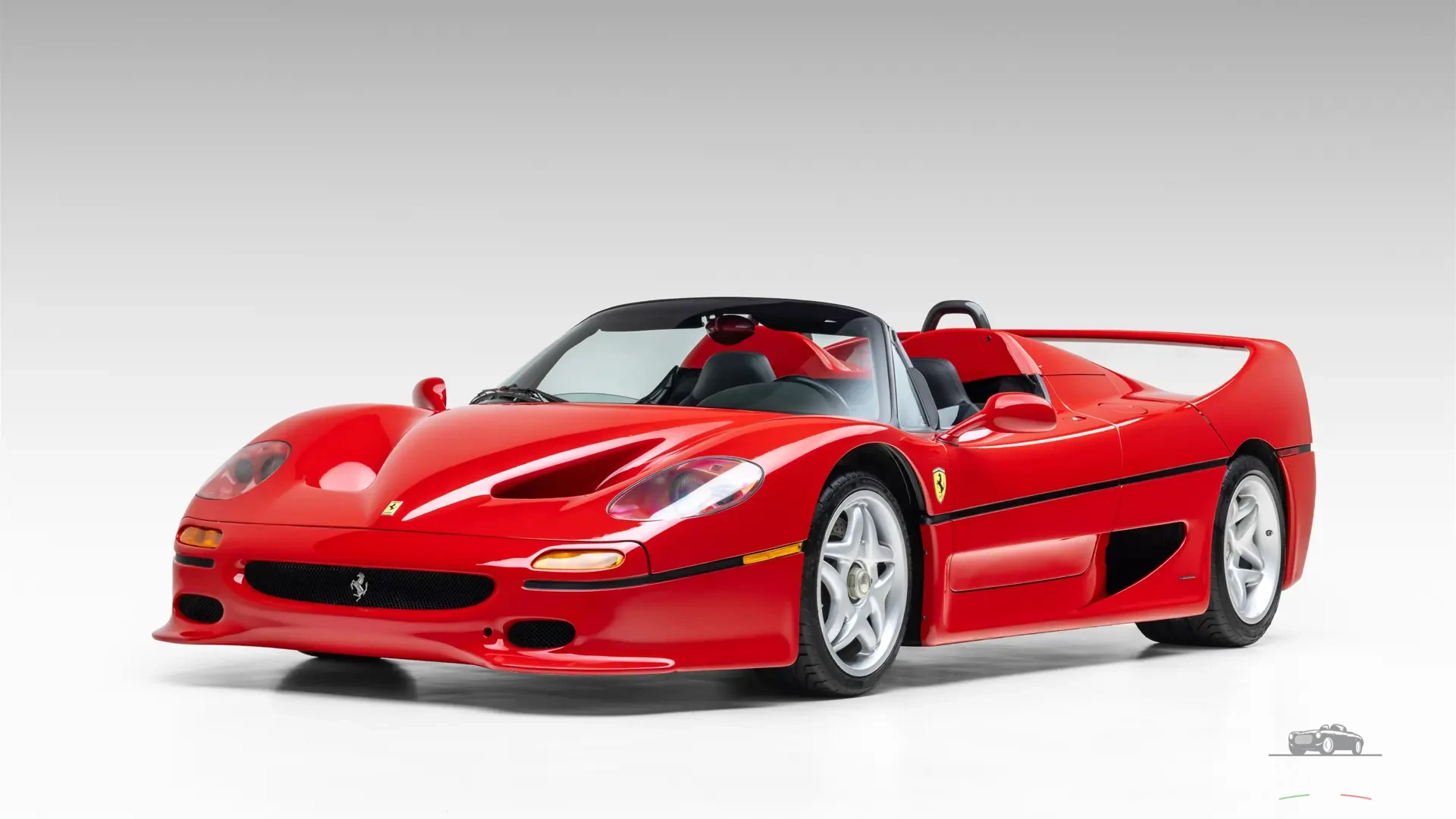
But behind it there was a more complex design story, and perhaps a more coherent original vision.
For Camardella, the judgment remains severe: “a missed opportunity.” Yet that disappointment does not diminish the importance of the F50. On the contrary, it makes the car more interesting. It shows that even at Ferrari, even with Pininfarina, even with Formula One technology and an anniversary brief, the path from concept to icon is fragile.
The F50 was not simply drawn. It was fought over, modified, digitised, tested, reworked and transformed. It carries all of that in its shape.
And that is why, thirty years later, it still deserves to be studied not only as a Ferrari supercar, but as one of the most revealing design stories of the modern Maranello era.

ABOUT THE AUTHOR
Andreas Scheidl
Italian classic car enthusiast with German roots. Renowned as a respected figure in the classic car community, he serves as a jury member at various international concours d'elegance, including the Classic Gala Schwetzingen and Mantova. As a content creator, Andreas passionately shares his profound knowledge and appreciation for vintage automobiles. His heart beats for cars designed by Giovanni Michelotti, showcasing his discerning taste and dedication to preserving the timeless elegance of automotive history.
More stories by Andreas Scheidl ↗CONTINUE READING
Posts You Might Like

A Central Driving Position, a Rear-Mounted V8. Was This Really a Lancia?
In 1948, visitors to the Turin Motor Show could see an unusual Lancia on the stand of Carrozzeria Ghia. It was a large two-door coupé with a two-litre V8 mounted behind the…
Read story
Fioravanti F100: The Ferrari He Was Allowed to Imagine
Enzo Ferrari’s centenary, Leonardo Fioravanti’s independent studio and a supercar that explored air brakes, steel wheels and a new way of driving—without ever wearing the Cavallino.
Read story
Michelotti Shellette: When the Fiat 850 Became a Yacht
The yacht designer, the Turin stylist and the tiny coachbuilt car that crossed between the quay, the royal holiday house and the auction room. Some automobiles were conceived for the open road,…
Read story
Maserati A6 1500: A New Road for the Trident
When the doors of the Geneva Motor Show opened in March 1947, Maserati was a name that required little introduction to anyone who followed motor racing. What it did not yet possess…
Read story
THE CONVERSATION
Comments 0
Share a memory, a period photograph or a documented detail about this story.