
The Maserati Chubasco: the cyber punk concept car designed by Gandini
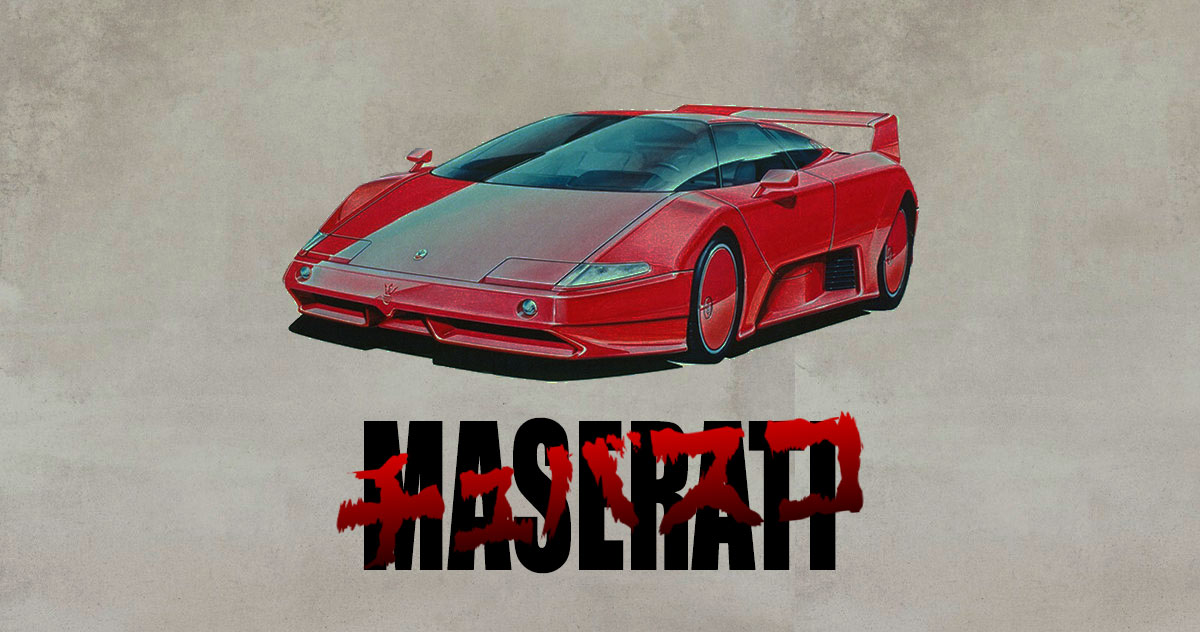
There are concept cars that exist merely to fill a motor-show stand, and then there are the ones that seem to carry the weight of an entire alternate future. The Maserati Chubasco belongs squarely to the second category. It was not simply a design exercise, nor just another dramatic wedge from the late Eighties and early Nineties. It was Maserati’s glimpse of what a true Trident supercar could have been at the dawn of a new decade: mid-engined, turbocharged, deeply technical, and wrapped in the sort of bodywork that looked as though it had been drawn somewhere between Turin and Neo-Tokyo.
Unveiled in December 1990 under Alejandro de Tomaso’s management, the Chubasco appeared alongside the Maserati Shamal and the Maserati Racing. Both of those cars had clear commercial roles. The Shamal was the flagship bruiser, a front-engined V8 GT with all the swagger Maserati could summon. The Racing sharpened the Biturbo formula into something more focused. But the Chubasco was something else entirely. It did not seem to belong to the same showroom, or even the same decade.
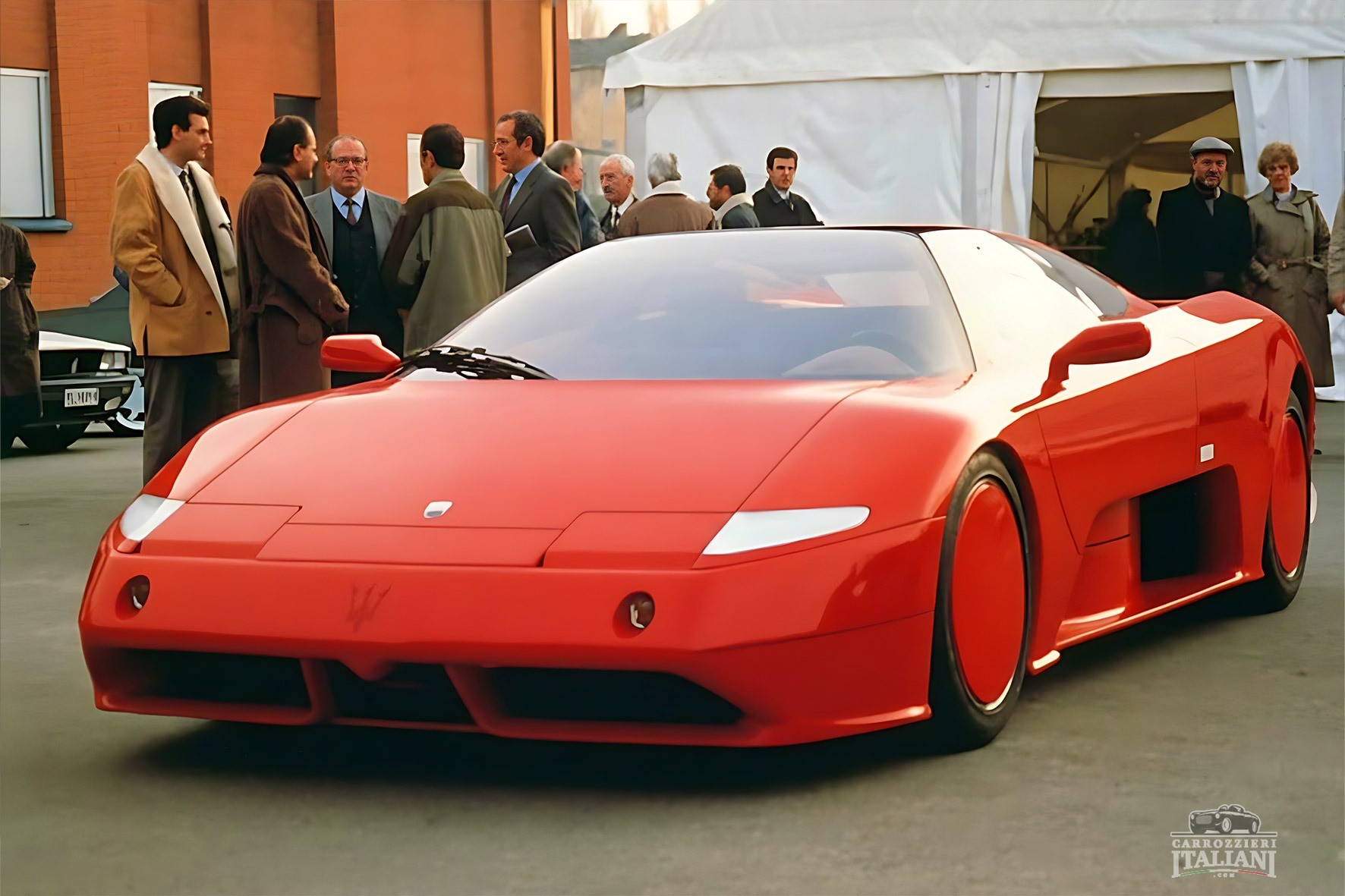
The first impression was pure theatre. Low, broad and impossibly angular, it had the sort of presence that made everything else around it look faintly apologetic. More than almost any Italian concept of the period, it carried the unmistakable visual energy of Akira. It was cyberpunk before the word had been drained of meaning by marketing departments: severe edges, exposed function, dramatic air channels, and the sense that the whole machine had been designed for a neon-lit expressway at midnight rather than a polite concours lawn.
🔗 Read more: The Maserati MC12: Unraveling the Legacy
That cinematic comparison is not merely aesthetic indulgence. The Chubasco genuinely looked like it had driven straight out of an animated dystopia. The body seemed shaped by speed, pressure, heat and menace. Its surfaces did not flow in the sensual Italian way of a Miura or even a Testarossa. Instead, they cut and channelled, creating a form that felt more architectural than sculptural. It was a car that wore its engineering on the outside.
And at the centre of all this stood Marcello Gandini.
Gandini’s Cyberpunk Masterpiece
By the time the Chubasco emerged, Gandini had already secured his place in automotive history. He had created some of the most iconic shapes ever to leave a drawing board, from the Lamborghini Miura to the Lamborghini Countach and the Lancia Stratos. Yet the Chubasco feels different even within that extraordinary portfolio.
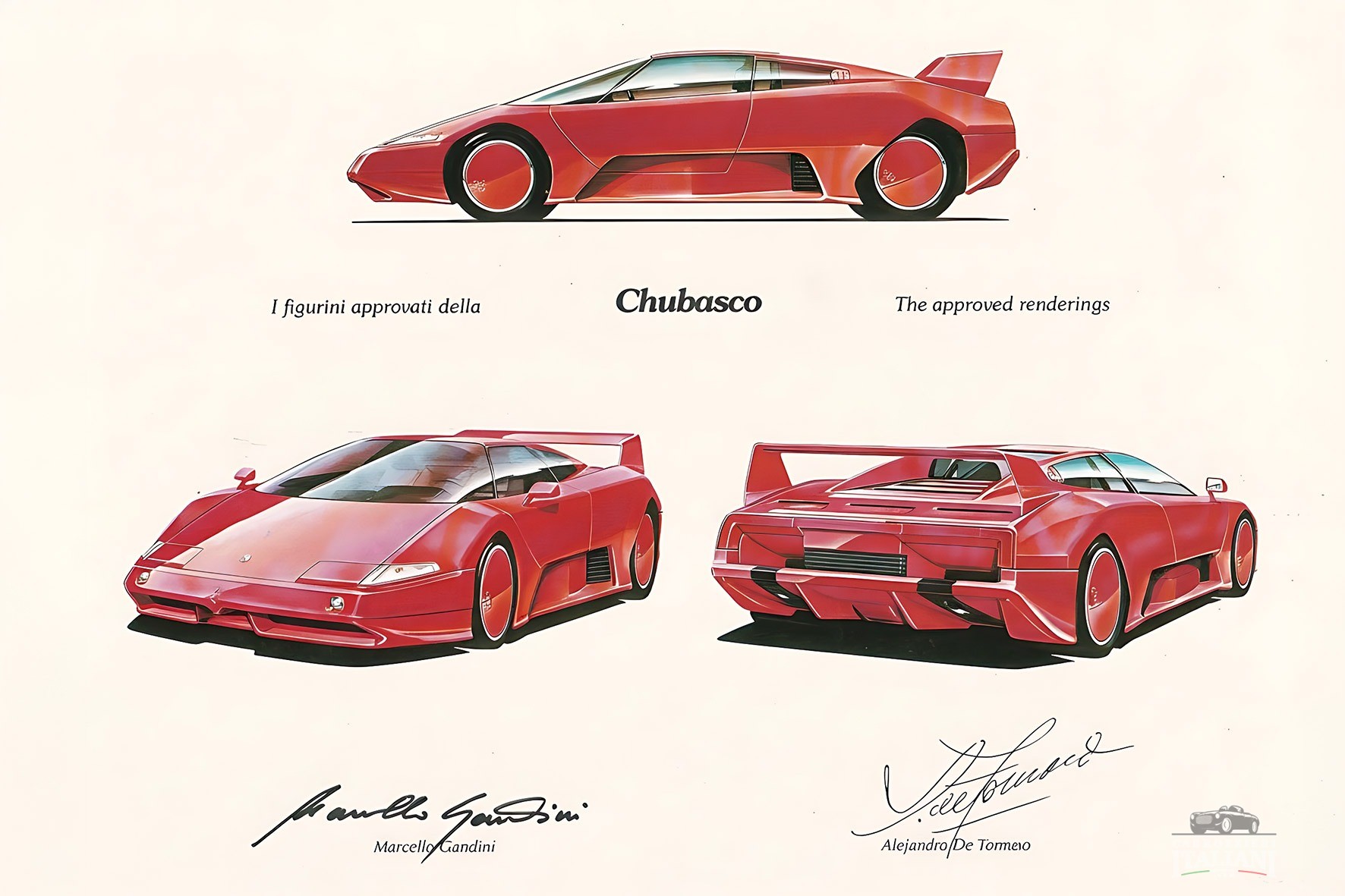
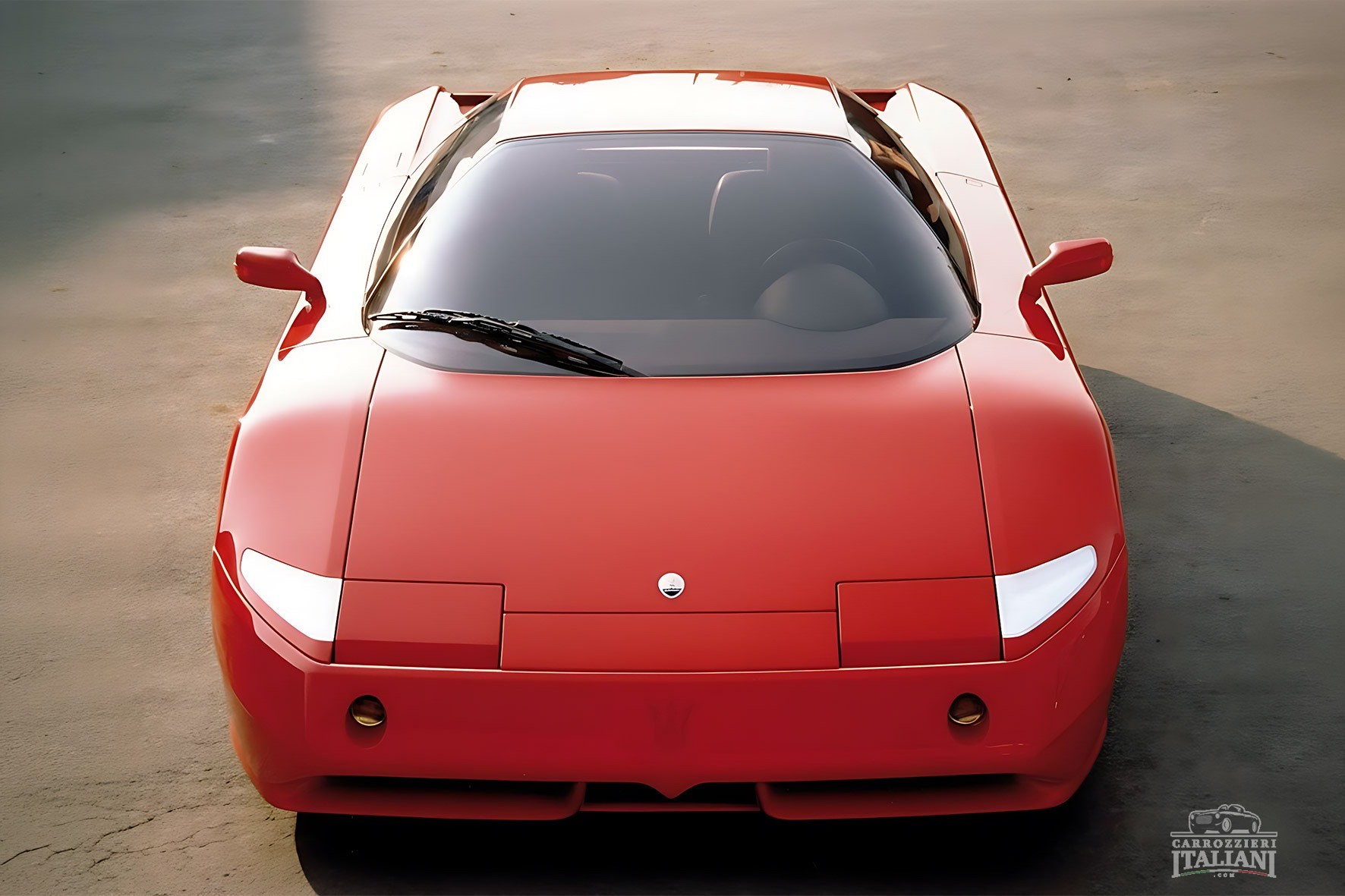
Where earlier Gandini cars often balanced aggression with sensuality, the Chubasco is almost brutally functional. Every surface appears to have a task. The front is dominated by three main intakes — one central, two lateral — all carved with aerodynamic purpose. Along the sides, deep channels guide airflow toward the rear-mounted radiators and engine compartment. The rear itself is a layered composition of vents, openings and aerodynamic extractors that seem less like styling flourishes and more like components of a pressure-management system.
This is where the Akira comparison becomes almost unavoidable. The Chubasco does not simply resemble a car from that universe; it shares the same design philosophy. Machines in Akira are not softened or romanticised. They look mechanical, aggressive and slightly dangerous, as though speed itself has become part of the bodywork. The Maserati channels exactly that feeling.
🔗 Read more: Marcello Gandini: The Man Who Designed the Future
Even the scissor doors, which on many concept cars exist mainly for applause, feel integral here. On a machine this low and tightly packaged, they make practical sense while amplifying the sense that this was a supercar with no interest in behaving politely. The targa roof only adds to the drama, with a removable panel that enhanced both usability and spectacle.
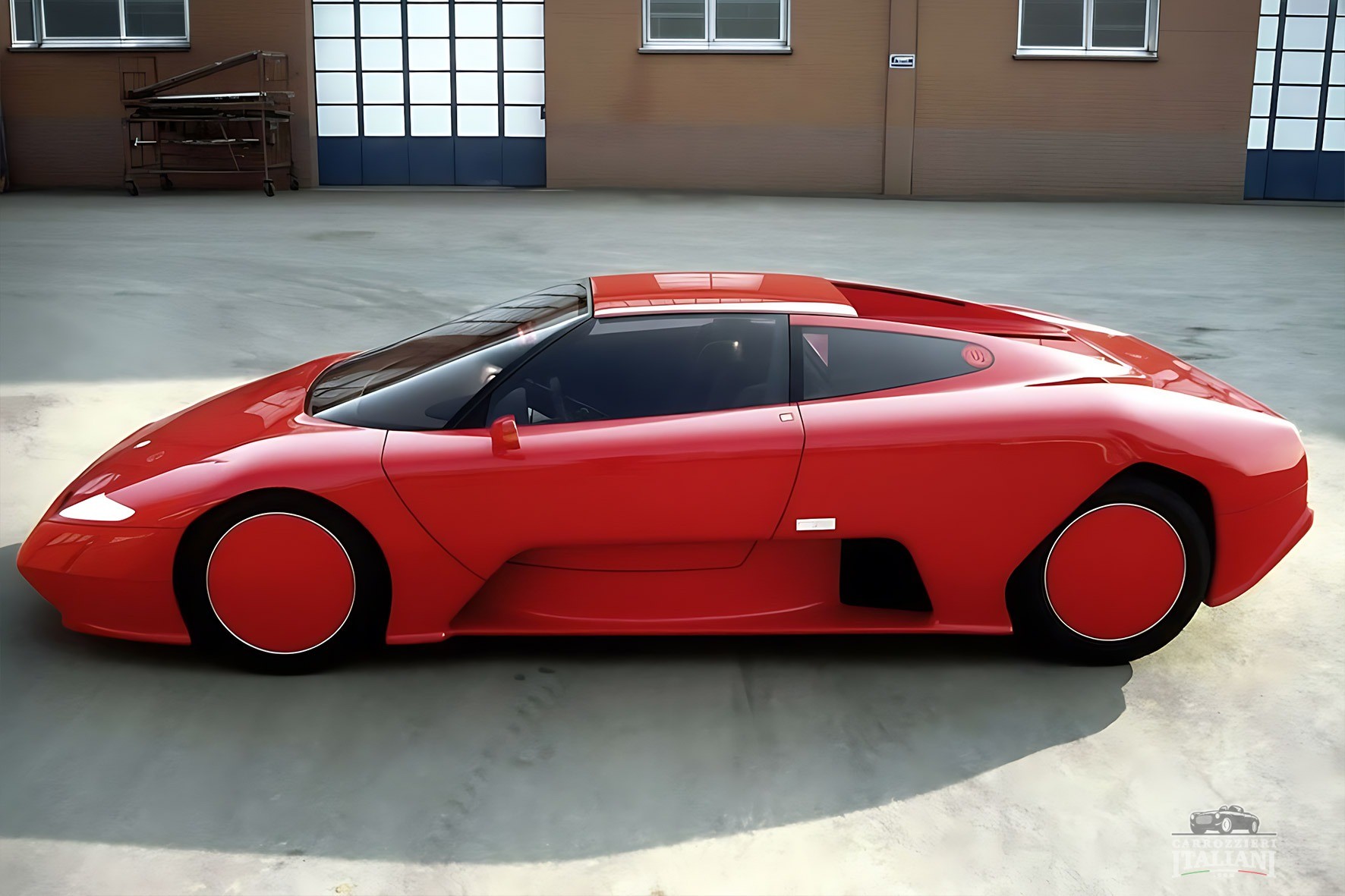
Yet what makes the design genuinely great is that it never becomes empty theatre. It remains believable. You can imagine it moving at speed, the air working through the body, the V8 howling behind the cabin, the entire shape doing exactly what it was designed to do.
Engineering Under the Neon
And that brings us to the truly maddening part: the Chubasco was not some hollow styling mock-up with no technical credibility. Beneath that cyberpunk skin was a genuinely serious engineering proposal.
The intended powertrain was Maserati’s 3.2-litre twin-turbocharged V8, the same 90-degree, quad-cam, 32-valve unit used in the Shamal. Mounted centrally behind the cabin, it gave the car the layout of a proper exotic, not merely a dressed-up GT. In period discussions, outputs around 430 horsepower were often associated with the project, which would have placed it firmly among the serious supercars of the early Nineties.
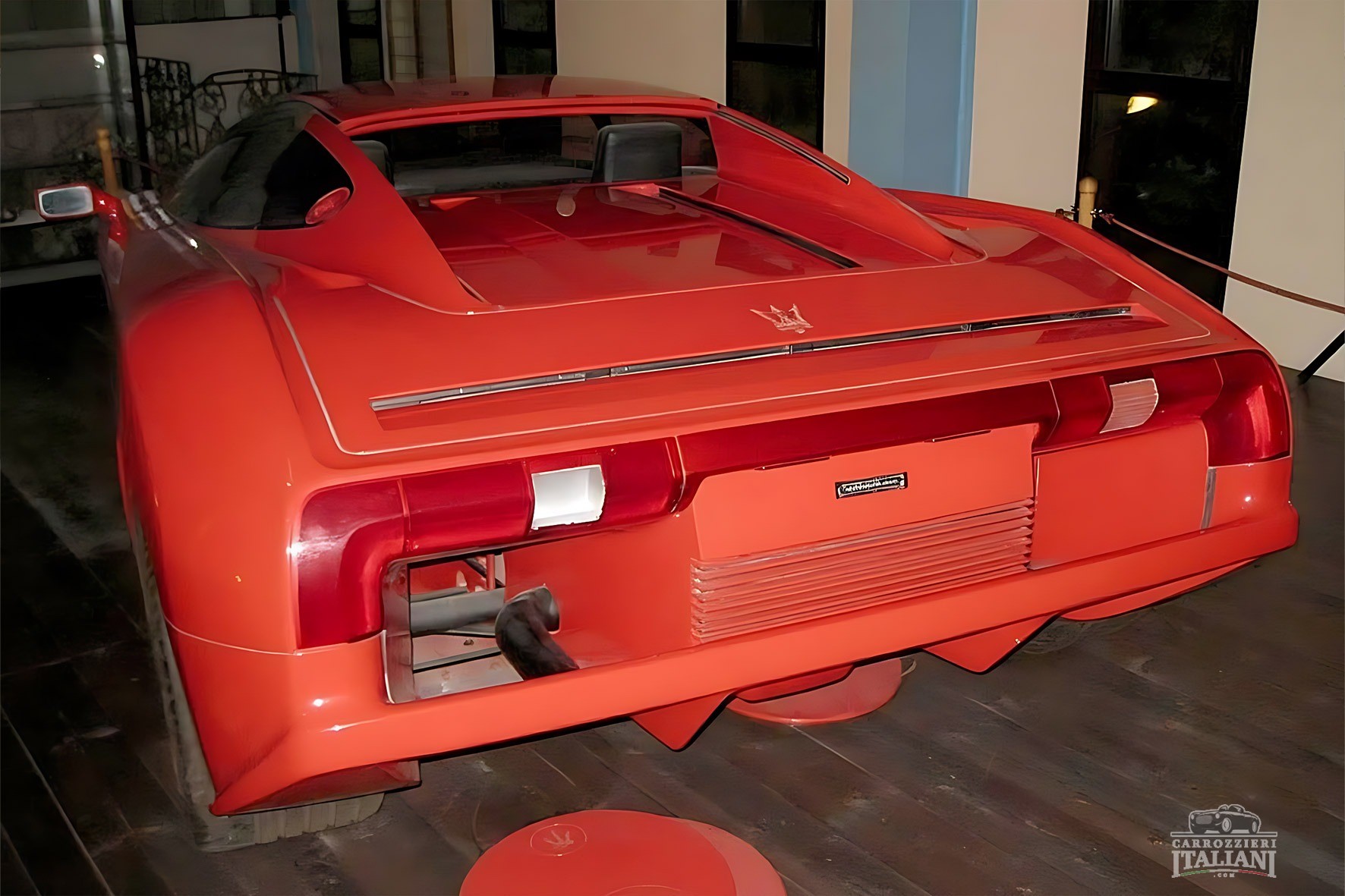
The chassis was equally ambitious. Maserati engineers developed a rigid central structure designed not only for stiffness but for airflow management. Cooling was critical in a mid-engined twin-turbo car, and the Chubasco’s layout was built around large cooling ducts feeding the engine, radiators, braking system and associated mechanical components.
The suspension setup pushed things even further. Push-rod suspension at the front and pull-rod at the rear were solutions drawn directly from motorsport. These were not decorative references to racing, but serious engineering choices that improved geometry, packaging and airflow.
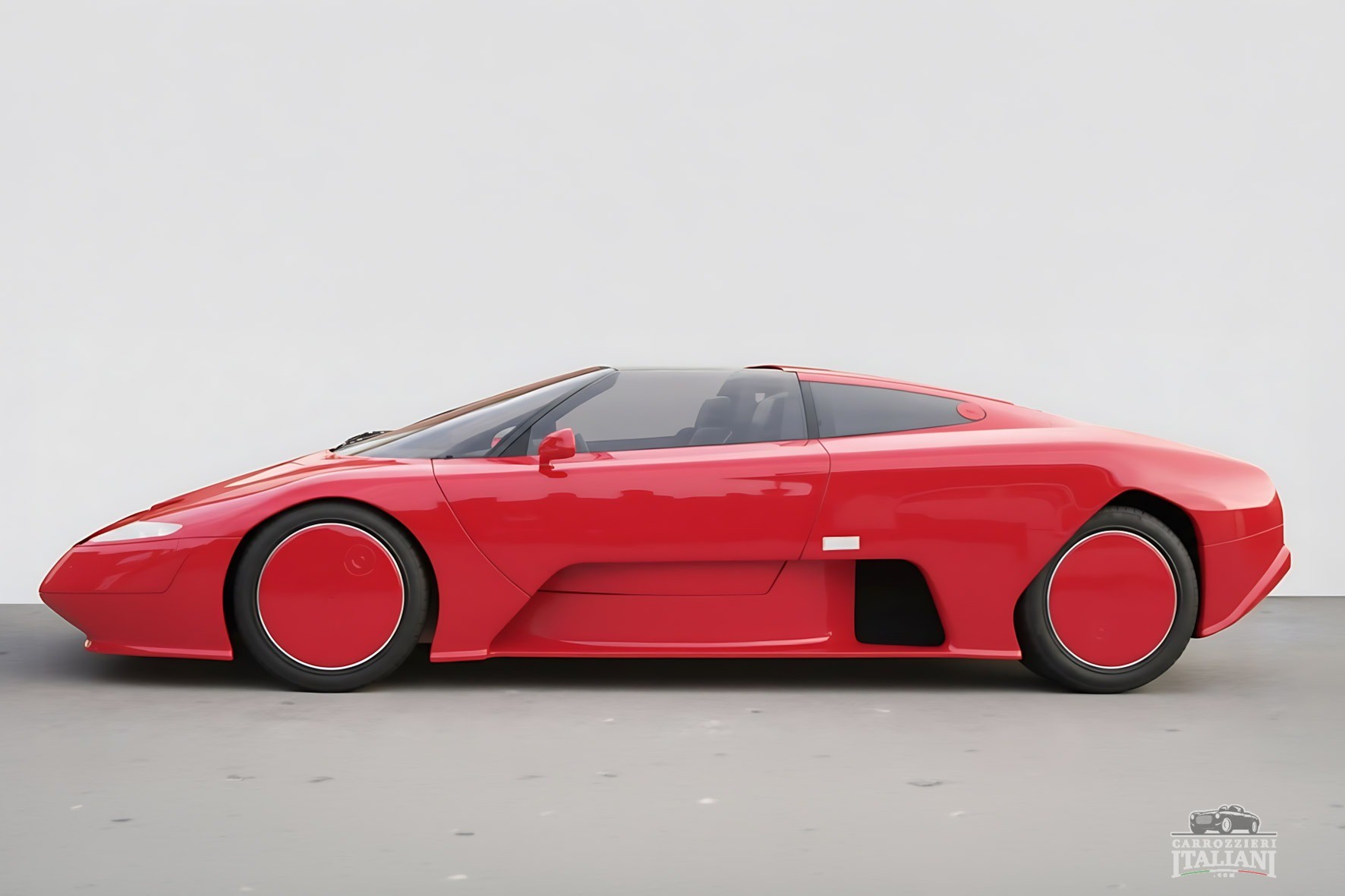
The flat underbody and Formula 1-style rear extractors were designed to generate ground effect, increasing downforce and stability without relying on oversized wings. In many ways, the Chubasco was thinking like a modern supercar years before such thinking became standard.
Perhaps most remarkably, Maserati also considered comfort and refinement. Oscillating supports separated the upper body structure from the lower mechanical platform, reducing vibration and noise within the cabin. This was a classic Maserati touch: even when imagining a cyberpunk supercar, the company still wanted a degree of grand-touring civility.
Why It Never Reached Production
Which raises the obvious question: why did Maserati never build it?
The most widely repeated explanation is cost, and that was certainly a major factor. Turning the Chubasco into a road-going production car would have required substantial investment in validation, crash testing, homologation, tooling and manufacturing development. For a company operating within the financial realities of the early Nineties, this was already a formidable challenge.
But there was another, far more political reason.
At the time, Maserati was under the wider industrial orbit that also included Ferrari, and the Chubasco’s positioning created an uncomfortable problem. A mid-engined Italian supercar from Maserati risked landing uncomfortably close to the Ferrari 348, Ferrari’s own contemporary V8 berlinetta.
That was not a rivalry anyone wanted.
🔗 Read more: The Ferrari Dino 308 GT4 : When Gandini Broke Maranello’s Rules
Allowing Maserati to launch a car that could potentially compete directly with the 348 would have created internal competition within the same corporate ecosystem, blurring the distinction between the two brands at a moment when Ferrari’s market position needed to remain clearly protected. The Chubasco was simply too close in concept, architecture and target customer.
In other words, it was not just too expensive.
It was too dangerous commercially.
The idea of a Maserati stealing attention — and potentially sales — from Ferrari’s mid-engined sports car was not something the group was prepared to encourage. As a result, the project was quietly shelved before reaching the production stage originally envisioned for 1992.
That decision gives the Chubasco its uniquely bittersweet place in Maserati history. It did not fail because the idea lacked merit. Quite the opposite. It was arguably too compelling for the internal hierarchy of the time.
Which leaves one question: had it reached production, would Maserati’s history look very different today?

ABOUT THE AUTHOR
Andreas Scheidl
Italian classic car enthusiast with German roots. Renowned as a respected figure in the classic car community, he serves as a jury member at various international concours d'elegance, including the Classic Gala Schwetzingen and Mantova. As a content creator, Andreas passionately shares his profound knowledge and appreciation for vintage automobiles. His heart beats for cars designed by Giovanni Michelotti, showcasing his discerning taste and dedication to preserving the timeless elegance of automotive history.
More stories by Andreas Scheidl ↗CONTINUE READING
Posts You Might Like
A Central Driving Position, a Rear-Mounted V8. Was This Really a Lancia?
In 1948, visitors to the Turin Motor Show could see an unusual Lancia on the stand of Carrozzeria Ghia. It was a large two-door coupé with a two-litre V8 mounted behind the…
Read story
Fioravanti F100: The Ferrari He Was Allowed to Imagine
Enzo Ferrari’s centenary, Leonardo Fioravanti’s independent studio and a supercar that explored air brakes, steel wheels and a new way of driving—without ever wearing the Cavallino.
Read story
Michelotti Shellette: When the Fiat 850 Became a Yacht
The yacht designer, the Turin stylist and the tiny coachbuilt car that crossed between the quay, the royal holiday house and the auction room. Some automobiles were conceived for the open road,…
Read story
Maserati A6 1500: A New Road for the Trident
When the doors of the Geneva Motor Show opened in March 1947, Maserati was a name that required little introduction to anyone who followed motor racing. What it did not yet possess…
Read story
THE CONVERSATION
Comments 0
Share a memory, a period photograph or a documented detail about this story.