
Fiat X1/9: The Untold Story of Bertone’s Mid-Engine Masterpiece
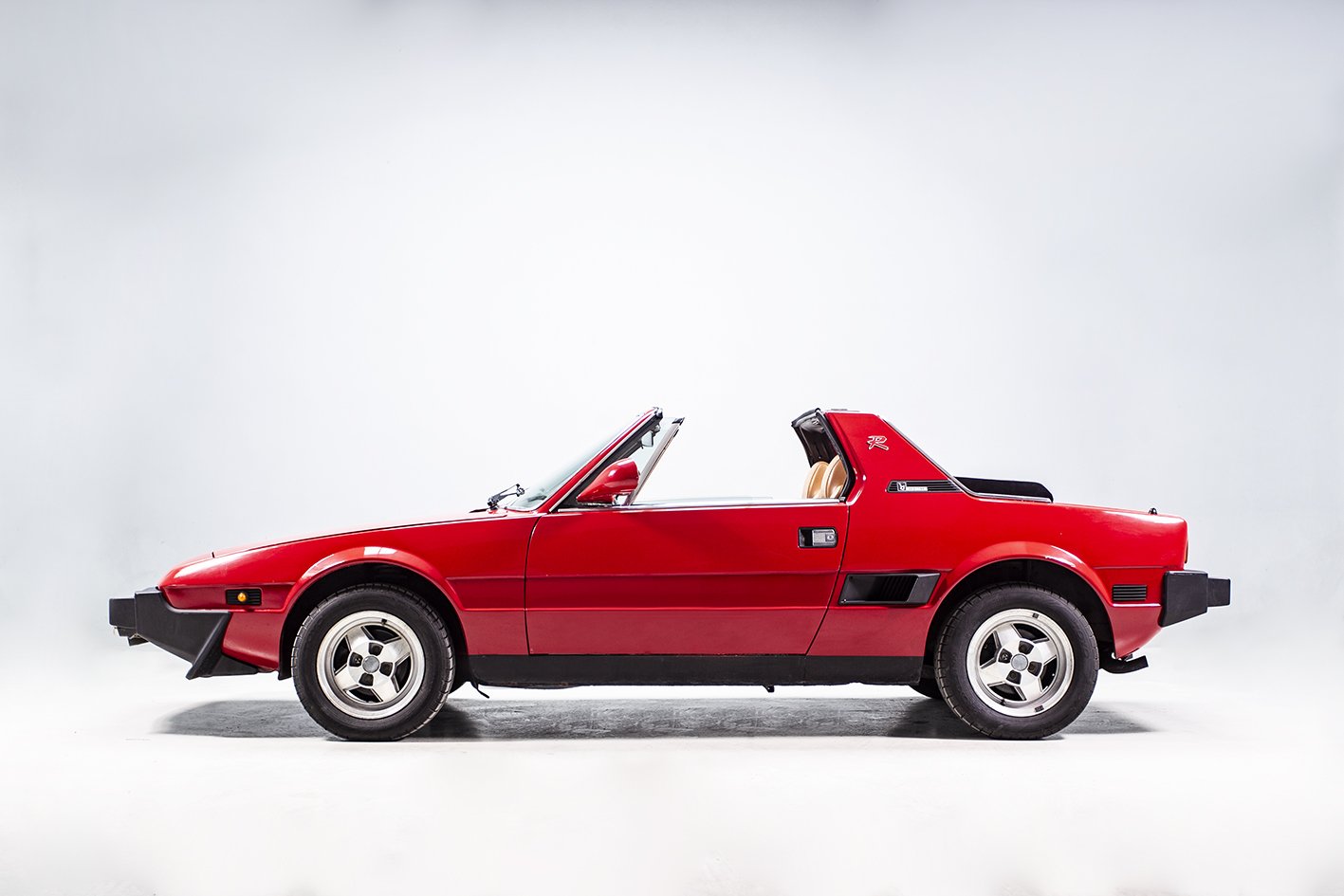
By the late 1960s, the air in Turin was thick with a spirit of revolution—at least in the automotive world. Nuccio Bertone, master coachbuilder, sniffed out an opportunity: why not bring the thrill of a mid-engine sports car to everyday drivers? In an era when mid-engine setups were the exclusive domain of supercars like the Lamborghini Miura, the idea sounded almost rebellious. But with Fiat’s backing, Bertone forged ahead with a bold plan: create a small, two-seat roadster with futuristic design and an accessible price, destined to inherit the mantle of the beloved 850 Spider (also styled by Bertone a few years earlier). The secret ingredient? Mount the engine behind the seats and create a sort of “Miura for the people”—a pocket-sized sports car delivering race-like thrills to the masses.
A Speedboat on Wheels: The Autobianchi Runabout
The first fruit of this vision was a concept car unveiled at the 1969 Turin Motor Show: the Autobianchi A112 Runabout. Picture a small speedster with no conventional roof and a design that looked like a futuristic speedboat: sharp, wedge-shaped lines, a pronounced roll-bar arching behind the seats (also acting as a spoiler), and headlights mounted high like nautical lanterns. Behind this daring aesthetic was the hand of young Marcello Gandini, already famous for penning rolling dreams like the Miura and the wildly futuristic Stratos Zero. Gandini injected that same stylistic audacity into a small, accessible vehicle, crafting a design both iconic and delightfully odd.
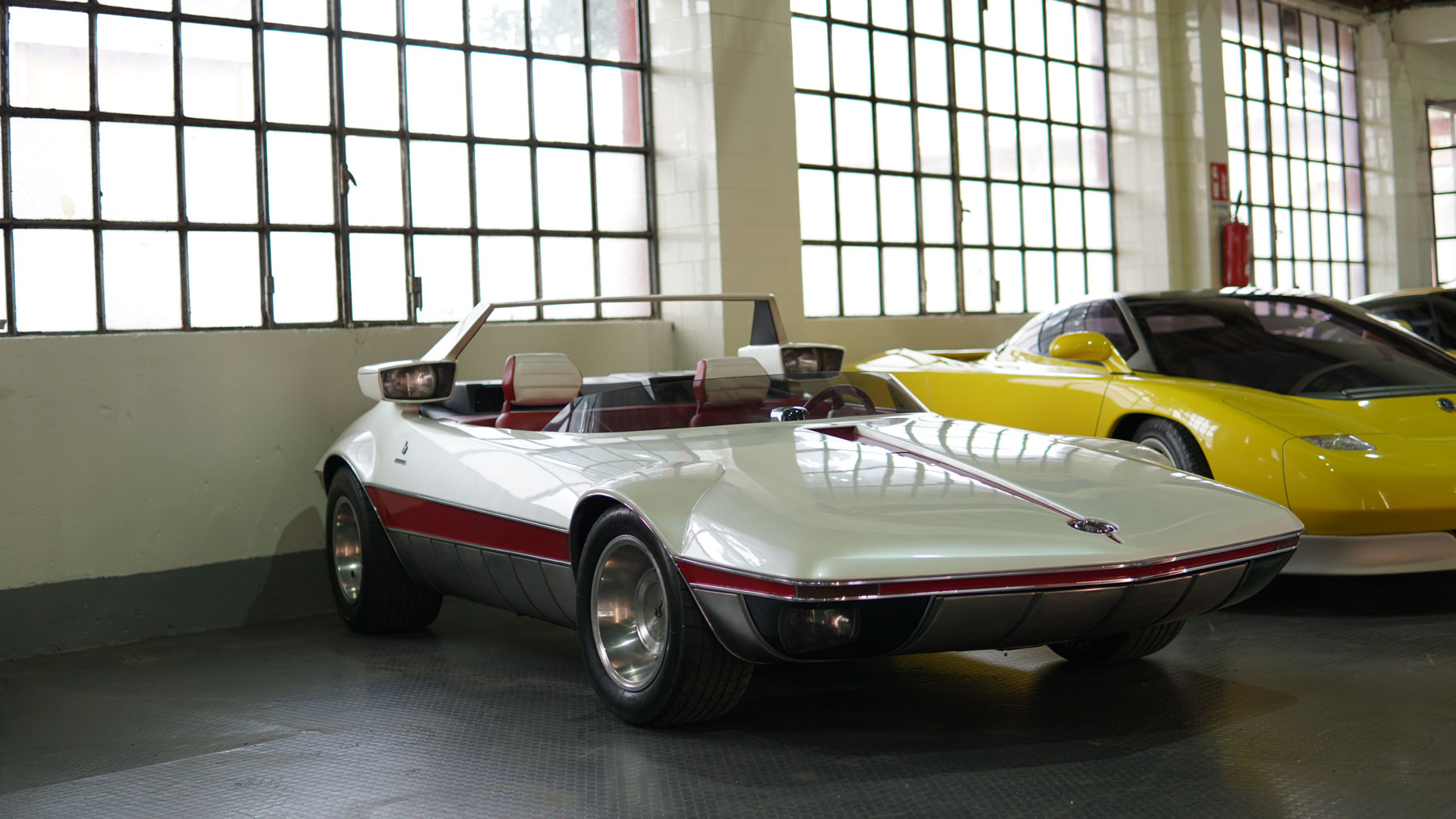
Beneath the flamboyant shell, the Runabout used the engine and mechanicals of the modest Autobianchi A112, but with a radically different layout: the engine and drivetrain were pushed to a mid-rear position. It was a technical gamble: take a humble four-cylinder city car engine and mount it amidships on a go-kart-like chassis. This setup foreshadowed the concept of a “sporty city car” well before the term “hot hatch” ever existed.
Presented as a styling exercise, the Runabout caused a stir. The Motor Show crowd was enchanted, and the positive reactions convinced Bertone that the idea had real potential. In-house, Bertone began mulling over how to turn this radical little roadster into a production vehicle. One of the first changes? Replace the open barchetta layout with a more practical targa-style roof: a fixed roll bar paired with a removable hard top would make the car safer and regulation-compliant without betraying its open-air spirit. This decision would define a key trait of the future model: no flapping canvas roof, but a solid panel stowable in the front trunk.
🔗 Read more: The Autobianchi Runabout: the futuristic Barchetta
Yet despite Bertone’s enthusiasm, the Runabout’s future hung in the balance. Fiat Group—which owned Autobianchi—opted not to proceed with such an unconventional sports car right away. Executives focused on more profitable and urgent projects, like an Abarth version of the popular A112 to counter the booming success of the Innocenti Mini Cooper. In other words, Fiat played it safe with a hot hatch instead of betting on a micro-supercar, leaving Gandini’s prototype temporarily without a commercial future.
From Concept to Production: The Birth of the Fiat X1/9
Then came an unexpected twist fit for a movie. In 1971, during a visit to the Bertone plant in Grugliasco, Gianni Agnelli himself spotted the quirky little targa gathering dust in a corner. The Avvocato, with his legendary business instincts, instantly saw its potential: this could be the perfect successor to the soon-to-be-retired 850 Spider. Fiat moved quickly to resurrect the project. The prototype was refined and prepped for industrialization, earning a now-legendary code: X1/9. At Fiat, experimental projects at the time used the “X1” prefix followed by a number. Our petite sports car, still nameless, became the ninth project in the Series 1: X1/9. The alphanumeric name sounded more like a spaceship than a car, but it stuck.
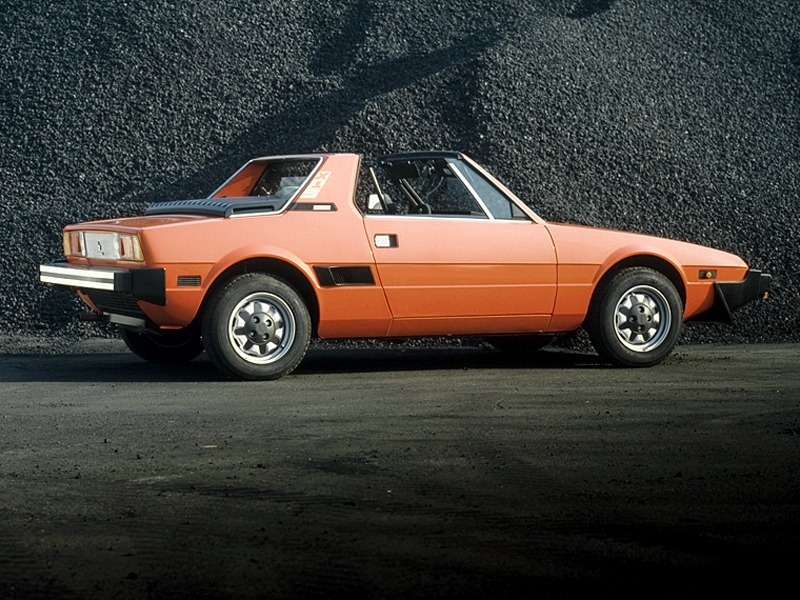
Transforming Gandini’s radical concept into a showroom-ready vehicle required some compromises, but the final product remained faithful to its inspiration. The production Fiat X1/9, officially unveiled in December 1972 on the Targa Florio circuit in Sicily, retained the wedge-like silhouette, the flat front hood with its signature central crease, and the arching roll bar behind the cockpit. These design cues were directly inherited from the Runabout, testifying to Gandini’s lasting influence.
Under the skin, the X1/9 borrowed much of the Fiat 128’s mechanicals (particularly from the 128 Coupé), but with a clever twist: engine and transmission were repositioned to the rear in a transverse mid-engine layout (while the original 128 had a front-engine, front-wheel-drive setup). Thanks to the compact engine-gearbox unit, this layout created a nimble and lightweight sports car (about 900 kg), with exceptional handling, even if the power from the 1.3-liter, 75-hp four-cylinder engine was modest.
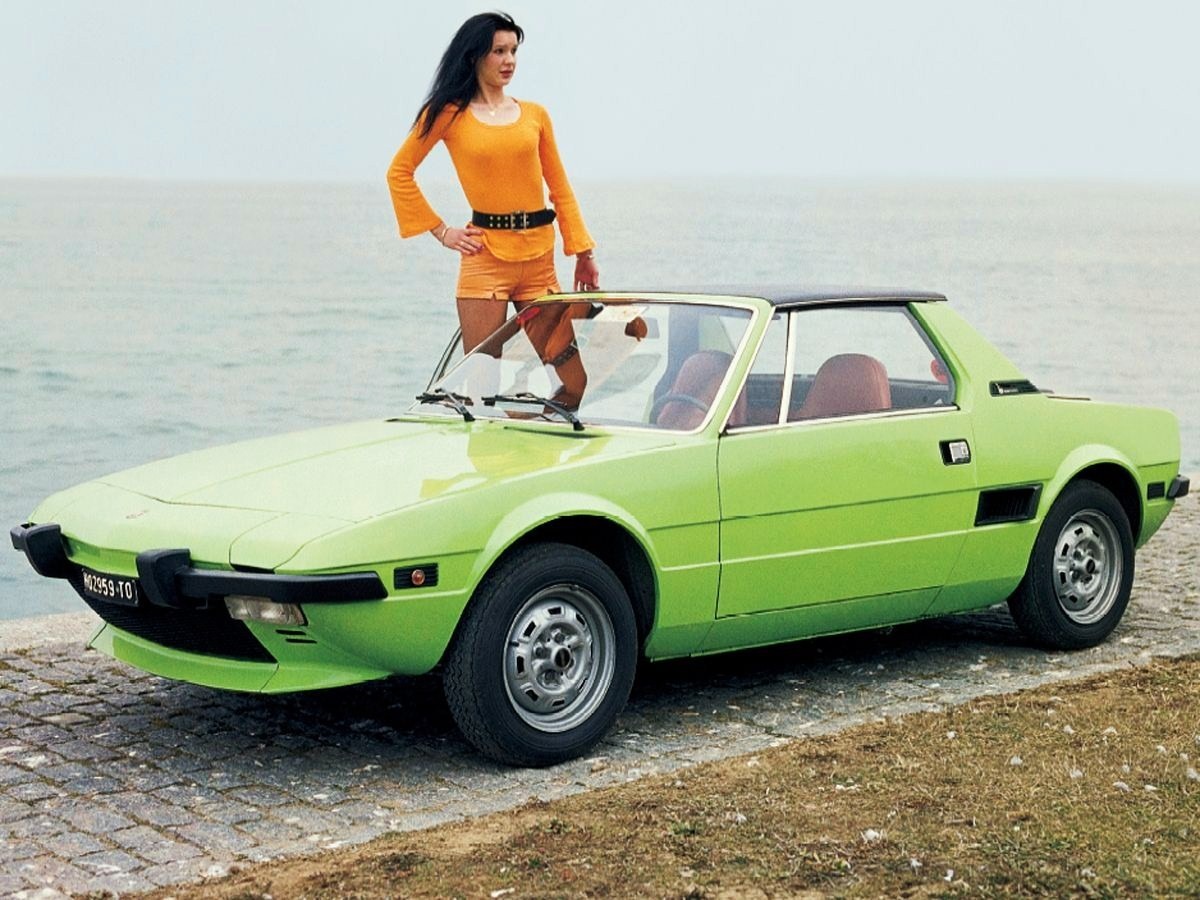
Design-wise, Gandini struck a masterful balance between futuristic flair and functionality. The X1/9 sported pop-up headlights that gave it a clean aerodynamic face by day and expressive “eyes” at night. The low, wraparound windshield and removable roof panel delivered an open-air driving experience worthy of much pricier cars. And that signature roll bar didn’t just define the profile—it added structural rigidity and rollover protection. Fiat leaned heavily on this safety angle, choosing a targa design over a traditional convertible specifically to meet evolving regulations. Indeed, the X1/9 became one of the few small open-top cars to meet the increasingly stringent U.S. standards for crash safety and emissions.
🔗 Read more: Marcello Gandini: The Man Who Designed the Future
In fact, the X1/9 found unexpected success in the American market, where it was initially sold as a Fiat and later as a Bertone. Especially after 1978, when the engine grew to 1.5 liters and gained fuel injection and catalytic converters, it became a cult favorite among U.S. enthusiasts. For a while, it was the only compact targa sports car available as the British roadsters were regulated off the stage.
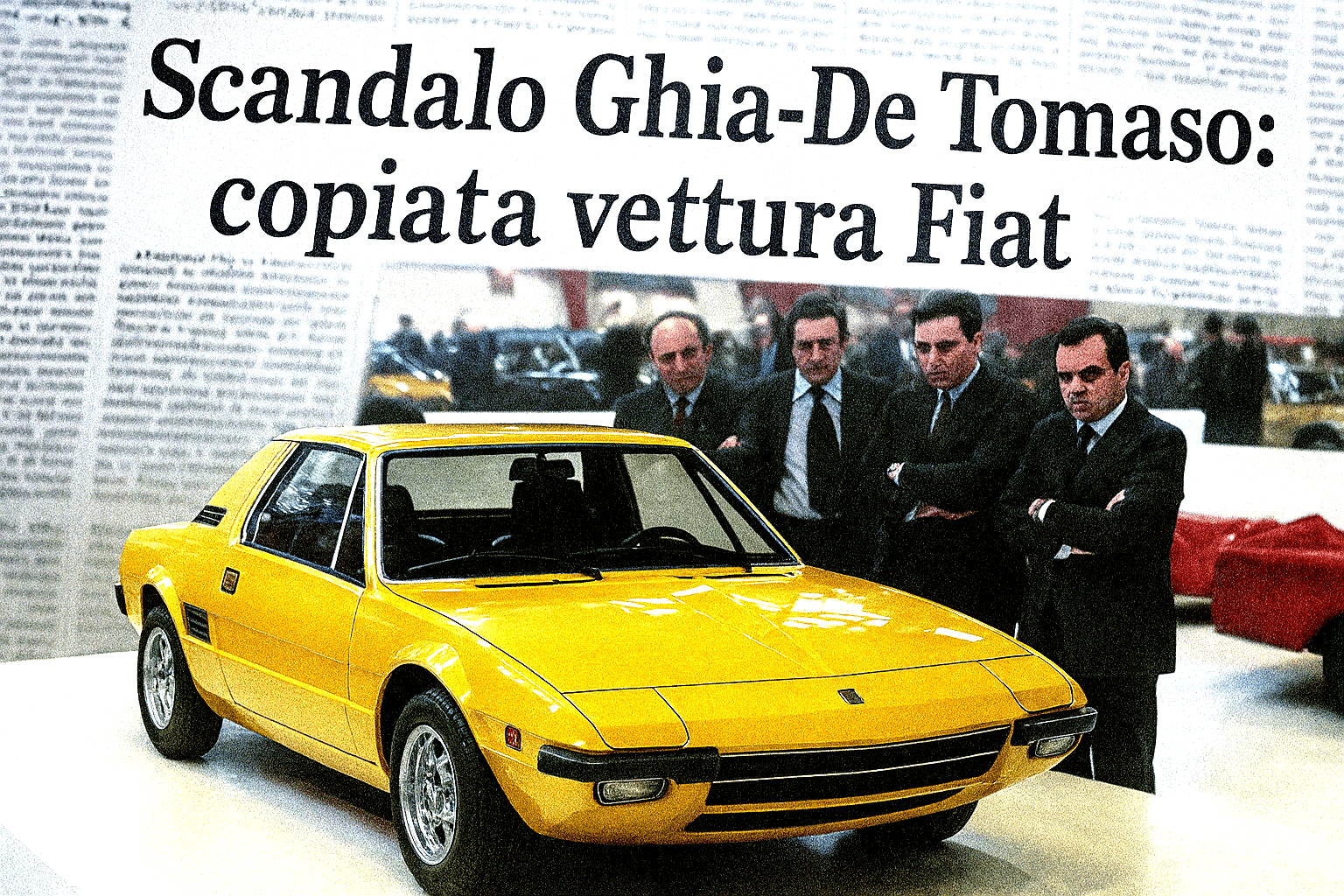
De Tomaso’s Twist: A Clone at the Motor Show
🔗 Read more: How De Tomaso Hijacked the Fiat X1/9 Before It Even Launched
A Little Rally Monster (Almost)
Don’t be fooled by its compact size and modest engine: the Fiat X1/9 had the DNA of a true race car. Proof? Not long after its launch, Abarth’s motorsport division began developing a full-blooded rally version. In the early 1970s, the idea was to replace the aging Fiat 124 Spider Abarth with something more competitive on the international rally stage—and the mid-engined X1/9 looked like the perfect candidate.
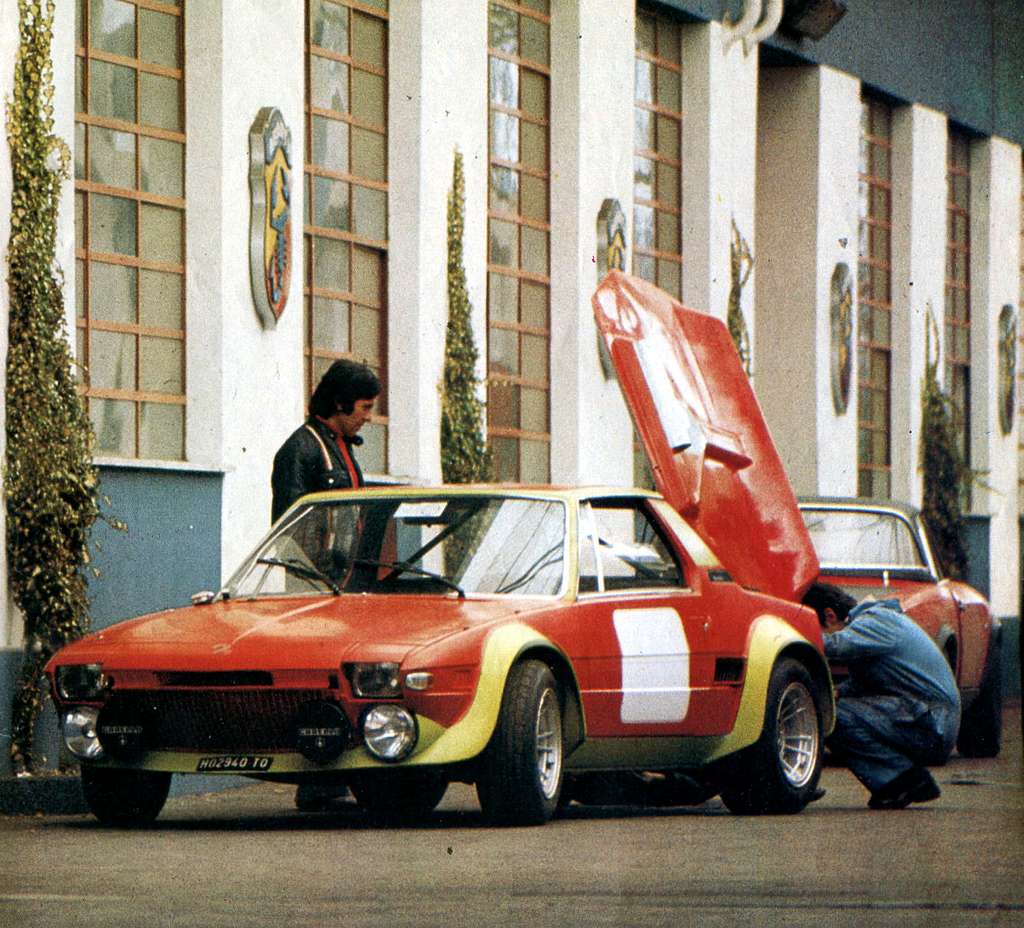
Thus were born a few examples of the X1/9 Abarth Prototipo, rolling laboratories for extreme experimentation. A regular X1/9 was taken and transformed into a beast: massively widened fenders to accommodate fat racing tires, a rear ducktail spoiler, and even a striking Formula 1-style airscoop on the roof to feed air into the carburetors. Under the rear decklid growled a roughly 1840 cc engine, based on the 1600 Fiat unit but bored out, equipped with a special 16-valve head and twin Weber carburetors—an engine that delivered nearly twice the horsepower of the standard road version.The prototype won small events in 1973-74 (notably the Rally delle Alpi Orientali) and hinted at greatness. But Fiat ultimately backed the 131 Abarth and Lancia focused on the Stratos, shelving the X1/9 rally project. Still, a handful of surviving Prototipos remind us of what might have been: a perfectly balanced, agile little contender that never got its chance to shine on the WRC stage.
Thanks to its featherweight build and boosted powerplant, the rally X1/9 was a real firecracker. And it didn’t just look the part: in its competitive debut in 1973–74, the X1/9 Abarth proved its potential by winning several smaller events, most notably the 1974 Rally delle Alpi Orientali, hinting at a bright future.
Sadly, that promise was short-lived. Fiat made a strategic decision to concentrate resources on the new 131 Abarth Rally, while Lancia’s competition arm threw its full weight behind the fearsome Stratos. As a result, the rally-bred X1/9 was shelved as an official program.
Still, the allure of what might have been lingers. With its perfect weight distribution and razor-sharp agility, the Abarth-prepared X1/9 could have been a formidable rival on the twisty rally stages of the 1970s. Today, only a handful of these competition-spec cars survive, carefully preserved by collectors—a rare glimpse into a parallel evolutionary path that was never fully realized.
Special Prototypes & One-Offs
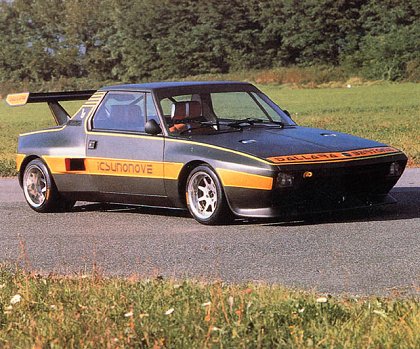
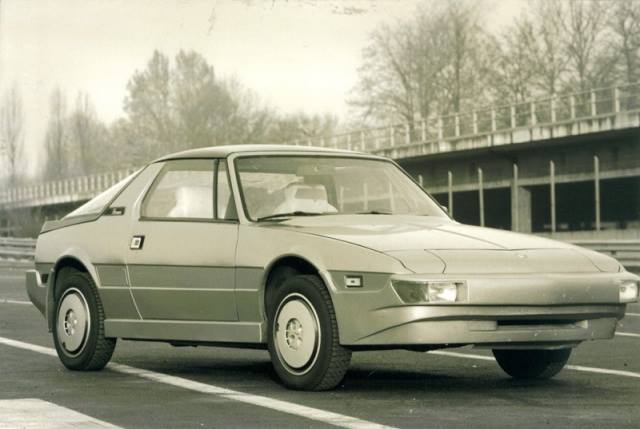
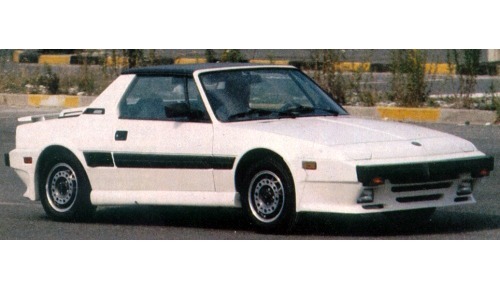
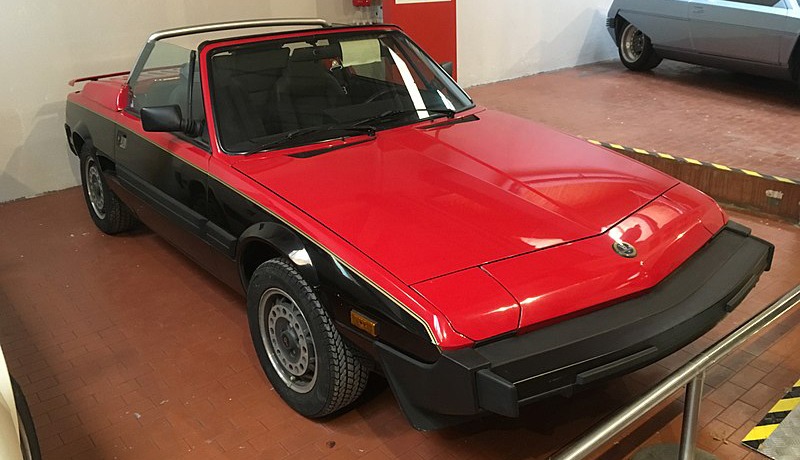
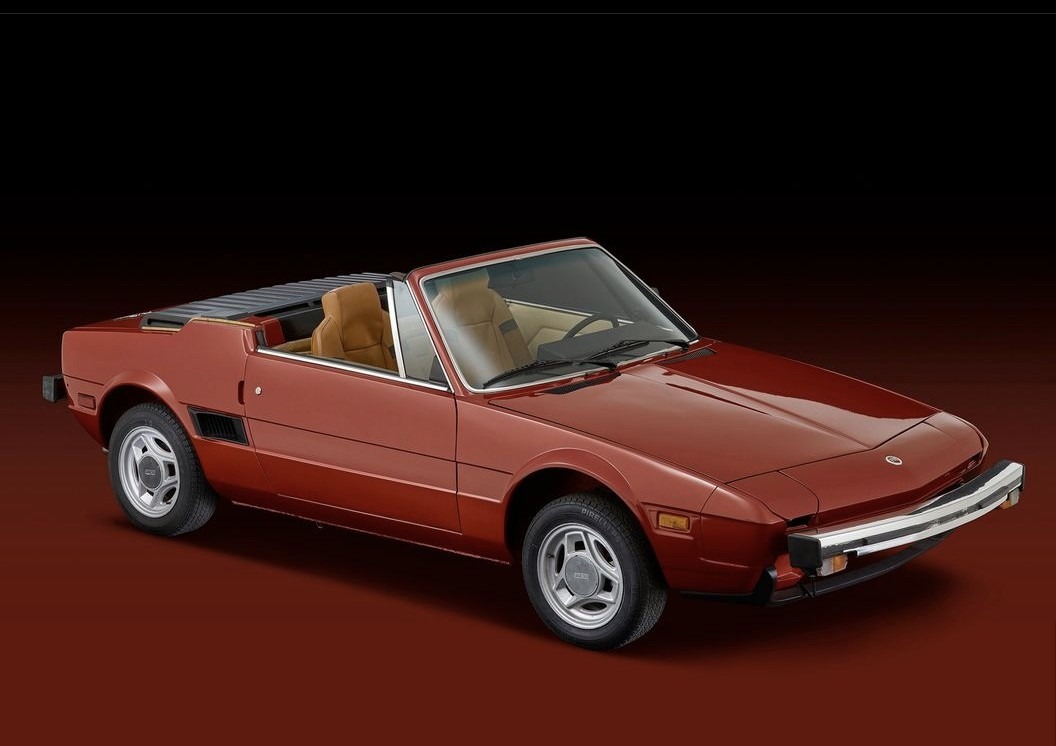
Fiat X1/9 Dallara Concept (1975): In collaboration with Dallara and Bertone, Fiat unveiled a full-on racing prototype at the 1975 Paris Motor Show. Known as the “Dallara Icsunonove” or Group 5 X1/9, it featured massively flared wheel arches, a large rear spoiler, upgraded suspension and a 16-valve engine producing around 192 hp at 9,700 rpm—nearly triple the standard output. It quickly earned a reputation for exceptional handling and served as a template for future racing evolutions
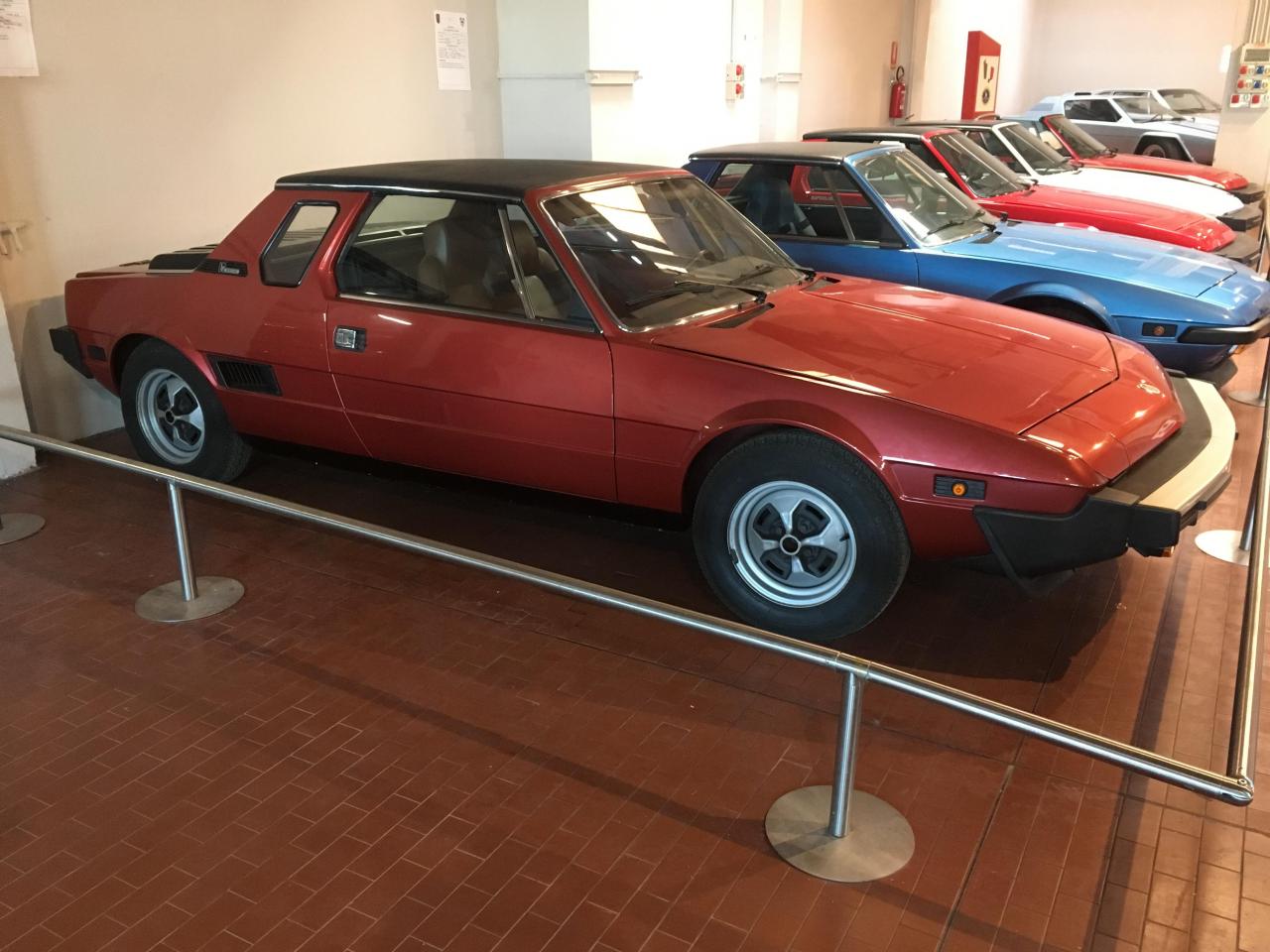
Fiat X1/9 Passo Lungo Concept (1978): Built in 1978 by Bertone, this unique prototype stretched the wheelbase and widened the track while retaining the 1.5 L engine. With only 802 km recorded on its odometer, it wasn’t meant for production but was rather an experiment in improved comfort and everyday usability. Today it resides in the Bertone Collection at the Volandia Museum.
Fiat X1/9 Bubble‑Back Concept (1984): Another studio concept from 1984, the Bubble-Back featured a revised rear design likely intended to expand cargo volume or aerodynamic performance. Though it never entered production, its bold styling demonstrates Bertone’s willingness to evolve the X1/9’s form into the mid-’80s.
Fiat X1/9 Turbo One-Off (1987): In 1987, Bertone crafted a one-off turbocharged version of the X1/9. This rare machine paired forced induction with Bertone’s styling finesse, creating a powerful, limited-run halo car that underlined the platform’s adaptability.
Fiat X1/9 Spider One-Off (1987): Also from 1987 came a unique Spider variant—an open-top custom featuring bespoke bodywork and trim. It stood apart from the standard targa, yet again showing Bertone’s flair for creativity on a small production base
Fiat X1/9 Spider (Chassis #ZBB128AS0*07162697): Part of the Lopresto Collection, this particular chassis number identifies one of the most striking one-off spiders built by Bertone. Though not much is published, cars with such specific chassis numbers often belong to bespoke showcar or commissioned builds, hinting at a unique configuration or client specification preserved in Bertone’s historical roster.
The Phantom Successor: Project X1/10
The Fiat X1/9 enjoyed a long production life—from 1972 all the way to 1989, in its final years wearing the Bertone badge—and achieved respectable commercial success. But by the late 1970s, Bertone was already looking ahead: how to update or replace the little targa-top sports car with a fresh model? Thus, in great secrecy, was born Project X1/10—a prototype so shrouded in mystery that it would go on to earn the nickname “the phantom heir” of the X1/9.The X1/9 enjoyed a long production run (1972–1989, later under the Bertone brand) and a loyal following, but by the late ’70s, Bertone began sketching its successor: the mysterious X1/10.
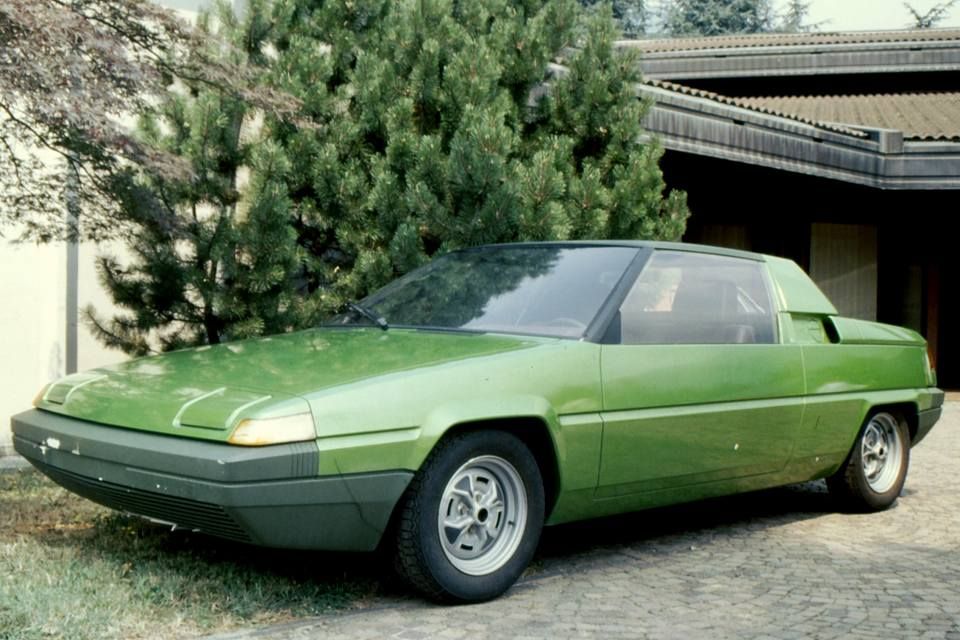
Its story is one of speculation and half-truths. According to one version, the X1/10 was originally conceived for Lancia. Bertone had envisioned it as a smaller mid-engine sports car to sit below the Lancia Beta Montecarlo. Some sources even claim that, shortly before the prototype was to be presented to Lancia executives, the project was redirected toward Fiat—perhaps in an effort to convince Turin’s industrial giant to back a new compact coupé. Supporting this theory: the prototype bore no branding or badges at all, as if deliberately leaving the brand decision open.Shrouded in half-truths and speculation, the X1/10 was never officially revealed. One version of the story suggests it was initially intended for Lancia, as a smaller sibling to the Beta Montecarlo. Another says it was simply an updated X1/9, addressing known flaws: cramped interior, limited luggage space, and modest power.
A second, and perhaps more plausible, version suggests that the X1/10 was simply intended as a direct evolution of the X1/9, aimed at addressing its known limitations and adapting it to the tastes of the 1980s. Despite the public’s affection, the X1/9 had its flaws—notably, a cramped cabin for taller drivers and minimal luggage space. Bertone addressed these by designing the X1/10 with slightly larger dimensions: a longer wheelbase and wider track by a few centimeters, and a rear end extended by almost 18 cm to add space behind the seats.
🔗 Read more: The Volvo Tundra vs Citroën BX
The X1/10 prototype was indeed built by Bertone in the late ’70s, though only as a static, non-running model at full scale. Instead of traditional sheet metal, its body was crafted in resin and plaster, a method that allowed quick modifications during the design process. Painted in a daring metallic green and sporting pop-up headlights like its predecessor, the X1/10 featured crisp, modern lines that clearly echoed Gandini’s stylistic evolution in the 1970s. Observers have noted similarities with two of his other Bertone creations from the same era: the Ferrari Rainbow (1976) and the Volvo Tundra (1979), both of which are echoed in the X1/10’s detailing.
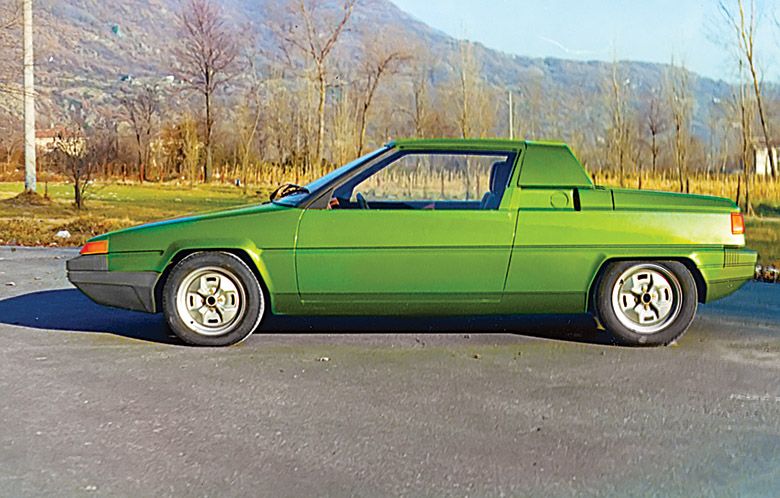
Interestingly, however, Marcello Gandini did not personally complete the project. He left Bertone in mid-1979, and the final design of the X1/10 is believed to have been wrapped up by his successor, Marc Deschamps.
Unfortunately, despite Bertone’s interest, Fiat decided not to green-light the model. Perhaps it was deemed too niche, or there were fears it might cannibalize other cars in the group. Either way, the X1/10 remained a pure styling exercise, with no production future.
Today, the only existing X1/10 lives on in Bertone’s historic collection—a gleaming green what if of automotive history. It stands as the unpublished final chapter in the X1/9 saga: Bertone’s last mid-engined dream on a small scale, an evolution that could have taken the X1/9 concept even further, but which remained forever frozen under the studio lights.
Legacy of a Little Giant
Decades on, the Fiat X1/9 remains a unique and captivating story in the automotive world. Born of Gandini’s creative daring and Bertone’s vision, it democratized the mid-engine experience. With its unmistakable design—part supercar, part smart commuter—it proved that innovation doesn’t require a big engine or a big budget, just big ideas.
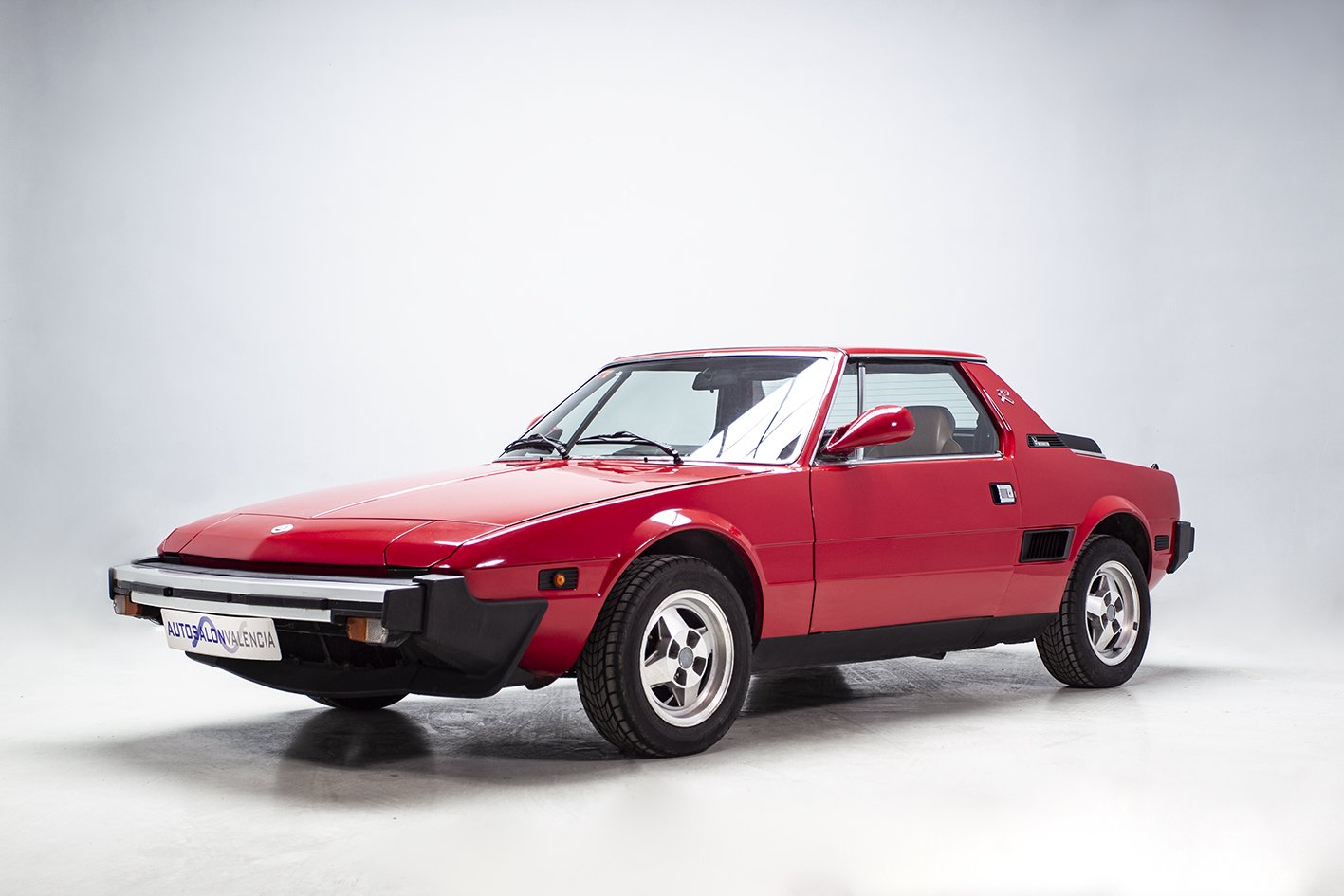
Its tale includes drama, brilliance, and more than a few plot twists: a stolen prototype, a phantom successor, and a rally dream deferred. Yet through it all, the X1/9 carved a lasting niche. Affectionately called the “baby Miura” or “people’s Ferrari,” it stands as a symbol of bold design and clever engineering.
And every time one zips past with its targa top tucked away, it reminds us: the little car with the big soul is still very much alive.

ABOUT THE AUTHOR
Andreas Scheidl
Italian classic car enthusiast with German roots. Renowned as a respected figure in the classic car community, he serves as a jury member at various international concours d'elegance, including the Classic Gala Schwetzingen and Mantova. As a content creator, Andreas passionately shares his profound knowledge and appreciation for vintage automobiles. His heart beats for cars designed by Giovanni Michelotti, showcasing his discerning taste and dedication to preserving the timeless elegance of automotive history.
More stories by Andreas Scheidl ↗CONTINUE READING
Posts You Might Like
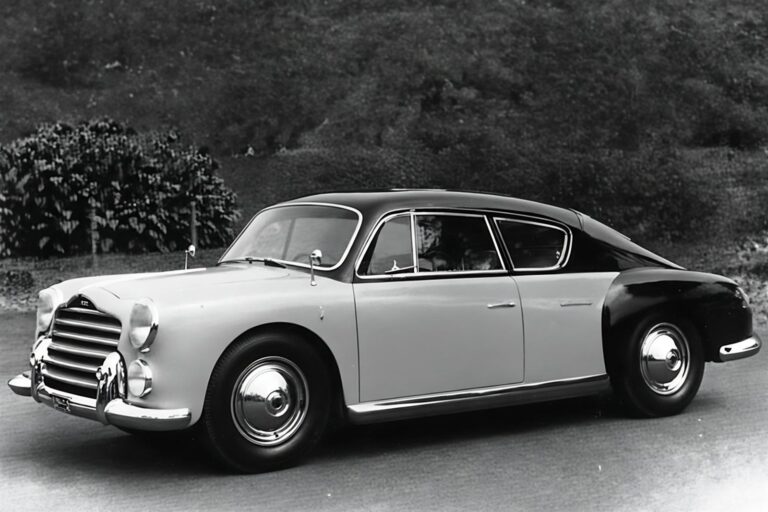
A Central Driving Position, a Rear-Mounted V8. Was This Really a Lancia?
In 1948, visitors to the Turin Motor Show could see an unusual Lancia on the stand of Carrozzeria Ghia. It was a large two-door coupé with a two-litre V8 mounted behind the…
Read story
Fioravanti F100: The Ferrari He Was Allowed to Imagine
Enzo Ferrari’s centenary, Leonardo Fioravanti’s independent studio and a supercar that explored air brakes, steel wheels and a new way of driving—without ever wearing the Cavallino.
Read story
Michelotti Shellette: When the Fiat 850 Became a Yacht
The yacht designer, the Turin stylist and the tiny coachbuilt car that crossed between the quay, the royal holiday house and the auction room. Some automobiles were conceived for the open road,…
Read story
Maserati A6 1500: A New Road for the Trident
When the doors of the Geneva Motor Show opened in March 1947, Maserati was a name that required little introduction to anyone who followed motor racing. What it did not yet possess…
Read story
THE CONVERSATION
Comments 0
Share a memory, a period photograph or a documented detail about this story.