
The Ferrari Dino 308 GT4 : When Gandini Broke Maranello’s Rules
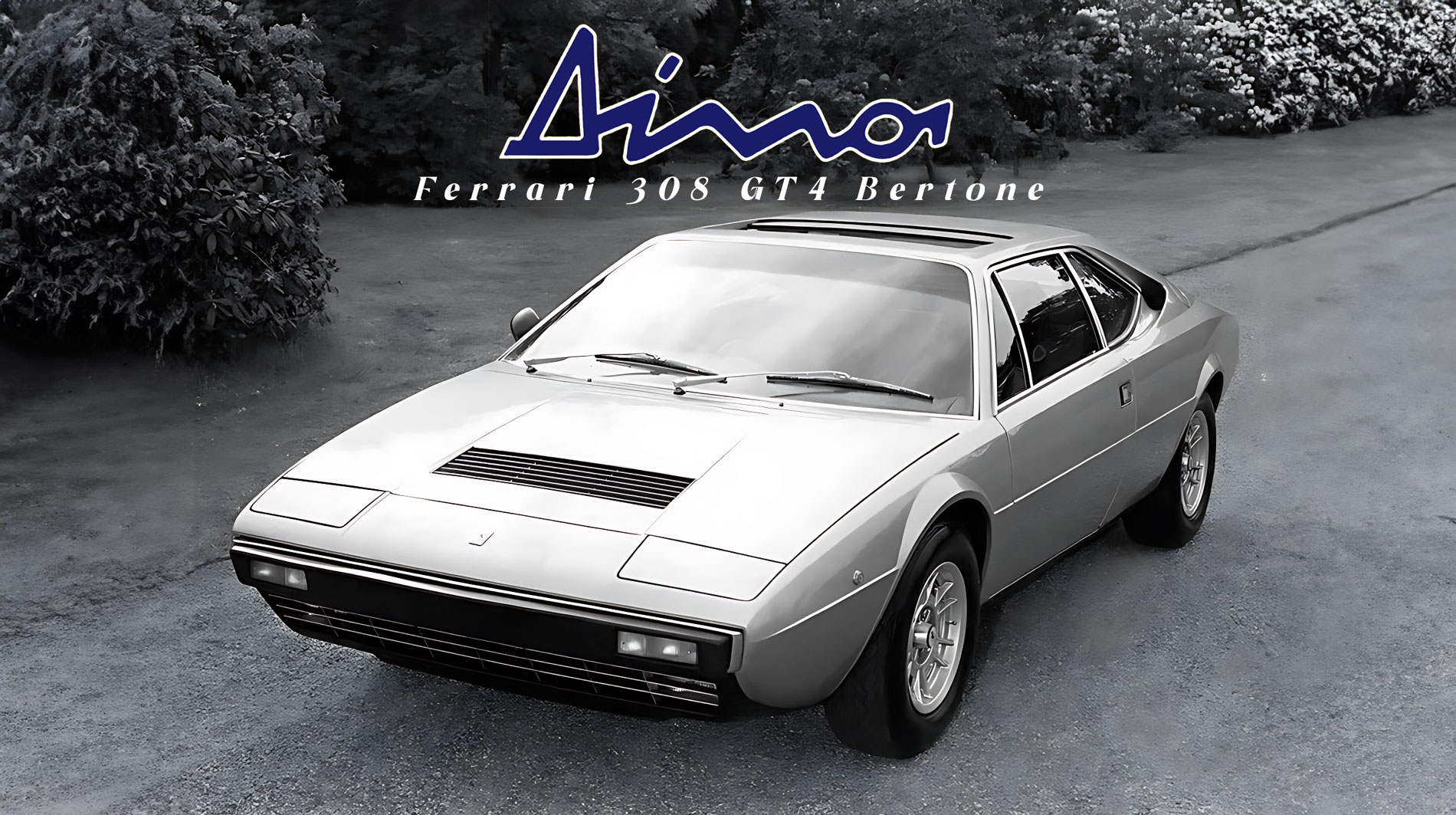
For decades, Ferrari’s road cars were styled by one “official tailor”: Carrozzeria Pininfarina. After a fateful 1951 meeting between Enzo Ferrari and Battista “Pinin” Farina, Pininfarina was entrusted with all of Ferrari’s designs. The partnership became nearly exclusive – Pininfarina even built some prototypes at its own expense to secure Ferrari’s trust. From the early 1950s onward, virtually every production Ferrari wore Pininfarina’s unmistakable couture. In fact, between 1951 and 2019 only one series-production model broke this tradition.
🔗 Read more: Marcello Gandini: The Man Who Designed the Future
Ferrari wasn’t entirely monogamous in its early years, however. A few Bertone-built one-offs teased at what might happen if Maranello strayed from its usual stylist. Bertone crafted a handful of fuoriserie specials: a 166 Inter Spider in 1950, a unique Ferrari-Abarth 166 MM/53 race car in 1953, and two wild 250 GT coupes in 1960 and 1962. These custom creations – one with a futuristic “sharknose” grille built for Nuccio Bertone himself – were intriguing, but they were unofficial outliers, mere flirtations. By the late 1960s, the Ferrari-Pininfarina marriage was solid as ever. Pininfarina was Ferrari’s “dressmaker-in-chief,” as Battista liked to say, shaping the soul of every new prancing horse. No one expected that to change.
Breaking Tradition: Bertone Gets the Nod
Then came 1973, and an unthinkable plot twist: Ferrari announced its newest model – a 2+2 mid-engine Dino GT4 – would be designed by Bertone, not Pininfarina. It was as if Ferrari had asked a rival couturier to design its next haute couture gown. Even Marcello Gandini – Bertone’s star designer – was stunned to get the call. “I was amazed they asked me for a new model… clearly Pininfarina was the official Ferrari tailor,” he later quipped. Gandini, the creative force behind Lamborghini’s Miura and Countach, was an outsider in Maranello’s world, and he knew it.
So why on earth did Enzo Ferrari “cheat” on Pininfarina this once? According to insiders, it was actually Enzo himself (with some FIAT influence) who chose Bertone for the new Dino 308 GT4. Ferrari had recently sold a stake to Fiat, and they were planning a more practical 2+2 Dino to follow the famed 246 GT. Bertone’s recent resume likely caught Enzo’s eye: Gandini had just penned the Fiat Dino Coupé, a tidy 2+2 that Enzo admired. Bertone also had experience with mid-engine 2+2 layouts (Lamborghini’s Urraco was their work). Perhaps Ferrari figured Bertone could deliver this new kind of Dino better, or maybe Il Commendatore simply wanted to spur his longtime partners at Pininfarina to up their game. Whatever the reason, the decision was made: Bertone got the job.
🔗 Read more: The Legend of Ferrari and Pininfarina’s Partnership: When Enzo Met “Pinin”
When word reached Pininfarina’s HQ in Cambiano that their Ferrari 2+2 project was handed to a rival, the reaction was pure shock. Inside Pininfarina’s halls, it felt “tantamount to betrayal.” After 20 years of near-exclusivity, Sergio Pininfarina was reportedly livid. His late father Battista had prided himself on being Ferrari’s exclusive stylist; now a “cross-town rival” was dressing their diva. (One can imagine the colorful Italian expletives uttered in the design studio that day!) Publicly, Sergio stayed diplomatic, but the message was clear: Ferrari’s move stung. In a tongue-in-cheek aside, some at Pininfarina joked that the new car didn’t even deserve a Ferrari badge at first – because “a real Ferrari would have been designed by us!”.
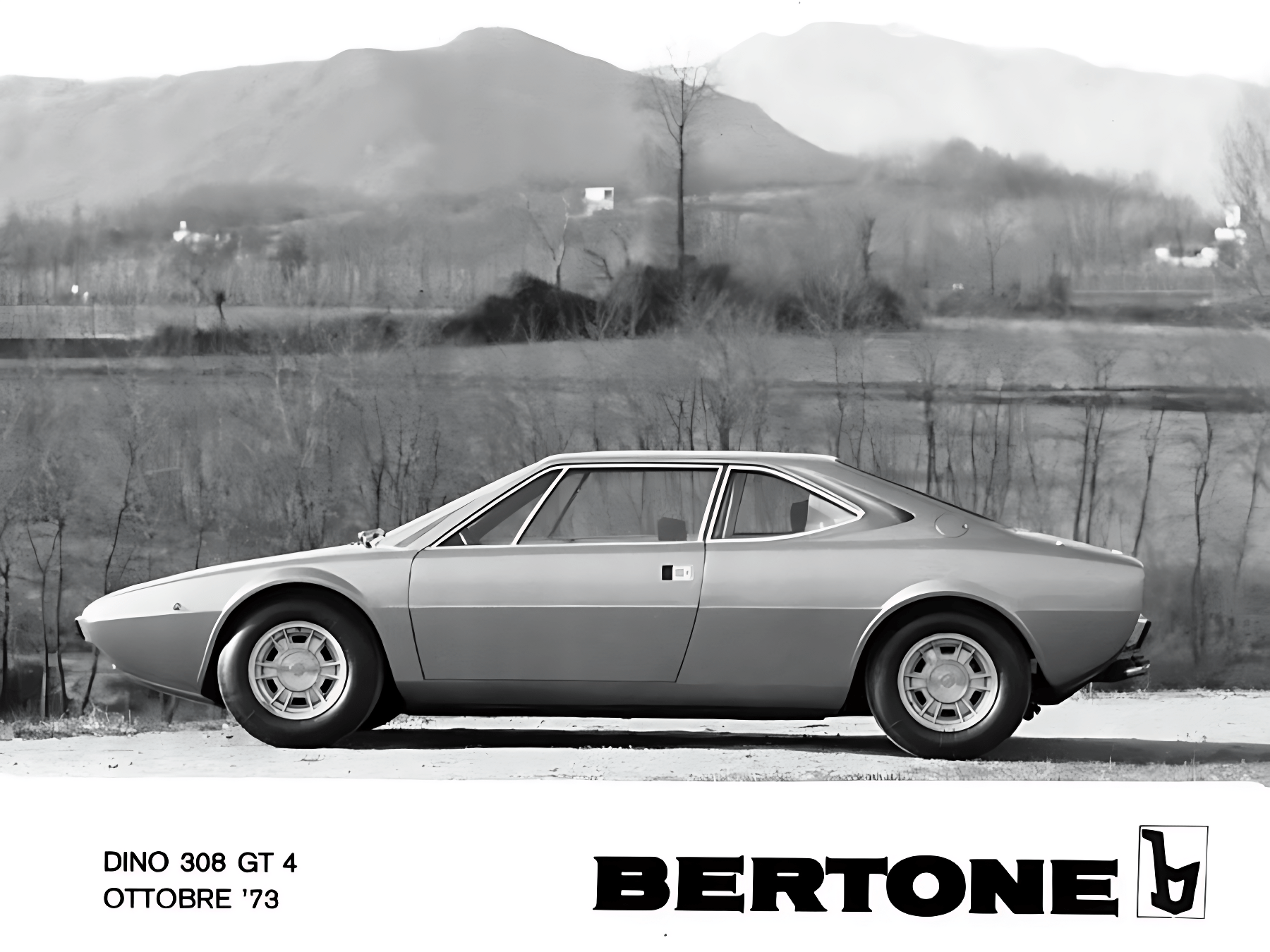
Indeed, adding insult to injury, when the Dino 308 GT4 debuted at the Paris Motor Show in late 1973, it wore only “Dino” badges, not Ferrari emblems. Enzo insisted this was to differentiate the V8 Dino line from the V12 Ferraris, but skeptics wondered if it was also a hedge – just in case the Bertone-styled car wasn’t well received. (Ferrari badging would come later, in 1976, once the Dino proved itself.)
The Outsider Takes Shape: Gandini’s Wedge
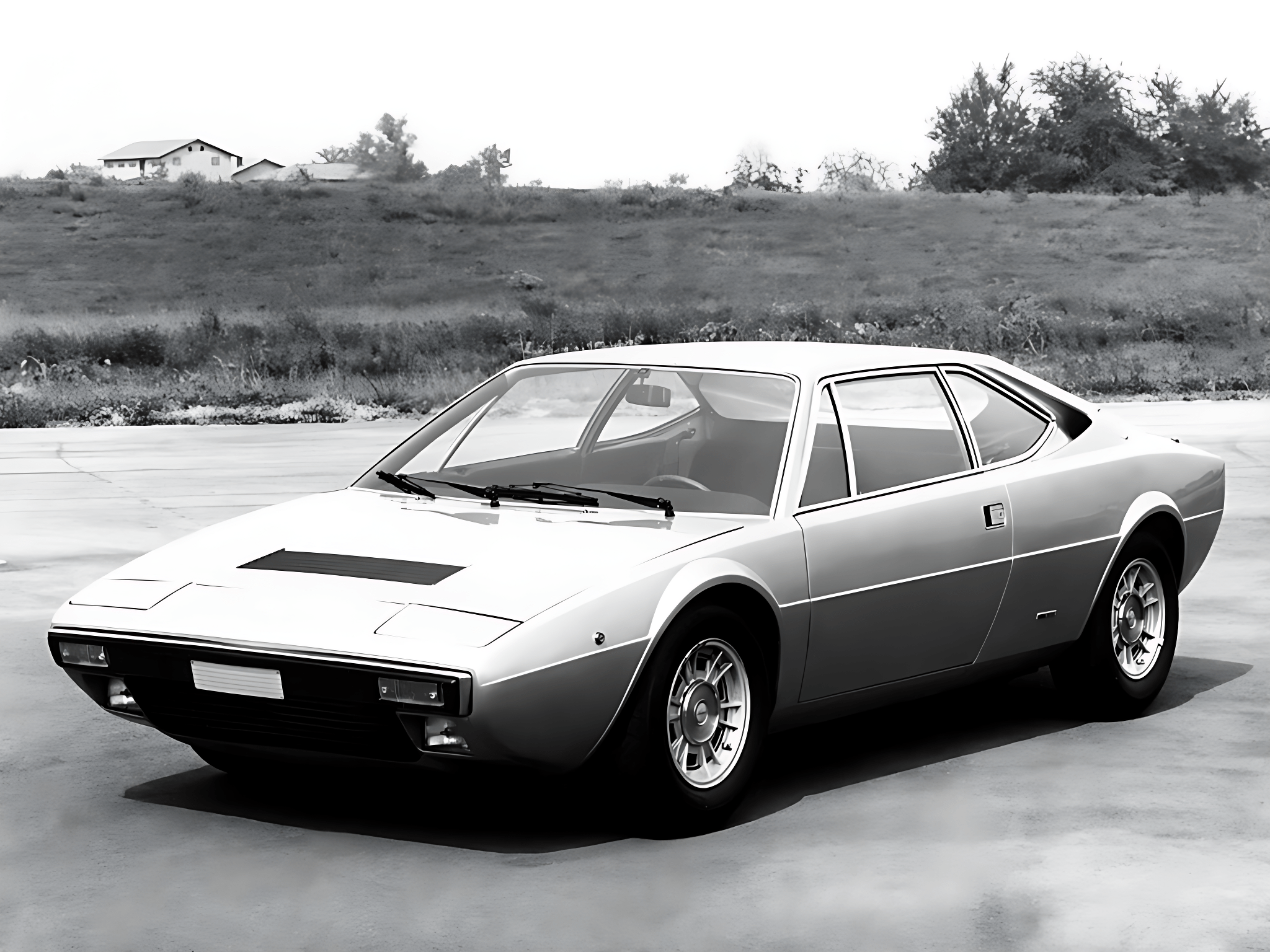
If Pininfarina expected Bertone to play it safe, they were in for a surprise. Marcello Gandini delivered a radically different Ferrari – a sharp-edged wedge of a car that broke every styling convention the prancing horse had known. The Dino 308 GT4 featured chiseled lines, angular prow and sail-panel flying buttresses, looking nothing like the curvaceous Pininfarina designs of the era. At 2+2, it was also longer and had a stretched wheelbase compared to the petite Dino 246, giving it a distinctly different stance.
The wedge design was Gandini’s calling card, and here he applied it to a Ferrari road car for the first (and only) time. From some angles, the GT4 almost looked like it could have worn a Lamborghini badge – and in a way, that makes sense. Rumor has it Gandini originally sketched this design as an early proposal for the Lamborghini Urraco, and when Lamborghini passed on it, he repurposed it for Ferrari. True or not, the Dino 308 GT4 ended up bearing a strong family resemblance to Gandini’s other projects. As one journalist noted, it “looked more like a big Urraco” than a Ferrari. You can imagine the Ferrari purists clutching their pearls at that comparison!
🔗 Read more: Sharper Than a Leisure Suit: The Wedge-Shaped Revolution of Italian Concept Cars
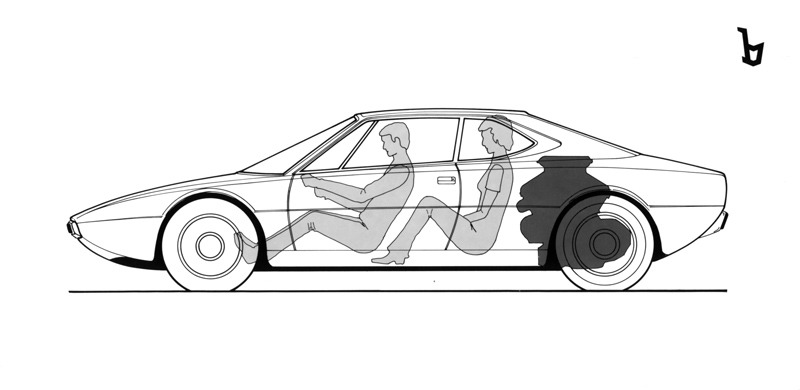
Mechanically, the 308 GT4 was a trailblazer for Ferrari: the first production V8-powered Ferrari, mid-engined, with four seats (well, “+2” rear perches suitable for small kids or exceptionally flexible friends). Enzo Ferrari took an unusually keen interest in its development – Piero Ferrari recounted that Enzo even had a movable mock-up rig built (with seat, pedals, engine placement) to perfect the driving position. The old man might have been breaking tradition, but he wasn’t going to compromise on the driving experience. And in that department, the GT4 delivered. It handled crisply and had excellent visibility for a mid-engine sports car. The new 3.0L V8 was a gem – high-revving, robust – seeding a lineage of Ferrari V8s that continues to this day.
Controversy and Legacy
When the Dino 308 GT4 hit showrooms in 1974, it entered a world in flux – the mid-’70s oil crisis, new emissions rules, and a conservative turn in styling tastes. Initial reception was mixed. Many praised the GT4’s performance and agility, but the styling raised eyebrows (quite literally, at Pininfarina). Some found Gandini’s angular design refreshingly modern, even “handsome in a geometric way.” Others felt it lacked the romantic bella figura of a “proper” Ferrari – “severe” and wedge-y where a Ferrari should be curvy and sensual. The contrast was only amplified when Pininfarina launched their riposte in 1975: the new 308 GTB/GTS (the famous Magnum, P.I. two-seater). That car shared the GT4’s V8 drivetrain but wrapped it in a far more voluptuous body. Critics swooned over the GTB’s looks, calling it “infinitely better proportioned” than the Bertone 2+2. It was as if Pininfarina pointed to the GT4 and said, “Step aside – this is how you style a Ferrari V8.” Indeed, the 308 GTB became a timeless icon, reinforcing the notion that Ferrari design and Pininfarina were an inseparable duo.
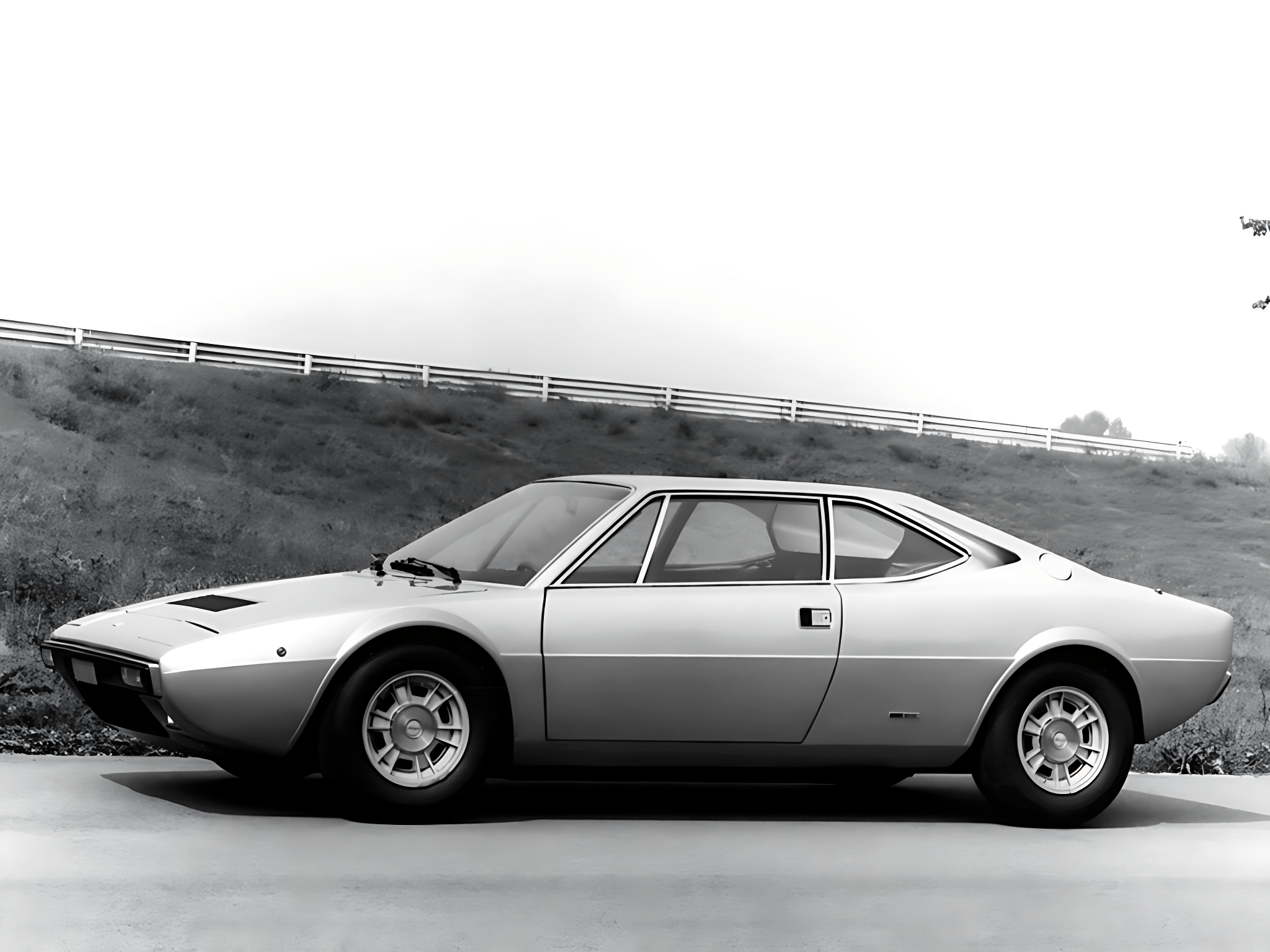
In the court of public opinion, the Dino 308 GT4 spent years as a bit of an outcast – underappreciated and often overshadowed by its prettier siblings. Ferrari itself seemed to treat it as the black sheep for a time (remember, it was badged a Dino, almost as if it wasn’t allowed into the full Ferrari family until later). And yet, those who actually drove the GT4 discovered a delightful machine. With its balanced mid-engine chassis, it is “one of the most entertaining Ferraris to drive,” as enthusiasts would later attest. Over a six-year run, about 2,800 GT4s were built – not a huge number, but respectable, especially considering the global economic doldrums of the late ’70s. In fact, for a couple of years, the GT4 was the only Ferrari model officially imported to the U.S., keeping the brand’s flame alive during tough times.
🔗 Read more: Fiat Dino: When Ferrari’s Race Engine Moved in with Fiat
Perhaps sensing Pininfarina’s wounded pride, Enzo Ferrari reportedly assured Sergio Pininfarina that the Bertone experiment was a one-off exception. And he was true to his word. After the 308 GT4, Ferrari never again commissioned Bertone to design a production car. Pininfarina resumed its role as Maranello’s sole stylist through the end of the 20th century (and beyond). The GT4 thus remains a unique piece of Ferrari lore – the only production Ferrari of its era not penned by Pininfarina. It’s an automotive rebel, a symbol of what happens when an icon steps outside its comfort zone.
The Outsider’s Due
Today, the Dino 308 GT4 enjoys a bit of a renaissance. What was once maligned as “not a real Ferrari” is now appreciated for its idiosyncratic charm. The design that broke all the Ferrari rules has aged into a kind of retro-cool, the sharp angles now evoking a golden era of 1970s innovation. And with Marcello Gandini’s recent passing, enthusiasts are revisiting his portfolio and giving the GT4 a fresh look – finally recognizing it as Gandini’s only Ferrari, a proud member of the wedge-car hall of fame.
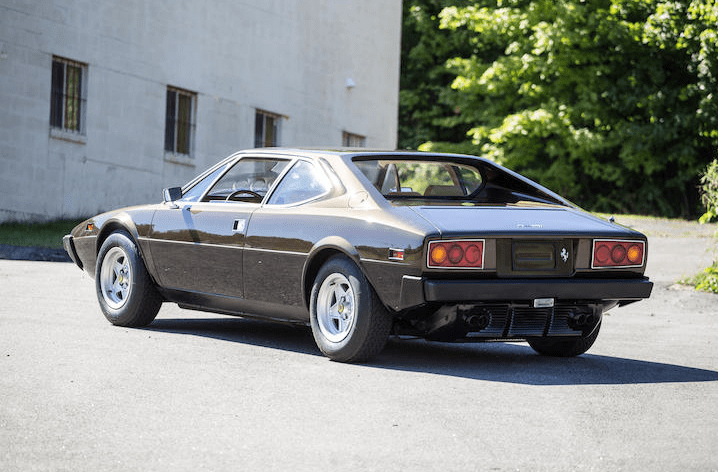
In retrospect, the Dino 308 GT4’s story has all the drama of a automotive soap opera: a secret design dalliance, hurt feelings, an “illegitimate” badge, and ultimately a reconciliation. Ferrari and Pininfarina went on to create many more beauties, but the GT4 stands apart as the great exception. It’s the outsider that sneaked into Maranello’s lineup and proved that even when Ferrari broke its own rules, the result could be fascinating. Gandini’s astonishment at being asked to dress a Ferrari – “the official tailor” overlooked for once – turned into a car that broke tradition and made history. Love it or hate it, the 308 GT4 taught us that even a legendary brand can once in a while benefit from a bold new cut of cloth.
In Enzo Ferrari’s orchestra of twelve-cylinder symphonies, the little V8 Dino by Bertone was a rogue jazz riff. It struck a dissonant chord at first, but over time it found its harmony in the Ferrari saga. The outsider Ferrari may have arrived uninvited, but it left an indelible mark – a reminder that rules, even Maranello’s, are sometimes made to be broken. And for that, we tip our hat to Signor Gandini, the one-time Ferrari rule-breaker, who gave us a Dino like no other.

ABOUT THE AUTHOR
Andreas Scheidl
Italian classic car enthusiast with German roots. Renowned as a respected figure in the classic car community, he serves as a jury member at various international concours d'elegance, including the Classic Gala Schwetzingen and Mantova. As a content creator, Andreas passionately shares his profound knowledge and appreciation for vintage automobiles. His heart beats for cars designed by Giovanni Michelotti, showcasing his discerning taste and dedication to preserving the timeless elegance of automotive history.
More stories by Andreas Scheidl ↗CONTINUE READING
Posts You Might Like

A Central Driving Position, a Rear-Mounted V8. Was This Really a Lancia?
In 1948, visitors to the Turin Motor Show could see an unusual Lancia on the stand of Carrozzeria Ghia. It was a large two-door coupé with a two-litre V8 mounted behind the…
Read story
Fioravanti F100: The Ferrari He Was Allowed to Imagine
Enzo Ferrari’s centenary, Leonardo Fioravanti’s independent studio and a supercar that explored air brakes, steel wheels and a new way of driving—without ever wearing the Cavallino.
Read story
Michelotti Shellette: When the Fiat 850 Became a Yacht
The yacht designer, the Turin stylist and the tiny coachbuilt car that crossed between the quay, the royal holiday house and the auction room. Some automobiles were conceived for the open road,…
Read story
Maserati A6 1500: A New Road for the Trident
When the doors of the Geneva Motor Show opened in March 1947, Maserati was a name that required little introduction to anyone who followed motor racing. What it did not yet possess…
Read story
THE CONVERSATION
Comments 0
Share a memory, a period photograph or a documented detail about this story.