
Fiat Nuova 500: the Tiny Car That Put Italy on Wheels
Between 1955 and 1971, Italy changed gear. Literally. The number of cars on Italian roads rose almost tenfold, from 2.4 to 22.7 automobiles per 100 inhabitants. It was one of the clearest signs of the country’s post-war transformation: from reconstruction to mobility, from necessity to aspiration, from bicycles and scooters to family cars.
Much of that revolution came from a simple technical idea, repeated with extraordinary industrial discipline: small, rear-engined Fiats. The Fiat 600, known internally as project 100, the Nuova 500, project 110, and the 850, project 100G, were built in around eight million examples during that period. If we include the later 126, the total reaches roughly ten million cars. Few mechanical layouts have done more to motorise a country.
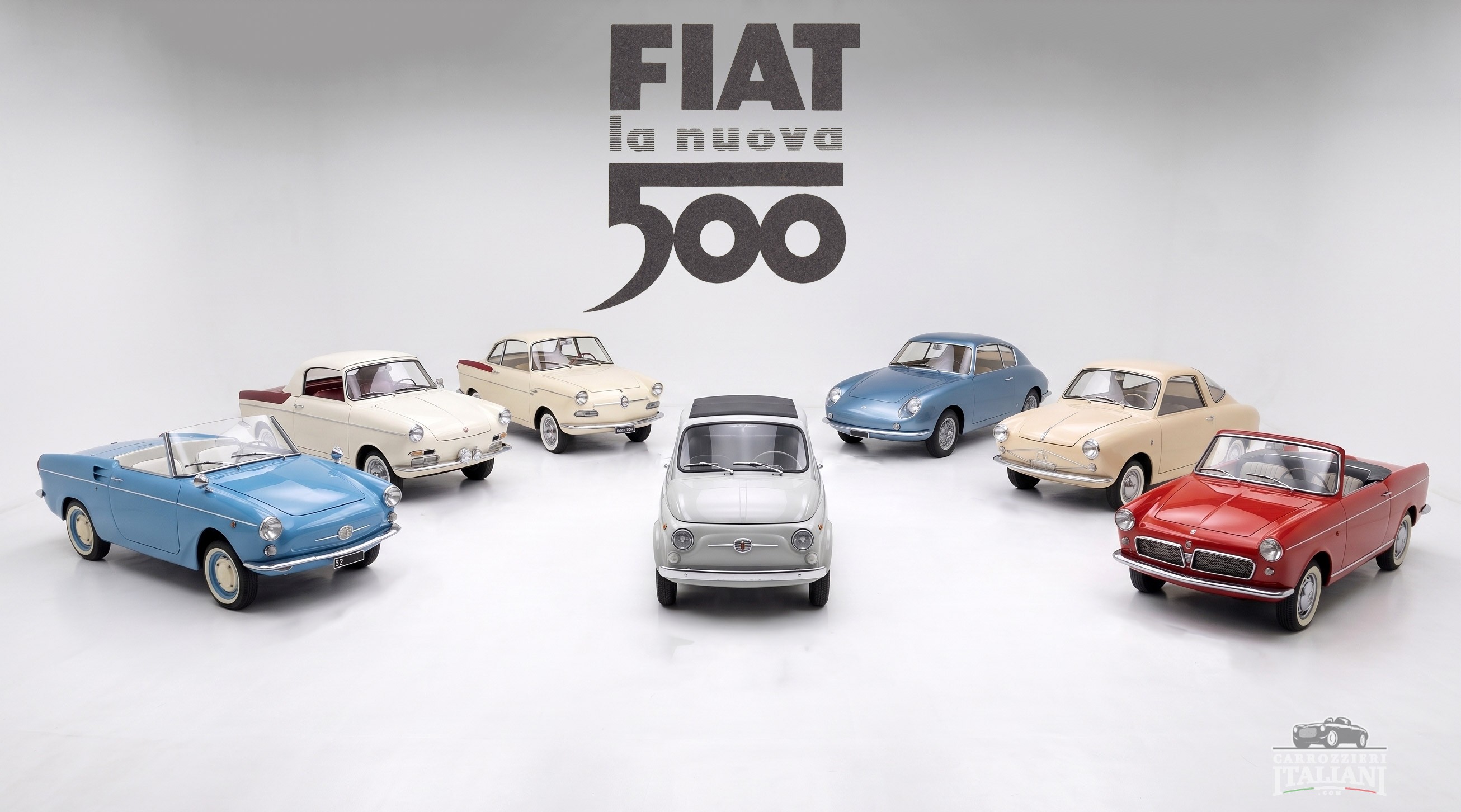
But the Nuova 500 was more than a small car. It was a social object, an engineering puzzle, a commercial gamble, and eventually a cultural icon. It was also one of the most unlikely bases for Italy’s coachbuilders: too cheap, too small, too awkward in proportion, and yet irresistible. Around it grew a colourful world of beach cars, mini coupés, light off-roaders, old-style roadsters, city-car experiments and cheerful “elaborate” versions designed to make one neighbour’s 500 look different from all the others.
Replacing the Topolino
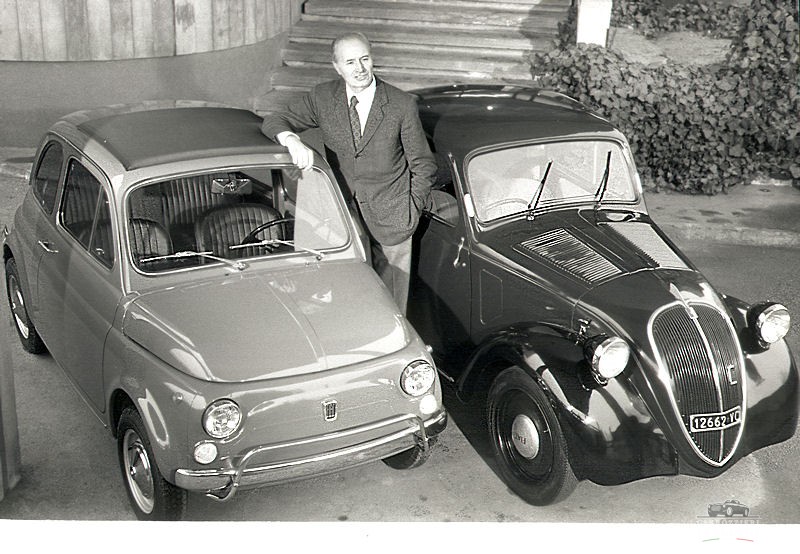
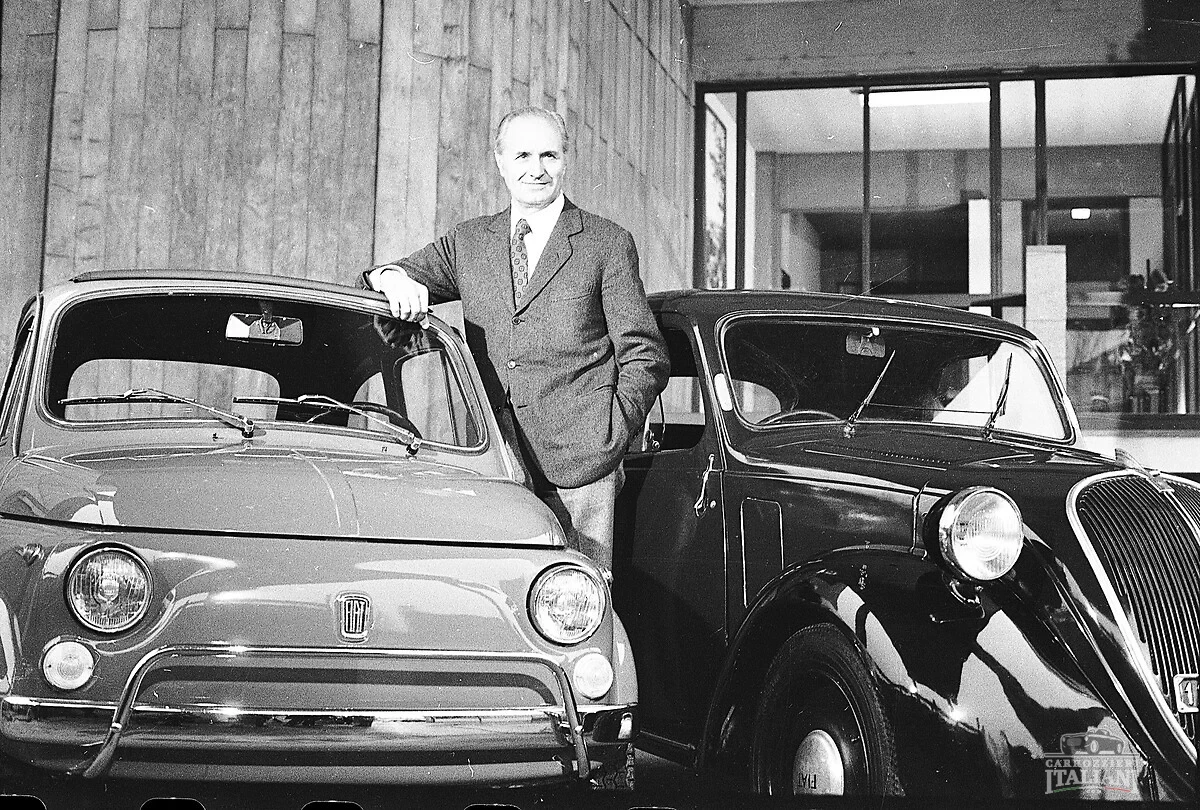
The story begins in 1946, when Fiat launched project 100. The goal was ambitious: to create a proper successor to the 500 Topolino, with space for four adults, better performance and a lower price.
Dante Giacosa understood that simply improving the Topolino would not be enough. To beat it on its own strengths, Fiat needed something more radical. So two directions were explored: the project 100, with rear engine, and the project 102, with front-wheel drive.
By 1952, the 102 had been abandoned by Fiat management. The decision was still influenced by an earlier episode during the development of the Topolino, when Senator Agnelli had been exposed to a fire while testing an advanced prototype by engineer Lardone. That car had used air-cooled engines, including two-cylinder boxer and three-cylinder radial configurations.
It is tempting to wonder what might have happened with a little more patience. That advanced front-wheel-drive project could perhaps have produced a very competitive small car, lighter, roomier and faster than the Topolino, and ahead of any rival in its class. The famous fire, often retold almost like a legend, was not really caused by the type of drive. It may instead have hidden Fiat’s reluctance to face large new investments, especially with a layout perceived as more costly and less reliable at the time.
Fiat’s model-numbering system also changed in those years. The 600 was the first model to follow the new “100” sequence, with the same number used for both car and engine. During development, the letter E, for esperienza, was added, followed by a number to identify different experimental variants. Once the final production solution was chosen, that extra development code was removed from the drawings.
A German clue and six prototypes
The Nuova 500 was not born from a single sketch or a simple downsizing exercise. One of the important clues came from Germany. An engineer named Bauhof had obtained the resources to develop a prototype mini-car with a two-cylinder two-stroke engine. After completion, the prototype was brought to Turin for evaluation.
Fiat rejected the two-stroke engine, considering it unsuitable for the company’s standards in terms of comfort, noise and fuel consumption. But the body layout and the arrangement of the mechanical components were judged positively. They became one of the sources of inspiration for the future Nuova 500.
The challenge was clear: how could Fiat design a car mechanically cheaper than the 600? To answer that question, no fewer than six alternative vehicle prototypes were developed. For the engine alone, Fiat considered both opposed-cylinder and in-line configurations, each with side valves and overhead valves, and with longitudinal or transverse layouts. In total, eight different power units were studied. The only common elements were two cylinders and air cooling, both considered essential to reach the required cost targets.
🔗 Read more: The Fiat 600 Elaborate
Among the engines designed was the 110E6, an opposed-cylinder overhead-valve unit. Its bulky rear section housed the air-cooling system, and one of the most difficult problems was reducing both the power absorbed by the fan and the noise it produced.
The final car arrived in 1957, after the optimisation of prototype 110E3 for the vehicle and 110E5 for the engine.
A small 600, but deliberately less useful
When the Nuova 500 was launched, it looked almost like a miniature Fiat 600. In reality, it still offered enough space for four people, provided they had a little patience and a sense of compromise. Fiat, however, did not want to make this positive quality too obvious. The company had no intention of stealing customers from the larger and more profitable 600.
Giacosa was forced to accept some deliberate limitations. The padding on the raised rear floor was removed so that it would not look too much like a proper rear seat. The front windows could be opened only through quarter vents, making the rear area even less welcoming. However, he firmly refused a fastback-style roofline, proposed only to reduce available headroom above the rear bench. Even many decorative details, popular with buyers at the time, were removed.
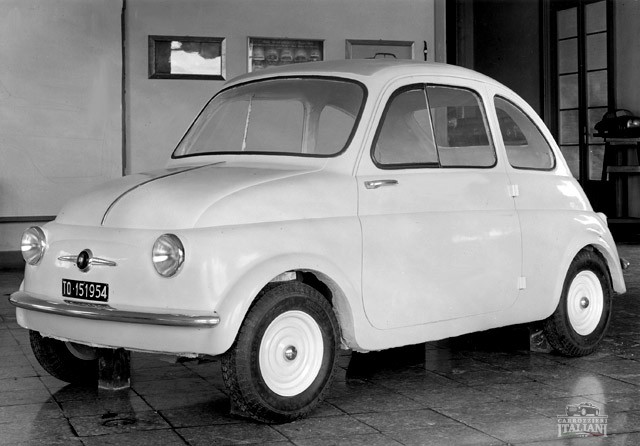
The first Nuova 500 went on sale at 490,000 lire, about 20 percent less than the Fiat 600. But the public response was lukewarm. Italians found it too basic, too uncomfortable, and not quite cheap enough compared with a four-seat 600.
Fiat reacted quickly. Just a few months after launch, the original model was replaced by two versions: the Economica, essentially identical to the first Nuova 500 but reduced to 465,000 lire, and the Normale, still priced at 490,000 lire but fitted with wind-down windows, aluminium hubcaps and a padded rear seat. Buyers of the first model were refunded the 25,000 lire price difference.
The technical substance of the 500
The 110 engine can be seen as partly derived from the 100, which inspired the combustion chamber layout, the camshaft in the crankcase and the intake manifold integrated into the cylinder head. It also drew from the 110E6, particularly in the air-cooling system and in the crankcase construction, divided into two parts: one die-cast aluminium section for the crankshaft and one pearlitic cast-iron section, more resistant to wear, for the cylinder barrels.
The two crank throws rotated in phase, as on Fiat’s early 3½ HP, to obtain regular firing intervals. The downside was vibration, caused by the significant imbalance of the connecting rods and pistons. Fiat solved this effectively only with the longitudinal engine layout, using an elastic spring suspension, almost like a small articulated quadrilateral.
One clever detail was the centrifugal oil filter, integrated with the fan-drive pulley. It had to be developed because there was not enough room for a conventional paper filter. The solution proved so effective and economical that it was later extended to larger Fiat models.
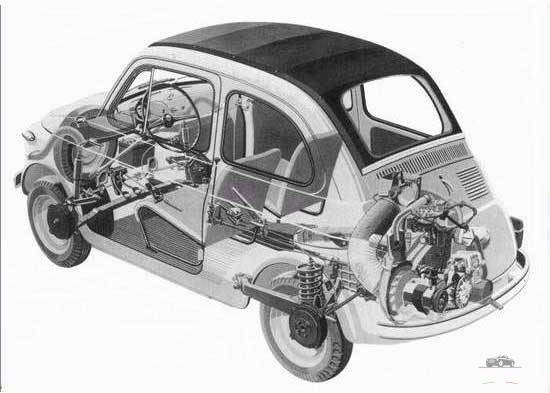
Heating was another problem. By the late 1950s, even a very small utility car was expected to offer some cabin warmth. Without hot water available, Fiat used the engine’s cooling air. To prevent combustion gases leaking from the head gasket into the cabin air supply, circular channels were added to the cylinder head, allowing those gases to escape outside without contaminating the cooling air.
The chassis of the Nuova 500 took inspiration from the 600 and shared many of its ideas, especially in the suspension. As on the 600, the four-speed gearbox was placed towards the passenger compartment and used a cascade gear arrangement. The lower driven shaft directly operated the bevel gear of the final drive. The differential satellite hubs also incorporated the housings for the driveshaft joints.
Unlike the 600, however, the 500’s gearbox had no synchromesh. It used dog clutches instead, with an easier engagement shape, although double-declutching on downshifts was still advisable.
At the front, the suspension used articulated quadrilaterals. To reduce weight and simplify assembly on the unitary body, the upper suspension arms were integrated into a single transverse leaf spring. Its mounting points were carefully spaced to provide a stabilising effect without the need for an anti-roll bar.
At the rear, the suspension used swing arms with an oblique axis passing through the centre of the joints. This reduced the change in driveshaft length caused by suspension movement.
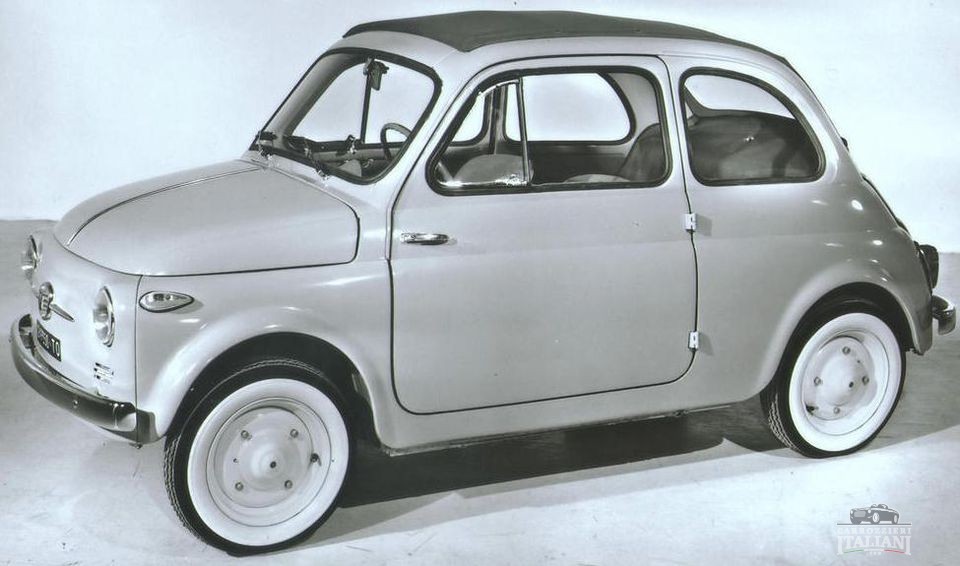
The body resembled the 600 only in general shape. Structurally, it was full of weight-saving solutions made possible by its smaller size. The sill structures performed the function normally carried out by longitudinal members. The strength of the front and rear sections came from connecting the bulkhead and rear seat back directly to the respective wheel housings, without additional reinforcements. As a result, the number of pressed panels was reduced and their forms simplified.
🔗 Read more: The History of Carrozzeria Boano
Both the side panels and doors were made from only two overlapping pressed elements: the outer skin and the inner frame, each made in one piece. Romolo Vercelli illustrated this in a drawing used by Giacosa to convince Fiat management of the Nuova 500’s low manufacturing cost.
Even material waste was carefully considered. The shapes of the panels were designed so that the sheet metal cut out of the side-frame door opening could be reused as the door skin, while the metal cut from the outer side panel around the door could become the door frame. Very little was left to return to the steelworks as scrap.
Why the coachbuilders wanted the 500 — and why it was difficult
As with the Topolino, there was probably not a coachbuilder in Italy who did not, at least once, try to make a Fiat 500 faster or prettier. But the result was mostly a colourful world of craftsmanship rather than the usual playground of the great coachbuilding houses.
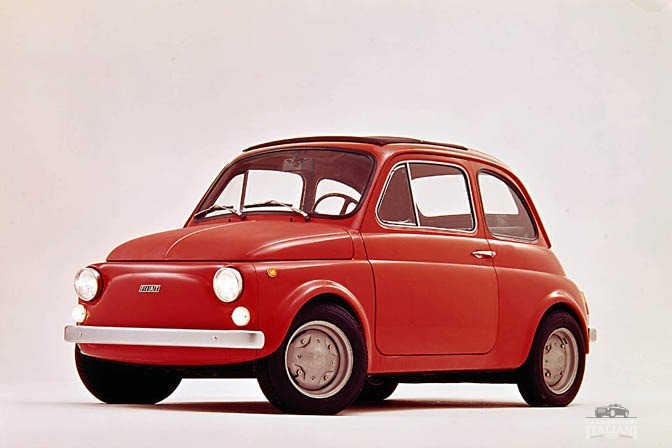
For the carrozzieri, the 500 was a difficult base. It was too cheap to justify expensive transformations, and its tiny dimensions made elegant proportions hard to achieve. Yet precisely because it was everywhere, it became a mirror of its era. Any modification, however modest, could help an owner stand out from the mass of identical white 500s filling Italian streets.
This world was extremely varied: part ingenuity, part fashion, part survival strategy for coachbuilders facing a changing market.
Turin 1957: the beginning of the 500 fuoriserie phenomenon
The phenomenon had a precise starting point: the 1957 Turin Motor Show.
The Fiat 500 had been launched only three months earlier, and its early commercial reception had been disappointing. Fiat needed to improve the car itself, adjust the pricing, and above all change its image. In those years, no one shaped the image of a model better than Italy’s coachbuilders.
So Fiat made an unusual and innovative move. It invited twelve of the leading names in the sector to present their own interpretations of the 500 at the Turin Motor Show in October 1957.
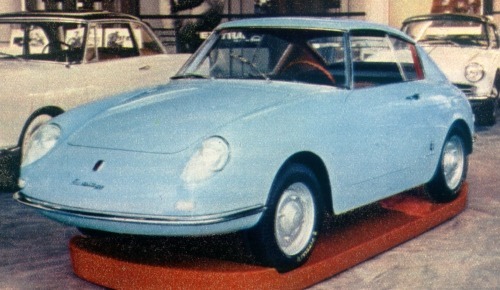
The twelve proposals clearly fell into two broad groups. The first followed the more traditional idea of the fuoriserie: small coupés and cabriolets with a sporty or at least grand touring flavour. The second followed a more original fashion of the moment: beach cars.
Pininfarina, Moretti, Viotti, Siata and Vignale chose the conventional route, creating three coupés and two cabriolets, all attempting to look as graceful as possible despite the 500’s very short wheelbase. Pininfarina was the only one to achieve a truly convincing result. The others, all designed by Giovanni Michelotti, were not quite up to the standards usually associated with either the designer or the coachbuilders who built them.
Even less successful were the coupés by Sebastiano Canta and Carrozzeria Monterosa of Giorgio Sargiotto, which looked rather awkward and unbalanced.
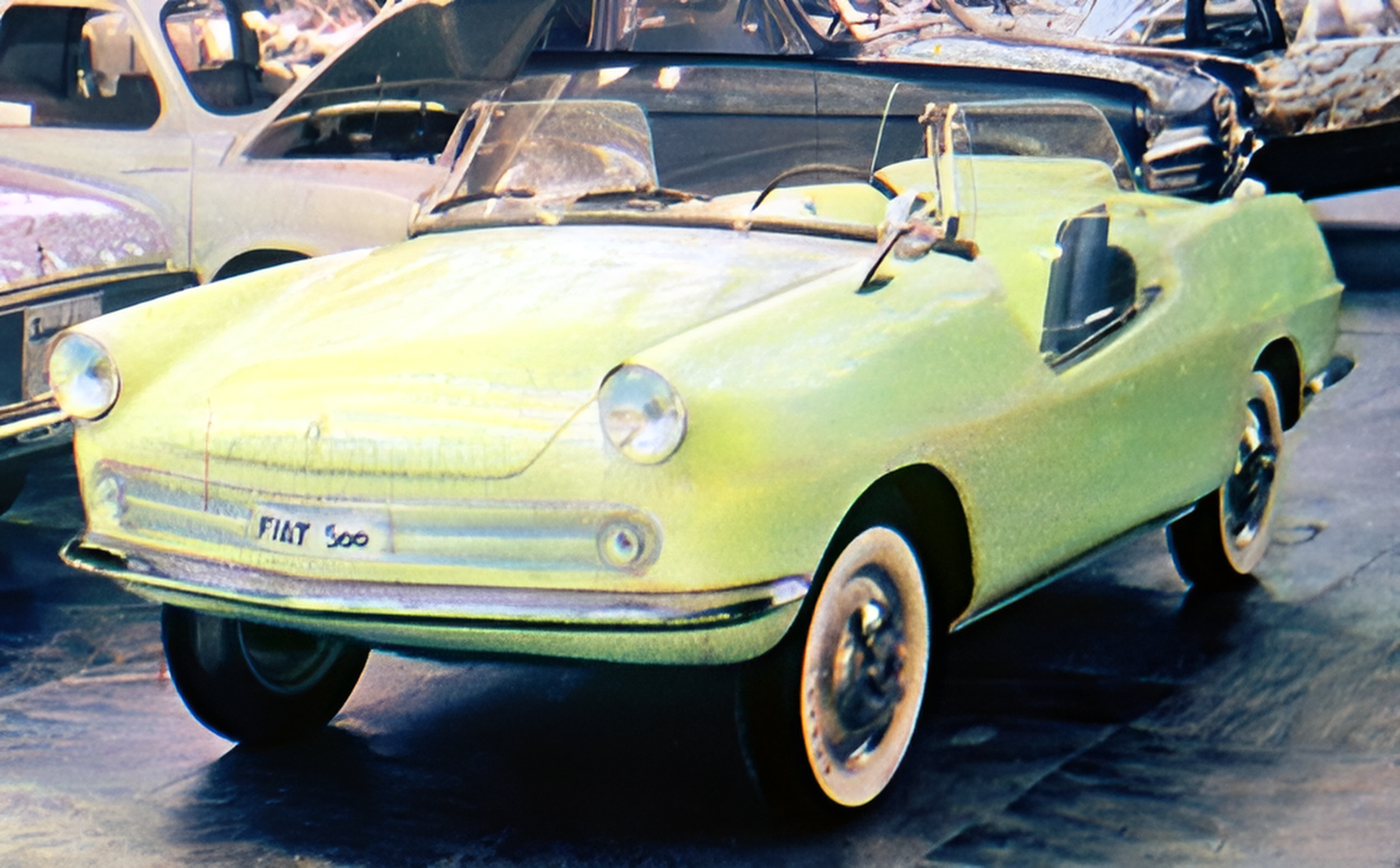
Felice Mario Boano, Francis Lombardi and Ghia instead focused on beach cars. Boano and Lombardi presented the 500 Spiaggia and Costa Azzurra, both small doorless cabriolets, while Ghia adapted its already famous Jolly formula to the 500. Pietro Frua also followed a marine inspiration, both with a small spider that looked almost like a motorboat, presented under his own name, and with the cabriolet he designed for Savio.
Conventional fuoriserie: beautiful idea, difficult business
The 1957 Turin Motor Show made one thing clear: the Fiat 500 chassis was not well suited to conventional coachbuilt specials. Beyond size and proportion, there was a simple commercial issue. The price difference between a 500 and a 600 was too small. Anyone willing to pay for a coachbuilt transformation would usually prefer to start from the more spacious and desirable 600.
This explains why very few coachbuilders produced small 500-based coupés or cabriolets over the years.
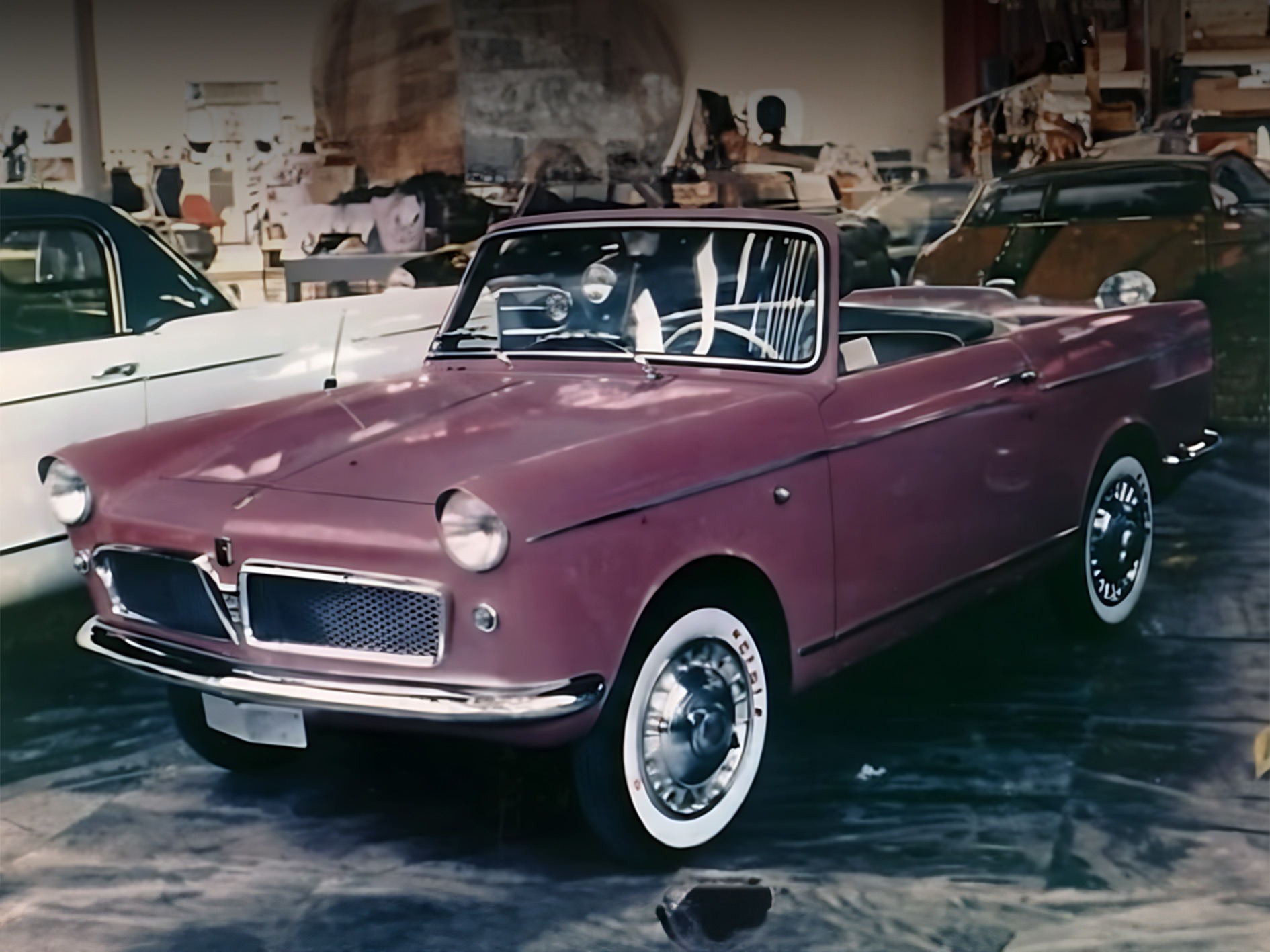
The only one who persisted with real consistency was Giovanni Moretti. After his 1957 version, he built two more in 1961 and 1964. The first cars were designed by Michelotti, while the last was by Dany Brawand, although the Swiss designer had probably already worked on the second version while collaborating with Michelotti. Production remained small, but not insignificant.
Vignale paired the “Mickey Mouse” Cabriolet shown at the Turin Motor Show with a coupé version called “Minnie”, but soon abandoned the idea. Aesthetically, the most successful of the conventional 500 specials was probably the Coccinella, built years later in 1964 by Francis Lombardi. Even that, however, found little commercial success and was produced only in a few examples.
The “elaborate”: the 500 dressed for attention
The real commercial opportunity lay elsewhere: the elaborate. These were cars that kept the standard body almost unchanged but were dressed up with eye-catching details: chrome frames, decorative front grilles, special paintwork, richer interiors and various trim upgrades. The fact that there was no engine at the front to cool did not make those fake grilles any less desirable.
Prices usually rose only slightly, by around 10 to 20 percent. But the appeal was strong. In an Italy hungry for cars, where waiting for a new Fiat could take up to six months, coachbuilders often had cars ready for immediate delivery. That alone could justify the extra cost.
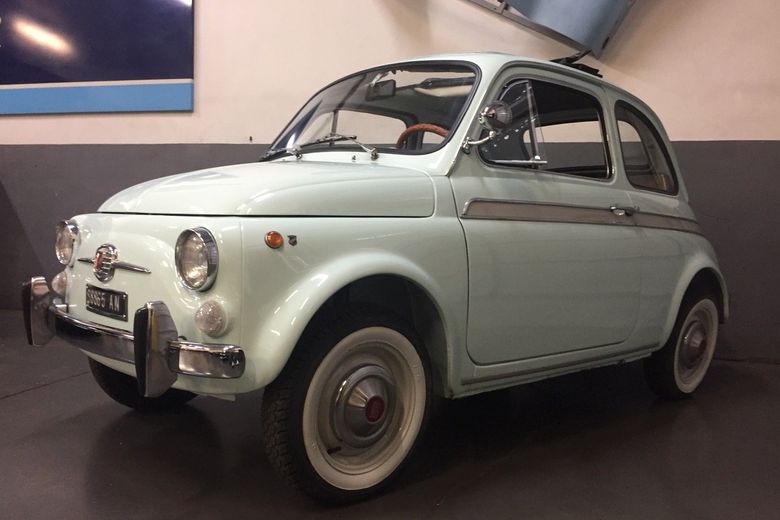
For the carrozzieri, these cars were not especially glamorous or technically demanding, but they were excellent business. In the lively Piedmontese industrial network, a whole subcontracting system developed around them. Some famous coachbuilders supplied the badge and the clientele, while the actual work was carried out by small specialist firms.
🔗 Read more: The Giulietta Goccia: Michelotti and Conrero’s One-Off That Shook the GT Order
This part of the story has often been forgotten. Research has shown that by the late 1950s many important coachbuilders, including Vignale and Bertone, were already struggling to satisfy demand for luxurious one-off commissions. It was unthinkable for them to divert skilled labour to modifying humble 500s and 600s, even if those cars sold well and profitably.
Instead, the work was often performed by specialists largely unknown to the public, such as Salvatore Amandonico or Carel — Carrozzerie Elaborate — of Domenico Filipponi, two of the more important Turin-based firms in this field, though now almost unknown.
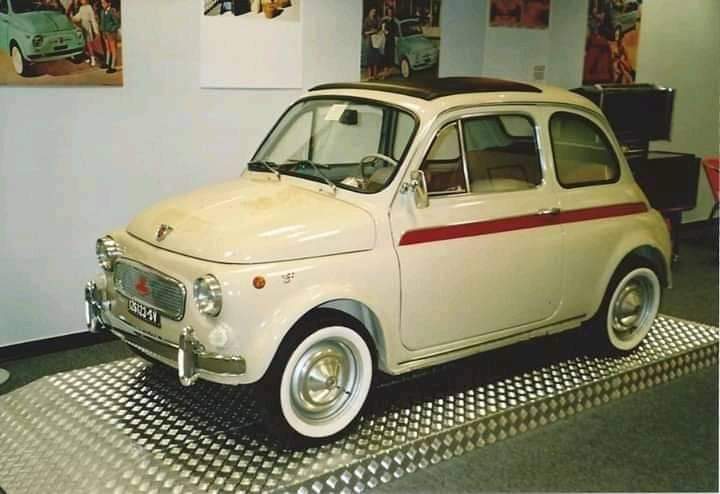
For the Fiat 500, the most prolific producers of elaborate versions were Moretti and Scioneri. Both offered wide ranges of dressed-up cars, from the 500 to the 1100 and, occasionally, even Lancia and Alfa Romeo models. Both companies exploited this market fully, from the mid-1950s until their closure in the late 1980s.
The most famous elaborate 500 was probably Francis Lombardi’s My Car, which found favour with the public thanks to a lightly restyled front end and a full metal roof.
The working 500: a rear engine problem
The rear engine was a major limitation for professional use. In an era when small estate cars still enjoyed some popularity, almost no one tried to turn the 500 into a proper working vehicle.
The only two who attempted it as early as 1957 were Francis Lombardi and Giovanni Moretti.
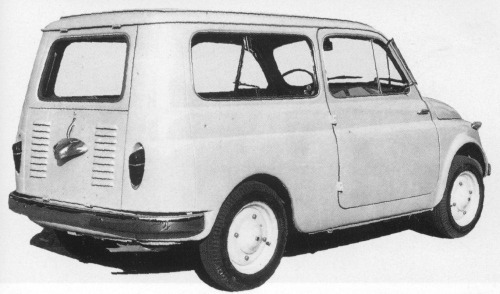
Lombardi soon realised that his Utility, despite rear windows that could be opened from the outside to improve access to the load platform, was basically pointless. The usable space was minimal, and the cost of the conversion brought the price too close to that of the Fiat 600 Multipla.
Moretti, stubborn as ever, refused to give up. He tried to solve the problem by moving the engine to the front, rotating it 180 degrees, changing the gearbox and effectively turning the 500 into a front-wheel-drive car. It was an expensive operation, developed through several body variants and mechanical evolutions. But it was doomed. Three years later, Fiat introduced its own 500 Giardiniera with the rear “sogliola” engine and sold it at a much lower price.
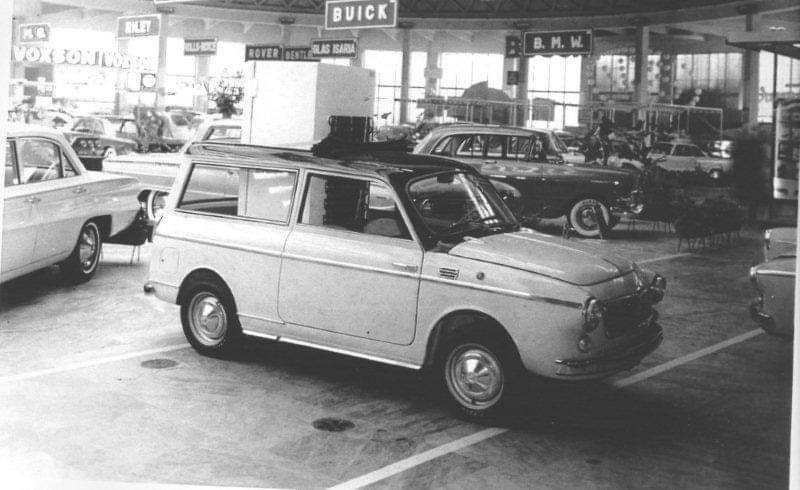
A slightly more successful working derivative was the small pick-up built by Giannini in the mid-1960s, starting from the Giardiniera.
Spiaggine, buggies and light off-roaders
Thanks to its friendly character and functional simplicity, the 500 found a natural role in the flourishing market for spiaggine, or beach cars. In the second half of the 1950s, every luxury hotel in a seaside resort seemed to need open cars to carry important guests. Ghia had invented the type, and many other coachbuilders soon copied it with variations.
The Fiat 600, in normal or Multipla form, was the most common base, depending on how many seats were needed. But the 500 also played an important part.
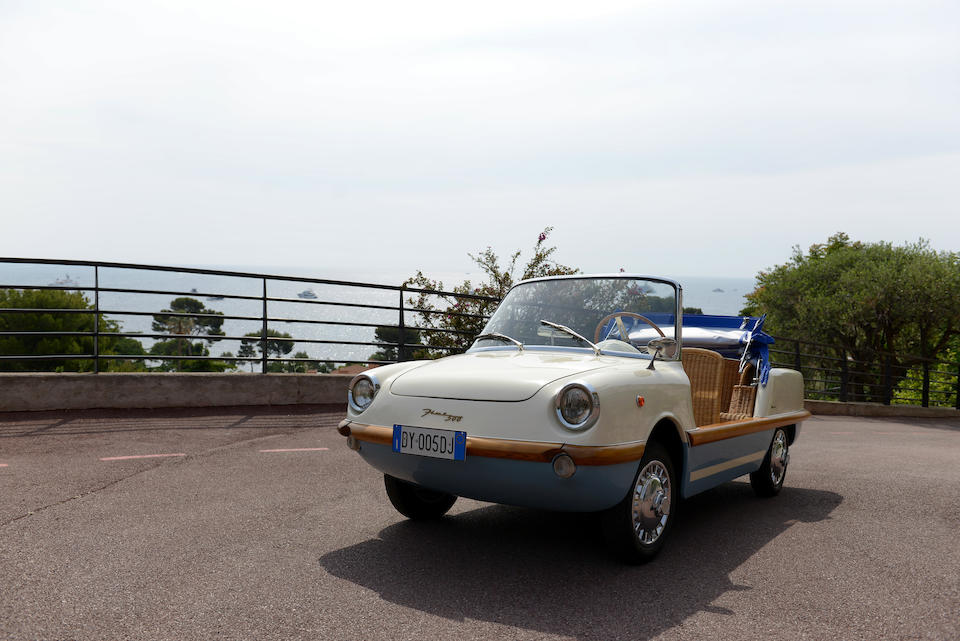
The most famous examples were Ghia’s Jolly models, exported around the world and built until the mid-1960s. Savio’s Elegance also enjoyed some popularity. It was essentially the car created by Boano for the 1957 Turin Motor Show, the project having been passed to Savio when Boano closed his coachbuilding firm to lead the newly established Fiat Centro Stile.
Another interesting example was the Decathlon by Carrozzeria Sibona-Basano, introduced in 1963. It was notable because its body was made of fibreglass, an innovative material at the time and one in which the company specialised.
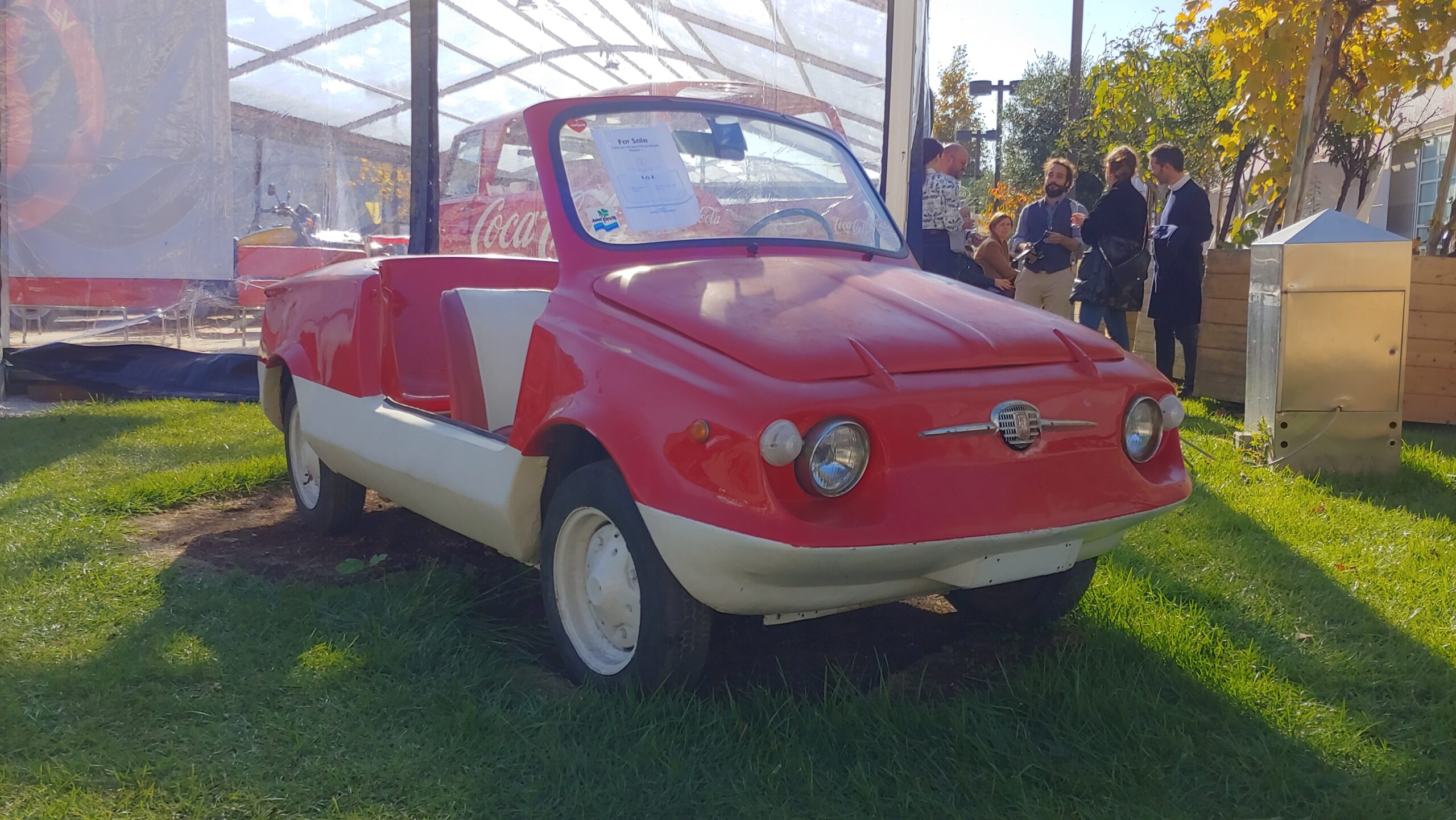
More widespread were the light off-roaders, which suited a younger clientele no longer interested in the automobile as a formal status symbol. These buyers preferred different values: freedom, nature, informality. They wanted simple, playful, practical cars that were not too expensive.
The ancestor of the type was Savio’s Jungla, based on the Fiat 600. But several coachbuilders tried smaller versions on the 500. Savio himself returned to the essential torpedo theme with the 500 Albarella of 1967, although it did not enter series production. CAP of Riva del Garda built the Scoiattolo, which was much more successful. Moretti went even further with the Minimaxi.
The “old style” fashion
By the late 1960s, the traditional coachbuilt fuoriserie market was in serious crisis. In search of new opportunities, specialists also followed the short-lived fashion for so-called “old style” cars.
The idea had already appeared abroad and was revived in Italy by Quattroruote, which promoted with Zagato the creation of an Alfa Romeo 6C 1750 replica on modern Giulia mechanicals.
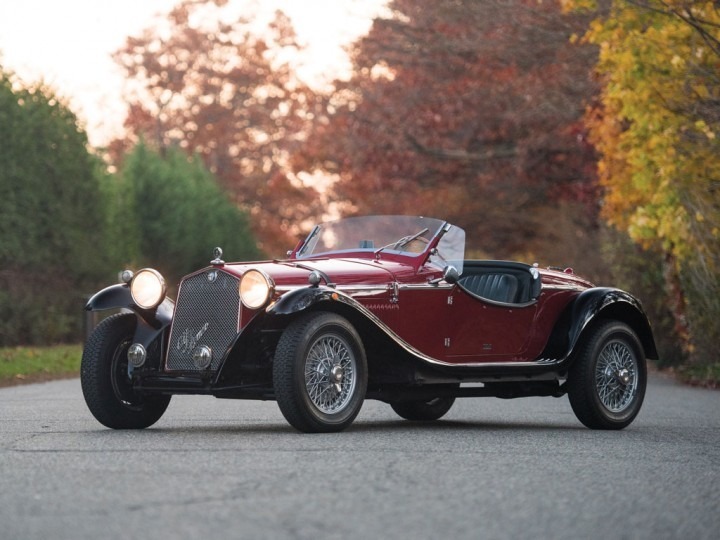
The Fiat 500 also became part of this curious movement through two famous models.
The most important was the Gamine, built by Vignale from 1967 and freely inspired by the lines of the Fiat Balilla Coppa d’Oro.
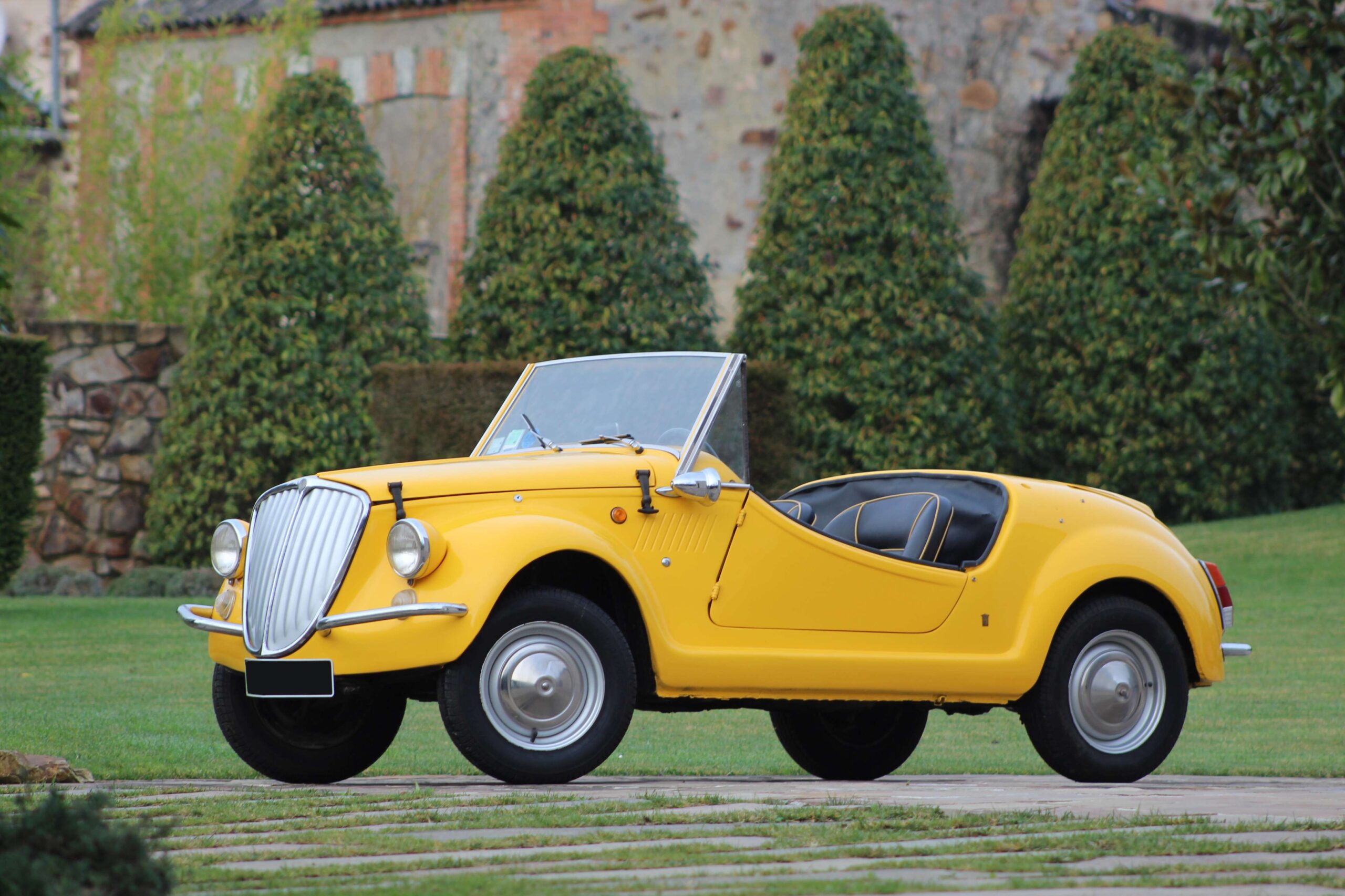
The public seemed initially intrigued, but the idea did not solve the coachbuilders’ crisis. By the end of the decade, the old-style fashion had already faded.
Concept cars on Fiat 500 mechanicals
There were relatively few true concept cars based on the Fiat 500, especially in the early years. Its size and performance did not make it an obvious dream-car platform.
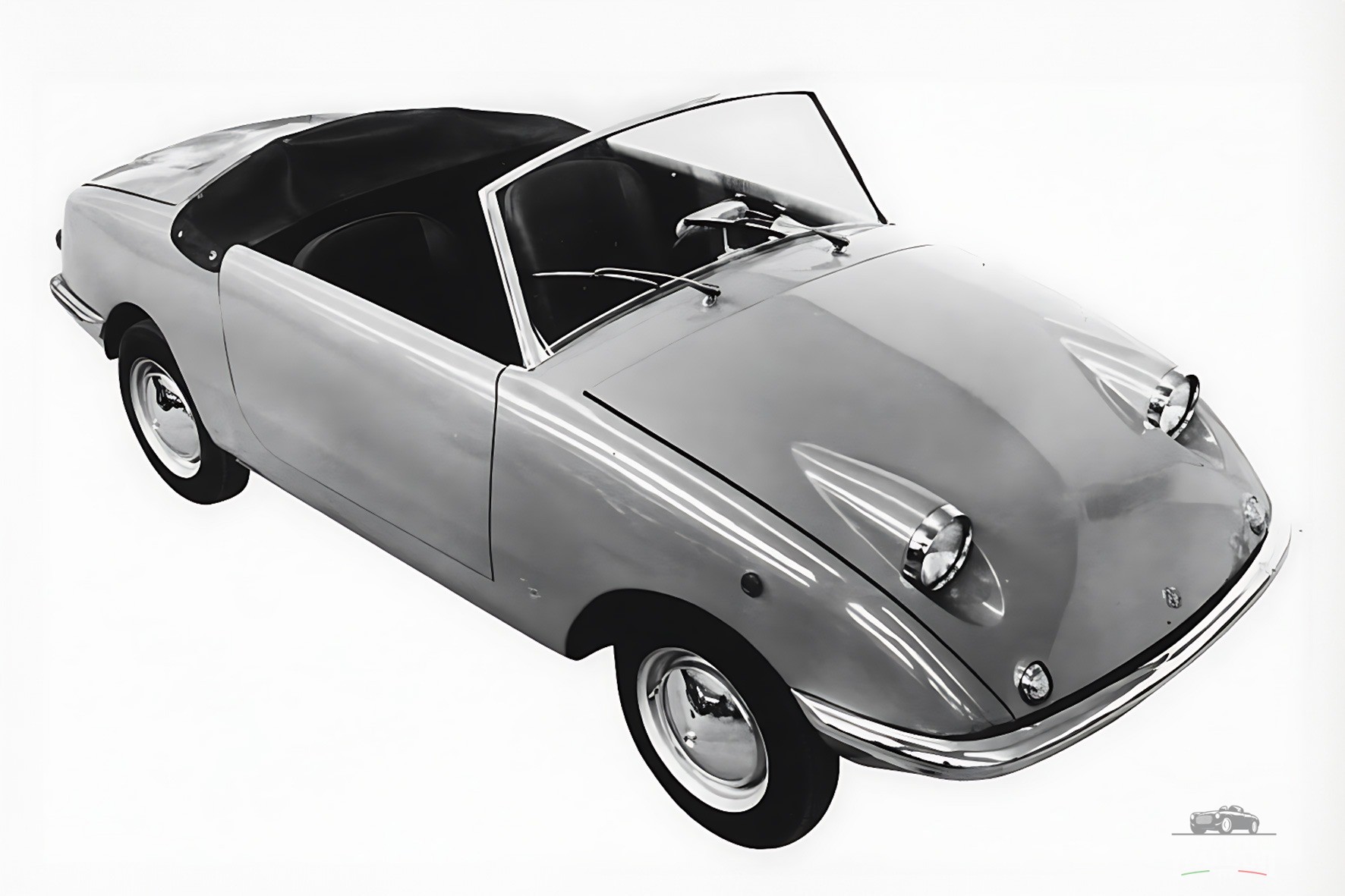
The one truly illustrious early example was the small cabriolet with retractable windscreen designed by Rodolfo Bonetto and built by Viotti for the 1960 Turin Motor Show.
Later, however, the 500’s extreme compactness made it interesting as a basis for city-car research. As congestion became a growing problem in major cities, the 500’s dimensions began to look less like a limitation and more like an opportunity.
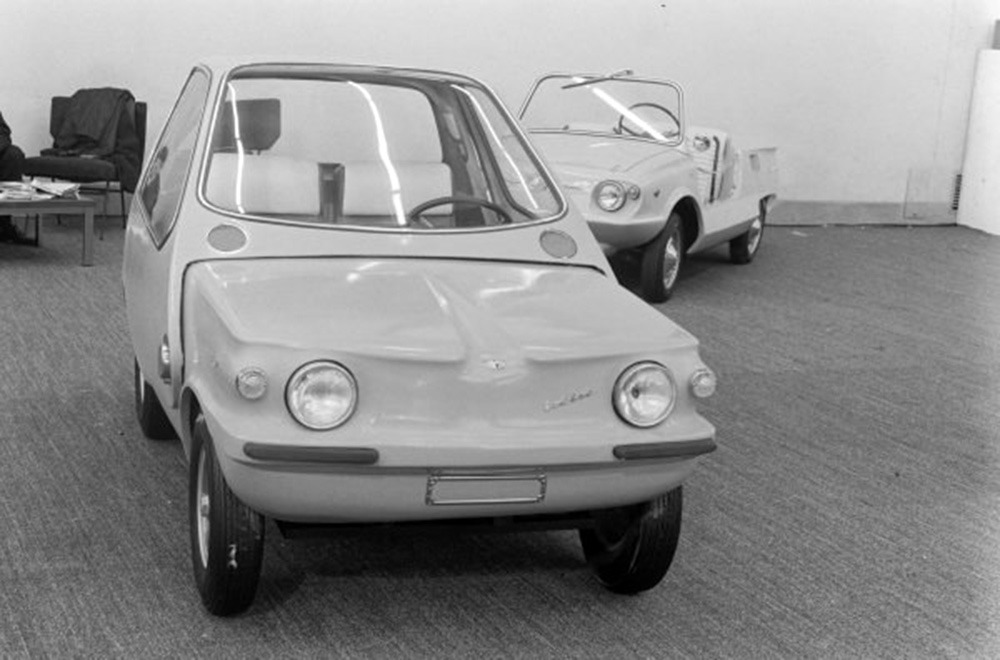
Among the first examples was the Tse-Tse by Sibona-Basano, built in fibreglass in 1964. It featured a strange opening system in which part of the body rotated forward. The following year came Fissore’s Aruanda, designed by Brazilian architect Ari Antonio da Rocha.
Other concepts were more focused on styling research, sometimes with a sporty flavour. These included the Fissore Mongho 650, designed by Aldo Sessano and a very young Paolo Martin; the Ragno, built by Carrozzeria Caprera in collaboration with Misar Eurodesign; and the Giannini 650 NP Sirio, designed by engineer Adolfo Melchionda.
Even more unconventional was the Zanzara by Ercole Spada, which took the rear-engined sports-car idea to an extreme, with an open body and an almost reclined driving position. All of these appeared in 1969.
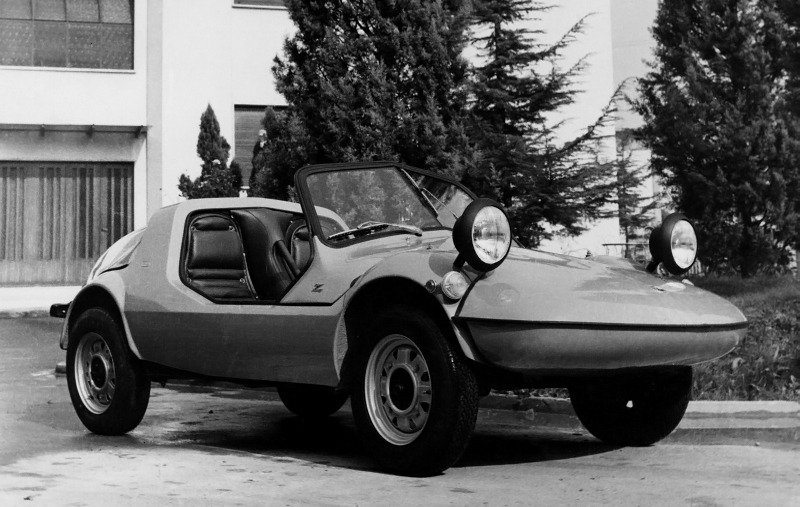
The urban-mobility theme returned with the last concept car based on the 500, although this time it was never officially stated that a Fiat chassis was used. De Tomaso, Vignale’s new owner, was then involved in complex negotiations to sell his companies to Ford. That car was the Vignale City Car, shown at the 1971 Turin Motor Show.
By then, however, the era of the fuoriserie was almost over.
The 500’s second life
The Nuova 500 was born as an exercise in cost, weight and packaging. It was deliberately modest, almost brutally simple at first, and it struggled to charm the public when new. Yet it became one of the most recognisable Italian cars of all time.
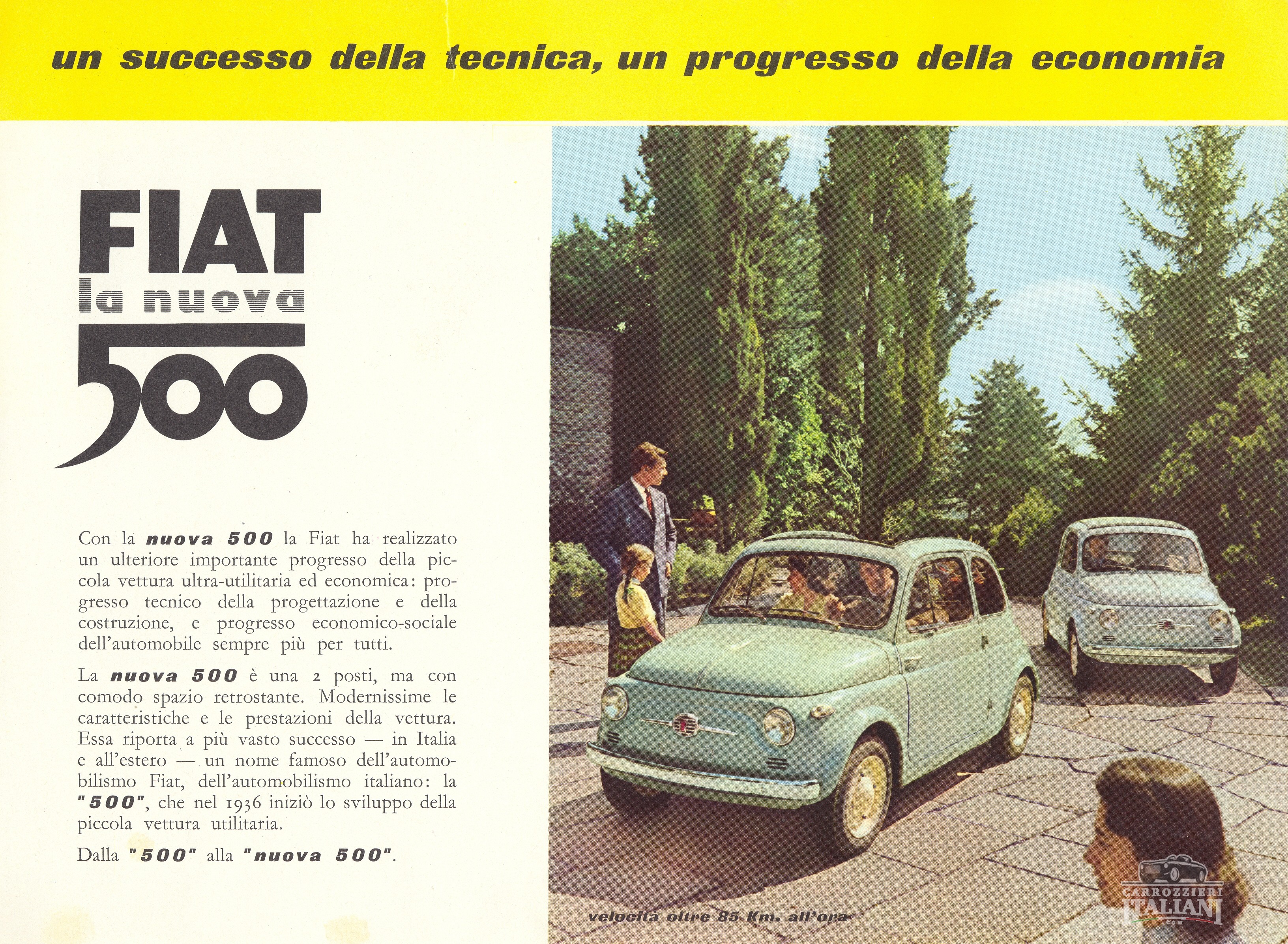
Its coachbuilt story is not one of grand elegance in the usual sense. It is not the world of Ferrari berlinettas, Alfa Romeo show cars or aristocratic one-offs. It is something more democratic, more improvised, and perhaps more revealing.
🔗 Read more: The Rise of the Giardiniera: From Utility Vehicle to Trendsetter
The Fiat 500 fuoriserie universe tells us about a country discovering mobility, about coachbuilders trying to survive industrial change, about small workshops doing invisible work behind famous badges, and about owners who wanted their tiny Fiat to be just a little more personal.
That may be why these cars still fascinate today. They were rarely perfect. Some were charming, some clever, some awkward, some almost absurd. But together they show the full elasticity of Italian coachbuilding culture: even the smallest and cheapest Fiat could become a canvas.
Source:
Personal Archive
Fiat 500: I 60 anni del mito (Alessandro Sannia for AISA)

ABOUT THE AUTHOR
Andreas Scheidl
Italian classic car enthusiast with German roots. Renowned as a respected figure in the classic car community, he serves as a jury member at various international concours d'elegance, including the Classic Gala Schwetzingen and Mantova. As a content creator, Andreas passionately shares his profound knowledge and appreciation for vintage automobiles. His heart beats for cars designed by Giovanni Michelotti, showcasing his discerning taste and dedication to preserving the timeless elegance of automotive history.
More stories by Andreas Scheidl ↗CONTINUE READING
Posts You Might Like
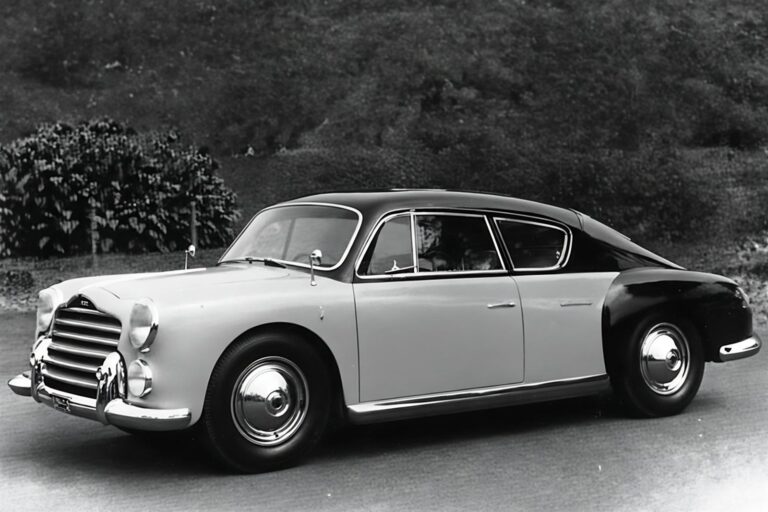
A Central Driving Position, a Rear-Mounted V8. Was This Really a Lancia?
In 1948, visitors to the Turin Motor Show could see an unusual Lancia on the stand of Carrozzeria Ghia. It was a large two-door coupé with a two-litre V8 mounted behind the…
Read story
Fioravanti F100: The Ferrari He Was Allowed to Imagine
Enzo Ferrari’s centenary, Leonardo Fioravanti’s independent studio and a supercar that explored air brakes, steel wheels and a new way of driving—without ever wearing the Cavallino.
Read story
Michelotti Shellette: When the Fiat 850 Became a Yacht
The yacht designer, the Turin stylist and the tiny coachbuilt car that crossed between the quay, the royal holiday house and the auction room. Some automobiles were conceived for the open road,…
Read story
Maserati A6 1500: A New Road for the Trident
When the doors of the Geneva Motor Show opened in March 1947, Maserati was a name that required little introduction to anyone who followed motor racing. What it did not yet possess…
Read story
THE CONVERSATION
Comments 0
Share a memory, a period photograph or a documented detail about this story.