
The Giulietta Goccia: Michelotti and Conrero’s One-Off That Shook the GT Order
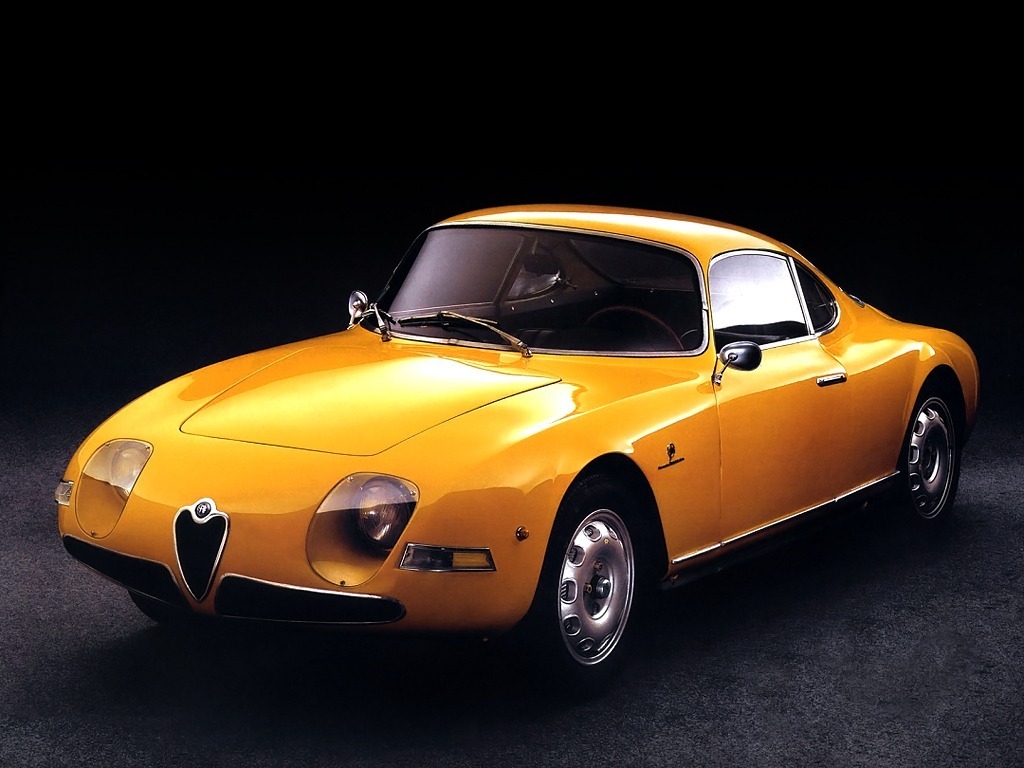
They called it “Goccia”—drop—for a reason that sounds simple until you sit with it. A drop is the smallest unit of a liquid that still behaves like a whole: surface tension pulls it into a shape that almost looks designed. When an aerodynamic car earns a nickname like that, it is usually because it resembles the wind’s favorite answer: a smooth teardrop, compressed and clean, the kind of line that promises speed before it delivers it. In the case of the Giulietta Sprint “Goccia,” that promise arrived at precisely the wrong time for everyone who thought the one-point-three-litre Gran Turismo class had become predictable.
The late nineteen-fifties into the early sixties were years when Italy was moving faster in every sense. In the “economic miracle” years, industrial output surged and a new consumer society gathered momentum; cars were no longer only tools or luxuries, but emblems of a modern life that could finally be lived at full volume. In that climate, Alfa Romeo turned the Giulietta into more than a model line. It became the hinge between craft production and an industrial rhythm capable of supplying demand—and still supporting an image that was inseparable from racing. Stellantis’ own heritage material is blunt about the moment: Giulietta production helped transform the Portello plant into a modern factory.
Gran Turismo racing, in parallel, carried a romance that was still legally enforced. The point of GT was that it was not a prototype class: it lived, at least on paper, in the world of production cars—recognizable machines with minimum production requirements and a visible relationship to road use, as FIA classifications and categories in period documents emphasize. That connection mattered culturally as much as technically. It framed the idea that a driver could own something real—something plated, insured, and driven—then sharpen it and show up at a circuit with a plausible claim to legitimacy.
🔗 Read more: The Alfa Romeo Giulietta SVZ
The Giulietta Sprint Veloce was tailor-made for that world, and the paperwork mattered as much as the metallurgy. FIA’s historic database records the homologation of the Giulietta Sprint Veloce in GT with a date of 14 June 1956, anchoring it to the regulatory ecosystem in which privateers could compete with a serious sense of belonging. Once a car is “in the book,” it becomes a platform, and platforms invite evolution. That is how the Giulietta spawned not only factory variants but an entire ecosystem of specials: bodies reimagined by coachbuilders, engines remade by tuners, identities rewritten by the needs of the next race.
The “Goccia” sits at the sharp edge of this idea. It is a one-off, yes, but its true significance is that it behaves like the alternate timeline the class could have become. A single car that, for a short season, demonstrated what would happen if you took the best of the period’s Italian design intelligence and paired it with the kind of engine development that erased the old tradeoff between power and fragility. That is why, in Maurizio Tabucchi’s account, the Goccia was not merely admired; it was a source of unease—“a drop of poison” in the bloodstream of the GT order.
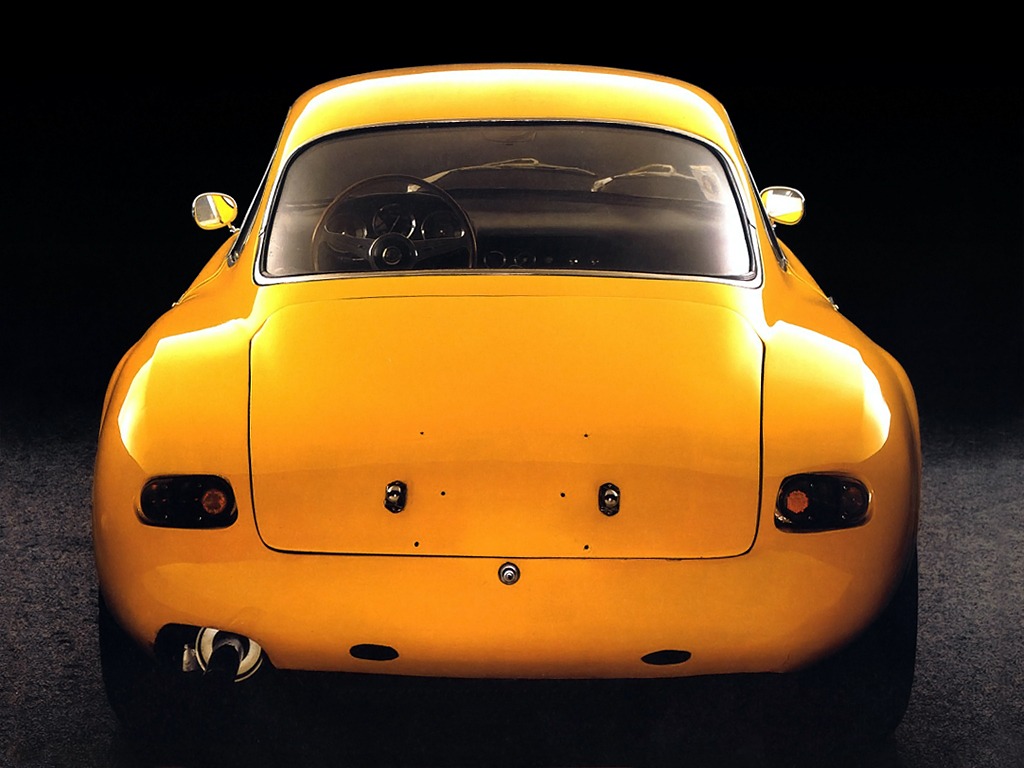
If you want to understand why a single Giulietta could make grown men nervous, you have to picture what “up to 1300 cc” meant in that era. It was not a footnote class. It was the front line where budgets, ingenuity, and pride collided. Tabucchi describes how the drivers who had banked on the Giulietta Sprint Veloce—and then on the SZ—were already contending with outsiders like the Lotus Elite, rare but disruptive, and with the constant pressure from smaller-displacement Fiat-Abarth Zagato machines that could win by being relentless, lightweight, and stubbornly reliable. Racing Sports Cars’ entry list for the 1961 Coppa Ascari at Monza captures this pressure in hard numbers: multiple Lotus Elite entries appeared in the same race and both ended in accidents, a reminder that “rare” was not the same thing as irrelevant.
In this environment, dominance was never permanent; it was rented, and the lease was renewed only through development. Even within the Giulietta family, the escalation is visible. Stellantis Heritage notes that alongside the Sprint, the period produced works of Italian coachbuilding art, including the Giulietta Sprint Speciale and the Giulietta SZ by Zagato, the latter explicitly intended for sporting use and produced in two series. The year 1961—when the Goccia emerged in its final form—was also the year the SZ “coda tronca” was out, a signal that Zagato itself was adapting aerodynamics based on new thinking about flow separation and drag.
🔗 Read more: Zagato’s “Coda Tronca”: The Legacy of the Cut-Tail Design
That matters because the Goccia is often misread as a pretty one-off rather than as a late-breaking weapon. Tabucchi stresses the timing: it arrived “late,” and in a world where technical cycles were shortening, late could be the difference between a threat and a curiosity. In the same breath he points to the looming Abarth challenge—particularly the competitive momentum of the Abarth 1000 Bialbero—which was already making Alfa Romeo customers anxious about the GT category’s future.
The anxiety was not abstract. It was financial and personal. Privateers did not buy cars the way collectors do now. They bought them like investments with risk—sometimes with borrowed money, often with the understanding that resale value depended on relevance. When you purchased a Giulietta SZ, you weren’t only buying performance; you were buying your place in a pecking order. In that context, the Goccia’s mere existence posed an uncomfortable question: what if the “right” Giulietta was not the one your invoice said it was?
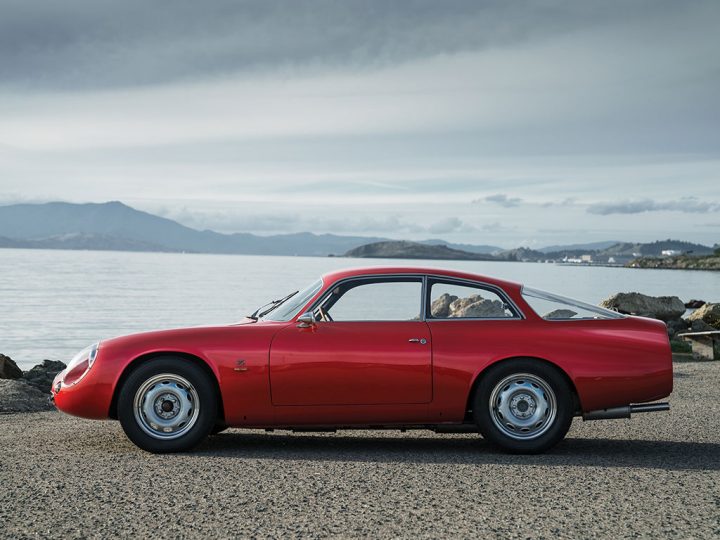
That is why Tabucchi frames the reaction as fear—beginning with Elio Zagato and extending to the community of drivers who had trusted the Sprint Veloce and then the SZ as their best defense in the class. The fear was not of beauty. It was of a package: reduced drag, reduced mass, and an engine that could deliver race-level specific output without scattering itself across the tarmac.
From Portello to a one‑off: the chassis and its second life
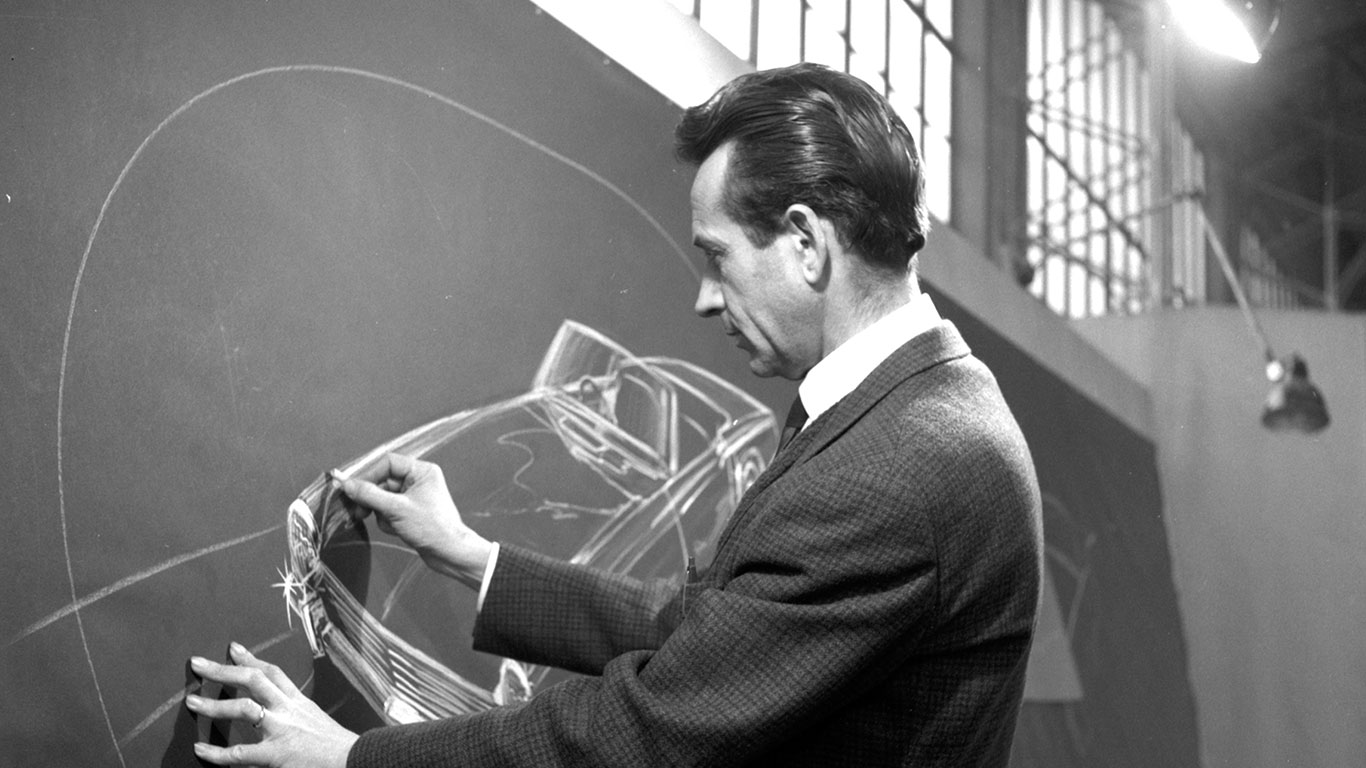
The Goccia is described in unusually direct terms: not as a clean-sheet creation, but as “a one-off born from the union of three elements”—the mechanical base of the Giulietta Sprint Veloce, the styling by Giovanni Michelotti, and the modifications carried out by Virgilio Conrero. That distinction is important because it clarifies the car’s true identity. Rather than being conceived as an entirely new model, it is better understood as a carefully orchestrated combination of existing components—almost like a transplant patient whose character depends on how harmoniously its parts were made to work together.
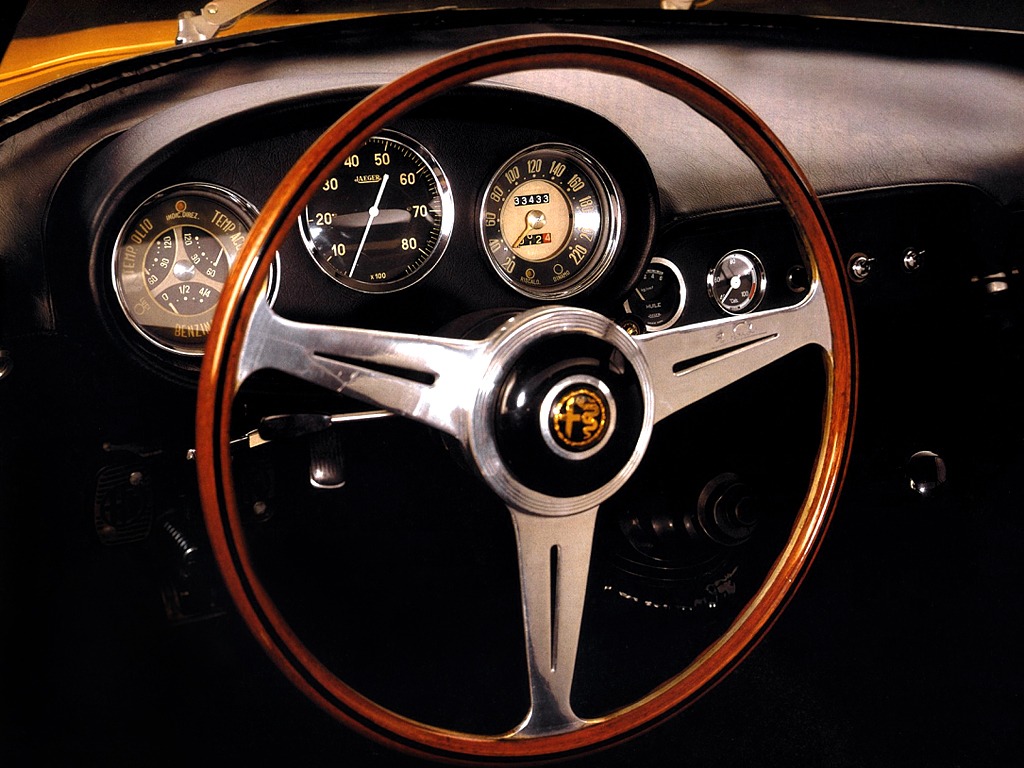
The story starts at Portello in 1957, when the car left the factories of Alfa Romeo as a Giulietta Sprint Veloce, Type 750E, chassis 04718. In “Veloce” specification, the Giulietta already behaved more like a competition machine than a refined grand tourer. Details that are often dismissed as minor curiosities reveal a deliberate philosophy on closer inspection: the sliding Plexiglas side windows and the deletion of the rear bench were not stylistic flourishes, but conscious efforts to reduce weight. They reflected a clear priority—performance first, comfort second—in a version where speed was never meant to share equal billing with practicality.
🔗 Read more: Giovanni Michelotti: The Freedom of a Thousand Designs
The chassis then effectively “changed clothes,” in keeping with a practice familiar to ambitious private racers of the era: start with a quick production car, remove its standard bodywork, and entrust it to a specialist to create something lighter and more aerodynamic. For chassis 04718, that specialist was Carrozzeria Zagato, whose earlier work on special Giuliettas had already influenced the niche that the Goccia would later redefine. The car is documented as having passed through an SVZ phase—part of the wider tradition of Sprint Veloce specials—before evolving into something even more distinctive.
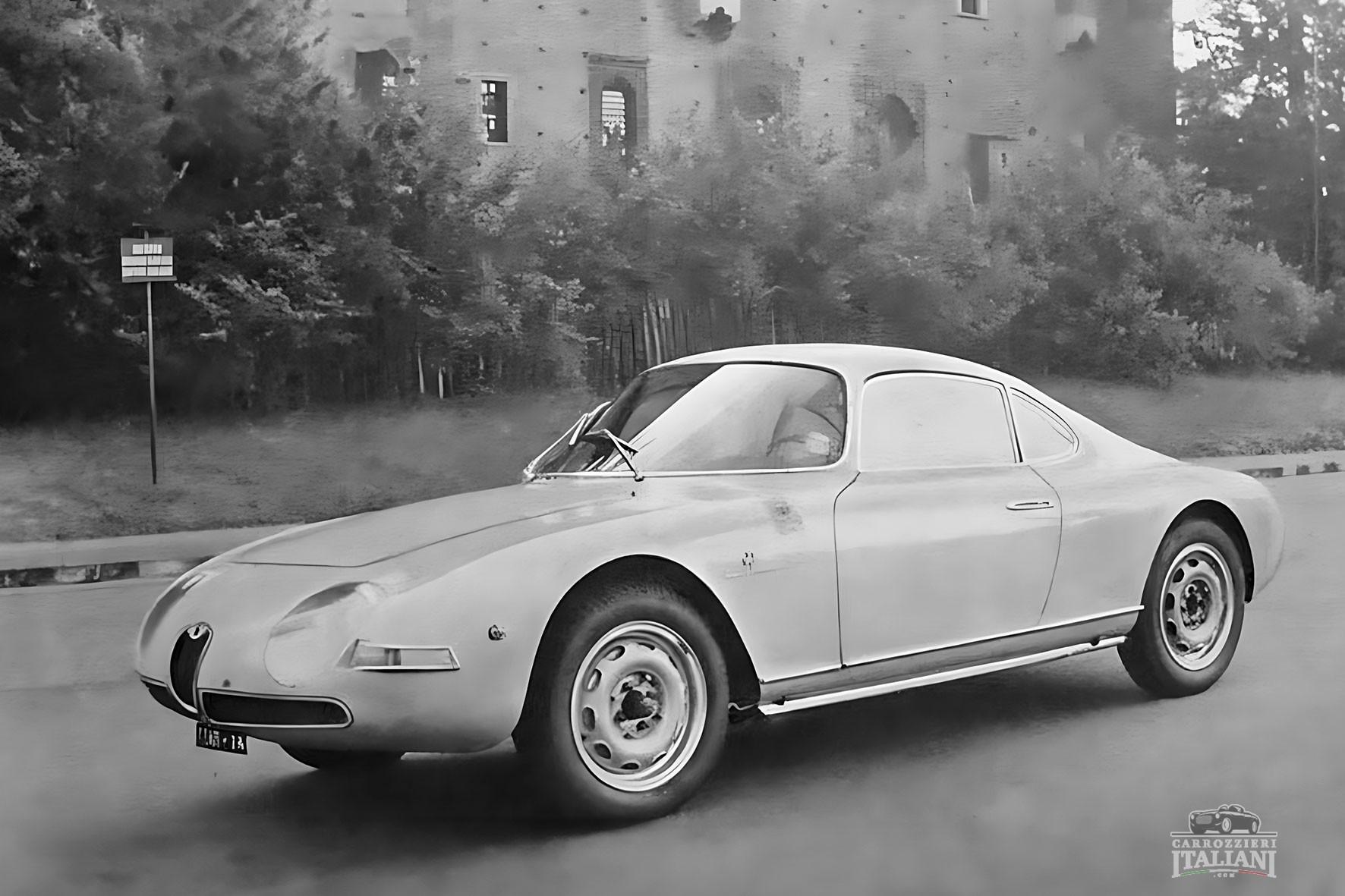
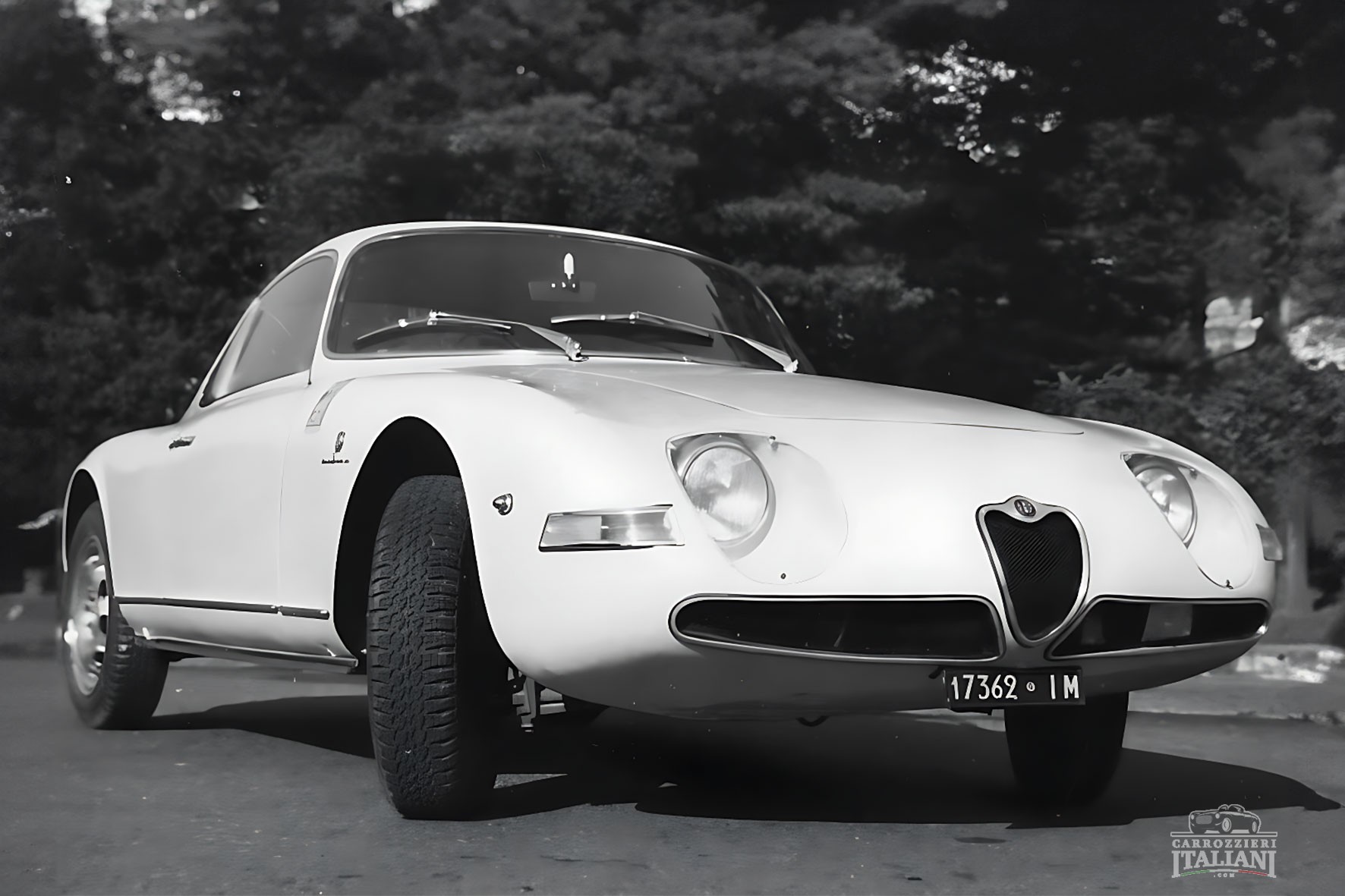
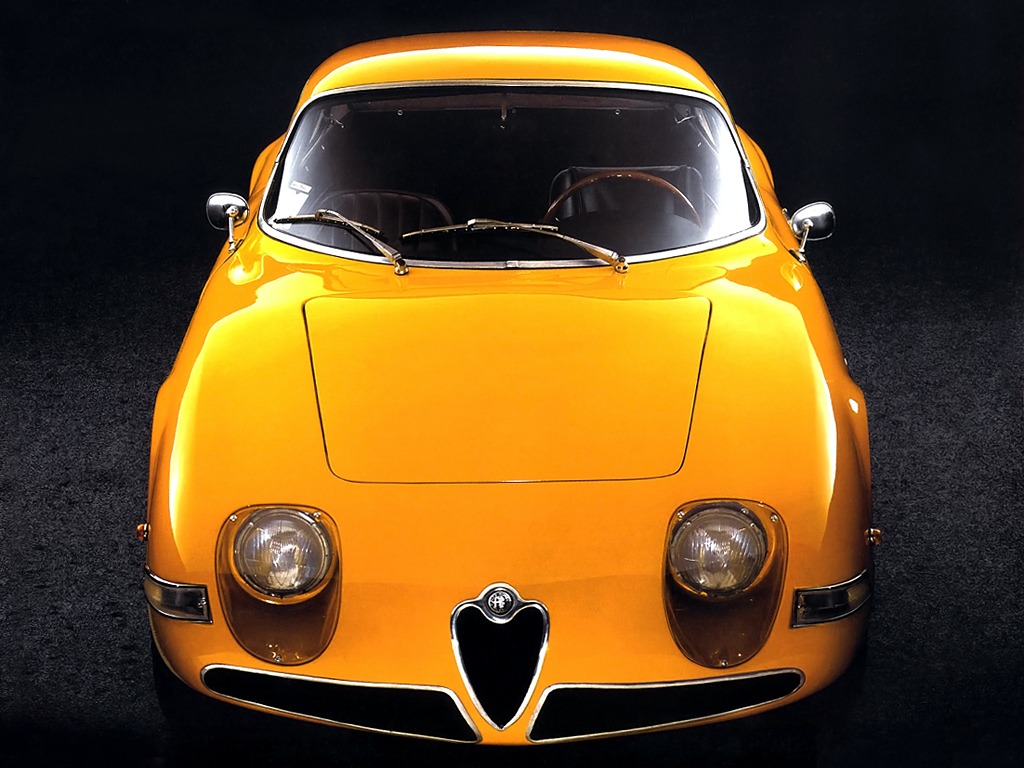
By 1961, the chassis received its defining body: an aluminum coupé designed by Michelotti. The site’s description is attentive to proportions: the wheelbase remained unchanged, but the silhouette became “low and slender,” with rounded lines characteristic of the era and a front that retained Alfa Romeo’s three-lobe grille identity. This is where the Goccia becomes more than an SVZ variant. It steps out of the Milanese Zagato orbit and into a different design language—one that is still “family” from the front, yet clearly pursuing a different aerodynamic ideal.
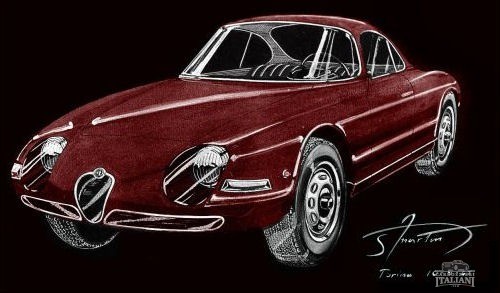
The historical irony is that this wasn’t a factory skunkworks project. It was a privateer’s escalation executed with top-tier talent. Tabucchi underlines the uniqueness: Michelotti and Conrero built only one example. That single fact changes how you should read every race result it ever posted. When a production-based car wins, it sets a pattern. When a one-off is quickest, it becomes destabilizing. Rivals cannot simply buy it and copy it; they have to reverse-engineer it from a distance, and distance is expensive.
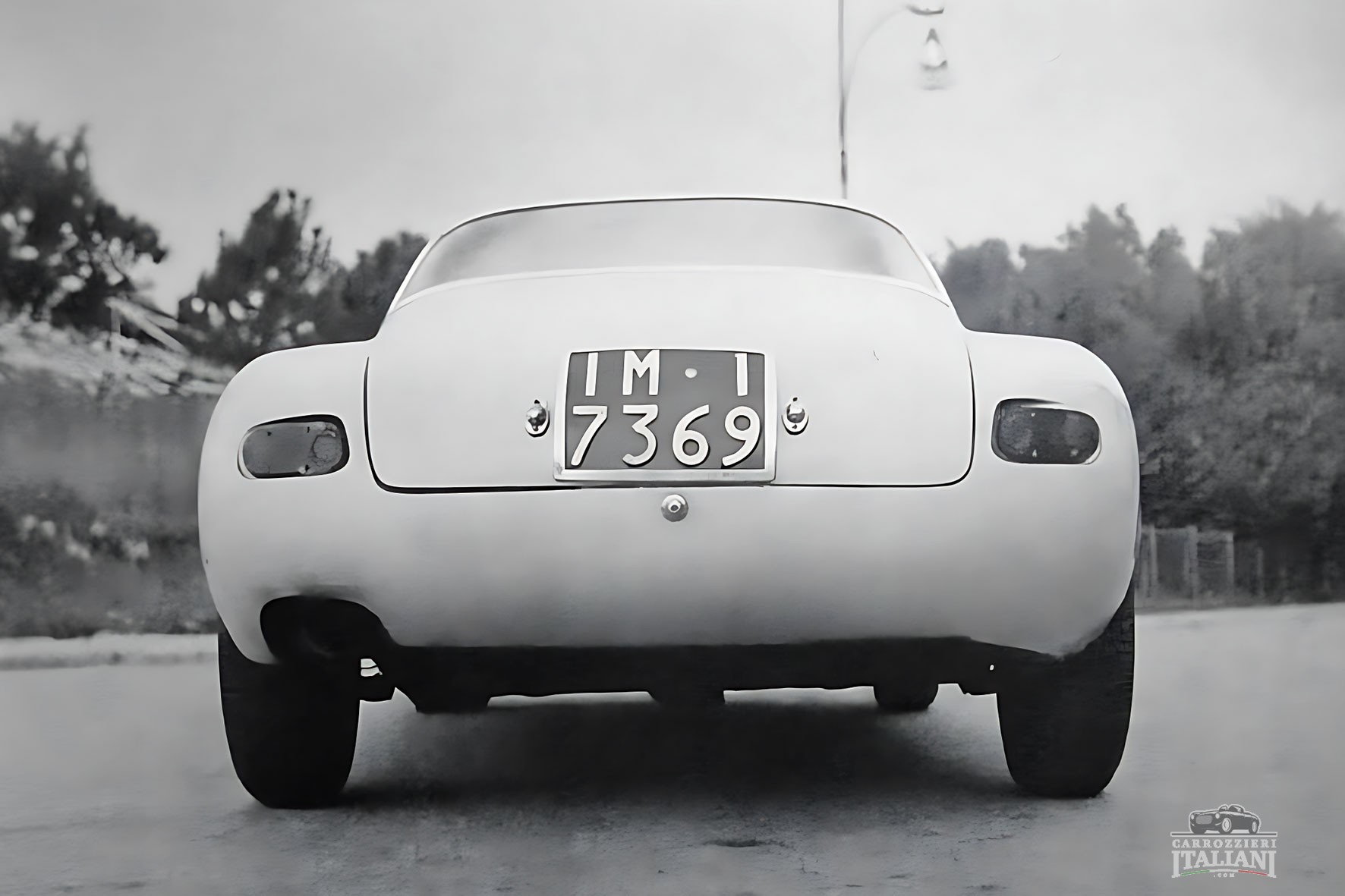
The Goccia’s identity is also anchored by its paperwork and plates, which become clues to its traveling life. In Tabucchi’s account, at Monza in 1961 it still wore registration IM 17369 and, by then, Conrero had become its owner. Later, race archives trace it far from northern circuits: Racing Sports Cars records chassis 04718 appearing at the Targa Florio in 1963 and 1964 with registration CT 77821, showing that the car was not just a one-season northern curiosity but a machine that traveled into Sicily’s uniquely punishing race culture.
Michelotti’s aerodynamic gamble
The Goccia’s design is easiest to praise and hardest to explain, because it belongs to a transitional aerodynamic moment: late enough that wind tunnels and theory mattered, early enough that stability problems still arrived like surprises. Tabucchi reports that a scale model was tested in a wind tunnel and returned excellent results, yet at high speed the car suffered significant rear-end instability—attributed to a tail that sat too high. That single detail turns the Goccia from an object of assured elegance into a working prototype, the kind of car that teaches you—sometimes abruptly—that low drag is not the same thing as aerodynamic peace.
From a design perspective, the fastback tail is described as echoing another creation by Giovanni Michelotti, though rendered with softer, more rounded forms and still untouched by the truncated-tail principles associated with Wunibald Kamm. The nuance matters. The Goccia emerges as a true teardrop at a moment when racing design was beginning to favor the logic of controlled airflow separation. It stands at the threshold between two aerodynamic schools: one striving for the purity of an ideal, flowing silhouette, and the other pursuing quantifiable, repeatable stability at sustained racing speeds.
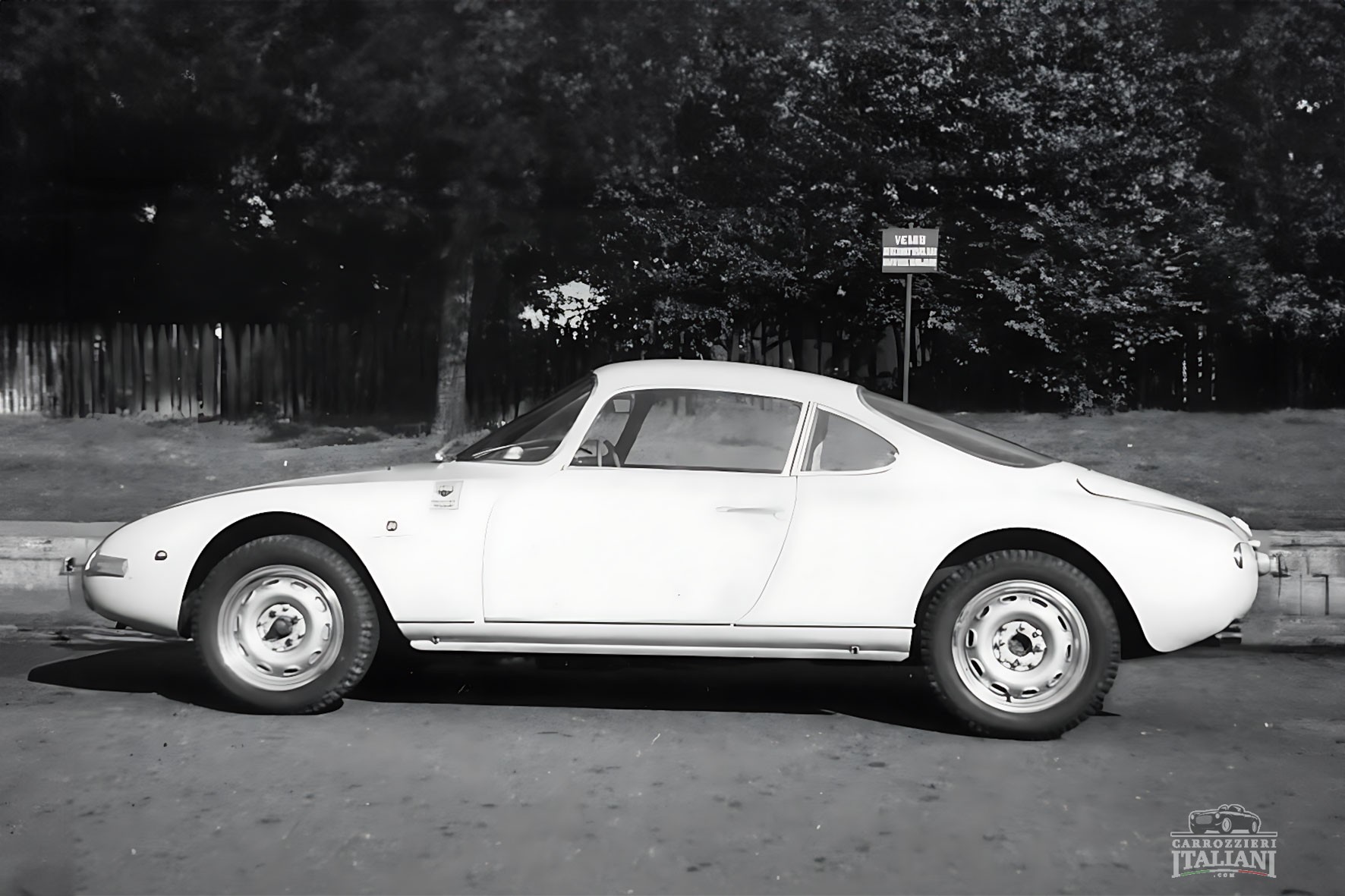
This is also why the fear it generated was rational. Zagato’s SZ, especially in coda tronca form, represented a production-derived, competition-focused approach built on lightness and aerodynamic refinement. Stellantis Heritage’s brief specifications for the Giulietta SZ place it at 220 km/h with a weight of around 840 kg, already strong numbers for the class. The Goccia, by contrast, chased the same speed with a different method: an even tighter package, an even lower silhouette, and a body whose smoothness was its own argument.
Some of the most revealing details are the ones that sound like annoyances. Tabucchi notes that the windshield was from the Giulietta Sprint Speciale and that several cracked because the body structure tended to flex. That is not just a workshop anecdote; it is engineering information. It tells you the price of removing the standard steel coupé structure: you buy lightness and shape freedom, then you pay by managing torsional stiffness and its consequences. In an era before modern composites and CAD stiffness modelling, this was solved the old way: with iterative reinforcement, or with acceptance, or with a driver who learned what the car would tolerate.
🔗 Read more: Zagato Milano: A History Shaped by Speed and Style
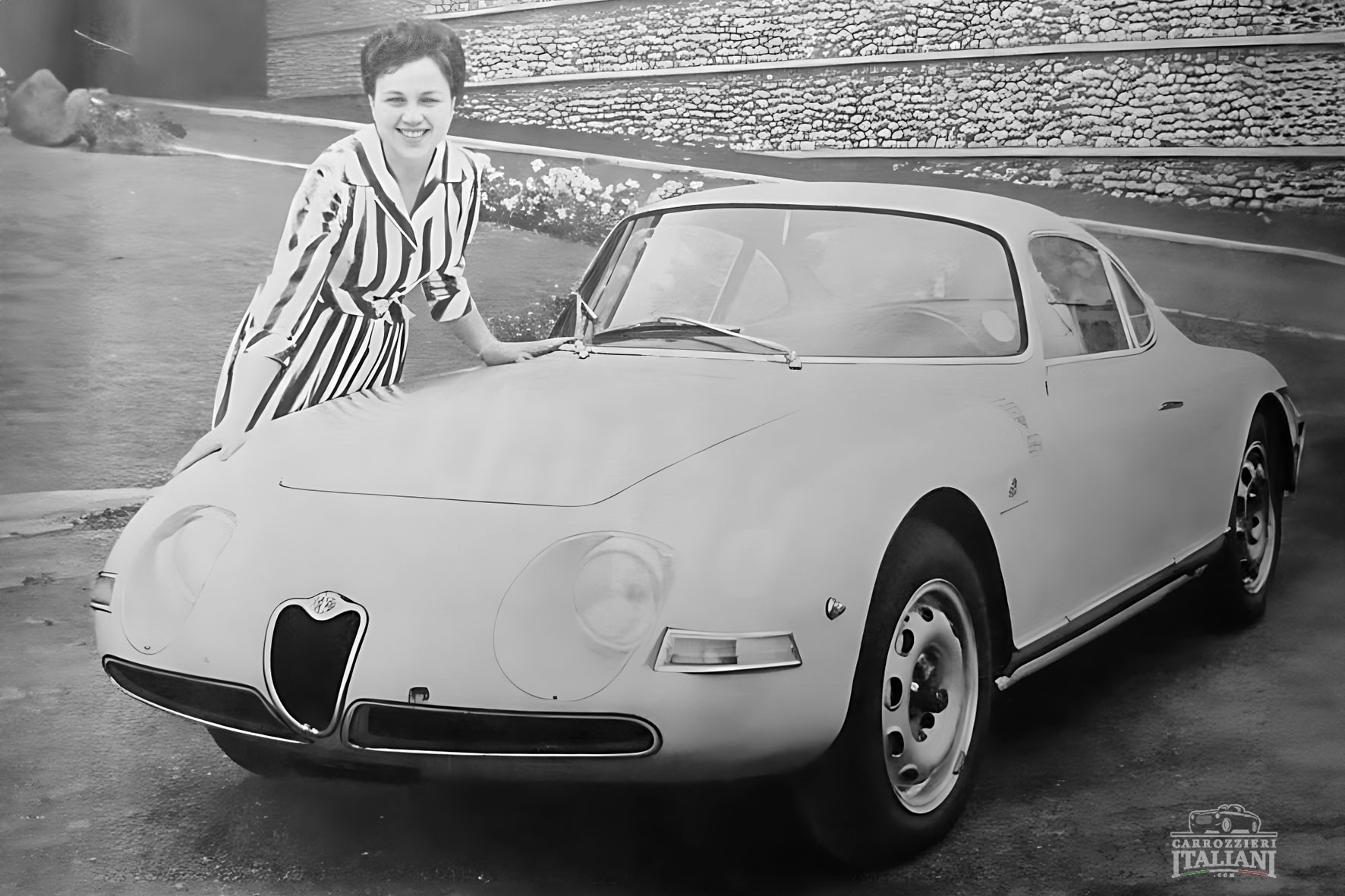
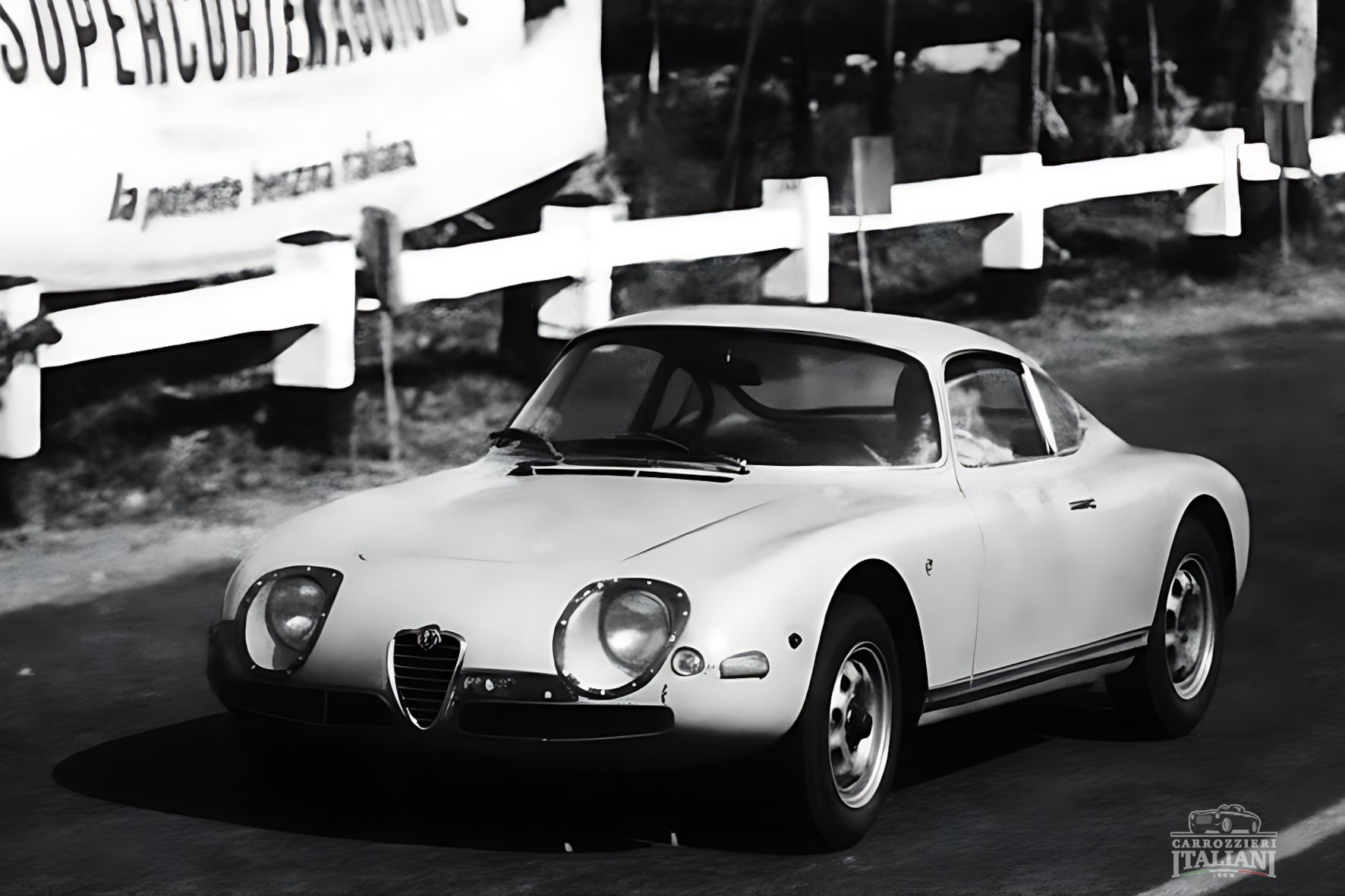
The Goccia’s front end reflects Michelotti’s measured approach. The familiar three-lobed grille remains in place, preserving the unmistakable “family” identity of an Alfa Romeo, even as the headlamps were faired in to improve aerodynamic efficiency. That balance is significant. A competition special that still resembles a member of the Alfa lineage is easier to embrace—culturally and emotionally—by those who already feel allegiance to the marque. In this sense, the car’s design does more than manage airflow; it communicates continuity. The persuasion is embedded directly into the sheet metal.
Conrero’s engine room and the Milan counterweight
Racing proof: Monza, Aosta–Pila, and the longer trail
Why the Goccia stayed alone

ABOUT THE AUTHOR
Andreas Scheidl
Italian classic car enthusiast with German roots. Renowned as a respected figure in the classic car community, he serves as a jury member at various international concours d'elegance, including the Classic Gala Schwetzingen and Mantova. As a content creator, Andreas passionately shares his profound knowledge and appreciation for vintage automobiles. His heart beats for cars designed by Giovanni Michelotti, showcasing his discerning taste and dedication to preserving the timeless elegance of automotive history.
More stories by Andreas Scheidl ↗CONTINUE READING
Posts You Might Like
A Central Driving Position, a Rear-Mounted V8. Was This Really a Lancia?
In 1948, visitors to the Turin Motor Show could see an unusual Lancia on the stand of Carrozzeria Ghia. It was a large two-door coupé with a two-litre V8 mounted behind the…
Read story
Fioravanti F100: The Ferrari He Was Allowed to Imagine
Enzo Ferrari’s centenary, Leonardo Fioravanti’s independent studio and a supercar that explored air brakes, steel wheels and a new way of driving—without ever wearing the Cavallino.
Read story
Michelotti Shellette: When the Fiat 850 Became a Yacht
The yacht designer, the Turin stylist and the tiny coachbuilt car that crossed between the quay, the royal holiday house and the auction room. Some automobiles were conceived for the open road,…
Read story
Maserati A6 1500: A New Road for the Trident
When the doors of the Geneva Motor Show opened in March 1947, Maserati was a name that required little introduction to anyone who followed motor racing. What it did not yet possess…
Read story
THE CONVERSATION
Comments 0
Share a memory, a period photograph or a documented detail about this story.