
A Central Driving Position, a Rear-Mounted V8. Was This Really a Lancia?
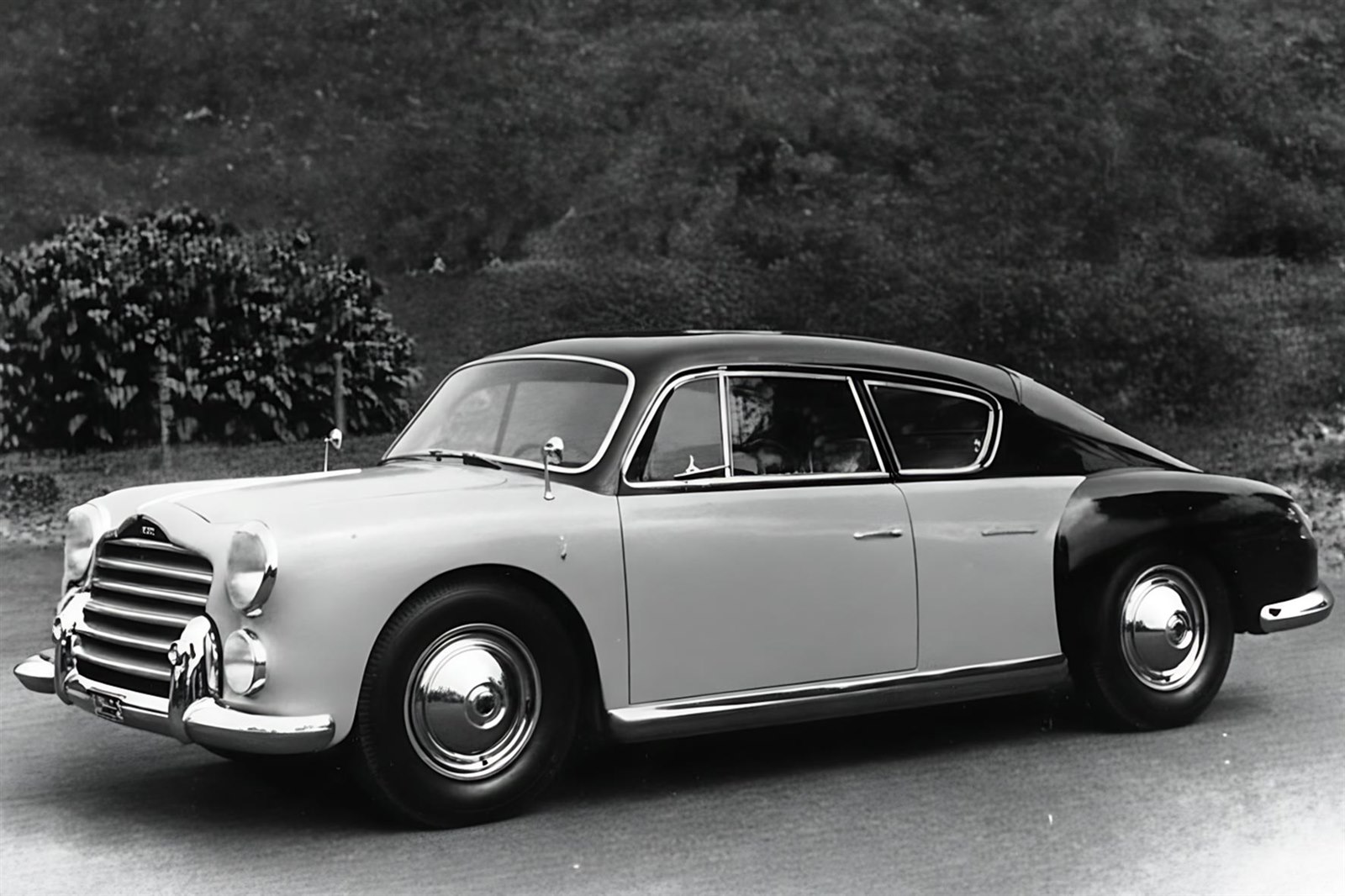
In 1948, visitors to the Turin Motor Show could see an unusual Lancia on the stand of Carrozzeria Ghia. It was a large two-door coupé with a two-litre V8 mounted behind the passenger compartment and a central driving position, with seating for three occupants in the front and a fourth behind them. Known as the A10/853 or LP01, the car had been developed as part of Lancia’s investigations into a replacement for the Aprilia. It was subsequently driven by Gianni Lancia himself, although the project never progressed beyond the experimental stage.
The Search for a New Lancia
The Aprilia had been introduced in 1937 and remained in production, with an interruption during the war, until 1949. Its unitary body, independent suspension and compact V4 engine reflected the engineering philosophy established by Vincenzo Lancia, who had died shortly before the model entered production. Finding a suitable successor was consequently a demanding task for a manufacturer whose reputation rested heavily on the technical qualities of its cars.
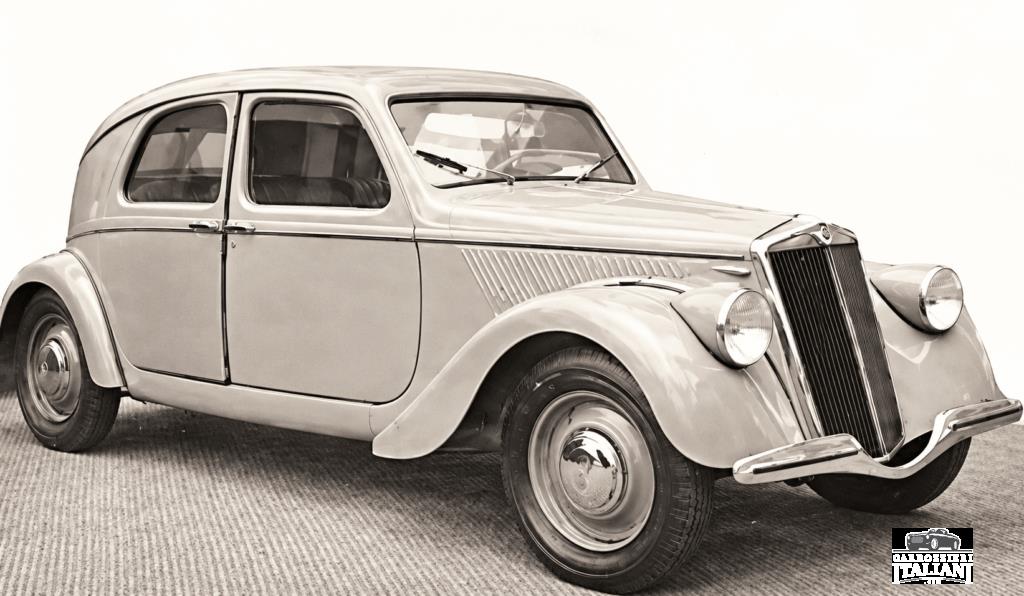
Gianni Lancia, who was increasingly involved in running the company alongside his uncle Arturo, took a close interest in the development of new models. During the war, the technical department had already begun examining several possible configurations for the next Lancia, including the use of a rear-mounted engine.
Studies dating from 1944 were followed in February 1945 by a proposal for a four-door saloon with a V8 positioned behind the passenger compartment. The programme became known as the A10 and was developed within the engineering organisation led by Vittorio Jano, at a time when Francesco De Virgilio was also working on experimental engines that would eventually contribute to the development of the Aurelia.
The rear-engined layout was sufficiently interesting to justify the construction of a working prototype. Rather than following the original four-door proposal, however, Lancia commissioned a two-door body from Carrozzeria Ghia, resulting in a car whose appearance was quite different from that of the Aprilia.
An Idea Dating Back to 1934
The most unusual feature of the LP01, its central driving position, had an interesting precedent in Lancia’s own history.
On 30 April 1934, Vincenzo Lancia filed a patent for a Vettura automobile a tre posti frontali, a vehicle with three front seats. Associated with a design study by engineer Censin, the proposal envisaged a compact automobile with a streamlined, almost egg-shaped body and an unconventional arrangement of the passenger compartment.
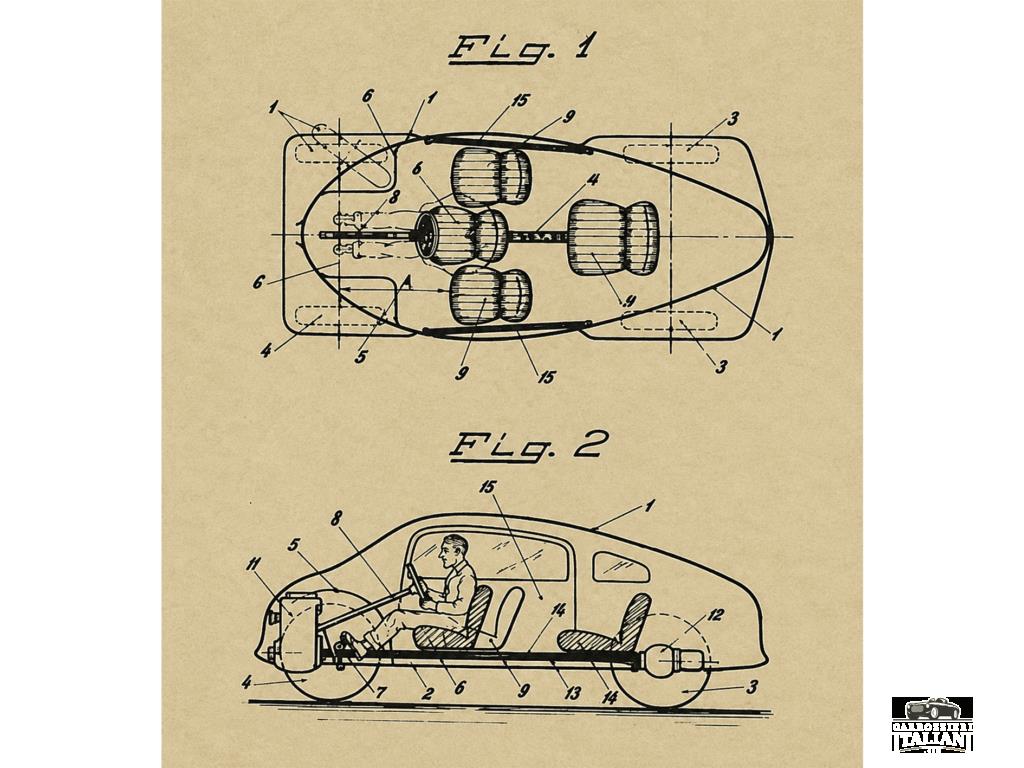
The driver occupied the central position, slightly ahead of two individual passenger seats, while a fourth occupant could be accommodated on a seat behind them. This configuration was intended to make efficient use of the available interior space without increasing the overall dimensions of the vehicle.
The proposed body was less than 3.5 metres long and featured rounded surfaces designed to reduce aerodynamic resistance. Its form was quite different from that of contemporary Lancia models, particularly in the treatment of the front and rear extremities, which followed a continuous curved outline.
The project remained at the design stage. Its appearance was considered too far removed from contemporary tastes, although aspects of the aerodynamic research have subsequently been discussed in connection with the development of the Aprilia.
The arrangement of the seats was revived in the LP01 more than a decade later, this time within a considerably larger automobile and with an entirely different mechanical layout. The two projects were not successive versions of the same car, but the similarity in their interior arrangements is noteworthy.
The Ghia Coachwork
The LP01 was constructed on a tubular chassis developed specifically for the experimental V8. Carrozzeria Ghia was responsible for the body, produced during the period when Mario Felice Boano was directing the Turin firm.
Ghia had undergone considerable changes following the death of its founder, Giacinto Ghia, in 1944. Boano and Giorgio Alberti acquired the business, and Boano subsequently became its sole owner in 1947. The company was then engaged in the production of special bodies on established chassis, alongside commissions for experimental and individually built automobiles.
The Lancia presented an unusual assignment. With the engine situated behind the passenger compartment, the front section of the chassis did not have to accommodate the usual longitudinal power unit, while the rear bodywork needed sufficient volume for the V8, transmission and associated components.
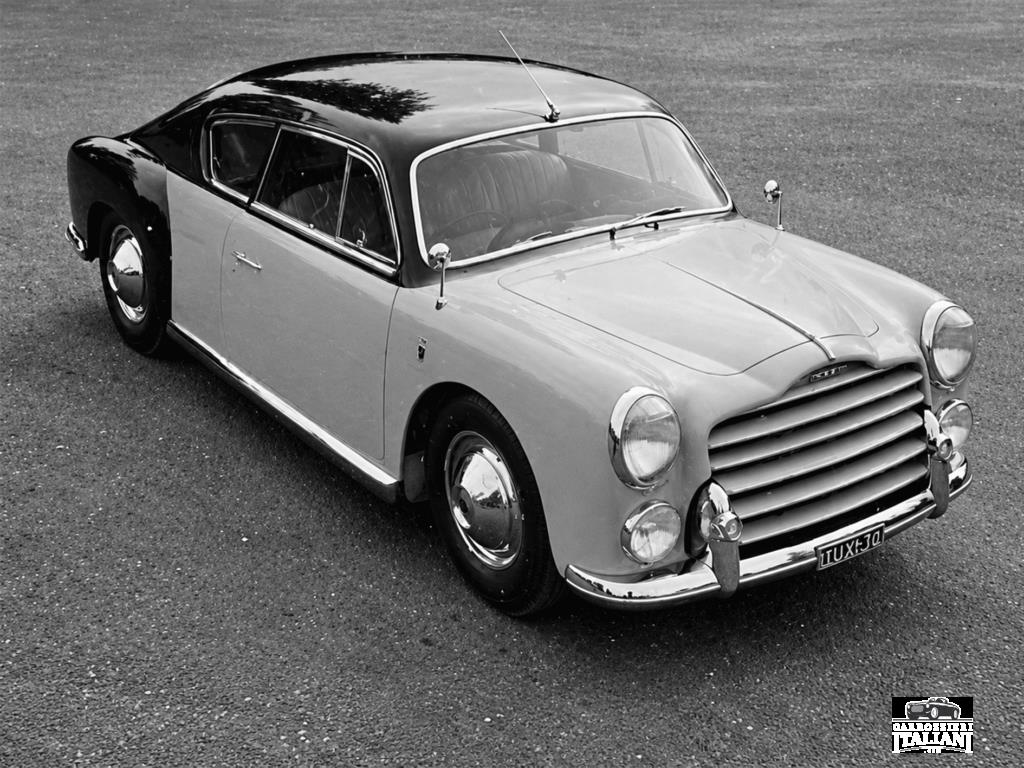
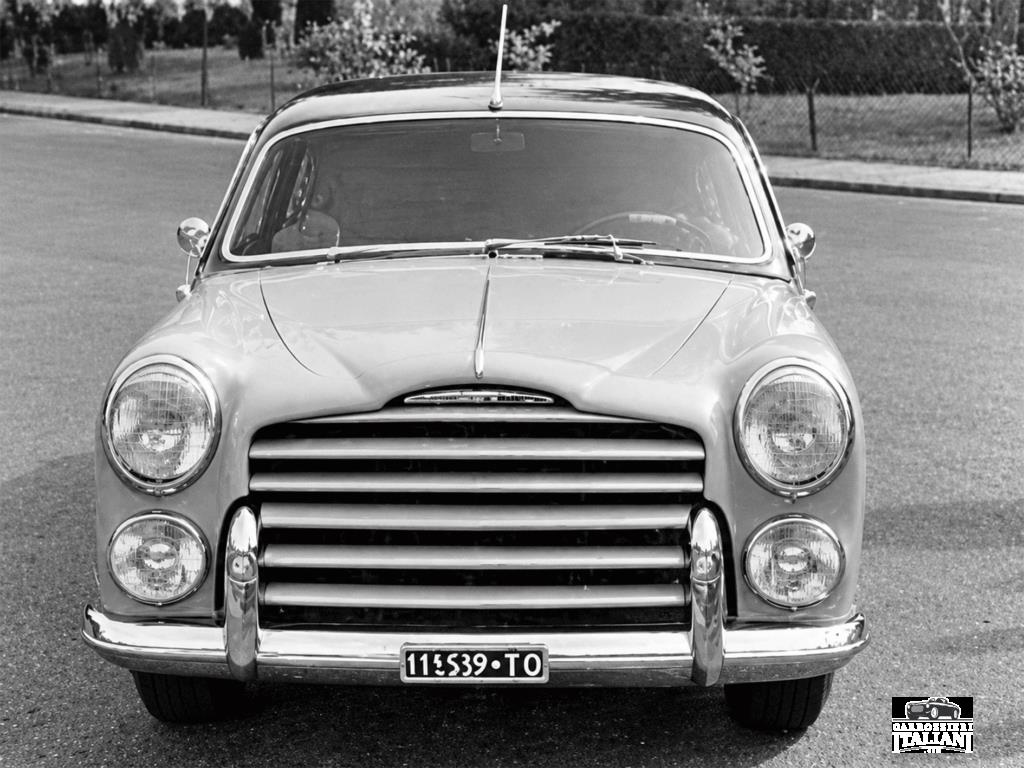
The resulting coupé had a long, relatively low body with integrated wings and a roofline descending gradually towards the rear. The cabin was positioned forward in relation to the extended tail, although the proportions retained the appearance of a conventional grand touring automobile.
Particularly distinctive was the broad front grille, which occupied much of the nose and gave the car an appearance more readily associated with a front-engined luxury saloon. Its treatment, together with the integrated front wings and broad, uninterrupted body surfaces, reflected some of the styling tendencies emerging in Italy during the second half of the 1940s.
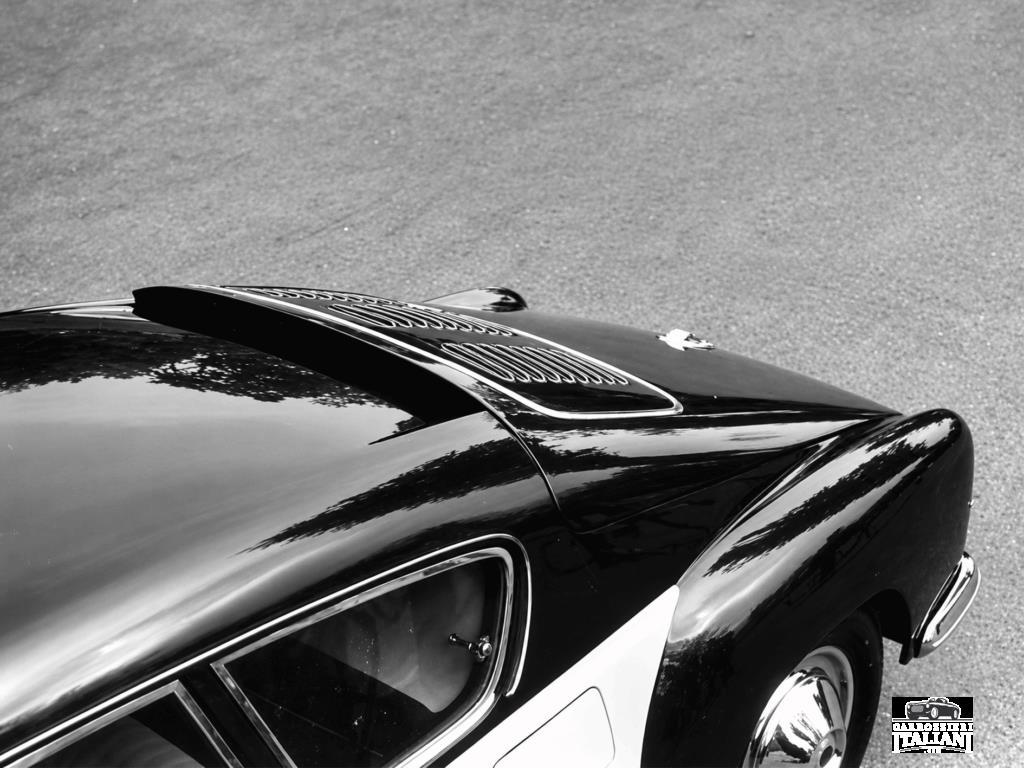
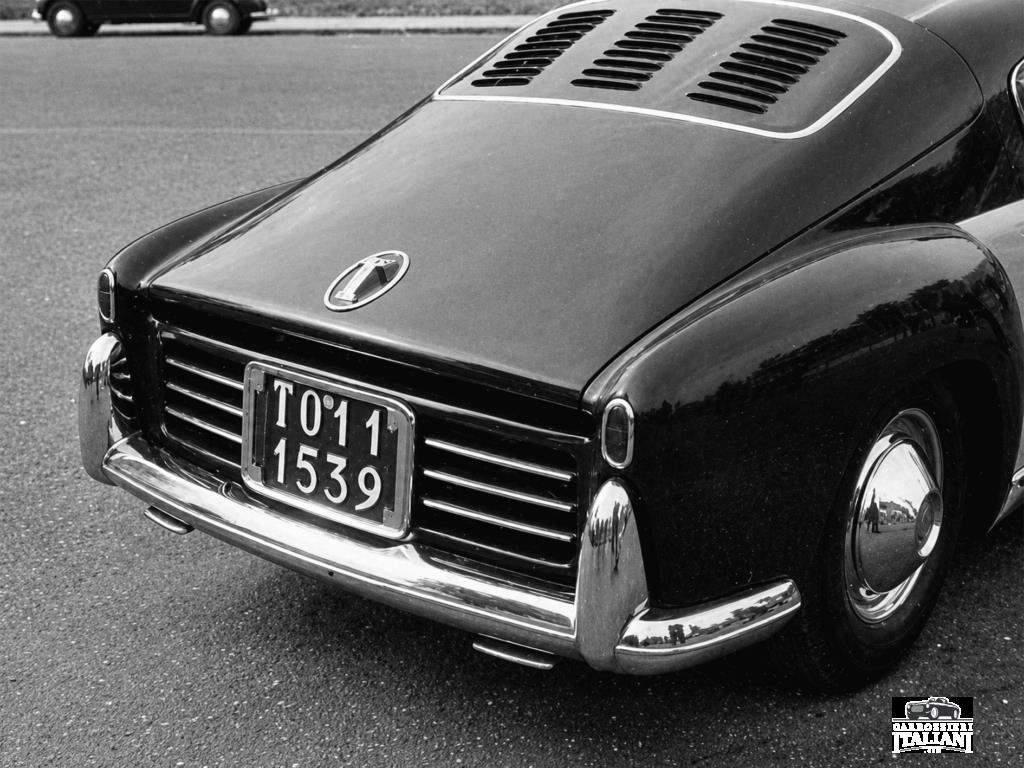
The rear section was more revealing of the car’s mechanical arrangement. The roof flowed into a long deck, with ventilation incorporated near the base of the rear window. The overall shape was relatively restrained, with few decorative elements interrupting the principal body surfaces.
Ghia also adopted a two-tone finish, contrasting the upper portion of the car with the lighter lower bodywork. This division emphasised the shape of the cabin and reduced the visual weight of the substantial rear section. The result was a design that combined some established conventions of luxury coachbuilding with proportions dictated by the experimental chassis.
The Experimental V8
The LP01 was powered by the experimental Lancia type 853 engine, a 90-degree V8 with a displacement of 1,946 cc. With a bore of 67 mm and a stroke of 69 mm, the unit developed approximately 70 hp at 4,900 rpm.
Its construction incorporated extensive use of light alloy, and the engine employed a central camshaft operating the valves through pushrods and rocker arms. The arrangement was quite different from the narrow-angle V4 engines for which Lancia had become known, although it continued the manufacturer’s preference for compact multi-cylinder power units.
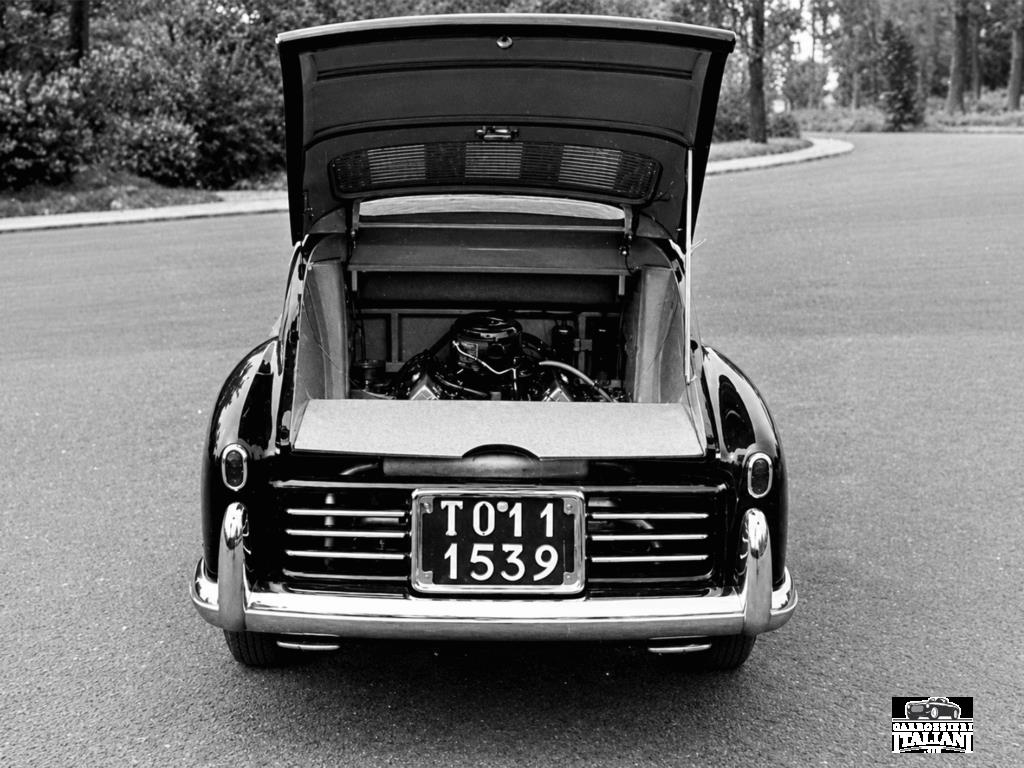
The engine was installed longitudinally in a central-rear position, immediately behind the passenger compartment. The transmission was described in historical accounts as semi-automatic or preselector, adding another experimental element to the car’s mechanical specification.
The chassis was a purpose-built tubular structure, rather than the unitary construction employed on the Aprilia and several earlier Lancia models. This allowed the engineers to develop the prototype without having to adapt an existing production body to accommodate the unusual drivetrain.
The configuration presented several engineering questions, particularly concerning cooling, transmission installation and access to the mechanical components. The weight distribution also differed substantially from that of the company’s conventional front-engined automobiles.
Although the available specifications provide a reasonably clear picture of the engine, detailed contemporary performance figures and road-test results are difficult to establish. The LP01 was not developed into a production model, and the surviving technical documentation is comparatively limited.
The Central Driving Position
Inside, the LP01 departed almost completely from the traditional arrangement of a luxury coupé. The driver sat in the middle of the passenger compartment, slightly forward of two individual seats positioned to either side. A further seat was provided behind the front occupants, bringing the total accommodation to four.
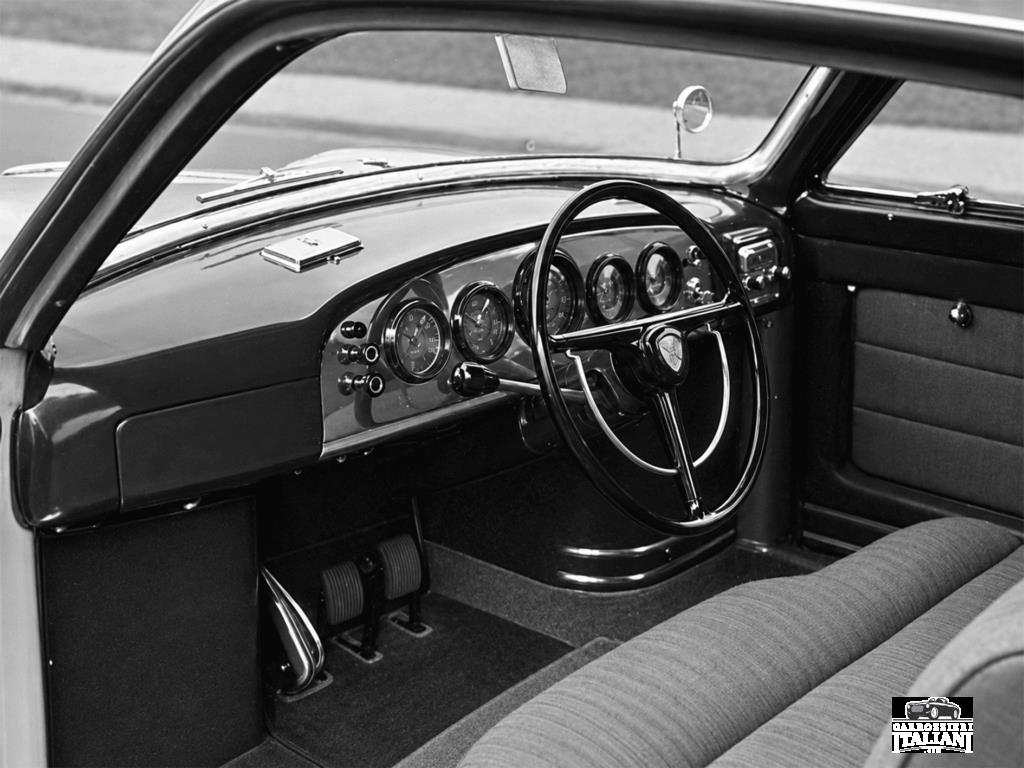
The three front seats were therefore not arranged in a straight line. By placing the driver’s seat ahead of those of the passengers, the designers could make more efficient use of the available width while maintaining reasonable space for each occupant.
The layout offered the driver a symmetrical view of the road and avoided the need to distinguish between left-hand and right-hand-drive configurations. Its disadvantages were largely practical, involving access to the seats and the positioning of the steering wheel, pedals and other controls.
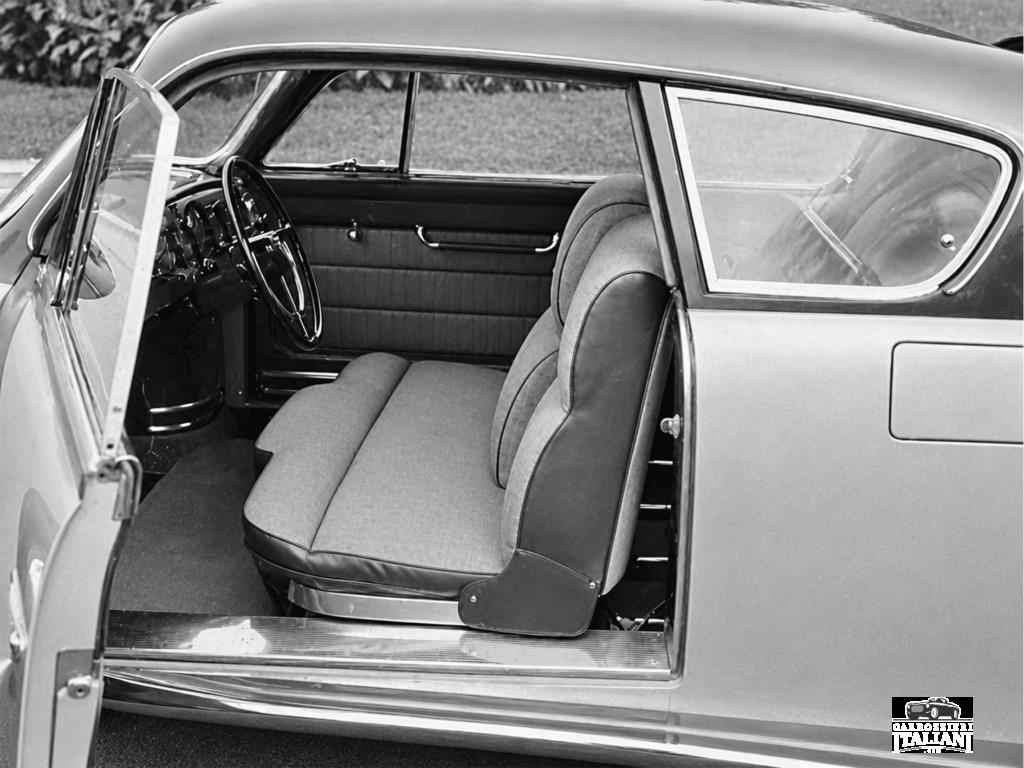
The arrangement was nevertheless consistent with the experimental character of the car. Lancia was not simply testing the V8 engine, but also examining how an unconventional mechanical layout might permit a different organisation of the passenger compartment.
Central driving positions would occasionally reappear in later automobiles, most famously in the McLaren F1, although the objectives of the two projects were entirely different. The LP01 was intended as a comfortable touring car rather than a high-performance sports model.
The 1948 Turin Motor Show
The LP01 appeared at the Turin Motor Show in 1948, displayed on the stand of Carrozzeria Ghia rather than that of Lancia. This is an interesting detail, considering that the prototype had been developed around a purpose-built chassis and engine supplied by the manufacturer.
The decision also reflected the status of the project. The LP01 was not being introduced as a new production Lancia, and the company was still evaluating alternative solutions for its future range. At the show, the car could be presented as an example of Ghia’s coachbuilding work without suggesting that the unusual rear-engined configuration had been selected for series manufacture.
The A10 attracted attention for its appearance and technical specification. Its combination of a V8 engine, central driving position and unusual chassis arrangement offered visitors something quite different from the conventional saloons and coupés shown by other manufacturers.
The comparison with the Isotta Fraschini 8C Monterosa is particularly interesting. The latter was another Italian rear-engined V8 project developed during the same period, with bodies produced by Touring and Zagato. Both manufacturers were considering mechanical arrangements that departed from established luxury-car practice, although the programmes were independent and neither resulted in regular production.
Gianni Lancia Behind the Wheel
Unlike many experimental automobiles built principally for exhibition, the LP01 was used on the road. Gianni Lancia reportedly drove the car personally, giving the company an opportunity to assess its unusual mechanical layout in everyday conditions.
The car was registered in Turin as TO 111539, with chassis number 01 and engine number 01, and was listed with a fiscal rating of 26 HP.
The same account relates a curious episode involving Gianni Lancia’s honeymoon. During the journey, the prototype apparently developed mechanical problems and left him stranded. The story is attributed to recollections of people who knew him in Turin, rather than to a contemporary technical report, but it has become part of the history associated with the car.
There is little published information concerning the total distance covered by the LP01 or the precise nature of the problems encountered during its use. What is clear is that the experiment was not continued and that no second example is known to have been built.
The Decision to Develop the Aurelia
By the end of the 1940s, Lancia had turned its attention towards a more conventional mechanical arrangement for the replacement of the Aprilia. The V6 engine developed through the work of Francesco De Virgilio offered a compact alternative to both the existing V4 and the experimental V8, while allowing the company to retain a front-engine configuration.
The Aurelia, introduced in 1950, combined this new engine with unitary construction, independent front suspension and a rear-mounted transaxle. It was a technically advanced automobile, but its general architecture was much closer to established Lancia practice than the rear-engined LP01.
The reasons for abandoning the A10 programme are not fully documented in the surviving accounts. The difficulties associated with developing an entirely new mechanical arrangement, together with the investment required for production, were considerable. The front-engined V6 offered a solution that could be developed within a more familiar chassis and body structure.
The LP01 consequently remained a single experimental automobile. Its engine, transmission and seating arrangement were not adopted for the Aurelia, and there is no clear evidence that the Ghia coachwork directly influenced the styling of the later production models.
For Ghia, however, the commission formed part of a period in which the company was developing its postwar activities and strengthening its connections with Italian manufacturers. La Manovella also records that Gianni Lancia’s appreciation of the prototype contributed to further Ghia commissions on Aprilia chassis.
The subsequent history of the LP01 is poorly documented, and the car is not known to have survived. Its appearance at the 1948 Turin Motor Show, the photographs taken during its brief existence and the accounts of Gianni Lancia’s personal use remain the principal evidence of a project that was set aside as development of the Aurelia progressed.

ABOUT THE AUTHOR
Andreas Scheidl
Italian classic car enthusiast with German roots. Renowned as a respected figure in the classic car community, he serves as a jury member at various international concours d'elegance, including the Classic Gala Schwetzingen and Mantova. As a content creator, Andreas passionately shares his profound knowledge and appreciation for vintage automobiles. His heart beats for cars designed by Giovanni Michelotti, showcasing his discerning taste and dedication to preserving the timeless elegance of automotive history.
More stories by Andreas Scheidl ↗CONTINUE READING
Posts You Might Like

Fioravanti F100: The Ferrari He Was Allowed to Imagine
Enzo Ferrari’s centenary, Leonardo Fioravanti’s independent studio and a supercar that explored air brakes, steel wheels and a new way of driving—without ever wearing the Cavallino.
Read story
Michelotti Shellette: When the Fiat 850 Became a Yacht
The yacht designer, the Turin stylist and the tiny coachbuilt car that crossed between the quay, the royal holiday house and the auction room. Some automobiles were conceived for the open road,…
Read story
Maserati A6 1500: A New Road for the Trident
When the doors of the Geneva Motor Show opened in March 1947, Maserati was a name that required little introduction to anyone who followed motor racing. What it did not yet possess…
Read story
Ferrari FX: Beyond the Limits of Maranello
Six documented chassis, the disputed seventh car, Williams transmission development and the anatomy of one of the least understood Ferraris of the 1990s
Read story
THE CONVERSATION
Comments 0
Share a memory, a period photograph or a documented detail about this story.