
The Vignale Gamine: The Little Car That Dreamed Big
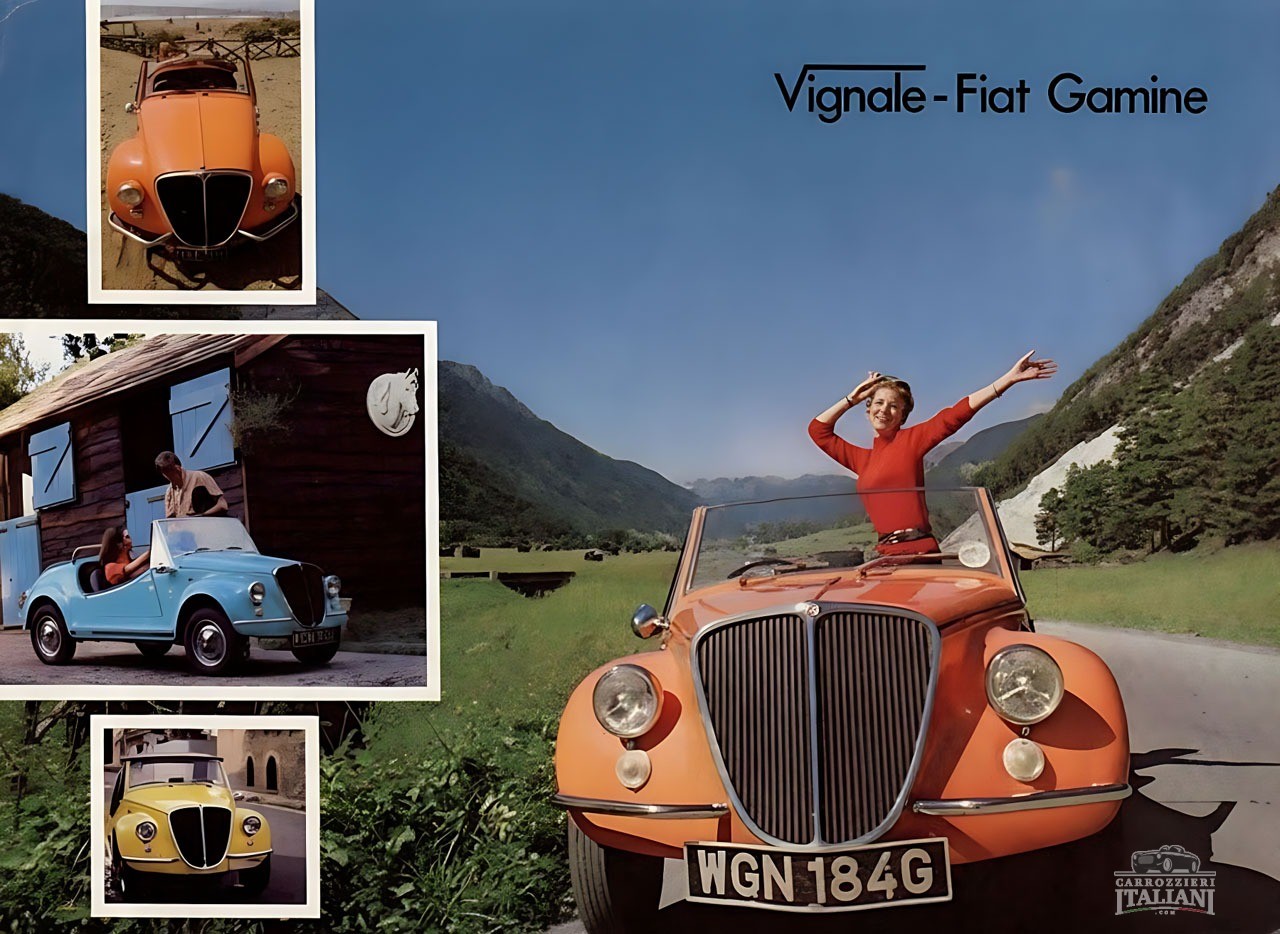
The Fiat Gamine was a tiny two-seat roadster dreamed up in the late 1960s by Turin’s famous carrozzeria Alfredo Vignale. Built on the chassis of the diminutive Nuova Fiat 500, it sported whimsical retro styling and a 21.5 PS two-cylinder engine. Only a few hundred were made, but the Gamine (nicknamed “Noddy’s car”) left a lasting mark as a quirky Italian collectible. This feature traces its origins in postwar coachbuilding, its design story, production and launch in the UK, and finally its driving character and legacy, drawing on contemporary sources and modern accounts for a rich, narrative history.
In the years following World War II, a new generation of Italian coachbuilders emerged, transforming ordinary production cars into bespoke creations. Among them, Carrozzeria Alfredo Vignale, founded in Turin in 1946, quickly became one of the most influential. What began as a small workshop—housed in a building that had survived the bombings—soon evolved into a refined atelier producing elegant bodies for Ferrari, Maserati, Alfa Romeo and more. From early custom interpretations of the Fiat 500 “Topolino” to sophisticated designs of the 1950s, Vignale built a reputation for combining craftsmanship with style. The collaboration with designer Giovanni Michelotti played a key role in shaping a distinctive, modern Italian aesthetic. By the mid-1960s, Alfredo Vignale turned toward creating small-series models under his own name. Alongside projects for major manufacturers, the studio introduced limited-run Fiats such as the Eveline and the Samantha. Within this creative phase, the Gamine emerged as the smallest—and most playful—expression of Vignale’s vision.
From 500 to Gamine: The Retro Roadster Takes Shape
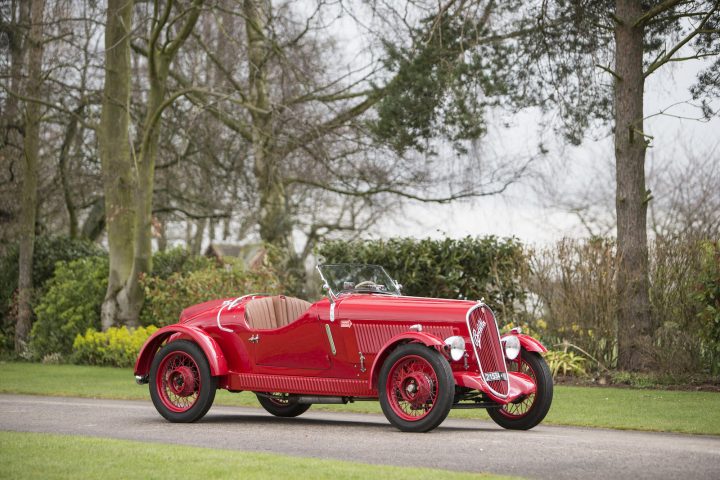
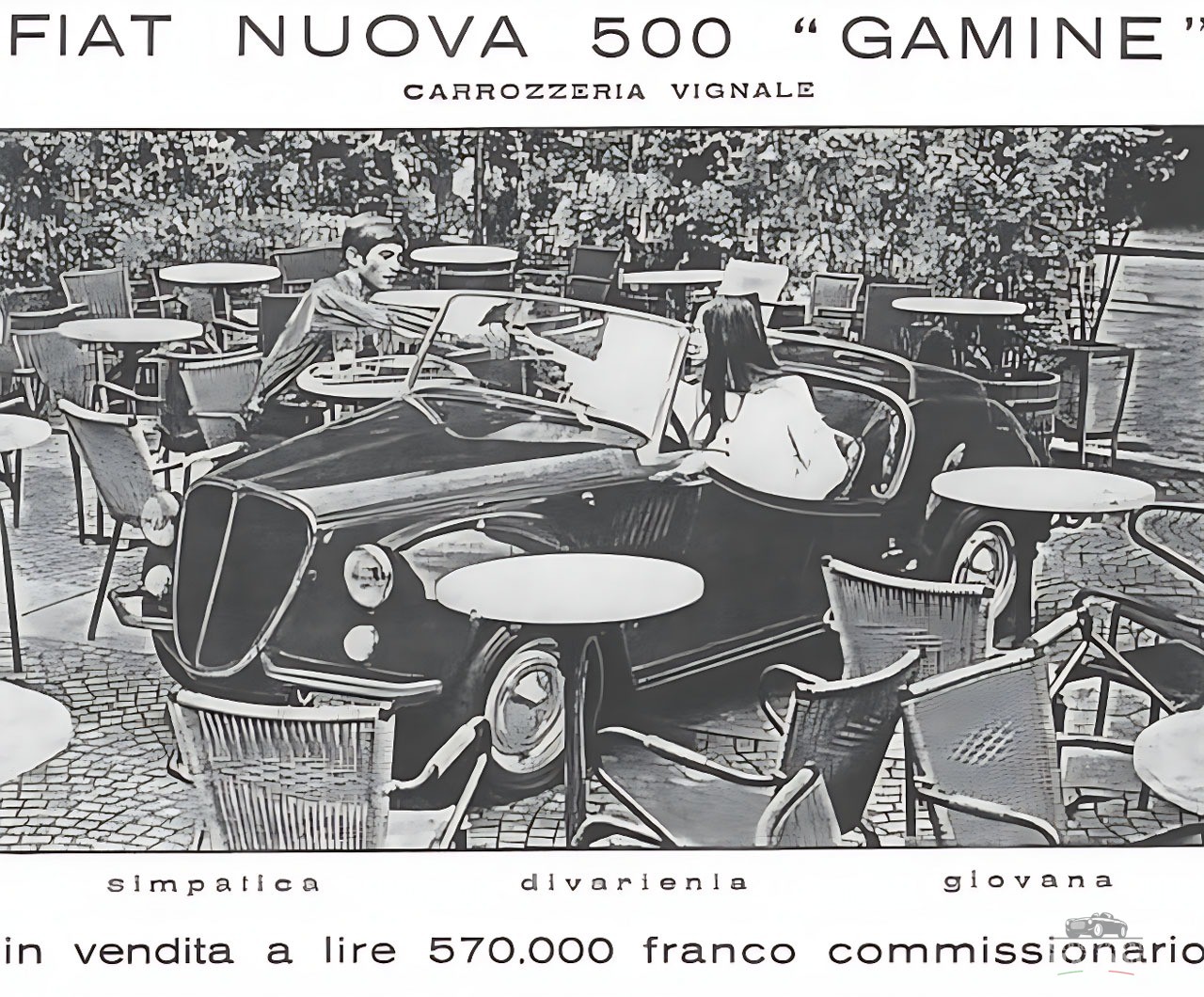
The idea of the Gamine was born from a mix of nostalgia and novelty. According to one account, the project started in Monte Carlo when an Italian car dealer, Osvaldo Geminiani of G.A.M., approached Vignale to design “an open-top 2-seater” based on the new Fiat 500. Alfredo Vignale himself sketched the tiny roadster. Its styling was deliberately retro – taking cues from Fiat’s 1930s models. Indeed, sources note that the Gamine’s look “relates to the 1930s Fiat 508 Balilla Coppa d’Oro”. The result was a lovable, almost toy-like appearance: separate curved fenders over each wheel, a faux radiator grille up front, and a rounded, smiling face. One modern writer quipped that the Gamine “looked as though it had come straight out of an Enid Blyton novel” – a fitting image, since it later inspired the creation of Noddy’s car in the children’s stories.
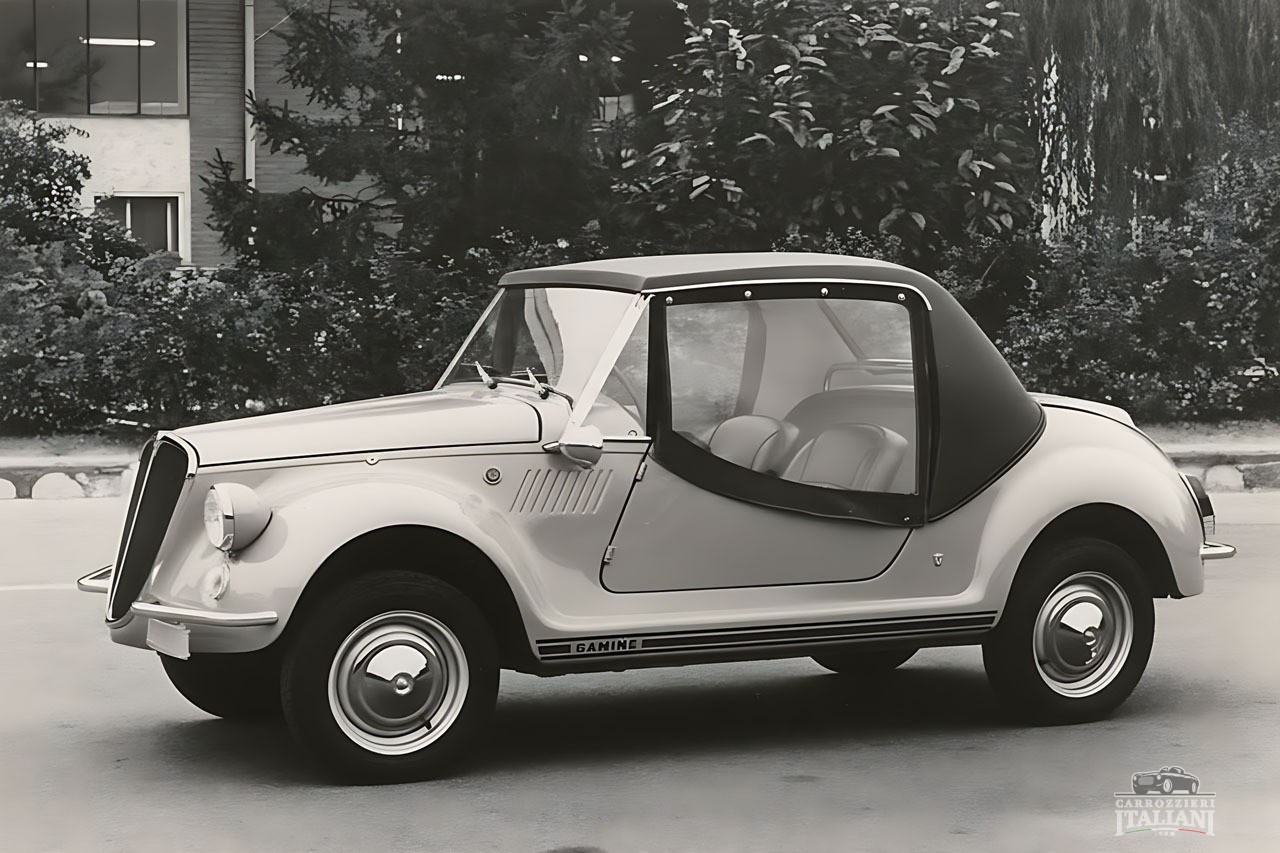
Despite its old-time looks, the Gamine was thoroughly based on contemporary 500 mechanics. It rode on the Nuova 500’s chassis (1,840 mm wheelbase) and used the same rear-mounted 499.5 cc air-cooled two-cylinder engine as the sporty 500 Sport. In Vignale’s build it delivered 21.5 PS (roughly 21 hp) – about double that of the basic 500. The small engine promised a top speed around 97 km/h (60 mph). Vignale offered the Gamine as a two-seat convertible roadster, with a folding soft top and zip-in plastic side windows. An unusual optional hardtop was also offered for privacy or cooler weather – these fixed roofs proved rare and are today highly collectible.
The Gamine was Vignale’s true brainchild—a playful vision of a city car, shaped as a miniature roadster that blended 1930s charm with the effortless flair of 1960s Italian design. It was conceived as something lighthearted and stylish, a small object of desire rather than mere transportation. Yet, from the very beginning, the project carried inherent contradictions. Vignale remained an artisan operation, and even such a compact, seemingly simple car required time, skill, and hand-built precision. As a result, the Gamine was priced well above the standard Fiat 500, justified by its exclusivity and distinctive character—but difficult to position in a market that still valued practicality over personality. Its performance, modest even by the standards of the time, did little to broaden its appeal. Sales remained limited, and the model struggled to find a solid commercial footing. These difficulties reflected a wider challenge faced by many independent coachbuilders in the late 1960s, as industrial production began to eclipse craftsmanship. By 1969, the situation had become unsustainable. Alfredo Vignale sold his company to Alejandro de Tomaso, marking the end of an era. Tragically, just one day later, Vignale lost his life in a car accident. The Gamine, in retrospect, stands as one of the final and most personal expressions of his vision—brief in its existence, but impossible to overlook.
Building the Fiat Gamine
At the Vignale workshop in Turin, the Gamine was produced as a low-volume, coachbuilt car. While its mechanical foundation remained firmly Fiat—using the floorpan, suspension, and transmission of the Nuova 500/500 Sport—the body and detailing were entirely unique to Vignale. Skilled craftsmen hand-formed the steel panels, including the fenders, hood, and rear section, and carefully assembled the distinctive grille and chrome-trimmed bumpers. For such a compact car, the level of finish was notably high. Even refined touches, such as the leather-wrapped steering wheel, echoed the feel of more upscale models, giving the interior a surprisingly sophisticated character. The side windows, made of flexible plastic and secured with zippers, added a practical yet charmingly unconventional detail.
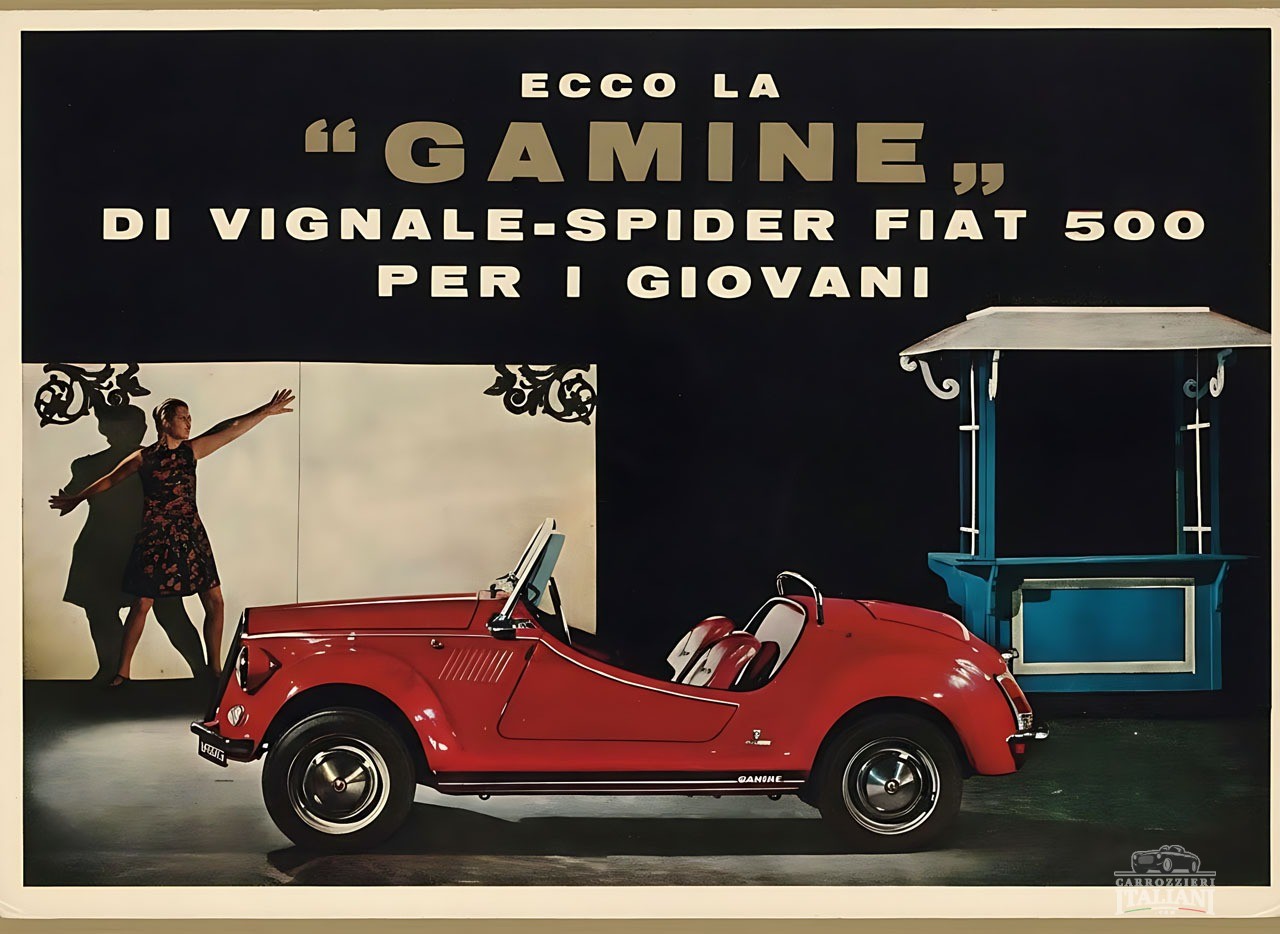
The Gamine was Vignale’s true brainchild—a playful city car imagined as a miniature roadster, blending 1930s charm with the elegance of 1960s Italian design. It was meant to be distinctive and desirable, more a statement than simple transportation. Yet from the start, it faced a fundamental challenge. Built with artisan methods, even such a small car was costly to produce, and its price sat well above the standard Fiat 500. Combined with modest performance, this limited its appeal and kept sales low. By 1969, mounting difficulties forced Alfredo Vignale to sell his company to Alejandro de Tomaso. Just one day later, he tragically lost his life in a car accident.
🔗 Read more: The Story of Carrozzeria Vignale
Production began in late 1967, with the Gamine sold through Vignale’s own distribution network. Exact production figures remain uncertain, as was often the case with small-scale coachbuilt cars of the period. Estimates vary widely, but it is generally accepted that only a limited number were produced, likely in the low hundreds.
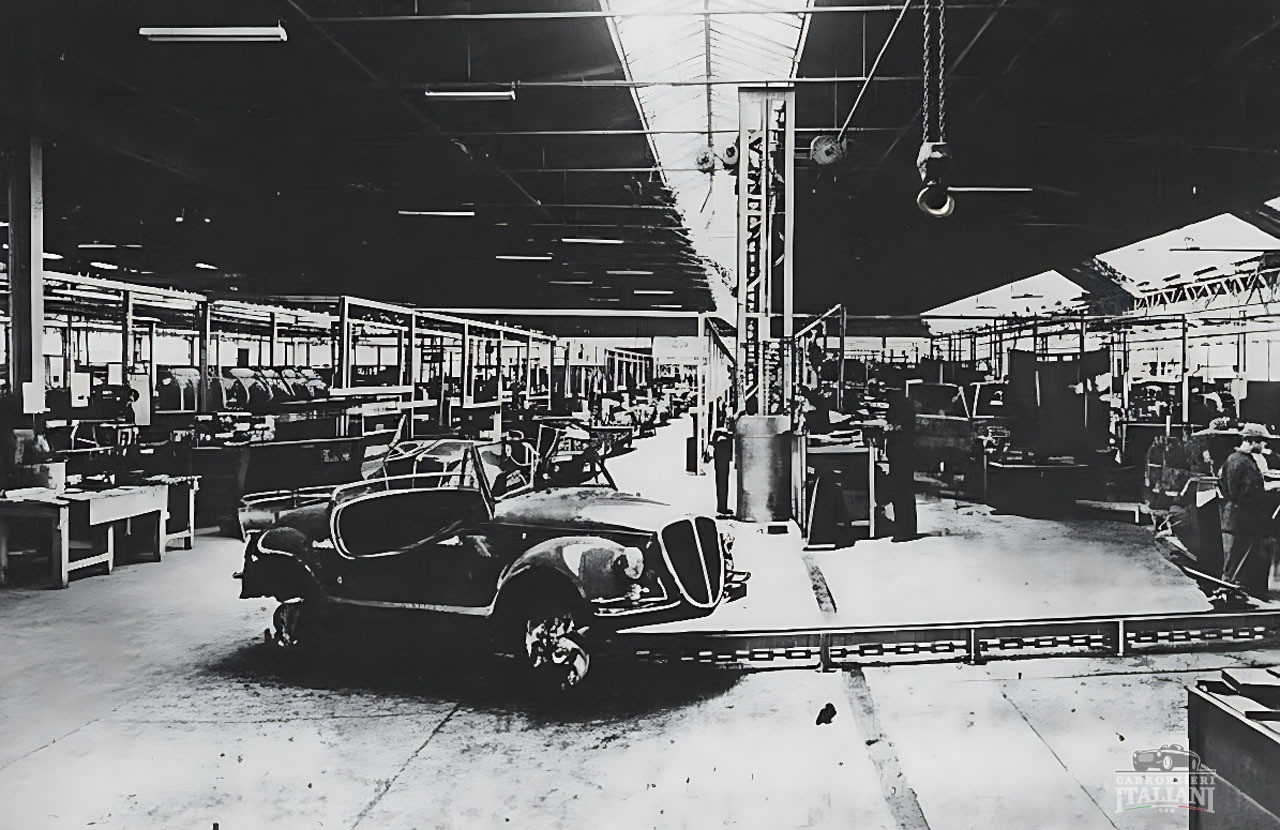
Each Gamine had a distinctly individual character. Only one main version was offered, but buyers could personalize elements such as color, interior trim, and optional features like a removable hardtop. The layout was strictly two-seater, with minimal luggage space in the compact rear. As in the standard Fiat 500, the fuel tank was positioned at the front, while the rear accommodated the engine. Inside, Fiat-sourced instrumentation was complemented by Vignale’s more refined materials, including leather or vinyl upholstery and thicker carpeting, enhancing the sense of craftsmanship.
The Gamine’s appeal lay largely in its style and exclusivity. Designed as a fashionable city car, it captured the spirit of Italian design with a playful yet elegant presence. As noted on carrozzieri-italiani.com, it stood out as an appealing choice for those seeking a compact yet stylish automobile, embodying a distinctly Italian charm. However, this exclusivity came at a cost: the Gamine was significantly more expensive than a standard Fiat 500, reflecting the labor-intensive construction. That higher price, in turn, reinforced its niche appeal among buyers drawn to something unique and characterful.
Bright Lights and Big Orders: The Gamine Takes Center Stage
When the Gamine was finally unveiled to the public, it caused quite a stir – especially abroad. In October 1968 the little roadster made its UK debut at the Earls Court Motor Show in London. By happy coincidence, a Greek-Cypriot entrepreneur named Frixos Demetriou had recently discovered the model. As car journalist Richard Dredge recounts, Demetriou’s “flight from Milan to Athens was held up, [so] he found himself studying a Fiat Gamine in the airport car park” – and became smitten. He stopped in Turin on the way home, negotiated import rights for the UK, and even insisted Vignale produce right-hand-drive versions. To seal the deal, he placed an instant order: 200 Gamines on the spot, plus all RHD conversions for six months! Faced with this bold commitment, Vignale relented.
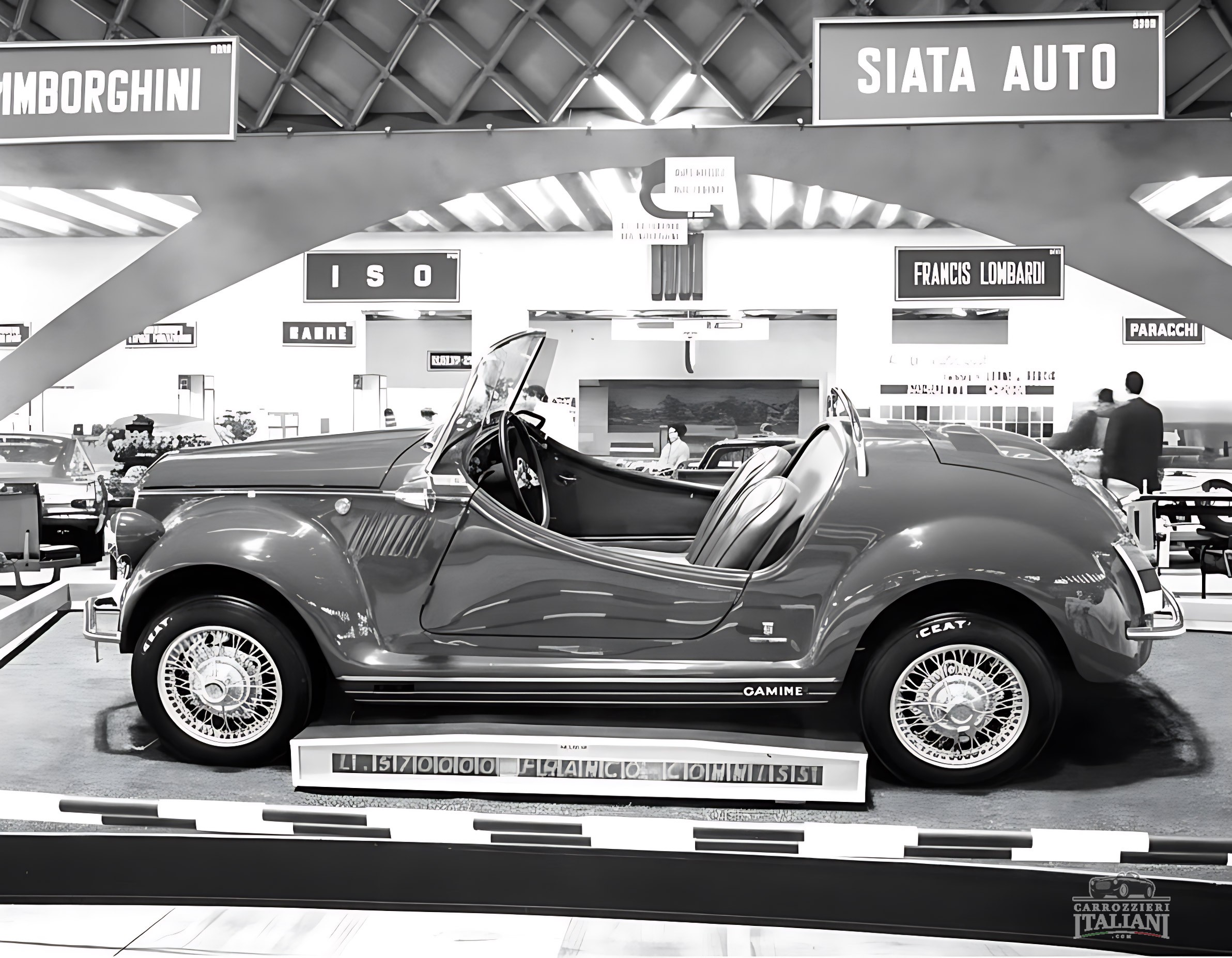
Thus Demetriou became the Gamine’s sole UK importer. The car’s unveiling at Earls Court generated a ton of press. Brightly painted convertibles with hoods down drew the eye, and journalists noted how head-turning the tiny roadster looked. After the show, hundreds of orders flowed in. In fact, nearly all early buyers in the UK were women – Demetriou’s marketing tagline explicitly targeted them: “You’ll be mad about motoring in your gladabout Gamine.”. Motorists were even encouraged to “think, girls, shopping in a sunsuit in a topless car” – the firm advertising played on the car’s dainty femininity. This unusual angle (for 1960s motoring ads) partly defined the Gamine’s image in Britain as a fashionable runabout, a hair-in-the-wind city car.
🔗 Read more: Fiat 850 Vignale: guida completa
By late 1969, roughly 800 of the little roadsters had been sold worldwide (Demetriou accounted for about 200 UK-delivered cars). For a coachbuilt niche model this was impressive. Of course, actual usability was a bit limited: tall drivers had to fold knees acrobatically to get in (Motor magazine noted that “tall people found the leg contortions necessary to clamber over the high sill… awkward”). The removable side screens and soft-top zipped in place added another quirk. But the press reviews were generally amused and affectionate. One British test summed it up: “it has several undeniable attractions. It’s cheap to run… easy to drive… park, service, clean – and fun to be in, if you like that sort of thing”.
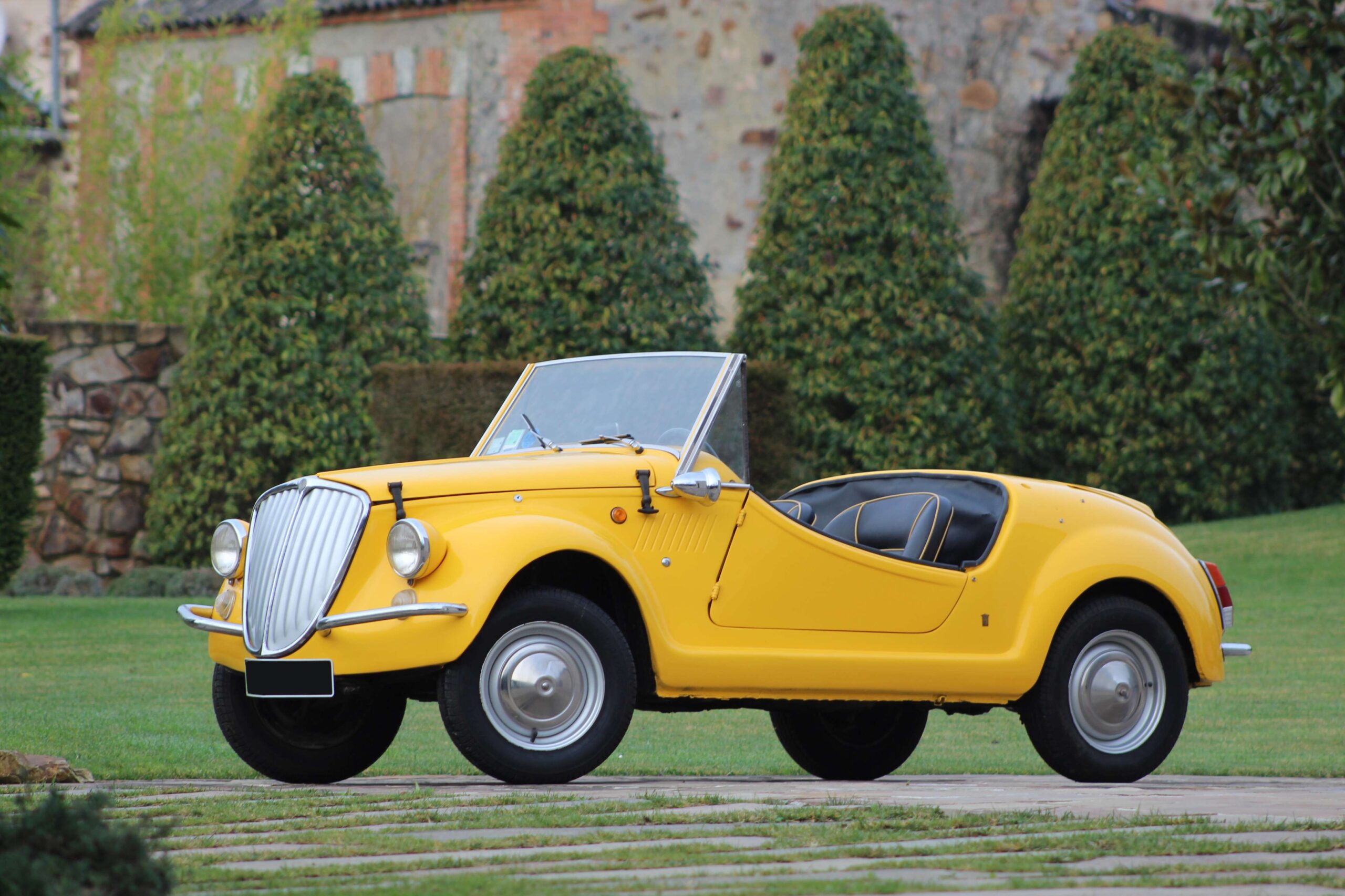
There were famous owner anecdotes too. Demetriou himself was a colorful character (known as “Big Frix” in London circles). He sold Gamines in “exotic” Bayswater showrooms amidst his other business empires (including casinos). Strangely, Demetriou’s story later ended in a bizarre tragedy: an account recounts how he eventually returned to Cyprus and “met an untimely end in the back seat of a Vignale-bodied Fiat – a runaway army tank ran over his car, squashing both him and his car flat”. (This grim episode underscored the Gamine’s fragility as a mere toy-like roadster.) Despite such odd turns, the Gamine was never just a footnote: its appearance at Earls Court and the quirky marketing campaign made it something of a 1968-69 legend on both sides of the Channel.
Thy Tiny Titan
On the road, the Vignale Gamine turned in a performance that matched its character. With only 21.5 PS on tap, it was not a speed demon – a 0–60 mph sprint was way beyond reach. Officially it topped out at about 60 mph (97 km/h). In everyday driving this meant plenty of punch off the line in town (it could “edge ahead of the average traffic light sprint”) but caution needed on hills or highways (motorway cruising was limited to about 55 mph comfortably). The car’s ride was light and nimble: again, the press testers found it had “dodgem proportions and quick steering” that made it surprisingly agile in city corners. The chassis, being that of a 500, had a simple trailing-arm rear suspension and live axle – more interested in economy than sports handling. But the Gamine’s low curb weight (around 450 kg) meant it felt peppy at town speeds. In fact, its 40–50 mpg fuel economy was often praised – cheap and easy to run, as one reviewer noted.
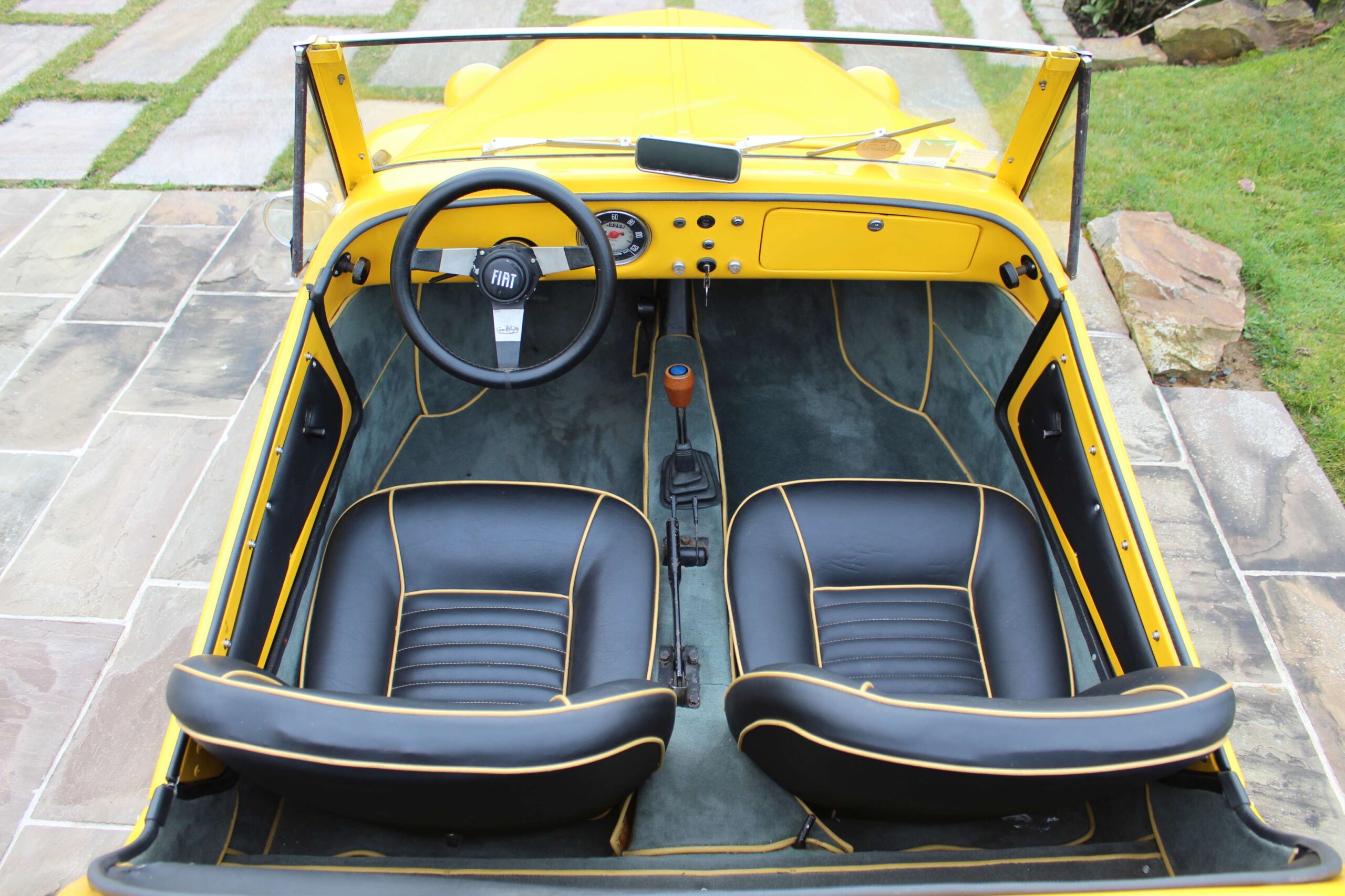
Inside, driving the Gamine was an experience in amusement-park style. One tester recounted the engine as “raucous” and right behind your seat, throbbing as you zipped through gears with two paddles on the floor. You sat very low, windshield up front, with the world a bit beyond a roll bar. The little steering wheel (a sporty leather-rimmed item) could even suggest it might be a go-kart. There were indeed no pretensions of refinement – wind and engine noise were loud (especially with the top down!). But the combination of sights, sounds and the open air gave a genuinely joyful experience. As one later owner put it, “it’s small, curvy and incredibly cute, and though it’s slow it’s very nimble and fun to drive.” (Roy Zukerman, who restored a Gamine in Israel, captured the feeling well.)
Today the Fiat Gamine is appreciated more for its design and rarity than its performance. Only a few survive, often cherished in Fiat or Vignale collectors’ garages. Its retro charm has endured: at classic car meets one might spot a Gamine (perhaps with a nod to the Fiat 508 Balilla on a badge or its red-and-cream paintwork) drawing smiles. Its influence on mainstream car design was minimal – Vignale died before a follow-up could emerge. But culturally, it remains a cult object. Fans point out how it inspired the Noddy stories, or how it represents the playful side of 1960s Italy.
In a way, the Gamine’s spirit lived on through its namesake marque. The Vignale brand was sold to Ford in 1973 and revived in the 2010s as a luxury trim line on various Fords (Mondeo, Focus Vignale editions, etc.). Though quite different, this Ford sub-brand used Vignale’s image of Italian style and exclusivity – a distant echo of Alfredo Vignale’s original ethos.
For today’s enthusiasts, any Gamine sighting is special. Restorations like Roy’s cross-country trip (documented on Petrolicious) testify to the passion these little cars inspire. As a Vignale-built, coachbuilt Fiat, the Gamine sits in history between the classic Topolino roadsters and the late-’60s bubblecars. It’s not fast, but it offers a storybook ride in miniature – a “toy” that became treasure.

ABOUT THE AUTHOR
Andreas Scheidl
Italian classic car enthusiast with German roots. Renowned as a respected figure in the classic car community, he serves as a jury member at various international concours d'elegance, including the Classic Gala Schwetzingen and Mantova. As a content creator, Andreas passionately shares his profound knowledge and appreciation for vintage automobiles. His heart beats for cars designed by Giovanni Michelotti, showcasing his discerning taste and dedication to preserving the timeless elegance of automotive history.
More stories by Andreas Scheidl ↗CONTINUE READING
Posts You Might Like
A Central Driving Position, a Rear-Mounted V8. Was This Really a Lancia?
In 1948, visitors to the Turin Motor Show could see an unusual Lancia on the stand of Carrozzeria Ghia. It was a large two-door coupé with a two-litre V8 mounted behind the…
Read story
Fioravanti F100: The Ferrari He Was Allowed to Imagine
Enzo Ferrari’s centenary, Leonardo Fioravanti’s independent studio and a supercar that explored air brakes, steel wheels and a new way of driving—without ever wearing the Cavallino.
Read story
Michelotti Shellette: When the Fiat 850 Became a Yacht
The yacht designer, the Turin stylist and the tiny coachbuilt car that crossed between the quay, the royal holiday house and the auction room. Some automobiles were conceived for the open road,…
Read story
Maserati A6 1500: A New Road for the Trident
When the doors of the Geneva Motor Show opened in March 1947, Maserati was a name that required little introduction to anyone who followed motor racing. What it did not yet possess…
Read story
THE CONVERSATION
Comments 0
Share a memory, a period photograph or a documented detail about this story.