
Italy’s Insane Showcars of the 1930s and 1940s
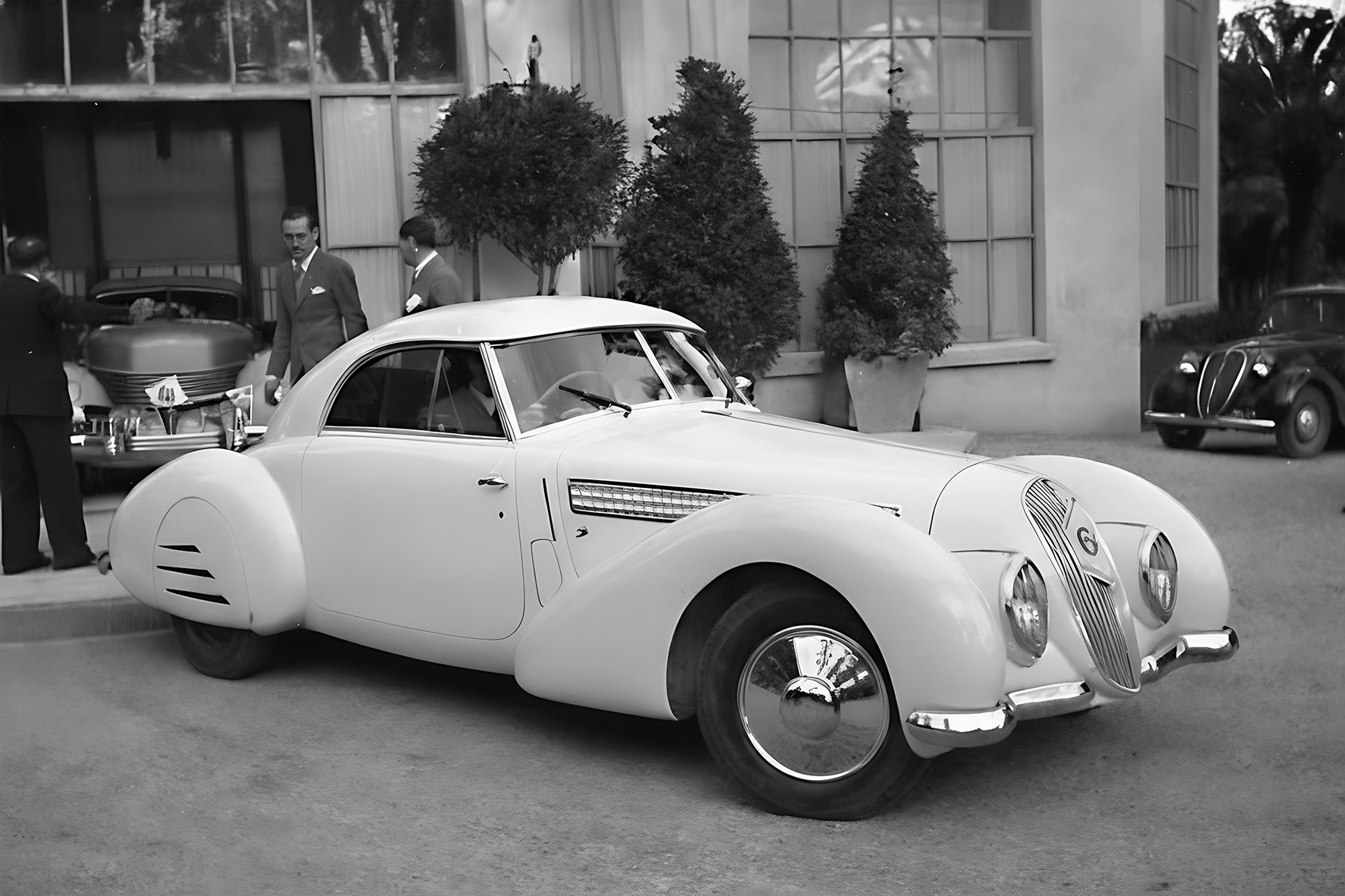
Before concept cars became a marketing department exercise, Italy was already building them — and then casually selling them to people. In the 1930s and 1940s, in the strange and highly charged years before and just after World War II, Italian coachbuilders were obsessed with one thing above all: making cars faster through the air. Aerodynamics was still a frontier, rules were few, and the future felt close enough to touch.
Working on chassis from Alfa Romeo, Lancia and Fiat, designers and carrozzieri treated each project as an experiment. These weren’t production studies, but rolling ideas, often built as one-offs and unveiled at Concours d’Elegance, where coachbuilders competed fiercely against one another. Turin, Villa d’Este, Villa Olmo, Sanremo — these lawns became battlegrounds, with trophies handed out to the boldest shapes and the most convincing visions of tomorrow.
The result was a golden age of automotive experimentation: cars with covered wheels, folding headlights, aircraft-inspired bodies and proportions so extreme they still feel wrong today. Part engineering, part art, part ego, these machines were statements — and the prizes they won were proof that insanity, when done well, could be rewarded.
This is the story of twelve Italian showcars from the ’30s and ’40s.
And yes — they really were this insane.
Alfa Romeo 8C 2300 Viotti Coupé (1935)
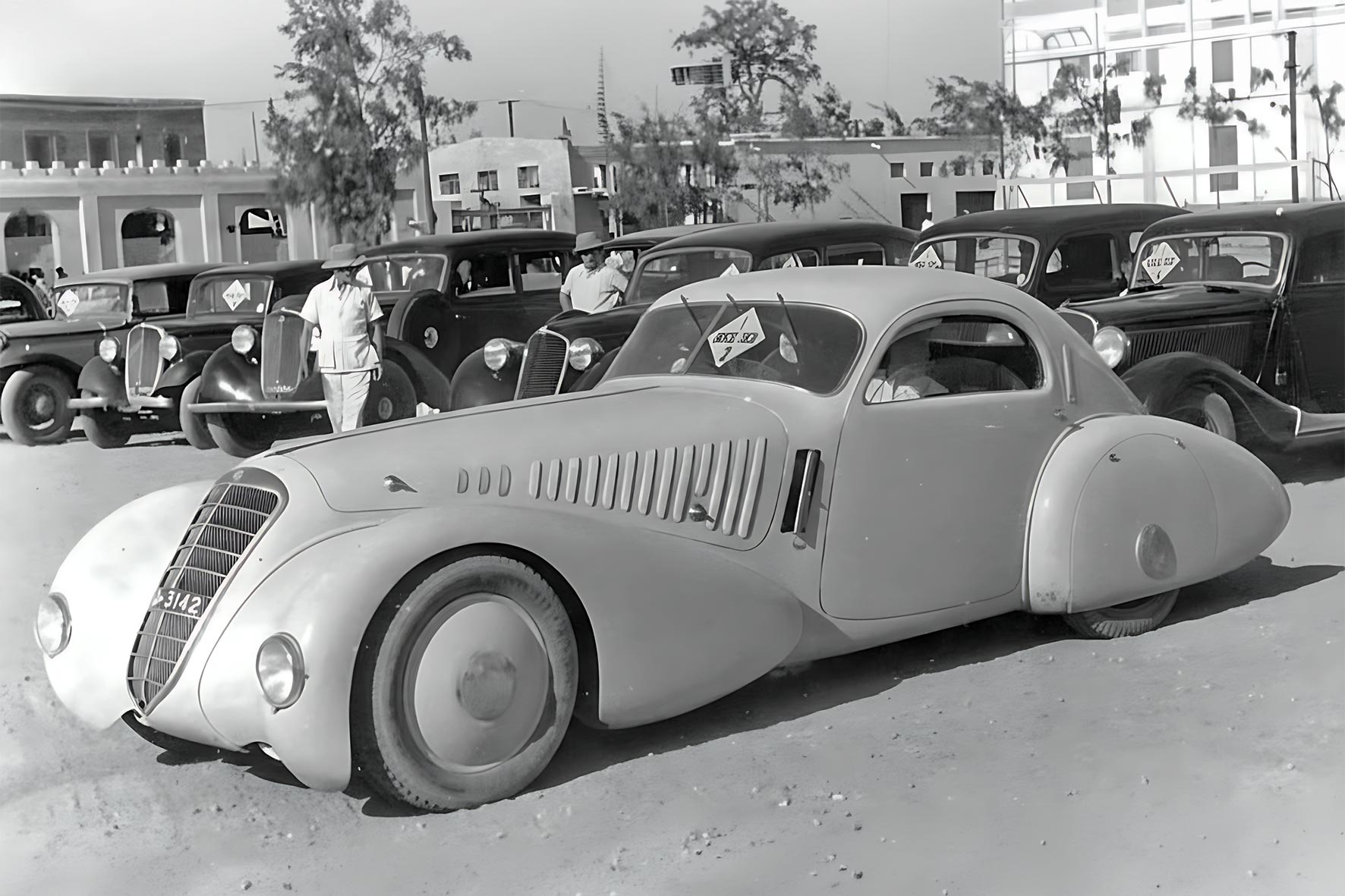
This started life as a Le Mans-proven Alfa Romeo 8C 2300. Then Italy happened. In 1935, Mario Revelli di Beaumont sketched a body for Carrozzeria Viotti that looks less like a car and more like a land-based aircraft without wings. The swollen fenders, convex windscreen, headlights melted into the body and that dramatic teardrop tail were early aerodynamic experiments, done decades before wind tunnels became fashionable. It’s fast, elegant, and slightly unhinged — proof that in 1930s Italy, even race cars could turn into rolling design manifestos.
Alfa Romeo 6C 2300 Berlina Aerodinamica “Pescara” (1935)
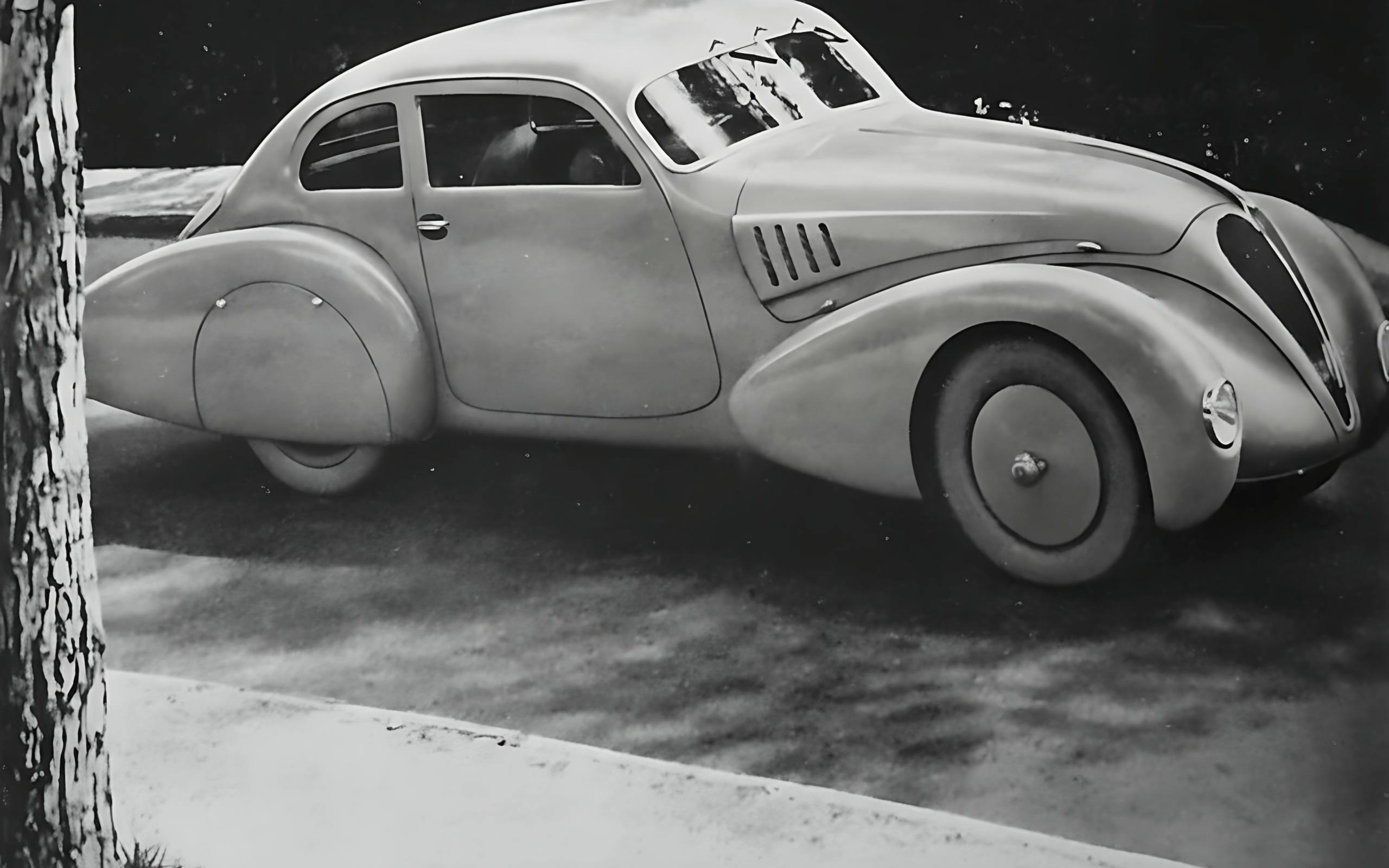
Born again from the Mario Revelli di Beaumont + Carrozzeria Viotti combination, this Alfa Romeo 6C 2300 looks like it escaped from a 1930s wind-tunnel experiment. Everything here screams aerodynamic obsession: teardrop profile, covered rear wheels, headlights swallowed by the body and a grille so dramatic it borders on satire. This wasn’t just theory — unveiled in 1935, it stunned crowds and went on to win 1st prize at the Turin Concours d’Elegance the same year. Pre-war Italy, casually building concept cars before the term even existed.
Lancia Aprilia Cabriolet Aerodinamico Pininfarina (1937)
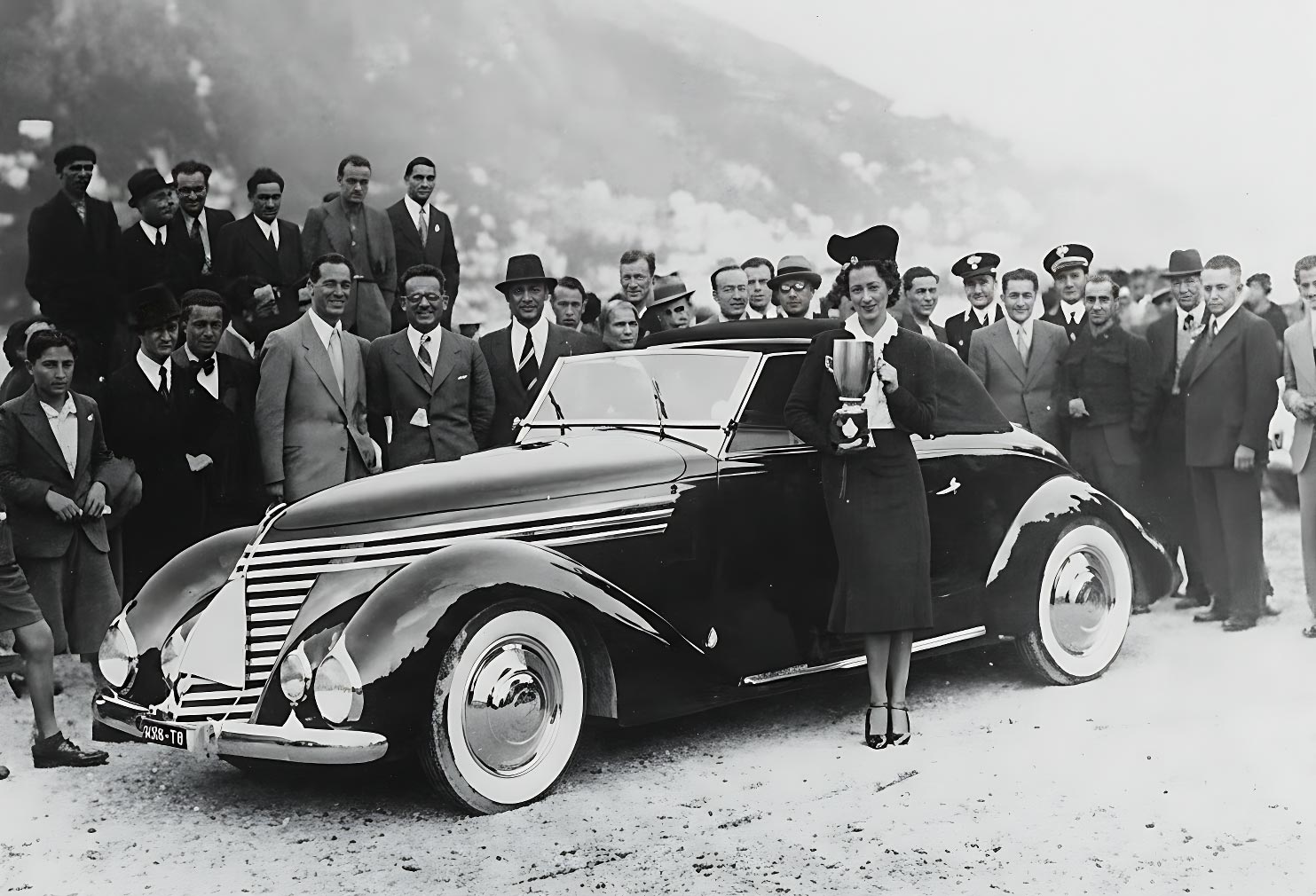
In this photo, the crowd says everything. Dozens of people in suits, staring at a Lancia Aprilia that clearly looks like it arrived from the future. Pininfarina took an already advanced car and reshaped it into an open-top aerodynamic experiment, with a low, flowing nose, horizontal grille bars and bodywork that seems pulled tight by the wind. It wasn’t just beautiful — it was confrontational. Unveiled in 1937, it went on to win 1st prize at the Villa Olmo Concours d’Elegance, proving that Italian design could shock, charm and confuse audiences all at once.
Alfa Romeo 6C 2300 Trasformabile Castagna (1937)
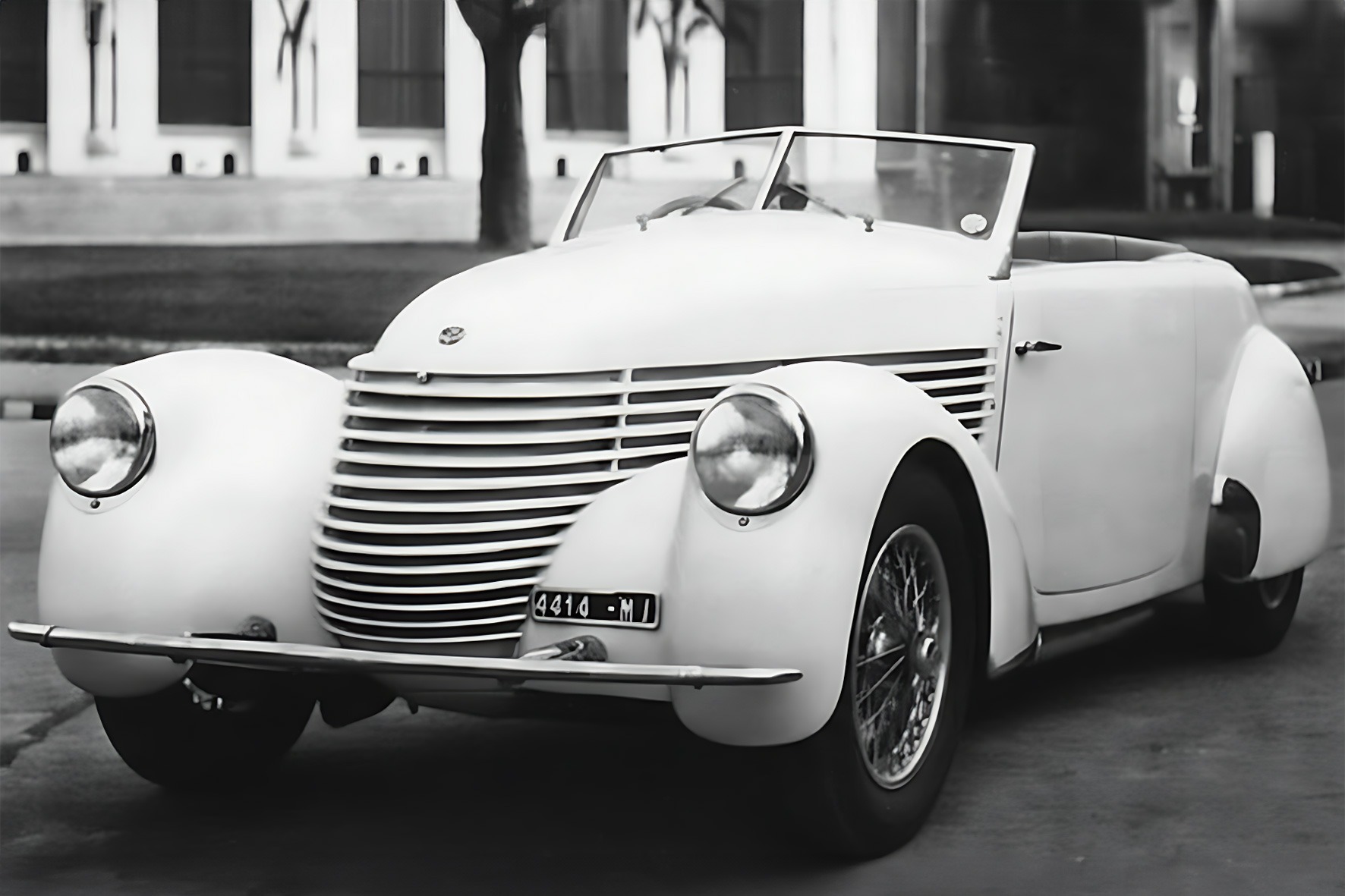
Unveiled at the 1937 Milan Auto Show, this Alfa Romeo 6C 2300 by Carrozzeria Castagna looks like Italy briefly fell in love with America. That nose? Yes, it’s doing a very convincing Cord 810 impression, right down to the horizontal grille and smooth, almost nose-less front end. And that’s the point. In the late ’30s, Italian coachbuilders were experimenting wildly, sometimes borrowing ideas across the Atlantic. The result is a fascinating half-step between classic elegance and aerodynamic modernity — a beautiful reminder that even the masters were occasionally figuring things out as they went.
Alfa Romeo 6C 2300 Cabriolet Pininfarina (1937)
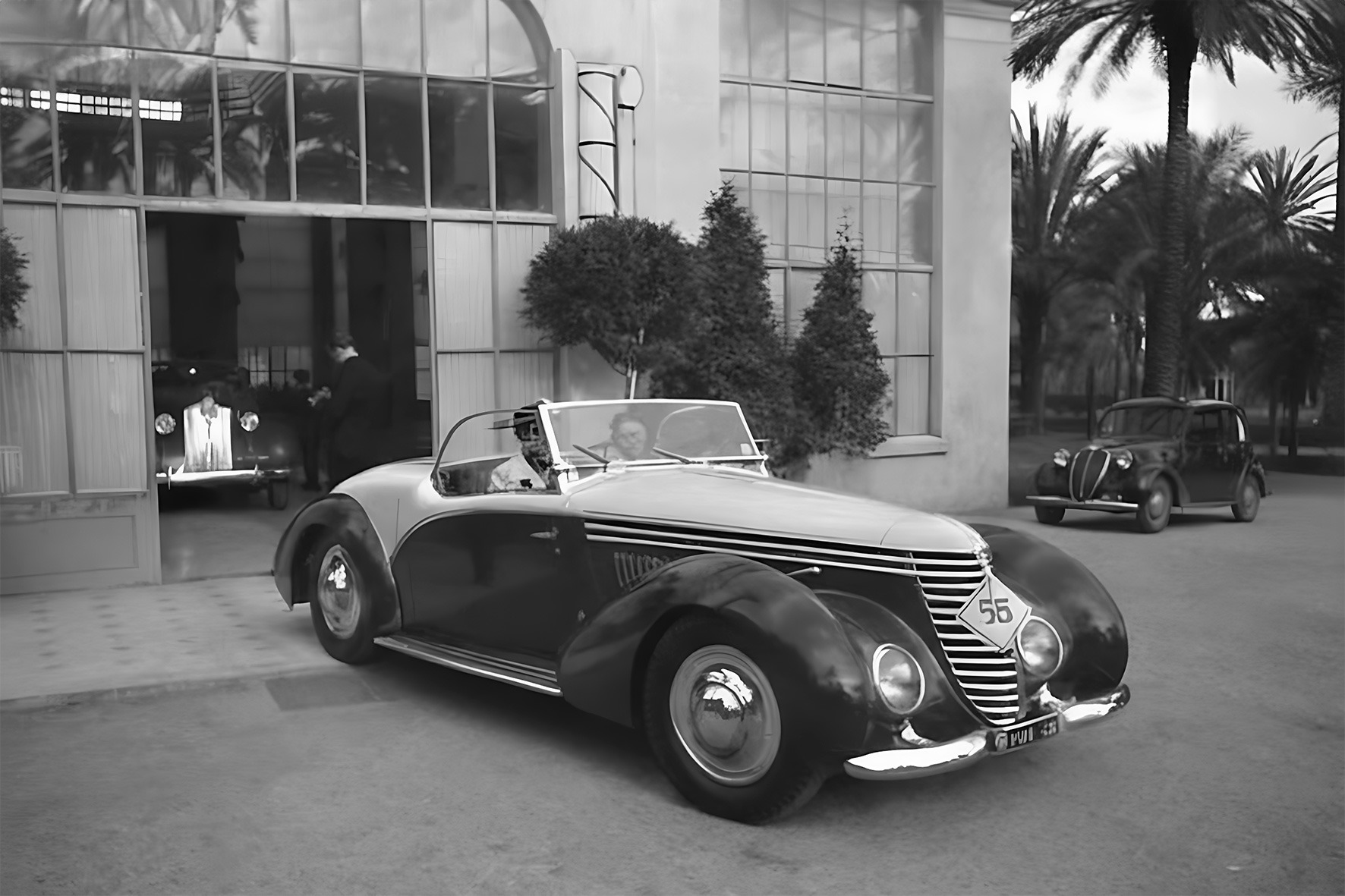
This is the moment. The doors of the 1937 Milan Motor Show open, and out rolls this Alfa Romeo 6C 2300 Cabriolet by Pininfarina, looking effortlessly cooler than everything around it. Designed under the same aerodynamic philosophy set by Mario Revelli di Beaumont, it’s long, low, and unapologetically elegant, with flowing fenders and a cabin pushed rearward like a proper pre-war GT. Later that year it showed up at the Sanremo Concours d’Elegance, because of course it did. One-off, open-top, and perfectly composed — proof that Italian showcars didn’t need wings to steal the spotlight.
Fiat 1500 Berlinetta Aerodinamica Ghia (1938)
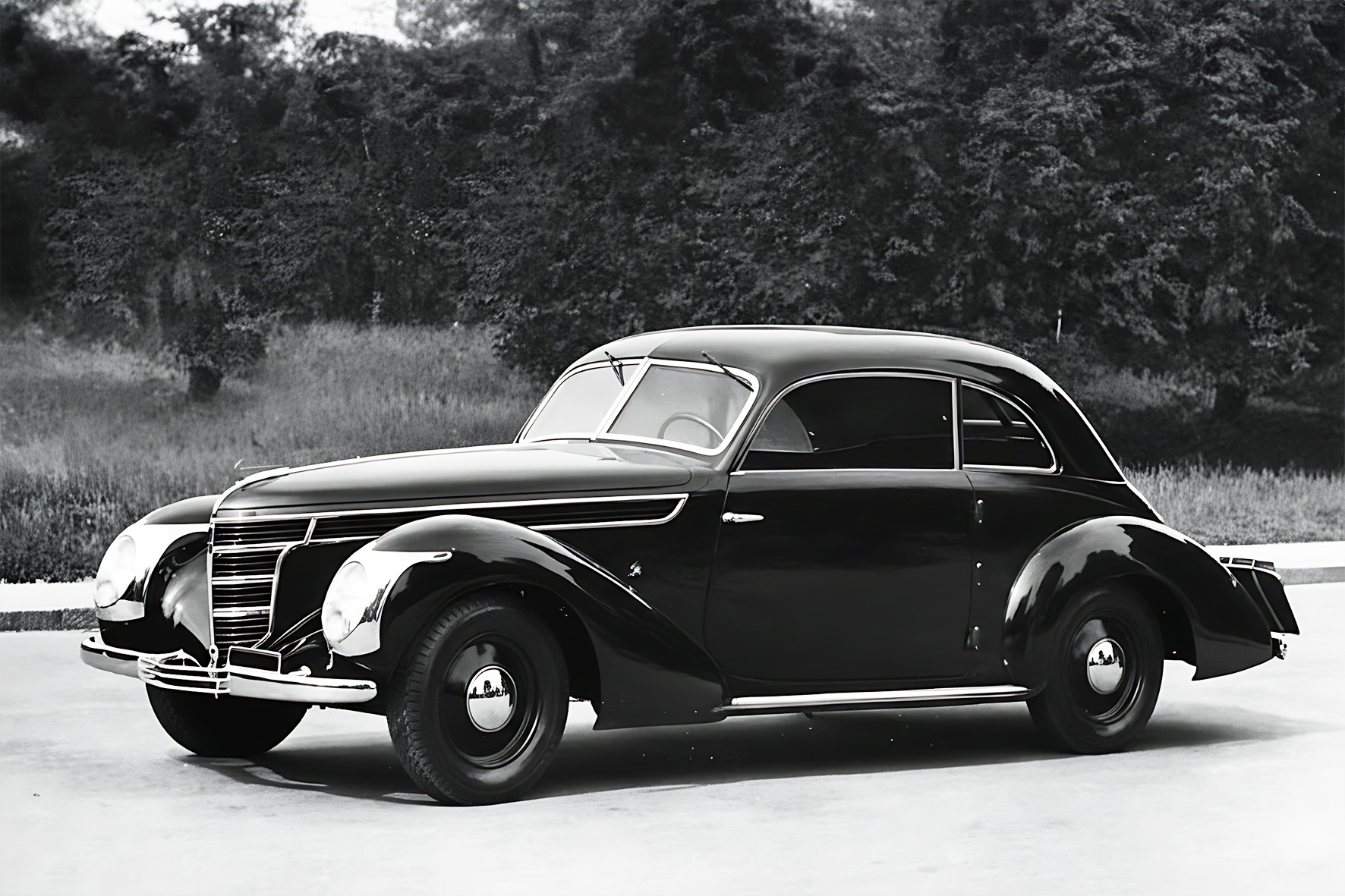
Unveiled at the 11th Turin Concours d’Elegance in 1938, this Fiat 1500 shows what happened when Italian aerodynamics started flirting with American style. Mario Revelli di Beaumont gave Carrozzeria Ghia a sleek, low-roofed berlinetta with smooth surfaces, chrome-trimmed headlights and a grille that wouldn’t look out of place on a transatlantic ocean liner. It was futuristic, elegant, and just bold enough to win its category prize at the show. Proof that in the late ’30s, Italy wasn’t just inventing the future — it was happily borrowing bits of it, too.
Lancia Aprilia Cabriolet Pininfarina (1938)
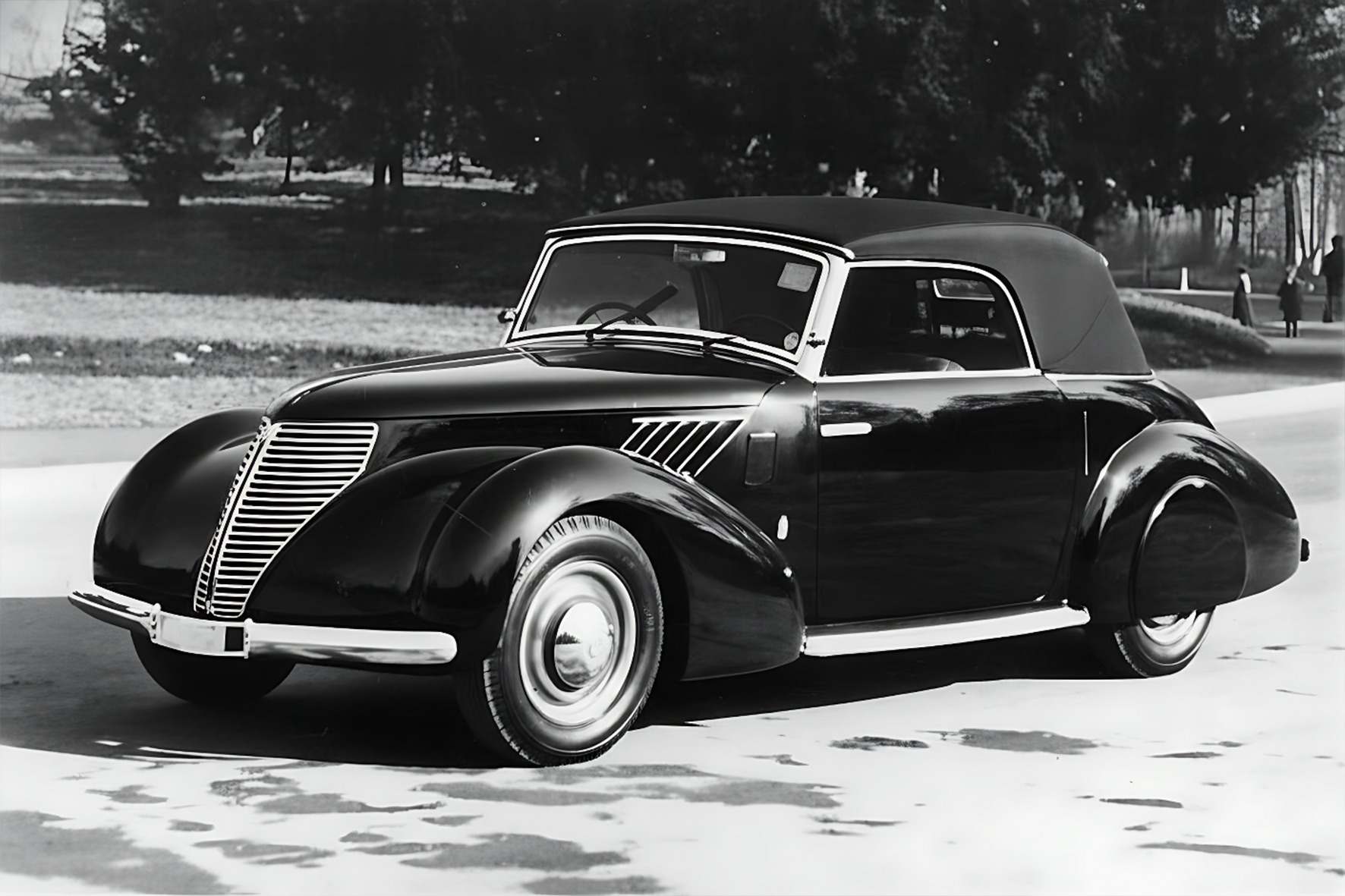
This is what happens when Lancia engineering meets the Revelli di Beaumont + Pininfarina brain trust and nobody says “maybe that’s too much.” The Aprilia Cabriolet looks clean and classy, but hiding underneath are some genuinely wild ideas — including folding headlights, patented by Revelli, designed purely to cheat the air when not in use. Add a perfectly integrated soft top, sculpted fenders and jewel-like details everywhere, and you get an open car that feels absurdly modern for the late ’30s. Elegant on the surface, quietly insane underneath — peak Italian showcar energy.
Alfa Romeo 6C 2500 Spider Stabilimenti Farina (1939)
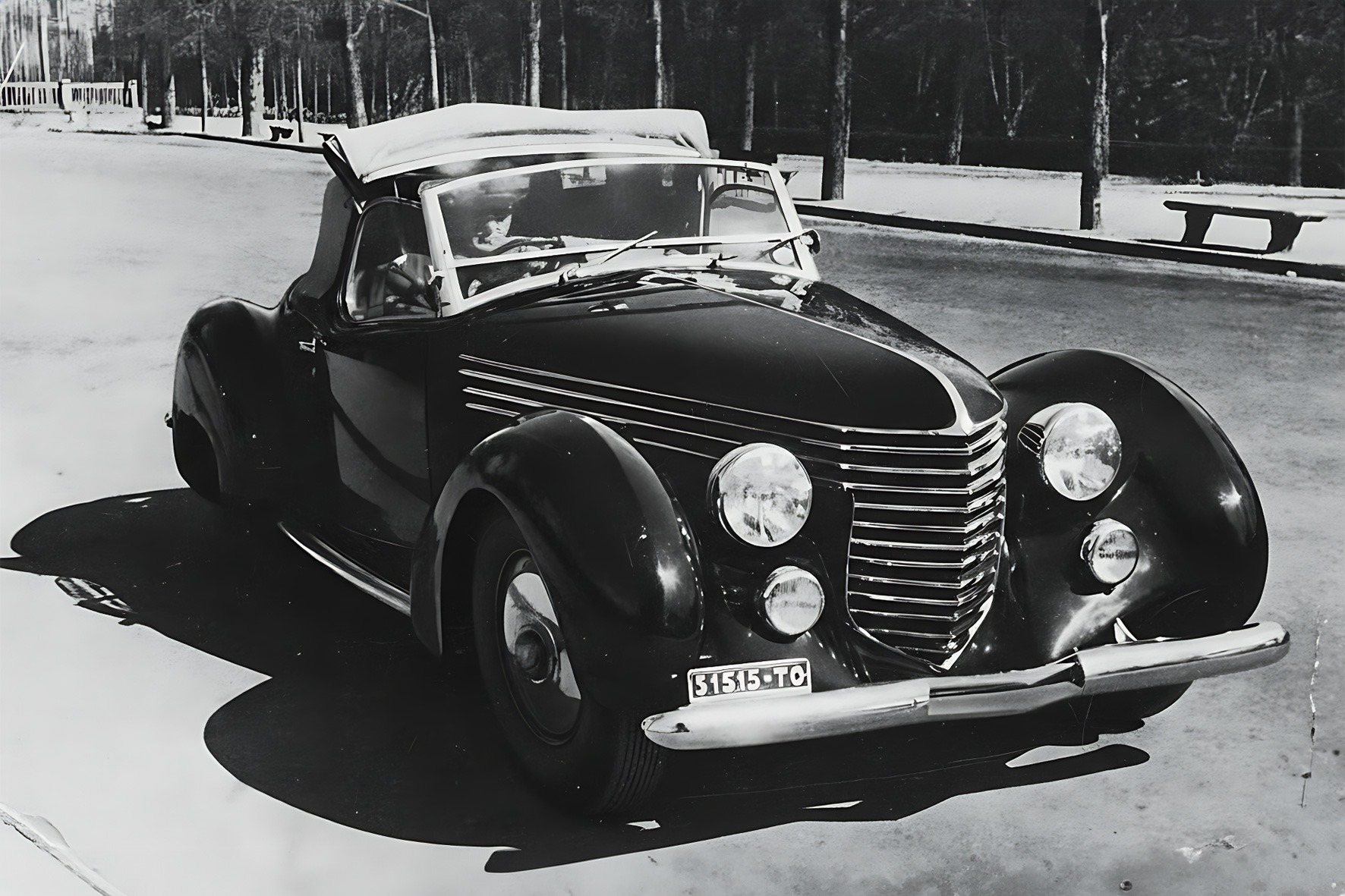
Commissioned in 1939 by Italian movie star Renzo Ricci, this one-off Alfa Romeo 6C 2500 Spider is what happens when fame, money and Italian design culture collide. Mario Revelli di Beaumont gave it a sleek roadster body built by Stabilimenti Farina, complete with a front grille clearly inspired by the American Cord — because even Italy was watching what was happening overseas. Low, wide and unapologetically glamorous, it’s less racing car and more rolling red carpet. Proof that pre-war Italian showcars weren’t just about speed or aerodynamics — sometimes they were simply about stealing the scene.
Alfa Romeo 6C 2500 S Stabilimenti Farina (1939)
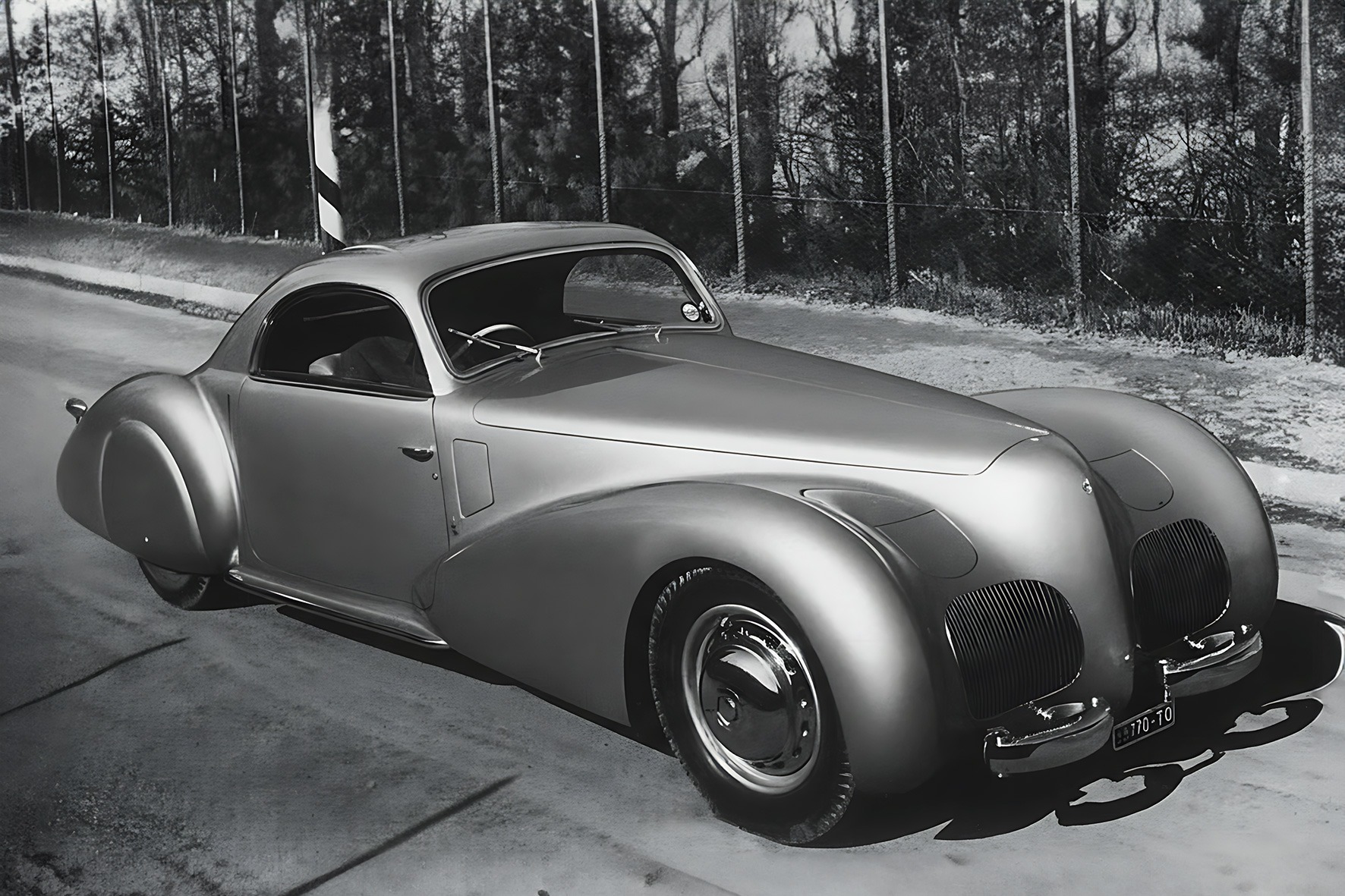
This one didn’t just flirt with streamlining — it fully committed. Built on the long-wheelbase 6C 2500 S chassis and bodied by Stabilimenti Farina, this one-off was sketched by a young Giovanni Michelotti alongside Mario Revelli di Beaumont for racing driver Nino Farina. The proportions are outrageous: an endless bonnet, a tiny cabin pushed back, and four massive teardrop fenders that look like they’re trying to escape the body. Add retractable headlights and even an opening sunroof, and you get peak Italian excess — less “grand tourer”, more rolling ego trip. Absolutely magnificent.
Lancia Astura Coupé “Monolith” Stabilimenti Farina (1946)
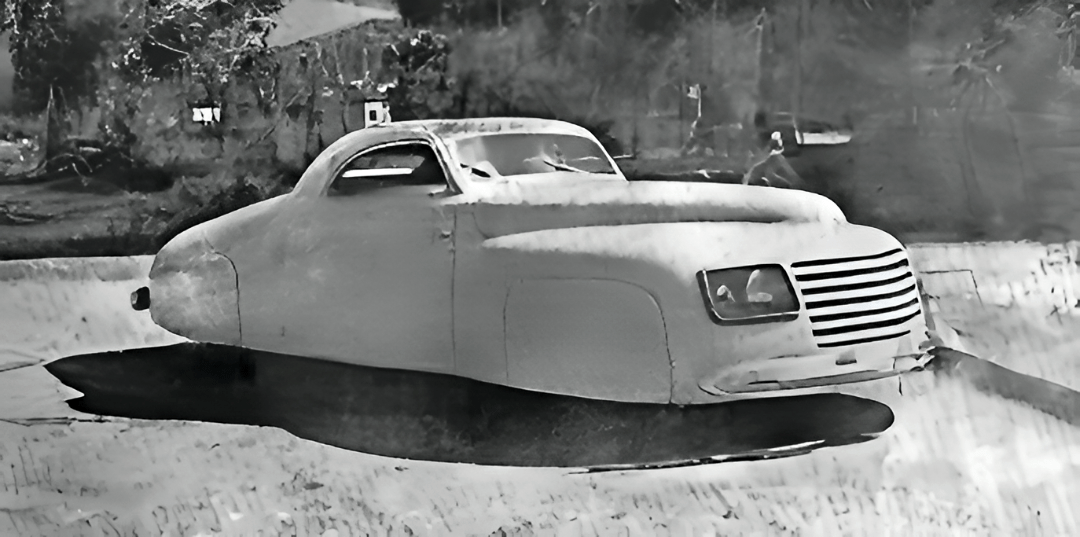
Giovanni Michelotti simply called it “the Monolith”, and one look tells you why. Built by Stabilimenti Farina on Lancia Astura underpinnings, this post-war creation didn’t debut at a motor show, but at a fashion show in Lausanne — because a normal unveiling would have been far too ordinary. The body is huge, smooth, almost architectural, with the wheels visually absorbed into the mass and a front end that previews Farina’s later “tank-style” designs. It doesn’t look fast. It looks inevitable. Less car, more rolling sculpture — proof that Italian showcars weren’t afraid to completely ignore convention.
Lancia Astura Spider Pininfarina (1946)
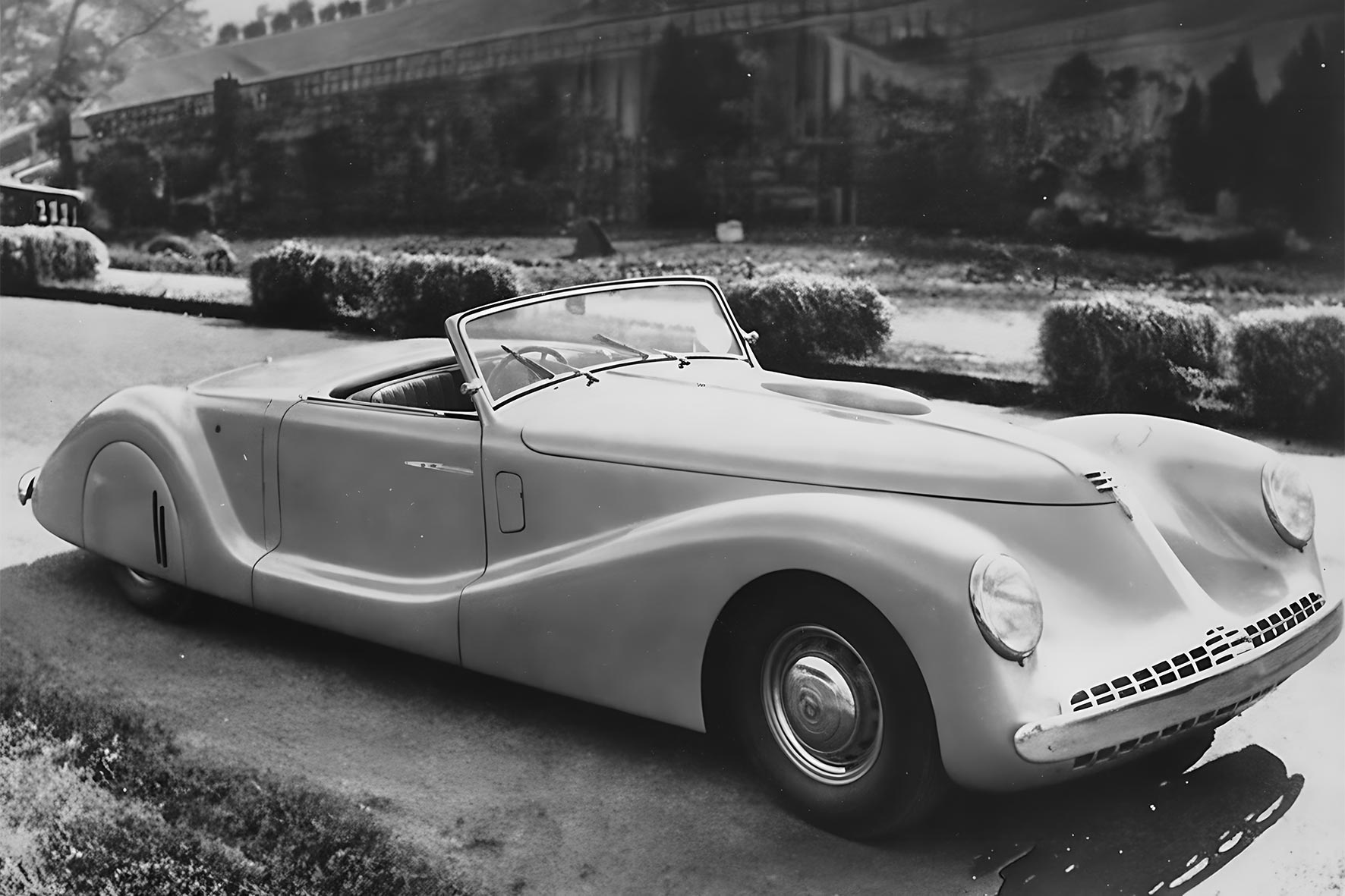
This Lancia Astura Spider is what Italy looked like right after the war. Built by Pininfarina on a pre-war Astura chassis and designed by Mario Revelli di Beaumont, it’s smooth, restrained, and quietly confident — no chrome overload, no theatrics. Just clean surfaces, integrated fenders and a perfectly judged open silhouette. In 1946 it wasn’t shown in a salon, but driven at the Turin Grand Prix, leading the field as the official pace car. A rolling symbol of rebirth. Not insane in the loud way — insane in how calm, modern and composed it already felt.
Alfa Romeo 6C 2500 Cabriolet Stabilimenti Farina (1940)
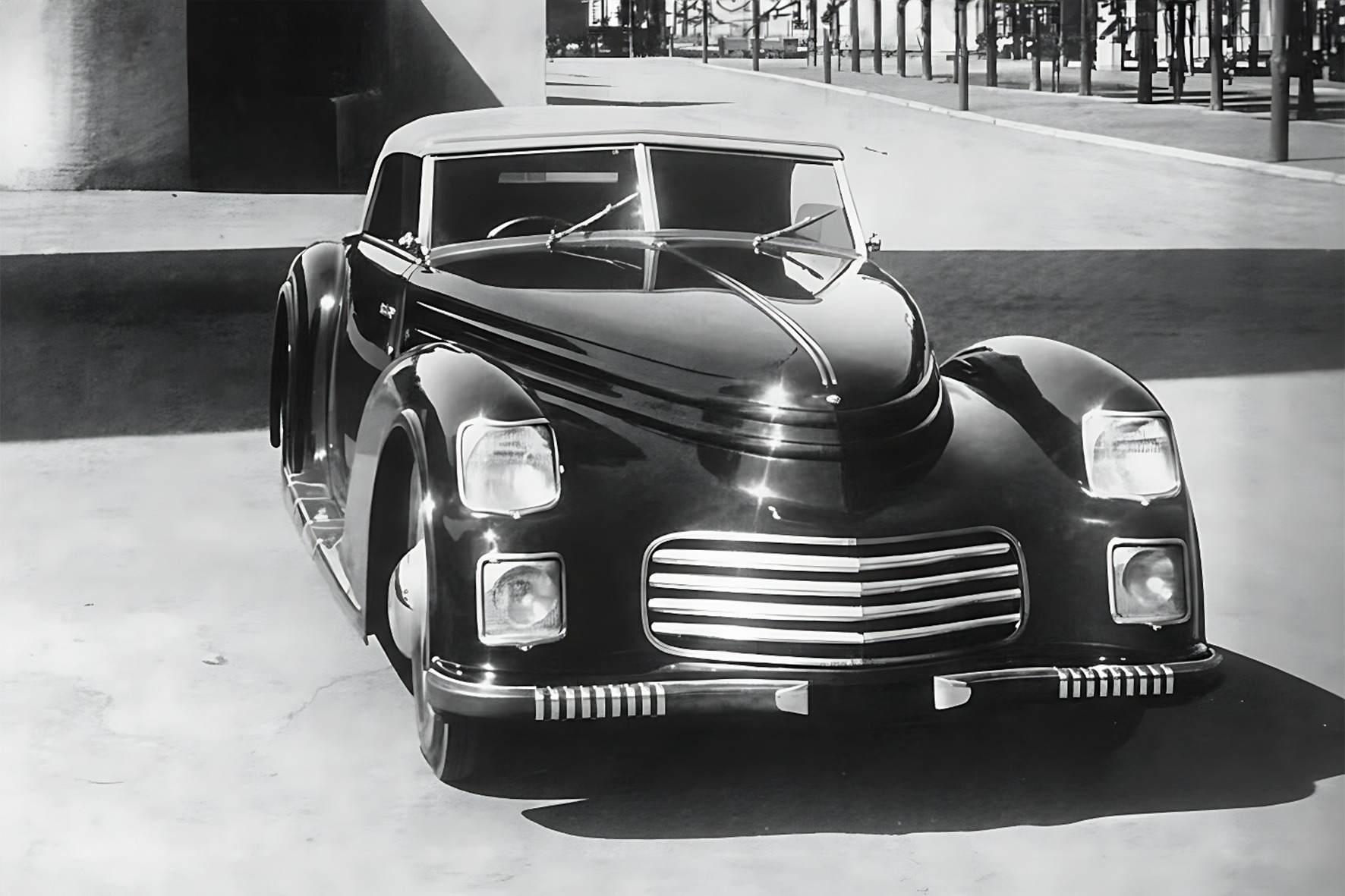
Commissioned in 1940 by Dr. Oscar Ansaldi, this one-off Alfa Romeo 6C 2500 Cabriolet shows Mario Revelli di Beaumont and Stabilimenti Farina at full creative throttle. The front end is pure provocation: stacked vertical headlights, a wide horizontal grille, and chrome used like punctuation marks. It’s elegant, yes, but also slightly confrontational, as if daring other designers to keep up. Built just before the war froze everything, it feels like a final flourish of pre-war excess — bespoke, confident, and completely unconcerned with rules. The kind of car you build when you know there won’t be another chance for a while.
A Madness That Could Only Happen Once
Looking back, what’s most shocking isn’t how beautiful these cars were — it’s how fearless they were. No focus groups. No brand guidelines. No concern for production feasibility. Just designers, coachbuilders and clients pushing ideas as far as metal would allow.
Many of these cars were one-offs. Some were rebuilt, lost, or quietly disappeared. But their influence didn’t. You can see traces of them in post-war GTs, in early concept cars, and in the idea that a car could be more than transportation — it could be a statement.
This kind of madness could only have happened in a very specific place and time. Pre- and immediate post-war Italy, where engineering met art, and nobody thought twice about building something outrageous just to see if it could be done.This Lancia Astura Spider is what Italy looked like right after the war. Built by Pininfarina on a pre-war Astura chassis and designed by Mario Revelli di Beaumont, it’s smooth, restrained, and quietly confident — no chrome overload, no theatrics. Just clean surfaces, integrated fenders and a perfectly judged open silhouette. In 1946 it wasn’t shown in a salon, but driven at the Turin Grand Prix, leading the field as the official pace car. A rolling symbol of rebirth. Not insane in the loud way — insane in how calm, modern and composed it already felt.
They weren’t just ahead of their time.
They ignored time altogether.

ABOUT THE AUTHOR
Andreas Scheidl
Italian classic car enthusiast with German roots. Renowned as a respected figure in the classic car community, he serves as a jury member at various international concours d'elegance, including the Classic Gala Schwetzingen and Mantova. As a content creator, Andreas passionately shares his profound knowledge and appreciation for vintage automobiles. His heart beats for cars designed by Giovanni Michelotti, showcasing his discerning taste and dedication to preserving the timeless elegance of automotive history.
More stories by Andreas Scheidl ↗CONTINUE READING
Posts You Might Like
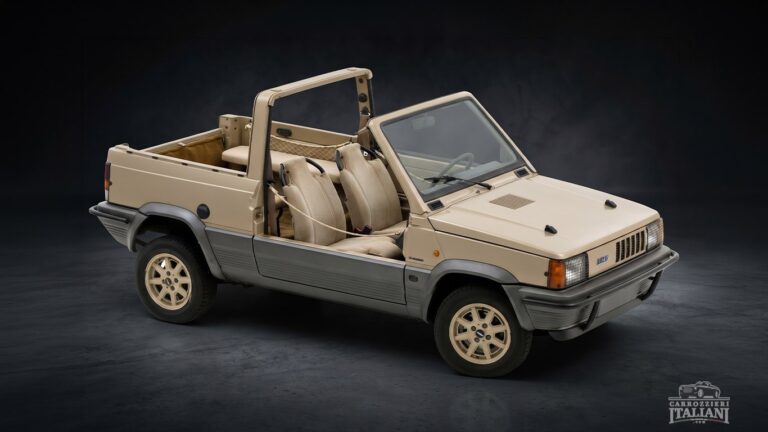
Fiat Panda Cabrio: The Italian Coachbuilders Who Opened Giugiaro’s Box
From Moretti’s Panda Rock to Italdesign’s experimental Strip, Maggiora’s four-wheel-drive convertible and Stola’s remarkable Destriero, the history of the open-top Panda reveals an unexpected chapter in Italian coachbuilding. When Giorgetto Giugiaro designed…
Read story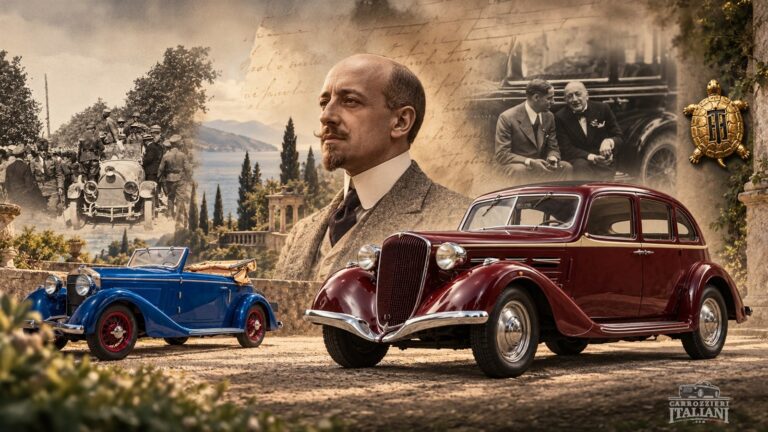
Gabriele d’Annunzio and the Cult of the Automobile
There was a time when the automobile had not yet become part of the landscape. It announced itself from afar through the beating of an engine, the smell of petrol and hot…
Read story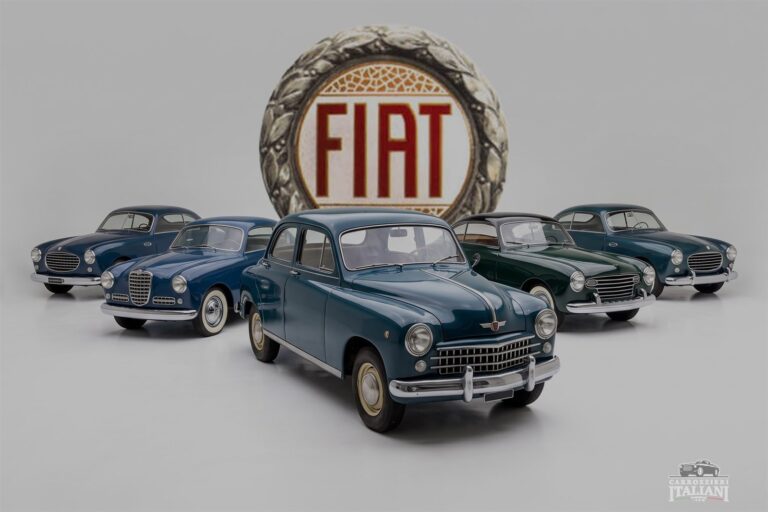
Fiat 1400: The Last Great Playground of the Carrozzieri
From Touring and Abarth to Farina, Ghia, Vignale, Boneschi, Bertone, Viotti and the smaller carrozzerie, the new Fiat quickly became one of the richest bases for Italian special bodies in the early…
Read story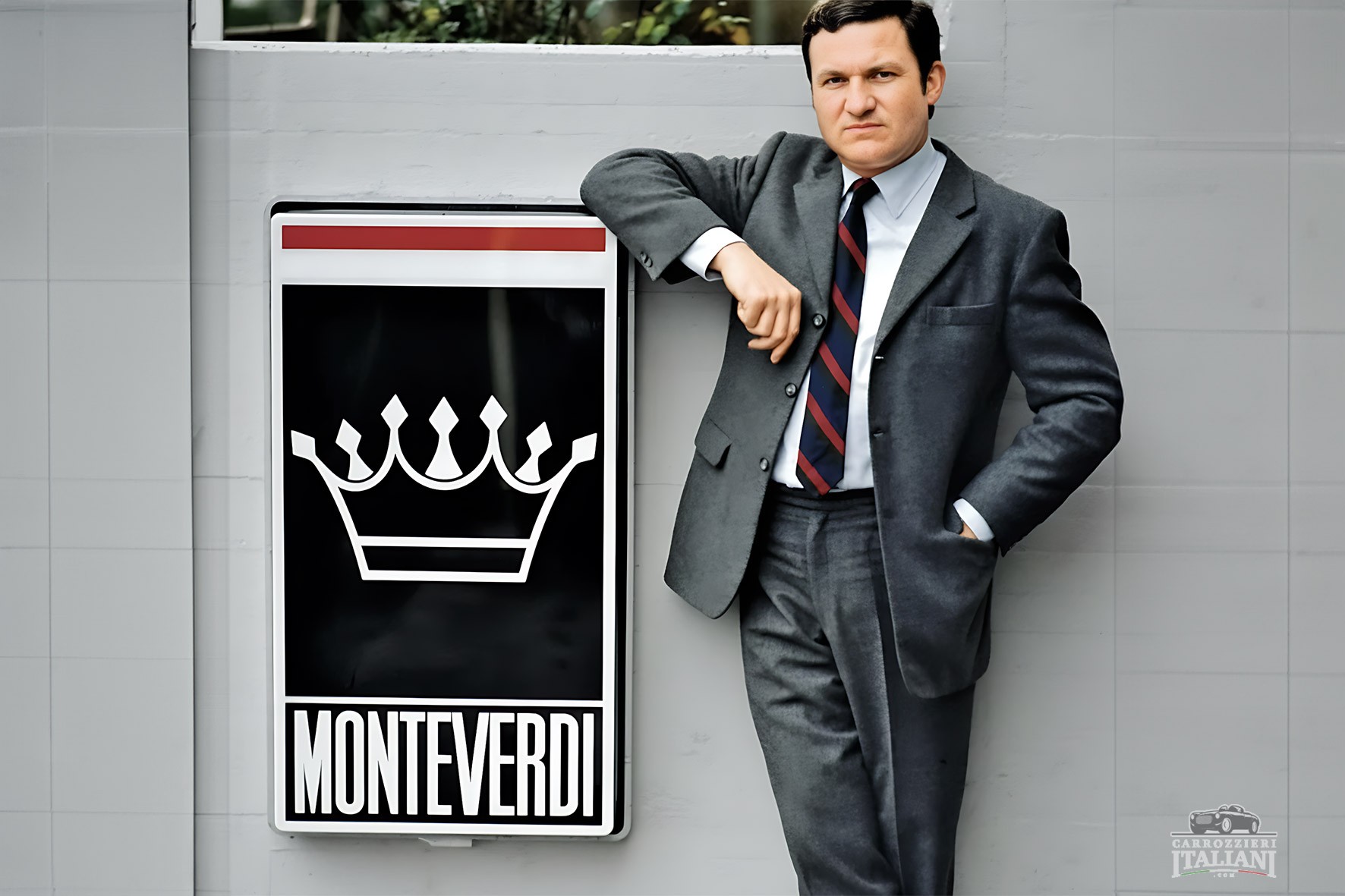
How a Swiss Dealer Challenged Ferrari: The Story of Monteverdi
How Peter Monteverdi went from Swiss Ferrari dealer to creator of rare Frua and Fissore-bodied GTs, the Hai supercar and luxury off-roaders.
Read story
THE CONVERSATION
Comments 0
Share a memory, a period photograph or a documented detail about this story.