
THE VEHICLE AT A GLANCE
Model dossier
- Manufacturer
- Alfa Romeo
- Base model
- 6C 2300 Pescara
- Coachbuilt version
- Viotti Berlina Aerodinamica concours one-off
- Coachbuilder
- Viotti
- Production period
- 1935
- Body style
- Berlina
- Designer
- Mario Revelli di Beaumont
THE PEOPLE BEHIND THE CAR
Coachbuilding, design & conversions


PRICE & SALES RECORD
Vehicle value
- Original price
- Not documented
- Latest recorded sale
- Not documented
01 / THE STORY
History & context
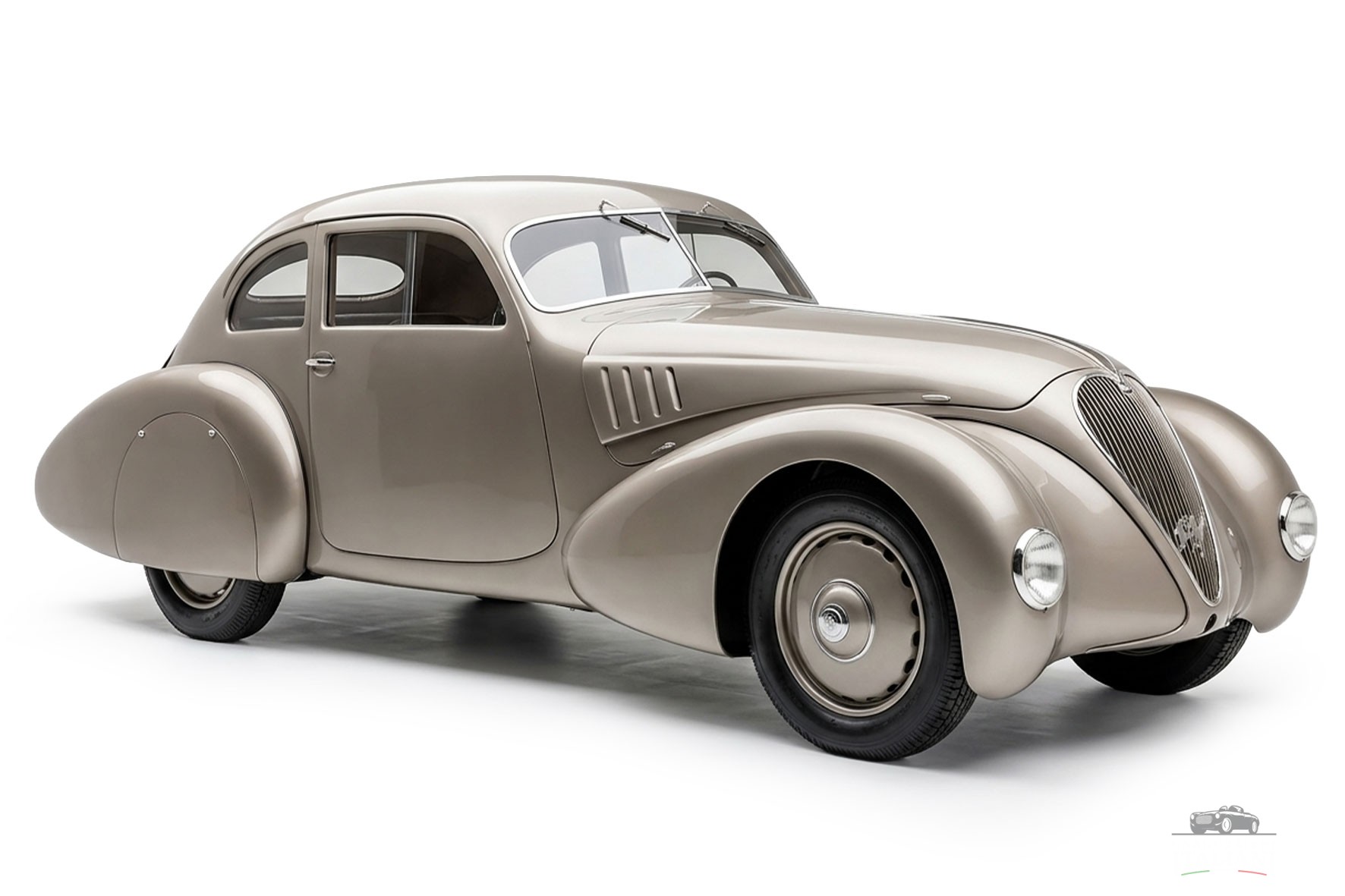
The Alfa Romeo 6C 2300 Berlina Aerodinamica Pescara, designed by the brilliant Mario Revelli di Beaumont for Carrozzeria Viotti, remains a shining example of Art Deco elegance and groundbreaking aerodynamics in automotive history. Unveiled in 1935, the car was a bold statement of Alfa Romeo’s innovative spirit and Revelli di Beaumont’s visionary design philosophy. At the heart of the Berlina Aerodinamica Pescara’s allure was its advanced focus on aerodynamics, a relatively novel concept in the mid-1930s. Its sleek, teardrop-shaped body minimized drag and optimized airflow, setting a standard that influenced automotive design for decades. The incorporation of integrated headlights into the fenders, an avant-garde feature at the time, seamlessly merged functionality with aesthetics, creating a harmonious flow across the car’s streamlined silhouette. The covered rear wheels further emphasized this aerodynamic ethos, reducing air resistance while adding a futuristic flair. One of the most striking features of the 6C 2300 Berlina Aerodinamica Pescara was its iconic heart-shaped front grille. This dramatic and oversized grille was as much a visual statement as it was a functional element, allowing optimal airflow to the engine. This design cue would later inspire similar features in subsequent Alfa Romeo models, notably the 1900 La Flèche by Giovanni Michelotti, highlighting its enduring influence on Alfa Romeo’s design language. The car’s innovative design wasn’t purely aesthetic: it also embodied cutting-edge engineering principles. This unique blend of beauty and technical ingenuity garnered widespread acclaim, culminating in the 1935 Turin Concours d’Elegance, where the Berlina Aerodinamica Pescara captured the 1st prize. The accolade celebrated not only the car’s breathtaking form but also the exceptional craftsmanship of Carrozzeria Viotti and the design brilliance of Revelli di Beaumont. The Alfa Romeo 6C 2300 Berlina Aerodinamica Pescara is more than just a car; it is a work of art that reflects the intersection of form and function. Its pioneering design elements and enduring legacy solidify its place as one of the most iconic vehicles of pre-war automotive history.
02 / TECHNICAL IDENTITY
Specifications & construction
Production & construction
- Production
- 1
- Production type
- One-off
Engine & performance
- Engine configuration
- Inline-6
Additional features
- Recorded features
- Aerodinamica
03 / DESIGN, BODY & SUPPLIERS
Design, body & suppliers
Design & manufacture
- Coachbuilder / Body Builder · Documented
- Viotti
- Designer · Candidate
- Mario Revelli di Beaumont
- Manufacturer · Documented
- Alfa Romeo
Body form & construction
- Body style
- Berlina
04 / EVENTS & CHRONOLOGY
Events & chronology
At the 1935 Turin concours, the Alfa Romeo Pescara entered by Carrozzeria Viotti and bodied by Viotti received the Gran Premio for the most beautiful avant-garde car, with a silver cup. General · legacy_preserved
- Date
- 28 Apr 1935
- Chassis
- General
Preserved CI 1.0 relation. Evidence field: _yoast_wpseo_primary_events|list_of_awards_0_events. No award inferred.
CHRONOLOGICAL RECORD
General chronology
Chronological history1 dated records
08 / GALLERY
Photo gallery 9 photographs
Show 3 more photographs Show fewer photographs
09 / PERIOD ARCHIVE
Period photographs & advertising
The period archive gallery will show historical photographs, advertisements, brochures and press images once assets, provenance and usage rights have been recorded in the masterfile.

THE CONVERSATION
Comments 0
Share a memory, a period photograph or a documented detail about this car.