
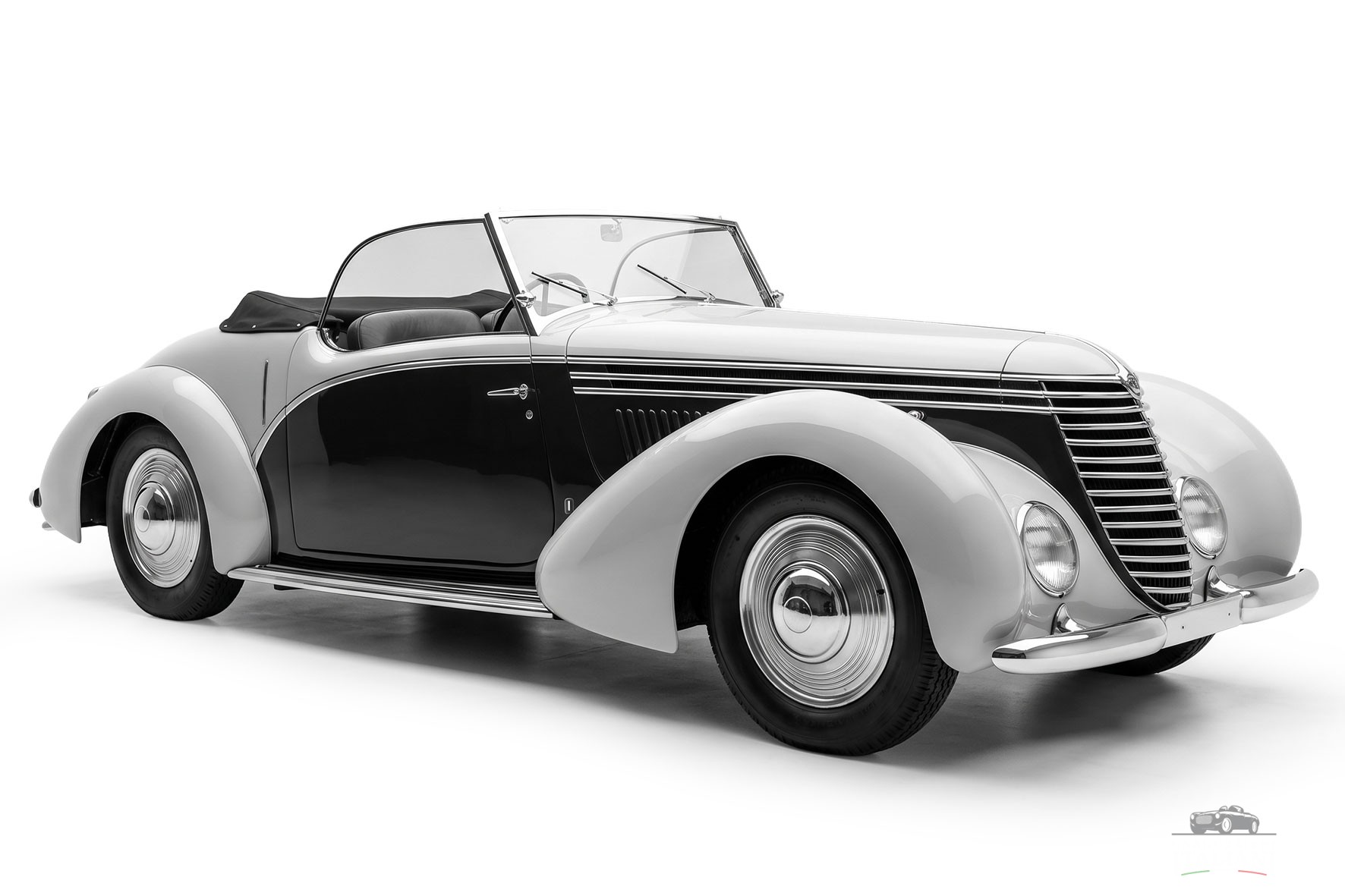
THE VEHICLE AT A GLANCE
Model dossier
- Production period
- 1936
- Body style
- Cabriolet
- Engine
- Inline-6
- Type
- One-off
THE PEOPLE BEHIND THE CAR
Coachbuilding, design & conversions

PRICE & SALES RECORD
Vehicle value
- Original price
- Not documented
- Latest recorded sale
- Not documented
01 / THE STORY
History & context
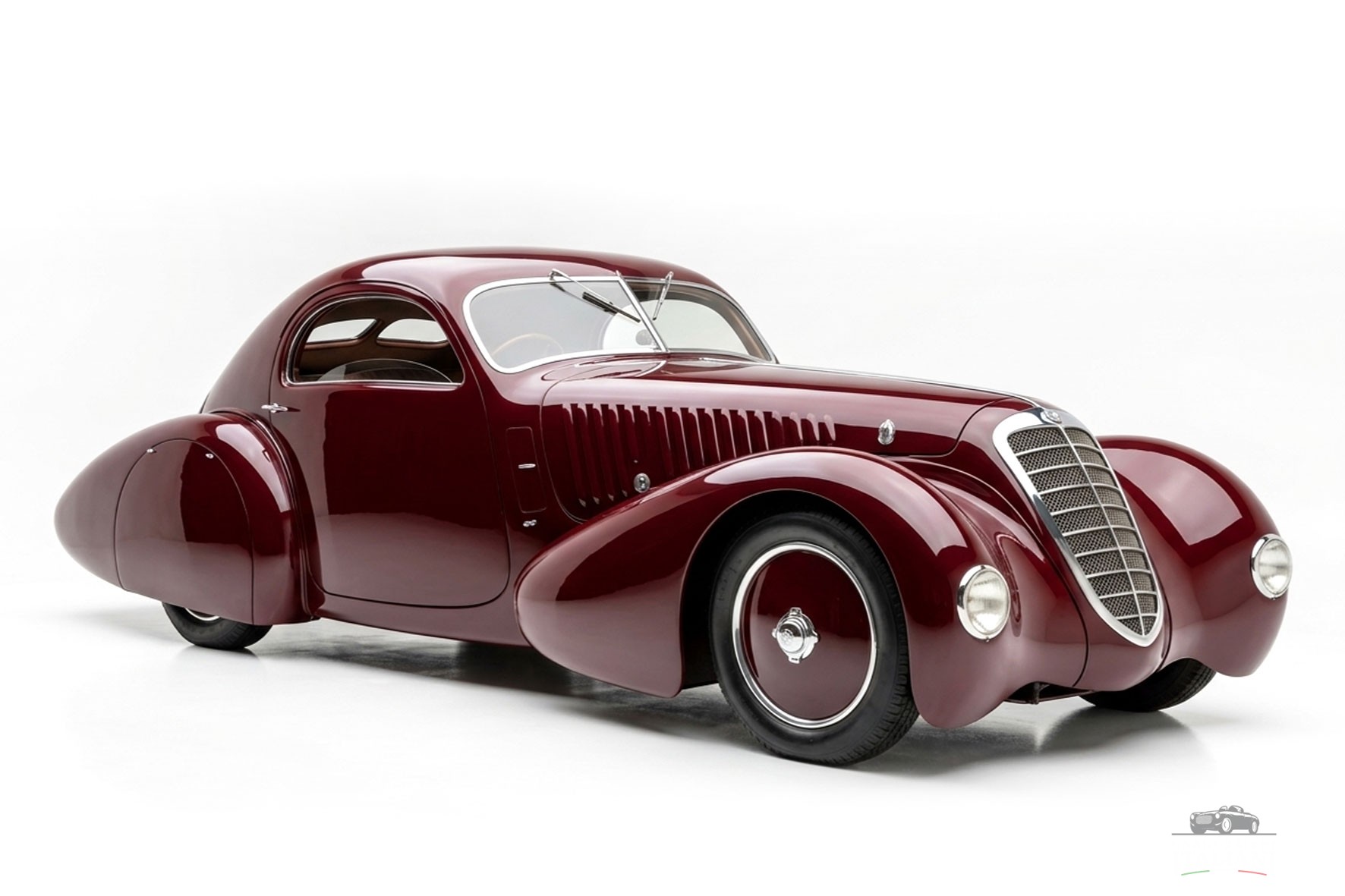
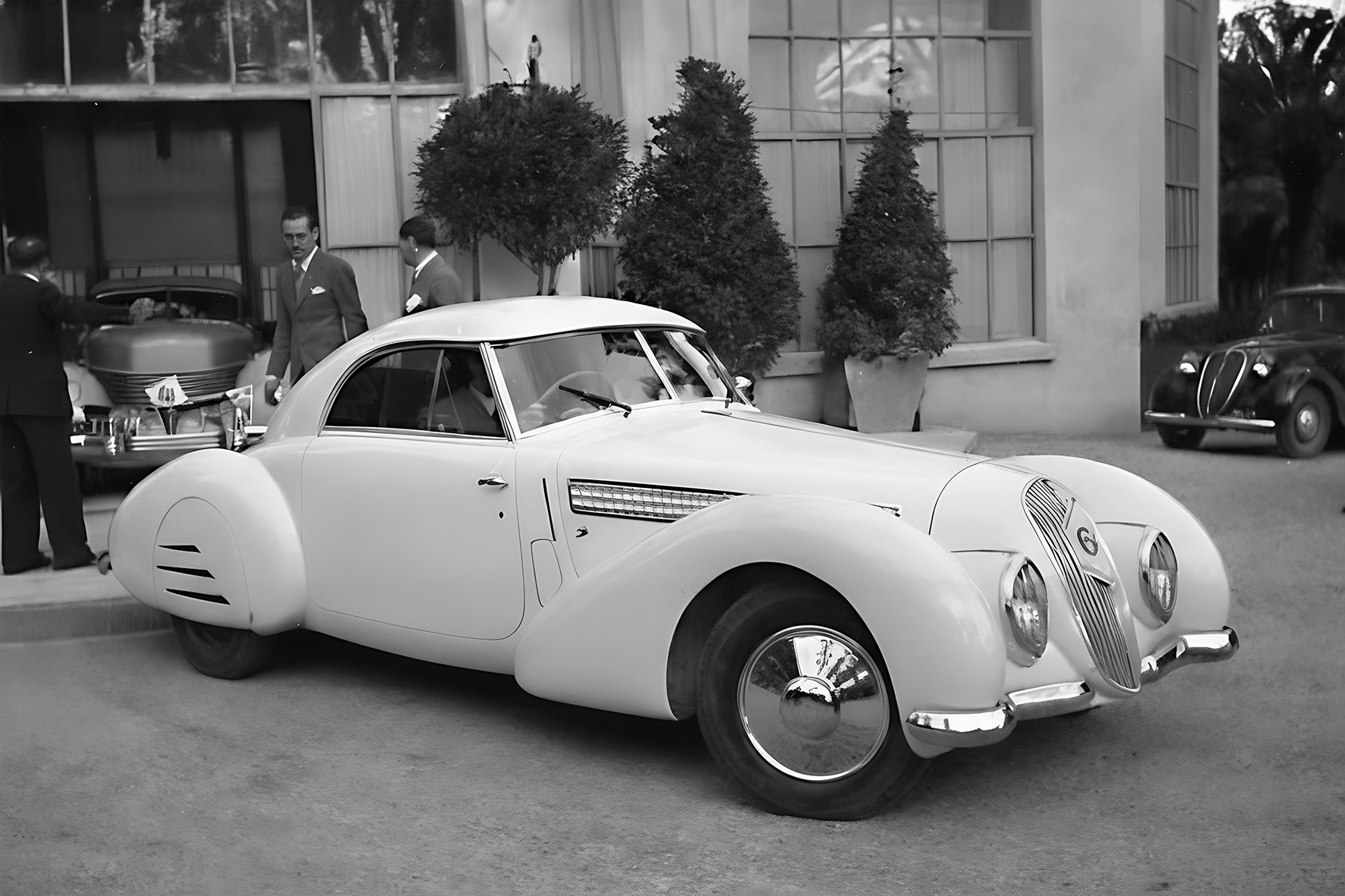
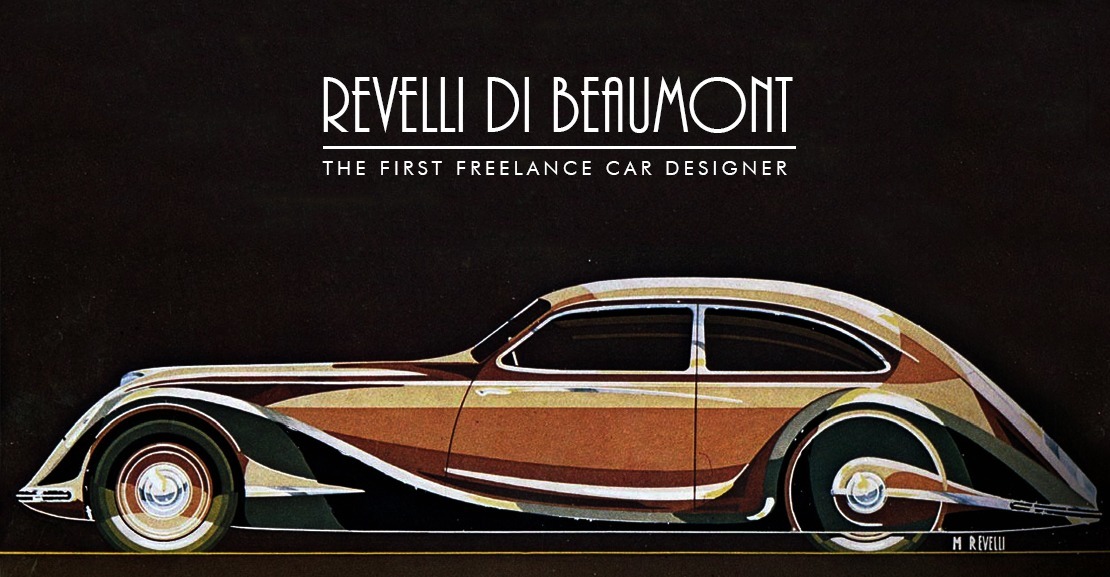
The Alfa Romeo 6C 2300 Cabriolet “Pescara” (1937) was coachbuilt by Pininfarina as the open counterpart to the Alfa Romeo 6C 2300 Berlinetta, which followed shortly afterward. Both cars were developed from the same technical and stylistic framework defined by Mario Revelli di Beaumont, applying consistent proportions, aerodynamic research, and surface treatment to different body typologies. The Cabriolet Pescara was unveiled at the 1937 Milan Motor Show as a refined open grand touring proposal. Its body featured a long, tapered bonnet, separate flowing fenders, and a low beltline, with the passenger compartment set rearward in accordance with contemporary sporting design practice. Compared with the later Berlinetta, the Cabriolet emphasized visual lightness and open-air elegance while retaining the same structural and stylistic coherence. In the same year, the car took part in the 1937 Sanremo Concours d’Elegance. For this occasion, the fenders were repainted, likely to enhance chromatic contrast and highlight the sculptural quality of the bodywork under concours conditions, a common practice among coachbuilders at the time. Mechanically, the 6C 2300 Cabriolet was built on the standard Alfa Romeo 6C 2300 chassis, powered by a 2,309 cc inline six-cylinder engine with single overhead camshaft. Power output varied according to specification, while the chassis layout combined independent front suspension with a live rear axle, offering a balance between ride comfort and road stability. The mechanical architecture was identical to that used for the Berlinetta, reinforcing the conceptual link between the two cars. Production of the 6C 2300 Cabriolet Pescara was limited to a single documented example. Together with the Berlinetta, it illustrates Pininfarina’s method of developing multiple body interpretations from a unified mechanical base, addressing both sporting and concours-oriented applications within the Alfa Romeo 6C 2300 range during the late 1930s.
IN THE ARCHIVE
Related people
IN THE ARCHIVE
Coachbuilders & design studios
02 / TECHNICAL IDENTITY
Specifications & construction
Production & construction
- Production type
- One-off
Engine & performance
- Engine configuration
- Inline-6
Design & manufacture
- Designer · Candidate
- Mario Revelli di Beaumont
- Manufacturer · Documented
- Alfa Romeo
- Coachbuilder / Body Builder · Documented
- Pininfarina
06 / EVENTS & AWARDS
Events & awards
30° Salone dell'Automobile – Milano General · legacy_preserved
- Date
- 1937
- Chassis
- General
Preserved CI 1.0 relation. Evidence field: _yoast_wpseo_primary_events. No award inferred.
Milano General · From the historical archive
- Date
- 1937
- Chassis
- General
07 / THE VEHICLE IN DETAIL
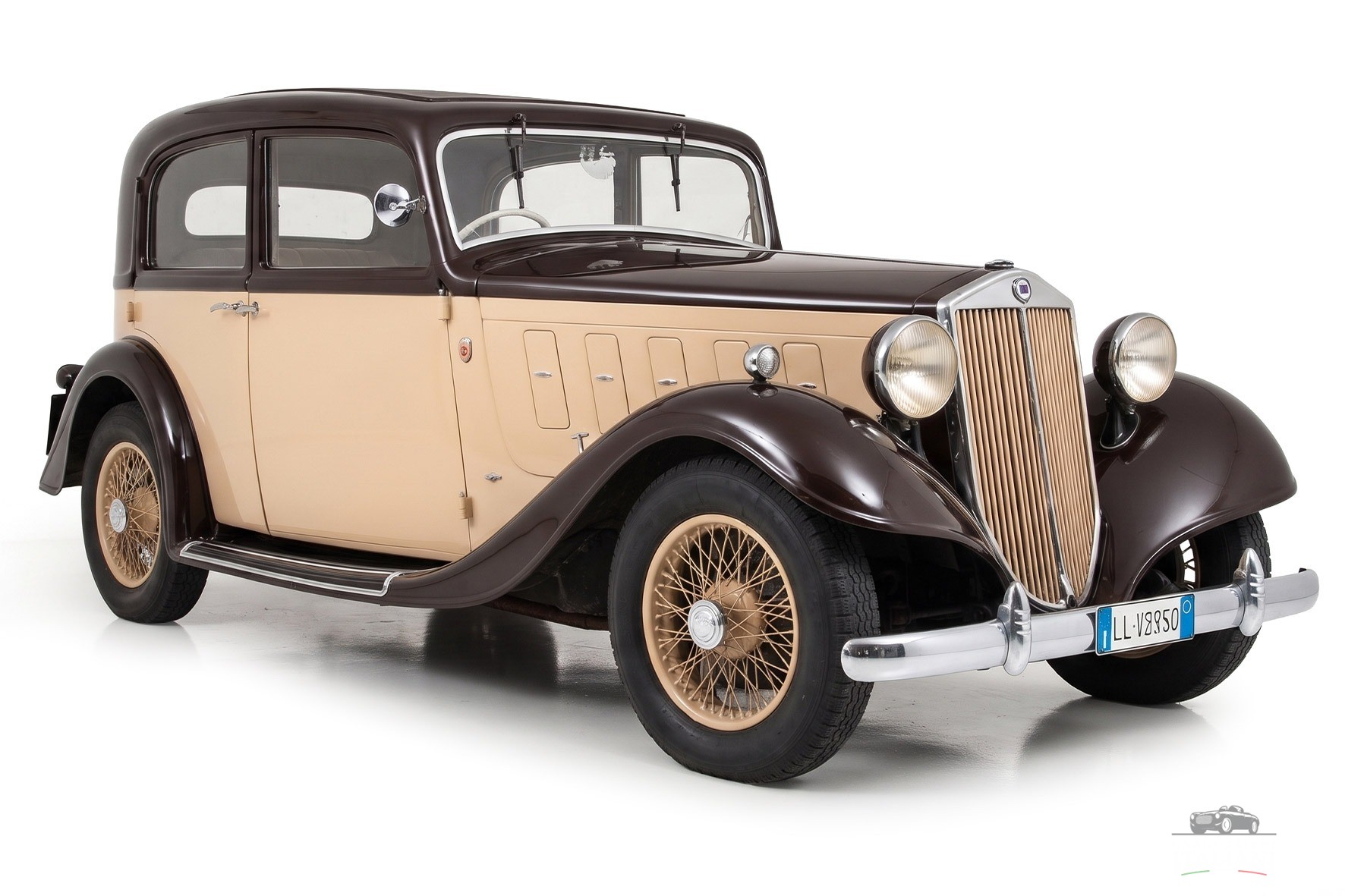
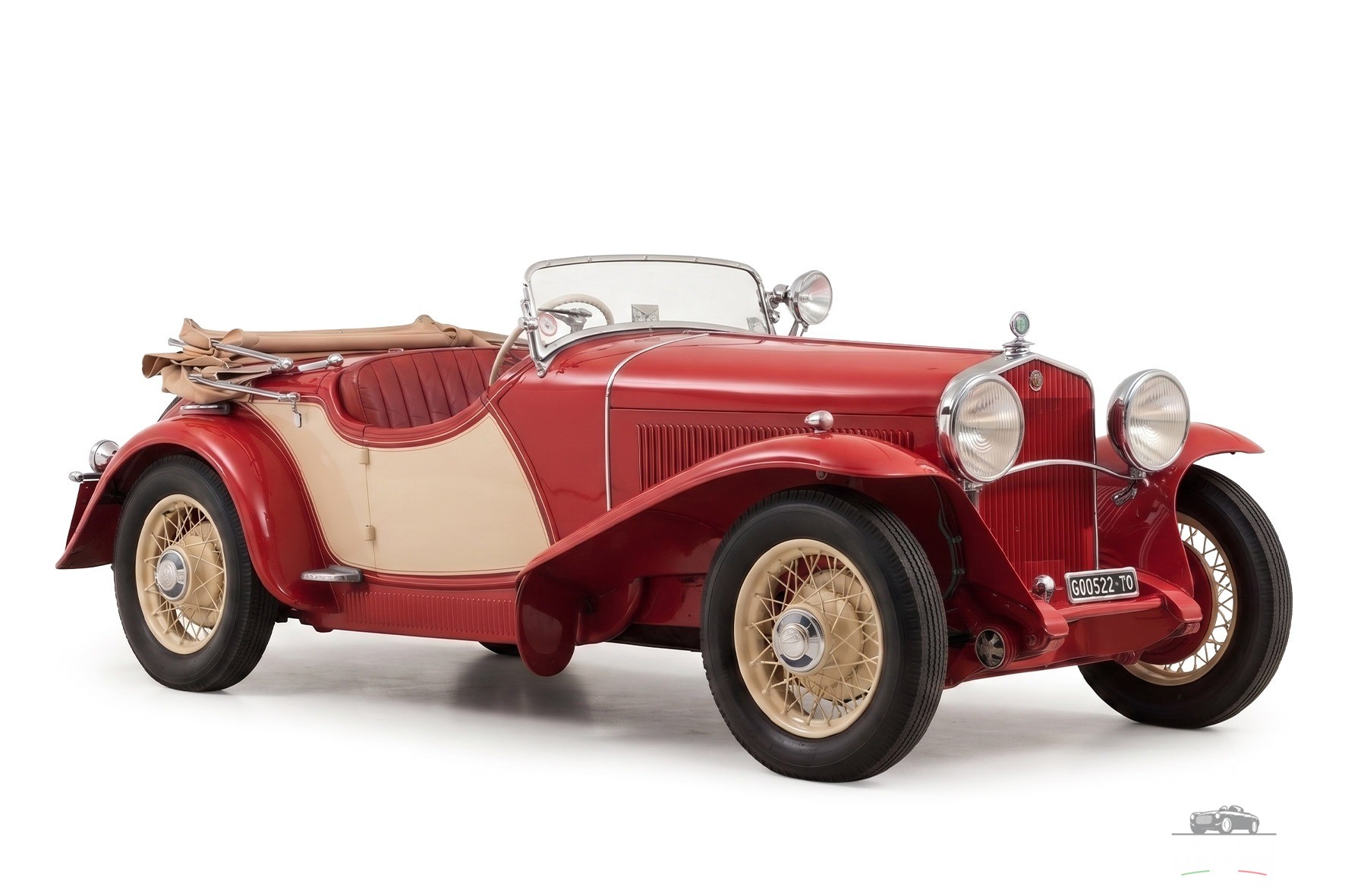
Photo gallery 3 photographs
08 / FROM THE ARCHIVE
Archive
No publishable archival references are currently catalogued for this vehicle.

THE CONVERSATION
Comments 0
Share a memory, a period photograph or a documented detail about this car.