
Italian Vision of the MPV: The Monovolume Concept
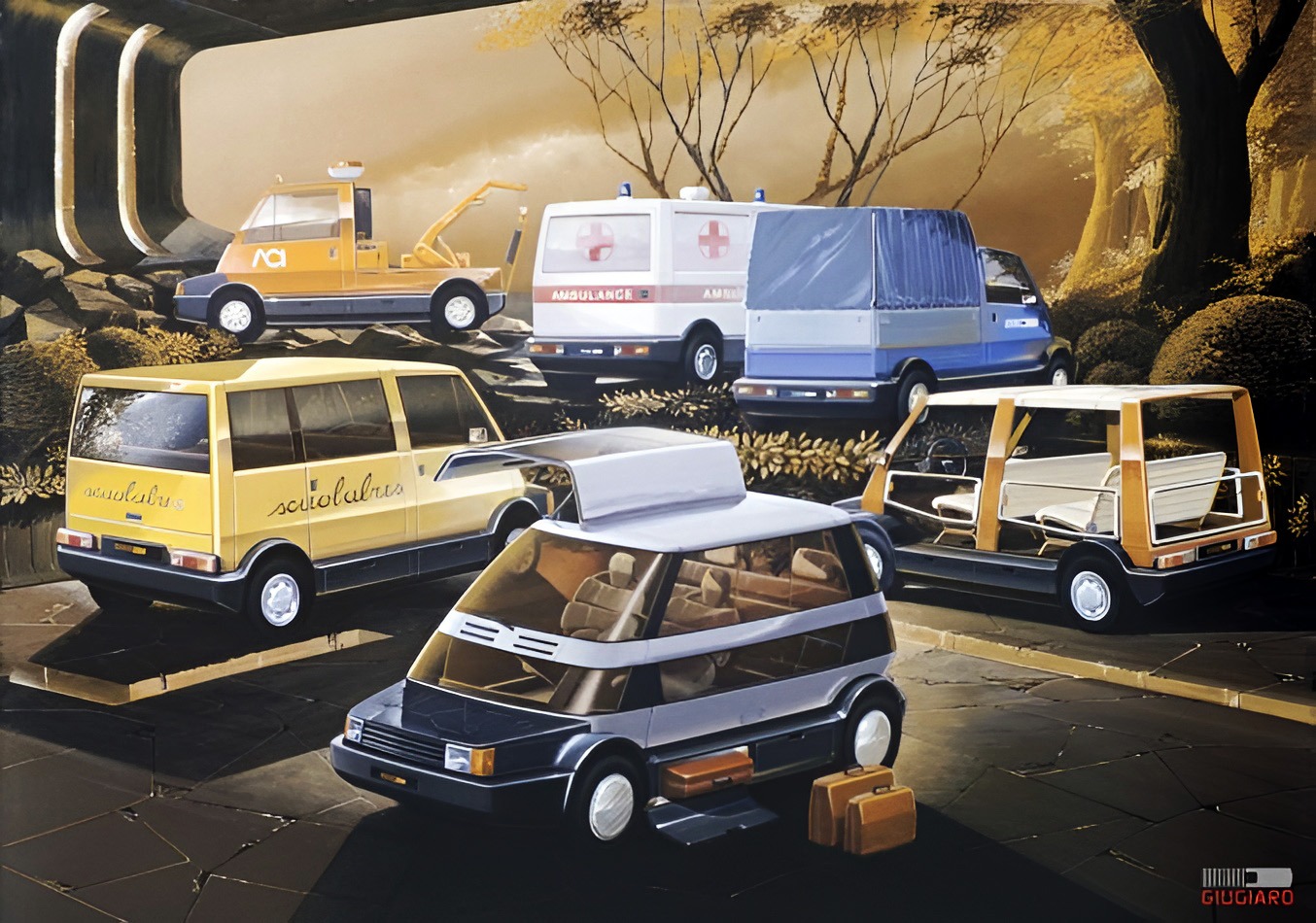
Post-war Italy needed transport that could handle growing families and everyday cargo without blinking. The quickest solution? Take the light trucks already rolling out of Turin and give them a second career as family carriers. Italy’s coachbuilders obliged, turning commercial platforms into early multi-purpose wagons that hinted—quietly but unmistakably—at the MPV to come.
Leading the charge was the Giardinetta — in many sizes, but none more telling than Viotti’s Fiat 615 Giardinetta of 1951. Built on Fiat’s largest light-truck chassis, it carried ten passengers with unexpected refinement and stood as the closest thing Italy had to a modern MPV before the term existed: a people-mover that wasn’t quite a truck, and certainly not a bus. Underneath it was still commercial hardware, but its coachbuilt body signaled a new intention—a family vehicle that didn’t look like it belonged on a loading dock.
Across Italy, carrozzieri began performing similar conversions: adding side windows, fitting extra rows of seats, and civilising work vans with just enough style to make them suitable for family duty. These weren’t MPVs in the modern sense, but they set the tone—vehicles that combined toughness with purpose-built passenger space.
🔗 Read more: The Rise of the Giardiniera: From Utility Vehicle to Trendsetter
The Giardinetta’s full story belongs elsewhere; what matters here is that it planted the seed. Before minivans had a name, Italy’s coachbuilders were already sketching the idea on the side of a humble truck.
Fiat 600 Multipla – The First Civilian Minivan
While Italy’s coachbuilders were busy civilising small trucks, Fiat quietly reset the entire template in 1956 with the Fiat 600 Multipla—a vehicle so ahead of its time it effectively invented the minivan before anyone bothered naming the segment. Fiat took the tiny 600 city car, shifted its engine to the back, pushed the driver almost over the front axle, and conjured up a six-seat cabin from a footprint barely larger than a modern city hatch. Space efficiency didn’t just improve; it performed acrobatics.
On Italian streets, the Multipla quickly became the taxi of choice. These cheerful, round little machines zipped through Rome and Milan with families, luggage, and the odd tourist wedged happily inside. Contemporary observers noted that “the car becomes a moving compartment” — a neat early definition of the monovolume concept.While Italy’s coachbuilders were busy civilising small trucks, Fiat quietly reset the entire template in 1956 with the Fiat 600 Multipla—a vehicle so ahead of its time it effectively invented the minivan before anyone bothered naming the segment. Fiat took the tiny 600 city car, shifted its engine to the back, pushed the driver almost over the front axle, and conjured up a six-seat cabin from a footprint barely larger than a modern city hatch. Space efficiency didn’t just improve; it performed acrobatics.
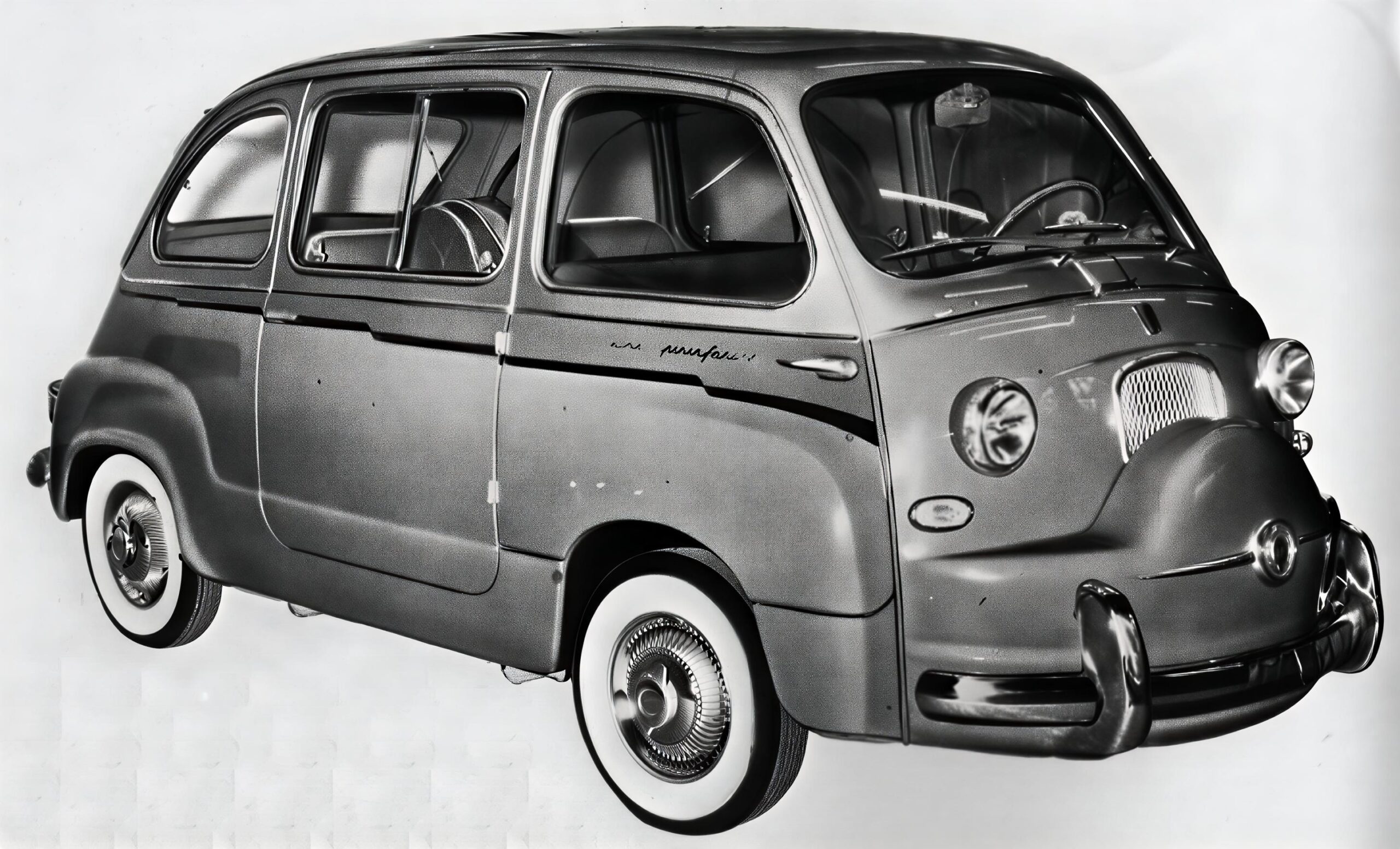
Naturally, the carrozzieri saw opportunity. At the 1956 Turin Motor Show, Pininfarina presented its own polished take: the Fiat 600 Multipla by Pininfarina. It kept the practical proportions but cleaned up the surfaces, added a smoother nose, and framed the cabin with generous curved glass. Only one was built, but it demonstrated a useful truth: even a utilitarian people-mover could wear coachbuilt tailoring without looking like it had dressed up for the wrong event.
Carrozzeria Fissore took a very different route in 1959 with the Multipla Sabrina, an angular reinterpretation that swapped the Multipla’s bubbly optimism for straighter lines and a squarer front end. Mechanically it was pure Fiat—633 cc, rear-engined, modestly powered—but Fissore offered it as a taxi, a family wagon, or a panel van. Production barely reached a handful, yet the Sabrina stands out as an early experiment in sharper, more geometric MPV design.
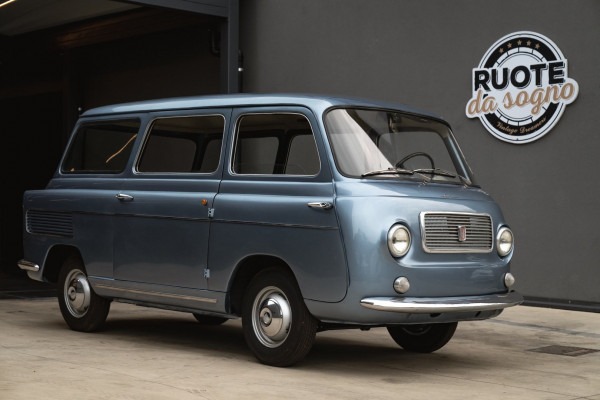
Fiat’s own people couldn’t resist joining the party either. Their Multipla Promiscua played the dual-use role its name promised, blurring the line between family van and delivery vehicle. Meanwhile, Turin’s Carrozzeria Monviso built the Multipla Furgoncino, a sturdier, cargo-focused offshoot with reinforced underpinnings for rural and service tasks. These variants showed just how flexible the Multipla platform had become: one chassis, endless possibilities.
By the early ’60s, Italy’s streets were full of them—standard Multiplas, taxis, and the occasional coachbuilt special—all quietly proving that compact vans could be friendly, versatile, and surprisingly refined. The MPV idea was no longer hypothetical; it was already humming along the cobbles.
Experiments Beyond Italy – Ghia and Giugiaro Go Global
Italy wasn’t only shaping its own traffic flow; it was quietly sketching the future of everyone else’s people-movers. As the Multipla buzzed through Italian cities, the country’s design studios were busy exporting imagination.
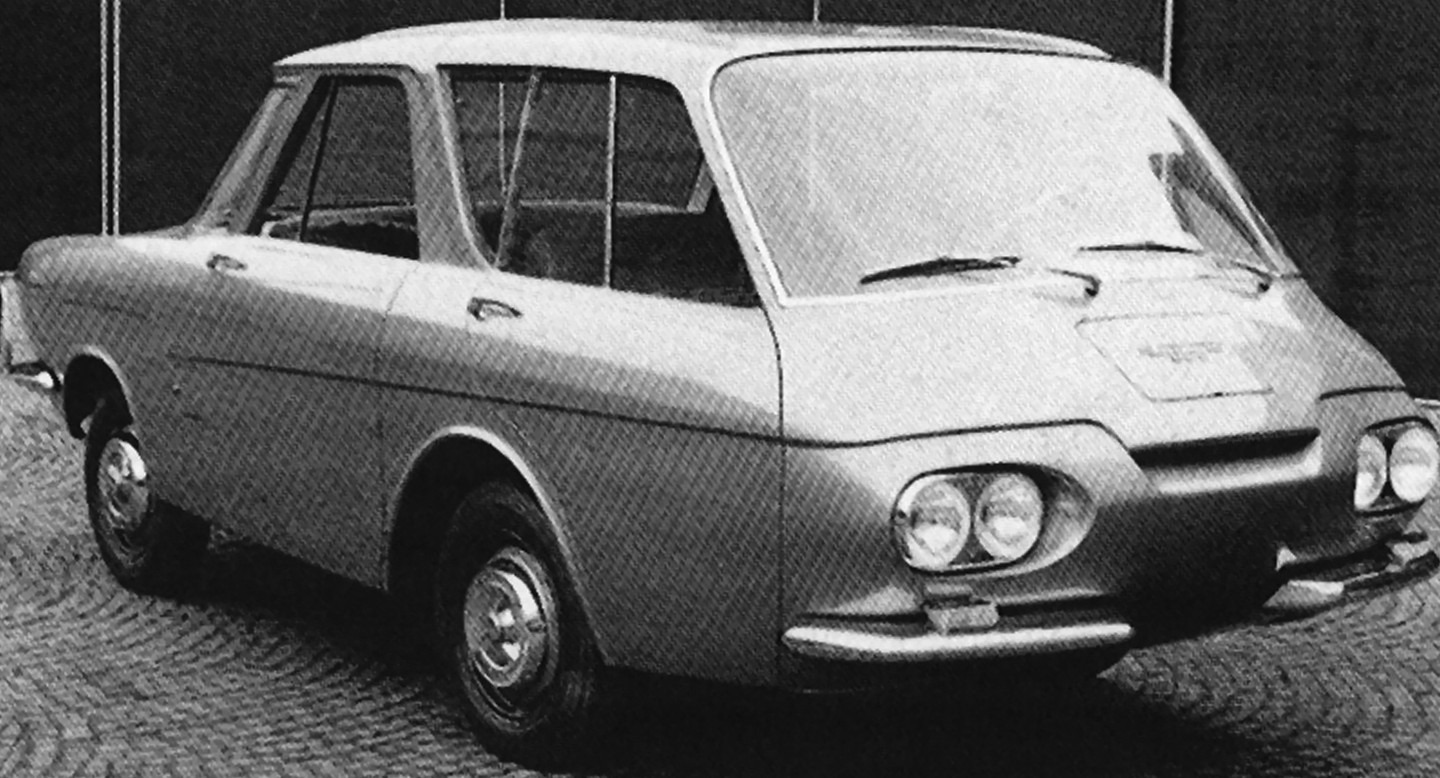
Between 1958 and 1961, Carrozzeria Ghia and Renault collaborated on a series of unconventional prototypes known as Project 900. The boldest was the Renault T900 of 1961, a family car that looked as if someone had welded a sedan and a van together and decided not to apologise. Sergio Sartorelli pushed the cabin forward, trimmed the nose to a token slope, and installed a windscreen that hovered almost over the front axle. The bulky rear end hid a rear-mounted powertrain, creating a silhouette so unorthodox that observers joked it resembled a car driving backwards.
🔗 Read more: Sergio Sartorelli: Designer of Dreams
The drivetrain was no less eccentric: Renault fused two Dauphine four-cylinders into a 1.7-litre V8 with about 80 hp, wrapped in lightweight glued aluminium panels. Production never happened—styling and complexity were both a step too far—but the T900 was effectively a 1960s test bed for packaging tricks the MPV world would later adopt.
Before founding Italdesign, Giorgetto Giugiaro spent the early part of the decade at Ghia, where he absorbed the studio’s appetite for experimentation. Those years, filled with bold proportions and packaging exercises, would later influence his own approach to small, efficient vehicles.
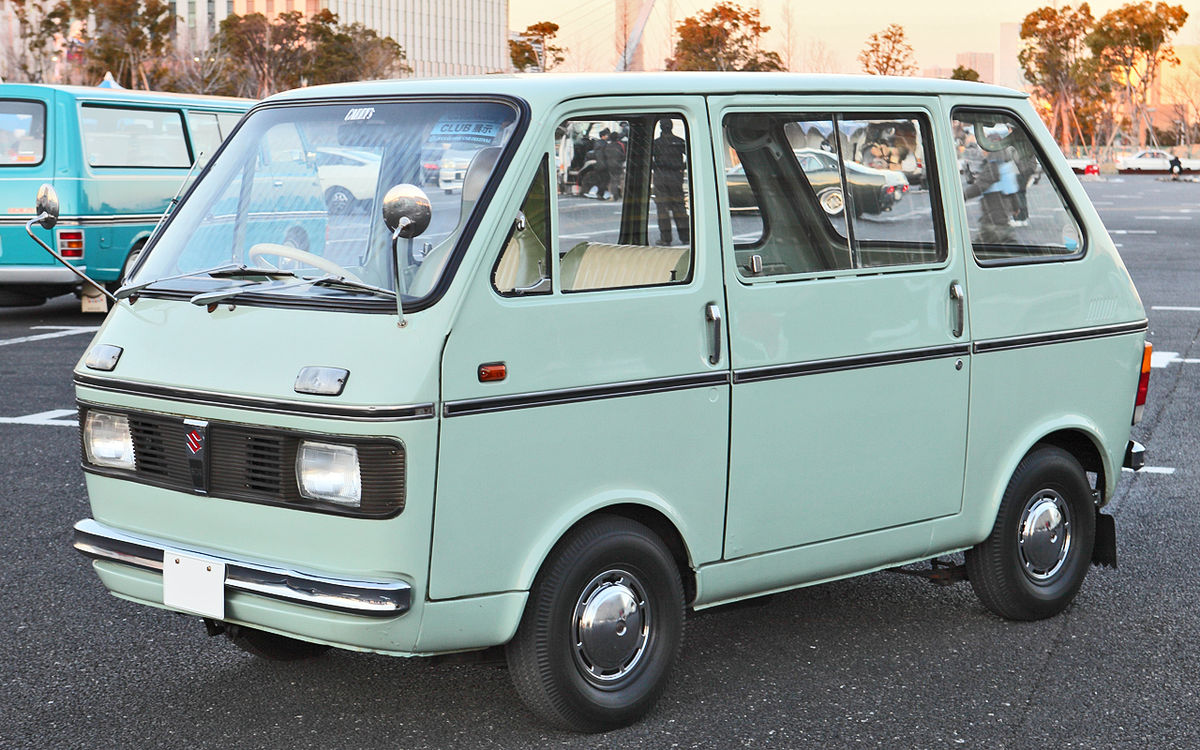
So when Suzuki approached Giugiaro in the late ’60s to style its new microcar range, he was already fluent in compact ingenuity. The result was the 1969 Suzuki Carry L40, a kei-class truck and van shaped not in Tokyo, but in Turin. The Carry L40V van showed Giugiaro’s hand most clearly: front and rear ends drawn almost symmetrically, so cleanly that identifying which side was coming at you required a second look. Two sliding doors, a top-hinged tailgate, and a smooth, almost architectural surface treatment made it one of the most stylish utility vans of its time.
If anything, it was too modern for some Suzuki customers, who found the design slightly ahead of their sensibilities—and at the cost of a bit of cabin volume. Still, the Carry handled 300 kg, mustered 25 hp from its two-stroke engine, and reached nearly 95 km/h.
The project confirmed two things: Giugiaro could extract function from the tightest of footprints, and Italian design influence had no borders. Even the smallest delivery van in Japan carried a quiet signature from Turin.
New York’s Taxi Challenge Spurs an MPV Revolution (1970s)
By the mid-1970s, the idea of a purpose-built people carrier found itself on an unexpected stage: New York City’s Museum of Modern Art. In 1976, MoMA launched The Taxi Project: Realistic Solutions for Today, effectively telling the global design world, “Right then—fix the taxi.”
Naturally, Italy stepped forward.
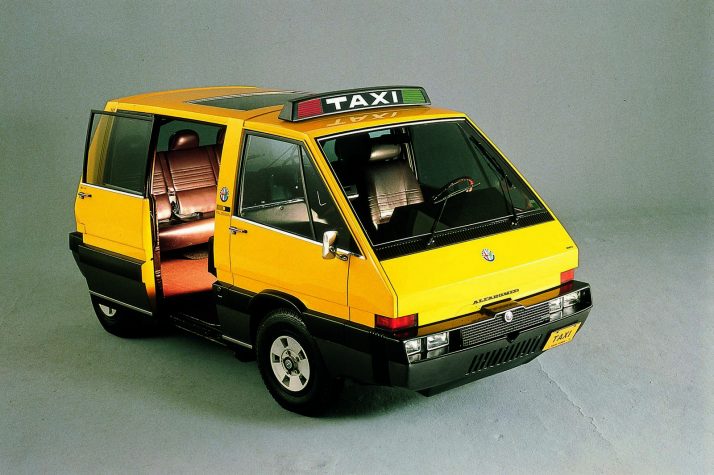
Among the five prototypes unveiled, two carried unmistakable Italian DNA, and both ended up influencing what we now recognise as the MPV.
The headline act was the Alfa Romeo New York Taxi by Italdesign. Giugiaro produced a compact yellow cube with enormous windows, sliding doors on both sides, and enough space for five passengers plus luggage—yet it occupied only 70% of a Checker cab’s footprint. It was pure functionality distilled into a box: a flat walk-in floor, an integrated under-floor wheelchair ramp, and heavy-duty bumpers ready for whatever Manhattan traffic threw at it. Underneath sat an Alfa F12 van chassis powered by a 1.3-litre boxer engine.
🔗 Read more: The 1976 MoMA Taxi Project: The Urban Vehicles of the Future
Giugiaro later said the project marked the start of his search for improved roominess; you can see the line leading straight from this taxi to many Italdesign concepts that followed. Today the lone prototype resides in the Alfa Romeo museum, looking every bit the missing link between the work van and the future minivan
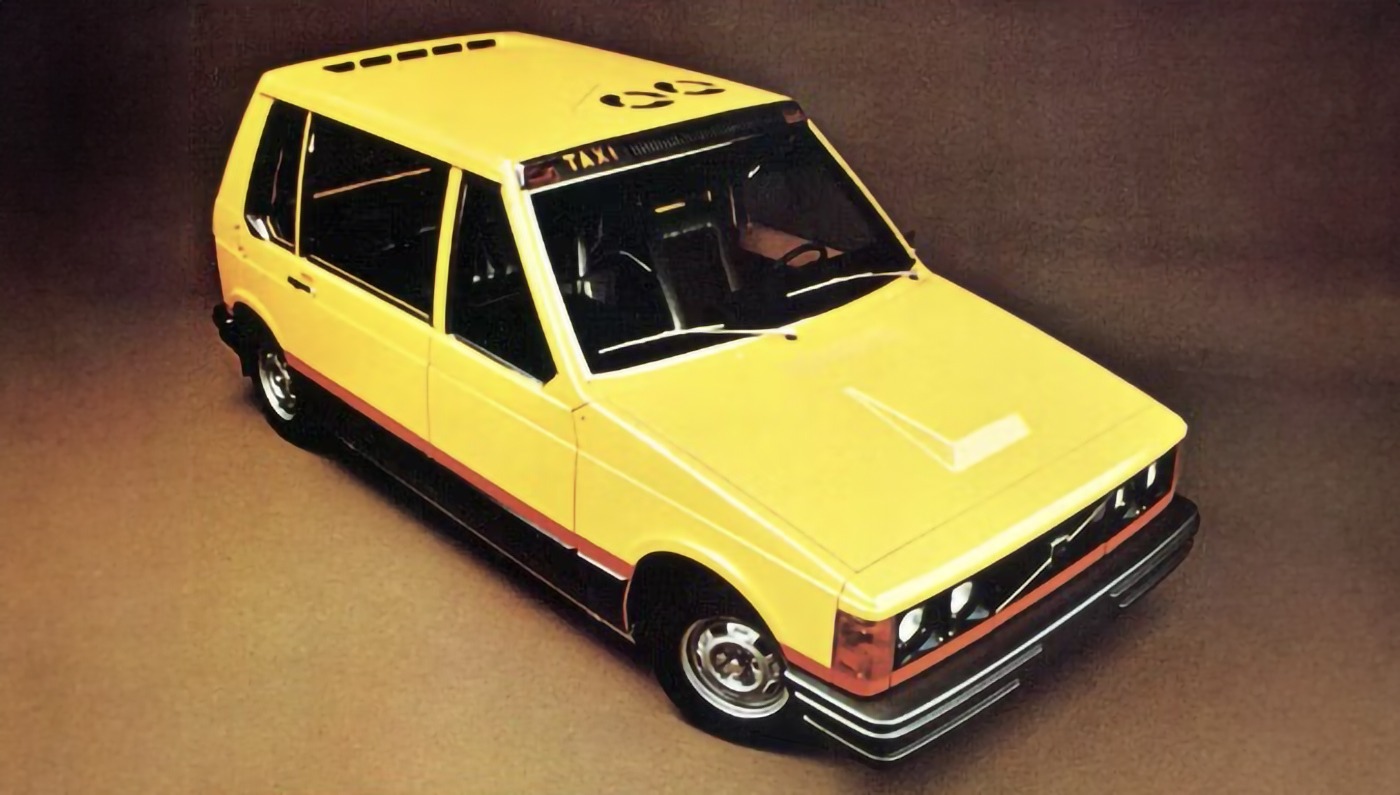
But Italdesign wasn’t the only Italian name in the room. Carrozzeria Coggiola built a rival NYC taxi for Volvo—Swedish hardware, Turin styling. High roof, sliding doors, a foldable wheelchair seat, and safety touches like tubular steel reinforcements and a retractable side safety arm in place of seatbelts. It was a Scandinavian people-mover seen through an Italian lens: practical, clever, and years ahead of what cities were actually buying.
None of the MoMA taxis made it into production—costs, politics, and the usual taxi-fleet inertia saw to that—but these prototypes proved that European designers were already thinking about urban mobility in ways that would soon reshape family cars. Giugiaro, especially, carried the momentum forward. Within two years, he would reveal a concept that pushed the MPV blueprint into entirely new territory.
Lancia Megagamma (1978) – The First True MPV Concept
Picture the 1978 Turin Auto Show. You walk in expecting another razor-edged Giugiaro wedge, and instead there it is: a tall, rounded one-box machine that looks ready to drive your kids to school rather than lap Monza. That shape was the Lancia Megagamma, and it was Italdesign’s most audacious idea yet.
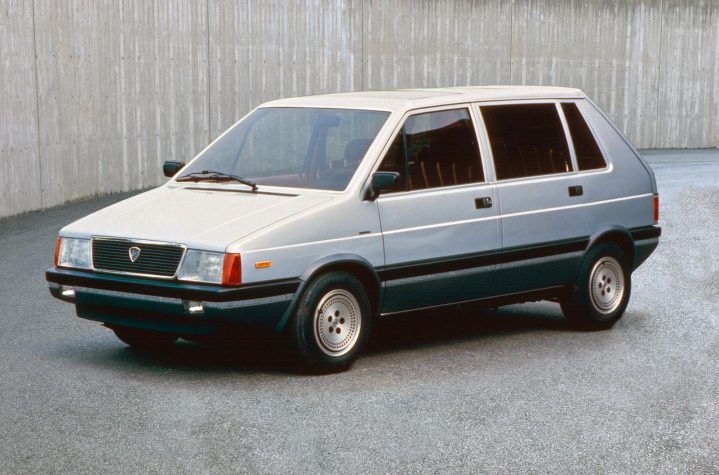
The Megagamma took a standard Lancia Gamma chassis and re-imagined it as a five-door people-mover with a radically pushed-forward cabin and a roofline raised by 25 centimetres. The result was an interior so airy you could almost stretch inside it. Seating was upright and high, more like a comfortable chair than a sports-car bucket, giving everyone a wide, commanding view of the road. With the fuel tank and spare tucked under the flat floor, the cabin became a clean, flexible space—exactly the “moving compartment” Giugiaro had been chasing since his New York Taxi project.
🔗 Read more: Giorgetto Giugiaro: Car Designer of the Century
At only four metres long, it delivered the interior volume of something a class (or two) bigger. Mechanically it kept things straightforward, using Lancia’s 2.5-litre flat-four and front-wheel drive, but underneath the simplicity was a completely new idea of what a family car could be.
The Megagamma’s biggest punch came from its packaging. High seating, a flat low floor, proper walk-in access, and genuine multi-use interior space—features that would eventually become MPV staples—were all here in production-ready form. Fiat, however, wasn’t convinced; they shelved it as too risky.
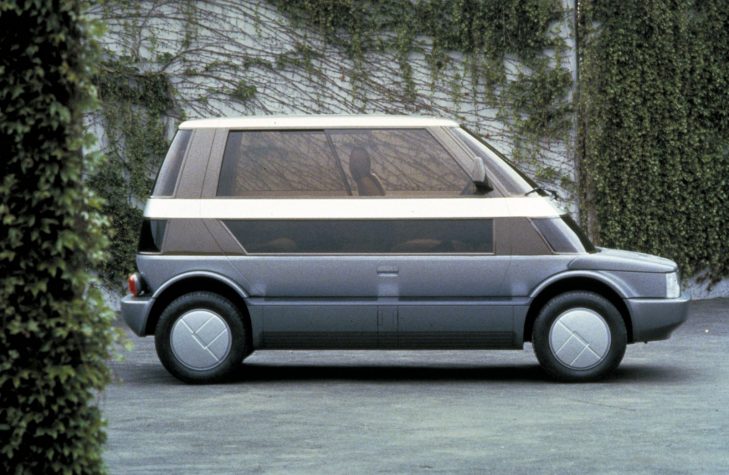
Others later proved the concept was viable, but the blueprint started with this car. Giugiaro continued refining the theme in later projects—the modular Italdesign Capsula in 1982 and the compact Proton Emas decades later—but the Megagamma was the moment the MPV stepped out from the margins and onto the main stage, ready for anyone paying attention
The 1980s – From Aerodynamic Vans to a Lamborghini Minivan
With the Megagamma’s template firmly on the table, the 1980s became a playground for Italian design houses. Manufacturers were still cautious, but the studios certainly weren’t—turning out concept MPVs that ranged from clever to downright unhinged.
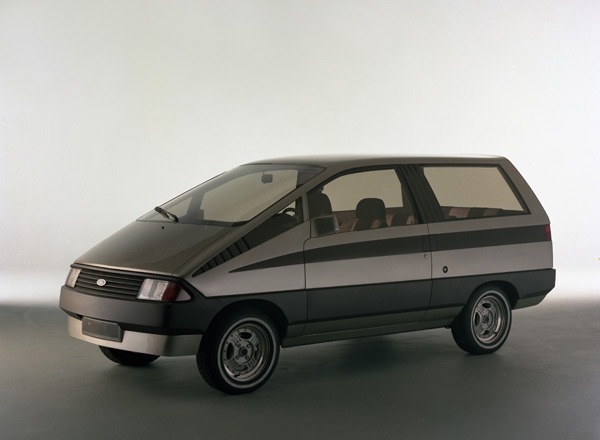
The decade opened with something surprisingly sensible: the 1981 Ford Aerovan by Ghia, Ford’s Italian design arm. Based on the humble Escort, it squeezed seven seats into a sub-four-metre footprint and introduced a sharply raked “fast front” windscreen that gave the one-box profile a faint whiff of sportiness. In size and intent, it wasn’t far off what the Renault Espace would deliver in production a few years later. Compact, clever, and manoeuvrable, the Aerovan showed how far you could push small-car packaging long before Detroit and Europe fully committed to the idea.
Next came the more obscure—but arguably more interesting: Alfa Romeo Z33 Tempo Libero by Zagato, revealed at the 1984 Geneva Motor Show. Built on the Alfa 33 platform, it measured just four metres yet offered seating for up to seven, thanks to a raised, purpose-built body that completely re-thought how space could be used. Alfa asked Zagato for more interior room than the 33 could offer, and the coachbuilder responded with a compact lounge on wheels: a cabin where six passengers could sit face to face, cross their legs, or swivel their seats without clashing elbows.
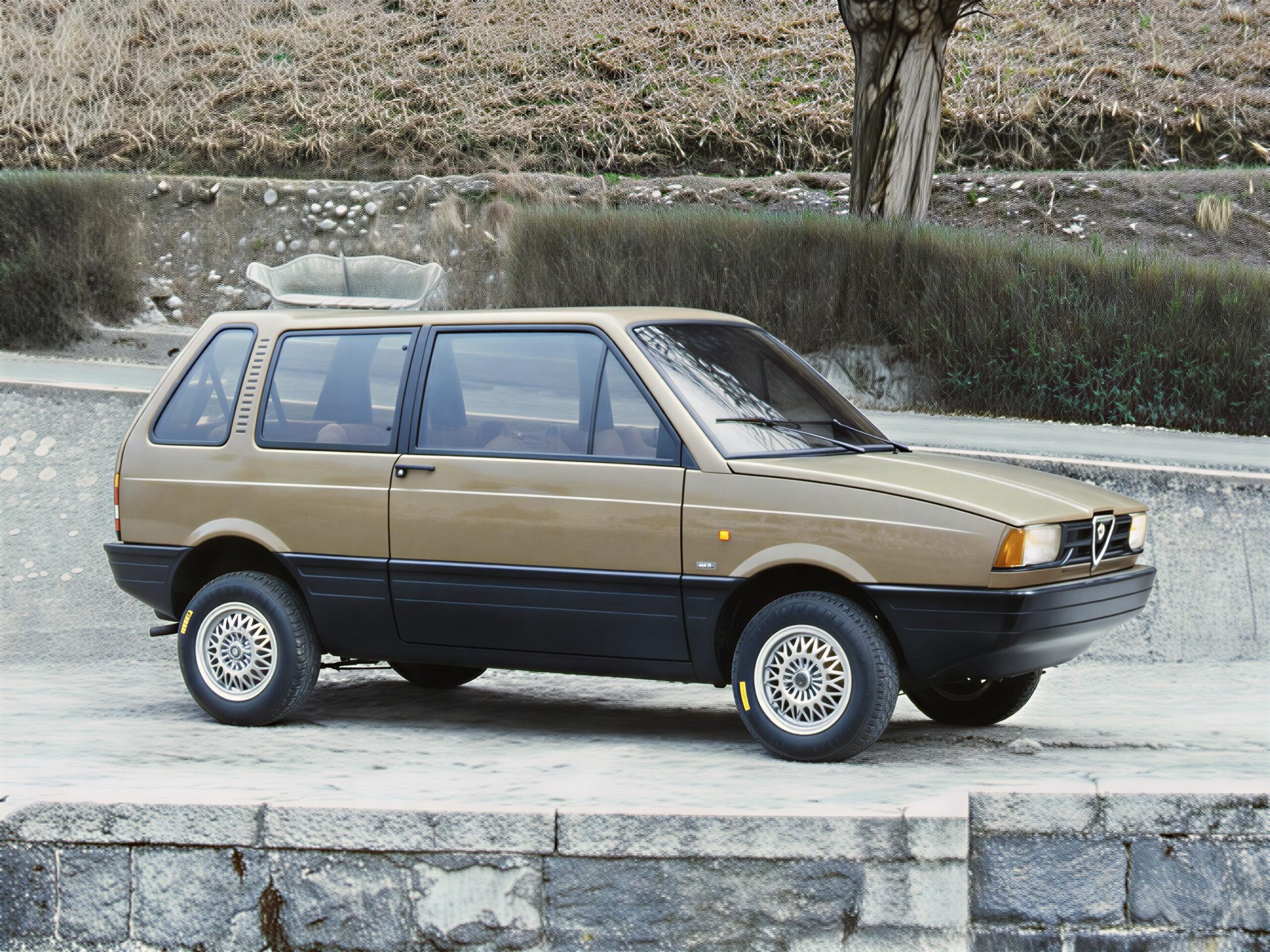
Stylistically, the front end nodded to the 1977 Giulietta with its single-block grille and integrated headlights. The rear, with its upright glass and tall lamps, hinted at Fiat Panda and Uno influences, all blended into a clean, streamlined silhouette designed to avoid the classic “van box” look. Zagato was even ready to build it—the tooling was prepared, the assembly lines standing by. But Alfa Romeo’s financial crisis killed it before the green light arrived. It remains a fascinating what-if: a compact Alfa MPV that predated the category by years.
Then the decade took a dramatic turn.
If the Aerovan represented common sense, the 1988 Bertone Lamborghini Genesis represented the opposite. Here was a five-door luxury MPV powered by a 455 hp Lamborghini Countach V12, mounted under the floor like it was the most normal thing in the world. The front doors opened gullwing-style; the rear doors slid like a sensible minivan, creating a clash of theatre and practicality no one asked for but everyone stared at.
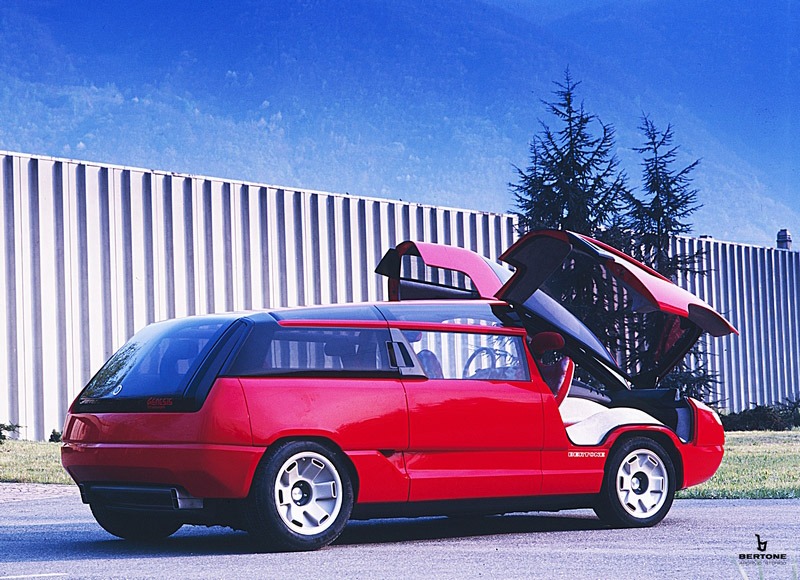
Inside, five individual leather seats awaited, with the rear trio arranged in a V-shape for peak lounge effect—one even swiveled to create an onboard living room. Despite the exotic engine, the Genesis used a three-speed automatic and was electronically limited, so it wasn’t exactly a Nürburgring weapon. But parked next to any contemporary Chrysler minivan, it looked like it had arrived from another solar system. Bertone proved that an MPV could be outrageous, luxurious, and just a bit ridiculous—qualities rarely found in family transport.
Not to be overshadowed in 1988, Giugiaro unveiled the Italdesign Asgard, part of the studio’s 20th anniversary trio with the Aztec and Aspid. All three shared the same chassis and 200 hp mechanicals, but the Asgard was the “space wagon” of the group—an MPV with the stance of a grand tourer. The wraparound windshield blended seamlessly into the side glass, giving the cabin a fighter-jet canopy feel. A secondary glass strip below the A-pillar reduced blind spots, a trick far ahead of its time.
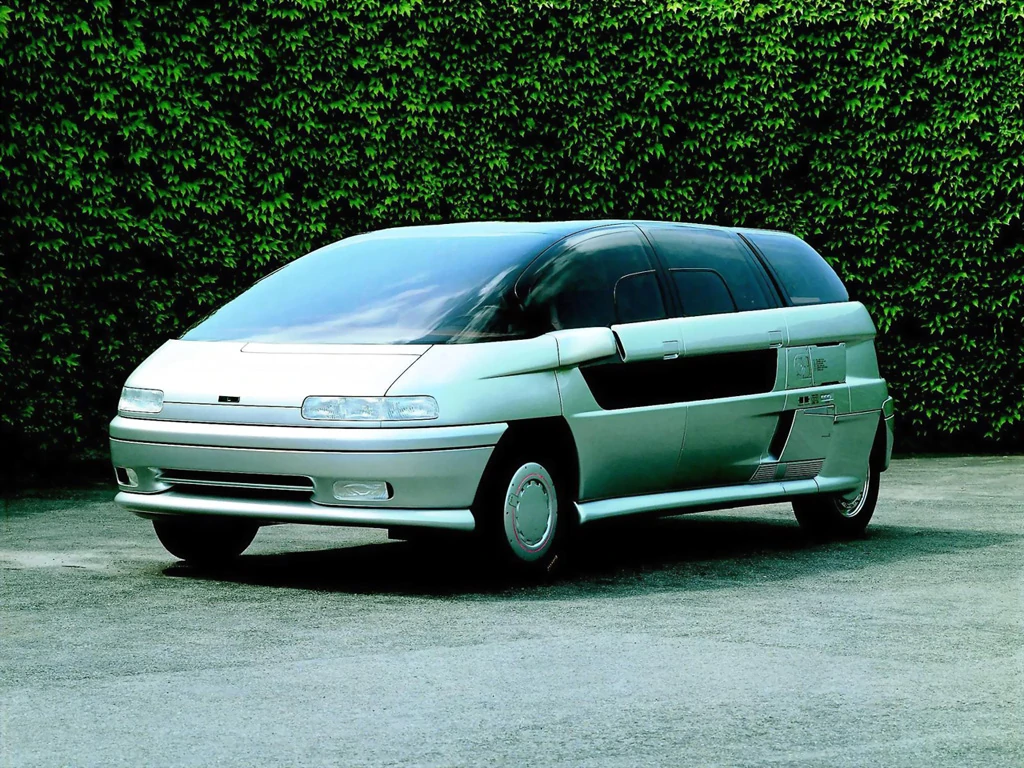
Inside, it featured six electrically adjustable seats—two across the front, three individual ones behind them—and two additional folding child seats hidden in the luggage bay. The message was clear: an MPV could be premium, fast, and filled with clever comforts rather than purely utilitarian.
Meanwhile, Sergio Coggiola contributed a more grounded vision with the Volvo Concept MPV, also from 1988. Swedish in platform, Italian in style, it presented a boxy yet elegant seven-seater with a high roof and enormous glass area. At a moment when Europe (aside from Matra/Renault) had yet to embrace the minivan, Coggiola was already sketching where the market was about to go. Its Volvo-esque front end, safe construction, and clean Italian surfaces made it a serious, logical counterpoint to the decade’s wilder creations.
By the end of the 1980s, the Italian studios had demonstrated every possible way to reinterpret the people-carrier: aerodynamic compacts, modular lounges, V12-powered luxury vans, futuristic space wagons, and pragmatic family haulers. Automakers were slow to commit, but the design groundwork had been thoroughly—sometimes flamboyantly—laid.
The 1990s – Reality Check: Production and Niche Innovations
By the early 1990s, the MPV had finally gone mainstream. Fiat, Lancia, and Peugeot launched the Eurovan family in 1994, and compact MPVs like the Renault Scénic soon followed. With the segment now viable, Italian designers found themselves in two parallel lanes: shaping real production vehicles, and exploring niche ideas that manufacturers weren’t yet ready to build.
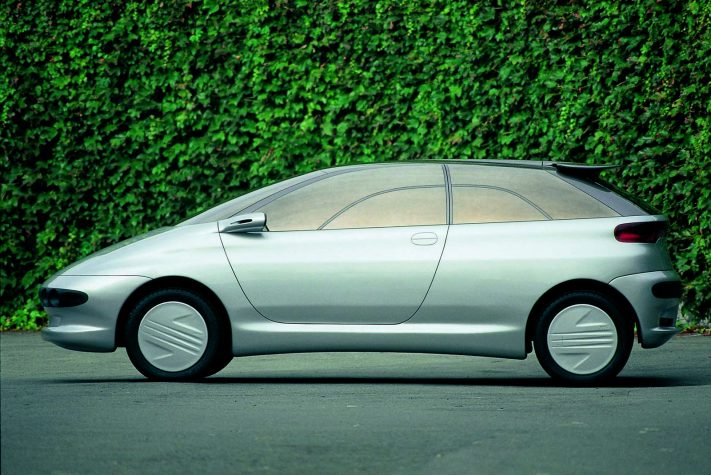
One early signal came from Italdesign’s 1990 Seat Proto C. Compact—under four metres—but tall, aerodynamic (Cd 0.25), and unusually airy thanks to a curved roofline flowing into a fully glazed rear, it straddled the line between hatchback and mini-MPV. A clever split-window system kept the design clean without bulky hardware. Many of its cues later surfaced in the first-generation Seat Ibiza and Toledo. Giugiaro was sketching the “small monospace” long before it became mainstream.
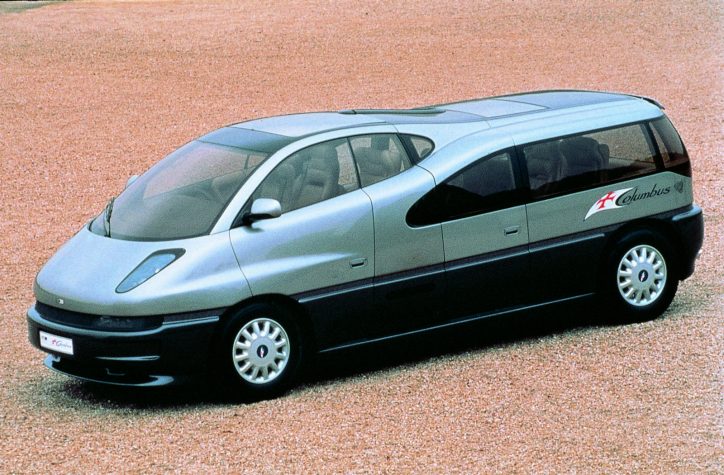
At the other end of the spectrum was the 1992 Italdesign Columbus, an MPV so ambitious it bordered on surreal. Nearly six metres long, fitted with six wheels—two of them rear-steerable—and powered by a BMW 5.0-litre V12 mounted transversely behind the cockpit, it felt more like a landgoing yacht than a family van. Inside were seven leather seats (expandable to nine), individual VHS screens, fiber-optic mood lighting, and a raised central driving position worthy of a ship’s bridge. Permanent 4WD and rear steering kept it surprisingly manoeuvrable for its size. Italdesign never intended volume production; it was a showcase of how far the MPV format could stretch when freed from budget and sanity constraints.
Meanwhile, Carrozzeria Boneschi explored MPV design through the lens of accessibility. After debuting its tiny Baby Taxi in 1992, Boneschi scaled up the idea in 1996 with the Fiat Bravo “Taxi-Help”, unveiled at the Turin Auto Salon. Using the Bravo hatchback as a base, they created a compact, wheelchair-accessible taxi featuring a high roof, large sliding doors, a retractable ramp, and a completely flat, low floor. The airy cabin and generous visibility stood in stark contrast to the gloomy cabs of the era. Though a one-off, it anticipated the accessibility-focused taxis and ride-share conversions we see today.
🔗 Read more: Carrozzeria Boneschi: The History
Italian design also seeped into MPVs abroad. Most notably, Pininfarina styled the Hyundai Matrix (2001), giving the Korean compact MPV a distinctly European flavour. Not the studio’s most glamorous moment, perhaps, but undeniably practical—and sold in healthy numbers around the world.
Fiat itself finally committed to the compact MPV concept with the 2003 Fiat Idea, penned by Italdesign and soon joined by the Lancia Musa. The Idea distilled decades of Italian MPV thinking into a sub-four-metre package: upright seating, sliding rear bench, abundant storage, and city-friendly visibility. It wasn’t radical by 2003, but it marked Italy reclaiming a segment it had helped inspire.
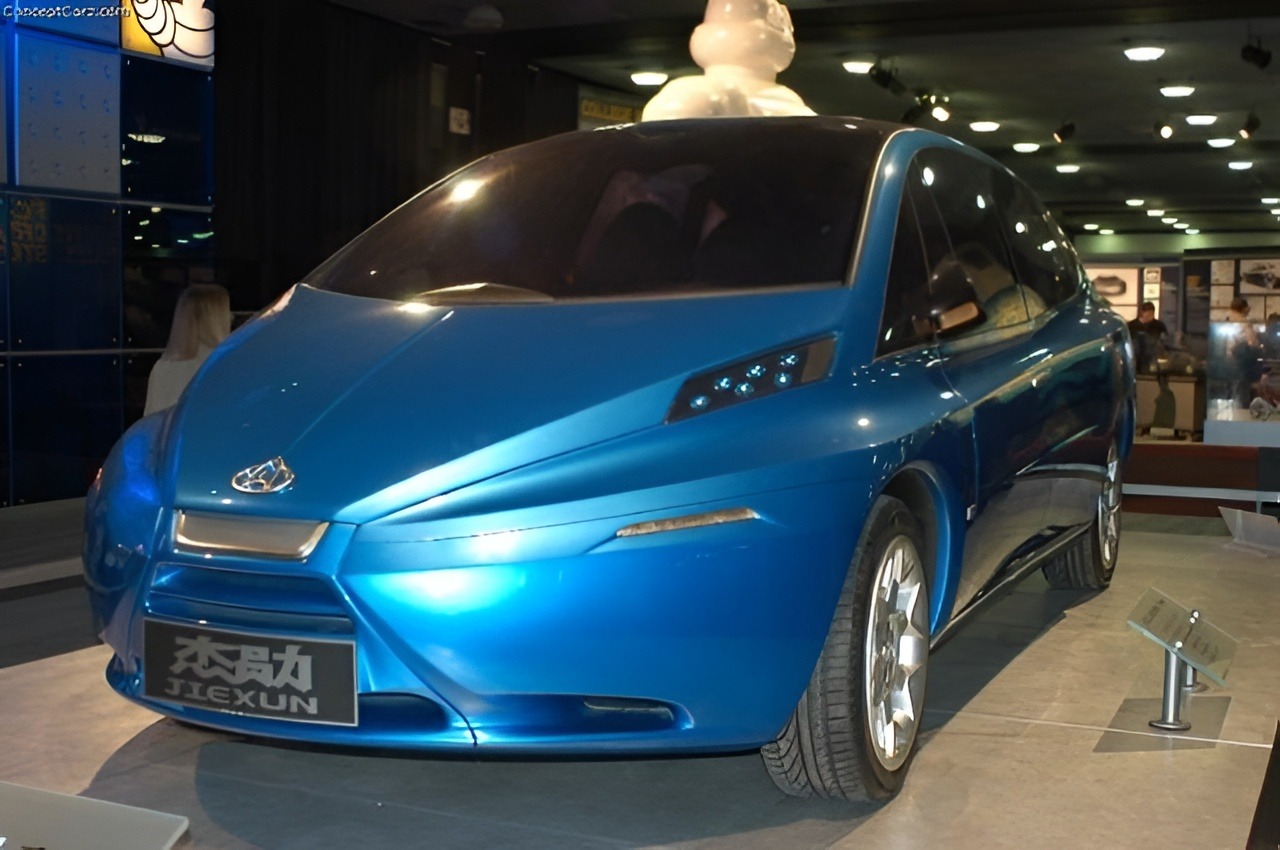
Smaller studios remained active globally. I.DE.A Institute developed the 2004 Changan Jiexun concept for China, blending MPV utility with a lower, more wagon-like stance. Its arrowed profile, segmented bumpers, and steerable headlights previewed the crossover-MPV hybrids that would populate Chinese roads years later. And in 2005, Leonardo Fioravanti—formerly of Pininfarina—unveiled the Lancia Kandahar, a toughened, all-road reinterpretation of the Lancia Musa with raised suspension, protective cladding, and a sliding canvas roof. It neatly prefigured the urban crossover trend before the term became industry gospel.
Throughout the 1990s, Italian designers continued to refine, expand, and occasionally challenge the MPV formula—whether through luxury indulgence, accessibility innovation, compact packaging, or international collaborations.
Epilogue: Italian Innovators in a Minivan World
Look back over the MPV’s family tree and you’ll notice something unusual: the branches keep pointing toward Italy. The wooden Giardinettas, the microscopic Multipla taxis, the angular Sabrinas, the New York City space-cabs, the Zagato lounge-on-wheels, the V12 Lamborghini minivan that absolutely no one asked for—each one pushed the idea of “moving people around” into new, occasionally absurd, occasionally brilliant territory.
Italian coachbuilders weren’t content to treat the MPV as a domestic appliance. They questioned the brief every time.
A tiny city car turned into a six-seater? Done.
A delivery van with couture glasswork? Of course.
A minivan faster than the era’s supercars—at least on paper? Why not.
A wheelchair taxi built from a Bravo? Absolutely.
If there’s a common thread, it’s that Italy refused to see the MPV as a compromise. And at the centre of this orbit was Giorgetto Giugiaro, who sketched so many of the genre’s major beats—from the New York Taxi to the Megagamma to the production Fiat Idea—that he might as well have invented the format as a hobby.
The amusing twist is that many features we treat as industry standards—sliding doors on both sides, low flat floors, panoramic visibility, upright seating, cab-forward packaging—first appeared not in committee-approved production programs, but in Italian prototypes that looked like they’d escaped from the future.
SUVs may have muscled in since then, siphoning off families who once flocked to MPVs, but the DNA hasn’t vanished. High seating positions? Megagamma territory. Ultra-luxury shuttle vans? Columbus and Genesis. Accessible city runabouts? Boneschi would like a word.
So the next time you see a people-mover gliding through traffic—whether it’s a high-roof crossover or a plush airport shuttle—remember: somewhere behind its shape and its packaging is a small Italian studio that, decades ago, decided a “van” could be something entirely different.

ABOUT THE AUTHOR
Andreas Scheidl
Italian classic car enthusiast with German roots. Renowned as a respected figure in the classic car community, he serves as a jury member at various international concours d'elegance, including the Classic Gala Schwetzingen and Mantova. As a content creator, Andreas passionately shares his profound knowledge and appreciation for vintage automobiles. His heart beats for cars designed by Giovanni Michelotti, showcasing his discerning taste and dedication to preserving the timeless elegance of automotive history.
More stories by Andreas Scheidl ↗CONTINUE READING
Posts You Might Like
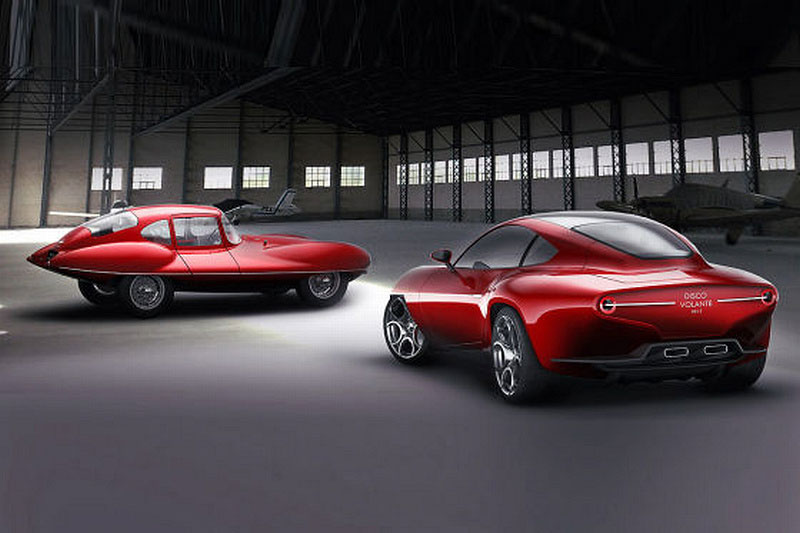
Reinterpreting the Past: When Coachbuilders revisited it’s Icons
When iconic coachbuilt cars are rebade through time, intent matters more than nostalgia. From experimental originals to modern reinterpretations, this article examines how legends are reimagined—and why some ideas refuse to stay…
Read story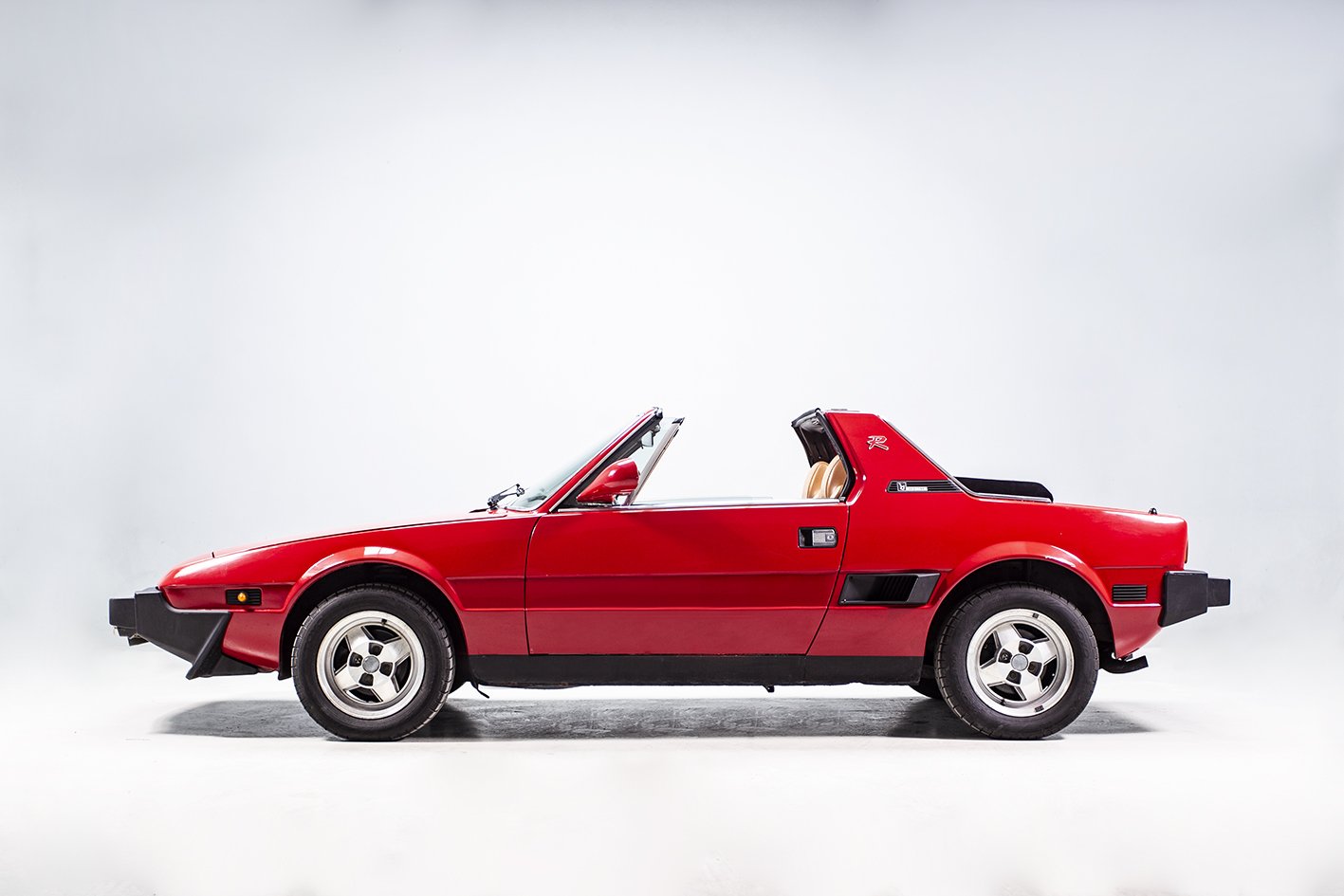
Neither Coupé nor Spider: Italy and the Targa Roof
A deep dive into Italy’s decades-long exploration of the targa roof—from early post-war experiments to Ferrari and Lamborghini icons—revealing how Italian designers created a third way between coupé and spider.
Read story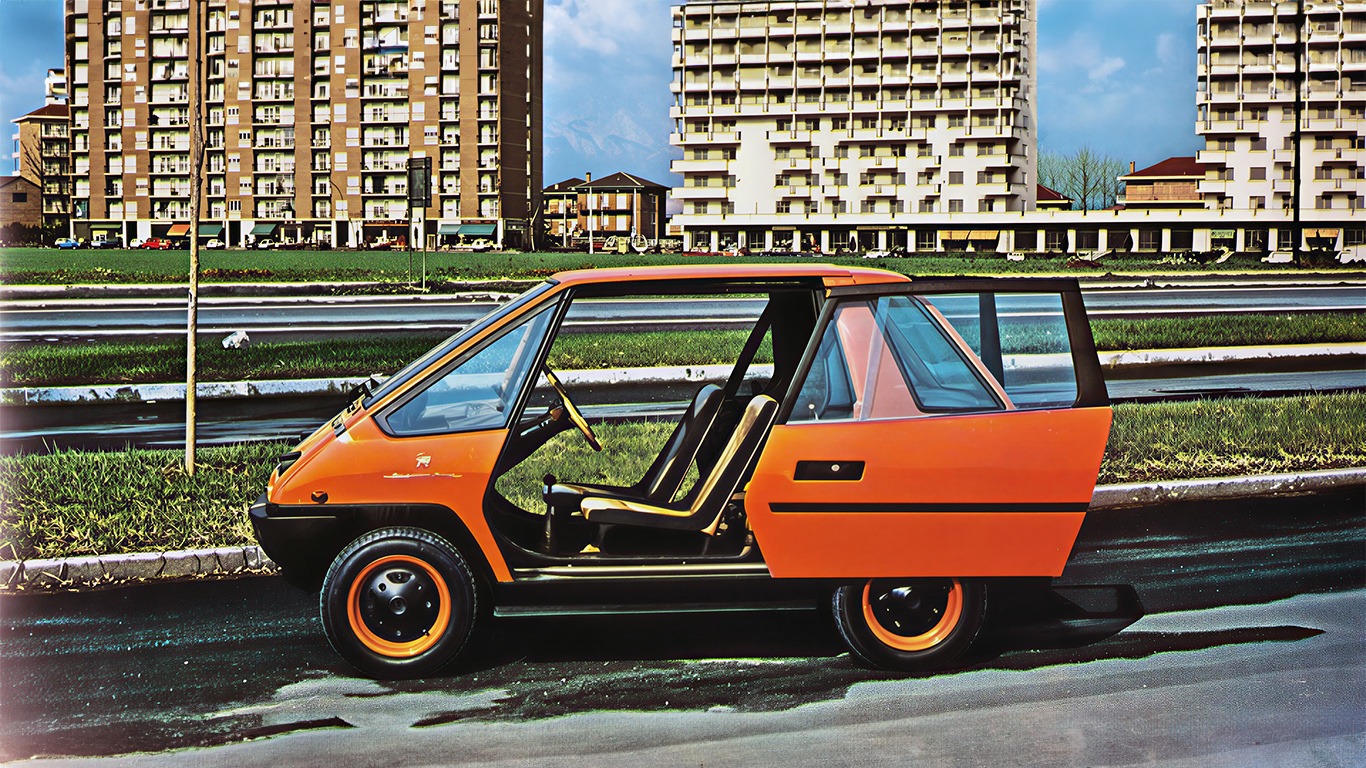
Italian Coachbuilt City Car Concepts: From Microcars to Urban EVs
How did Italy’s famed coachbuilders go from designing Ferraris to dreaming up tiny electric runabouts? From the quirky Tsé-Tsé to Pininfarina’s visionary Nido, discover how city cars became a proving ground for…
Read story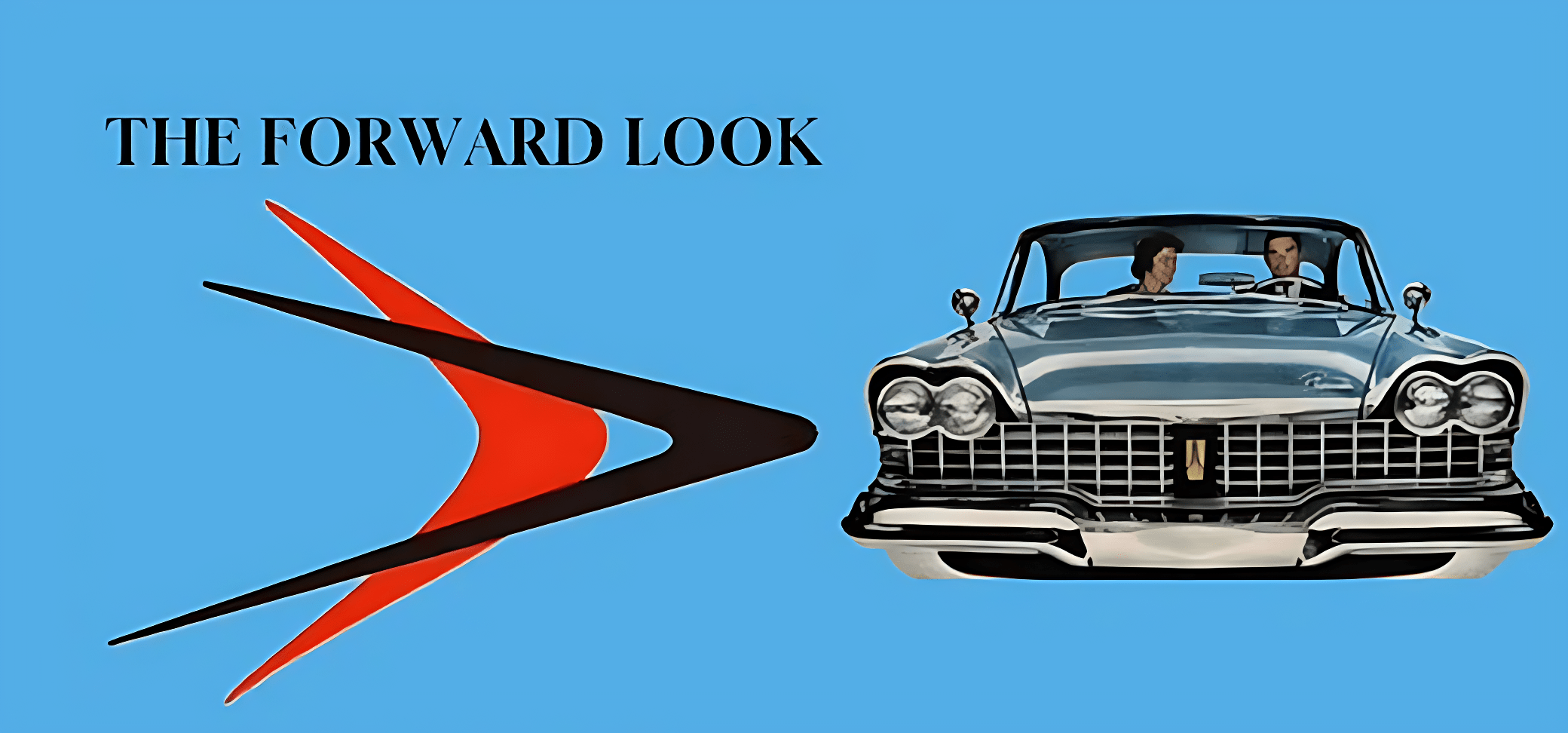
The Forward Look: When Ghia’s Artistry Met Exner’s Vision
When Italian craftsmanship met Detroit ambition, Chrysler found its soul. The Ghia–Exner partnership sparked the Forward Look—an era of fins, flair, and fearless design that changed American cars forever.
Read story
THE CONVERSATION
Comments 0
Share a memory, a period photograph or a documented detail about this story.