
The Forward Look: When Ghia’s Artistry Met Exner’s Vision
In 1955 at the Turin Auto Salon, a low-slung silver and orange coupe stole the show. Its tailfins knifed through the air like jet wings, its profile a windswept teardrop. This was the Ghia-built Streamline X “Gilda”, a concept car so fluid and futuristic that onlookers deemed it “shaped by the wind”. The Gilda’s dramatic form wasn’t just an Italian flights of fancy – it carried the transatlantic dreams of Chrysler’s design chief, Virgil Exner, who had sent Ghia on a mission to craft a rolling sculpture that could foretell Detroit’s future. Indeed, the Gilda would become a beacon for Exner’s Forward Look design revolution, its aerodynamic curves and daring fins inspiring Chrysler’s entire styling theme for 1957 and beyond. In the mid-century romance between American automobiles and Italian artistry, Exner and Carrozzeria Ghia were star-crossed partners – together injecting Latin passion and sculptural elegance into the very soul of Chrysler’s cars.
When Detroit Met Turin: A Partnership is Born
The unlikely alliance between Chrysler and Carrozzeria Ghia began in the early 1950s, when Detroit’s conservative style met Italian flair. Seeking fresh ideas at low cost, Chrysler’s design chief Virgil Exner turned to Ghia after the Turin coachbuilder outshone Pinin Farina with a sleek, elegant prototype built on a Plymouth chassis. Impressed by the craftsmanship and budget, Chrysler made Ghia its go-to partner for concept cars.
Under Exner and Luigi Segre, the Chrysler-Ghia partnership produced more than two dozen “idea cars” throughout the decade—fully functional, road-ready designs that blended American power with Italian artistry. These creations didn’t just dazzle show crowds; they hinted at a bold new direction for Chrysler’s future.
🔗 Read more: The Partnership between Ghia & Chrysler
Exner quickly developed a rapport with Ghia’s Luigi Segre, who shared his vision of pushing design boundaries. If Chrysler was to leapfrog the competition in style, Exner needed freedom to experiment – something the cautious corporate climate in Detroit often stifled. By outsourcing concepts to Ghia, he found a secret weapon. Exner’s formula was simple, as one account describes: use a mostly stock American chassis, occasionally shortened, and clothe it in a svelte, hand-formed body by Ghia – all for a fraction of the cost of an in-house concept. “There was really only a single purpose in all of them,” Exner later said of his Ghia-built show cars, “and that was to let the public know that Chrysler was thinking ahead as far as styling was concerned”. Unlike General Motors, whose Motorama dream cars were pure fantasy, Exner insisted his prototypes be fully engineered and road-ready, with an eye toward production possibilities. This pragmatic approach meant Chrysler’s show cars weren’t just crowd-pleasers; they were functional blueprints, testbeds for ideas that could actually hit the road. And indeed, two or three of Exner’s projects “came very close to being built,” he recalled wistfully. That prospect – the tantalizing reality of these dreams – gave Chrysler’s concepts a unique credibility and mystique.
Sculpting the Forward Look: American Steel with Italian Silhouettes
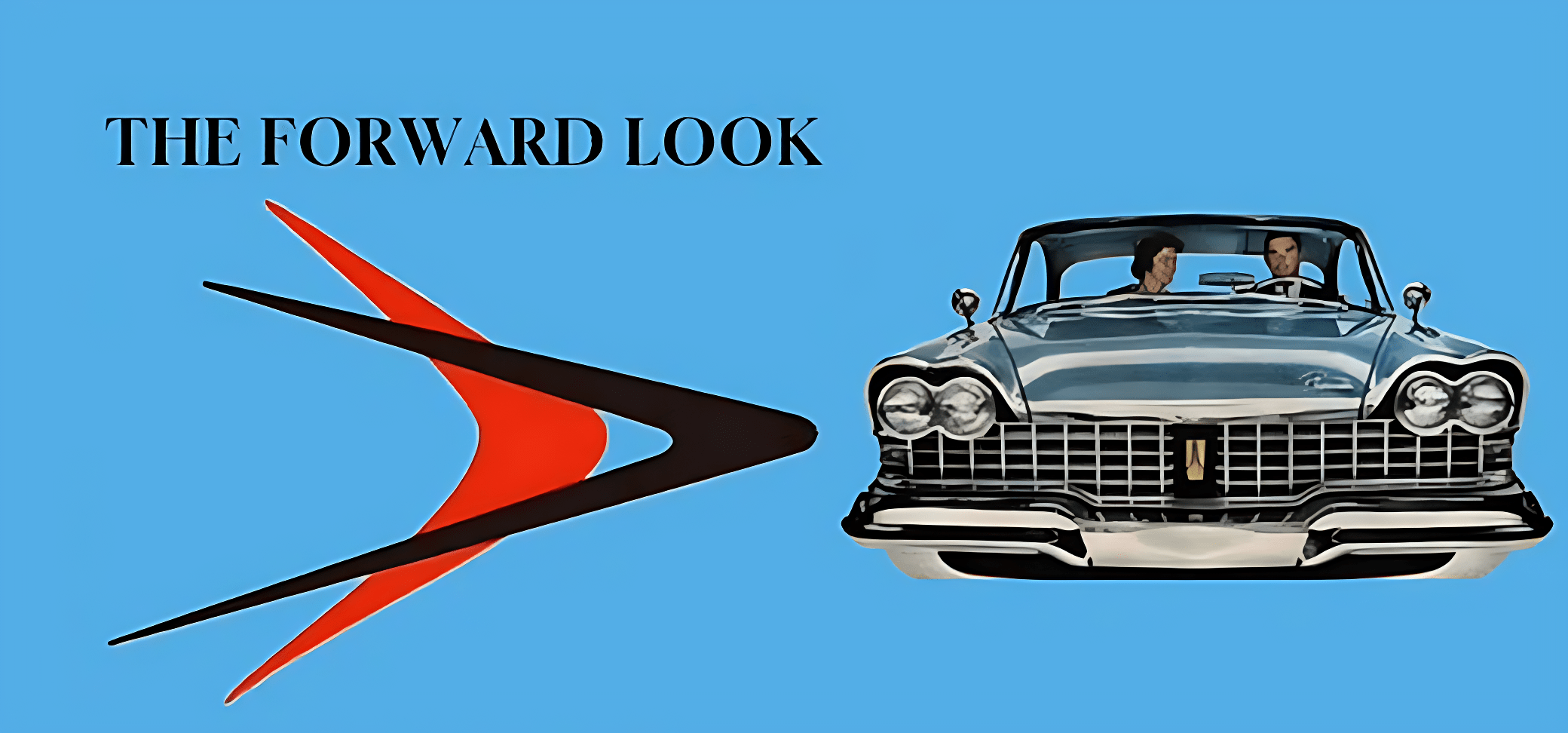
By 1955, Virgil Exner’s efforts blossomed into what Chrysler proudly marketed as the Forward Look. After years of dowdy designs, the 1955 Chrysler line shocked the industry with its fresh, sleek styling – lower rooflines, longer hoods, and tailfins that swept back like the flourish of a calligrapher’s pen. Chrysler cars suddenly looked alive and modern. The public responded with enthusiasm, and Chrysler’s once-dull image was transformed almost overnight. These were the first fruits of the Exner-Ghia alliance: the bold ideas honed on Italian-built concepts were now materializing in American showrooms. For 1957, Exner upped the ante. He unleashed a second-generation Forward Look so advanced that it sent competitors reeling. The ’57 Chryslers, De Sotos, Dodges, and Plymouths were longer, lower, wider and festooned with soaring tailfins – cars that looked like Detroit’s answer to the jet / space age. The designs caused a sensation; upon seeing them, GM’s styling director famously rushed to redesign GM’s own 1959 models in a panic. All of Detroit had to admit: Virgil Exner had become the pace-setter in American car design. The Forward Look wasn’t just a marketing tag – it was a watershed moment when Detroit styling turned a corner from the past into the future.
🔗 Read more: How the Space Age Shaped 50s-60s Italian Car Design
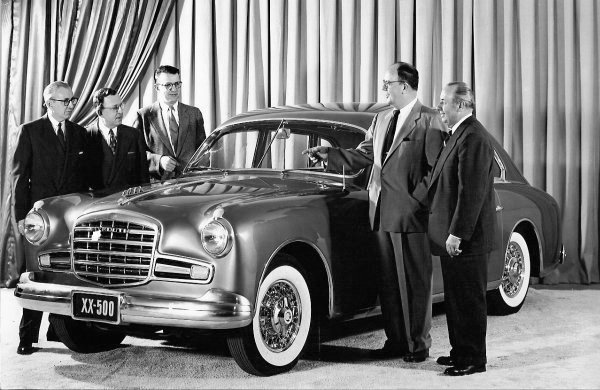
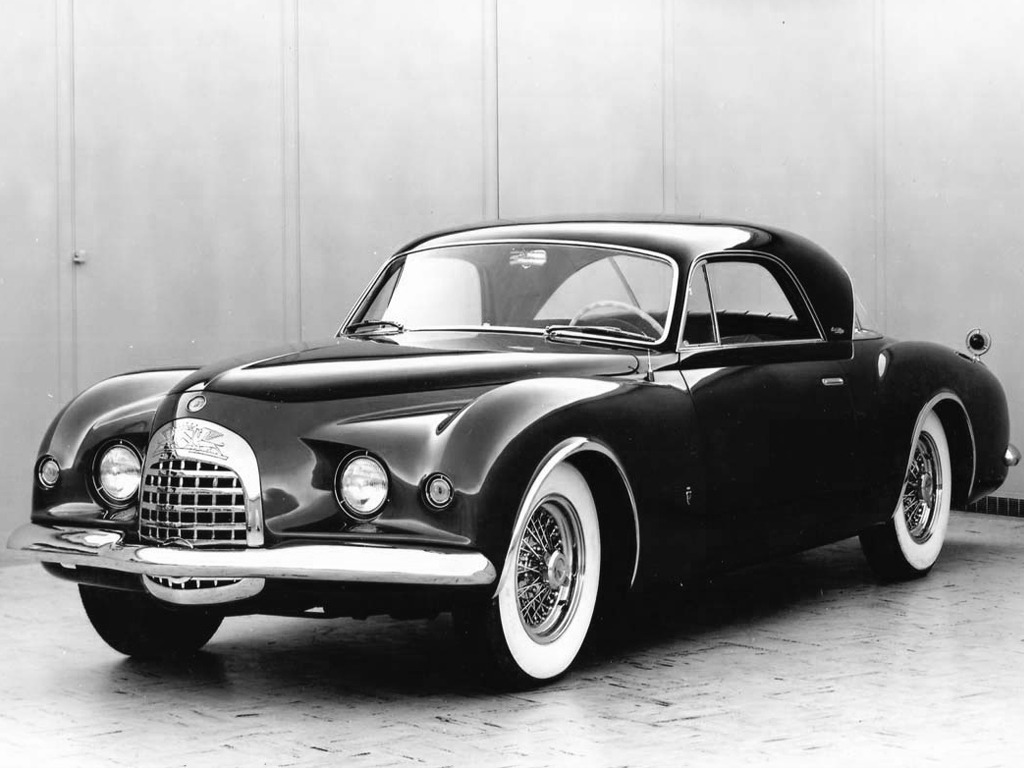
Crucially, many hallmark features of Exner’s Forward Look production cars bore the unmistakable influence of the Ghia-built show cars that preceded them. It was as if the transatlantic experiments had gradually tutored Chrysler in speaking a new design language – one with a distinctly Italian accent. The collaboration had begun with the Plymouth XX-500 prototypes in 1950, but really hit its stride with a series of Chrysler Ghia Specials in the early ’50s: the 1951 K-310 coupe, the 1952 C-200 convertible, the dashing 1953 Special coupe and d’Elegance coupe, and others. These one-off machines, all styled by Exner and hand-built by Ghia’s craftsmen, explored themes that would soon reappear in dealer showrooms. For example, the 1953 Chrysler d’Elegance – a low, two-seat coupe finished in metallic red and black – sported minimalist chrome trim, “gunsight” taillamps perched above the fenders, and a continental-style spare tire impression on the trunk. Just a few years later, you could find very similar finned taillights and trunk tire motifs on the production 1955-’56 Chrysler Imperial, not to mention Exner’s penchant for incorporating classic touches like freestanding lamps on 1960s Imperials. The 1951 K-310 concept introduced a bold trapezoidal grille and full-length body scallops; by 1955, Chrysler 300 and New Yorker models wore the influence openly in their grilles and character lines. There was a direct lineage from these Italian-bodied “Idea Cars” to the cars Americans were driving. As one account noted, Exner’s 1950s show cars “successfully spun-off their ideas on numerous production models,” with the culmination being 1957 – when Chrysler’s blend of “extroverted innovation and classic-era hallmarks had the legs of everybody else in the industry”. In other words, Chrysler’s production cars by the late ’50s embodied the very romance and refinement that Exner and Ghia had prototyped a few years prior.
Perhaps the clearest example of concept-to-production influence was the Gilda itself. That striking Ghia coupe from 1955, with its torpedo-like form and dramatic tail fins, was more than an abstract showpiece – it was a rolling laboratory of aerodynamics and style. Exner had directed Ghia’s designer Giovanni Savonuzzi to push the envelope with a “wedge-shaped” aerodynamic body, in part to prove that wind-tunnel sleekness and tailfins could translate into real consumer appeal. The Gilda’s success validated Exner’s gamble. Its knife-edged tailfins and tapered fuselage directly inspired the look of the 1957 Chryslers, which adopted similarly bold fins and low silhouettes. In fact, the Gilda was explicitly credited with influencing “Chrysler’s entire ‘Forward Look’ styling theme” for 1957. What had been a radical show car in Turin became, two years later, the standard-bearer of American automotive fashion – truly a transatlantic translation of design ideals. Exner would even claim that tailfins on cars could be functional, stabilizing the vehicle at speed, not just decorative aeronautical whimsy. And while some skeptics may have raised eyebrows at that, consumers in the optimistic Jet Age certainly bought into the dream. Chrysler’s tailfins soared as symbols of optimism, motion, and American technological confidence – but they were born from an Italian pen and hammer, forged in the old-world craftsmanship of Ghia.
Fins, Fantasy, and the Idea Cars of Ghia and Exner
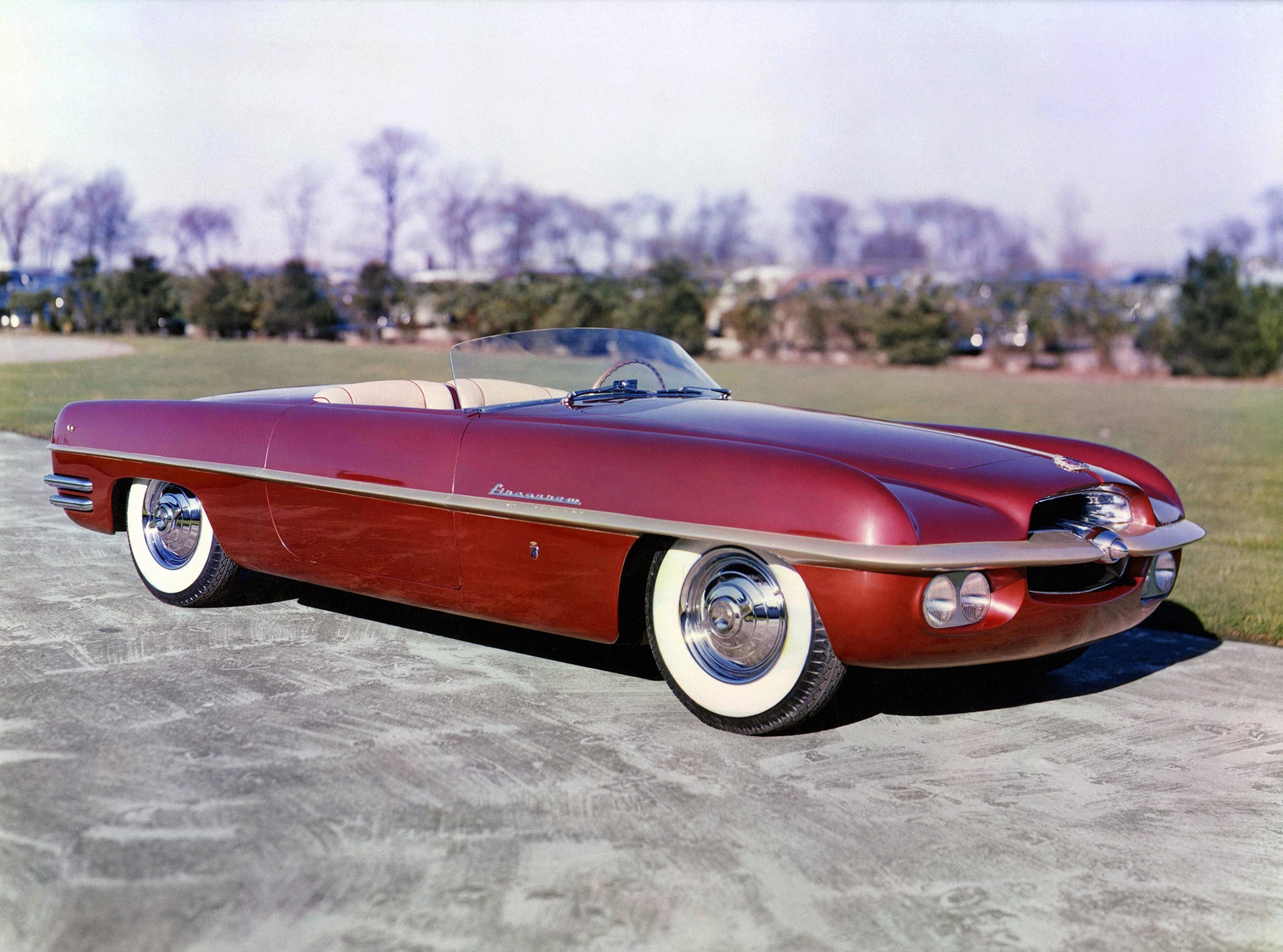
If the Forward Look gave the public a taste of the future, it was Ghia and Exner’s exotic idea cars that truly uncorked the imagination. These were the “romantic and sculptural” creations where the duo’s creativity ran free, each one a story in steel. Consider the Dodge Firearrow series: begun in 1953, the Firearrows were a quartet of lithe two-seat roadsters and convertibles styled by Exner and hand-built by Ghia. Clad in bright colors (the first was a maroon roadster barely three feet high at the cowl!), the Firearrows married American V8 power with the kind of taut, nuanced body surfaces one usually saw on Italian sports cars. In contrast to the baroque, chrome-laden American cars of the mid-’50s, the Firearrow’s shape was lean and athletic. One contemporary description praised its “flat and broad” body with only a slight crown in the panels – the metal “seems stretched to fill the space smoothly…with no wasted contour,” exhibiting a taughtness “rather than appearing full-blown or overly curvaceous”. This was a new proportion for American designers: more than twice as wide as it was tall, the Firearrow looked low, purposeful, almost European in its restraint. Yet it still radiated American confidence with features like quad headlamps and tailpipes that exited through the rear fenders. Exner’s team and Ghia built four iterations of Firearrow, each progressively more production-ready. Although Chrysler hesitated to put a two-seat sports car into production (Exner “really did want Chrysler to build a sporting rival to the Corvette and Thunderbird,” he later lamented), the Firearrows did find a second life. A private entrepreneur teamed with Ghia to create the Dual-Ghia, a limited-production convertible derived directly from Exner’s Firearrow design.
Ghia’s influence extended to more fanciful Chrysler projects as well. In 1955, even as Gilda was turning heads in Turin, Exner had Ghia build a pair of adventurous concept cars named Flight Sweep I and II – low-slung, finned vehicles that explored aviation themes. The Flight Sweep I was a 4-passenger convertible finished in pearlescent white, just 53 inches tall with dramatic upswept fins and a sharply raked windshield. It looked ready to take off, living up to its name. Meanwhile, the Chrysler Falcon of 1955 was a sleek two-seat sports car concept (aimed at Corvette) with a lightweight body by Ghia and a panoramic wraparound windshield.
🔗 Read more: Chrysler Norseman: The Concept Car That Sank with the Andrea Doria
Ghia’s influence extended to more fanciful Chrysler projects as well. In 1955, even as Gilda was turning heads in Turin, Exner had Ghia build a pair of adventurous concept cars named Flight Sweep I and II – low-slung, finned vehicles that explored aviation themes. The Flight Sweep I was a 4-passenger convertible finished in pearlescent white, just 53 inches tall with dramatic upswept fins and a sharply raked windshield. It looked ready to take off, living up to its name. Meanwhile, the Chrysler Falcon of 1955 was a sleek two-seat sports car concept (aimed at Corvette) with a lightweight body by Ghia and a panoramic wraparound windshield.
🔗 Read more: Virgil Exner was the designer who taught Detroit to dream again
Though the Falcon never reached production, it foreshadowed the later Thunderbird and showed Exner’s continuing push for a sporty image. And then there was the wild Chrysler Dart/Diablo – a monument to the Exner-Ghia collaboration. Initially called the Dart in 1956 and later refined into the Diablo for 1957, this gigantic 2-seat convertible was 22 feet of rolling sculpture. Built on a lengthened Chrysler 300 chassis, the Dart/Diablo wore a vivid red Ghia body with exaggerated tailfins and a low-cut windshield. Its design was honed in a wind tunnel (there’s a legend that its form was inspired by 200-mph inkblot tests) and every detail was overseen by Exner himself. The result was part road machine, part art object – fins like dragon’s wings, a cabin for four with a “futuristic dashboard reminiscent of Star Wars”, and an engine bay gleaming with twin four-barrel carburetors and chrome. Ghia’s craftsmen even reworked the car between its two iterations, adjusting the fins and repainting it from black to fiery red before its auto-show debut. The Diablo was the apotheosis of Exner’s dream cars, so spectacular that it toured the country as the star of Chrysler’s 1957 display circuit. To this day it is remembered as “Virgil Exner’s masterpiece of metal and magic,” a kind of road-going fantasy that still looks awe-inspiring. And significantly, it was Ghia’s handiwork – one of the largest and most complex bodies they ever built, proving the Italian coachbuilder could execute even the most extravagant American visions.
Not every Ghia creation for Chrysler would see the spotlight. One, tragically, would never even be seen at all. In 1956, Exner designed a daring fastback coupe called the Chrysler Norseman. Built in secret by Ghia over the course of a year, the Norseman was to be Chrysler’s showstopper for 1957 – featuring a pillarless cantilevered roof (with no visible A-pillars), power retractable glass roof panel, hideaway headlights, and a clean, finned tail with floating chrome pod taillights. It was a technological tour de force, costing $150,000 in development (a huge sum then) and incorporating advanced engineering like tensioned steel roof supports that would snap free in a rollover to protect the occupants. But fate intervened: as the completed Norseman was shipped from Italy to New York aboard the SS Andrea Doria, the ocean liner tragically sank after a collision at sea. The Norseman went down with the ship, entombed in a watery grave at the bottom of the Atlantic. “The revolutionary new Chrysler ‘idea car’ was lost in the sinking of the Italian liner,” reported the news wires, noting that it had been intended for a grand debut in the fall. All that ever surfaced were a few photographs and the legend of what might have been. The Norseman became an underwater phantom, a dream deferred. Yet even in absence it exerted influence – its cantilever roof concept would later inspire others, and it remains one of the great what-ifs of automotive design lore. The Norseman’s story also underlined how intertwined Chrysler and Ghia had become: they were taking bold risks together, literally sending each other’s dreams across oceans.
La Dolce Vita in Detroit: Ghia and the Italian Design Legacy
By the end of the 1950s, the Chrysler-Ghia alliance had fundamentally altered the course of American car design. Exner’s Forward Look proved that American automobiles could combine Italianate elegance with homegrown ambition, yielding machines that were as much emotion as engineering. Other Italian coachbuilders certainly made their mark in this era – Pininfarina styled the graceful Nash-Healey sports car and would later pen one-off Cadillacs, while Bertone and others wowed the European circuit with provocative concepts like the Alfa Romeo BAT series. But no Italian carrozzeria worked so deeply with a major American manufacturer, or had such direct impact on a full line of production cars, as Ghia did with Chrysler. Ghia became, in effect, Chrysler’s external dream factory, an off-shore skunkworks where wild ideas could be hammered into reality. Part of Ghia’s secret was its flexibility and willingness to collaborate: under Luigi Segre’s leadership, Ghia eagerly embraced Detroit’s challenges, whereas some older Italian firms were less inclined to relinquish creative control or cater to foreign needs. Ghia also had a distinct design ethos that meshed perfectly with Exner’s. They favored adventurous, streamlined shapes with minimal ornamentation – an approach that resonated with Exner’s own leanings (he admired classic prewar designs and modern art alike, seeking to fuse beauty with innovation). As automotive historian Richard Dredge noted, by the mid-1950s Chrysler “grew enormously” in stature thanks to Ghia’s input – it was an “unusual partnership” that paid off richly. Indeed, Chrysler’s finest late-’50s cars had an undeniable continental swagger, a confidence of line and proportion that came straight from Italy’s design playbook. The long-hood, short-deck profile of the 1955 C-300 and subsequent 300 letter-series cars, for example, was essentially the “European grand tourer” aesthetic translated to full-size American dimensions (Exner’s 1952 Ghia Special coupe had pioneered that very layout). The notion of cars as rolling art – with form as important as function – was something Italian coachbuilders lived by, and through Ghia, that philosophy seeped into Chrysler’s DNA.
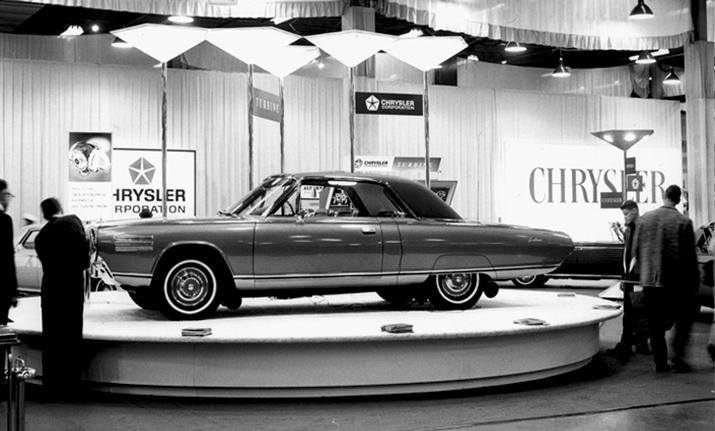
It wasn’t only Exner and Chrysler who benefited from this cross-pollination. Ghia, too, gained prestige and international acclaim from the relationship. The small Turin carrozzeria expanded its operations and portfolio, eventually even attracting the attention of Chrysler’s rivals. (By the 1960s, Ghia would collaborate with Ford on projects and later be acquired into the Ford empire, but that’s another chapter.) In the immediate wake of the Forward Look era, Ghia and Chrysler produced a few more low-volume gems. One was the Dual-Ghia L6.4 in 1961 – a sleeker successor to the original Dual-Ghia, beloved by celebrities like Dean Martin. Another was the Chrysler Turbine Car program in 1963, for which Ghia built a fleet of bronze-colored cars powered by experimental jet-turbine engines. Those turbine coupes, with their exotic powerplants and elegant Ghia-built bodies, were perhaps the last flourish of the old magic: an American manufacturer and an Italian coachbuilder daring to dream together. Virgil Exner had departed Chrysler by then (he was eased out in 1962 as tailfins fell out of fashion), but the legacy he and Ghia created was secure. The Forward Look had given Chrysler an enduring design identity – one that enthusiasts still celebrate for its audacity and beauty. To this day at concours d’elegance events, it’s not unusual to see a Ghia-bodied Chrysler special grace the lawn, drawing crowds who marvel at its blend of cultures. As one of America’s most influential designers, Strother MacMinn, once said of the Ghia-built Gilda, it was “one of the 10 most significant show cars ever built”. That significance lies in more than just a pretty shape; it lies in what the car meant for design history. The Gilda and her sisters were transatlantic messengers, bringing Italian artistry to American shores and sending American ambition back in return.
The Lasting Allure of the Ghia–Exner Romance
Looking back, the collaboration of Virgil Exner and Carrozzeria Ghia stands as a high point of 20th-century automotive design – a time when car stylists were artists and the cars themselves unabashed works of art. It was a partnership fueled by pragmatism on the surface (Chrysler needed cost-effective prototypes; Ghia needed business and had craftsmanship to offer) but sustained by a shared passion for the automobile as a form of creative expression. Together they proved that Detroit’s steel could be shaped with Italian soul, and that advanced styling need not be limited to Europe’s coachbuilt exotics or GM’s glittering dream cars. Exner and Ghia brought that sense of romance to an American production line, something truly revolutionary. The Forward Look cars of 1955–1961 remain beloved by collectors not just because they have fins or chrome, but because they have poetry in their proportions – a certain grace and exuberance that transcends their origin. Stand next to a 1957 Chrysler 300C hardtop or a ’59 Chrysler Fireflite and you can feel it: these cars echo the hand of an Italian coachbuilder in their flowing lines, the vision of a designer who believed in dreams on wheels.
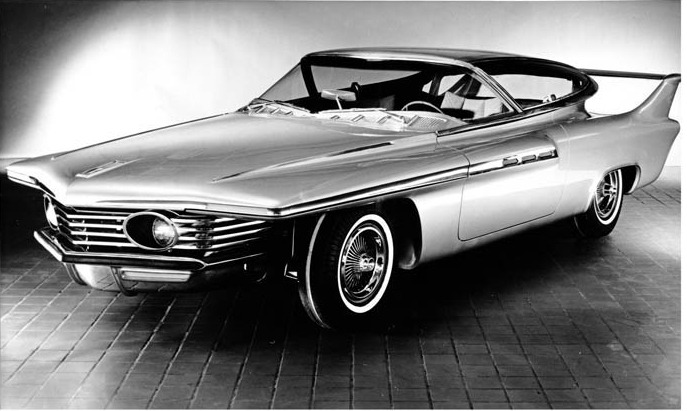
In the end, the story of Ghia and Exner is a love story of sorts – the love of two very different automotive worlds for what each other could bring to the table. Exner found in Ghia the willing co-author of his wildest ideas, a partner who could translate pencil sketches into metal with Old World artistry. Ghia found in Exner a patron who pushed them to new heights of technical and creative achievement, far beyond the limited series Alfa Romeos and Fiats they had been doing. Together, they seized a fleeting moment in the 1950s when anything seemed possible in car design – tailfins could graze the sky, and the future felt just around the corner – and they gave that moment shape. The shapes still captivate us: the flame-red sweep of the Diablo’s flank in the sunlight, the delicate curve of the d’Elegance’s roofline, the confident forward thrust of a ’57 Plymouth’s tail.
These are the products of an era when American confidence and Italian flair combined in a perfect duet. Romantic yet forward-looking, sculptural yet grounded in functionality, the cars of Virgil Exner and Carrozzeria Ghia remind us that automobile design is at its best when it’s an international language – one spoken in the dialects of art and emotion as much as engineering. And that is why their creations endure as icons: they weren’t merely built, they were born of a transatlantic imagination, carrying the heart of Italy and the soul of America in equal measure, fins and all.

ABOUT THE AUTHOR
Andreas Scheidl
Italian classic car enthusiast with German roots. Renowned as a respected figure in the classic car community, he serves as a jury member at various international concours d'elegance, including the Classic Gala Schwetzingen and Mantova. As a content creator, Andreas passionately shares his profound knowledge and appreciation for vintage automobiles. His heart beats for cars designed by Giovanni Michelotti, showcasing his discerning taste and dedication to preserving the timeless elegance of automotive history.
More stories by Andreas Scheidl ↗CONTINUE READING
Posts You Might Like
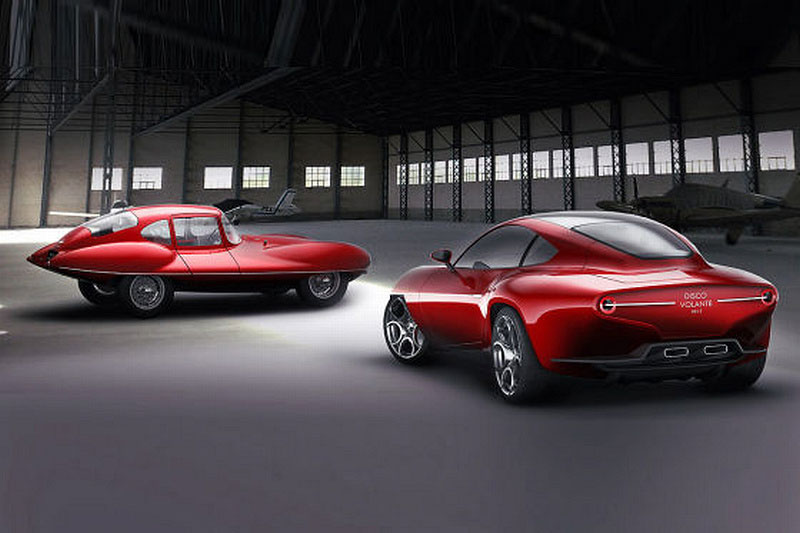
Reinterpreting the Past: When Coachbuilders revisited it’s Icons
When iconic coachbuilt cars are rebade through time, intent matters more than nostalgia. From experimental originals to modern reinterpretations, this article examines how legends are reimagined—and why some ideas refuse to stay…
Read story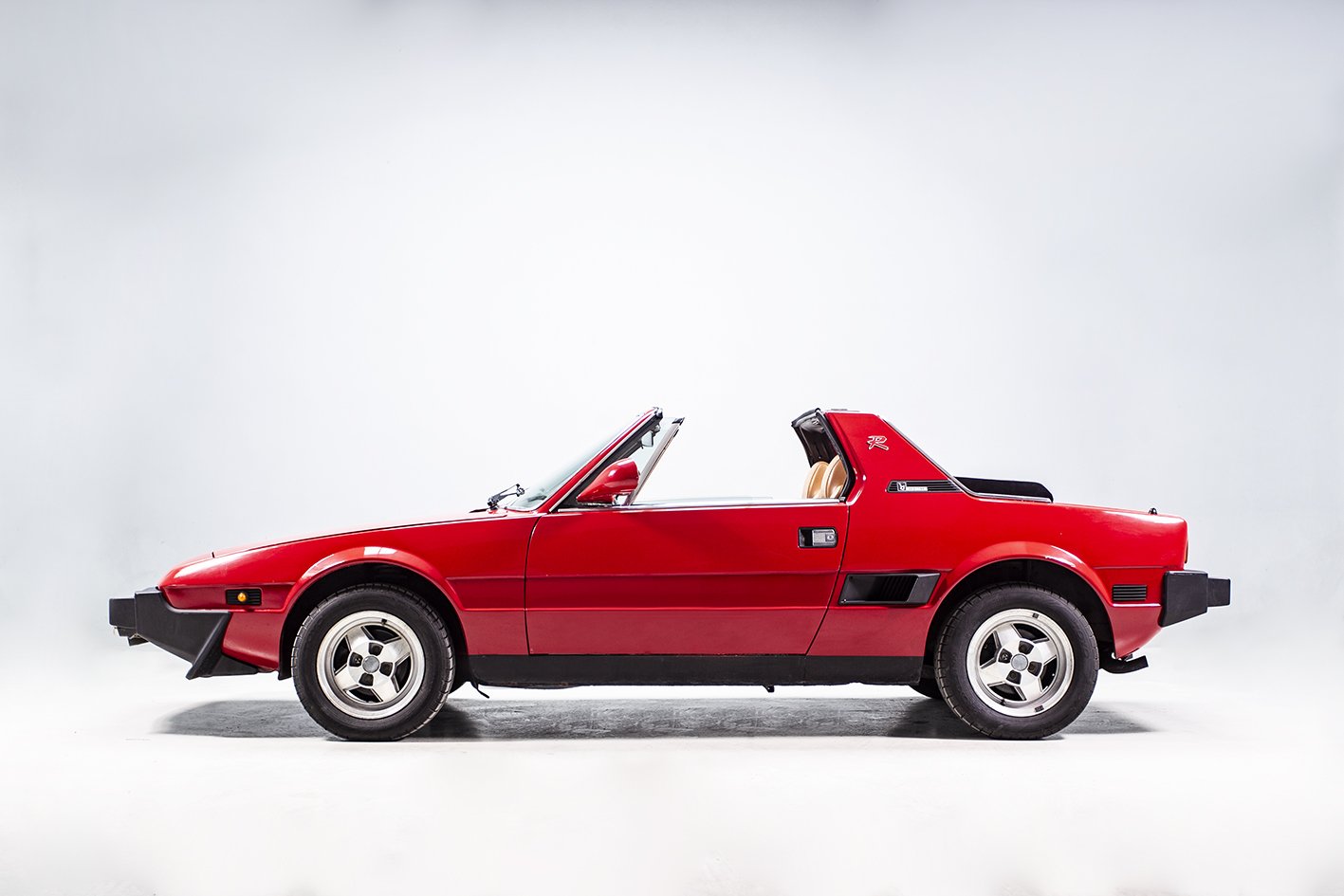
Neither Coupé nor Spider: Italy and the Targa Roof
A deep dive into Italy’s decades-long exploration of the targa roof—from early post-war experiments to Ferrari and Lamborghini icons—revealing how Italian designers created a third way between coupé and spider.
Read story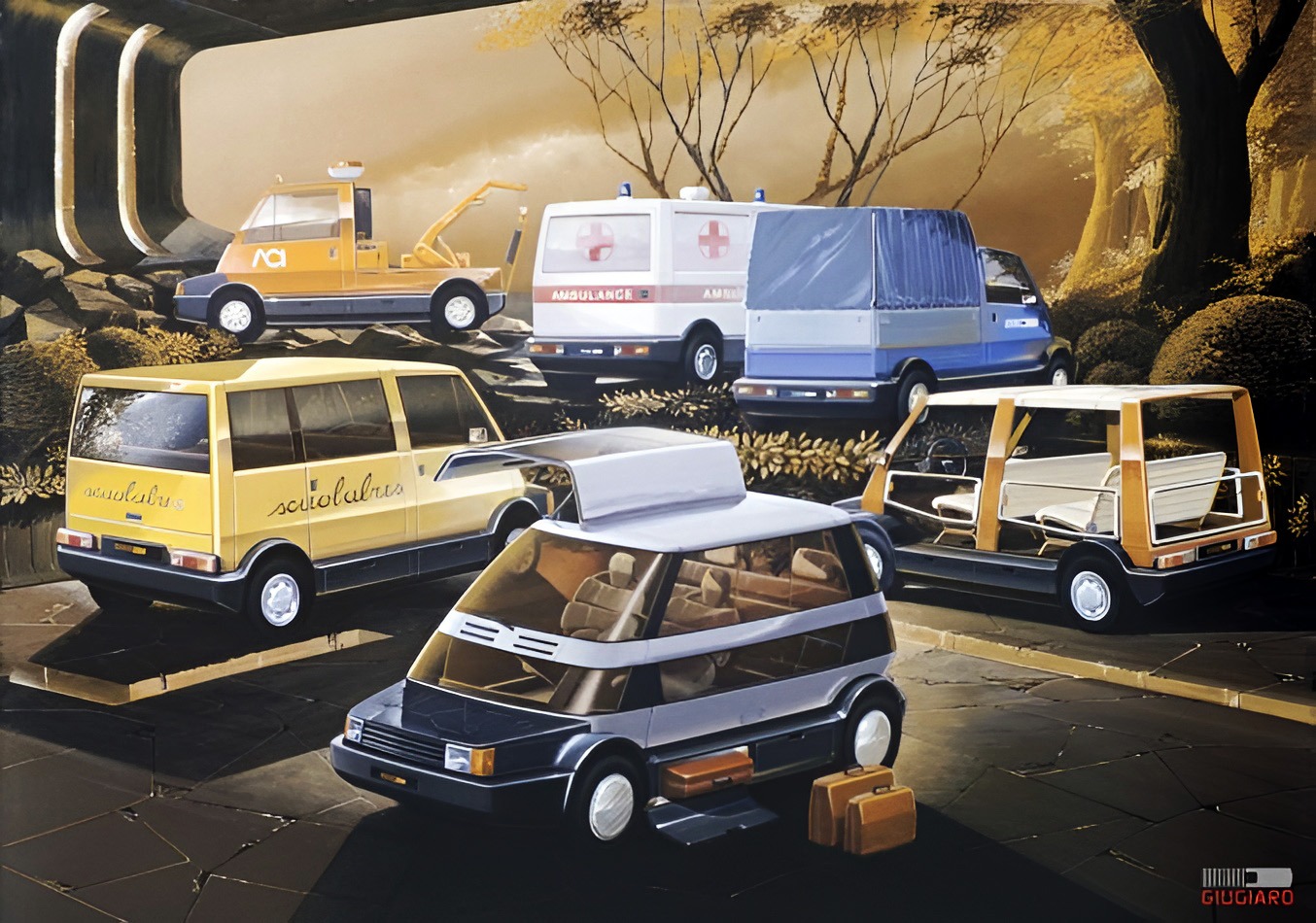
Italian Vision of the MPV: The Monovolume Concept
Long before MPVs filled suburban driveways, Italian designers were shaping the monovolume with prototypes that ranged from pragmatic to outright outrageous. Their work rewrote how space, style, and function could fit under…
Read story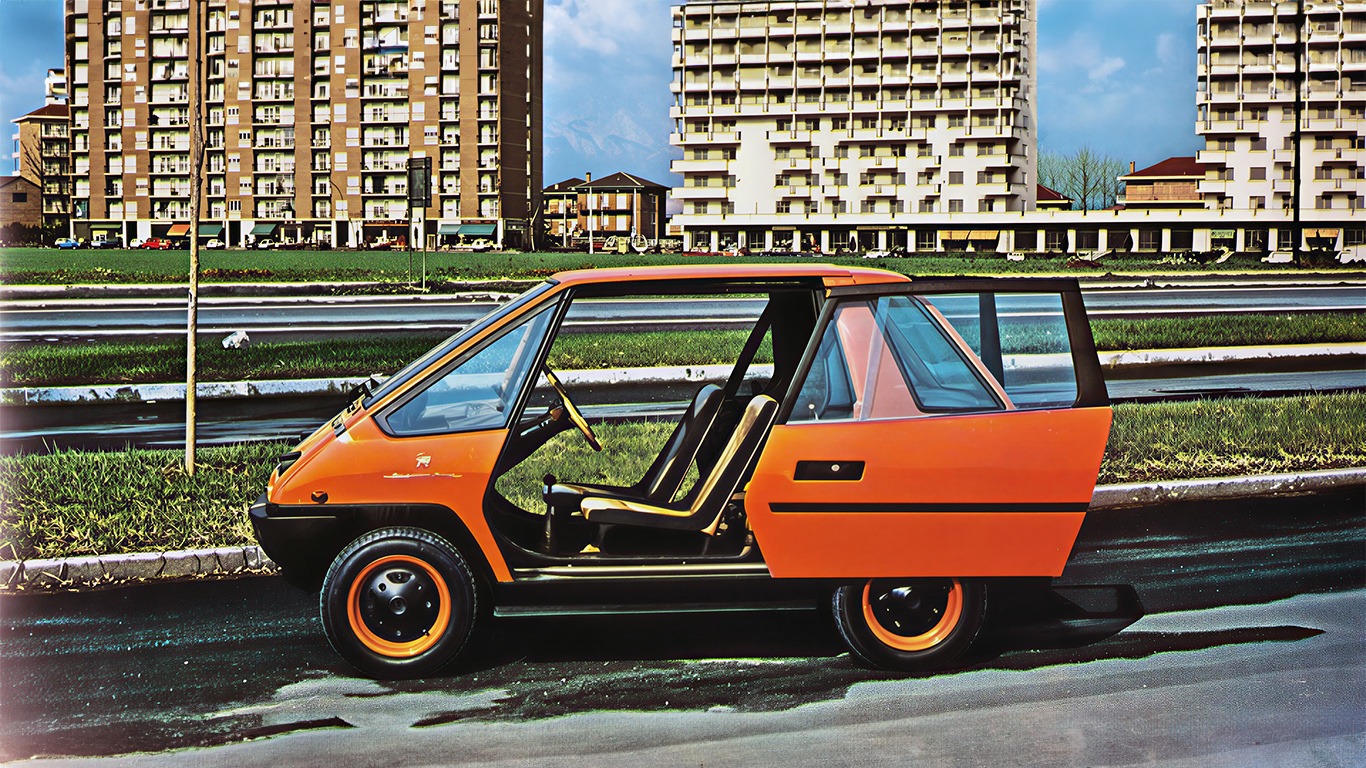
Italian Coachbuilt City Car Concepts: From Microcars to Urban EVs
How did Italy’s famed coachbuilders go from designing Ferraris to dreaming up tiny electric runabouts? From the quirky Tsé-Tsé to Pininfarina’s visionary Nido, discover how city cars became a proving ground for…
Read story
THE CONVERSATION
Comments 0
Share a memory, a period photograph or a documented detail about this story.