
Reinterpreting the Past: When Coachbuilders revisited it’s Icons
Coachbuilding has always thrived in the space between engineering necessity and artistic obsession. At its best, it produces cars that are more than products of their time—objects so conceptually strong that later generations feel compelled to return to them. Sometimes that return is technical, sometimes emotional, and sometimes deeply personal, driven not by factories or rulebooks but by collectors, designers, and small ateliers intent on finishing a conversation that history left open.
This article explores those moments of return. Pairing landmark originals with their modern reinterpretations, it traces how iconic ideas—born from racing, aerodynamics, or sheer provocation—are revisited decades later under very different conditions. What emerges isn’t a story about replicas or nostalgia, but about intent: how the same obsession can resurface across eras, reshaped by new tools, new motivations, and a changed understanding of what it means to build something special.
The BAT Trilogy vs. Bertone BAT 11
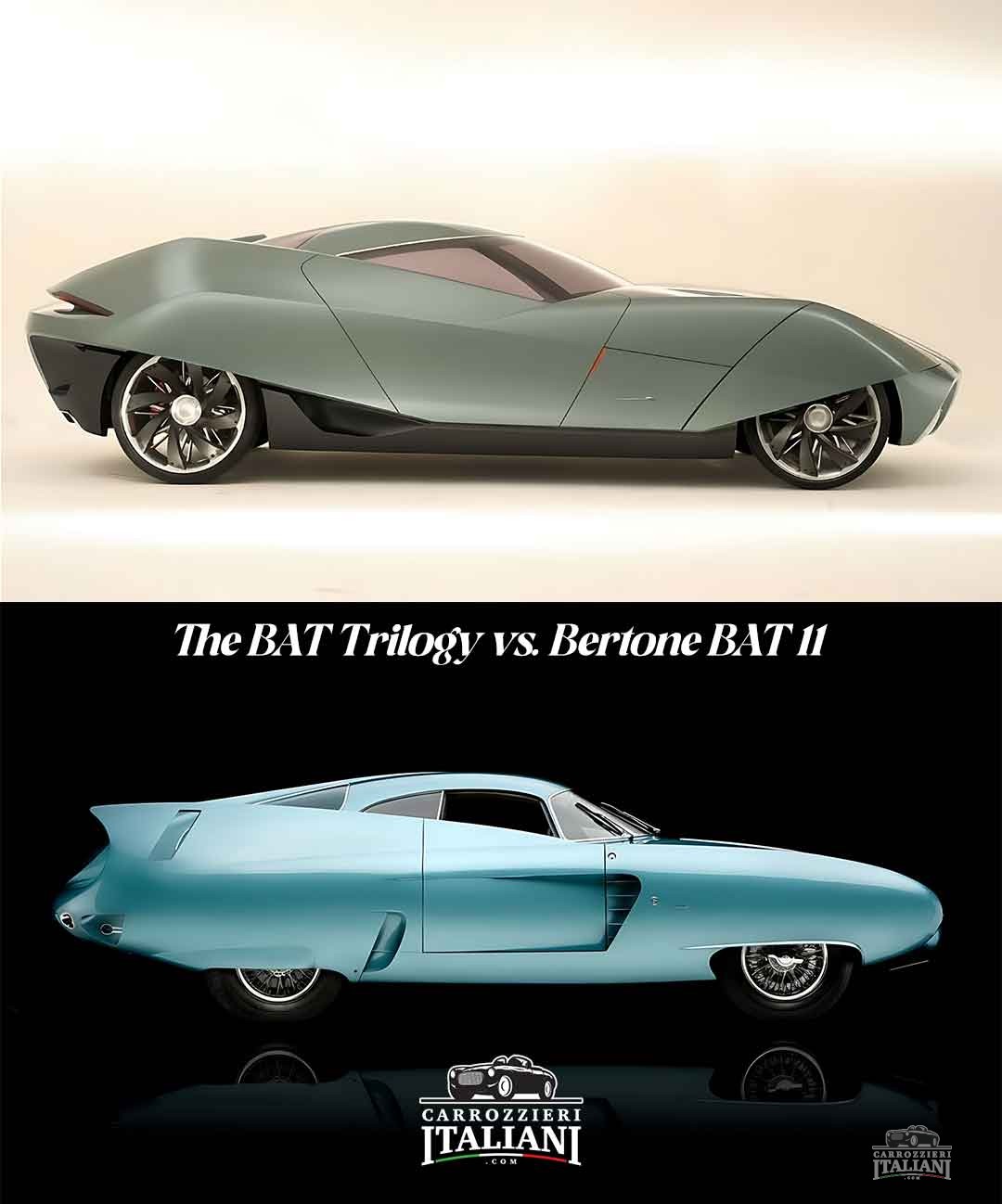
In the early 1950s, Bertone and designer Franco Scaglione produced three of the most uncompromising aerodynamic studies ever to wear an Alfa Romeo badge: BAT 5 (1953), BAT 7 (1954), and BAT 9 (1955). These were not “concept cars” in the contemporary, brand-narrative sense. They were rolling experiments—Alfa Romeo 1900-based testbeds where form existed to serve airflow. BAT 7’s celebrated low drag figure often takes center stage, but the deeper point is how candid the trilogy is: fins, tapers, and cut lines shaped by aerodynamic intent rather than fashion or audience approval.
🔗 Read more: The Bertone B.A.T. mobiles
By contrast, BAT 11 arrived in 2008 with a different purpose and a different patron. Rather than a manufacturer program, it was commissioned as a private, one-off project by collector Gary Kaberle—an owner intimately familiar with the original BAT cars and interested in a modern “fourth chapter.” Bertone responded with a car based on the Alfa Romeo 8C Competizione platform, revealed in Geneva in a more understated orbit than a typical corporate showpiece. The design, led by David Wilkie, makes its lineage explicit: partially shrouded wheels, a nod to the split rear-window theme, and dramatic rear aero forms that echo Scaglione’s theatrical approach without copying it outright.
That distinction is the point. The BAT trilogy reads like pure research—dramatic because it is function-first and unapologetically experimental. BAT 11 is dramatic by design choice: a curated reinterpretation that samples the trilogy’s most recognizable cues and translates them into a modern, road-imaginable sculpture. It’s the same obsession expressed through a different era—less laboratory manifesto, more collector-driven homage.
Alfa Romeo 33 Stradale (1967) vs. 33 Stradale (2023)
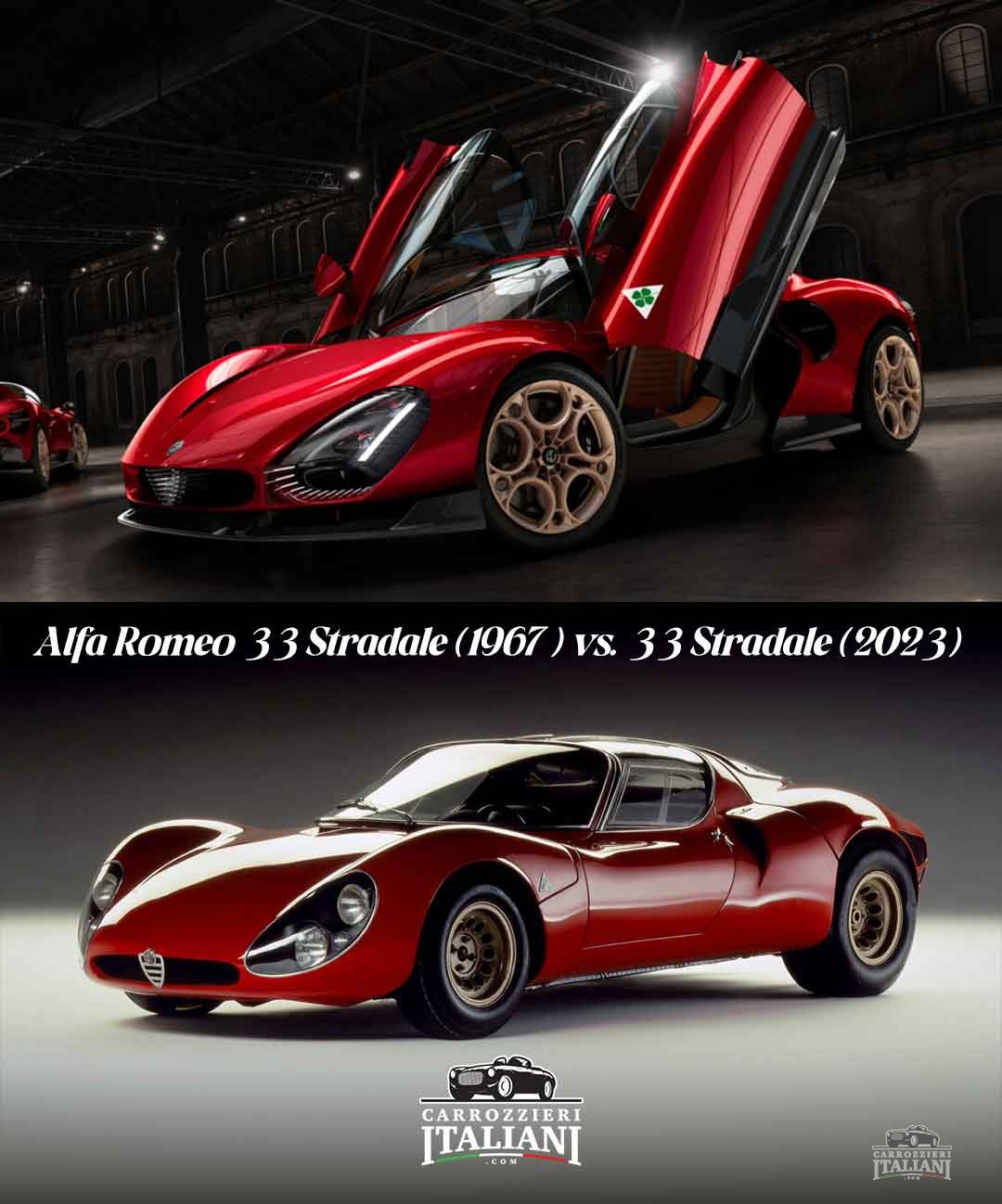
The original 33 Stradale (1967–1969) remains one of the rare road cars that still feels slightly impossible. Born from the Tipo 33 sports prototype and wrapped in Franco Scaglione’s bodywork, it was built in tiny numbers—just 18 cars in total. It wasn’t conceived as a lifestyle object or a branding exercise. It was racing engineering granted license plates: compact, mid-engined, powered by a high-revving 2.0-litre V8, and defined by delicate buttthe yearerfly doors that make many modern supercars look almost overbuilt. Its appeal is purity—low weight, small dimensions, and a shape that seems drawn around the mechanical package rather than around trends.
The modern 33 Stradale, unveiled on 30 August 2023, reverses that logic. It begins with intent—recapturing the emotional punch of the original—then uses contemporary tools to make it real: a bespoke, 33-car series that was sold out from the outset. Crucially, it’s assembled in Italy by Carrozzeria Touring Superleggera, and it shares its basic architecture with the Maserati MC20, before receiving Alfa Romeo’s own design, calibration, and tailoring. Power follows the same dual-track modernity: a 3.0-litre twin-turbo V6 quoted at 620 CV, or an all-electric alternative quoted at over 750 CV.
What connects both cars is the same ambition: a race-car silhouette made intimate—almost human in scale—rather than intimidatingly oversized. The difference is motivation. The 1967 car is a near-miracle of competition DNA translated for the road. The 2023 car is a carefully judged homage—modern in structure, faithful in spirit, and deliberately scarce—using today’s engineering to revive a shape and sensibility that still feels timeless.
Lancia Stratos HF (1973) vs. New Stratos (2010)
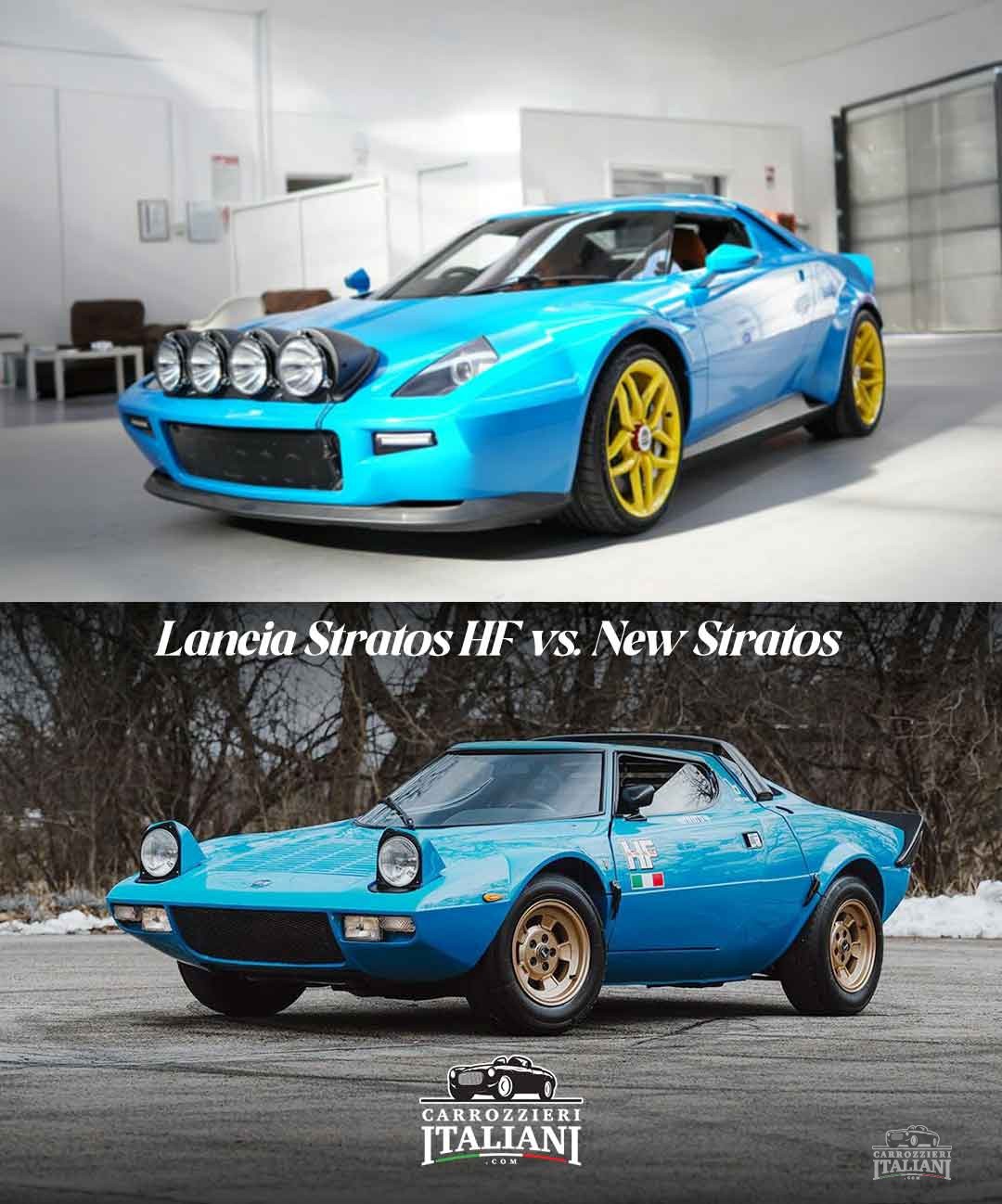
The original Lancia Stratos HF was never a styling exercise that happened to find success on rally stages. It was designed for rallying from the outset—short-wheelbase, mid-engined, and unapologetically compact, with Bertone and Marcello Gandini shaping a wedge-like, helmeted profile that still looks faintly extraterrestrial. To compete at the highest level, Lancia needed homologation, and the road-going Stratos Stradale was built around the Ferrari Dino V6 to satisfy Group 4 requirements. In total, 492 Stradale examples were produced, each essentially a street-legal byproduct of a competition-first philosophy.
🔗 Read more: The return of a legend: The New Stratos by M.A.T.
The New Stratos comes from a different kind of necessity—personal rather than sporting. In 2008, collector Michael Stoschek commissioned Pininfarina to create a modern interpretation, developed from a donor Ferrari F430 Scuderia with a shortened wheelbase and revealed publicly in 2010. It doesn’t attempt to extend Lancia’s factory rally programme, because there isn’t one to extend. Instead, it aims to preserve the original Stratos idea: minimal footprint, mid-engine balance, and instant, unfiltered responses—recreated using contemporary engineering.
The original Lancia Stratos HF was never a styling exercise that happened to find success on rally stages. It was designed for rallying from the outset—short-wheelbase, mid-engined, and unapologetically compact, with Bertone and Marcello Gandini shaping a wedge-like, helmeted profile that still looks faintly extraterrestrial. To compete at the highest level, Lancia needed homologation, and the road-going Stratos Stradale was built around the Ferrari Dino V6 to satisfy Group 4 requirements. In total, 492 Stradale examples were produced, each essentially a street-legal byproduct of a competition-first philosophy.
That shared DNA is clear. Both cars treat agility as the central value, and both wear extreme proportions that communicate intent before the first kilometer. The difference lies in authorship and purpose. The 1970s Stratos is a factory-backed weapon built to satisfy regulations and win outright. The New Stratos is coachbuilt devotion—first as a one-off statement, then evolving into a small-scale production ambition, with Manifattura Automobili Torino (M.A.T.) planning a 25-car limited run from 2018, turning a private tribute into a boutique continuation of the legend.
Maserati 450S Costin-Zagato (1957) vs. Zagato Mostro (2015)
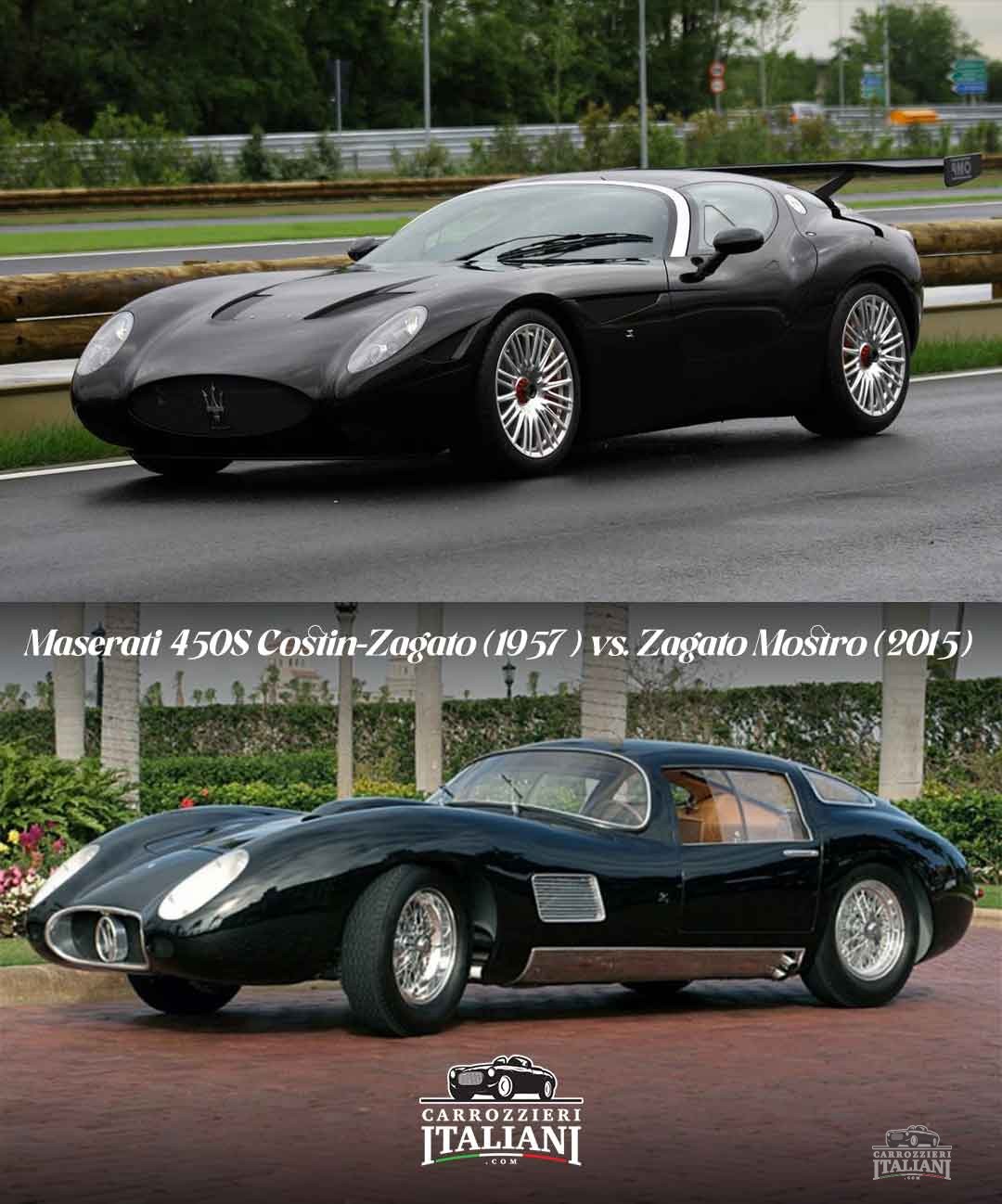
By 1957, Maserati’s 450S programme was already a high-volume affair—mechanically, politically, and quite literally in terms of noise. Then came the outlier: a single closed-coupé 450S, shaped by aerodynamicist Frank Costin and built by Zagato, rushed into existence for Le Mans on chassis 4512. It was the anti-spyder—longer roofline, fastback massing, cleaner flanks—an effort to exchange some open-car drama for higher top speed and greater stability. It didn’t deliver the result Maserati wanted at Le Mans, but it did leave a lasting imprint: a profile so unlike the open 450S cars that it earned the nickname “Le Monstre” / “Il Mostro.”
The Zagato Mostro (2015) effectively turns that nickname into a design brief. Unveiled at Villa d’Este and explicitly inspired by the 450S Costin-Zagato Coupé, it’s a modern collectible that distills a historic anomaly into something intentionally compact, sharp-edged, and artisanal. Beneath the coachbuilt surface the engineering is contemporary—carbon-fibre bodywork and a structure combining a carbon monocoque with a steel tubular frame—but the proportions are a clear callback: long nose, tightly drawn cabin, pronounced rear haunches, and that “shaped by airflow” smoothness that reads more functional than decorative.
What links the two is attitude. Both are Zagato-built departures from the expected Maserati form of their era—cars defined by proportion and purpose as much as by badge. The difference is intent. The 450S Costin-Zagato coupé was a hurried racing solution, built to answer a specific problem under pressure. The Mostro is a deliberate, limited-run statement: an engineering footnote reinterpreted as design mythology, and a rare modern machine that wears its origin story on every surface.
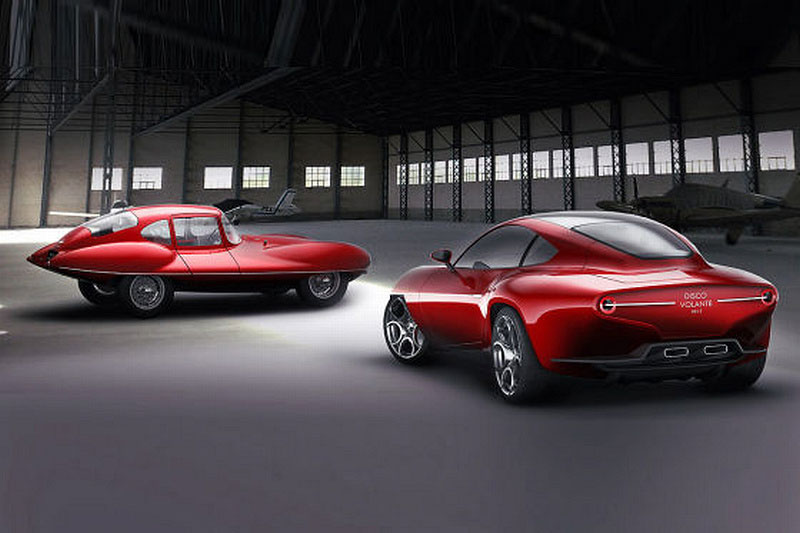
Alfa Romeo C52 Disco Volante (1952) vs. Disco Volante by Touring (2012)
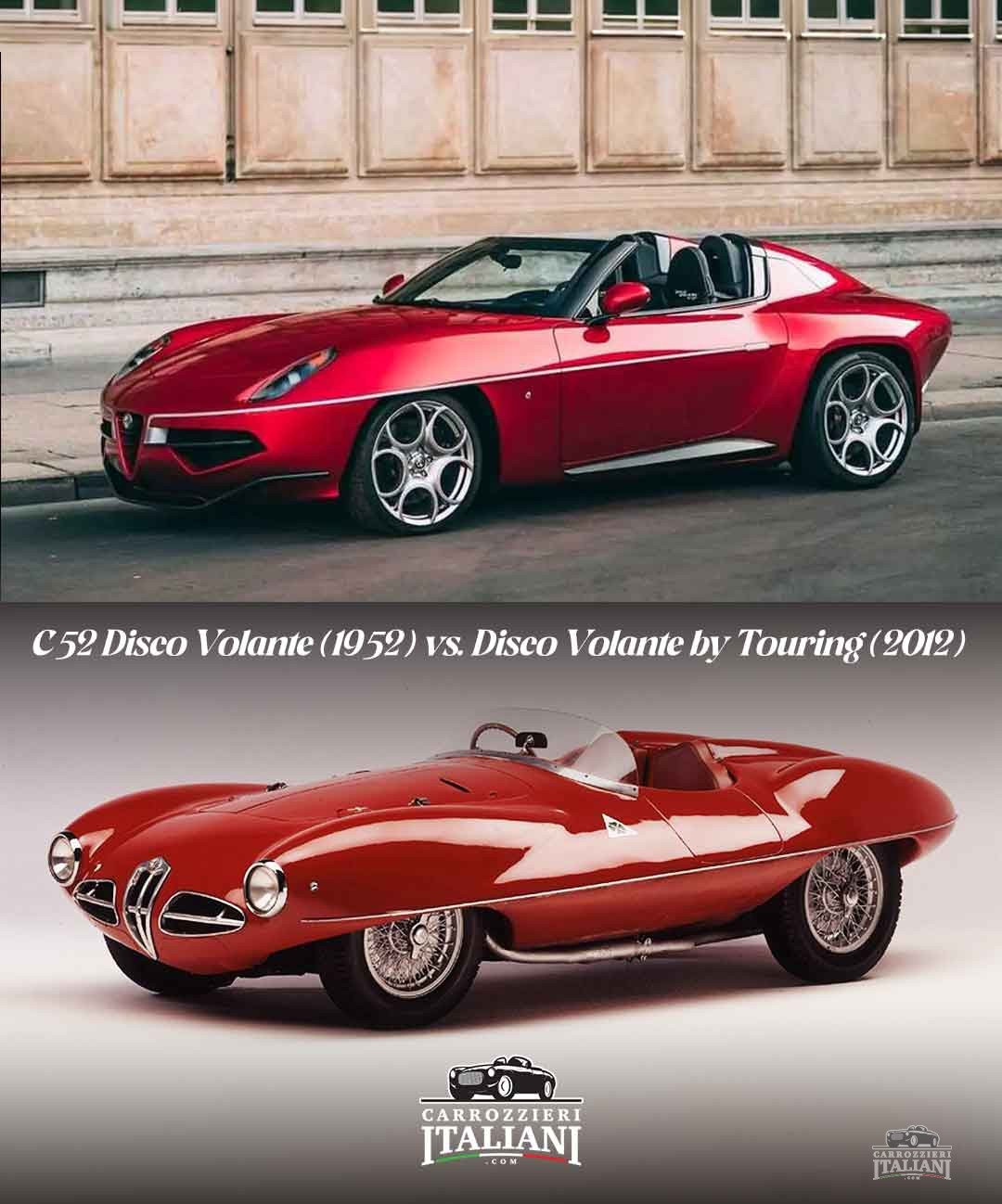
The original Alfa Romeo C52 “Disco Volante” appeared in 1952 as a rolling provocation—an experimental sports-racer developed with Carrozzeria Touring, shaped by wind-tunnel logic and wrapped around a tubular chassis with a clear objective: reduce drag while maintaining stability when speed and crosswinds tried to push the car off line. Touring’s Superleggera philosophy wasn’t a decorative flourish here; it was the entire thesis. Lightness, structural efficiency, and bodywork conceived as an aerodynamic envelope produced a form so smooth and all-consuming that the UFO nickname arrived instantly and stuck. Only five were built in period, in several variations, which is precisely why the C52 endures more as mythology than as a conventional model.
Six decades later, Touring chose to revive that mythology rather than merely celebrate it. The Disco Volante by Touring debuted as a full-scale style model at Geneva in 2012, before becoming a tiny run of customer cars using the Alfa Romeo 8C Competizione as its foundation—drivetrain, electronics, and core hard points retained. The result isn’t a replica so much as a reinterpretation: a modern rebody that treats the 8C as structural scaffolding for a historic idea, executed with carbon fibre and aluminium and finished with an almost obsessive level of hand craftsmanship—often quoted at around 4,000 hours per car.
What unites both cars is the unmistakable Touring signature: form guided by airflow, and a sense of the body as a single, continuous gesture rather than a collection of panels. The difference lies in purpose. The C52 was built to race, test, and learn—an aerodynamic experiment in motion. The modern Disco Volante is built to preserve and possess the legend, produced in deliberately microscopic numbers—often cited as eight cars—where the experiment is no longer primarily technical, but cultural.
Iso Rivolta A3/C (1963) vs. Iso Rivolta GTZ by Zagato (2020)
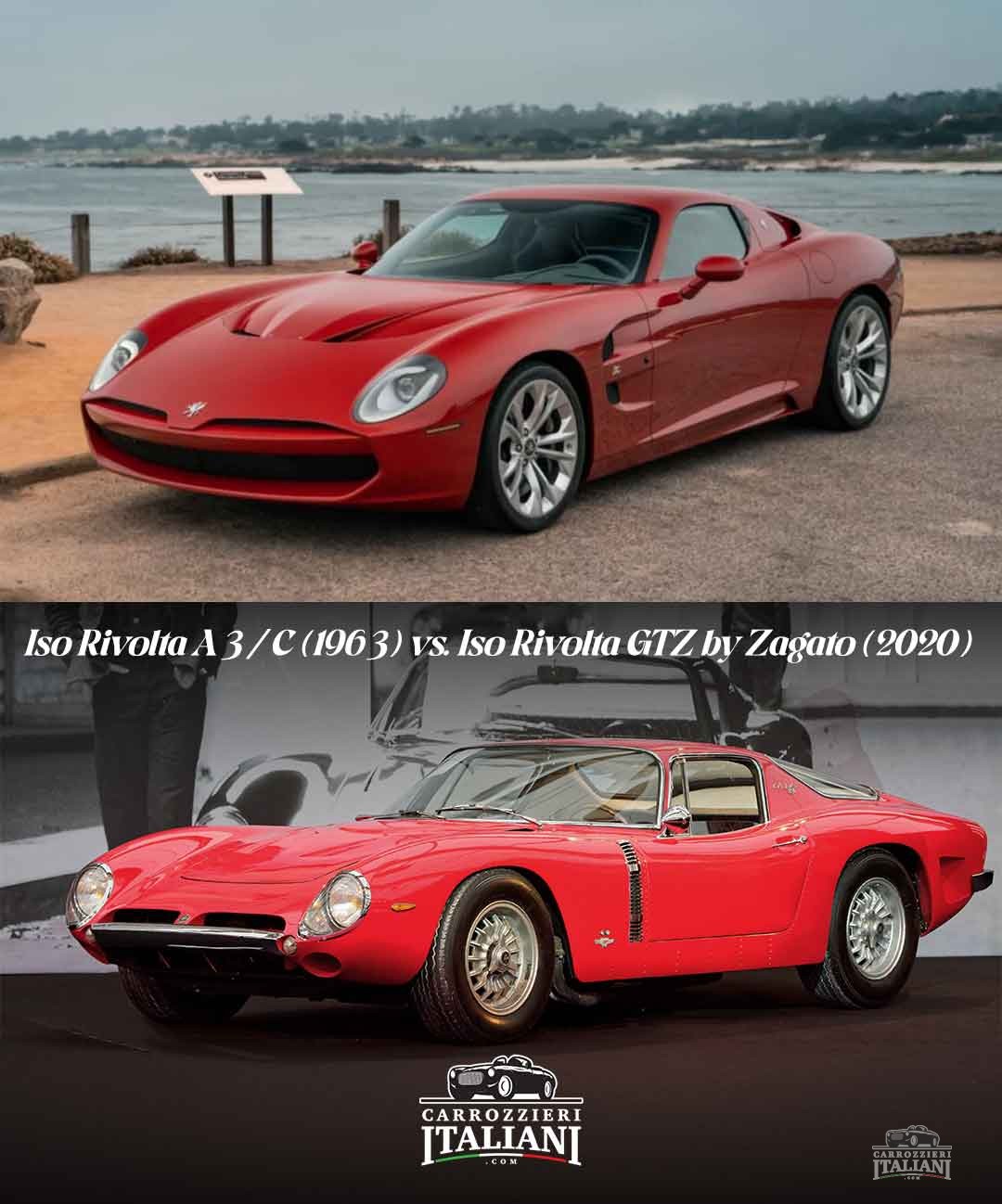
The original Iso Rivolta A3/C is pure 1960s Italian logic distilled into metal: take American V8 power, package it in a compact Italian berlinetta, then make it credible in competition. Renzo Rivolta brought in Giotto Bizzarrini to engineer the track-focused A3/C, while Bertone—with Giorgetto Giugiaro—penned a clean, tightly tensioned shape that looked fast standing still. The car went racing almost immediately, and the project’s pace and pressure helped ignite a decisive split. As internal tensions grew—accelerated by Rivolta’s death—the same core idea carried on under Bizzarrini’s own name as the 5300 GT. In that sense, the A3/C isn’t only an icon; it’s the point of divergence that effectively created another marque.
🔗 Read more: Zagato Milano: A History Shaped by Speed and Style
The Iso Rivolta GTZ is Zagato’s modern reply to that mythology. Presented as a revival of the name and an explicit tribute to the A3/C, it preserves the classic formula—an Italian coachbuilt body over American V8 muscle—while updating the method with contemporary underpinnings and modern performance expectations. The result is less a continuation of a factory programme than a boutique interpretation: a hand-built, design-led grand tourer that treats the original as a reference point rather than a template, and limits production to 19 cars to keep the story exclusive.
What connects the two is philosophy: compact GT proportions, front-engined V8 attitude, and the sense of identity that only coachbuilding can deliver. The difference is intent. The A3/C pursued competition legitimacy in real time, with all the urgency and consequence that implies. The GTZ reconstructs that legitimacy as an object—crafted for today’s collectors and connoisseurs, rather than for yesterday’s starting grid.
De Tomaso Pantera (1971) vs. Ares Panther ProgettoUno (2017)
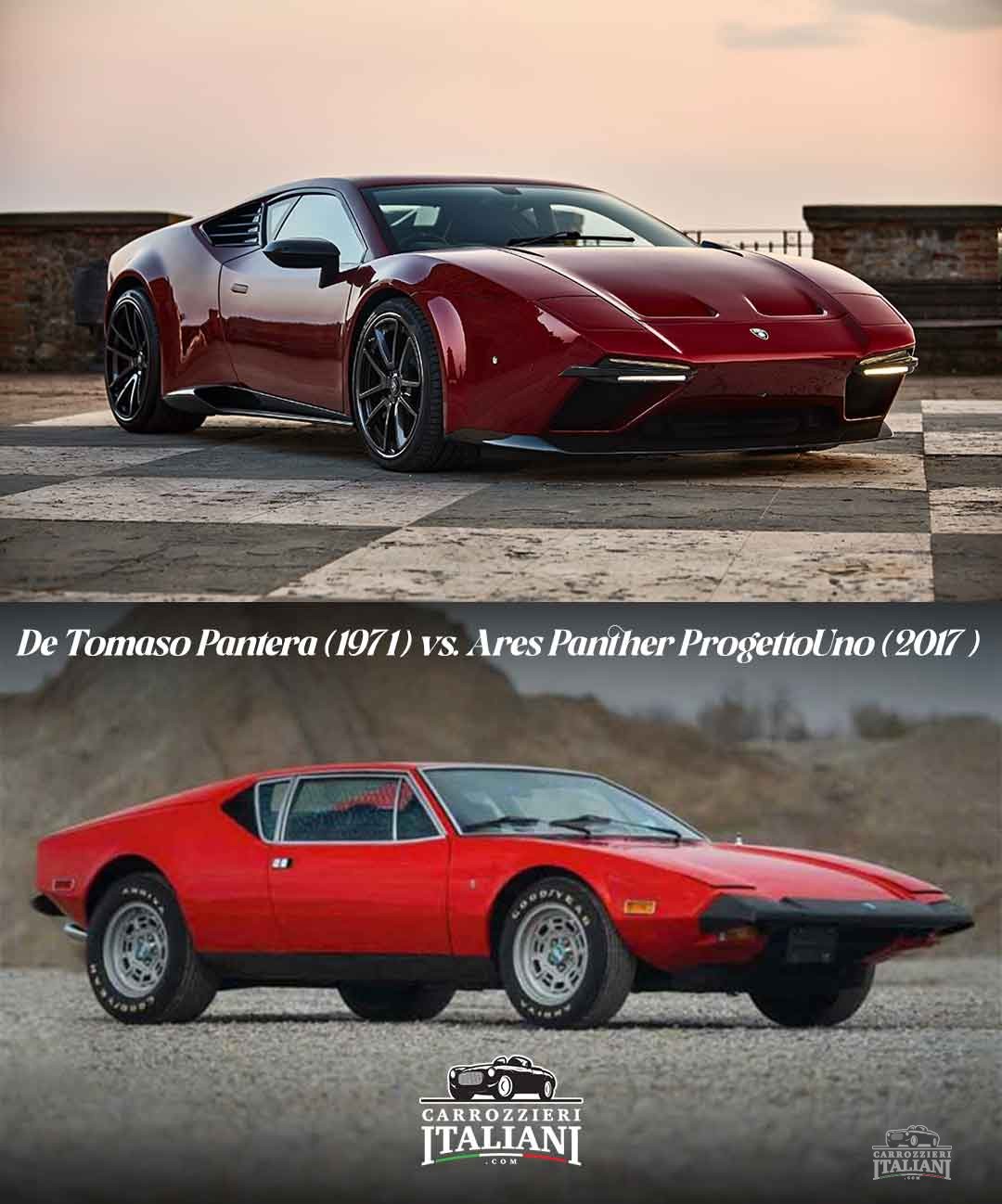
The De Tomaso Pantera arrived as the kind of dream shortcut enthusiasts rarely get: an Italian mid-engine wedge paired with an American V8 you could service without specialist drama. Styled at Ghia by Tom Tjaarda and built around a steel monocoque, it became De Tomaso’s breakout success, with 7,260 cars produced between 1971 and 1992. Ford’s involvement gave it an unusual footprint for an exotic, selling it in the U.S. through Lincoln-Mercury dealers in the early 1970s. That’s why the Pantera feels both special and oddly familiar—a supercar shape with a surprisingly normal ownership rhythm.
The Ares Panther ProgettoUno starts from the other end of the story. It’s a modern tribute built in Modena by ARES Design, clearly styled to bring the Pantera’s look and attitude into the present. Under the skin it uses the Lamborghini Huracán for its core package—engine and basic structure—then replaces the outer skin with a bespoke carbon-fibre body. The proportions are the key: low nose, cab-forward stance, clean lines, and a modern take on pop-up headlights that keeps the original’s character without pretending it’s 1971 again. Production is limited to 21 cars, so it’s far rarer than any regular model run.
What connects the two is the same simple promise: a compact, wedge-shaped mid-engine car that feels muscular and usable, not delicate or intimidating. The difference is how they came to be. The Pantera was a big, practical gamble that turned into a cult classic over time. The Ares is built for people who already love the Pantera idea—just with today’s materials, performance, and build quality.
Autobianchi A112 Runabout (1969) vs. Bertone Runabout (2026)
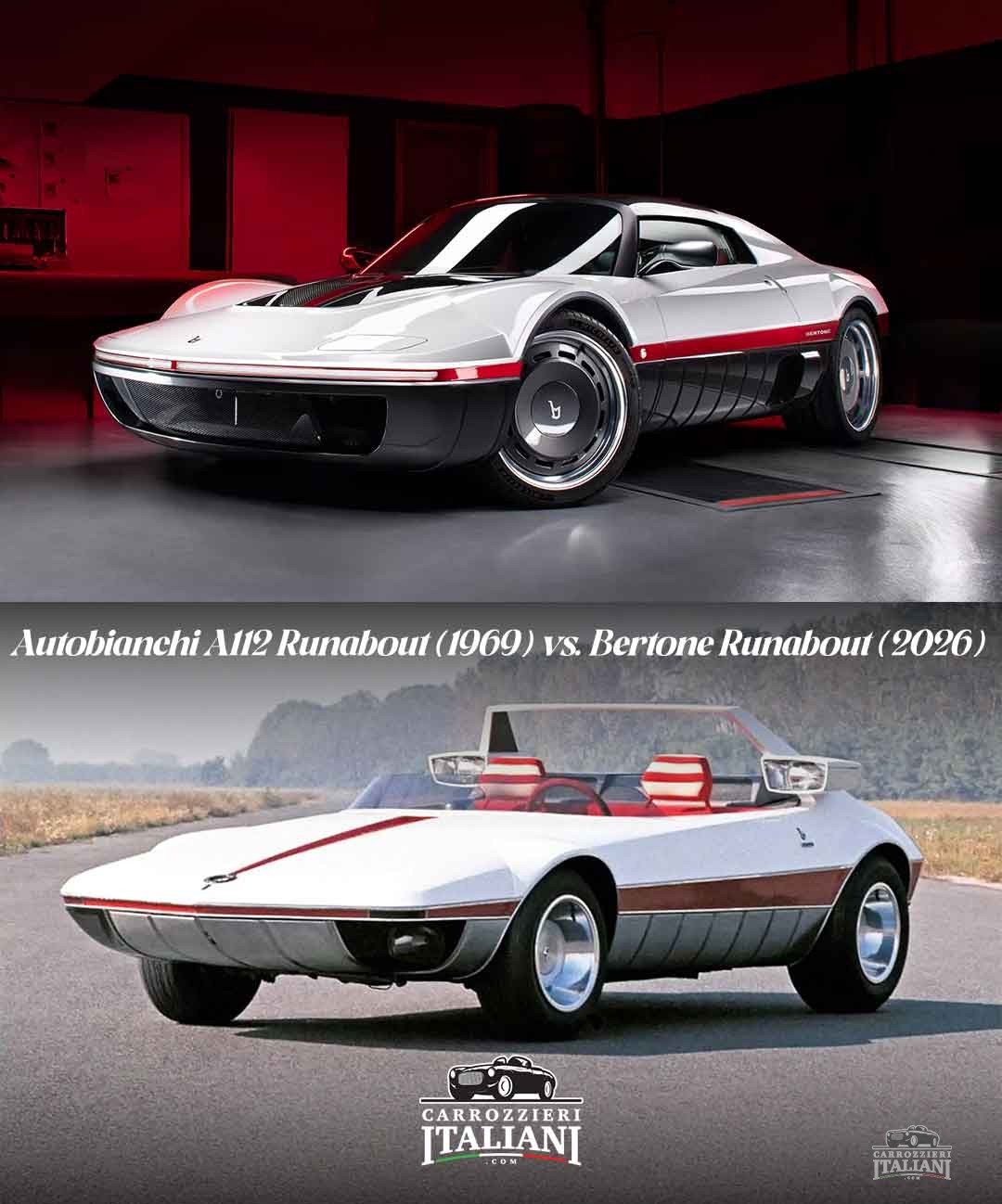
When Bertone unveiled the Autobianchi A112 Runabout at the 1969 Turin Motor Show, it barely registered as a “small car concept.” Marcello Gandini drew it like a runabout speedboat that had somehow found its way onto the road: a sharp barchetta shape, a minimal screen, a prominent roll hoop, and lamps perched high like pieces of deck hardware. Underneath, it leaned on A112-related thinking but rewrote the layout with a mid-engine configuration and Fiat-family mechanicals. More than anything, it planted a seed—this idea that compact Italian fun could look dramatic and purposeful, a line you can trace forward to cars like the Fiat X1/9, and to the broader early-’70s fascination with bold proportions.
The Bertone Runabout (2026) picks up that same sketchbook energy and does the one thing the original never had to do: become a real, orderable car. Revealed in January 2026 ahead of a Rétromobile debut, it’s positioned as the first of a “classic line” of Bertone revivals—hand-built, coachbuilt, and limited to 25 units. The nautical cues are still there in the flat, deck-like surfaces and the clean, no-nonsense shape, but the hardware is thoroughly modern and proudly analogue: a bespoke aluminium chassis, carbon-fibre bodywork, and a supercharged 3.5-litre V6 paired with a six-speed manual. Two versions are offered—Barchetta and Targa—to lean into the open-air character that made the original so memorable.
What links both Runabouts is a shared instinct to strip the car down to one strong idea and commit to it. The difference is purpose. The 1969 car was meant to provoke and influence. The 2026 car takes that provocation seriously—and finishes the job, turning it into something you can actually live with and drive.
Alpine A220 (1968) vs. Zagato AGTZ Twin Tail (2024)
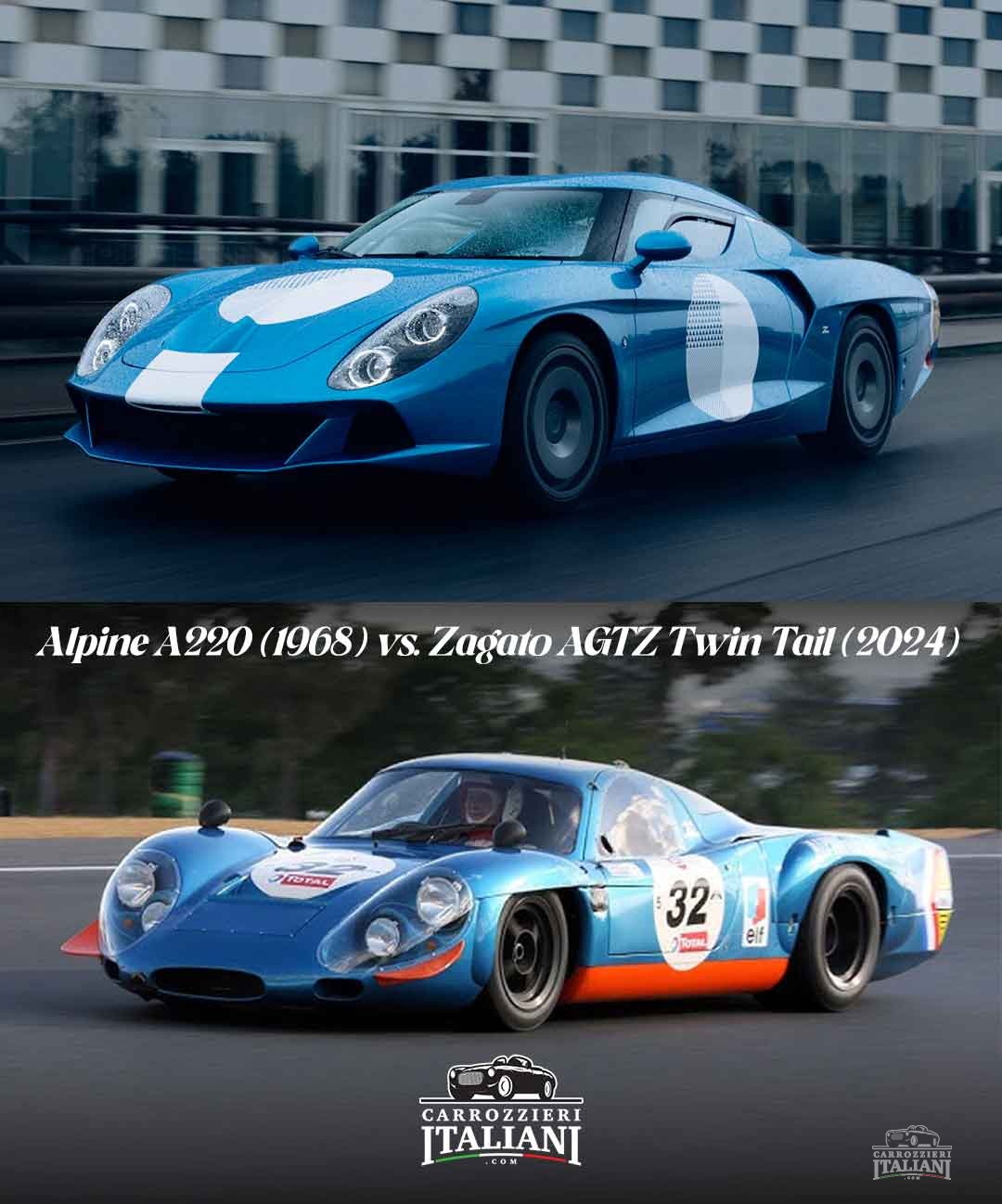
The Alpine A220 arrived because the rulebook finally opened a door. With prototypes capped at 3.0 litres for 1968, Alpine had a rare chance to aim beyond class wins and take a real shot at overall credibility at Le Mans. Gordini’s answer was bold and neatly French: a compact 3.0-litre V8 developed by effectively pairing his familiar 1.5-litre thinking into something twice as ambitious. Alpine built a proper endurance prototype around it—low, slippery, and purposeful, with long-tail efficiency, a tight cockpit, and that unmistakable late-’60s prototype stance. The look promised a breakthrough. The race results didn’t. In 1968, several cars started but only one reached the finish—an achievement, but not the step-change Alpine wanted. In 1969, reliability again blunted the effort, and the A220’s Le Mans chapter effectively ended.
The Zagato AGTZ Twin Tail starts from the opposite direction: not from regulations, but from nostalgia that refuses to stay nostalgic. Developed by Zagato with La Squadra, it uses the modern Alpine A110 as its technical base, then replaces the visible car with a full carbon-fibre body that echoes the A220’s face, proportions, and endurance-flavoured lines. The clever part is also the headline: it’s one car with two rear identities. Fit the long tail and it becomes the classic “Le Mans” silhouette; remove it and the car tightens into a short-tail shape, like switching from endurance mode to road mode in one clean move.
What connects them is the same belief that speed begins with airflow. The difference is what they’re built for. The A220 was made to survive 24 hours and prove itself under the clock. The AGTZ is made to keep the idea alive—19 cars, each one a modern way of holding onto that long-tail dream.
The Alpine A220 arrived because the rulebook finally opened a door. With prototypes capped at 3.0 litres for 1968, Alpine had a rare chance to aim beyond class wins and take a real shot at overall credibility at Le Mans. Gordini’s answer was bold and neatly French: a compact 3.0-litre V8 developed by effectively pairing his familiar 1.5-litre thinking into something twice as ambitious. Alpine built a proper endurance prototype around it—low, slippery, and purposeful, with long-tail efficiency, a tight cockpit, and that unmistakable late-’60s prototype stance. The look promised a breakthrough. The race results didn’t. In 1968, several cars started but only one reached the finish—an achievement, but not the step-change Alpine wanted. In 1969, reliability again blunted the effort, and the A220’s Le Mans chapter effectively ended.
Ferrari 330 LMB Spider Fantuzzi (1963) vs. Ferrari P540 Superfast Aperta (2008)
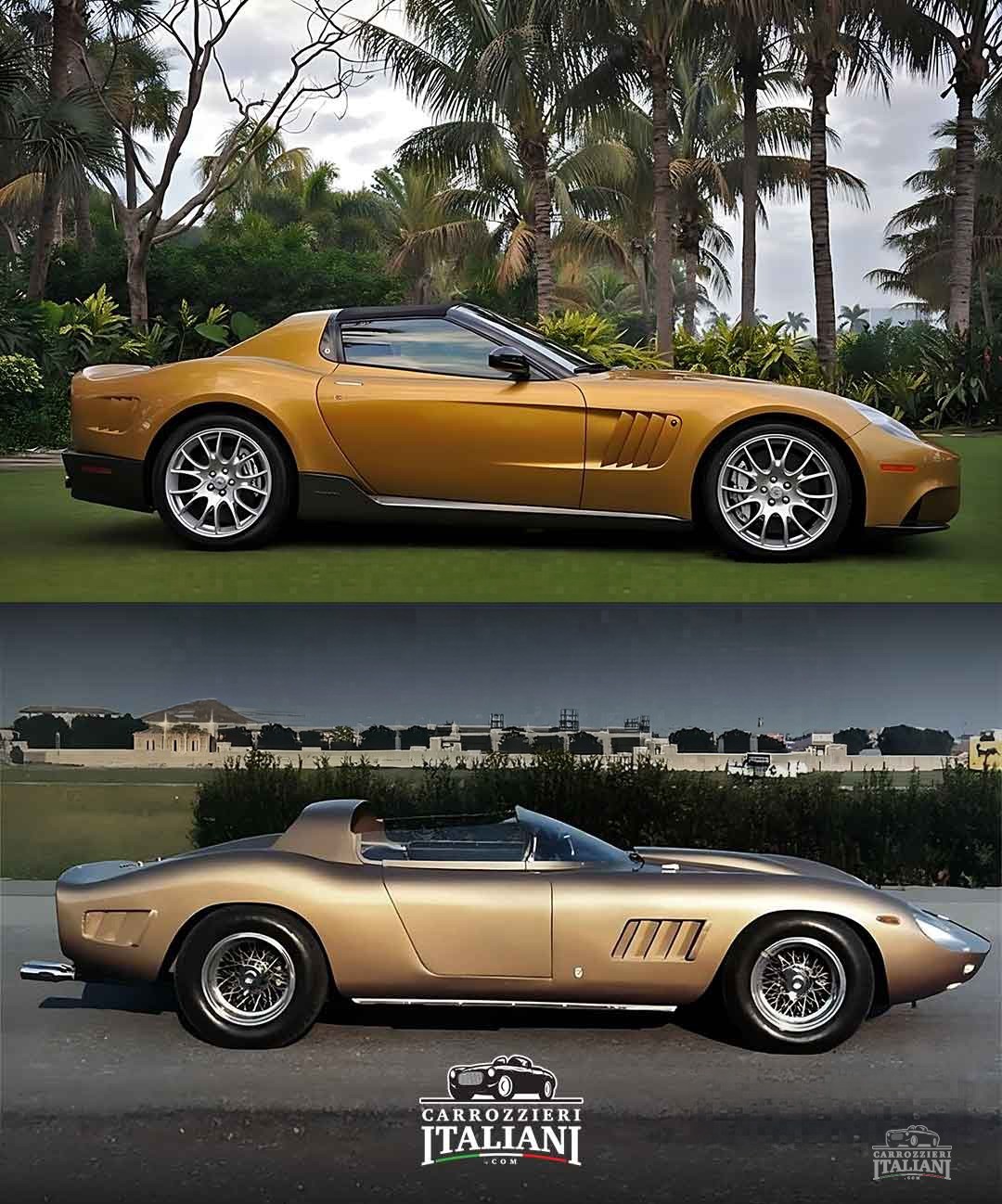
If there’s a single thread connecting these two one-offs, it’s cinema—and a very particular kind of Ferrari daydream.
Chassis #4381SA started out in 1963 as one of the rare 330 LMB/330 LM works-spec competition cars, built to play at the sharp end before regulations and Ferrari’s own model cycle moved the goalposts. Its most famous second act came soon after, when Carrozzeria Fantuzzi re-bodied it as a dramatic gold spider—less endurance tool, more rolling set piece. That transformation eventually carried it onto the screen in Federico Fellini’s segment of Spirits of the Dead (1968). In other words, it’s a real race car that became a movie star almost by accident: authentic hardware reshaped for pure visual impact.If there’s a single thread connecting these two one-offs, it’s cinema—and a very particular kind of Ferrari daydream.
The P540 Superfast Aperta takes the opposite route. It isn’t a competition car redirected into art—it’s a piece of art commissioned from the start. In 2008, American collector Edward Walson turned to Ferrari’s Special Projects programme with a clear request: build a modern tribute to the same gold Fantuzzi film car, but using contemporary foundations, namely a 599 GTB Fiorano as the donor. The result is a one-off with modern performance beneath bespoke coachwork, created to capture an atmosphere and a memory rather than any kind of racing outcome.
So yes—same inspiration, same cinematic aura. The difference is provenance. #4381SA is the original object: competition history first, legend second. The P540 is the legend reimagined, built decades later with modern engineering and a clear intention to look back.

ABOUT THE AUTHOR
Andreas Scheidl
Italian classic car enthusiast with German roots. Renowned as a respected figure in the classic car community, he serves as a jury member at various international concours d'elegance, including the Classic Gala Schwetzingen and Mantova. As a content creator, Andreas passionately shares his profound knowledge and appreciation for vintage automobiles. His heart beats for cars designed by Giovanni Michelotti, showcasing his discerning taste and dedication to preserving the timeless elegance of automotive history.
More stories by Andreas Scheidl ↗CONTINUE READING
Posts You Might Like
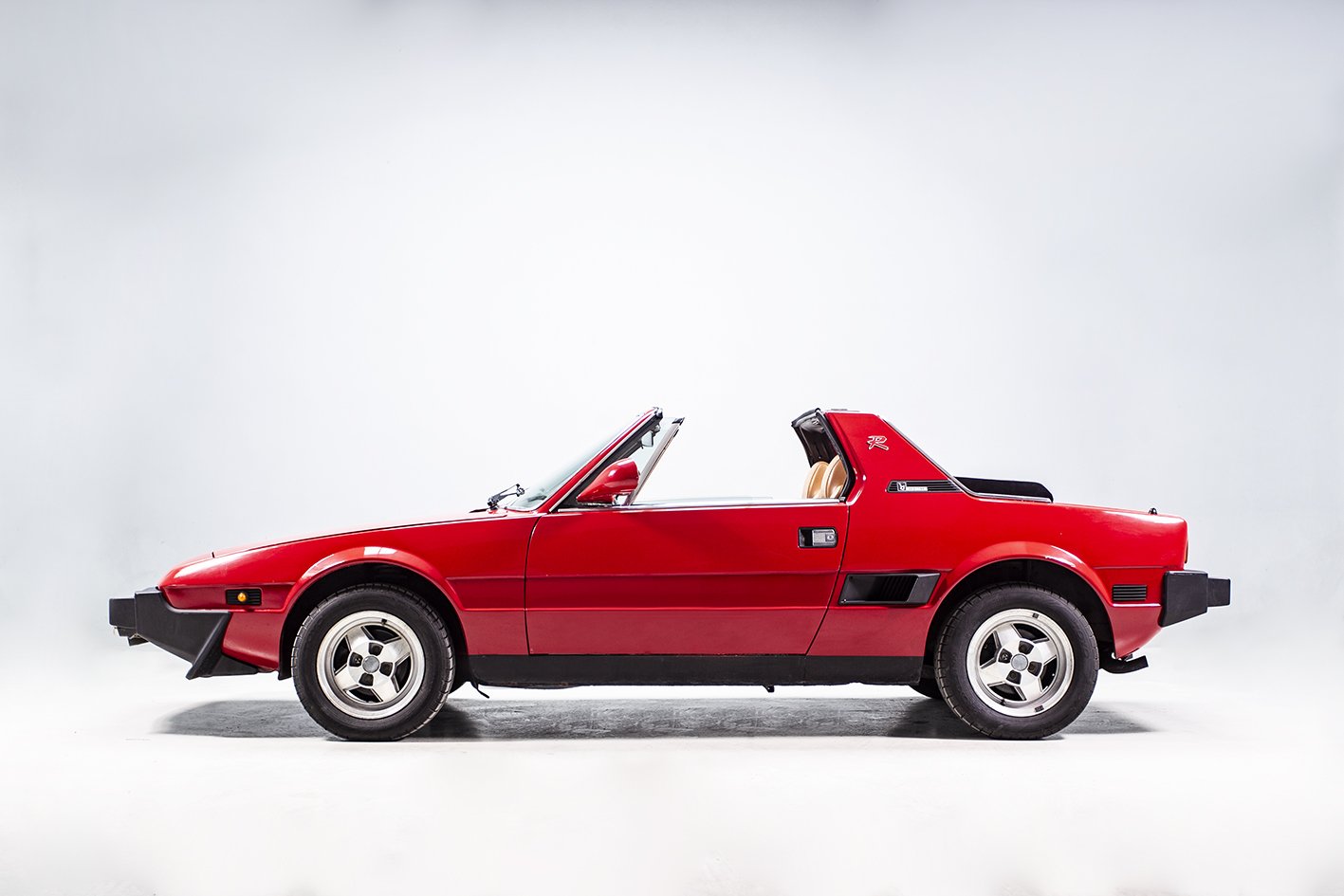
Neither Coupé nor Spider: Italy and the Targa Roof
A deep dive into Italy’s decades-long exploration of the targa roof—from early post-war experiments to Ferrari and Lamborghini icons—revealing how Italian designers created a third way between coupé and spider.
Read story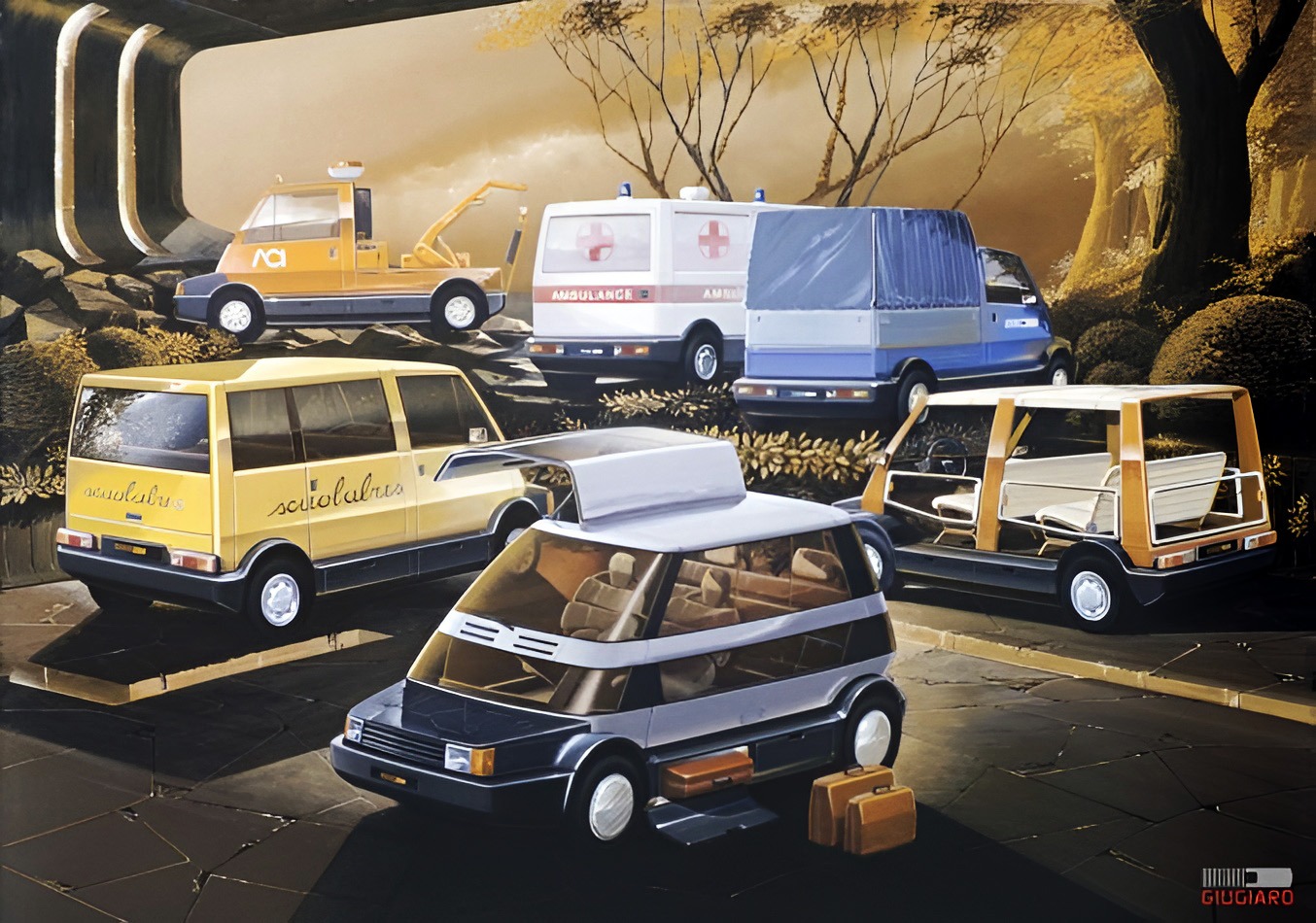
Italian Vision of the MPV: The Monovolume Concept
Long before MPVs filled suburban driveways, Italian designers were shaping the monovolume with prototypes that ranged from pragmatic to outright outrageous. Their work rewrote how space, style, and function could fit under…
Read story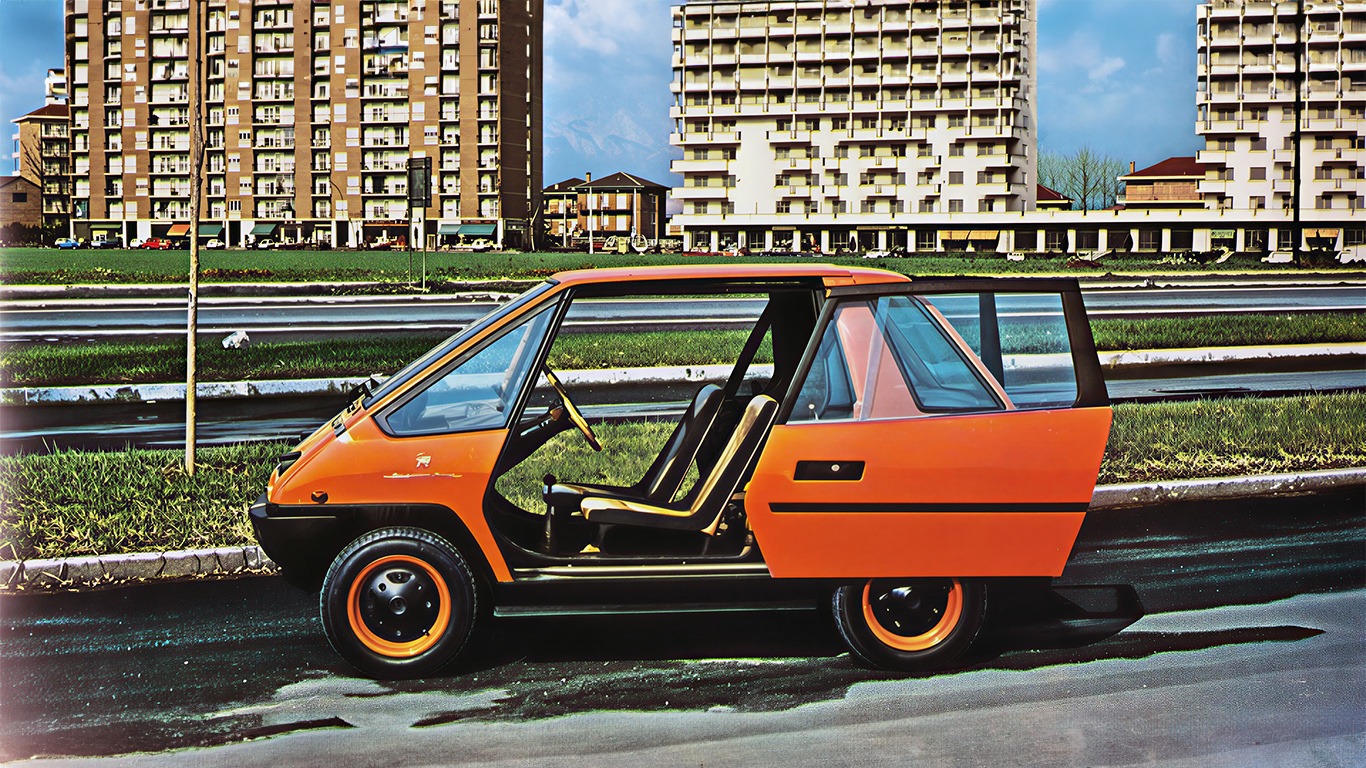
Italian Coachbuilt City Car Concepts: From Microcars to Urban EVs
How did Italy’s famed coachbuilders go from designing Ferraris to dreaming up tiny electric runabouts? From the quirky Tsé-Tsé to Pininfarina’s visionary Nido, discover how city cars became a proving ground for…
Read story
The Forward Look: When Ghia’s Artistry Met Exner’s Vision
When Italian craftsmanship met Detroit ambition, Chrysler found its soul. The Ghia–Exner partnership sparked the Forward Look—an era of fins, flair, and fearless design that changed American cars forever.
Read story
THE CONVERSATION
Comments 0
Share a memory, a period photograph or a documented detail about this story.