
Italian Coachbuilt City Car Concepts: From Microcars to Urban EVs
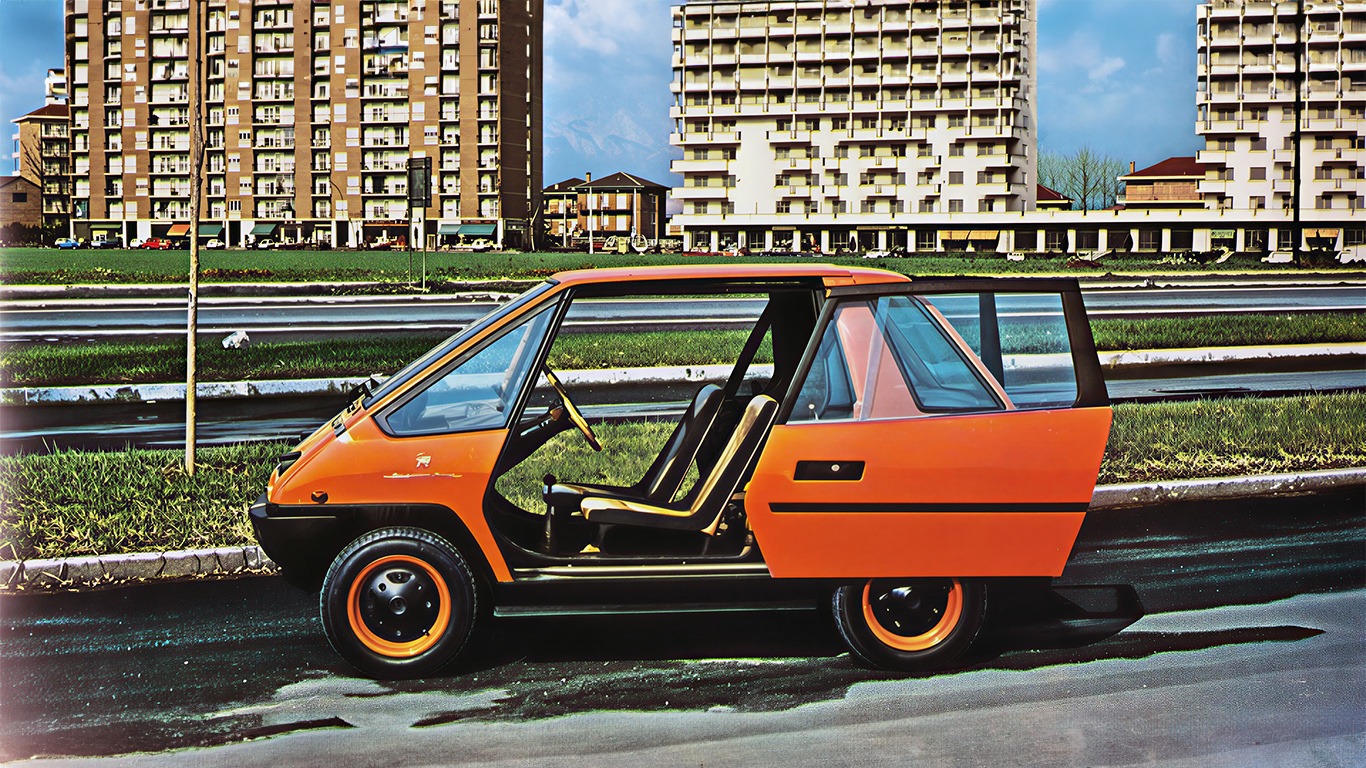
Italian coachbuilders have a rich history of crafting innovative city car concepts designed for narrow streets and crowded urban centers. From the 1960s onward, small Italian design firms and major carrozzerie alike experimented with ultra-compact vehicles that addressed emerging needs: maneuverability in tight spaces, fuel efficiency during oil crises, and low emissions for a cleaner environment. These concept cars were often ahead of their time, introducing features and ideas that would only become mainstream decades later. Below, we explore a timeline of visionary Italian city car concepts – each a response to the challenges of its era – and the lasting impact these experimental vehicles have had on urban mobility.
Moretti Elettrovettura – Wartime Ingenuity and One of Italy’s Earliest Electric Vehicles
Long before electric city cars became conceptual showpieces or eco-mobility experiments, Italy saw one of the world’s earliest practical EVs emerge under the pressures of World War II. In 1944, facing extreme gasoline shortages, Moretti—already known for clever small-vehicle engineering—developed the Elettrovettura, a compact electric minivan designed to carry up to seven passengers. Far from a futuristic prototype, it was a genuine solution to a wartime crisis, proving that electric mobility could serve both commercial and public needs decades ahead of its time.
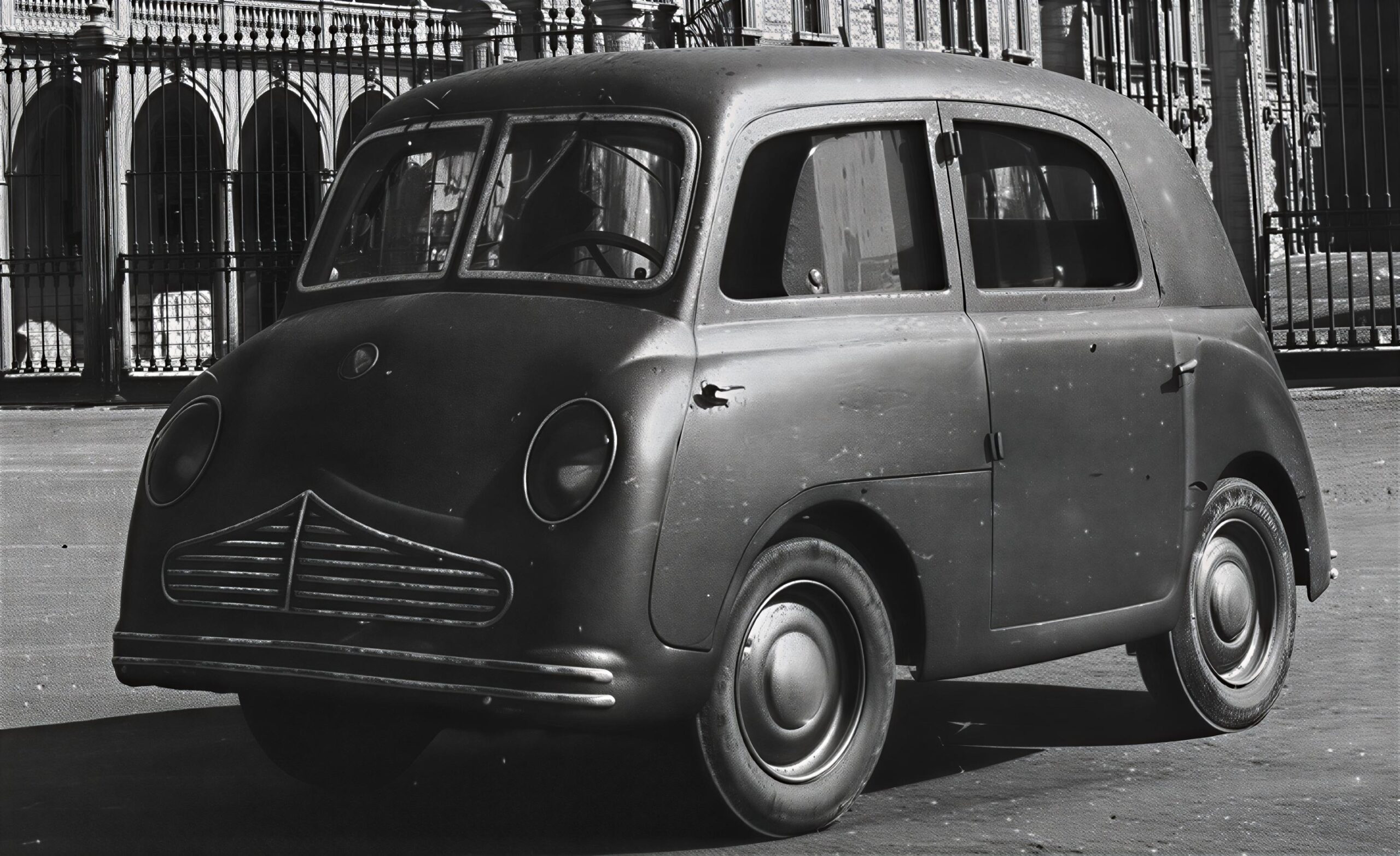
Moretti’s electric venture actually began with the Elettrocarro, a robust 30-quintal (≈3000 kg) electric truck created to keep goods moving while fuel rationing paralyzed conventional transport. Using the same motor and basic electrical architecture, Moretti then created the Elettrovettura, a small people-carrier meant for urban public transport. Compact, boxy, and highly space-efficient, it provided room for seven passengers—an impressive achievement for a 1940s EV—and offered silent, emission-free operation at a moment when gasoline was nearly unobtainable.
Although only a limited number were built and no known examples survive today, the Elettrovettura remains one of the most historically important early electric vehicles in Italy. Designed by Pietro Frua, it stands as a remarkable precursor to the electric microcars and city EVs that Italian coachbuilders would revisit decades later. The Elettrovettura shows that the roots of Italian electric mobility stretch far deeper than the concepts of the 1970s—back to a moment when necessity drove innovation, and electricity kept cities moving.Long before electric city cars became conceptual showpieces or eco-mobility experiments, Italy saw one of the world’s earliest practical EVs emerge under the pressures of World War II. In 1944, facing extreme gasoline shortages, Moretti—already known for clever small-vehicle engineering—developed the Elettrovettura, a compact electric minivan designed to carry up to seven passengers. Far from a futuristic prototype, it was a genuine solution to a wartime crisis, proving that electric mobility could serve both commercial and public needs decades ahead of its time.
Following the inventive wartime electric solutions of the 1940s, the 1950s marked a pause in Italian experimentation with radical city-car design. Italy’s recovering automotive industry focused on mass mobility rather than innovation, and the market’s needs were met primarily by Fiat’s new generation of affordable, efficient small cars—most notably the Fiat 500 (1957) and Fiat 600 (1955). These models democratized personal transportation and became icons of postwar Italy, but they also meant that coachbuilders had little incentive to pursue unconventional microcars or electric vehicles during this period. As a result, the 1950s saw few, if any, conceptual explorations of ultra-compact or alternative-fuel city cars, setting the stage for the creative resurgence that would erupt in the 1960s.
Pioneering Micro City Cars of the 1960s
The Sibona-Basano Tsé-Tsé microcar on display at the 1964 Turin Motor Show – a tiny two-seater designed for extreme maneuverability. The Tsé-Tsé was an early example of Italian creativity applied to urban transport. Built by the small coachbuilder Sibona-Basano, it debuted in 1964 with a 500cc air-cooled engine and an ultra-compact fiberglass body. Its most novel feature was an ability to pivot within its own length, thanks to an unconventional steering geometry – a practical boon for parking in tight city spaces. Entering this bubble-like car was equally unusual: the entire front section (windshield and roof) swung forward as a single door, giving access to the minimalistic cabin. Though only a one-off prototype, the Tsé-Tsé captured the experimental spirit of the 1960s and showed how even the tiniest vehicle could offer innovative solutions for city driving.
Another notable 1960s experiment was the OSI Daf City car, revealed in 1966. Designed by Sergio Sartorelli on a Daf 44 chassis, this concept explored creative packaging to ease urban life. It featured an asymmetric door layout: on the left side a sliding door eased entry in tight spots, while on the right side a rear-hinged suicide door opened in the opposite direction. This mix of door types was forward-thinking for its time and aimed squarely at city usability. The OSI City Car’s forward-looking design – combining practicality with a dash of futurism – can still be appreciated today at the DAF Museum in Eindhoven, where the sole prototype is preserved. It stands as a reminder of the 1960s willingness to break convention in pursuit of better urban mobility.
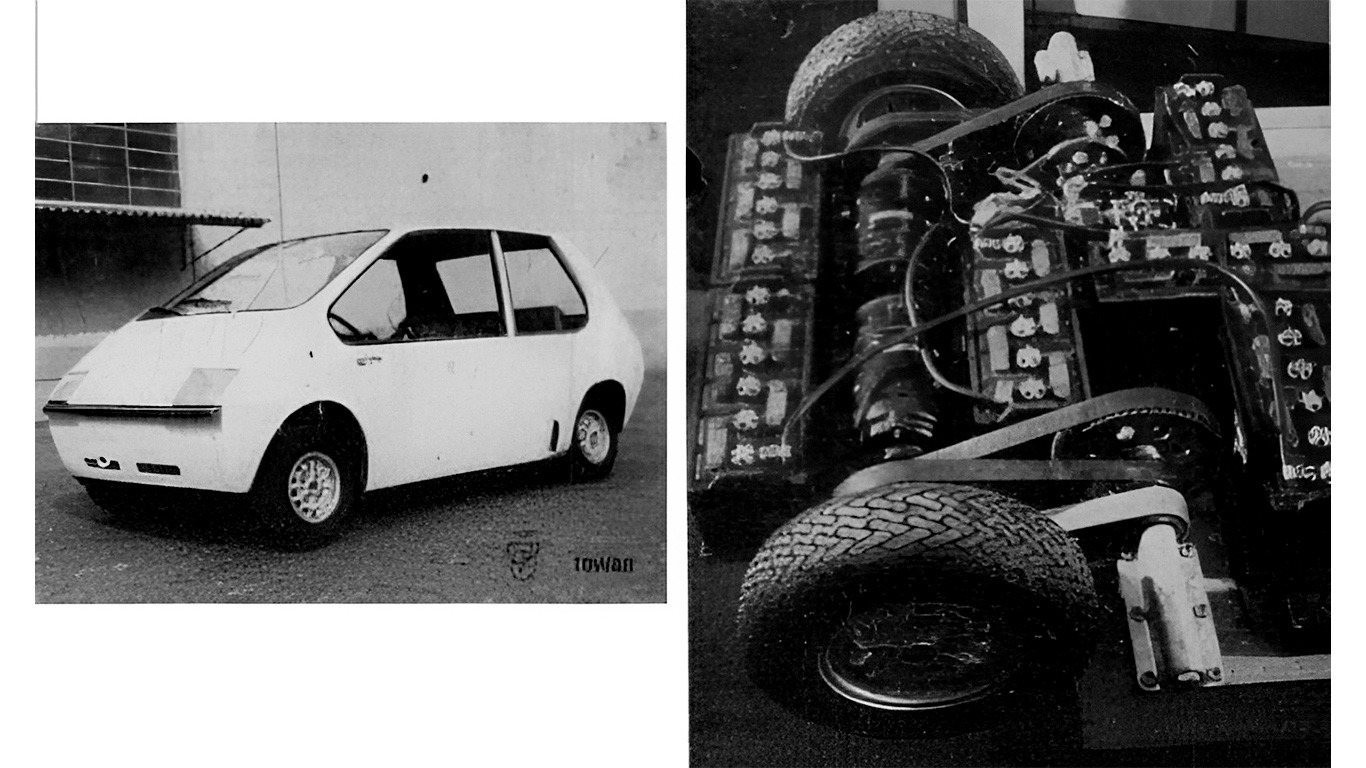
By 1967, Italian coachbuilders were even anticipating the electric city car. That year, Carrozzeria Ghia built the De Tomaso Rowan, a compact battery-powered supermini styled by a young Giorgetto Giugiaro. Though it looked like a petite family hatchback, the Rowan was years ahead of its time – an electric city concept in an era dominated by gasoline.
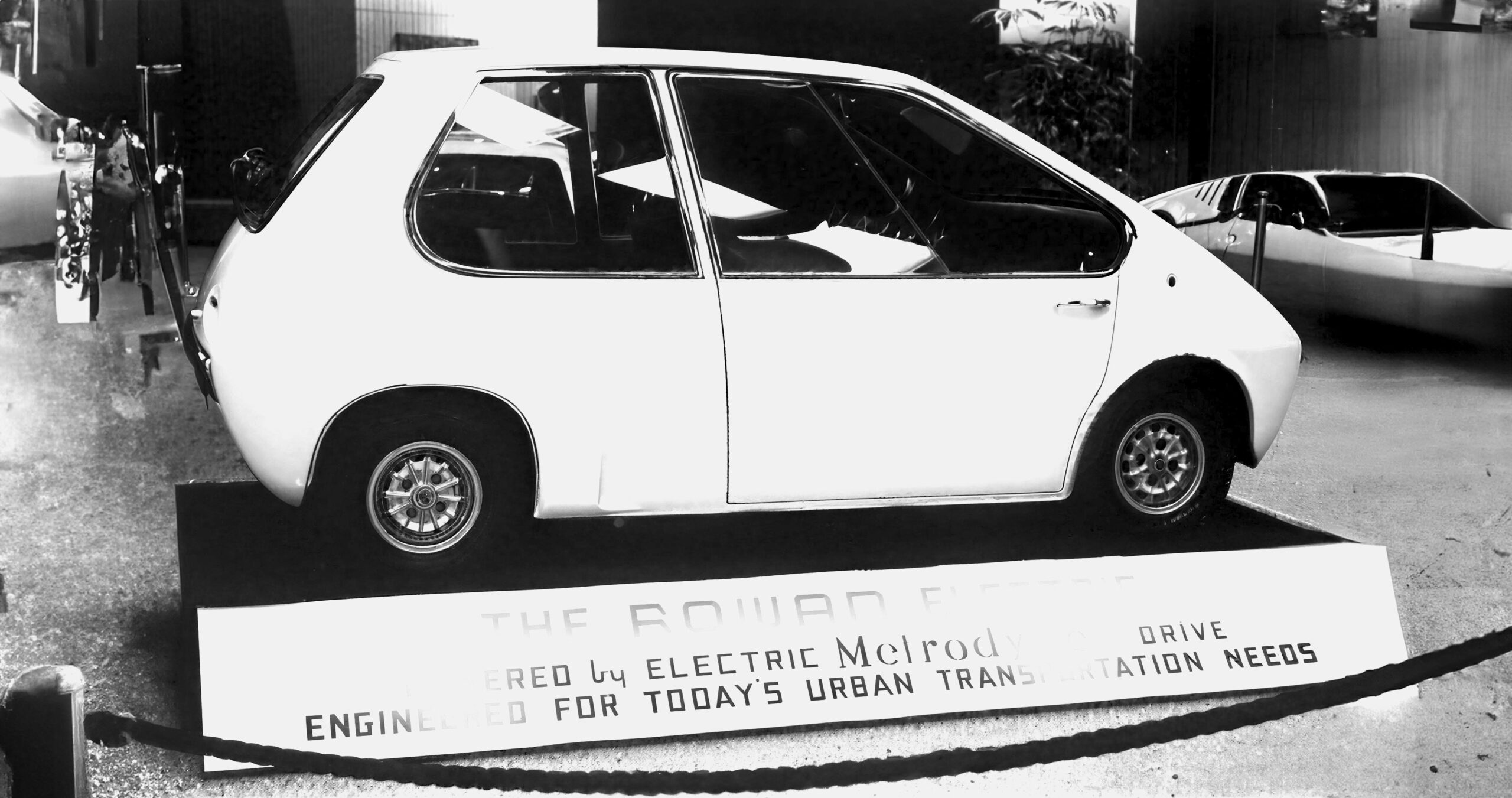
It seated up to five despite its small size, and Giugiaro’s sleek design (clean lines, curved surfaces) gave it a distinctly modern appearance. Each rear wheel was reportedly driven by its own electric motor, and the car had a claimed range on par with later EVs of the 2000s. The Rowan’s white-silver body and red leather interior turned heads, but its true significance was proving that zero-emission urban cars were technically feasible. In hindsight, this one-off concept foreshadowed the industry’s much later embrace of electric vehicles.
Before Italdesign became a design empire, one of Giugiaro’s first sketches out of the new studio was the 1969 Suzuki Microutilitaria—a tiny city car that looked like it had slipped through a wormhole from the future. Building on ideas he’d played with in the Rowan Elettrica, Giugiaro pushed the one-box layout even further, giving the Microutilitaria a slick, almost seamless profile. The slanted B-pillar and stretched side windows made it look fast even when it was parked, and the massive glass area gave it a futuristic vibe most cars wouldn’t attempt for another decade.
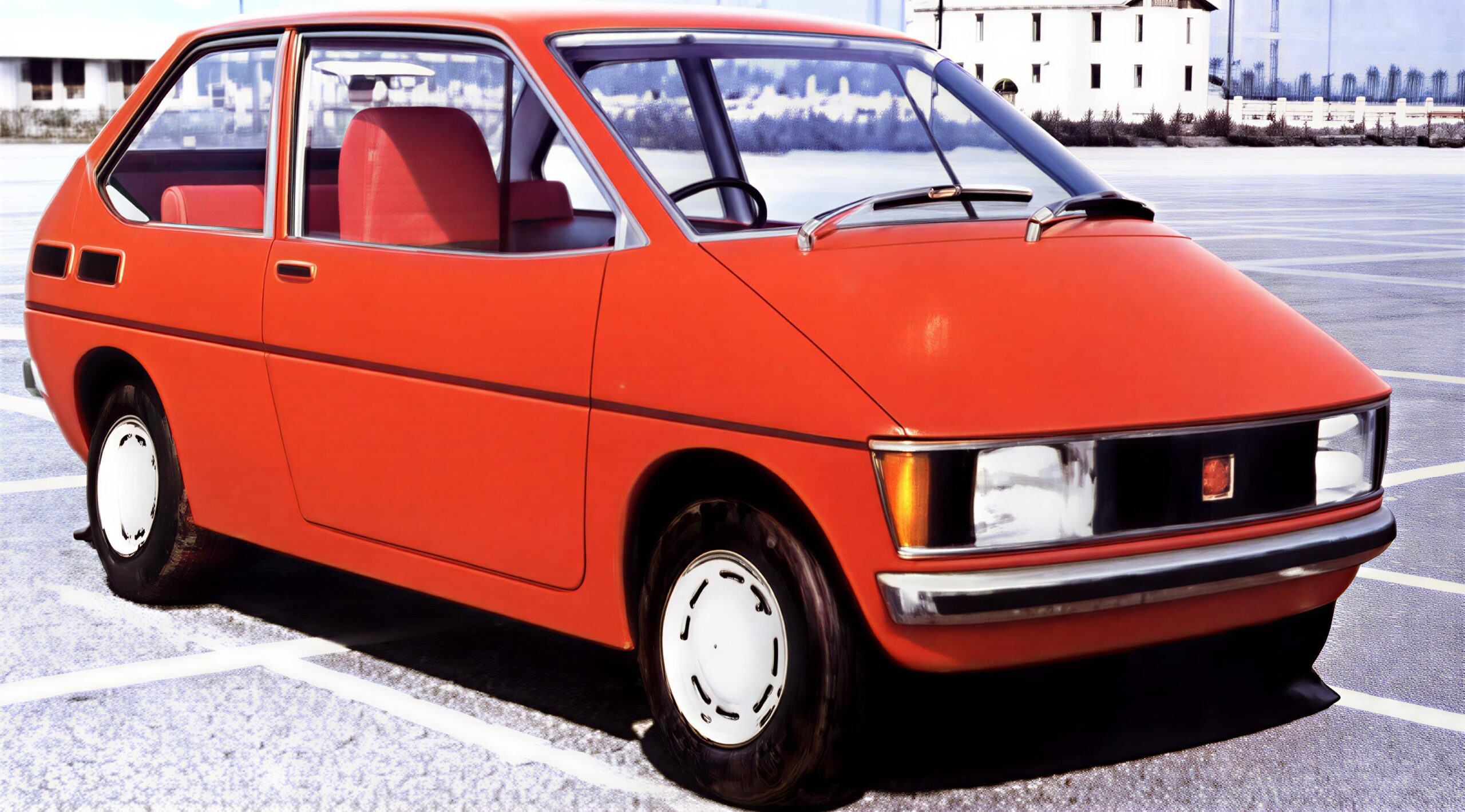
Suzuki loved the creativity but got cold feet—this thing was simply too modern for the time. Even so, the Microutilitaria didn’t go to waste: bits of its design DNA later surfaced in the 1971 Suzuki Fronte Coupé, proving the concept was a few years too early rather than too weird. As early Italdesign projects go, this one showed exactly what Giugiaro was up to from the start: taking humble city cars and giving them the kind of bold, confident design normally reserved for exotica.
Shaping Urban Mobility in the Early 1970s
As cities grew more crowded and the first oil crisis loomed, Italian designers responded with new city car concepts around 1970. One standout was the Ghia City Car (1970), a tiny two-door hatchback that embodied the era’s concerns about congestion and fuel scarcity. At just 101 inches (2.57 m) long and 54 inches (1.37 m) wide, it was an impossibly compact 2+2 with room for four people and some luggage. Ghia engineers foresaw the coming energy crunch: the City Car’s rear-mounted 500cc engine was tuned for efficiency, intended to run at peak output constantly – a novel idea in a time before modern engine management.
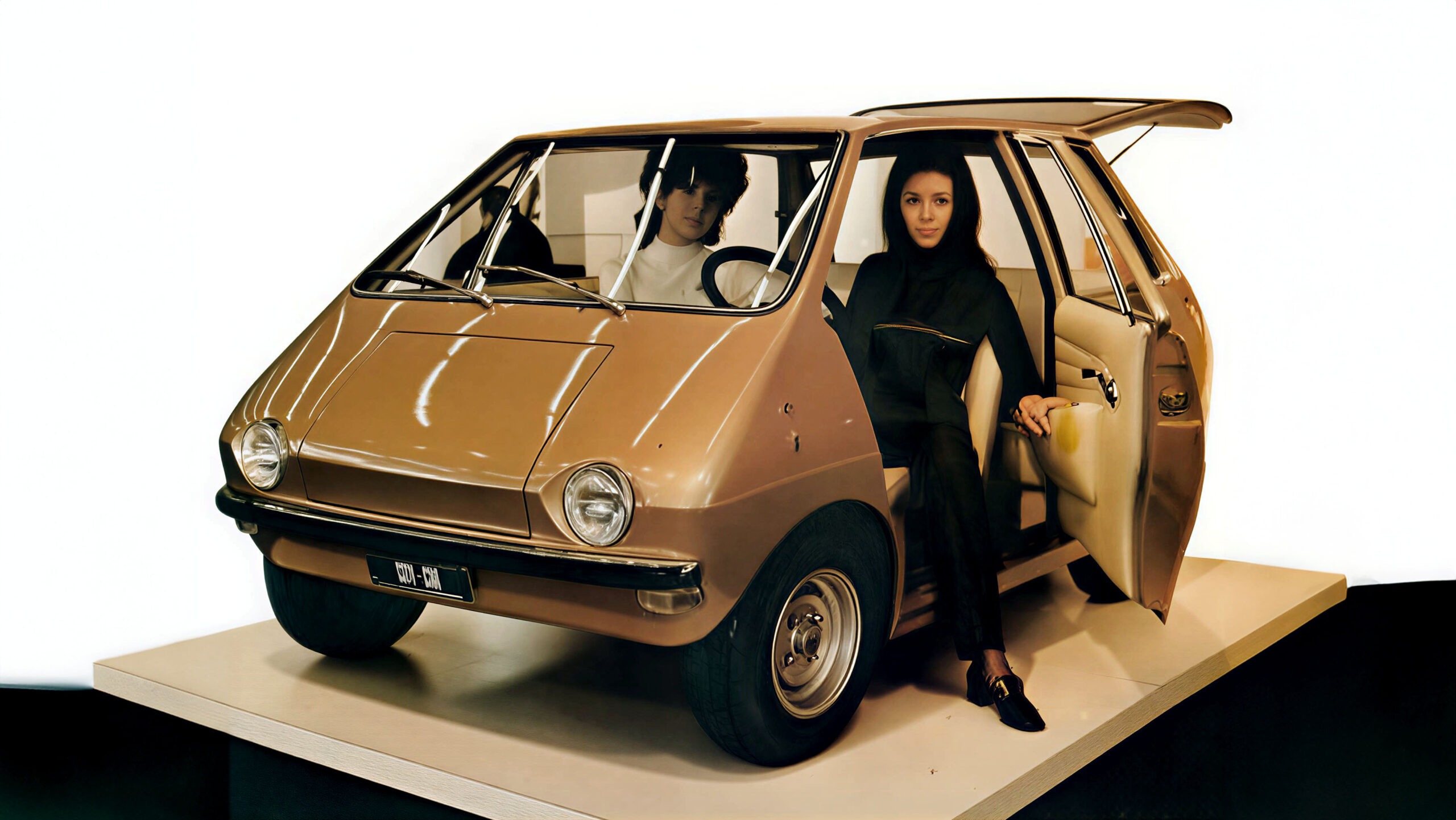
The car’s design maximized space (nearly a half-ton payload of passengers and bags) and featured rear-hinged “suicide” doors for easy access in tight parking. When Ford’s J Mays reflected on such experiments decades later, he noted these 1970s city cars “were ten to twenty years ahead of their time”, directly inspiring successful modern city cars like the Smart and Fiat’s mini models. Indeed, the Ghia City Car’s influence is evident in today’s generation of micro-cars, which follow its blueprint of extreme compactness coupled with practical usability.
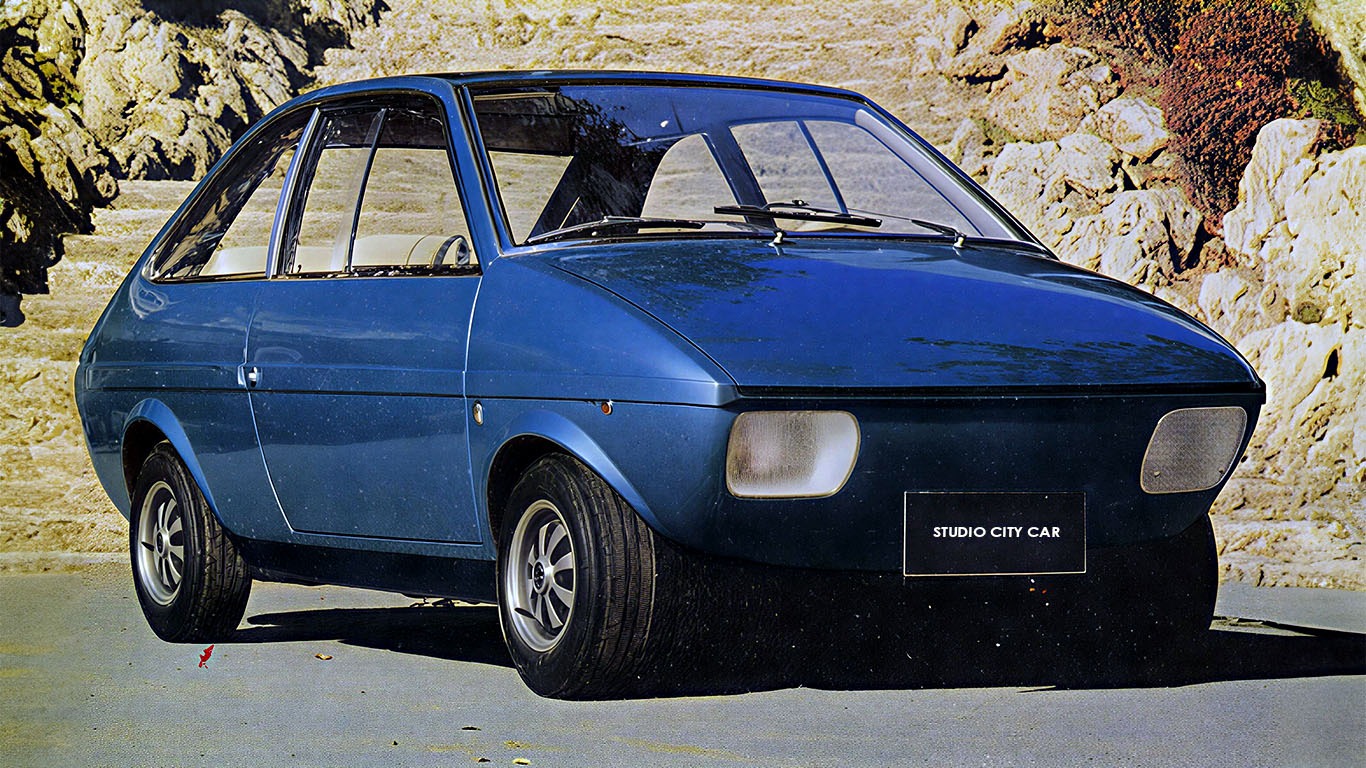
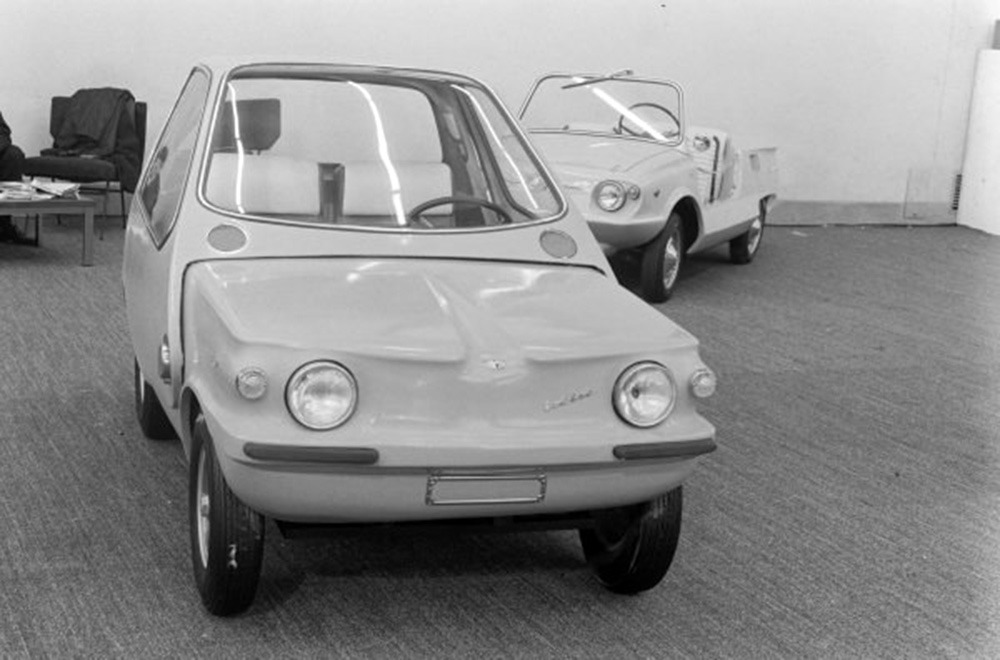
Unveiled at the same 1970 Turin Motor Show was the De Tomaso City Car by Vignale – another Italian vision of the ideal city runabout. This concept embraced a flexible interior to do more with less space. It had a 2+2 seating layout with small foldable rear seats, allowing the tiny hatchback to switch between carrying four people or extra cargo. With an opening rear tailgate and a remarkably small footprint, the Vignale City Car was optimized for grocery runs and tight parking alike. Notably, it was displayed without a working engine; designers suggested power options from 400cc to 700cc, underscoring an emphasis on fuel efficiency for urban use. In essence, Vignale’s approach was modularity – anticipating drivers’ needs to alternate between people-moving and load-carrying in a city vehicle. Although it remained a concept, it contributed to a growing theme among Italian coachbuilders: maximizing practicality in minimal space.
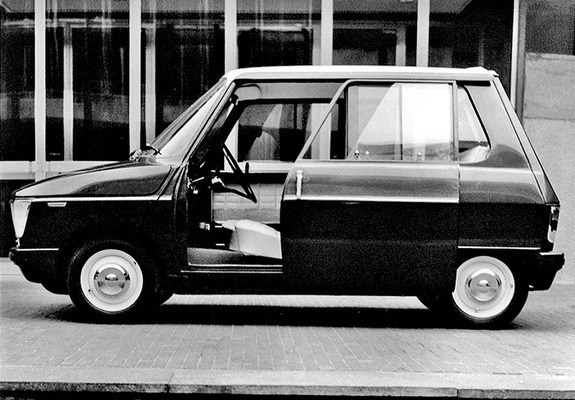
Around the mid-1970s, famed designer Giovanni Michelotti added his take with the Fiat 126 “Città” prototype. Using the humble Fiat 126 as a base, Michelotti reimagined it for urban duty. The overhangs were trimmed to almost nothing, dramatically improving maneuverability in crowded streets.
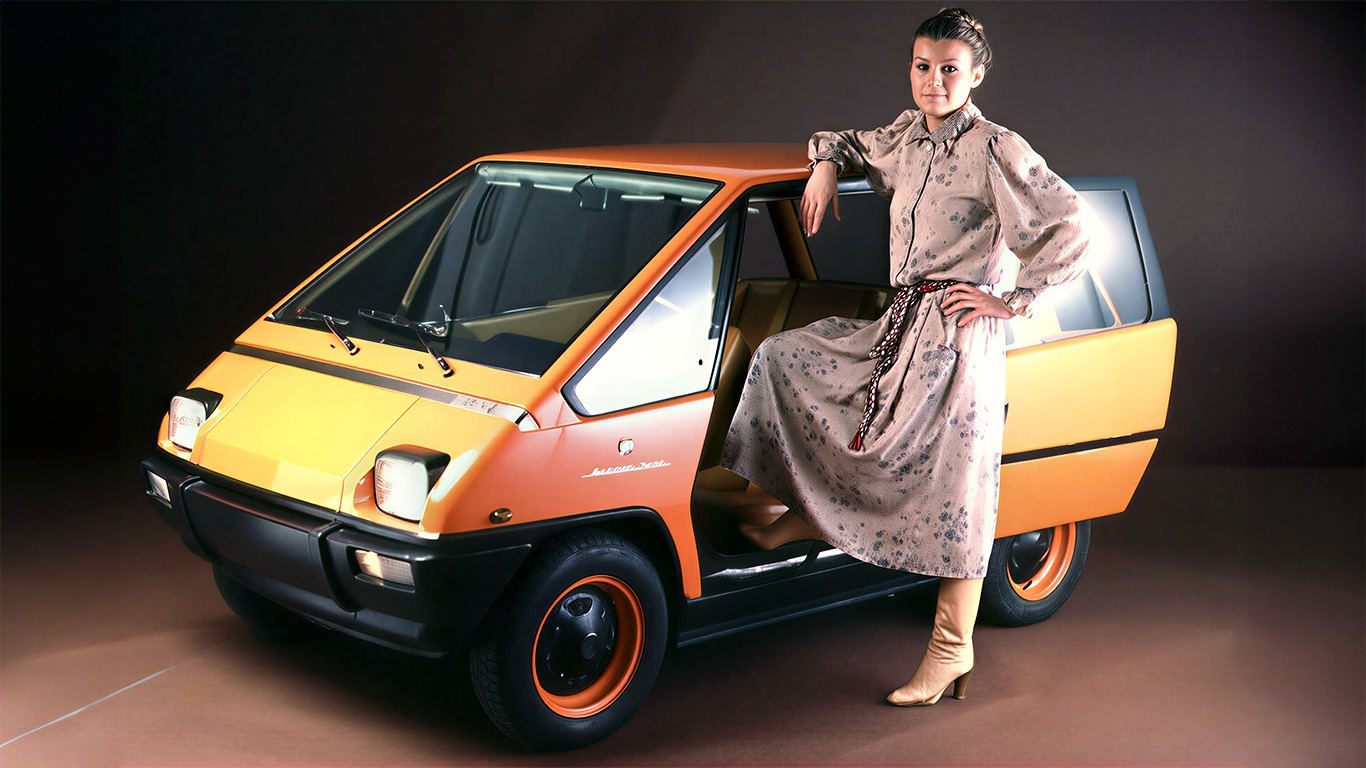
To ease getting in and out in tight spots, the 126 Città featured sliding doors – highly unusual for such a small car at the time. These engineering choices presaged features we now see on modern city cars (for instance, sliding doors reappearing on compact MPVs years later). However, Michelotti’s prototype also taught a practical lesson: all the added mechanisms and modifications made it heavier than the stock 126. The extra weight blunted its performance and efficiency, which Michelotti acknowledged would require lightweight materials to resolve. Ultimately, the 126 Città did not go into production, but it remains a fascinating “what-if” – illustrating how Italy’s design houses were trying to solve urban mobility problems long before such ideas became mainstream.
While many Italian coachbuilders in the 1970s focused on prototypes and conceptual urban runabouts, one firm took the bold step of putting an electric city car into actual production. Between 1974 and 1976, Zagato — renowned for sleek sports cars like the Alfa Romeo TZ and Aston Martin DB4 GT Zagato — introduced the Zele, a radically different departure from its performance-oriented heritage. Compact, cubic, and unapologetically functional, the Zagato Zele was built around a fiberglass body mounted on Fiat 500/124 mechanical components, a choice that ensured durability and serviceability. More importantly, it was fully electric, offered in three power levels (1000, 1500, and 2000 watts), with a driving range of roughly 80 km — enough for daily urban commuting at a time when EVs were considered fringe experiments.
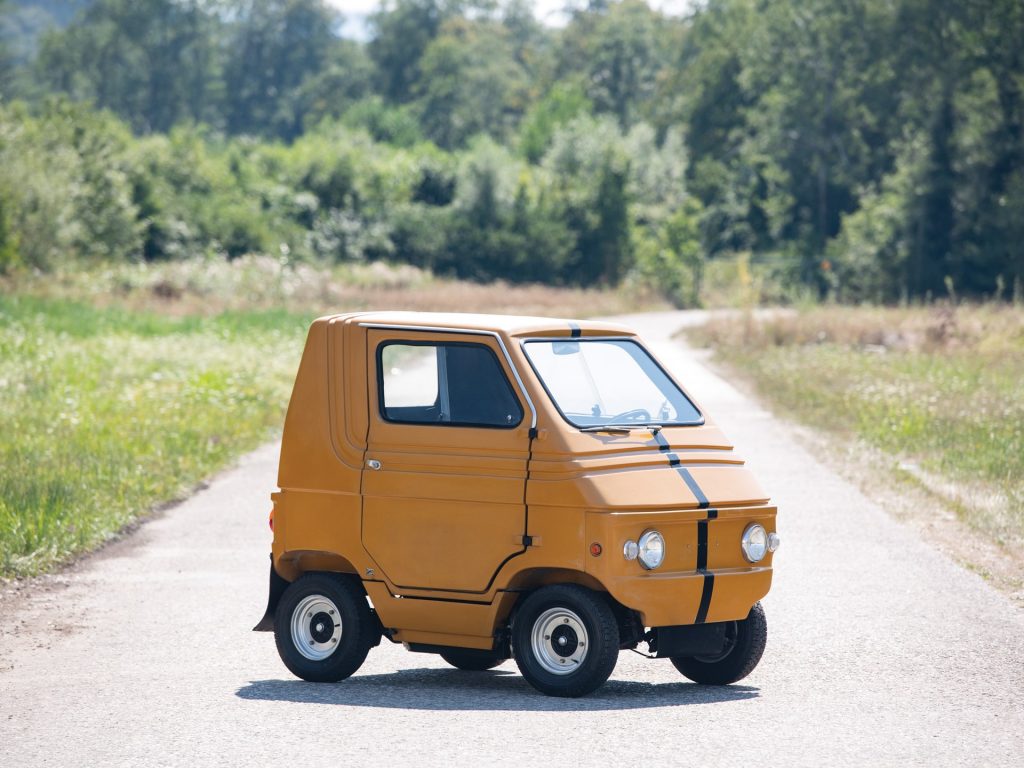
The Zele featured a unique four-position speed selector combined with a two-stage accelerator, yielding six forward speeds and two reverse. Top speed ranged from 40–48 km/h depending on version, with the 2000-watt model offering a “boost” mode for slightly higher cruising velocity. Though modest in performance, it excelled in practicality: easy to park, inexpensive to operate, and available in a vibrant palette of seven colors. About 500 examples were produced, including U.S.-market versions sold as the Elcar, and even an extended four-seat prototype called the Elcar Wagonette. Though quirky in appearance and limited in speed, the Zele stands as one of the world’s earliest production electric microcars — a real, purchasable EV decades before mainstream manufacturers embraced electrification. It represents a remarkable moment when an Italian design house known for exotic sports cars chose to explore the future of urban mobility through simplicity, efficiency, and zero emissions.
Narrow Dimensions and New Ideas in the 1980s
If the 1970s were about coping with crisis, the 1980s saw Italian designers continue to experiment, even as cheap fuel returned. A notable example is the Ford Trio concept (1983) built by Ghia’s Turin studio. The Trio was a response to a provocative challenge: how narrow and light could a practical city car be? Ghia’s answer was an ultra-slim three-seater with seats arranged in an arrowhead layout – one seat at the front center, and two behind flanking it, like a tight triangle. Incredibly, the car was only 53 inches (1.35 m) wide, not much broader than a motorcycle, which made threading through traffic a breeze.
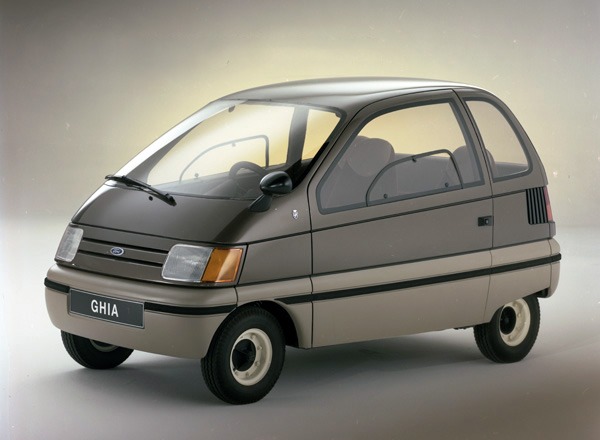
To achieve this feat without sacrificing stability, the Trio used advanced materials for rigidity and lightness: a floor made of a honeycomb sandwich of fiberglass and Kevlar, and seats built from aluminum and fiberglass composites. Power came from a tiny 250cc two-stroke twin engine mounted at the rear, driving the wheels via a CVT belt drive. This unorthodox powertrain kept the car’s length short and weight down. The Ghia Ford Trio never progressed beyond the auto show, but its daring engineering – mixing composite construction with micro-engine tech – left a lasting impression. It previewed ideas (like centrally seated drivers and ultralight urban vehicles) that would re-emerge in the decades to follow as designers revisited minimalism for city transport.
Reinventing the City Car in the 1990s
By the early 1990s, environmental awareness and crowded cities were back in focus, spurring a new wave of Italian concept cars aimed at green, space-efficient motoring. Pininfarina led this charge with its Ethos project – a trio of concepts (1992–1994) exploring how to build cleaner, smarter city cars without losing Italian style. The culmination was the Ethos 3 (1994), an ingenious six-seater micro-van that tried to prove a tiny footprint could still carry a family.
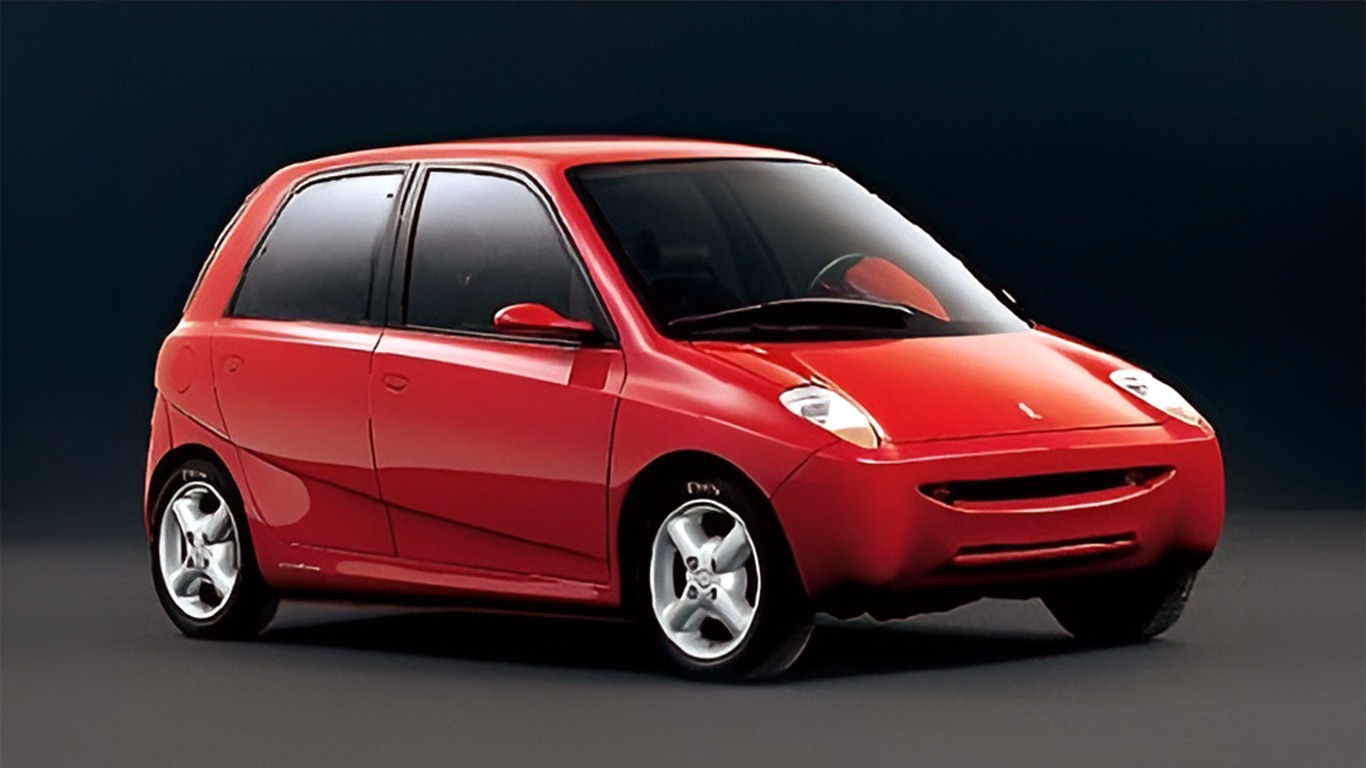
Remarkably, the Ethos 3 was only about 3.2 m long (not much more than a Fiat Cinquecento), yet it was as wide as a regular car to accommodate two rows of three seats inside. The seating was slightly staggered, with middle seats offset to give shoulder room. Even more innovative was the sliding driver’s seat: mounted on transverse rails, the steering position could shift left or right (or center) so the car could be driven from either side of the cabin. This feature addressed both ergonomics and practicality – it allowed one basic design to serve left-hand and right-hand drive markets, and it also gave the driver freedom to sit centrally for a commanding view. Under the hood, the Ethos 3 ran a high-efficiency 1.2-liter Orbital 3-cylinder two-stroke engine, a lightweight powerplant that helped keep the car’s weight to around 780 kg. Thanks to its aluminum-intensive construction and frugal engine, Ethos 3 promised very low fuel consumption for the time. Pininfarina’s Ethos series (which also included a sporty roadster and a coupe) demonstrated that eco-friendly cars could be practical and even fun – years before “green” cars became a major industry theme.
Building on the Ethos learnings, Pininfarina in 1996 debuted the Eta Beta, a functional hybrid mini-MPV prototype created with Italy’s National Research Council (CNR). The oddly named “Eta Beta” – after a futuristic comic character – was the result of a 5-year government-funded research program into sustainable urban vehicles. Compact yet highly flexible, the Eta Beta featured a sliding rear body section that could extend the car’s length from 3.12 m to about 3.32 m as needed. In short mode it was easier to park, while in extended mode it provided extra cargo space or even a tiny third-row jump seat.
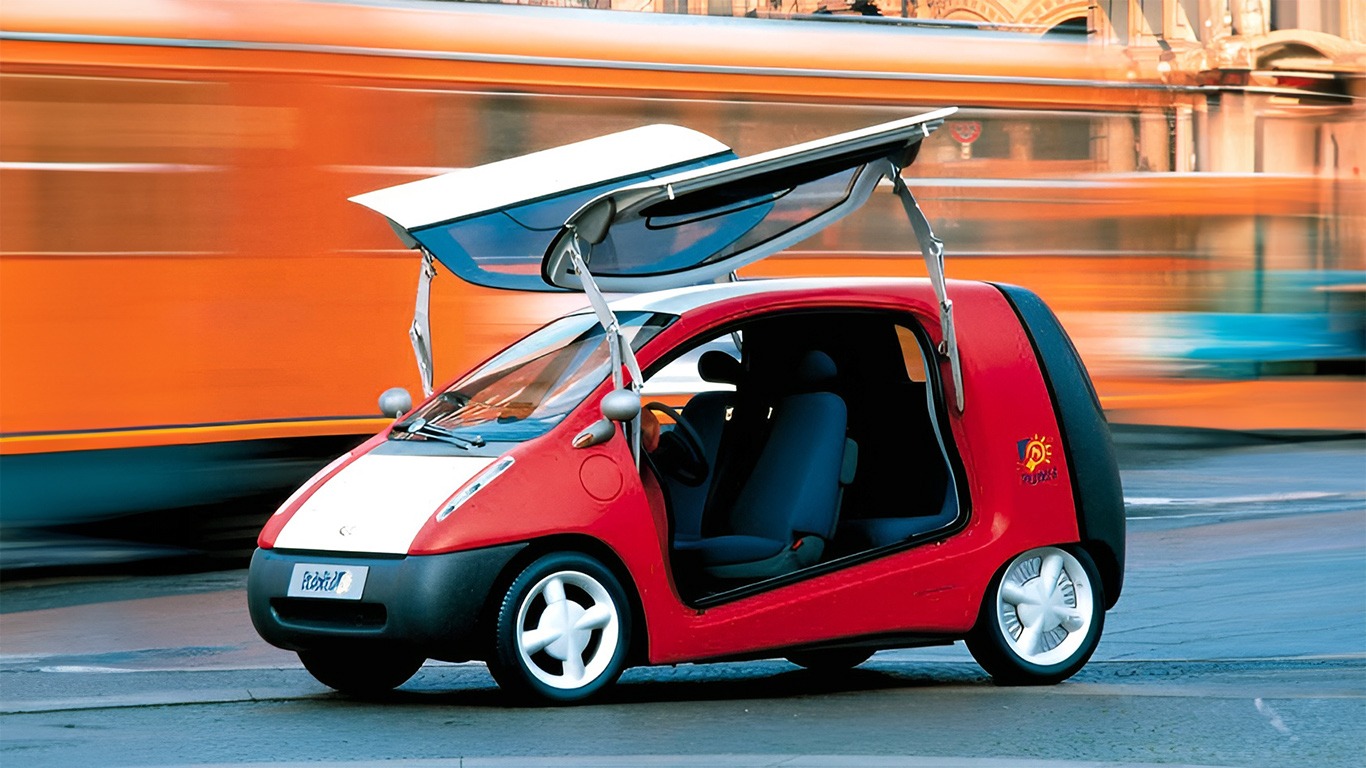
Inside, it seated four adults comfortably (or two with lots of luggage), embodying the multi-purpose city car idea. Technologically, the Eta Beta was cutting-edge: it used a hybrid drivetrain with a small 1.1L Fiat FIRE engine driving the front wheels and twin electric motors in the rear wheel hubs. These axial flux in-wheel motors, co-developed with a university team, eliminated the need for a conventional transmission and saved space. The chassis was a lightweight aluminum spaceframe with extruded sections and composite panels, keeping weight low despite the added complexity. Unveiled at the 1996 Turin Motor Show, Eta Beta proved that a research prototype could be fully operational and packed with innovation. While it was never commercialized, it served as a testbed for ideas (like adjustable vehicle length and hybrid systems) that would become highly relevant in the 2000s.
In 1999, Pininfarina pushed urban car design to an extreme with the Metrocubo (“cubic meter”) concept. Shown at the Frankfurt Motor Show, the Metrocubo was aptly named – it looked like a bright blue cube on wheels, just 2.5 m long. Yet inside this tiny box, Pininfarina managed to squeeze seating for four adults (even five in a pinch) thanks to a tall, extra-wide body (1.78 m, about as wide as a Fiat Multipla) that allowed a bench seat for three across the front. The interior was completely modular: except for the driver’s position, all other seats could slide on floor rails or be removed entirely, transforming the car from people-carrier to cargo van as needed. Access was facilitated by an asymmetrical door layout – on the driver’s side the door slid backward (a space-saving “gate” for tight parking), while the passenger side had a conventional hinged door. In back, a two-piece tailgate (half lifting up, half dropping down) allowed loading even in constrained spaces. The Metrocubo was also ahead in propulsion: it used a hybrid powertrain where a rear-mounted Lombardini two-cylinder engine acted purely as a generator to charge the batteries, which in turn drove an electric motor for the wheels.
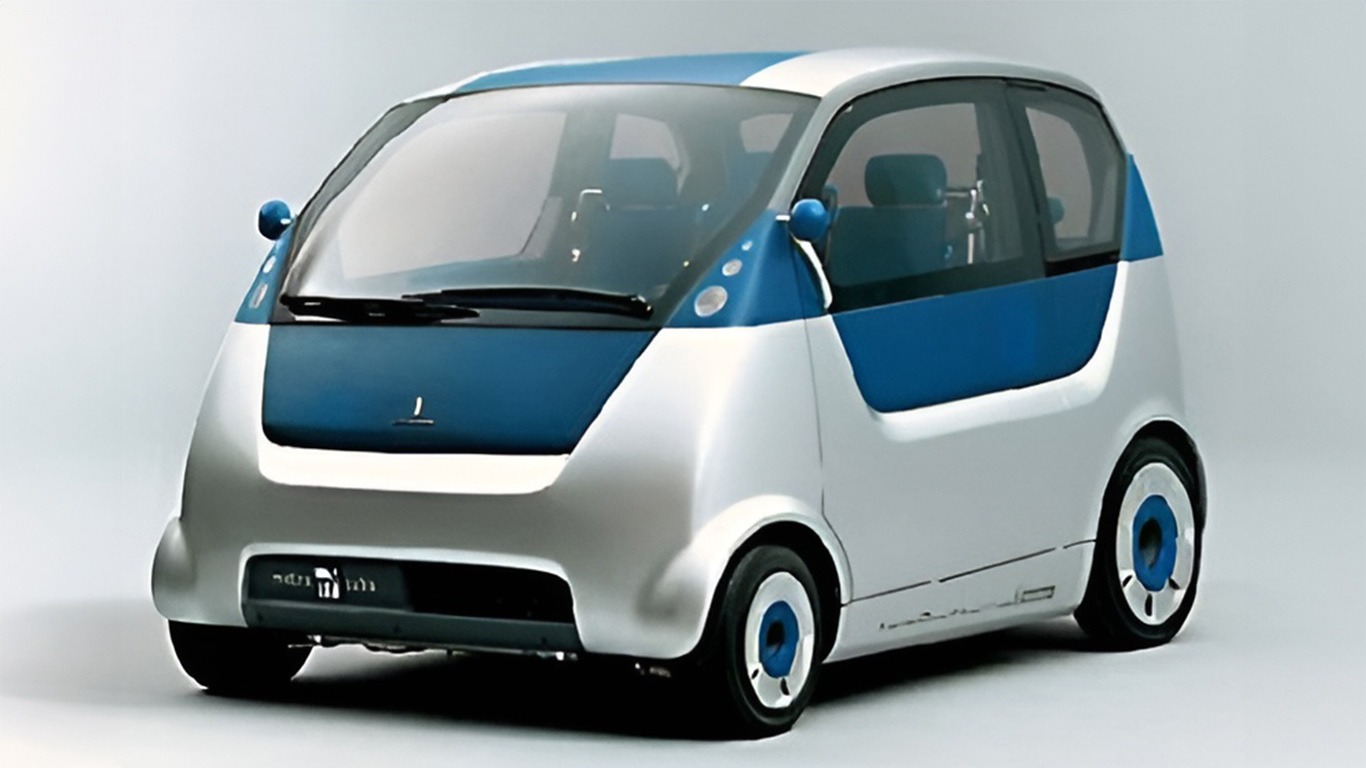
In essence it was a range-extended EV: on battery alone it could go about 40 km with zero emissions, but with the generator running it had a theoretical range of up to 400 km on 10 liters of fuel. Uniquely, the Metrocubo’s tires were staggered in size – small 10-inch wheels in front for agility and larger ones in back for stability – visually indicating the car’s direction and optimizing handling for urban conditions. This concept charmed showgoers with its ultra-pragmatic yet playful design. As Pininfarina designer Ken Okuyama explained, “We wanted to offer a car that can serve the entire family when required, thus making a second, large car an option rather than a must”. In other words, Metrocubo aimed to be the only car a city family would need, packing versatility into a pint-sized footprint. While it remained a concept, the Metrocubo anticipated the next decade’s microcars and proved that thoughtful design could make a 1 cubic meter car feel much larger inside.
Safety and Sustainability in the 2000s
By the 2000s, Italian concept city cars began addressing two new priorities: safety in very small vehicles, and the shift to electric power. In 2004, Pininfarina unveiled the award-winning Nido concept, a tiny two-seat city car that treated safety like a sacred mission. (“Nido” means “nest” in Italian, reflecting its protective shell design.) Visually, it was a friendly, rounded microcar – almost toy-like – but underneath it introduced an ingenious safety architecture. The Nido’s chassis had a deformable front crash structure paired with a rigid passenger cell or “nest,” and the entire occupant cell was designed to slide backward along the chassis rails in a severe frontal impact. This effectively created a moving shock absorber: the front part would crumple, and the cabin would recoil to dissipate crash energy before it reached the occupants. Inside, the seats were part of this sled-like shell, and multiple honeycomb sections of varying density acted as energy absorbers between the cell and the chassis.
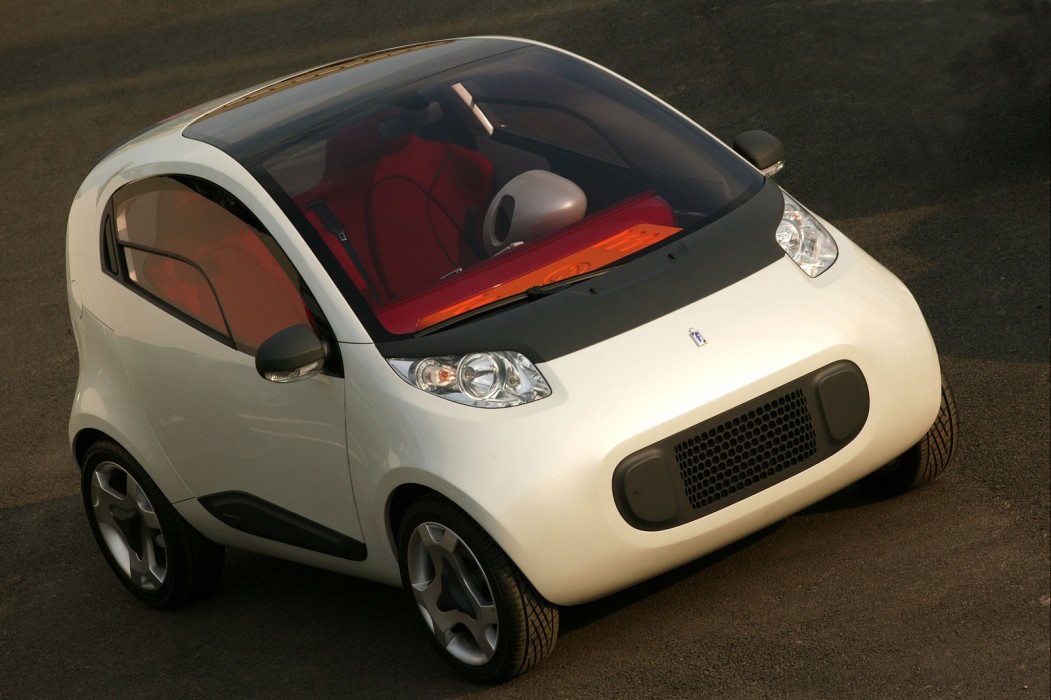
The result was a level of crash protection unprecedented in a car of such diminutive size. Pininfarina also gave thought to pedestrian safety – the nose of the Nido was covered in a soft energy-absorbing material, with headlights set high and a smooth, cushiony surface to mitigate injury in case of a collision with a person. Shown at the 2004 Paris Motor Show, the Nido was both a technical manifesto and a design statement: it proved that a microcar could cocoon its occupants like a rally car roll-cage, and still look chic and cheerful. The concept was so impressively executed it won the “Most Beautiful Car in the World” award in the prototype category and earned the prestigious ADI Compasso d’Oro design prize in 2008 for its groundbreaking approach. The Nido now resides in New York’s Museum of Modern Art as a piece of automotive art and innovation. Though never produced, it had a real influence – its ideas can be seen echoed in later production city cars (such as the smart Fortwo’s safety cell), underscoring Pininfarina’s role in advancing small-car safety.
Equally significant was the move toward electric propulsion in city cars, something Italian firms had experimented with for decades but which finally began reaching customers in the late 2000s. A milestone here was the Pininfarina-Bolloré Bluecar, introduced as a concept in 2008 and put into production by 2011. The Bluecar (also called the B0) was a compact 3-door hatchback jointly developed by Pininfarina and French battery company Bolloré – marking the first time Pininfarina went from concept to actual manufacturing of a car in significant numbers. At its heart was Bolloré’s proprietary Lithium Metal Polymer (LMP) battery, a 30 kWh pack paired with supercapacitors to boost power for acceleration and regenerative braking. This gave the Bluecar a real-world range of about 250 km in city driving – quite remarkable at the time – and a top speed around 120 km/h.
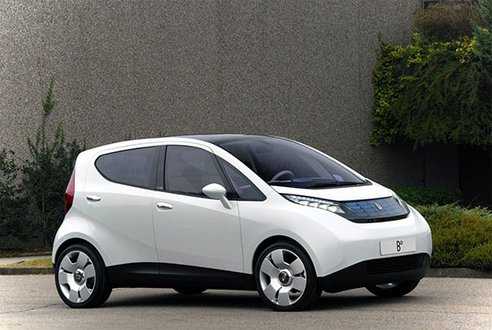
Importantly, the entire battery was housed under the floor, lowering the center of gravity and preserving interior space. After debuting the concept in Paris, Pininfarina and Bolloré launched the production version in Autolib’, an electric car-sharing program in Paris, in late 2011. The first 250 Bluecars on the road were not sold to individuals but made available to Parisians by the minute, pioneering the concept of large-scale car-sharing with EVs. Over the next few years, thousands of Bluecars could be seen quietly whisking around Paris – a tangible realization of ideas seeded by earlier Italian concepts like the Ecos and Metrocubo. The Bluecar’s success (it became France’s top-selling electric car in 2012) also validated Pininfarina’s gamble on electrification. It showed that with the right technology (the Bluecar’s batteries could even tolerate extreme temperatures and offered long lifespan) and a supportive infrastructure, electric city cars could truly work. In a very real sense, the Bluecar brought the Italian coachbuilder vision of an electric city runabout – first seen in prototypes like the 1978 Ecos – full circle to everyday users on city streets.
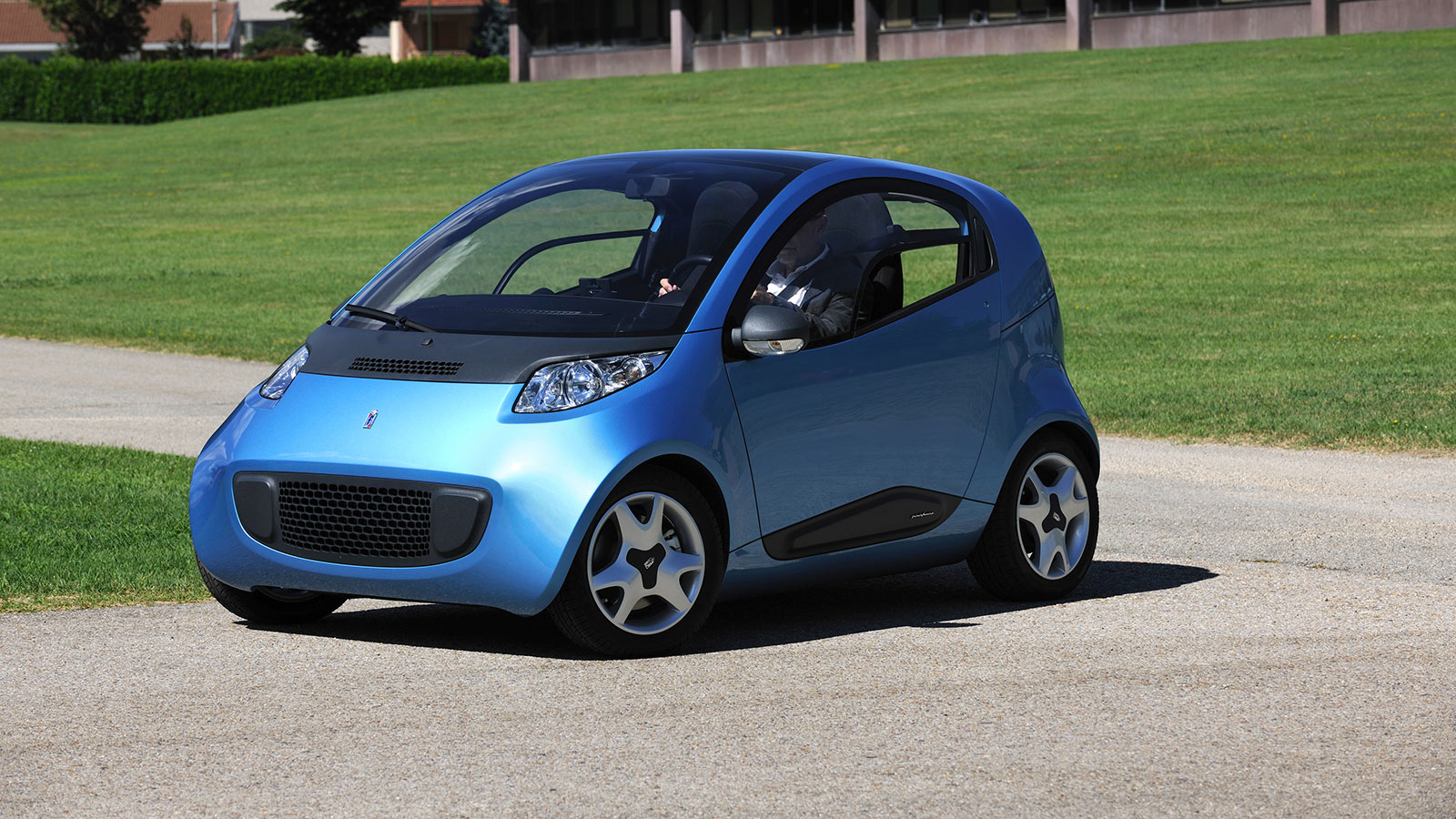
Even as the Bluecar rolled out, Pininfarina continued to dream up new solutions. In 2010, celebrating its 80th anniversary, the company revealed the Nido EV, an electric evolution of the Nido concept and a blueprint for a whole family of micro-EVs. The Nido EV prototype looked similar to the 2004 Nido on the outside, but underneath it was entirely re-engineered as a modular electric platform. It had a rear-mounted 60 kW electric motor powered by a Zebra Z5 sodium-nickel chloride battery (a type known for being fully recyclable and free of toxic materials). This gave the little two-seater a range of about 140 km per charge and a limited top speed of 120 km/h, with 0–60 km/h acceleration in a brisk 6.7 seconds. Crucially, the Nido EV was conceived as more than a single car – the idea was a flexible chassis that could spawn multiple variants: a slightly longer 2+2 city car, a small pickup, a van, etc., all using common components. Pininfarina built the Nido EV on a modular tubular steel frame (with plans for aluminum in production) that could easily be stretched or adapted to different body styles. In essence, it was an early take on the “skateboard” EV concept that many manufacturers would pursue later – a flat platform containing battery and motors, on which various bodies could be attached. Though the Nido EV program halted when Pininfarina faced financial troubles, it was a bold vision of scalable micro-mobility. Many of its concepts (like modular EV chassis and the focus on lightweight materials to offset battery weight) have since been embraced by the auto industry at large.
A Lasting Legacy in Urban Car Design
From the quirky Tsé-Tsé of 1964 to the high-tech Nido EV of 2010, Italian coachbuilders consistently charted new territory for the city car. These concept vehicles were far more than design indulgences – they were problem-solving experiments that addressed real issues of their times: congestion, parking, fuel economy, emissions, safety, and practicality. Several common threads emerge from this decades-long saga of innovation:
Extreme Compactness with Usability: Italian designers proved that even the smallest cars could be made surprisingly functional. Whether it was Ghia’s four-passenger City Car in 1970 or Pininfarina’s five-seat Metrocubo in 1999, these concepts packed people into tiny footprints with creative layouts. Folding seats, sliding doors, modular interiors – all were pioneered to make microcars liveable, influencing later production cars (today’s Toyota iQ/Scion or Smart cars owe a debt to these ideas).
Anticipating Crises and Trends: Many of the concepts were ahead of their time in responding to challenges. The 1970 Ghia City Car anticipated the 1973 oil crisis by prioritizing efficiency and minimal fuel use. The 1978 Pininfarina Ecos imagined an electric commuter when EVs were virtually unheard of outside golf carts. In the 1990s, Ethos and Eta Beta addressed emissions and hybrid tech before “green cars” were fashionable. And the Bluecar brought car-sharing and EVs together just as urban mobility services began booming. Time and again, Italian concept city cars pointed to the future – years before that future arrived.
Innovation in Engineering: These weren’t just styling exercises; they introduced new engineering solutions. We see pivot steering in the Tsé-Tsé for tight turning, axial hub motors in the Eta Beta to save space, honeycomb composite floors in the Trio to reduce weight, and a sliding safety cell in the Nido to protect passengers. Such innovations often filtered into mainstream automotive design later, proving the value of concept cars as rolling laboratories.
The Human-Centric Approach: Perhaps most importantly, these concepts never lost sight of the human element – improving the urban driving experience. They tackled mundane but crucial tasks: parking, entering/exiting the vehicle, carrying groceries, feeling safe in traffic, or simply enjoying the ride. Italian coachbuilders brought flair to these functional problems, whether it was a whimsical front-hinged door or a bright interior that made a tiny car feel welcoming. In doing so, they kept the emotional appeal alive in city cars – something that surely helped city cars become accepted and even loved by drivers around the world.
In retrospect, many of the radical ideas showcased in Italian concept city cars have been vindicated. Today we see narrow city vehicles, hybrid and electric drivetrains, car-sharing fleets, and a focus on safety and sustainability in small cars – all foreshadowed by those prototypes. The influence is sometimes direct and other times subtle, but it’s there. As design director Lowie Vermeersch said during the Nido project, Pininfarina (and by extension other Italian studios) have always been active in innovating for the future of mobility. The legacy of these city car experiments is a rich one: they expanded the boundaries of automotive design to include the unique needs of urban life. And they serve as a reminder that bigger is not always better – sometimes the smallest cars can carry the biggest ideas. Italian coachbuilders embraced that philosophy wholeheartedly, leaving an indelible mark on every efficient, user-friendly city car that zips through our streets today.

ABOUT THE AUTHOR
Andreas Scheidl
Italian classic car enthusiast with German roots. Renowned as a respected figure in the classic car community, he serves as a jury member at various international concours d'elegance, including the Classic Gala Schwetzingen and Mantova. As a content creator, Andreas passionately shares his profound knowledge and appreciation for vintage automobiles. His heart beats for cars designed by Giovanni Michelotti, showcasing his discerning taste and dedication to preserving the timeless elegance of automotive history.
More stories by Andreas Scheidl ↗CONTINUE READING
Posts You Might Like
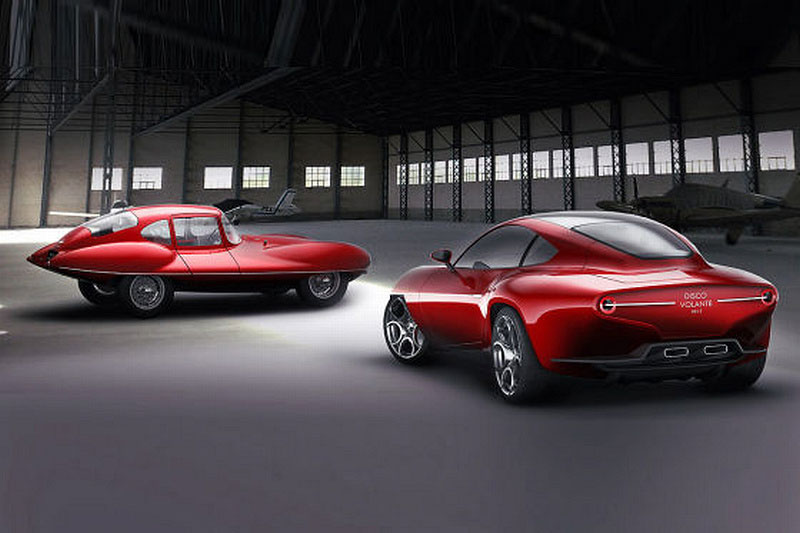
Reinterpreting the Past: When Coachbuilders revisited it’s Icons
When iconic coachbuilt cars are rebade through time, intent matters more than nostalgia. From experimental originals to modern reinterpretations, this article examines how legends are reimagined—and why some ideas refuse to stay…
Read story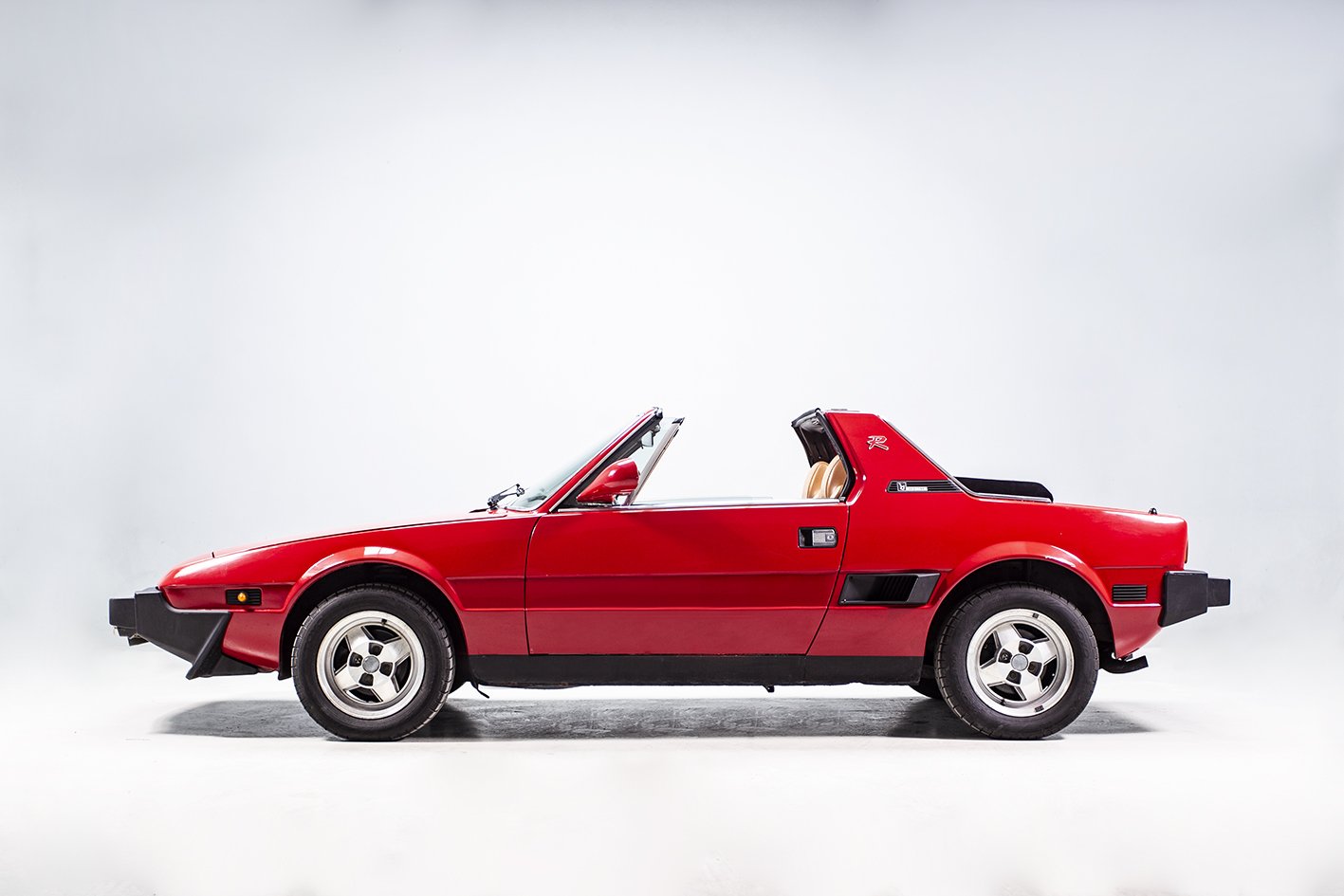
Neither Coupé nor Spider: Italy and the Targa Roof
A deep dive into Italy’s decades-long exploration of the targa roof—from early post-war experiments to Ferrari and Lamborghini icons—revealing how Italian designers created a third way between coupé and spider.
Read story
Italian Vision of the MPV: The Monovolume Concept
Long before MPVs filled suburban driveways, Italian designers were shaping the monovolume with prototypes that ranged from pragmatic to outright outrageous. Their work rewrote how space, style, and function could fit under…
Read story
The Forward Look: When Ghia’s Artistry Met Exner’s Vision
When Italian craftsmanship met Detroit ambition, Chrysler found its soul. The Ghia–Exner partnership sparked the Forward Look—an era of fins, flair, and fearless design that changed American cars forever.
Read story
THE CONVERSATION
Comments 0
Share a memory, a period photograph or a documented detail about this story.