
Italian Coachbuilders and Mercedes-Benz: Sculpting the Star
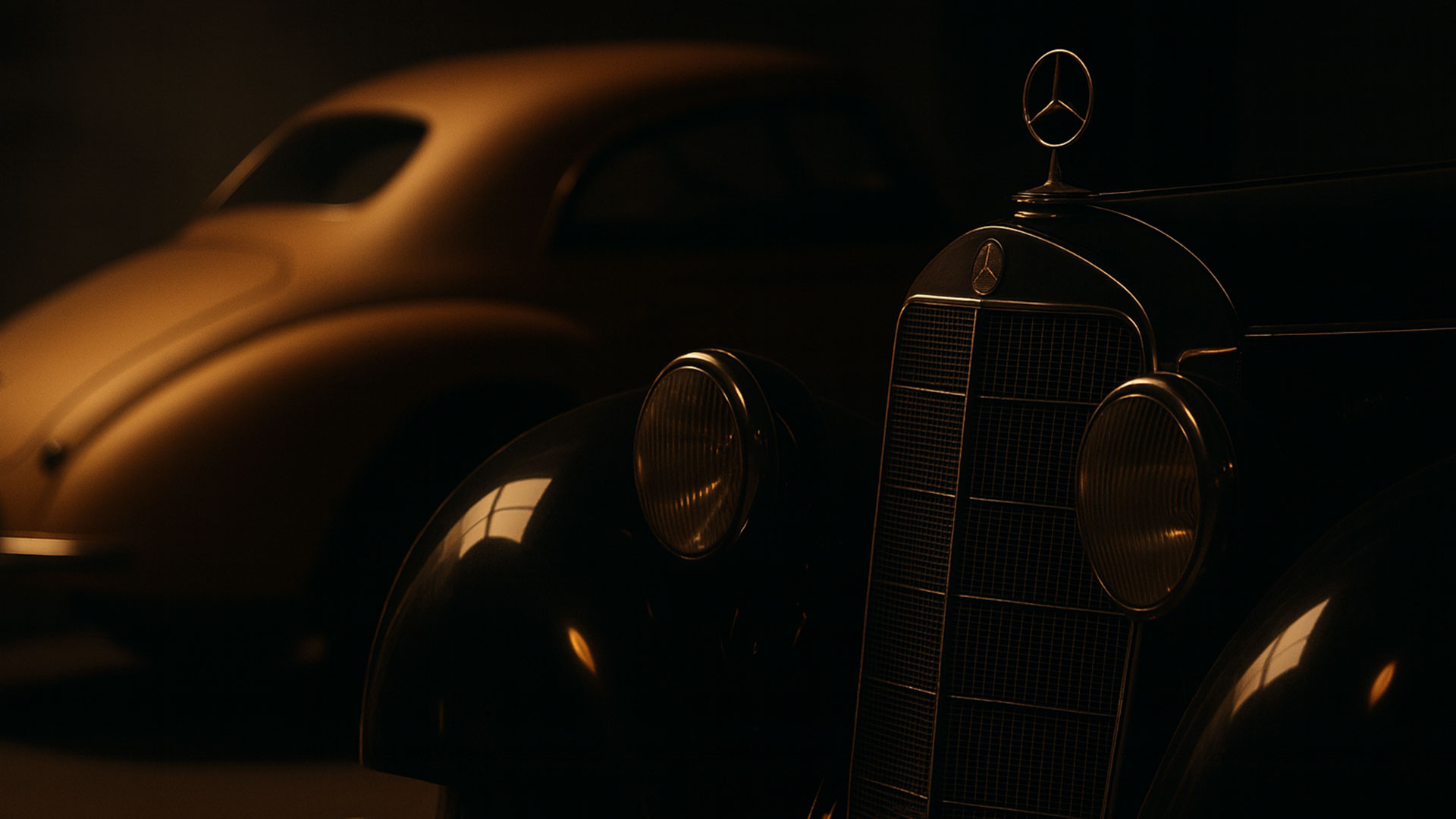
Throughout the early 20th century, Mercedes-Benz rarely entrusted its elite rolling chassis to outside hands. Unlike its competitor Maybach, which famously relied on the German coachbuilder Hermann Spohn—whose Ravensburg atelier bodied nearly every Maybach luxury model between the 1920s and the 1950s—Mercedes typically maintained tighter reins on its presentation. Spohn’s workshop, a former carpentry-based carriage firm turned specialist in handcrafted bodywork, provided noble clients with majestic Pullmans, cabriolets, and landaulets, many on the back of the legendary twelve-cylinder Maybach DS7 and DS8 chassis. For decades, if one spoke of coachbuilt German grandeur, “Spohn” and “Maybach” were uttered in the same breath.
And yet, there were exceptions. A rarefied few—noblemen, industrialists, and visionary clients—desired not the familiar Prussian stiffness, but something more expressive. They turned instead to Italy, where a small number of carrozzieri were given the rare honor of dressing the tri-star emblem in tailored metal. It was no small achievement: to receive a Mercedes-Benz chassis for coachbuilding was not just a commission, it was a credential. Stabilimenti Farina, Pininfarina, Frua, and especially Castagna—long considered Milan’s couturier of automobiles—rose to the occasion, crafting one-off masterpieces that fused German engineering with Italian design poetry.
This is the story of those rare creations. From chauffeur-driven Sedanca de Villes in the 1920s to wild concept cars and carbon-fiber reimaginings in the 21st century, each chapter reveals how Italian craftsmanship reshaped the identity of Mercedes-Benz—at times subtly, at times boldly, but always beautifully. Four distinct periods define this journey: the golden age of pre-war coachbuilding, the post-war renaissance of elegance, the quiet decline during the industrialized ’70s and ’80s, and the modern revival through concepts and bespoke commissions.
This is not a catalog. It is a chronicle of vision, privilege, and the lasting power of design. When German steel met Italian hands, the result wasn’t just an automobile—it was art.
Pre-WWII: The Golden Age of Bespoke Coachbuilding (1920s–1930s)
In the 1920s and 1930s, when automobiles were often delivered as bare chassis to be finished by independent coachbuilders, a handful of Mercedes-Benz cars received stunning Italian-made bodies. This era saw Germany’s engineering excellence meet Italy’s artistic design. Wealthy patrons who bought the most prestigious Mercedes models sometimes sought out Italian carrozzerie to craft one-of-a-kind coachwork, resulting in some truly spectacular creations that wowed European high society.
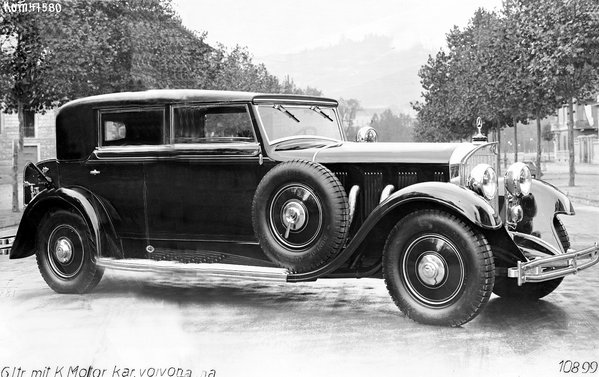
One of the earliest and most telling examples of this rare collaboration came in 1924, when Turin’s Stabilimenti Farina — then led by the Farina brothers, including the young Battista “Pinin” Farina — was granted the privilege of clothing the formidable Mercedes 24/100/140 PS chassis (later known as the 630K) with elegant, bespoke coachwork. Farina produced at least two grand town cars that year: a Sedanca de Ville and a Cabriolet de Ville, each radiating Old World refinement. These were imposing chauffeur-driven automobiles, their front compartments open for the driver while the rear was swathed in plush, enclosed luxury, finished with exquisite detail.
🔗 Read more: Unveiling the Storied Legacy of Stabilimenti Farina
That same year, in Milan, Carrozzeria Castagna — a name already synonymous with aristocratic flair—achieved what few others could: access to a Mercedes chassis. To body a Mercedes-Benz was not a commercial norm; it was a distinction, a mark of stature in the coachbuilding world. Castagna rose to the occasion with its own 630K Cabriolet de Ville in 1924, followed by another striking creation on a 1925 chassis. These were no mere re-bodies. Each Castagna-built Mercedes was a meticulously crafted object of prestige, with hand-formed aluminum panels, richly upholstered interiors, and the subtle yet unmistakable elegance that gave the German engineering a distinctly Italian soul. For Castagna, it wasn’t just a commission—it was an achievement.
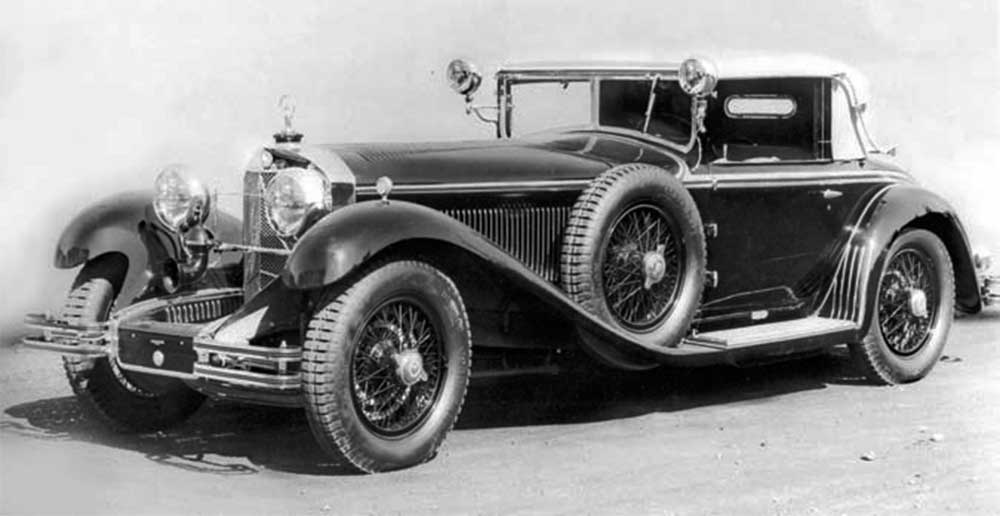
As the late 1920s arrived, high-performance Mercedes sports cars became the latest canvas for Italian designers. The legendary Mercedes-Benz S-series (the S, SS, and SSK models with supercharged engines) attracted attention from Italy’s top coachbuilders. Milan’s Carrozzeria Touring, famous for their Superleggera lightweight construction, reportedly bodied a Mercedes SSK in 1928. Touring’s SSK was a lithe roadster combining Mercedes’ raw power with Italian sporting elegance – imagine a long hood, cycle fenders, and a swept-back tail, all rendered in aluminum for racing agility. Meanwhile, Castagna continued its collaboration with Stuttgart’s finest: in 1928, Castagna built a Sedanca de Ville on a Mercedes chassis (recorded with chassis no. 36278), again blending formal luxury with custom flair. Castagna wasn’t done – they also tackled the Mercedes-Benz 710 SS, a shorter-wheelbase sibling of the SSK. In 1929, Castagna produced a gorgeous 710 SS roadster (chassis no. 36269), featuring a long, flowing body and likely a jaunty folding windshield for true wind-in-the-hair motoring. By 1931, Castagna had even created a 710 SS “Kabriolet” (convertible) on chassis no. 36208 – a car that would go on to earn acclaim on the show circuit.
These bespoke Mercedes were not just private toys; they were often showcased at Concours d’Elegance, the elite automotive design competitions of the day. For instance, Stabilimenti Farina’s 630K Limousine (built around 1930) was entered into the 1931 Concours d’Elegance in Vienna, where it won its class. This victory signified how well the Italian-crafted Mercedes impressed judges with their style and presentation. Similarly, Castagna’s 1931 Mercedes 710 SS Cabriolet also garnered praise – it was a head-turner with its two-tone paint, elaborate chrome details, and sumptuous cabin, perfectly at home on the lawns of Europe’s grand concours events. These accolades in Vienna, and appearances at other prestigious shows in cities like Monte Carlo and Villa d’Este, cemented the reputation of Italian coachbuilt Mercedes as the pinnacle of custom luxury.

No discussion of pre-war Italian Mercedes would be complete without the “Grosser” Mercedes. In 1931, Carrozzeria Castagna undertook Mercedes’ most imposing chassis, the 770K Grand Mercedes (W07). Only a few dozen of these 7.7-liter V12 giants were ever made by Mercedes, usually for heads of state and VIPs – and one of them was sent to Castagna in Italy. Castagna fashioned a Cabriolet D (four-door convertible) body for the 770K, creating an ultra-luxurious open touring car. This one-off 770K Castagna was truly a diplomatic-grade automobile: enormous in scale, painted in regal colors, with fine Italian leather and wood inside. It served as a rolling symbol of the fusion between Teutonic engineering might and Italian bespoke luxury. Ercole Castagna himself oversaw its construction, ensuring even Mercedes’ stringent quality standards were met. The Mercedes-Benz 770K Castagna reportedly was delivered to an important client (some speculate an aristocrat or government official), and it epitomized the grandeur of the coachbuilt era.
🔗 Read more: Carrozzeria Castagna Milano: A Timeless Legacy
In 1932, Battista “Pinin” Farina designed a one-off Mercedes-Benz 500 SS Cabriolet for Italian aristocrat and racing driver Carlo Felice Trossi. Built on a Mercedes 500 series chassis, the car was completed in time for its debut at the 1932 Milan Motor Show, where it attracted considerable attention from the motoring press. Later that year, it was exhibited at the Concorso d’Eleganza of Turin, appearing among the most prestigious entries of the event. Period accounts note that the car was registered under Trossi’s name and remained in his private collection for several years, a rare example of cross-European collaboration during the prewar era.
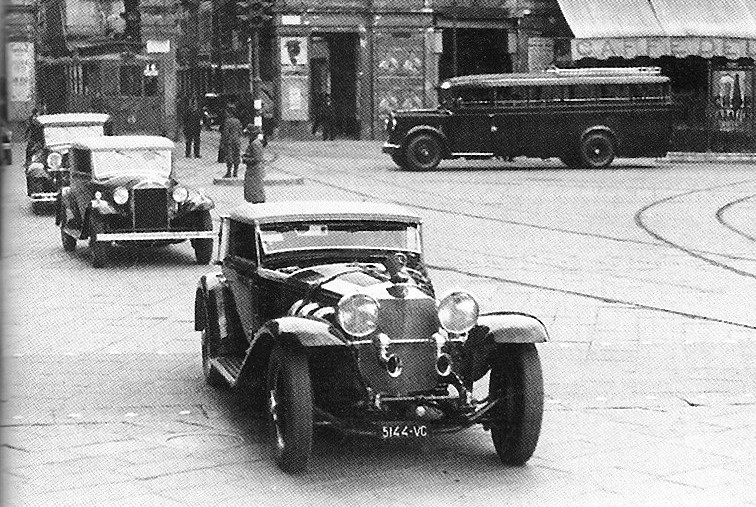
The pre-war period thus produced a handful of Italian-bodied Mercedes that were among the most admired cars of their day. They represented a perfect marriage of German mechanical excellence with Italian design flair. Each was a one-of-a-kind masterpiece, often built for exhibition or for wealthy connoisseurs who demanded something more bespoke than Mercedes’ own factory coachwork. These cars today are revered rarities – when they appear at modern concours or classic car events, crowds gather to appreciate their unique styling cues (like the Farina Sedanca’s low roofline or the Castagna roadsters’ intricate grille work) and to hear the stories of their creation. The era set the stage for an enduring, if intermittent, romance between Mercedes-Benz and Italian coachbuilders.
Post-War Renaissance: Italian Design on Mercedes Prestige (1940s–1960s)
After World War II, the practice of coachbuilding declined as monocoque constructions became common – yet the allure of Italian design on a Mercedes chassis did not vanish entirely. In the late 1940s and 1950s, as Europe rebuilt, a renaissance of custom car building occurred on a smaller scale. Mercedes-Benz returned to making luxurious cars, and a few of those found their way into Italian carrozzerie workshops for transformation into rolling art.
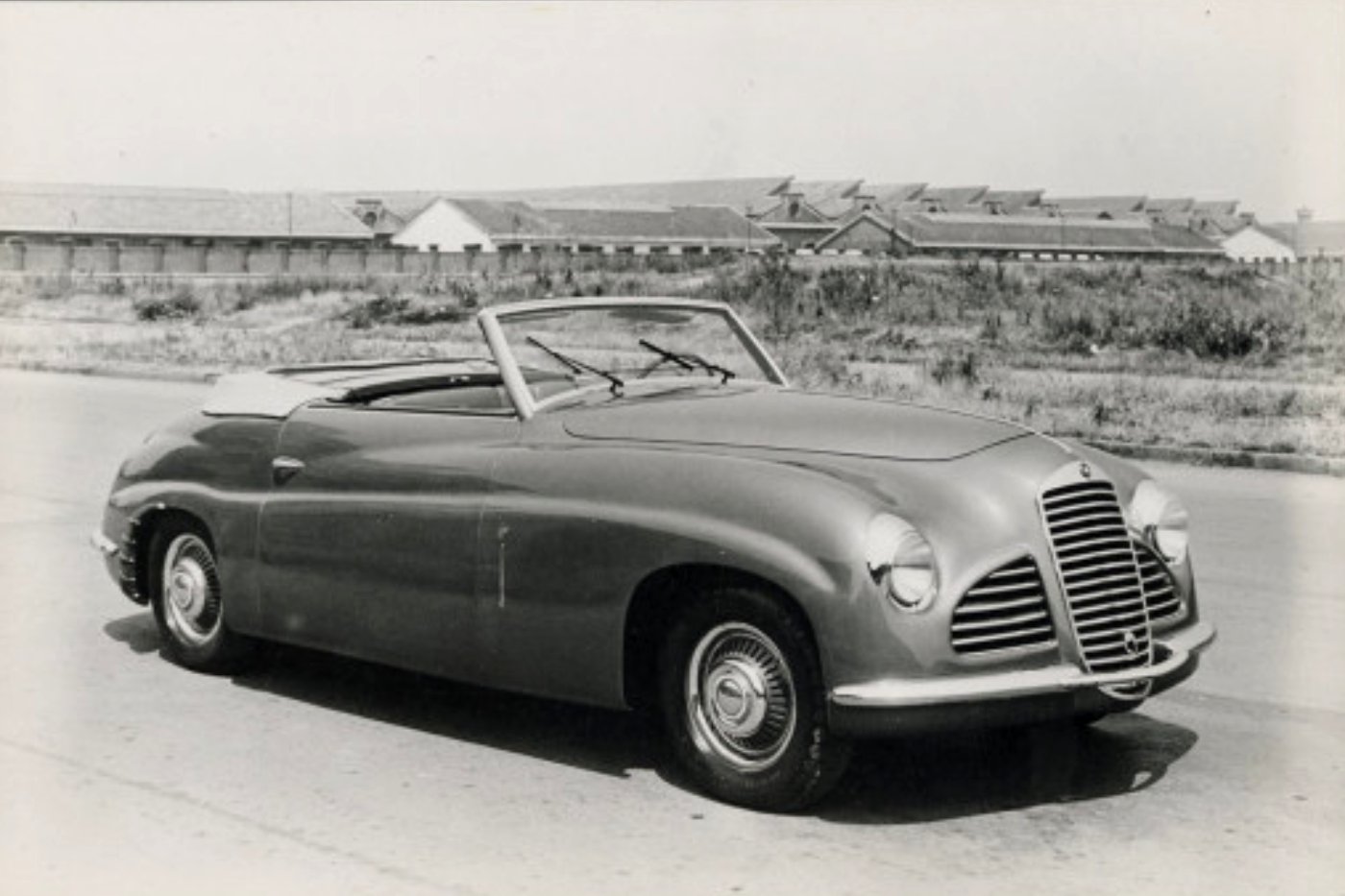
The earliest post-war example came in 1949. Italian designer Pietro Frua, who had just established his own carrozzeria in Turin, took a humble Mercedes-Benz 170 V sedan and turned it into a sporty spider. The 170 V Spider Frua was a completely re-bodied two-seat roadster based on the pre-war Mercedes W136 platform. Frua retained the 1.7-liter four-cylinder engine (around 38 hp) but stripped away the staid sedan body and replaced it with a low-slung, open-top design. The result was charming and elegant – smooth flowing fenders, a pointed tail, and an almost Aston-Martin-like grille, far different from Mercedes’ factory styling. In many ways, Frua’s 170 V Spider looked like a late-1930s dream car, with hints of aerodynamic Art Deco flair. Only one was built, making it an extremely rare gem. Its post-war timing meant it might have been shown at early auto salons in Italy or Switzerland as a promotional piece for Frua’s talents. Today, the car’s whereabouts are a bit of a mystery, adding to its mystique – it’s a coveted missing puzzle piece for collectors, should it ever resurface.
🔗 Read more: Pietro Frua: Mastering the Art of Automotive Elegance
In the 1950s, Mercedes-Benz’s top offerings were the 300 series – the 300 “Adenauer” luxury sedans and the 300 S/SC grand touring two-doors. Italian designers saw these as perfect canvases for bespoke projects. Perhaps the most active was Pininfarina. In 1955, Battista Pinin Farina created a Mercedes-Benz 300 B special sedan, as well as a 300 S Cabriolet, both as one-off commissions. The 300 B Pininfarina was based on the Mercedes 300 “Adenauer” four-door (W186 II). Pininfarina subtly altered the stately sedan’s proportions, likely lowering the roofline and simplifying the chrome trim, to give it a cleaner, more continental look. Photographs from the time show a car that retains the dignity of a Mercedes but with touches of Italian modernism – for instance, smoother fender lines and perhaps tailfins or tail-lights inspired by contemporary Lancias. This unique 300 B was built for a private client and demonstrated that Pininfarina could adeptly reimagine even the most conservative German luxury car.
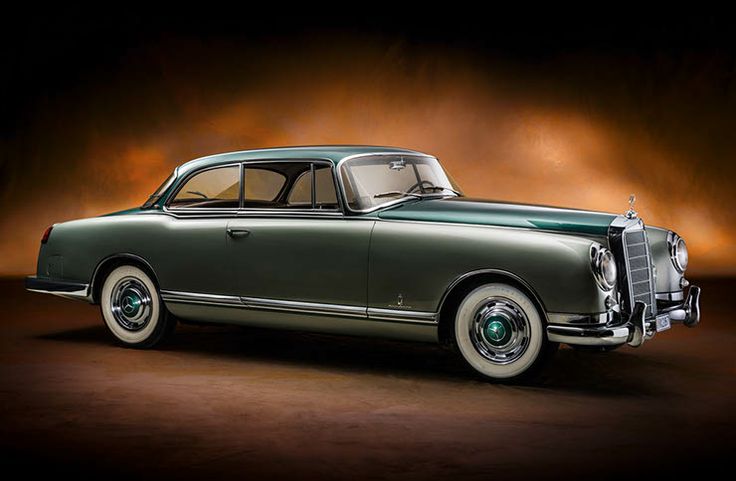
Simultaneously, Pininfarina worked his magic on the Mercedes 300 S, which was a limited-production two-door cabriolet/roadster from Mercedes. The 300 S Cabriolet by Pininfarina (1955) kept the general form of the factory 300 S convertible but was distinctly restyled. It had a one-piece windshield (instead of the factory split screen), a smoother nose with a refined grille, and a tapered rear end that differentiated it from the stock model. Inside, Pininfarina may have added Italian leather and a custom dashboard layout. This car was likely showcased at the 1955 or 1956 Turin Motor Show, garnering attention as a rare instance of a Mercedes wearing Italian “clothes.”
1956 proved an especially active year. Pininfarina unveiled a stunning 300 SC Coupé at the 1956 Turin Motor Show – a one-off built on Mercedes’ fuel-injected 300 SC chassis (W188 II). This coupé had a lower roof and wider C-pillar than the standard Mercedes version, giving it a sleek yet imposing presence. It featured a mesh-front grille and slender tailfins, blending Mercedes solidity with hints of 1950s American and Italian trends. The Pininfarina 300 SC was finished in an elegant two-tone paint and its design has stood the test of time – this car survives today and often appears at concours d’elegance, where it’s admired for being an “alternative universe” Mercedes sports car through the eyes of an Italian stylist.
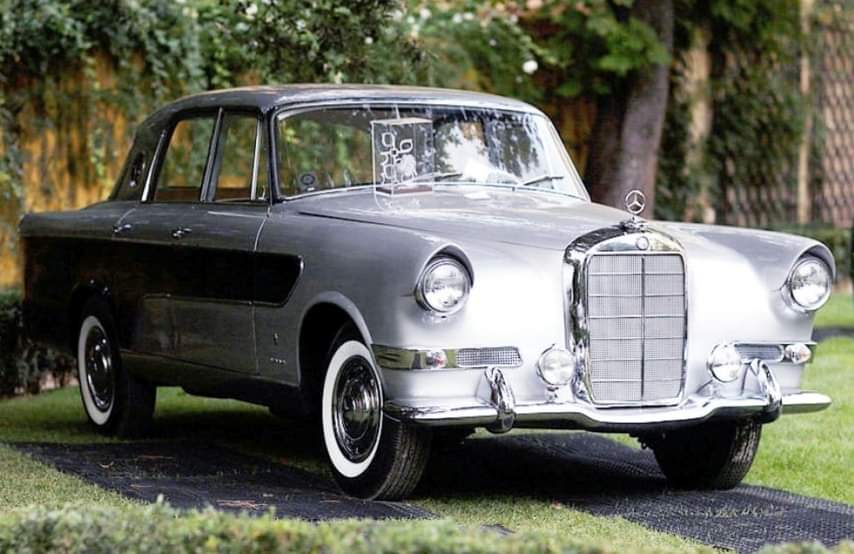
Another Italian house, Carrozzeria Ghia of Turin, also took on the Mercedes 300 series in 1956, but with a different approach. Ghia built two “Allungata” (stretched) specials on the Mercedes 300 C platform. One was a 300 C Berlina Allungata, an extended-wheelbase limousine-style sedan, and the other a 300 C Cabriolet Allungata, an elongated convertible. These were likely attempts to create ultra-luxury versions of Mercedes’ flagship for heads of state or VIP clientele. The Ghia 300 C limousine had an extra pair of side windows and more rear legroom – essentially Ghia turned the 300 into a formal six-window limousine with Italian stylistic touches (perhaps a more pronounced front prow or unique rear lights). The convertible version was equally grand: a long, open-top tourer that could accommodate additional passengers in comfort. At a time when Mercedes themselves offered only a short-wheelbase sedan and coupe in the 300 line, Ghia’s creations filled a niche for bespoke luxury. It’s rumored these cars were shown at European auto shows or offered to influential figures. For example, Ghia often courted wealthy Middle Eastern and industrialist clients – one could imagine these special Mercedes catching the eye of a prince or a celebrity who wanted a singular carriage. Only one of each “Allungata” was made, and they remain intriguing footnotes in both Mercedes and Ghia history.
🔗 Read more: The story of Ghia – part 1
On the smaller end of the scale, Italian coachbuilders even dabbled in utility conversions. In 1953, Carrozzeria Fissore built a limited series of Mercedes-Benz 170 D “Giardinetta” estate cars. The 170 D was Mercedes’ compact diesel sedan, and Fissore turned it into a wood-sided station wagon (the term “Giardinetta” in Italian refers to a station wagon, often with a country or garden connotation like a “shooting brake”). These cars were likely aimed at customers like hotels, rural estates, or perhaps even government use, who needed more cargo space but with a touch of elegance. With varnished wood framing on the rear body and a two-door wagon layout, the 170 D Giardinetta was quite unique – Mercedes itself did not produce a wagon in that era. Fissore’s conversion was practical yet stylish, and a few were built (some sources suggest it was a very small run, making them extremely rare today). This project exemplifies how Italian workshops could adapt even workhorse German cars to niche market needs with style.
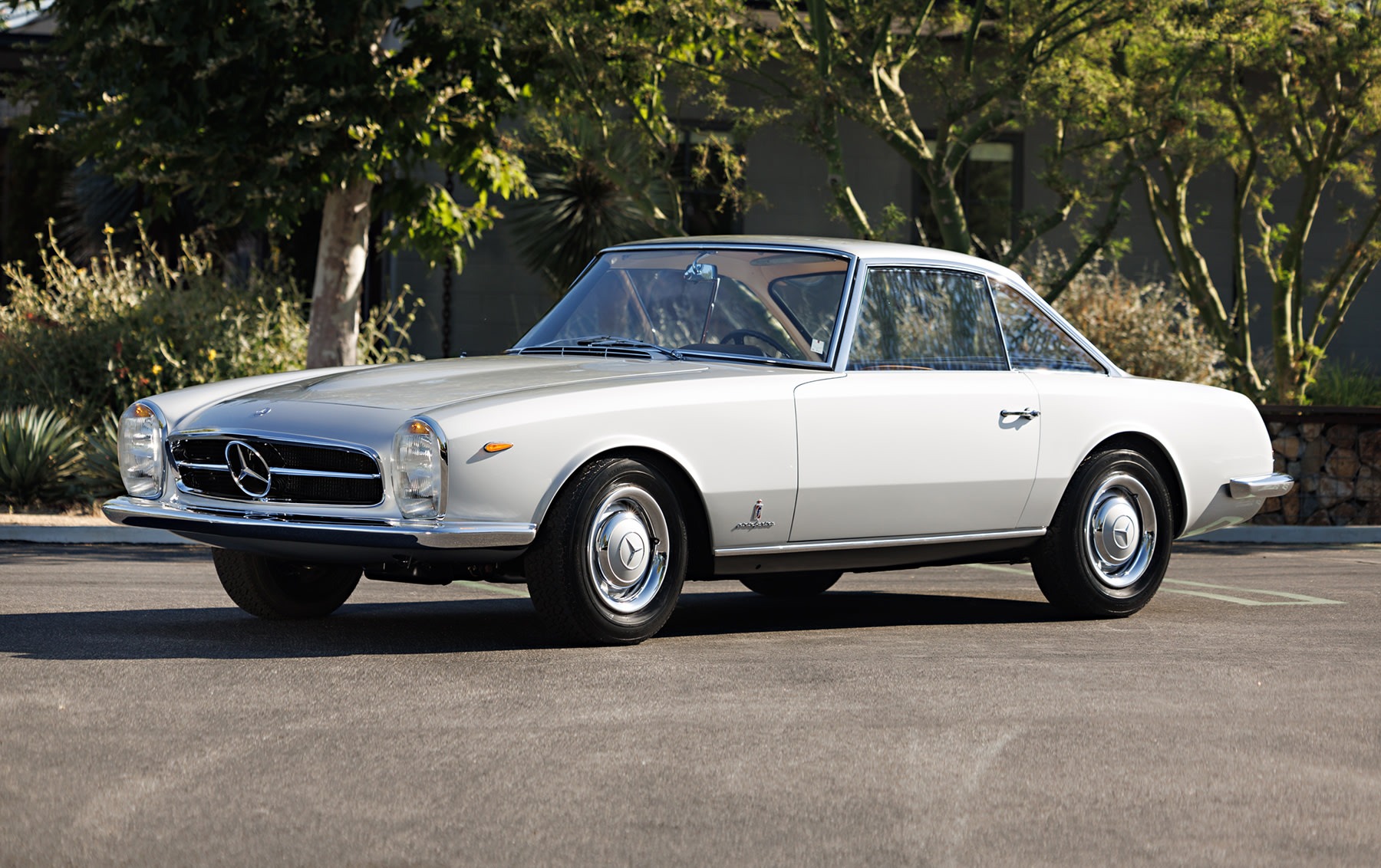
The 1960s saw the trend of Italian design on Mercedes continue in the realm of sports cars. Mercedes launched the now-iconic W113 “Pagoda” SL in 1963, and Italian designers were captivated by this nimble roadster. Pininfarina decided to create a one-off coupé version of the 230 SL. In 1964, Pininfarina took a Mercedes 230 SL and reworked it into a fixed-roof coupe (sometimes referenced by its chassis #113.042.10.001336). The resulting car had a smoother, closed roofline without the “pagoda” dip of the factory hardtop, and a revised rear quarter design. Painted in a dignified color and trimmed luxuriously, the Pininfarina 230 SL coupé was exhibited at the 1964 Paris Motor Show, where it demonstrated how the sporty SL could be transformed into a classy grand tourer. The car was well-received for its understated beauty – it kept the essence of the SL but looked rather like an Italian Gran Turismo in the vein of a Ferrari or Maserati of the era. This unique coupé ended up with a private buyer (some accounts say it was a special commission for an Italian client who desired a more weather-secure SL for continental touring).
Not to be outdone, Pietro Frua also revisited Mercedes in the 1960s. At the 1966 Geneva Motor Show, Frua revealed the Mercedes-Benz 230 SL “Shooting Brake” – a curvaceous two-door station wagon version of the SL, sometimes dubbed the 230 SLX. This bright blue shooting brake was arguably one of the most unusual Mercedes-based creations of the decade. Frua extended the roofline of the SL to the back, integrating a tailgate and a very sleek, rounded rear end. The design turned the two-seat roadster into a sporty mini-estate, ideal for a gentleman driver who might fancy carrying luggage, hunting gear or even an extra passenger in a pinch. The press often called it the “Pagoda Shooting Brake”, and while some found its looks a bit eccentric (the proportions of a short sports car as a wagon were certainly novel), it was undeniably imaginative. Frua’s 230 SL Shooting Brake did not go into any production – it remained a one-off show car, later sold to a private collector. Today it stands as a precursor to the concept of the luxury sports wagon, long before such ideas became fashionable. The car still exists, fully restored, and has made appearances at events like the Villa d’Este Concours d’Elegance, where it delights onlookers with its blend of 60s nostalgia and unique design.
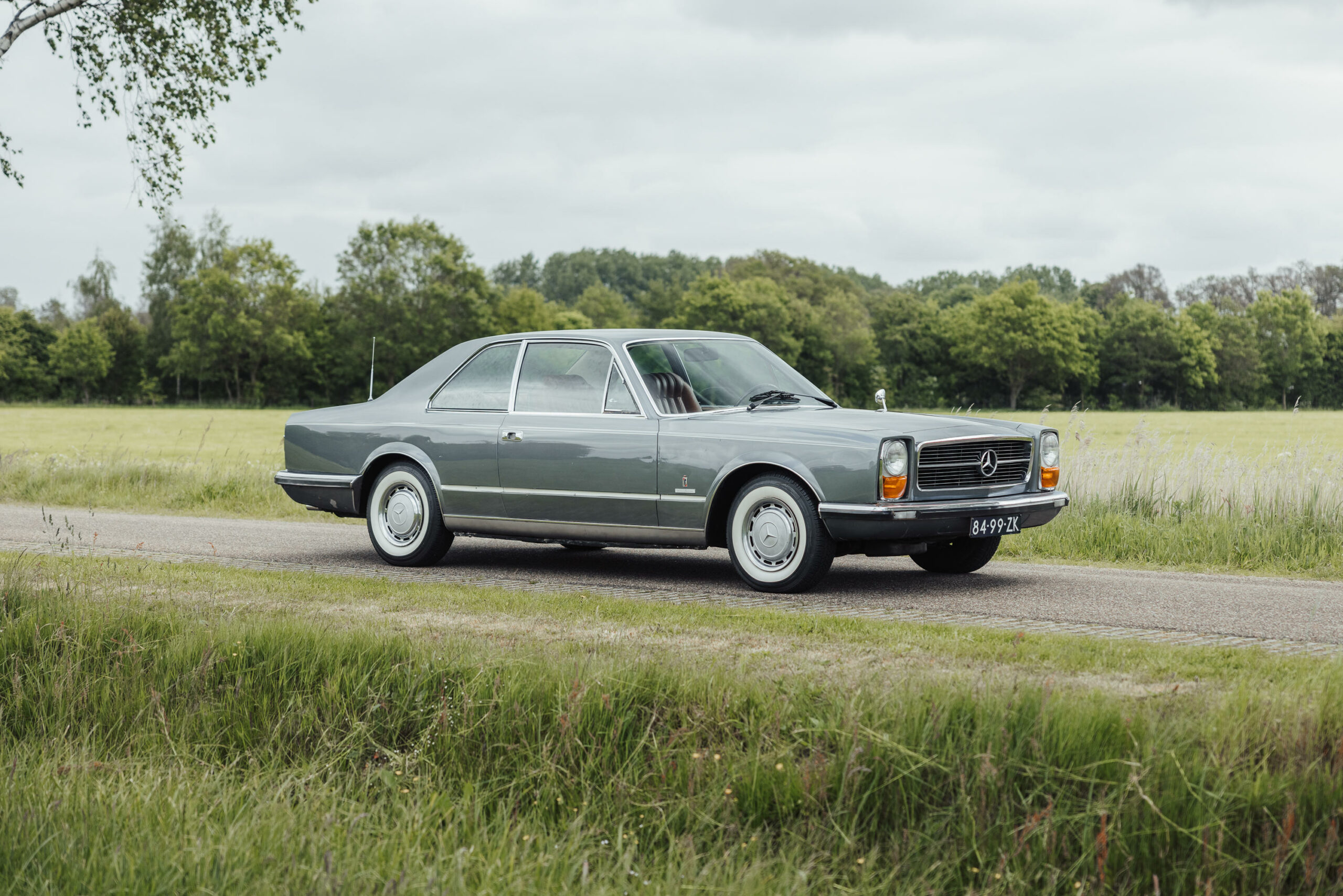
By the late 1960s, one of the most ambitious Italian coachbuilt Mercedes projects took shape – and it would also signal the end of an era. The Mercedes-Benz 300 SEL 6.3 Coupe by Pininfarina (built in 1969) was a true labor of love by a determined client. The Mercedes 300 SEL 6.3 was an extraordinary sedan of the time – essentially a conservative four-door luxury car fitted with a massive 6.3-liter V8, making it one of the fastest sedans in the world. A Dutch entrepreneur, captivated by the performance of this machine, wanted it in a two-door form that Mercedes did not offer. He approached Mercedes-Benz asking for a coupé or convertible 6.3; the factory firmly declined, citing no interest in such a variant and even refusing to supply a bare chassis for outside coachwork. Undeterred, the client took his brand-new 300 SEL 6.3 to Pininfarina in Turin.
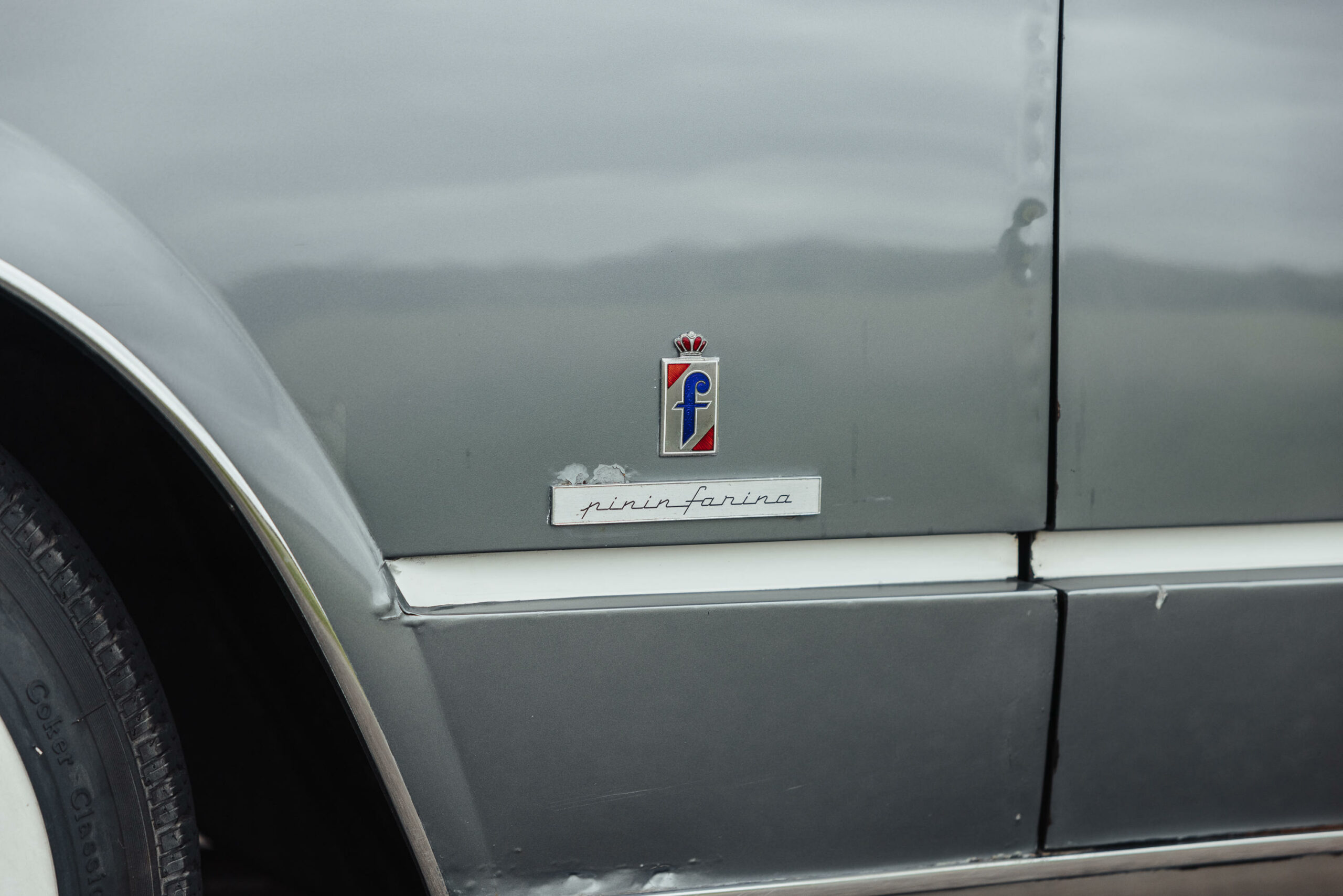
Initially, Pininfarina was hesitant too – their engineers were concerned that simply cutting the sedan into a two-door might compromise chassis rigidity, and they preferred cooperation from Mercedes to possibly shorten the platform. Mercedes wouldn’t play along, but the persistent Dutchman convinced Pininfarina to proceed if he delivered the complete car to them. For a fee of 10 million lire (a huge sum then), Pininfarina agreed to build the custom coupé. Over many months, they transformed the four-door body into a longer coupé profile. The 300SEL 6.3 Pininfarina Coupe had lengthened doors, a modified roof with more slope to the rear, and a distinctive front end with dual headlights behind glass – a styling cue similar to contemporary Ferraris and Cadillacs. The interior was refitted to the client’s detailed specifications: he requested a high seating position like a Rolls-Royce, reduced glass area to avoid a “fishbowl” feel, and a movable rear bench without a fixed center armrest for flexibility. Extra sound insulation was added to dampen the thunder of the V8. The result was a true luxury GT – massive, powerful, and utterly unique.
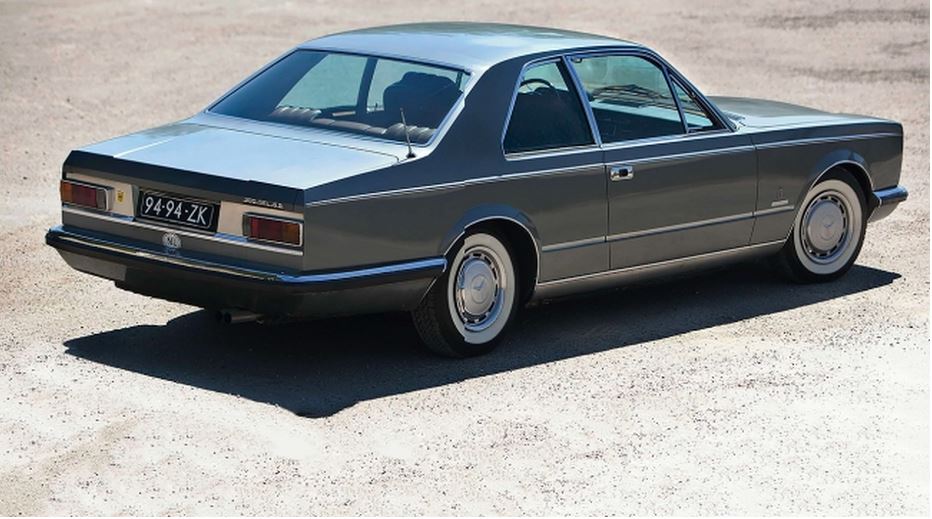
Pininfarina unveiled the finished 300SEL Coupé at the 1970 Paris Motor Show, parking it on their stand as a showcase of custom design. Reactions were mixed: some admired its imposing presence and the idea of a 6.3 two-door, while others felt the design was too conservative or heavy compared to Pininfarina’s usual sports cars. It didn’t help that Mercedes-Benz, who had not authorized the project, showed little enthusiasm for it publicly. After the show, the car was delivered to the Dutch owner in early 1971. He enjoyed it, but by 1972 his family wasn’t as enamored – legend has it his wife disliked the car’s size and look. The owner tried to sell it (rumors even speculated the buyer might be Freddy Heineken, the beer magnate, though that was never confirmed). The unique Mercedes proved hard to sell due to its unusual nature, and it languished until it found a new Dutch owner in 1973 for a much lower price than asked. It has remained in the Netherlands since, an obscure yet fascinating piece of Mercedes and Pininfarina history. In recent years the car was rediscovered, restored, and finally appreciated: it even went to auction and has been displayed at exclusive events like the Concorso d’Eleganza Villa d’Este, where enthusiasts recognize it as the last of the classic coachbuilt Mercedes one-offs.
The late 1960s creation of that 300SEL Coupé marked a turning point. As the 1970s dawned, traditional coachbuilt one-offs became exceedingly rare. Automobile design and manufacturing had changed – unibody construction and stringent safety standards made it very difficult for independent coachbuilders to modify production cars extensively. Mercedes-Benz in particular was not inclined to have outside firms alter their models by this time, preferring to keep design in-house under stylists like Friedrich Geiger and Bruno Sacco. The Italian coachbuilding industry itself was shifting focus, often moving into series production design work or tuning rather than bespoke bodies. Thus, the 1970s and 1980s were quiet decades in the story of Italian-bodied Mercedes. While Italian design influence still touched Mercedes in subtle ways (for instance, Italdesign Giugiaro was rumored to have pitched designs for the W201 190 sedan in the early ’80s, and coachbuilder Sergio Pininfarina maintained a friendship with Mercedes’ Bruno Sacco), we did not see new one-off convertibles or coupés on Mercedes chassis during that time. It seemed the era of glamorous custom Mercedes by Italian masters had passed – at least for a while.
Modern Era: Concepts and Revival of Collaboration (1990s–Present)
By the 1990s, the relationship between Mercedes-Benz and Italian coachbuilders took on a new form. Instead of private one-off commissions for wealthy owners, the collaborations re-emerged through concept cars and design studies. Mercedes began to tap the expertise of Italian design houses and prototype builders to help create show cars that pushed the envelope. This revived the spirit of partnership, albeit now under Mercedes’ direction for publicity and innovation rather than private customization. Additionally, in the 2000s and 2010s, a few new coachbuilding ventures in Italy once again started offering bespoke conversions on Mercedes models for clients seeking individualism. The result is a modern chapter of Italian coachbuilt Mercedes that is vibrant and multi-faceted.
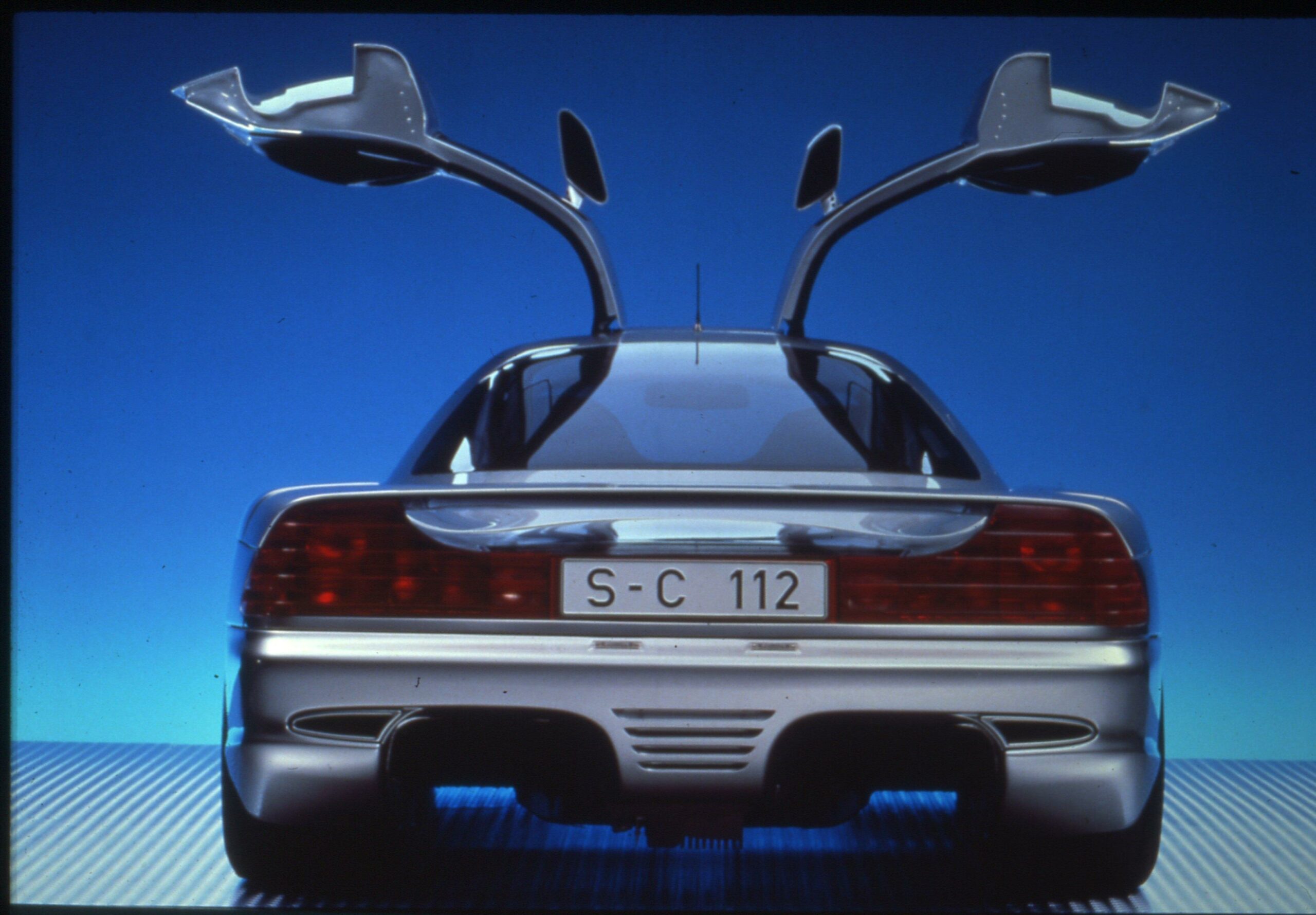
The revival kicked off with a dramatic machine: the Mercedes-Benz C112 concept of 1991. After decades with no exotic sports cars, Mercedes was evaluating a road-going supercar in the vein of the 1950s 300SL. The C112 was a technology demonstrator (featuring active suspension and a 6.0L V12 engine) styled by Mercedes’s studio, but the task of actually building the functional prototype was entrusted to an Italian firm – Coggiola of Turin. The late Sergio Coggiola’s coachbuilding company was known for its high-quality concept car construction. Under Mercedes’s confidential brief, Coggiola crafted the C112’s sleek gull-winged bodywork and working internals. The finished supercar, painted silver, debuted at the Frankfurt Motor Show and stunned audiences with its resemblance to the Mercedes C11 race car and its advanced active aerodynamics. Though Mercedes ultimately decided not to produce the C112 (thus it remained a one-off concept), this project demonstrated the trust in Italian craftsmanship for executing Mercedes’ vision. The C112 still exists in Mercedes’ collection and occasionally is shown at company events – a symbol that behind many great concept cars, there is often an unsung coachbuilder making it a reality.
🔗 Read more: I.DE.A Institute: From Avant-Garde Beginnings to Automotive Legacy
In 1993, Mercedes previewed a revolutionary new kind of car – the compact A-Class – via a concept called Vision A 93. For the design and prototype build of this innovative tall hatchback, Mercedes collaborated with the I.DE.A Institute in Italy. I.DE.A (based in Turin) helped refine the packaging of the A-Class’s sandwich floor and collaborated on the show car’s design details. The Vision A 93 concept appeared at the 1993 Geneva Motor Show, showcasing a stubby yet spacious mini-Mercedes with a trendy mono-box shape. Its Italian-influenced design was evident in the efficient use of space and flair in the interior. This was a case where Italian design thinking meshed with German engineering to create a new segment for Mercedes. The production A-Class (launched in 1997) carried much of the concept’s essence, proving the success of this partnership.
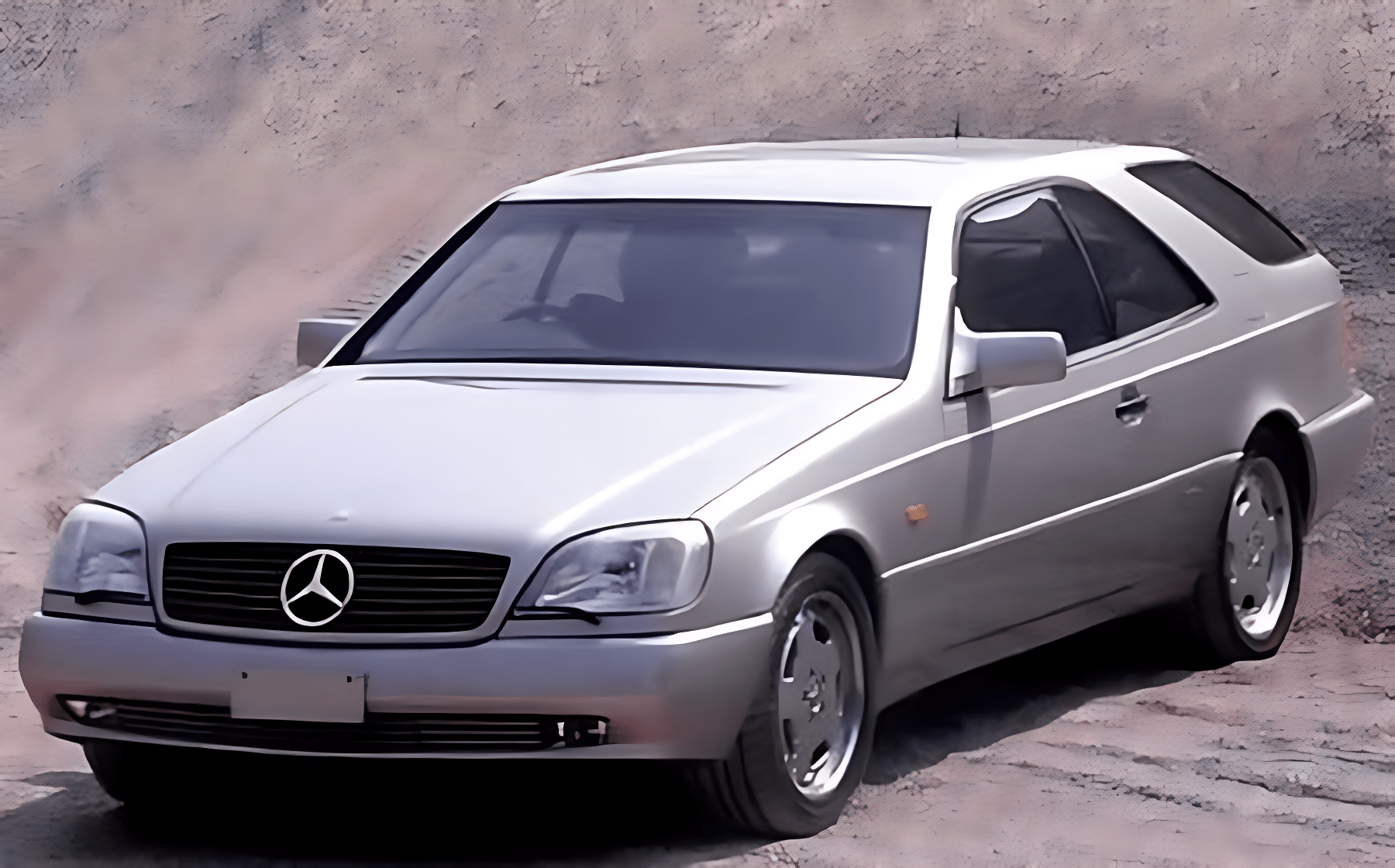
Around the same time, the legendary Milanese coachbuilder Zagato tried its hand at a Mercedes special. In 1994, Zagato took a Mercedes S600 Coupé (C140) – the big flagship two-door of the era – and turned it into a bespoke shooting brake (station wagon coupe). Often referred to as the Mercedes-Benz CL Shooting Brake Zagato, this unique vehicle was nicknamed the “CL 600 Zagato Elaborazione” or informally the “Golfing Break,” implying a car for a gentleman’s golf outings. The transformation involved extending the roofline to create a long, sleek two-door wagon with a large rear hatch. The result was surprisingly elegant: from the front it looked like an S-class coupe, but from the side and rear it had a yacht-like elongated profile with a roomy cargo area accessible through a tailored hatchback. The car was painted a deep green, fitting for its golfing theme. Zagato showcased this one-off at the 1995 Geneva Motor Show, hoping to attract attention (and perhaps a buyer). It certainly did – Mercedes fans and wagon lovers alike were intrigued. Ultimately only one was built, likely for a private collector after its show duty. Today, the Zagato shooting brake Mercedes is a cult favorite that occasionally is seen at concours (often in the special one-off categories), illustrating that Zagato’s trademark blending of functionality and sportiness can apply even to a Mercedes grand tourer.
In 1995, another Italian prototype specialist built a visionary Mercedes concept: the Vario Research Car (VRC). The Mercedes VRC, unveiled at the Geneva Motor Show in 1995, was a concept of a car with interchangeable body styles. It could transform from a coupe to a convertible to a pickup or wagon by swapping modular roof and rear sections. To execute this ambitious design, Mercedes again turned to Sergio Coggiola’s firm. Coggiola constructed the VRC’s unique mechanism and multiple body pieces with the precision required for working demos. The VRC wowed crowds with its ingenuity – in a matter of minutes the car could wear a different “hat.” While the VRC’s exact system didn’t make it to production, it forecasted a future where flexibility and customization could be key – something we see today in modular vehicle platforms. It also underscored how Italian craftsmanship was instrumental in bringing Mercedes’ experimental ideas to life on the auto show stage.
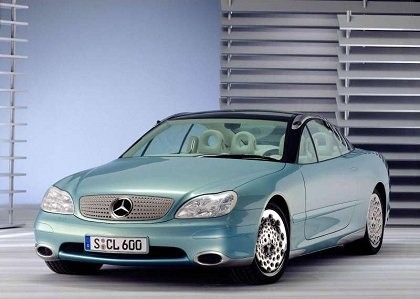
As the 90s progressed, Mercedes and Italian coachbuilders continued their fruitful collaboration especially in creating advanced concept cars. The Mercedes-Benz F200 Imagination of 1996 was one of the decade’s most striking concept coupes. It featured gullwing doors, drive-by-wire joystick controls (no steering wheel), and a lavish interior – essentially a high-tech vision of a future Mercedes CL-Class. To build this fully functional concept, Mercedes partnered with Stola, an Italian coachbuilding and prototyping company in Turin. Stola’s artisans crafted the F200’s flowing body panels, complicated electronics, and sumptuous furnishings to exacting standards so that Mercedes could showcase cutting-edge ideas. The F200 debuted at the Paris Motor Show and later toured various auto salons, leaving onlookers amazed at features like its video-camera mirrors and interactive glass roof. The influence of the F200’s design could later be seen in the 1999 CL coupe, proving how concept collaborations can shape production cars.
🔗 Read more: Mercedes F200 Imagination: The Concept Car That Predicted the Future (Sort of)
By 1997, Mercedes was ready to re-enter the ultra-luxury market and decided to revive the storied Maybach name. Before launching Maybach as a brand, they revealed the Mercedes-Benz Maybach concept car, a huge and opulent sedan, at the Tokyo Motor Show in 1997. Once again, Stola was entrusted to fabricate this imposing show car. The Maybach concept dazzled with its sheer size, mirrored glass roof, and interior fit for royalty – replete with silk carpets, reclining airline-style rear seats, and champagne coolers. The exterior, finished in two-tone gray and black, had a stately presence. Stola’s execution was flawless; many thought the car was production-ready when they saw it rotating on the stand. Indeed, it previewed what would become the Maybach 57/62 production models a few years later, and it underscored the successful cooperation between Mercedes’ design vision and Italian coachbuilding know-how.
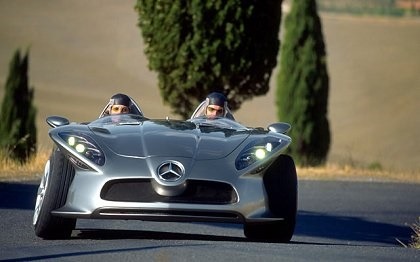
The early 2000s brought two more radical Mercedes experiments, both again materialized by Coggiola in Italy. The Mercedes F400 Carving concept of 2001 was a futuristic roadster designed to explore active handling – its party trick was hydraulically tilting wheels that leaned inward like a motorcycle for better cornering. Coggiola built the F400’s lightweight roadster body and the complex wheel mechanism. This bright orange two-seater, unveiled at the Tokyo Motor Show, looked like a jet fighter for the road. Its sharp-edged design and innovative technology were made credible by the high-quality build from Italy, allowing Mercedes to demonstrate the concept to journalists with dynamic drives. Then in 2003, Mercedes introduced the F500 Mind concept, a sleek fastback sedan loaded with future tech such as a hybrid diesel-electric drivetrain, night vision, and drive-by-wire controls. Coggiola once more handled the prototype construction, integrating all the experimental systems into a fully functional vehicle. Presented at the Frankfurt Motor Show, the F500 Mind hinted at styling cues for later Mercedes sedans and showcased hybrid ideas that would become mainstream in a decade’s time. In both cases, without the craftsmanship of the Italian builders, these advanced Mercedes prototypes might not have been realized to such a high standard for public display.
While concept cars dominated the Mercedes-Italy connection in the 90s and early 2000s, there were also signs of a return to bespoke customer-focused coachbuilding in the new millennium. In 1994, the famous name Carrozzeria Castagna had been revived in Milan by a new team, aiming to continue the tradition of tailor-made automobiles. By the mid-2000s, Castagna began producing unique conversions for modern cars. One notable project was the 2005 Mercedes-Benz CL 500 “G.M.” by Castagna. Based on the Mercedes C215 CL-Class coupe, this one-off was commissioned by a private client (the initials G.M. refer to the client’s name). Castagna reimagined the CL 500 with bespoke touches inside and out. On the exterior, they gave it a distinctive two-tone paint scheme and may have modified elements like the grille or lights to set it apart subtly from a standard CL. Inside, Castagna truly let their creativity flourish: the cabin was retrimmed with the finest Italian leathers and exotic wood inlays, custom-fitted to the owner’s tastes. Special embroidery and personalized details (perhaps the client’s monogram on the seats or custom luggage to match) were added. The audio and infotainment might have been upgraded with bespoke controls, and even the gauge faces could have been uniquely designed. Essentially, Castagna turned an already luxurious Mercedes coupe into a singular art piece – much as they had done in the 1930s. The CL 500 G.M. was shown at the 2005 Geneva Motor Show, where Castagna displayed it alongside other creations (like a coachbuilt Ferrari and a custom Bentley) to demonstrate the renaissance of Italian coachbuilding. It was a proud moment seeing the Castagna badge once again on a Mercedes after so many decades. The car remains one-of-a-kind, a modern classic that bridges the past and present.

Most recently, in the late 2010s, a new Italian design house has brought coachbuilt Mercedes into the 21st century limelight: Ares Design, based in Modena. Founded by former Lotus CEO Dany Bahar, Ares Design specializes in limited-run, highly exclusive bespoke cars often based on luxury marques. In 2018, Ares turned its attention to two Mercedes models with striking results. First, they created the Mercedes-Benz V-Class Ares, a fully customized version of Mercedes’ luxury van. Often dubbed a “bespoke luxury mini-bus,” the V-Class Ares took the standard people carrier and elevated it to private-jet-on-wheels status. Externally, Ares gave it a subtle body kit with AMG-like sporty bumpers, a rear spoiler, and larger wheels for a more dynamic presence. It remained understated and elegant on the outside, but the real transformation was inside. Ares gutted the factory interior and installed a sumptuous lounge: think reclining captain’s chairs in buttery leather, hardwood flooring, ambient LED lighting, and a custom entertainment system with large screens. The seating configuration was tailored for VIP comfort, with two individual armchairs and a rear bench wrapped in quilted leather. Every surface – from the headliner in Alcantara to bespoke wood or carbon fiber trim – was refashioned by Italian craftsmen. The result was a V-Class that cossets its passengers like a private luxury saloon, perfect for business executives or celebrities on the move. Ares built these to order (hence listed as “Limited” production), and each one could be further personalized per the buyer’s wishes. The V-Class Ares effectively revived the concept of the coachbuilt luxury van, much in the spirit of mid-century coachbuilders who would create special station wagons or limousines for VIPs.
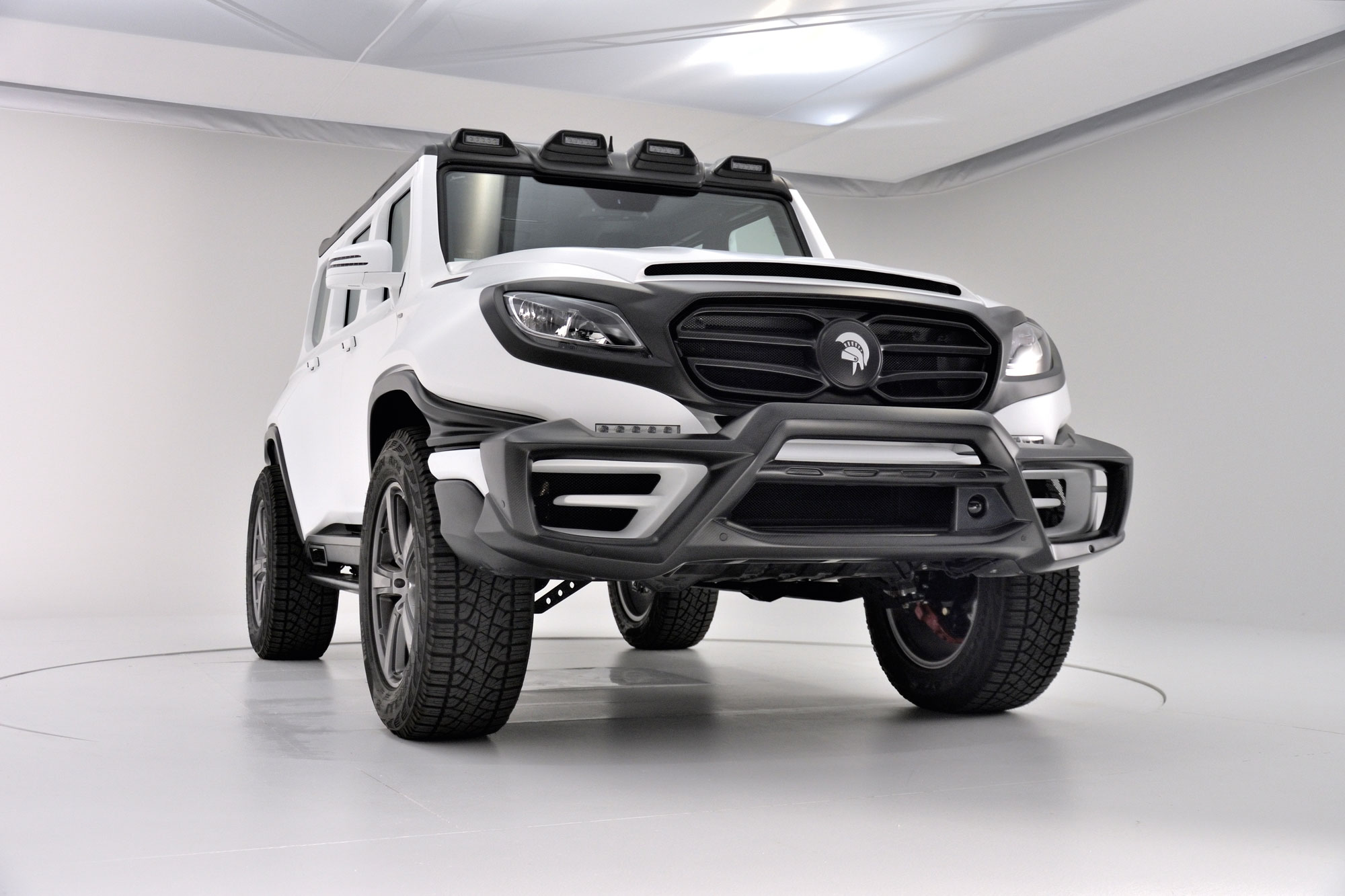
The second 2018 project was far more extreme: the Ares Design “X-Raid”, a reimagined Mercedes-AMG G63 off-roader. The Mercedes G-Class is an icon of boxy ruggedness; Ares transformed it into a futuristic, high-performance beast. The X-Raid involved crafting an entirely new body for the G-Class out of carbon fiber and aluminum, with a much more flowing and aggressive shape. It lost the upright, angular look and instead featured a lower roofline, widened stance, and coupe-like curves – almost as if a G-Wagen went on a high-tech diet. Under the hood, Ares tuned the 5.5L twin-turbo V8 to around 760–830 horsepower, turning the X-Raid into a super-SUV with blistering speed (reports of 0-100 km/h in around 4 seconds and a top speed limited to 250 km/h). The interior was also completely redone with exotic materials and a new layout tailored to the owner’s preferences, likely including sport seats, unique instrumentation, and additional luxury touches far beyond the stock AMG. The Ares X-Raid was unveiled to the world via press releases and at exclusive car events – its dramatic reinterpretation of the G-Class grabbed headlines, with some calling it a “possessed G-Wagen” or a ultimate expression of a luxury off-roader. Only a handful of X-Raids were to be made for global clients, making it as rare and special as any classic coachbuilt car. It showcases how even in today’s era of advanced engineering, a boutique Italian firm can take a Mercedes and create something boldly different, all while maintaining the core of performance and quality.
From the cobblestones of interwar Europe to the carbon-fiber testbeds of the 21st century, the saga of Italian-bodied Mercedes-Benzes is anything but conventional. It’s the story of what happens when Teutonic engineering gets dressed by Italian tailors—starchy suits swapped for bespoke linen, precision met with passion. These weren’t just cars. They were declarations of individuality, four-wheeled love letters scribbled between Stuttgart and Turin, Milan and Modena.
There were the rakish town cars of the roaring twenties, grand as ocean liners and twice as stylish. Then came the postwar couture: flamboyant cabrios, bespoke coupés, and practical yet sculpted wagons—each the result of a coachbuilder’s ego and a client’s wallet shaking hands over espresso. Even in the concept car era, Mercedes knew who to call when it needed sheet metal sculpted with poetry: Coggiola, Stola, I.DE.A., Zagato. Hell, they even let Frua turn an SL into a shooting brake, because why not?
🔗 Read more: Mercedes-AMG and Pininfarina Partner on limited edition model
And here’s the twist: the affair isn’t over. In fact, it’s about to get steamy again. Word from the black-glass towers in Affalterbach is that Mercedes-AMG and Pininfarina are brewing something. A limited-production car. A unicorn. A howl of a V8, perhaps, wearing a pin-sharp Italian suit. No renderings. No teasers. Just whispers and knowing glances. But if their history together is anything to go by, this won’t just be fast. It’ll be unforgettable.
So buckle up. The next chapter in the AMG–Pininfarina story isn’t written yet—but it’s already revving.

ABOUT THE AUTHOR
Andreas Scheidl
Italian classic car enthusiast with German roots. Renowned as a respected figure in the classic car community, he serves as a jury member at various international concours d'elegance, including the Classic Gala Schwetzingen and Mantova. As a content creator, Andreas passionately shares his profound knowledge and appreciation for vintage automobiles. His heart beats for cars designed by Giovanni Michelotti, showcasing his discerning taste and dedication to preserving the timeless elegance of automotive history.
More stories by Andreas Scheidl ↗CONTINUE READING
Posts You Might Like
Fiat Panda Cabrio: The Italian Coachbuilders Who Opened Giugiaro’s Box
From Moretti’s Panda Rock to Italdesign’s experimental Strip, Maggiora’s four-wheel-drive convertible and Stola’s remarkable Destriero, the history of the open-top Panda reveals an unexpected chapter in Italian coachbuilding. When Giorgetto Giugiaro designed…
Read story
Gabriele d’Annunzio and the Cult of the Automobile
There was a time when the automobile had not yet become part of the landscape. It announced itself from afar through the beating of an engine, the smell of petrol and hot…
Read story
Fiat 1400: The Last Great Playground of the Carrozzieri
From Touring and Abarth to Farina, Ghia, Vignale, Boneschi, Bertone, Viotti and the smaller carrozzerie, the new Fiat quickly became one of the richest bases for Italian special bodies in the early…
Read story
How a Swiss Dealer Challenged Ferrari: The Story of Monteverdi
How Peter Monteverdi went from Swiss Ferrari dealer to creator of rare Frua and Fissore-bodied GTs, the Hai supercar and luxury off-roaders.
Read story
THE CONVERSATION
Comments 0
Share a memory, a period photograph or a documented detail about this story.