
THE VEHICLE AT A GLANCE
Model dossier
- Manufacturer
- Mercedes-Benz
- Base model
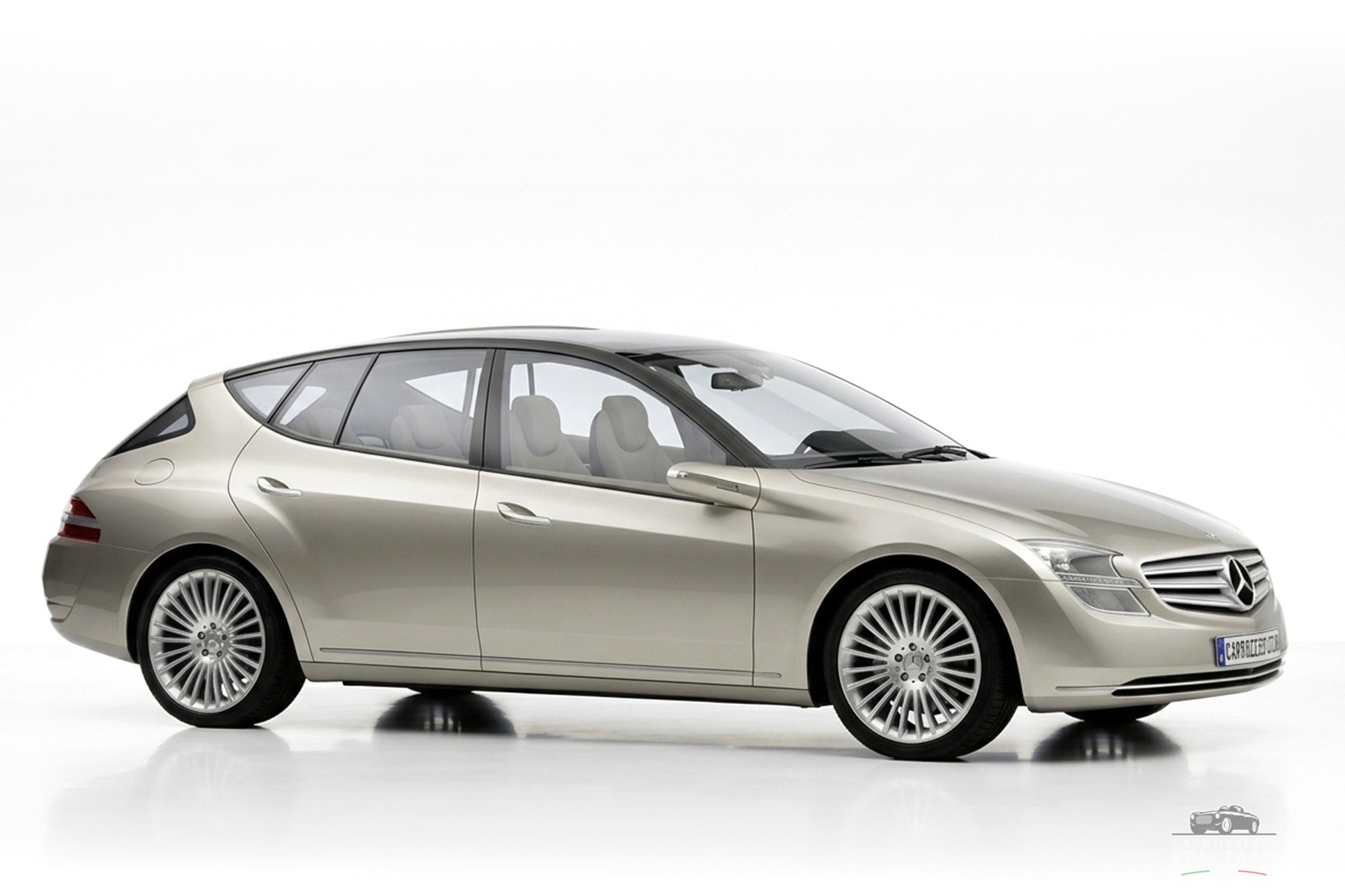
- F500 Mind
- Coachbuilder
- Coggiola
- Production period
- 2003
- Body style
- Berlina / Crossover
- Engine
- Diesel-electric hybrid
- Type
- Concept
- Production
- 1
THE PEOPLE BEHIND THE CAR
Coachbuilding, design & conversions

PRICE & SALES RECORD
Vehicle value
- Original price
- Not documented
- Latest recorded sale
- Not documented
01 / THE STORY
History & context
The Mercedes-Benz F500 Mind, built in Italy by Carrozzeria Coggiola, represents a pinnacle of automotive innovation. Unveiled at the 2003 Tokyo Motor Show, this prototype, while boasting a visually striking exterior, truly stands out for its groundbreaking technological advancements beneath its sleek design. The F500 Mind features a distinct exterior with four window-opening doors and an aggressively forward-leaning tailgate. Its robust rear pillar, reminiscent of the A-Class, combined with a short, sloping hood and the brand’s signature grille, exemplify the stylistic innovations of Mercedes’ new wave of crossover sedans. Based on the S-Class platform, the Mercedes-Benz F500 Mind aims to explore new frontiers in interior design, driving experience, and technical solutions. It introduces a multitude of electronic innovations that are likely to be integrated into future Mercedes models. One of the most notable innovations is the absence of traditional accelerator and brake pedals. Instead, the car employs touch-sensitive electronic controls, which transmit impulses to the engine and brakes via touch buttons. This design reduces driver fatigue and increases safety in the event of an accident. The steering wheel, shaped like an airplane yoke, channels all inputs through an electronic control unit. This setup allows for the seamless application of modern driver-assistance systems without mechanical intermediaries. The instrumentation is dominated by a “multivision” display, offering the driver a wide array of information on customizable layers, tailored to the driver’s needs. This advanced display system minimizes distractions, such as adjusting the radio volume, by centralizing control functions. Additionally, the F500 Mind is equipped with a night vision system. Utilizing two infrared headlights, it illuminates the road up to 150 meters ahead, projecting the image onto one of the many dashboard displays. This feature significantly enhances safety by allowing drivers to detect hazards and obstacles well in advance. The prototype also includes a state-of-the-art voice control system and a unique ultrasound-based sound system, which directs audio information solely to the driver. Powered by a 320-horsepower diesel engine, described by Mercedes as “state-of-the-art,” the Mercedes-Benz F500 Mind offers significantly lower fuel consumption compared to a comparable CDI engine. The interior showcases another innovative feature: the absence of traditional pillars supporting the roof. Instead, a robust carbon column positioned between the front seats supports the roof, eliminating the need for bulky front and center pillars. This design increases the glass surface area above and on the sides, enhancing visibility and creating a more open cabin, albeit with a singular black intruder in the interior.
02 / TECHNICAL IDENTITY
Specifications & construction
Production & construction
- Production
- 1
- Production type
- Concept
- Production notes
- Official DaimlerChrysler material establishes the 2003 F500 Mind research vehicle and Tokyo debut, but does not identify Coggiola as builder. CI exact/history material attributes physical construction in Turin to Coggiola. Preserve ORG-COGGIOLA under internal build guard and moderate confidence; do not present the Daimler source as proof of the build role. NO_AUTO_INHERIT.
Engine & performance
- Engine configuration
- Diesel-electric hybrid
- Power (kW)
- 234 kW
- Specification notes
- DaimlerChrysler Annual Report 2003 identifies the F 500 Mind as a diesel-hybrid research vehicle with total system output of 234 kW, first presented at the 37th Tokyo Motor Show.
Dimensions & accommodation
- Length
- 5,092 mm
- Width
- 1,889 mm
- Height
- 1,534 mm
03 / DESIGN, BODY & SUPPLIERS
Design, body & suppliers
Design & manufacture
- Manufacturer · Documented
- Mercedes-Benz
- Coachbuilder / Body Builder · Documented
- Coggiola
Body form & construction
- Body style
- Berlina / Crossover
04 / EVENTS & CHRONOLOGY
Events & awards
No events or documented awards are currently recorded for this vehicle.
08 / GALLERY
Photo gallery 5 photographs
09 / PERIOD ARCHIVE
Period photographs & advertising
The period archive gallery will show historical photographs, advertisements, brochures and press images once assets, provenance and usage rights have been recorded in the masterfile.
THE CONVERSATION
Comments 0
Share a memory, a period photograph or a documented detail about this car.