
Alfa Romeo C52 Disco Volante – The Flying Saucer
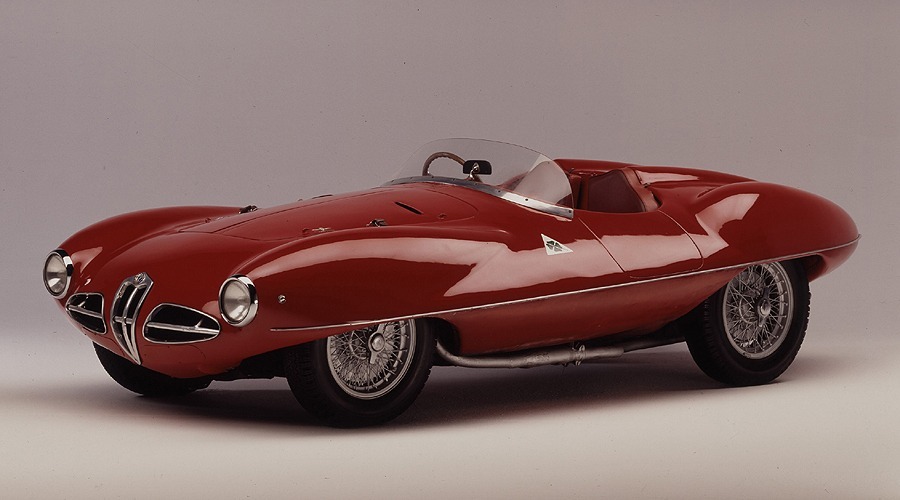
In the early 1950s, Italy’s automotive renaissance gave birth to a machine so visionary and unusual that it earned the nickname Alfa Romeo C52 Disco Volante, Italian for “Flying Saucer”. This experimental sports car, created in 1952–1953, captured the spirit of its era with an elegant blend of engineering prowess and artistic flair. It was a car born from the postwar optimism that swept through Italy’s design houses and racing circles, a product of collaboration between Alfa Romeo and the renowned coachbuilder Carrozzeria Touring Superleggera. With its low, lustrous aluminum body and otherworldly curves, the Disco Volante looked like something out of a science fiction dream – a racing machine that seemed to have fallen from the sky. In a narrative woven from history and imagination, we explore how this remarkable car came to be, focusing equally on its original Spider and Coupé variants, the people and ideas behind it, and the enduring legacy that inspired a modern revival decades later.
Postwar Italy and the Birth of a Legend
The Disco Volante’s story begins in a time of rebirth. World War II had ended, and Italy was eager to reestablish itself as a leader in automotive design and motorsport. Alfa Romeo, a marque with a proud racing pedigree, had just won back-to-back Formula 1 World Championships in 1950 and 1951 with its 158/159 “Alfetta” grand prix cars. Yet as the 1952 season approached, rule changes and financial constraints forced Alfa Romeo to withdraw from Formula 1 competition. Rather than letting its racing spirit fade, Alfa’s management pivoted to a new challenge: the Sports car category. The company’s first new production model of the postwar era, the 1900 sedan, had launched in 1950 as a mass-market Alfa with a robust four-cylinder engine. Using this humble 1900 as a starting point, Alfa Romeo’s engineers and artigiani (craftsmen) dreamed of creating a two-liter sports racer that could compete at events like Le Mans and the Mille Miglia. It was a bold vision that required both innovation and collaboration.
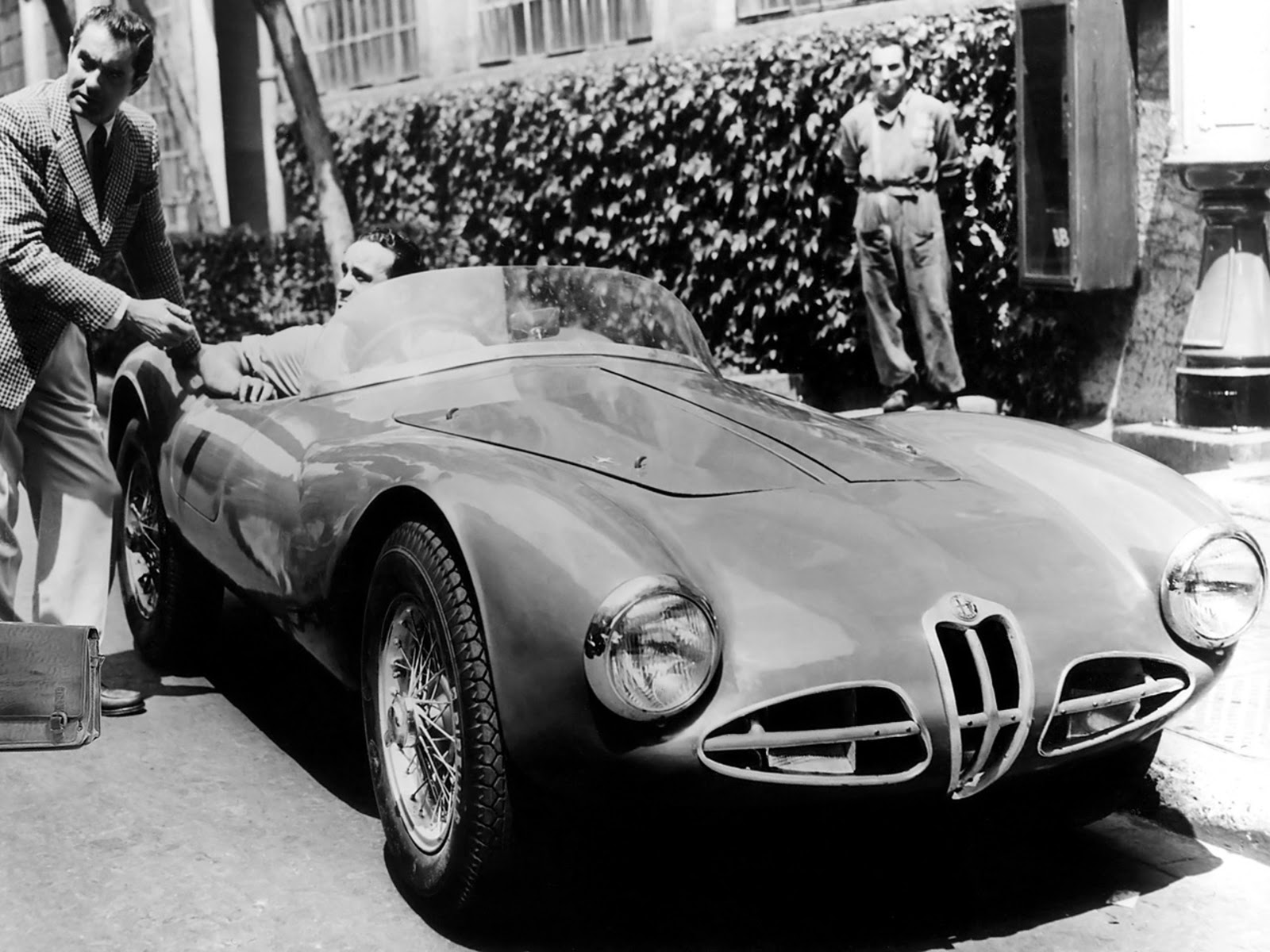
To turn this vision into reality, Alfa Romeo partnered with Carrozzeria Touring of Milan, a coachbuilder famed for its lightweight construction and exquisite designs. Under the supervision of Carlo Felice Bianchi Anderloni, the son of Touring’s founder and an inspired designer in his own right, the C52 project took shape in 1952. The atmosphere was one of excitement and ingenuity. Postwar Italy buzzed with creativity; designers and engineers were unshackled to explore new forms and technologies.
🔗 Read more: The Superleggera System by Carrozzeria Touring
In the case of the Disco Volante, Alfa Romeo brought the engineering backbone – a capable new twin-cam engine and a racing chassis – while Touring contributed the avant-garde bodywork using their famed Superleggera (super-light) construction system. As Anderloni famously said, “Il peso è il nemico, la resistenza all’aria l’ostacolo,” meaning “weight is the enemy, air resistance the obstacle”. Every aspect of the Disco Volante was conceived in this spirit, marrying power with featherweight design and aerodynamic purity.
Design and Aerodynamics: A Futuristic “Flying Saucer”
When the Alfa Romeo C52 prototype was unveiled, it caused a sensation. Carrozzeria Touring’s design was unlike anything seen on the road or track – a dramatic study in curves and minimal drag. The front and side profiles of the car formed a lenticular shape, like a flattened oval or disc, meant to slip through the air with ease. The fenders swelled out to cover the wheels in smooth bulges, then tapered inward at the ends, giving the car its distinctive flying-saucer appearance. In fact, when one of the first Disco Volante Spiders debuted at the New York International Motor Sports Show in 1953, astonished onlookers immediately drew comparisons to a UFO. The term “Disco Volante” – “Flying Saucer” in Italian – was uttered in admiration, and the nickname stuck. The car truly looked as if a spaceship had landed among the elegant roadsters of the day, its sleek form appearing to hover just above the ground.
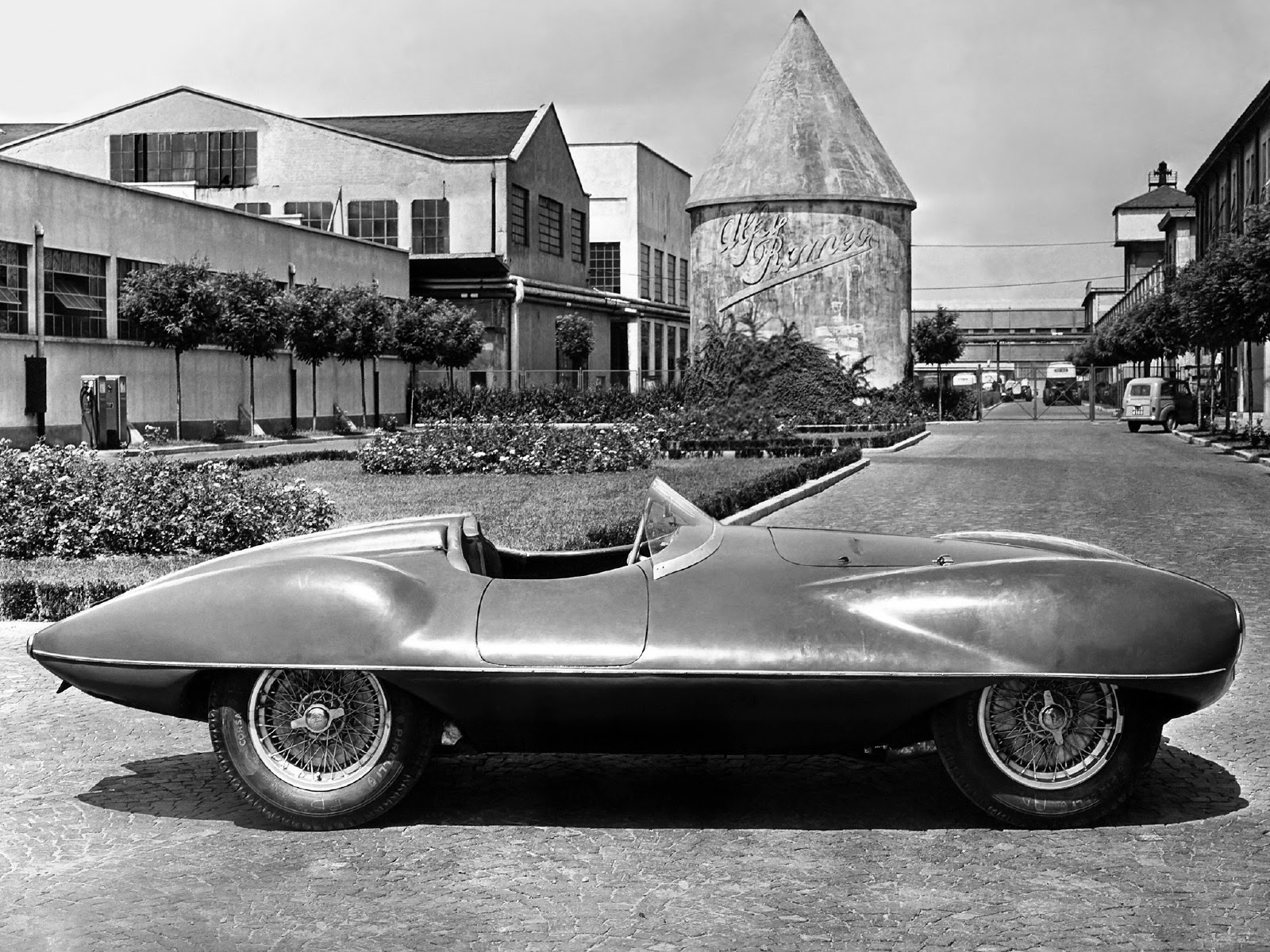
Beneath this futuristic shape were cutting-edge ideas in aerodynamics. Touring’s engineers and craftsmen had shaped the body through rigorous wind-tunnel testing, a novel approach at the time. They not only aimed for a low drag coefficient but also studied how the car behaved in crosswinds – an advanced concern in an era when most racing cars still had blunt shapes and upright radiators. The Disco Volante’s full bellypan (a completely faired-in underbody) and the rounded front and tail helped eliminate air turbulence underneath and behind the car. The result was remarkably stable handling at high speeds. During test runs on the high-speed banked track at Monza, the Disco Volante Spider demonstrated almost zero aerodynamic lift even at its 220 km/h (140 mph) top speed. This stability was a testament to the meticulous aerodynamic work – the car sliced through the air like a thrown discus, indifferent to gusts of wind. In a decade when tailfins and flamboyant styling were just starting to hint at a “Space Age,” the Alfa Romeo C52 was truly ahead of its time, a real-world experiment in space-age automotive design.
🔗 Read more: How the Space Age Shaped 50s-60s Italian Car Design
Every curve of the Disco Volante served both form and function. The long, rounded nose cone housed the engine snugly behind an elliptical grille, while the canopy-like cockpit was set far back, almost over the rear wheels, to give the car a pronounced “long-nose, short-tail” stance. Viewed from above, the car was widest at the middle of the body and tapered toward front and rear – like a lens. From the side, the low bonnet and equally low tail gave it a teardrop profile. This organic, almost aquatic form was born from practical goals (reducing drag and lift) but ended up creating an aesthetic marvel. The Disco Volante looked exotic and smooth, without the sharp edges or protrusions common to 1950s racers. It even had modest swan-wing doors that opened up and forward – a subtle theatrical touch in keeping with the car’s otherworldly character. In the sunlight, the hand-formed aluminum body panels had a mirror-like gleam, and one can imagine crowds in period gatherings circling the car in awe, reflections of a brave new world of design dancing on its surface.
Power and Innovation Beneath the Skin
For all its visual drama, the Alfa Romeo C52 Disco Volante was not just a styling exercise – it was a serious engineering project under its skin. The car’s foundation was a new tubular space-frame chassis, designed specifically for light weight and high rigidity. Unlike the mass-produced Alfa 1900 sedan, which used a unitary monocoque, the C52’s chassis was a racer at heart: a lattice of steel tubes that formed a strong, lightweight frame onto which the mechanical components and the Touring-built body were mounted. This chassis design was so effective that it would later inspire the underpinnings of future Alfa Romeos, like the tubular chassis of the 1960s TZ (Tubolare Zagato) racing cars.
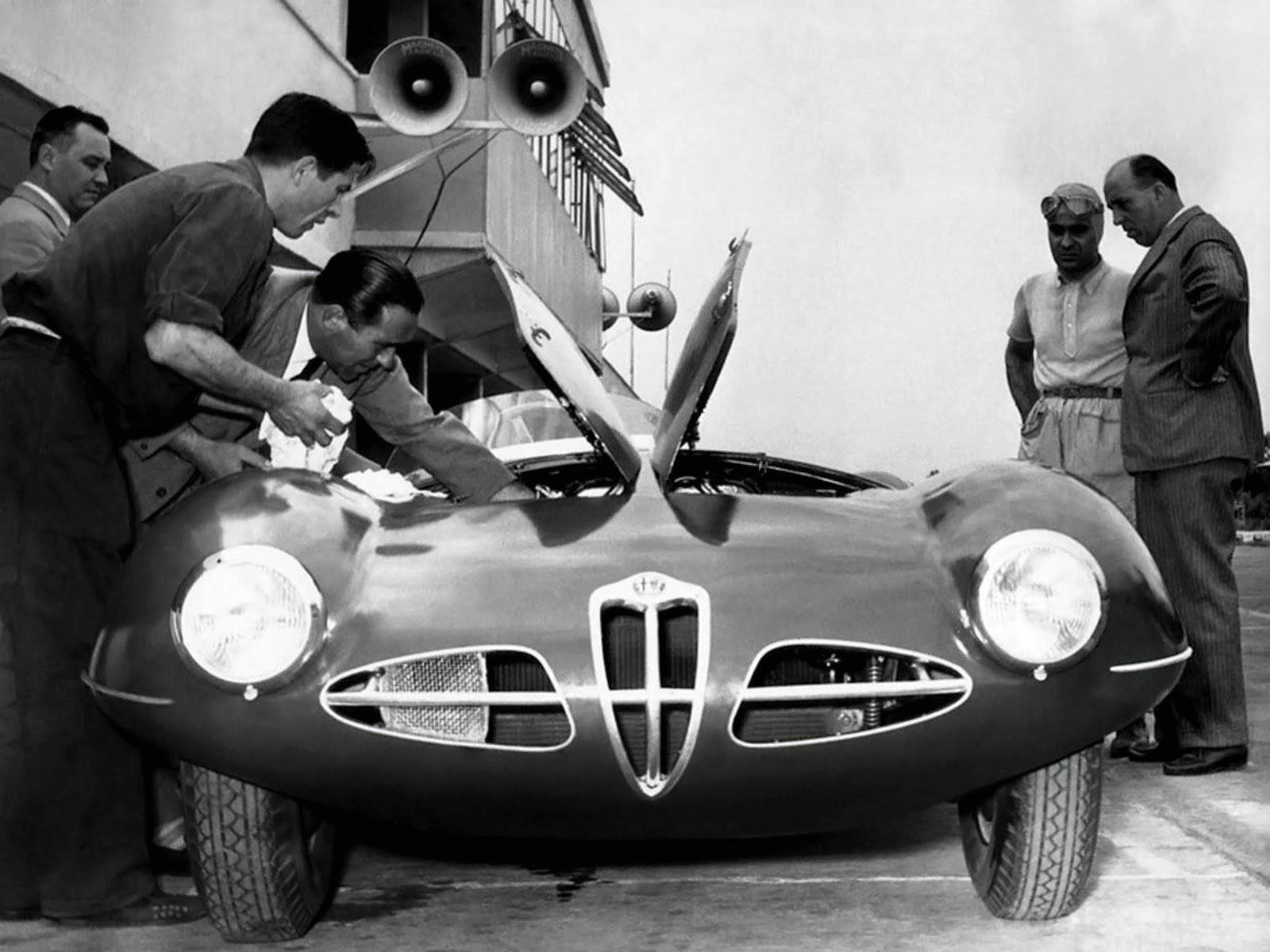
At the heart of the Disco Volante beat an advanced engine – essentially a modified version of Alfa Romeo’s new 1900 twin-cam four-cylinder. This 1.9-liter engine, originally designed by Giuseppe Busso and Gioacchino Colombo (famed for his work on Ferrari’s early V12s), was the first modern dual overhead cam engine in a production Alfa. For the C52, Alfa Romeo’s engineers transformed it into a true racing powerplant. They replaced the cast-iron engine block with a new aluminium alloy block and increased the bore, bringing displacement up to just under 2.0 liters (1997 cc). Higher compression pistons were fitted (compression ratio raised from roughly 7.7:1 to 8.7:1) and twin two-barrel Weber carburetors mounted, one feeding each pair of cylinders. In this trim the engine produced about 158 hp at 6,500 rpm, up from roughly 100 hp in the standard 1900 – a stunning output for a two-liter engine in 1952. The exhaust note from this high-revving four-cylinder was a fierce staccato, and it propelled the featherweight Disco Volante with authority.
Power was sent to the rear wheels via a 4-speed manual gearbox (with synchronizers – still a modern feature then) and a multi-plate clutch. The suspension used Alfa Romeo’s proven layout: independent double wishbones at the front and a solid rear axle located by an upper triangle and long trailing arms, with coil springs all around. This setup, carried over from the 1900, was tuned for the lower, lighter C52 chassis. The car rode on wire wheels with special lightweight duralumin rims, and stopping power came from finned drum brakes at all four corners. All told, the Disco Volante Spider weighed only about 735 kg (1,620 lbs) dry – incredibly light even by racing standards. With its ~158 hp engine, such a weight gave it a formidable power-to-weight ratio, allowing the car to surge past 220 km/h in testing. These numbers were more than just statistics; they were proof of concept that Alfa Romeo and Touring’s radical creation could deliver performance to match its looks. Indeed, the Disco Volante was not all show – it had the credentials of a serious competition machine, at least on paper.
Spider and Coupé: Variations on an Experimental Theme
Alfa Romeo and Touring built the Disco Volante as a series of experimental prototypes, and in the process they explored multiple body styles. The initial form – and arguably the purest incarnation of the design – was the open-top Spider. In 1952, three Spider examples of the C52 were constructed, each with that signature low windshield and flowing, fender-encasing bodywork. The open cockpit of the Spider variant allowed the driver’s helmeted head to peek above the bodyline, heightening the impression that this machine was a cross between a sports car and a jet aircraft. These Spiders were painted in the rich red racing color of Italy, making them appear like crimson flying saucers darting along the track. The Spider’s design was radical – there were no bumpers, minimal chrome, and the form was dictated almost entirely by the wind-cheating shape. Every curve was intentional, from the way the fenders met the central body to the subtly integrated headlamps. It was an automotive sculpture as much as a vehicle, and its novelty captured everyone’s imagination.
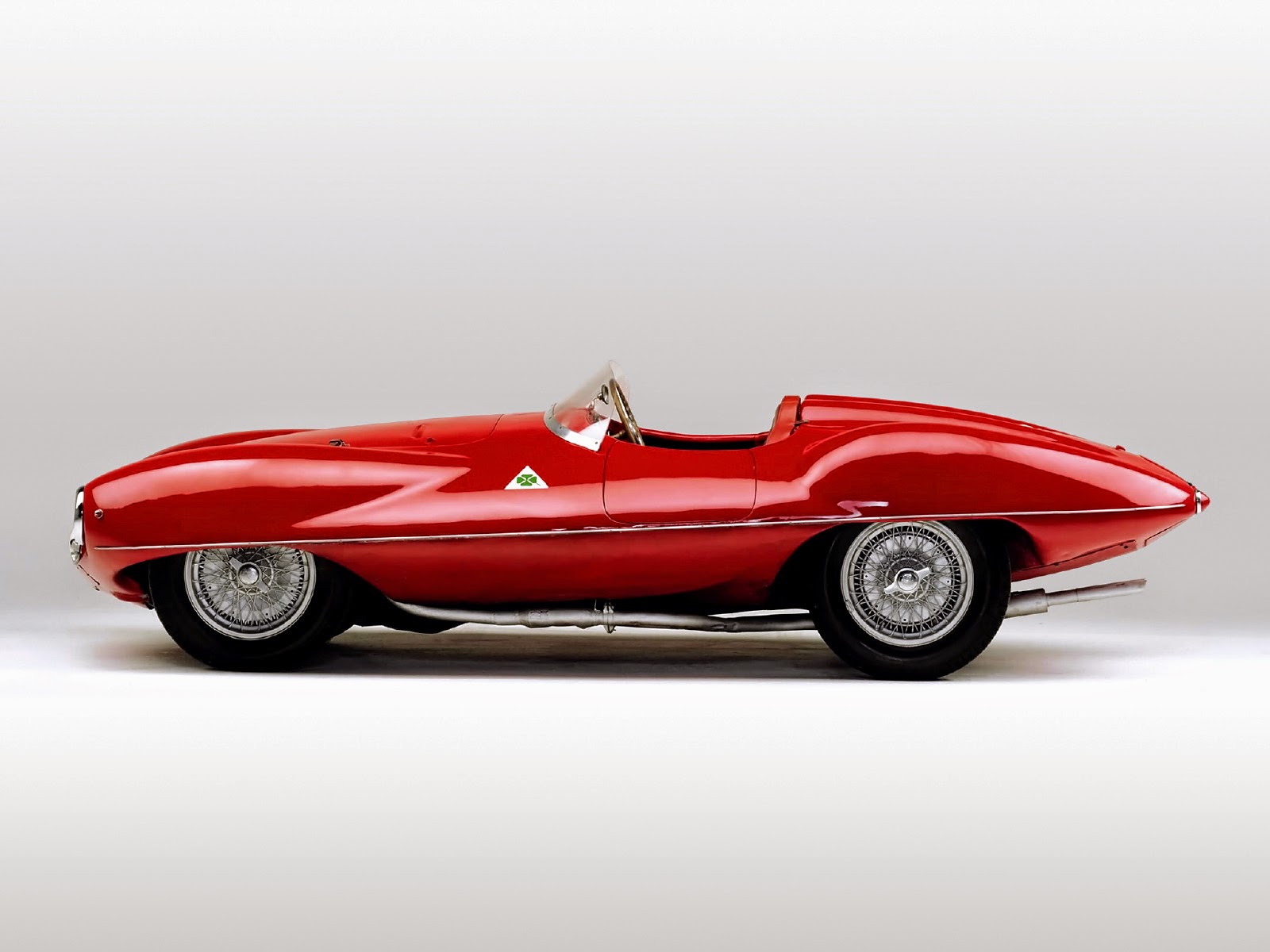
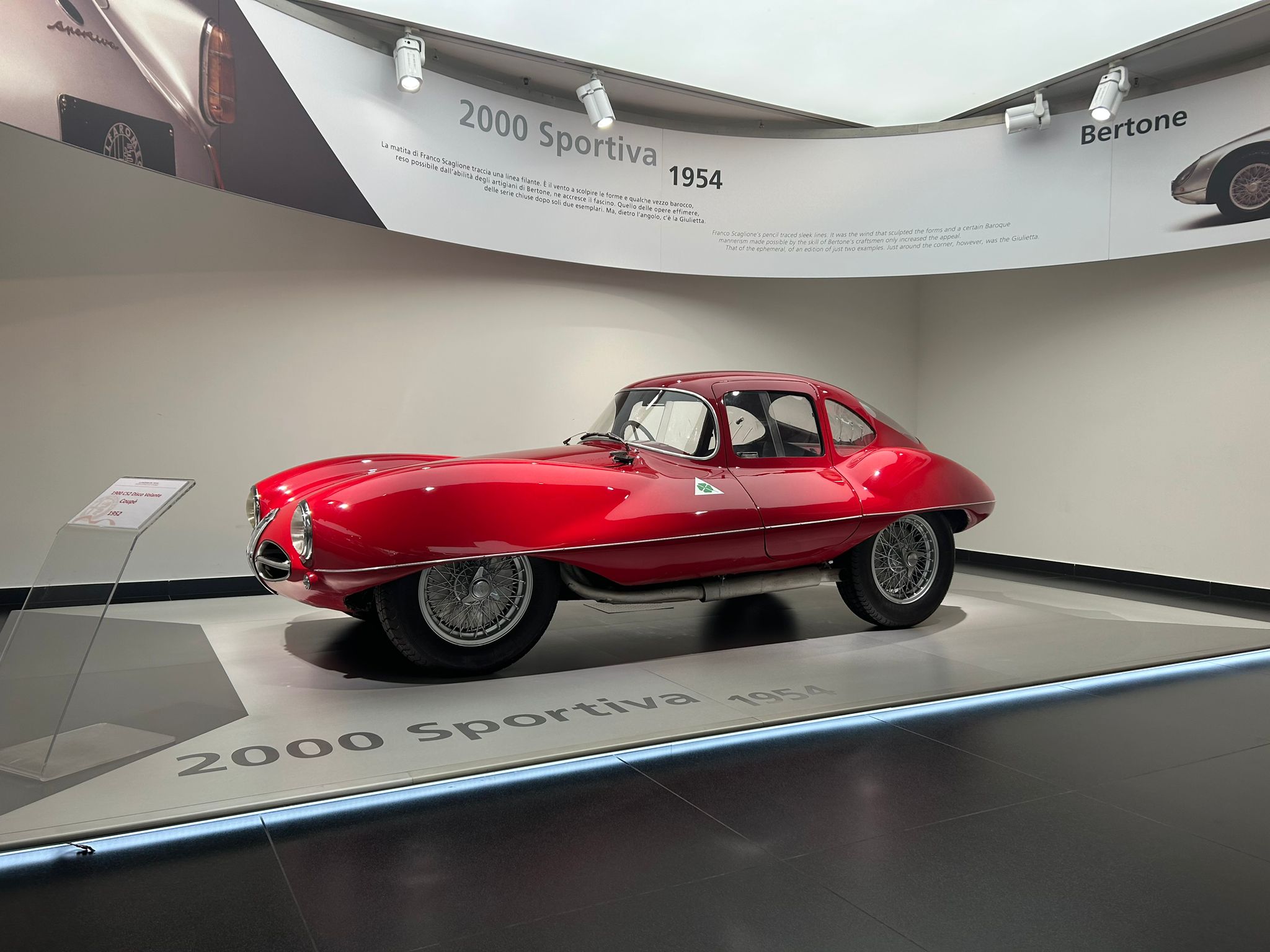
In 1953, the project took another step. Alfa Romeo decided to modify two of the existing Spider chassis to further investigate the effects of different aerodynamics. One of the 2.0-liter Spiders was equipped with a fixed roof, transforming it into an enclosed Coupé (Berlinetta) version of the Disco Volante. The addition of a sleek hardtop gave the car a new persona: the Coupé looked a bit like a fighter jet canopy grafted onto the flying saucer body. With its curved roofline and tiny side windows, the Disco Volante Coupé offered a slightly more practical shape for high-speed endurance racing, where a closed cockpit could reduce drag and protect the driver. It retained the same ethereal style but presented it in a new way – like a science-fiction pod racer of the 1950s, equal parts elegance and aggression. This unique Coupé today stands as a one-of-a-kind example of how the Disco Volante’s design language could be adapted without losing its soul.
The second modified car took a different direction. Engineers removed the trademark bulging fairings over the wheels, trimming the body into a more conventional width. This variant was nicknamed “fianchi stretti,” meaning “narrow hips” in Italian, because its sides were much tighter around the wheels. The fianchi stretti Spider had a cleaner, more understated look – closer to a typical racing barchetta – and was intended to improve performance in hillclimb competitions by reducing frontal area. Though it sacrificed some of the Disco Volante’s otherworldly charm (the car lost the full UFO-like fender covers), this narrow-hipped version was an interesting experiment in balancing aerodynamics with practical handling. It showed that Alfa and Touring were willing to alter their daring design in the pursuit of speed and stability. In period, this particular car was the only Disco Volante variant to actually participate in any racing events, being entered in a few minor competitions in 1953. Still, the program as a whole remained largely experimental.
In total, only five Alfa Romeo C52 Disco Volante cars were ever built. Aside from the three original 2.0-liter Spiders (one of which became the Coupé and another the fianchi stretti Spider), two additional examples were constructed with larger 3.5-liter straight-six engines borrowed from Alfa’s 6C 3000 CM racing program. These six-cylinder Disco Volantes, built in 1953, had slightly extended chassis and boasted around 230 horsepower, pushing their top speed to an estimated 240 km/h. They looked virtually identical to the original Spider externally, continuing the experimentation with more power. However, one of these 6C-powered cars was reportedly dismantled by the factory after testing, and the other saw limited use. The various iterations of the Disco Volante thus explored a fascinating range of configurations – Spider, Coupé, narrow-fender, four-cylinder, six-cylinder – each a chapter in the story of this rolling laboratory.
Despite the Disco Volante’s promising performance and head-turning design, it never progressed to a full racing campaign or production run. At one point, Alfa Romeo had serious plans for the car: they even listed legendary drivers like Juan Manuel Fangio and Consalvo Sanesi to drive the Disco Volantes at the 24 Hours of Le Mans in 1952. Four cars were slated to be prepared for that endurance race, a sign of the company’s confidence in the project. But ultimately, caution prevailed. Concerns arose about whether the hastily developed C52 would endure the grueling 24-hour race, and some instability issues had been observed during testing. Management made the tough decision to withdraw the entries before the race. As a result, none of the five Disco Volantes ever achieved a major competition victory – in fact, strictly speaking, they never officially raced in anger at all. Yet the absence of trophies hardly detracts from the car’s legacy. The Disco Volante was a statement, an experimental leap forward, and it succeeded resoundingly in that mission. It proved what could be done when fearless design met engineering know-how, and it generated enormous publicity for Alfa Romeo’s prowess. The Spider and the Coupé prototypes survive to this day in Alfa Romeo’s museum, preserved as beloved icons that still run in vintage events on occasion. Their mere presence is enough to inspire wonder – a reminder of an era when car designers dared to reach for the stars.
The People and the Spirit Behind the Project
The Alfa Romeo C52 Disco Volante was more than just metal and mechanics; it was the product of passionate individuals and the inventive atmosphere of its time. Central to the project was the partnership between Alfa Romeo’s technical team and Carrozzeria Touring Superleggera’s artisans. On Alfa’s side, visionaries like Orazio Satta Puliga (the head of design and development) and Ing. Giuseppe Busso lent their expertise, ensuring the car would have a robust racing pedigree beneath its avant-garde skin. The 1900 engine that powered the Disco Volante, for instance, was one of Busso’s first great achievements at Alfa – a powerplant that combined reliability with high specific output. And it was adapted brilliantly for this project with Colombo’s design input, embodying the spirit of “if we can imagine it, we can build it.”
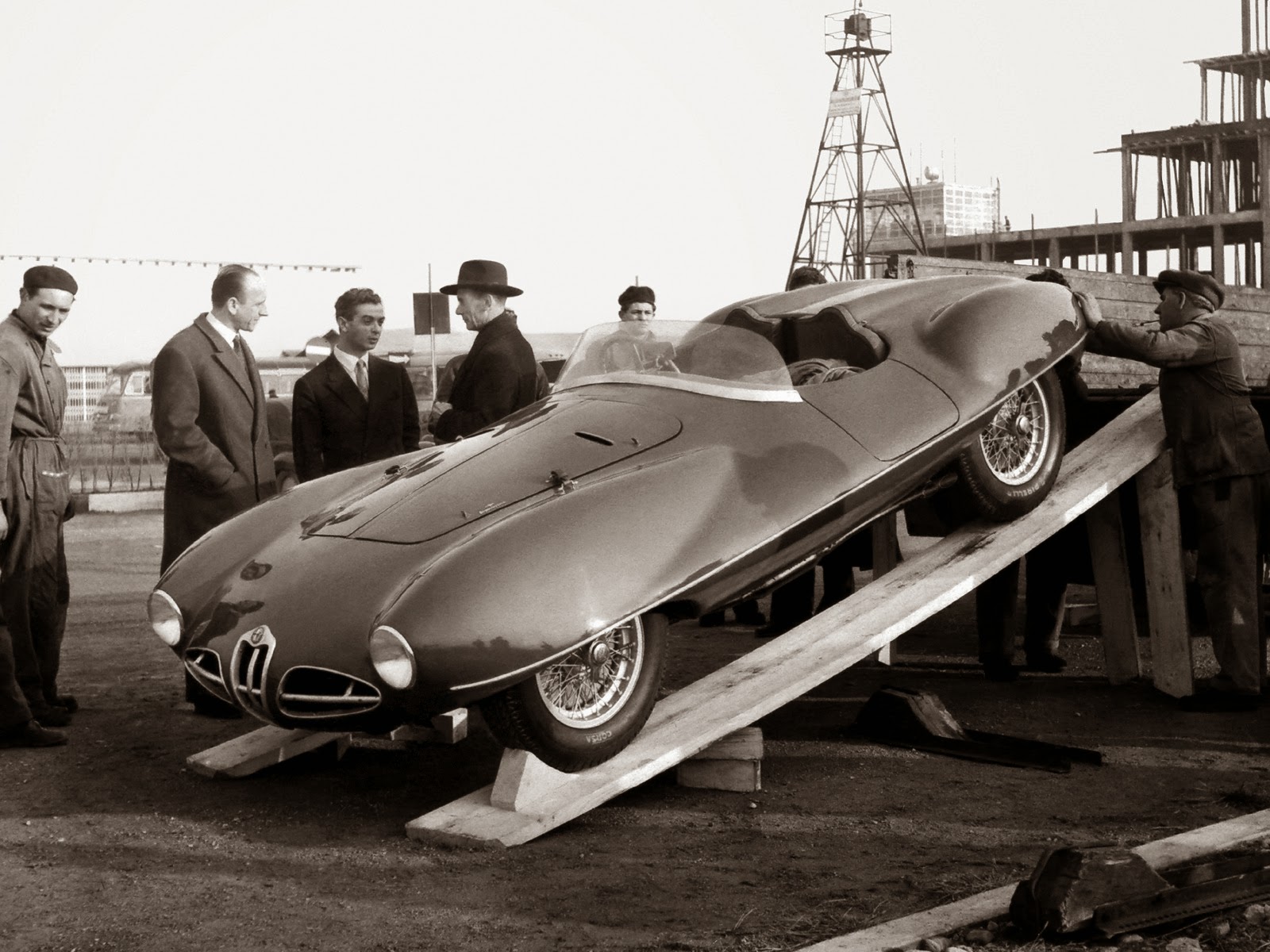
Meanwhile in Milan, Carlo Felice Bianchi Anderloni marshaled Touring’s resources to craft the body that would astonish the world. Anderloni, a true artist-engineer, embraced new techniques like wind-tunnel modeling and guided his team to shape the aluminum panels in pursuit of aerodynamic perfection. One can picture the scene in Touring’s workshop: skilled metalworkers hammering sheets of alloy over wooden bucks, gradually forming that sensuous, streamlined shape by hand, while engineers double-checked calculations from the wind tunnel. The car’s development was a dance between empiricism and artistry. Innovation hung in the air – postwar Italy was eager to prove that its design and technology could lead the world, and projects like the Disco Volante were the ultimate proof.
🔗 Read more: The Bertone B.A.T. mobiles
The spirit of the era was one of bold experimentation. The early 1950s saw Italian car design depart from prewar conservatism and reach for futuristic ideals. In those same years, companies like Bertone were crafting the swoopy BAT aerodynamic concept cars, and American designers were toying with jet-inspired styling. The Disco Volante fit right into this zeitgeist – it was arguably the car that took the UFO fascination of the 1950s and turned it into rolling art. Culturally, flying saucers and rockets were on people’s minds; scientifically, jet travel and space flight were the next frontiers. The Disco Volante’s look captured that space-age optimism. Yet, it was also rooted in Italian tradition: built by hand, with a racing soul inherited from Alfa’s prewar victories and a design elegance honed in the studios of Milan. It reflected the notion that postwar Italy was moving forward – honoring craftsmanship and beauty from the past while fearlessly embracing the future.
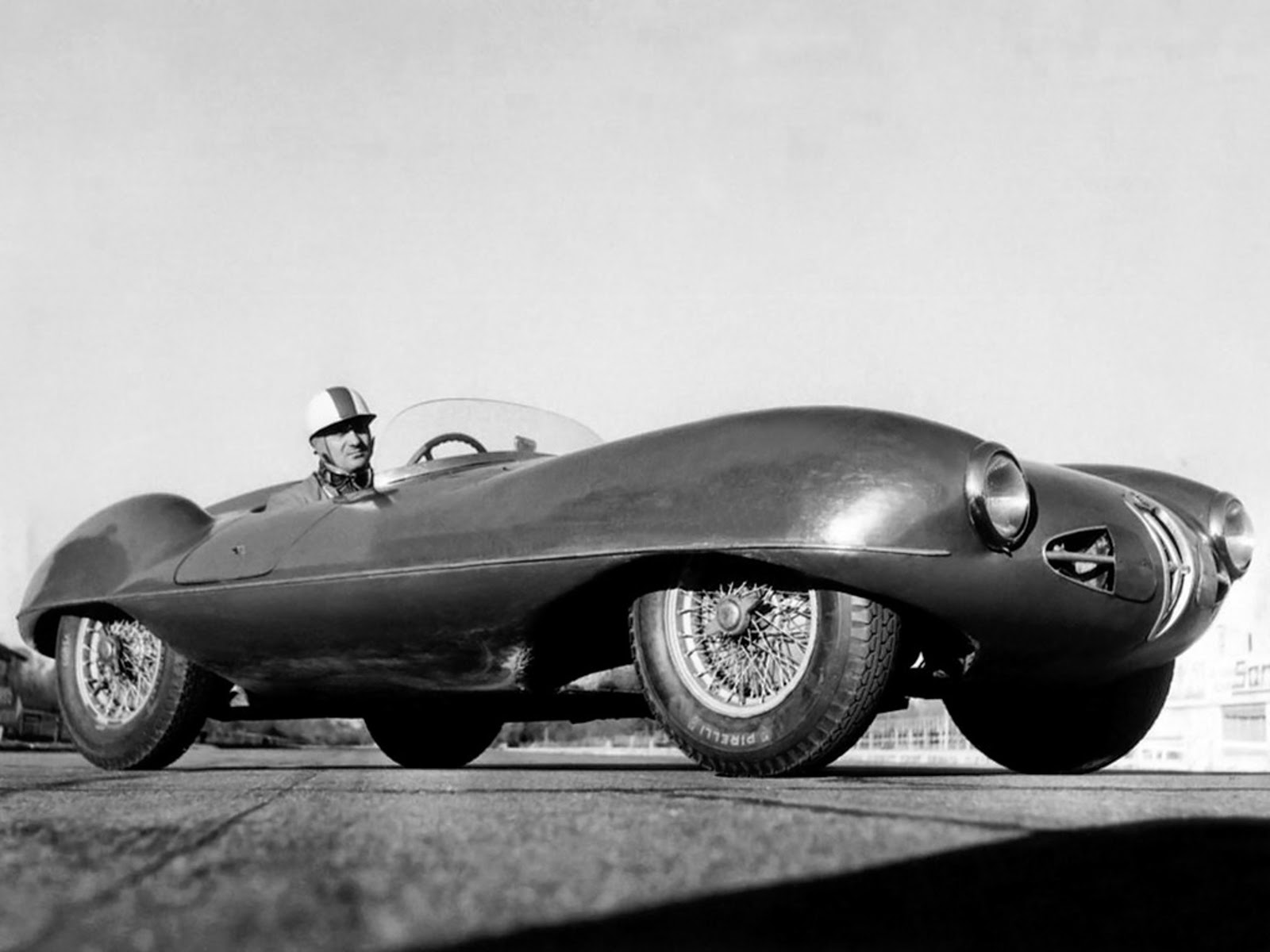
Every person who touched the C52 project, from the drawing board to the track test, contributed to this atmosphere of innovation. Alfa’s test drivers, like Consalvo Sanesi (himself a seasoned racer), pushed the prototypes to their limits on circuits and mountain roads, bringing back vital feedback that shaped subsequent tweaks. The camaraderie between Alfa Romeo and Touring’s teams was also emblematic of the close relationships in the Italian automotive world: coachbuilders and manufacturers working side by side, trading expertise and respecting each other’s artistry. This collaboration was key to the Disco Volante’s success as a design icon. The car might never have existed without Alfa’s racing heritage, nor without Touring’s creative courage – it needed both. And together, these people forged not just a remarkable automobile, but a symbol of an era. The Disco Volante remains a testament to their daring and ingenuity, an eternal reminder that great design is born when talent and courage meet.
Whereabouts
Today, 2 of the 1st examples with the 4 cylinder engine, the original spider (Chassis no. 1359.00001) and the coupe (Chassis no.1359.00003), are settled at the Museo Storico Alfa Romeo in Arese, Milan. The Fianchi Stretti (Chassis no. 1359.00002) is preserved in the Schlumpf collection at Musée national de l’automobile in Mulhouse, France. And finally, the 6 cylinder example (Chassis no. 1361.00011) is being kept at the Museo Nazionale dell’Automobile in Turin.
Epilogue: A Modern Tribute to the Disco Volante
Fast-forward more than sixty years, and the spirit of the Alfa Romeo C52 Disco Volante lives on in a new millennium. In 2012, the storied coachbuilder Touring Superleggera – reborn and carrying forward its illustrious name – unveiled a modern interpretation of the Disco Volante at the Geneva Motor Show. This was no mere retro concept, but a fully engineered, limited-production grand tourer built upon the capable chassis of the Alfa Romeo 8C Competizione. The modern Touring Disco Volante coupé, like its 1952 ancestor, is a two-seater with voluptuous, aerodynamic bodywork hand-crafted in aluminum and carbon fiber. Its designers, led by Louis de Fabribeckers at Touring, drew clear inspiration from the original: the long bonnet, the curved haunches over the wheels, and the overall teardrop profile all pay homage to the 1950s “flying saucer” shape, reimagined for the 21st century. Park the new Disco Volante beside the old, and the kinship is unmistakable – a seamless blending of past and present design languages.
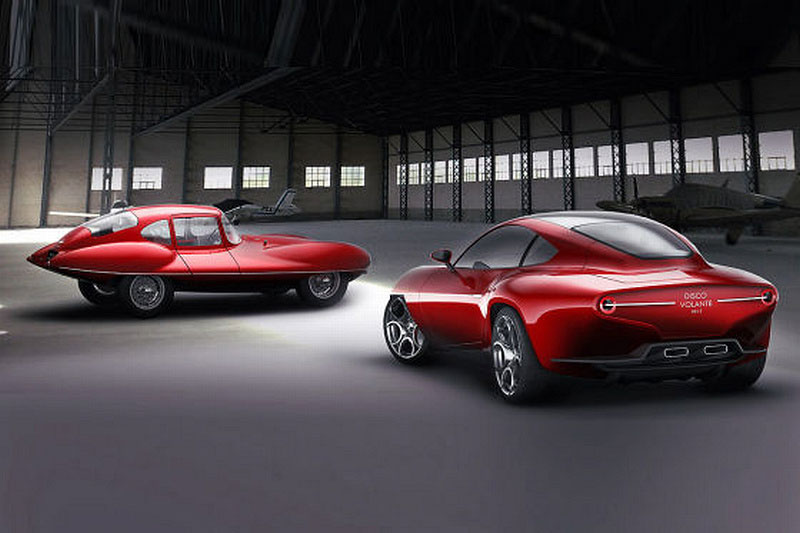
Yet the modern Disco Volante is not an exercise in nostalgia so much as a loving continuation of the story. Underneath its bespoke exterior lies a powerful 4.7-liter V8 engine, and the car’s performance is thoroughly contemporary – 0 to 100 km/h in about 4.2 seconds, and a top speed nearing 290 km/h. Only a handful of these cars were made (each taking thousands of hours to hand-build), including a gorgeous Spyder version launched in 2016 with an open top for alfresco motoring. In each of them, one can sense the ethos of Anderloni’s original mantra: keep it light, make it sleek, and infuse it with passione. The Touring Superleggera Disco Volante of the 2010s reinterprets the jet-age optimism of its predecessor in a modern idiom – it’s as if the Flying Saucer from the 1950s took off and landed in the future, unchanged in spirit but evolved in form.
In this way, the legend of the Disco Volante comes full circle. What began as a daring postwar experiment has become a timeless inspiration. The modern tribute car is not only a rolling sculpture in its own right but also a salute to the visionaries of 1952 who proved that engineering and artistry together can achieve the extraordinary. Just as the original Alfa Romeo C52 Disco Volante reflected the hopeful, innovative spirit of its era, the new Disco Volante by Touring reminds us that that spirit is still alive today. It bridges decades of design, honoring the legacy of the flying saucer on wheels while propelling it into a new age. In the end, the Disco Volante – both old and new – symbolizes a simple, romantic idea: that cars, when crafted with imagination and heart, can truly become dreams made real.
Photos:
Alfa Romeo Automobilismo Storico,
Centro Documentazione (Arese, Milano)

ABOUT THE AUTHOR
Andreas Scheidl
Italian classic car enthusiast with German roots. Renowned as a respected figure in the classic car community, he serves as a jury member at various international concours d'elegance, including the Classic Gala Schwetzingen and Mantova. As a content creator, Andreas passionately shares his profound knowledge and appreciation for vintage automobiles. His heart beats for cars designed by Giovanni Michelotti, showcasing his discerning taste and dedication to preserving the timeless elegance of automotive history.
More stories by Andreas Scheidl ↗CONTINUE READING
Posts You Might Like

A Central Driving Position, a Rear-Mounted V8. Was This Really a Lancia?
In 1948, visitors to the Turin Motor Show could see an unusual Lancia on the stand of Carrozzeria Ghia. It was a large two-door coupé with a two-litre V8 mounted behind the…
Read story
Fioravanti F100: The Ferrari He Was Allowed to Imagine
Enzo Ferrari’s centenary, Leonardo Fioravanti’s independent studio and a supercar that explored air brakes, steel wheels and a new way of driving—without ever wearing the Cavallino.
Read story
Michelotti Shellette: When the Fiat 850 Became a Yacht
The yacht designer, the Turin stylist and the tiny coachbuilt car that crossed between the quay, the royal holiday house and the auction room. Some automobiles were conceived for the open road,…
Read story
Maserati A6 1500: A New Road for the Trident
When the doors of the Geneva Motor Show opened in March 1947, Maserati was a name that required little introduction to anyone who followed motor racing. What it did not yet possess…
Read story
THE CONVERSATION
Comments 0
Share a memory, a period photograph or a documented detail about this story.