
Ghia Supersonic: The Space-Age Icon on Wheels

Imagine it’s the early 1950s and the world is caught up in the thrill of the supersonic age – the era when breaking the sound barrier became reality. In 1947, test pilot Chuck Yeager shattered the once-mythical Mach 1 in his Bell X-1 rocket plane, and suddenly “supersonic” was the buzzword of the day. Jet fighters and rockets captured the public’s imagination, and designers everywhere – from architects to automakers – wanted to channel this futuristic excitement. In America, car tailfins grew taller and dashboards sprouted airplane-like dials. In Italy, one coachbuilder took the concept to a whole new level. Carrozzeria Ghia of Turin, with designer Giovanni Savonuzzi, created a series of cars so sleek and avant-garde that they looked ready to blast off for the stratosphere. They called them Supersonic, and these exotic machines would appear on the chassis of several marques between 1953 and 1956, each one a space-age dream on wheels.

What follows is the remarkable story of Ghia’s Supersonic cars – born from a one-off racing special and evolved into a limited production of ultra-stylish automobiles spanning multiple brands. We’ll journey through each incarnation in chronological order, from an Alfa Romeo race car that sparked the design, to Fiat’s stunning road cars, to rare conversions of Jaguar and Aston Martin, an American show car for DeSoto, and even a wild Anglo-American hybrid years later. It’s a tale targeting historians and enthusiasts alike, blending serious automotive history with a lighthearted touch. Buckle up – our story begins on the starting line of the 1953 Mille Miglia race in Italy, with a visionary engineer and a very special Alfa Romeo.
Alfa Romeo and the Birth of the Supersonic (1953)
Our saga starts with an Italian tuning wizard named Virgilio Conrero and a Swiss gentleman racer Robert Fehlmann. In 1953, Fehlmann was preparing for the 20th running of the famed Mille Miglia, the 1000-mile Italian road race, and he wanted something truly extraordinary to drive. He approached Conrero – a well-known Turin-based tuner of Alfa Romeos and Lancias – and asked for a custom-built racing sports car for the event. Conrero set to work, concocting a hybrid racing chassis using bits and pieces from various cars: the front suspension was borrowed from a Fiat 1400 and the rear from a Lancia Aurelia, while an Alfa Romeo 1900 engine provided the power. This was no ordinary Alfa 1900 engine, either – Conrero massaged it extensively and fitted four high-performance Dell’Orto carburetors, squeezing every bit of power from the 2.0-liter four-cylinder.
🔗 Read more: How the Space Age Shaped 50s-60s Italian Car Design
With a robust chassis and a hot Alfa engine in hand, Conrero turned to his friend Giovanni Savonuzzi to give the car a body as dramatic as its purpose. Savonuzzi, newly appointed as Ghia’s design chief and known for his earlier work at Cisitalia, was brimming with ideas. Inspired by the recent aviation achievements and the sleek forms of jets and rockets, he penned a streamlined coupe that looked like nothing else on the road. The design featured a long, needle-like nose and bonnet, a low and compact passenger compartment set far back, and a short rear deck ending in subtle tailfins. A sharp character line ran like an arrow from the front fenders to the tail, enhancing the impression of speed. The roof was particularly striking: Savonuzzi gave the car a low “greenhouse” cockpit with a wraparound windshield and a large curved rear window in Perspex (plexiglass) that extended nearly to the car’s roof apex – almost like a fighter jet’s canopy. The rear tail lamps were set into sculpted pods that evoked jet engine exhaust nozzles, reinforcing the aerospace theme.
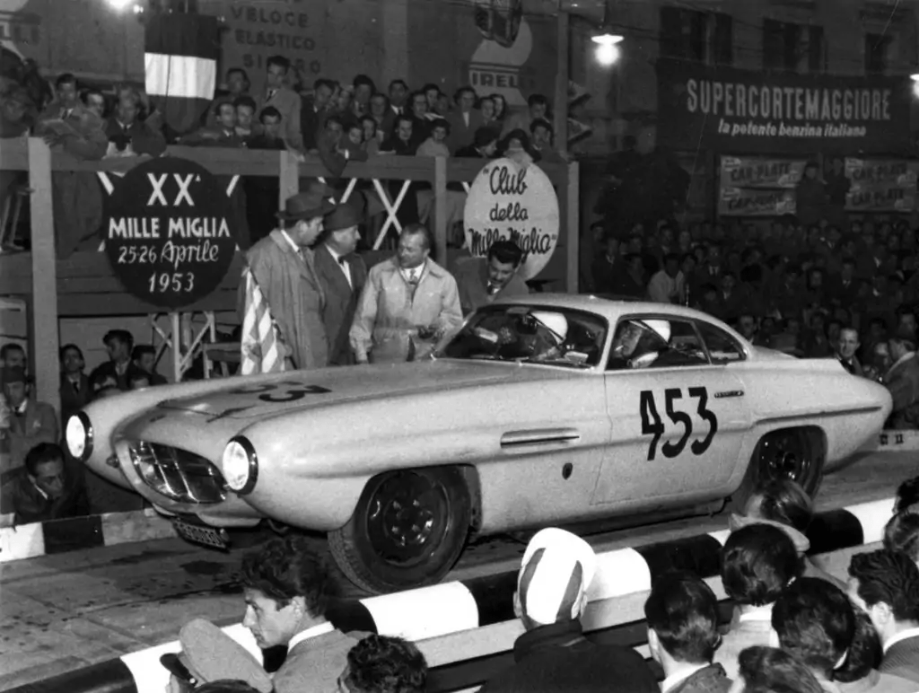
When this Alfa Romeo 1900 Supersonic (as it’s now often called) debuted at the Turin Motor Show in spring 1953, it stunned onlookers. Parked among more conventional road cars, it truly looked like a spaceship that had landed from the future. The Turin press dubbed it one of the show’s main attractions. Shortly after, Conrero entered the car in its ultimate test: the 1953 Mille Miglia, where it was assigned race number 453. Fehlmann took the wheel of the shiny silver rocket-car and set off from Brescia – but unfortunately, the car’s racing career (and the beautiful bodywork) met a sudden, violent end. Partway through the Mille Miglia, the Alfa Conrero Supersonic crashed and caught fire, burning extensively. Fehlmann survived, but the gorgeous Savonuzzi body was ruined beyond repair – charred and mangled to the point of no return. One can imagine the heartbreak of seeing this futuristic creation reduced to ash and twisted metal.
Yet, like a phoenix, part of the car got a second life. Conrero salvaged the underlying chassis and the engine, which were still usable, and built a new racing body for it – this time an open-top barchetta (speedster) style. With this rebodied “Conrero Sport” (also called the Conrero Alfa Romeo Sport), Fehlmann returned to the Mille Miglia in 1954, now with race number 511. In an experimental twist, they even fitted a transparent plexiglass bubble over the cockpit for aerodynamic testing in the ’54 race – essentially turning the little roadster into a quasi-jet canopy on wheels. That dome didn’t prove very practical and was not used again, but it shows how the supersonic airplane inspiration continued. The Conrero Sport performed decently and survived the event. Many years later, in 2013, this rebuilt Conrero Alfa (minus its original Supersonic coupe body) was shown at the Salon Rétromobile in Paris as a piece of racing history.
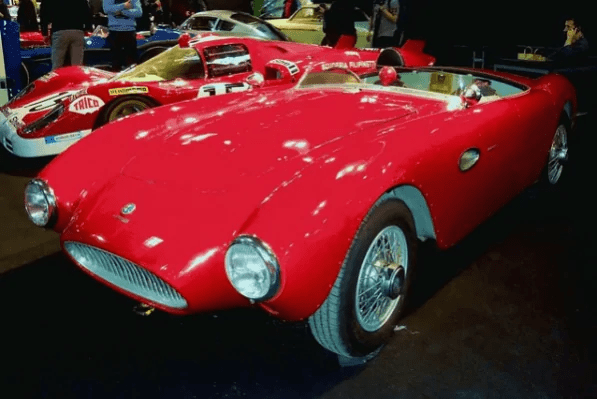
For Ghia and Savonuzzi, though, the end of the Alfa’s short life was just the beginning of the Supersonic legend. The Torino auto show crowds had shown enormous interest in the radical design, so Ghia’s management saw an opportunity. Why let a good design go to waste on a one-off? They decided to refine Savonuzzi’s jet-inspired body and build a limited run of road cars for wealthy enthusiasts, essentially commercializing the Supersonic look that had dazzled Turin. All they needed was a suitable production chassis to serve as the platform.
For Ghia and Savonuzzi, though, the end of the Alfa’s short life was just the beginning of the Supersonic legend. The Torino auto show crowds had shown enormous interest in the radical design, so Ghia’s management saw an opportunity. Why let a good design go to waste on a one-off? They decided to refine Savonuzzi’s jet-inspired body and build a limited run of road cars for wealthy enthusiasts, essentially commercializing the Supersonic look that had dazzled Turin. All they needed was a suitable production chassis to serve as the platform.
Fiat 8V: The Supersonic Takes Flight (1953–1955)
Conveniently, a perfect candidate was at hand: the Fiat 8V (in Italian, Otto Vu), Fiat’s new high-performance sports coupe. The Fiat 8V was an exotic machine in its own right – a limited-production two-seater launched in 1952 with a Siata-developed tubular chassis, four-wheel independent suspension, and a spirited 2.0-liter V8 engine. (This was a surprising departure for Fiat, a brand mostly known for little family cars; as one magazine quipped, the 8V was “the biggest surprise of the year” in 1952.) Fiat built only 114 of these chassis, and they actively encouraged Italy’s top coachbuilders to body them in creative ways. Ghia had already designed one coupe for the 8V, but now they had something far more audacious in mind.
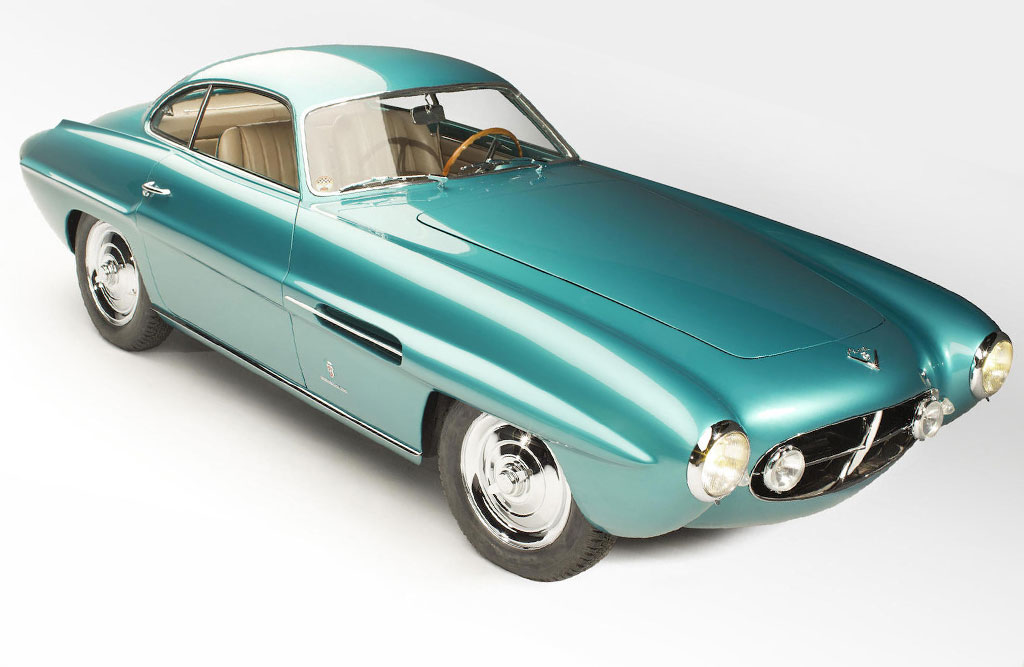
So in late 1953, just months after the Conrero Alfa’s demise, Ghia resurrected the Supersonic design on the Fiat 8V chassis. Savonuzzi made a few minor tweaks to adapt the body to Fiat’s frame and road-going needs. The biggest alteration was to the roof: the ultra-long wraparound rear window of the Alfa prototype (the Perspex “dome” reaching the windshield) was replaced by a more conventional, though still stylish, rear glass. In effect, they toned down the pure show-car eccentricity just enough for practical use, while retaining the dramatic low-slung profile and rocket-like details. The result was a jaw-dropping grand tourer that looked every inch a jet-age fantasy: the elongated hood, oval grille, and pointed nose flowed into a waistline that ran unbroken to the tail, where small fins and round tail-lights suggested the afterburners of a fighter jet. The roofline remained extremely low and aerodynamic, giving the impression of a fighter cockpit transplanted onto a car. Notably, each car’s details (trim, interior, etc.) were tailored to its buyer’s wishes, so no two Ghia Supersonics were exactly alike, but all shared the same avante-garde aura.
🔗 Read more: The Fiat 8V
The Fiat 8V Ghia Supersonic made its public debut at the Paris Auto Salon in October 1953 – less than a year after the original Alfa had wowed Turin. Once again, Savonuzzi’s creation stole the show. In fact, the Supersonic was voted the most beautiful car at the Paris show, defeating even the fanciest Ferraris and Aston Martins on display. One American designer in attendance, Henry de Segur Lauve of General Motors, was so smitten that he ordered one for himself on the spot. Over the next few years, Ghia built a small series of these cars, delivering them to discerning customers around the world. The exact production count has always been a bit of a mystery – Ghia didn’t keep the best records, and sources differ – but it’s generally believed that roughly 15 Supersonics were built on Fiat 8V chassis (give or take one or two; some say 14, some say 15). This makes each one extremely rare. For context, Ghia ended up clothing about 30–40 of the Fiat 8V chassis in various styles, so roughly half of all Fiat 8Vs got the Supersonic treatment, making it the most celebrated of the 8V’s coachbuilt variants.
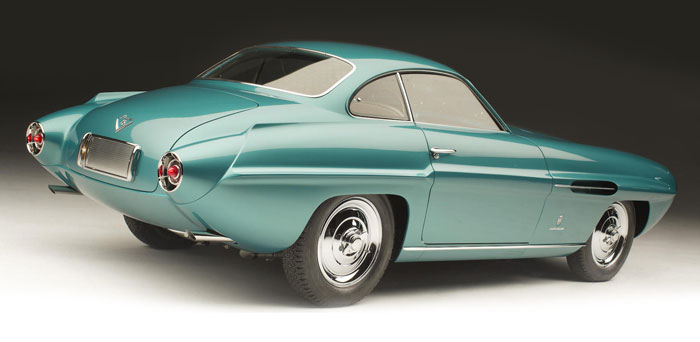
Driving a Fiat 8V Supersonic must have been quite an experience in the mid-1950s. Beneath the flamboyant bodywork was a serious sports car – a 2.0L V8 capable of about 110–120 hp, a 5-speed gearbox, and race-bred handling. But the real event was the reaction of onlookers. With its sweeping curves and space-age details, a Supersonic would cause traffic jams in Rome or Nice as people stopped to gape. As one commentator later wrote, these cars are “stunningly modern and dramatic, able to stop concours crowds in their tracks” even decades later. One distinctive feature on all of them is the side trim: a chrome spear starting near the front wheel arch that streaks back along the body, accentuating the sense of motion (a detail that even found its way onto some American GM cars later on, thanks to Mr. Lauve’s influence at Chevrolet!). Inside, the Supersonics were as luxurious as any Italian exotic of the day, with plush leather, custom gauges (Ghia even made a unique Supersonic speedometer badge), and appointments tailored to each buyer.
Fiat Supersonic owners were typically well-heeled enthusiasts – some were European aristocrats, others American collectors. A few became quite famous: for example, Briggs Cunningham, the American sportsman, owned one; Henry Lauve’s car, which he used around Detroit, became legendary among GM designers; and another Supersonic ended up racing in the Mille Miglia and other events in privateer hands. Today, these Fiat 8V Supersonics are multimillion-dollar collectibles, coveted for their beauty and historical significance. But back in 1954, if you were an automotive connoisseur with connections and a healthy bank account, you could commission Ghia to build you essentially a road-going rocket ship.
By 1955, Ghia had moved on to other projects and the Fiat 8V itself ceased production, so the curtain closed on this limited run. Yet the Supersonic’s journey was far from over – its striking design would soon appear wearing other badges, proving great design knows no borders.
Jaguar XK120: British Cats in Italian Jets (1954)
While Ghia was building the Fiat-based Supersonics, the design caught the eye of Jaguar enthusiasts as well. The Jaguar XK120 was one of the most celebrated British sports cars of the early 1950s – a curvaceous, fast roadster/coupé that had set speed records and won races. But even Jaguars, as stylish as they were, looked positively old-fashioned next to the Ghia Supersonic. Perhaps that contrast inspired an enterprising idea: what if we put a Supersonic body on a Jaguar chassis? The result would combine Italian ultra-modern styling with proven British engineering.
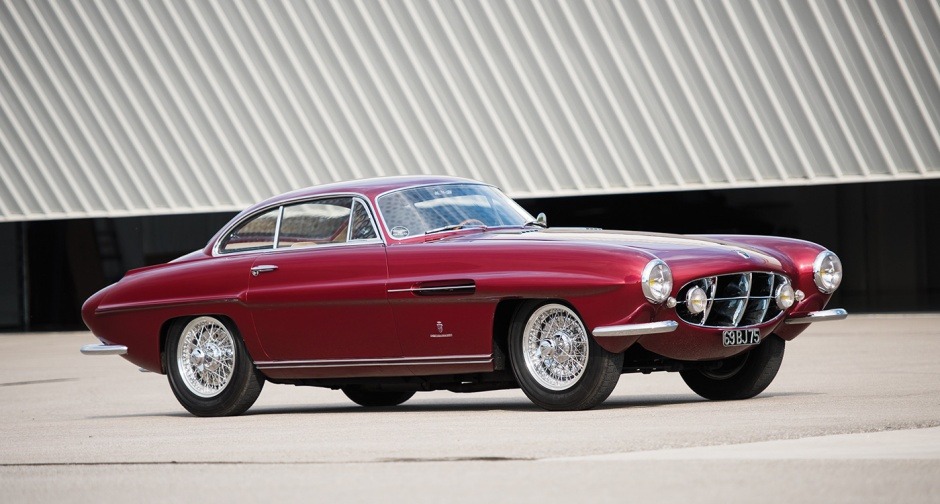
In 1954, a Paris Jaguar dealer named Charles Delecroix did exactly that. Working with Ghia (who were likely happy to sell a few more Supersonic bodies), Delecroix arranged for three Jaguar XK120 chassis to be sent from England to Turin to be rebodied as Supersonics. These cars were originally standard XK120 Fixed-Head Coupés, built by Jaguar in Coventry, but they were delivered new without their factory bodywork to be transformed by Ghia. It appears a wealthy French gentleman, Monsieur Malpelli of Lyon, ordered two of them, and a third was possibly ordered by another party (the third car’s story is less documented, and it remains something of a mystery).
The Jaguar Supersonics looked very similar to the Fiat 8V versions – after all, the design was essentially copied over, with adjustments to fit the Jag’s longer wheelbase and wider engine. Under the hood sat Jaguar’s famous 3.4-liter straight-six engine. In at least one of the cars (chassis #679768), Virgilio Conrero himself got involved again: he tuned the Jaguar engine and installed triple Weber carburetors, bumping its output to around 220 horsepower. That made this particular Supersonic likely the fastest of the breed – a true 140+ mph grand tourer at a time when such speeds were rare. This #679768 Jaguar Supersonic was painted pearlescent white and made its debut at the 1954 Paris Motor Show, where it shared the stand with Ghia’s other creations. Show-goers must have done a double-take seeing a Jaguar badge on a car that looked like a futuristic Italian concept. The same car also appeared at the London Motor Show and even in high-society concourse events in Cannes and Montreux, often alongside its sibling Supersonics.
🔗 Read more: The Italian Jaguars: Stylish Symphony of Elegance and Innovation
These Jaguar-based Supersonics had some interesting post-build drama: allegedly, Monsieur Malpelli never paid Ghia or the dealer for the two cars he ordered. Oops! This left the poor Paris dealer holding two very expensive hot potatoes. One can imagine the awkward situation – two gleaming custom Jaguars and an unpaid bill. Eventually the cars were reclaimed and sold off elsewhere. One of them (#679768, the white show car) stayed in France for years, passing through a series of owners (including a stretch on display at Montlhéry track’s museum), and it survives today fully restored in a deep metallic red. The second car had a more modified life: over time its later owners altered the nose grille, hood scoop, and other details, and even added dual windshield wipers on the rear window (perhaps anticipating rain while driving backwards?). It too still exists, though not as factory-original. The third Jaguar Supersonic remains elusive – some say it was unfinished or lost, but no definitive record of it has surfaced, making it an intriguing footnote.
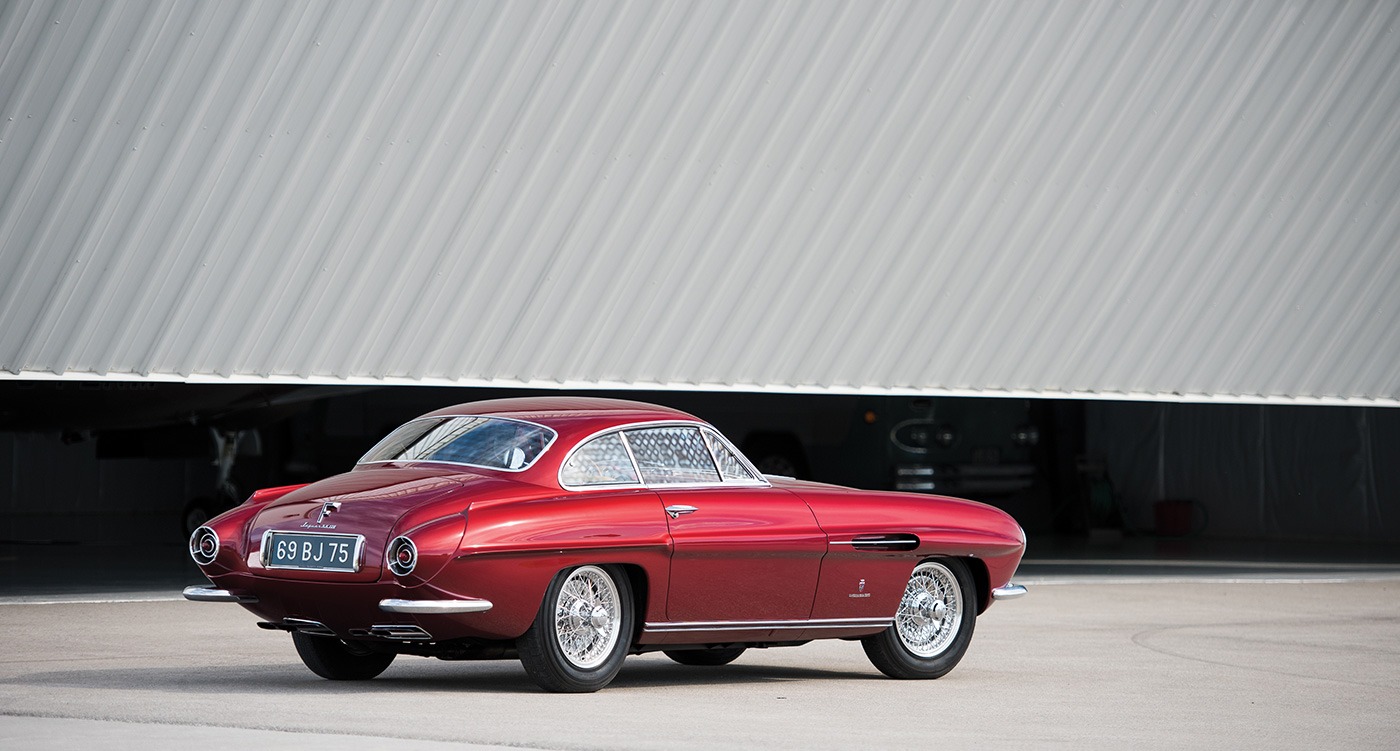
In total, only two Jaguar XK120 Supersonics are confirmed to survive to this day, making them some of the rarest Jaguars in existence. They perfectly exemplify the cross-cultural experimentation of the 1950s: British “Le Mans” performance married to Italian “jet age” couture. Imagine the reaction pulling up to a Jaguar club meet in one of these – it’s simultaneously a classic Jag and not a Jag at all! For historians, these cars also highlight the role of independent dealerships and coachbuilders in that era, when a dealer might commission a special like this to entice high-end clients. And for Ghia, it proved the Supersonic design’s versatility – it wasn’t just a one-make wonder, but a concept that could be adapted to different sizes and powertrains.
A fun coda: when one Jaguar Supersonic was auctioned in 2015, it fetched over $2 million, underlining how that once-unappreciated mix of British and Italian engineering is now seen as a masterpiece of automotive art.
DeSoto Adventurer II: An American Supersonic (1954)
As the Supersonic’s fame spread, it inevitably caught the attention of the American auto industry – specifically, the forward-thinking design chief at Chrysler, Virgil Exner. In the early 1950s, Exner was leading Chrysler’s push to incorporate European design flair into their concept cars and production models. He had a close working relationship with Ghia (Chrysler frequently contracted Ghia to build its concept cars in the 1950s). When Exner got wind of the Supersonic, he essentially thought, “What if we had our own version of this for Chrysler, on a big V8 chassis?”
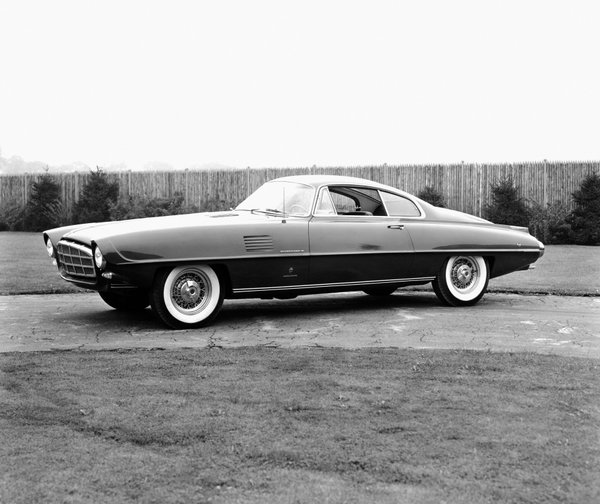
The result was the DeSoto Adventurer II, a one-off dream car that can be considered an honorary member of the Supersonic family. The project came together in 1954. The story goes that a complete Fiat 8V Supersonic (one of the cars from the limited series) was shipped from Italy to Chrysler in Detroit early in ’54. Exner and his team studied its design closely as inspiration. They then took a full-size American chassis – the so-called Chrysler S-19 platform, essentially a large DeSoto chassis with a 125-inch wheelbase – and designed a new body that riffed on the Supersonic’s themes. This design was sent back across the Atlantic to Ghia for construction, since Ghia were the craftsmen adept at turning Exner’s wild ideas into metal. One can imagine Italian panel-beaters scaling up Savonuzzi’s lithe design to Cadillac-sized proportions!
When completed, the car was shipped back to the U.S. and unveiled as the “DeSoto Adventurer II” on June 16, 1954, during the grand opening of Chrysler’s new Chelsea Proving Grounds. Painted a deep metallic charcoal gray, the Adventurer II looked like a Supersonic on steroids – longer, wider, and with even more exaggerated elegance. It had a pronounced, toothy DeSoto grille up front, but from the side the lineage was clear: the flowing fender line, the small tailfins, the curved canopy-like roof – all pure jet-age Ghia styling. Under the hood growled a DeSoto “Red Ram” Hemi V8 engine, displacing 276 cubic inches, mated to Chrysler’s two-speed PowerFlite automatic transmission. So this Supersonic had an American heart with roughly 170–200 horsepower and a smooth auto gearbox – a far cry from the high-strung Italian V8s or inline-sixes in its smaller siblings, but perfect for an American concept cruiser.
One remarkable feature of the Adventurer II was its retractable rear window: the entire back glass could slide down at the push of a button. This effectively turned the cabin into a breezy targa setup, allowing the lucky occupants to enjoy open-air motoring without fully losing the roof – perhaps a design solution to provide a “convertible feel” while maintaining the car’s flowing roofline. The interior was a blend of Italian craftsmanship and American luxury, with rich leather and elegant instrumentation (Chrysler loved showing off “Italian style” interiors in its Ghia-built show cars of the era).
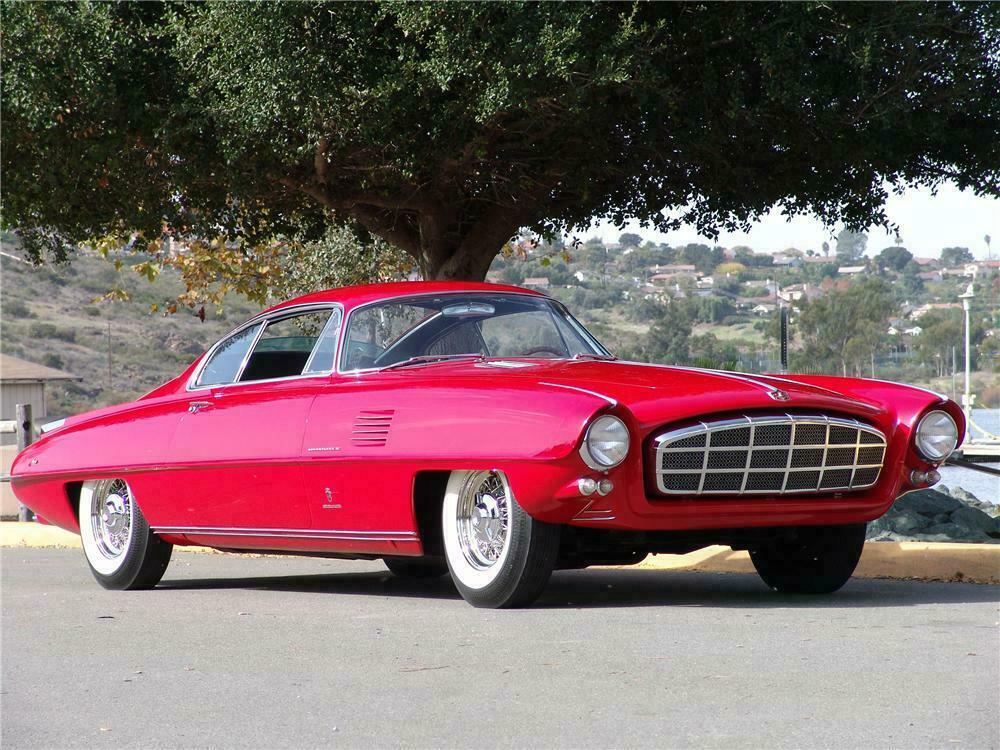
After its debut in Detroit, the Adventurer II was flown back to Europe to grace Ghia’s stand at the 1954 Turin Auto Show (bringing the Supersonic story full circle to Turin) and later the Brussels Motor Show. It wowed crowds just as the smaller Supersonics had – despite being physically much larger, the car managed to preserve a lot of the Supersonic’s svelte charm. It truly looked like a rocket for the road, only grander in scale, as if designed for a 1950s tycoon who wanted a personal jet on wheels. Ultimately the Adventurer II remained a one-off; it was a concept car not intended for production, though it was fully functional. After the show circuit, it ended up in the hands of King Mohammed V of Morocco for some time, and later passed through several collectors. Its rarity and beauty have made it a star at concours events in modern times. In 2012, it was auctioned by Barrett-Jackson and fetched $1.43 million – not bad for a car that started life as an idea to “Americanize” the Supersonic ethos.
In the grand tapestry of Supersonic lore, the DeSoto Adventurer II stands out as the most extravagant interpretation of the theme. It demonstrates how influential the Supersonic design was, that even a major Detroit manufacturer emulated it. Virgil Exner’s bold styling choices at Chrysler (which would soon usher in the era of huge tailfins on production Chryslers) were undoubtedly validated by cars like this. One might say the Adventurer II was Supersonic meets Detroit, with all the chrome and horsepower that implies.
Aston Martin DB2/4 Mk II: The Last of the Supersonics (1956)
By the mid-1950s, Ghia had clothed Supersonic bodies on Italian, British, and American chassis – quite a portfolio. Fittingly, the final act of the Supersonic saga took place on the chassis of a very British thoroughbred: an Aston Martin DB2/4 Mk II. This car, built in 1956, was the last official Supersonic produced and is unique for being the only Aston Martin ever to wear the Supersonic design.
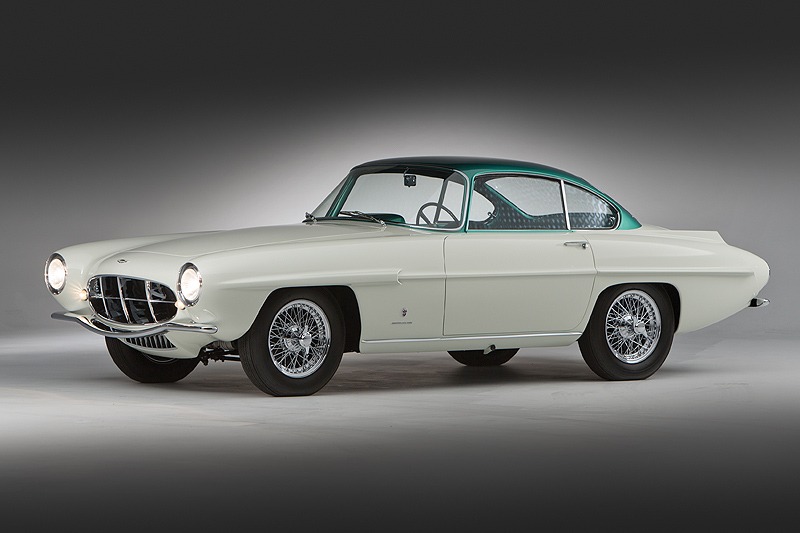
The initiative for the Aston Martin Supersonic likely came from a private client rather than Aston’s factory. Though the exact origin is a bit murky, it is widely believed that Harry Schell, an American Formula 1 racing driver of the era, commissioned or at least facilitated this special build. Harry Schell was a larger-than-life character – the son of wealthy motorsport parents and a regular on the Grand Prix circuit in the 1950s. He had a taste for fast cars and fine living. The story goes that in 1956, Aston Martin sold a bare chassis (number AM300/1/1132) from their DB2/4 Mk II line to Ghia for this project. Schell was seen driving this very car to various European Grand Prix events in 1956, which lends credence to him being the first owner and perhaps instigator of the idea.
The Aston Martin DB2/4 Supersonic made its public debut at the Turin Motor Show in April 1956, appropriately on Ghia’s stand. It must have been a breathtaking sight: the elegant Savonuzzi lines on a slightly larger, more upmarket chassis, painted a deep metallic red and paired with Aston’s distinguished grille badge. Because the Aston DB2/4 Mk II was a 2+2 seater (meaning it had a small back seat and thus a longer cabin than the strictly two-seat Fiat or Jag), the Supersonic design had to be stretched and modified accordingly. Savonuzzi managed this gracefully – the Aston Supersonic’s roof is a bit taller and the side window area longer, but it still retains the low-slung Supersonic character. In fact, if you look closely, the side flanks of the Aston have a slightly different curvature, and it sports a one-off delicate front bumper and grille treatment not seen on the others. These tweaks aside, it’s unmistakably a sister to the Fiats and Jaguars in the Supersonic family, right down to the tailfins and tapered tail with twin exhaust ports.
Harry Schell’s involvement added to the car’s mystique. Schell was reportedly loaned the car directly by Aston Martin in exchange for the publicity it would generate. And generate publicity it did – photos from 1956 show Schell driving the Supersonic to the Monaco and Belgian Grand Prix, parking it among the racing transporters and being the envy of the paddock. One famous image in Quattroruote magazine even shows Schell stepping out of the car in a dapper suit, the very embodiment of a jet-setting racing driver. It must have been quite the sight for fellow racers like Fangio and Moss to see an Aston Martin that looked like a rocket ship arrive in the pits!
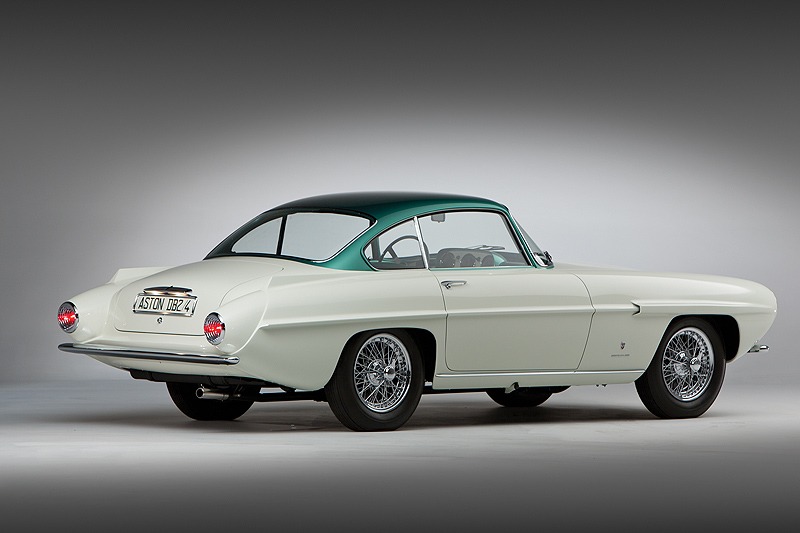
After Schell’s time, the Aston Supersonic found its way to American owners, including notable collectors. By the 1960s it was stateside, and over the years it was faithfully preserved. In 2013, this unique Aston Martin Supersonic was sold at an RM Sotheby’s auction for $2.31 million, underscoring its value as a one-of-one piece of automotive history. The auction listing nicknamed it “the gentleman’s rocket ship”, a phrase that perfectly captures the car’s dual personality – equal parts refined English grand tourer and flamboyant jet-age fantasy.
With the completion of the Aston Martin in 1956, the official Supersonic series came to an end. In total, across all brands, no more than 20 Supersonic-bodied cars were ever made between 1953 and 1956. Each was an individual jewel, slightly different in execution but united by a common design DNA. For Ghia, the Supersonic project cemented their reputation as one of the most daring coachbuilders of the decade. And for Giovanni Savonuzzi, it was a career-defining achievement – he had managed to encapsulate the spirit of an era in metal, creating an instantly iconic shape that people still adore many decades later.
One might think that was the epilogue of the Supersonic story… but there was one more surprise coda in store, coming from an unexpected place: 1960s England, with a dash of American V8 thunder.
AC Cobra (Willment 427 Coupe): The Supersonic’s Wild Second Act (1965)
Fast forward to 1965. The world had moved on – the jet age had given way to the space age, The Beatles were on the radio, and Carroll Shelby’s ferocious Ford-powered AC Cobras were dominating racetracks. It was in this environment that John Willment, a British racing team owner and Ford dealer, decided to resurrect the Supersonic in the most outrageous way possible. If the Supersonic had been all about European elegance and style, Willment’s project would be about raw power and speed – essentially stuffing an American NASCAR engine into that lithe Italian body.
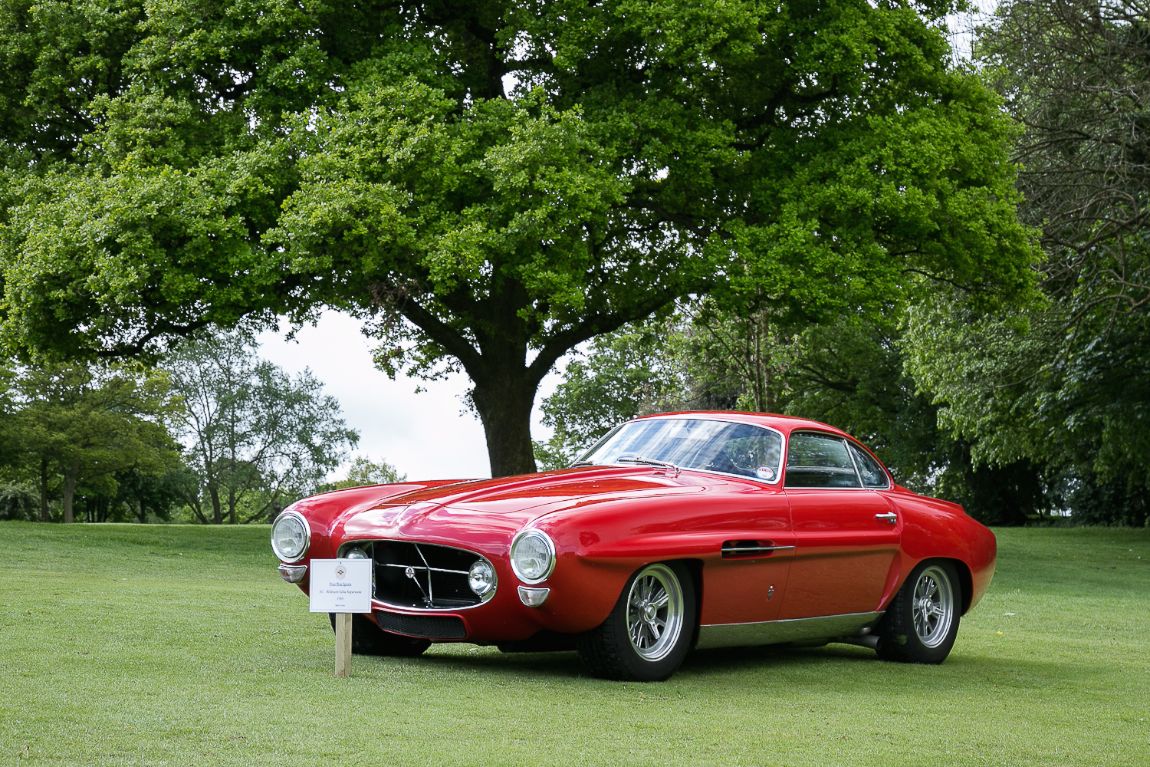
The backstory is this: Shelby American (Carroll Shelby’s outfit) had been building the Cobra, a lightweight British AC roadster with Ford V8 power, and in 1964 they developed a few Cobra Daytona Coupes for racing. Shelby planned a second generation of even more potent Cobra-based coupes using the big-block 427 engine, but those plans were scrapped when racing rules changed. This left some spare AC Cobra 427 chassis lying around. Willment acquired one such chassis (serial number CSX3055) – a state-of-the-art tubular frame designed for a 7-liter engine. Meanwhile, he also came across a discarded Ghia Supersonic body from a wrecked Fiat 8V that had somehow ended up in a scrapyard in the UK. Instead of restoring the Fiat, Willment had a more eccentric idea: marry the Italian Supersonic body to the high-performance Cobra chassis, creating a one-of-a-kind Willment 427 Ghia Coupe.
It was a Frankenstein-like undertaking, but the ingredients were tantalizing. The Cobra chassis was shortened and modified extensively to accommodate the Supersonic’s proportions (since the original Fiat chassis was smaller – the mechanics had to stretch and widen mounting points; legend has it they found the Cobra frame was about 4 inches too short and had to get very creative to make things fit). Under the hood, they installed a 7.0-liter Ford V8 prepared by Holman & Moody, a famous NASCAR racing engine shop. This engine pumped out around 480 horsepower, an absurd figure for a road car in the mid-’60s. Willment’s goal was reportedly to hit 200 mph on the road – a supersonic speed indeed, and one that, if achieved, would have made it one of the fastest street-legal cars on Earth at the time. To handle this, the car was outfitted with wide Halibrand racing wheels and a very tall rear axle ratio for high top speed runs.
Visually, the Willment 427 Coupe looked like a Supersonic on steroids (even more so than the DeSoto had). The classic Savonuzzi shape was intact, but with that big American V8, it had a bulging hood and an aggressive stance. Inside, it was a bit spartan – more a race car than a grand tourer, with bucket seats and minimal sound insulation. And sound there would have been – that 7-liter likely made a thunderous roar. One can imagine the reaction of an unsuspecting passerby seeing what appeared to be a 1950s Italian show car, only to hear it start up with the lumpy idle of a NASCAR V8 shaking the ground!
The Willment Supersonic was completed around 1965. However, by the time it was finished, John Willment himself had lost interest or moved on to other projects (the 1960s were a fast-moving time in racing). The car sat in his showroom for sale, and over the subsequent decades it changed hands a number of times, often puzzling dealers and owners who weren’t quite sure what to do with a 200 mph coachbuilt Cobra. It turns out shoehorning such immense power into that chassis made the car a handful – some early drivers reported it was terrifyingly fast but also tricky to handle, with more power than the chassis could gracefully manage. It didn’t help that the cabin got extremely hot from the big engine and there was no air conditioning – the car could practically roast its occupants along with the tires.
Over time, this one-off found a cult following. It was eventually restored properly in the 2000s, correcting some of the chassis issues, and by 2010 it reappeared in public. It was displayed at the Goodwood Festival of Speed that year, in the Cartier “Style et Luxe” concours, gleaming and burbling, proudly wearing its dual identities. Here was a car named after a Cobra but looking like a Supersonic, built by Italians but with an American heart – truly an automotive chimera. Many consider it the final chapter of the Supersonic story – the last car to use that Savonuzzi design in period. Dubbed the Willment Ghia Cobra by some, it’s a fittingly outrageous epilogue, showing that the Supersonic shape was so seductive it even tempted a hot-rodder to create a 480 hp monster out of it.
In a way, the Willment car brings things full circle: the Supersonic began as a one-off racing special, and it ended (in 1965) as a one-off racing special (for the road). Both the first and last Supersonics were born from racing dreams and personal passion, bookending an era of artistic road cars in between
Legacy of the Supersonic
Looking back, the Ghia Supersonic series stands as a remarkable intersection of design, technology, and culture in the 1950s. Here was a single styling idea – the vision of an airplane-on-wheels as imagined by Giovanni Savonuzzi – that managed to transcend its humble origins (an Alfa race car) and find expression on Italian, British, and American automobiles alike. In each case, the Supersonic body elevated the chassis it sat on, turning already interesting cars into rolling sculpture. Whether on a petite Fiat 8V or a burly Aston Martin, the design shouted optimism for the future, the thrill of speed, and the glamour of the jet set.
For historians, the Supersonic cars highlight several key themes of the era. They exemplify the Space Age influence on automotive styling, much like the tailfin craze in Detroit – but executed with European finesse. The Supersonics’ long hood and tail, wraparound glass, and tailfin hints were a European answer to America’s space-age exuberance. They also demonstrate the vibrant coachbuilding culture of the 1950s, when companies like Ghia could undertake ultra-low-volume projects for wealthy clients or for their own publicity, something that became harder to do in later, more standardized decades. Additionally, the international aspect – Italian design on British and American cars – foreshadows the globalization of car design (today it’s common for design houses to style cars for multiple brands, but back then it was quite novel to see, say, a Jaguar with Italian coachwork).
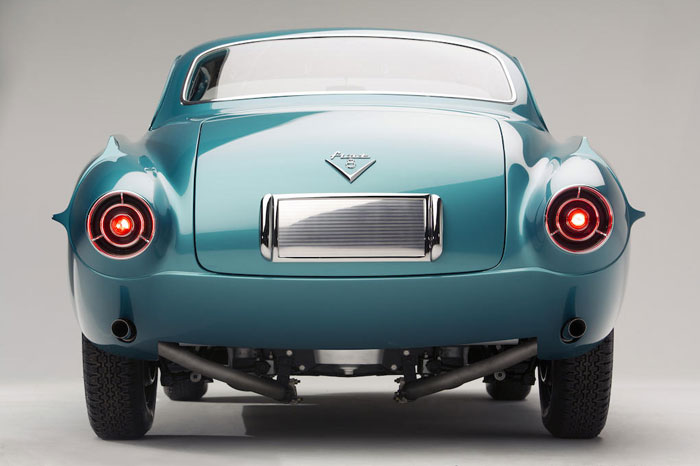
In total, fewer than two dozen Supersonic-bodied cars were ever made. Surviving examples are treasured in collections and museums, often drawing crowds whenever they appear at concours d’elegance. People are mesmerized by their timelessly futuristic look – a rare instance where a 1950s concept of the future still manages to look futuristic in the 21st century. One could say the Supersonic achieved what its name suggests: it conquered time in a way, remaining forever fast-looking and modern, long after the jets that inspired it have retired.
And of course, they are a joy for storytellers. There’s a certain humor in how disparate elements came together: a Swiss racing driver’s request leads to an Alfa with a rocket body; its destruction leads to Fiats that win beauty contests; French dealers chase delinquent customers for payment for wild Jaguars; an American designer supersizes it for a DeSoto showboat; a race driver uses one as a personal runabout; and a British eccentric drops a NASCAR engine into one. Each anecdote is rich enough for its own chapter, but together they form the Supersonic legend.
Today, if you ever see a Ghia Supersonic in person, it’s easy to smile at some of the period touches – maybe the tiny tailfins or the way the speedometer might read in kilometers and miles – but also to be genuinely impressed. These cars remind us that car design can be art. They were rolling celebrations of an optimistic time when it seemed technology had no limits and style followed accordingly. As a funny yet fitting thought: none of the Supersonic cars ever literally went supersonic (thankfully – Mach 1 on the Autostrada would be terrifying!), but in their own way, they broke barriers. They fused the science-fiction dreams of the 1950s with the practicality of road transportation, and in doing so, ensured that the name Supersonic would be remembered not just in aviation annals, but in the pantheon of automotive greats as well.

ABOUT THE AUTHOR
Andreas Scheidl
Italian classic car enthusiast with German roots. Renowned as a respected figure in the classic car community, he serves as a jury member at various international concours d'elegance, including the Classic Gala Schwetzingen and Mantova. As a content creator, Andreas passionately shares his profound knowledge and appreciation for vintage automobiles. His heart beats for cars designed by Giovanni Michelotti, showcasing his discerning taste and dedication to preserving the timeless elegance of automotive history.
More stories by Andreas Scheidl ↗CONTINUE READING
Posts You Might Like
Reinterpreting the Past: When Coachbuilders revisited it’s Icons
When iconic coachbuilt cars are rebade through time, intent matters more than nostalgia. From experimental originals to modern reinterpretations, this article examines how legends are reimagined—and why some ideas refuse to stay…
Read story
Neither Coupé nor Spider: Italy and the Targa Roof
A deep dive into Italy’s decades-long exploration of the targa roof—from early post-war experiments to Ferrari and Lamborghini icons—revealing how Italian designers created a third way between coupé and spider.
Read story
Italian Vision of the MPV: The Monovolume Concept
Long before MPVs filled suburban driveways, Italian designers were shaping the monovolume with prototypes that ranged from pragmatic to outright outrageous. Their work rewrote how space, style, and function could fit under…
Read story
Italian Coachbuilt City Car Concepts: From Microcars to Urban EVs
How did Italy’s famed coachbuilders go from designing Ferraris to dreaming up tiny electric runabouts? From the quirky Tsé-Tsé to Pininfarina’s visionary Nido, discover how city cars became a proving ground for…
Read story
THE CONVERSATION
Comments 0
Share a memory, a period photograph or a documented detail about this story.