
The Lotus Esprit: Giugiaro’s Wedge Wonder
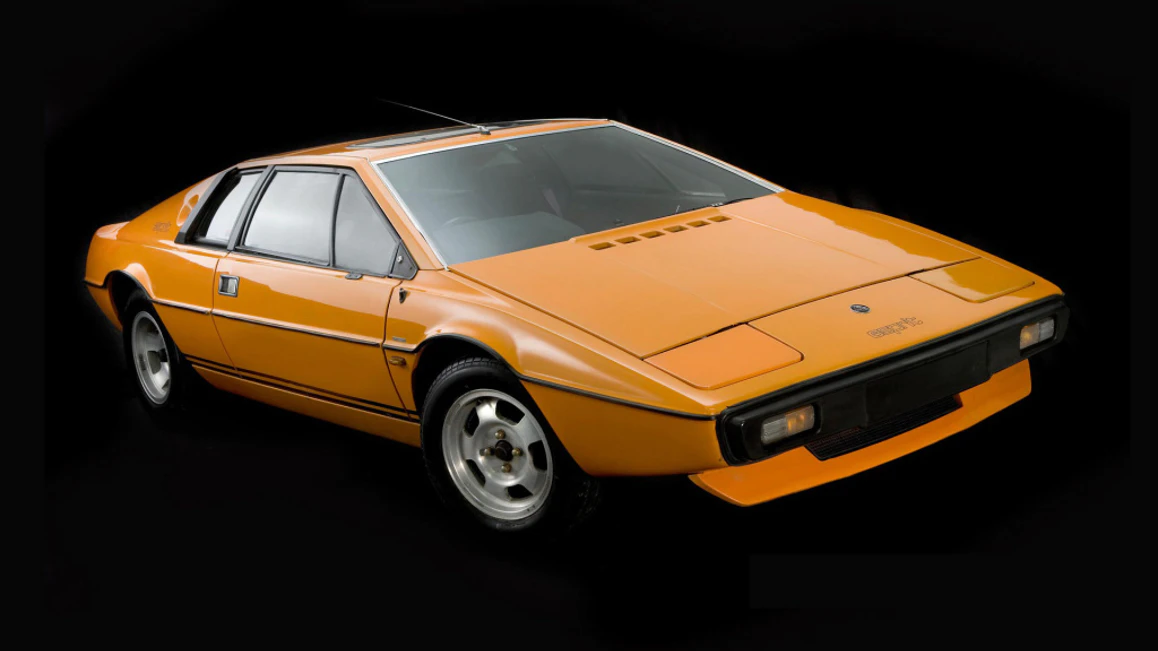
The Lotus Esprit is one of the most iconic British sports cars, remembered not only for its role as James Bond’s submersible ride but also for its striking Italian-styled design. Conceived in the 1970s and produced through the 1980s, the original Esprit was a product of cross-border collaboration between Lotus and Italian design firm Italdesign, led by the famed Giorgetto Giugiaro. With its razor-edge, “folded paper” wedge shape and innovative engineering, the Esprit epitomized the era’s futuristic aesthetic. This article takes a detailed (yet lightly humorous) journey through the design and development history of the original Lotus Esprit from 1972 to 1987 – from its origins as a radical concept born in Turin, through the evolution of its Series 1, 2, and 3 variants (including the turbocharged Esprit Turbo), to the lasting impact of Giugiaro’s vision on automotive design. We’ll explore how a meeting of British engineering and Italian artistry produced a supercar that could steal scenes in a spy film and still hold its own on the cutting edge of design trends. Along the way, we’ll uncover the Italdesign-Lotus collaboration, the influence of Giugiaro’s “origami” design philosophy, and the real-world challenges of turning a wild concept into a production icon. Buckle up – or should we say allacciate le cinture – for a ride into the Esprit’s history.
Origins of the Esprit: Lotus Meets Italdesign
Every legend has an origin story, and the Esprit’s begins in the early 1970s with a bit of serendipity. Lotus was looking to replace its Europa sports car (Project M70) with something truly cutting-edge. In 1971, Lotus founder Colin Chapman crossed paths with Giorgetto Giugiaro – then a rising star of Italian automotive design – at a motor show. Giugiaro, who had recently founded Italdesign and was known for shaping cars like the Maserati Bora, expressed interest in crafting a special body for Lotus. Chapman, never one to shy from innovation, agreed to let him try his hand using a Lotus Europa chassis as the starting point. It didn’t hurt that Giugiaro already had a radical design concept up his sleeve: his wedge-shaped Maserati Boomerang show car was wowing crowds, and Lotus’s own designer Oliver Winterbottom suggested using the Boomerang’s ideas as inspiration for the new Lotus.
Work on the new prototype began in mid-1971. Lotus shipped a lengthened and widened Europa backbone chassis to Italdesign’s studios in Turin as a design mule. By the end of 1971 Giugiaro had completed a full-size styling mock-up – a low, angular coupe finished in gleaming silver. This unnamed prototype previewed the dramatic lines he had in mind, with a shockingly low stance and sharp creases that looked more like a fighter jet than a road car. Internally, it was often referred to as “the Silver Car”, for obvious reasons.
🔗 Read more: Sharper Than a Leisure Suit: The Wedge-Shaped Revolution of Italian Concept Cars
However, not everyone at Lotus was immediately smitten. Chapman, an engineer at heart, wanted the design to be as functional as it was beautiful. Early wind-tunnel tests on the 1:4 scale model of Giugiaro’s design yielded a drag coefficient around 0.34 – decent, but not the low-drag miracle Chapman had hoped for. Fearing that the wedge shape might generate lift at high speeds (a legitimate concern for such a flat car), Chapman hit the brakes on the project. He temporarily halted development, skeptical that this bold design could meet his performance standards. Most designers might have packed up their sketchpads at that point, but Italdesign had other ideas. Giugiaro and his team believed in the concept and, in a move that exemplifies the “ask forgiveness, not permission” philosophy, pressed on with building a 1:1 prototype anyway. This second iteration was built on a modified Lotus chassis (a stretched Europa backbone) and was fully capable of rolling – it even had opening doors and a more refined interior layout. In essence, it was a drivable show car, albeit not yet production-ready.
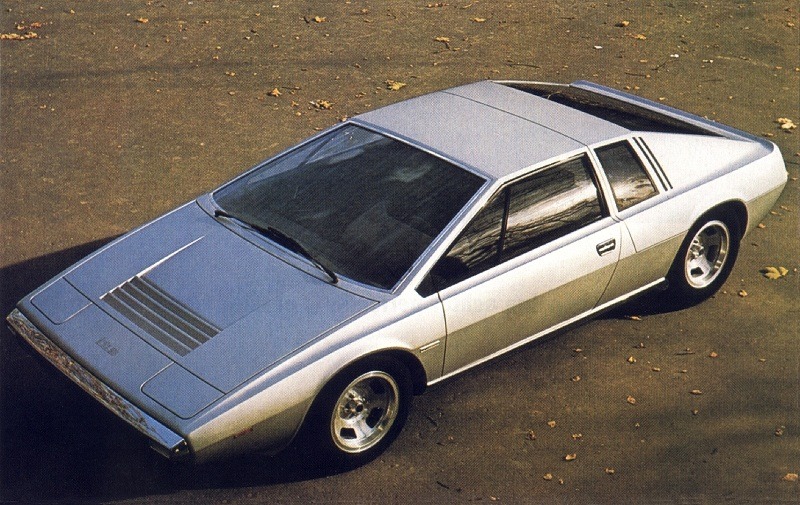
In November 1972, Italdesign boldly unveiled the silver prototype on their stand at the Turin Motor Show. Giugiaro had dubbed it the Lotus “Esprit”, drawing on the French word for spirit or wit – a fitting name for a concept with such vivacity. The Esprit concept’s reception was overwhelmingly positive: show-goers and press were captivated by its extreme wedge silhouette and futuristic aura. Even Chapman, who attended the show, found himself won over by the car’s presence. Seeing the enthusiastic response and the beauty of the full-size model, Chapman’s skepticism melted away – he gave the green light to proceed with the Esprit’s development into a production car. One might say that Italdesign’s gutsy Turin debut put the Esprit on Chapman’s radar in the best way possible, turning a paused project into Lotus’s next superstar.
With Chapman back on board, Lotus and Italdesign entered a period of intense collaboration to turn the show car into a real car. The final design of the Esprit (Lotus project code M70) was completed by late 1973. Lotus engineers, including Tony Rudd and Mike Kimberley, worked closely with Giugiaro’s stylists to ensure the stunning shape could be manufactured and meet safety regulations. In fact, Lotus was so committed that they sent a team led by Oliver Winterbottom to Turin for months to work side-by-side with Italdesign – after all, Italdesign had limited experience with Lotus’s favored fiberglass (GRP) construction, so they pooled knowledge on how to translate the sleek Italdesign shape into moldable, lightweight body panels. This cross-pollination of British and Italian expertise was crucial: it blended visionary design with practical engineering, foreshadowing many such international partnerships in the car industry.
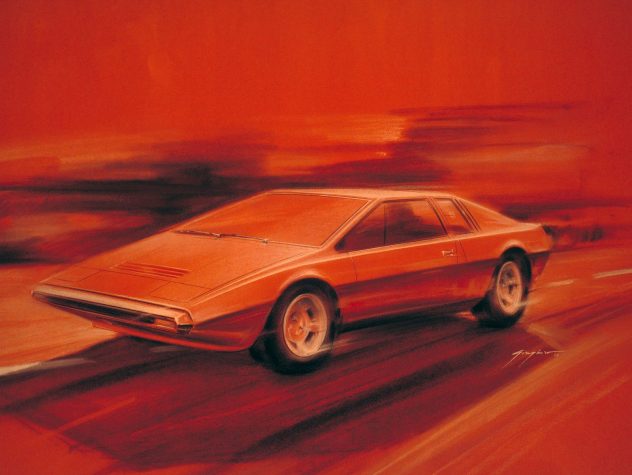
By 1974, a series of refinements had been made. A running prototype – nicknamed “the Red Car” (painted a deep red) and officially registered as IDGG 01 (for ItalDesign Giorgetto Giugiaro 01) – was constructed as a fully functional test car. Lotus engineers tackled the mechanical bits, fitting their new 2.0-liter Type 907 engine and sorting the suspension, while Giugiaro tweaked details of the body. There was even a legendary anecdote from early 1975: as the first production-ready prototype neared completion, Lotus engineers literally drove it to Heathrow Airport to surprise Chapman as he returned from an overseas trip. Imagine stepping off a long flight to be greeted by your team proudly revving an unpainted Esprit prototype at the arrivals curb – that’s the kind of enthusiasm this project generated inside Lotus!
The “Folded Paper” Wedge: Giugiaro’s Design Revolution
To appreciate the Esprit’s design impact, one must understand the “folded paper” design philosophy that Giorgetto Giugiaro championed in the 1970s. In contrast to the voluptuous curves of 1960s sports cars, the folded paper approach favored straight lines, sharp angles, and flat geometric surfaces – as if the car’s body panels were origami folds. The Lotus Esprit was among the first production cars to fully embody this near straight-lined, hard-edged style. It looked like a spaceship compared to its contemporaries. Giugiaro had experimented with extreme wedge shapes in one-off show cars like the 1968 Bizzarrini Manta and the 1972 Maserati Boomerang, but the Esprit would translate that show-car drama into a road-going machine.
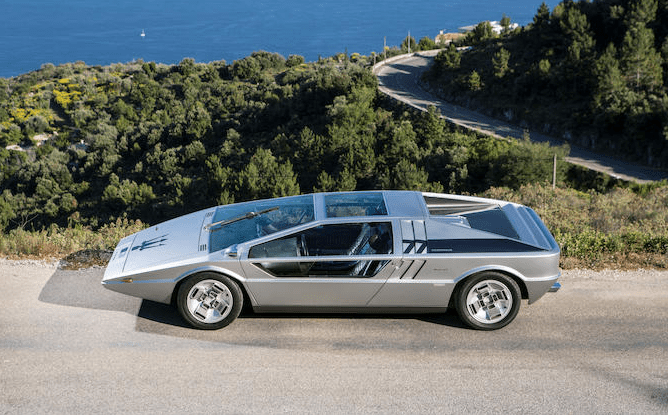
In profile, the Esprit’s wedge silhouette was low and razor-sharp. The nose was nearly flat and shockingly close to the ground, and the body tapered upward toward the rear in a clean, unbroken line. The hood, beltline, and even the pop-up headlights all sat nearly flush, creating a sleek wedge that looked as if it could slice through the air. Giugiaro’s signature was evident in every crease – he once jokingly referred to his design process as “copying straight from the ruler.” The Esprit’s aesthetic had more in common with contemporary Italian supercar concepts than with any prior Lotus. In fact, many observers noted the resemblance to Giugiaro’s Maserati Boomerang concept, and with good reason: the Esprit’s style “recalls the Boomerang, though with its wildest lines softened for production”. It was as if the Boomerang’s angular DNA was adapted to a slightly more practical, but still striking, form.
One of the most daring design elements was the extremely raked windshield. On the original Silver Car concept, the windshield lay back at about 18–19° from horizontal – nearly pancake-flat by normal car standards. This gave the car a super low roof profile and added to its futuristic look. However, such an extreme rake posed challenges. Windshields that low can cause optical distortion and, more pressingly, ran afoul of U.S. safety regulations (which set standards for windshield angle and driver visibility). Lotus engineers discovered in wind-tunnel and regulatory testing that the original angle would have to be adjusted. Colin Chapman was told the screen needed to be tilted up a bit to meet worldwide requirements – a suggestion that likely made him groan into his cup of tea. Ultimately, the production Esprit’s windshield was raised to about 24° from horizontal to satisfy U.S. rules. Chapman did not give in without a fight, however: he insisted the car maintain its dramatic look. To preserve the visual impact of the low windshield, Giugiaro and Lotus cleverly kept the A-pillar shape and slope similar to the concept by reducing the curvature of the glass. In other words, they made the windshield slightly less curved in plan view, which allowed the pillars to remain steeply raked even though the glass was a few degrees more upright. The result was a compliance compromise hidden in plain sight – the Esprit still looked as low-slung and daring as the show car, but now it wouldn’t be illegal to drive on Sunset Boulevard.
Another forward-thinking aspect was the use of fiberglass for the body. Lotus was already experienced with fiberglass, but Giugiaro’s design pushed those techniques to new limits. The Esprit’s crisp lines and tight radii were challenging to mold in fiberglass, which prefers gentle curves. Lotus’s in-house team had to innovate new mold-making methods (later in the 1980s, Lotus even pioneered Vacuum Assisted Resin Injection molding for Esprit panels). But back in the 1970s, just getting that razor-sharp shape out of fiberglass was a mini revolution. Giugiaro himself was impressed that Lotus could pull it off – glass manufacturers initially thought such a low windshield and complex angles were unworkable, but Lotus proved otherwise by putting the design into series production. The Esprit’s success demonstrated that the folded-paper style was not just a show-floor fantasy; it could be executed in a road car if one was determined (and perhaps a little crazy) enough.
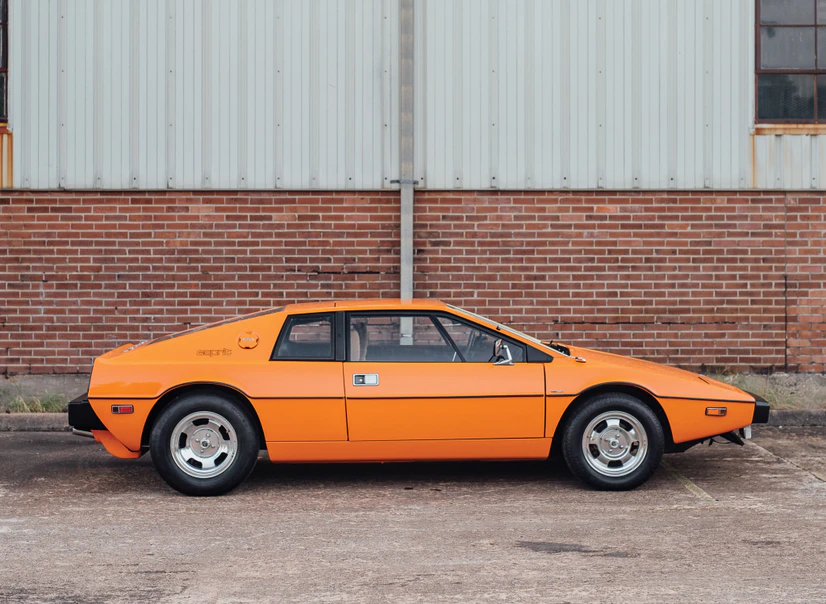
The Esprit’s styling set a trend for the late ’70s and early ’80s. It arrived in good company: other wedge-shaped exotics like the Lamborghini Countach (with its own sharp angles, courtesy of Marcello Gandini) and the Ferrari 308 GTB (with Pininfarina’s chiseled lines) were also defining the era’s supercar look. But the Esprit stood out by marrying Italian supercar flair with British minimalist ethos – it was dramatic without needing a huge V12 or scissor doors. It is often cited as an archetypal example of Giugiaro’s folded-paper design, wonderfully reminiscent of that glorious 1970s period of sports car production. The design was so influential that Lotus’s chassis design for the Esprit was later used under another Giugiaro-penned wedge: the DeLorean DMC-12, the stainless-steel sports car of Back to the Future fame. Indeed, the Esprit and DeLorean were mechanical cousins (Lotus engineered the DeLorean’s structure) and stylistic siblings, proving that Giugiaro’s wedge could cross the Atlantic and become a pop culture icon in its own right. The Esprit’s Italdesign-Lotus partnership was part of a broader pattern in the industry – the 1970s saw many manufacturers seeking Italian design pizzazz to spice up their lineups. Lotus joining forces with Italdesign was a perfect example of this trend, much as BMW did with Bertone for the BMW M1 or Volkswagen did with Italdesign for the Golf Mk1. The Esprit showed how a British sports car could don an Italian suit and turn heads worldwide.
From Concept to Reality: Launching the Esprit S1 (1976–1978)
Translating the Esprit from show prototype to production car took a few years. Finally, in October 1975, Lotus pulled the wraps off the production-ready Esprit at the Paris Motor Show. This first iteration, known retrospectively as the Series 1 (S1) Esprit, went into production in mid-1976 at Lotus’s Hethel factory. The S1 Esprit retained the pure lines of Giugiaro’s show car – so much so that it still looked like a concept car that had taken a wrong turn onto public roads. The body was an uncluttered fiberglass wedge, virtually identical in profile to the Turin concept apart from details needed for road use.Under the skin, the Esprit S1 sat on Lotus’s signature steel backbone chassis, an updated version of the spine frame used in the Europa. Mounted amidships was Lotus’s new 2.0-liter Type 907 engine – a four-cylinder DOHC unit that Lotus had developed in the early ’70s. In the Esprit S1 it made about 160 hp (119 kW) in European spec (U.S. versions were detuned to ~140 hp to meet emissions). That power may sound modest, but the Esprit’s philosophy was “performance through light weight,” true to Chapman’s mantra. Weighing under 1,000 kg, the S1 could sprint 0–60 mph in around 8 seconds and topped out about 133–138 mph in reality. Crucially, it felt quick and nimble, thanks to its featherweight build and race-bred suspension. The S1 used parts-bin ingenuity common to Lotus: the 5-speed transaxle came from a Citroën SM, the rear inboard brakes were similar to those on a Maserati Merak (another Giugiaro design, incidentally), and front suspension bits were borrowed from Vauxhall family cars. It was a true Chapman creation – highly engineered on a shoestring budget, with an Italian flair on the outside.
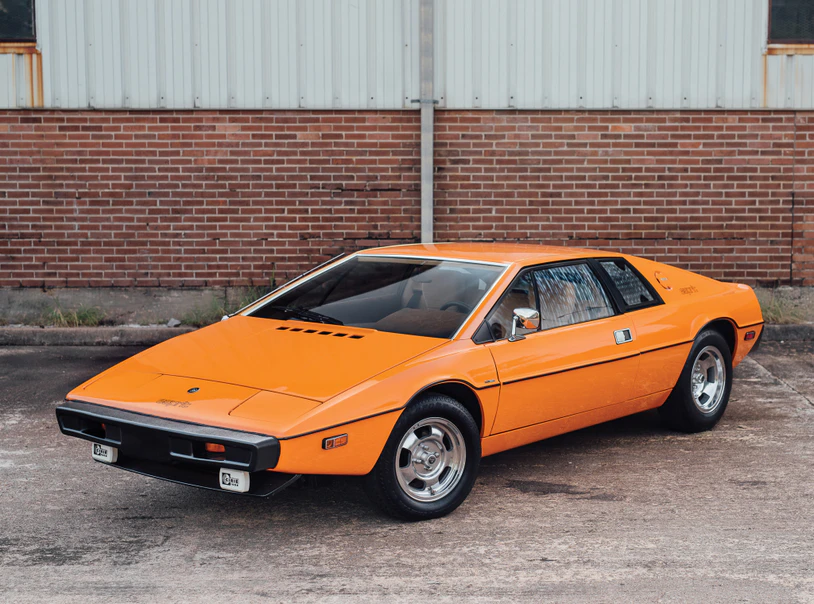
Under the skin, the Esprit S1 sat on Lotus’s signature steel backbone chassis, an updated version of the spine frame used in the Europa. Mounted amidships was Lotus’s new 2.0-liter Type 907 engine – a four-cylinder DOHC unit that Lotus had developed in the early ’70s. In the Esprit S1 it made about 160 hp (119 kW) in European spec (U.S. versions were detuned to ~140 hp to meet emissions). That power may sound modest, but the Esprit’s philosophy was “performance through light weight,” true to Chapman’s mantra. Weighing under 1,000 kg, the S1 could sprint 0–60 mph in around 8 seconds and topped out about 133–138 mph in reality. Crucially, it felt quick and nimble, thanks to its featherweight build and race-bred suspension. The S1 used parts-bin ingenuity common to Lotus: the 5-speed transaxle came from a Citroën SM, the rear inboard brakes were similar to those on a Maserati Merak (another Giugiaro design, incidentally), and front suspension bits were borrowed from Vauxhall family cars. It was a true Chapman creation – highly engineered on a shoestring budget, with an Italian flair on the outside.
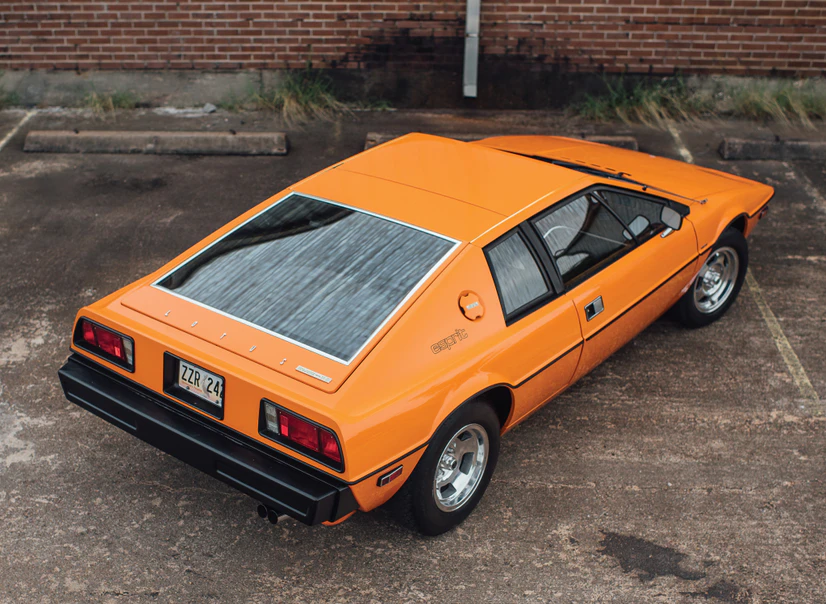
Visually, the S1 Esprit is distinguished by a few charming period details. Up front, it had a broad, wedge-shaped air dam that earned the nickname “snow plow” or “snow shovel” for its flat, protruding shape. The sides were smooth with no air intake ducts breaking the line (the engine was fed via an intake beneath the rear glass). At the back, Lotus cheekily used Fiat X1/9 taillights – rectangular lamp clusters that fit the folded theme (Lotus was not above a bit of “parts bin socialism” to save costs). The S1 rode on 14-inch Wolfrace alloy wheels with a rather unique design and polished lip, adding to its 1970s charm. Inside, the Giugiaro-penned interior featured a wild futuristic dash pod: a one-piece instrument binnacle with green-faced Veglia gauges that looked like they came straight out of a sci-fi movie. The seating position was low and “reclined in the bathtub” sporty, though long-legged drivers found the footwell a bit tight – a quirk that Lotus would address in later updates.
🔗 Read more: How De Tomaso Hijacked the Fiat X1/9 Before It Even Launched
Despite its head-turning looks and go-kart handling, the S1 had a few teething troubles. Early owners learned the hard way that the 2.0L engine, while advanced, could be temperamental (drivetrain reliability was not its strong suit, leading many S1s to retire early). And though 160 horsepower was respectable, some critics felt the Esprit was underpowered compared to rival exotics. Lotus claimed a 0–60 mph in 6.8 seconds on paper, but real-world tests were closer to 8+ seconds – plenty quick for a four-cylinder of the era, but not quite in Ferrari territory. Still, what the Esprit S1 lacked in brute force it made up in finesse. Reviewers raved about its steering – unassisted rack-and-pinion so precise you could “steer it with your fingertips” – and its ability to carve up corners like a racing car. The Esprit was putting Lotus in the big leagues of high-performance sports cars, directly competing with Porsche 911s and Ferrari 308s but at a fraction of the cost. In fact, one Motor magazine review in 1977 noted the Esprit was thousands of pounds cheaper than a Ferrari or Lamborghini, giving performance enthusiasts a relative bargain.
Of course, no discussion of the S1 Esprit would be complete without mentioning its star turn on the silver screen. Lotus PR famously managed to get the Esprit cast as James Bond’s car in “The Spy Who Loved Me” (1977). Moviegoers watched in awe as a white Esprit evaded a helicopter, then transformed into a submarine and dove underwater – arguably one of the most memorable 007 car chases ever filmed. (The submarine conversion, affectionately called “Wet Nellie,” was actually a separate prop vehicle, but the effect was pure magic.) This publicity was priceless. Suddenly the whole world knew about Lotus’s wedge wonder, associating it with cutting-edge cool. Lotus dealers reportedly had customers pointing to their Esprits asking, “Does it really go underwater?” The Bond Esprit even had a humorous epilogue: after filming, one of the street-driven Esprits used for camera scenes was refurbished and sold to a private buyer, its amphibious secret safe at last.
All told, Lotus built 718 units of the Esprit S1 from 1976 to 1978. Those early cars, especially in the signature white or vibrant orange paint (one of which Giugiaro famously showcased), have become collector favorites – even if their build quality was sometimes as edgy as their design. The S1 had announced the Esprit’s arrival with style; now Lotus needed to address its flaws and keep the momentum.
Series 2 and Refinements (1978–1981)
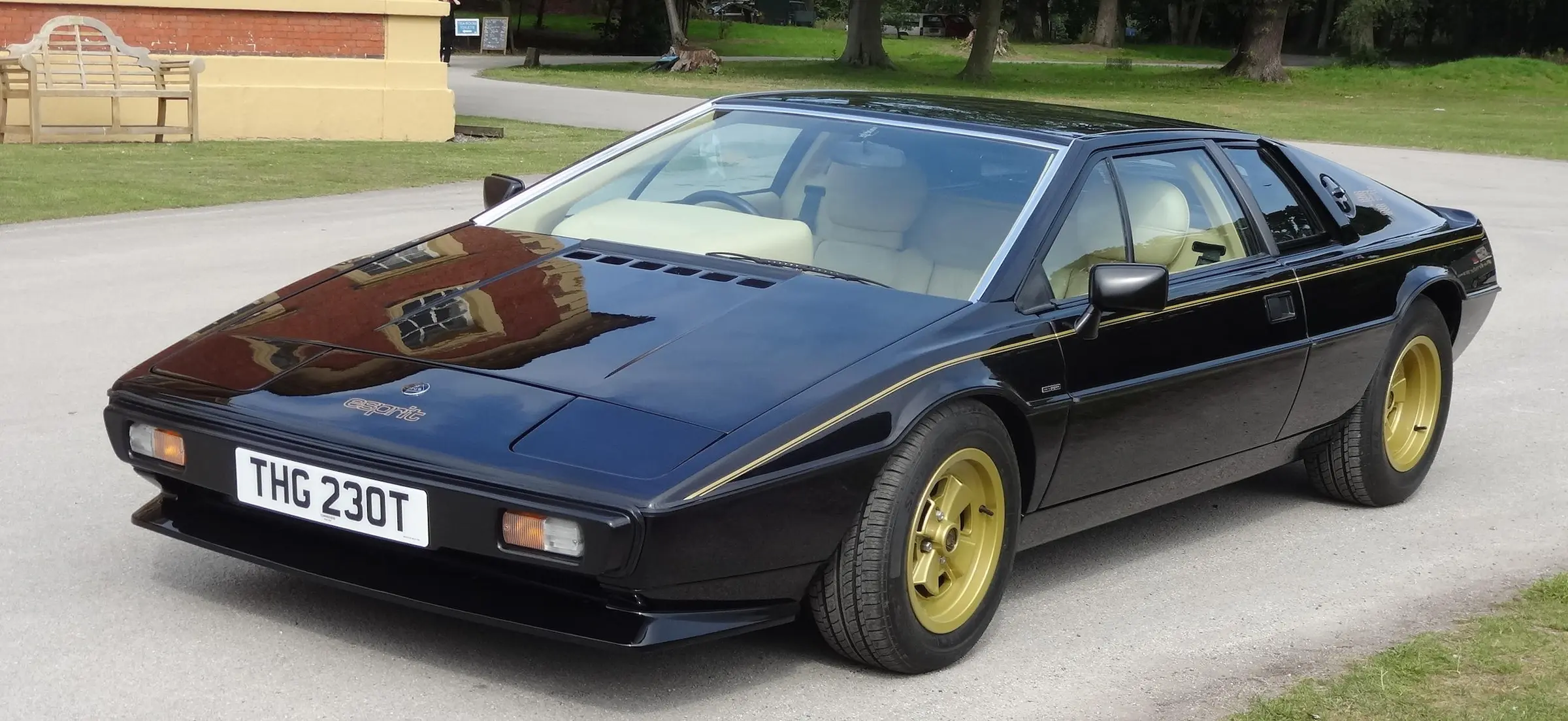
Lotus didn’t rest long on the Esprit’s early laurels. In 1978, they rolled out the Esprit Series 2 (S2), refining Giugiaro’s design and fixing some of the S1’s niggles. On the outside, the S2 was still very much the same sharp wedge, but Lotus made several functional styling tweaks. Most visibly, the S2 gained small intake ducts just behind the rear quarter windows to feed more air to the engine and help with cooling – an acknowledgment that the S1’s smooth sail panels could use a breather (literally). The rear end got a new look as well: the S1’s petite Fiat lamps were replaced by larger, ribbed taillights from the Rover SD1 sedan, giving the Esprit’s tail a wider appearance. Up front, the chin spoiler was reworked into a molded, integrated design that wrapped under the nose, flowing into subtle black side skirts along the lower body. These black sills helped visually lower the car and also protected the body edges – plus, black aero add-ons were all the rage in the late ’70s. The S2 also sported a set of sexy new 14-inch Speedline alloy wheels with a unique turbine-blade style, replacing the Wolfrace wheels of the S1. All in all, the S2’s exterior changes were evolutionary – you might need a second glance to tell an S1 from an S2, but the updates gave the Esprit a slightly more aggressive and polished demeanor.
Under the skin, Lotus made incremental improvements as well. The engine in the S2 remained the 2.0L Lotus 907 four-cylinder with around 160 hp (unchanged in output from S1) – still mounted longitudinally behind the seats, still paired to the Citroën 5-speed transaxle. But Lotus improved cooling and reliability, and they started offering wider seats inside for a bit more comfort. The battery was relocated from the cabin area (above the right-side fuel tank, oddly enough) to the rear luggage compartment for easier access. The engine cover was redesigned with an access hatch, acknowledging that mechanics might want to actually reach the engine without contorting like Cirque du Soleil performers. Inside, the S2 switched from the one-piece instrument pod to a more traditional dashboard with individual Smiths gauges, as well as rocker switches that, legend has it, were lifted from the Morris Marina – proof that even an exotic Lotus had humble British Leyland roots in its DNA. These changes made the S2 a more user-friendly car, addressing many “liveability” issues of the S1.
Lotus also seized the moment to celebrate some racing glory with the Esprit S2. In 1978, Lotus won the Formula 1 World Championship (Mario Andretti piloting the black-and-gold John Player Special Lotus 79). To commemorate, Lotus built a run of “JPS Edition” Esprits in 1979. These S2 cars were painted black with gold pinstriping and lettering, mirroring the iconic JPS livery. They weren’t mechanically different – still the 2.0L engine – but they got special interiors, a numbered plaque, and the bragging rights of a championship tie-in. Lotus initially planned to build 300 JPS Esprits, but actual production was about half that (approximately 149 cars). Regardless, the JPS edition looked stunning and is highly sought after today; nothing says late-70s chic like a black-and-gold wedge supercar.
By 1980, Lotus gave the Esprit one more interim upgrade: the Esprit S2.2. As the name implies, the big change was a new 2.2-liter engine (Type 912), essentially a stroked version of the Lotus four-cylinder. This larger engine didn’t have a higher peak horsepower (still roughly 160 hp, since it was constrained by the same carburetion and cams), but it did boost torque from about 140 lb⋅ft to 160 lb⋅ft. That extra mid-range grunt improved drivability and acceleration. The S2.2 also introduced a tougher galvanized chassis to improve corrosion resistance, though it retained the same overall chassis design as the S2 (the big chassis redesign would come a year later). The S2.2 was a stop-gap measure – produced for only about a year – but it set the stage for what was to come. Lotus built just 88 units of the S2.2 during its short run in 1980–81, making it one of the rarest Esprit variants. If you find one today at a cars and coffee, give the owner a high-five for exclusivity.
Adding Turbocharged Flair: Essex Turbo Esprit and Beyond (1980–1981)
As the 1980s dawned, Lotus decided it was time to give the Esprit some serious firepower. Enter the Turbo Esprit, a version of the car that would finally marry Giugiaro’s sharp design with the straight-line speed to match its looks. The catalyst (figuratively and literally) was turbocharging. Lotus’s engineering team, with help from outside tuner Bell & Colvill, had experimented with adding a turbo to the 2.2L engine, and the results were mouth-watering. In early 1980 Lotus unveiled the first factory turbocharged Esprit as a limited edition named after its sponsor: the Essex Turbo Esprit.
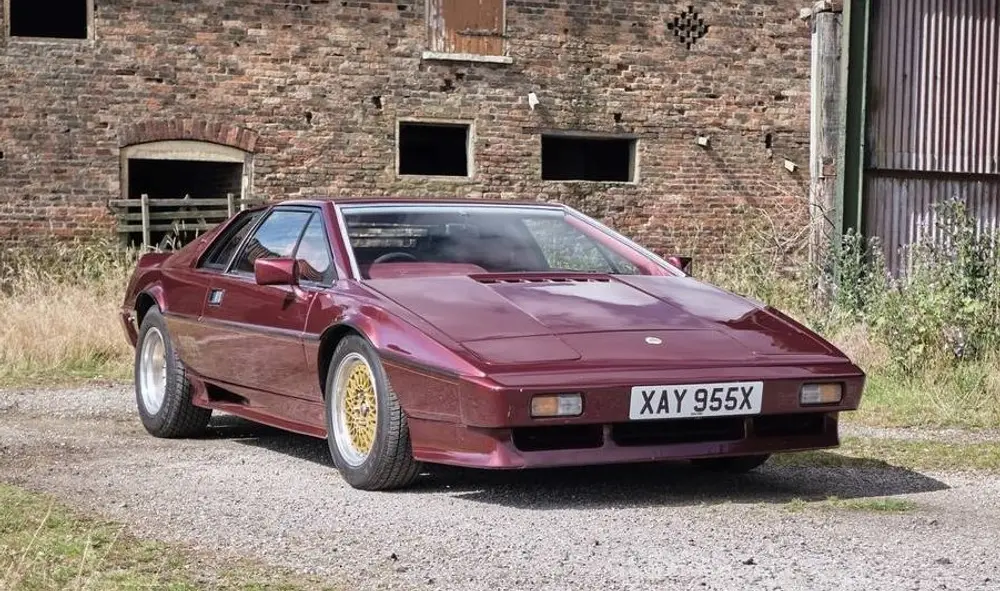
Why “Essex”? Lotus had a lucrative sponsorship deal with Essex Overseas Petroleum (an oil company) for their F1 team at the time. To honor (and advertise) that partnership, the limited run of Turbo Esprits wore bright blue paint with bold red and silver striping, mirroring the Essex corporate colors. It was about as subtle as a disco suit, but undeniably cool in a very period way. Underneath that flashy livery was Lotus’s new Type 910 engine – a 2.2L turbocharged four-cylinder with a dry-sump lubrication system for durability. It pumped out 210 hp (213 PS) and about 200 lb⋅ft of torque, a massive leap from the naturally aspirated 160 hp. Finally, the Esprit had the brawn to back up its looks: 0–60 mph dropped to roughly 6 seconds flat, and top speed jumped to about 150 mph. Now the Ferrari and Porsche crowd had no performance excuses – the wedge from Norfolk could run with the best.
Giugiaro didn’t let the Turbo Esprit’s newfound muscle go unnoticed in the styling. In fact, Giugiaro himself penned an aerodynamic body kit specifically for the Turbo model. The Turbo Esprit gained a wind-tunnel tested front airdam that was deeper and more aggressive, a low lip spoiler at the rear edge of the roof (to reduce lift), and chunky side skirts with air intakes in front of the rear wheels to feed the turbo’s intercooler needs. Perhaps the most iconic addition was the louvered rear engine cover: the Turbo Esprit traded the S2’s glass engine hatch for a body-colored cover with sweeping horizontal slats, both to vent heat and to look plain menacing in a rear-view mirror. This louvered deck became a signature of turbo models. The car also sat on wider 15-inch Compomotive split-rim wheels (bbs-style lattice wheels on later cars) wrapped in fat Goodyear tires, giving it a squatter stance. Inside, Lotus went a bit Bond-esque: the Essex edition Turbos had a sumptuous scarlet red leather interior, and even a roof-mounted stereo console (with a then-futuristic Panasonic cassette stereo equalizer hanging from the headliner). It was all very Flash Gordon chic and absolutely fantastic. Only 45 Essex Edition Turbo Esprits were built in 1980, making them extremely collectible today (assuming you love blue with red stripes, which true enthusiasts do!). Lotus followed those up by building additional Turbo Esprits in 1981 without the Essex livery – essentially the same spec cars (dry-sump 210 hp engine, body kit, etc.) but in regular colors for general sale.
The Turbo Esprit’s arrival marked a turning point. By 1981, Lotus was producing three distinct Esprit models at once: the domestic UK S2.2, the export S2.2 (slightly different body), and the Turbo Esprit with its own chassis tweaks. Clearly, the lineup was due for simplification and modernization. That came with the next evolution, which folded the lessons of the Turbo and the S2 into a unified new series.
Series 3 and the Final Giugiaro Esprits (1981–1987)
Lotus introduced the Series 3 (S3) Esprit in early 1981 as a direct response to the lessons learned from the S2 and Turbo programs. Essentially, the S3 unified the chassis and body updates of the Turbo Esprit with the naturally aspirated engine model, simplifying production. The Esprit S3 and Turbo Esprit (now without the Essex name) were launched in tandem and shared a common platform. Both used a new, stiffer backbone chassis designed to accommodate the broader wheels and greater loads of the turbo variant. The body molds were also updated: S3 and Turbo Esprits came from the same set of fiberglass molds, meaning they shared most panels and dimensions (no more separate body for domestic vs export). This was the first major structural update since the original – a sign that Lotus was committed to keeping the Esprit fresh.
The naturally aspirated Esprit S3 inherited the Type 912 2.2L engine introduced on the S2.2, still making around 160 hp. The Turbo Esprit continued with the Type 910 2.2L turbo engine, now switched to a wet-sump lubrication system (cheaper to build than the dry-sump Essex spec) but delivering the same punch – around 210 hp and 270 Nm of torque as before. One nice improvement across the board: interior room. By subtly tweaking the roof and floor pan in the new body molds, Lotus gained a bit more headroom and footwell space – a welcome change for taller drivers who no longer had to learn yoga to drive their Esprit. The S3’s interior was also refreshed with higher quality trim and a more ergonomic dash layout, addressing criticisms of the earlier cars’ kit-car-like finish.
Visually, the 1981+ S3 and Turbo Esprits can be told apart from earlier models by a few cues. The S3 (non-turbo) adopted the larger wraparound bumpers that the Turbo had, giving the nose and tail a chunkier, integrated look. However, the S3 did not have the Turbo’s side intake skirts or the louvered engine cover – those remained exclusive to the Turbo Esprit. So an S3 essentially looks like a Turbo Esprit but with a plain, smooth sail panel behind the rear quarter window and a rear glass hatch instead of the slatted cover. Both models rode on new 15-inch BBS alloy wheels with a lattice pattern, a big step up in appearance and grip from the old 14-inchers. One quirk: the S3 Esprit famously came without a cigarette lighter (an odd omission for a 1980s GT car), though Lotus did kindly provide ashtrays in the door sills for those so inclined – a little British humor in the spec sheet.
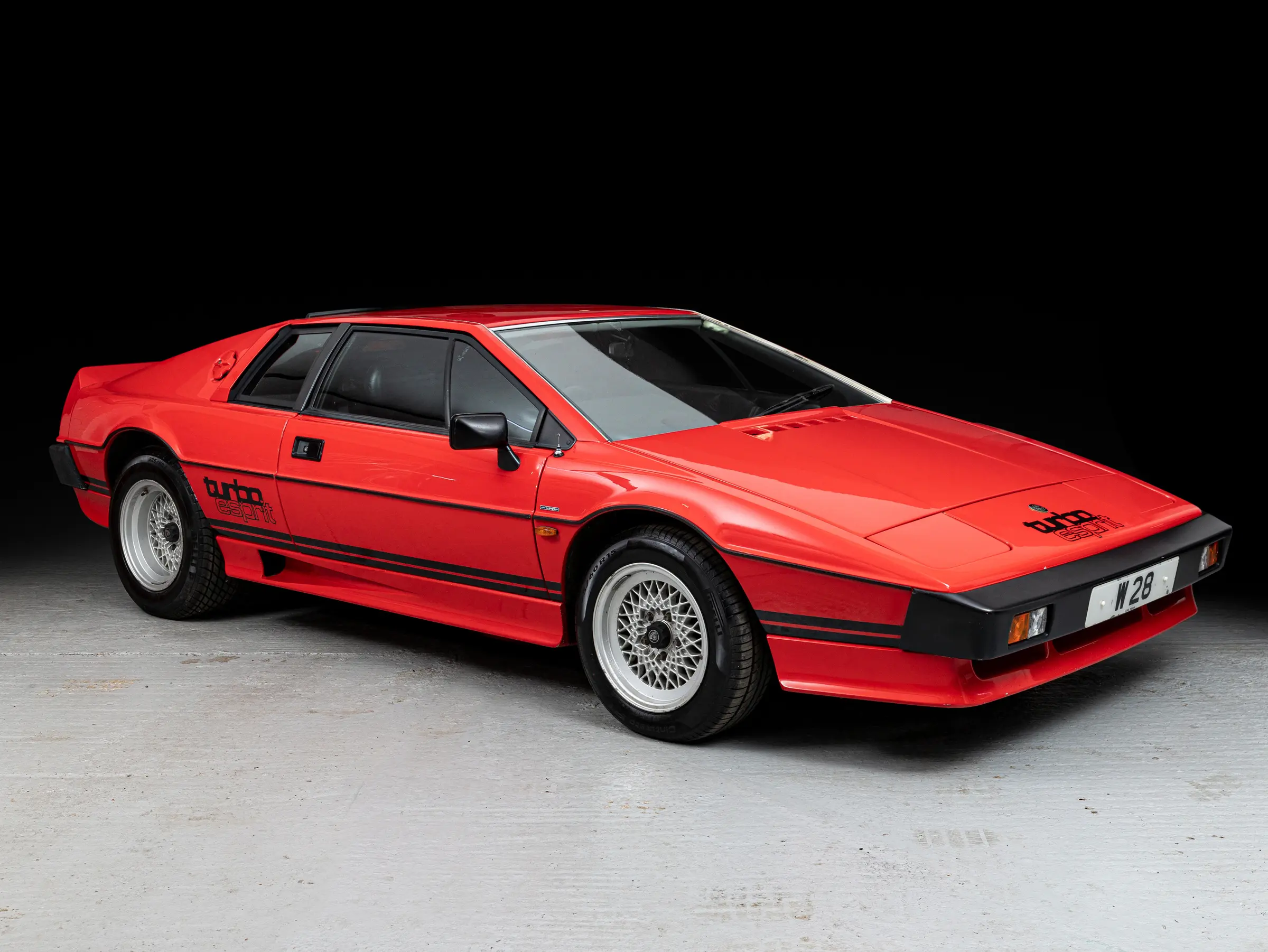
Throughout the early to mid-1980s, Lotus incrementally improved the Esprit without major outward changes. By 1985, they revised bits of the body (such as a subtle restyle of the front bumper and valance) and tinkered with the suspension for better ride quality. The big news came in 1986, when Lotus rolled out the “HC” (High Compression) upgrades for the Esprit. These were the final incarnations of the Giugiaro-styled Esprit. Both the naturally aspirated and turbo engines received higher compression pistons and other tweaks. The Esprit HC (naturally aspirated) saw power jump to about 172 PS (170 hp) and 160 lb⋅ft of torque, giving the base car a bit more pep. The Turbo Esprit HC climbed to 218 PS (215 hp) and a very healthy 298 Nm (220 lb⋅ft) of torque. In practice, the Turbo HC could crack 0–60 mph in the mid-5-second range and nudge the top speed beyond 150 mph – serious numbers for a four-cylinder car at that time. For markets with strict emissions (like the USA), Lotus also developed the Turbo Esprit HCi with Bosch fuel injection, which maintained the 215 hp power figure but delivered it more cleanly. Externally, these HC models were hard to distinguish from earlier S3/Turbo, save for “HC” badges and sometimes different wheel finishes. Essentially, by 1986–1987 the Esprit had reached the zenith of its Giugiaro form: it was as powerful, polished, and sorted as it would ever be under that original body.
After 1987, big changes were afoot. Lotus commissioned a young designer named Peter Stevens to do a ground-up redesign of the Esprit’s styling. In 1987 the first Stevens-styled Esprit appeared (often called the X180 generation). It smoothed out the razor edges into a more curvaceous shape for the late ’80s and ’90s. Yet even Giugiaro himself gave a nod of approval to the redesign – he quipped that he liked the new shape and that it was “perhaps too close to my original design”. Indeed, the Stevens Esprit was essentially a modernized take on Giugiaro’s proportions, proving how enduring the basic design was. The Giugiaro Esprit era (1976–1987) had firmly cemented the car’s legend. Over those years Lotus had built several thousand Giugiaro-bodied Esprits (roughly 6,000 by 1987 across all variants), and the car had become a symbol of Lotus’s innovation and adaptability.
🔗 Read more: The BMW M: The Origin
Looking back at the Esprit’s journey from 1972 concept to 1987 final edition, it’s clear how much Italdesign and Giugiaro shaped the soul of this British sports car. The Italdesign partnership brought Lotus not just a shape, but a new level of international prestige. It also reflected a broader industry pattern of the time: a small specialist automaker teaming up with an Italian design maestro to create something world-class. The Esprit’s contemporaries included other Italdesign collaborations like the BMW M1 and DeLorean DMC-12, and designs by fellow Italian studios (Pininfarina, Bertone) for brands like Ferrari, Lancia, and even Jaguar. In that mix, the Esprit stands out as a successful fusion of British engineering pragmatism and Italian artistic flair. Colin Chapman’s decision to trust Giugiaro paid off enormously – the Esprit’s timeless looks continued to turn heads well into the 1980s, long after many flashier designs had become dated.
Giugiaro’s influence on the Esprit extended beyond just the initial sketch. Every update through 1987 stayed true to his vision, each evolution carefully tweaking rather than overwriting the original bold aesthetic. Whether it was adding a spoiler here or a duct there, the car remained unmistakably a Giugiaro design. By the end of its run, the Esprit had gone from a wild show car idea to a seasoned production model without losing its character. It had starred in blockbuster films, graced countless magazine covers, and adorned the walls of teenagers’ rooms as a poster dream car (often in bright white or turbo blue). Not bad for a car whose concept almost got axed in a wind tunnel!
In the final analysis, the 1972–1987 Giugiaro Esprit era gave Lotus a true motoring icon. It demonstrated Lotus’s ability to innovate and adapt, from embracing new materials and turbocharging to collaborating across cultures. And it solidified Giorgetto Giugiaro’s reputation – later earning him the title of Car Designer of the Century in 1999 – by proving that his avant-garde ideas could work in the real world. The Esprit’s folded-paper wedge was not just a styling exercise; it became the identity of Lotus for nearly two decades. Even today, the early Esprits command respect and affection. They remind us of a time when design was bold, experiments were encouraged, and a small British-Italian team could create a car that looked like a UFO and drove like a go-kart. That’s the spirit – that’s the Esprit.Each of these variants carried the torch of Giugiaro’s design, from the original pure S1 through the progressively faster and more adorned S3 Turbo. In 1988, the Esprit’s styling transitioned to a new era under designer Peter Stevens, but the legacy of the Giugiaro “folded paper” Esprit lives on as a high point in automotive design history – a true masterpiece of Anglo-Italian cooperation that remained fresh and exciting throughout its 15-year reign.

ABOUT THE AUTHOR
Andreas Scheidl
Italian classic car enthusiast with German roots. Renowned as a respected figure in the classic car community, he serves as a jury member at various international concours d'elegance, including the Classic Gala Schwetzingen and Mantova. As a content creator, Andreas passionately shares his profound knowledge and appreciation for vintage automobiles. His heart beats for cars designed by Giovanni Michelotti, showcasing his discerning taste and dedication to preserving the timeless elegance of automotive history.
More stories by Andreas Scheidl ↗CONTINUE READING
Posts You Might Like

A Central Driving Position, a Rear-Mounted V8. Was This Really a Lancia?
In 1948, visitors to the Turin Motor Show could see an unusual Lancia on the stand of Carrozzeria Ghia. It was a large two-door coupé with a two-litre V8 mounted behind the…
Read story
Fioravanti F100: The Ferrari He Was Allowed to Imagine
Enzo Ferrari’s centenary, Leonardo Fioravanti’s independent studio and a supercar that explored air brakes, steel wheels and a new way of driving—without ever wearing the Cavallino.
Read story
Michelotti Shellette: When the Fiat 850 Became a Yacht
The yacht designer, the Turin stylist and the tiny coachbuilt car that crossed between the quay, the royal holiday house and the auction room. Some automobiles were conceived for the open road,…
Read story
Maserati A6 1500: A New Road for the Trident
When the doors of the Geneva Motor Show opened in March 1947, Maserati was a name that required little introduction to anyone who followed motor racing. What it did not yet possess…
Read story
THE CONVERSATION
Comments 0
Share a memory, a period photograph or a documented detail about this story.