
THE VEHICLE AT A GLANCE
Model dossier
- Production period
- 1972
- Body style
- Coupé
- Engine
- V6
- Type
- Limited
- Production
- Up to 599
THE PEOPLE BEHIND THE CAR
Coachbuilding, design & conversions

PRICE & SALES RECORD
Vehicle value
- Original price
- Not documented
- Latest recorded sale
- Not documented
01 / THE STORY
History & context
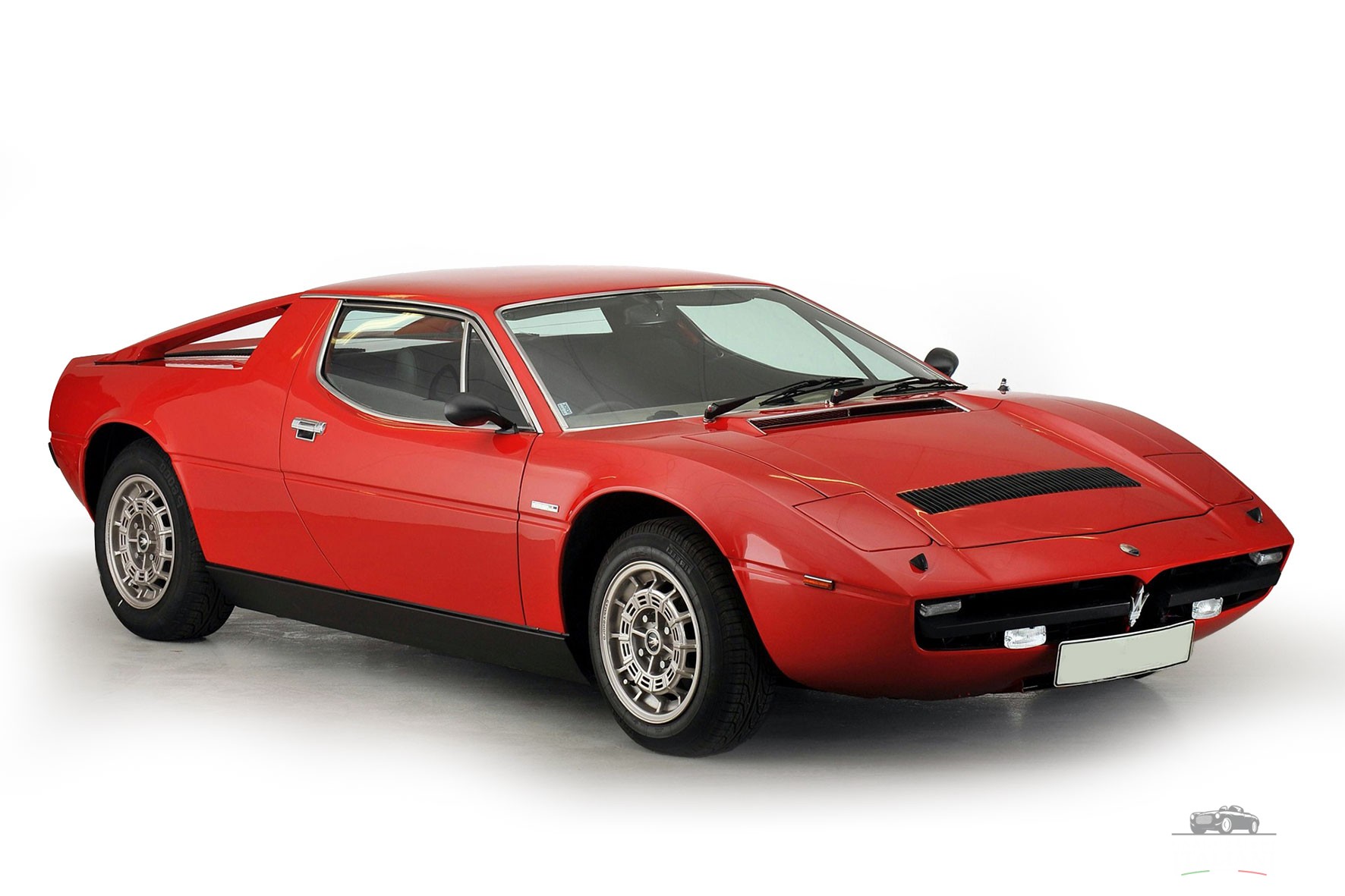
The Maserati Merak, unveiled at the 1972 Paris Auto Show, was a refined and innovative addition to Maserati’s lineup, blending Italian design with engineering ingenuity. Sharing its front bodyshell up to the doors with the larger Maserati Bora, the Merak stood out with distinct styling and advanced features, earning its place as one of the most iconic mid-engine sports cars of its time. Designed by Giorgetto Giugiaro at Italdesign, the Maserati Merak introduced a sleeker and more approachable alternative to the Bora. While the Bora featured a full glass fastback, the Merak’s design incorporated a vertical rear window and a flat engine cover, punctuated by four rows of ventilation slats. Giugiaro enhanced the car’s aesthetics with open flying buttresses, which elegantly extended the roofline to the rear, creating a sporty yet balanced profile. The Merak’s dual chrome bumpers also differentiated it from the Bora’s twin trapezoidal grille, giving it a distinctive front-end appearance. Competing against the 2+2 Dino 308 GT4 and Lamborghini Urraco, the Maserati Merak distinguished itself with a compact 3.0-liter V6 engine, mounted longitudinally. This layout offered a performance edge over its rivals, which featured transverse V8 engines. The Merak’s mid-engine configuration and 2+2 seating made it a versatile yet thrilling sports car, appealing to a broader audience. Developed during Maserati’s Citroën ownership (19681975), the Merak incorporated several advanced hydropneumatic systems, derived from Citroën technology. These included hydraulically assisted braking, hydraulically actuated pop-up headlights, and, in some models, a hydraulic clutch system. Early Merak SS models also used this technology, though after Citroën relinquished control of Maserati in 1975, these systems were gradually replaced with more traditional components under Alejandro de Tomaso’s ownership. The Maserati Merak remained in production until 1983, long after its sibling, the Bora, was discontinued in 1978 following a production run of fewer than 600 units. The Merak’s longevity and appeal were due to its unique blend of performance, style, and practicality, solidifying its legacy in Maserati’s storied history.
IN THE ARCHIVE
Related people
IN THE ARCHIVE
Coachbuilders & design studios
02 / TECHNICAL IDENTITY
Specifications & construction
Production & construction
- Production
- Up to 599
- Production type
- Limited
Engine & performance
- Engine configuration
- V6
Design & manufacture
- Designer · Candidate
- Giorgetto Giugiaro
- Manufacturer · Documented
- Maserati
- Design Studio · Documented
- Italdesign
06 / EVENTS & AWARDS
Events & awards
Paris General · legacy_preserved
- Date
- 1972
- Chassis
- General
Preserved CI 1.0 relation. Evidence field: _yoast_wpseo_primary_events. No award inferred.
07 / THE VEHICLE IN DETAIL
Photo gallery 3 photographs
08 / FROM THE ARCHIVE
Archive
References held in the vehicle dossier. Their inclusion does not establish that every historical claim has been independently verified.
| Reference | Source type |
|---|---|
| Italdesign official archive — Maserati Merak www.italdesign.it | Official first-party project archive |
THE CONVERSATION
Comments 0
Share a memory, a period photograph or a documented detail about this car.