
The Lancia Astura: Italy’s Monument on Wheels
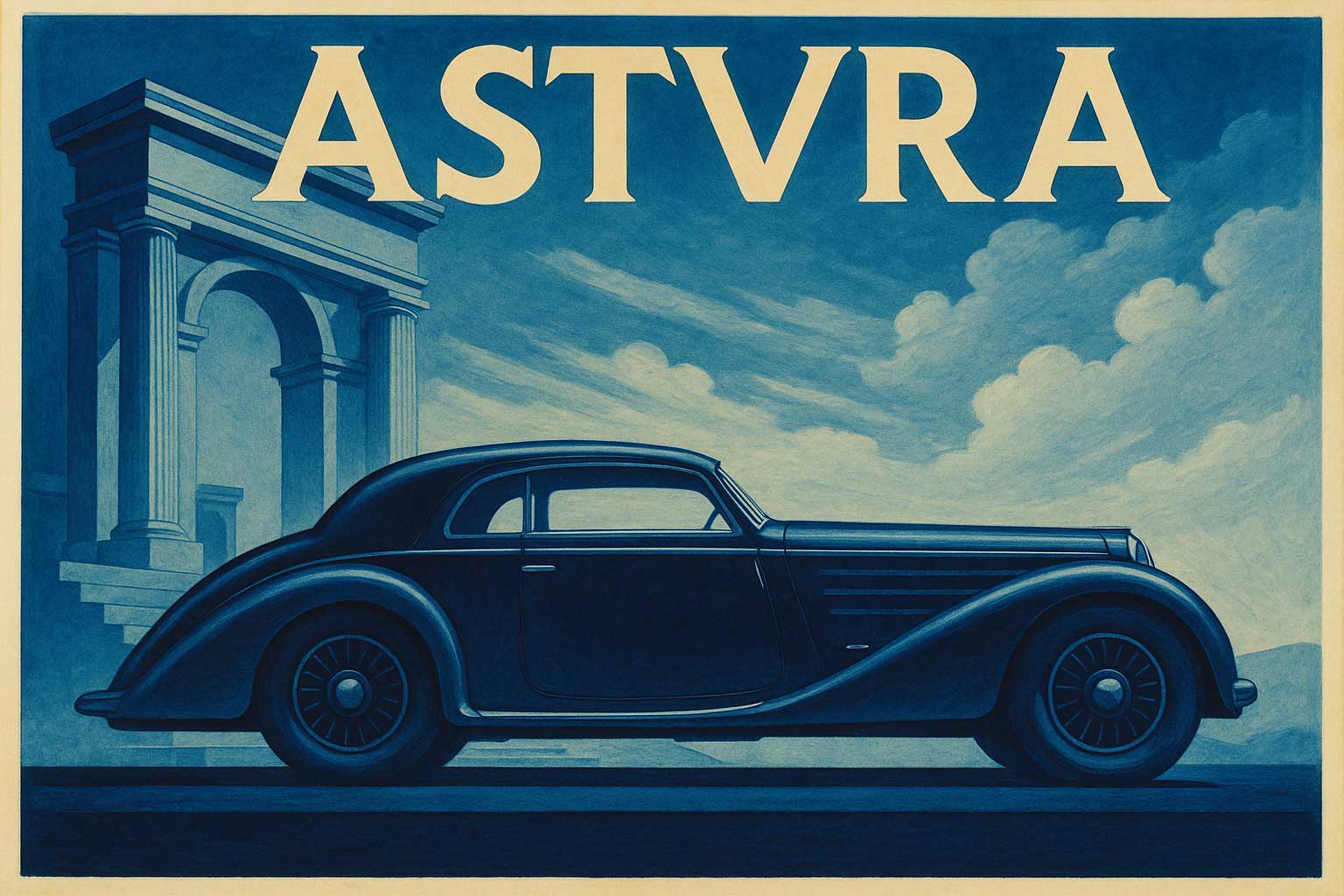
Lancia introduced the Astura in 1931 as a new top-of-the-line model during a dynamic period in Italy’s automotive scene. At the Paris Motor Show in October 1931, Lancia unveiled two sister models to replace the aging Lambda: the mid-size four-cylinder Artena and the larger V8-powered Astura. This dual-model strategy was a response to the economic challenges of the early 1930s (the Great Depression) and reflected Vincenzo Lancia’s effort to offer both an affordable car and a luxury flagship. The Astura was positioned as a powerful yet more accessible luxury car compared to Lancia’s earlier ultra-expensive Dilambda, which had sold poorly due to its high price. Notably, Lancia abandoned its tradition of naming cars after Greek letters; in tune with the nationalist spirit of Italy under Fascism, the Astura was named after an Italian historic castle (Castello di Astura near Nettuno), underscoring Italian heritage.
From the start, the Astura was tailored to Italy’s elite tastes. It was offered as a bare chassis or as a factory-bodied sedan, giving wealthy clients and coachbuilders free rein to create bespoke designs. Italy in the 1930s had a vibrant coachbuilding industry (carrozzieri), and Lancia’s high-quality chassis were sought-after foundations for custom luxury cars. The Astura quickly earned a reputation as one of the most prestigious Italian automobiles of its era – a symbol of status for businessmen, aristocracy, and even the state. The Italian government itself took an interest in the Astura: by the late 1930s, Lancia Astura cabriolets were being used as official government and parade cars with grand “Torpedo” bodies. In fact, the long-wheelbase Astura 4th Series chassis proved ideal for these imposing six-seater convertibles (known as Ministeriale models) built by firms like Boneschi and Pinin Farina, often used for Fascist state ceremonies. Italian dictator Benito Mussolini favored the Astura for official use – records show that in 1939 he commissioned special Astura Ministeriale cabriolets, including versions by Carrozzeria Boneschi and by Pinin Farina, for use as parade cars. Two of these massive black Astura convertibles famously carried Italian and German dignitaries (including Mussolini, his Foreign Minister Count Ciano, and Adolf Hitler) during Hitler’s state visit to Italy in 1938. One was even gifted to Hitler at the end of that visit. Such appearances cemented the Astura’s image as the Italian state limousine of the late ’30s, akin to how big Mercedes were used in Germany.
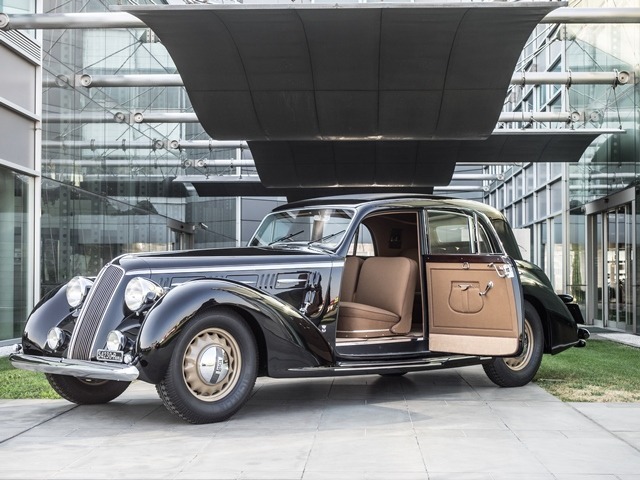
Beyond government use, wealthy private owners in Italy adored the Astura. Its combination of advanced engineering and bespoke Italian craftsmanship made it a favorite among the upper classes. Prominent industrialist families like the Marzotto textile dynasty bought Asturas – for example, Count Gaetano Marzotto di Valdagno took delivery of a custom Pinin Farina Astura cabriolet as his personal car. The Astura’s clientele also included foreign nobility and celebrities who appreciated Italian design. Even though the Astura was not a sports car, it carried an aura of exclusivity and cutting-edge style – it was a prestige automobile launched in a time of nationalist fervor, finding its way into royal motorcades, government fleets, and the garages of Italy’s rich and famous. It stood for Italian engineering excellence and bespoke luxury at a time when Italy sought to assert itself on the world stage.
Chassis Versions and Technical Features
Mechanically, the Lancia Astura was ahead of its time, continuing Lancia’s tradition of innovation. The model was produced in four series (generations) from 1931 to 1939, with incremental improvements in each iteration. All Asturas shared a common layout: a front-engine, rear-wheel-drive configuration built on a sturdy separate chassis. However, Lancia engineered this chassis with typical finesse – it featured boxed-section frame rails with an X-shaped central reinforcement for rigidity. Unlike the revolutionary unit-body Lambda of the 1920s, the Astura returned to a traditional body-on-frame construction (a choice made to accommodate custom coachbuilt bodies), but it lost nothing of Lancia’s advanced thinking. The Astura chassis was low-slung (pianale ribassato), aiding both stability and the elegant stance of the finished car.
At the heart of every Astura was a compact narrow-angle V8 engine, an unusual design that became a Lancia hallmark. The first and second series (1931–1933) Asturas used Lancia’s 2,604 cc V8 set at a very narrow 19° angle between the cylinder banks. Despite its small displacement, this Type 85 V8 was smooth and refined, producing around 72 hp at 4,000 rpm. It had a single overhead camshaft and a clever two-piece cylinder head design – the lower part in cast iron contained the valves, and an aluminum upper section held the camshaft and rocker gear. This engine was essentially a scaled-down, simplified version of the larger V8 from the earlier Dilambda, retaining Lancia’s avant-garde engineering like triple camshaft chains and even an early thermostatic cooling system. Starting with the third series in 1933, Lancia introduced a new enlarged V8 (Tipo 91) of 2,973 cc with a slightly wider 17°30′ bank angle. Power jumped to roughly 82 hp, giving the later Asturas a useful boost in performance. Notably, from 1933 onward the engine was mounted on innovative rubber-lined leaf spring isolators that dampened vibrations, further improving the Astura’s renowned smoothness.

Each series of the Astura brought technical refinements. The First Series (1931–1932), known as Tipo 230, introduced the model with a 318 cm wheelbase chassis and 496 examples were made. The Second Series (1932–1933), still Tipo 230, was slightly improved; Lancia built 750 of these. One key upgrade during the second series was a revision to the engine mountings – Lancia added rubber engine mounts to reduce noise and vibration transmitted to the cabin. Additionally, late in 1933 Lancia switched the Astura’s brakes from mechanical cables to a hydraulic system, greatly improving stopping power and control. (Early Asturas had cable-operated drum brakes on all four wheels, typical of the time, but later models gained hydraulic drums with a servo assist, reflecting Lancia’s commitment to refinement.) The Third Series (1933–1937) marked a major evolution: it was offered in two wheelbase versions – a Corto short chassis (~3.1 m) and a Lungo long chassis (~3.33 m) designated Tipo 233C and 233L. In total 1,243 third-series Asturas were built, making it the most popular series. The new 3.0 L engine in the third series not only delivered more power but also solidified the Astura’s reputation for silken performance – period journalists rated the Astura among the finest 3‑litre class cars in Europe for its smoothness and high-speed capability (top speed was around 125 km/h, impressive for a luxury car in the 1930s). The Fourth Series (1937–1939), or Tipo 241, was the final iteration. Lancia built 423 of the fourth series, all on a long 3.475 m wheelbase which effectively replaced the now-discontinued Dilambda as Lancia’s largest platform. These last Astura chassis were primarily sold for very exclusive coachbuilt bodies (often formal seven-seat cabriolets or limousines). They kept the 3.0 L V8 (still ~82 hp) and introduced further tweaks like improved suspension damping and likely detail changes for reliability. In total, 2,912 Lancia Asturas were produced over the entire 1931–39 run – a small number by modern standards, but each was built with meticulous care.
All Astura generations shared advanced chassis engineering that contributed to the car’s legendary ride and handling. Lancia retained its signature sliding-pillar independent front suspension, an innovation first used on the Lambda. This setup — independent front wheels with vertical sliding pillars and coil springs — gave the heavy Astura surprisingly nimble, sure-footed steering. At the rear, the Astura used a robust live axle on semi-elliptic leaf springs, combined with friction disk shock absorbers (often made by Siata) – though by the third series, customers could even get adjustable hydraulic rear shock absorbers, controlled from a dashboard knob, for a smoother ride. The four-speed manual transmission in all Asturas drove the rear wheels. It lacked synchromesh on early models, but by the later series Lancia had added synchro on the upper gears for easier shifting. Another novel feature was an adjustable accelerator/Governor lever on the floor, essentially a early form of cruise control or hand throttle, reflecting the Astura’s touring-car character. All these technical features – from the refined V8 and all-independent front suspension to the carefully tuned damping – made the Astura famed for its silky, silent running and comfort at speed. It was a car where the engineering truly enhanced luxury. Owners in period remarked on the Astura’s smoothness and the precision of its controls, which stood up well even against much more expensive foreign rivals. In sum, the Astura’s multiple series chart the progress of Lancia’s pre-war engineering: continuous improvement in power, comfort and safety, all while providing a rock-solid platform for Italy’s finest coachbuilt automobiles.
All Astura generations shared advanced chassis engineering that contributed to the car’s legendary ride and handling. Lancia retained its signature sliding-pillar independent front suspension, an innovation first used on the Lambda. This setup — independent front wheels with vertical sliding pillars and coil springs — gave the heavy Astura surprisingly nimble, sure-footed steering. At the rear, the Astura used a robust live axle on semi-elliptic leaf springs, combined with friction disk shock absorbers (often made by Siata) – though by the third series, customers could even get adjustable hydraulic rear shock absorbers, controlled from a dashboard knob, for a smoother ride. The four-speed manual transmission in all Asturas drove the rear wheels. It lacked synchromesh on early models, but by the later series Lancia had added synchro on the upper gears for easier shifting. Another novel feature was an adjustable accelerator/Governor lever on the floor, essentially a early form of cruise control or hand throttle, reflecting the Astura’s touring-car character. All these technical features – from the refined V8 and all-independent front suspension to the carefully tuned damping – made the Astura famed for its silky, silent running and comfort at speed. It was a car where the engineering truly enhanced luxury. Owners in period remarked on the Astura’s smoothness and the precision of its controls, which stood up well even against much more expensive foreign rivals. In sum, the Astura’s multiple series chart the progress of Lancia’s pre-war engineering: continuous improvement in power, comfort and safety, all while providing a rock-solid platform for Italy’s finest coachbuilt automobiles.
The Astura as Canvas
One of the most fascinating aspects of the Lancia Astura is how it became the “queen of custom-built cars” in 1930s Italy. Rather than a single standard look, the Astura chassis served as a blank canvas for almost every prominent Italian coachbuilder (carrozziere) of the era – and even a few foreign ones. Wealthy buyers often ordered an Astura in chassis form and then commissioned a bespoke body tailored to their tastes, be it an elegant cabriolet for the Riviera, a formal town car for city use, or an avant-garde aerodynamic coupé to stun onlookers at concours events. This has made the Astura a particularly beloved model in Italian automotive history, as each surviving example can be a unique piece of art on wheels.
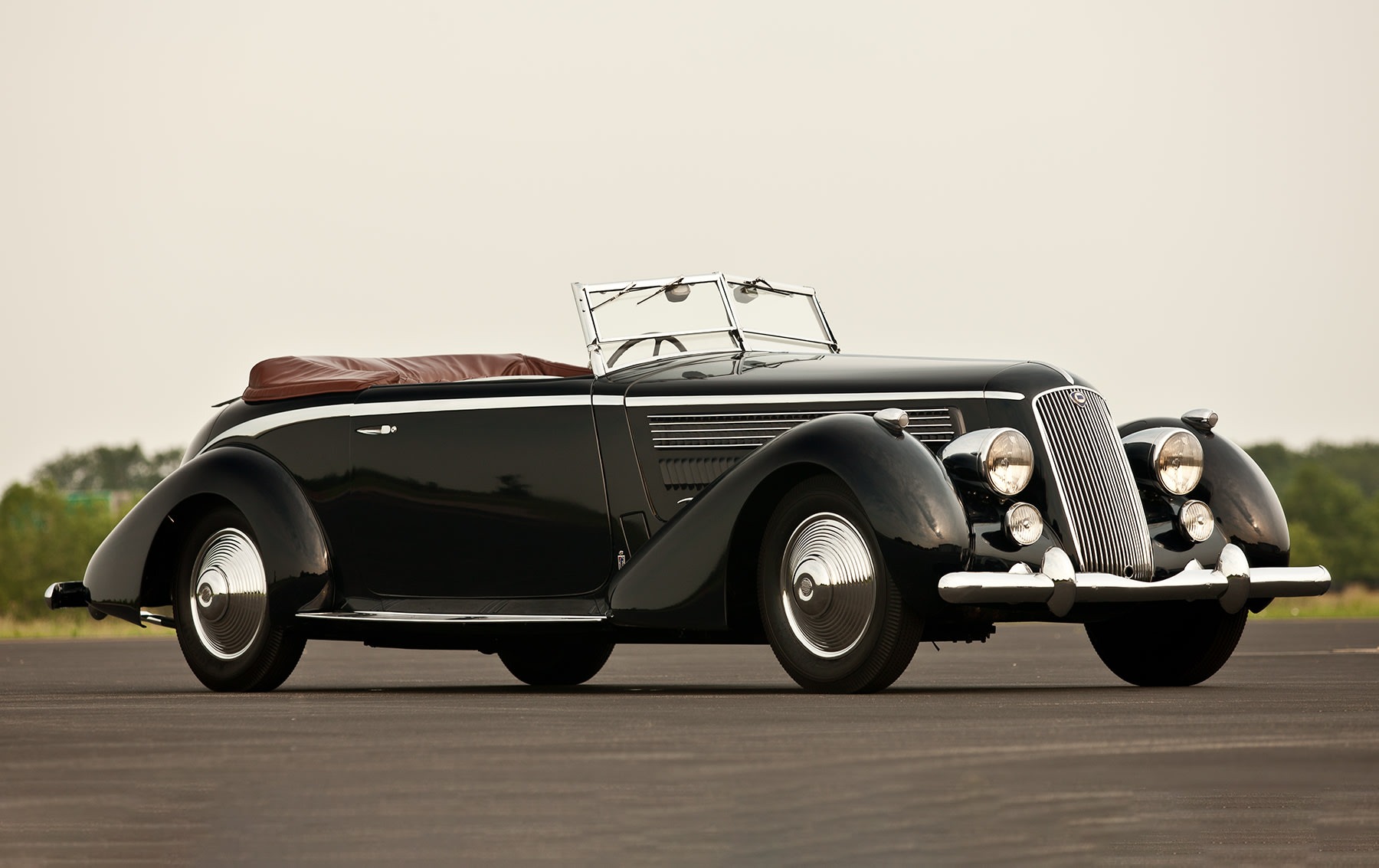
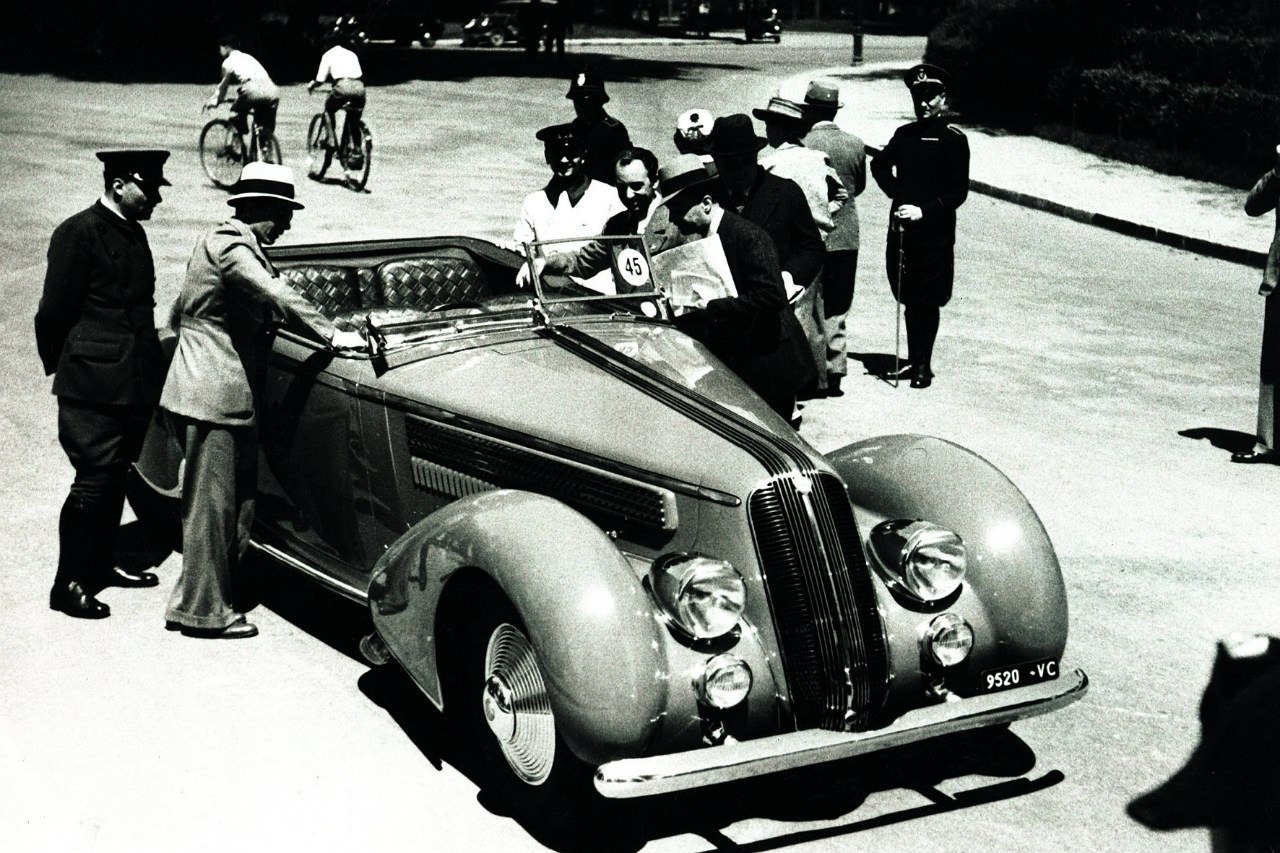
Pinin Farina (Battista “Pinin” Farina) – later known as Pininfarina – created some of the Astura’s most celebrated designs. In fact, one of the Astura’s best-known series, the “Tipo Bocca” Cabriolets, was a Pinin Farina creation. In the mid-1930s, the three Bocca brothers – Lancia dealers in Piemonte (Vercelli, Biella, and Novara) – felt that the factory Astura sedans were too conservative for their high-end clientele. They persuaded Vincenzo Lancia to supply a batch of Astura 3rd Series chassis to Pinin Farina for special bodies. The result was a limited run of flamboyant Astura Cabriolets designed by Pinin Farina, unofficially called “Tipo Bocca”. Only about six of these cars were built, each slightly different, making each a near one-off masterpiece. These Pinin Farina Astura cabrios were stunning: they featured curvaceous art-deco styling with a low windshield (actually a dual fold-flat windscreen setup), curved side glass, and an innovative power-operated convertible top – a very advanced feature for 1936. They were finished to the highest luxury standards, with lavish interiors to match the glamorous exteriors. The Bocca Asturas were aimed at elite buyers seeking something special, and indeed they succeeded in drawing admiration. One was exhibited at the 1936 Olympia Motor Show in London, showing off Italian style to the British public. These cars also wowed judges on the concours circuit: contemporary reports say the Pinin Farina Astura cabriolets won awards at the 1937 San Remo Concours d’Elegance, among other events. The Bocca cabriolets were sold to top clients – one notable example later found its way into the hands of British rock star Eric Clapton many decades later (a testament to their enduring allure), but in the 1930s their buyers were Italian society’s crème de la crème.
However, Pinin Farina’s work extended well beyond that. In 1938, the firm bodied an Astura 4th Series chassis (no. 41-2943) as a refined two-door cabriolet for Count Gaetano Marzotto, finished in a striking two-tone scheme and featuring an electrically operated soft top — a rare innovation at the time and a testament to the coachbuilder’s technical ambition.
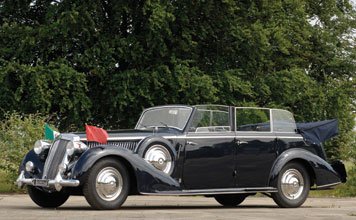
Most notably, chassis no. 41-2937, one of the most important political parade cars of its time, was also bodied by Pinin Farina. Commissioned by the Italian government in 1939, it was used during Adolf Hitler’s state visit to Rome in 1938, famously carrying Mussolini and Hitler side by side through the capital. The car, with its towering black presence, six side windows, dual cowl, and Fascist regalia, exemplified the solemn grandeur of the regime. After the visit, it was reportedly gifted to Hitler and taken back to Germany. Remarkably, the car survived the war and eventually resurfaced decades later in the private collection of Bernie Ecclestone. This show of confidence from the Fascist state speaks volumes: Pinin Farina’s aesthetic was considered both modern and dignified, suitable for projecting the image of a revitalized imperial Italy.
🔗 Read more: Pininfarina Through the Ages: The Complete History
Carrozzeria Boneschi, based in Milan, also played a significant role in defining the Astura’s public image, especially through its contributions to the series of Ministeriale cars used by high-ranking officials and ministries in the late 1930s. These were formal six-seat parade cabriolets, usually built on the long-wheelbase 4th Series chassis, with an emphasis on imposing presence: long hoods, high beltlines, dual cowls, and prominent fender lines. Boneschi’s style was more austere than Pinin Farina’s, often emphasizing verticality and dignity over flourish — appropriate for the Fascist aesthetic of the time.
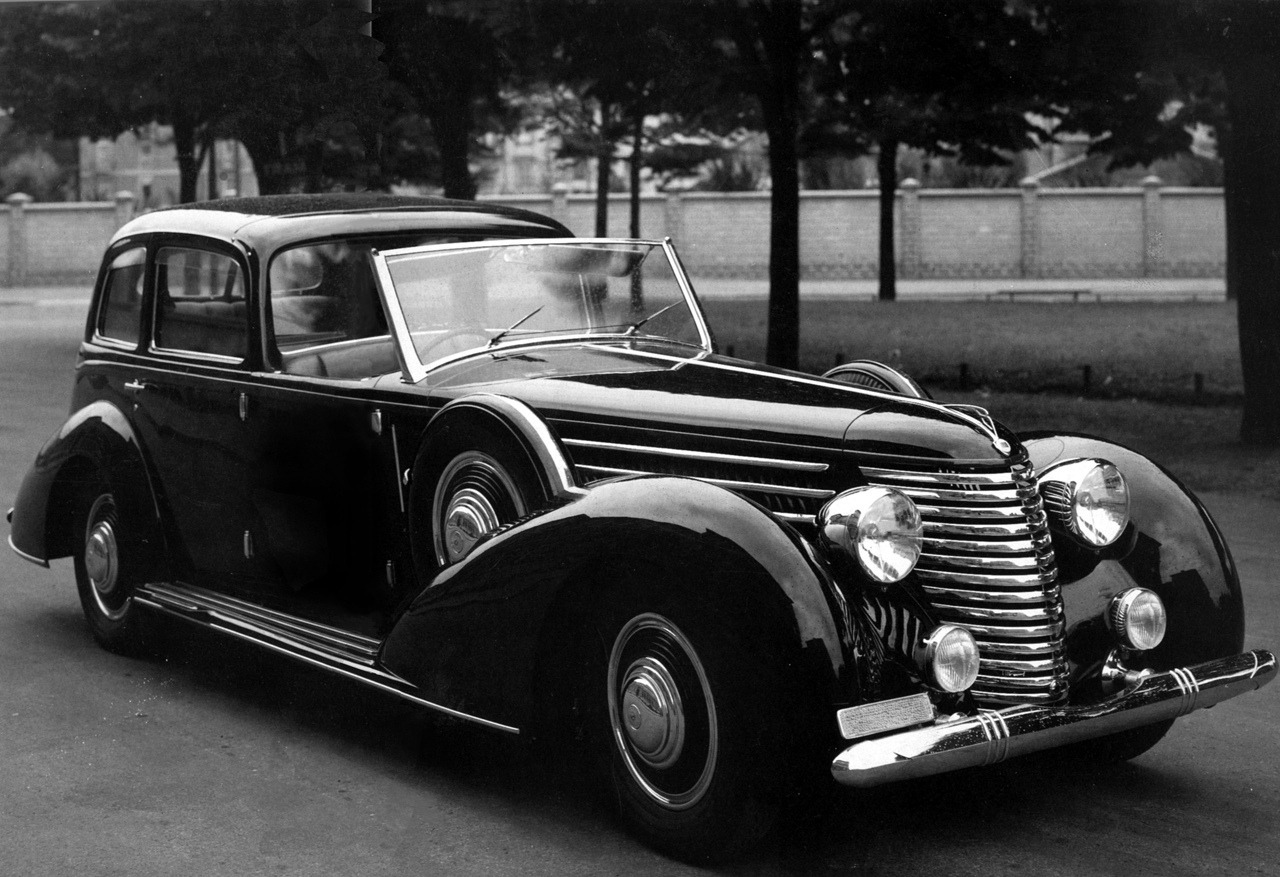
At least 4 to 6 such Ministeriale cars were produced by Boneschi, and several were used in high-level parades and state visits, though not the one gifted to Hitler, as previously misattributed. Instead, Boneschi-bodied Asturas were frequently employed for official ceremonies and military reviews within Italy, carrying dignitaries such as Foreign Minister Galeazzo Ciano or visiting diplomats. These cars often featured six side windows (6 luci), long flowing fenders, and mounted flagpoles — a mobile expression of state power.
In addition to government commissions, Boneschi also produced a number of elegant private cabriolets and coupés for aristocratic clients. One standout example is the 1938 Astura Cabriolet (chassis 41-3125), a sleek, modern drophead with streamlined fenders and Art Deco detailing, likely built for a wealthy Milanese industrialist. Boneschi’s creations may not have shared the visual lightness of Pinin Farina or Touring, but they offered gravitas, clarity of form, and ceremonial authority — qualities deeply resonant in pre-war Italy. Today, surviving Boneschi Asturas are exceptionally rare, with just a handful preserved in major collections.
Carrozzeria Touring (of Milan), famed for its Superleggera method, also lent its talent to the Astura – especially in crafting sporty, aerodynamic bodies. Perhaps the most legendary Touring-bodied Asturas were those nicknamed “Flying Star.” Touring built at least one Astura Flying Star coupé in the late 1930s, applying the same glamorous style it had used on Alfa Romeos. The “Flying Star” was typically a fully fender-skirted, streamlined 2-door sports coupe with a long hood and a tapered rear. One Astura Flying Star Coupe (built on a 4th series chassis) even had an interesting wartime footnote: it belonged to Luftwaffe Gruppenkommandeur Hans Robert Hahn during 1940–41 in occupied France. (How a Lancia ended up with a German fighter ace is a story of its own – likely the car was seized or bought in France – but it demonstrates the far reach of these special Asturas.)
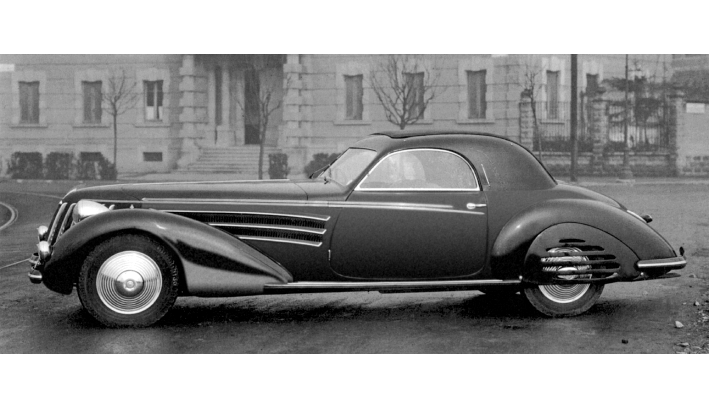
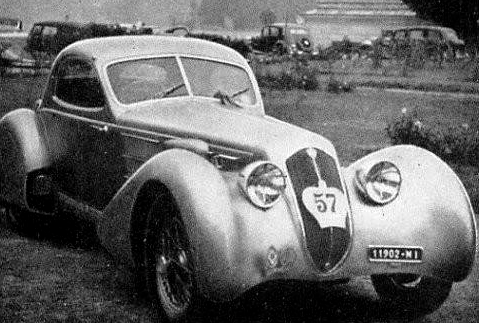
No discussion of Astura coachbuilders is complete without Carrozzeria Castagna of Milan. Castagna was an older, prestigious firm known for exquisite craft, and with the Astura they produced a small series of striking “Aerodinamico” Coupés. Between 1933 and 1935, Castagna clothed four Astura chassis with a dramatic streamlined coupé body style. These Astura Aerodinamica coupes had a teardrop silhouette: a gently curving fastback roof flowing into a boattail-style rear, with spats over the wheels and a distinctive rounded grille treatment. They were actually born from a bit of coachbuilder ingenuity – the body design was originally created by Castagna for an Alfa Romeo 8C, shown at the 1934 Milan Motor Show, but Castagna repurposed it onto the Lancia Astura platform at the behest of new clients. One famous Castagna Astura appeared in the 1935 Villa Olmo Concours d’Elegance, where its extreme aerodynamic shape surely turned heads. This car still exists and is often referred to simply as the Astura Aerodinamico Castagna. They are early examples of wind-tunnel-influenced design on a luxury chassis. The fact that one ended up in a museum (the Rosso Bianco collection in later years) and eventually won the Coppa d’Oro (Best of Show by public vote) at the 2016 Villa d’Este in its restored glory underscores how exceptional Castagna’s Astura creations were.
Another prominent firm, Stabilimenti Farina (run by Battista Farina’s older brother Giovanni), also built on the Astura. Stabilimenti Farina was one of the biggest coachbuilders in the 1930s and produced several Astura variants, from elegant sedans to sporty convertibles. In fact, right after WWII, a Stabilimenti Farina cabriolet on an Astura chassis won the Gran Premio (Best of Show) at the 1947 Concorso d’Eleganza Villa d’Este, beating more modern designs. This particular car was a one-off Astura cabriolet with french inspried Flamboyant lines, built likely in 1946 by Stabilimenti Farina using a leftover pre-war Astura chassis. It shows that even after the war, a well-executed Astura custom could triumph in elegance competitions. Pre-war, Stabilimenti Farina had bodied Asturas in styles similar to Pinin Farina’s, given the family connection in design ethos. For example, Farina built at least one series of Astura convertible sedans (cabriolet limousine) for the Italian ministry as well, parallel to Boneschi’s – some sources indicate a few of the Ministeriale Asturas were by Stabilimenti Farina. These had slightly different styling cues (one such Pinin/Farina ministerial Astura had a more streamlined nose, as noted). Stabilimenti Farina’s client list included Italian government officials and wealthy patrons pre-war, and one of their Astura cabriolets was owned by the Duke of Aosta (a member of the Savoy royal family), according to some coachbuilding registers.
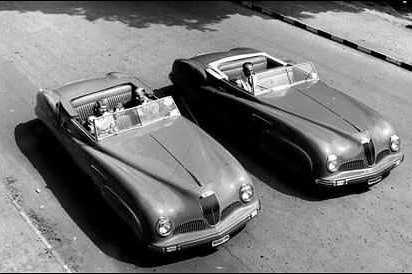
We also see smaller Italian coachbuilders in the Astura story. Carrozzeria Bertone, which was a relatively small atelier in the 1930s (run by founder Giovanni Bertone in Turin), built at least two remarkable Asturas. One is the 1933 Lancia Astura “Superluminosa” by Bertone – a groundbreaking design featuring a huge panoramic sunroof (hence the name “Superluminosa”, meaning super bright). Bertone had pioneered this concept on a Fiat Ardita and applied it to the Astura, creating a luxury sedan that flooded the interior with light – a very modern idea at the time. The Superluminosa Astura, designed by the gifted Mario Revelli di Beaumont in collaboration with Bertone, had elegant understated lines and that notable glass roof panel. It was a one-off showpiece that demonstrated Bertone’s innovative spirit in 1933. Fast forward to 1938, Bertone constructed another one-off: a Lancia Astura Cabriolet Bertone on a 4th series chassis. This was a two-door convertible with a long bonnet and partially spatted wheels, very much in line with late-1930s streamlining trends. The body was steel over wood with some aluminum used for weight savings. It had a plush 2+2 seating layout and was finished with typical Bertone craftsmanship – leather upholstery, wood trim, etc.. Only one was built, likely for a specific client or a motor show, and it remains a unique example of Bertone’s pre-war work.
🔗 Read more: Mario Revelli di Beaumont: the first Freelance Car Designer
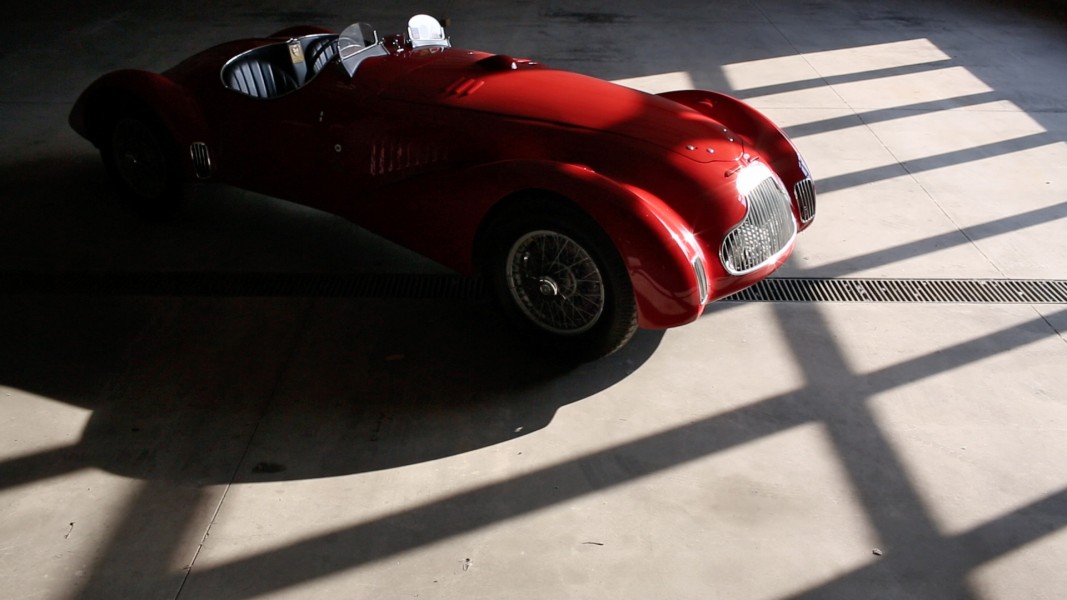
In contrast to the formal elegance of other carrozzieri, Carrozzeria Colli of Milan created one of the most daring Monuments on Wheels with its 1939 Astura MM “Spider” – a uniquely honed sports variant commissioned by Scuderia Ambrosiana for ace driver Luigi Villoresi. The 4th‑series long‑chassis Astura was transformed into a lithe aluminum-bodied roadster, its narrow‑angle V8 upgraded with a hemispherical head to unleash approximately 110 bhp—far beyond the standard 82 hp. Though Villoresi’s Mille Miglia debut was thwarted by a testing accident, the car later passed to the racing talents of Franco Cortese and even competed in the post‑war Mille Miglia races in 1948 and 1949 under English ownership. After a colorful life—including an interlude as a smuggler’s runabout and a period of abandonment in Switzerland—it was rediscovered and fully restored by Luciano Nicolis and is now preserved in the Museo Nicolis.
Other Italian coachbuilders that created Astura bodies include Carrozzeria Ghia of Turin, Carrozzeria Garavini, Viotti, Borsani, Brianza, and more. Virtually every carrozziere tried their hand on the Astura, given the model’s prestige. Ghia, for instance, built a handful of sporty Astura cabriolets; although specific details are scarce, one surviving photo shows a Ghia Astura with a low-cut roadster body from the late ’30s, indicating Ghia’s flair for dramatic open cars. Viotti was known for its transformable sedans (convertible sedans), and at least one Astura received Viotti’s patented finto cabrio treatment – a fixed roof that could be partially opened. Garavini and Borsani were Turin-based coaches that likely built formal sedans on the Astura for local gentry. Brianza (in Milan) specialized in cabriolets and could have produced a one-off Astura cabrio as well. Even outside Italy, a few Astura chassis were exported to foreign coachbuilders: for example, Pourtout in France bodied an Astura as a streamlined coupé for a French client in 1939, and in England J. Gurney Nutting reportedly rebodied an Astura that had been brought to the UK (though Lancia England mostly sold them as chassis to be bodied back in Italy or in-house). The sheer variety of Astura coachbuilt models is astounding – from seven-passenger limousines to two-seat roadsters.
Because of this, the famous owners of Lancia Asturas are a diverse lot, essentially a who’s who of 1930s high society and power. We’ve mentioned several: Mussolini and his inner circle (Ciano, etc.), members of the Italian royal family (the Duke of Aosta, possibly the young Crown Prince Umberto had one for personal use), and wealthy counts like Marzotto. Foreign royals also appear: it’s said that the Dutch royal family owned a Lancia Astura for a time in the late ’30s (though this reference may actually conflate with a later Lancia model, it wouldn’t be surprising as Lancias were prized by European nobility). In Hollywood, the Astura wasn’t as common as a Rolls or Duesenberg, but one Astura cabriolet did make it to the U.S. and was owned by opera diva Lily Pons for a short period before the war (illustrating that the transatlantic set also fancied Italian coachwork). The Astura’s appeal even extended to military figures – aside from the German ace mentioned, there are accounts that General Annibale Bergonzoli (an Italian general) had an Astura as his staff car in Libya. Post-war, as these cars became treasured classics, notable car enthusiasts acquired them: we’ve already noted rock star Eric Clapton and F1 boss Bernie Ecclestone owning Asturas; additionally, American publisher L. Scott Bailey (founder of Automobile Quarterly) cherished a 1933 Astura roadster in his collection. These later owners underscore the Astura’s legendary status, but in its heyday, the Astura was essentially a requisite possession for anyone in Italy who wanted the very best Italian automotive luxury.
A Car That Commanded Applause: Astura’s Honors in Style and Ceremony
During the 1930s and into the late 1940s, Lancia Asturas were frequent stars of Concours d’Elegance, those fashionable events where custom cars were judged like rolling works of art. Wealthy owners proudly showed off their coachbuilt Asturas at these competitions, and many earned top honors – reflecting the model’s status as a pinnacle of automotive elegance.
One early highlight came in 1935 at the VII Concorso d’Eleganza Villa d’Este (held on the shores of Lake Como). That year, the aerodynamic Lancia Astura Coupé by Castagna – was entered into the prestigious Villa d’Este show. Its sleek fastback design was unlike anything else, and although detailed records of awards from 1935 are scarce, the Astura certainly garnered immense attention. (Villa d’Este’s pre-war concours were competitive; the Astura was up against exotic Alfa Romeos and Isotta Fraschinis. The Astura Castagna did not win Best of Show – that honor in 1935 reportedly went to an Alfa – but it was recognized in its class for design excellence.) The same Castagna Astura Aerodinamico had also been displayed at the 1934 Milan Motor Show and was a trend-setter, but its presence at Villa d’Este 1935 cemented Lancia’s reputation for style.
Another significant event was the Concorso d’Eleganza di Sanremo 1937. The riviera resort of Sanremo hosted a concours where one of Pinin Farina’s Astura “Tipo Bocca” cabriolets took a prize. Period reports note that the Pinin Farina cabriolet drew admiration for its art deco lines and reportedly won an award at the 1937 Sanremo Concours. These Bocca Asturas, with their rich two-tone paint and advanced features, were darlings of the show circuit. It’s likely the judges gave it a Most Elegant Convertible or similar title, given Pinin Farina’s penchant for winning such accolades. This was a proud moment for Lancia, as it demonstrated that an Italian car could beat out the likes of custom Delahayes or Hispano-Suizas in an elegance competition.
Throughout the late 1930s, Asturas continued to appear at various Italian concours: Rome, Turin, and Florence had their own elegance contests. In 1938, for example, a Stabilimenti Farina-bodied Astura coupé participated in the Concorso di Eleganza del Cinquantenario (Turin), celebrating 50 years of the automobile – it won a class award for closed cars, showcasing modern aerodynamic styling with subtle curves. In 1939, an Astura cabriolet by Ghia was shown at the Padova Concours, where it was praised for its sporty yet luxurious presence (though by 1939, with war looming, such events were more subdued).
🔗 Read more: Elegance on Wheels: The Grand History of the Concours d’Elegance
After World War II, when concours d’elegance culture revived, the Astura again made appearances and won. The most famous post-war win was at Villa d’Este 1947, where a brand-new body on an Astura chassis by Stabilimenti Farina was crowned overall winner. Imagine the scene: among many 1940s designs, a Lancia Astura – essentially a pre-war chassis under a fresh body – steals the show. That victory spoke to the timeless appeal of the Astura’s proportions and engineering. The car was nicknamed “Villa d’Este” after the event (a name later used for a BMW concept, interestingly), and it underlined that the Astura could still compete with contemporary designs on equal footing.
It wasn’t just in Italy. Pre-war, some Asturas ventured to contests abroad. In 1933, a Lancia Astura bodied by Viotti was exhibited at the Concours d’Elegance in Monte Carlo, winning a prize for its clever transformable roof. In 1937, a Swiss owner entered his Astura (with a Graber body from Switzerland) in the Concourse d’Elegance of Lucerne, where it won Best Coachwork by Non-Swiss Maker, essentially applauding Lancia’s chassis and the cross-border collaboration. And while not exactly a concours, it’s worth noting that Asturas were also shown at top-tier motor shows, often winning informal “beauty” awards from the press. The 1935 Brussels Salon awarded a Grand Prix d’Honneur to a Lancia Astura cabriolet by Vesters et Neirinck (a Belgian coachbuilder) built on an Italian chassis, exemplifying international recognition.
The Astura’s concours pedigree extends into modern times (though the user prefers focusing on the period events). It’s irresistible to mention that in 2016, a 1936 Pinin Farina Astura cabriolet (one of the Bocca cars) won Best of Show at the Pebble Beach Concours d’Elegance, and in 2019 a Lancia Astura Serie IV won the Trofeo BMW Italia at Villa d’Este – proving that even 80+ years later, these cars are still reigning champions of elegance. But in their own era, Asturas were consistently in the limelight. They collected dozens of class trophies and special awards (for features like most innovative design, best interior, etc.) in the late ’30s concours circuit.
A Dynasty of Design: The Astura and the Lancia Line That Followed
By the outbreak of World War II, the Lancia Astura’s era was drawing to a close. The final Astura left the factory in 1939, and with Italy’s focus shifting to the war effort, Lancia halted luxury car production. The Astura had been Lancia’s last V8-engined model and represented the peak of pre-war Italian luxury engineering. In the post-war period, Lancia did not immediately produce a direct successor in the same mold – the world had changed, and there was a greater emphasis on smaller, more efficient cars in the immediate years after 1945. Lancia’s first new model after the war was the modest Ardea, followed by the seminal Lancia Aurelia in 1950.
In many ways, the Aurelia can be viewed as the spiritual heir to the Astura, albeit for a new era. The Aurelia was smaller (with a 1.8–2.5L V6 engine) and more technically daring (independent suspension all around, a unibody chassis, etc.), but it carried forward Lancia’s core values of innovation, performance, and luxury. Just as the Astura had been clothed in beautiful bespoke bodies, the Aurelia chassis spawned gorgeous coachbuilt versions – Pinin Farina cabriolets, Viotti coupés, etc. An Aurelia even won the inaugural post-war Villa d’Este concours in 1947 (the event the Astura also won – in a nice passing of the torch). The Aurelia also achieved racing glory (something the heavy Astura was never aimed for), showing Lancia adapting to the times.
🔗 Read more: The Lancia Aurelia Chassis Register
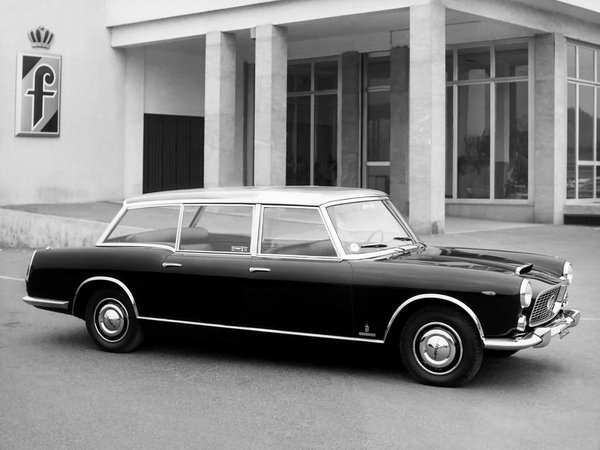
However, when it comes to a true flagship luxury model in the Astura’s image, one has to look a bit further into the 1950s. The Lancia Flaminia, introduced in 1957, was arguably the heir in spirit to the Astura. The Flaminia was Lancia’s post-war luxury platform with a much larger presence than the Aurelia – it had a 2.5–2.8L V6, and notably, Lancia offered it as a bare chassis for coachbuilders once again. Just as the Astura had variations by Pinin Farina, Touring, and others, the Flaminia came in multiple bespoke guises: elegant Pininfarina coupés and cabriolets, rakish Touring-bodied GTs, and even a special series of Presidential limousines (the Flaminia 335 “Presidenziale” landaulets) built by Pininfarina for state occasions in Italy. This echoed the Astura’s role in the 1930s as the choice for official state cars. In fact, when the President of the Italian Republic rode in a Lancia Flaminia convertible during the 1960s, it was a direct lineage from the days when Mussolini rode in his Astura – the tradition of Lancia providing cars to Italy’s leaders continued.
In the broader sense, the Astura’s legacy lived on in Lancia’s continued commitment to blending engineering excellence with Italian elegance. Every subsequent Lancia luxury car had a bit of Astura’s DNA: the Lancia Thema 8.32 of the 1980s, for example, even brought back a Ferrari-developed V8 into a Lancia sedan – perhaps a distant echo of the Astura’s V8 exclusivity. But none of those later cars had the coachbuilt fantasy that the Astura offered. The era of bespoke bodywork largely ended by the 1960s as unibody construction and cost factors took over. This makes the Astura a last of its kind in Lancia’s history – the last custom-bodied, coachbuilt-oriented luxury Lancia produced in significant numbers.
The Lancia Astura remains a shining symbol of a glorious epoch in Italian motoring. Its story – from a 1931 debut amid economic turmoil, through years of serving statesmen and socialites, to its swan song on the eve of war – encapsulates the romance of automotive art interwoven with history. The Astura combined Lancia’s famed innovation (like that narrow-angle V8 and superb chassis) with the pinnacle of Italian coachbuilding creativity. It elevated Lancia’s status internationally and left an indelible mark: even today, connoisseurs speak of the Astura in reverent tones, and restored examples win top awards as they did eight decades ago. The Astura’s direct successor may not have come immediately, but its heir in philosophy can be seen in every Lancia that prioritized technical daring and bespoke luxury. Cars like the Aurelia and Flaminia continued the Lancia tradition of elegance, but none quite captured the bespoke extravagance of the Astura’s era. The Astura thus stands in memory as both a high point and a closing chapter – the apex of pre-war Italian luxury car design and the last great coachbuilt Lancia before the world changed. For a website celebrating Italian coachbuilders, the Astura truly is a perfect muse: a car that was mechanically superb, coachbuilt to perfection, and beloved by those who experienced its grace. In the pantheon of classic cars, the Lancia Astura’s star will forever shine brightly, representing the golden age of Italian carrozzeria and the timeless appeal of doing things with style, innovation, and passion.

ABOUT THE AUTHOR
Andreas Scheidl
Italian classic car enthusiast with German roots. Renowned as a respected figure in the classic car community, he serves as a jury member at various international concours d'elegance, including the Classic Gala Schwetzingen and Mantova. As a content creator, Andreas passionately shares his profound knowledge and appreciation for vintage automobiles. His heart beats for cars designed by Giovanni Michelotti, showcasing his discerning taste and dedication to preserving the timeless elegance of automotive history.
More stories by Andreas Scheidl ↗CONTINUE READING
Posts You Might Like
Fiat Panda Cabrio: The Italian Coachbuilders Who Opened Giugiaro’s Box
From Moretti’s Panda Rock to Italdesign’s experimental Strip, Maggiora’s four-wheel-drive convertible and Stola’s remarkable Destriero, the history of the open-top Panda reveals an unexpected chapter in Italian coachbuilding. When Giorgetto Giugiaro designed…
Read story
Gabriele d’Annunzio and the Cult of the Automobile
There was a time when the automobile had not yet become part of the landscape. It announced itself from afar through the beating of an engine, the smell of petrol and hot…
Read story
Fiat 1400: The Last Great Playground of the Carrozzieri
From Touring and Abarth to Farina, Ghia, Vignale, Boneschi, Bertone, Viotti and the smaller carrozzerie, the new Fiat quickly became one of the richest bases for Italian special bodies in the early…
Read story
How a Swiss Dealer Challenged Ferrari: The Story of Monteverdi
How Peter Monteverdi went from Swiss Ferrari dealer to creator of rare Frua and Fissore-bodied GTs, the Hai supercar and luxury off-roaders.
Read story
THE CONVERSATION
Comments 0
Share a memory, a period photograph or a documented detail about this story.