
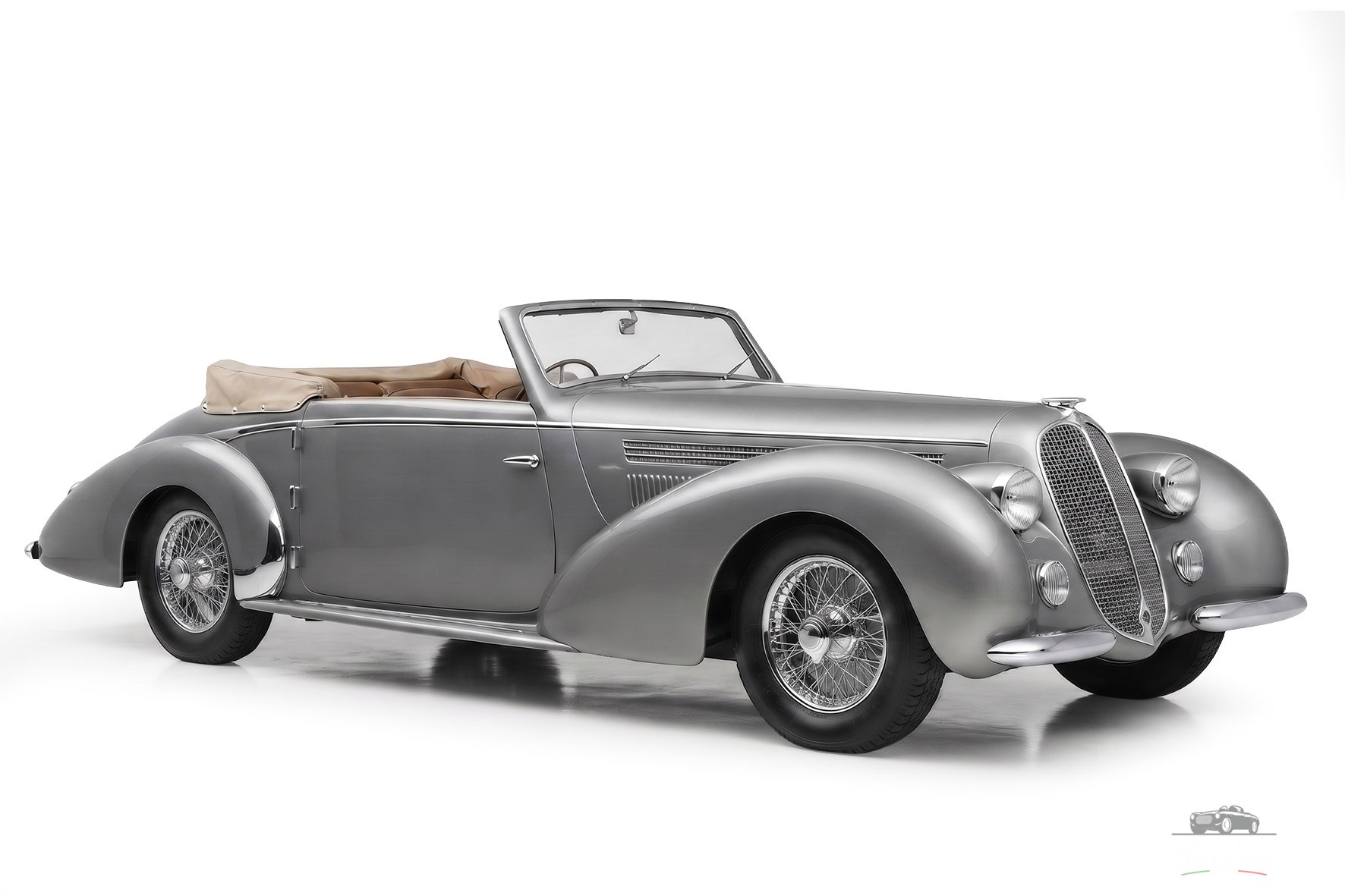
THE VEHICLE AT A GLANCE
Model dossier
- Production period
- 1938
- Body style
- Cabriolet
- Engine
- V8 a V stretto — donor/base Lancia Astura III/IV serie
- Type
- One-off
- Production
- 1
- Displacement
- 2,972 cc
- Power
- 82 CV
THE PEOPLE BEHIND THE CAR
Coachbuilding, design & conversions

PRICE & SALES RECORD
Vehicle value
- Original price
- Not documented
- Latest recorded sale
- Not documented
01 / THE STORY
History & context
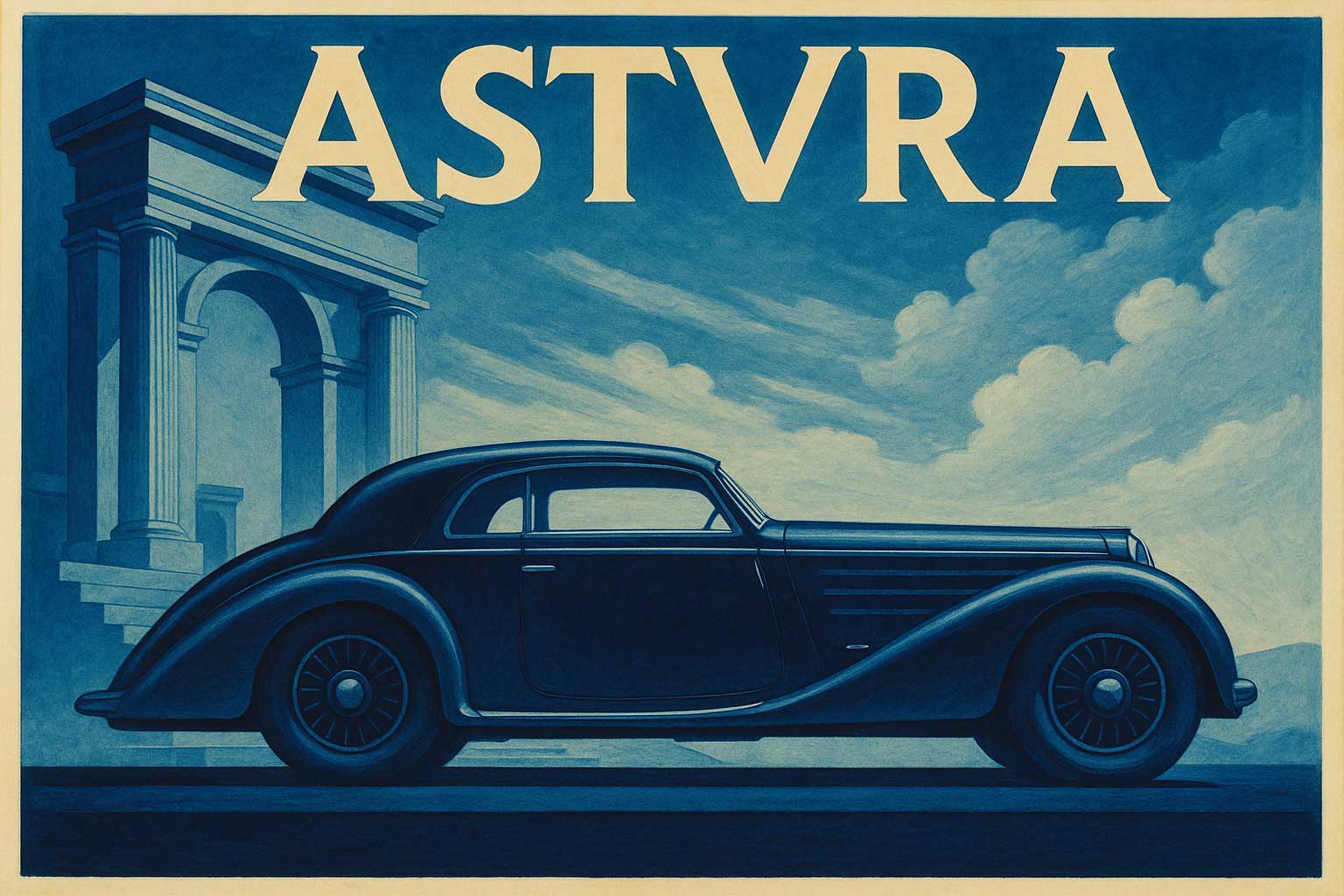
The Lancia Astura Cabriolet by Carrozzeria Bertone, constructed in 1938, was a one-off automobile built on the fourth-series Astura chassis. The Astura model was introduced by Lancia in 1931 and was produced in four distinct series through 1939. The fourth series, introduced in 1937, featured an extended wheelbase intended to accommodate formal or luxury coachwork, commonly supplied by independent Italian carrozzieri. The Astura chassis employed a narrow-angle V8 engine of 2,972 cubic centimetres, with a single overhead camshaft. It produced approximately 82 horsepower in standard configuration. The transmission was a four-speed manual unit with synchromesh on the higher gears. Suspension was independent at the front using sliding pillarsa Lancia hallmarkand a solid rear axle located by semi-elliptical leaf springs. Braking was mechanical on all four wheels, with operation by cable. The layout followed conventional rear-wheel-drive architecture, with the engine mounted at the front. The cabriolet bodywork was executed by Carrozzeria Bertone of Turin. The firm, established in 1912 by Giovanni Bertone, was by the late 1930s producing limited-run and one-off bodies for various Italian marques. The 1938 Astura Cabriolet was constructed as a singular commission, with no evidence of production beyond a single chassis. The design followed the aesthetic principles of the late 1930s, featuring a long bonnet, integrated wings, and a partially enveloped spare wheel at the rear. The body was steel over a wooden frame, with aluminum elements employed for weight reduction in selected panels. Interior appointments are consistent with the period and intended class of vehicle, likely including leather upholstery, wood veneer trim, and full instrumentation. Accommodation was provided for two passengers in the front and two occasional seats in the rear compartment. No additional examples of a Bertone-bodied Astura cabriolet from this period are recorded. The vehicle remained consistent with Lancia’s practice during the 1930s of supplying rolling chassis to coachbuilders for bespoke execution. It represents one of the final instances of such collaboration prior to the widespread shift to standardized bodywork in the postwar period. Chassis records and subsequent ownership history are incomplete. The car is considered a unique product of interwar Italian coachbuilding.
IN THE ARCHIVE
Coachbuilders & design studios
02 / TECHNICAL IDENTITY
Specifications & construction
Production & construction
- Production
- 1
- Production type
- One-off
Engine & performance
- Engine configuration
- V8 a V stretto — donor/base Lancia Astura III/IV serie
- Displacement
- 2,972 cc
- Power (CV)
- 82 CV
- Engine speed
- 4,000 rpm
- Transmission
- Manual 4-speed
- Drive
- Rear-wheel drive
- Specification notes
- Confidence detail moved from confidence: high_model_body_year_coachbuilder_low_chassis_designer_units DONOR_BASE_PROJECTION — base-model technical fields projected from BORSANI-LANCIA-ASTURA-TORPEDO-1938 because make/model/year match exactly. This does not assert that the coachbuilt/special vehicle retained identical tuning or performance. | Source-backed donor/model-level baseline for Lancia Astura Series III–IV: narrow-angle V8, 2973 cc, 82 CV at 4000 rpm, 4-speed manual, rear-wheel drive. Coachbuilt-body dimensions, weight and maximum speed are intentionally not inherited.
Design & manufacture
- Coachbuilder / Body Builder · Documented
- Bertone
- Manufacturer · Documented
- Lancia
06 / EVENTS & AWARDS
Events & awards
No events or documented awards are currently recorded for this vehicle.
07 / THE VEHICLE IN DETAIL
Photo gallery 2 photographs
08 / FROM THE ARCHIVE
Archive
References held in the vehicle dossier. Their inclusion does not establish that every historical claim has been independently verified.
| Reference | Source type |
|---|---|
| Museo Nicolis — Lancia Astura Berlina Gran Sport III Serie www.museonicolis.com | Museum vehicle history |
THE CONVERSATION
Comments 0
Share a memory, a period photograph or a documented detail about this car.