
The Dodge Firearrow Series: Ghia’s Jet-Age Prototypes
In the early 1950s, America was enthralled by the Jet Age and the dawning Space Era. Jet travel, rocketry, and futuristic technology captured the public’s imagination, and automakers responded by crafting “dream cars” that brought a bit of outer space down to earth. Nowhere was this spirit stronger than at Chrysler Corporation under the visionary designer Virgil Exner. Exner was on the cusp of launching Chrysler’s famous “Forward Look” styling revolution, and he believed in pushing design boundaries to signal the future. Unlike GM’s lavish Motorama show cars, Exner’s approach was pragmatic: build concepts on workable, production-style chassis – show cars that could drive, not just sit like sculptures. To execute these advanced designs affordably, Exner turned to an unlikely partner across the ocean: Carrozzeria Ghia of Turin, Italy. Ghia’s artisans, led by Luigi Segre, could handcraft sleek bodies for a fraction of what Detroit in-house prototyping would cost. Together, Exner’s American futurism and Ghia’s Italian coachbuilding formed a transatlantic alliance that produced some of the era’s most breathtaking concept cars.
🔗 Read more: How the Space Age Shaped 50s-60s Italian Car Design
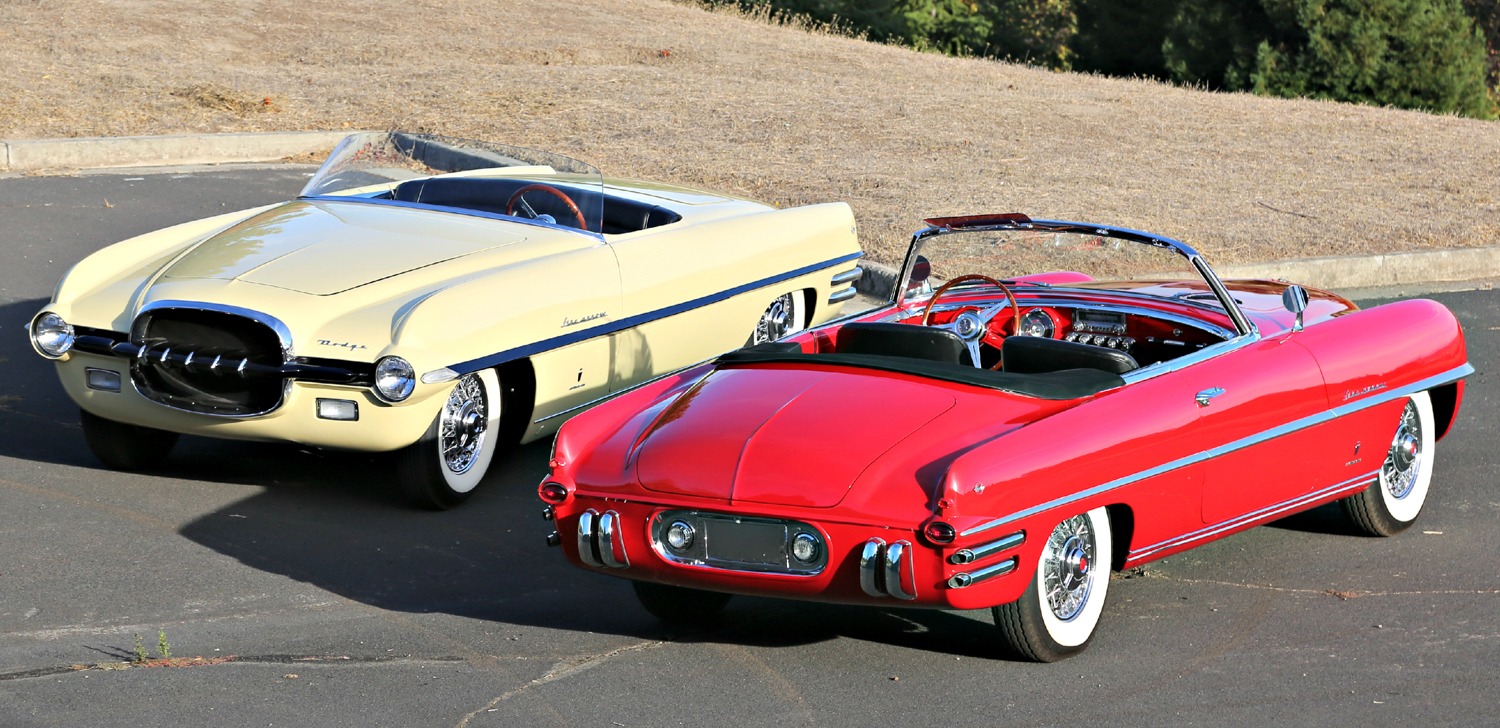
This partnership’s crowning achievement was the Dodge Firearrow series – a succession of four dream cars built in 1953–1954 that embodied transcontinental style. These one-off machines were badged as Dodges, but their low-slung Latin lines and careful detailing came straight from Turin. Chrysler’s goal was bold: gauge public interest in a sporty, luxurious Dodge and show that Chrysler “was thinking ahead as far as styling was concerned”. The Firearrows were unveiled as dramatic “idea cars” (as the term concept car wasn’t yet common) – and indeed they looked like rockets for the road. Each iteration in the series inched closer to production feasibility, evolving from a pure design exercise into a fully functional, near-production sports car. In a romantic sense, the Firearrows tell a story of transatlantic creativity and 1950s optimism: American V8 power and Italian artistic flair combining to chase a dream of the future. What follows is the tale of each Firearrow – how it was born, what made it special – and the legacy they left behind.
Firearrow I: The Spark of Inspiration (1953)
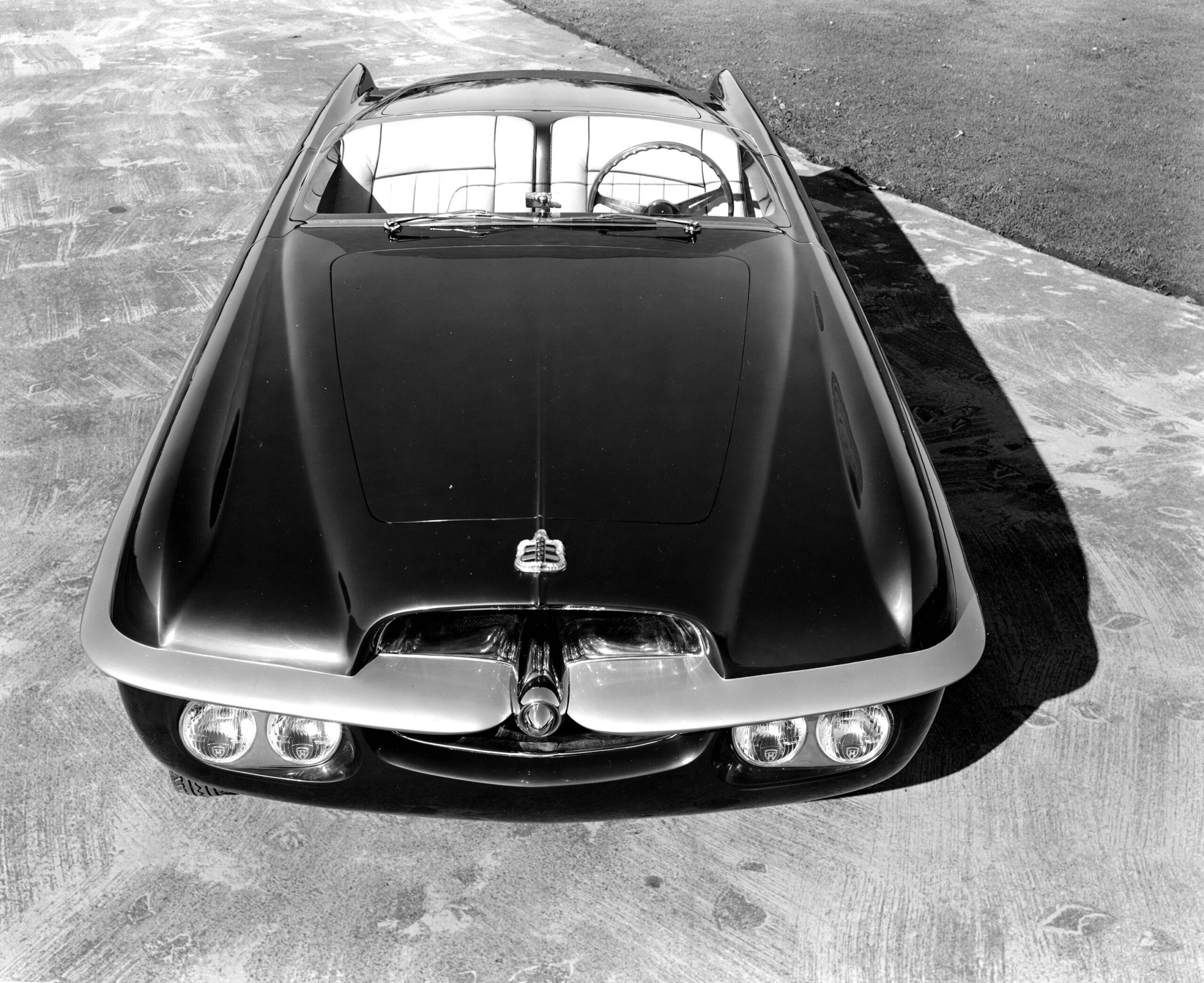
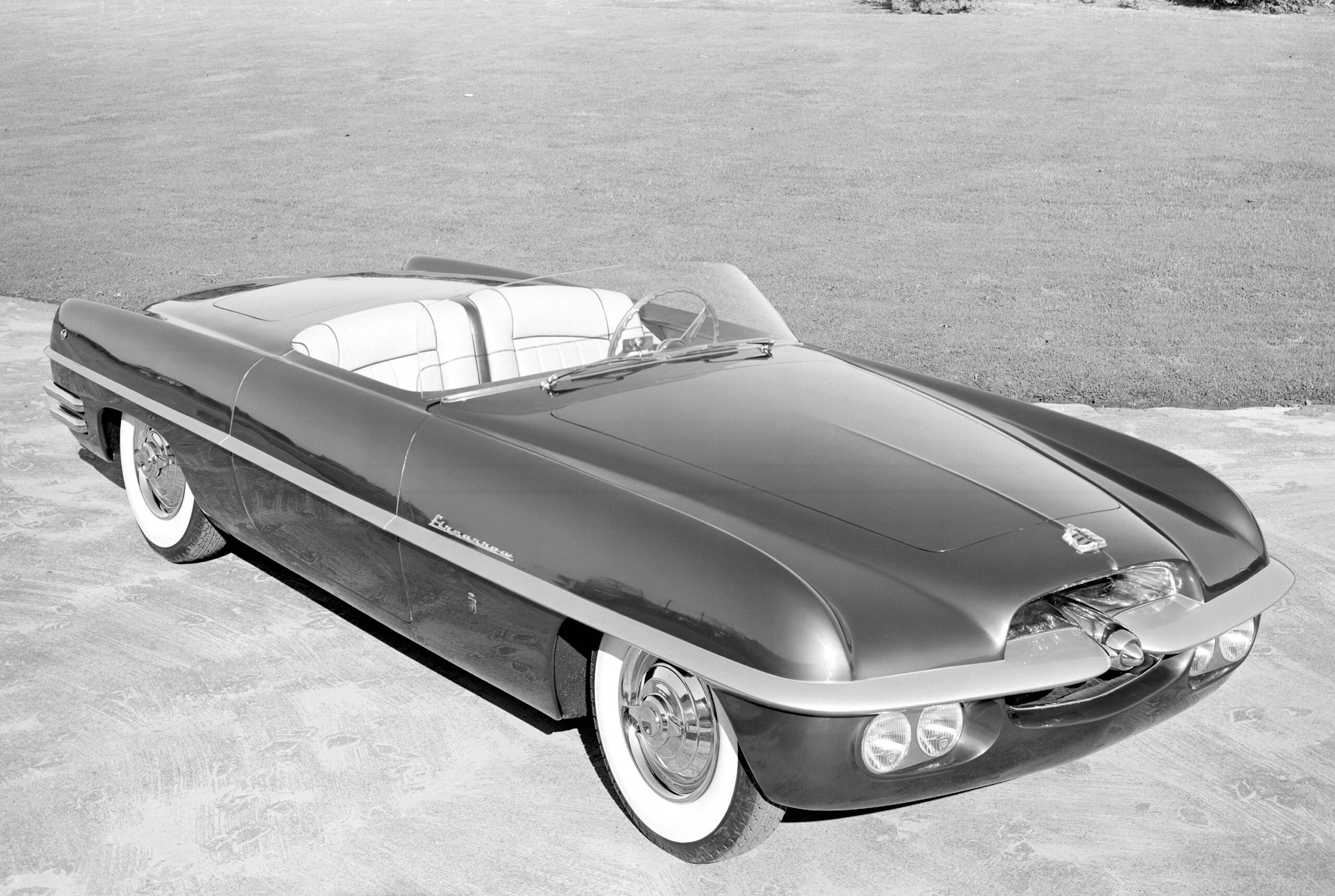
Every fire starts with a spark, and for the Firearrow series that spark was the Firearrow I in 1953. This first Firearrow was not so much a car as a promise of what could be. Built by Ghia on a Dodge chassis, the Firearrow I was essentially a full-size styling buck – a non-running model intended to test proportions and wow the public. Dodge unveiled it as a sleek, out-of-this-world roadster late in 1953, giving Americans a glimpse of tomorrow’s automobile. Though it lacked an engine and drivetrain, it more than compensated with dramatic styling. The body was painted a metallic red, set off by a full-perimeter front bumper painted in metallic gray (rather than gaudy chrome) that wrapped around the nose in a unified grille-guard design. The hood was low and long, the fenders subtly rolled – the stance was extremely wide and low, more than twice as wide as the car’s height at the cowl, achieving proportions Exner had dreamed of. In an era of bulbous, overchromed Detroit cars, the Firearrow I’s surfaces were taut and smooth, almost minimalist. A contemporary observer described it thus: “the metal between any two points seems stretched to fill the space smoothly, with no wasted contour” – a look of purposeful tautness far removed from the bloated curves of typical mid-’50s designs.
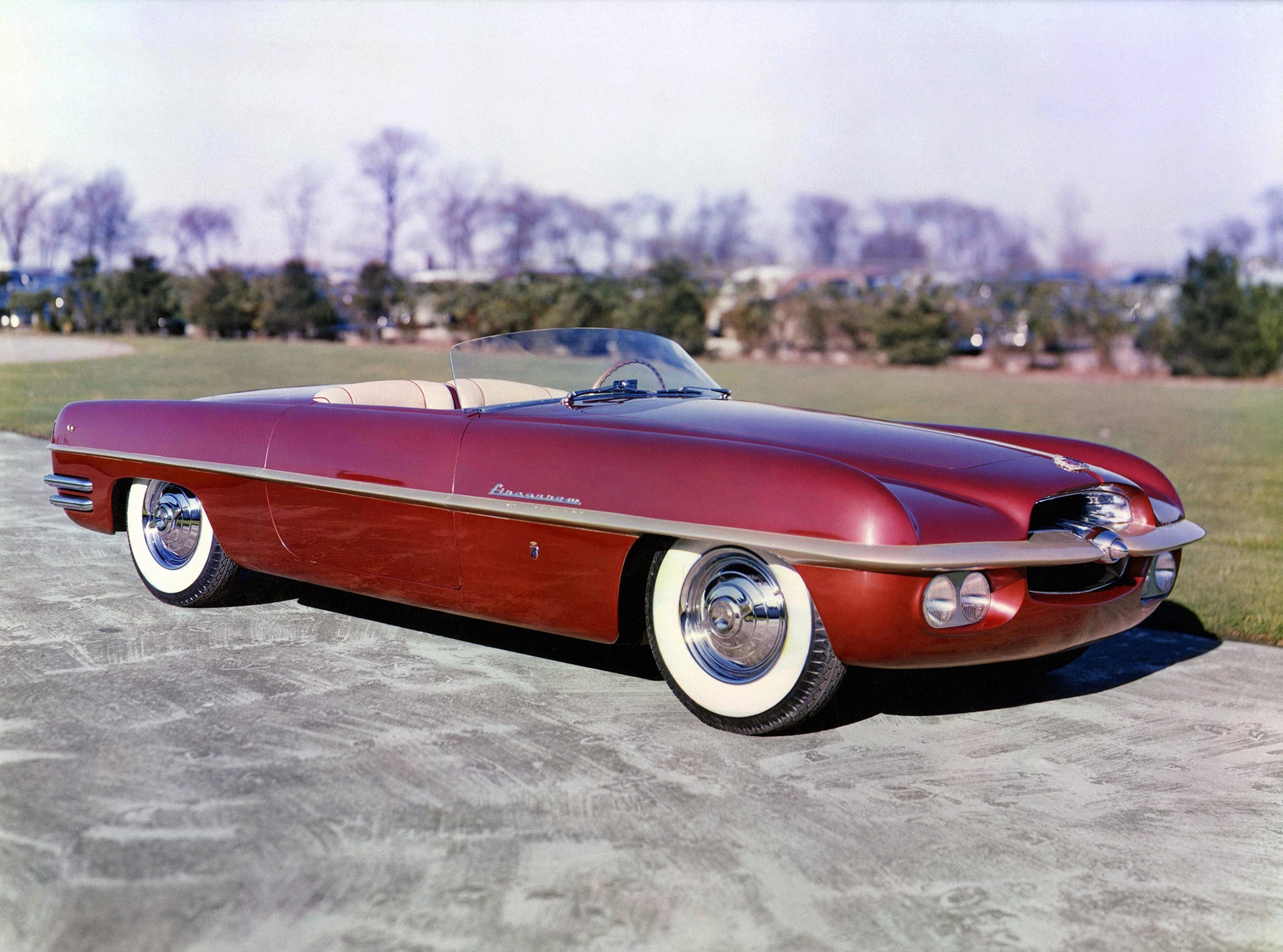
Notably, Firearrow I introduced styling cues that would reappear throughout the series. Quad headlamps – two per side – gleamed from its blunt nose, likely one of the first uses of four headlights on any car (predating quad lamps on production models by a few years). Along the sides, a dramatic gray accent molding ran the length of the car, culminating in a sharp, blade-like bumper split by a central nose element at the front. Low-mounted side pipes (exhaust pipes) poked out just ahead of the rear wheels on each flank – a feature borrowed from contemporary European custom cars like the Hudson Italia, except on the Italia they were fake and held taillights, whereas on the Firearrow they were fully functional. The interior of Firearrow I was no less striking: it was trimmed in yellow-beige leather with contrasting maroon piping, and it featured a classy wood-rimmed steering wheel – touches of Italian elegance mixed with American flair. All told, the Firearrow I looked ready to drive the highways of tomorrow even though, under its gorgeous skin, it was just a static mock-up without a beating heart.ns.
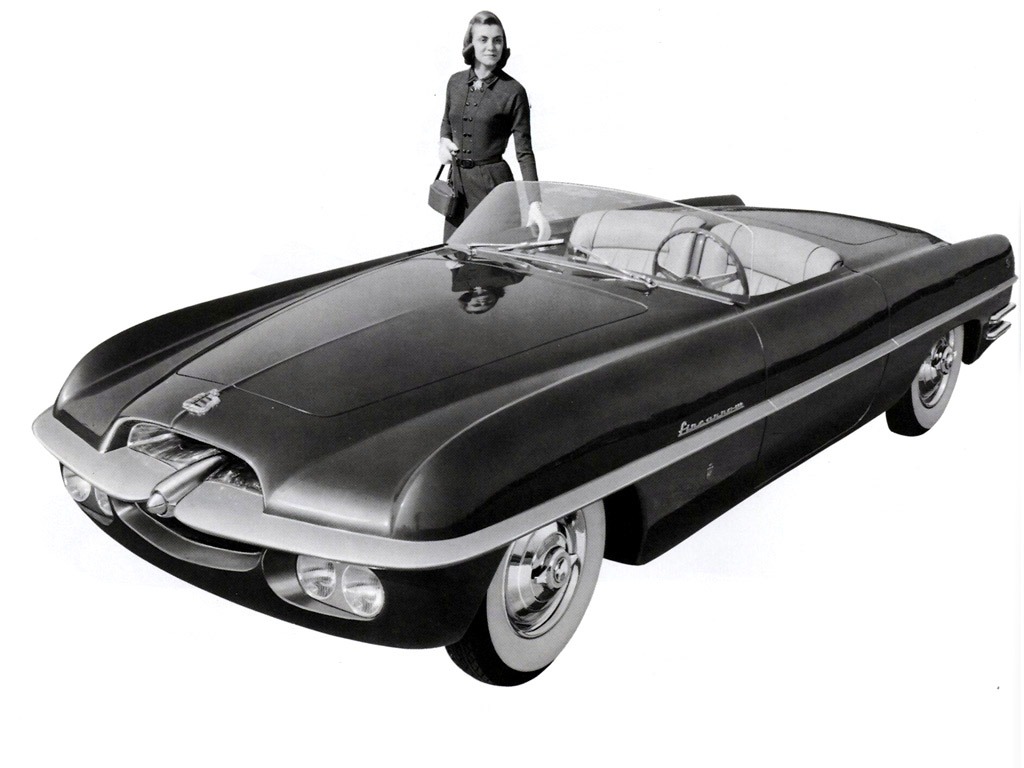
Chrysler displayed the Firearrow I to test the waters, and the public’s enthusiastic reaction gave Chrysler management some pause – here was a Dodge that people wished were real. Virgil Exner was almost wistful about it in later years; he genuinely wanted Chrysler to build a sports car to rival Chevrolet’s Corvette and Ford’s upcoming Thunderbird. The Firearrow I was the first step toward that goal, a showpiece to “let the public know” that Chrysler styling was racing ahead. By late 1953 the car had made its point: crowds loved its European-inspired grace. Spurred by this excitement, Chrysler gave the green light to build a second Firearrow – this time a fully operational car. The dream was about to get wheels and a Hemi engine.
Firearrow II: The Dream Takes Flight (1954)
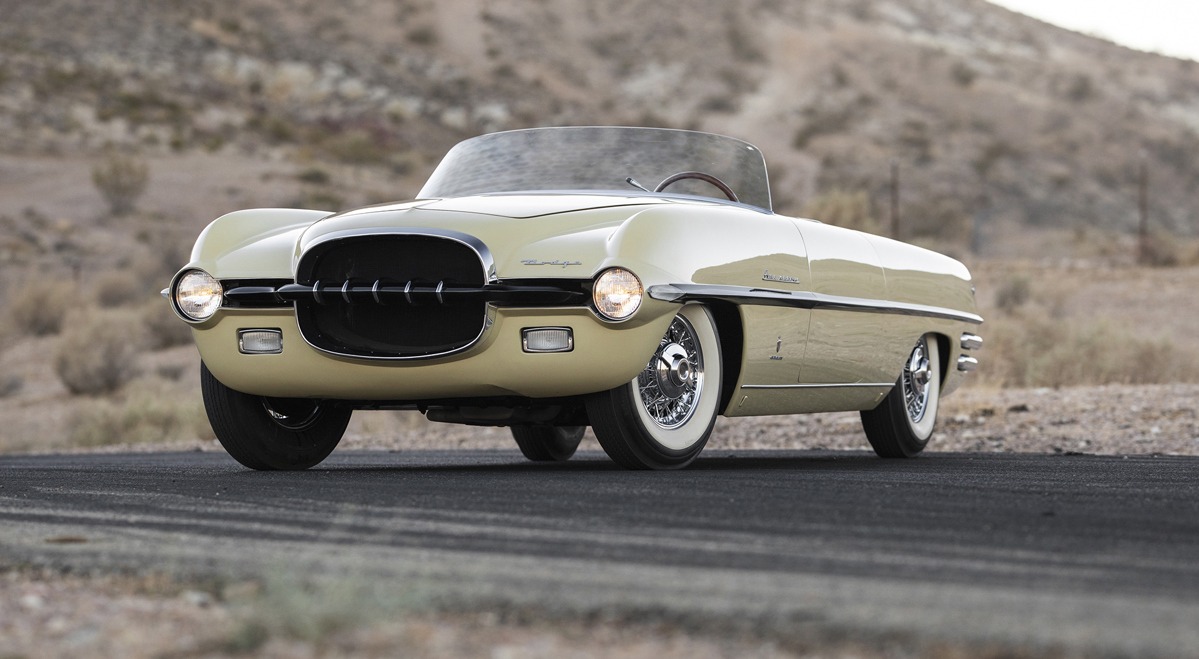
If Firearrow I was the spark, the Firearrow II was the moment the flame caught. Debuting in early 1954, Firearrow II was a fully functional, roadworthy two-seat roadster, and it stole the spotlight wherever it appeared. Under its handcrafted Italian bodywork, it rode on a production Dodge chassis (119-inch wheelbase from the Dodge Royal) and packed a real Dodge Red Ram V8 engine. In fact, this Mark II roadster carried a 241 cubic-inch (3.95L) Red Ram Hemi V8 making around 150–250 horsepower, mated to a Gyro-Torque four-speed automatic (Chrysler’s fluid-drive transmission). This was no mere show dummy – it could roar to life and move under its own power, proving that Exner’s futuristic design could be melded with tried-and-true American engineering.
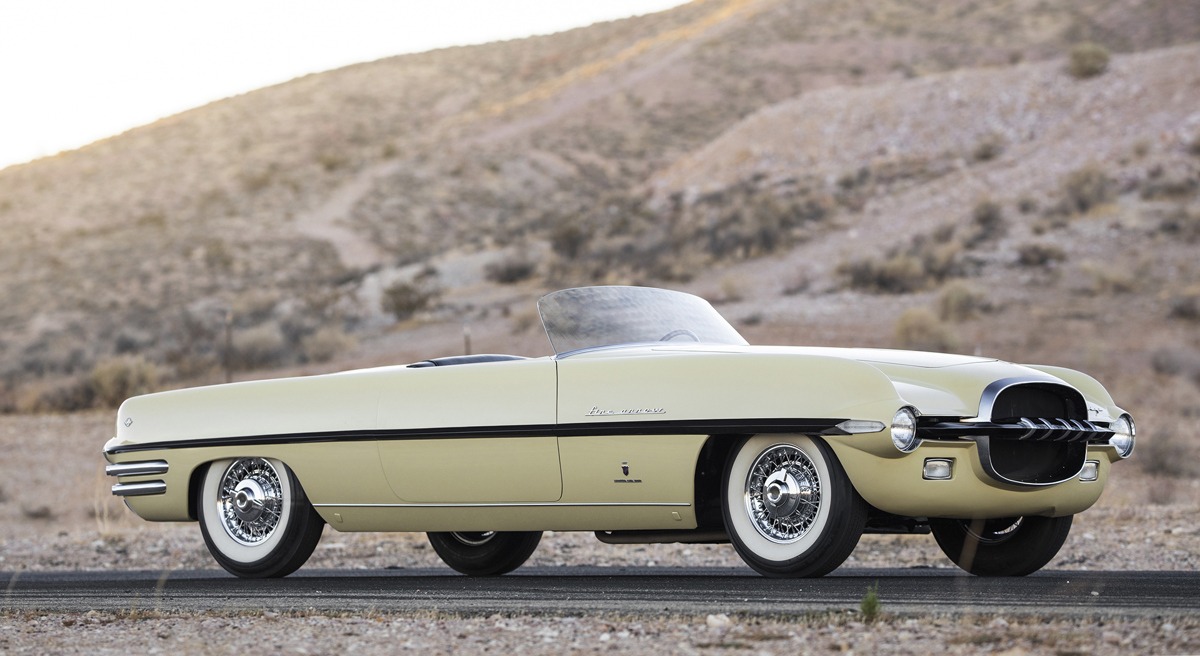
Visually, Firearrow II closely resembled the first car but with key refinements. The basic low-slung profile and smooth “stretched metal” surfaces remained, but the front end was revised: the quad headlamps of the mockup were replaced by single headlights neatly faired into rounded pods on each fender, giving the nose a cleaner look. The full-width split bumper of Firearrow I was traded for a bolder, more aggressive grille opening with an uninterrupted horizontal bumper bar running through it, accented by five vertical chrome “teeth” that added a bit of American flair to the otherwise European face. The car was painted a pale primrose yellow, offset by a glossy black grille bar and black bodyside moldings – a “popular period color combination” that exuded mid-century optimism. Ghia also swapped the solid wheel covers of the first car for sporty chrome wire wheels with knock-off hubs, wrapped in wide whitewall tires. The result was elegant yet racy. As one period magazine noted, the Ghia-built Firearrows brought “a note of gracefulness” to the typically oversized American chassis, reducing ornamentation to rational proportions. In other words, Firearrow II looked sophisticated and modern – a glimpse of a possible transatlantic design future.
🔗 Read more: The story of Ghia – part 1
Firearrow II’s cockpit blended concept-car drama with practical touches. The low-cut doors were upholstered in black leather to match the seats, and their deep curves created built-in armrests for comfort. Ahead of the driver was a full array of gauges including a tachometer – reinforcing that this Dodge wasn’t meant just for show, but for go. The steering wheel was a beautiful piece with aluminum spokes and a wooden rim, and the dash featured modern toggle switches in place of ordinary knobs. One especially novel feature carried over from Firearrow I was the panoramic one-piece windshield: a huge curved glass screen with no center divider. On the Firearrow II, this windshield was a real, tempered glass unit (unlike the thin mockup version on Firearrow I) and it was so large that only 14 inches of its height were visible above the cowl – an astonishing 24 additional inches of glass extended below, nested deep into the cowl structure for support. This gave the roadster a very sleek, unobstructed view, like a jet cockpit. (So large and complex was this windshield that decades later the restorers crafted a special foam-lined metal cage to protect it during transport – if it ever cracked, it would be irreplaceable.)
🔗 Read more: Virgil Exner was the designer who taught Detroit to dream again
When the Firearrow II hit the show circuit in 1954, it was a sensation. It first wowed crowds in January 1954 at New York’s Waldorf-Astoria, at a Chrysler-sponsored exhibit optimistically dubbed “Harmony on Wheels”. There, amid other forward-looking Chrysler dream cars (like the Plymouth Belmont and DeSoto Adventurer), the little yellow Firearrow II stole the show as a fully operational dream car. Due to public excitement, it was shown again in April 1954 at an “Easter Parade of Stars” exhibition in New York, essentially Chrysler’s answer to GM’s traveling Motorama. Showgoers were entranced by the Firearrow’s transatlantic blend: that long, low Italian body finished in an American pastel paint; the jet-like dual exhaust tips protruding high through the rear bumper; the novel frameless windshield; and the sumptuous yet sporty interior. Here was an American Dodge that looked as sleek as a European sports car – because in truth it was one, born in Italy and finished with a Detroit heart.
Chrysler execs surely noticed the enthusiasm. There was clamor in the press and from the public: would Dodge actually build a car like this? Many hoped the answer was yes. In an era right before the Ford Thunderbird (which arrived in 1955) and well before the muscle cars of the 1960s, Chrysler was gauging if there was a market for a personal sporty car. The Firearrow II suggested there was – it proved people would line up to see a Dodge that broke the mold. Rumors swirled that a limited production run might happen. Encouraged but still cautious, Chrysler decided to continue refining the concept. The next step would be to add more practicality and even more show-stopping appeal. So the flame that was Firearrow II sparked yet another evolution – a bold coupe that would push the dream closer to reality.
Meanwhile, Firearrow II itself managed to survive its show duties and enter private hands, becoming one of the few concept cars of the era not sent to the crusher. After completing the 1954–55 show circuit, this very car was reportedly sold to an enthusiast in Hawaii (rumored to be a member of the Hearst family). It remained tucked away on the islands for roughly two decades, a slumbering legend. In the mid-1980s the roadster was rediscovered by concept-car collector Joe Bortz, who acquired it as a disassembled “basket case” and undertook a painstaking restoration. Bortz’s team returned the Firearrow II to its original pale-yellow glory, right down to the black grille bar and leather interior, guided by old factory photos. Thanks to those efforts, the Firearrow II lives on today as a drivable time capsule. In recent years it even appeared at auction, valued around $1 million – a testament to its significance as a Jet-Age jewel and an essential piece of the Firearrow saga.
Firearrow III: The Coupe that Set Records (1954)
As 1954 progressed, Chrysler and Ghia moved to the next chapter of the Firearrow story. The third iteration was conceived as an aerodynamic grand touring coupe – a car with a roof, more amenities, and even higher performance. If Firearrow II was a proof of concept, Firearrow III would be a statement: Dodge could combine sports car panache with luxury and speed. By mid-1954, Ghia delivered on that vision with the stunning Firearrow III “Sport Coupe.” Finished in a rich metallic Opal Blue paint with a gray side molding and a two-tone blue-and-white interior, the Firearrow III looked every inch the sophisticated continental touring car. It was still built on a production Dodge chassis and initially used a stock Dodge Red Ram Hemi drivetrain, but the sleek closed body gave it a more refined character and much improved aerodynamics. This was a purposeful machine – and indeed, it would soon prove its mettle on the track.
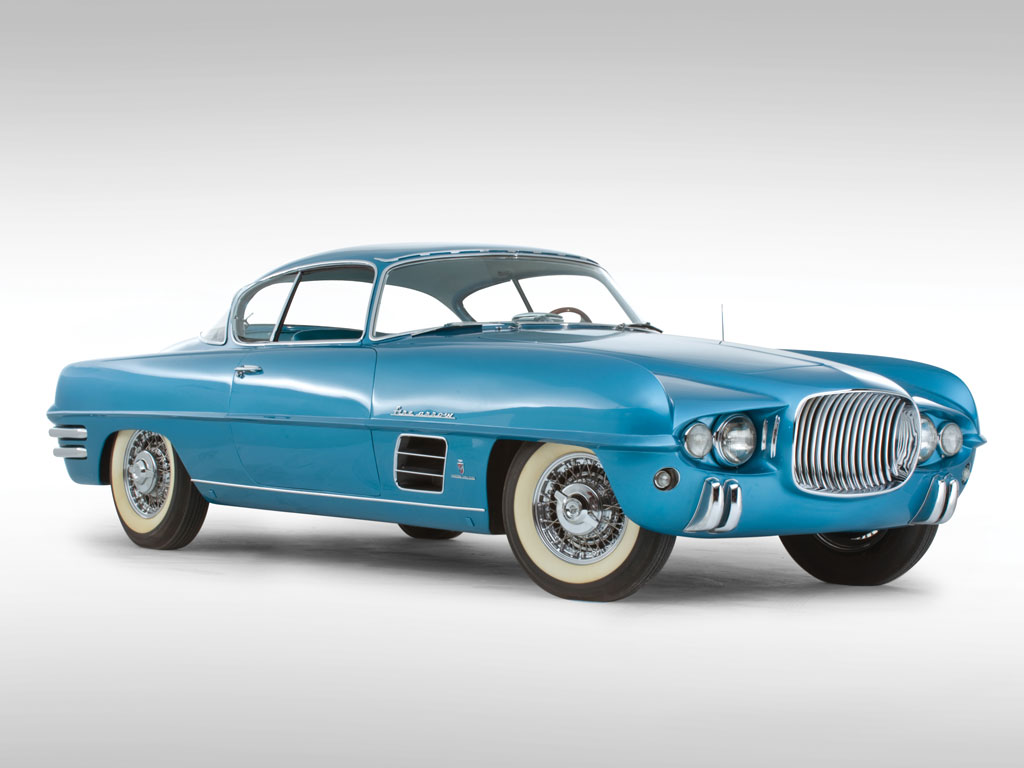
Design-wise, Firearrow III shared DNA with its roadster predecessors but introduced its own flair. Up front, Exner and Segre went bolder: a huge concave grille spanned the nose, filled with narrow vertical chrome bars that gave a regal, classical touch. This sunken grille treatment was flanked by quad headlamps (the four-lamp motif returned on the coupe), arranged with two primary sealed-beam headlights and two smaller high-intensity driving lamps just outboard of them. The four-eye front end, paired with a sharp central ridge and those concave grille bars, made the Firearrow III’s face unmistakable – aggressive yet elegant. Slender chrome bumperettes guarded the lower edges of the grille, rather than a full-width massive bumper, keeping the design light and airy. In side profile, a bold character line – a “peaked, blade-like accent” – ran from the front fender peak all the way to the tail, emphasizing the car’s length. Out back, the coupe sported modest tailfins (yes, fins were creeping in), into which the taillights were artfully integrated at the trailing edges. A large wraparound rear windshield (backlight) curved around the rear roof pillar, one of the largest curved glass pieces used in any car of that time. This provided excellent visibility and a truly jet fighter canopy look – quite fitting for the space-age theme. Overall, Firearrow III’s design was a “quantum leap forward in styling,” blending chrome, glass, and painted steel into a futuristic but harmonious whole.
Inside, the Sport Coupe was surprisingly practical. Unlike the pure roadster concept before it, Firearrow III had features one would expect in a production car: roll-up side windows, exterior door handles, a fully framed windshield with wipers, and even twin rearview mirrors. These details signaled that Exner was inching closer to a car that could be offered for sale. The seating layout remained for two passengers, but the cabin was roomy and luxurious. The seats were upholstered in opulent blue leather with white inserts, and could be adjusted for comfort. Thick pile carpeting covered the floor. The dashboard was well-equipped with full instrumentation and push-button radio, and the car even had a functional heater/defroster – the kind of creature comfort needed for grand touring. Despite being under five feet tall, the coupe offered decent headroom thanks to its clever packaging and that low seating position. In sum, Firearrow III was not just a show queen; it was built to be driven.
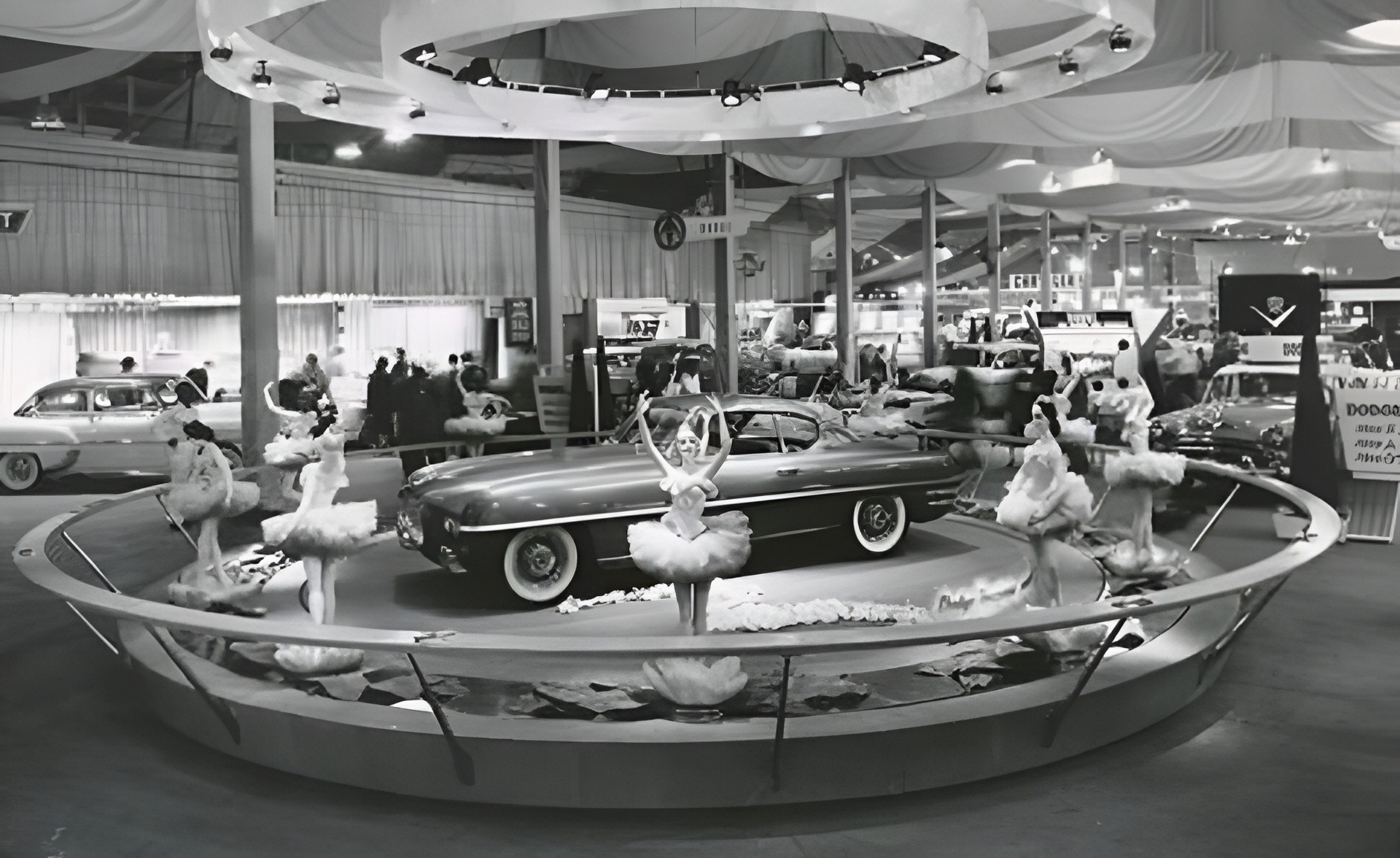
And drive it did. In June 1954, Chrysler’s brand-new Chelsea Proving Grounds in Michigan opened with much fanfare, and the Firearrow III was slated as the star attraction. To demonstrate the car’s performance potential, legendary aviatrix and race driver Betty Skelton was invited to put the Firearrow III through its paces. Skelton – known as the “fastest woman on Earth” at the time – had already made a name setting speed records and acrobatic flying feats. At Chelsea’s banked oval track, she donned a dress and high heels (true to her fearless style) and took the blue Firearrow III to its limits. The result was a new women’s closed-course speed record: 143.44 miles per hour, a blistering pace for 1954! This feat made Firearrow III the only 1950s concept car to set an officially recorded speed record – proving that Chrysler’s dream machines weren’t just about looks, but performance too. As Skelton roared around the track, one imagines Exner and the Chrysler brass watching with pride and perhaps a tinge of regret – clearly, this sleek Dodge could run with Corvettes and Thunderbirds, if only it were given the chance.
After its moment of glory at the proving grounds, the Firearrow III went on tour as a prized show car. Audiences marveled at its jet-age styling and the story of Betty Skelton’s daring record run. This coupe’s success directly set the stage for the final chapter of the Firearrow saga – an open-top companion that would be even more practical. But before moving on, it’s worth noting how narrowly the Firearrow III itself escaped the fate of so many dream cars (which often were destroyed once their tour of duty ended). In early 1955, after the U.S. show circuit was over, Chrysler quietly shipped the Firearrow III back to Ghia in Italy to avoid steep import tariffs on the handbuilt body. Ghia in turn sold the car to a private buyer in France, where it disappeared from public view for over 30 years. For decades, many assumed the Firearrow III had been lost or scrapped. In the 1980s, a serendipitous letter from that long-time French owner to an automotive magazine came to the attention of former GM design chief Dave Holls, who recognized it as the missing Firearrow III. This sparked an effort by collectors to locate and save the car. Eventually the Firearrow III was purchased from France and brought back home to the United States. Renowned restorer Fran Roxas undertook a complete restoration, bringing the coupe back to its 1954 specification in gleaming blue with the original style interior. The once-lost dream car was reborn, and in 2011 it crossed the auction block, fetching over $800,000. Today, the Firearrow III stands as a testament to Exner’s vision – a concept car that not only looked like the future but proved its prowess on the track. It also serves as a precious survivor from the golden age of “dream cars,” lovingly preserved so that new generations can appreciate its sculptural beauty.
Firearrow IV: The Final Flash (1954 “Firebomb” Convertible)
By late 1954, the Firearrow series culminated in its most refined and production-ready incarnation: the Firearrow IV. This car was a bright red convertible – and notably, the first Firearrow with four seats, making it a true grand touring sports car in the European tradition. Sometimes referred to as the “Firearrow IV” or by the evocative name Firebomb, this final Ghia-built dream car was arguably the closest Chrysler ever came to putting the Firearrow idea on the road. In many ways, the Firearrow IV was a direct response to the question “could we actually build this?” The design incorporated all the practical elements a production car needed: not only roll-up windows and door handles, but also a proper folding soft top for all-weather motoring, a usable trunk, and seating for up to four (the rear seats were cozy, but they made it a family-friendly roadster). As Exner’s colleague Maury Baldwin later said, “I think we could have built that… But management at that point was very stodgy… They were afraid to make any new inroads”. Indeed, company leadership, haunted by Chrysler’s risky Airflow experiment of the 1930s, got cold feet about pushing such an unconventional Dodge into production. And so, despite Firearrow IV being nearly a turnkey design for a 1955 sports car, it remained a one-off – a glorious might-have-been.
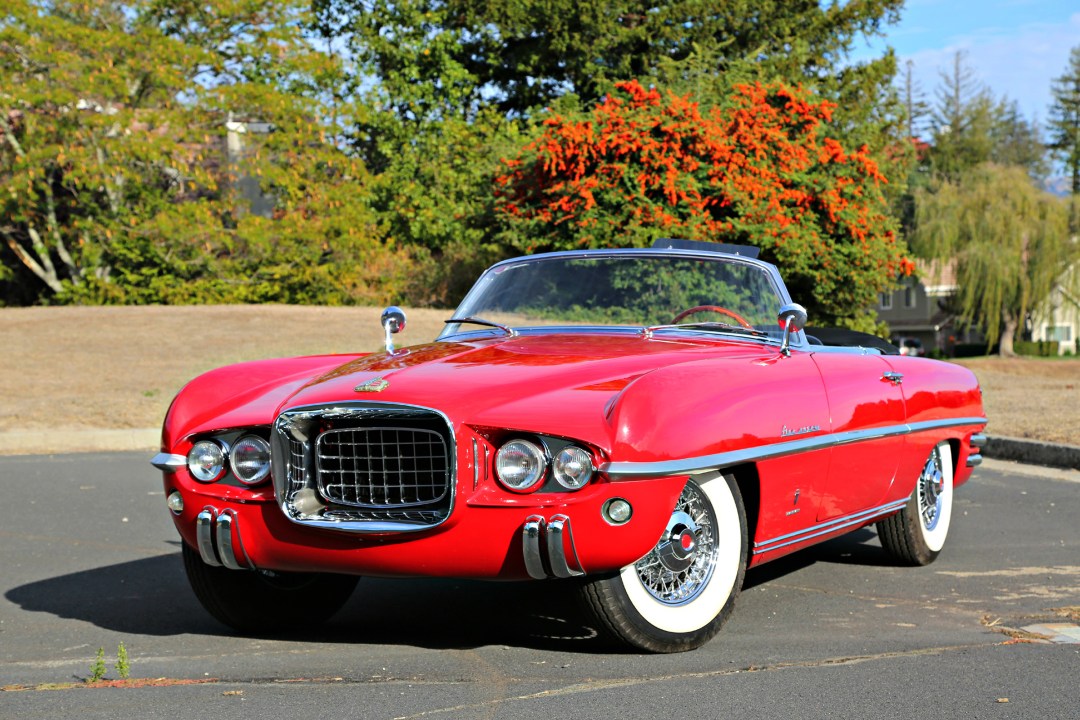
The Firearrow IV’s styling was a blend of the familiar and the bold new. From the Firearrow III coupe it inherited many cues: the grille was again a recessed oval/rectangle in the nose, but this time the grille insert switched to an egg-crate grid pattern instead of the coupe’s delicate vertical bars. The front carried twin chrome bumperettes and integrated quad headlights, maintaining the family look. The long, crisp blade-like body lines and small rear fins were also present, directly borrowing from the coupe’s successful aesthetics. What really set the Firearrow IV apart was the color and trim. It was finished in a striking bright red paint, radiating excitement. And inside – making sure no one would ever forget this car – Ghia trimmed the cabin in a wild black-and-white diamond-pattern leather upholstery, nicknamed the “checkerboard” or “quilted” interior. The front bucket seats sported this eye-catching diamond stitch pattern, and they could recline for comfort; the rear seats, also in diamond leather, could even be lifted out entirely, revealing a polished mahogany luggage deck with chrome skid strips beneath – perfect for a stylish weekend getaway luggage set. This flashy interior might have been an acquired taste, as some critics noted, but it certainly fit the exuberance of the mid-’50s era. The overall impression of the Firearrow IV was that of a show car loaded with showmanship, yet clearly engineered for real-world use. It had all the accoutrements of a sellable automobile, wrapped in jaw-dropping Italian style.
Mechanically, the Firearrow IV was similar to its predecessors, likely built on a Dodge chassis and powered by a Dodge V8 (sources suggest it retained the Red Ram Hemi). It was fully functional and toured the auto shows in late 1954 and into 1955 as the pinnacle of Dodge’s dream cars. By this time, the Chevrolet Corvette was in its second year and Ford was about to launch the Thunderbird – the idea of an American two-seat sports car was becoming reality at other brands. The Firearrow IV/Firebomb hinted that Dodge might leap into that fray with a car combining American muscle and European elegance. Alas, it was not to be – Chrysler’s top brass ultimately decided not to proceed with production. The Firearrow IV thus entered history as an exclusive dream machine. One can only imagine the rivalry that might have been: a production Dodge Firearrow convertible challenging Corvettes and Thunderbirds, perhaps even stealing some of their thunder with Italian pizazz and Hemi power. Had it been approved, the Firearrow IV-based model would have given Chrysler a head start in the personal luxury sports car segment and quite possibly altered the company’s image in the late 1950s. Instead, it remained a tantalizing footnote – though not an entirely dead end, as we shall see.
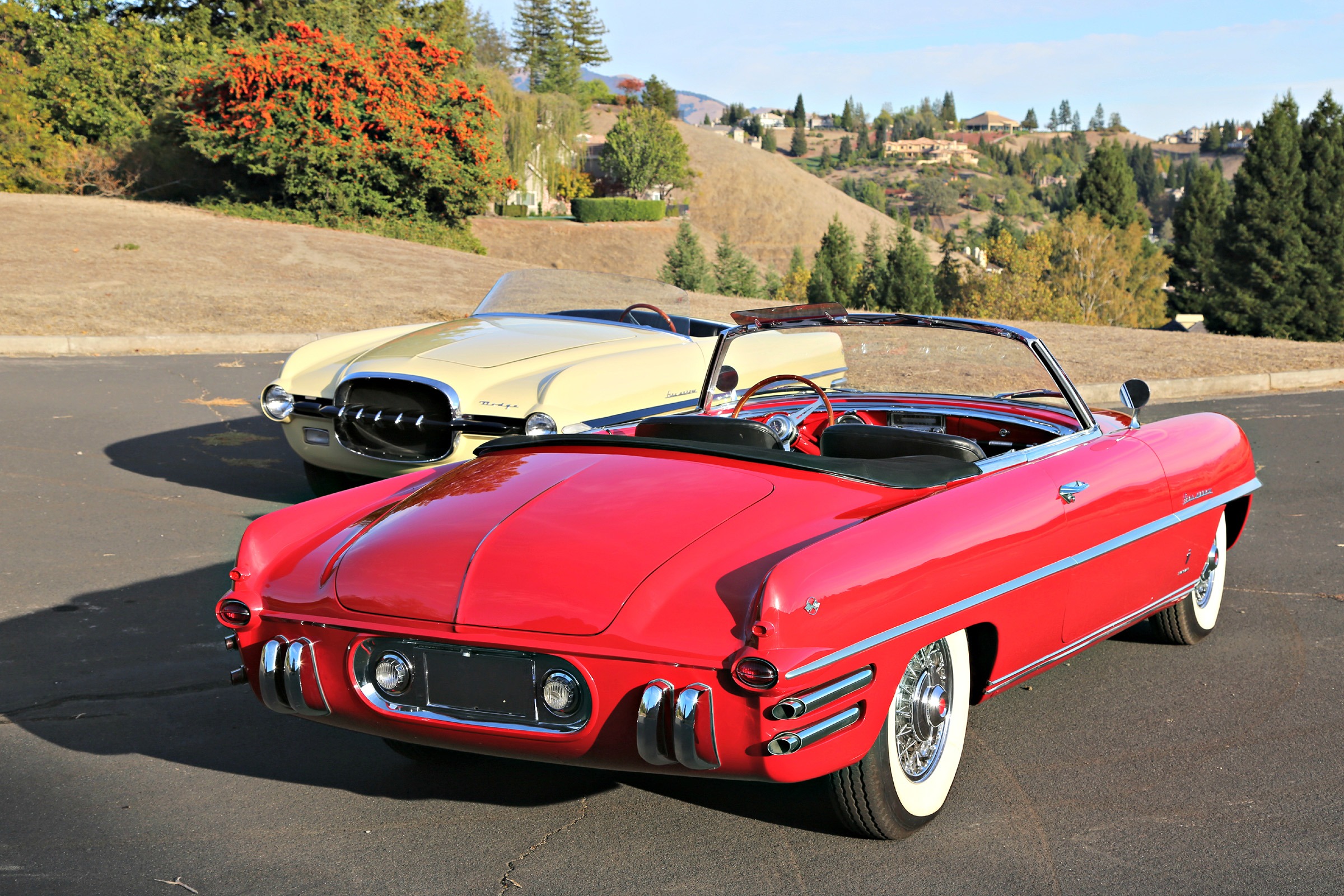
The Firearrow IV did leave a concrete legacy. It so captivated one wealthy enthusiast, Eugene Casaroll, that he refused to let the idea die. Casaroll, a Detroit industrialist and automobile lover, managed to purchase the production rights to the Firearrow/Firebomb design from Chrysler. Teaming up with a talented engineer and Ghia liaison, Paul Farago, Casaroll set out to put a version of the car into limited production himself. The result was the Dual-Ghia, built from 1956 to 1958, a stunning coachbuilt convertible that was essentially the Firearrow concept reborn for the road. Farago and Ghia made a few practical modifications – adding modest tailfins (it was the forward-looking late ’50s, after all) and using more standard MoPar parts – but the lineage is unmistakable. The Dual-Ghia was even assembled using what some dubbed “the world’s longest assembly line”: Dodge would ship chassis and engines to Italy, Ghia would fit the handcrafted bodies and interiors, then the cars were shipped back to Detroit for final finishing by Casaroll’s Dual-Motors company. In total, about 117 Dual-Ghia convertibles were built and sold (a figure often cited; some sources say up to 150, but 117 is widely accepted). They were outrageously priced and utterly glamorous – finding owners among Hollywood stars (Frank Sinatra, for one) and American elites who fancied a bespoke Italo-American cruiser. In essence, the Dual-Ghia became the real-world legacy of the Firearrow project, proving that sometimes a “discarded” manufacturer dream can be someone else’s treasure. As one automotive historian quipped, the Firearrow series showed that concept cars given the cold shoulder by their creators “can sometimes be taken very seriously indeed by others”.
What of the Firearrow IV car itself? Thankfully, it survived the show circuit and unlike Firearrow I, it was not lost to time. It is known to exist today in a prominent collection. For many years, the red Firearrow IV convertible resided with the Blackhawk Automotive Museum/Collection in California. Interestingly, it has been displayed in a black paint scheme with the same black-and-white “rock ’n’ roll” interior – apparently restored or repainted at some point, perhaps because the red was seen as too flamboyant or due to deteriorated paint. Despite the color change, it remains the very car that once dazzled crowds in 1954. The Firearrow IV is valued well into seven figures today, reflecting its importance as the final exemplar of Exner and Ghia’s collaboration. It stands as “one of four concept cars in the Dodge Firearrow series” and arguably the most significant, being the closest to production and the direct forebear to the Dual-Ghia. Enthusiasts sometimes call it the “Dual-Firebomb” since it led to the Dual-Ghia and was originally dubbed Firebomb by Chrysler in ’55. Whatever the name, it’s an unforgettable machine: an American-Italian unicorn from the jet age, preserved so we can dream about what might have been.
Epilogue: Legacy of the Firearrows
The Dodge Firearrow series was born in a fleeting moment of optimism and style – a mid-century romance between Detroit muscle and Italian artistry. Though none of the Firearrows went into production as a Dodge model, their influence reverberated through automotive history. Virgil Exner, emboldened by these concepts, went on to revolutionize Chrysler’s lineup with the Forward Look cars in 1955-57, bringing many dream-car ideas to the showroom. Tailfins, lower and wider proportions, airy glass-greenhouse designs – the industry trends that defined the latter 1950s were foreshadowed by Exner’s show cars like the Firearrows. Indeed, by 1957 Exner’s designs (drawing on lessons from projects like Firearrow) had leaped ahead of the competition in the eyes of many, proving the value of thinking outside the box. The Firearrows showed Chrysler that the public wanted exciting, stylish cars – and while Chrysler itself hesitated to build a two-seat sports car, it poured that excitement into making its regular lineup more exciting. One could argue that cars like the 1957 Chrysler 300C or the finned 1957 Dodge Custom Royal owe a spiritual debt to the Firearrow experiments, translating some of their “rocket age” excitement into mass-produced form.
Meanwhile, the Ghia-Chrysler partnership that the Firearrows exemplified continued to bear fruit. Chrysler and Ghia collaborated on numerous other concept cars in the 1950s (the Chrysler Falcon roadster, the Flight Sweep, the DeSoto Adventurer II, etc.), and Ghia even built limited-production specials like the Chrysler Italia and Dual-Ghia for private customers. The friendship between Virgil Exner and Luigi Segre remained strong; Exner always gave credit to the talented Italian designer for actually putting pen to paper on many of these projects. The Firearrow series, all styled and constructed in Turin under Segre’s supervision with Exner’s guidance, stands as a testament to this unique meeting of minds. These cars also solidified Carrozzeria Ghia’s reputation on the world stage – showcasing that an Italian coachbuilder could shape not just Ferraris and Lancias, but even the future of American cars. In a sense, the Firearrows were transatlantic ambassadors of design, uniting two automotive cultures into singular creations.
🔗 Read more: The Forward Look: When Ghia’s Artistry Met Exner’s Vision
As individual artifacts, each Firearrow has thankfully survived into the 21st century (with the possible exception of the first mockup). They are now treasured pieces in private collections or museums, lovingly restored. Firearrow II, the yellow roadster, continues to tour concours events, its once-delicate windshield intact and gleaming. Firearrow III, the record-setting blue coupe, stands as an “automotive sculpture” on wheels, a reminder that even a one-off show car can make history on the track. Firearrow IV, the fiery red (now black) convertible, still turns heads and conjures the image of well-heeled 1950s families cruising with the top down, future so bright they needed sunglasses. And beyond them, the Dual-Ghia cars – the “production Firearrows” – keep the flame alive on the open road, often appearing at shows with their owners proudly noting the car’s lineage back to Exner’s dream.
In the final analysis, the Dodge Firearrow series by Ghia remains one of the most fascinating “what-ifs” of automotive lore. It’s a romanced tale of a company daring to dream and almost – but not quite – bringing that dream to life. The story has all the elements of legend: the visionary designer (Exner), the master craftsman (Ghia/Segre), the supportive patron (K.T. Keller and later Casaroll), the glamorous public displays, the record-breaking heroine (Betty Skelton), and the bittersweet end where the hero doesn’t get to fulfil its ultimate quest (no production Dodge Firearrow ever graced the showroom). Yet, what the Firearrows left behind is far from a failure. They sparked imaginations, influenced design language, and led to one of the most coveted boutique cars (the Dual-Ghia) of the 1950s. As Virgil Exner intended, these dream cars let the world know that Chrysler was “thinking ahead” – and indeed they were, because even today, looking at a Firearrow, one can’t help but marvel at how advanced and sleek it looks for its time. It’s the product of an era when design was king and anything seemed possible, an era that gave us tailfins, jet-inspired grilles, and chrome rockets on wheels.
The Dodge Firearrow saga invites us to imagine an alternate 1950s where Dodge showrooms might have featured an Italian-bodied sports car alongside the sedans – what a sight that would have been! Even though history took a different turn, we remain lucky to witness these four Firearrows in all their restored glory. They remind us that behind every great car – even one that never made production – there’s a story of dreamers and doers, of craftsmanship and creativity, spanning oceans and cultures. The Firearrows truly were “dream cars” in every sense: born from a dream, living on as dreamlike examples of automotive art, and still inspiring car lovers to dream about what could have been. In the end, the Firearrows’ legacy burns bright – a flame that time has not extinguished, and one that continues to illuminate the golden age of automotive design.

ABOUT THE AUTHOR
Andreas Scheidl
Italian classic car enthusiast with German roots. Renowned as a respected figure in the classic car community, he serves as a jury member at various international concours d'elegance, including the Classic Gala Schwetzingen and Mantova. As a content creator, Andreas passionately shares his profound knowledge and appreciation for vintage automobiles. His heart beats for cars designed by Giovanni Michelotti, showcasing his discerning taste and dedication to preserving the timeless elegance of automotive history.
More stories by Andreas Scheidl ↗CONTINUE READING
Posts You Might Like
A Central Driving Position, a Rear-Mounted V8. Was This Really a Lancia?
In 1948, visitors to the Turin Motor Show could see an unusual Lancia on the stand of Carrozzeria Ghia. It was a large two-door coupé with a two-litre V8 mounted behind the…
Read story
Fioravanti F100: The Ferrari He Was Allowed to Imagine
Enzo Ferrari’s centenary, Leonardo Fioravanti’s independent studio and a supercar that explored air brakes, steel wheels and a new way of driving—without ever wearing the Cavallino.
Read story
Michelotti Shellette: When the Fiat 850 Became a Yacht
The yacht designer, the Turin stylist and the tiny coachbuilt car that crossed between the quay, the royal holiday house and the auction room. Some automobiles were conceived for the open road,…
Read story
Maserati A6 1500: A New Road for the Trident
When the doors of the Geneva Motor Show opened in March 1947, Maserati was a name that required little introduction to anyone who followed motor racing. What it did not yet possess…
Read story
THE CONVERSATION
Comments 0
Share a memory, a period photograph or a documented detail about this story.