
Italian Coachbuilders Across the Iron Curtain
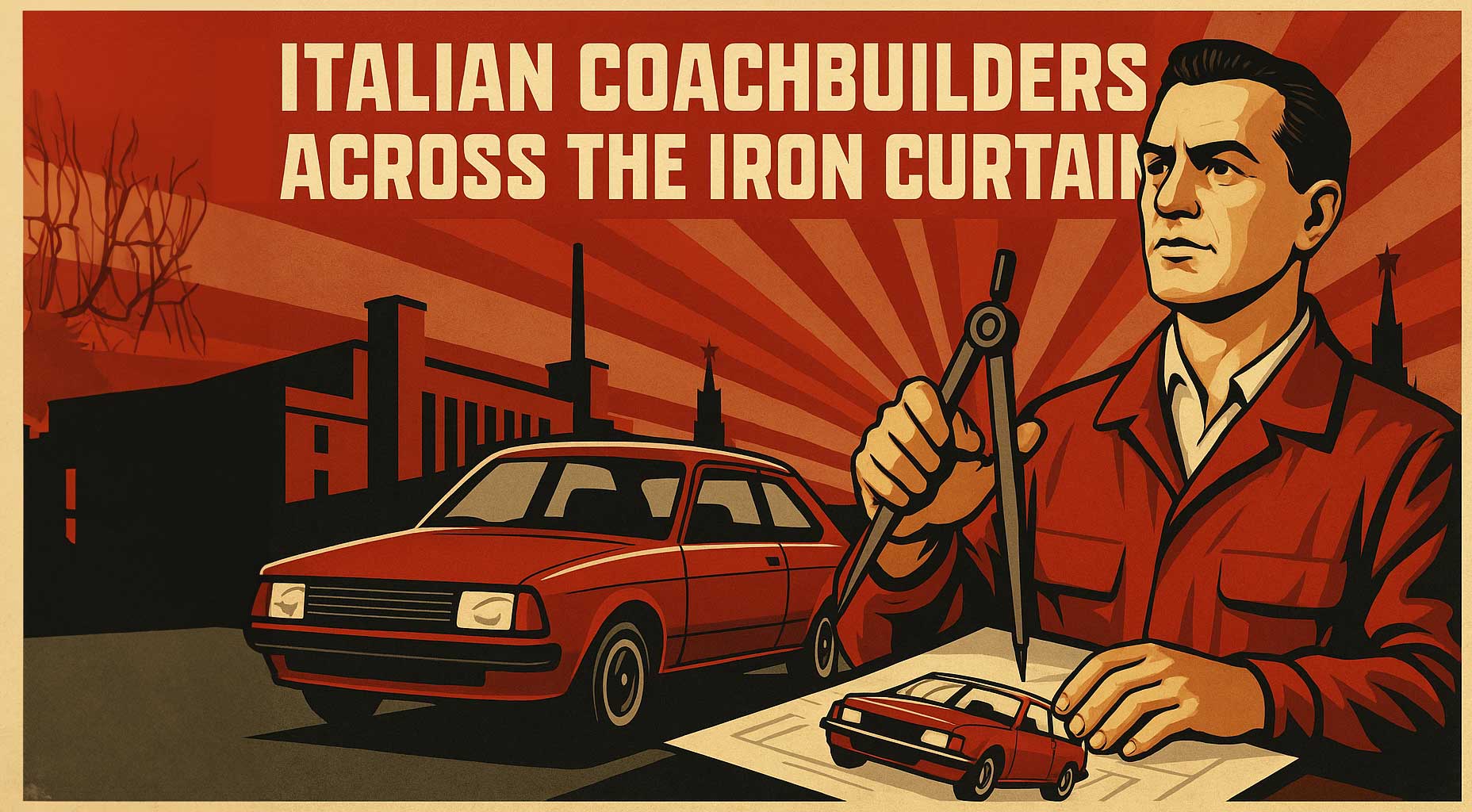
Europe’s postwar automotive scene was a tale of two worlds: in the West, cars were sleek symbols of prosperity; behind the Iron Curtain, they were utilitarian tools for the proletariat. Yet one unlikely bridge spanned this East-West divide – the Italian coachbuilders and design houses. From the 1950s to the 1980s, firms like Pininfarina, Bertone, Italdesign, Zagato, Ghia, and others left their stylish fingerprints on everything from bourgeois BMWs to humble Ladas. This journey explores how Italy’s carrozzieri navigated politics and practicality to shape car design on both sides of the Cold War – with insight and a dash of flair for the seasoned automotive enthusiast.
Italians are known for their obsession with style, and nowhere was this more evident than in the golden age of the carrozzeria. From the 1950s to the 1980s, a handful of small Turin-based firms shaped global car aesthetics. These outfits – Pininfarina, Bertone, Italdesign Giugiaro, Zagato, Ghia, Vignale, Touring and others – were the couture houses of the auto world. While Detroit had massive in-house design teams, many European automakers lacked that capacity. Enter the Italians: agile, creative, and always ready with something bold. A carmaker stuck in a styling rut would often turn to these Turinese masters – just ask Volkswagen, whose 1970s revival owed much to Giorgetto Giugiaro‘s crisp vision.
Each coachbuilder had a distinct signature. Pininfarina was elegance incarnate, crafting Ferraris and Peugeots with equal poise. Bertone leaned avant-garde – think Countach or the Fiat X1/9. Italdesign brought modernity and angular “folded paper” lines to icons like the VW Golf Mk1 and BMW M1. Zagato specialized in light, aerodynamic forms, often sporting double-bubble roofs. And Ghia, one of the oldest, blended Italian flair with global reach, from dream cars to production coupes.
🔗 Read more: The Double Bubble Roof by Zagato: A Bump in the Right Direction
By the 1960s, these firms evolved into full-service ateliers: design, prototyping, even limited production. Outsourcing to a carrozzeria let companies like Fiat, Alfa Romeo, Volvo, or BMW offer stylish, low-volume models without building new factories. Volvo’s 1985 780 coupé? Designed and built by Bertone in Turin. If you couldn’t afford a Ferrari, chances were you could still drive something Italian-styled. These coachbuilders were the West’s style diplomats – and soon, even the East would fall under their spell.
La Dolce Vita on Western Wheels
In postwar Western Europe, Italian design added a touch of la dolce vita to brands across France, Germany, Sweden, and beyond – often with brilliant, sometimes quirky results.
France’s Flair: Peugeot had a long affair with Pininfarina. The 1960 Peugeot 404 stood out with clean, elegant lines, while the 504 Coupé (1969) brought true Italianate grace. Even Citroën tapped Bertone for its angular 1970s BX family car – based on Bertone’s discarded Tundra concept. A perfect ménage à trois: French engineering, Italian design, built for the masses.
🔗 Read more: The Volvo Tundra vs Citroën BX
Germanic Precision, Italian Vision: It might surprise some, but even Germany looked to Italy for style. VW hired Giugiaro to reinvent itself in the ’70s. The result? The iconic Golf Mk1, plus the Scirocco and Audi 80. BMW also enlisted Italian talent: Michelotti shaped the Neue Klasse and 2002, while Bertone built the 3200CS. The 1978 BMW M1 – Germany’s first mid-engine supercar – wore a sharp Italdesign suit. And the VW Karmann Ghia? A German Beetle cloaked in Ghia’s seductive curves – a “poor man’s Porsche” with Italian design. Even the Fiat Panda (1980), later sold as the Seat Marbella in Spain, was an Italian design for a broader Europe.
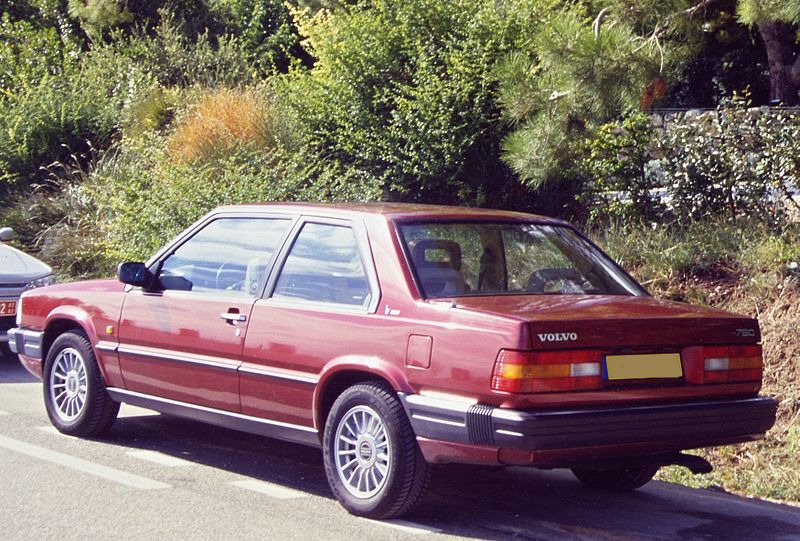
Swedish Simplicity Meets Italian Chic: Even stolid Volvo wanted a bit of la moda. The 1978 262C Bertone coupé was controversial (some said it looked like a Swedish brick in a toupee), but it upped the brand’s luxury game. More successful was the 1985 Volvo 780, entirely designed and built by Bertone. Italian style met Scandinavian substance – a martini with a shot of aquavit.
Across the Pond and Beyond: British marques weren’t immune to Italian charm. Almost every Triumph sports car of the ’60s was penned by Michelotti. Rolls-Royce even let Pininfarina design the 1975 Camargue – a bold move with mixed results.
🔗 Read more: The Partnership Between Michelotti and Triumph
Through these collaborations, an Italian design ethos spread across Western Europe: elegant proportions, creative surfacing, and that elusive bella figura – the art of looking good while doing very little. Western automakers, competing in open markets, craved any edge. And the Italians delivered. But east of the Curtain, the story of style was far more complicated.
Design Diplomacy: Italian Style Behind the Iron Curtain
It’s one thing to style Ferraris and Peugeots in the free world; it’s quite another to influence cars in socialist states where chrome and tailfins could be viewed as bourgeois excess. Yet, through a mix of shrewd industrial deals and quiet partnerships, Italian design did seep into Eastern Bloc automobiles – sometimes openly via licensed production, other times as covert inspiration. Here are some fascinating episodes of East-West automotive détente:
The Fiat-Lada Pact – Spaghetti and Vodka: Perhaps the most famous East-West car collaboration was the 1966 agreement between Italy’s Fiat and the USSR to create a massive car plant on the banks of the Volga. At the height of the Cold War, a partnership with an American or West German firm was politically unthinkable for the Soviets, so Fiat swooped in to clinch what was later called the “deal of the century,” worth about $900 million. The Soviets got modern car tech; Fiat got hard currency and a foothold in a new market. The city built around the new factory was even named Togliatti – after Palmiro Togliatti, the Italian Communist Party leader who helped broker the deal. The resulting car was the VAZ-2101 Zhiguli, known to the world as the Lada. It was essentially a toughened-up Fiat 124 sedan – the 1967 European Car of the Year turned Soviet workhorse. Fiat engineers and Italian designers worked hand-in-hand with Soviet counterparts to adapt the graceful 124 to Mother Russia’s harsh realities. In all, some 800 modifications were made, from raising the suspension and switching the rear disc brakes to simpler drums, to using thicker-gauge steel that added about 90 kg to the weight. The Fiat’s delicate Italian body was reinforced to survive Siberian roads (and perhaps the occasional bear encounter). They even added a manual crank starter for cold mornings and an auxiliary fuel pump for when Nyet, Comrade, it’s -30°C and the fuel ain’t flowing!. In short, the Lada was a Fiat given the Red Army boot camp treatment – stylish by Soviet standards, yet rugged enough for a five-year plan.
Politically, this project was a marvel of Cold War pragmatism. Italy, a NATO country, managed to play both sides – trading chic cars for Soviet cash (and oil). The result: by 1970 the Togliatti plant was churning out hundreds of thousands of cars, giving the USSR its very own “People’s Car” based on Italian design. It was a triumph of Communist-Capitalist cooperation, and a tangible symbol that even iron curtains have little gaps through which a bit of Italian sunshine can peep. The Lada (and its variants) became ubiquitous in Eastern Europe – a little piece of Turin in every Warsaw Pact city, usually painted humble shades of socialist beige.
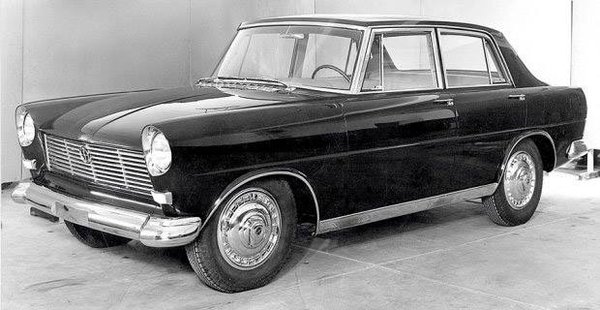
Polish Pizza: FSO and the Italian Job(s): Poland’s postwar car industry often looked to Italy for a jump-start. In the 1950s, state automaker FSO built the Warszawa, a lumbering sedan based on a prewar design. Come 1959, they wanted a modern look for a new model – and turned to Carrozzeria Ghia in Turin. FSO sent chassis components to Ghia, which then created two sleek prototypes (a sedan and a wagon) with updated styling. These Warszawa Ghia prototypes returned to Poland complete with Italian panache – modern lines and all – but alas, the story turned tragicomic. The cost to retool for these bodies was deemed too high for Poland’s developing economy. The elegant prototypes were shelved (eventually scrapped in the 1970s, likely after providing some engineer’s dacha with a very stylish chicken coop). One can only imagine a parallel universe where 1960s Warsaw taxis were as curvy as Alfa Romeos – but in our timeline, this Italian job was an offer FSO had to refuse.
Fast-forward to the 1970s: Poland tries again, this time with more success. Through a license deal with Fiat, FSO had been building the Polski Fiat 125p (a sturdy sedan based on Fiat’s mid-’60s design). Eager to move forward, by the late ’70s the Poles developed a new hatchback-bodied car called the FSO Polonez. And who helped style this modern machine? None other than Giorgetto Giugiaro of Italdesign – along with Fiat’s own Centro Stile team. Unveiled in 1978, the Polonez combined Fiat underpinnings with a sharp Italdesign body, replete with Giugiaro’s trademark angular lines and large glass area. It was likely the most Italian-looking car ever to wear a Polish badge. In fact, the Polonez’s design had originally been a Fiat concept for a safety-oriented car; when Fiat didn’t use it, Poland gladly picked it up and gave it some local tweaks. The result was a five-door hatch that wouldn’t have looked out of place in Western showrooms. Here was socialist Poland sporting the latest Italian style, while still touting the car’s utilitarian virtues to appease the party line. (A popular joke in Poland at the time went: “What’s the difference between the FSO Polonez and a Western sports coupe?” Answer: “The Polonez has more Giugiaro DNA than most of them!”).
The Polonez also illustrates how Italian aesthetics were adapted across the Iron Curtain. The car’s wedge-like form and fold-down rear seats showed Western influence, but certain touches – like the spartan interior and archaic Fiat engines – reflected the constraints of a planned economy. Still, it was a point of pride that an Eastern Bloc nation had a car styled by the same man who drew Ferraris and Maseratis. If you squinted, perhaps you could see a hint of Maserati Merak in the Polonez’s profile (squint really hard). More importantly, the Polonez met international safety standards and was even exported to the West in the 1980s – proving that Italian design could be a cultural export for the Eastern Bloc, a rolling reminder that style knows no ideology.
Czechoslovak Crystal Meets Italian Design: The motoring landscape of communist Czechoslovakia was dominated by domestic designs (like the rear-engined Tatra sedans and utilitarian Skodas). But here too, Italy made a covert entrance. In the late 1960s, Škoda was developing a new modern mid-size car project codenamed 720. Dissatisfied with in-house proposals, the Czech engineers did something bold: they hired Italdesign. In 1969, Giorgetto Giugiaro – fresh from founding his studio – penned the Škoda 720 prototypes: crisp, rectilinear sedans and wagons that looked ready for 1970s Europe. The design featured flat body panels and a restrained front, reflecting contemporary Western trends and marking a sharp departure from the curvy, dated shapes of Eastern Bloc cars. It was arguably one of the earliest instances of a socialist state commissioning a Western designer for a family car.
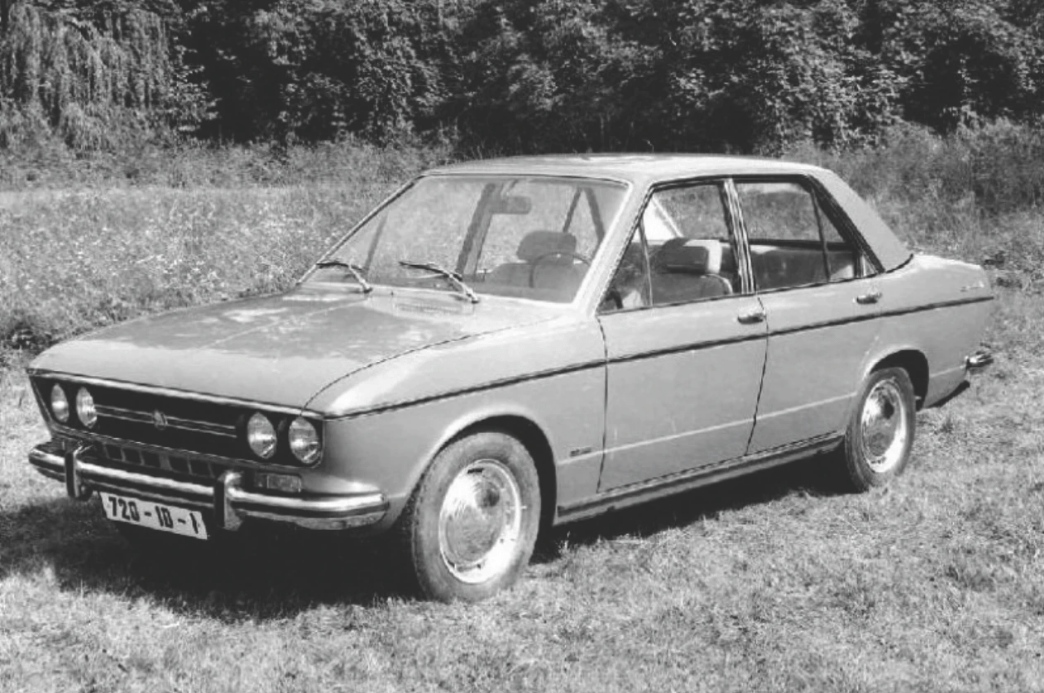
So did Czechoslovakia end up driving around in mini-Alfasuds styled by Giugiaro? Sadly, politics intervened. With Soviet influence looming (this was right after the Prague Spring was crushed in 1968), the centrally planned economy balked at putting the 720 into production. The project was cancelled by the early ’70s due to “political considerations” – a polite way of saying the Communist authorities got cold feet about this cross-border initiative. The few prototypes built became museum pieces, and Škoda soldiered on with its old models for another decade. It’s a poignant what-if: a parallel universe where an Italdesign Škoda could have competed with Western mid-sizers. (Ironically, some elements of Giugiaro’s work did influence later Škodas, but only after the Cold War.) The 720 episode showed the limits of design diplomacy – sometimes the Iron Curtain sliced even great ideas in half. As one historian noted, the Škoda 720 was “dashed by the politics of the time” despite being a showcase of what East-West collaboration could achieve.
Another Czech-Italo love child did make it, however: Tatra, known for its crazy air-cooled V8 sedans, sought a new look for its flagship in the late ’60s. Rather than use their own eccentric styling (Tatra’s 603 sedan had a front fascia that looked like a surprised amphibian), they went shopping in Italy. The result was the Tatra 613, unveiled in the early 1970s with a sleek, modern body styled by Carrozzeria Vignale of Italy. Vignale gave the Tatra smooth, straight lines and a dignified presence, replacing the old retro-futuristic quirks with something that could pass for a Fiat or Lancia executive car of the era. It was almost too Western-looking – you might say it lost a bit of Tatra’s distinctive eccentricity in the process – but it certainly updated the brand’s image. The 613 became the limousine for Communist bigwigs (how fitting that Politburo members rode in Italian-designed luxury, even as they denounced Western decadence). In a twist of fate, however, Vignale never got to bask in the success; the firm went bankrupt and Alfredo Vignale himself died in 1969, just as the Tatra design was finished. Nevertheless, Czechoslovakia produced the Vignale-styled T613 all the way through the 1980s, with multiple updates. It was a Czech car with an Italian soul – quietly reminding those in the know that even in enforced isolation, the East still yearned for a taste of La Dolce Vita.
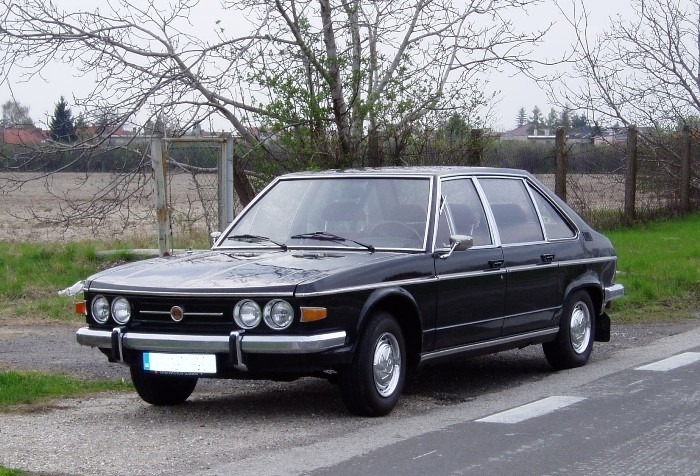
In 1989, as the Cold War neared its end, Tatra gave the 613 one last Italian makeover—this time by Carrozzeria Scioneri, a small Savigliano-based firm known for subtle elegance. The result, the Tatra T613 Scioneri, featured smoothed lines, modernized bumpers, and a cleaner overall profile. Just a handful were made, but the facelift quietly dressed a stoic Czech sedan in refined Italian style—one last nod to La Dolce Vita before the Curtain lifted.
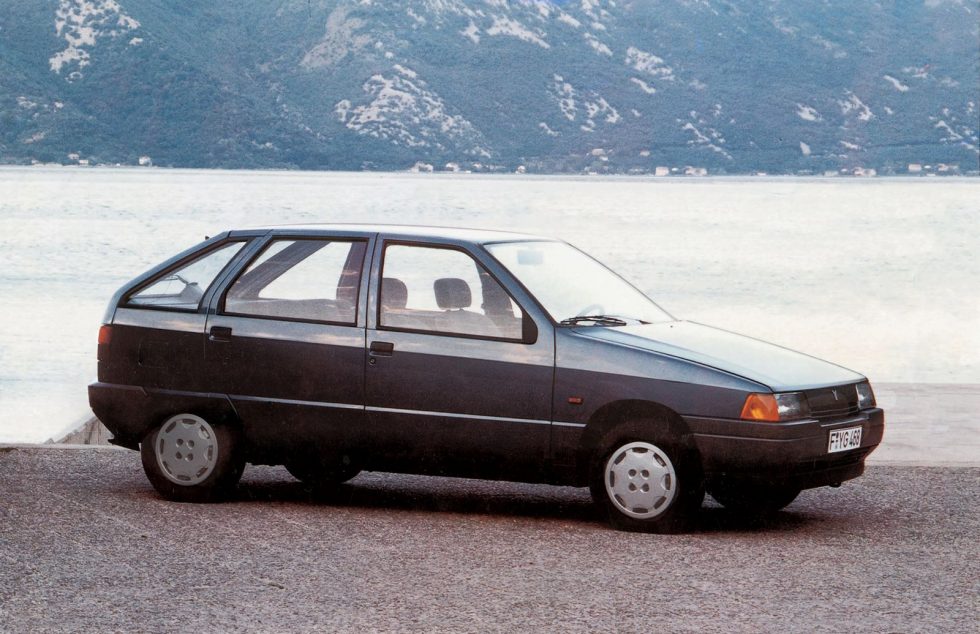
Yugo-ing Italian: We can’t forget Yugoslavia – a non-aligned socialist country that often played East and West against each other, sometimes driving Fiats at home while hosting Soviet state visits. The Yugoslav carmaker Zastava (ZCZ) built Fiats under license (the Zastava 750 was a Fiat 600, the popular Zastava 101 was a Fiat 128). Come the 1980s, they wanted a modern compact to replace their aging models. Who did they call? Giugiaro, of course. The resulting car, unveiled in 1987, was the Zastava Florida (also sold as Yugo Sana in some markets) – styled by Giorgetto Giugiaro’s Italdesign team. The Florida was a neat, if conservative, five-door hatch with more than a passing resemblance to Giugiaro’s Fiat Tipo design. For a country often associated with the utilitarian Yugo hatchback, the Florida was a leap in sophistication – an Italian-designed car for the Yugoslav market, launched just before the country’s tumultuous breakup. It represented the last gasp of Cold War-era collaboration: a socialist nation’s car, penned by a capitalist world’s star designer. If nothing else, it gave trivia buffs a gem: “What do the Maserati Bora and Yugo Florida have in common?” (Answer: Giugiaro’s pen, proving that history has a sense of humor.)
Secret Stylistic Passages: Not every Italian influence in the East was via formal agreement. Sometimes it was a subtler game of inspiration (or let’s be frank, imitation). Eastern Bloc engineers and designers did pay attention to Western trends, albeit through a glass darkly. For example, in the late 1970s the Czech Škoda 763 prototype – a sporty coupé developed under a secret Comecon project – bore an uncanny resemblance to Giugiaro’s VW Scirocco in profile, and even its front grille/headlamps arrangement echoed the Lancia Fulvia Zagato coupé from a decade prior. One might say the Škoda engineers had a stack of Western car magazines hidden under their desks for “research purposes.” Of course, when confronted, they’d likely claim “Pure coincidence, comrade!” Regardless, it shows that even without direct collaboration, Italian/Western design cues filtered into Eastern concepts, often giving them a strangely split personality – part socialist prototype, part knock-off Ferrari.
The Limits of Style Under Socialism: It’s worth noting that while Italian design smuggled its way in, the Eastern Bloc’s political and economic environment often muted some of that flair. Bold style flourishes could be viewed with suspicion – a reminder that a car in the East was first a means of transport and only a distant second an object of desire. We see this in examples like the Soviet GAZ-21 Volga of the 1950s. While not Italian-influenced, it’s illustrative: the Volga’s designers borrowed much from American 1950s cars but deliberately omitted flashy tailfins and excess chrome, calling such fripperies “uneconomical” and focusing on passenger space and practicality. This ethos often applied to Italian-influenced projects too. Any extravagant ideas from Turin were reined in by the realities of communist production – where steel was precious, features were few, and showing off was ideologically uncouth. Thus, many Eastern cars ended up with Italian style in a Soviet sturdy wrapper. The forms were there, but some of the joie de vivre was sanded down like a sculptor forced to use a mallet instead of a chisel.
Despite these constraints, the mere presence of Italian design behind the Iron Curtain was remarkable. Each collaboration or influence was a small thaw in the Cold War frost – a reminder that cars, universal objects of aspiration, could transcend politics. An engineer in Communist Poland could excitedly work with an Italian designer, sharing a common language of technical drawings and wind-tunnel tests, even if their political masters glared at each other on the world stage. In this way, Italian coachbuilders played an unsung diplomatic role, using style and innovation as their currency.
Style Trends: From Turin with Love (and a Few Compromises)
What made Italian automotive design so coveted – and how did those trends fare across the East-West divide? A few key elements and how they translated (or didn’t):
The Latin Look: Italian design in this era emphasized balanced proportions, a certain sleekness, and often a hint of aggressiveness (even economy cars were drawn with a “forward motion” stance). In the West, this aesthetic was embraced – witness the sharp lines of the Golf or the elegant nose of a Peugeot 504 Coupé. In the East, when allowed, these same traits made cars like the Polonez or Tatra 613 stand out from the boxy, old-school designs previously common. For instance, the Polonez’s wedge shape and large greenhouse were thoroughly modern, a world apart from the frumpy Soviet Ladas on the streets. However, sometimes the “Latin look” had to be toned down: the Vignale-designed Tatra had to avoid looking too capitalist-luxurious, so it remained stately but not overly flamboyant (no gaudy chrome or wild grilles). We might say some Italian drama got lost in translation – like an opera performed with half the orchestra.
Innovation & Bold Ideas: Italian studios were hotbeds of innovation – from Gandini’s scissor doors on the Lamborghini Countach to Giugiaro’s one-box MPV concepts. In Western projects, manufacturers often green-lit daring features (e.g. the first use of pop-up headlights on a little Alfa Montreal concept by Bertone). In the Eastern context, innovation was typically constrained by conservative planning and limited resources. Yet, a few sparks flew: Giugiaro’s work on the Škoda 720 wasn’t just about looks; it included a modern unibody and independent suspension – features that would have greatly advanced Czech automotive engineering. The fact that this got as far as prototype builds indicates an openness to change. Sadly, most of these bold moves were stymied (Škoda stuck with its antiquated rear-engine layout until the late ’80s). The Eastern Bloc tended to adopt Italian styling cues more readily than underlying engineering innovations, largely due to cost and risk aversion. So you got the form, but often without the advanced function – a pretty Polonez body hiding 1960s Fiat mechanicals, for example.
Distinctive Italian Touches: Details like twin-cam engines, fully independent suspensions, luxurious interiors – hallmarks of Italian-designed cars – were not always passed along in Eastern collaborations. The Fiat 124 design that became the Lada lost its sophisticated rear disc brakes and aluminum engine in favor of simpler, robust parts. The style was intact, but the mechanical soul was altered. Similarly, where Pininfarina might have given a car a sumptuous cabin in the West, an Eastern version would come with hard bench seats and wipe-clean vinyl (practical, yes; passionate, no). In sum, the distillate of Italian design that crossed the Curtain was mostly skin-deep – the surface glamour, the general shape – while the finer nuances (and expensive bits) often got diluted.
Adaptation vs. Adoption: In some cases, Italian aesthetics had to be adapted to local tastes or needs. Take the Lada Niva, a Soviet-designed 4×4 from 1977. It wasn’t styled by any Italian firm, but interestingly, it ended up with an undeniably handsome, minimalist look that could be mistaken for something from an Italian pen. The Niva’s designers prioritized function (short overhangs, simple curved body for strength), yet inadvertently created a timeless design beloved even in the West. It was as if the Italian ethos of “nothing superfluous, form follows function but make it beautiful” seeped in via osmosis. Decades later, Western customizers and designers (including some at Pininfarina) took notice of the Niva’s charm; by the 2010s there was even talk of Pininfarina helping AvtoVAZ (Lada) update and produce the Niva for new markets. Think about that: the Soviets built a cool little 4×4 with no direct Italian help, but its inherent good design was so evident that Italy’s premier coachbuilder wanted to refine it for the new millennium. It’s a reminder that influence is not a one-way street – occasionally, Eastern cars earned respect on their own merits, completing a strange feedback loop of admiration.
Lost in (Political) Translation: Finally, it’s worth noting the intangible: Italian design carries with it a sense of emotional appeal – cars that have “vuoi far l’amore” eyes (to anthropomorphize a bit) or a rakish stance that suggests speed even when parked. In the regimented, ideology-driven context of the Eastern Bloc, such emotional styling was often viewed with skepticism. A car was not supposed to provoke envy or desire; it was a communal asset, a means to an end. Thus, some of the distinctive Italian romance was intentionally suppressed. When FSO’s leadership saw the gorgeous one-off Syrena Sport prototype in 1960 (a Polish domestic effort styled like an Italian roadster), the communist authorities allegedly canceled it for being too frivolous, too bourgeois. That wasn’t even an import – it was just inspired by Western style, and that was enough to kill it. This climate inevitably affected projects involving Italian design: they had to navigate not just technical and financial hurdles, but also ideological ones. In many cases, to get a project approved, the end result had to be a bit duller than the initial concept. One imagines an Italian designer sketching a sexy fastback, and a Soviet minister grabbing the pencil to draw a more conventional roofline with the curt remark, “It must accommodate comrade Brezhnev’s hat.” So, yes, Italian aesthetics were adapted behind the Curtain – but often carefully, selectively, and not without compromises.
Cold War Collisions and Collaborations: Anecdotes and Oddities
No historical review would be complete without a few anecdotes that capture the flavor of this era of East-West automotive collaboration. Here are some highlights that are by turns fascinating, funny, and downright peculiar:
When Fiat built the Togliatti plant in the USSR, they sent over not just machinery but Italian specialists. Legend has it that some Italian workers in the late ’60s taught their Soviet counterparts a thing or two about la dolce vita, bootlegging grappa into the workers’ dorms and introducing espresso breaks on the assembly line. In return, the Italians learned the fine art of enduring long queues – except their queue was for return flights home when Russian winter hit. Cultural exchange at its finest!
The Lada (VAZ) badges initially made in Italy had a bit of a goof. The car’s export name “Lada” is written in Cyrillic as “BAƉA”. The Italian badge-makers mistook the Cyrillic “Ɖ” for an odd “R”, so early batches of Ladas wore what looked like “BARA” on the grille. A minor typo, comrade – nothing some black paint couldn’t fix. Those misprinted badges are now collectibles, proving that even spelling can be a Cold War casualty.
Moskvich, a Soviet brand, had a forlorn attempt at a sports car in the ’60s. A prototype called the Moskvich 408 “Turist” was built – a cute little roadster. Some sources claim it had design input from Italy (possibly through an unofficial channel with Pininfarina). Regardless, when it was shown to Soviet officials, they reportedly asked, “But where do the potatoes go?” – as the trunk was too small for a sack of spuds. And thus ended the Soviet sports car dream, with practicality literally killing the sport.
Ever heard of the Trabant by Giugiaro? No, it didn’t happen – but it almost could have. By the 1980s, East Germany’s little two-stroke “spark plug with a roof” was woefully outdated. Rumors swirled that some in the GDR leadership secretly inquired about Western design help for a modern Trabant. Italdesign was allegedly interested (probably seeing it as the ultimate challenge: turning a plastic-bodied smoker into a chic city car). Unfortunately, the Berlin Wall fell before Wartburgs and Trabants got their Italian makeover. One can only imagine Giugiaro sketching a wedge-shaped Trabant with louvers and saying, “We’ll call it Trabantissimo!”
🔗 Read more: Giorgetto Giugiaro: Car Designer of the Century
Cold War Logistical Gymnastics: How did these collaborations happen logistically? Often through intermediaries and careful political navigation. For example, Poland’s Polonez project was framed as part of its ongoing industrial cooperation with Fiat – a safe cover story that “it’s just our Italian license partner helping out.” Czechoslovakia justified the Škoda-Giugiaro deal as a way to boost exports (hard currency was a strong motivator). Yugoslavia, being non-aligned, had no qualms hiring Western designers openly. The Soviet-Fiat venture was done at the highest government levels – essentially given a political blessing which shielded it from hardliners’ criticism (after all, it was about improving the lives of Soviet citizens via mass car ownership – a socialist goal!). In each case, the political winds had to be right. A change in leadership or policy could freeze a project overnight (as seen with Škoda 720’s cancellation). Thus, Italian design houses dealing with the East had to be not just creative, but also diplomatic and patient. Who knew drawing pretty cars could involve so much geopolitics?
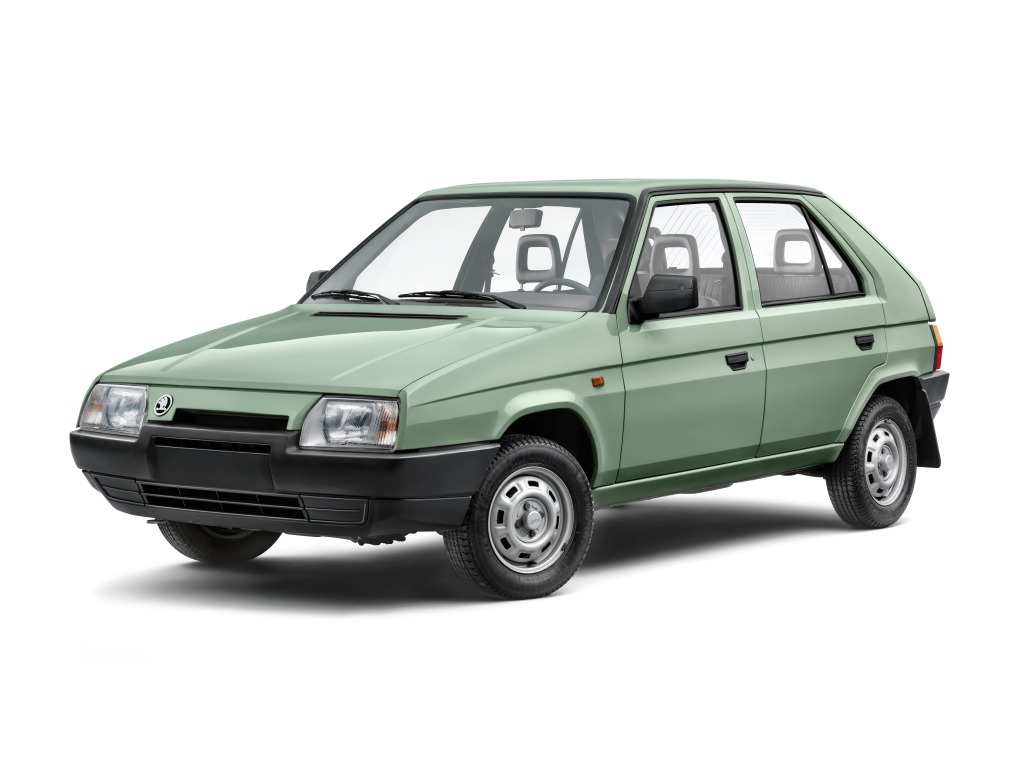
Style Scrubbing Across the Curtain: A fun reversal occurred post-Cold War, when many Eastern cars got “restyled” by Western designers—adding the flair they often lacked. One notable example was the collaboration between Škoda and Stile Bertone, which produced the clean, angular lines of the Škoda Favorit, launched in 1987. It was Czechoslovakia’s first modern front-wheel-drive hatchback, and a stylistic leap forward—its boxy yet purposeful design carried the unmistakable fingerprints of Italian design sensibility. The Favorit marked a turning point: an Eastern Bloc car with Western looks, signaling Škoda’s slow but steady transition toward global relevance. It also showed that once the Curtain began to lift, Italian designers were more than ready to bring some bella figura to even the most utilitarian Eastern hardware.
Through all these anecdotes, one theme shines: cars were a common language. No matter the ideology, everyone appreciated a good-looking car. Italian designers didn’t discriminate – a client was a client, whether capitalist or communist, and a challenge was to be met with creativity. Eastern European engineers and officials, for their part, proved willing to bend the rules of isolation when it came to acquiring world-class design. In an era defined by division, automobiles became small ambassadors of unity – or at least, of shared admiration for aesthetic and engineering excellence.
Iron Curtain Chic and Lasting Legacies
Looking back at the Cold War decades, the role of Italian coachbuilders in bridging East and West is both remarkable and ironic. These were companies born from Italy’s own struggles (many emerged from the ashes of WWII, thriving on passion and ingenuity), and they ended up exporting beauty and innovation into places where gray conformity was the norm. The collaborations required deft political choreography, often tiptoeing around superpower tensions. Yet, metal met hammer, pencils met drafting paper, and cars were made – cars that carried a whiff of Turin to Moscow, of Milan to Warsaw.
The influence of those years lingers today. Eastern Europe’s automotive industries, now mostly integrated into global companies, still remember those first tastes of Italian style. Ask any Polish engineer from the 1970s about the Polonez and you’ll likely see a twinkle of pride – it was their car, but with a touch of Bella Italia. The Russians still hold Lada Niva gatherings where some will mention that Italian firms once pondered the Niva’s revival – a curious badge of honor. And in the West, the legacy is in the design language: many lessons learned from those East-West projects informed later work. (Giugiaro often said designing to tight constraints in projects like Polonez made him a better, more resourceful designer – proving that creativity often flourishes with a bit of adversity, be it budgetary or political.)
From a style perspective, the cross-pollination ensured that even behind the Iron Curtain, automotive design did not stagnate completely. It planted seeds of aspiration – a realization that a car could be more than a drab appliance; it could be something to take pride in, to cherish, even within a socialist framework. That subtle shift in mindset, the human love for cars, arguably helped soften the divide. After all, it’s hard to mistrust “the other side” completely when you’re secretly enamored with the car they helped you design.
In a witty sense, one might say the Cold War wasn’t only fought with nukes and propaganda – it was also fought (and won) with curves, chrome, and carburetors. Italy’s coachbuilders played both sides like a well-tuned mandolin, hitting high notes in the West and low notes in the East, composing a symphony of automotive art that transcended borders. They proved that cool cars are the ultimate diplomacy – who can frown in ideological disapproval when presented with a beautifully styled coupé?
So here’s to those intrepid Italian design houses of yesteryear: they made the world a more interesting, better-looking place, sneaking in style where it was least expected. Next time you see a classic Peugeot, a vintage Lada, or a brick-like Volvo 780, take a closer look – you might just spot the hallmark of Italian bella figura. It’s a reminder that even in the tensest of times, good design had no boundaries, and a passion for automobiles connected people across even the widest gulfs. In the grand traffic jam of history, Italian coachbuilders managed to slip through the roadblocks – often with a cheeky grin – proving that where there’s a wheel, there’s a way. Safe travels, comrade!

ABOUT THE AUTHOR
Andreas Scheidl
Italian classic car enthusiast with German roots. Renowned as a respected figure in the classic car community, he serves as a jury member at various international concours d'elegance, including the Classic Gala Schwetzingen and Mantova. As a content creator, Andreas passionately shares his profound knowledge and appreciation for vintage automobiles. His heart beats for cars designed by Giovanni Michelotti, showcasing his discerning taste and dedication to preserving the timeless elegance of automotive history.
More stories by Andreas Scheidl ↗CONTINUE READING
Posts You Might Like
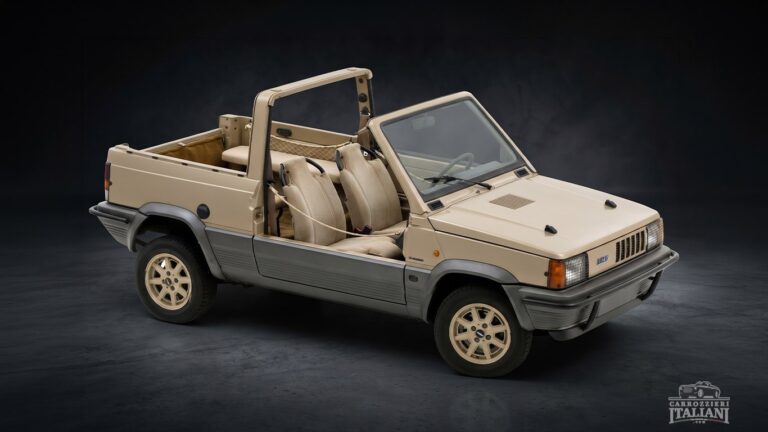
Fiat Panda Cabrio: The Italian Coachbuilders Who Opened Giugiaro’s Box
From Moretti’s Panda Rock to Italdesign’s experimental Strip, Maggiora’s four-wheel-drive convertible and Stola’s remarkable Destriero, the history of the open-top Panda reveals an unexpected chapter in Italian coachbuilding. When Giorgetto Giugiaro designed…
Read story
Gabriele d’Annunzio and the Cult of the Automobile
There was a time when the automobile had not yet become part of the landscape. It announced itself from afar through the beating of an engine, the smell of petrol and hot…
Read story
Fiat 1400: The Last Great Playground of the Carrozzieri
From Touring and Abarth to Farina, Ghia, Vignale, Boneschi, Bertone, Viotti and the smaller carrozzerie, the new Fiat quickly became one of the richest bases for Italian special bodies in the early…
Read story
How a Swiss Dealer Challenged Ferrari: The Story of Monteverdi
How Peter Monteverdi went from Swiss Ferrari dealer to creator of rare Frua and Fissore-bodied GTs, the Hai supercar and luxury off-roaders.
Read story
THE CONVERSATION
Comments 0
Share a memory, a period photograph or a documented detail about this story.