
The story of Carrozzeria Scioneri from Savigliano
Italy’s coachbuilding history isn’t just Bertone, Pininfarina, and Zagato. It’s also made of smaller workshops—family operations that worked closer to the ground, shaping real cars for real people, yet occasionally brushing up on greatness. Carrozzeria Scioneri was one of those shops. Founded in the middle of World War II and carried through the boom-and-bust cycles of postwar Italy, Scioneri never chased scale or fame. Instead, it built quietly: elegant reworkings of Fiats, thoughtful design experiments, and a handful of cars good enough to earn the attention of designers like Giovanni Michelotti and the approval of the Turin show circuit.
From 1943 to the mid-1990s, Scioneri adapted again and again—moving from artisanal one-offs to small-series production, from sporting ambition to survival-driven pragmatism. Its cars were rarely radical, but often precise, tasteful, and unmistakably Italian in the way they balanced constraint with creativity. This is not the story of a coachbuilder that tried to become something bigger than it was. It’s the story of one that stayed honest about its size—and, in doing so, left a body of work that still rewards a closer look.
What follows is the full arc of Scioneri: born in adversity, briefly ascendant, gradually squeezed by industrial reality, and ultimately remembered as one of the quiet craftsmen of Italy’s golden age of carrozzerie.
Wartime Beginnings and Postwar Survival (1943–1950)
Carrozzeria Scioneri was born at the worst possible moment. In 1943, with Italy fractured by war and industry reduced to improvisation, Antonio Scioneri—a metalworker from Savigliano in the province of Cuneo—decided to go independent. It was a bold move, but not a naïve one. By then, Scioneri had already spent fifteen years shaping aluminum and steel, first at Carrozzeria Vittoria and then at Carrozzeria Fissore, where he had begun as an apprentice in 1928. He was, by trade and reputation, a battilastra: a panel-beater in the purest Piedmontese sense.
The early Scioneri workshop in Savigliano had little to do with elegance or design. Survival was the brief. During the war years, Antonio took subcontract work from Vittoria and Fissore, both heavily engaged in producing truck cabs for Fiat and Lancia military vehicles. When materials were scarce and demand unpredictable, he repaired whatever rolled in—civilian cars, army surplus, bomb-damaged wrecks—and converted military trucks for peacetime use as the conflict drew to a close. Anything that kept the doors open mattered.
The late 1940s were no kinder. Italy was rebuilding, but cash was tight and risky everywhere. A major government contract to outfit Army vehicles briefly appeared to secure Scioneri’s future—until the client failed to pay. The loss was catastrophic. In 1950, crushed by unpaid debt, Antonio Scioneri was forced into bankruptcy. For many, that would have been the end.
It wasn’t for him.
🔗 Read more: Carrozzeria Fissore: The History
Almost immediately, Scioneri started again from nothing. No dramatics, no reinvention—just persistence. As Italy’s economy slowly pivoted from recovery to mobility, Antonio adapted with it. He secured work outfitting commercial vehicles and partnered with the Italian importer of Hanomag, building bespoke bodies for trucks and delivery lorries. It wasn’t glamorous, but it was steady, and it restored the workshop’s footing.
Yet even as truck work paid the bills, Scioneri’s ambitions never left passenger cars. The war years had proven his resilience; the postwar years sharpened his instincts. What came next would be driven not by survival—but by intent.
First Forays into Car Design (1951–1955)
By 1951, Carrozzeria Scioneri finally crossed the threshold from survival work into carmaking proper. Italy was shaking off the dust of the postwar years, personal mobility was returning, and demand for automobiles—any automobiles—was climbing fast. Scioneri’s first steps were cautious and pragmatic. Rather than chasing radical designs, Antonio focused on adapting what people already bought.
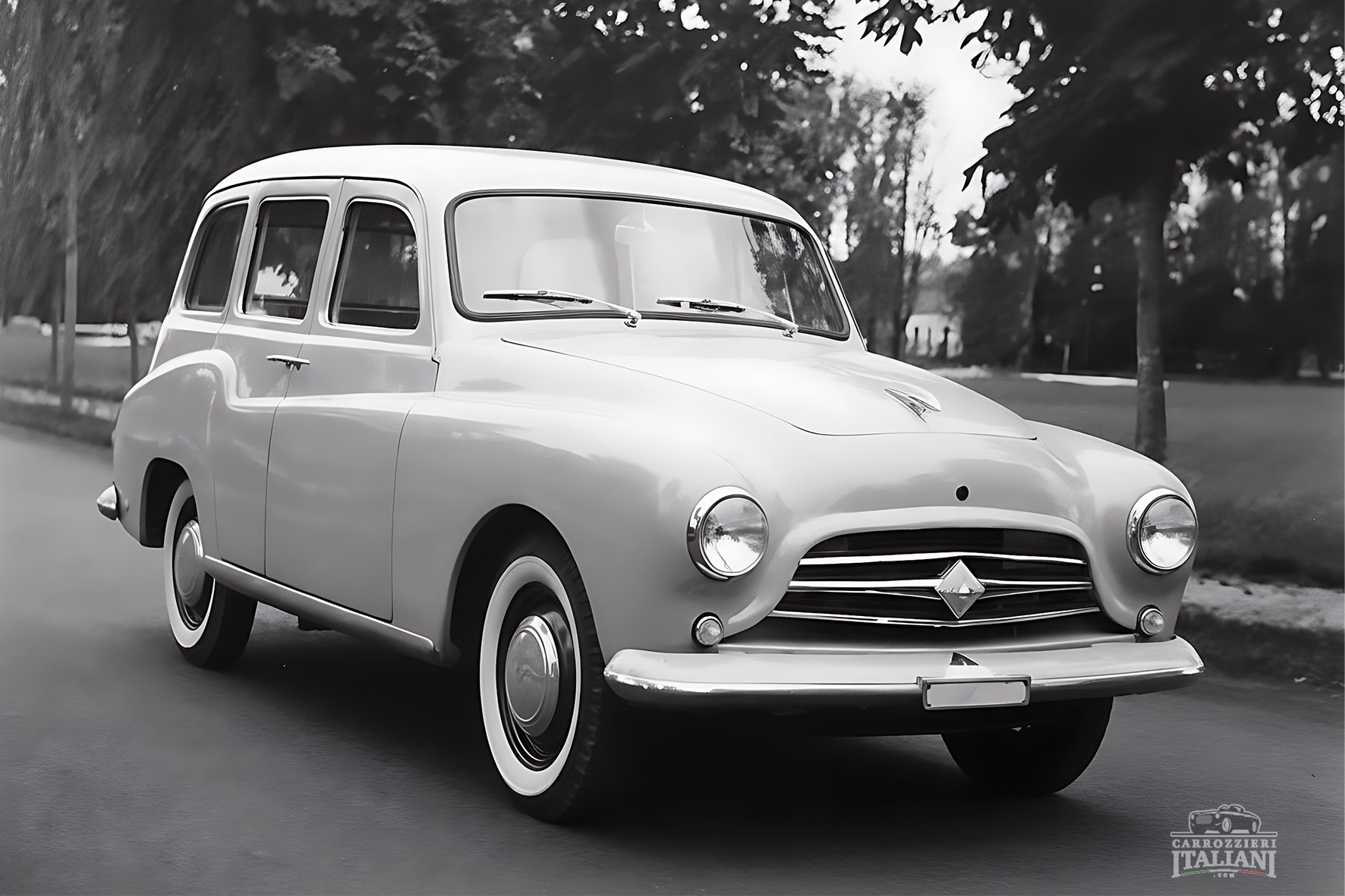
His earliest passenger-car work consisted mainly of practical transformations. Standard sedans were converted into giardiniera station wagons and light utility vehicles, answering a very real need for space and versatility. Among the first documented examples were Fiat 1100-based wagons built in the early 1950s—simple, functional cars that traded elegance for usefulness, yet still carried the telltale signs of hand craftsmanship. They sold because they solved a problem.
Confidence grew quickly. By 1953, Scioneri attempted something more expressive: a sporty coupé version of the Fiat 1100. It was a modest car by any objective measure, but conceptually important. For the first time, Scioneri wasn’t just modifying a vehicle—he was reshaping its character. The coupé hinted at an instinct that would later define the firm: taking ordinary mechanicals and giving them visual distinction without excess.
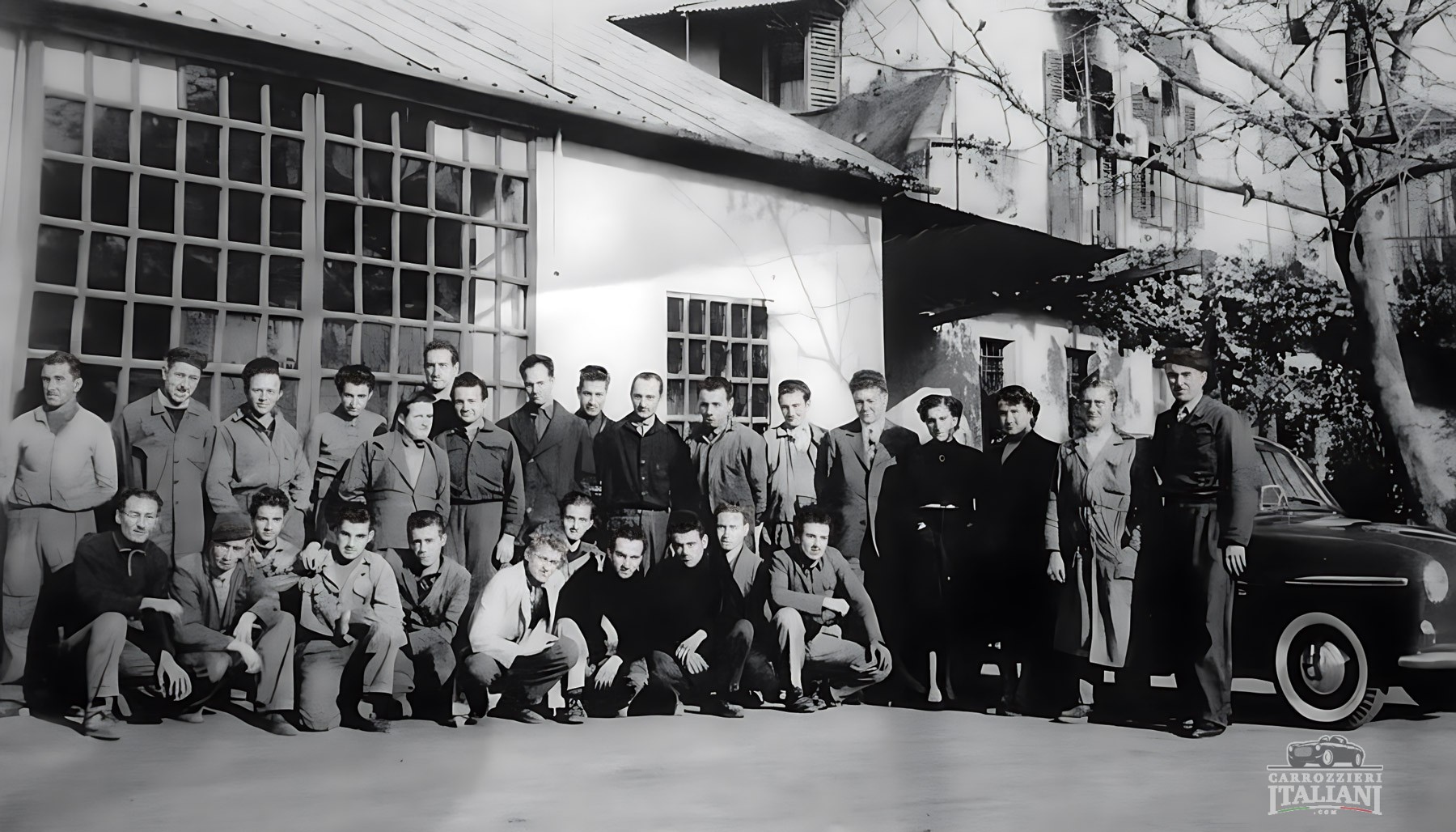
All of this happened inside a workshop that remained resolutely small. Period photographs from 1954 show little more than a compact garage in Savigliano, crowded with tools, panels, and half-finished cars. Yet the atmosphere was unmistakably optimistic. Every car was built by hand, every solution improvised. Word began to spread locally that Antonio Scioneri—often addressed as Cavaliere, a title earned through respect rather than marketing—could turn a standard Fiat into something personal. Not luxurious, not radical, but different enough to matter.
🔗 Read more: The Rise of the Giardiniera: From Utility Vehicle to Trendsetter
The real inflection point arrived in 1955, riding a wave far larger than Scioneri himself. Italy’s economic miracle was underway, and Fiat had just launched the Fiat 600. Cheap, cheerful, and perfectly timed, it became a national obsession almost overnight. Demand exploded—and so did waiting lists. For many buyers, getting a new car meant months of delay.
Scioneri saw the gap immediately.
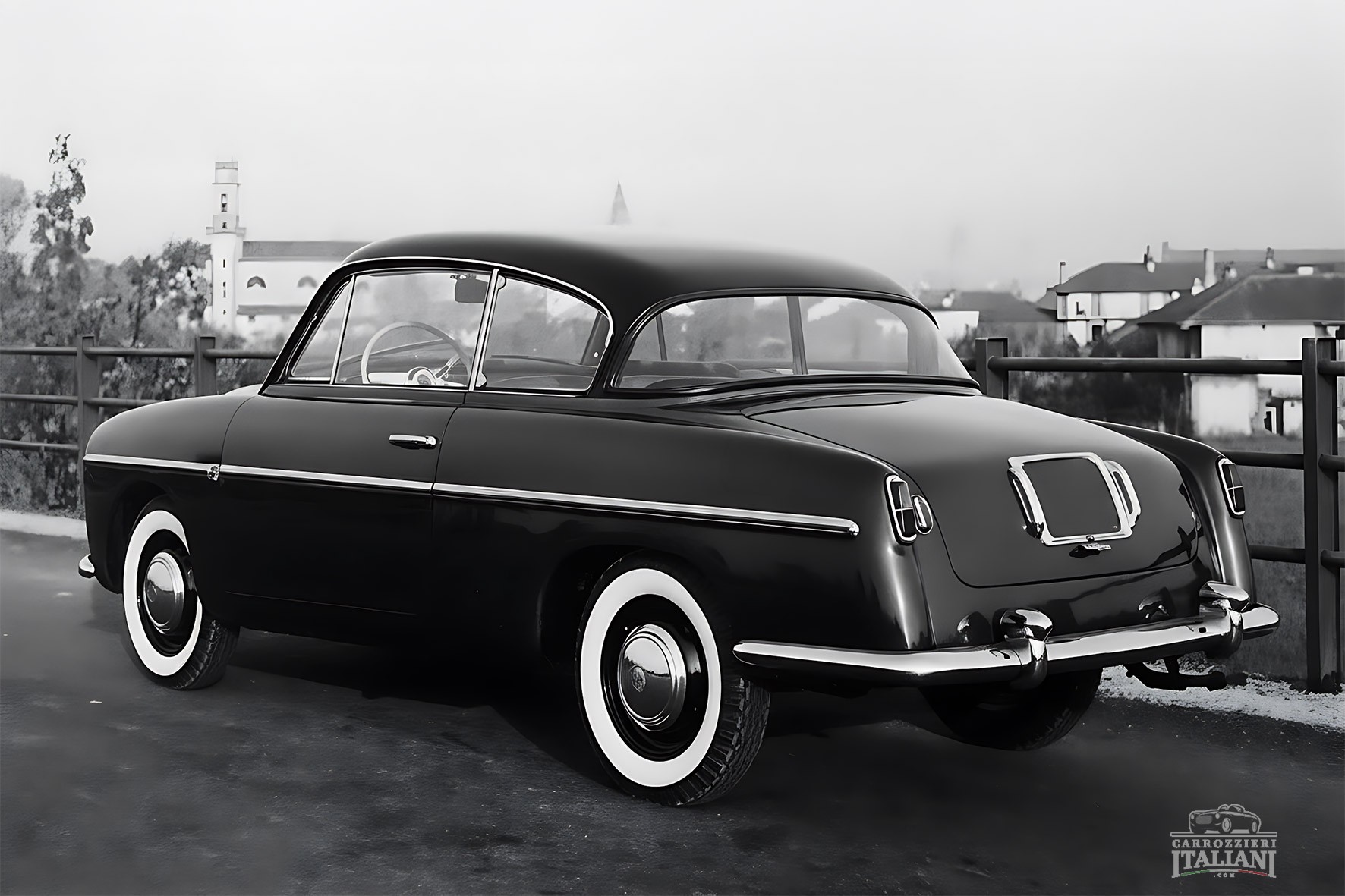
While the major Turin coachbuilders focused on prestige commissions, Scioneri aimed lower—and smarter. His idea was simple: acquire standard Fiats, personalize them just enough to stand out, and sell them through a parallel network of small provincial dealers. The cars weren’t re-bodied; instead, they received subtle styling changes—two-tone paint, added trim, refined interiors—along with a crucial advantage: availability. Customers could avoid Fiat’s long queues and drive away in something slightly more distinctive, for a modest premium.While the major Turin coachbuilders focused on prestige commissions, Scioneri aimed lower—and smarter. His idea was simple: acquire standard Fiats, personalize them just enough to stand out, and sell them through a parallel network of small provincial dealers. The cars weren’t re-bodied; instead, they received subtle styling changes—two-tone paint, added trim, refined interiors—along with a crucial advantage: availability. Customers could avoid Fiat’s
It worked.
By late 1955, Scioneri had quietly established an alternative sales model that fit the moment perfectly. His cars weren’t meant to compete with factory production or high-end coachbuilders. They occupied a narrow but lucrative middle ground—mass-market cars, gently tailored. In doing so, Scioneri positioned himself not as a dreamer, but as a sharp reader of the market. And that instinct would carry the company into its most productive years.
The Boom Years: Custom Fiats with a Personal Touch (1956–1959)
By the mid-1950s, Scioneri’s intuition had proven correct. What began as a workaround for long Fiat waiting lists quickly became a thriving business in its own right. The late 1950s marked Carrozzeria Scioneri’s most prosperous period—years defined by volume, visibility, and a growing reputation for tasteful individuality.
In 1956, the operation gained a crucial new asset: Renato Scioneri, Antonio’s son, officially joined the company. Renato brought energy and commercial instinct, complementing his father’s workshop-focused mindset. The division of roles was natural and effective—Antonio oversaw craftsmanship and design decisions, while Renato handled sales, dealer relationships, and promotion. Under this father-and-son partnership, Scioneri’s output and reach expanded rapidly.
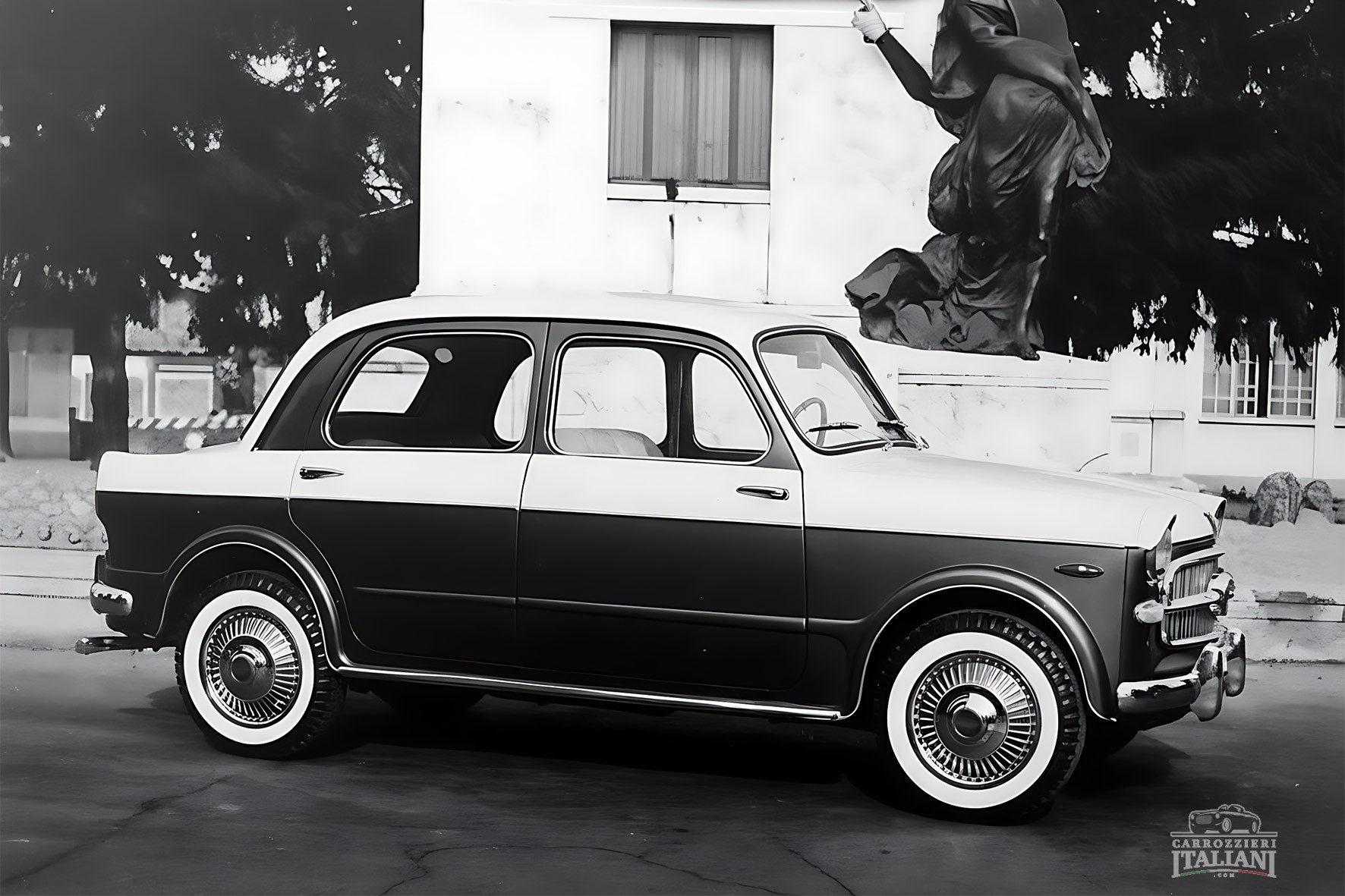
The personalization formula was now applied systematically across the Fiat range. What started with the Fiat 600 soon extended to nearly every mainstream Fiat model. Base cars were purchased directly, then refined visually and cosmetically before being sold through Scioneri’s parallel dealer network. These weren’t radical transformations, but carefully judged upgrades: two-tone paint schemes inspired by American styling trends, additional chrome trim, reworked grilles, auxiliary lights, and upgraded upholstery. The effect was subtle but effective—familiar cars, made noticeably more elegant.
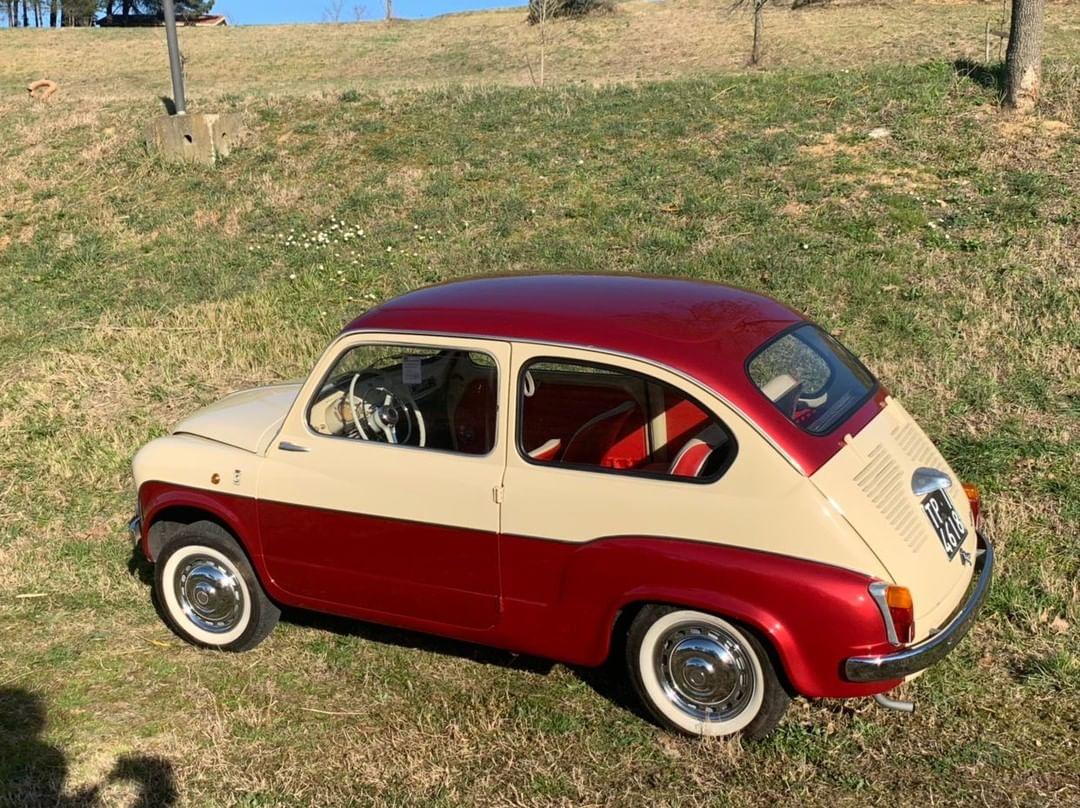
Even the smallest models received attention. The Fiat 500, for example, could be ordered in “Elaborata” form, a term that suggested refinement rather than performance. The 600 Multipla, Fiat’s unconventional people-mover, was similarly upgraded for customers who wanted practicality without austerity. The Fiat 1100/103—Italy’s middle-class workhorse—became one of Scioneri’s most frequent canvases, its conservative factory look transformed into something closer to a junior executive car.
🔗 Read more: The Fiat 600 Elaborate
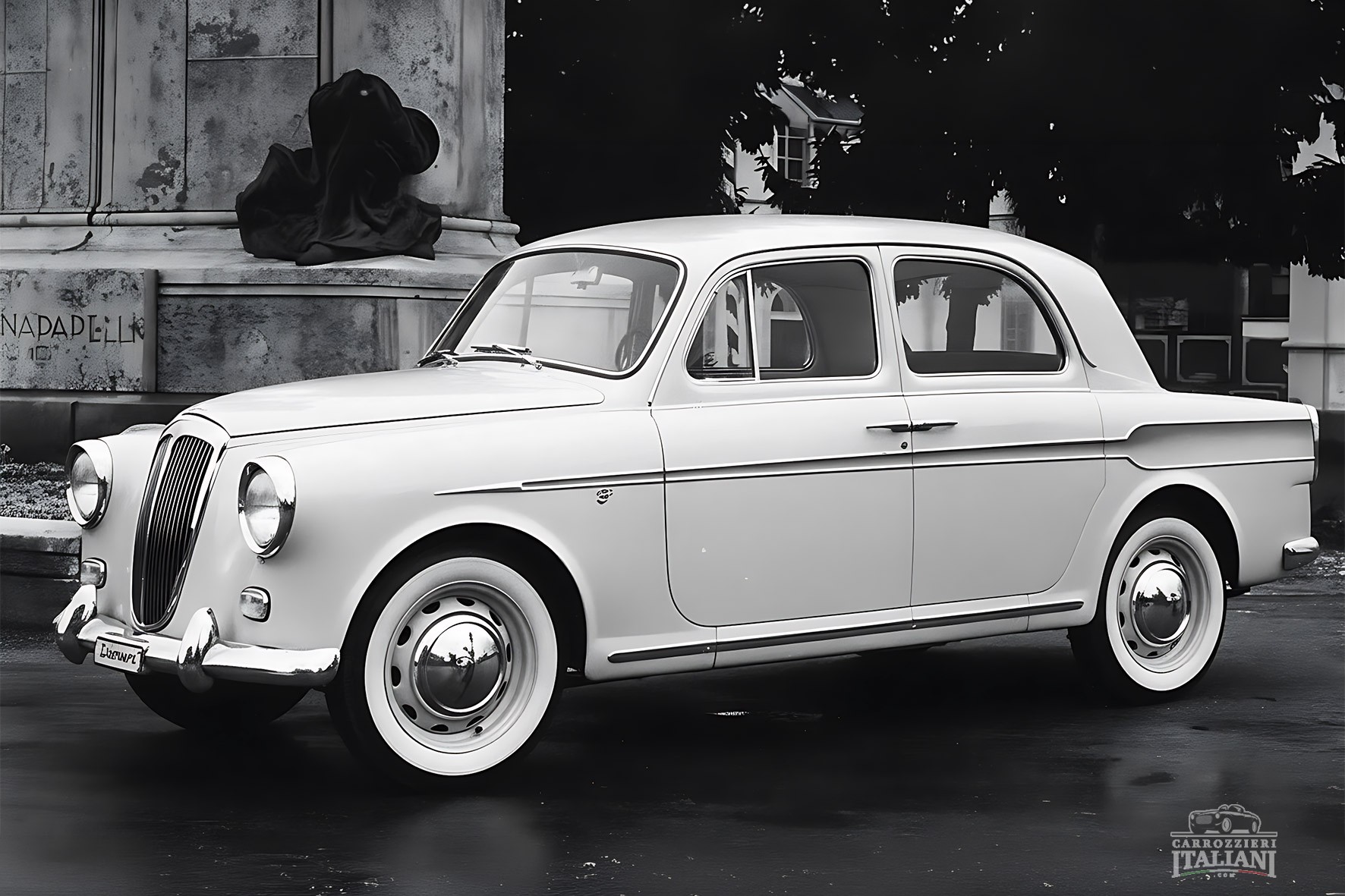
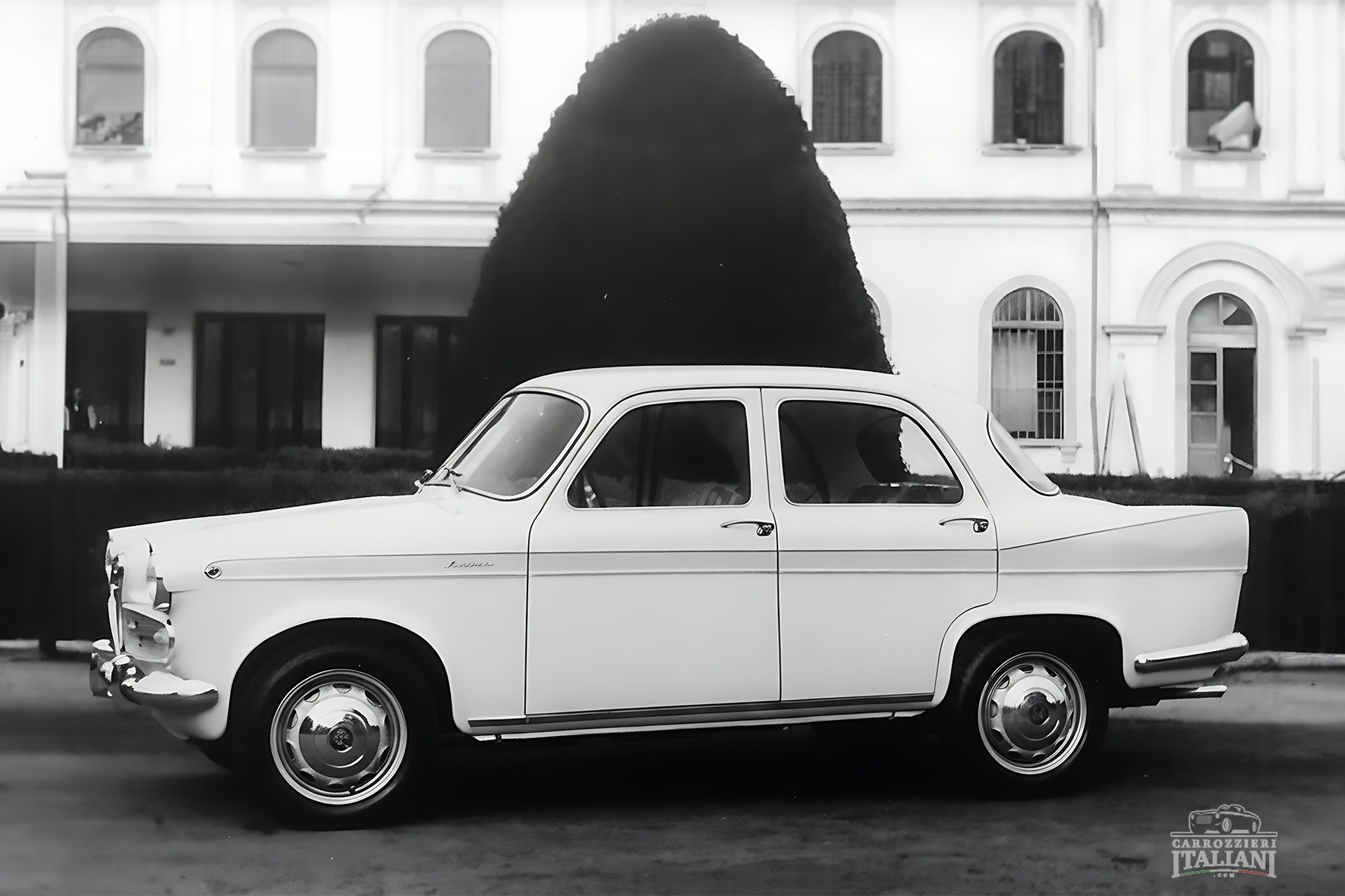
Although Fiats remained the core of the business, Scioneri occasionally ventured beyond them. In the late 1950s, the workshop prepared promotional one-offs based on the Alfa Romeo Giulietta and the Lancia Appia. These cars occupied a higher rung of the Italian market, and Scioneri’s interventions were correspondingly restrained. A Giulietta Berlina finished in a striking two-tone scheme demonstrated how subtle color and trim changes could elevate an already sporting sedan, while a customized Appia Berlina gained a more refined, almost bespoke presence. These projects were not intended for volume production, but they served an important role: they signaled that Scioneri’s craftsmanship was credible even when applied to Italy’s more prestigious marques.
The symbolic high point of this phase came in 1957, when Carrozzeria Scioneri appeared officially at the Turin Motor Show for the first time. Rather than presenting another personalized production car, Antonio unveiled a more ambitious creation based on the Fiat 1100 chassis, clothed in entirely new bodywork. The result sat somewhere between a formal sedan and a coupé: lower, sleeker, and more cohesive than the standard car, yet still practical. It embodied Scioneri’s philosophy perfectly—elegance without extravagance, individuality without impracticality. For a small workshop from Savigliano, exhibiting alongside Italy’s established coachbuilders was a significant statement of intent.
Commercial success followed. By 1958, demand was strong enough that Scioneri reorganized the workshop, creating a dedicated department solely for vehicle personalization. This allowed new cars to be transformed quickly and efficiently, from repainting in fashionable color combinations to the hand-fitting of trim and interior upgrades. Buyers responded enthusiastically. A two-tone Fiat 600D or Giulietta Berlina Scioneri offered something emotionally richer than the standard factory car, without crossing into luxury-car territory. It was aspirational but attainable—perfectly aligned with the optimism of late-1950s Italy.
By the end of the decade, Carrozzeria Scioneri had secured its niche. The company employed dozens of skilled workers and delivered a steady flow of customized cars across northern Italy. In less than ten years, Antonio Scioneri had gone from bankruptcy to building a recognizable brand based on restraint, timing, and craftsmanship. Yet beneath the commercial success lingered a familiar restlessness. Personalizing everyday cars had brought stability—but Antonio still dreamed of something more ambitious: a true Scioneri automobile, conceived not as an improvement, but as an original statement.
Sporting Ambitions and Michelotti’s Influence (1960–1964)
As the 1960s dawned, Italian coachbuilding was quietly reinventing itself. The era of bespoke bodies on aristocratic chassis was fading fast, replaced by a more pragmatic—but no less creative—approach: limited-series specials built on mass-produced mechanicals. For Antonio Scioneri, this shift arrived at exactly the right moment. Having proven that personalization could sustain a business, he now wanted something more ambitious—cars that carried a recognisable Scioneri identity, not just refined factory trims.
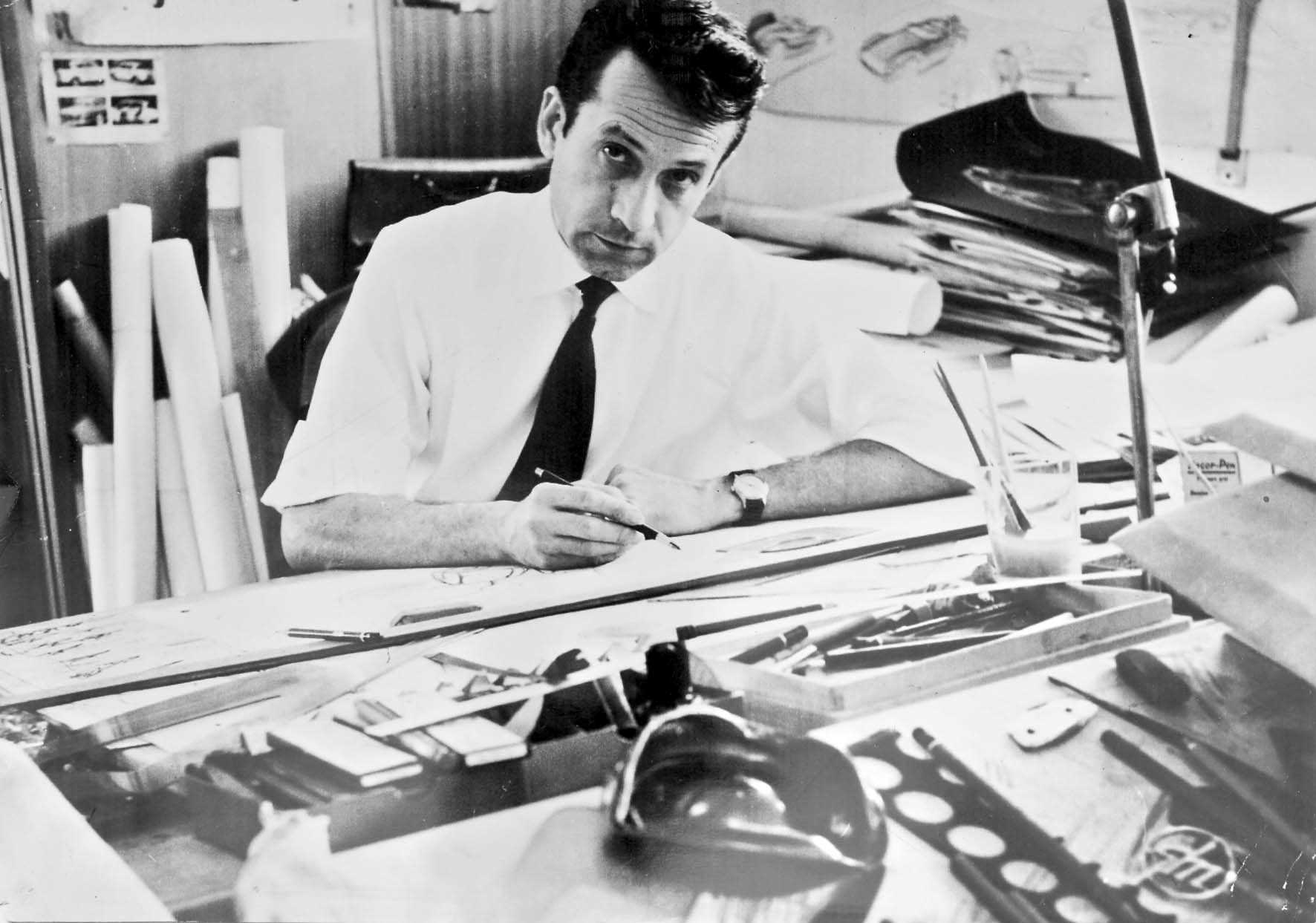
To make that leap, Scioneri turned to one of Turin’s most gifted and prolific stylists: Giovanni Michelotti. By the late 1950s, Michelotti was everywhere—working simultaneously with Bertone, Vignale, OSCA, Triumph, and countless smaller ateliers. His talent lay in clarity and proportion: he could give modest mechanicals a sense of purpose and elegance without excess. For a small carrozzeria like Scioneri, his involvement brought instant credibility.
🔗 Read more: Giovanni Michelotti: The Freedom of a Thousand Designs
The collaboration proved deeper than a one-off consultancy. Over the following years, Michelotti would design at least six projects for Scioneri, ranging from compact sports cars to more refined family-based coupés. His drawings gave Scioneri a visual consistency it had never quite achieved before—clean surfaces, balanced volumes, and a restrained sporting character that avoided caricature.
The first serious attempt to move upmarket appeared in 1959, with a one-off luxury coupé based on the Fiat 1500. Styled by Michelotti, it aimed squarely at a more affluent clientele, with a richer interior and a body that aspired to compete with contemporary Fiat-based offerings from larger coachbuilders. It was a brave step—but also a sobering one. The car attracted interest, but not enough to justify production. For Scioneri, the lesson was clear: prestige alone was not the answer. The company’s strength lay not in chasing luxury, but in making accessible cars more desirable.
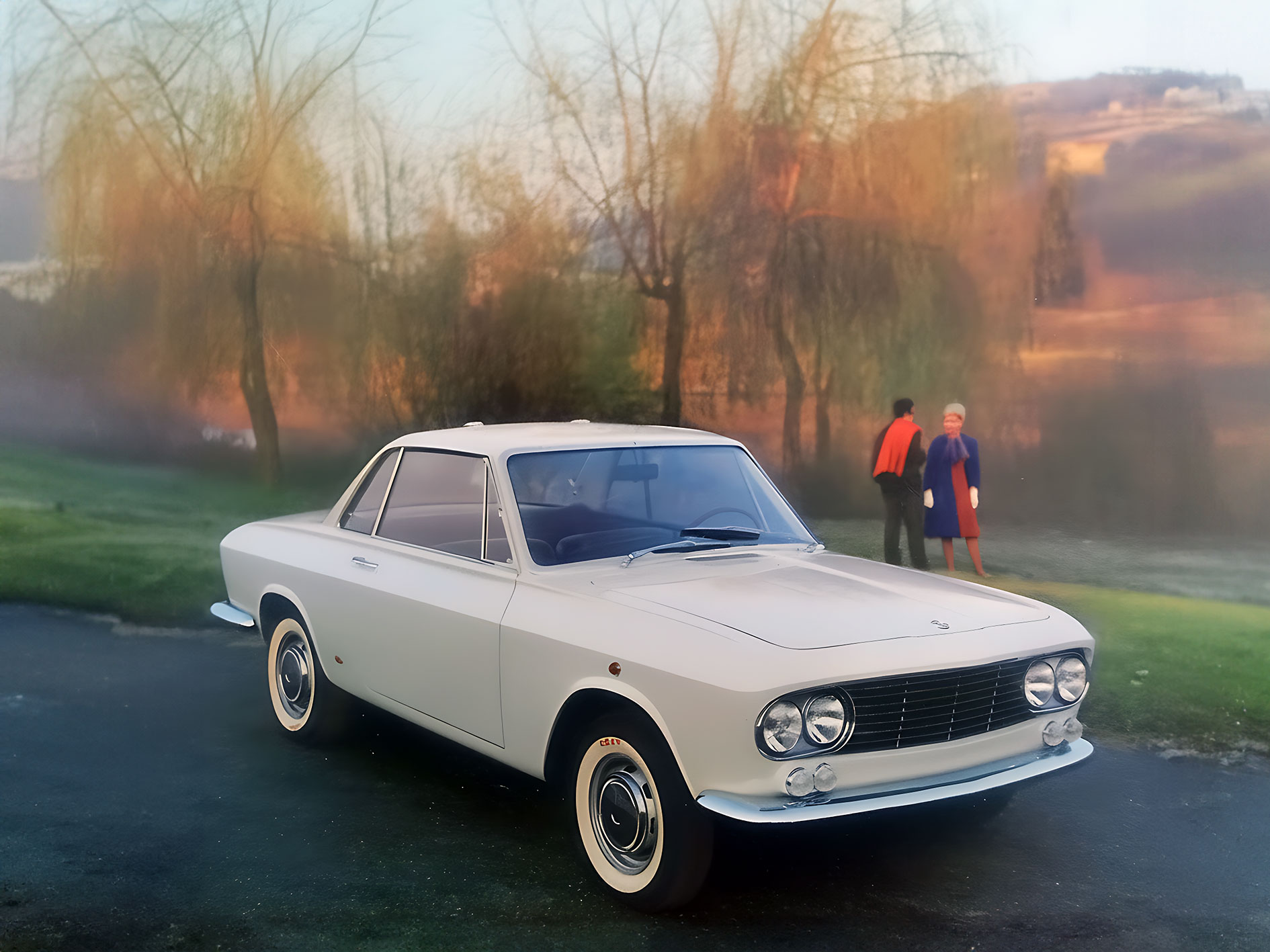
Rather than retreat, Scioneri recalibrated. The focus returned to smaller platforms—especially the Fiat 600—but now with genuine coachbuilt ambition. By 1960, Scioneri was offering Fiat 600 coupés and spiders with entirely new bodywork, many of them Michelotti designs. These were not conversions in the earlier sense, but true small sports cars: compact, cheerful, and unmistakably Italian. They weren’t fast, but they didn’t need to be. Their appeal lay in style, lightness, and charm—cars built for coastal roads and summer evenings rather than lap times.
Innovation didn’t stop there. Scioneri also produced a clever four-door Fiat 600 conversion, adding rear doors to a platform Fiat itself had kept strictly two-door. It was a typically Scioneri solution: practical, inventive, and aimed at real customers rather than show-stand fantasy. Shown alongside a 600 Giardiniera estate, it demonstrated how far Scioneri had moved from simple trim upgrades to genuine re-engineering.
Michelotti’s influence became even more visible at the 1961 Turin Motor Show, where Scioneri presented a two-door Fiat 1500 sedan prototype. Neither full coupé nor standard saloon, it explored the idea of a compact sporting family car—lighter in appearance, lower in stance, and more dynamic than Fiat’s production model. It remained a concept, but an important one: proof that Scioneri could operate in the same conceptual space as far larger studios.
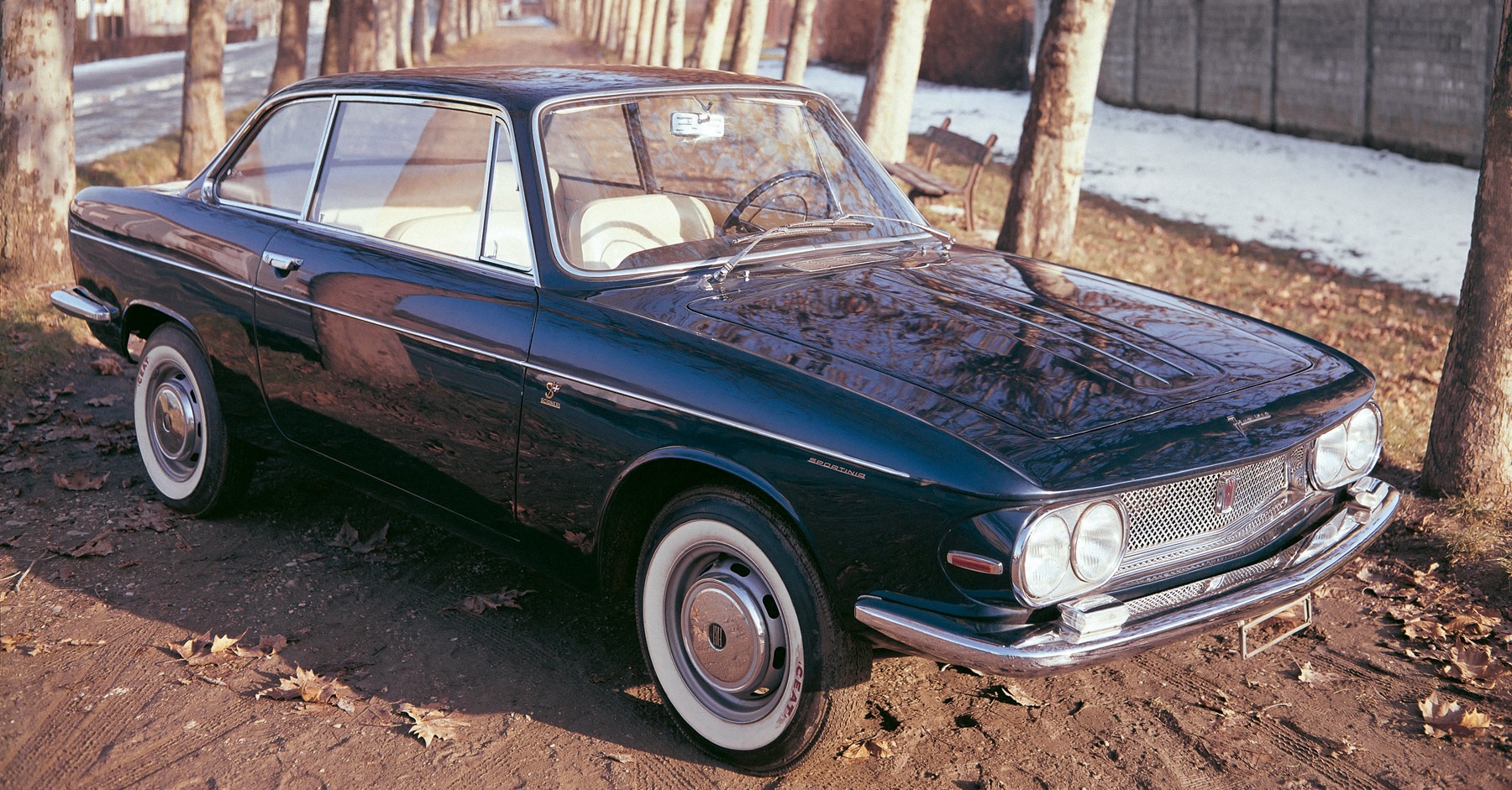
All of this experimentation culminated in 1962 with what is widely regarded as Scioneri’s finest achievement: the Fiat 1500 Coupé Sportinia. Designed by Michelotti and built on Fiat 1500 mechanicals, the Sportinia was elegant without being precious—its fastback profile, twin-headlamp nose, and well-judged proportions giving it a maturity beyond its modest underpinnings. Crucially, this was not just a show car. Scioneri committed to limited production, building approximately 20–24 examples. For a small, family-run atelier, that was a remarkable undertaking.
The Sportinia wasn’t a raw sports car, but it didn’t pretend to be. It was aimed at buyers who wanted a coupé that could still function as everyday transport—stylish, comfortable, and discreetly different. In many ways, it distilled everything Scioneri had learned over the previous decade.
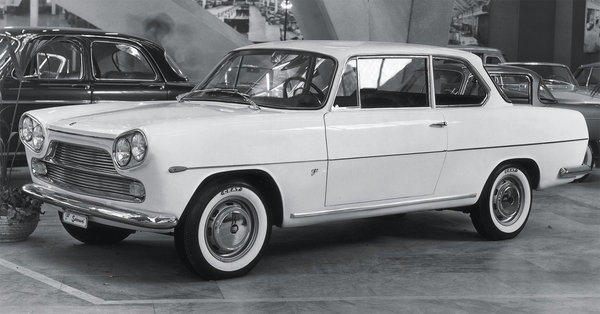
Supporting this growing ambition, the company moved in 1960 to a larger facility in Savigliano. The new premises allowed Scioneri to separate customization work from small-series production, formalising operations that had previously coexisted informally. It marked the transformation from improvised workshop to structured carrozzeria.
By the mid-1960s, Scioneri had become a familiar name to Italian buyers who wanted individuality without excess. New Fiat models were quickly followed by Scioneri interpretations—from the 1300/1500 sedans to the Fiat 850, and later the 124 and 125. The formula remained consistent: restrained design, thoughtful detailing, and prices that stayed within reach of the middle class.
Adapting to a Changing Industry (1965–1973)
By the mid-1960s, the environment that had allowed small coachbuilders like Scioneri to flourish was beginning to erode. The shift toward monocoque construction made structural modifications increasingly complex and expensive, while rising safety regulations added further barriers to low-volume body production. At the same time, manufacturers—Fiat foremost among them—were steadily improving factory finishes, trim levels, and model variety. What had once been the coachbuilder’s advantage was now being absorbed into series production.
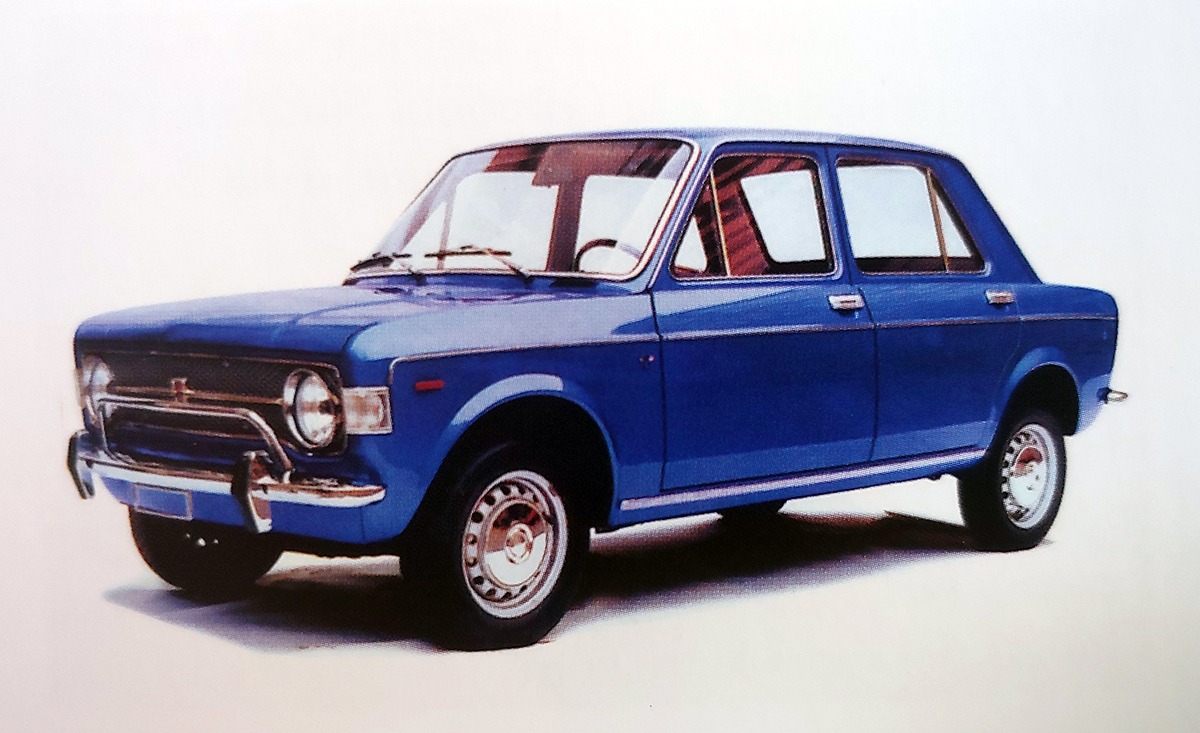
For Scioneri, the implications were unavoidable. The business model that had sustained the company through the 1950s and early 1960s—small runs of modified bodies and bespoke variants—was becoming economically fragile. Tooling costs were rising, homologation requirements tightening, and customer expectations shifting toward factory-backed solutions. By 1969, after nearly fifteen years of active coachbuilding on passenger cars, Antonio Scioneri made the decisive move to end traditional body production.
This was not a closure but a strategic retreat. Rather than exit the automotive world entirely, Scioneri once again adapted—returning to a field it knew well and could still control: interior refinement and cosmetic personalization. External body modifications were gradually abandoned, replaced by a focus on trim, upholstery, sound insulation, and comfort upgrades applied to standard production cars. The work was less visible than before, but it required the same craftsmanship.
Throughout the late 1960s and early 1970s, Scioneri offered “luxury” or “personalized” editions across much of Fiat’s range. Models such as the Fiat 124 and 128 could be ordered with upgraded interiors, richer materials, bespoke dashboards, and discreet external detailing. These were not cosmetic novelties but carefully positioned alternatives for buyers who wanted something more refined than the factory offering without stepping into a higher price class. Even the Alfa Romeo Giulia received limited Scioneri interpretations, emphasizing comfort and presentation rather than performance.
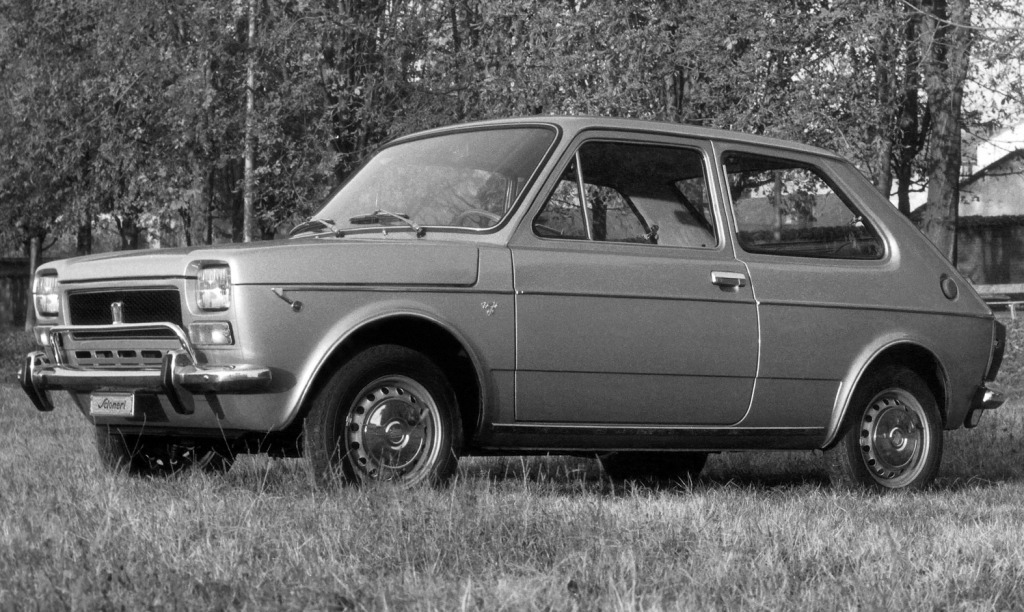
This second reinvention allowed the company to survive longer than many of its peers. While dozens of Italian carrozzerie disappeared during the same period, Scioneri maintained a modest but steady presence, supported by provincial dealerships and a loyal customer base that valued individuality. The arrival of new Fiat models—the 127 in 1971, the continued success of the 124 family—provided fresh platforms for customization.
Then came the shock that few could absorb. The oil crisis of 1973–74 reshaped the global automotive market almost overnight. Fuel prices soared, demand collapsed, and discretionary spending vanished. For businesses built on optional refinement, the impact was immediate. Sales of customized and luxury-trim cars fell sharply, and margins—already thin—evaporated.
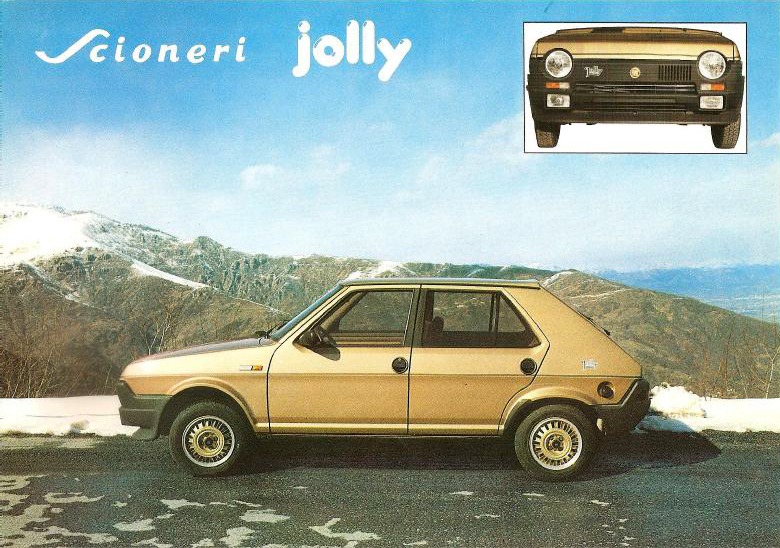
Scioneri weathered the initial blow but never fully recovered. By the mid-1970s, operations were scaled back significantly. A handful of later projects, such as the Fiat 127 special series and the Ritmo “Scioneri Jolly” introduced toward the end of the decade, showed flashes of relevance and creativity. Yet these were exceptions, not a reversal of fortune.
By 1979, Carrozzeria Scioneri ceased automotive activity altogether. The closure was quiet, almost understated—fitting for a company that had always operated just outside the spotlight. What ended was not simply a business, but a way of working: the idea that small, independent workshops could meaningfully reinterpret mass-produced cars through craft alone.
Still, Scioneri’s story did not conclude in failure. It concluded in adaptation pushed to its limits. The company survived longer than most by reading the market early, reinventing itself repeatedly, and refusing to cling to nostalgia.
The Last Hurrah: Niche Projects of the 1980s and 1990s
By the early 1980s, Carrozzeria Scioneri was no longer a coachbuilder in the classical sense. Antonio Scioneri had gradually stepped away from daily operations and formally retired in the mid-1980s. Though he would live until 1995, witnessing the final evolution of the firm he founded, the responsibility for carrying the name forward now rested with his son Renato. What followed was not a revival, but a prolonged and determined afterlife—one sustained by ingenuity, stubborn independence, and a refusal to let tradition vanish without a fight.
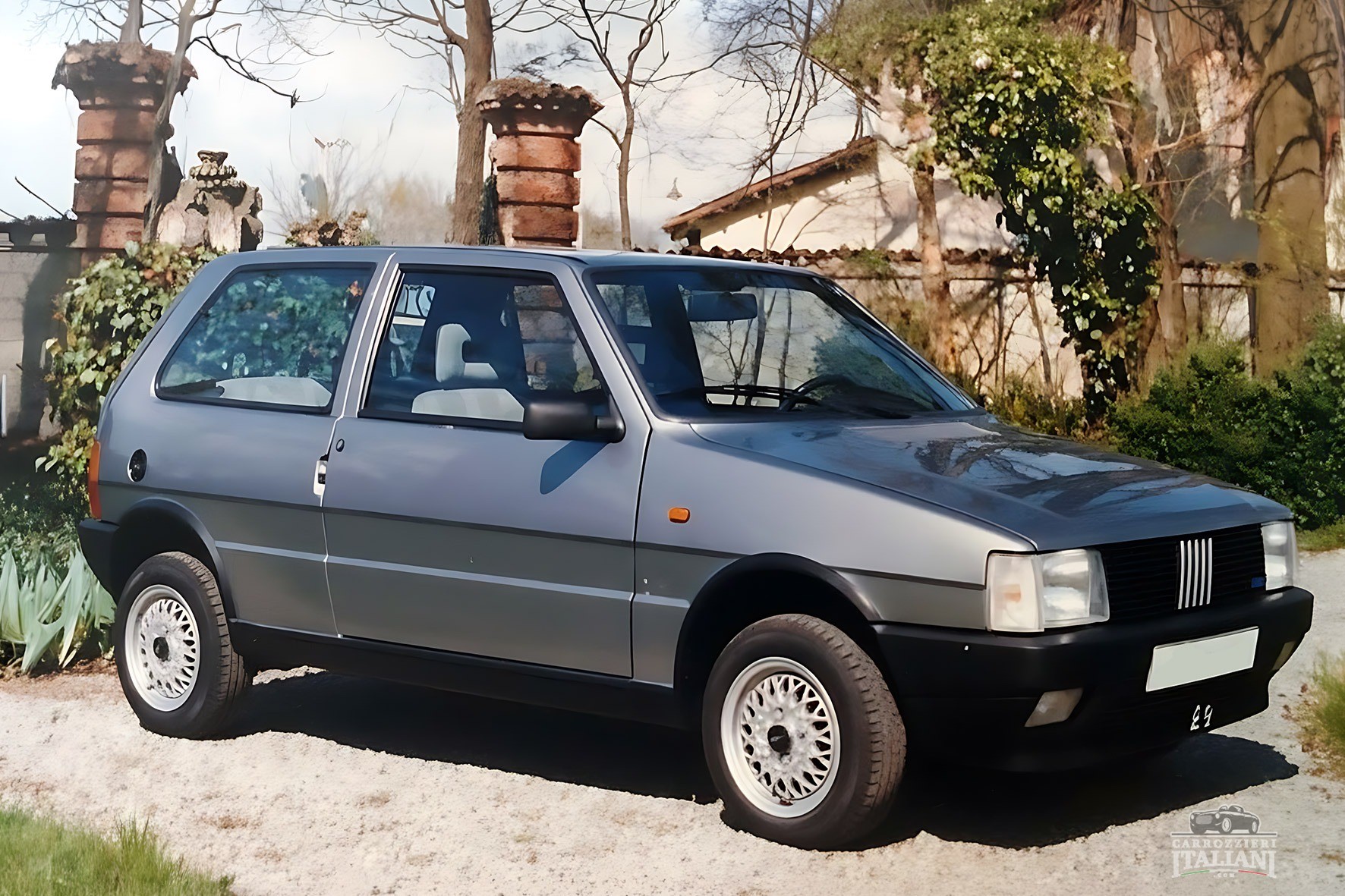
The context had changed irrevocably. Fiat itself now produced a constant stream of factory special editions, trim packages, and lifestyle variants—many of them echoing ideas once pioneered by independent carrozzerie like Scioneri. This left little room for external customization. Yet Renato understood that even in an increasingly standardized market, there remained a small audience for distinction—buyers less interested in performance than in tactility, finish, and personality.
Scioneri’s strategy during this period was deliberately narrow. Rather than chasing volume or attempting new body designs, the company focused on ultra-low-production special editions built around interior craftsmanship and surface treatment. Models such as the Fiat Panda, Uno, Tipo, Cinquecento, and later Punto became the new canvas. Mechanically unchanged, these cars were transformed through materials, color, and detail.
🔗 Read more: The Fiat Panda Destriero: A Odyssey of Creativity and Uniqueness
The most emblematic of these late projects was the Fiat Panda “Valentina” of the late 1980s. Starting from Fiat’s most utilitarian model, Scioneri created a version that was almost paradoxical in intent: a luxury Panda. Interiors were completely retrimmed in velour or Alcantara, steering wheels replaced with leather Nardi items, and small but thoughtful touches—courtesy lights, tailored upholstery patterns, exclusive finishes—were added throughout. Exterior colors leaned toward soft pastels or textured coatings, emphasizing charm over aggression. The name “Valentina” was no accident; it suggested intimacy, affection, and a human scale increasingly absent from mass production. Built in extremely small numbers, the Panda Valentina stands today as one of the last true expressions of Italian artisan customization applied to a mainstream car.
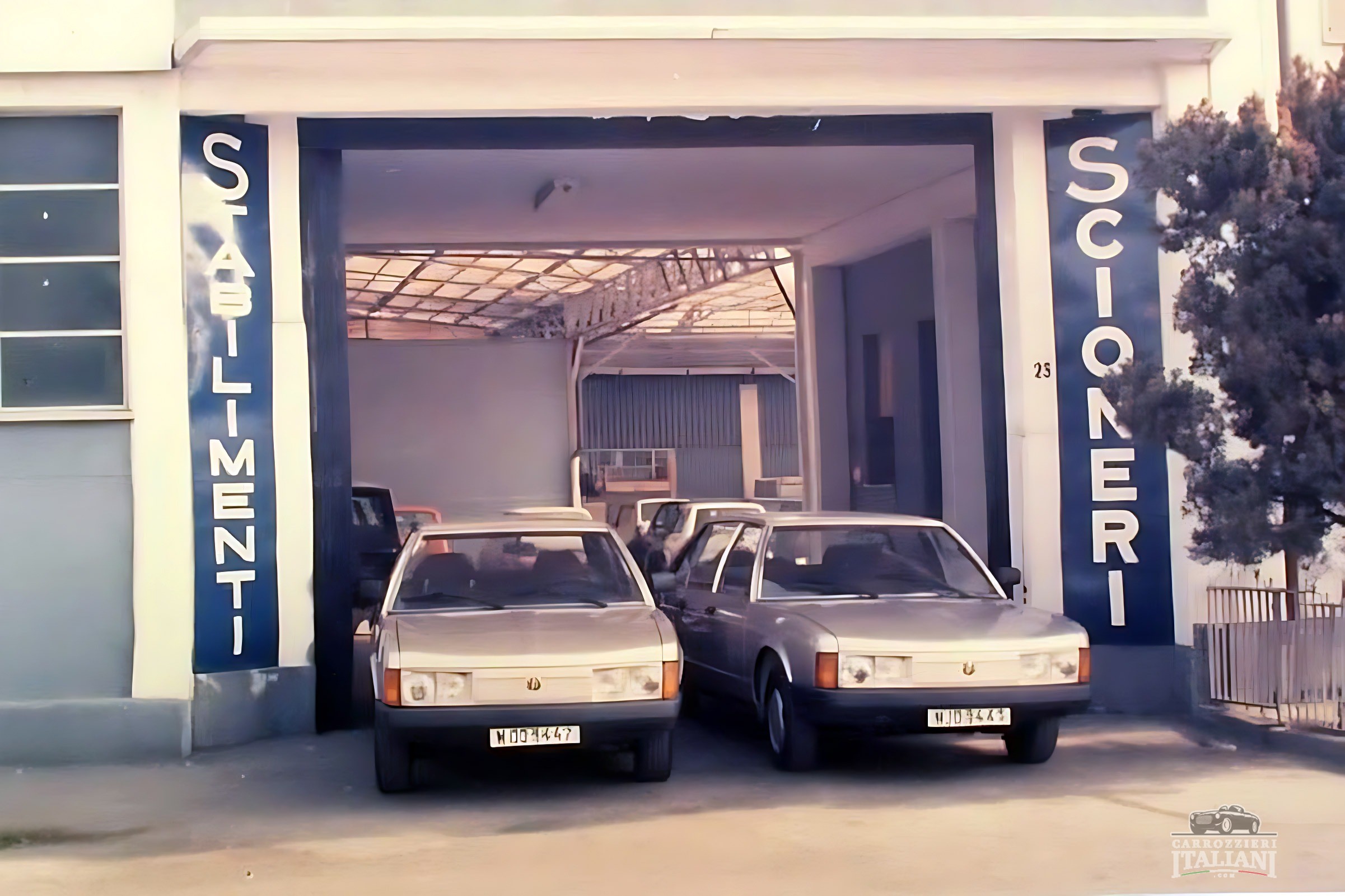
Similar treatments were applied to the Fiat Uno and later the Tipo, continuing Scioneri’s long-standing philosophy of “accessible elegance.” These were not luxury cars in the conventional sense, but they offered something increasingly rare: a tactile, handcrafted alternative to factory uniformity. Renato’s aim was clear—luxury not as status, but as care.
Perhaps the most unexpected episode of this era came in 1989, when Scioneri became involved in an improbable East–West collaboration. The Czech manufacturer Tatra, seeking to modernize its rear-engined T613 flagship, commissioned Scioneri to develop a facelift. Three chassis were shipped to Savigliano, where new body panels, revised bumpers, and more contemporary surfaces were crafted. The resulting Tatra T613 Scioneri was a curious hybrid—Czechoslovak engineering filtered through Italian styling restraint. Only a handful of prototypes were completed, and the project went no further, undone by political upheaval and Tatra’s own decline. Still, it stands as a striking footnote: one of the last times an independent Italian coachbuilder reshaped a foreign manufacturer’s flagship car.
Other attempts followed—among them a proposed small van based on Fiat Uno mechanicals—but none gained traction. By the early 1990s, the economics of bespoke automotive work had become unforgiving. Regulations tightened, margins disappeared, and customer expectations shifted decisively toward factory-backed solutions.
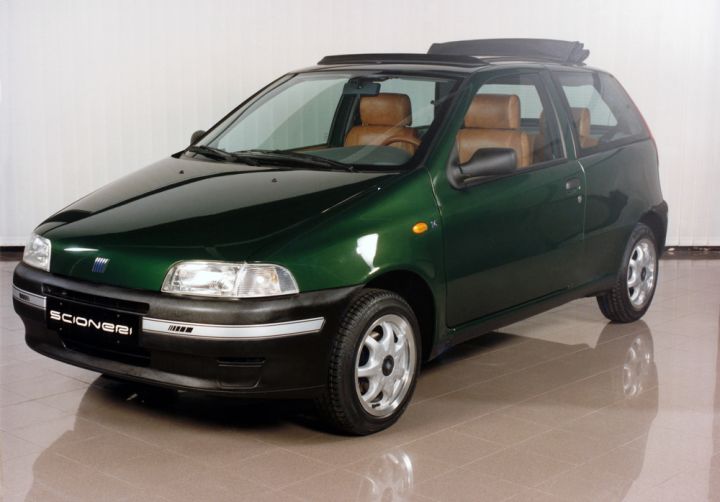
Scioneri’s final automotive gestures were quiet ones. Customized versions of the Fiat Punto appeared in 1994, and in 1996 the company made a symbolic last appearance at the Turin Motor Show, presenting a personalized Fiat Tipo—by then already out of production. It was less a product launch than a farewell, an acknowledgment that the world Scioneri had served for decades no longer existed.
Antonio Scioneri passed away in 1995 at the age of 85, having seen his workshop survive war, bankruptcy, boom, and decline. His death marked an emotional turning point for Renato, and soon after, automotive activity ceased entirely. What remained was a modest business dealing in used cars and parts—until even that closed in 2005. Renato Scioneri himself died in 2008, ending over six decades of continuous family involvement in Italian coachbuilding.
What Remains of Scioneri
Carrozzeria Scioneri was never about spectacle. Its legacy lies in scale, patience, and craft—the ability to make ordinary cars feel considered, personal, and quietly special. From wartime survival to postwar ingenuity, Scioneri adapted without losing its identity, working across decades when most small coachbuilders disappeared.
Its cars rarely chased extremes. Instead, they offered balance: individuality without excess, design without pretension. That is why the surviving examples still resonate today—not as museum pieces, but as evidence of an era when craftsmanship could live inside everyday automobiles.
What remains of Scioneri is not a single model or moment, but an idea: that good design does not need to shout, and that even the smallest workshop can leave a lasting mark.

ABOUT THE AUTHOR
Andreas Scheidl
Italian classic car enthusiast with German roots. Renowned as a respected figure in the classic car community, he serves as a jury member at various international concours d'elegance, including the Classic Gala Schwetzingen and Mantova. As a content creator, Andreas passionately shares his profound knowledge and appreciation for vintage automobiles. His heart beats for cars designed by Giovanni Michelotti, showcasing his discerning taste and dedication to preserving the timeless elegance of automotive history.
More stories by Andreas Scheidl ↗CONTINUE READING
Posts You Might Like
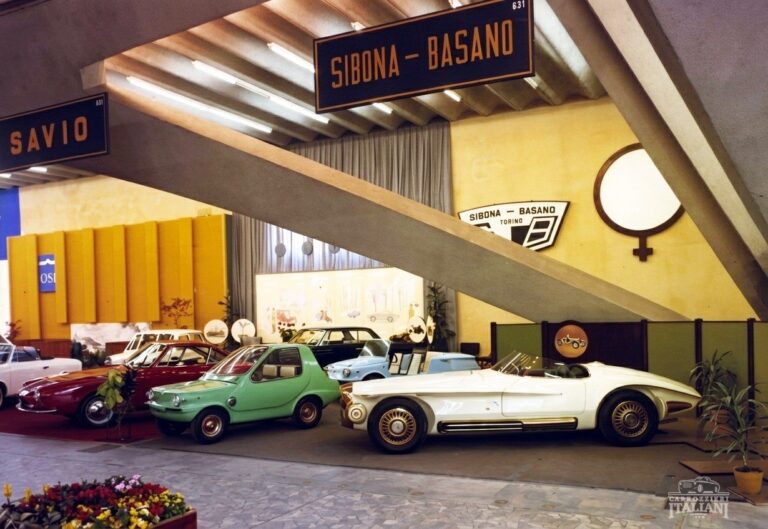
Sibona & Basano: The Turin Workshop Behind Abarth, Exner and Autonova
For a brief period in the 1960s, Sibona & Basano occupied a distinctive position in Turin's coachbuilding industry, constructing competition bodies, prototypes and experimental cars for Abarth, American designers and some of…
Read story
The Story of Carrozzeria Vignale
The story of Carrozzeria Vignale represents one of the many somewhat forgotten success stories born against the backdrop of an Italy that was torn apart by the Second World War and which,…
Read story
Carrozzeria Savio: The History
From early Fiat specials to the Jungla, Delta S4 and Italdesign Aztec, the story of Carrozzeria Savio is far richer than many remember.
Read story
The History of Carrozzeria Boano
The untold story of Mario Boano and Carrozzeria Boano, from Ferrari 250 GTs to the Spiaggina, reshaping Italian automotive history.
Read story
THE CONVERSATION
Comments 0
Share a memory, a period photograph or a documented detail about this story.