
Carrozzeria Coggiola: The Untold Story of Turin’s Hidden Coachbuilder
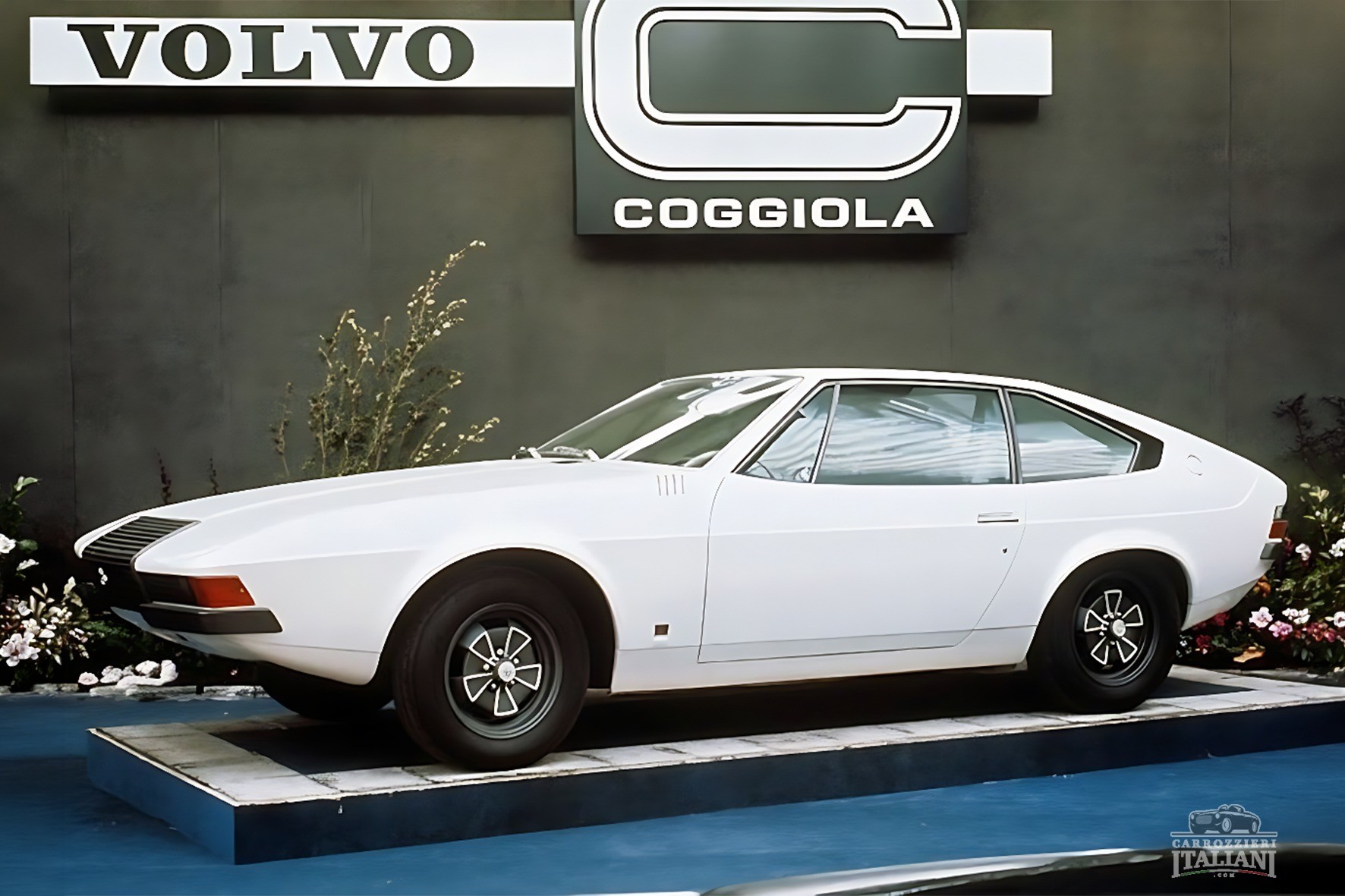
Carrozzeria Coggiola was never a large house, but rather a discreet jewel of Turin’s coachbuilding tradition—an atelier born in 1966 from the vision of Sergio Coggiola. Before stepping into his own light, Coggiola (born in 1928) had spent fifteen formative years at Carrozzeria Ghia, where he shaped ideas as both designer and head of prototypes. When he finally opened his own studio in Orbassano, just beyond Turin, it carried the quiet confidence of a man who knew the language of lines, proportion, and possibility.
His workshop became a place of singular creations—one-off automobiles and dreamlike studies that spoke not only of engineering, but of imagination. Italian marques entrusted him with their identities, while international clients sought his touch to reinterpret their own. Across four decades, Coggiola gave form to an eclectic and poetic gallery of machines: from the sharp, futuristic Pontiac CF-428 of 1970 to the refined experimentalism of Volvo’s 1800 ESC safety coupé, unveiled in Paris in 1971. There was the lyrical Lancia Dunja HF Fulvia, the bold Chrysler-Lamborghini Portofino revealed in Frankfurt in 1987, and Renault’s forward-looking Mégane concept a year later. Even the smallest ideas—like Fiat’s playful Cinquecento “Fionda”—carried his unmistakable sensibility, while projects such as Mercedes-Benz’s Vario Research Car showed his ability to move effortlessly between elegance and innovation.
Yet, like many ateliers shaped by a singular spirit, the firm’s fate was closely tied to its founder. After Sergio Coggiola’s sudden passing in 1989, the studio gradually lost its momentum, its creative pulse dimming until new projects quietly ceased in the mid-1990s.
The beginning
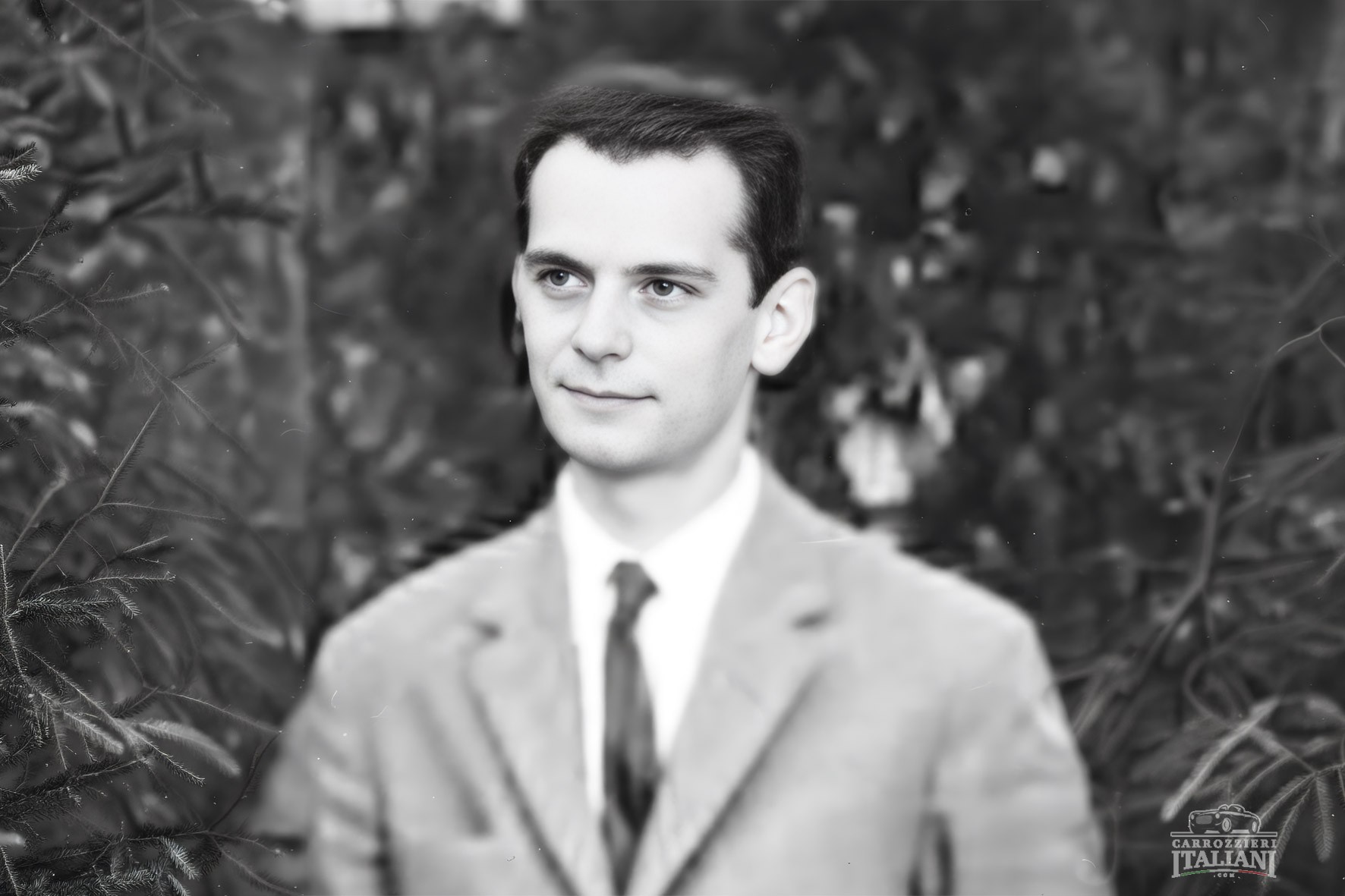
Sergio Coggiola (1928–1989) was an Italian car stylist and coachbuilder who established his career at Carrozzeria Ghia in Turin before founding his own atelier. Trained as a draftsman, he joined Ghia in the early 1950s and remained there for approximately fifteen years, a period often described in contemporary sources as a quindicennale esperienza. During this time he advanced to head of the technical office and prototype department, working on the development and construction of experimental bodies and design studies across a range of chassis.
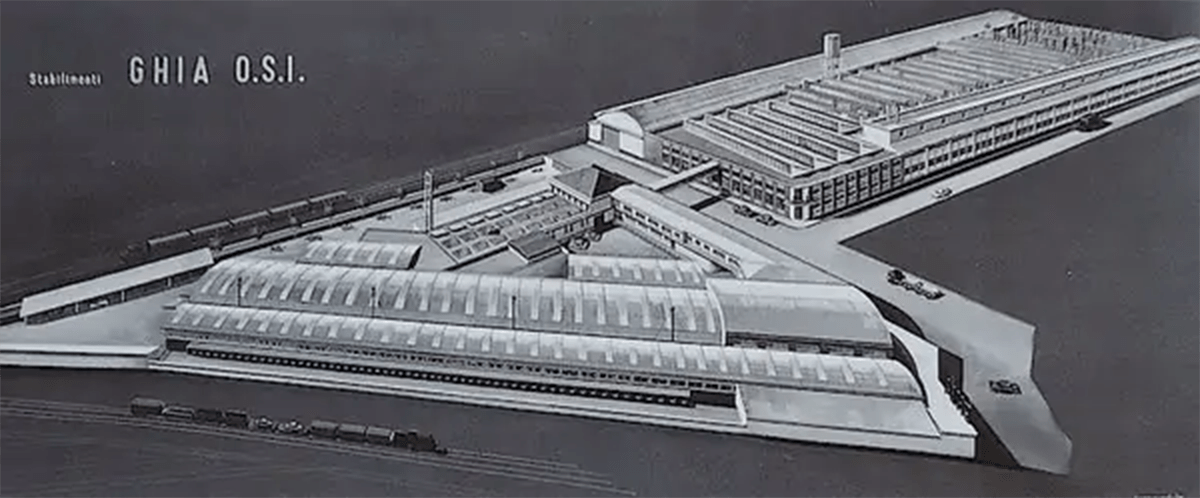
His tenure at Ghia coincided with a period of intense activity and stylistic innovation. He operated within a professional environment shaped by figures such as Mario Boano and Pietro Frua, and maintained earlier associations with Frua as well. His work involved translating design proposals into functioning prototypes, requiring both technical coordination and practical fabrication skills, as well as familiarity with evolving coachbuilding methods of the period.
🔗 Read more: The History of Carrozzeria Ghia – Part 1
In 1966, drawing on this experience, Coggiola left Ghia and established Carrozzeria Coggiola in Orbassano, near Turin. The company was structured as a small, independent workshop focused primarily on one-off vehicles, prototypes, and show cars. Many of these projects were commissioned by manufacturers or based on designs provided by external stylists. The atelier operated with a flexible production model, emphasizing rapid development and relatively contained costs compared to larger design houses.
This approach positioned the firm as a practical resource for manufacturers requiring experimental or low-volume vehicles. Its activities included both the realization of externally designed concepts—often in collaboration with designers such as Aldo Sessano or Trevor Fiore—and the development of in-house proposals. The workshop’s output combined design interpretation, body construction, and prototype engineering within a single facility.
Coggiola himself maintained a low public profile. He was regarded within the industry as discreet and professionally reliable, and much of the firm’s work was carried out on behalf of other companies without prominent attribution. Contemporary observers compared the structure and working method of his atelier to that of Giovanni Michelotti, particularly in its role as an external partner for design realization and prototype construction.
In 1966, Sergio Coggiola transformed his years at Ghia into an independent venture, establishing Carrozzeria Coggiola in Orbassano, on the outskirts of Turin. The atelier began modestly, a small workshop staffed by a handful of skilled craftsmen, dedicated not to series production but to the creation of prototype bodies and show cars. From the outset, its activity centered on translating ideas into physical form—often working from drawings supplied by manufacturers or external designers rather than developing full programs in-house.
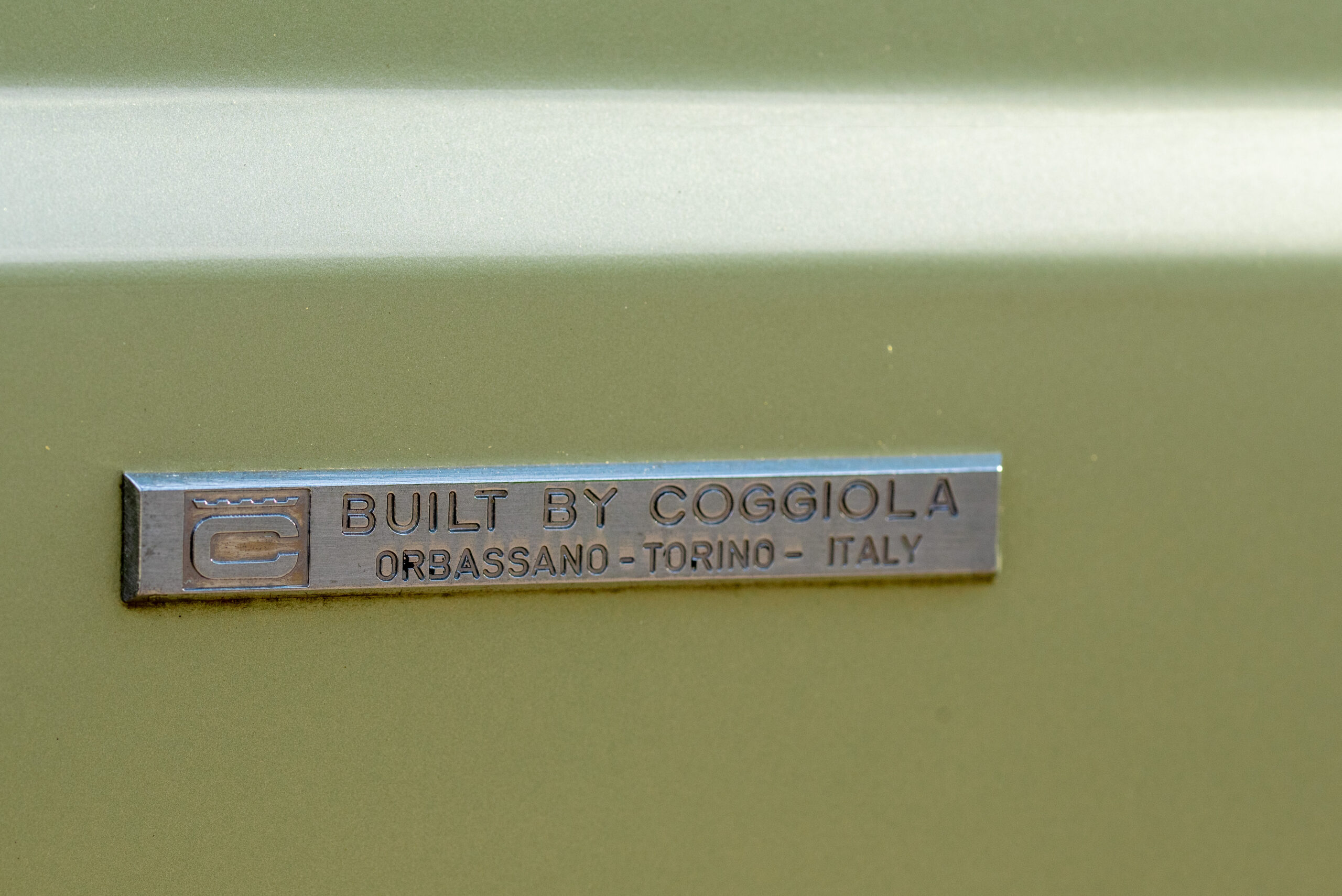
The early years were defined by this project-based rhythm. Manufacturers and coachbuilders turned to Coggiola when a design needed to be realized quickly and with precision, whether as a fully developed concept or a one-off experimental vehicle. Much of this work remained unseen, internal to the clients who commissioned it; by the early 1970s, the atelier had already produced a large number of studies and prototypes, only a small portion of which appeared publicly at motor shows.
The facilities in Orbassano reflected the traditions of Italian coachbuilding. Within a compact space, the workshop combined metal-forming, wood-frame construction, and hand-finishing. Clay models were shaped at full scale to refine proportions, and aluminum panels were formed by hand using traditional tools. The workforce remained small—often no more than a dozen craftsmen—while Coggiola himself supervised each stage, from the initial model to the finished interior.
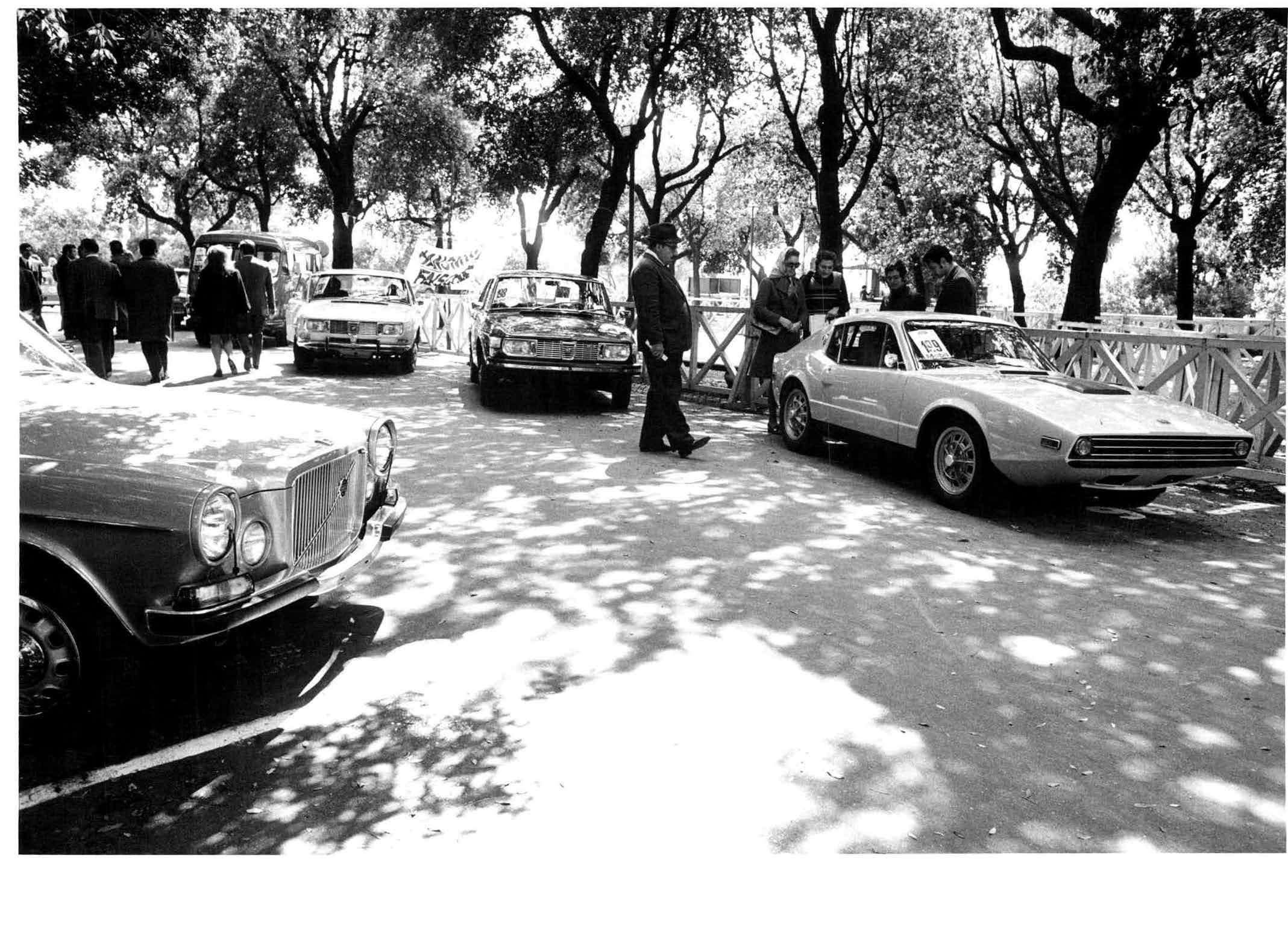
Although the company did not engage in production manufacturing, it occasionally contributed to limited series development. Among its early assignments was work for Saab, assisting in the construction of prototype bodies for the Sonett III. Even so, the atelier’s identity remained rooted in one-off vehicles and experimental designs. By the mid-1970s, its name had become familiar within professional design circles, even if its role often remained behind the scenes.
🔗 Read more: Mario Revelli di Beaumont: the first Freelance Car Designer
One of the first notable projects to emerge publicly was the Pontiac CF-428, developed around 1969–70. Built on a Grand Prix chassis and styled by engineer Paul Farago, it took the form of a sharply angled wedge-shaped coupé, its dramatic geometry realized in Coggiola’s Turin workshop. Shortly after, in 1971, the atelier produced the Lancia Dunja HF concept, designed by Aldo Sessano and based on the Fulvia HF. Its distinctive side glazing and raised rear profile gave it an unconventional silhouette, and it was presented at the Turin Motor Show.
During the same period, the company established relationships with Swedish manufacturers. For Volvo, Coggiola constructed the 1800 ESC safety coupé, shown in Paris in 1971, incorporating advanced safety features and extensive glazing. Work with Saab followed, including early Sonett III prototypes and, between 1974 and 1976, the rare Saab 98 liftback, produced in a handful of examples on Saab 95 underpinnings. Later in the decade, Coggiola developed the prototype for the Volvo 262C coupé, reworking a 164 sedan into a lowered, vinyl-roofed two-door that would subsequently be industrialized by Bertone.
In full swing
Alongside these commissions, the atelier engaged in a range of European concept projects. In 1973 it built the Coggiola Sylvia, a fastback coupé designed by Trevor Fiore on an Opel GT chassis, followed in 1978 by the Janus, an asymmetrical study presenting two alternative design directions within a single form.
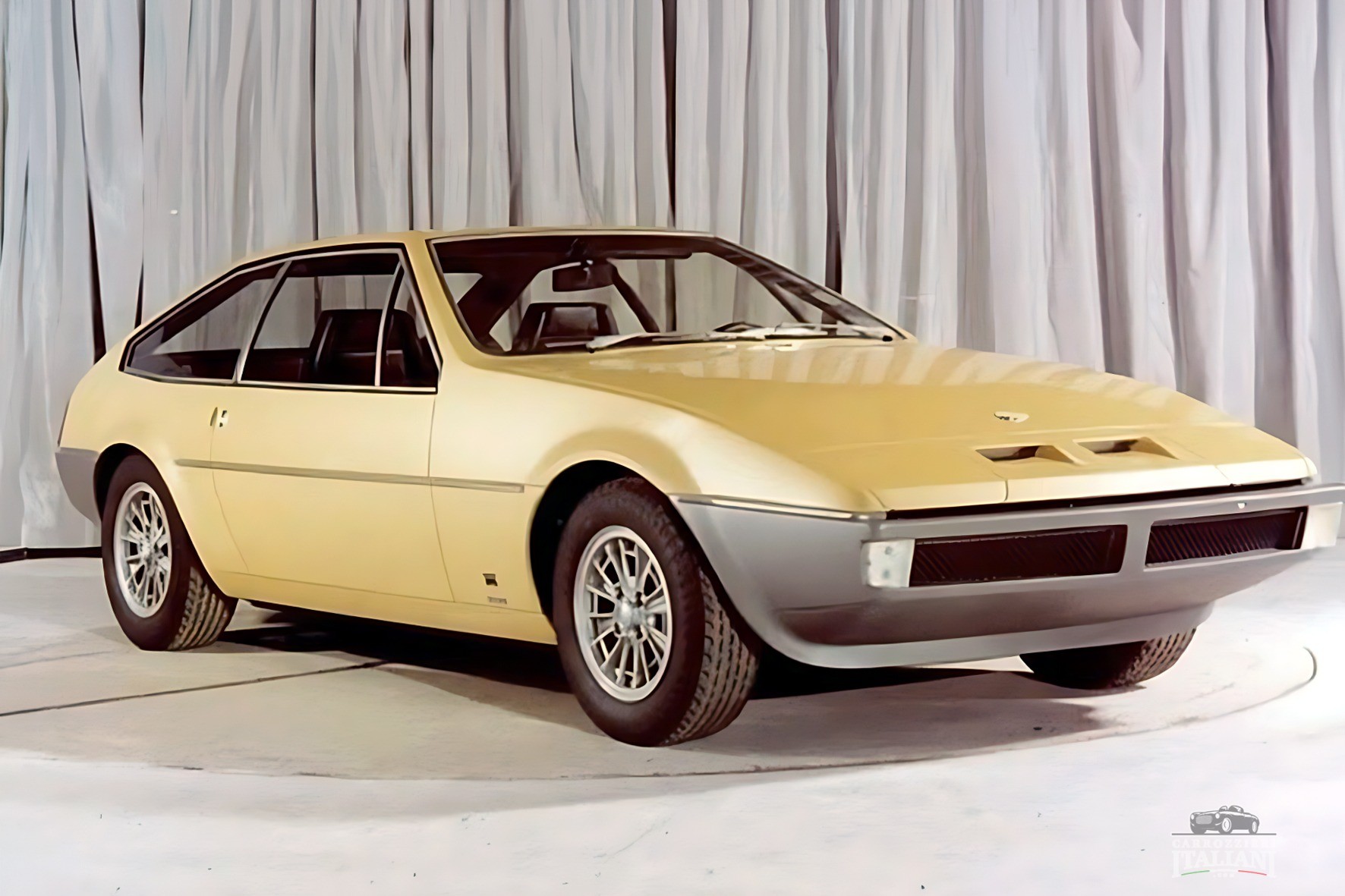
At the turn of the 1980s, collaborations with French manufacturers brought further experimental work, including the Citroën Karin in 1980—a sharply faceted, pyramid-like concept—and the Citroën Xenia in 1981, both executed from Fiore’s designs.
By the late 1980s, the workshop was entrusted with more complex and high-profile projects. In 1987, Coggiola constructed the Chrysler-Lamborghini Portofino, a four-door luxury concept developed after Chrysler’s acquisition of Lamborghini. The car combined an extended platform with a Lamborghini V8 and a streamlined body, presented at the Frankfurt Motor Show. Around the same time, Renault commissioned a series of concept vehicles, beginning with the 1988 Mégane prototype, a four-seat fastback featuring sliding doors integrated into the roof structure, followed in 1991 by the Scénic concept, an early exploration of compact multi-purpose vehicles.
🔗 Read more: The Sultan of Brunei’s Special Car Collection
In the same period, the atelier was also involved—on behalf of Pininfarina—in the construction of a number of bespoke Bentley models commissioned for the Sultan of Brunei, a series of highly exclusive, low-volume cars built with strict confidentiality.
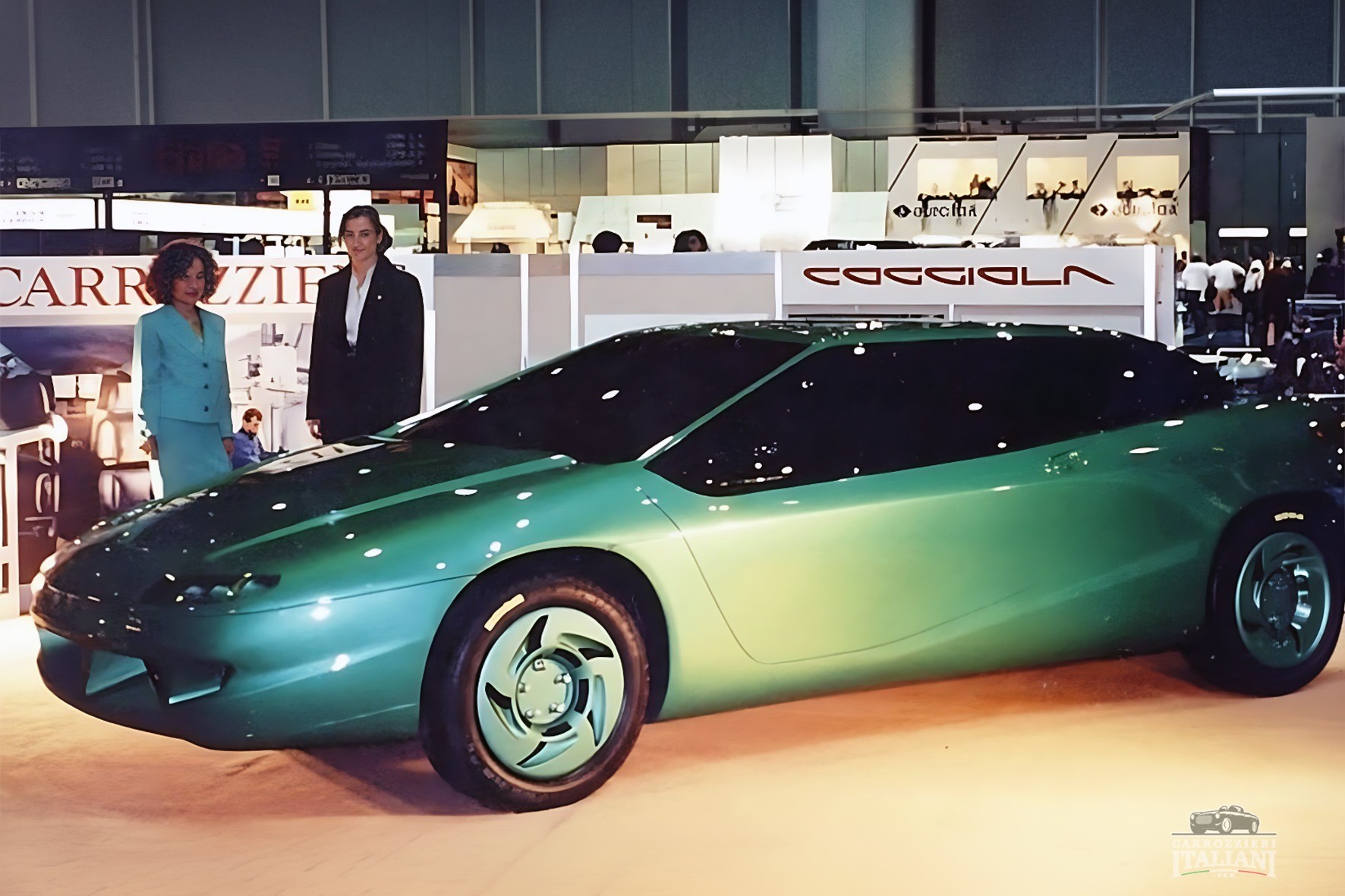
Work for Italian manufacturers continued into the 1990s. Coggiola developed a one-off Lancia Thema Coupé, presented in Geneva in 1993, and the Fiat Punto Surf in 1994, a compact utility concept derived from the Punto platform and conceived with a more rugged, recreational character.
🔗 Read more: The Fiat Cinquecento Concept Cars
Parallel to these projects, the atelier collaborated with Mercedes-Benz on advanced research vehicles. In 1991 it constructed the C112, a mid-engine experimental supercar equipped with a V12 engine and electronic chassis systems. This was followed in 1995 by the Vario Research Car, a modular concept with interchangeable body configurations, requiring extensive use of composite materials and innovative structural solutions.
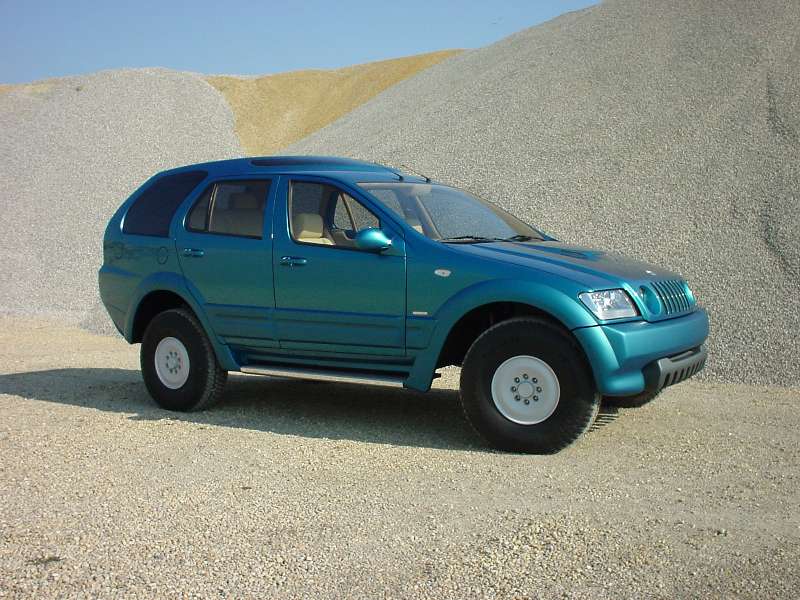
Into the early 2000s, Coggiola continued to execute concept vehicles for international clients. The T-Rex, presented in 2000, reinterpreted the Hummer H1 as a luxury SUV with a custom aluminum body. In 2001, the atelier built the Mercedes-Benz F-400 Carving, a roadster exploring tilting-wheel technology, and in 2002 the Toyota cCX, a compact coupé-crossover concept. The following year saw additional projects, including the Mercedes-Benz F500 Mind and the Mitsubishi SE-RO, both constructed in Turin.
Across these decades, Carrozzeria Coggiola operated as a specialized partner to manufacturers and design studios, realizing a wide spectrum of experimental and bespoke vehicles. Its work encompassed concept cars, design studies, and prototype engineering, often remaining uncredited while contributing to broader developments within the automotive industry.
The Company Today and Legacy
The final chapter of Carrozzeria Coggiola unfolded quietly. Sergio Coggiola’s sudden death in 1989 marked a decisive turning point, and without his direction the atelier struggled to sustain its role within an industry that was itself changing. The steady flow of commissions diminished, and although there were suggestions that other Turin design houses might absorb its activities, no such transition took place. By the mid-1990s the workshop had largely fallen silent, and by the early 2000s it had effectively ceased operations, its last known projects dating to around 2004.
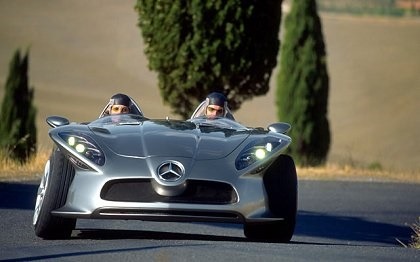
What remains is not a company, but a dispersed body of work. The cars built in Orbassano—often unique, sometimes experimental, frequently unrepeatable—survive in a scattered geography of museums, private collections, and occasional public appearances. The original Volvo 262C prototype, shaped in Coggiola’s workshop before entering production through Bertone, is preserved within Volvo’s heritage collection in Gothenburg. A Saab 98, one of the few examples constructed under Coggiola’s supervision, is held at the Saab Museum in Trollhättan, while other Saab-related prototypes continue to circulate in private hands.
Elsewhere, individual projects surface intermittently: the Chrysler Portofino and the Pontiac CF-428 appear sporadically in retrospectives and auctions; Fiat’s Cinquecento “Fionda” and Punto Surf remain tied to the brand’s historical archives; and lesser-known commissions, including prototypes and special bodies, continue to emerge through collectors and specialist circles. Even certain bespoke luxury cars produced for exclusive clients—such as limited Bentley derivatives commissioned for the Sultan of Brunei—carry, often discreetly, the workmanship of the Coggiola atelier.
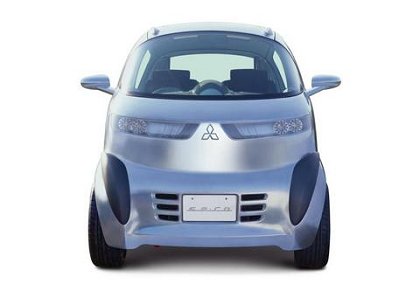
Over time, these surviving vehicles have come to define the firm’s legacy. They are cited in design histories as examples of a particular moment in Italian coachbuilding, when small, independent workshops could operate alongside major manufacturers, giving physical form to experimental ideas without the constraints of production. Models such as the Lancia Dunja, the asymmetrical Janus, or the modular Mercedes-Benz Vario Research Car are frequently recalled not for their commercial impact, but for their conceptual ambition.
No formal successor to Carrozzeria Coggiola emerged, and its facilities were eventually absorbed into the broader industrial landscape of Turin. Yet within the historiography of Italian automotive design, the name endures. It appears alongside the last generation of independent carrozzerie—studios defined less by scale than by adaptability, craftsmanship, and the ability to translate vision into metal. Today, its presence is reconstructed through archival references, restored prototypes, and the occasional reappearance of its work at concours and exhibitions, each car serving as a fragment of a workshop that once operated at the intersection of discretion and invention.

ABOUT THE AUTHOR
Andreas Scheidl
Italian classic car enthusiast with German roots. Renowned as a respected figure in the classic car community, he serves as a jury member at various international concours d'elegance, including the Classic Gala Schwetzingen and Mantova. As a content creator, Andreas passionately shares his profound knowledge and appreciation for vintage automobiles. His heart beats for cars designed by Giovanni Michelotti, showcasing his discerning taste and dedication to preserving the timeless elegance of automotive history.
More stories by Andreas Scheidl ↗CONTINUE READING
Posts You Might Like
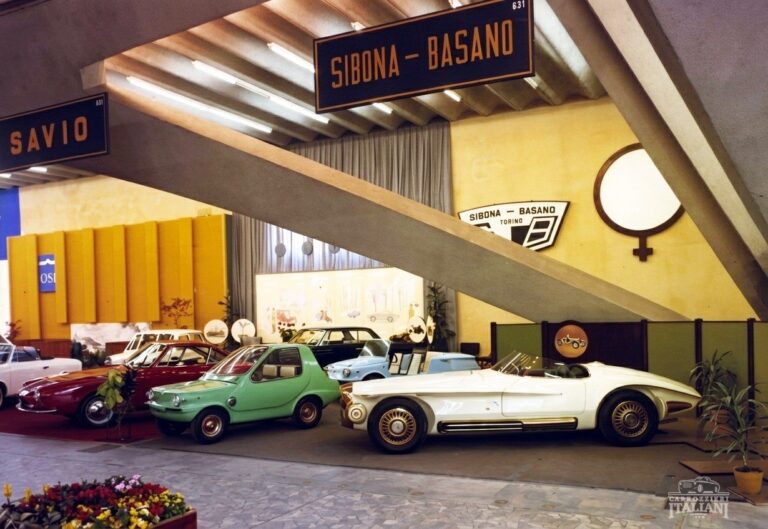
Sibona & Basano: The Turin Workshop Behind Abarth, Exner and Autonova
For a brief period in the 1960s, Sibona & Basano occupied a distinctive position in Turin's coachbuilding industry, constructing competition bodies, prototypes and experimental cars for Abarth, American designers and some of…
Read story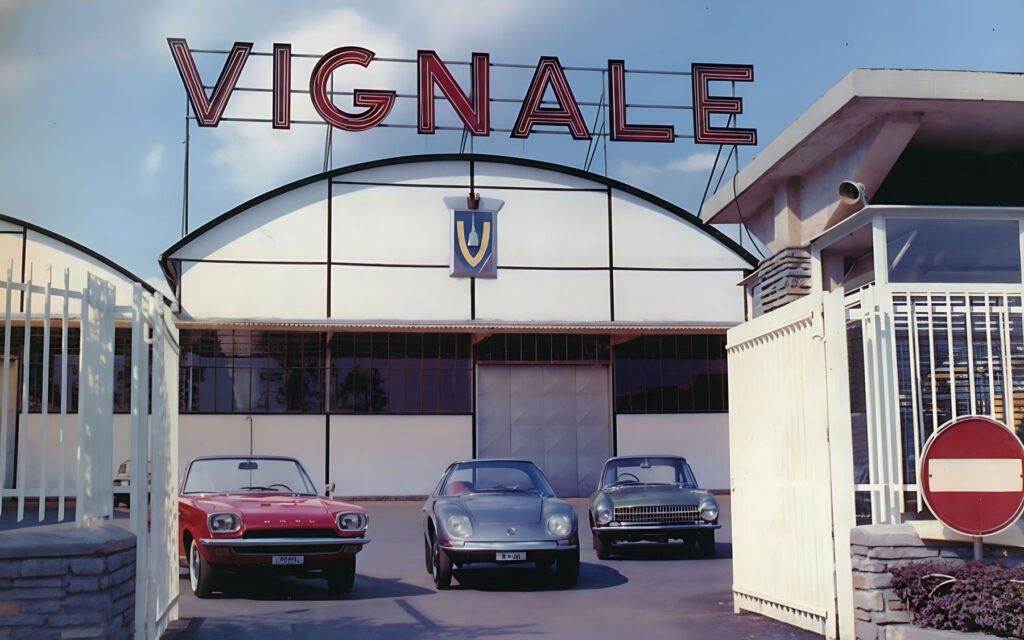
The Story of Carrozzeria Vignale
The story of Carrozzeria Vignale represents one of the many somewhat forgotten success stories born against the backdrop of an Italy that was torn apart by the Second World War and which,…
Read story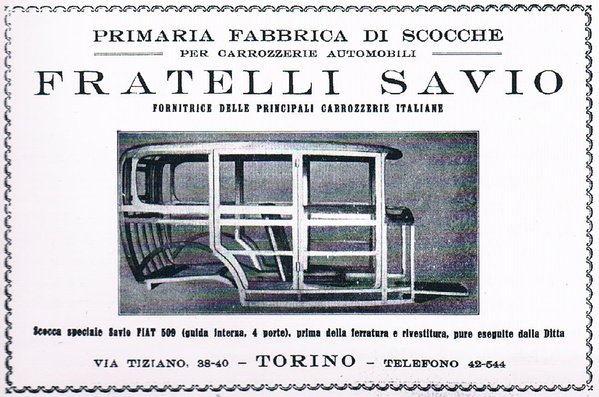
Carrozzeria Savio: The History
From early Fiat specials to the Jungla, Delta S4 and Italdesign Aztec, the story of Carrozzeria Savio is far richer than many remember.
Read story
The History of Carrozzeria Boano
The untold story of Mario Boano and Carrozzeria Boano, from Ferrari 250 GTs to the Spiaggina, reshaping Italian automotive history.
Read story
THE CONVERSATION
Comments 0
Share a memory, a period photograph or a documented detail about this story.