
THE VEHICLE AT A GLANCE
Model dossier
- Production period
- 2003
- Body style
- Van
- Engine
- Inline-3
- Type
- Concept
- Production
- 1
THE PEOPLE BEHIND THE CAR
Coachbuilding, design & conversions

PRICE & SALES RECORD
Vehicle value
- Original price
- Not documented
- Latest recorded sale
- Not documented
01 / THE STORY
History & context
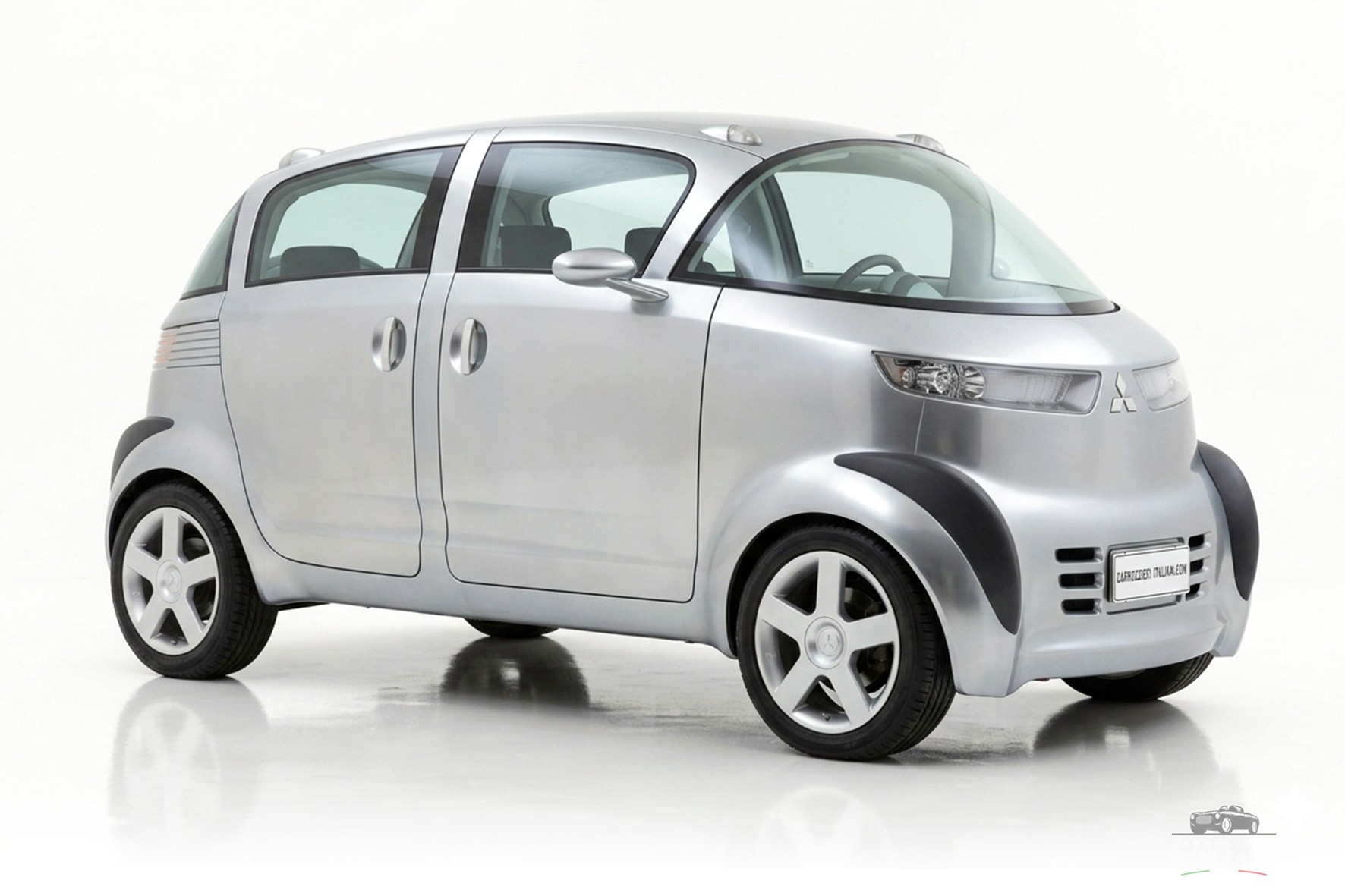
The Mitsubishi SE-RO was a concept vehicle developed in 2003 through a collaborative design effort between Mitsubishi Motors and Carrozzeria Coggiola of Turin. Conceived as an experimental study in personal mobility, the SE-RO was publicly presented at the Tokyo Motor Show that same year. The name, an abbreviation of “Secret Room,” reflected the project’s emphasis on interior spatial reconfiguration and personal retreat, positioned within the legal and dimensional constraints of Japan’s kei car category. The vehicle was built upon Mitsubishi’s MR platform, employing a mid-engine, rear-wheel-drive layout. Propulsion was provided by a turbocharged 660 cc inline-three engine, paired with a continuously variable transmission. The platform permitted compact external dimensionsapproximately 3.4 meters in lengthwhile maximizing cabin volume. The chassis and powertrain remained within the regulatory limits for kei vehicles, though the SE-RO was never homologated for production. The exterior was rendered in polished aluminum and drew formal inspiration from mid-century aeronautical design. Wraparound glass, rounded bodywork, and flush detailing recalled streamlined fuselage construction, while evoking futurist idioms of mid-20th-century industrial design. The result was a monovolume silhouette free from historical automotive typologies. Carrozzeria Coggiola’s contribution lay not only in form but in the fusion of European stylistic refinement with Mitsubishi’s functional engineering. Internally, the SE-RO departed entirely from conventional automotive spatial arrangements. Rear seating was reconfigurable, capable of forming a lounge environment centered on a retractable table. The driver’s seat could be rotated to face rearward, allowing the cabin to transform from a transport mechanism into a static social or contemplative enclosure. Upholstery and materials were selected for tactility and warmth, contrasting with the vehicle’s exterior metallic severity. Only a single example of the Mitsubishi SE-RO is known to exist. It remains part of Mitsubishi’s design archive and has been exhibited sporadically as a representation of the company’s early 21st-century conceptual direction. The SE-RO is not remembered for technical novelty or performance metrics but for its inquiry into automotive space as a domain of privacy and adaptabilityan ephemeral but articulate answer to questions of interior architecture and vehicular identity.
IN THE ARCHIVE
Coachbuilders & design studios
02 / TECHNICAL IDENTITY
Specifications & construction
Production & construction
- Production
- 1
- Production type
- Concept
- Production notes
- AllCarIndex documents the 2003 Mitsubishi SE-RO and lists Coggiola as design studio. The reviewed external source does not establish Coggiola as physical body builder, so clear ORG-COGGIOLA from coachbuilder_key and preserve Coggiola strictly as design-studio context. NO_AUTO_INHERIT.
Engine & performance
- Engine configuration
- Inline-3
Design & manufacture
- Body Builder · Documented
- Coggiola
- Manufacturer · Documented
- Mitsubishi
06 / EVENTS & AWARDS
Events & awards
No events or documented awards are currently recorded for this vehicle.
07 / THE VEHICLE IN DETAIL
Photo gallery 4 photographs
08 / FROM THE ARCHIVE
Archive
References held in the vehicle dossier. Their inclusion does not establish that every historical claim has been independently verified.
| Reference | Source type |
|---|---|
| AllCarIndex — 2003 Mitsubishi SE-RO www.allcarindex.com | Specialist concept archive |
THE CONVERSATION
Comments 0
Share a memory, a period photograph or a documented detail about this car.