
The Night Triumph Found Its Shape: The History of the Herald
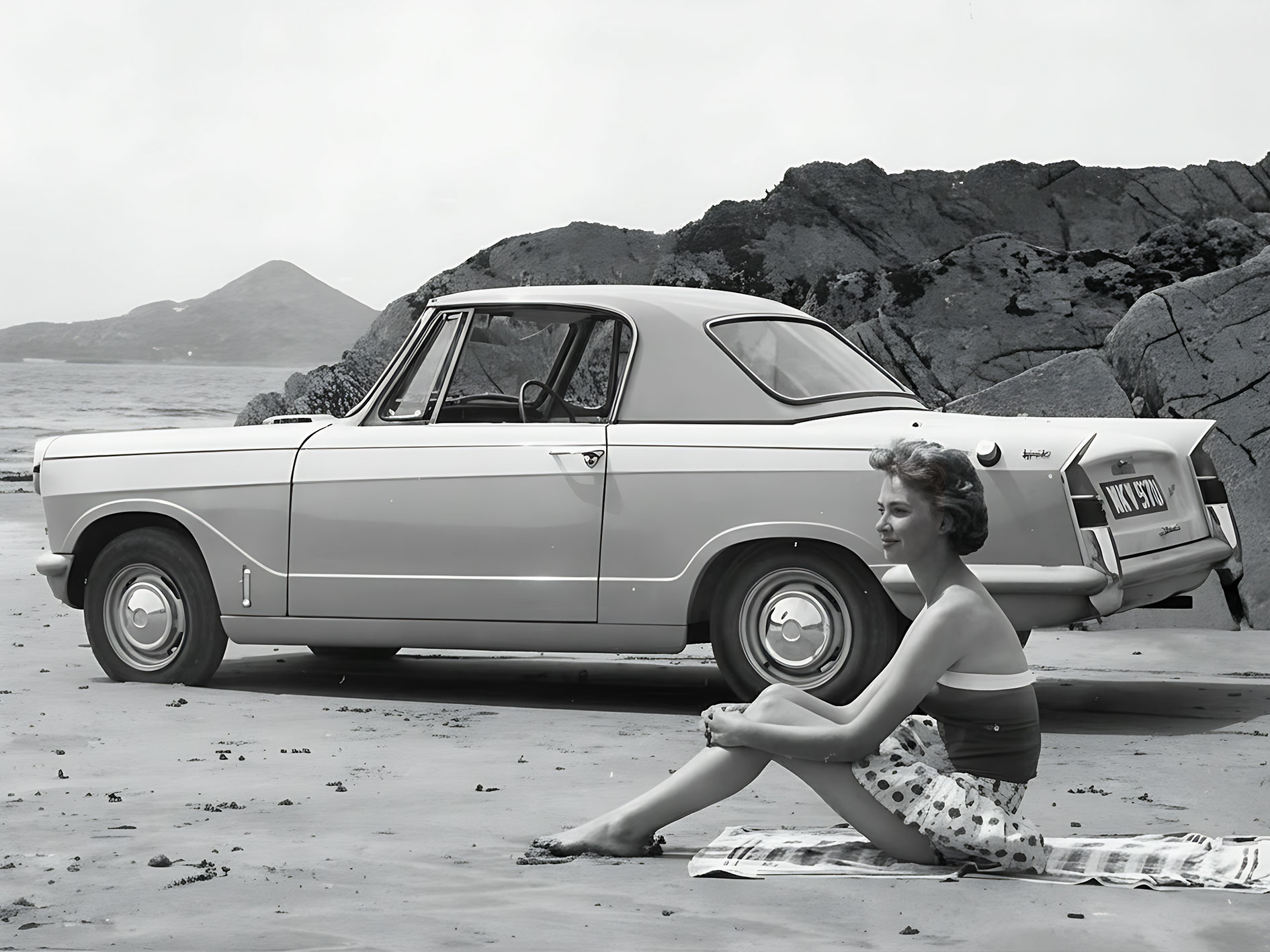
Some cars are born from long-term plans and orderly timelines. Others emerge only when pressure leaves no alternative. The Triumph Herald belongs firmly to the second group. Behind its lightness and simplicity lies a story shaped by industrial politics, hurried decisions, and a single night when everything had to be rethought from scratch. What follows is not just the history of a small British car, but a glimpse into how ingenuity, timing, and human instinct can intersect to quietly change a company’s fate.
The Morning Everything Broke
On a cold November morning in 1956, Alick Dick arrived early at Longbridge. The sun was present only in theory—a pale disc straining through thick fog that clung to the Midlands and offered no warmth at all. Dick didn’t seem to notice. At the time, he was one of the brightest figures in the British motor industry, the so-called wonder boy of the Standard Motor Company, and he had come for what he believed would be a routine meeting.
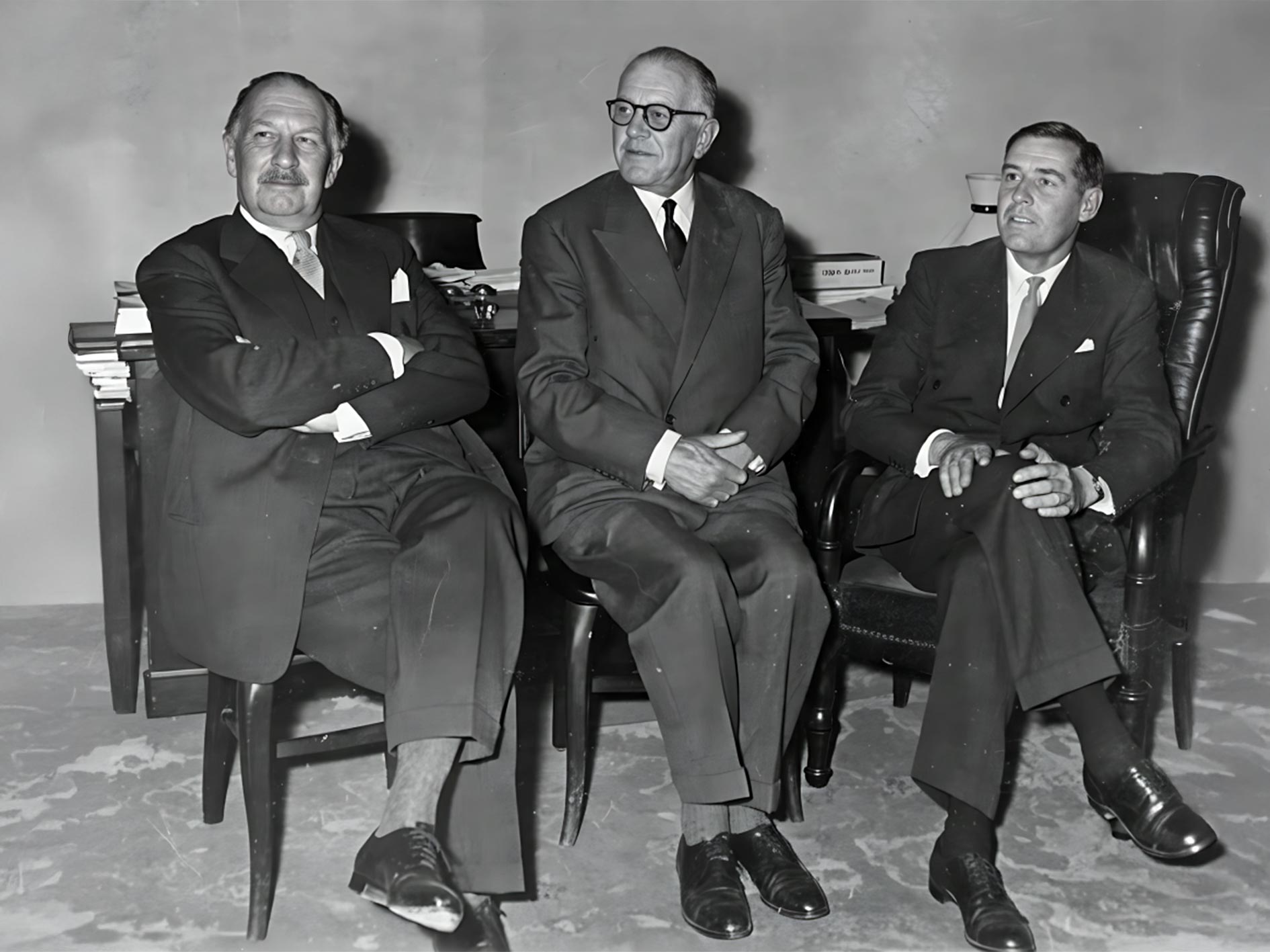
His appointment was with Sir Leonard Lord, chairman of the British Motor Corporation. The two men knew each other well. This was meant to be little more than a courtesy call: a discussion about renewing a long-standing supply agreement now that Fisher & Ludlow—Standard’s body supplier since the 1930s—had been absorbed into BMC. The Castle Bromwich firm had built the bodies for the Eight and Ten, and now it was time to plan production for their replacement. A new small car. The future Herald.
Dick entered Lord’s office calmly. Confidently. A handshake. A few polite words. Then he made his request.
Lord asked how many bodies Standard would need.
“About two thousand a week,” Dick replied, without hesitation.
The response was immediate—and volcanic.
🔗 Read more: The Fiat 8V Demon Rouge: Michelotti’s Red Devil
Lord scoffed, then fixed Dick with a stare. “I don’t make a habit,” he snapped, “of using Austin’s money for the benefit of the Standard Motor Company. You can leave and go ask someone else.”
That was it. No negotiation. No pause. No room for compromise.
Dick was stunned. He knew Lord’s reputation—brilliant, abrasive, entirely immovable—but he hadn’t expected the door to be shut so abruptly. He left in silence, angry and suddenly powerless, stepping back into the fog with the weight of the problem settling heavily on his shoulders.
The reality was bleak. Standard’s other body suppliers—Pressed Steel, Briggs, Mulliners—were already working at capacity. There was nowhere else to turn. The implication was unmistakable: if Standard wanted to survive, it would have to become self-sufficient. A body shop of its own. Independence. Control.
But independence came at a cost. Time. Capital. Neither was plentiful. The replacement for the aging Eight and Ten could not wait.
The project itself had been approved months earlier, at a board meeting on March 5, 1956. The timeline was fixed: a debut at the 1958 London Motor Show. And the concept, proposed by the commercial division and borrowed from American thinking, was quietly ambitious for Britain. One mechanical base. Minimal variation. A complete family of cars spun from it: saloon, coupé, convertible, estate.
It was an elegant idea. Efficient. Bold.
And that morning in Longbridge, it suddenly became unavoidable.
A Car the World Had to Build
What Alick Dick could not yet know, standing there in the fog outside Longbridge, was that the slammed door he’d just walked through had removed every comfortable option. In doing so, it had forced Triumph toward clarity. The path ahead would be harder—but it would also be decisive. And it would lead, inevitably, to the Triumph Herald.
Progress did not follow immediately. If anything, it slowed.
The board was cautious, and the timing offered plenty of reasons to be. The aftershocks of the Suez Crisis were still being felt across Europe, tightening budgets and sharpening anxieties. Fuel supply, logistics, political uncertainty—everything pointed toward restraint. Entire projects were downsized or abandoned, not only in Britain.
At Standard, however, the directive from above remained clear. The new car had to be affordable. Modest. Safe. But safety rarely coexists peacefully with ambition.
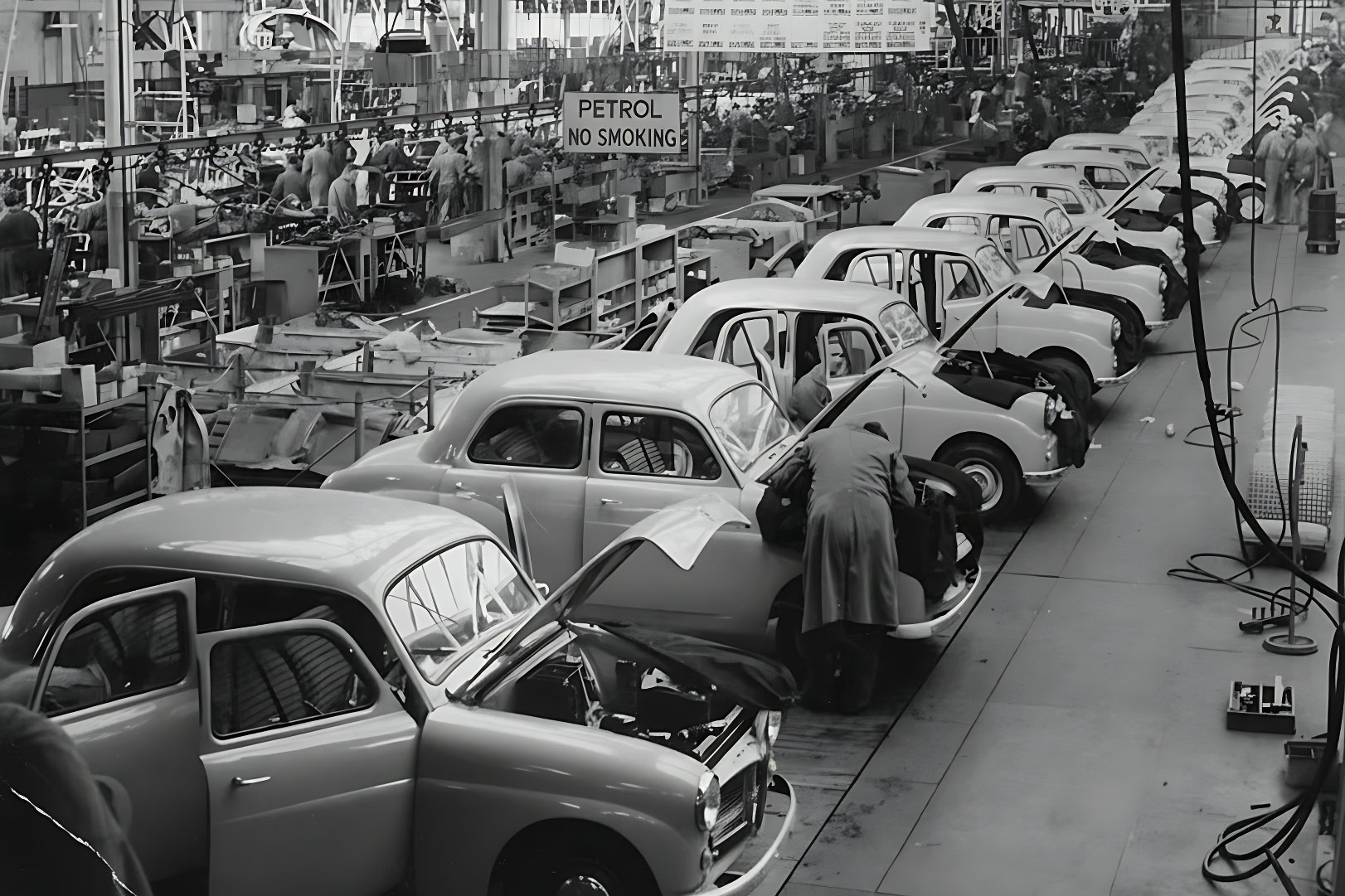
By the mid-1950s, Standard—like most of the industry—had embraced unitary construction. On paper, it was the future: lighter, stronger, cheaper once fully amortized. In practice, it came with a catch. Unibody cars were difficult to adapt, expensive to tool, and poorly suited to the one requirement Standard could not escape—global production.
The Herald would need to be built far from Coventry, assembled from CKD kits in markets with limited resources and uneven expertise. And here, recent experience offered little comfort. The TR2 and TR3 had already revealed the limits of overseas plants: small facilities, minimal tooling, little margin for complexity. Asking them to assemble modern monocoque bodies had proved optimistic at best.
The contradiction was unavoidable. A car designed to be inexpensive and built worldwide could not also be structurally elaborate.
There was, however, an alternative.
By 1956, Standard’s greatest strength wasn’t capital or capacity—it was people. The old guard had stepped aside, replaced by a younger management team that valued speed over ceremony and solutions over precedent. Harry Webster had taken over as technical director, finally breaking free from ideas anchored too firmly in the past. Martin Tustin and George Turnbull had assumed responsibility for operations and production. Decisions were made quickly. Disagreements resolved decisively.
At the center stood Alick Dick—the golden boy. Sharp, impatient, and increasingly aware that one crucial voice was missing.
Walter Belgrove, the stylist behind many of Triumph and Standard’s most successful designs, had left the company the previous year after repeated clashes with Ted Grinham. His successor, Arthur Ballard, was a capable engineer—but no stylist. The company had lost its eye.
Faced with an unreliable body supply and the growing urgency of CKD production, Dick and his team reached a conclusion that would have seemed heretical only a few years earlier. They would go backward in order to move forward.
Back to a separate chassis.
🔗 Read more: The Story of Carrozzeria Vignale
It wasn’t sentimentality. It was logic. A body-on-frame design would simplify overseas assembly, reduce tooling demands, and—most importantly—allow multiple body styles to grow from a single mechanical core. Saloon, coupé, convertible, estate. The flexibility the project demanded was suddenly achievable.
The board approved the plan. More than that, it extended the philosophy to another major program already underway: the third-series Vanguard. Any risk of appearing regressive would be offset with modern engineering—independent suspension at all four corners, rack-and-pinion steering. It would not feel like the past, even if it borrowed one of its ideas.
Every project needs a name. This one received a curious, almost playful codename: Zobo —a mythical Tibetan hybrid, half zebu, half yak. Hardy. Adaptable. Built for difficult terrain.
The metaphor was fitting.
Because while the engine and gearbox could be borrowed from the Standard 10, nearly everything else would have to be created from scratch. A new chassis. Entirely new suspension layouts. And a body that needed to look contemporary, confident—desirable.
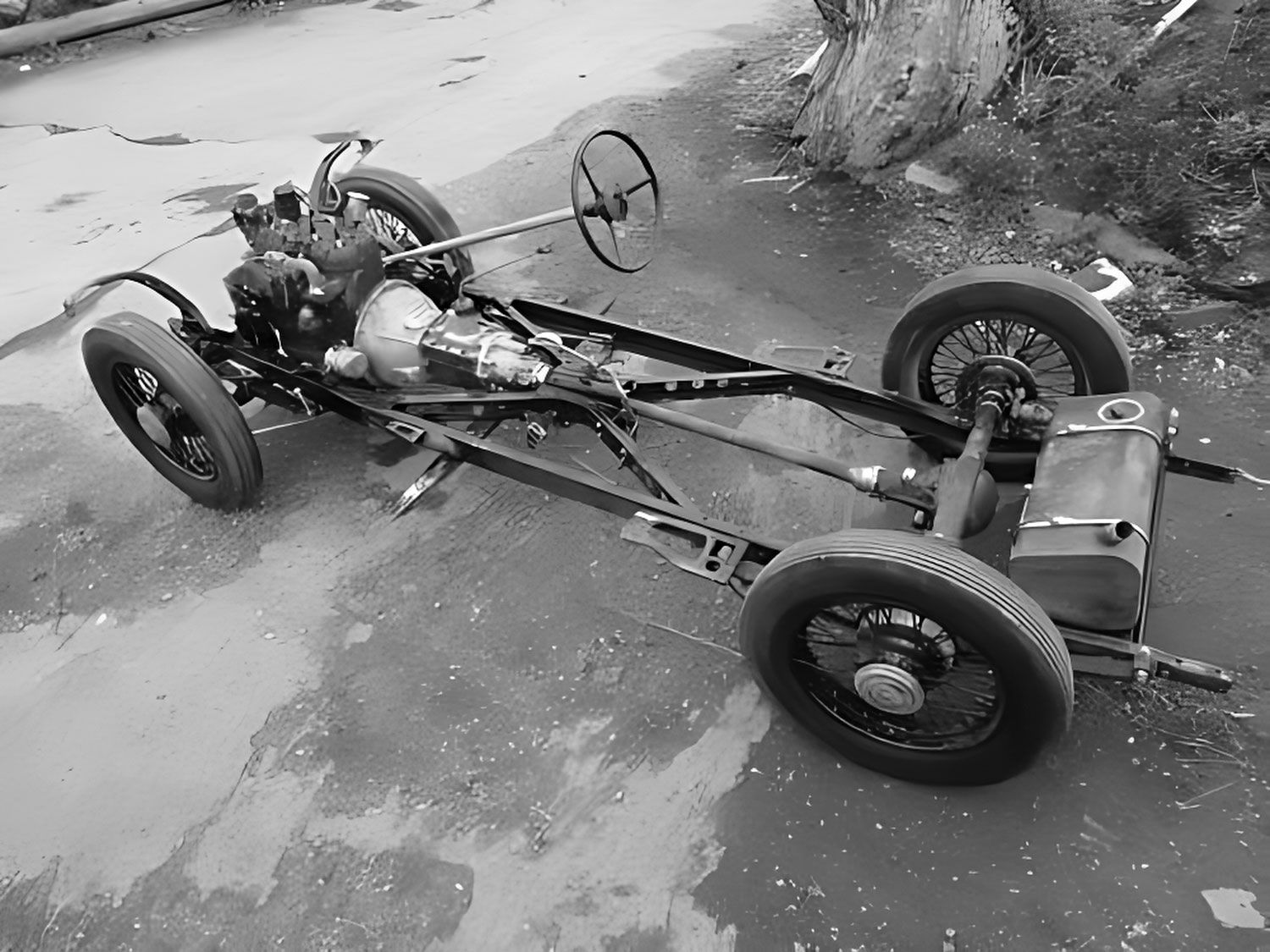
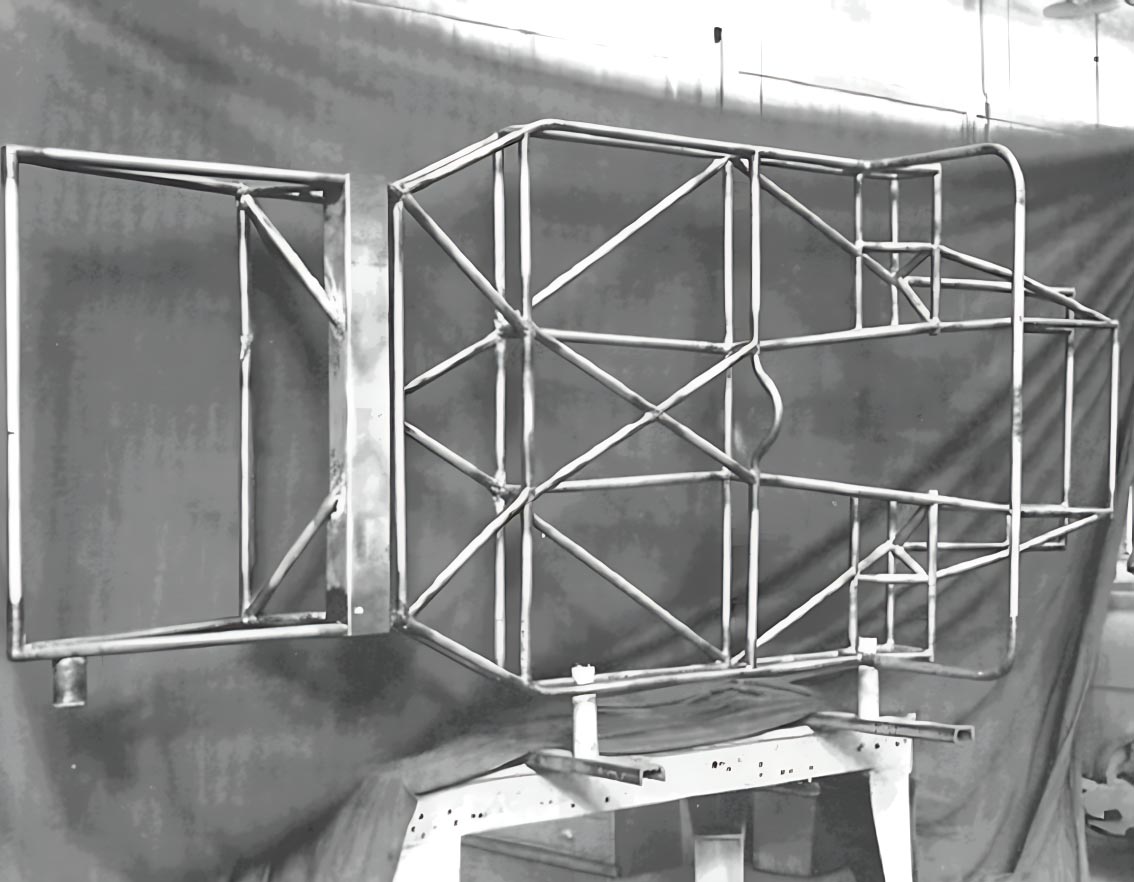
Early chassis concepts explored tubular construction, but reality intervened quickly. Too complex. Too expensive. Instead, the team turned to pressed steel sections—simple, strong, repeatable. The front structure underwent constant revision until a breakthrough emerged: the suspension towers would not be welded into the frame, but built as separate units, bolted on instead.
It was a small decision with outsized consequences.
Flexibility. Serviceability. And a car that could evolve without being redesigned from the ground up.
The Herald was no longer just a proposal.
It was becoming a system. And systems, when they are conceived properly, tend to endure.
The Shape That Wasn’t There
The evolution of the bodywork followed a very different—and far more troubled—path.
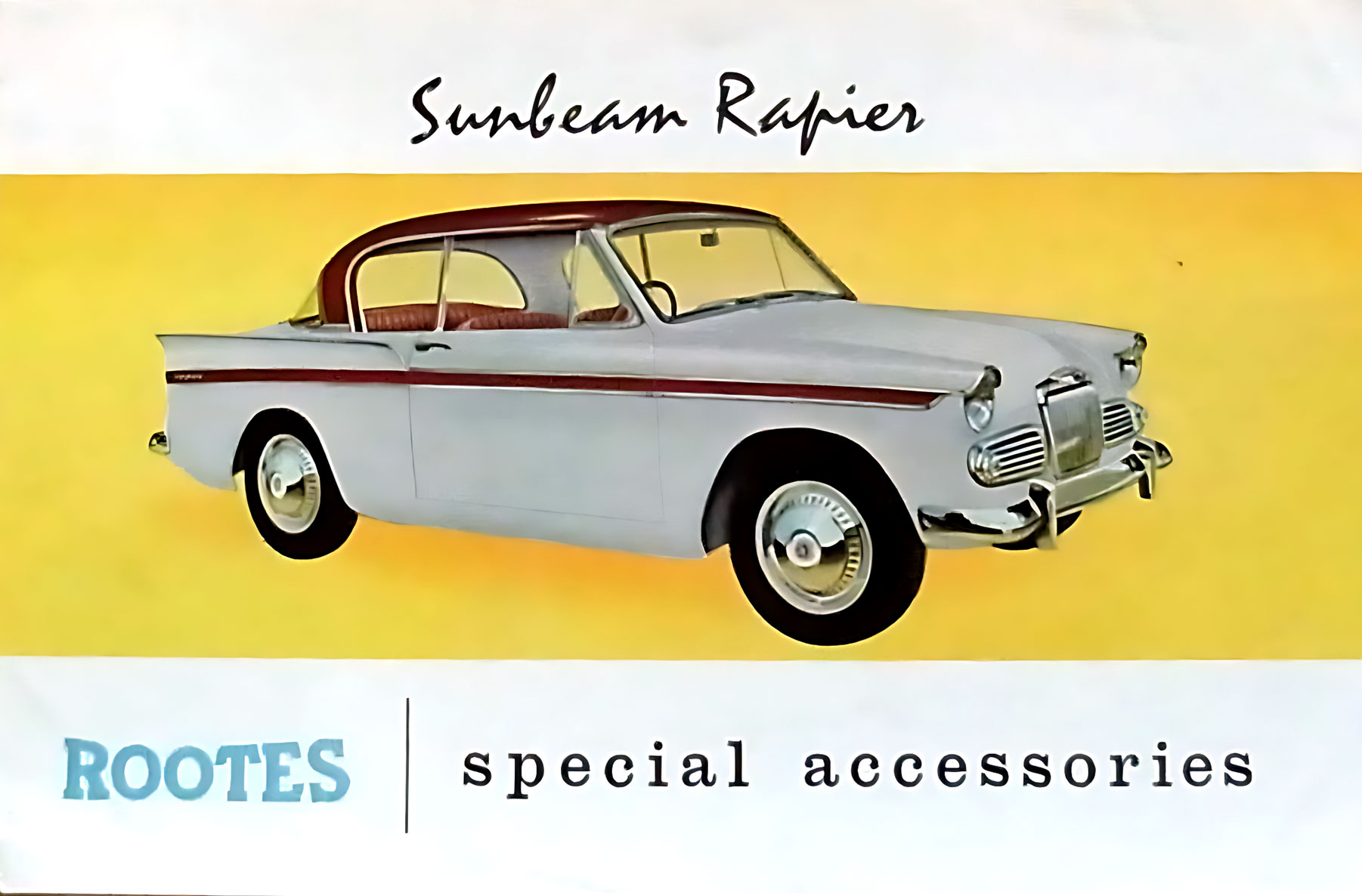
The brief called for a simple two-door car, and the proposal produced by Arthur Ballard’s group landed like a cold splash of water. It was instantly recognizable for all the wrong reasons. Too close to the Hillman Minx. Too close to the Sunbeam Rapier. Worse still, it had no voice of its own. No presence. No charm. It wasn’t offensive—it was forgettable. And that, for a car meant to replace the Eight and Ten, was fatal.
The realization came quickly and uncomfortably: Standard no longer had a true stylist. Belgrove was gone. Ballard was an engineer, not a sculptor. And without a compelling shape, all the clever thinking underneath—the chassis, the modularity, the overseas strategy—risked collapsing into irrelevance.
What the project needed now was not refinement, but rescue.
The Knock That Changed Triumph
The rescue arrived without warning.
Raymond Flower came to Standard not with answers, but with a request. He was looking for mechanical components—engines, running gear—for a small, inexpensive car he was developing under the Meadows Frisky name. On the surface, it was an unremarkable inquiry. But Flower himself was anything but ordinary.
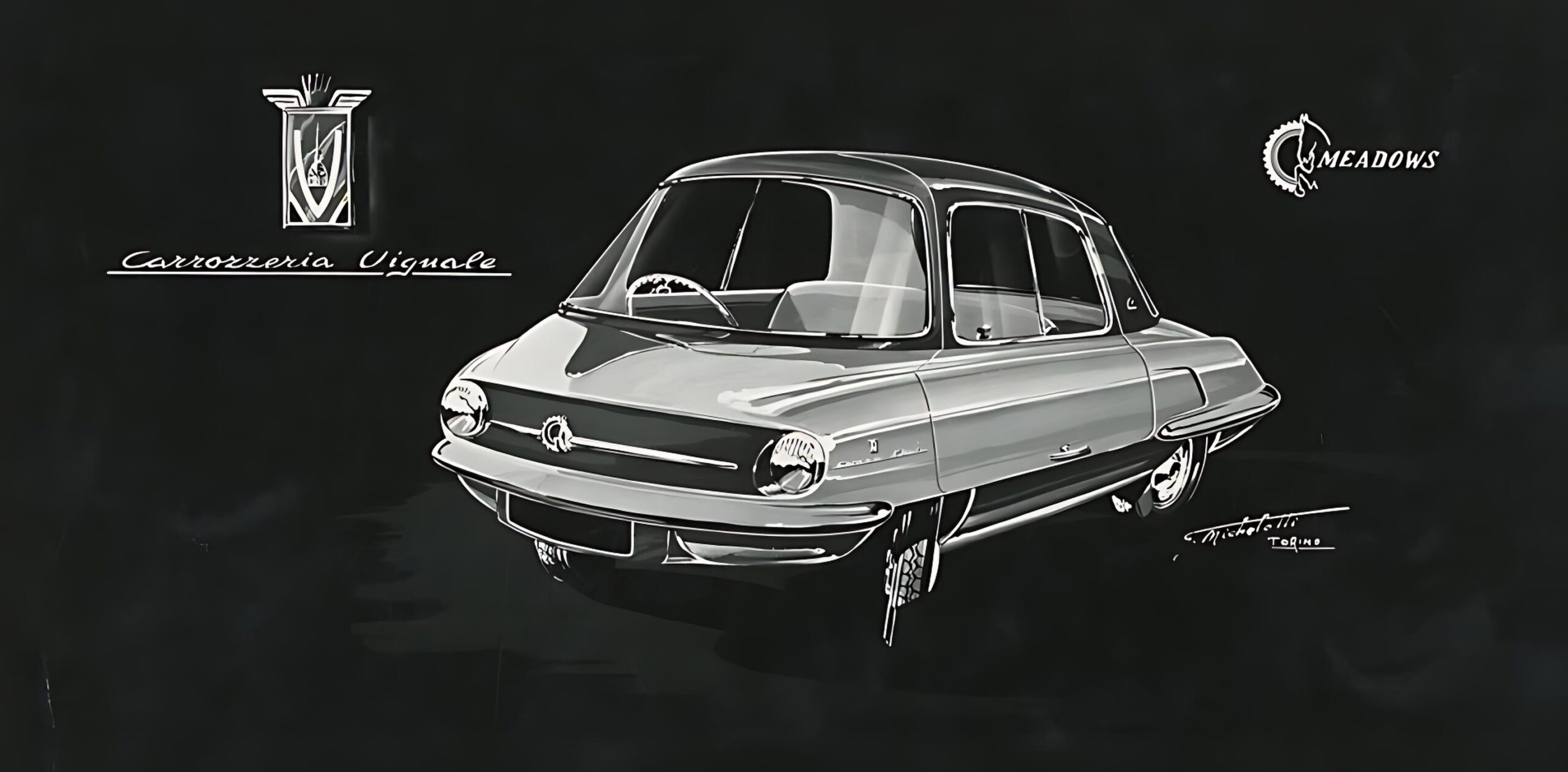
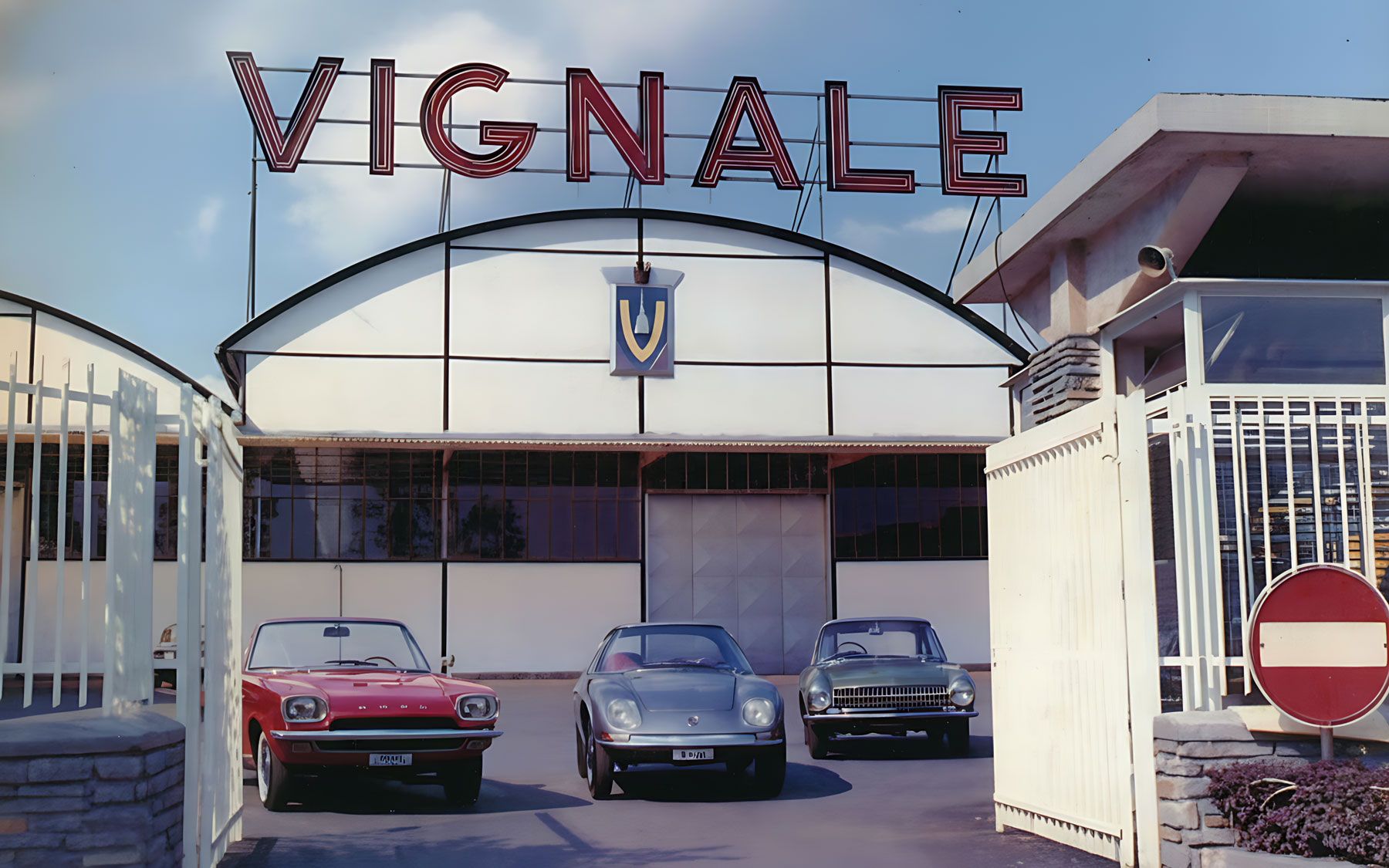
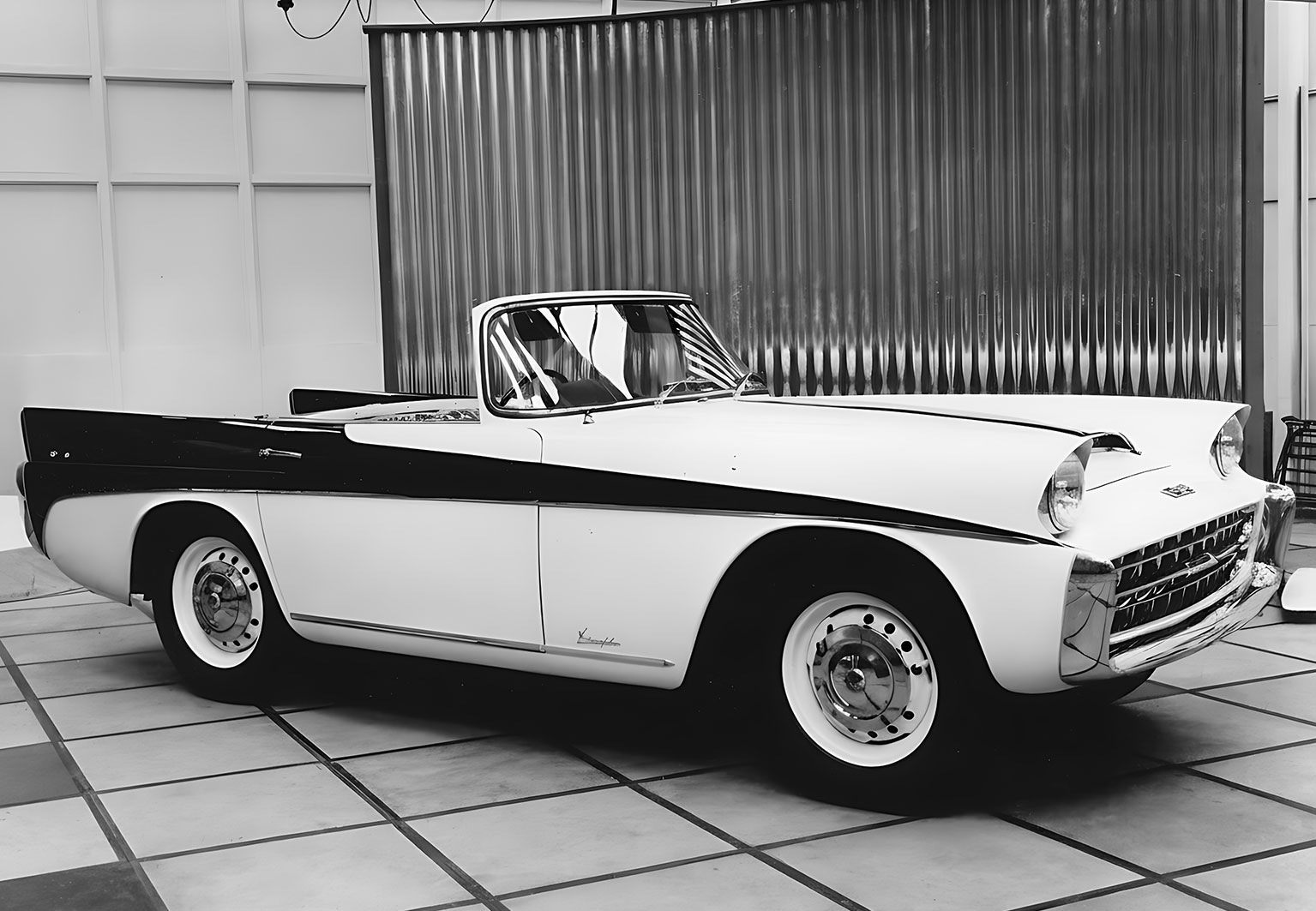
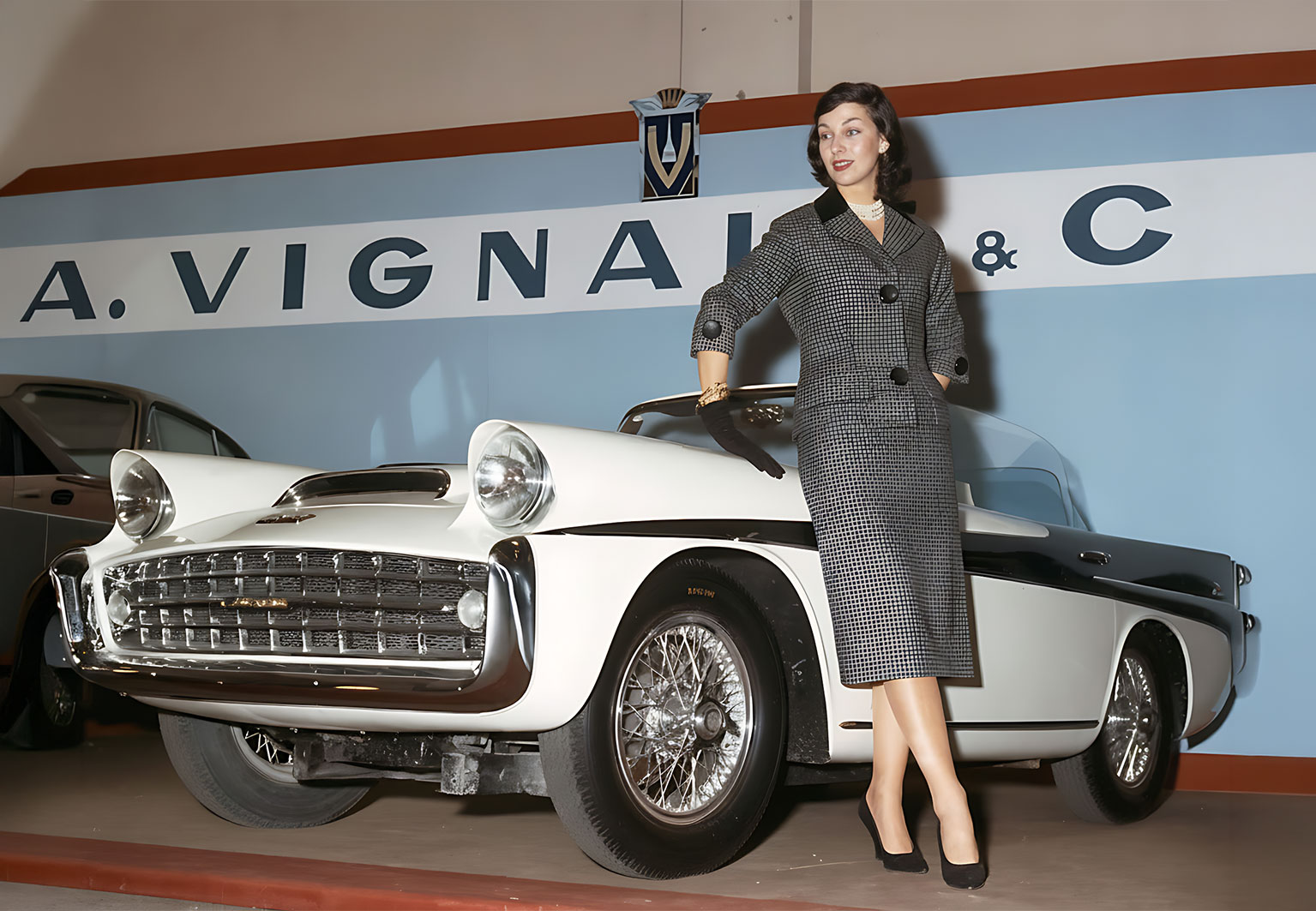
His family had been importing British cars into Egypt since 1908 through the Cairo Motor Company, and Flower was well known in Coventry as a cultured, thoughtful figure with deep roots in the trade. He had even attempted automobile production himself in Egypt, under the Phoenix name, before the Suez Crisis abruptly ended the venture. Back in England, he joined forces with Henry Meadows to pursue the Frisky project — a small, post-austerity car designed by Giovanni Michelotti and built by Carrozzeria Vignale, drawing on a collaboration that was already well established by 1956.
Courtesy alone warranted a meeting. Alick Dick asked Martin Tustin and Harry Webster to hear him out.
Webster would later recall that they knew almost nothing about Flower’s project when he walked in. Naturally, they asked the obvious question: what were the components for?
“A small car,” Flower replied.
“And what will it look like?” Webster asked.
Flower hesitated. He didn’t know yet. But that, he insisted, wasn’t a problem. He could have a prototype ready in three months.
Webster didn’t quite believe him. Not fully. But the confidence lingered—and sparked an idea.
“If you can produce a prototype that quickly,” Webster said, “we’ll pay for it.”
Flower revealed nothing in response. He didn’t name a designer. He didn’t say where the car would be built. He simply listened. Before leaving, Webster added one condition: the car should be sporting. Triumph, after all, was in the middle of reworking the TR3.
Ten days later, Flower returned to Coventry—this time with sketches.
He spread them out and asked Webster and Tustin to choose the one they preferred. The promise remained the same: a prototype in three months. When he left, he carried a £3,000 contract with him.
Quietly, a TR3 chassis was pulled from the production line and handed over.
Only later would Standard discover what it had really agreed to. The identity Flower had kept to himself. The hand behind the drawings.
His name was Giovanni Michelotti.
And almost without realizing it, Standard had opened the door to the man who would define not just the Herald—but the future shape of Triumph itself.
One Night in Turin
When the prototype finally arrived, Harry Webster noticed one detail immediately. Along the flank sat a small badge from the coachbuilder: Vignale, Torino. It explained where the car had been built—but not who had drawn it. That omission was deliberate. Giovanni Michelotti worked for nearly everyone, and he preferred to remain invisible, letting proportion and line speak in his place.
Still, it was obvious to everyone in the room that this car had not been shaped by chance.
For Triumph, the moment of clarity came not in Coventry, but in Geneva—and not in an office, but on the floor of the Motor Show. Michelotti was already known for two things: speed and certainty. He drew quickly, decisively, with the calm assurance of someone who could see a finished car long before pencil touched paper. Alick Dick had heard the stories. So he tested them.
🔗 Read more: Giovanni Michelotti: Automotive Maestro
Dick approached Michelotti with an offer that was half joke, half provocation: if Michelotti could deliver a redesign of the Vanguard by the following morning, there would be a magnum of champagne waiting. Michelotti didn’t argue. He didn’t negotiate. He returned to his hotel, opened his sketchbook, and drew. Not one proposal, but three. Ninety minutes later, the work was finished. He slept.
The next morning, Dick was handed the drawings. He studied them in silence, then paid his debt—first with champagne, and shortly afterward with a contract.
That quiet exchange at the Geneva Motor Show marked a turning point. Standard signed an exclusivity agreement with Michelotti for the United Kingdom, securing one of the most gifted designers in Europe. Almost without realizing it, Triumph had found its stylist.
The timing mattered. The Zobo project—scheduled for launch in 1958—was already slipping behind schedule. But now, with Michelotti on board, optimism returned. For the first time since Belgrove’s departure, Standard felt it had regained its eye.
🔗 Read more: Giovanni Michelotti and BMW: The Italian Designer Who Saved a Bavarian Brand
Michelotti was immediately asked to intervene on Zobo, to refine and correct the work already done. Expectations were high. Perhaps unrealistically so.
Because even genius has limits.
Michelotti studied the existing proposal carefully. He adjusted lines. Reworked proportions. Tried to inject life into a form that had never quite found its own logic. But the foundation was wrong. And correcting a fundamentally flawed design, he knew, was far harder than starting fresh.
In the end, there was no elegant rescue. Only a hard truth.
The car would have to be redesigned.
And for a company already racing the calendar, that realization carried consequences—delays, risk, and the uncomfortable knowledge that the Herald’s future now depended entirely on one man’s ability to begin again, under pressure, with the clock already running.
The weeks passed, and nothing moved.
Pressure from Coventry mounted steadily, turning sharp on August 12th when management demanded to see the final drawings by the 20th. It was an impossible request, and everyone in the room knew it. There were no drawings to show. No answers to give. Only the growing sense that time was being lost faster than it could be recovered.
After the meeting, Harry Webster did what people do when they’ve reached the edge of useful thinking. He left. With the factory closed for the summer break, he took his family south to Sorrento, hoping that distance—and the promise of two quiet weeks—might bring some clarity. It didn’t. The problem followed him. It sat in the back of his mind, unresolved, insistent.
On the drive back to England, Webster made a decision. He would stop in Turin.
He arrived in Corso Francia around three in the afternoon and parked his Vanguard beneath Michelotti’s studio. He told his wife Peggy and their daughter he’d only be a few minutes—just a quick visit, a last attempt to see if anything had changed. Then he went upstairs.
From that moment on, the Webster family would be left waiting in the street for nine hours.
What happened next sounds like a legend. But it isn’t.
Webster later recalled the scene with complete clarity. There was nothing ready. No sketches. No progress. The room felt stalled, heavy. He remembers feeling entirely without hope. And so, almost in resignation, he said something close to this:
“We’re wasting our time. But suppose—just suppose—you could start again. Here. Now. On a clean sheet of paper. What would you do?”
For Michelotti, it was like showing a red cloth to a bull.
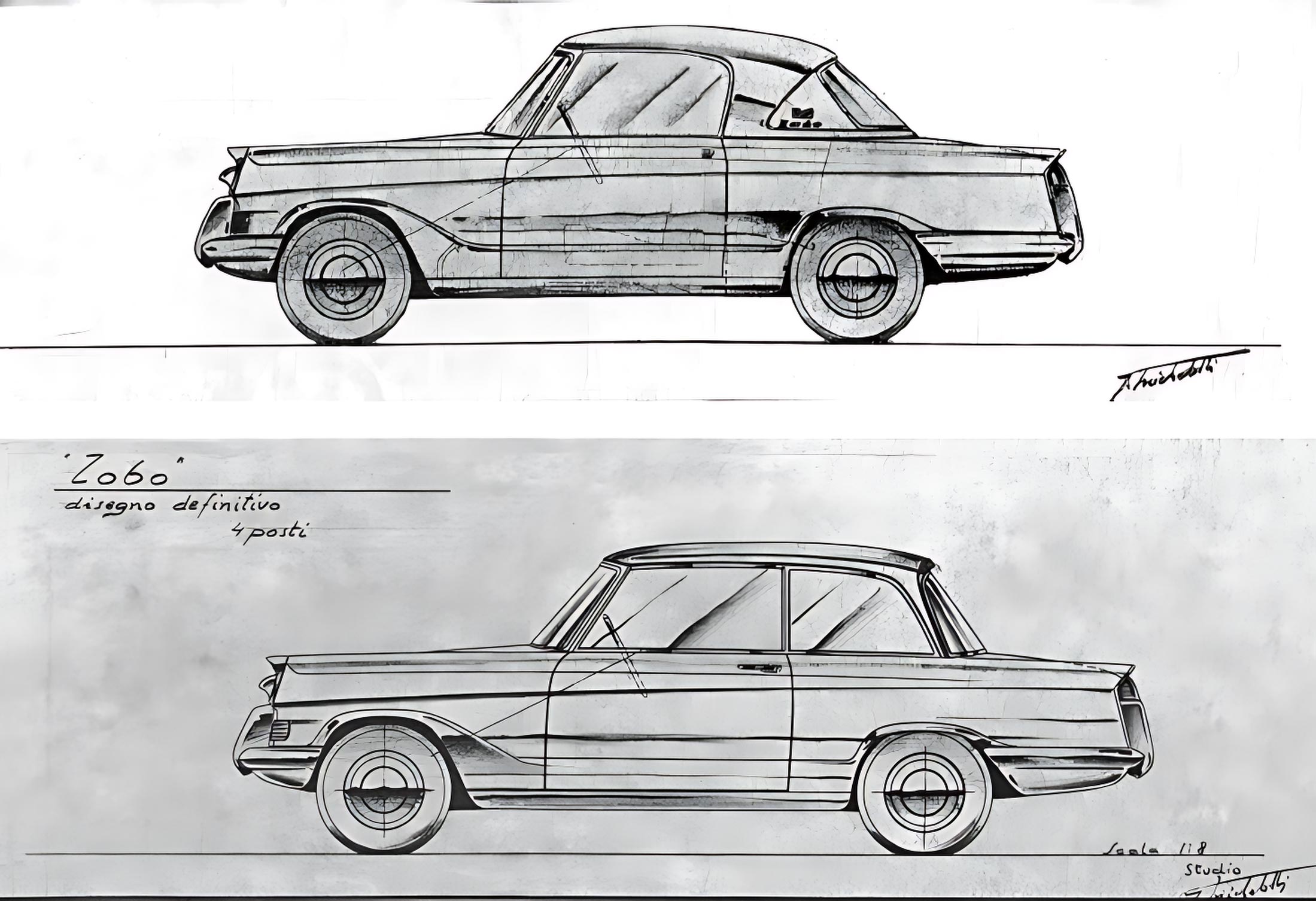
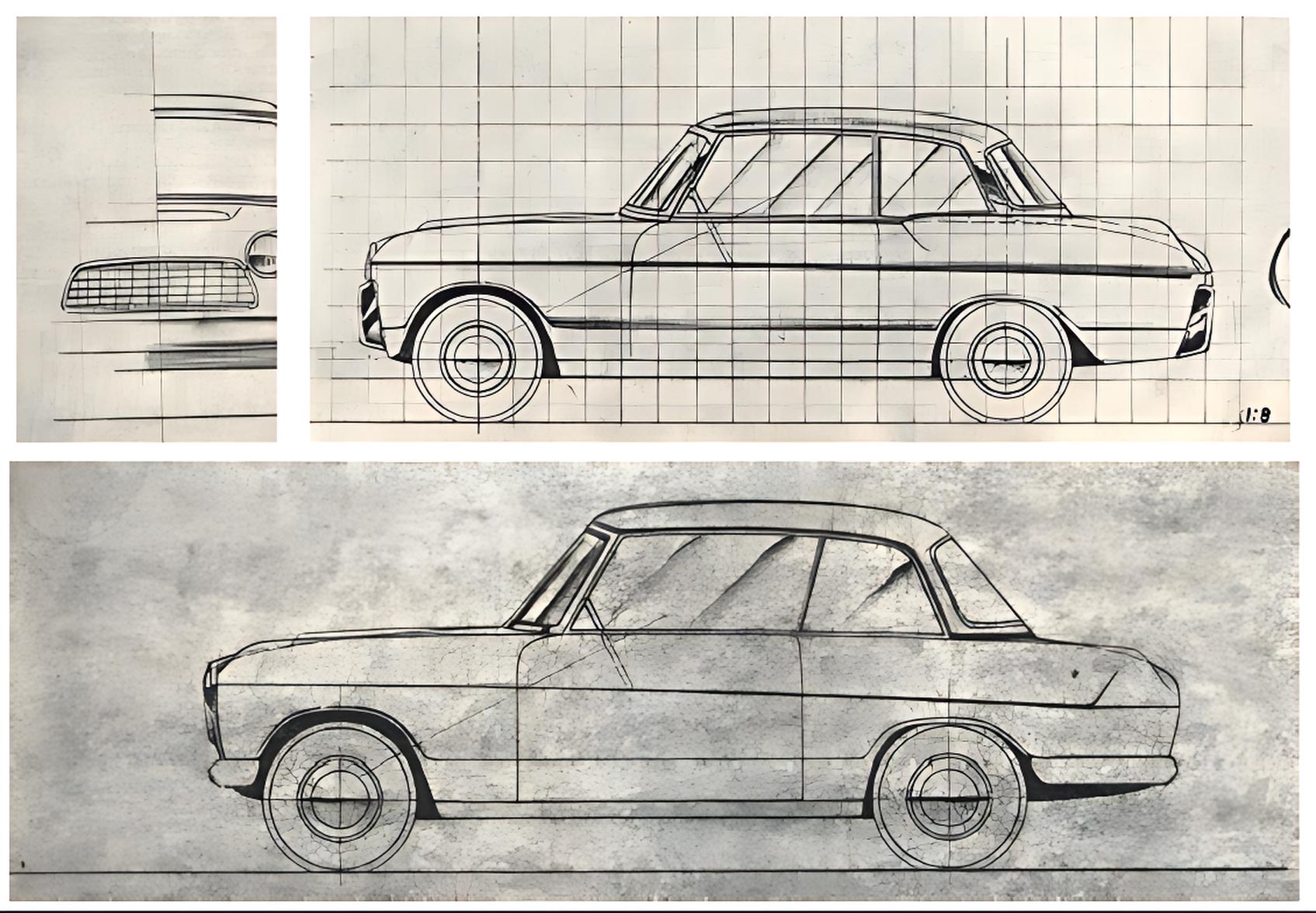
In three or four minutes—minutes, not hours—he sketched the Herald. The coupé. The car exactly as we would come to know it. Not tentative lines. Not suggestions. A finished idea, fully formed. Immediately, they began working to bring it into scale, translating instinct into dimensions, proportion into structure.
Time disappeared. Evening arrived unnoticed. The city outside dimmed. When Michelotti finally stepped away from the table, it was nearly midnight.
Only then did Webster remember.
He hurried back downstairs and out into the street, where he found Peggy and their daughter curled together inside the Vanguard, asleep. They had been waiting all that time. There was no anger. Just relief.
Up above them, eleven floors high, a small car had finally found its shape.
And with it, Triumph had found its future.
Proving It on the Road
While Webster and his family searched for a hotel, Michelotti went back upstairs and did what deadlines always forced him to do.
He worked through the night.
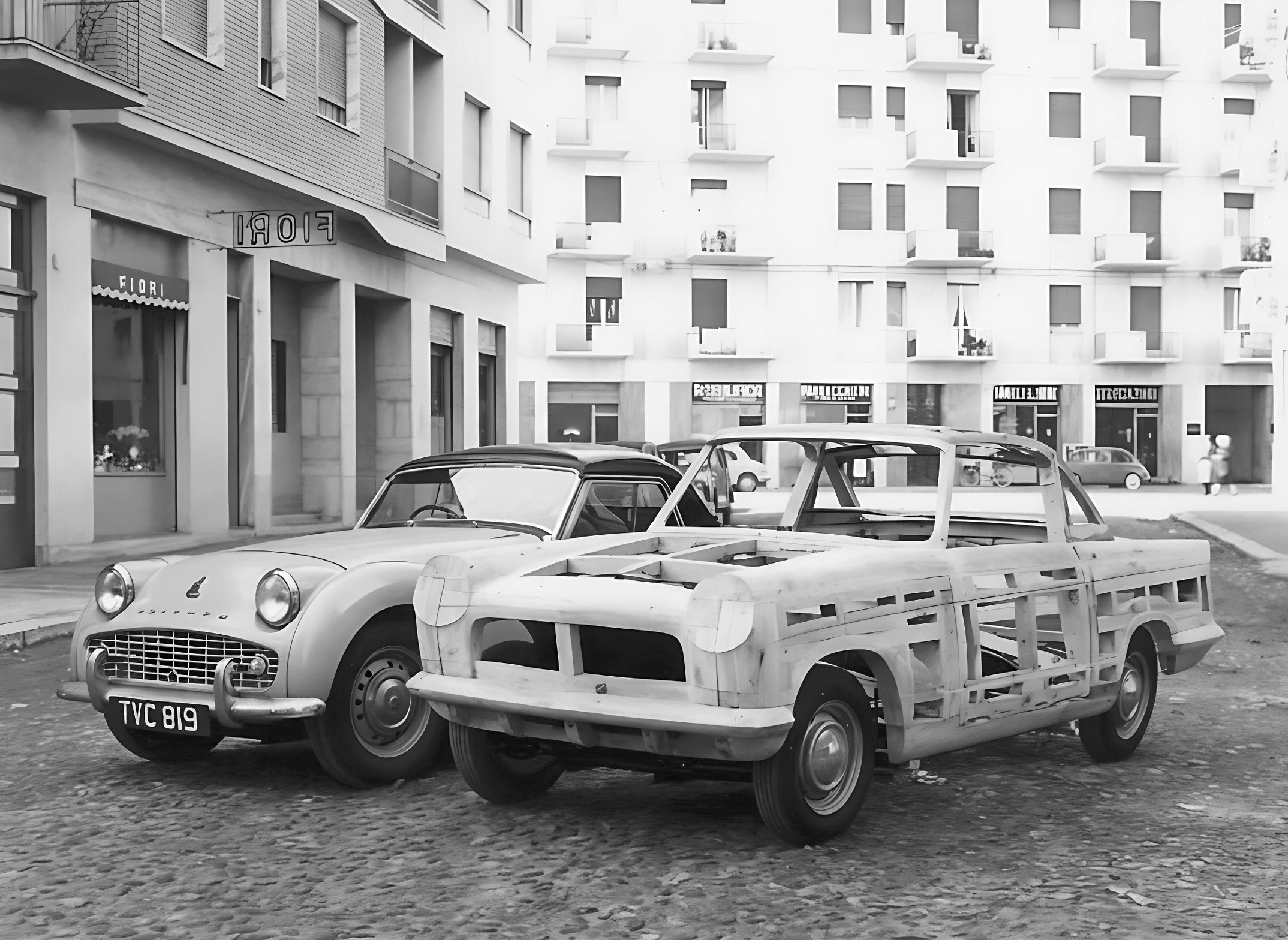
By morning, the Herald no longer existed as a single solution but as a system. Saloon, coupé, convertible, estate — each sketched with the same logic, the same clarity, as though they had always belonged together. Nothing felt tentative. Nothing looked improvised.
Webster left Turin the following day with copies of the drawings carefully packed beside him. Before crossing the Alps, he sent a telegram to Alick Dick — short, urgent, unmistakably hopeful. Michelotti added a promise of his own: if approval came immediately, the first prototype would reach Coventry before the year was out.
🔗 Read more: This is how Michelotti influenced American fashion trends: The Lilly Ann Ferrari
Back in England, development moved on two fronts. While Michelotti refined bodies in Turin, engineers at Alford & Alder pushed ahead with the chassis—front suspension, steering, brakes, hubs. One idea, casually voiced during a meeting at Dick’s home in Hill Wootton, would prove decisive. Martin Tustin, almost apologetically, posed a question that didn’t sound like engineering at all.
“Wouldn’t it be wonderful if the Zobo could turn like a London taxi?”
It wasn’t simple. Not remotely. But it was so unexpected—and so right—that it was approved on the spot. The resulting steering geometry proved so effective it would later find its way into several British racing cars. A reminder that innovation doesn’t always arrive via calculations; sometimes it begins as an offhand sentence spoken aloud.
As Christmas approached, confidence in Michelotti’s promise held—but tension thickened. Deadlines do that. Then, on Christmas Eve, a truck with Italian plates appeared at the gates of Banner Lane.
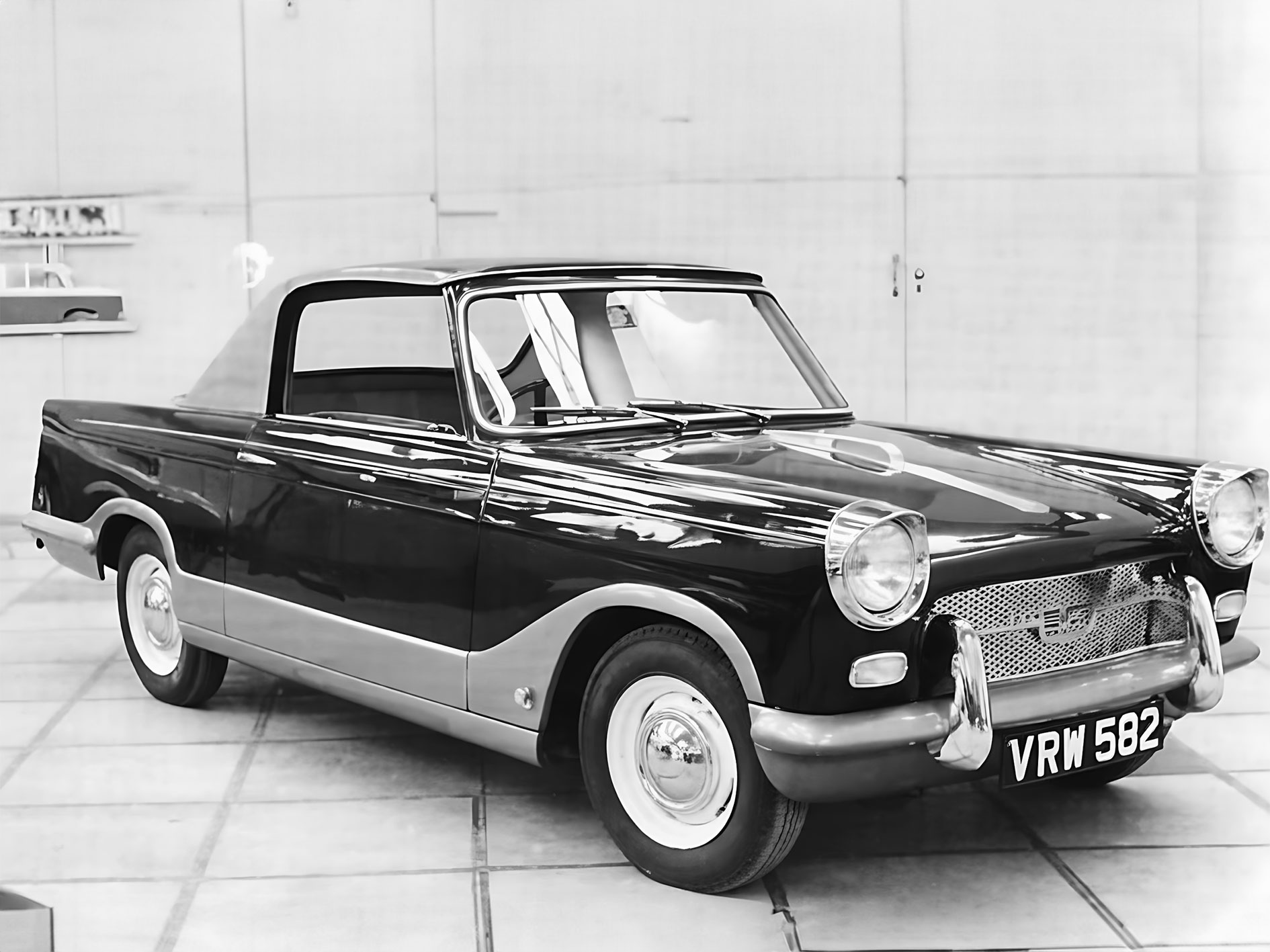
Beneath a plain grey tarp sat the Herald prototype.
It was unloaded immediately and placed on the rotating platform in the designers’ studio. Minutes later, Alick Dick arrived with members of the board. Weeks of pressure evaporated the instant they saw it — finished in black and silver, balanced, assured, unmistakably right.
No debate followed. The verdict was unanimous.
The coupé was superb.
Celebration came quickly. A pint was suggested. No one disagreed. The Zobo project was still late, but for the first time in months the future no longer felt fragile. The Herald had arrived — and with it, the sense that Standard was back on its feet.
From that moment on, everything accelerated.
Engineering the body revealed another layer of Michelotti’s foresight. The one-piece front end wasn’t a stylistic flourish but a production strategy. The car would be assembled from relatively small steel pressings, welded or bolted together, rather than large, complex panels. That choice mattered. It meant work could be distributed to smaller suppliers without massive presses. The Herald could be built almost anywhere. Exactly as Standard required.
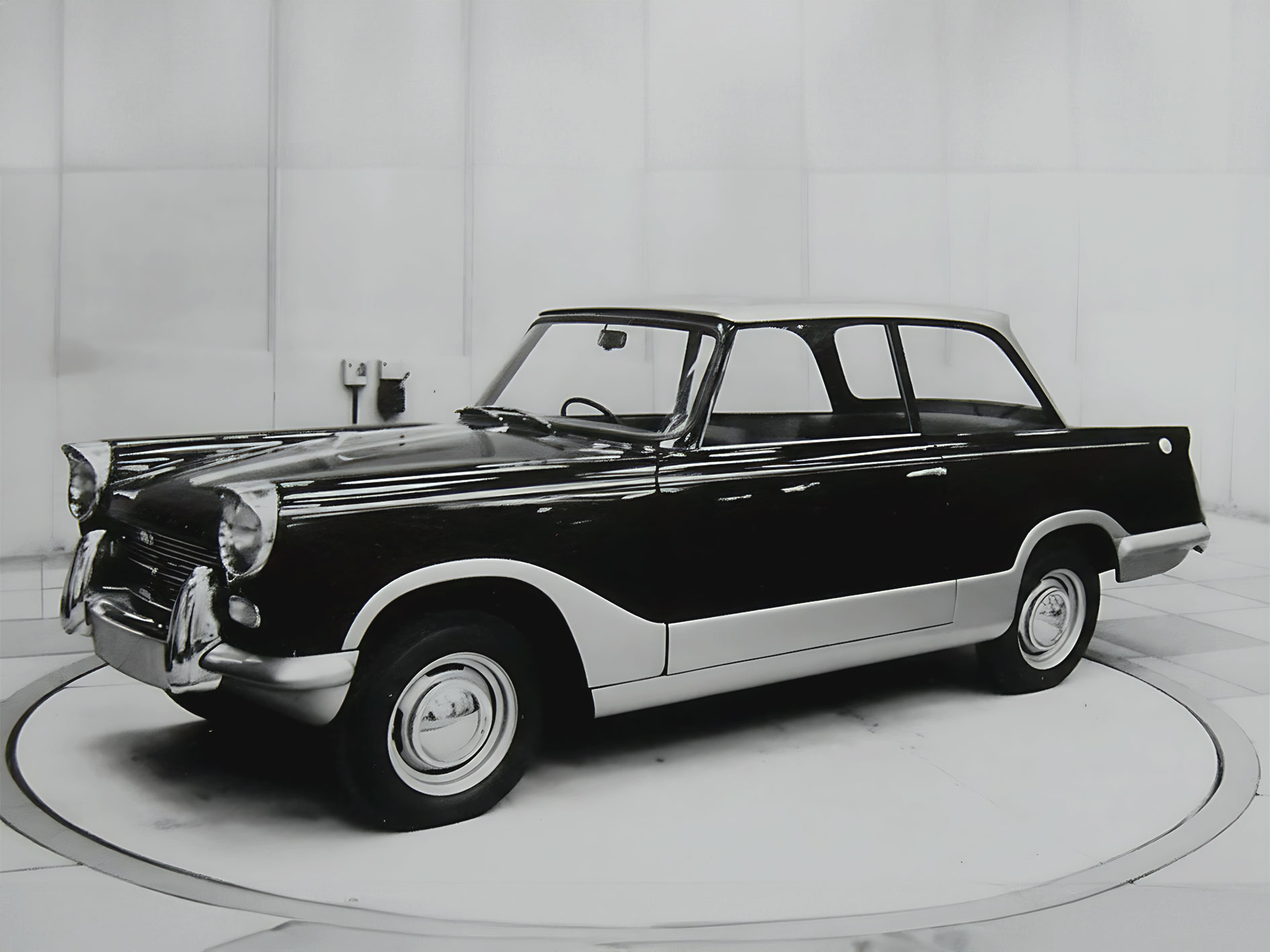
While Coventry dissected the first prototype, Michelotti was already moving forward. A saloon took shape in Turin. A second coupé — chassis X597 — was completed and sent directly to Spain for testing, away from winter roads and curious eyes.
With cars now running, development became relentless. In England, test drivers Ken Willett, Graham Stanley, and Ray Henderson drove through the night, covering two hundred miles at a time. By day, the cars were stripped, adjusted, and sent back out again. And the results were troubling.
The Herald showed sudden instability. Initial understeer would transition abruptly into violent oversteer, particularly during rapid direction changes or load shifts. Moments when a car reveals its true character.
Ken Willett was blunt. In his report, he called the behavior dangerous. Maurice Lowatt, one of the chassis engineers, later recalled how serious the concern became. Without modern instrumentation, diagnosis relied on observation and instinct. Two Pennant prototypes were modified with swing-axle rear suspension to gather more data.
Gradually, a theory emerged. Under lateral load transfer, the rear of the car was becoming too light. The wheels tipped into positive camber, shedding grip precisely when it was needed most.
🔗 Read more: The Car That Broke Through the Wall: The Maniero 4700 GT
To confirm it, Standard turned to Dunlop. Prototype VKV75 (chassis X611) was tested at Fort Dunlop in Castle Bromwich. The findings were conclusive. Instability coincided with positive rear camber—and it was worse on the saloon than on the coupé.
Solutions followed, carefully. A torsion bar was added at the front to limit roll. At the rear, multiple leaf-spring configurations were tested to maintain neutral or negative camber. Tire types and pressures were evaluated repeatedly, searching for a workable balance between safety, comfort, and economy.
Eventually, the Herald reached a condition that could reasonably be called safe.
And yet, hidden inside this process lies an unresolved mystery.
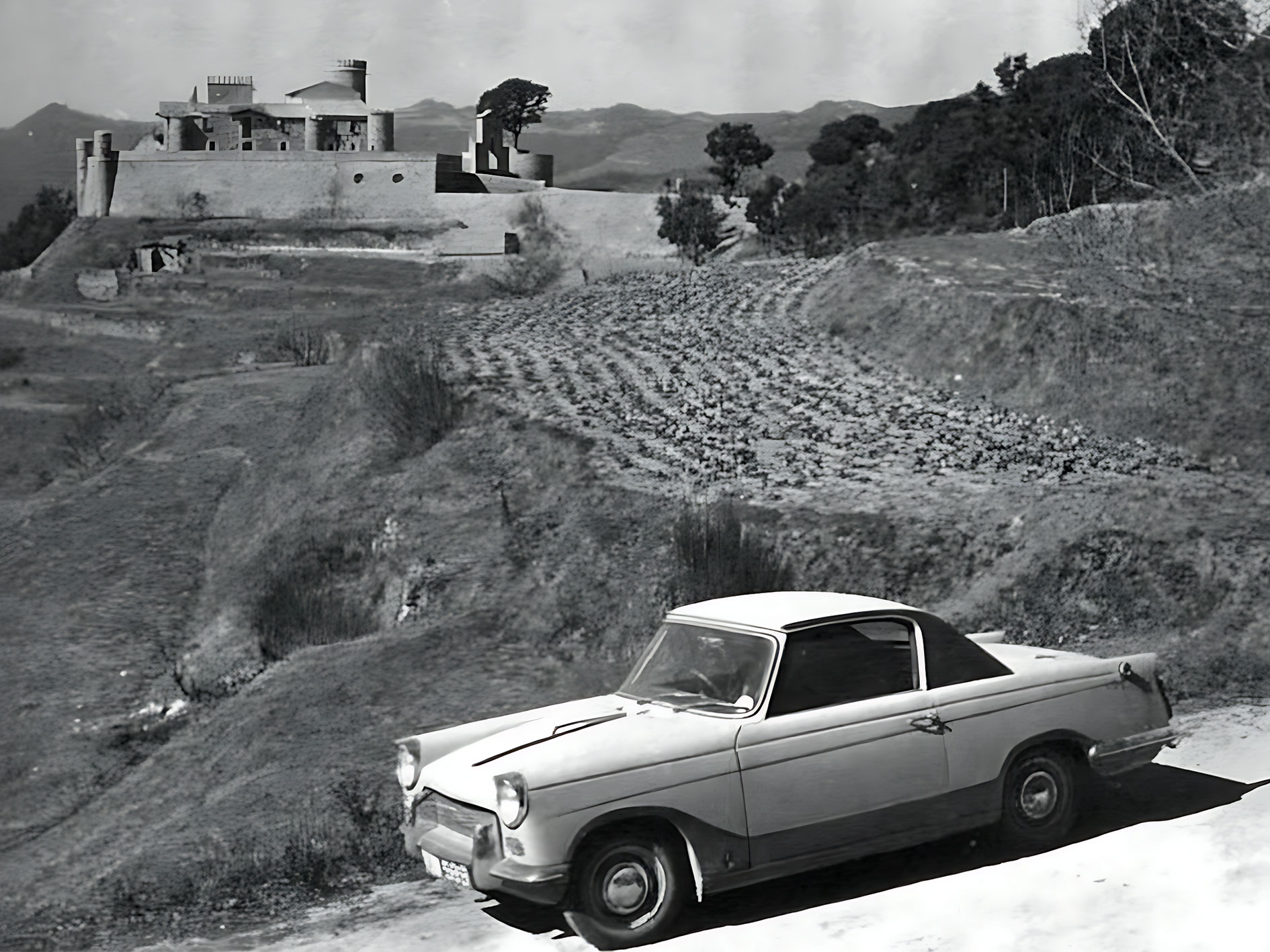
That same year, engineers discovered that allowing the rear leaf spring to float slightly—using a central pivot, the so-called swing spring—eliminated the instability entirely. The rear roll center stabilized. The behavior transformed. The solution worked.
Completely.
And yet it was not adopted.
Why it would take until 1970, with the arrival of the Spitfire Mk IV, for this fix to reach production remains unanswered. The knowledge existed. The proof was there. History, it seems, sometimes chooses patience over logic.
By 1958, another shift was underway. Alick Dick was determined that Standard would never again be hostage to body supply. The confrontation with BMC had changed the company’s posture. That July, Standard acquired Mulliners, bringing body production closer to home.
The irony came swiftly. By November, the future of Fisher & Ludlow’s Tile Hill plant—now without Standard’s orders—looked uncertain. Sir Leonard Lord had not anticipated the consequences. Without those contracts, the factory faced idleness and closure.
The balance of power had shifted.
And at the center of it all sat a small, elegant car — born in fog, sketched in minutes, tested through the night—that had already reshaped far more than anyone had planned.
Taking Control of the Future
Standard, for its part, recognized the moment for what it was: leverage.
What had begun as a threat now looked like an opening. With Fisher & Ludlow’s Tile Hill plant suddenly vulnerable, Standard saw an opportunity to secure exactly what the Herald required most — control over the complex body components that would define the car’s future. An offer was made to the British Motor Corporation. This time, the answer was yes.
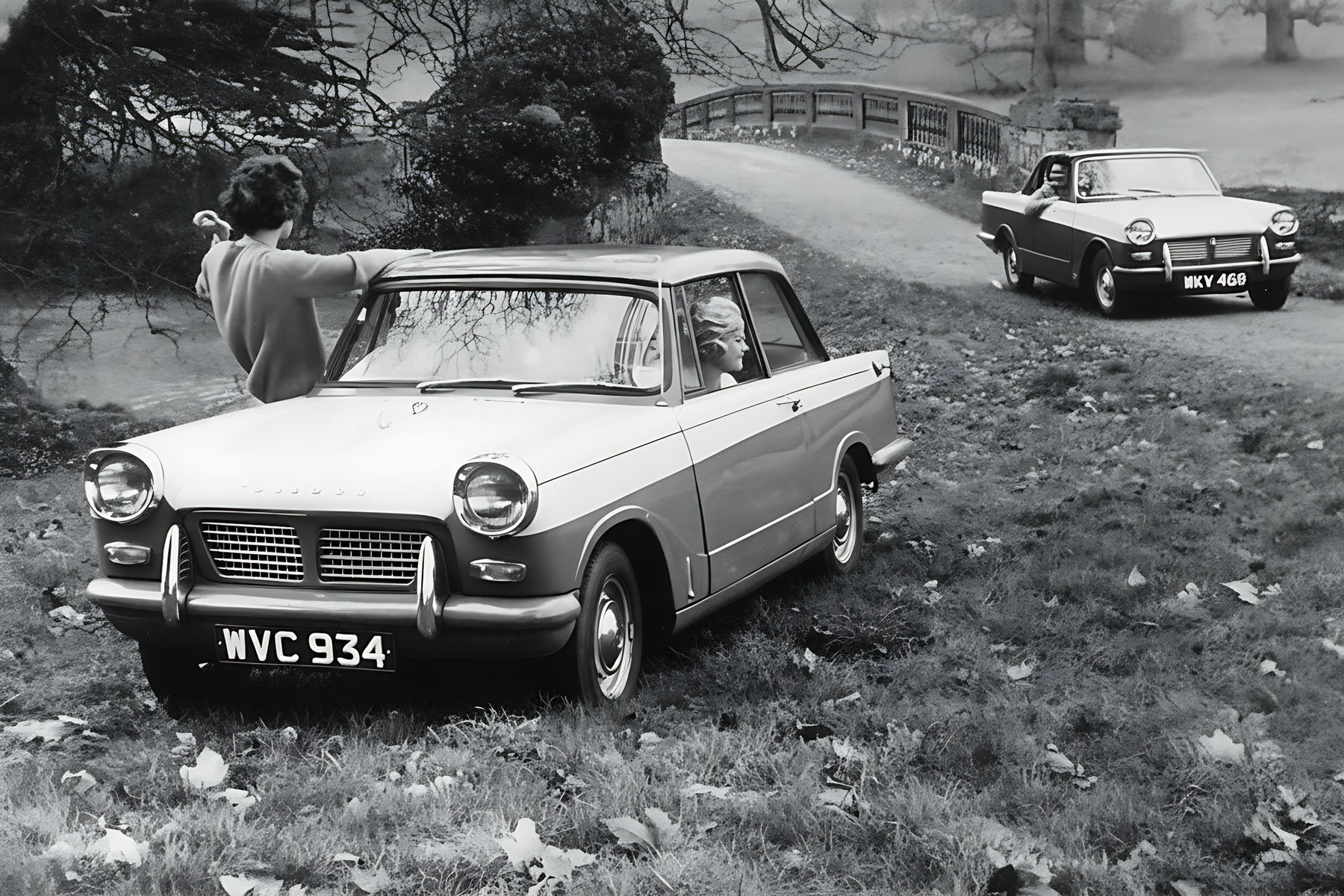
For £725,000, Tile Hill — its presses, tooling, and equipment — became Standard’s. The company that had been shut out only months earlier now owned the means to protect itself from ever being cornered again.
🔗 Read more: The Partnership Between Michelotti and Triumph
That autumn, another decision quietly reshaped the car’s destiny. The new model would not wear the Standard name. It would be a Triumph. The first proposed name was “Triumph Torch,” bold but fleeting. Soon after, a more fitting choice emerged: Herald. Perhaps inspired by Alick Dick’s boat, perhaps chosen to echo earlier names like Ensign and Pennant. Either way, it felt right. Confident. Forward-looking. Familiar without being old.
By January 1959, pre-series production of the coupé was underway, the tooling finally complete. A month later, the saloon line followed. In February, the cabriolet prototype arrived in Coventry, destined for production the following January. The estate and van variants would come later, in 1961, rounding out the modular promise conceived years earlier.
Everything was ready.
The Herald Arrives
On April 2, 1959, Standard unveiled the Herald privately to its sales network. The venue was telling: the Royal Albert Hall, hired for the occasion, filled with more than two thousand distributors, dealers, and suppliers. Alick Dick laid out the marketing strategy alongside Giovanni Michelotti himself. But words were quickly eclipsed by spectacle.
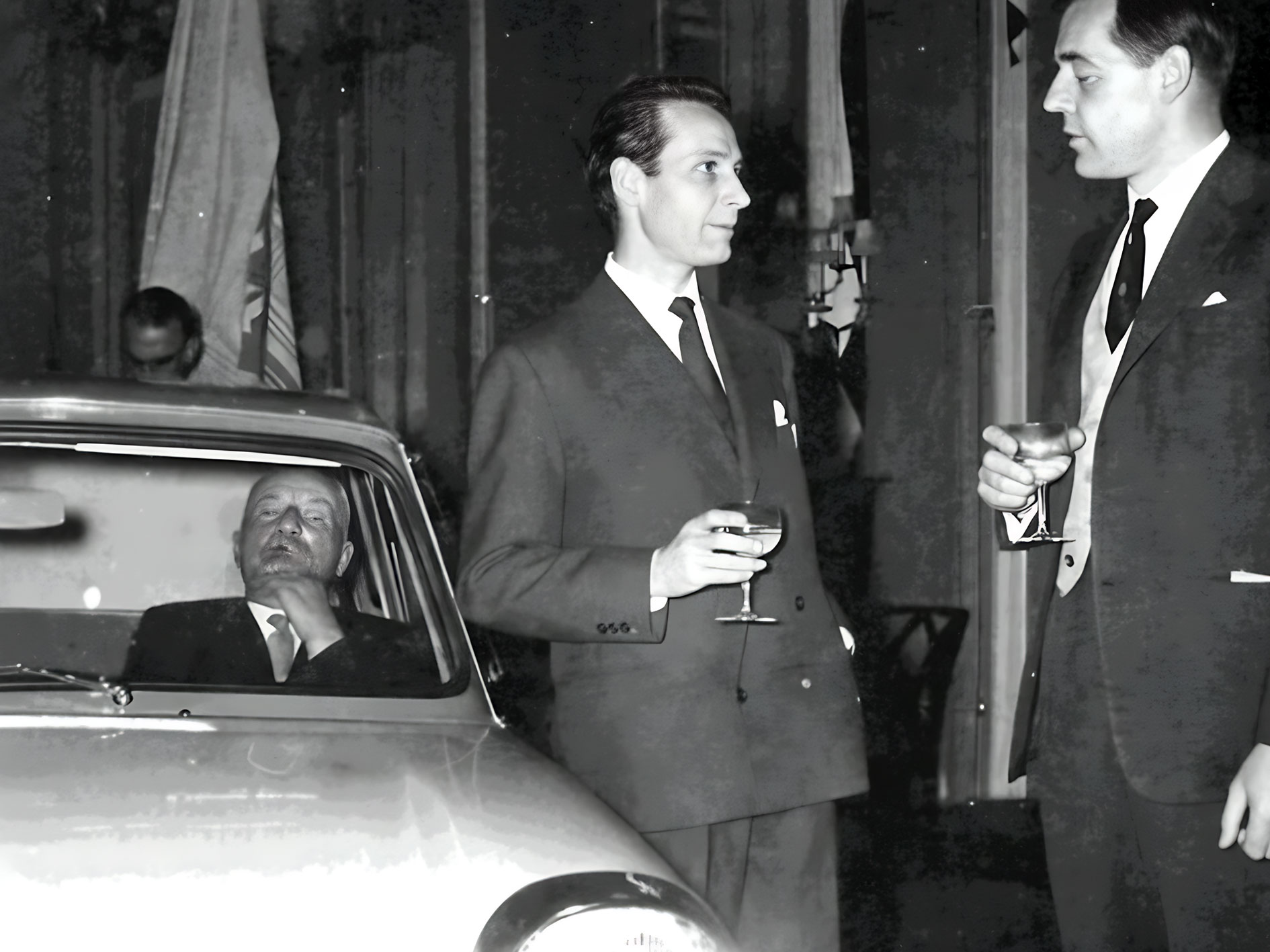
In front of the audience, a specially prepared Herald was assembled in just two minutes.
It wasn’t a trick. It was a demonstration. Proof of concept made theater. The crowd remembered that moment more vividly than any speech—and the stunt would be repeated at future presentations, a mechanical magic trick that captured exactly what the car stood for.
The official press launch followed on April 22. As tradition dictated, journalists were handed detailed folders outlining the Herald’s philosophy, complete with photographs and brochures. The message was clear: this was not just a new small car. It was a system. A strategy. A reset.
Produced from 1959 to 1971 in more than half a million examples, the Triumph Herald carried a quiet paradox at its core. By returning to a separate chassis—an idea many considered obsolete—it secured Triumph’s future at one of the most precarious moments in the company’s history.
Sometimes, progress doesn’t come from invention alone.
Sometimes, it comes from knowing exactly which past idea to bring back—and how to make it matter again.
Sources include material and research originally published on triumphinitaly.it

ABOUT THE AUTHOR
Andreas Scheidl
Italian classic car enthusiast with German roots. Renowned as a respected figure in the classic car community, he serves as a jury member at various international concours d'elegance, including the Classic Gala Schwetzingen and Mantova. As a content creator, Andreas passionately shares his profound knowledge and appreciation for vintage automobiles. His heart beats for cars designed by Giovanni Michelotti, showcasing his discerning taste and dedication to preserving the timeless elegance of automotive history.
More stories by Andreas Scheidl ↗CONTINUE READING
Posts You Might Like

A Central Driving Position, a Rear-Mounted V8. Was This Really a Lancia?
In 1948, visitors to the Turin Motor Show could see an unusual Lancia on the stand of Carrozzeria Ghia. It was a large two-door coupé with a two-litre V8 mounted behind the…
Read story
Fioravanti F100: The Ferrari He Was Allowed to Imagine
Enzo Ferrari’s centenary, Leonardo Fioravanti’s independent studio and a supercar that explored air brakes, steel wheels and a new way of driving—without ever wearing the Cavallino.
Read story
Michelotti Shellette: When the Fiat 850 Became a Yacht
The yacht designer, the Turin stylist and the tiny coachbuilt car that crossed between the quay, the royal holiday house and the auction room. Some automobiles were conceived for the open road,…
Read story
Maserati A6 1500: A New Road for the Trident
When the doors of the Geneva Motor Show opened in March 1947, Maserati was a name that required little introduction to anyone who followed motor racing. What it did not yet possess…
Read story
THE CONVERSATION
Comments 0
Share a memory, a period photograph or a documented detail about this story.