
The Car That Broke Through the Wall: The Maniero 4700 GT
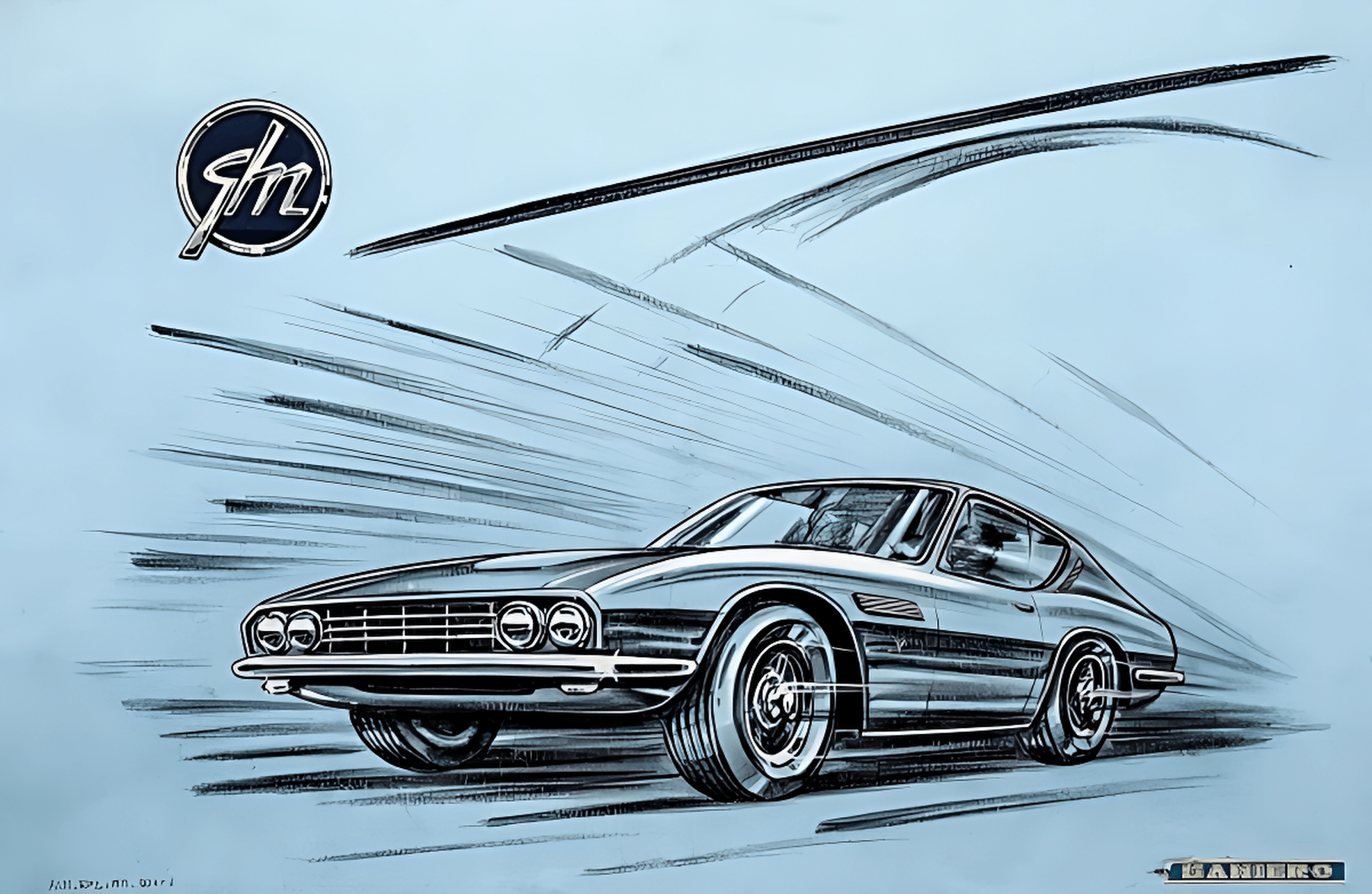
Somewhere beyond Padua—where the air smells faintly of hot steel and ambition—the name Maniero once meant progress with callused hands. Not progress as a boardroom concept, but the loud, oily, try-this-and-see-what-happens kind.
It starts, as these stories often do, with one stubborn man and a workshop. In the late 1800s, Guerino Maniero—self-taught, relentlessly curious, and apparently unimpressed by limits—set up shop in Conselve building farm machinery. Sensible stuff. Necessary stuff. But Guerino wasn’t wired for sensible. By the early 1900s, he’d already moved on to bending metal into ideas that didn’t yet have names.
Case in point: a single-cylinder motorcar of his own design that, legend has it, lined up against the Padua–Piazzola train and simply… left it behind. Not metaphorically. Actually. The kind of story that sounds exaggerated until you realize the man was also patenting a “bi-frame” bicycle—one that could convert from a men’s frame to a women’s by removing the top tube. Overengineering? Absolutely. Genius? Undeniably.
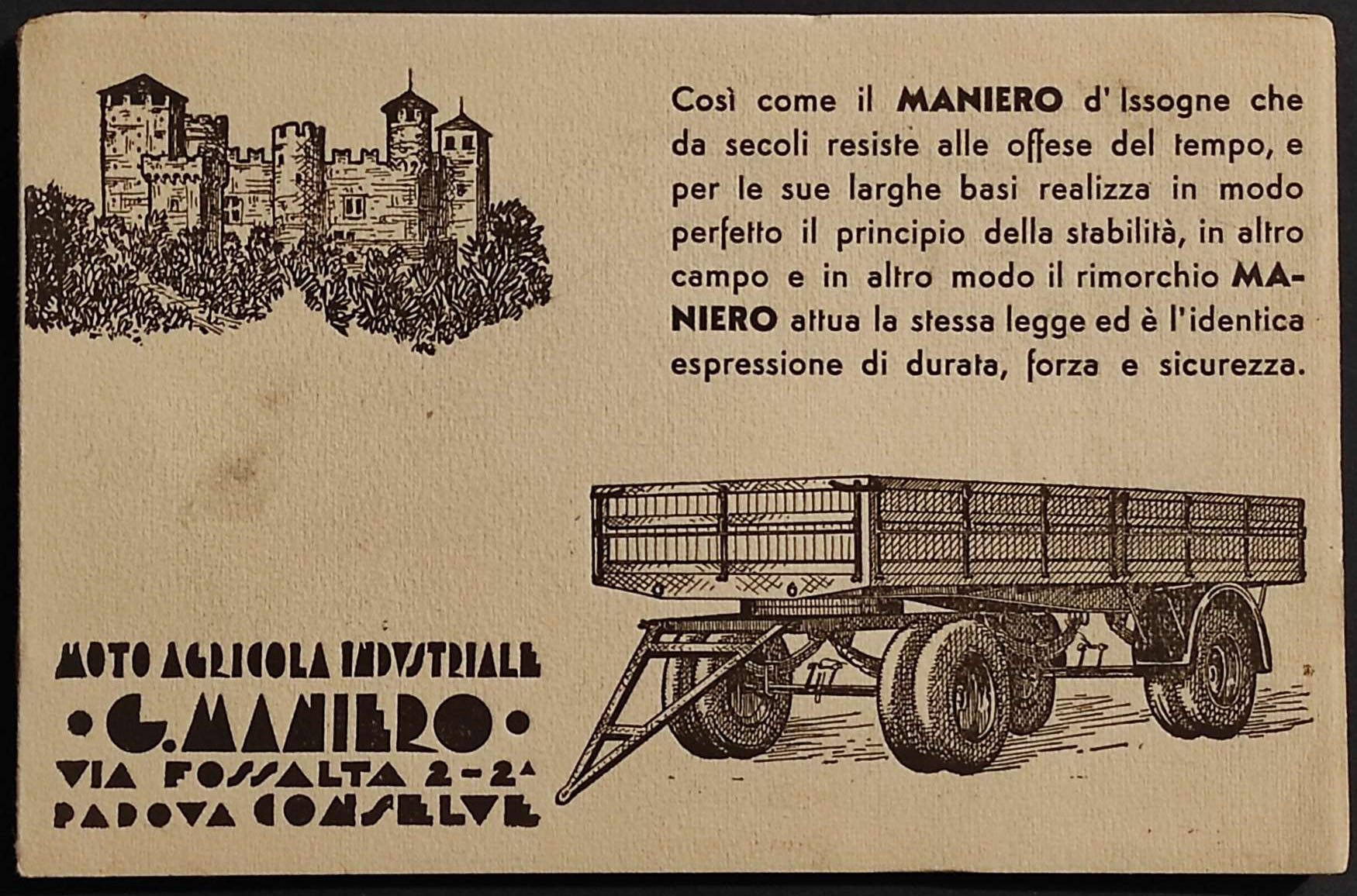
Maniero was never just a company; it was a family experiment in motion. When Guerino passed the torch in 1947, it landed in the hands of his nephew Angelo, who promptly moved the operation to Maserà and thought bigger. Much bigger. Industrial vehicles, trailers, forklifts, aerial lifts—machines built to work, not to pose. By then the company had become Motori Maniero, and later Meccanica Maniero, quietly earning a reputation for hydraulic boom trucks so clever they were snapped up by Italy’s utility giants. Thirty-meter telescopic lifts. In-house engines. Patents stacked like trophies.
From the outside, it looked like success. From the inside, Angelo knew something was missing.
Because no matter how tall the lifts climbed, or how heavy the machinery got, there was still one wall the Maniero name hadn’t broken through yet. And Angelo—true to the family tradition—wasn’t the type to stop pushing just because the job looked impractical.
Not when there was still a car to build.
Commissioning a Dream GT
By the mid-1960s, Angelo Maniero had a problem that only existed in Italy—and only if you were already very successful. He’d owned the great grand tourers. The icons. The poster cars. And yet, somehow, none of them quite worked.
They were too low. Too compromised. Too obsessed with looking fast while quietly punishing anyone over six feet tall or carrying more than a toothbrush. Angelo wanted glamour, yes—but also a driving position that didn’t fold him like a deck chair. “I want something taller,” he reportedly said, which in the age of the Miura and Ghibli was borderline heresy. Those cars were meant to be admired, not lived in.
The breaking point may have been a Maserati he once owned—blisteringly quick, undeniably beautiful, and utterly impractical. His neck craned forward, luggage space wasted, promise unfulfilled. And when no showroom car could square the circle, Angelo did what people like Angelo always do.
He decided to build his own.
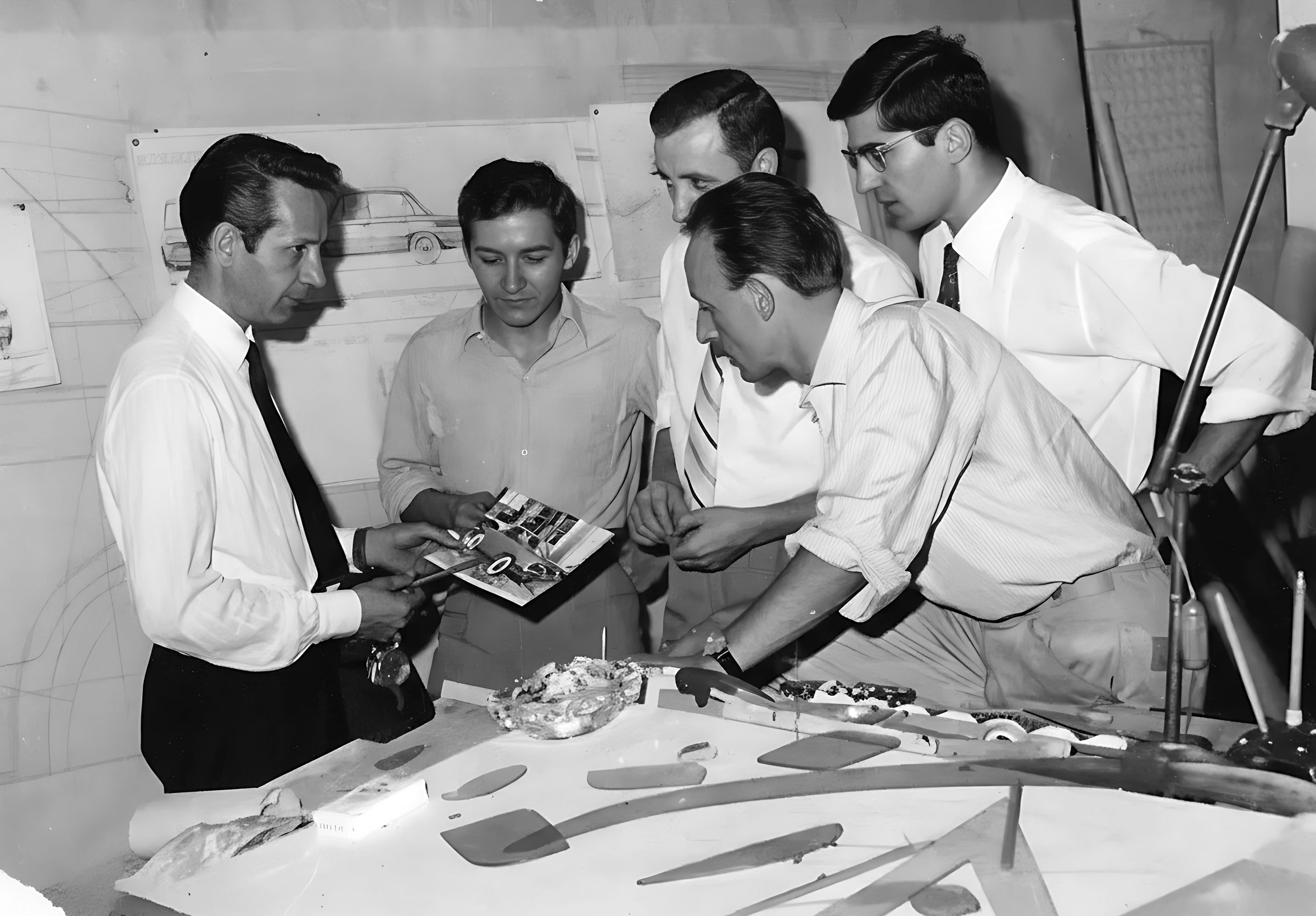
Rather than tinker in the shadows, Maniero went straight to the source. He picked up the phone and called Giovanni Michelotti—the most prolific pen in Italian car design, a man who could sketch elegance faster than most people could park. Michelotti’s studio in Orbassano was handed the brief, and it wasn’t subtle: build a proper grand tourer, taller than the exotics, glamorous enough to belong among them, and usable in the real world. The sort of request that makes sane people pause—and designers lean in.
🔗 Read more: Giovanni Michelotti: Automotive Maestro
Michelotti treated it not as indulgence, but as a genuine design problem. And his solution was wonderfully pragmatic. Instead of reinventing the automobile, he borrowed something that already worked—and worked everywhere. Underneath the Maniero GT 4700 would live the complete mechanical soul of a Ford Mustang. Suspension, steering, chassis, the lot. Proven, durable, and refreshingly unpretentious.
Power came from Ford’s 4.7-liter V8—the high-output 289—good for 285 horsepower and a soundtrack that needed no translation. It meant the Maniero wouldn’t just look the part; it would move with real authority. Effortlessly. Reliably. On actual roads.
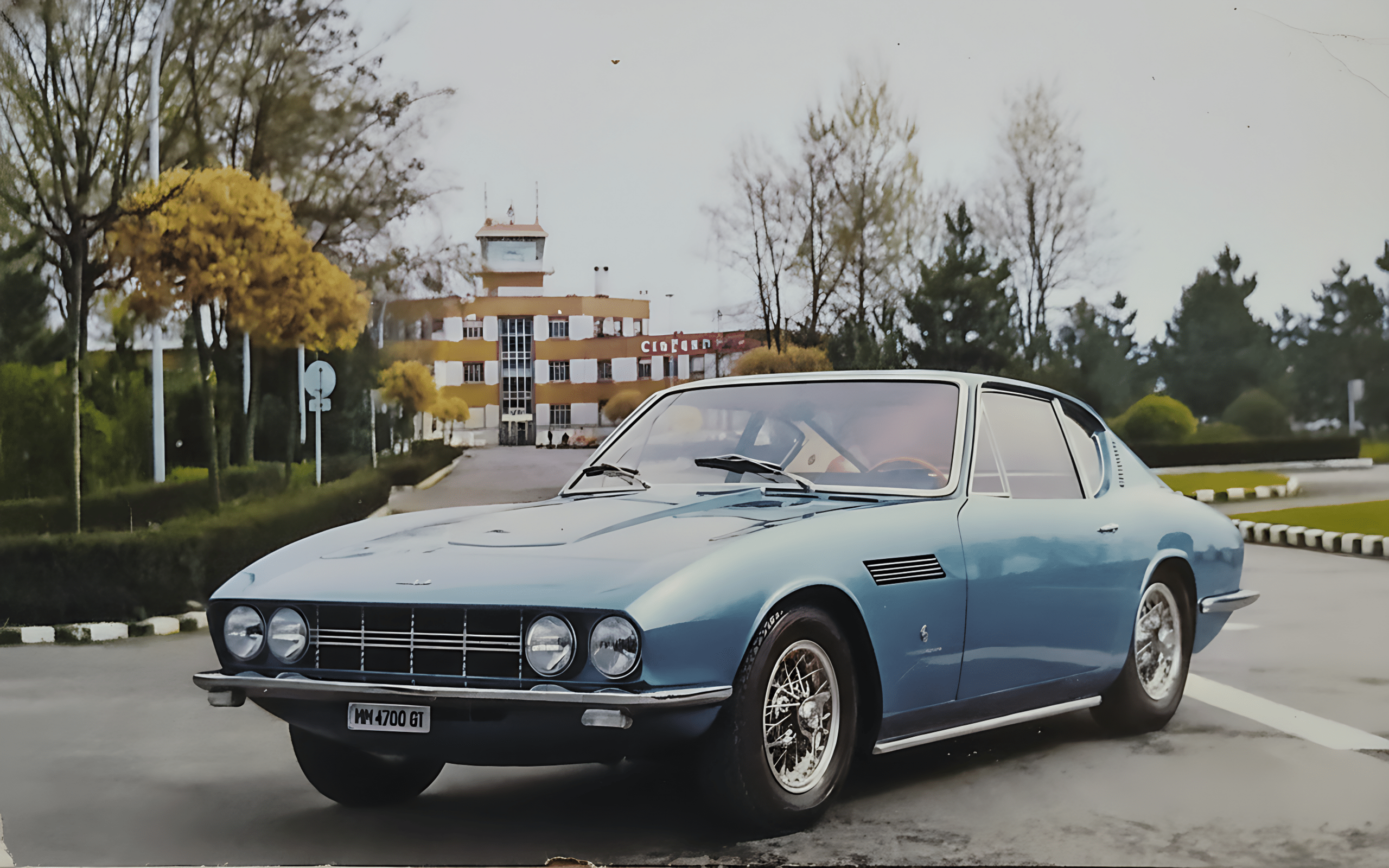
What emerged on the drawing board was something quietly radical: an Italian grand tourer shaped by one of the great stylists of the era, wrapped around American muscle-car bones. Bespoke elegance meets industrial common sense. Not a compromise—but a clever marriage.
It wasn’t chasing fashion. It was chasing a better idea.
Michelotti’s Masterpiece
What rolled out of Michelotti’s workshop wasn’t a modified Mustang or a dressed-up special. It was something else entirely. A one-off. A clean-sheet grand tourer that just happened to have Detroit bones hidden beneath its tailored Italian suit.
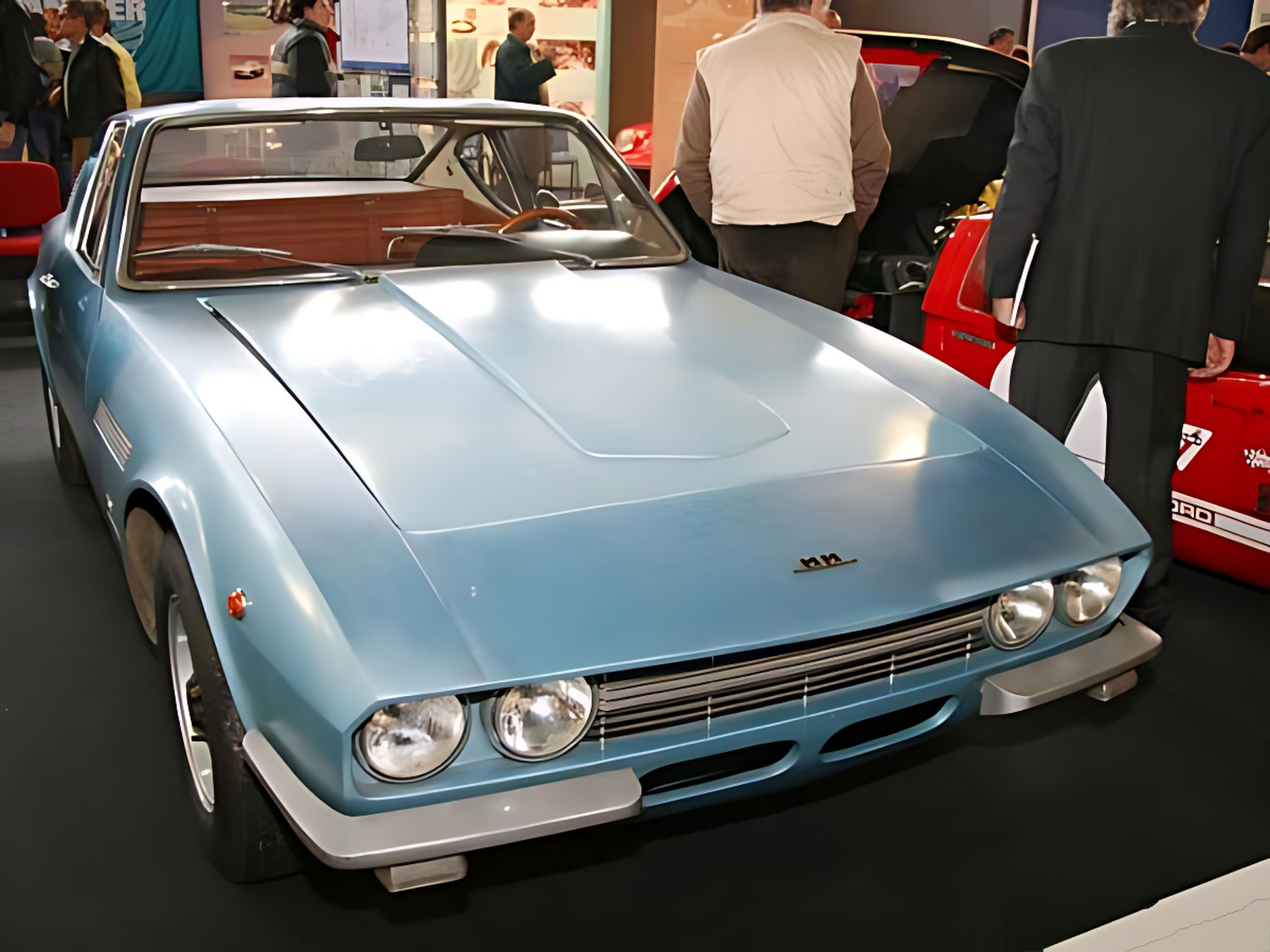
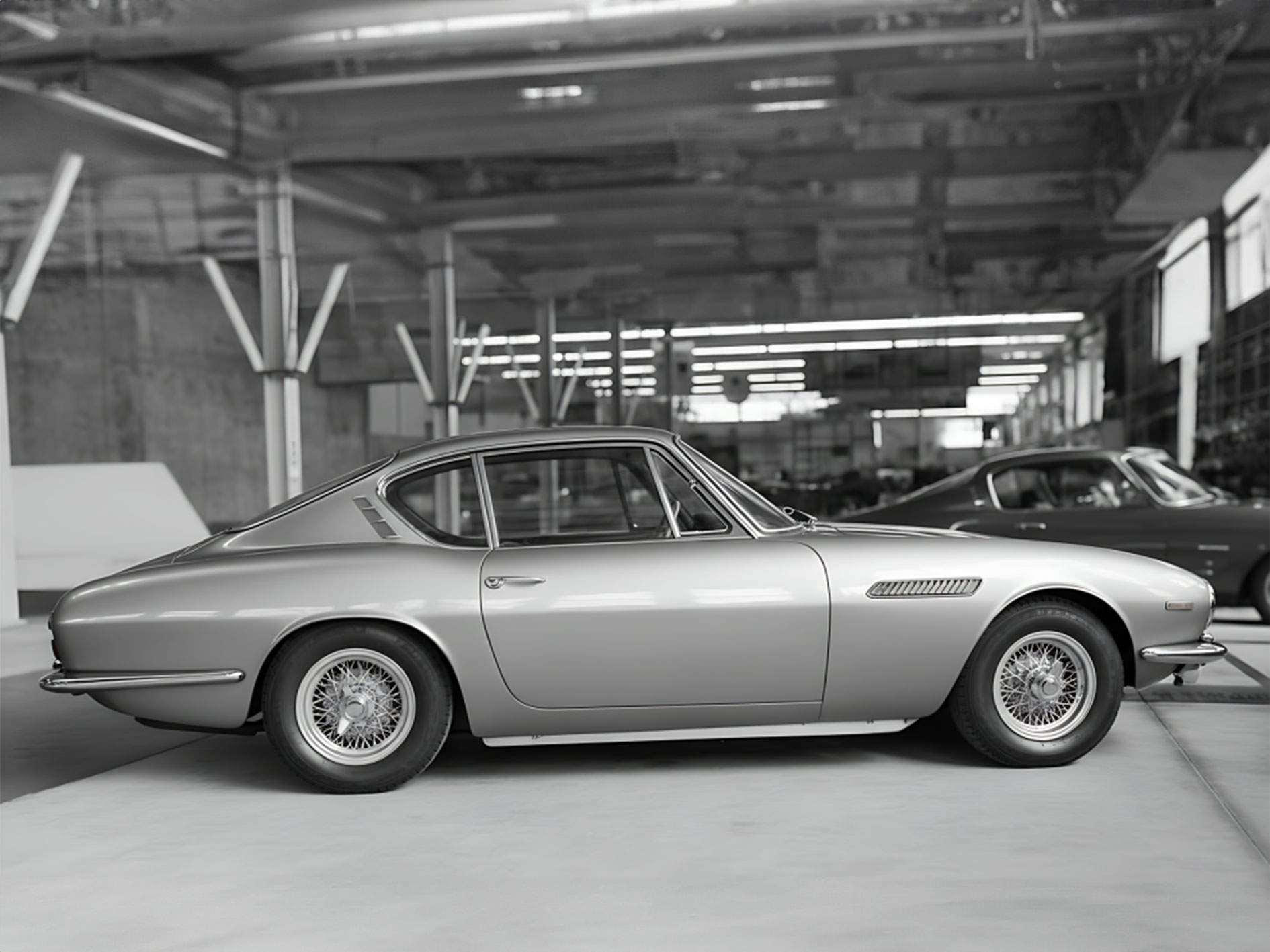
The Maniero 4700 GT is a proper two-door coupé with 2+2 seating, designed and built entirely under Giovanni Michelotti’s watch. Any trace of its American donor car was scrubbed away—no badges, no tailfins, no nostalgia. In their place: restraint, proportion, and confidence—the quiet kind Italian designers do best.
What’s less obvious is that the shape itself was born with even grander intentions. Michelotti originally conceived the body for a Ferrari 330 GT, and that car was in fact built; on chassis 9083. But it wasn’t ready in time for the show. So when the lights came up, it was the Meccanica Maniero that stood in its place, wearing a silhouette originally meant for Maranello.
🔗 Read more: This is how Michelotti influenced American fashion trends: The Lilly Ann Ferrari
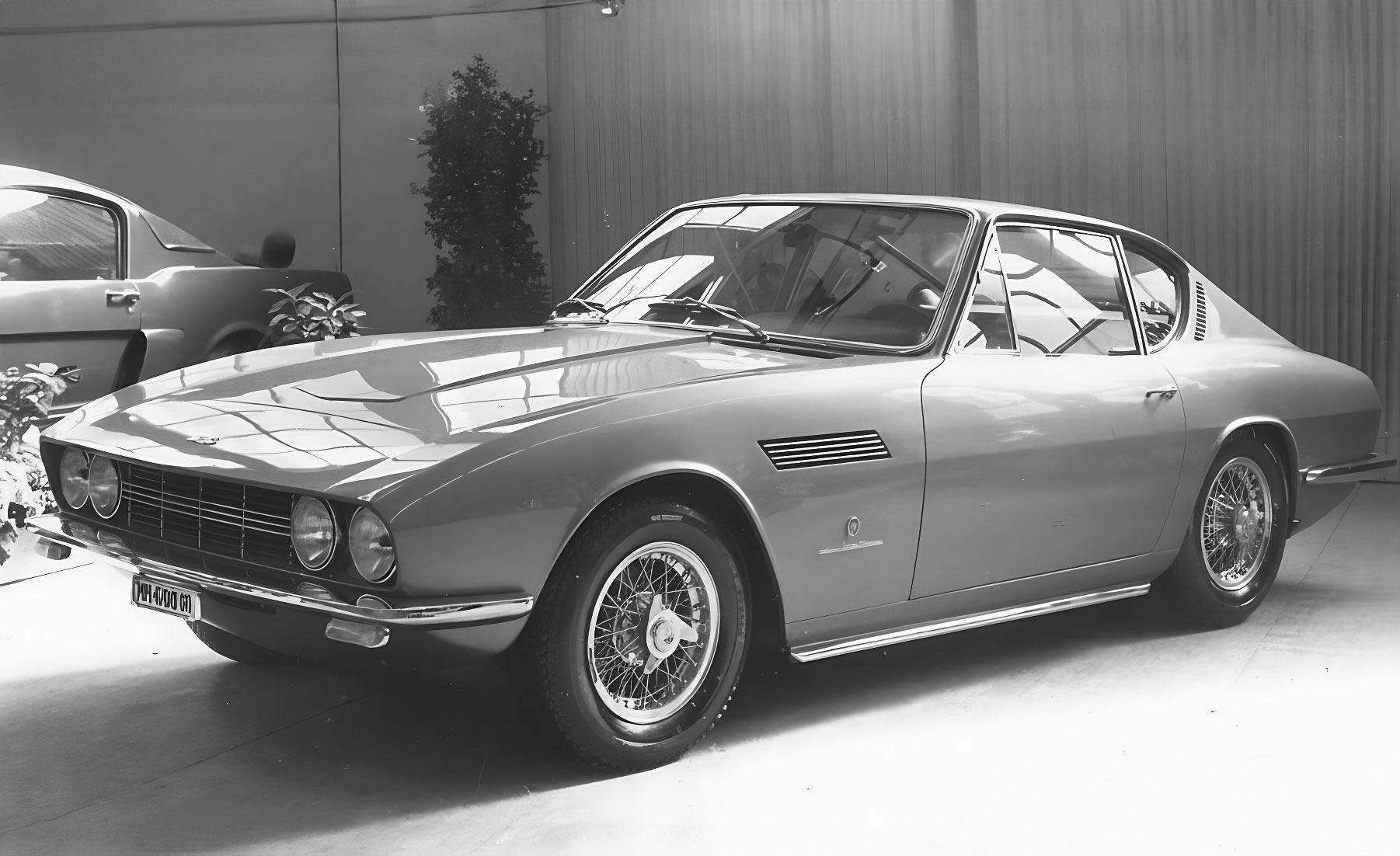
The body is long and fluid, the nose low and purposeful, flowing into a fastback roofline that looks fast even when standing still. Where contemporaries leaned on pop-up headlights for drama, Michelotti went the other way—fixed lamps framed by slim bumper bars, subtle and architectural. It’s a detail that dates the car less than you’d expect and gives it a seriousness missing from many mid-’60s exotics.
Along the flanks, a gentle coke-bottle waistline tightens over the doors before releasing into softly flared rear haunches. Nothing exaggerated. Nothing wasted. And then there’s the roof—noticeably taller than fashion dictated at the time. Not an accident. This car was designed to be used, and that meant Angelo Maniero could sit upright inside without folding himself into the machinery. Radical thinking, apparently.
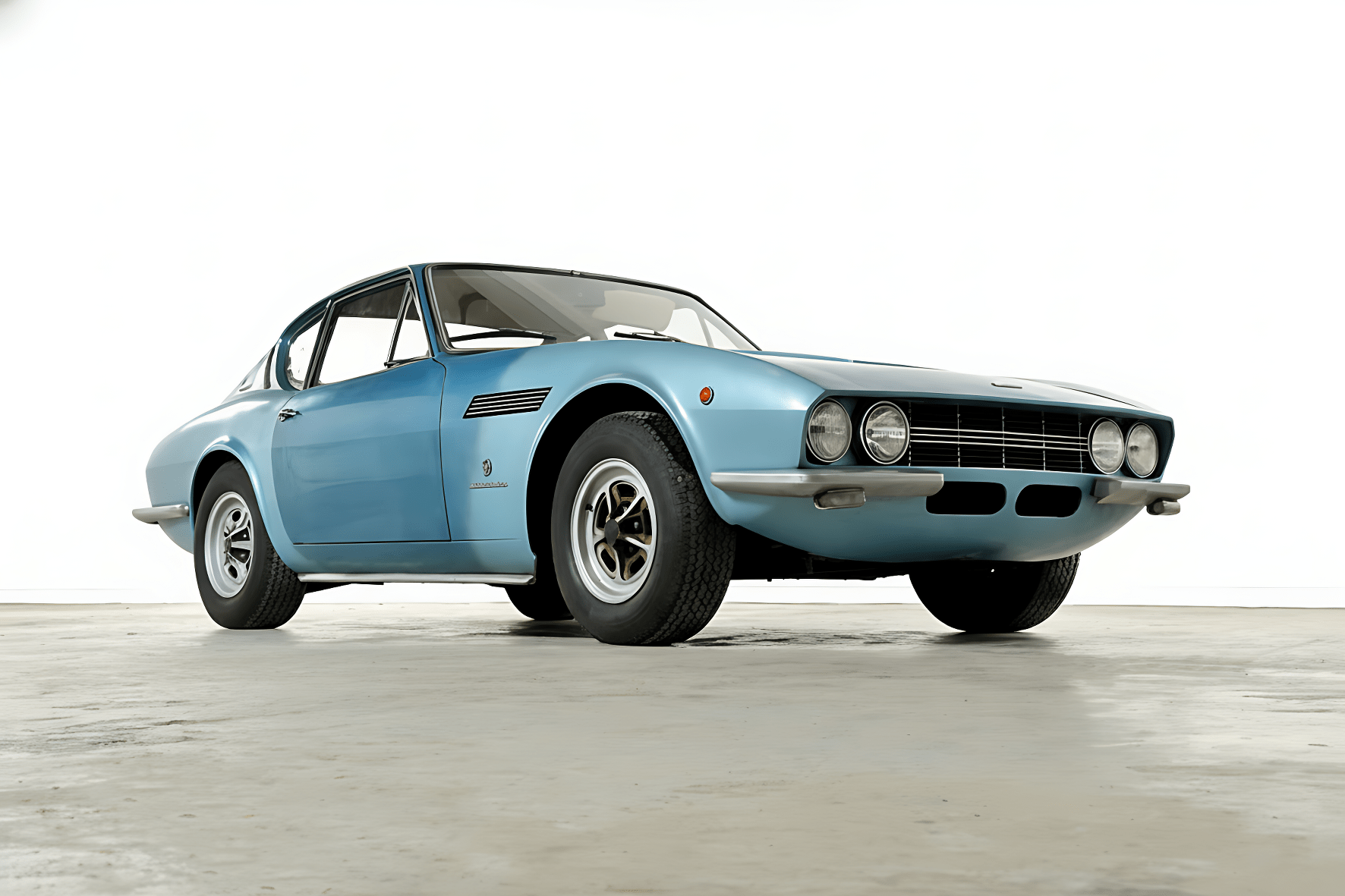
Finished in vibrant metallic blue, sitting on chrome wire wheels with just enough brightwork to catch the light, the 4700 GT strikes a balance that’s hard to pull off: athletic without aggression, luxurious without pretense. It looks like it belongs on an autostrada at speed, luggage aboard, engine barely breaking a sweat.
According to documentation from the Bonfanti Museum, the car was delivered exactly as intended—a true grand tourer powered by Ford’s 4.7-liter V8 producing 285 horsepower, built for an entrepreneur from Padua who knew precisely what he wanted. And that specificity is the key here.
Only one was ever made. Offers came—serious ones—to put the 4700 GT into limited production. Maniero declined them all. This wasn’t a business case. It was a personal statement. A single, perfectly resolved idea rendered in steel, leather, and gasoline.
Had it gone into series, it might’ve been remembered as one of the great boutique GTs of the 1960s. Instead, it remains something rarer—and arguably better: a solitary answer to a very specific dream.
The Wall Gives Way
The Maniero 4700 GT’s defining moment came before it ever turned a wheel in public. Not on a road, and not at speed—but inside the factory where it was assembled.
Angelo Maniero, whose company already built steel frames and industrial structures, took a very specific approach. He told Michelotti: “I’ll send you the chassis with the engine already installed.” But he did not want the car assembled within his main factory. Instead, work began in a separate side space: an auxiliary room on an upper floor—chosen deliberately to keep the project isolated.
There, the car was gradually completed. Too gradually, as it turned out.
By the time assembly was finished, it became clear that the fully built Maniero 4700 GT could not be removed. There were no doors large enough. No clever angles. No alternative exits. The only solution was structural.
By the time assembly was finished, it became clear that the fully built Maniero 4700 GT could not be removed. There were no doors large enough. No clever angles. No alternative exits. The only solution was structural.
So they made the gate irrelevant. The brick wall was widened into an exit.
Bricks were taken out, the opening enlarged, and the completed car was finally able to leave the room where it had been born. From that moment on, the nickname stuck: la vettura che esce da un muro—the car that came out of a wall.
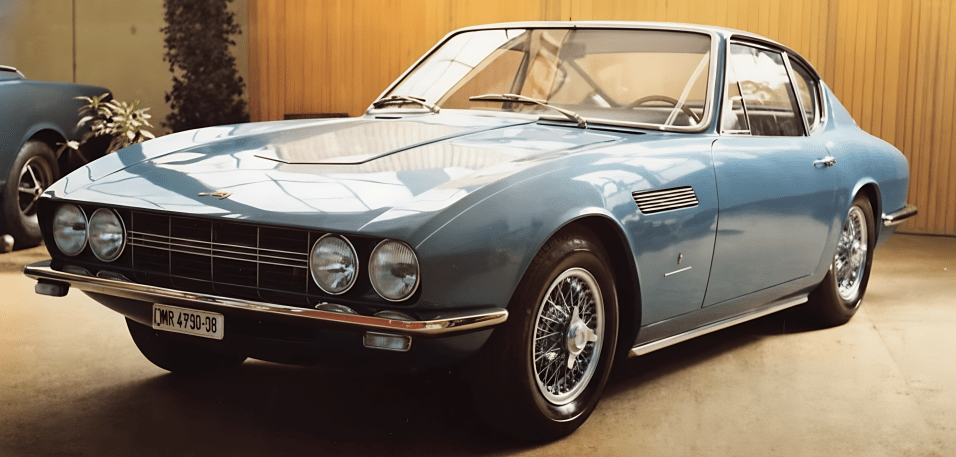
That same physical presence showed up on the road. With firm suspension and broad coachbuilt arches, the wheels could scrub under compression. Angelo sent the car back to Michelotti for correction: the fenders were lightly trimmed, and the front was repainted in a lighter blue as a temporary measure. It stayed that way.
The mismatched panels it wears today aren’t a styling flourish—they’re a paper trail. Evidence of a one-off GT built to a man’s requirements, then adjusted by hand when reality pushed back.
From Geneva to Rediscovery
The Maniero 4700 GT debuted publicly in March 1967 at the Geneva Motor Show. Parked among Ferraris and Lamborghinis, it stood out by doing less, not more: no pop-up headlights, no theatrical vents—just clean lines and a Ford-fed V8. Contemporary reports called it modern and sharp, restrained but confident. The badge read simply Meccanica Maniero – 4700 GT.
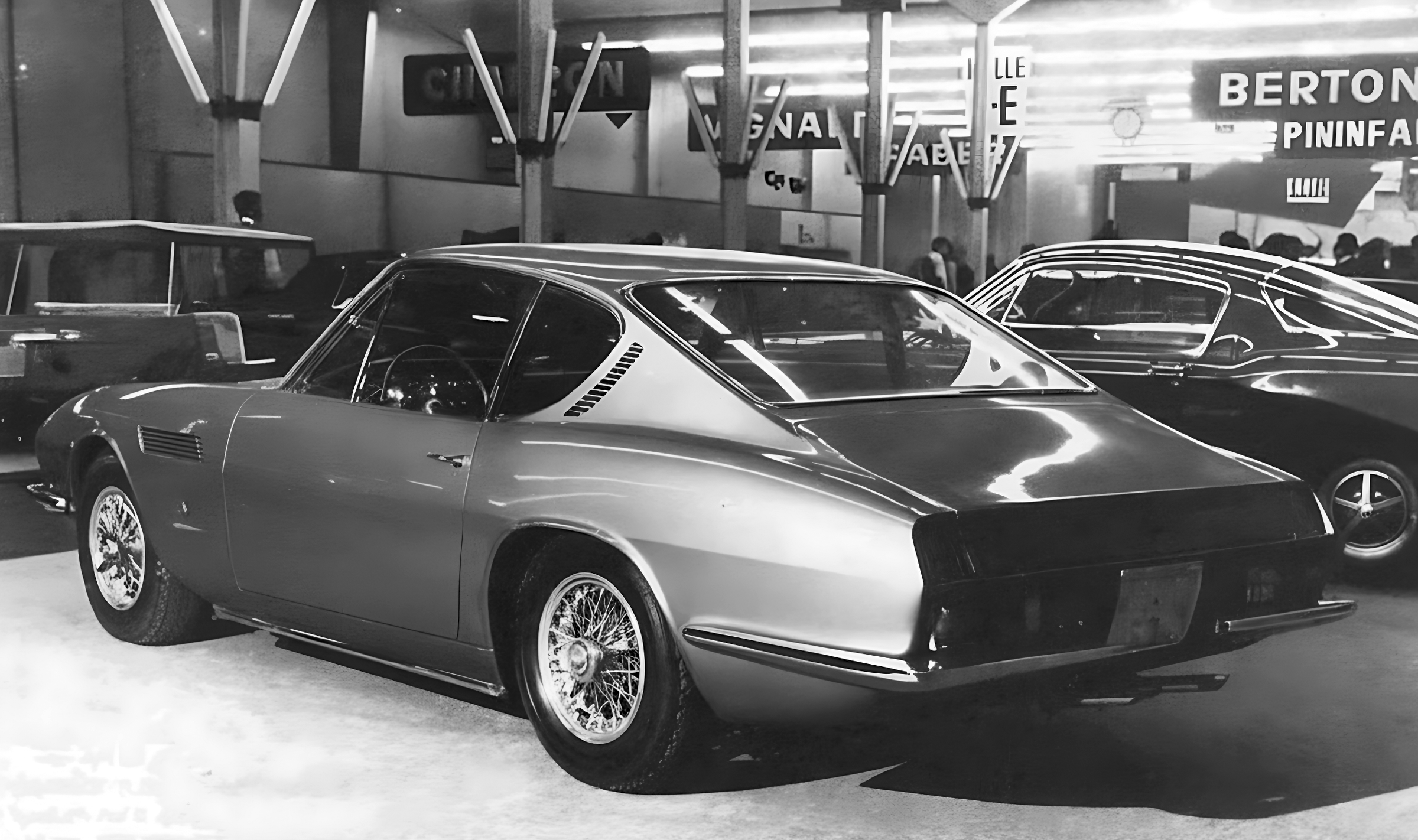
After Geneva, the car disappeared. Delivered to its owner, never registered as a production model, never offered for sale, it slipped quietly out of sight. By the 1980s and ’90s it had become obscure, known only to a handful of collectors and Michelotti specialists.
Its rediscovery was as unlikely as its birth. In the 1990s, EpocAuto reported the car found abandoned inside a Meccanica Maniero workshop. The odometer showed under 4,000 km. Aside from light surface rust and mismatched blue paint from period modifications, it was intact. The car was carefully restored without altering its original specification.
Today, the Maniero 4700 GT is preserved at the Museo dell’Automobile Bonfanti in Vittorio Veneto. It remains the only example ever built—a Michelotti-designed grand tourer commissioned for one man, never diluted by production, and never repeated.

ABOUT THE AUTHOR
Andreas Scheidl
Italian classic car enthusiast with German roots. Renowned as a respected figure in the classic car community, he serves as a jury member at various international concours d'elegance, including the Classic Gala Schwetzingen and Mantova. As a content creator, Andreas passionately shares his profound knowledge and appreciation for vintage automobiles. His heart beats for cars designed by Giovanni Michelotti, showcasing his discerning taste and dedication to preserving the timeless elegance of automotive history.
More stories by Andreas Scheidl ↗CONTINUE READING
Posts You Might Like
A Central Driving Position, a Rear-Mounted V8. Was This Really a Lancia?
In 1948, visitors to the Turin Motor Show could see an unusual Lancia on the stand of Carrozzeria Ghia. It was a large two-door coupé with a two-litre V8 mounted behind the…
Read story
Fioravanti F100: The Ferrari He Was Allowed to Imagine
Enzo Ferrari’s centenary, Leonardo Fioravanti’s independent studio and a supercar that explored air brakes, steel wheels and a new way of driving—without ever wearing the Cavallino.
Read story
Michelotti Shellette: When the Fiat 850 Became a Yacht
The yacht designer, the Turin stylist and the tiny coachbuilt car that crossed between the quay, the royal holiday house and the auction room. Some automobiles were conceived for the open road,…
Read story
Maserati A6 1500: A New Road for the Trident
When the doors of the Geneva Motor Show opened in March 1947, Maserati was a name that required little introduction to anyone who followed motor racing. What it did not yet possess…
Read story
THE CONVERSATION
Comments 0
Share a memory, a period photograph or a documented detail about this story.