
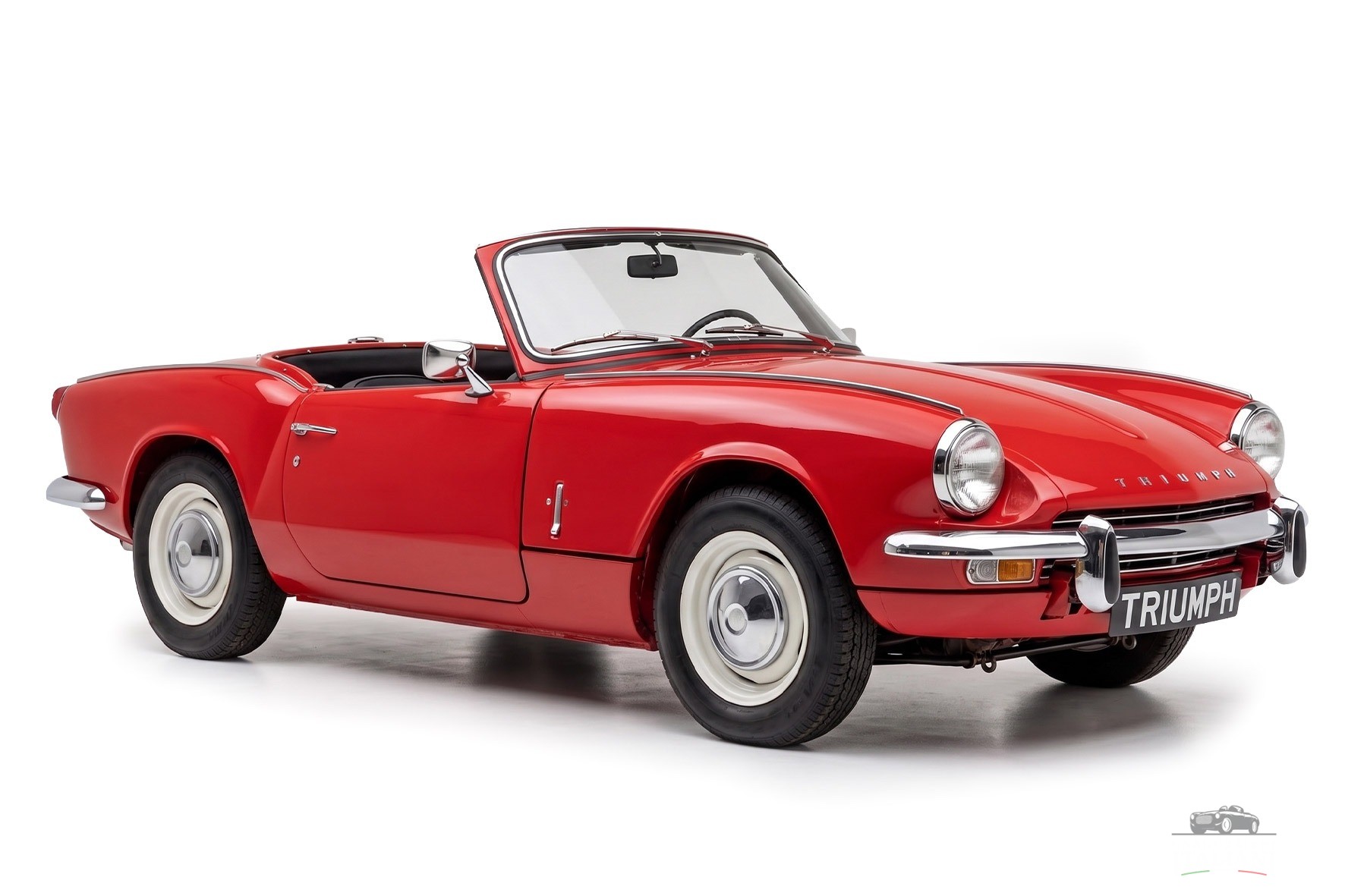
THE VEHICLE AT A GLANCE
Model dossier
- Production period
- 1962–1979
- Body style
- Roadster
- Engine
- Inline-4
- Type
- Mass
- Production
- 314152
THE PEOPLE BEHIND THE CAR
Coachbuilding, design & conversions

PRICE & SALES RECORD
Vehicle value
- Original price
- Not documented
- Latest recorded sale
- Not documented
01 / THE STORY
History & context
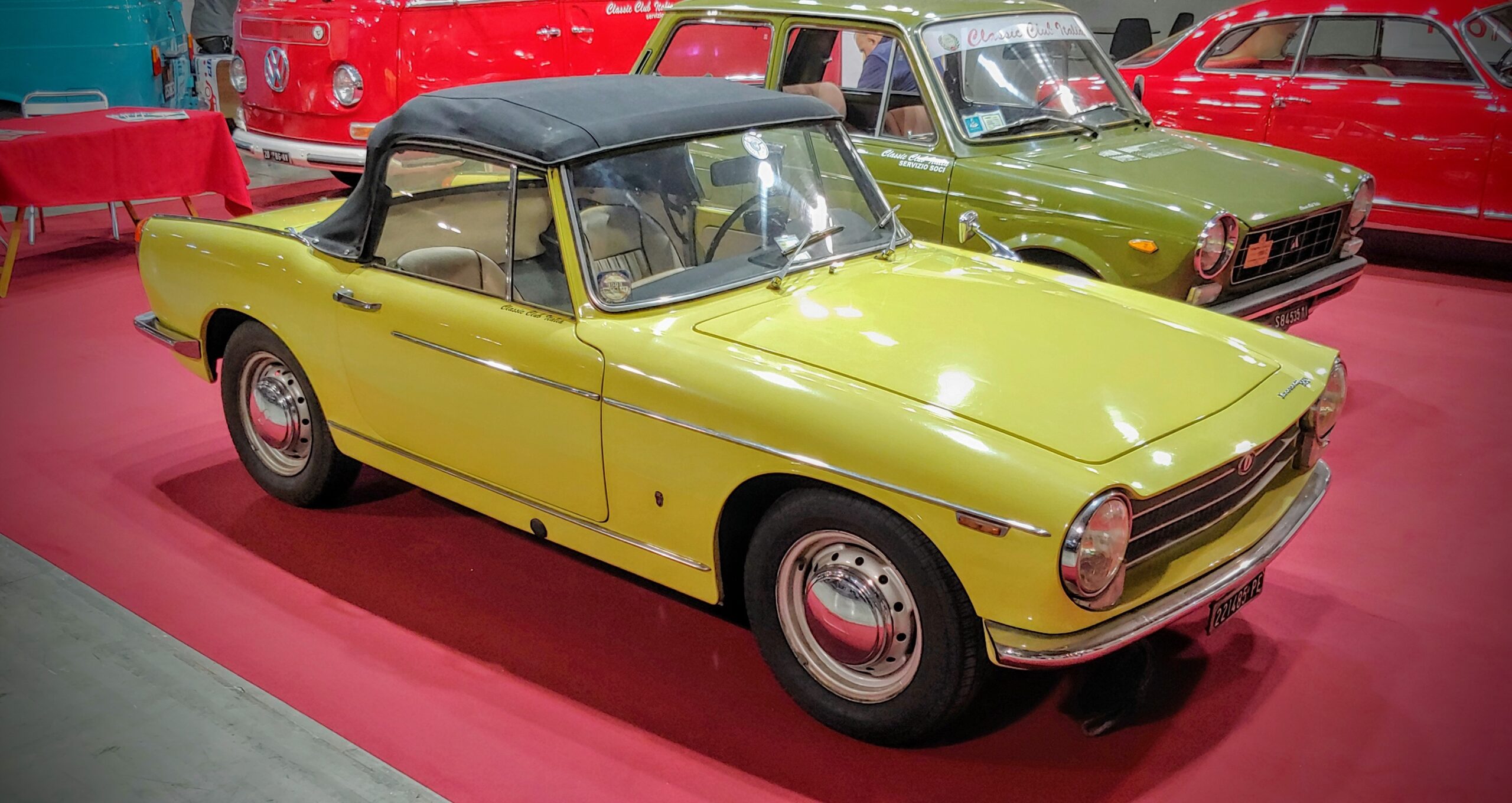
The Triumph Spitfire is a two-seat open sports car produced by the Triumph Motor Company between 1962 and 1980. It was styled by Giovanni Michelotti and developed as an entry-level sports model positioned below the TR range. The Spitfire was derived mechanically from the Triumph Herald, using a shortened version of its separate chassis and many shared components. The car was first exhibited at the 1962 London Motor Show at Earls Court, where it was presented as a lightweight, affordable roadster aimed at export markets, particularly North America. Production commenced shortly thereafter at Triumph’s Canley plant. The Spitfire employed a steel backbone chassis with bolt-on body panels. Front suspension used unequal-length wishbones with coil springs, while the rear initially employed a swing-axle layout with a transverse leaf spring, inherited from the Herald. Steering was rack and pinion. Braking was by front discs and rear drums on most versions. Early Spitfires were powered by a 1,147 cc inline four-cylinder engine, producing approximately 63 bhp, coupled to a four-speed manual transmission. Overdrive became available on later models. Progressive development led to increased engine displacement and output over the model’s lifespan. The Mk III, introduced in 1967, adopted a 1,296 cc engine, while the final Spitfire 1500, launched in 1974, used a 1,493 cc unit to meet market expectations and emissions requirements. Body revisions occurred periodically, most notably with the Spitfire Mk IV, which adopted revised front and rear styling and changes to suspension geometry. The later models incorporated a revised rear suspension to address handling issues associated with the original swing-axle design. Total production exceeded 315,000 units, making the Spitfire one of Triumph’s most successful sports cars. It remained in continuous production for 18 years, outlasting several contemporaries.
IN THE ARCHIVE
Related people
IN THE ARCHIVE
Coachbuilders & design studios
02 / TECHNICAL IDENTITY
Specifications & construction
Production & construction
- Production
- 314152
- Production type
- Mass
- Production from
- 1962
- Production to
- 1979
Engine & performance
- Engine configuration
- Inline-4
Dimensions & accommodation
- Length
- 3,683 mm
- Width
- 1,448 mm
- Height
- 1,219 mm
Design & manufacture
- Designer · Documented
- Giovanni Michelotti
- Design Studio · Documented
- Studio Michelotti
- Manufacturer · Documented
- Triumph
06 / EVENTS & AWARDS
Events & awards
No events or documented awards are currently recorded for this vehicle.
07 / THE VEHICLE IN DETAIL
Photo gallery 5 photographs
08 / FROM THE ARCHIVE
Archive
References held in the vehicle dossier. Their inclusion does not establish that every historical claim has been independently verified.
| Reference | Source type |
|---|---|
| Triumph In Italy — Spitfire model history www.triumphinitaly.it | Specialist marque model history |
| Amicale Spitfire — Triumph Production Figures www.amicalespitfire.org | Marque club production reference |
THE CONVERSATION
Comments 0
Share a memory, a period photograph or a documented detail about this car.