
THE VEHICLE AT A GLANCE
Model dossier
- Production period
- 1966
- Body style
- Coupé
- Engine
- V12
- Type
- Limited
- Production
- 224
THE PEOPLE BEHIND THE CAR
Coachbuilding, design & conversions

PRICE & SALES RECORD
Vehicle value
- Original price
- Not documented
- Latest recorded sale
- Not documented
01 / THE STORY
History & context
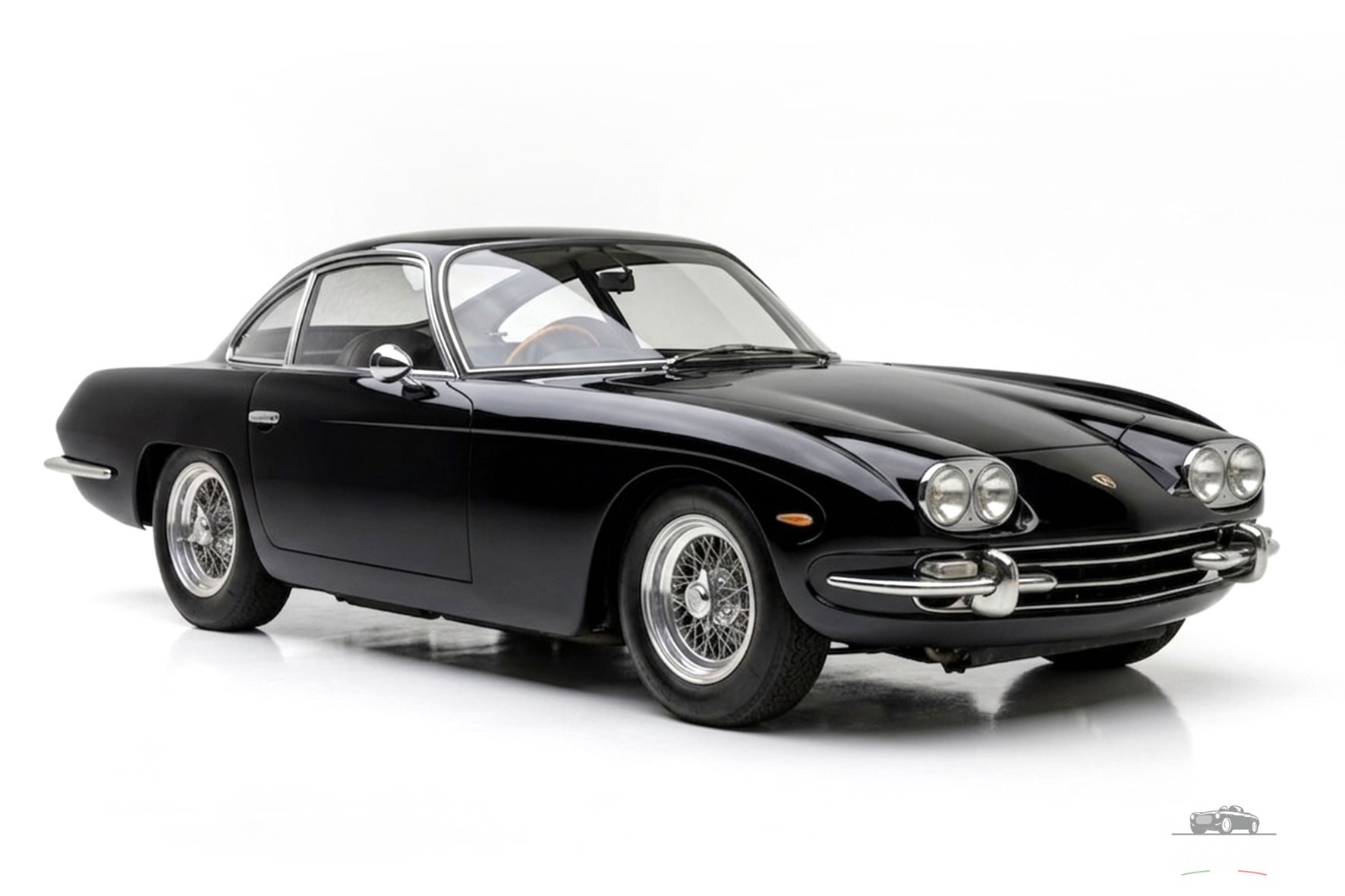
The Lamborghini 400 GT 2+2 was a grand touring automobile manufactured by Automobili Lamborghini between 1966 and 1968. It succeeded the earlier 350 GT and marked the company’s transition toward more mature and refined high-performance vehicles. Conceived to offer a balance between sports car dynamics and touring comfort, the 400 GT 2+2 contributed significantly to the early identity of the marque. The model was equipped with a naturally aspirated V12 engine designed by Giotto Bizzarrini. Displacing 3,929 cubic centimeters, the all-aluminum power unit featured dual overhead camshafts per cylinder bank and six twin-choke Weber carburetors. The engine produced approximately 320 horsepower at 6,500 revolutions per minute and was coupled to a five-speed manual gearbox developed in-house by Lamborghini. Power was transmitted to the rear wheels, allowing for acceleration from zero to one hundred kilometers per hour in under seven seconds and a maximum speed of approximately 250 kilometers per hour. The chassis employed a tubular steel structure with independent suspension at all four corners, utilizing double wishbones and coil springs. Disc brakes were fitted as standard. The wheelbase measured 2,550 millimeters, contributing to stable high-speed handling characteristics. The vehicle’s proportions and overall configuration supported its role as a long-distance performance automobile. Bodywork was executed by Carrozzeria Touring using steel panels, incorporating elements of Superleggera construction in earlier models. The 2+2 configuration necessitated modifications to the roofline and rear cabin area, resulting in a taller profile and reconfigured rear bodywork compared to the 350 GT. The design retained a restrained elegance, with minimal ornamentation and proportions favoring aerodynamic efficiency. The interior accommodated four occupants, though rear seating was limited in legroom and best suited for occasional use. The cabin was trimmed in leather with wood veneer detailing and included instrumentation specific to the model. Approximately 224 units of the 400 GT 2+2 were produced before the model was replaced by the Lamborghini Islero. The 400 GT 2+2 is regarded as a foundational model in Lamborghini’s early history, bridging the gap between bespoke sports car production and the emerging segment of Italian high-performance grand tourers.
IN THE ARCHIVE
Coachbuilders & design studios
02 / TECHNICAL IDENTITY
Specifications & construction
Production & construction
- Production
- 224
- Production type
- Limited
Engine & performance
- Engine configuration
- V12
Design & manufacture
- Coachbuilder / Body Builder · Documented
- Touring
- Designer · Documented
- Federico Formenti
- Manufacturer · Documented
- Lamborghini
06 / EVENTS & AWARDS
Events & awards
No events or documented awards are currently recorded for this vehicle.
07 / THE VEHICLE IN DETAIL
Photo gallery 11 photographs
Show 5 more photographs Show fewer photographs
08 / FROM THE ARCHIVE
Archive
References held in the vehicle dossier. Their inclusion does not establish that every historical claim has been independently verified.
| Reference | Source type |
|---|---|
| Lamborghini — 400 GT history www.lamborghini.com | Manufacturer history |
| Lamborghini — 400 GT 2+2 Beatles heritage feature www.lamborghini.com | Manufacturer heritage |




THE CONVERSATION
Comments 0
Share a memory, a period photograph or a documented detail about this car.