
THE VEHICLE AT A GLANCE
Model dossier
- Production period
- 1988
- Body style
- Hatchback
- Type
- Limited
THE PEOPLE BEHIND THE CAR
Coachbuilding, design & conversions

PRICE & SALES RECORD
Vehicle value
- Original price
- Not documented
- Latest recorded sale
- Not documented
01 / THE STORY
History & context
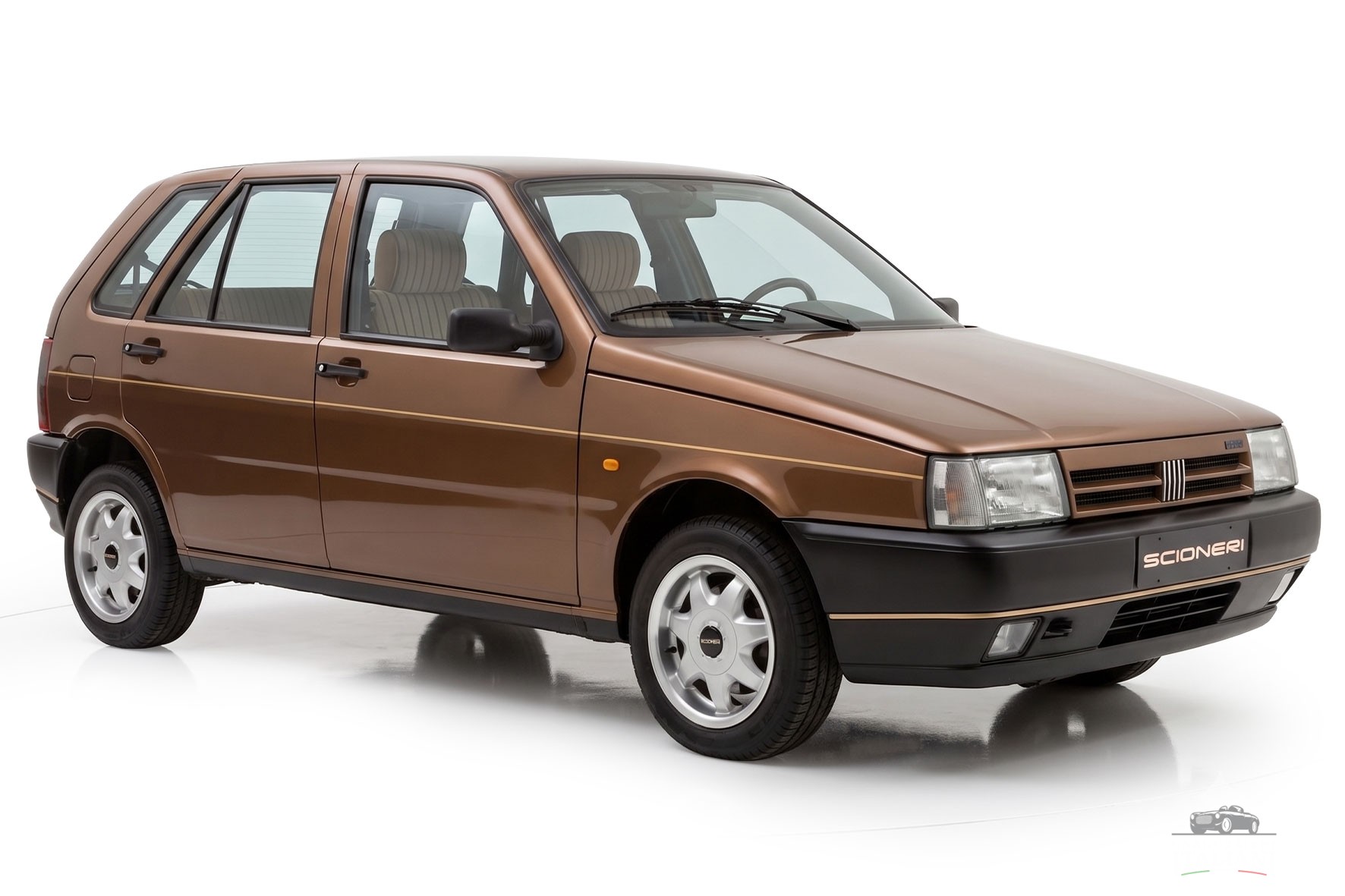
The Fiat Tipo Scioneri was a limited-production variant of the Fiat Tipo, modified by Carrozzeria Scioneri in the late 1980s. Originating from Savigliano in the Piedmont region, Scioneri had established itself as a specialist in customizing mass-produced Fiat models through aesthetic refinement and modest technical enhancements. The firm’s operations reflected a continued tradition of postwar Italian coachbuilding, adapted to the context of standardized industrial production. Based on the Fiat Tipo—introduced by Fiat in 1988 as a compact front-wheel-drive hatchback—this version maintained the fundamental engineering of the standard production model. The base configuration featured transverse-mounted inline-four engines in varying displacements, paired with manual transmissions and MacPherson strut front suspension. No significant mechanical alterations were implemented by Scioneri; the focus remained on visual and material upgrades that would elevate the perceived exclusivity of the vehicle. Exterior modifications included the application of metallic paint finishes, alloy wheels, and athermic glass, along with the addition of a passenger-side mirror—a detail not universally fitted on all standard variants during the initial production years. Discreet badging and color-matched trim completed the exterior presentation. These changes, though minimal, were executed with attention to proportion and restraint. The interior received more substantive alterations. The cabin featured a Nardi steering wheel, upgraded upholstery, and a split-folding rear seat, contributing to both tactile quality and practicality. While the dashboard and major interior components remained consistent with factory issue, materials and detailing were selected to distinguish the vehicle from its mass-produced counterparts. The Fiat Tipo Scioneri was positioned at a higher price point relative to the base model, appealing to a segment of the domestic market interested in understated personalization. While exact production numbers are undocumented, the variant remains rare. It did not constitute a homologated or factory-supported edition but was rather the result of small-scale artisanal intervention. The model illustrates the adaptation of coachbuilding practices to a modern industrial framework, wherein exterior and interior modifications were applied to otherwise standardized vehicles. The Fiat Tipo Scioneri stands as a modest but precise expression of this transitional form of Italian automotive customization.
IN THE ARCHIVE
Coachbuilders & design studios
02 / TECHNICAL IDENTITY
Specifications & construction
Production & construction
- Production type
- Limited
- Mechanical platform
- Fiat Tipo
Engine & performance
- Specification notes
- TECH 2026-09-21 — verified Scioneri history identifies this as a personalization of the Fiat Tipo. Fiat Tipo is structured as base; no performance conversion is inferred.
Design & manufacture
- Coachbuilder / Body Builder · Documented
- Scioneri
- Manufacturer · Documented
- Fiat
- Designer · Documented
- Ercole Spada
Additional features
- Recorded features
- Elaborata
06 / EVENTS & AWARDS
Events & awards
66° Salone Internazionale dell'Automobile – Torino General · legacy_preserved
- Date
- 1996
- Chassis
- General
Preserved CI 1.0 relation. Evidence field: _yoast_wpseo_primary_events. No award inferred.
Torino General · From the historical archive
- Date
- 1996
- Chassis
- General
07 / THE VEHICLE IN DETAIL
Photo gallery 5 photographs
08 / FROM THE ARCHIVE
Archive
No publishable archival references are currently catalogued for this vehicle.



THE CONVERSATION
Comments 0
Share a memory, a period photograph or a documented detail about this car.